Take a look at the achievements of some amazing leaders from the Black community who have made an indelible impact in the world of Alumni Relations and Development.
Published:
March 17, 2021
Updated:
March 17, 2021
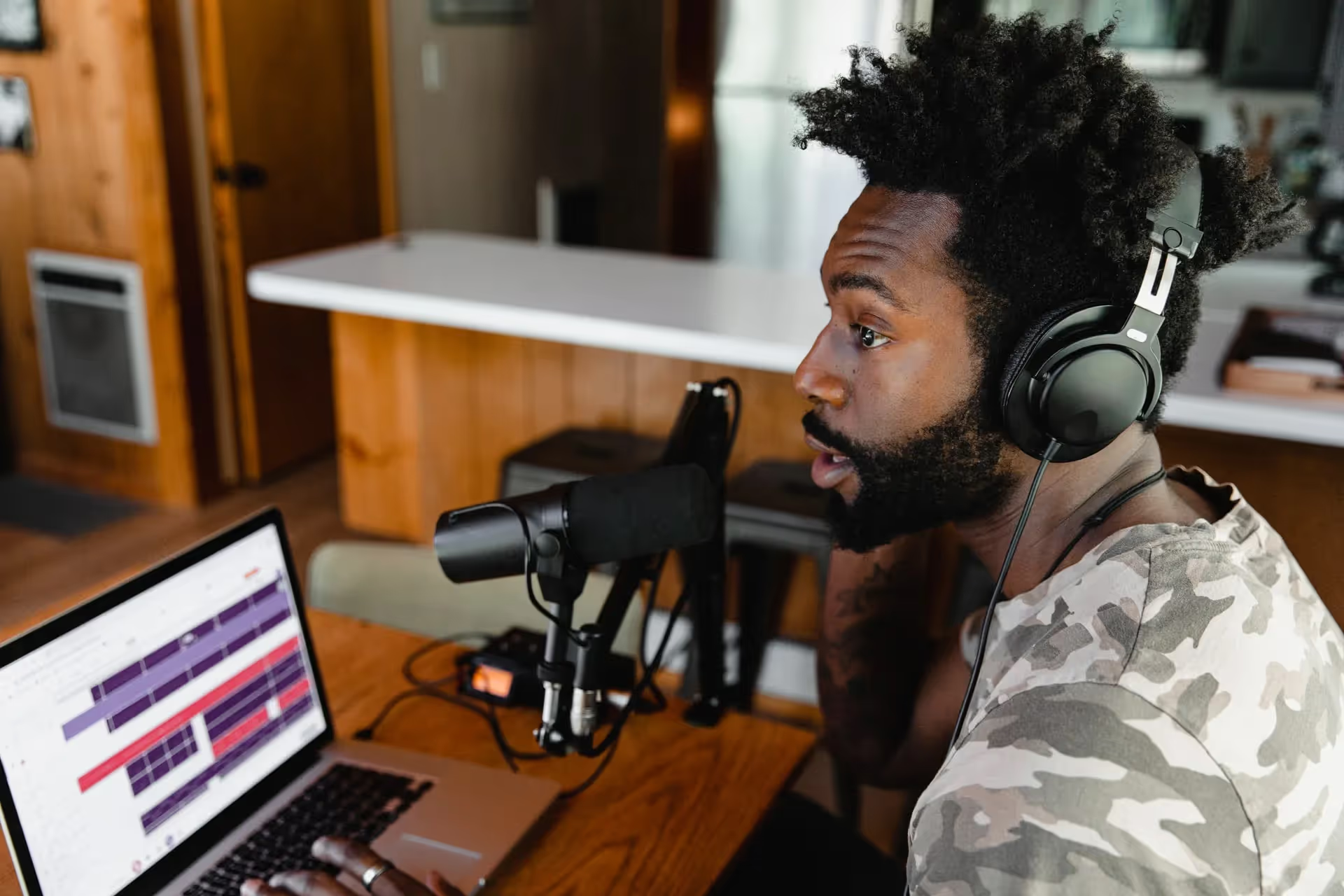
In honor of Black History Month, we spent time researching some incredible leaders from the Black community, who have made an indelible impact in the world of Alumni Relations and Development. We wanted to do something special by creating a podium to showcase the remarkable achievements of some of these powerful leaders.
But this was no easy feat - while conducting our research online, we discovered so many amazing leaders whose achievements are a shining beacon to professionals in the industry. In our endeavor, we also reached out to our network to see if they have any recommendations on whom we can showcase. We were truly grateful to everyone who reached out to us.
After weeks of brainstorming and thorough research, it is entirely possible that a few great leaders who don’t have an online presence might have skipped our purview. If you feel like this is the case, we would love to hear your recommendations.
Before we dive in, we would like to say that this article is by no means a ranking or a tier list of any sorts. Instead, this is our attempt at shining the spotlight on some amazing leaders that we have had the opportunity to interact with and/or learn from.
.png)
With that being said, here are 12 alumni leaders from the Black community that are making an impact in alumni relations and advancement.

Montique Cotton Kelly, or “Mo”, as she is referred to by her colleagues, friends, and family, has over 24 years of experience in university advancement. With her exceptional leadership and relationship-building skills, she has cemented her name in the industry as one of the all-time greats.
Mo currently serves as VP of Alumni Relations, Marketing and Communications and Annual Giving at UConn Foundation, but that’s not all she is known for. She is also an active member of the Council for Alumni Association Executives (CAAE) and currently sits on the Council for Advancement & Support of Education (CASE) District 1 Board. Mo wishes to make UConn an inclusive organization, and hopes that someday, they become one of the best institutions in the country.
Connect with Bishop on LinkedIn

Bishop Alexander currently serves as the Director of Alumni Relations at the University of North Alabama (UNA), which also happens to be his alma mater. His role involves facilitating positive communication and building meaningful relationships among the university’s 60,000-plus constituents. Prior to his role at the University, Bishop was a Congressional aide for the United States House of Representatives.
Bishop has two noteworthy awards under his wing: the University Fraternity/Sorority Advisor of the Year (which was awarded to him in 2015 by UNA), and the UNA Promising Alumni Award (which was awarded to him in 2008 when he was a student). Recently, Bishop also featured as a speaker for Unity programs at both the Fulton and Tupelo campuses, in honor of Black History Month.
Connect with Yolanda on LinkedIn

Yolanda is an experienced fundraising and special events consultant, who has over two decades of experience working in the non-profit sector. She currently serves as the President at YFJ Consulting, an LLC that provides non-profit organizations expertise in fundraising, special events and philanthropic counsel. She is also the founder of Women of Color in Fundraising and Philanthropy (WOC), a membership organization that champions women of color in fundraising, philanthropy, and other related fields. Additionally, Yolanda also founded the Allies in Action Membership Network, which helps support and train allies in the fight for racial equity.
Having raised millions of dollars for various nonprofit organizations, one of her crowing achievements include being the first African-American president-elect in the 40-year history of Women in Development, NY (one of the NY Metro Area's premier professional fundraising organizations). Yolanda is also an active lyric Soprano. She has performed at various operas and concerts, both at a national as well as an international level.
Connect with Ralph on LinkedIn

Ralph Amos, who currently serves as the AVP of Alumni Relations, as well as the Executive Director at Caltech Alumni Association, has over 25 years of experience specializing in alumni and donor engagement. As part of his role at Caltech, Ralph works towards fostering relationships with Caltech's 24,000-plus living alumni, scattered across the world.
Ralph has been a member of CASE's Committee on Opportunity and Equity and Commission on Alumni Relations. He is also a recipient of CASE's Crystal Apple Award for Teaching Excellence. Additionally, Ralph serves as a member of the Bill and Melinda Gates Millennium Scholarship Advisory Board.
Connect with Birgit on LinkedIn

Throughout her 30-year long career with the United Negro College Fund and Georgia Institute of Technology, Birgit Smith Burton has helped raise more than $500 million, making her a renowned leader in the fundraising profession. Currently the Executive Director of Foundation Relations at the Georgia Institute of Technology, Birgit led her team in raising $309 million toward the institute's most recent and successful $1.8 billion capital campaign. Birgit has penned numerous articles on diversity in the fundraising profession, and has also co-authored the book The Philanthropic Covenant with Black America.
Birgit serves on the boards of the Association of Fundraising Professionals, the A.E. Lowe Grice Scholarship Fund, and Hosea Feed the Hungry and Homeless. She is also the founding chair of the African American Development Officers (AADO) network, which for 17 years, has supported diversity in the fundraising profession.
Connect with Correan on LinkedIn

Correan, who is currently the Associate Director of Events, Alumni, and Donor Relations at The Evergreen State College, is an experienced nonprofit and Institutional Advancement professional who specializes in special events, alumni relations, and donor communications. Recently, he successfully led his Advancement division in growing support for their annual scholarship fundraiser by more than $150,000 over the last three years, and unified all Advancement events under a singular program. Correan is also a musician, and has earned a BM in classical clarinet performance from the University of Houston.
Correan has a unique approach to Evergreen’s programming, and we can’t wait to cover some of his amazing ideas in the future editions of Almabase Spotlights, so stay tuned!

Having worked in institutional advancement with various institutions for the last 26 years, Tim Minor currently serves as the Vice President for University Advancement at the University of North Carolina. Tim is in charge of administrative direction and support for external funding within the UNC multi-campus university, which includes all 17 of North Carolina's public institutions. While working with the University of North Carolina at Chapel Hill, he played an integral part in the University’s $500 million Bicentennial Campaign and the university’s largest campaign, the $2.3 billion Carolina First Campaign.
Tim serves on the board for the Chatham County Education Foundation. He has also served as a member of the Sonja Haynes Stone Center for Black Culture and History Board at the UNC Chapel Hill for several years.
Connect with LaDaniel on LinkedIn

LaDaniel, who has over 20 years of experience in institutional advancement, currently serves as the Vice President for Institutional Advancement at Bennett College, a private historically black liberal arts college for women in Greensboro, North Carolina. His areas of expertise include financial advising, philanthropic management, and fundraising. Prior to his role at Bennett College, LaDaniel was the Director of Development for constituent programs at the University of North Carolina at Chapel Hill. During his time there, he played an integral part in developing effective strategies to increase major donor activity and grow the prospect base to support a $4.25 billion comprehensive campaign.
One of LaDaniel’s recent achievements include being featured as a part of the CASE’s 2020 District III Faculty Stars.
Connect with Scott on LinkedIn

Scott Francis currently serves as the Associate Vice Chancellor and President at the East Carolina University Alumni Association. With over 20 years of experience working with various educational institutions, Scott’s current role involves serving the interests of nearly 170,000 constituents of the University. He leads the association’s dedicated staff and volunteers, and provides direction on the association’s many programs and their component parts. He is committed to developing and executing programs and initiatives that transform the experience of constituents.
In his previous role at the University of Florida Alumni Association, he served as the Director of Gator Clubs and Affiliate Groups. During his tenure there, he was responsible for the support, training, direction, and stewardship of 95 Gator Clubs and six affiliate groups, representing over 422,000 alumni.
Connect with Karen on LinkedIn

With over 42 years of professional experience, Karen E. Osborne is an experienced frontline fundraiser, staff and board trainer, speaker, and consultant for nonprofits. She is the Co-Founder of and Senior Strategist at The Osborne Group, a full service management, consulting and training firm for non-profit organizations. She is a strong believer in the power of philanthropy and nonprofits. Karen was the recipient of the Crystal Apple for Outstanding Teaching and Public Speaking by CASE. She was also awarded the Ashmore Award for Outstanding Service to the Profession in 2014 by CASE.
Besides being an eminent leader in the nonprofit space, Karen is also a published author. Her debut novel, Getting It Right, was published in 2017. She is currently working on her next novel, Tangled Lies, which will hit bookshelves later this year.
Connect with Shalonda on LinkedIn

Shalonda Martin is the Senior Director of Data Integrity at the University of Southern California. She has over 18 years of professional experience, and her specialties include organizational development, data integrity, leadership, and DEI (Diversity, Equity, Inclusion). Additionally, she is the founder of Shalonda Martin Coaching and Consulting, where she provides career and executive leadership coaching and consulting services.
Shalonda serves as a member of the programming committee for the Association for Advancement Services Professionals (AASP). She is passionate about diversity, equity and inclusion, and creating work environments that embrace an anti-racist culture.
Connect with Garvin on LinkedIn

Dr. Garvin Maffett, who is currently an independent consultant, has over 18 years of experience working with various educational institutions in the field of higher education philanthropy and advancement. While he was serving as Vice President for Institutional Advancement and College Relations at Meharry Medical College in Nashville, Dr. Maffett directed and implemented strategies that helped the college surpass its campaign goal of $125 million. As the Associate Director of Leadership and Major Gifts at Yale University, he oversaw the development program and planning of the University’s comprehensive $1.5 billion campaign.
Dr. Maffett is the Founder of CFRE International Network on LinkedIn, which is the most active professional platform of Certified Fund Raising Executives online with 6,298 members from 20 countries.
That wraps up our article that highlights some incredible leaders and their achievements. These leaders have been a significant and continuous source of inspiration for us at Almabase. It was a pleasure to learn about the stories of so many professionals in our industry - even those that we were unable to feature here.
Though we tried to be as comprehensive as possible with our research, it is still possible for us to have omitted someone who deserves to be featured here. If you think we left someone out, feel free to let us know - we strive to showcase the work of as many deserving people as possible.
Subscribe
See how modern advancement teams bring alumni engagement and fundraising together.
Plan faster. Execute better
Explore free templates designed for alumni and fundraising teams.
.png)

.avif)
As we dive into 2021, alumni relations teams across institutions are gearing up to upgrade their programming for the year ahead.
However, the stakes for this year are high – alumni relations professionals cannot rely on a set of strategies that have worked for them in the past. Thanks to the new normal they find themselves in, institutions need to come up with an alternate plan of action that will help them succeed.
With the industry constantly evolving during these testing times, we understand the need for you to be on top of the latest trends and best practices. As you navigate this new normal, we bring to you top industry experts on LinkedIn who can help you find new strategies and get closer to your alumni engagement goals. These top 15 Alumni Relations leaders are helping revolutionize the alumni relations landscape with their valuable insights and thought leadership.
.jpeg)
Without further ado, here are our top 15 Alumni Relations Leaders to follow in 2021, in no particular order.
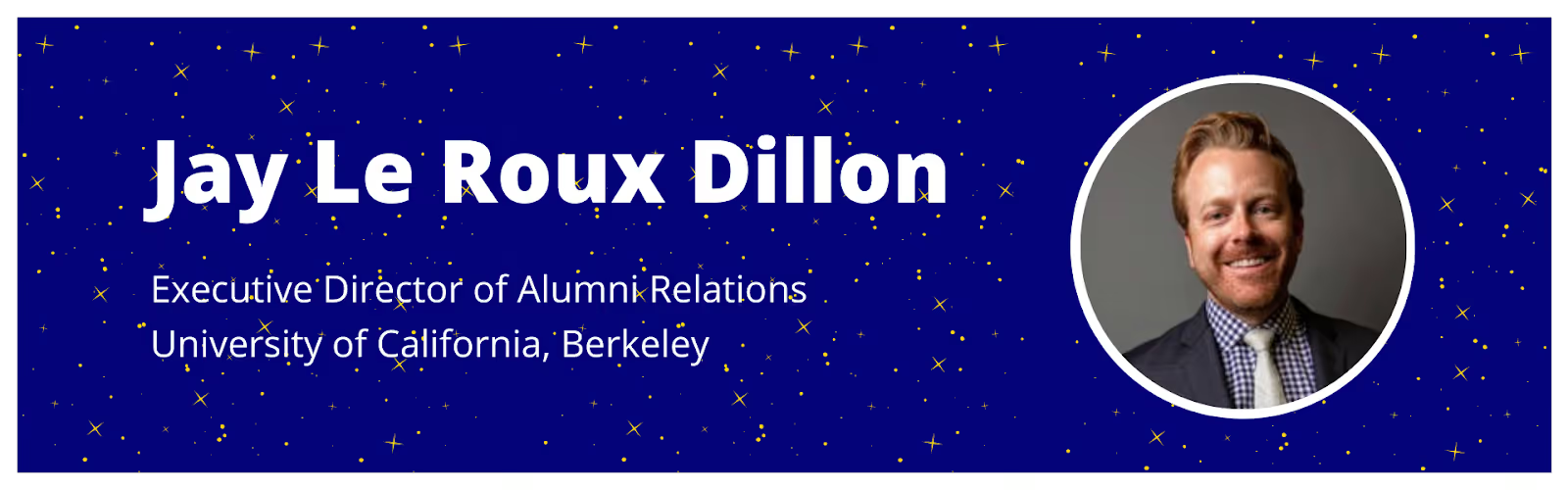
Dr. Jay Dillon has over 17 years of experience in alumni advancement in higher education. He is a skilled alumni strategist with expertise in alumni relations management, fundraising, and donor engagement. He has collaborated with renowned advancement professionals for multiple podcasts that are available on his website.
Jay founded the Alumni Identity Fundraising Consultants in March 2018, a consultancy that helps educational institutions accelerate philanthropy and improve fundraising outcomes. He is presently serving as the Executive Director of Alumni Relations at The University of California, Berkeley.
Here are some of our favorite picks from Jay’s library of resources on LinkedIn:
1. Is Fundraising more Science or Art? The results are in.
2. Donor Demographics are the Enemy of Equity.
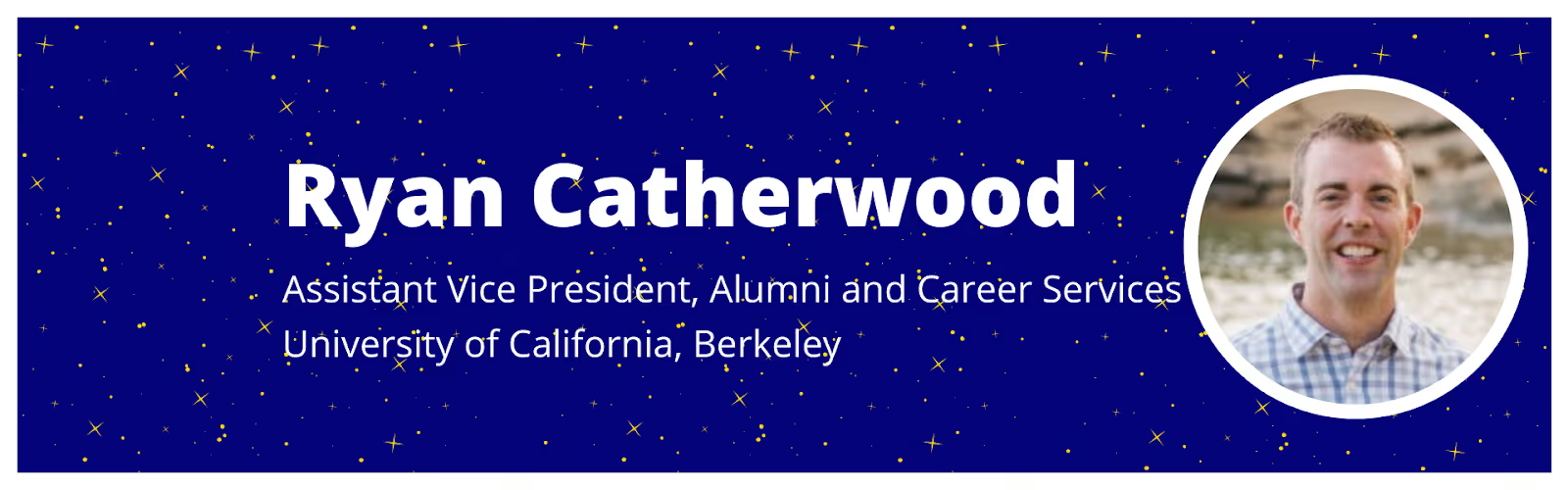
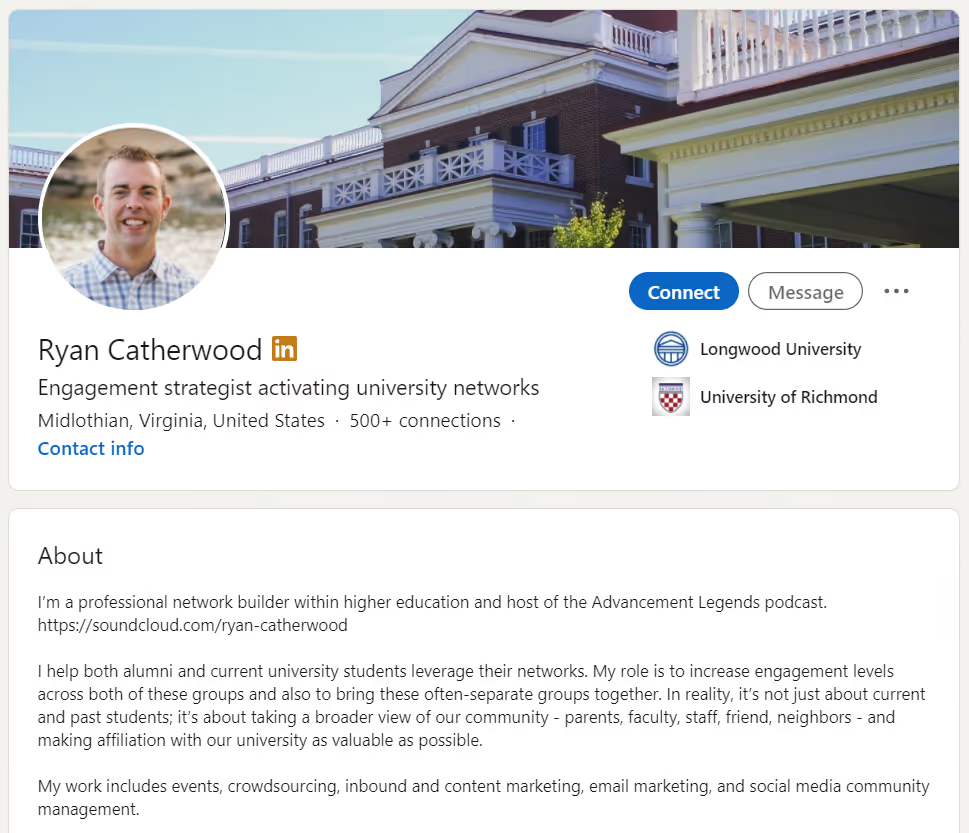
Ryan Catherwood is currently the Assistant Vice President for Alumni and Career Services at The Longwood University in Virginia. He has hosted numerous podcasts on alumni management and advancement. His podcast series, Advancement Legends, features 36 episodes specifically aimed at alumni engagement and fundraising professionals in educational advancement.
Ryan was the former host of Advancement Live, a part of Higher Ed Live (a network of professional development web shows and podcasts) which aired over 30 live episodes covering topics like digital engagement, reunions, and donor relations.
Ryan also specializes in digital marketing, public relations, content management, and community building, in addition to alumni relations management.
Some of Ryan’s resources on LinkedIn you might enjoy reading:
1. For alumni and donor engagement pros, asking questions is the answer
2. What's next for alumni and donor engagement post COVID-19 crisis?
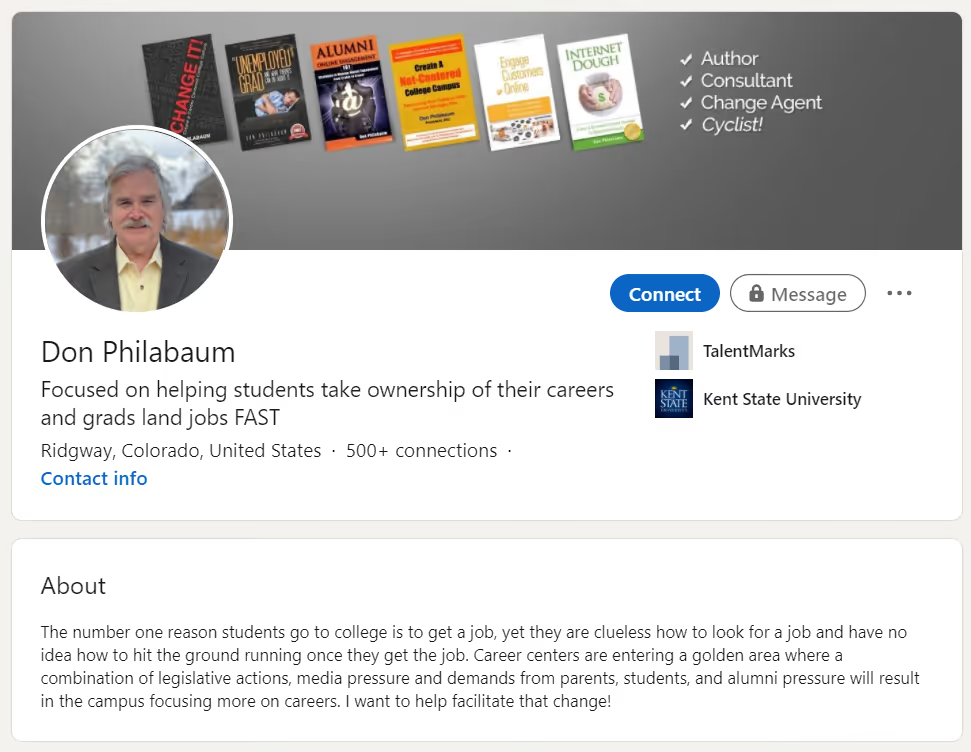
If you are looking for ideas to improve the impact of career services at your institution, then Don Philabaum is someone you should definitely follow on LinkedIn.
Don is the President and CEO of Talentmarks, a company that specializes in career and professional development programming for students, grads, and alumni. He has vast experience helping students find their career paths after graduation.
Don has authored six wonderful books. We highly recommend ‘Change It!: Create A Career Centered College Culture’ for colleges focused on becoming more career-centric.
Some of our favorite resources by Don:
1. What Should Your Alma Mater Focus On? Friend Raising or Career Raising?
2. What Do Alumni REALLY Want From Their Alma Mater?
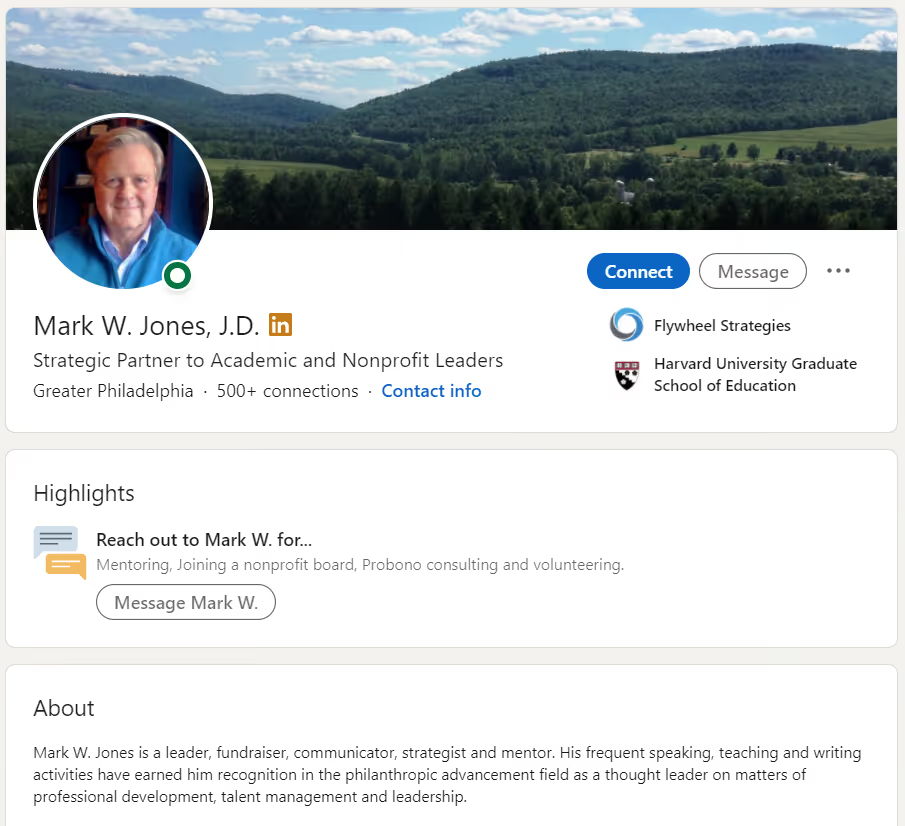
Mark W. Jones, who is currently the Principal and Founder of Flywheel Strategies, has nearly three decades of experience working in frontline fundraising and communication for higher education. He has worked at various leadership levels across different institutions, including serving as Chief Advancement Officer at four leading liberal arts institutions.
Mark’s experienced insights, teaching, and writing have cemented him as a thought leader in the philanthropic advancement field. He has abundant experience working with institutions in unlocking their philanthropic potential through strategic training plans. While working as the leader of Flywheel Strategies, Mark has helped over 20 schools and non-profit organizations with his consultation, facilitation, and coaching services.
Mark regularly writes resources on fundraising strategies, alumni engagement, and talent development. He is also the owner of the Higher Education Advancement Professionals (HEAP) group on LinkedIn.
A few recommendations from Mark’s resource library on LinkedIn:
1. Time + Training = The Two Keys to Sustained Fundraising Success
2. A Checklist: 11 Ways to Train and Develop Your Staff from Day 1
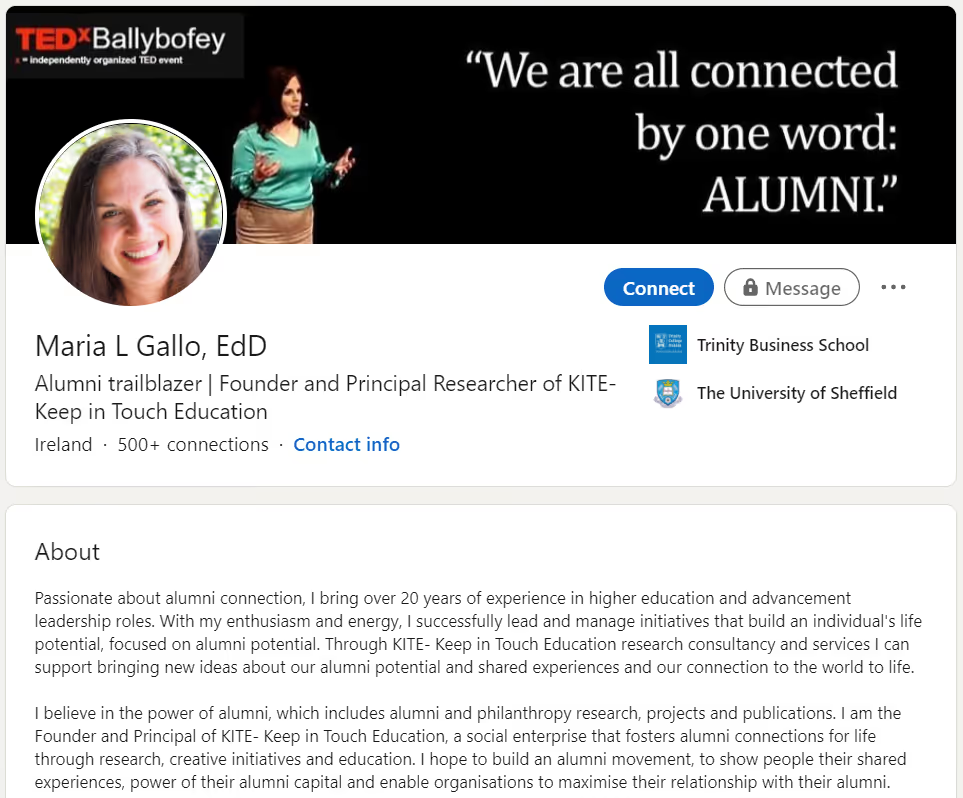
Maria is the Founder & Principal of KITE - Keep In Touch Education, a consultancy that is at the forefront of research and thought leadership in alumni relations, trends, and engagement.
With over 20 years of experience working in various leadership roles in higher education and advancement, Maria brings expert insights and unique perspectives to the table through her resources. Besides having an active research portfolio, Maria also has several peer-reviewed academic journal publications in alumni relationships and philanthropy.
Through her publications, Maria expresses her strong belief in the power alumni networks possess. She also featured in a TEDx Talk in 2018 where she spoke about how one can make the most out of alumni networks.
Here are some of our recommendations from Maria’s LinkedIn library:
1. Orchestrating Alumni Serendipity: Masterminding Alumni Relations of the Future
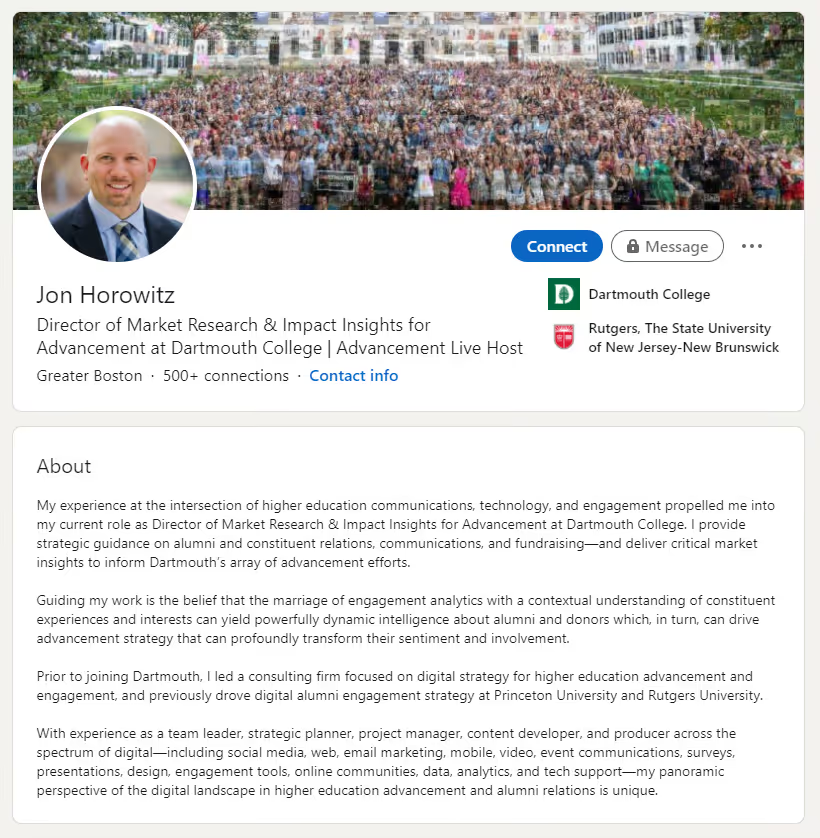
Jon Horowitz has more than 15 years of experience in alumni and constituent relations, communications, and fundraising. He currently works as the Director of Market Research & Impact Insights for Advancement at Dartmouth College. He also hosts Advancement Live, a part of the Higher Ed Live network.
Jon is driven by the belief that the marriage of engagement analytics with a contextual understanding of constituent experiences and interests can yield powerfully dynamic intelligence about alumni and donors which, in turn, can drive advancement strategy that can profoundly transform their sentiment and involvement.
Before working as a director at Dartmouth College, he headed his consulting firm that focused on digital strategies for higher education advancement and engagement. He has previously also been acquainted with Princeton University and Rutgers University in implementing digital alumni engagement strategies.
Our top picks from Jon’s resources:
1. The Best Habits for Successful Digital Alumni Engagement
2. The Best Habits for Successful Digital Alumni Engagement, Part 2
3. The Best Habits for Successful Digital Alumni Engagement, Part 3
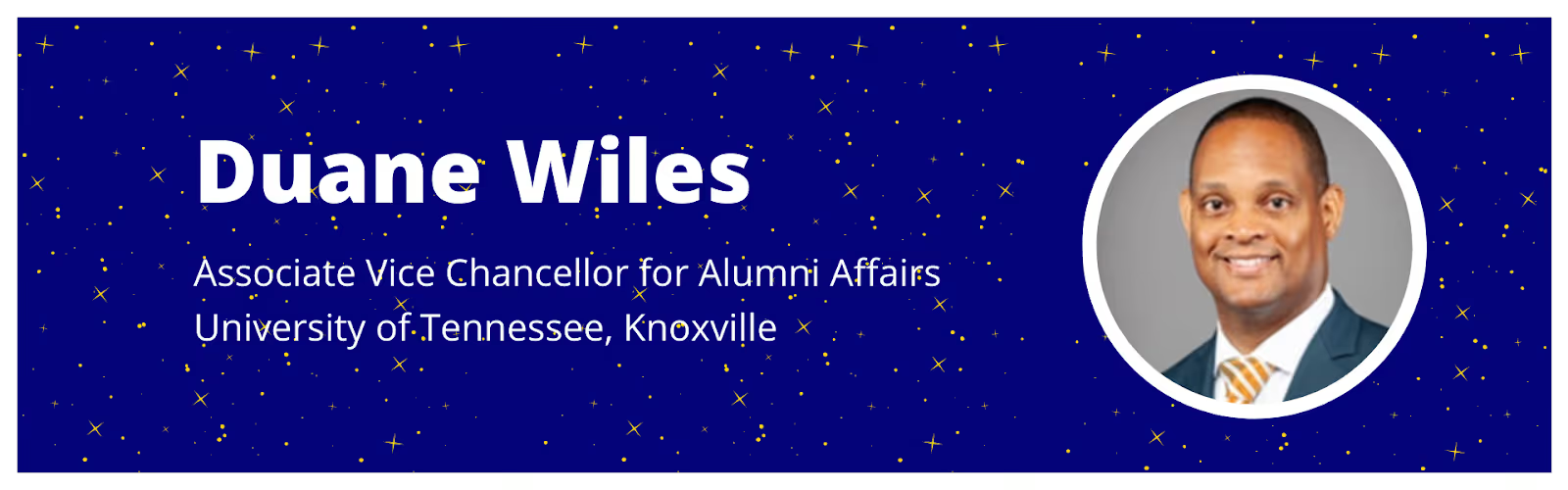
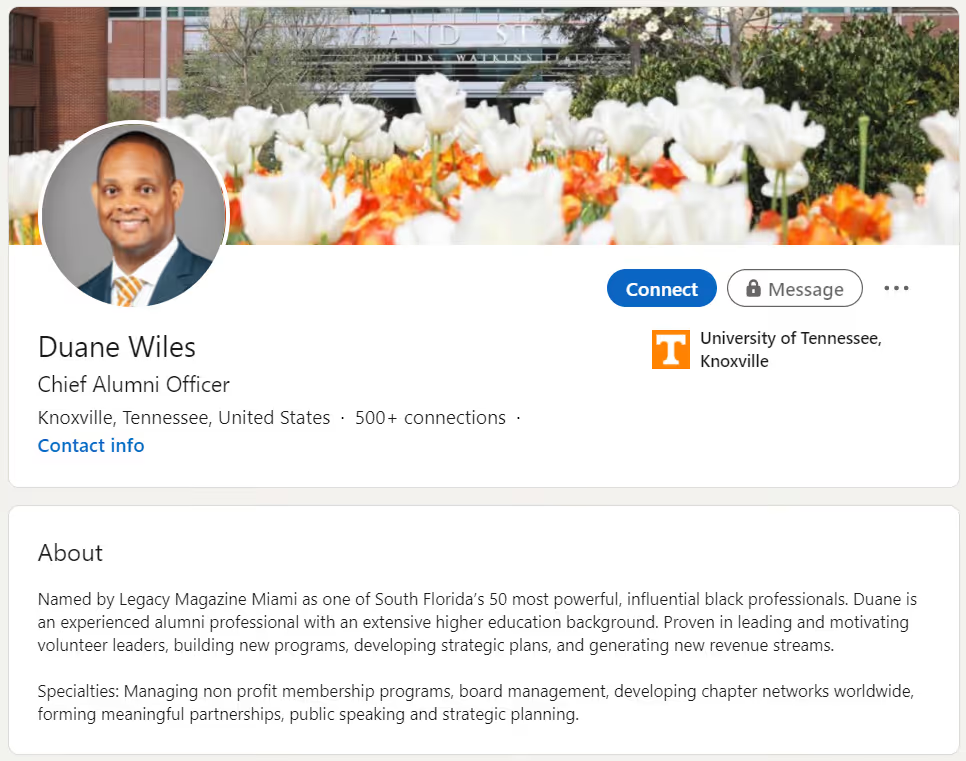
Duane, who currently serves as the Associate Vice Chancellor for Alumni Affairs at the University of Tennessee, Knoxville, has 22 years of experience working in leadership roles in various institutions across the country. One of his numerous accomplishments include being named by Legacy Magazine Miami as one of South Florida’s 50 most powerful, influential black professionals.
Duane is an active board member of the Council of Alumni Association Executives (CAAE), and the organizations led by Wiles have received more than 10 Council for Advancement and Support of Education (CASE) awards of excellence. He has also made contributions to resources on CASE.
Besides his experience in the industry, Duane was also a former football player for the Nebraska Cornhuskers.
Here are some of the resources we loved from Duane’s LinkedIn library:
1. The evolution of virtual volunteering
2. Alumni chapters get creative throughout the pandemic
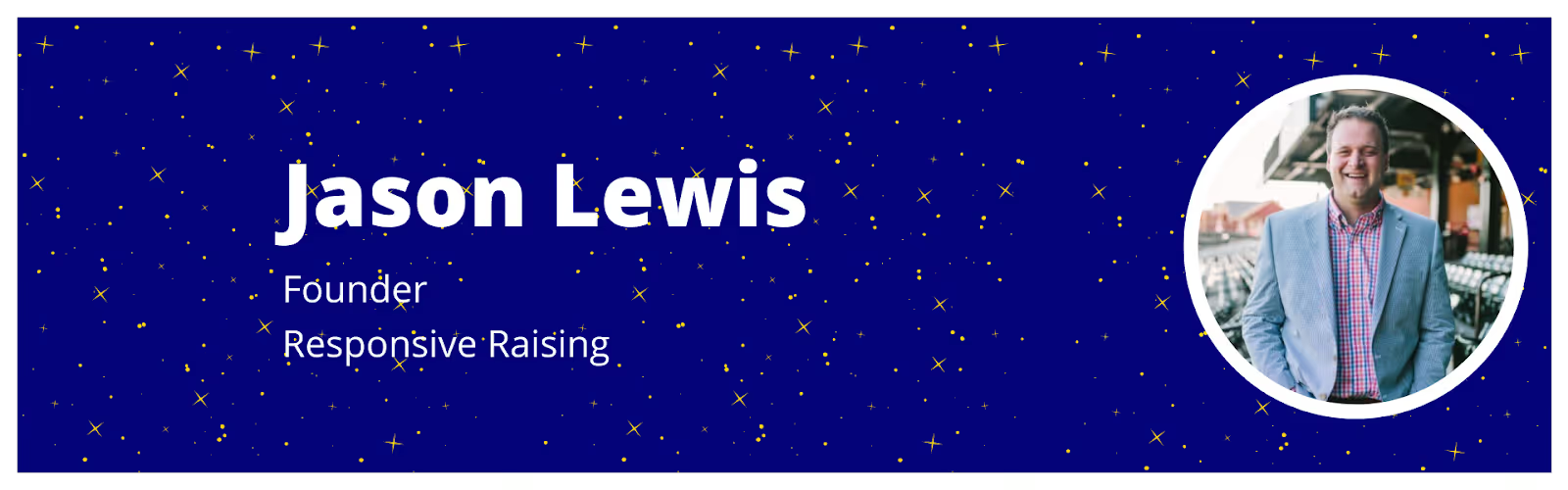
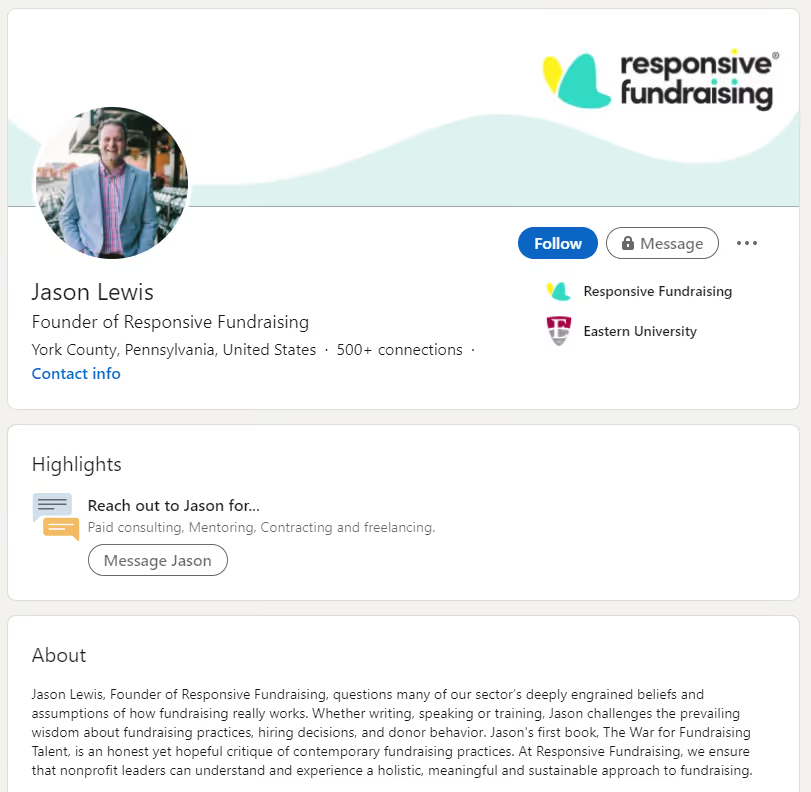
If you are looking for expert tips and guidance on how to effectively raise funds for your campaign, then Jason Lewis is someone you should watch out for.
Jason is the founder of Responsive Fundraising, a management consultancy that helps non-profit leaders find meaningful and sustainable ways of raising funds for their campaigns. His book titled ‘The War For Fundraising Talent: And How Small Shops Can Win’, is an amazing resource for small organizations aiming to fundraise better.
Jason hosts The Fundraising Talent Podcast, a 100-episode series that deals with the latest trends in fundraising
Here are some of our top picks from Jason’s resources:
1. The Decisions Our Donors Are Making, Part 1
2. The Decisions Our Donors Are Making, Part 2
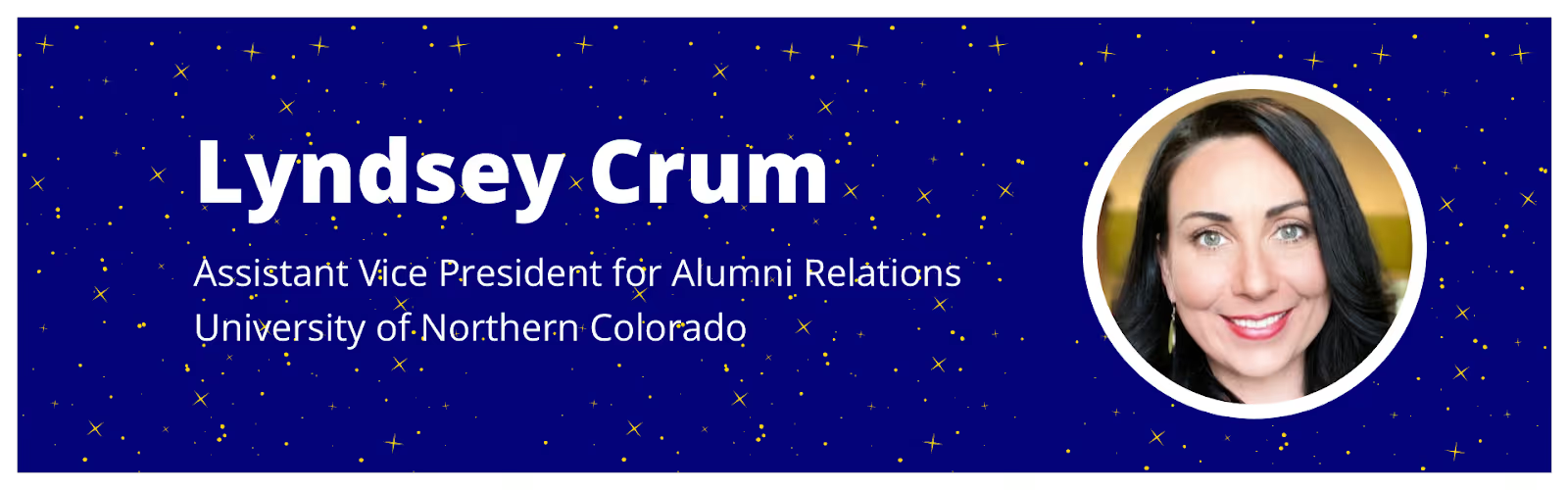
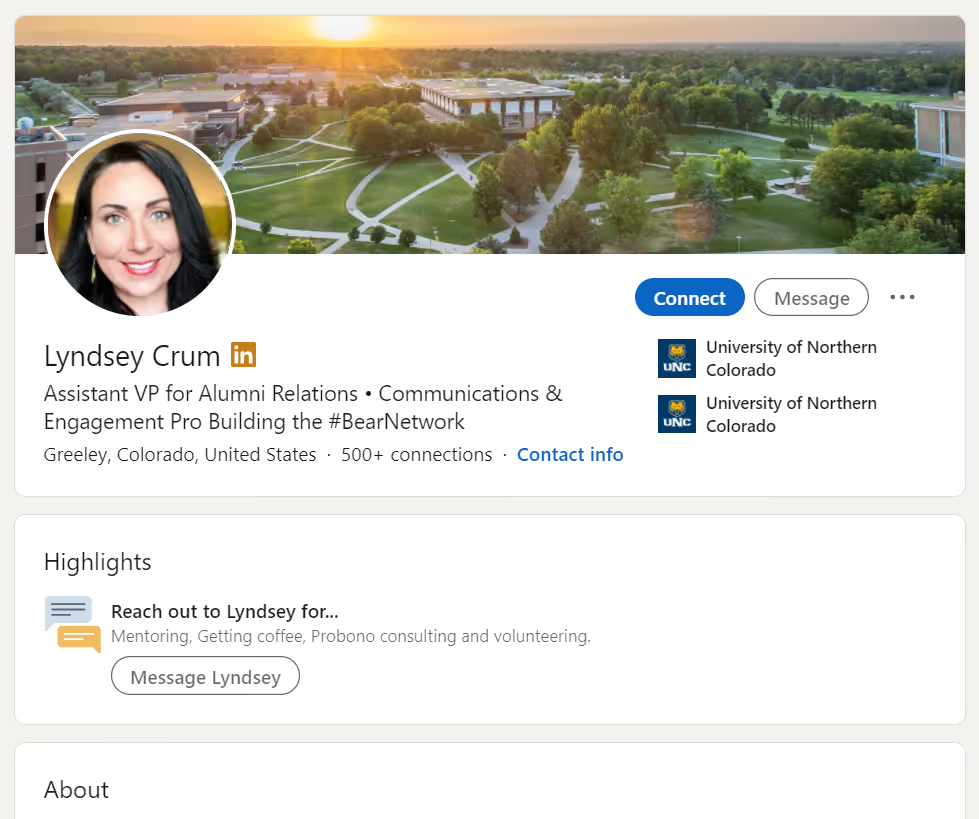
Lyndsey, who has over 15 years of experience in university advancement, currently serves as the AVP for Alumni Relations at her alma mater. She has also served as an advancement leader at the University of Denver and the University of Colorado.
She has worked in raising philanthropic support for educational advancement and also drove public relations and marketing efforts to boost the relevance and impact of higher education.
One of Lyndsey’s driving force is to work towards building a global network of alumni volunteers, donors, advocates, and friends to raise the bar for educational success and career outcomes of current and future students.
Our top picks from what Lyndsey has shared on LinkedIn:
2. Making the Most of LinkedIn
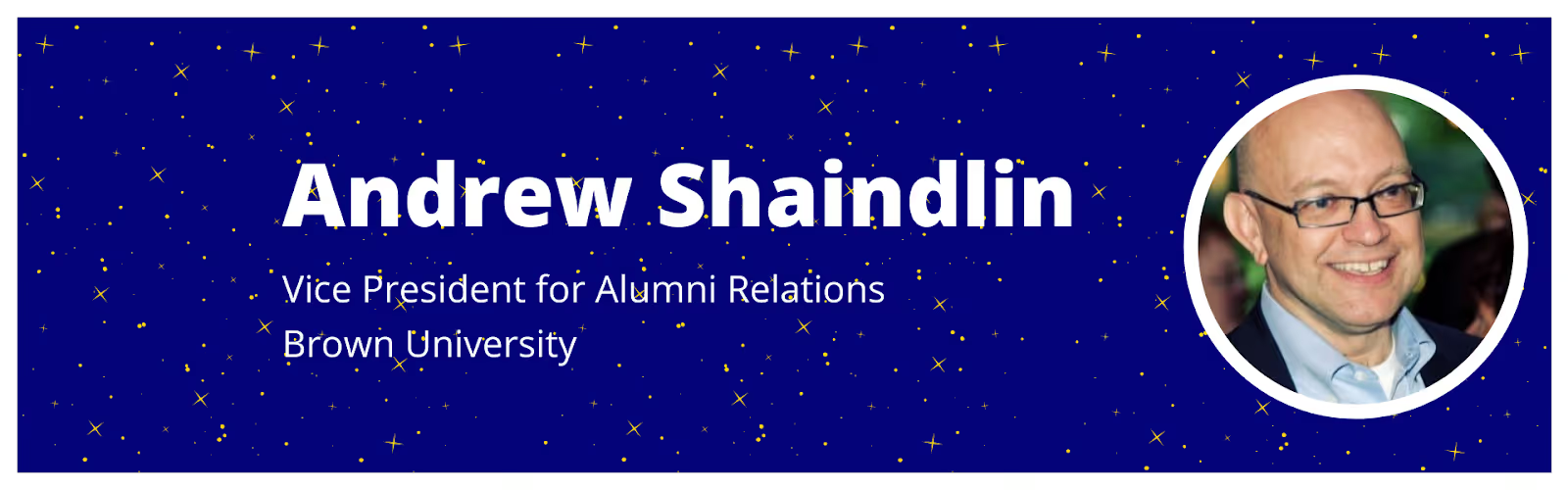
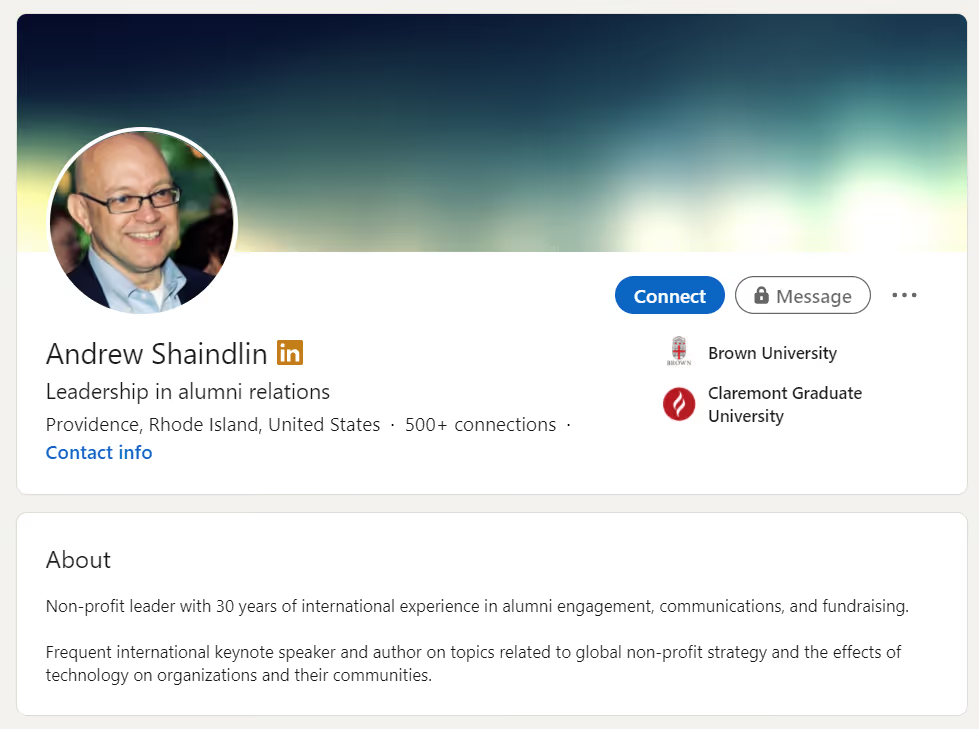
Andrew is a non-profit leader with over 3 decades of international experience in alumni engagement, communications, and fundraising.
Currently the Vice President for Alumni Relations at Brown University, he specializes in strategies for community-driven organizations and coaches education professionals on career success.
He is also a frequent international speaker and author on topics related to global non-profit strategies.
Our recommendations from Andrew’s library of resources that you might like:
1. Alumni Relations in the COVID Era
2. Democratizing Alumni Relations: The Shifting Balance in Engagement
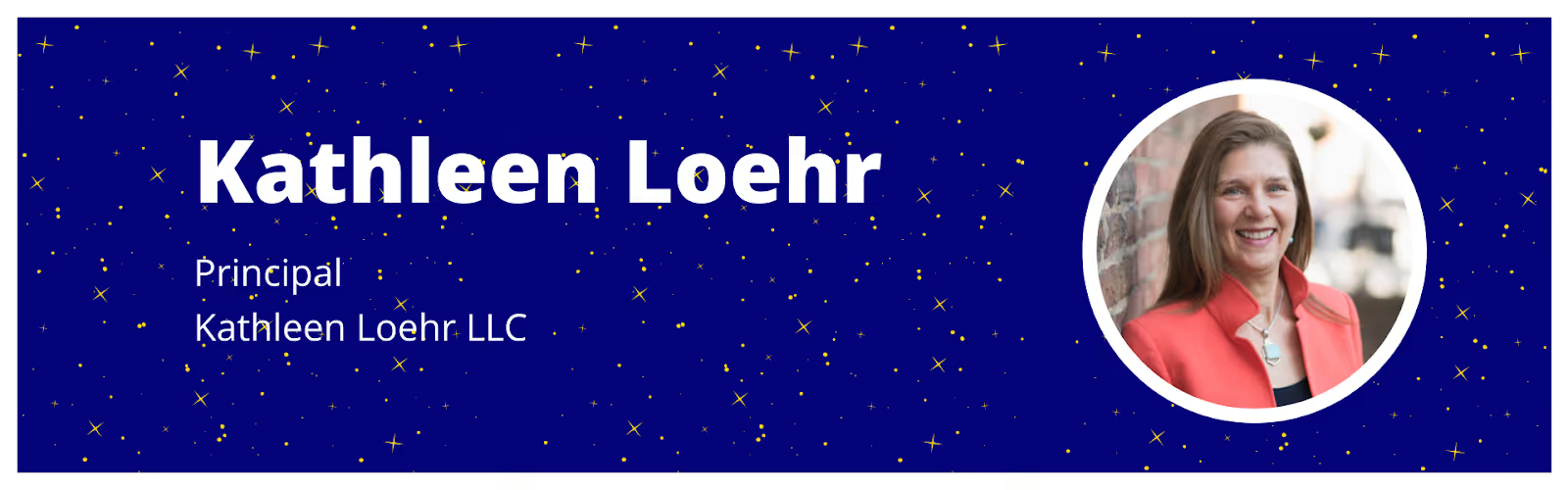
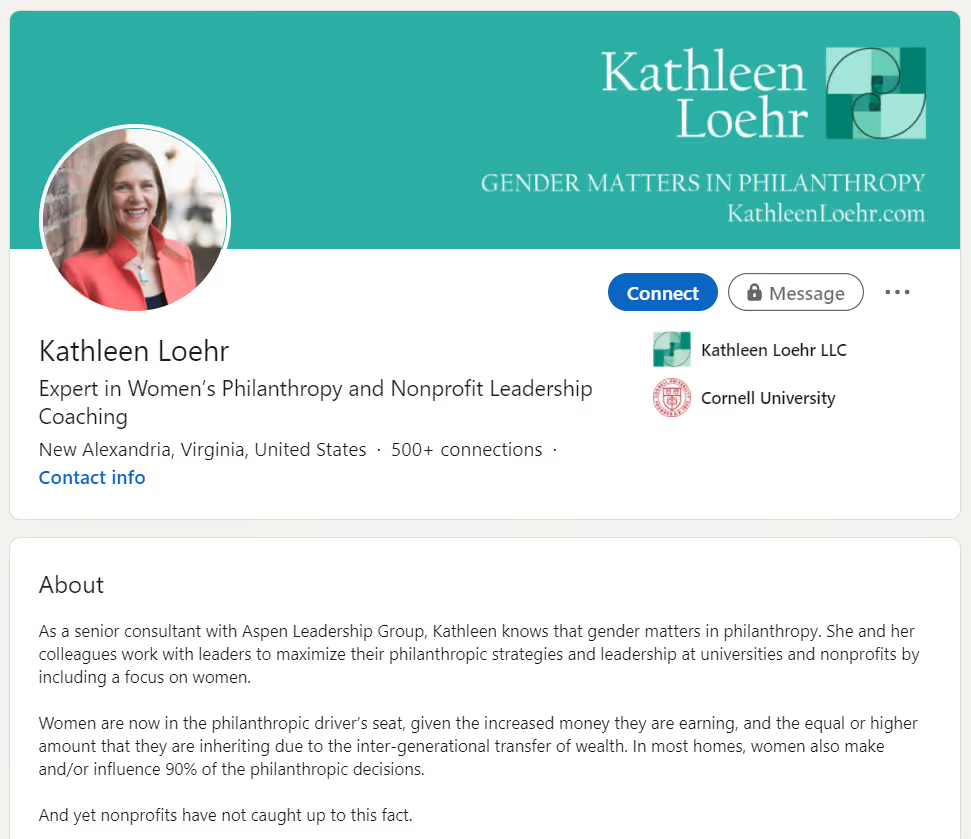
Kathleen, who is currently the Principal at Kathleen Loehr LLC, has more than 35 years of experience working with university and nonprofit leaders as an advisor. Using her knowledge and expertise, she works with leaders who want to create a sustainable model of fundraising for non-profit organizations.
What makes Kathleen stand out as a leader is her impact on modern philanthropy, which puts the focus on women and their growing contributions. Her book, titled Gender Matters: A Guide to Growing Women’s Philanthropy, provides a detailed analysis of how women have taken the center stage in fundraising and also provides actionable insights for fundraising leaders to follow.
Kathleen’s women-centric philanthropy expertise comes from her experience in working with universities and nonprofit organizations to more deeply engage women donors.
What stood out for us among Kathleen’s resources:
1. As Women Surge in Leadership and Philanthropy, Are They Among Your Top Fundraising Priorities?
2. A Broader Definition of Philanthropy by Women
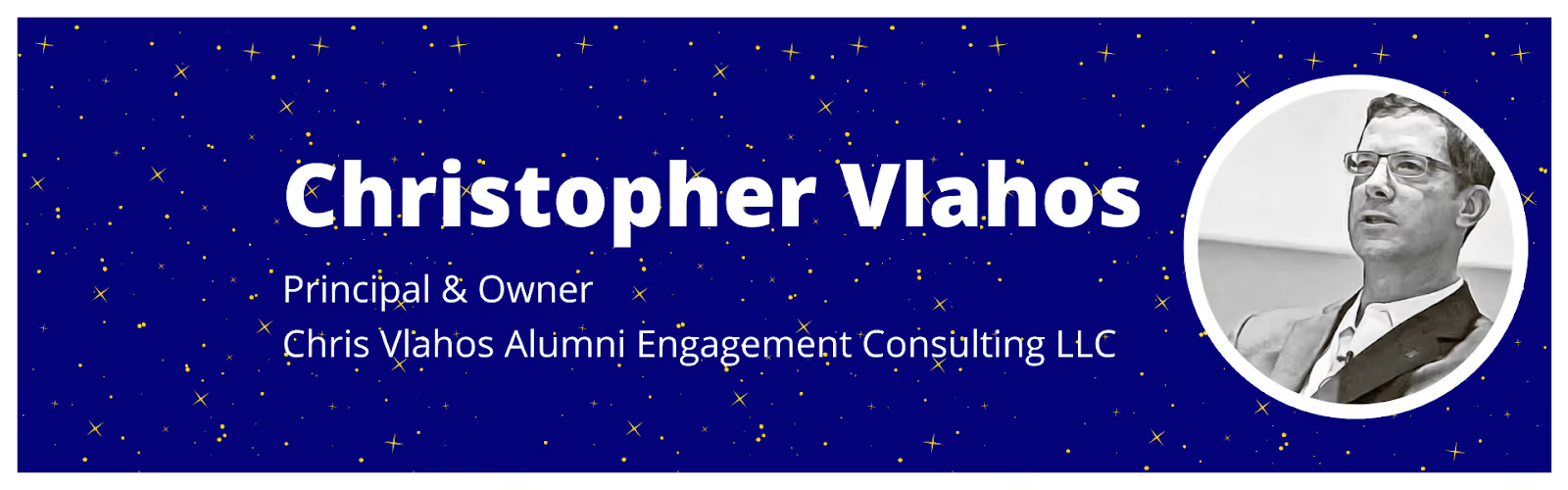
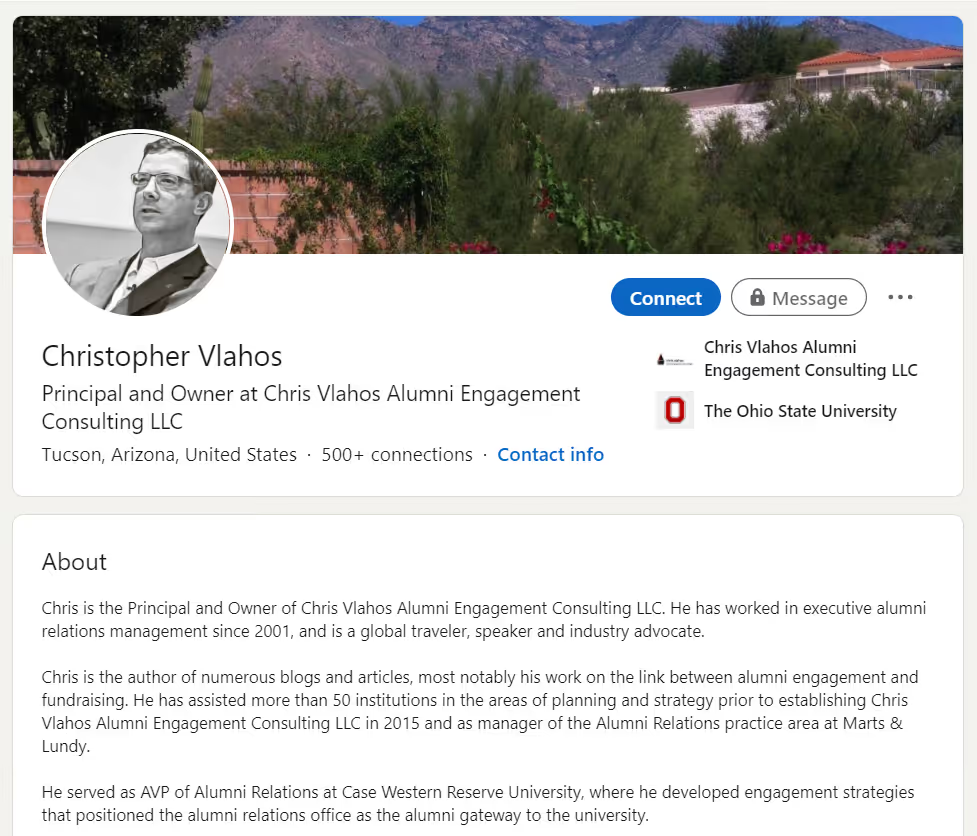
Christopher Vlahos is the Principal & Owner of Chris Vlahos Alumni Engagement Consulting LLC, a consultancy that helps institutions become more effective at alumni engagement. He is the author of multiple blogs and articles, most notably his work on the link between alumni engagement and fundraising.
Christopher’s experience and work are characterized by his emphasis on ‘purposeful alumni engagement’ - a metrics-based concept for institutional advancement that utilizes insight, strategy, and experience.
Heis a founding member of the Council for Alumni Membership & Marketing Professionals (CAMMP), a network of 450+ individuals committed to the needs of membership and marketing programs in alumni relations. Besides being an integral part of CAMMP, he has also maintained a long affiliation with the Council for the Advancement and Support of Education (CASE).
Some of Christopher’s resources on LinkedIn you might like:
1. The 12 Characteristics of a High Performing Alumni Relations Office
2. Alumni Engagement Strategic Planning: A Necessary Normal
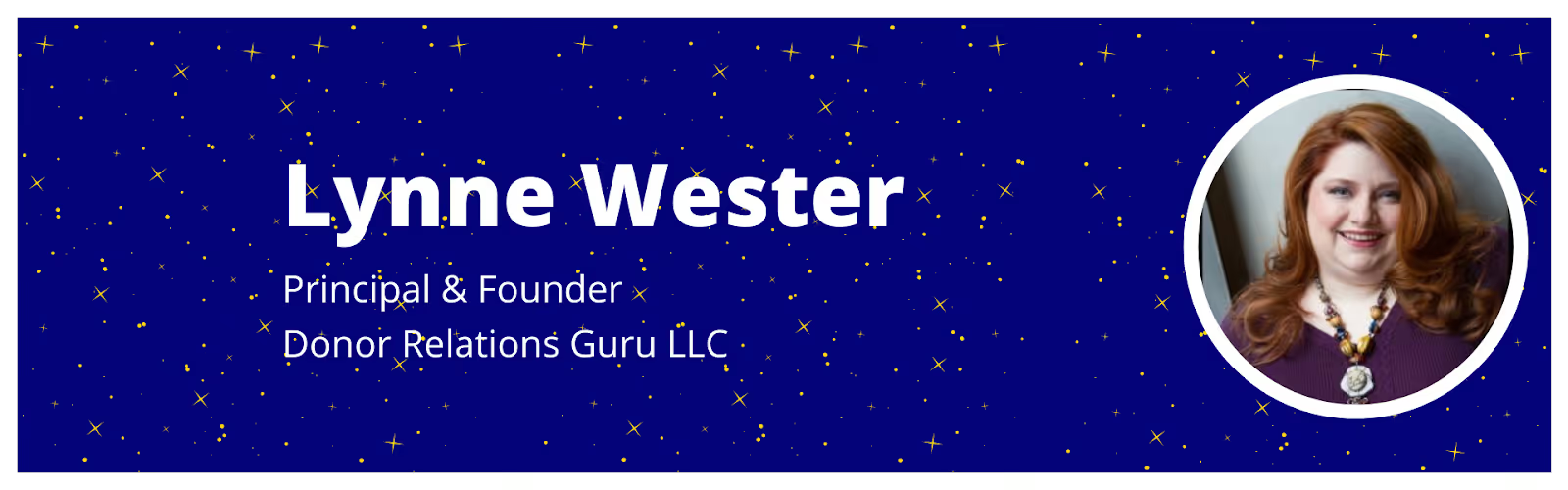
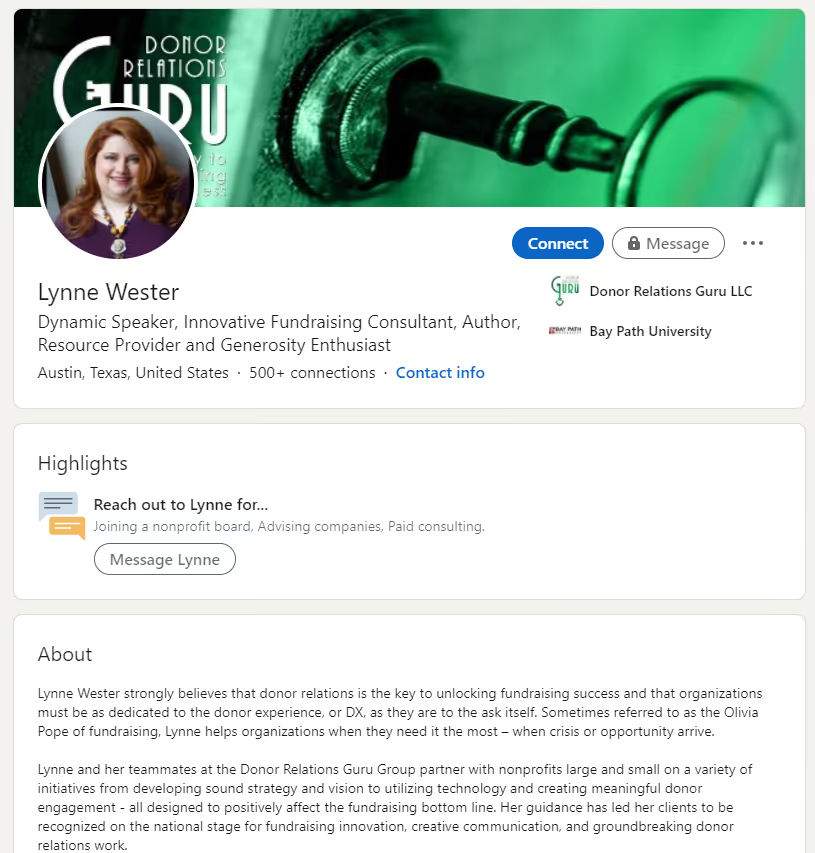
Lynne Wester is a well-known personality in the field of donor engagement and alumni relations. She is the Principal and Founder of Donor Relations Guru, a consultancy that helps non-profit organizations unlock their true potential for fundraising and donor retention. She strongly believes that donor relations hold the key to exceptional fundraising results.
Lynne has helped top institutions in the country with alumni relations and management for over 16 years. She has authored numerous resources that help non-profit organizations and institutions improve their donor retention and engagement.
Here are some must-read resources from Lynne’s extensive library:
2. What you can do for your donors and others in Times of Crisis: COVID-19 Edition
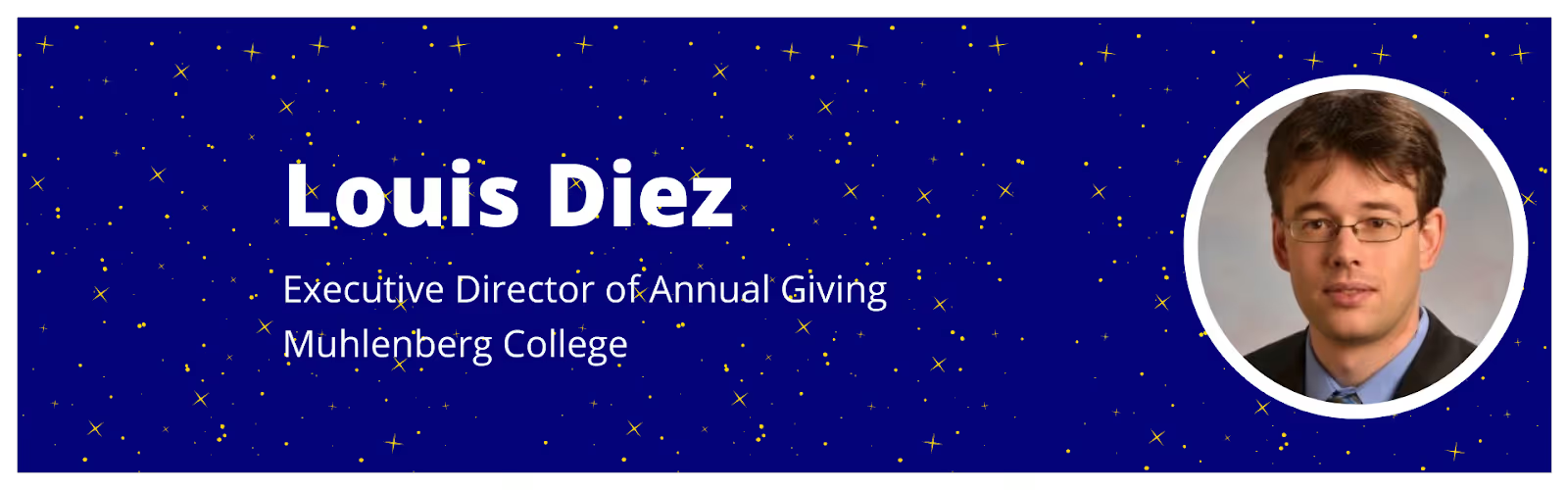
Louis Diez, who is currently the Executive Director of Annual Giving at Muhlenberg College, has 8+ years of experience working as a fundraising professional for various educational institutions. He is also the Principal of MarktLab, a non-profit management organization.
Louis is an expert at annual fund development, digital fundraising, and engagement strategies. He runs the Donor Participation Project, a group of fundraising professionals who take an active interest in the national decline in donor participation.
Some of the resources Louis has written that we recommend:
1. Helpful articles for alumni relation professionals
2. How fundraising should be approached
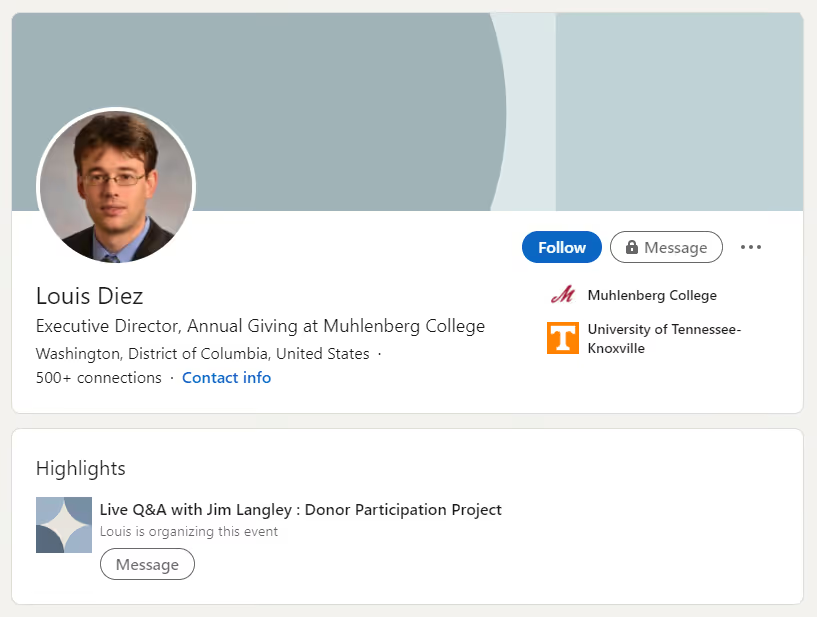
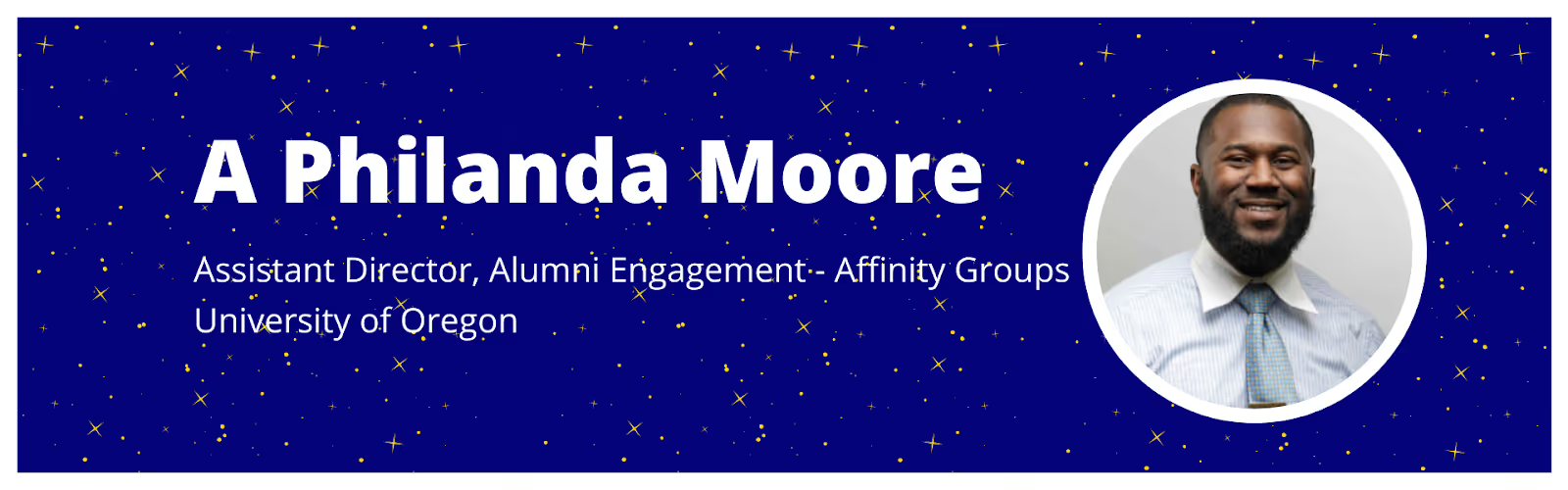
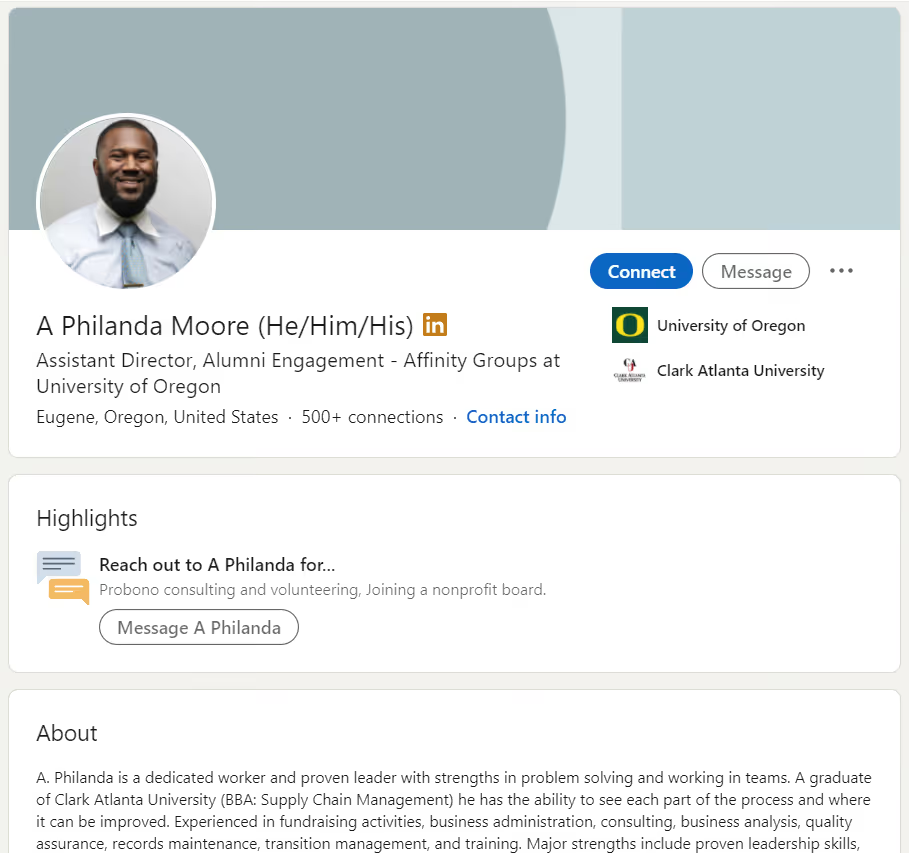
A. Philanda (A.P.) Moore has served as the Assistant Director of Alumni Engagement at the University of Oregon for nearly 3 years. In his role, he serves as the point of contact for minority, special interest, and professional alumni constituency groups in the university.
Recently, A.P. served as a panelist in a webinar that featured noteworthy leaders from the industry. The panel, titled ‘Alumni Relations & Diverse Populations - Reframing Engagement Towards Equity & Inclusion’, was a platform for him and other leaders to discuss how social science research has impacted the engagement of diverse graduates, and how advancement can be more inclusive.
Our top picks from A.P.’s resources shared on LinkedIn:
1. Can colleges be saved in the COVID era?
2. The Coming disruption to colleges
That about wraps up our list of the top alumni relations leaders you should follow on LinkedIn.
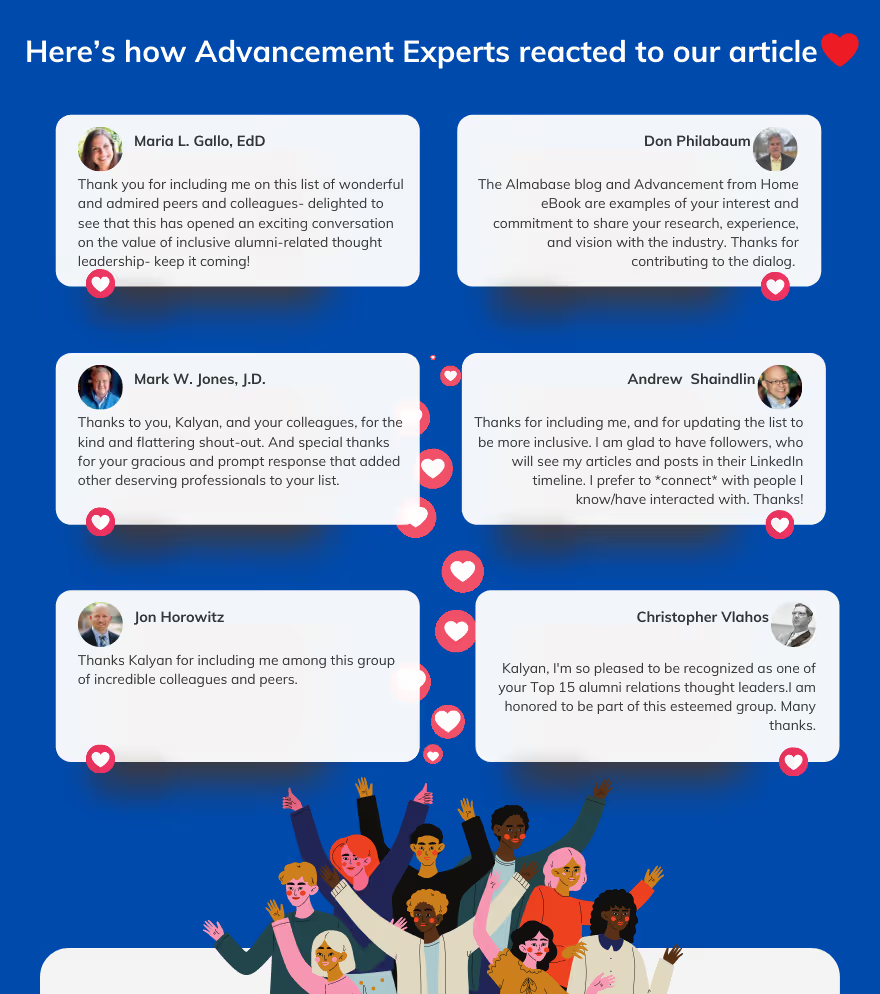
We are immensely grateful for the overwhelming response that we received for this article. A special shout-out to all the advancement leaders for all the inspiration and support:
Institutions will need to bring their A-game to stay on top of their goals for alumni engagement and advancement in 2021. We hope the resources shared by these experts can bring you greater success this year and beyond!

15 Alumni Relations Leaders You Should Follow on LinkedIn
Lorem ipsum dolor sit amet, consectetur adipiscing elit. Suspendisse varius enim in eros elementum tristique. Duis cursus, mi quis viverra ornare, eros dolor interdum nulla, ut commodo diam libero vitae erat. Aenean faucibus nibh et justo cursus id rutrum lorem imperdiet. Nunc ut sem vitae risus tristique posuere.

Kalyan Varma
January 18, 2021
12 minutes
Alumni are the backbone of any institution and maintaining consistent alumni engagement is crucial to building a great institution and ensuring continuity.
While alumni engagement has come a long way from traditional direct mail campaigns and annual student reunions, we've witnessed a tremendous shift in the way alumni relations has evolved. While advancement teams will still continue to engage alumni via traditional channels in 2024, the previous year has shown us enough evidence to suggest that institutions can no longer be restricted to them.
2024 is undoubtedly going to be a challenging year, given the evolutionary phase that alumni relations is currently in. However, where there are new challenges, there are also new opportunities. Alumni engagement this year will offer tremendous possibilities for universities to engage with their alumni on a deeper and more meaningful basis – even in these times of uncertainty and chaos.
Here are five alumni engagement trends for 2024 that you should watch out for to achieve your alumni engagement goals.
As the pandemic made it impossible to host in-person events in 2020, we witnessed a host of creative virtual alumni events by institutions, big and small. While the COVID-19 crisis doesn't seem likely to die down any time soon, recent reports indicate that social distancing guidelines are going to be further relaxed in 2025.
Alumni event strategies this year are set to evolve depending on COVID-19 state regulations. Some schools may continue to host all alumni events virtually, while some may open up their campuses to in-person events. Either way, advancement teams in 2025 will need to take a hybrid approach to keep their alumni engaged.
For a majority of institutions, alumni engagement has been restricted to monthly newsletters, traditional events, and yearly fundraising appeals. But, the pandemic has prompted advancement teams to look for creative solutions to penetrate a wider segment of their alumni population and maintain consistent engagement year-on-year.
The past few years and its unprecedented challenges have allowed institutions an opportunity to review and rebuild their alumni programming with alumni at the core of it. This year, advancement teams will find a way to provide more value and on-demand programming to build meaningful relationships with their alumni. Schools, colleges, and universities will work towards creating easily accessible programs to maximize outreach, facilitate greater flexibility, and enhance alumni relations.
From focused workshops to career networking and mentoring programs, institutions will ensure the easy availability of all these programs to all alumni.
During the pandemic, William Peace University launched a Virtual Book Club focused on professional development and career advancement for the university students and alumni. The group helped set and realize career goals for all participants. Via this initiative, the institution made valuable resources and knowledge easily accessible to alumni and students from the comfort of their homes during a crisis. Read more →
Thus, focusing on alumni needs is the key to forging strong, meaningful relationships in 2025.

Traditionally, alumni engagement data has mostly been limited to measuring event attendance and fundraising revenue. However, these metrics failed to provide any insights during the COVID-19 pandemic, when institutions had to cancel all in-person events and dial down on fundraising asks.
The past few years have provided advancement teams with an opportunity to identify massive gaps in alumni engagement data and work towards creating a better structure for alumni engagement reporting.
As a result, engagement data today can do so much more – from social media interactions, email engagement, mentor-mentee engagement, to volunteer participation and a lot more. Digitization of all this data will offer advancement teams the essential knowledge they need to make the right decisions and develop stronger relationships with alumni.
2020 set a landmark record for one of the highest unemployment rates in the United States. This alarming trend directly affects institutions as a lot of their major gift donors have taken a huge hit on their fortune. Studies indicate that 88% of all funds donated to schools come from 12% of donors, and these donors constitute major gift donors.
Fundraising in 2025 is going to be largely different from what we have saw back in 2020 and 2021. Institutions will shift their focus towards mid-level donors, working towards converting them into long-time donors. Additionally, advancement teams will also be on the lookout for creative ideas to expand their current donor base and drive up engagement with more diverse alumni segments.

The importance of alumni networks for professional networking and career growth has only increased in recent years. With unemployment steadily increasing in the US, institutions have stepped up to provide an additional resource for finding and pursuing career opportunities.
Additionally, these career services also foster alumni engagement by allowing them to provide opportunities while simultaneously tapping into their alma mater's fresh talent to nurture an ever-growing community.
Alumni engagement is a crucial part of advancement and alumni relations efforts for a reason. An effective alumni engagement strategy:
2025 is likely to witness advancement teams rebuilding their alumni engagement programs to cater to the evolving needs of their alumni. This evolving alumni relations landscape calls for the adoption of more modern, technology-driven strategies for effective alumni engagement.
With the amount of changes that alumni relations has gone through in the past few months, we've already witnessed some amazing new trends emerge in the last few months.
.avif)
5 Alumni Engagement Trends You Need To Watch Out For in 2026
Lorem ipsum dolor sit amet, consectetur adipiscing elit. Suspendisse varius enim in eros elementum tristique. Duis cursus, mi quis viverra ornare, eros dolor interdum nulla, ut commodo diam libero vitae erat. Aenean faucibus nibh et justo cursus id rutrum lorem imperdiet. Nunc ut sem vitae risus tristique posuere.
As part of the higher education sector, your university likely depends on social campaigns like peer-to-peer fundraising and crowdfunding to fund its projects and initiatives. While these campaigns have the potential for a wide reach, they require effective promotion to maximize alumni support.
How can you retain alumni support long after they receive their diplomas? Let’s explore the top marketing practices your university should employ when planning your outreach strategy.
Your alumni may be eager to support your university, but many are unaware of the opportunities available to help them maximize their contributions—namely, matching gifts.
Matching gifts are a type of corporate social responsibility initiative wherein businesses match donations made by their employees. Double the Donation defines corporate social responsibility as “a company’s efforts to improve society” in a multitude of ways, from directly donating to supporting employee giving. Matching gifts combine both of these efforts and represent a major revenue opportunity for universities.
Identify match-eligible alumni by looking into your existing donor base. Specifically, take a look at your alumni and major donors who represent your largest match opportunities. Then, secure matching gifts from alumni by promoting the opportunity to match-eligible individuals through:
As you solicit matched gifts, maintain an open line of communication with major employers who offer matches. Periodically review their policies and ask them to notify you if any changes are made to their matching gift program. Both universities and donors should stay on top of employers’ match guidelines to avoid missing out on matching gift revenue.
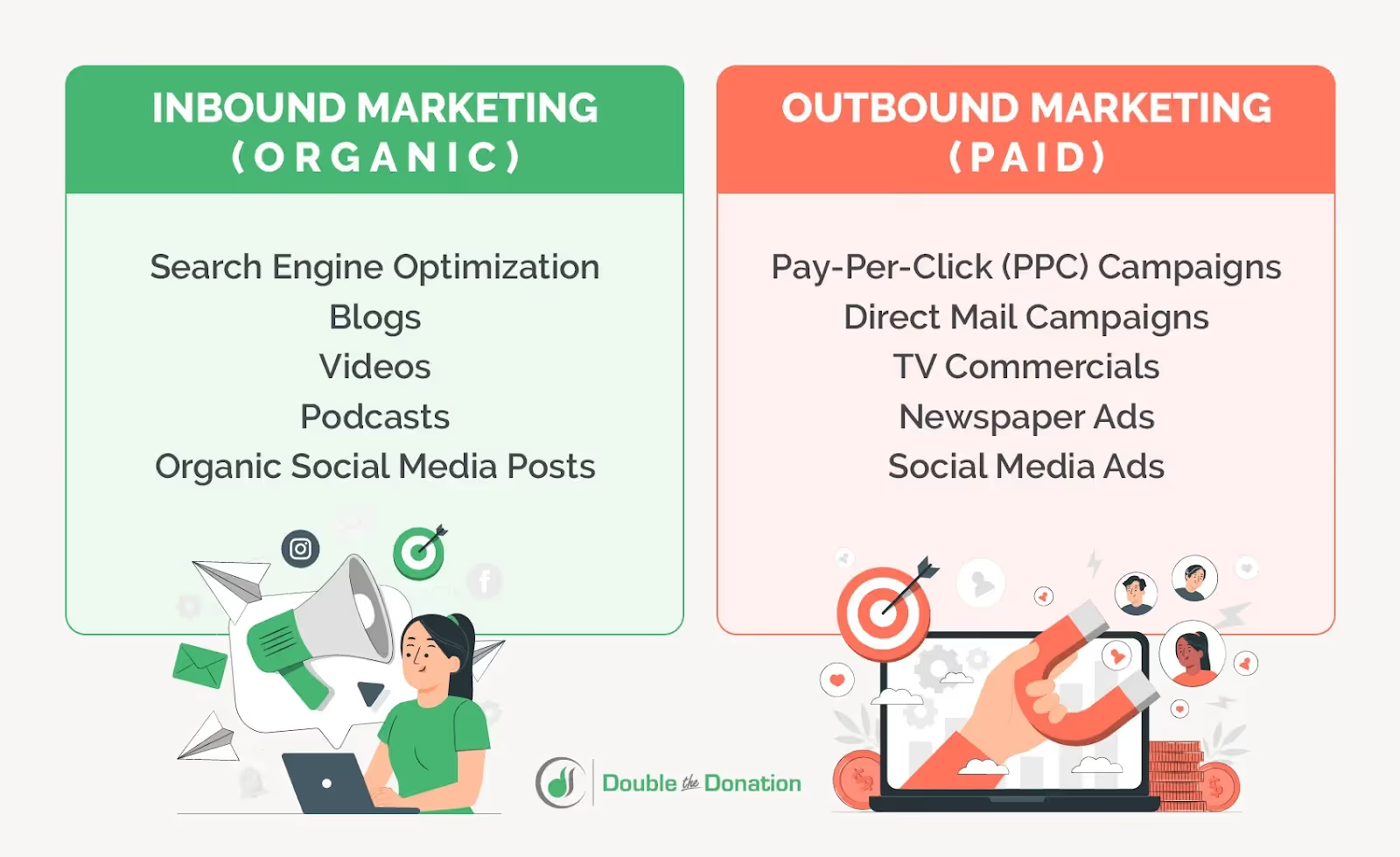
Communication is the foundation of a successful fundraising campaign. While some approaches are more effective than others, the best results come from incorporating multiple channels—especially for larger donor bases.
There are two types of marketing your university can leverage, and each type has a plethora of channels you can use to spread the word about your campaigns:
Remember, communication is a two-way street. You won’t just want to send messages to alumni, but to stay in touch with them over time. Ensure that alumni and any volunteer fundraisers feel free to voice their feedback or concerns.

Effective communication is about more than just an open line of communication—it’s about powerful storytelling, too. Stories encourage alumni to form stronger connections with your university’s mission, students, and impact.
As part of your marketing approach, implement the following storytelling strategies into your content:
Storytelling and powerful imagery compel users to share content with their networks, so it’s crucial that you make your storytelling components shareable. For example, you might place a “Share” button next to the content on your alumni website that makes it easy for viewers to repost an article or video to their social media channels.
In all your digital marketing materials, make it easy for viewers to take action by directing them to your donation page. Make the most of clear calls to action, prominent buttons, and QR codes across all the channels you use. To ensure shareability, use an effective social campaigning platform and the right social media platforms.
Additionally, when alumni land on your fundraising page, they should be able to take action easily. Check to ensure your donation form can be quickly completed and doesn’t require any unnecessary steps. With a compelling marketing strategy and simple form, your university can seamlessly convert alumni into dedicated supporters.
Now that you know the best marketing practices, share this information with your fundraising team, and plan your best campaign yet! Then, as donations start to roll in, be sure to show your appreciation for donors’ support and continue to engage them by offering additional involvement opportunities. The more active your donors are in your university’s activities, the more likely they’ll be to continue their support.
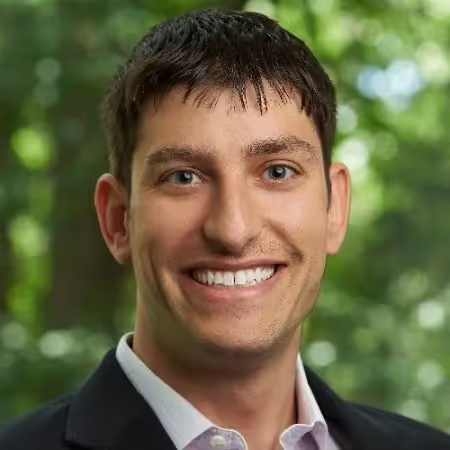
Adam Weinger is the President of Double the Donation, the leading provider of tools to nonprofits to help them raise more money from corporate matching gift and volunteer grant programs.
Double the Donation's robust solution, 360MatchPro, provides nonprofits with automated tools to identify match-eligible donors, drive matches to completion, and gain actionable insights. 360MatchPro integrates directly into donation forms, CRMs, social fundraising software, and other nonprofit technology solutions to capture employment information and follow up appropriately with donors about matching gifts.

4 Marketing Strategies University Fundraisers Need to Know
Lorem ipsum dolor sit amet, consectetur adipiscing elit. Suspendisse varius enim in eros elementum tristique. Duis cursus, mi quis viverra ornare, eros dolor interdum nulla, ut commodo diam libero vitae erat. Aenean faucibus nibh et justo cursus id rutrum lorem imperdiet. Nunc ut sem vitae risus tristique posuere.
%201.svg)
%201.svg)
%204.svg)


.svg)