See 10 college landing page examples and practical tips to build branded pages for events, fundraising, and alumni engagement that drive action.

Anwesha Kiran
Published:
April 20, 2026
Updated:
May 11, 2026

Higher ed institutions are competing for attention on more fronts than ever, whether that’s admissions, alumni giving, event sign-ups, or donor campaigns. A landing page isn’t just a brochure anymore. After all, it is often the point where someone decides whether to apply, register, or give.
Taking a page from one that doesn’t convert to one that does comes down to making a few key things working well together: how clearly the message comes across, how quickly the page loads, and whether the next step is obvious.
In this blog we cover 10 of the best college and university landing page examples, covering what each one does well, why it works, and what you can take from it.
Before we look at landing pages, it helps to be clear on what moves the needle. The strongest landing pages are built with a very specific outcome in mind. They’re not trying to speak to everyone at once. Instead, they’re focused on one audience and one outcome, whether that’s getting a prospective student to start an application or prompting an alum to make a gift.
These elements separate high-performing pages from the rest, and you’ll see them show up consistently in the examples ahead. It is worth thinking about what these elements would look like on the landing page of your own institution.
RISD's landing page looks like the work of someone who went to RISD. The layout is sparse and high-contrast, built around student artwork that fills the screen with almost no text competing for attention. It feels entirely intentional and arouses curiosity immediately. There’s also a clear sense of pride in showcasing the featured artwork.

What stands out:
RISD's landing page is a portfolio and a university website rolled into one, which makes a loud case for the institution.
The visuals carry the otherwise sparse-looking page, speaking to the confidence of the institution in the work showcased.

Why it works:
Takeaway for higher ed teams: Your visual identity should reflect your curriculum. A school with a generic layout has very little chance of making a lasting impression. RISD shows their own version of this with a blend of confidence and restraint.
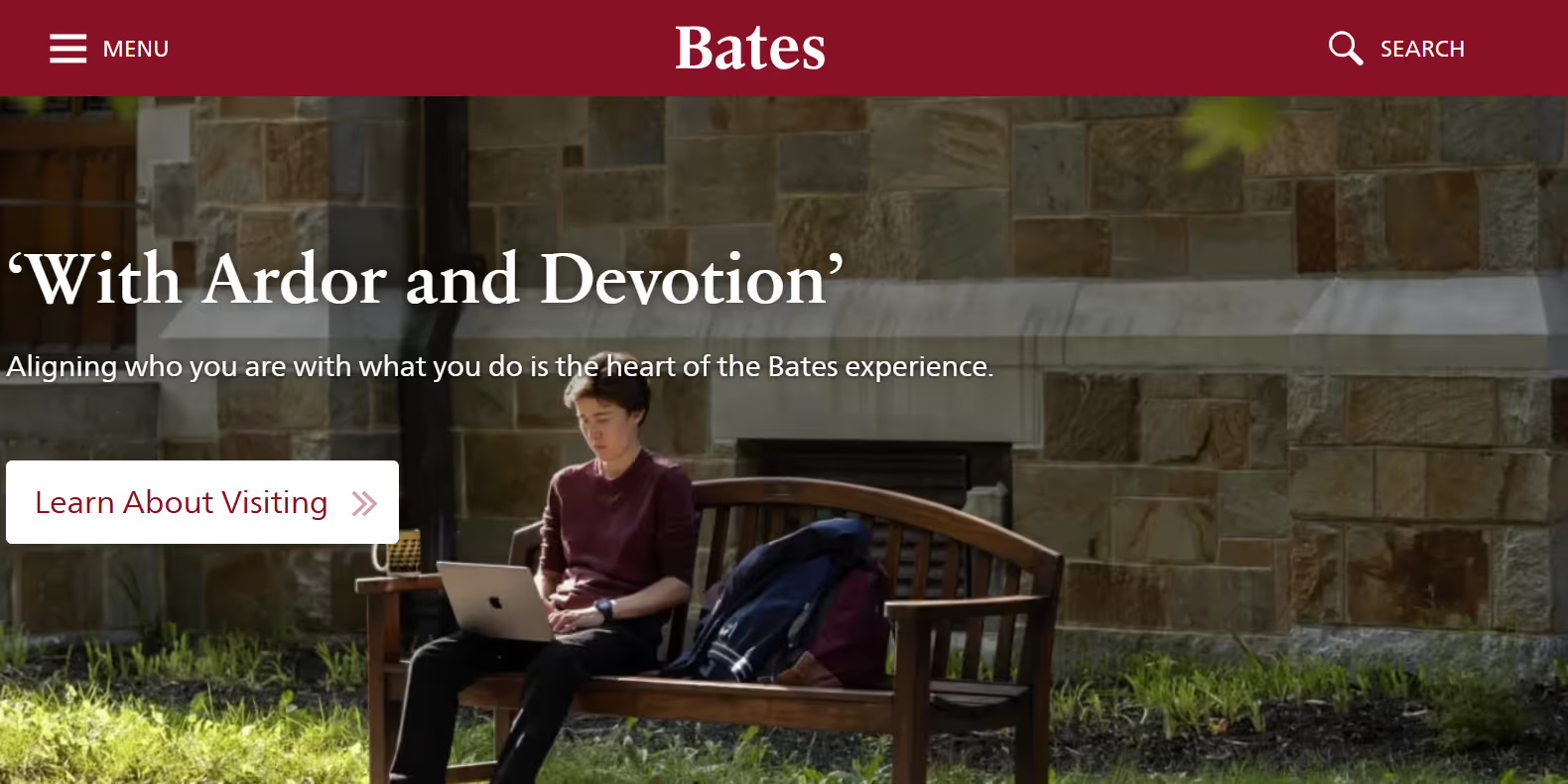
Bates College has always had a warmer, more personal feel and the landing page reflects that. It’s minimal and clean and it doesn’t try to do too much. Navigation is straightforward, and key experiences are easy to access without digging. The page trusts that visitors will engage when they’re ready, and in the meantime, it gets out of the way. This simplicity speaks to the confidence that the content is strong enough to carry it.
What stands out:
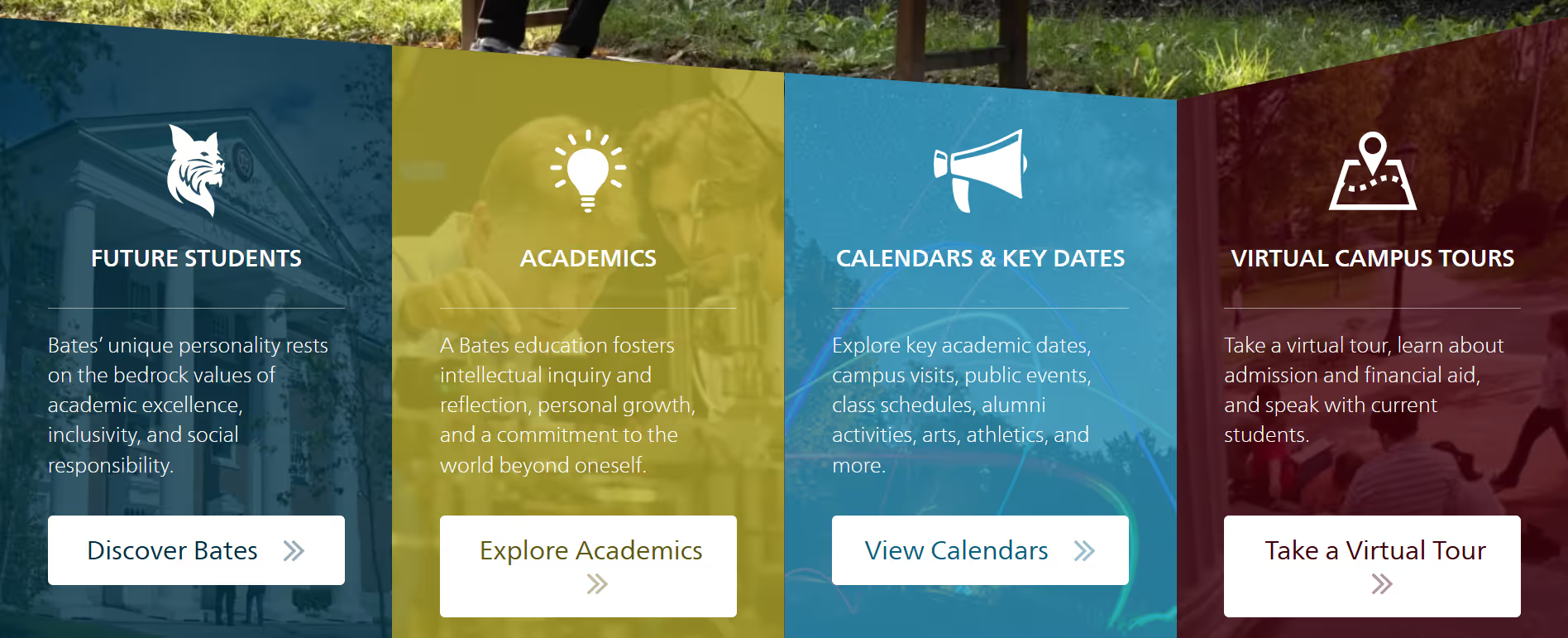
The “Take a Virtual Tour” feature shows up early and clearly. For a residential college, that’s a meaningful choice since it gives prospective students a sense of the campus without requiring them to search for it.
The site also extends beyond the landing page itself. The embedded social feed-style content (like the Instagram grid showing campus life, safety updates, student moments, and everyday activity) keeps the experience fresh.
Why it works:
Takeaway for higher ed teams:
Treat a virtual tour as more than a ‘good to have’ or just a nice addition. Placed well, it can do a lot of the work of a campus visit. More broadly, it’s worth identifying which experiences answer your audience’s biggest questions and making those easy to access.
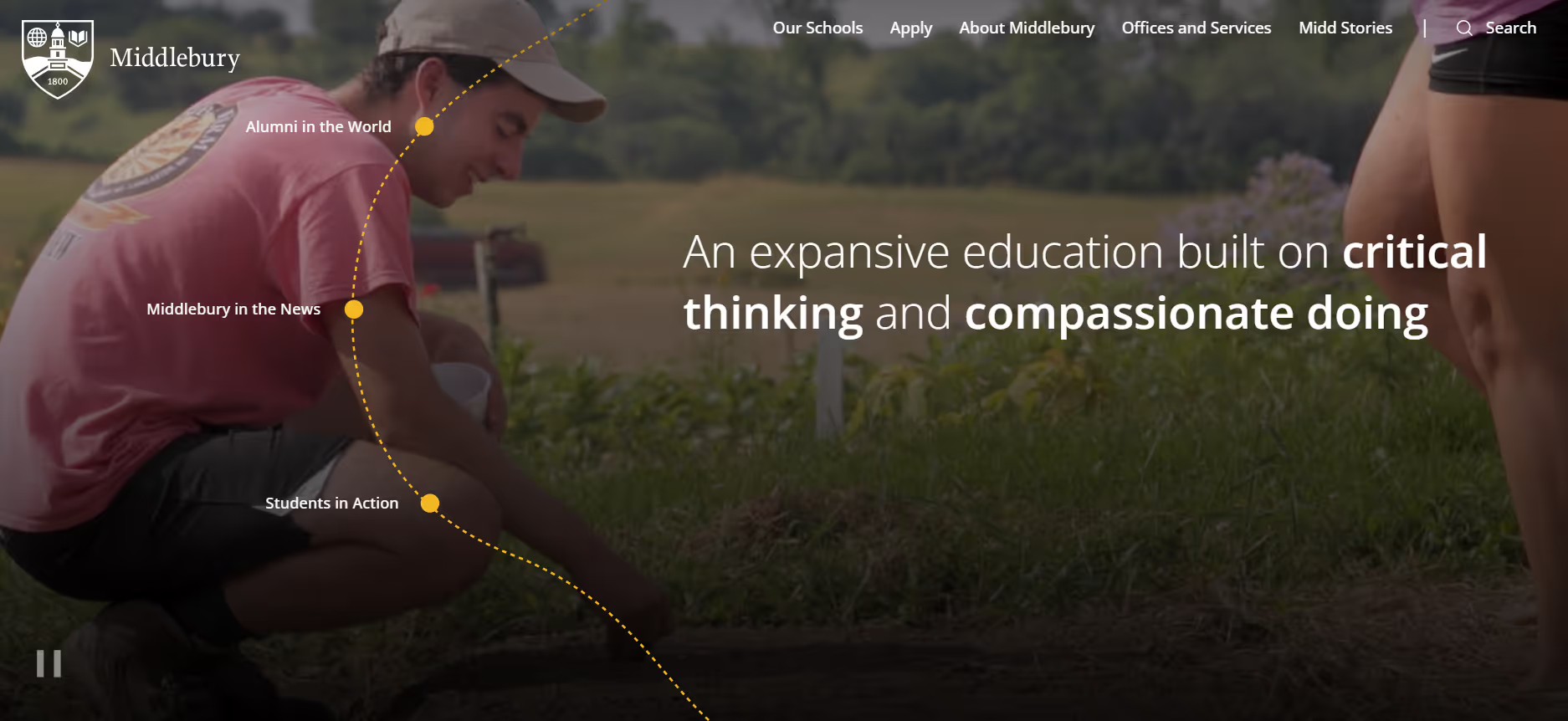
Middlebury’s landing page builds gradually as you move through it. Campus visuals lead into sections like “Projects to Build Our Future,” which ground the institution’s ambitions in specific, ongoing work rather than broad messaging. It unfolds gradually as you move through it, with different sections adding context.
What stands out:
The “Projects to Build Our Future” section gives visitors a more concrete outcome to engage with. It ties the institution’s ambitions to specific, ongoing work, which works better than abstract positioning.
Why it works:

Takeaway for higher ed teams:
Pages work better when they give visitors both something to feel and something to evaluate. Middlebury manages that balance well. Pairing storytelling with concrete examples can make a page more persuasive.
Johns Hopkins has a landing page that rewards scrolling. It leads with a statement first, supported by stories of real people and their specific experiences. It then opens to the broader research and healthcare identity of the university. The tab structure is also worth noting: where most sites stack navigation at the top, Johns Hopkins places it along the right-hand side, which changes the rhythm of how you move through the page and keeps you alert.

What stands out:
Starting with people shifts the tone of the page. Anecdotal evidence has a way of sticking and the page uses that to its advantage. It feels human before it feels impressive.
The right-side navigation also changes how you move through the experience, giving the page a more intentional feel.
Why it works:

Takeaway for higher ed teams:
The order of information matters as much as the information itself. Leading with people can make everything that follows easier to connect with. That’s a useful shift even for simpler pages. A static "About Us" copy cannot build trust the way live, up-to-date proof of impact does.
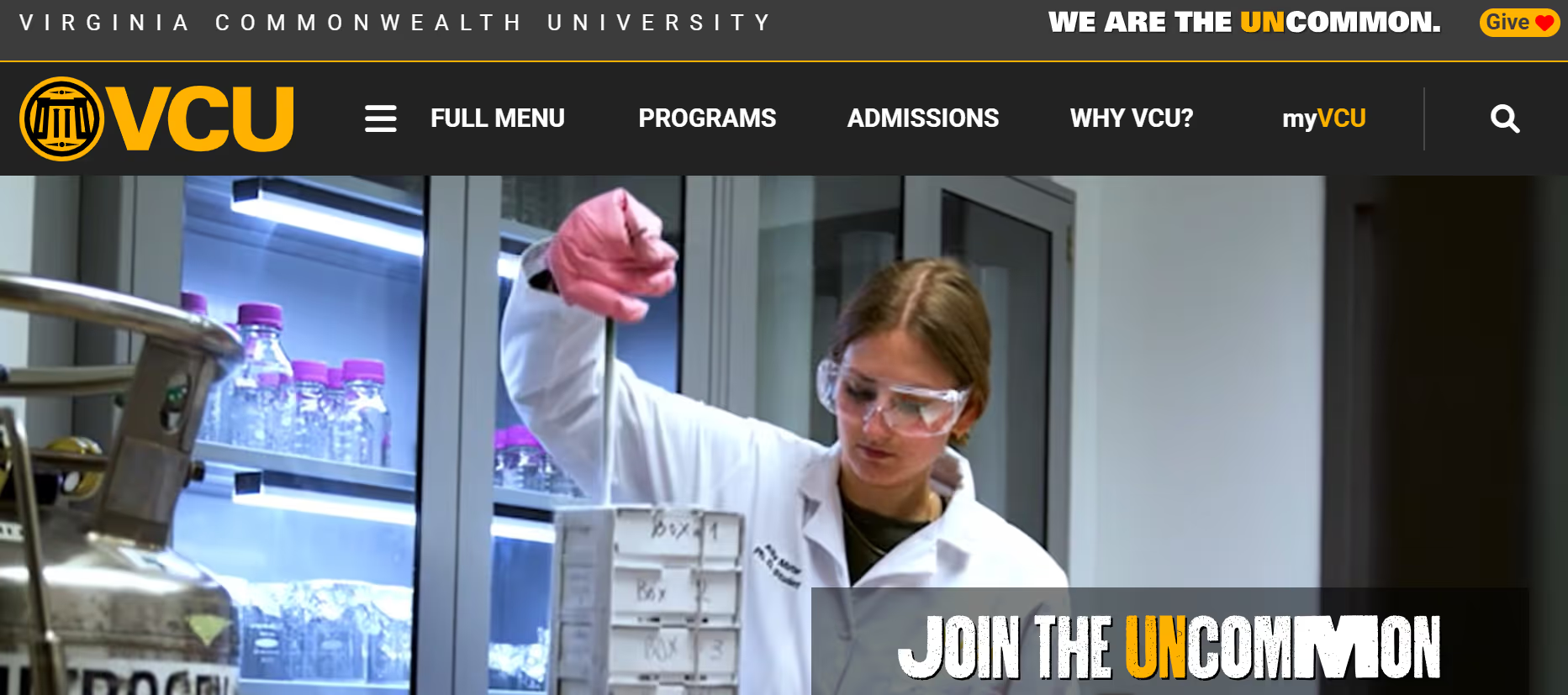
VCU’s landing page has a certain energy to it. The color does a lot of the work with the way the energetic yellow runs through the page. It looks purposeful and fresh. It shows up where you’d expect it to: on actions, on highlights, on anything that needs attention. Alongside that, the page leans heavily on student voices, particularly through video.
What stands out:
The testimonials are doing a lot of heavy lifting on this page. Instead of explaining what the university is like, the page lets students speak for themselves. The color then ties everything together, along with the inviting copy (“Join the Uncommon”), making it very clear where a visitor’s attention should be at all times.

Why it works:
Takeaway for higher ed teams:
If you have strong student voices, bring them forward. They answer questions better than polished copy or generic FAQs. The lesson here is to be smart about your institution colors by using them to do more than make a page look good.
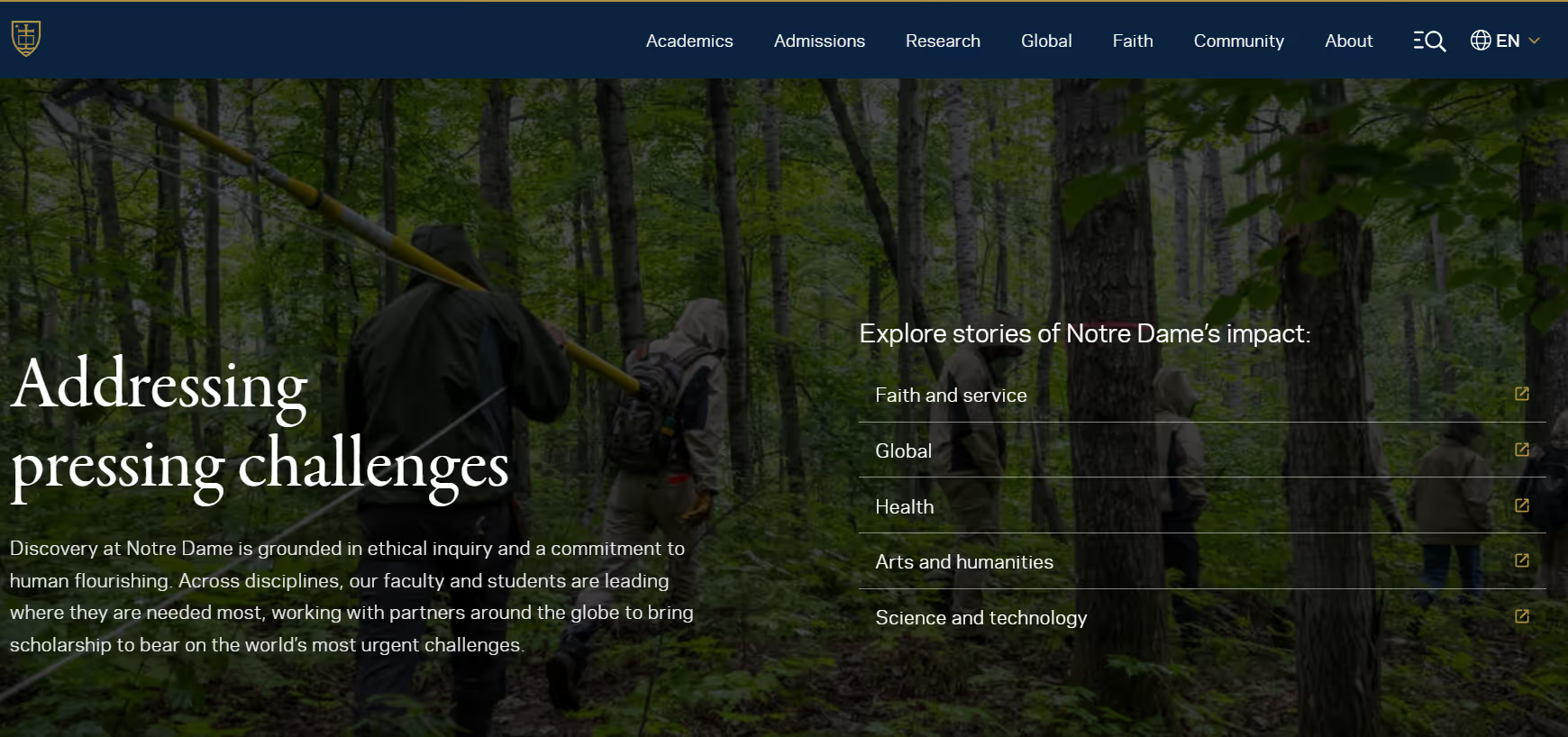
Notre Dame's landing page carries itself with the dignity of a place that knows exactly what it is. The layout is flat and modern and restraint shows up in the design as well as messaging. The copy is written to appeal to something emotional in the visitor while also demonstrating real impact. At the same time, the messaging is doing quite a bit: it’s not descriptive or abstract, it’s trying to connect the visitor to something real.

What stands out:
The balance in the copy has a sense of history and identity running through the messaging, but it’s consistently tied back to present-day impact and relevance.
It also doesn’t feel like different sections are speaking to different audiences in isolation. The same piece of copy can resonate with a prospective student while still holding meaning for an alum or donor. That overlap is difficult to get right, but Notre Dame gets close.
Why it works:
Takeaway for higher ed teams:
It helps to think about what a page is asking a visitor to feel, and what visible outcomes help achieve that. When those two align, the experience lands more effectively.
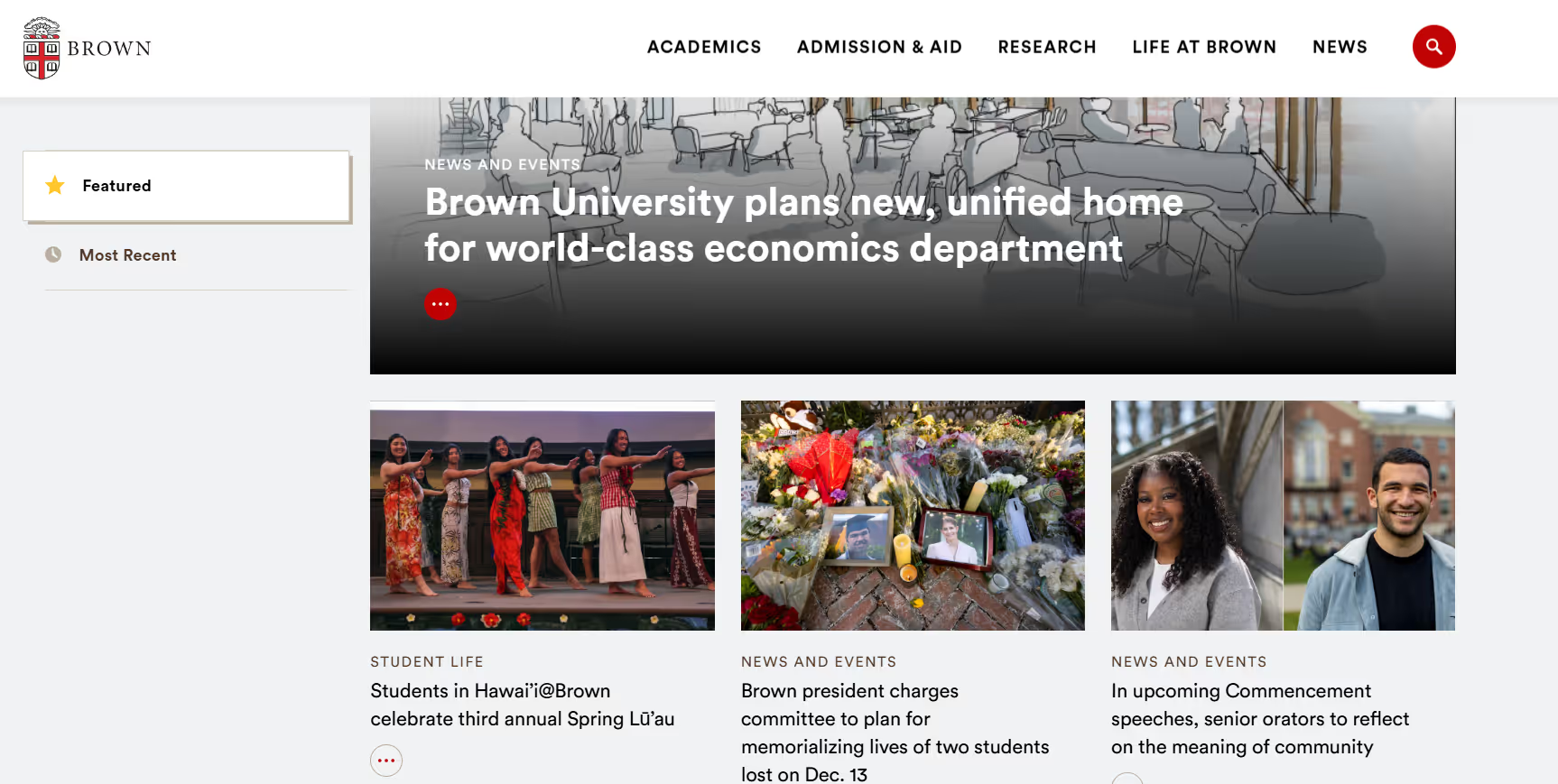
Brown's landing page is calm. The background imagery of campus scenes, architecture, everyday moments, and students on campus sits quietly behind the layout, while featured stories and updates carry more visual weight. Visitors don't get hit with everything at once and attention moves almost by itself toward what's meant to be read.
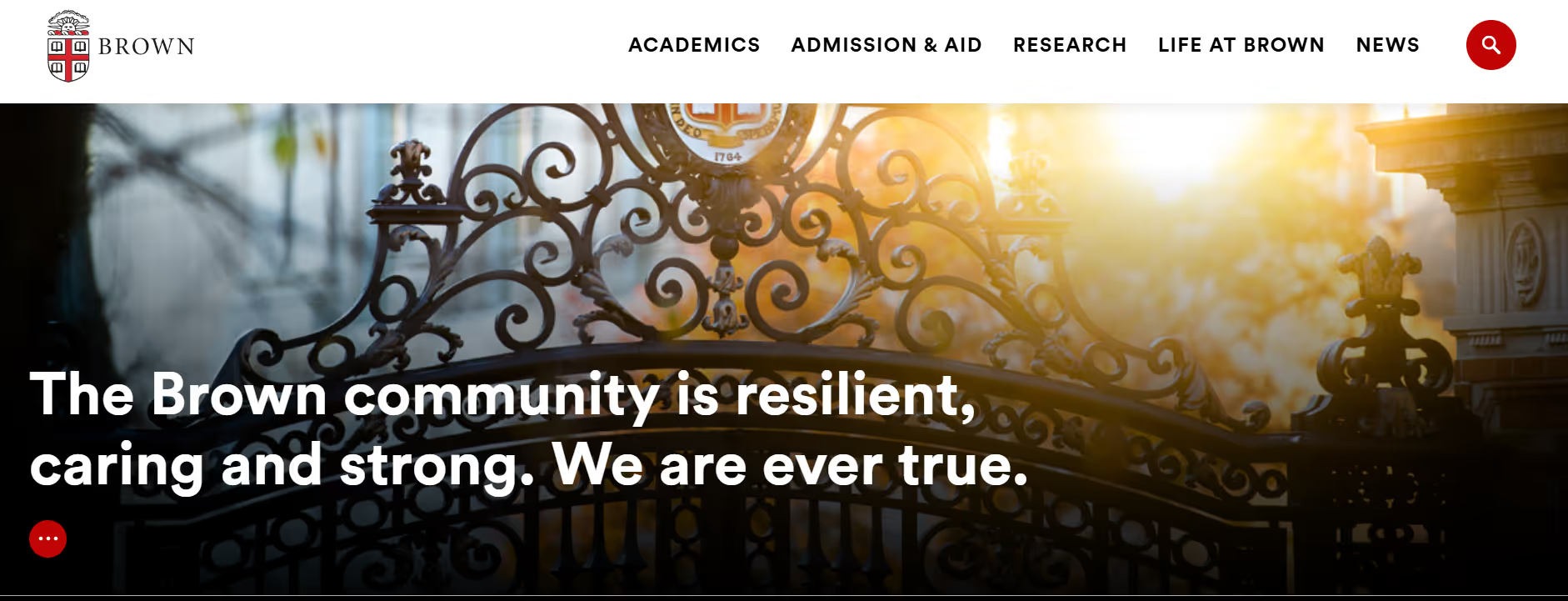
It's not a dramatic design choice, but it's consistent and done with a certain outcome in mind. The page makes a clear distinction between what's there to support and what's there to be engaged with.
What stands out: The page separates background from content in a clean manner: supporting visuals stay subtle, while stories and updates are more prominent. This contrast does most of the work. There aren't extra borders, labels, or callouts trying to organize things. It's handled almost entirely through visual hierarchy that determines where your eye goes first.
Why it works:
Takeaway for higher ed teams:
If your landing page feels like it's doing too much at once, look at how many elements are competing equally for attention. Not everything needs to stand out. Let some parts of the page recede so the content that matters has room to land.
For a color-forward landing page, Clemson’s doesn’t overwhelm you with color. It’s actually quite controlled. Purple carries most of the page’s interactions: navigation, backgrounds, structure, while orange is used sparingly to highlight key actions and moments.

This contrast in color beautifully supports the strong messaging. It’s specific and real: what a student studied, what they’re working toward, and what they’ve done along the way. Then, as you move through the page, this narrative is backed up with numbers placed directly into the experience.
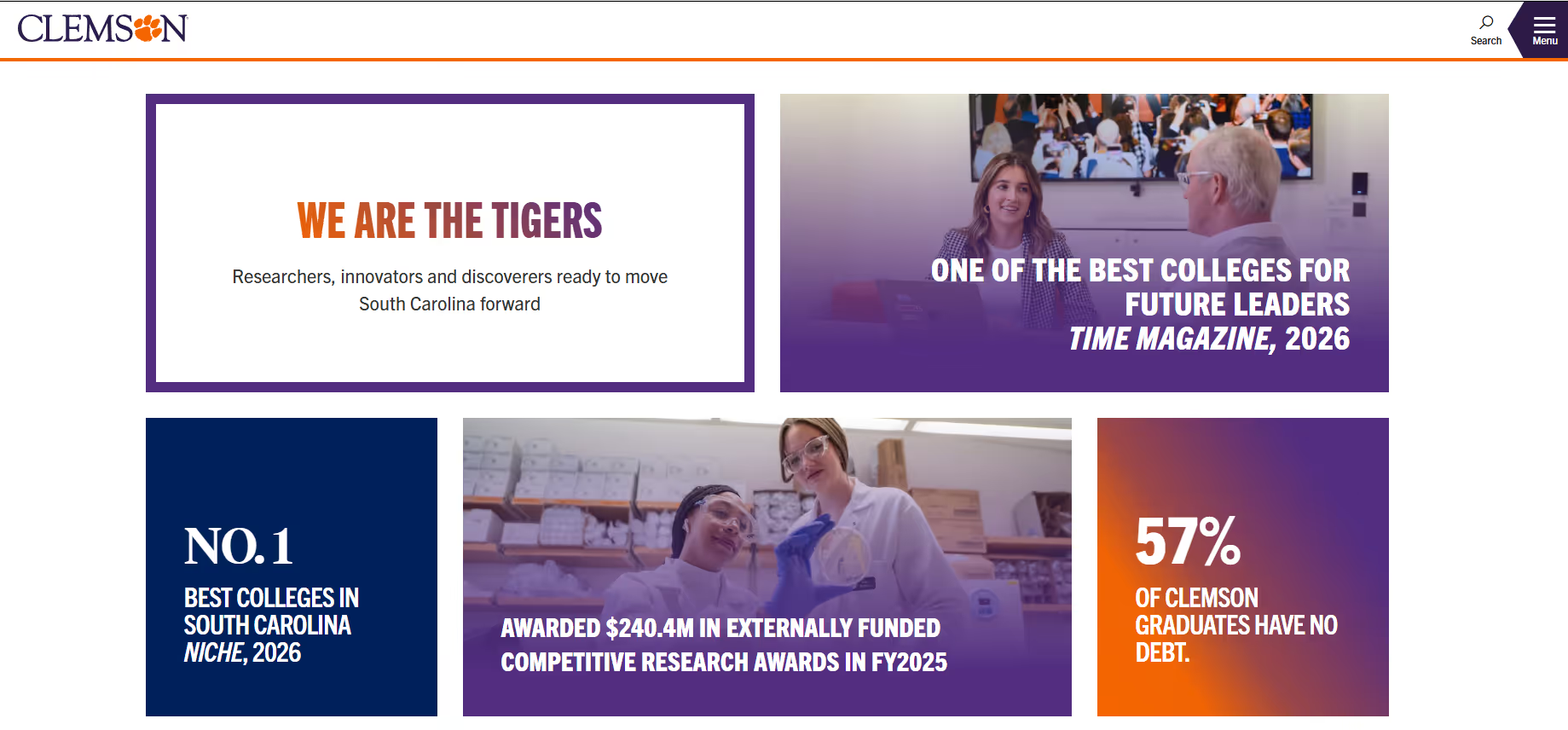
What stands out:
The pairing of student stories with specific stats gives you something to relate to, followed by something to verify it with. The stats themselves are also chosen carefully. They answer questions prospective students actually have such as:
That makes them easier to process and more relevant at the moment.
Why it works:
Takeaway for higher ed teams:
There’s usually more room to commit to your visual identity than it feels like. Consistency in branding and colors builds recognition faster than variety.
Don’t treat stories and stats as separate sections of your site. They work better together. A student story gets attention, but it’s the supporting data that makes it believable. When both show up in the same flow, the message tends to land faster and stick longer.
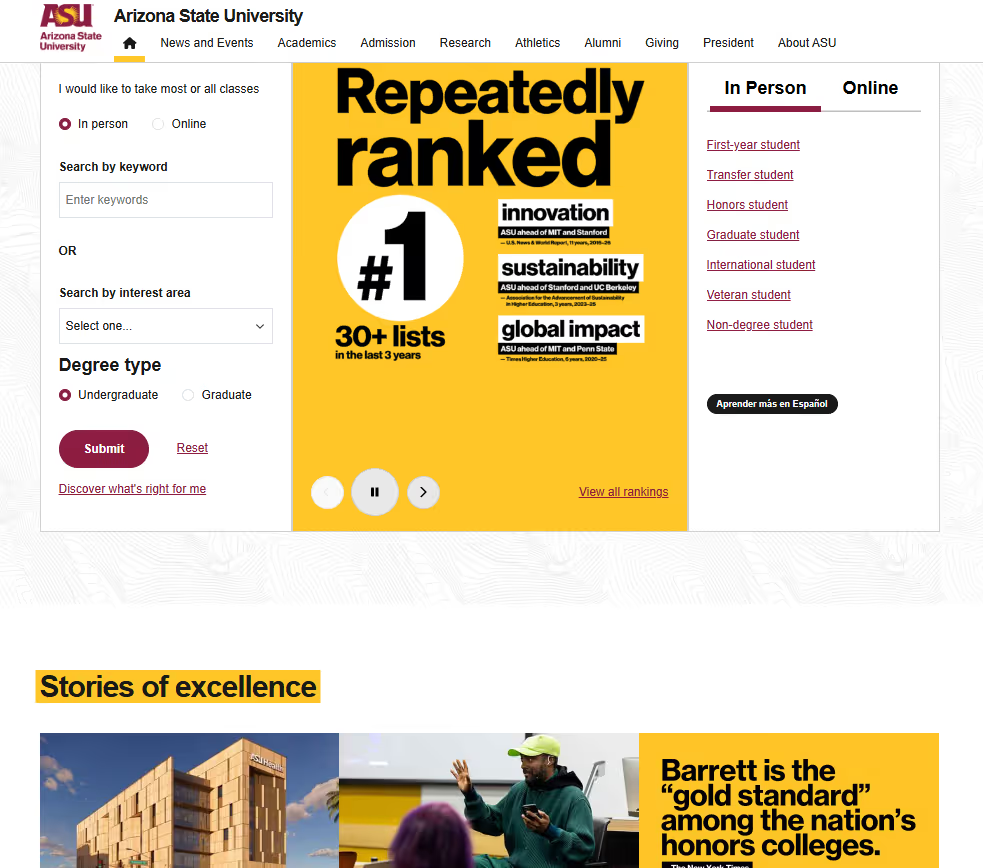
ASU's landing page doesn't start by explaining what the university offers. It starts with proof. Rankings, recognitions, and third-party validation show up immediately, before you've scrolled, before you've read anything long-form.

Claims like "#1 in Innovation" aren't tucked away on a rankings page, they're one of the first things you see. The rest of the page builds outward from there with programs, research, student experience, but the tone is set by the proof.
What stands out: Instead of introducing itself and then backing it up, ASU leads with what others have said about it. This order of presenting information changes how the rest of the page is read. When you see rankings and recognitions first, everything that follows feels more credible.
The visual system supports this too. The color palette and typography stay consistent across sections, so even as the content shifts, the page holds together and stays recognizable.
Why it works:
Takeaway for higher ed teams:
If you have strong external validation, it’s worth thinking about where it appears. Early placement can change how everything that follows is received. Even without major rankings, smaller proof points can serve a similar role.
Waterloo's landing page finds a balance that's harder to get right than it looks. There's enough visual content to draw you in, but enough substance to hold attention once you're there. Most university landing pages get this wrong in one direction or the other. Either the imagery takes over and there's nothing to actually read, or the page is so text-heavy that nothing pulls you through it.
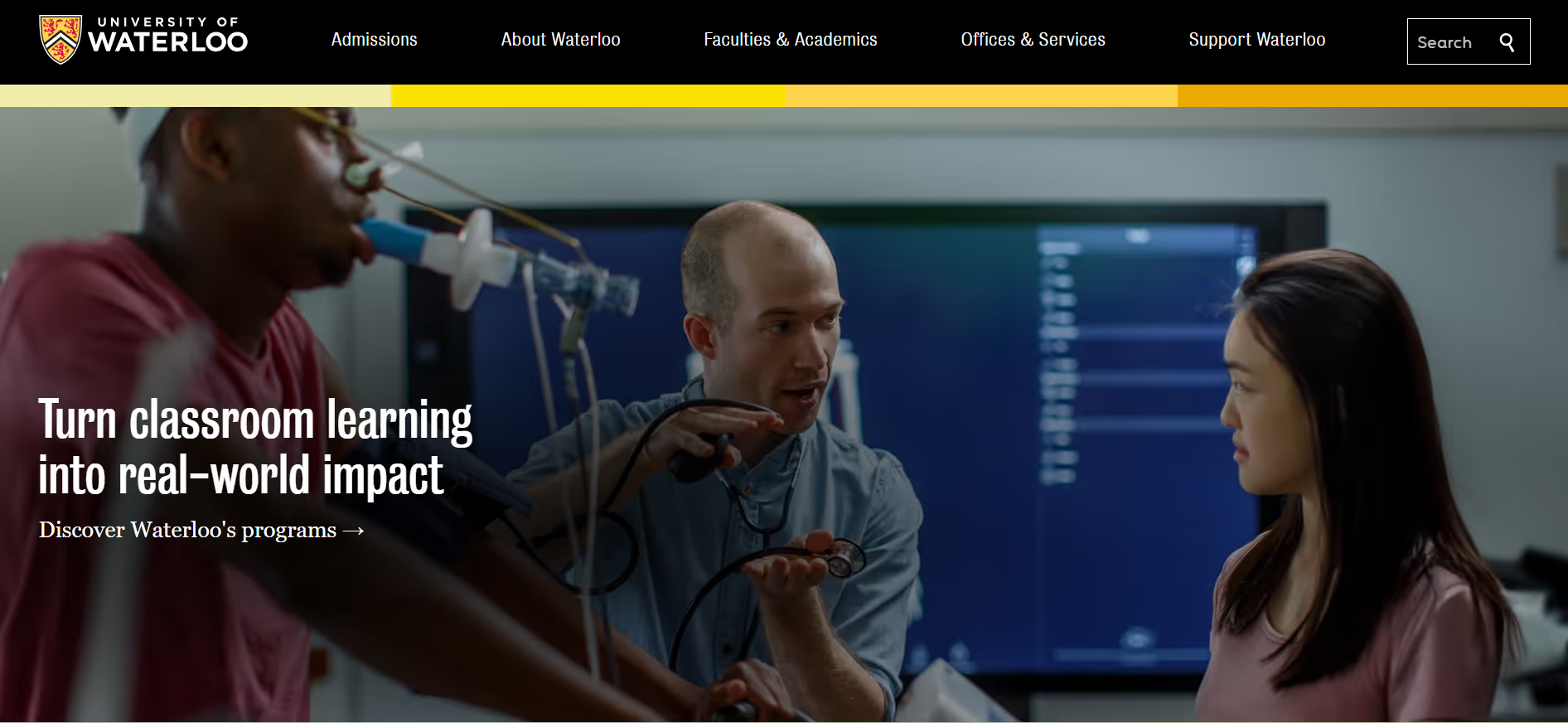
Waterloo doesn't have that problem. The visual and text elements work together rather than competing. Visuals ground the content; copy gives the visuals something to say. The result is a page that keeps visitors moving comfortably through it without ever feeling rushed or sparse.
What stands out:
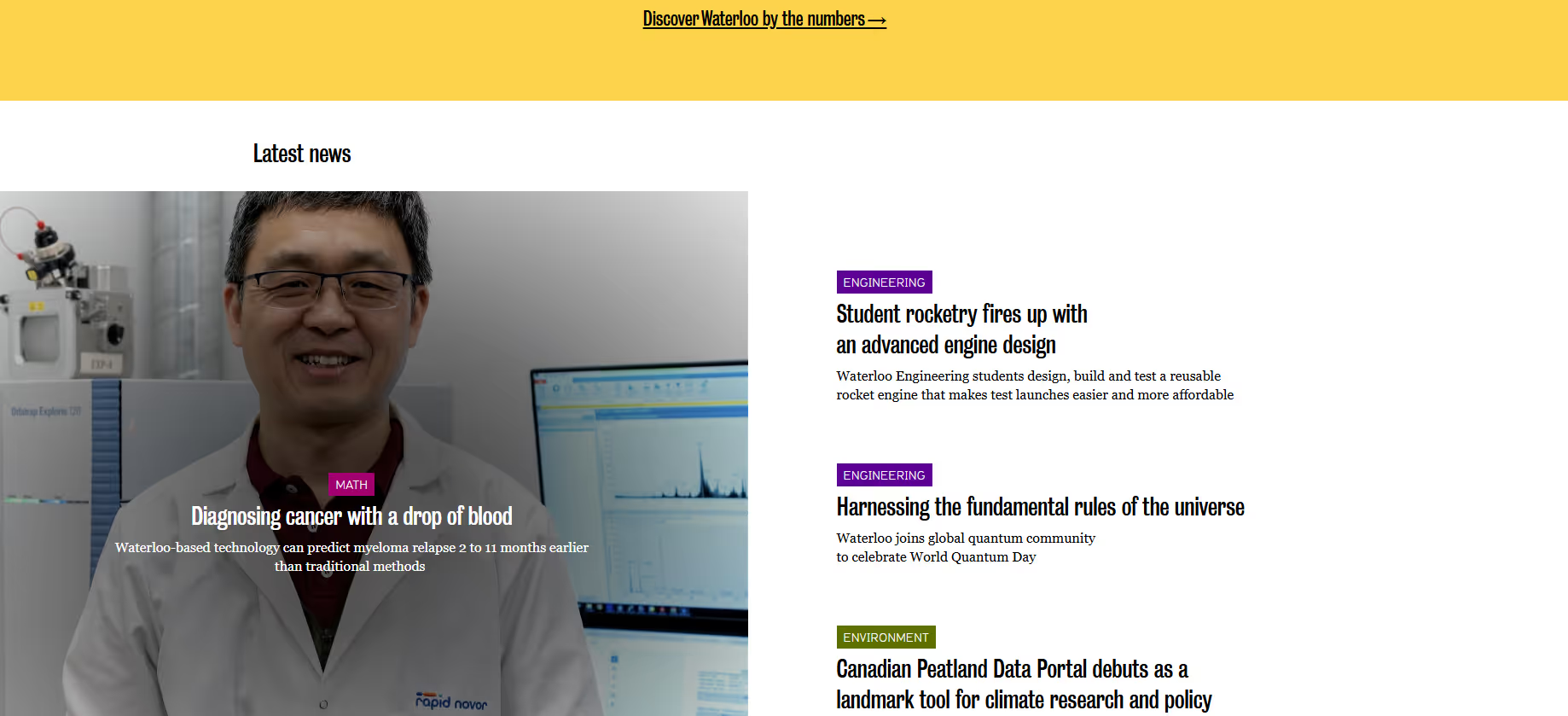
The focus is on what students and researchers have produced. Not what they could do, not what past graduates went on to build but what's happening now, shown directly.
Interactive elements let visitors go deeper into that work without leaving the page, which keeps the experience contained and the attention where it should be.
Why it works:
Takeaway for higher ed teams:
A lot of visitors are looking for proof, even if they don’t articulate it that way. Showing real work can answer that more effectively than promising future outcomes. Even small shifts in how that work is surfaced can make a difference. Also, treat the image-text ratio on your landing page as worth treating as a strategic decision, not a design preference. Too much of either and the page stops working as intended.
Before your next landing page goes live, it helps to run through a few basics.
Building a consistently good landing page across events, campaigns, and giving pages is harder than it looks.
Most advancement teams are working within fairly real constraints. A Day of Giving page might need to go live next week. An alumni event registration page might need to be ready the same day an email goes out. In those situations, waiting on design or development cycles isn’t always practical.
That’s usually where things start to break down. Pages get put together quickly using whatever tools are available. They work, but they don’t always feel connected to the institution, and the data they collect doesn’t always flow cleanly into the systems that need it.
This is exactly the gap Almabase is built to address.
Teams can create landing pages for events and campaigns without needing to involve design or engineering every time. The pages stay on-brand, and they connect to the rest of the institution’s systems in a way that reduces manual work later.
This looks like:
It’s worth remembering that these pages aren’t just functional. They shape how alumni and donors experience the institution in small but noticeable ways. A page that feels considered shows care and intention.
For teams that are currently stitching together pages from generic tools and then reconciling data afterward, a more integrated approach can make a difference.
Curious to see how that looks in practice? Get in touch with us.
Start with one goal and one audience. From there, pick a platform that does not require IT every time you need to make a change. Keep the headline clear, the form short, and the CTA easy to find. Use real visuals where you can, and always check the experience on mobile before publishing.
At the very least, you need a clear headline, a short explanation of why it matters, authentic visuals, and a CTA or form tied to one goal. Trust signals help too, things like testimonials, rankings, or outcomes data. For event pages, include the basics like date, time, and location, along with an easy registration flow. For giving pages, add things like a progress bar, impact statements, and a direct, specific ask.
Look for tools with no-code or low-code builders so non-technical teams can make updates themselves. Platforms like Almabase are designed for this, so teams can create and publish pages without waiting on developers. Template systems also help keep things consistent, even when different people are building pages.
A dedicated page for an event or initiative gives alumni a clear place to land, instead of sending them to a general website and hoping they find their way. When the page loads quickly, feels current, and makes it easy to register, more people follow through. Personal touches, like tailoring sections by class year or location, can make it feel even more relevant.
Yes, and often by a lot. A focused giving page tends to perform better than a general “Giving” section on a website. Things like progress bars, matching gift messaging, and live donor counts can create momentum. Mobile matters here more than anywhere else. If the form is hard to complete on a phone, people drop off.
Colleges use landing pages for events to drive sign-ups with a clear, focused experience. They’re focused entirely on a single event and make registration quick and easy with simple forms and fast confirmations. The same page can be updated after the event with highlights or next steps like applying or joining another event.
Table of Contents
Subscribe
See how modern advancement teams bring alumni engagement and fundraising together.
A strong donation page can be the difference between an inspired gift and a missed opportunity. With donors expecting a fast, trustworthy experience, the design and strategy of your giving page matter more than ever.
In this article you’ll find best-in-class donation page examples from schools, universities, and nonprofits, as well as actionable takeaways to help your institution inspire more gifts.
💡If you want a page that inspires giving and syncs seamlessly with your donor database, check out Almabase’s Giving Module.
Punahou leveraged their 175th anniversary celebration to create their most successful fundraising campaign in school history. The Ku'u Punahou campaign raised over $176 million from more than 12,800 donors with 40,000 individual gifts. The campaign effectively connected historical legacy with future vision, emphasizing how gifts would support cutting-edge learning environments, expand need-based financial aid, and inspire students to "pursue lives of purpose".
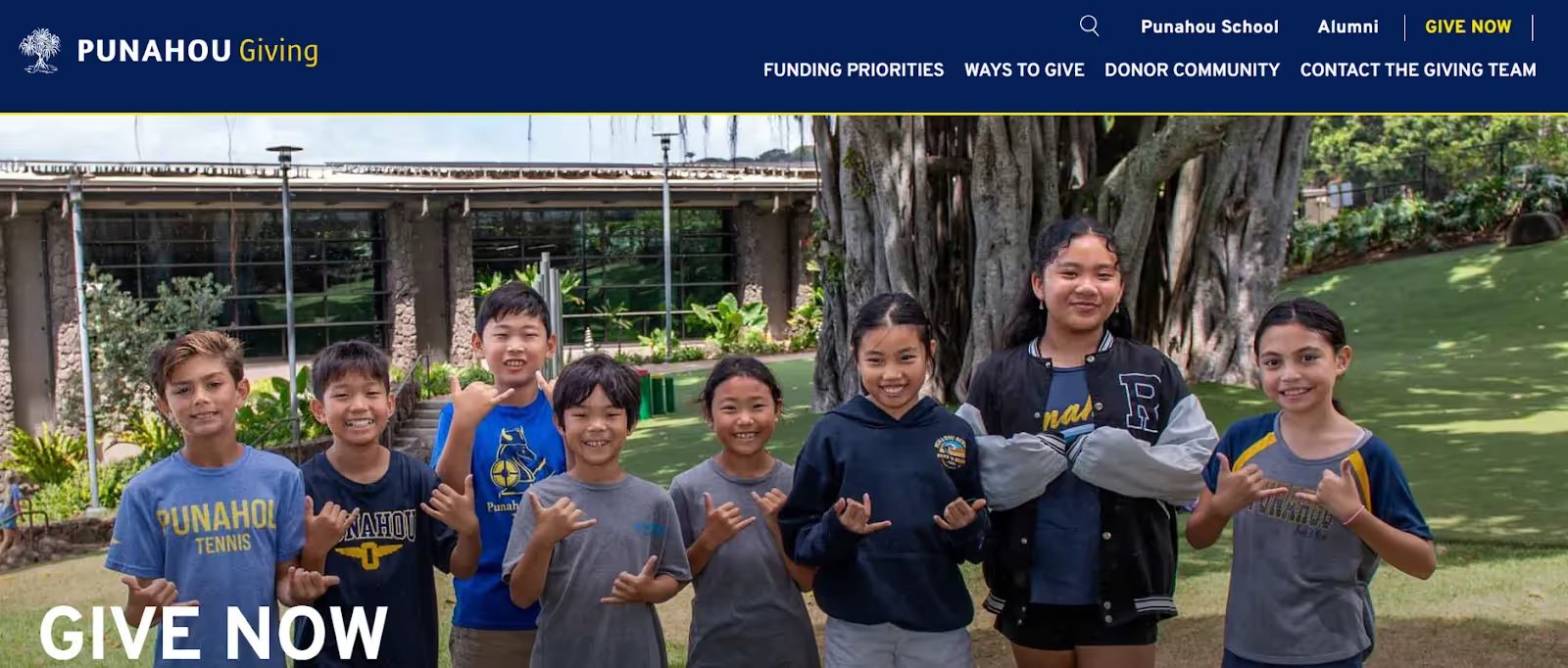
Why it works: Their donation platform provides clear funding priorities including the Punahou Fund for current needs, PunsUnited for student financial aid, and specific capital projects, while offering multiple giving vehicles from cryptocurrency to IRA distributions.
Takeaway: Tie major fundraising campaigns to significant institutional milestones while providing clear, varied pathways for different donor interests and capacities.
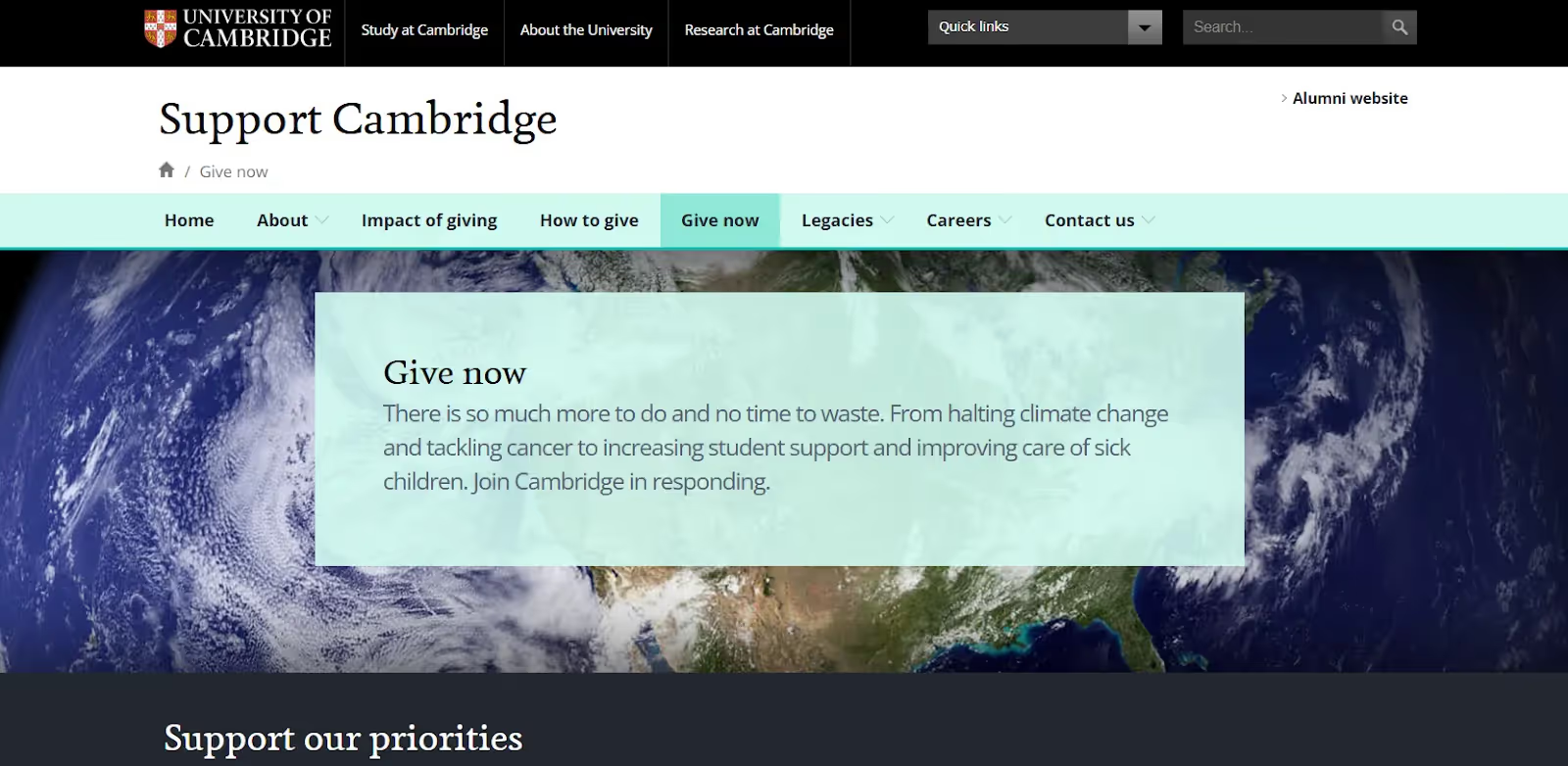
Why it works: The platform supports over 150 academic departments, faculties, and research institutes, offering donors a comprehensive range of causes from student support (including scholarships and bursaries) to cutting-edge research spanning climate change to cancer research, plus historic preservation and global outreach programs.
The platform is genuinely international-friendly, supporting multiple currencies and UK Gift Aid (adding 25% to donations). It uses various payment methods including international bank transfers, and provides tax-efficient giving structures through partnerships like Cambridge in America and Transatlantic Giving Circle, making it accessible to donors from the US, Europe, India, and beyond.
Key feature: Comprehensive cause selection across all academic disciplines combined with seamless international giving infrastructure.
Takeaway: Offering diverse funding priorities while optimizing for global accessibility significantly expands both donor engagement and gift potential.
UCLA’s donation page emphasizes the collective impact of gifts of all sizes, framing every donation as a valuable contribution to a larger circle of support. The page spotlights the university’s multi-year fundraising drive, presenting goals and clear priorities such as student scholarships, faculty research, and campus initiatives. Donors can choose from a wide range of designations: schools, departments, or specific programs, and the form makes it easy to give once or set up a recurring pledge. Campaign progress updates and donor stories reinforce momentum, while the blue-and-gold branding keeps the experience unmistakably UCLA.
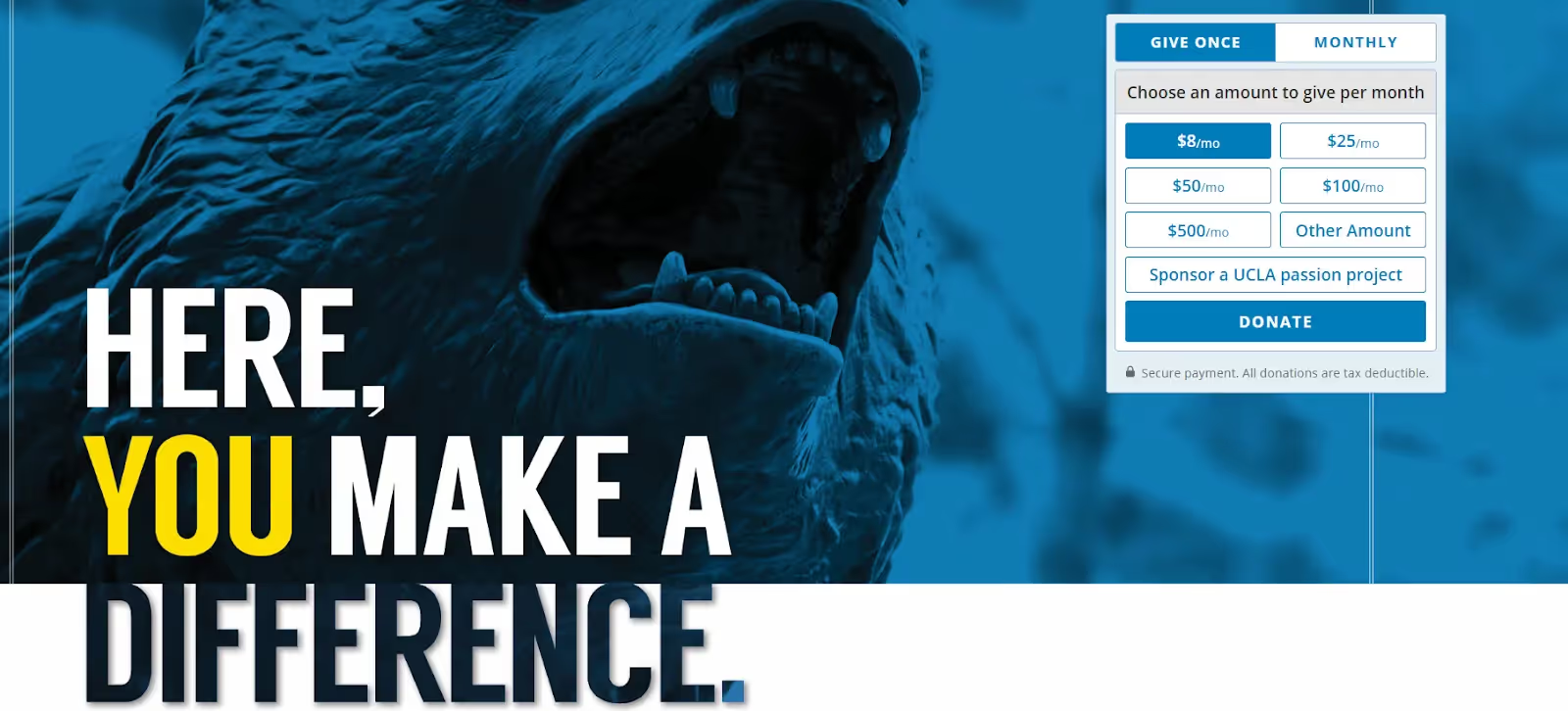
Why it works: By reinforcing that every gift counts and supports a shared mission, UCLA creates an inclusive and motivating environment for donors at all capacity levels. This sense of community nurtures donor loyalty and encourages repeat giving, from modest contributions to major philanthropic commitments.
Key feature: Messaging that connects individual gifts to a broad, impactful community mission.
Takeaway: Position donations as part of a collective effort that transcends the institution, inspiring donors with a compelling sense of shared purpose.
MIT’s donation page uses an interactive grid of impact cards instead of a traditional banner. Each card highlights a key funding priority—such as “Approximately 40% of MIT’s operating budget relies on unrestricted dollars,” and “Over 25% of first-year graduate students are supported by fellowships.” Donors can hover over each card to reveal concise impact statements and click “Learn More” to dive deeper or give directly to that area.
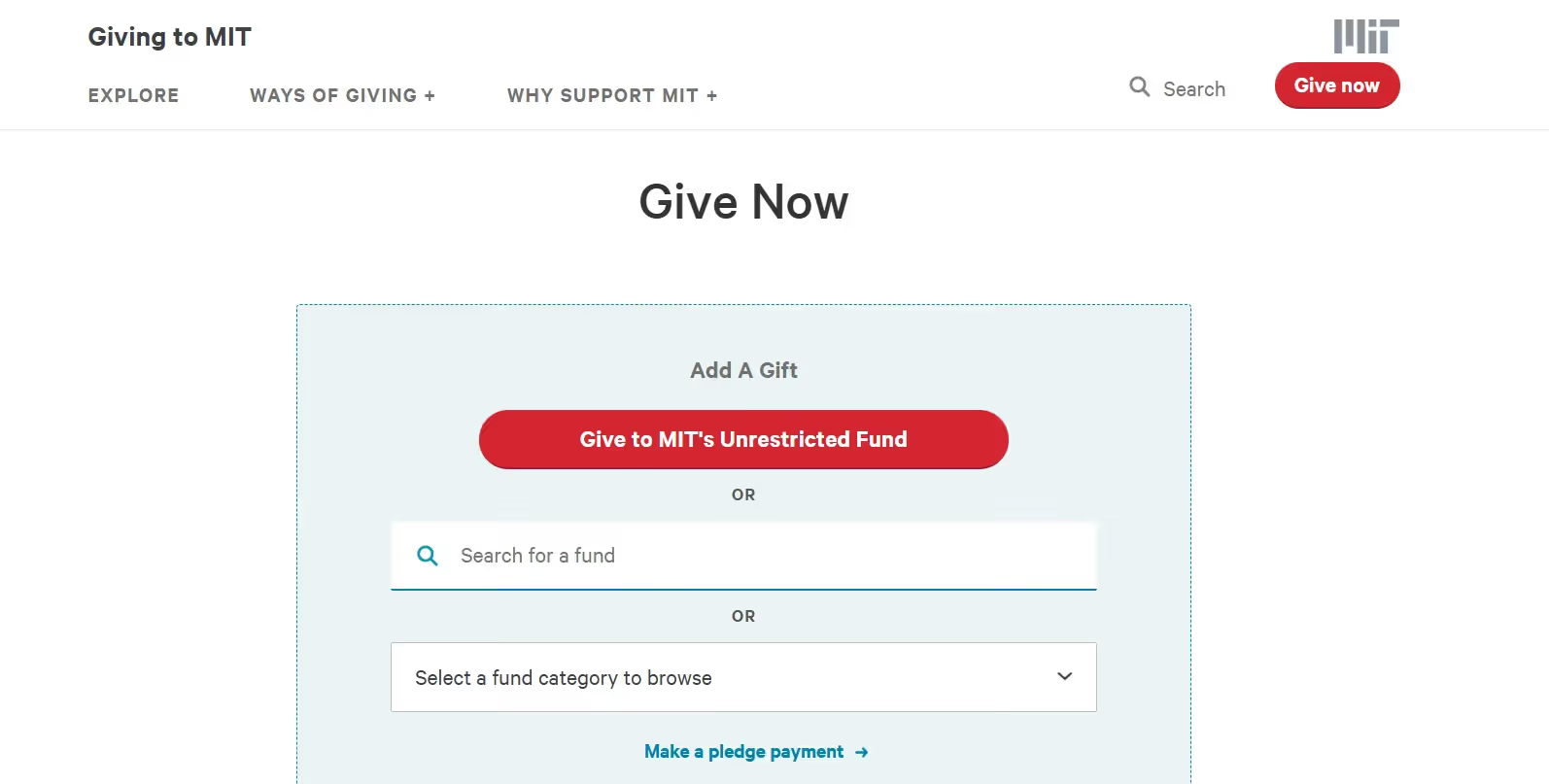
Why it Works: The card-based layout engages donors by inviting exploration and discovery, turning passive scrolling into active interaction. By surfacing bite-sized data points about financial aid, unrestricted funding, and fellowship support, MIT appeals to diverse donor motivations, whether they value student support, institutional flexibility, or graduate research. The clear, quantifiable facts build credibility, while the hover-to-reveal design keeps the page visually clean yet informative.
Key feature: Interactive impact cards with hover-revealed data points tying gift options to specific institutional needs.
Takeaway: Use interactive, data-driven elements to educate donors about multiple priorities, letting them choose what resonates most while maintaining a clean, engaging design.
UT Austin’s “Ways to Give” page offers a comprehensive menu of 14 distinct giving channels, from traditional methods like mail-in gifts and wire transfers to strategic options such as matching gifts, appreciated securities, endowments, and estate/planned gifts. They also feature specialized pathways for UT employees (payroll deduction), international donors, and industry or foundation partnerships. Each option includes a brief description of benefits, such as tax advantages for securities gifts or legacy impact for endowed funds, guiding donors to the method that best aligns with their needs and goals.
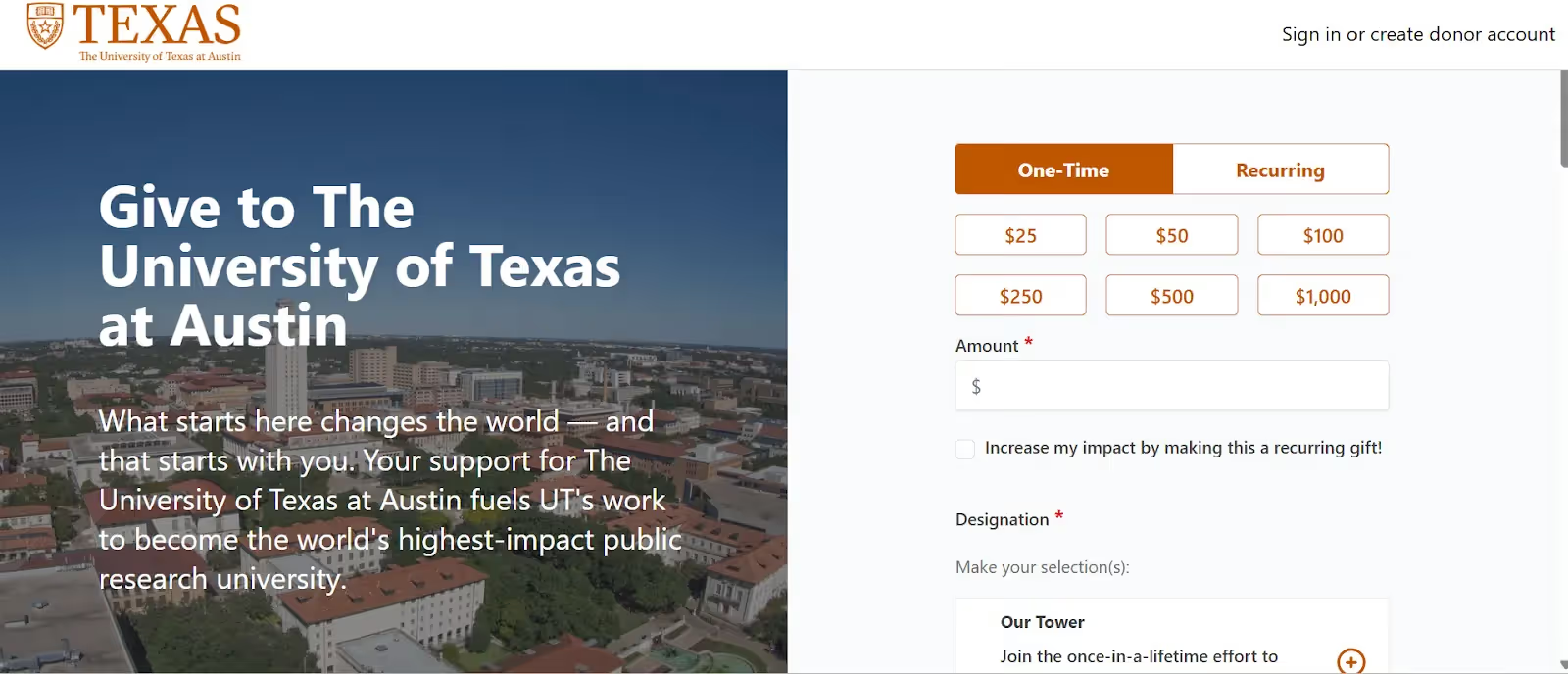
Why it works: By presenting diverse giving vehicles in a single, clearly structured page, UT Austin accommodates donors at every level and life stage. This breadth of options signals inclusivity and respect for individual donor circumstances, strengthening trust and inspiring larger, more strategic commitments.
Key feature: Detailed, side-by-side descriptions of multiple giving vehicles tailored to varied donor profiles.
Takeaway: Empower donors by offering clear, well-explained giving channels that match diverse preferences, maximizing both participation and gift size.
What they did: Stanford’s Giving site serves as a one-stop destination for every type of donor. “How to Make a Gift” section organizes every giving method into three clear columns: Give Now, Give Over Time, and Plan Your Gift. Under “Give Now,” donors can contribute online, by phone or mail, through stocks or wire transfers, or via memorial, matching, or international gifts. “Give Over Time” highlights new pledges, pledge payments, and recurring gifts, while “Plan Your Gift” details options like bequests, life-income gifts, donor-advised funds, and other asset-based contributions. Each link opens concise guidance so donors immediately understand requirements and benefits such as tax advantages or long-term impact.
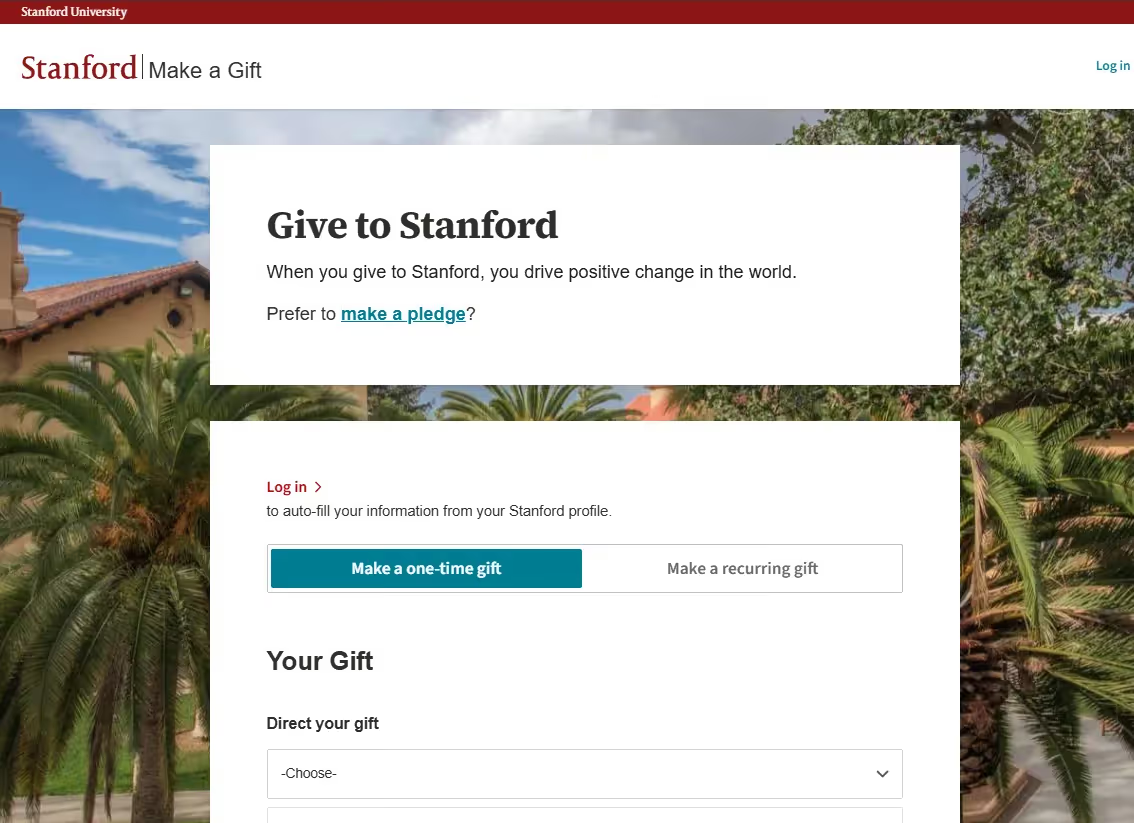
Why it works: This tiered layout simplifies a complex set of choices. Donors can instantly self-select whether they want to give immediately, spread payments over time, or create a legacy gift, without wading through multiple pages. By presenting planned giving alongside quick online options, Stanford invites both spontaneous and strategic donors, signaling professionalism and respect for different financial circumstances.
Key feature: Three-column structure, “Give Now,” “Give Over Time,” and “Plan Your Gift”, that clarifies intent and shortens the path to the right giving vehicle.
Takeaway: Grouping donation methods by timing and complexity helps donors quickly find an approach that fits their goals, increasing both participation and the likelihood of larger, long-term commitments.
Charity: water did something exemplary with online giving through their “100% Model”, ensuring every public donation funds clean water projects, while operational costs come from private supporters. Their donation page appeals to donors of all levels, highlighting that just $40 can bring one person reliable access to clean water. The giving form encourages small, meaningful gifts, reinforced by clear, low-pressure messaging and a welcoming design. Donors can also give in honor of someone special, adding a personal touch that widens participation.
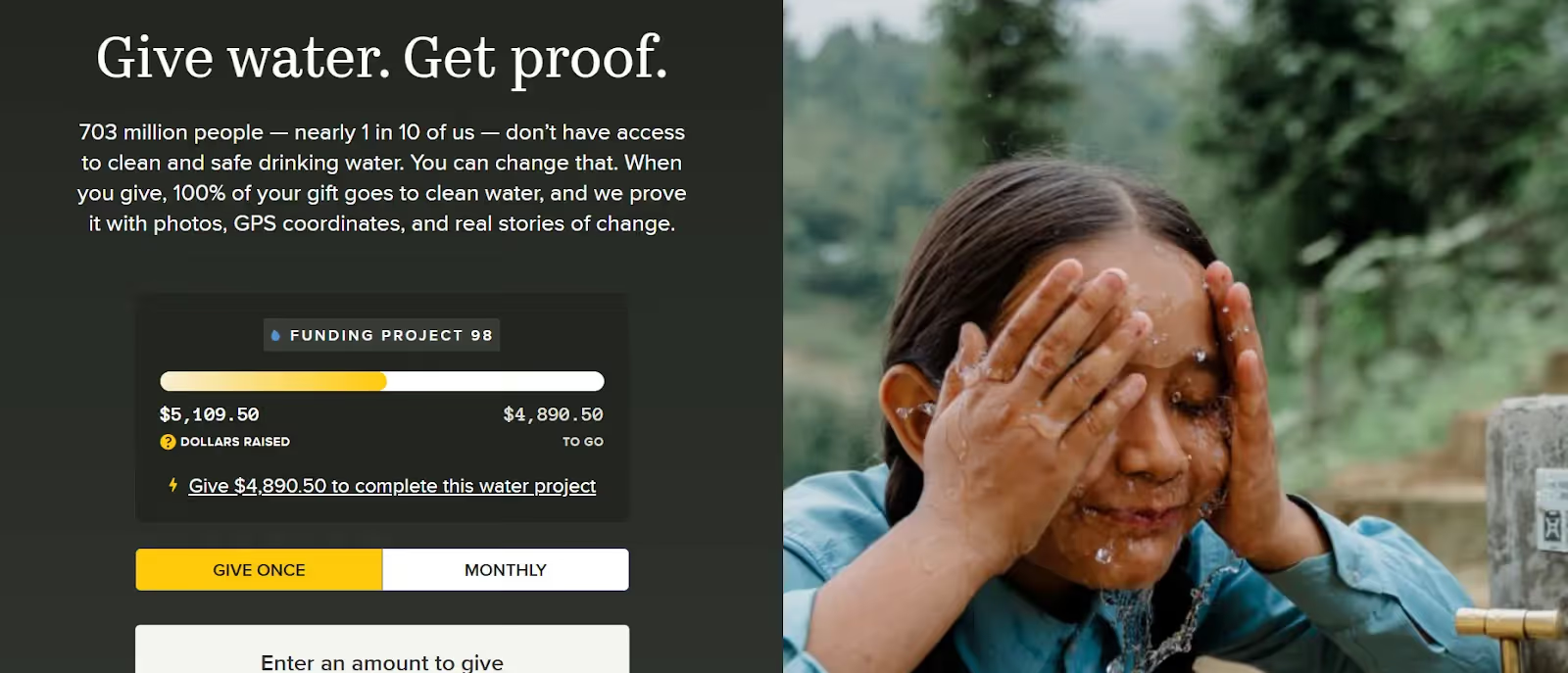
Why it works: The low-barrier entry point clearly states the tangible impact of every dollar, making action feel accessible to all. This transparent, approachable style removes hesitation from new and returning donors alike.
Key feature: Transparent cost-of-impact messaging (“$40 brings clean water to 1 person”) and personalized giving options.
Takeaway: A combination of radical transparency and inclusive, low-pressure donation options makes every supporter feel valued, lowering the barrier for action and building long-term loyalty.
The American Red Cross places credibility and transparency at the forefront on their donation page by prominently displaying their 4-star Charity Navigator rating.
They provide donors clear choices to give toward specific disaster relief efforts (such as wildfire relief or hurricane response) or general emergency preparedness, ensuring funds are allocated to donor-intended uses. These trust badges and fund-designation options reassure potential donors about the responsible handling of contributions in times of crisis.
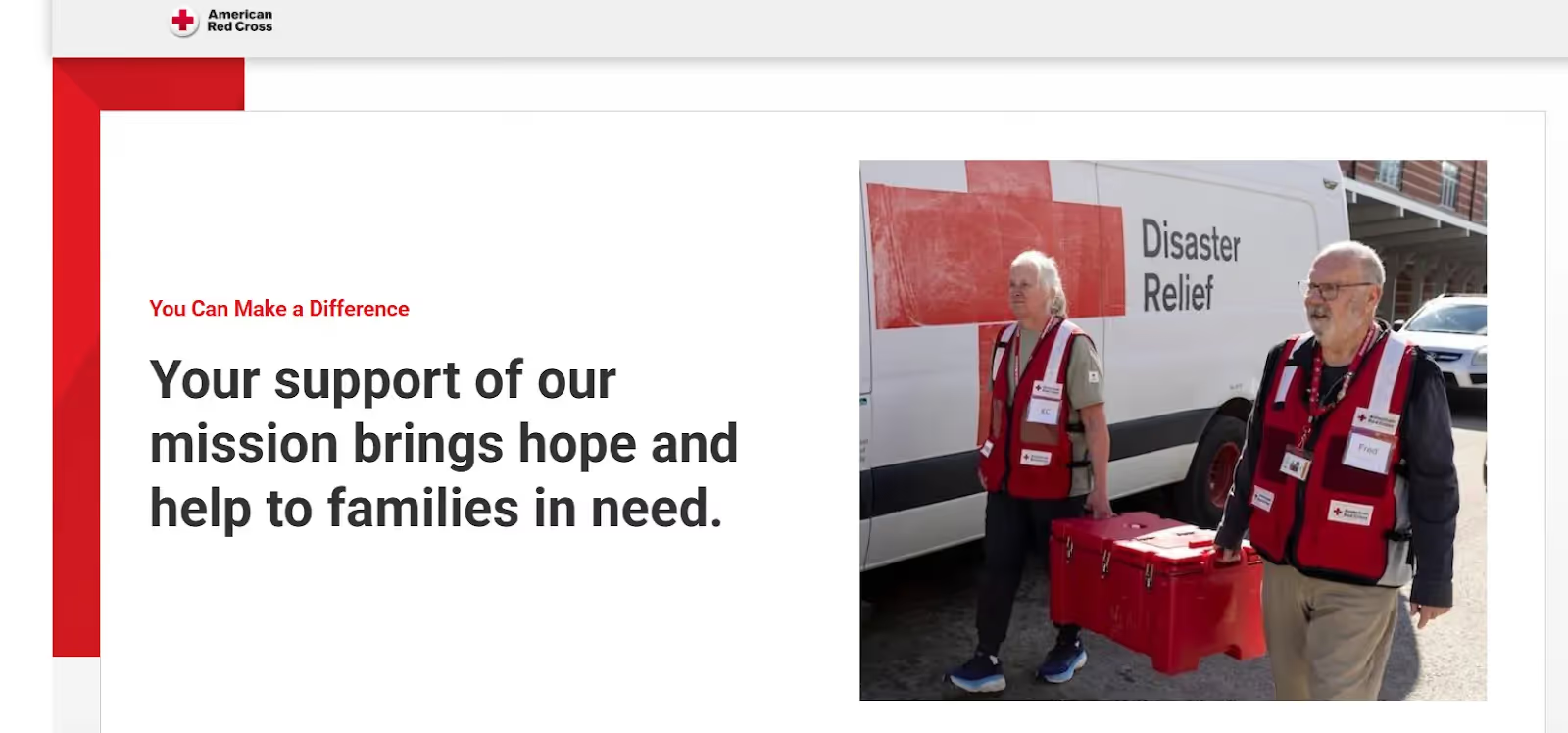
Why it works: In disaster fundraising, trust is paramount. The presence of third-party certifications and transparent fund allocation reduces donor skepticism and encourages first-time giving. Having clear, situational giving opportunities tied to recent emergencies increases relevance and urgency, motivating donors to act quickly.
Takeaway: Demonstrating strong third-party accountability and offering clear, cause-specific giving choices build donor confidence, especially important in emergency response fundraising.
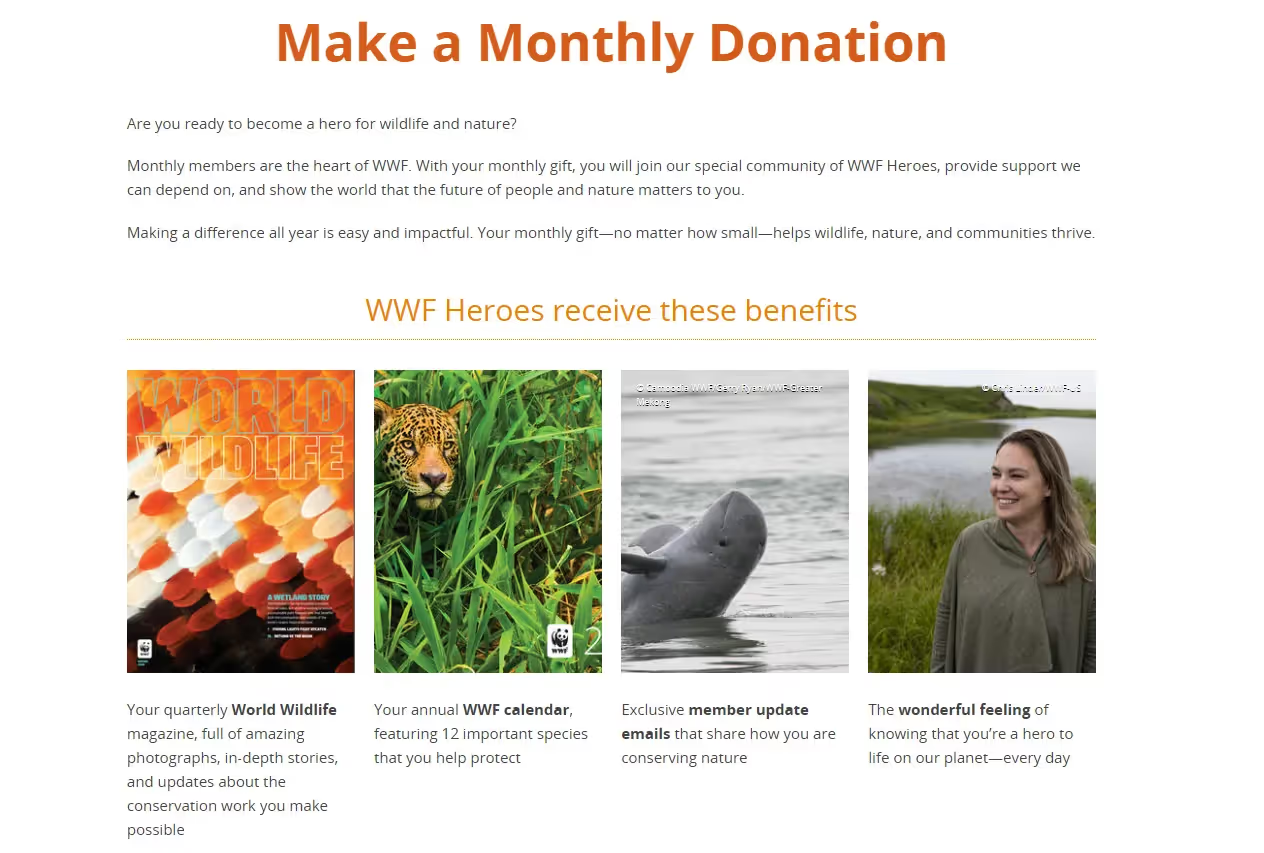
Why it works: WWF frames monthly giving as joining their "WWF Heroes" community, emphasizing how monthly donations provide "dependable support for global conservation efforts". Their donation pages offer membership benefits including quarterly World Wildlife magazine, annual calendars, and exclusive updates. They make monthly giving attractive by highlighting that 84% of spending goes directly to conservation and offering thank-you gifts for donations of $16+ per month.
Key feature: Monthly giving positioned as exclusive membership with tangible benefits.
Takeaway: Present recurring gifts as joining a special community with exclusive perks rather than just a payment method.
The examples above show that high-performing giving pages share a core set of traits:
These shared elements ensure donors can give with confidence, understand their impact, and complete a gift in minutes. These are key ingredients for sustainable, long-term fundraising success.
Use this short checklist when reviewing your site:
💡Almabase’s Giving Module integrates directly with RE NXT to automate processing and personalize appeals. → Learn more
Whether you run a K-12 school, university, or global nonprofit, we hope that these donation pages and our tips have proven that clear design, trust signals, and emotional storytelling go a long way in the effort to convert visitors into donors.
9 Best Donation Page Examples for Better Fundraising
Donation pages are the interface for your donors to make a change. In this blog, we're going through 9 great examples you can take inspiration for your next page.
Lorem ipsum dolor sit amet, consectetur adipiscing elit. Suspendisse varius enim in eros elementum tristique. Duis cursus, mi quis viverra ornare, eros dolor interdum nulla, ut commodo diam libero vitae erat. Aenean faucibus nibh et justo cursus id rutrum lorem imperdiet. Nunc ut sem vitae risus tristique posuere.
September 26, 2025
12 minutes
Every year, institutions pour significant energy into Giving Days and fundraising campaigns. They craft compelling stories, set ambitious goals, and send thousands of emails. And yet, a surprising number of donors land on the giving page, and leave without giving.
It's rarely about a lack of generosity. More often, it's about a lack of connection.
The donor who graduated from the School of Medicine doesn't see themselves in a generic, one-size-fits-all giving page. The parent who cares deeply about student scholarships scrolls past a cluttered layout with no clear place to land. They came ready to give, but the page didn't meet them where they were.
The solution isn't more urgency or a louder call-to-action. It's relevance. And relevance starts with how you design the donor experience from the very first impression, to the moment they find their cause.
A giving page has three distinct jobs, and most fall short on at least one of them.
Think of it as the entrance to a building. When the lobby is warm, well-designed, and clearly organized, people feel confident walking further in. A giving page that earns the donor's attention opens the door to everything that comes next.
The first is to earn attention to make an immediate impression that signals this campaign is worth a donor's time and trust. The second is to create a path to guide each donor toward the specific cause that personally resonates with them.
Most giving pages are built to do neither particularly well. They look like every other page from the last five years, and they treat every donor the same regardless of their connection to the institution.
The good news is that both problems are now very solvable. Let's walk through how.
A university isn’t one cause. It’s dozens. The alumna from the law school and the parent supporting student life are both valuable donors, but they’re looking for completely different things. If your giving page treats them identically, you’re asking both of them to work for it. Most won’t.
This is the discoverability problem, and it’s especially acute for large institutions running Giving Days with many departments, schools, and funds competing for attention on a single page.

Tiered Giving solves this. Within a single Competitive Giving Page, admins can create Subpages, one for each school, department, or priority cause. Each subpage gets its own card image, summary, campaign goal, and leaderboard. The School of Business tells its story. The School of Medicine shows its momentum. Everything still lives under one Giving Day with one consistent checkout.
Think of it as “n” mini giving pages inside one. A donor lands on the main page, sees the cards, and immediately knows where to go. No scrolling through a flat list hoping to spot the right fund.
For donors who already know exactly what they want to support, fund search lets them look it up directly. Type a name, find the designation, and you’re done. No browsing required.
Discoverability gets donors to the right place. Once they are there, the page still has to earn their attention.
Most giving pages don’t do this well. They look like every other giving page from the last five years. The same layout. The same stock thermometer. The same default sections in the same order. It’s functional, but it doesn’t signal that this campaign is any different from the last one or from the one at the university down the road.
Donors notice this, even if they don’t voice it out. A page that feels generic unintentionally suggests that the institution may not have invested much in the moment either.
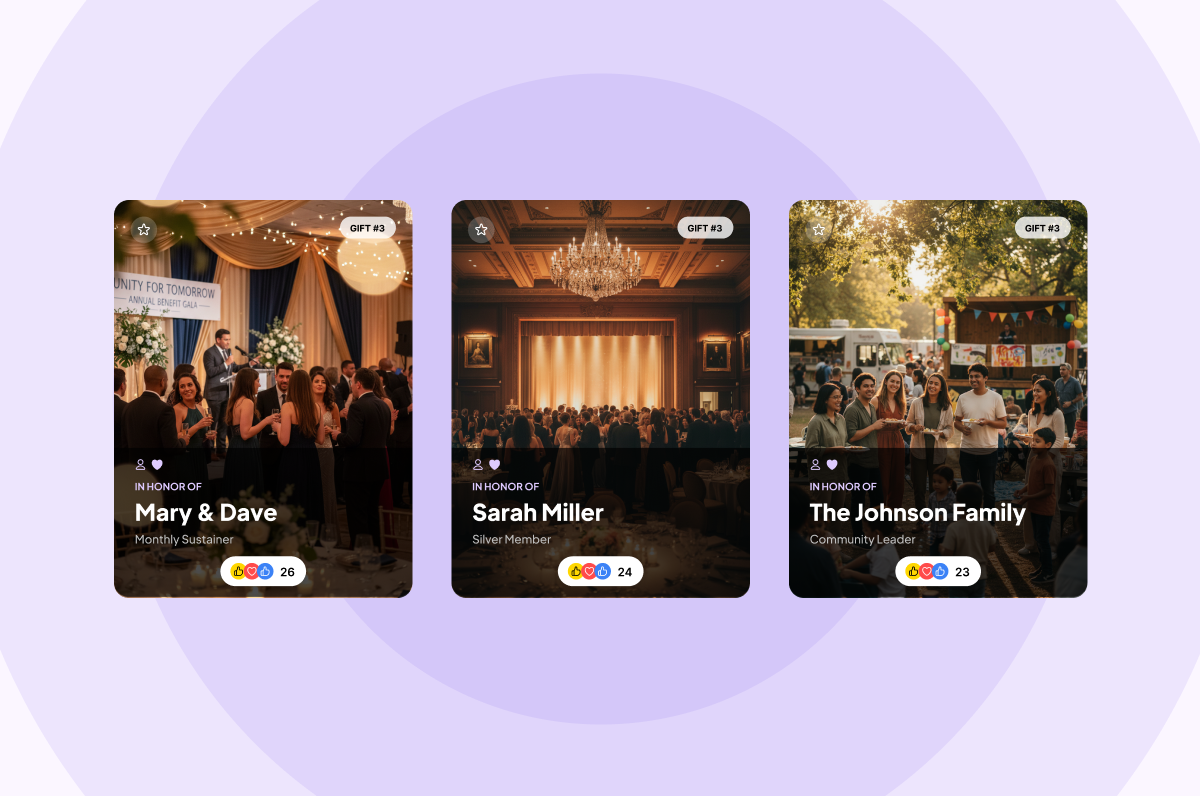
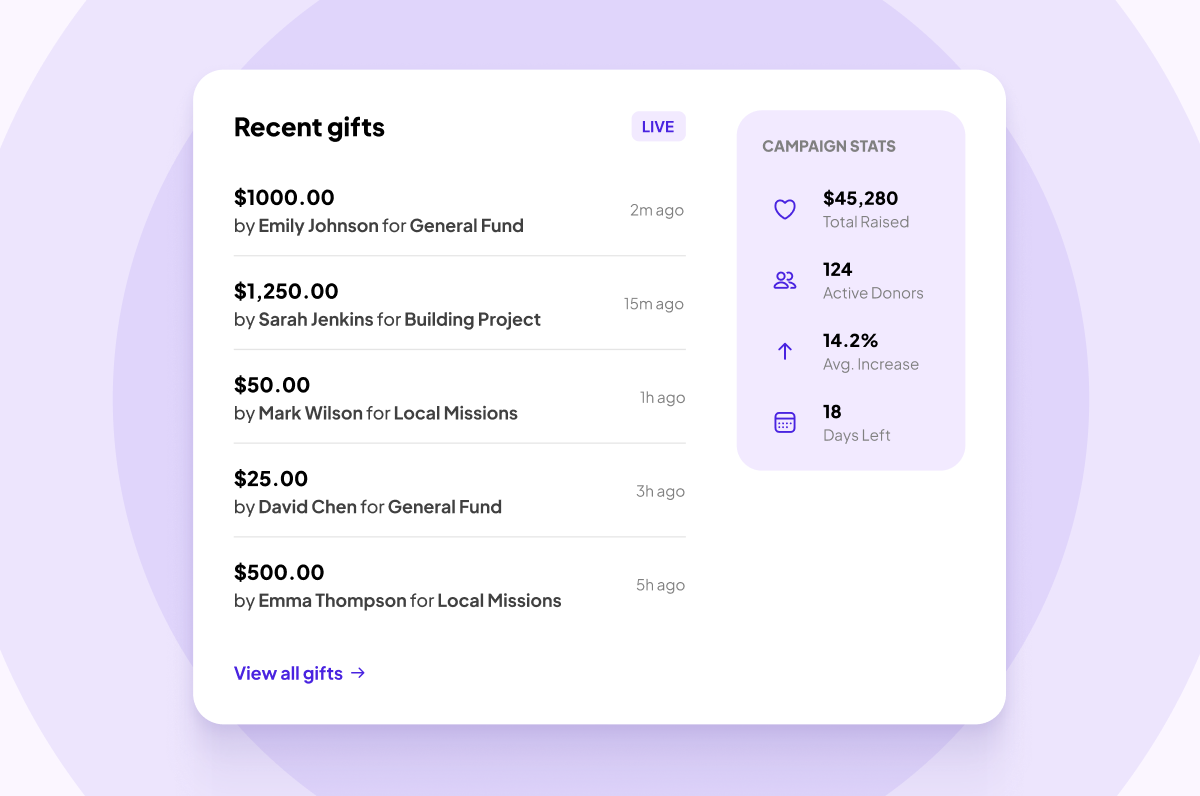
The Customize Page on Almabase changes this. It gives admins direct control over the visual identity of their giving page. Concretely, that means multiple layout options for the hero section, leaderboard, and tributes. A built-in content editor for adding richer storytelling sections beyond the standard fields. Drag-and-drop reordering so the page flow reflects what matters most to your donors. There is also control over elements like the donor ticker, so you decide how social proof appears.
Everything updates in real time through live preview, and it is safe to change during active campaigns. The people closest to the campaign, the ones who know the story, the audience, and the institutional voice, can shape the page directly.
This matters more than it might seem. A giving page that looks considered, with a clear visual hierarchy and a narrative arc that matches the campaign’s energy, sets the tone for everything that follows.

It is the difference between a donor who scrolls passively and one who leans in.
A donor has found their cause. The page has earned their attention. Now comes the part that should be the simplest: making the gift. Yet this is where a surprising number of donors drop off.
Sometimes the donation form feels disconnected from the page they just experienced. Sometimes donors cannot give the way they want to. Sometimes the options on the form don’t help them decide how much to give or why.
These are small friction points, but they add up. They are also fixable.
Donation options can now be configured with preset amounts and labels. Instead of a blank field and a generic “Other” button, donors see choices like “Fund a Scholarship: $100” or “Sponsor a Meal: $25.” Each option communicates impact, which makes the decision easier and the gift feel more meaningful.
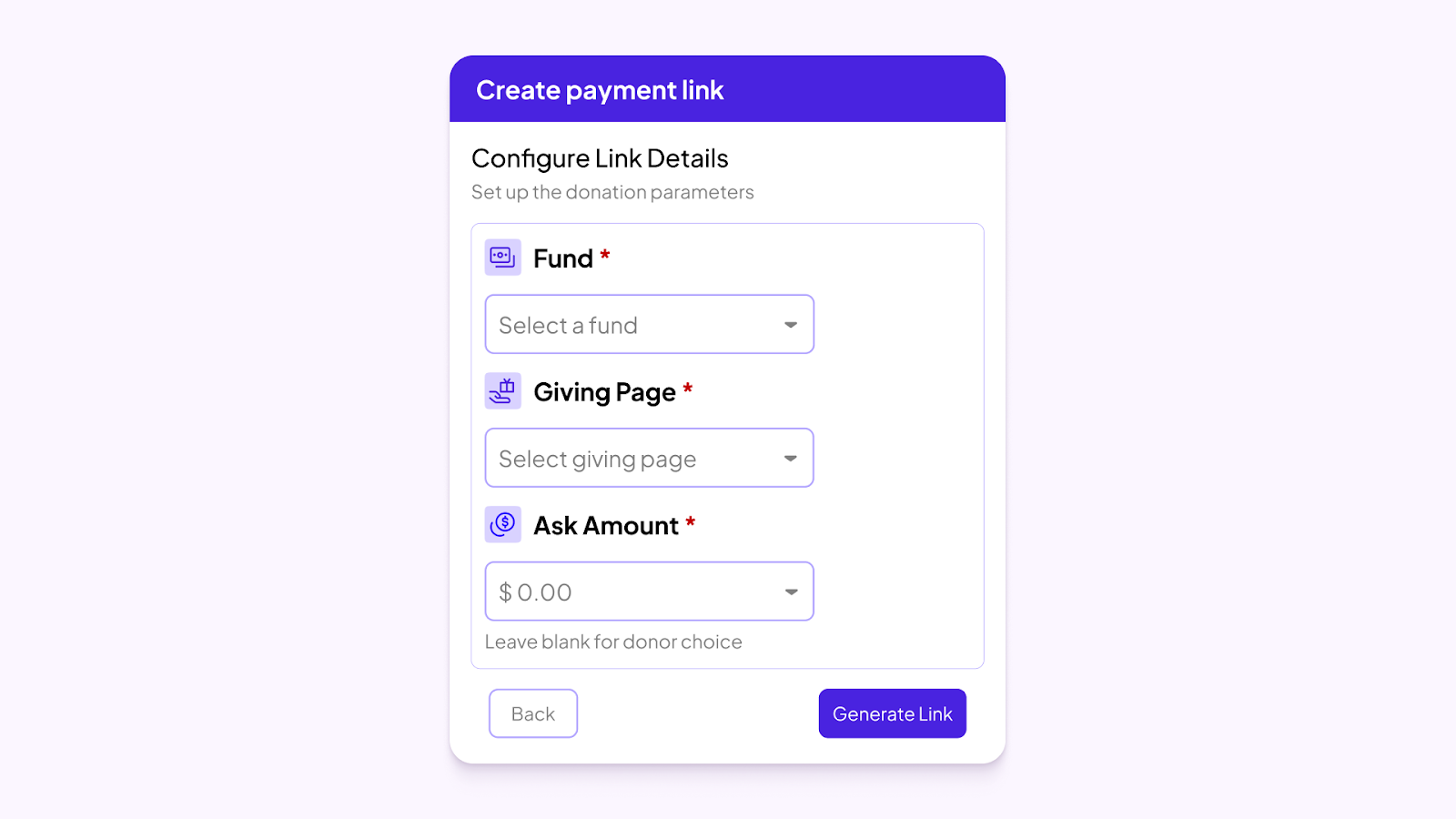
Payment methods matter too. Donors have strong preferences here. If their preferred method is unavailable, some will simply leave. Almabase supports Cards, ACH, PayPal, and Venmo. It now also supports Donor-Advised Funds through DAFpay. DAFs are one of the fastest-growing giving channels, and many donors already have funds set aside for giving. If they cannot use those funds easily on your page, the gift often doesn’t happen. With DAFpay, DAF appears as a native payment option directly in the form, and donors complete the gift without leaving the page.
Across all of this, checkout stays consistent. Whether a donor is giving through a subpage, a main campaign, or a specific fund they searched for, the experience remains the same. The flow doesn’t break. They never lose the thread of where they are or what they are supporting.
These are not three separate features solving three separate problems. They are one experience.
A donor lands on your Giving Day page and immediately finds the school or cause they care about. The page feels intentional and designed for this campaign, not recycled from last year.
Conversion is not about tricks or urgency tactics. It is about removing every unnecessary step between a donor’s intent and their gift. When the path is clear, people follow it.
That is the goal.
As you plan your next Giving Day, it is worth asking a simple question. Does your giving page help donors find their cause, tell a story worth their time, and make giving feel easy?
If not, the opportunity is right there on the page.
Both Customize Page and Tiered Giving are opt-in. If you are running a simpler campaign, nothing changes. For institutions that need their page to reflect the full depth of what they offer, these tools are in your arsenal!.
.webp)
Why Generic Giving Pages Cost You Donors & How to Fix Them
Learn why generic giving pages hurt fundraising results and how customization and tiered giving experiences help universities increase donor conversion rates.
Lorem ipsum dolor sit amet, consectetur adipiscing elit. Suspendisse varius enim in eros elementum tristique. Duis cursus, mi quis viverra ornare, eros dolor interdum nulla, ut commodo diam libero vitae erat. Aenean faucibus nibh et justo cursus id rutrum lorem imperdiet. Nunc ut sem vitae risus tristique posuere.
Nonprofit and university websites have made significant strides in the past several years to improve the accessibility of their websites. Web accessibility means that your organization’s website pages, including your online donation page, are usable and legible for all visitors.
Making your donation page more accessible involves following accessibility guidelines, but it also includes your efforts to make your donation form more visible and recognizable across your website and other digital platforms.
Specifically, we’re going to look at four ways to craft a more accessible donation page:
.jpeg)
Offering supporters an accessible, easy-to-use donation process is the first step of your overarching donor stewardship plan. When your donation form is easy to use, donors will face fewer barriers to giving, providing them with a positive experience.
The first step in making your organization’s online donation page more accessible is following the Web Content Accessibility Guidelines (WCAG). These are universally-recognized regulations for creating web content that’s usable for all.
When it comes to nonprofit and university web accessibility, these guidelines provide a clear checklist to review when updating your organization’s website. Here are just a few of the features your online donation page should include, according to the WCAG:
A WebAIM study of the top 1,000,000 home pages found that the most common accessibility errors include low-contrast text, missing alternative text for images, and empty links. The study points out that addressing just a few of these most common errors would significantly improve accessibility across the web.
The same concept is true for your organization’s donation page. Just a few quick updates can dramatically improve the accessibility of the page, making it available to a wider audience.
Another aspect of making your donation form more accessible is ensuring that it’s usable on all devices. This includes desktops, tablets, and mobile phones.
Bloomerang’s guide to donation page best practices recommends the following tips for creating a mobile-friendly donation form:
With a mobile-friendly donation page, your audience members can give online whenever they want without having to pull out their laptops.
Calls to action (CTAs) are links, buttons, and other digital elements you use to direct traffic to your online donation page. CTAs make your donation form easier to find, reducing the time required to submit an online donation.
Your digital fundraising strategy should include a variety of CTAs across your online marketing platforms, including:
Use eye-catching colors and large font sizes to make your donation page CTAs stand out. Also, make sure any buttons you create follow the recommended WCAG color contrast guidelines.
You can also use strategic wording to vary your CTAs. For example, instead of saying “Donate Now” on every CTA, you might say “Show Your Support” or “Leave a Legacy.” This catches donors’ attention and helps draw the connection between their donations and your organization’s ability to make a positive impact.
Supporters will feel more comfortable filling out your donation form when it’s fully branded to your organization. Including your organization’s branding makes it clear that donors’ gifts will go directly to your organization.
Familiar branding makes your donation page more trustworthy for supporters, especially first-time donors who aren’t as familiar with your organization’s donation process.
For example, your donation form should feature your organization’s recognizable:
Ensure that these branding elements adhere to accessibility standards. For instance, make sure your font is large and legible, use simple language in your written copy, and ensure there’s sufficient color contrast between your brand’s foreground and background colors. Include accessibility policies in your web style guide so that all of your online branding is uniform and accessible.
Creating an accessible donation page can improve your organization’s fundraising results for any campaign, from your annual fundraising efforts to your giving day and more. Your accessible donation page will make your giving options available to a broader audience, creating a more user-friendly experience for your supporters.

4 Strategies to Make Your Donation Page More Accessible
Making your donation page more accessible ensures all supporters can easily access and fill it out. Incorporate these four donation page accessibility tips.
Lorem ipsum dolor sit amet, consectetur adipiscing elit. Suspendisse varius enim in eros elementum tristique. Duis cursus, mi quis viverra ornare, eros dolor interdum nulla, ut commodo diam libero vitae erat. Aenean faucibus nibh et justo cursus id rutrum lorem imperdiet. Nunc ut sem vitae risus tristique posuere.

December 13, 2022
12 minutes

.svg)

.avif)
.webp)