Your social media channels are your most accessible way to connect with your alumni. Here are 10 ideas to improve your engagement strategy
.avif)
Social media is a pivotal tool for alumni engagement, especially for young alumni who spend a lot more time on social media platforms than older generations. Engaging young alumni after graduation is crucial to building lifelong relationships. In order to stay connected with these young alumni after graduation, the two must-haves are: an effective alumni social media strategy and high-quality content.
Let’s take a look at some of the best practices for engaging alumni using social media from world-famous educational institutions, and how they use social media posts and content for engagement:

Alumni respect the professors who helped them master new skills and gain valuable knowledge during their formative years. A social media post featuring one of your beloved professors can tap into your alumni’s sense of gratitude and nostalgia, strengthening the sense of belongingness to the institution.
Keeping alumni regularly informed about deceased professors also offers a good opportunity for the former to pay their respects.

One of the ways to engage and motivate your followers is to share inspiring alumni stories. It can be stories related to internships, scientific research, entrepreneurship projects, or other topics that resonate with your audience on social media.
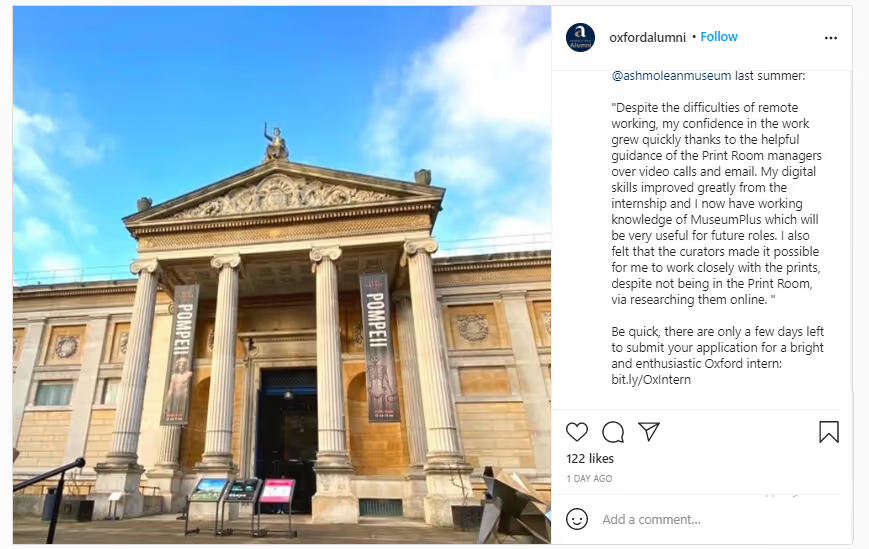
Celebrating the small and big wins of your alumni paves the way for stronger bonds.
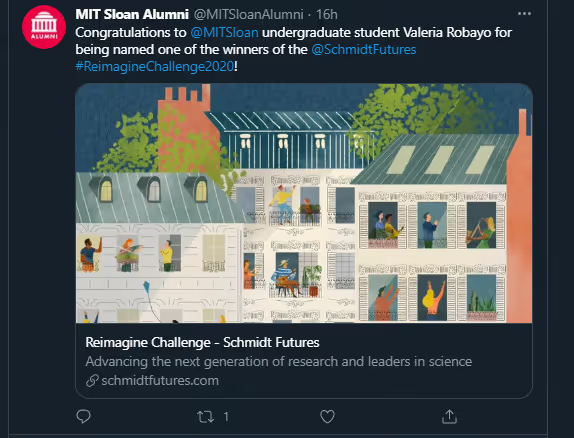
If one of your alumni gets recognized for an academic or business front, don’t forget to give a shout-out to this achievement. Show your followers that you are truly proud of people who glorify their alma mater. Genuine appreciation for your alumni's success will make them feel valued and more connected to your institution.
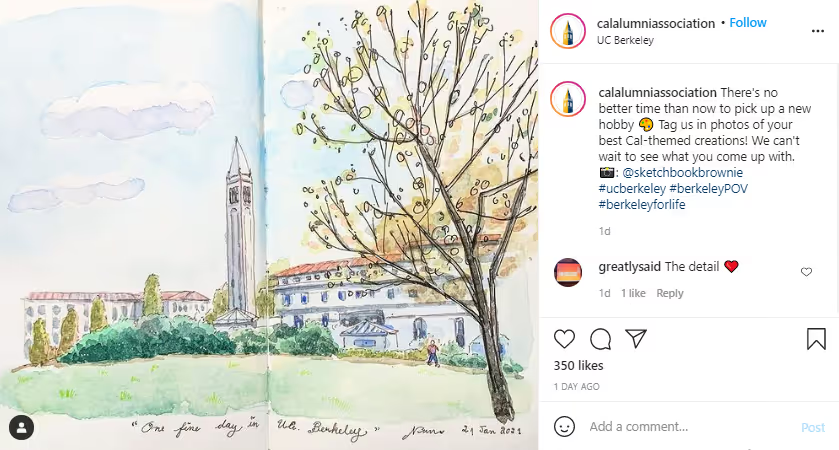
One way to truly create an alumni community is to help them display their skills. Encourage them to create and share the artworks that represent your educational institution. Creative works of your alumni would perfectly complement your social media content strategy and help your alumni feel welcomed.
Remember that you can’t share your alumni’s work without getting their permission and you should always tag the original content creators in your posts.
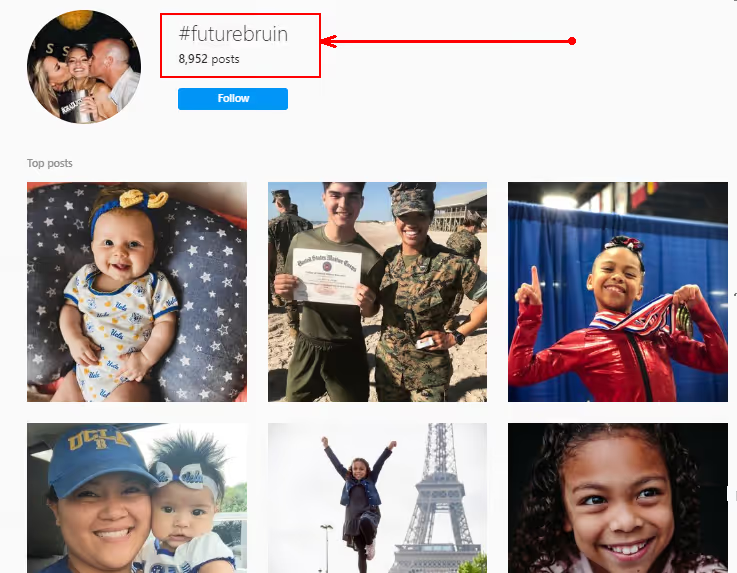
Hashtags play an essential role in content promotion. If you want to improve the visibility of your social media content and increase reach and alumni engagement, you should add relevant hashtags to each post.
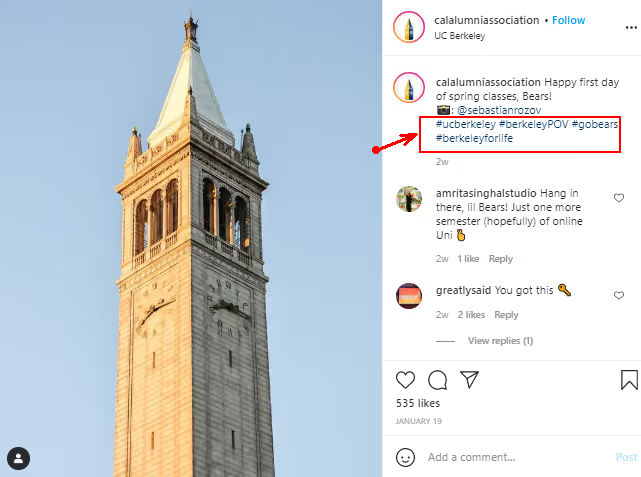
Here are a few basic rules to follow:
- Add three to seven hashtags to each caption or tweet
- Create your own branded hashtags (e.g., #berkeleyforlife, #berkeleyPOV)
- Make sure that all hashtags you are using are relevant to the image and message of your post
If you have already mastered the art of using hashtags, you can start a hashtag to collect a specific type of alumni content.
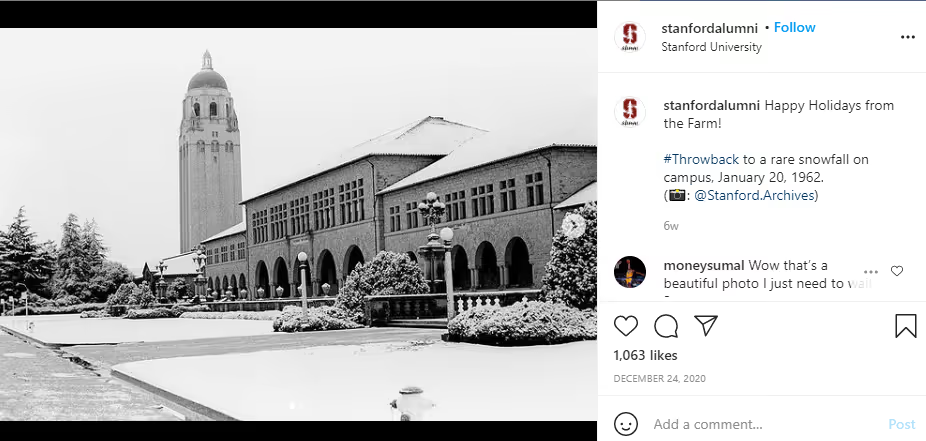
“Throwback-to-the-good-old-days” posts resonate with graduate students on a deep emotional level. Sharing black-and-white photographs of campus buildings and other old pictures that evoke nostalgia is bound to grab attention and further boost alumni engagement on social media.
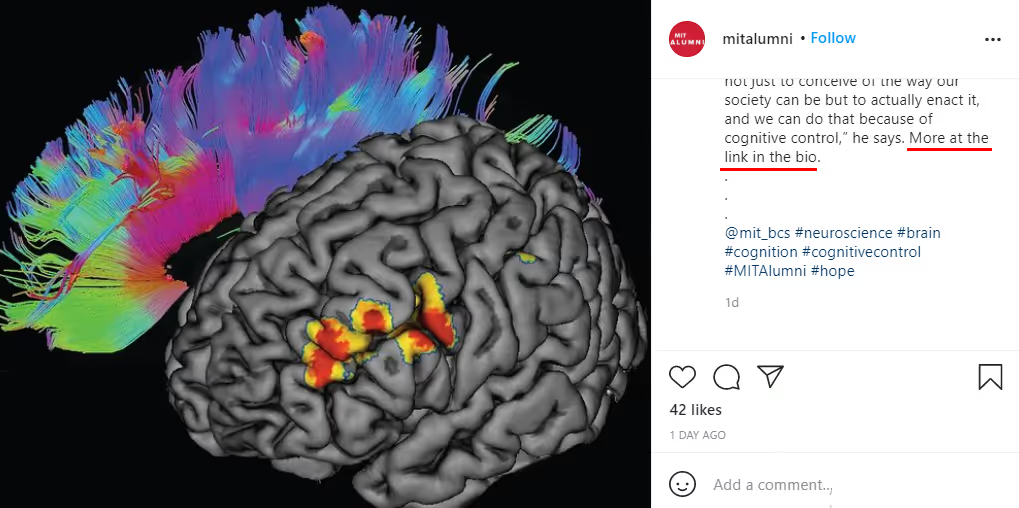
Whenever you post a new article in your blog or add a thought-provoking research paper to your publication database, you should share updates on social media with the alumni. Try writing a short caption to intrigue your readers and use a call-to-action to invite them to your website. Here are a few examples of call-to-actions you can use: check the link in the bio, browse this site, or hit the link below.
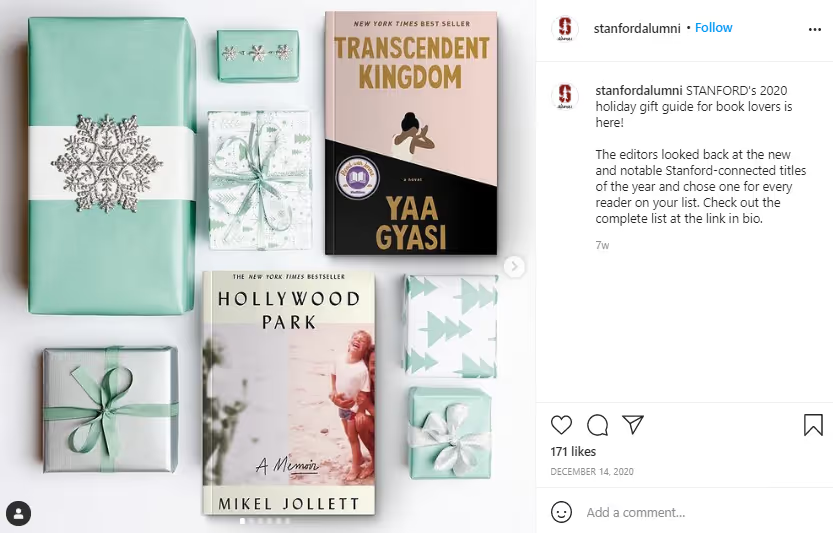
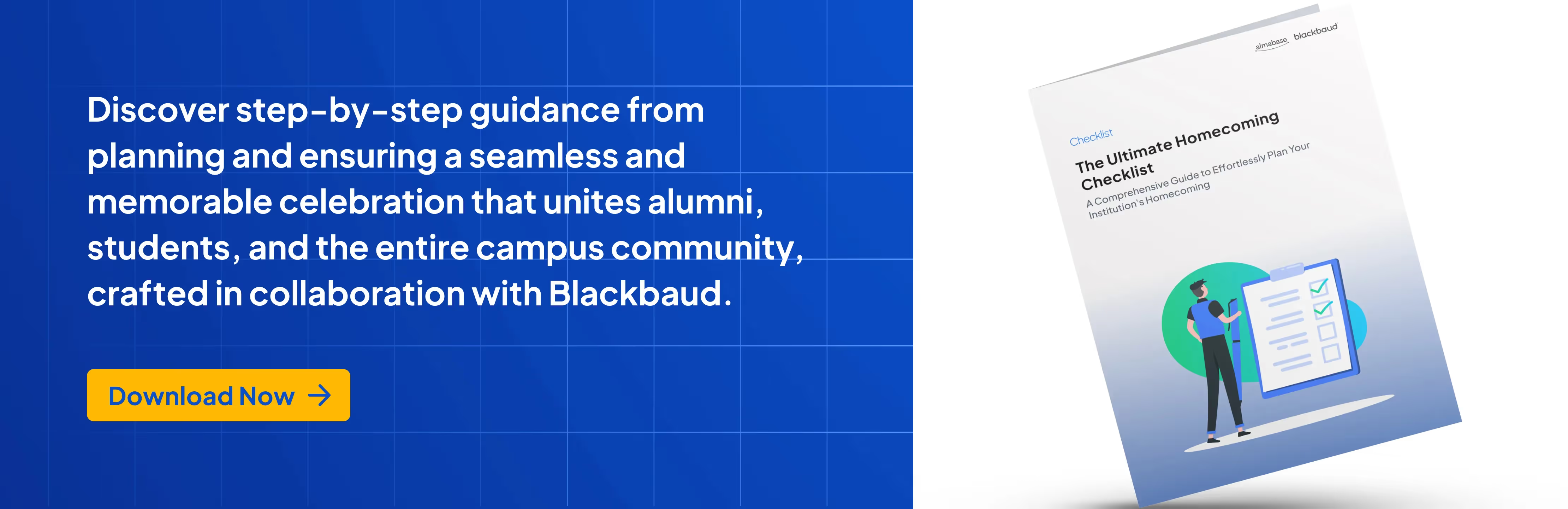
If you want to engage your alumni, you should provide them with useful information. For instance, you can give tips on how to apply for an internship or how to stay productive while working from home. Also, you can share checklists, guides, templates, or any other helpful alumni-centric content.
Stanford University published a holiday gift guide for book lovers and invited its alumni to check it out. It’s a great example of helpful and relevant content to use on Instagram.
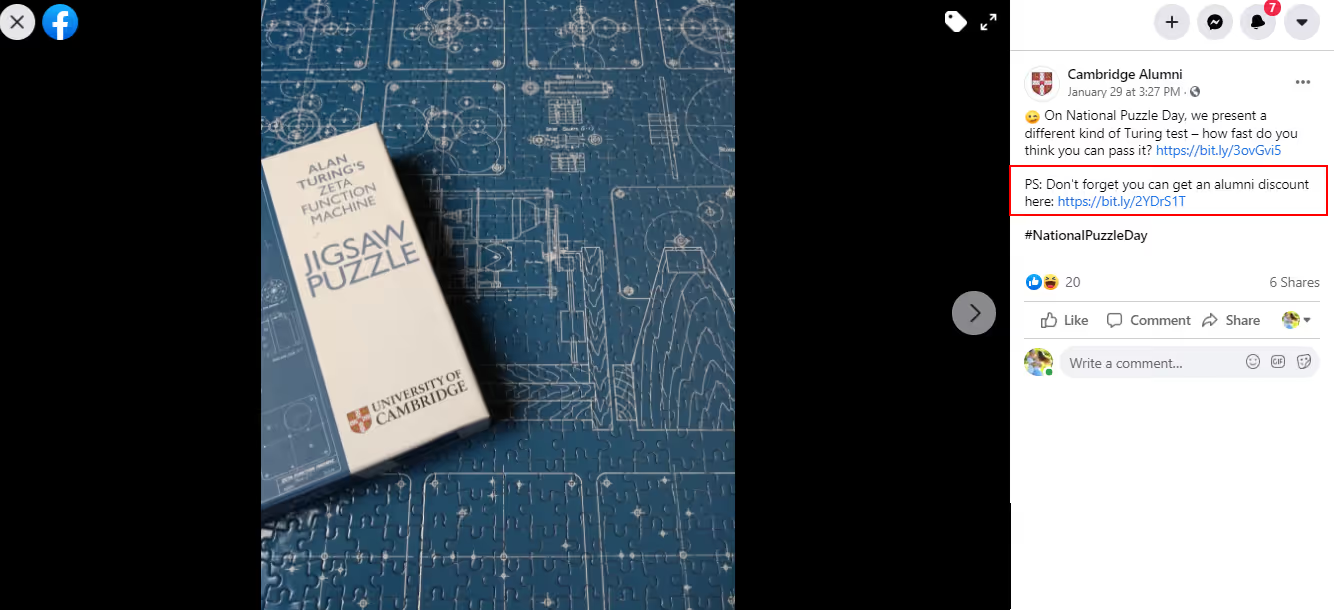
Do you use social media to sell college merchandise? Offer your alumni a special discount, and you will hit two birds with one stone – boost your alumni engagement on social media and increase sales. Numerous institutions have used this approach and seen great results.
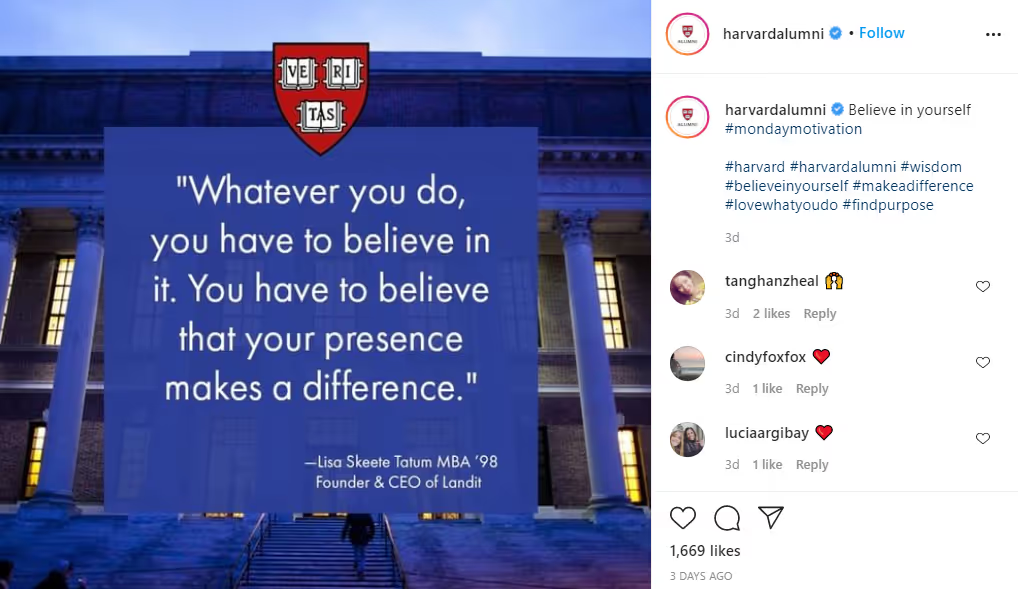
People like to share inspirational quotes with their friends, family, and coworkers. Inspirational quotes are a big hit amongst alumni of all ages. Posting daily or weekly inspirational quotes to motivate your audience is a great way to drive alumni engagement on social media. Remember to choose quotes that resonate the most with your alumni.
Today, social media has become the prime platform for alumni engagement and if you’re not leveraging it already, you’re missing out on engagement opportunities. A vast majority of your alumni community is more active on social media than anywhere else, so a strong social media presence should be a part of your alumni engagement strategy. Incorporate these 10 tried and tested strategies to drive higher alumni engagement than ever via social media.
Table of Contents
Subscribe
See how modern advancement teams bring alumni engagement and fundraising together.
You understand the best ways to communicate with your supporters. After working hard over the years to build personal relationships with your donors, alumni or members, you know the messages and tones that will best catch their interest and keep them engaged on social media.
If you’re promoting a fundraising product on your social media pages, there are a few essential best practices that go beyond the content or tone of your messages.
While we won’t dictate exactly what promotional content you should create, these best practices ensure that you’ll engage followers with your product, maximize overall user experience and boost your online giving.
The key to effectively marketing your fundraising products on social media is to unify your entire online message and engagement strategy.
Use these best practices to boost the impact of your social media promotions:
1. Put your best foot forward on every content outlet
2. Generate some cross-campaign traffic
3. Target your email strategies to boost social media awareness
4. Streamline your online forms for social media users
5. Optimize your entire site for mobile viewing
While perfect for increasing the effectiveness of your online fundraising ideas, these best practices for your social media will more specifically support your fundraising product campaigns!
Remember, you don't need a half-hearted presence on every social media platform out there! Focus your efforts on the platforms you already have, with emphasis on the #1 and #2 platforms for your specific community.
If you conduct product fundraising often, focus on Instagram. As a purely visual platform, Instagram is ideal for promoting brands and products in appealing ways without necessarily advertising them.
For example, check out our Bonfire account on Instagram. As a t-shirt fundraising platform that lets users design and sell products in crowdfunding-style campaigns, we use our Instagram content to share successful fundraising campaigns that we’ve hosted. We also highlight some cool designs that users create.
In social media product promotions, visuals are crucial for raising awareness not just of your products but also of your brand. This is true for every digital content outlet that you use to engage your followers and donor base.
To foster strong online donor engagement and brand awareness, incorporate elements of strong design anywhere you can. Let’s say you designed a beautiful branded t-shirt and have begun promoting it to your followers. Use that design (or elements of it) elsewhere, like:
1. In your emails - Headers, signatures, and newsletter elements could be ideal spots for new design accents
2. On other website elements - incorporate your design into page headers and on your donation form
3. In your photos - these might be promotional photos to model the shirts themselves or they might be of staff and volunteers wearing the shirt while working
Of course, you’re not trying to sell your product on every piece of digital content you produce, but you can promote its image, align its design elements with your brand and strengthen the association between them for your followers.
Creating cross-campaign traffic involves linking all of your online fundraising and marketing in ways that feel natural for donors and visitors. Encouraging them to explore your work will boost both web traffic and completed product orders.
Streamline the link structure between all of your online campaigns. To do this, you’ll need to create and maintain a single, dedicated location for each campaign or marketing outlet:
1. Your online fundraising campaigns: Crowdfunding and peer-to-peer fundraising campaigns are reliable choices for nonprofits, schools and advocacy groups of any size. Some social media platforms offer their own fundraising tools, but these can be limiting in scope. Check out some GoFundMe alternatives designed especially for nonprofits and link to your campaign page directly in your social media posts.
2. Your product fundraising pages: Your website might already have its own e-commerce capabilities, but if not, use a product fundraising platform like Bonfire to host the products you design and provide a single, organized outlet for donors to purchase them. Most product fundraising platforms include social media tools to simplify promoting your products and directing followers to order forms.
3. Your other online marketing or communications channels: These might include email campaigns, more general social media posts, or digital ads. Focus the purpose of each specific message to boost user experience and create clear traffic flows. This strategy will vastly improve your ability to track key analytics for each campaign, too.
For instance, don’t link to all of your online campaigns in one email push; rather, use a single email to promote your fundraising product or crowdfunding project.
Likewise, provide a single link on your product page to your homepage or donation form and link your crowdfunding campaign to both your product page and homepage.
This focuses the purpose of each page while making it easy to track the effectiveness of your messages and streamline user experience across all of your online campaigns.
When promoting your fundraising products on social media, refining your email strategy might not immediately come to mind. However, email is a great way to boost social media engagement since it lets you reach your followers without the hindrance of newsfeed algorithms.
Strong email marketing strategies let you double down on your message and raise awareness of your product without needing to flood your social media page with promotional posts.
Your email recipients have already expressed interest in supporting your work, so reminding them to keep an eye out for your social media posts is a smart move.
A well-targeted and perfectly drafted email campaign can make a crucial difference in engaging existing supporters and building authority. Even if a user doesn’t read your entire email, your message (or even subject line!) will keep your work in mind when they come across your social media content later.
There are a number of email best practices that will not only increase your open rates but also boost the effectiveness of your fundraising product marketing :
1. Use your organization’s or school’s name as the sender, not an individual’s. Recipients are more likely to ignore an email from an unknown name.
2. Always be direct. Never mislead readers as to the purpose of your message, as this will erode the relationship that you’ve worked to build with them.
3. Provide clear links. What is your email asking the reader to do? Provide that next step and make it easy with a direct link or actionable request.
4. Focus heavily on your subject line. Tailor your introductory line to the tone and exact purpose of your full message as well as the relationship that recipients have with you.
Optimizing your email strategies can be incredibly effective for boosting your social media promotions, especially when it comes to mobile users. These readers are more likely to bounce between email, social media, and other digital activities, so it’s essential that you make a memorable and positive impression whenever possible!
Online forms, including fundraising product order forms and more general donation forms, are a crucial element of any fundraising campaign.
Particularly for schools or other institutions that build lifelong relationships with their supporters, it’s important that all their fundraising ideas and strategies involve updating and promoting their donation forms.
This is especially true if you actively promote your fundraising projects on social media pages. A fully optimized donation and order form will create a single, unified destination into which you can funnel all of your converted social media traffic.
An ideal nonprofit donation page should have these key characteristics :
1. Simplicity: Include no unnecessary elements or fields to complete. Ask for the bare minimum amount of information that you’ll need to process their payment.
2. Tidy design: Don’t neglect thoughtful or appealing design on your form, but never overwhelm it with visual elements that aren’t immediately relevant.
3. ‘Single clickability’: Create a form that lets your donor or customer complete a transaction with only one click across the entire input process.
4. Provide relevant options that don’t clutter the form. Keep it simple. For example, intuitive product add-ons or recurring donation options are great features.
Creating a streamlined, user-friendly online form that can accept donations and product orders will go a long way to simplify your social media marketing strategies. With a single, unified destination, it’ll be easier to plan and structure your product promotions.
If your organization’s or school’s donation or order form needs a more comprehensive overhaul, check out Donately’s customized donation forms for some great models of the efficiency and design that you should emulate.
Our final best practice for maximizing the impact of your social media promotions focuses solely on improving the experience of your mobile viewers.
The previous steps have touched on this point, but it’s worth reiterating since your mobile viewers represent an increasingly large percentage of your total online engagement. Poor mobile user experience is now inexcusable.
Never link to un-optimized content on your social media posts! Since a huge proportion of social media views are from mobile browsers, linking to a clunky or slow-loading website (even if it’s an external site of a third party) will cause your bounce rates to spike.
Before linking, always look for these elements that indicate a page has been mobile-optimized :
1. Vertical-oriented layout
2. Quick load times
3. Clean organization and menu
4. Simple, bold design
5. No immediate pop-ups
6. No unnecessary interactive elements
A smart move for your organization, school, or group is to host your fundraising products through a platform designed for optimal product fundraising.
For instance, here at Bonfire, we design mobile-first to ensure the best experiences for anyone trying to purchase a t-shirt.
Additionally, a great product fundraising platform will provide you with intuitive design and campaign analytics tools that can ease the entire process of starting, managing, and promoting your product fundraising campaigns.
When promoting your fundraising products on social media platforms, it’s important to follow some best practices that will strengthen your entire online marketing strategy.
Keeping your digital content tightly organized, mobile optimized and thoughtfully streamlined will make a crucial difference not only for your social media engagement and click-through rates but also for your user experience as a whole!

Perfecting Product Fundraising: 5 Social Media Best Practices
These best practices ensure that you’ll engage followers with your product, maximize overall user experience, and boost your online giving.
Lorem ipsum dolor sit amet, consectetur adipiscing elit. Suspendisse varius enim in eros elementum tristique. Duis cursus, mi quis viverra ornare, eros dolor interdum nulla, ut commodo diam libero vitae erat. Aenean faucibus nibh et justo cursus id rutrum lorem imperdiet. Nunc ut sem vitae risus tristique posuere.
Having observed over a hundred schools successfully bring attention to their alumni events and reunions via social media, we have sufficient evidence that it is one of the most powerful mediums to promote your alumni reunion successfully. A little creativity and event marketing can go a long way in making sure that the maximum amount of alumni notice and engage with your upcoming reunions.
With that being said, here are 7 tested approaches to promote alumni reunions on social media:
Sharing photos and videos of previous years reunions on your social media page is one of the best ways to attract attention to your alumni reunion event. While alumni may love hearing about wonderful stories about your previous reunions, these stories become all the more engaging when they hear it from their friends or peers. Encouraging alumni to share their own experiences from previous years reunions, has proven to be highly rewarding for reunion success.
If a large amount of your alumni base is still in touch with your faculty or staff, asking faculty members to share updates about upcoming reunions or their experiences at past year reunions is a best practice you should follow.
Another way to encourage alumni engagement and participation is by creating opportunities for alumni to take some action on your post. Here’s an example: create a simple graphic post with the tagline - “Just three days to go!! Tag 3 people you are looking forward to meeting at the reunion.”
Here’s how William Peace University drew the attention of its alumni and got them talking about their upcoming reunion.

It's generally a good idea to see which alumni event ideas are gaining traction. Take for example the widely popular 10-Year Challenge on Facebook where you can request alumni to simply post two photos, side-by-side, taken at least ten years apart. Alternatively, you can use photos from yearbooks and current profiles of alumni to create ‘10-year challenge’ posts. However, in the case of this approach, consent needs to be established before using an alum’s personal photos.
Instead of promoting your alumni event the traditional way, capture the attention of your alumni by constantly staying in their social media feed and reminding them of the wonderful memories they’ve had over their time spent at their school. Here’s how McCarthy Alumni Association gets this right.

Create a campaign asking alumni to respond to “What's something you loved about your Class of 10 Yr Reunion?”. Share the positive feedback you receive from the campaign and from past year reunions on your social media pages, tagging those alumni who’ve provided feedback, thus ensuring a wider reach for your campaign.
Pick images of 3-5 alumni, combine them to create a collage with question marks on top of each image, and then post it as a challenge for alumni to guess the names of the people mentioned in the post. To make it more interesting, provide hints. For example, if one of the names to be guessed is "Sarah", you can drop the letters ‘S’, ‘R’, and ‘H’ as a clue. Such campaigns not only get you visibility but also encourage your alumni to take action by responding to the challenge you’ve thrown at them.
To effectively promote alumni reunions, institutions today have a good variety of social media platforms, each offering distinct advantages for outreach and engagement.
When it comes to promoting your alumni reunions, there’s no limit to all that you can do. Here’s a list of techniques for increasing alumni participation to your reunions that have brought success to over a hundred institutions.

7 Tested Ideas To Promote Alumni Reunions On Social Media
Discover 7 proven strategies to boost engagement and attendance at your alumni reunions using social media. Learn how to create buzz, use countdown timers, etc.
Lorem ipsum dolor sit amet, consectetur adipiscing elit. Suspendisse varius enim in eros elementum tristique. Duis cursus, mi quis viverra ornare, eros dolor interdum nulla, ut commodo diam libero vitae erat. Aenean faucibus nibh et justo cursus id rutrum lorem imperdiet. Nunc ut sem vitae risus tristique posuere.
If you’re someone handling alumni engagement for your school, you know that engaging recent graduates is one of the most challenging aspects. So, before diving right in, let’s take a closer look at why young alumni need to be engaged and its long-term impact.
Young alumni have the potential to turn into future major donors. But, they must be approached the right way. Billionaire and former New York City Mayor Michael Bloomberg’s first donation to his alma mater, Johns Hopkins University, was at the age of 23 and the amount was $5. Since then, he has donated close to $1.8 billion to support research, teaching, and financial aid at the university.

Yep, that’s accurate.
Chances are this segment of your alumni population won’t respond to your fundraising asks for the next few years. They are just starting a career and personal financial problems such as paying off student loans or relocating to a new city for college are likely to get prioritized over donating to or engaging with their alma mater.
While young alumni may not be the biggest contributors over the next few years, they can be of great help to your school by offering you their valuable time, in the form of volunteer work and internships.

Here’s a look at the 6 most effective strategies employed by schools to engage their young alumni.
While this is something that is recommended irrespective of whether or not your school is catering to young alumni, having a responsive alumni website is especially great for capturing the attention of the younger generation. As the younger generation is more inclined towards using mobile devices, being able to easily access all the websites and their resources on their devices helps provide more opportunities for them to engage with their alma mater.
Take a look at Nicholls State University’s up-to-date and easily accessible mobile-friendly website below.

As recent graduates, your alumni already have a lot to worry about. The key to building a lasting relationship is to address these issues and provide them with valuable support. This could be in the form of workshops, job prospects, mentorships, social networking mixers, or even emotional support.

A time-tested technique for finding out what your young alumni would be most interested in, alumni surveys are great at saving time and effort. Creating a short survey asking alumni what they would like to hear about from their alma mater is an effective way of grabbing attention and delivering value. There are various tools such as Typeform and Survey Monkey that can help you create short surveys. For example, The College of Idaho took a short survey that revealed ‘Financial Planning’ as the most pressing concern for a majority of young alumni. Based on the results of this survey, the college organized a free workshop on Saving Money & Paying Off Debts, as a way to support its young alumni.

Instead of the usual marketing email blasts, focused emails targeted at specific segments of alumni are bound to yield better results. The most effective way to keep young alumni engaged with emails is to provide them with consistent value, right from the start. If you are trying to engage alumni who recently graduated, targeting them with emails that showcase relevant job opportunities is the best way to do it.
Take a look at how T. Howard Foundation, a non-profit organization based out of Silver Spring, Maryland, shares job opportunities with its young alumni via emails.

According to a recent study published by Broadband Search, 79% of college graduates use at least one social media site.
Social media is a great tool for engaging young alumni not just because of its high accessibility and adaptability but also because of the flexibility it provides. There is no limit to how creative you can get and that’s what resonates the most with young alumni. Incorporating more video content and trying to create campaigns that urge alumni to take action are ideal components of a great social media strategy. Here’s how William Peace University drew the attention of its young alumni and got them talking about their upcoming reunion.
While having a digital engagement strategy in place is pivotal, completely depending on it is not recommended. In-person interaction is a fundamental part of fostering lasting relationships with young alumni. Here’s how our customer, Charlotte Christian School got this right.
As a way of extending support to young alumni, Charlotte Christian School sent out a video featuring beloved teachers wishing alumni good luck ahead of their exams and conveying to them how much they care. The video also acts as a special appeal for alumni to come back to school for a wonderful time with their teachers and friends.


6 strategies for increasing engagement from young alumni
Engaging recent graduates of alumni engagement can be a challenging aspect. Here’s a look at the 6 effective strategies peers use to engage their young alumni.
Lorem ipsum dolor sit amet, consectetur adipiscing elit. Suspendisse varius enim in eros elementum tristique. Duis cursus, mi quis viverra ornare, eros dolor interdum nulla, ut commodo diam libero vitae erat. Aenean faucibus nibh et justo cursus id rutrum lorem imperdiet. Nunc ut sem vitae risus tristique posuere.

.svg)

.avif)
.webp)