These best practices ensure that you’ll engage followers with your product, maximize overall user experience, and boost your online giving.

You understand the best ways to communicate with your supporters. After working hard over the years to build personal relationships with your donors, alumni or members, you know the messages and tones that will best catch their interest and keep them engaged on social media.
If you’re promoting a fundraising product on your social media pages, there are a few essential best practices that go beyond the content or tone of your messages.
While we won’t dictate exactly what promotional content you should create, these best practices ensure that you’ll engage followers with your product, maximize overall user experience and boost your online giving.
The key to effectively marketing your fundraising products on social media is to unify your entire online message and engagement strategy.
Use these best practices to boost the impact of your social media promotions:
1. Put your best foot forward on every content outlet
2. Generate some cross-campaign traffic
3. Target your email strategies to boost social media awareness
4. Streamline your online forms for social media users
5. Optimize your entire site for mobile viewing
While perfect for increasing the effectiveness of your online fundraising ideas, these best practices for your social media will more specifically support your fundraising product campaigns!
Remember, you don't need a half-hearted presence on every social media platform out there! Focus your efforts on the platforms you already have, with emphasis on the #1 and #2 platforms for your specific community.
If you conduct product fundraising often, focus on Instagram. As a purely visual platform, Instagram is ideal for promoting brands and products in appealing ways without necessarily advertising them.
For example, check out our Bonfire account on Instagram. As a t-shirt fundraising platform that lets users design and sell products in crowdfunding-style campaigns, we use our Instagram content to share successful fundraising campaigns that we’ve hosted. We also highlight some cool designs that users create.
In social media product promotions, visuals are crucial for raising awareness not just of your products but also of your brand. This is true for every digital content outlet that you use to engage your followers and donor base.
To foster strong online donor engagement and brand awareness, incorporate elements of strong design anywhere you can. Let’s say you designed a beautiful branded t-shirt and have begun promoting it to your followers. Use that design (or elements of it) elsewhere, like:
1. In your emails - Headers, signatures, and newsletter elements could be ideal spots for new design accents
2. On other website elements - incorporate your design into page headers and on your donation form
3. In your photos - these might be promotional photos to model the shirts themselves or they might be of staff and volunteers wearing the shirt while working
Of course, you’re not trying to sell your product on every piece of digital content you produce, but you can promote its image, align its design elements with your brand and strengthen the association between them for your followers.
Creating cross-campaign traffic involves linking all of your online fundraising and marketing in ways that feel natural for donors and visitors. Encouraging them to explore your work will boost both web traffic and completed product orders.
Streamline the link structure between all of your online campaigns. To do this, you’ll need to create and maintain a single, dedicated location for each campaign or marketing outlet:
1. Your online fundraising campaigns: Crowdfunding and peer-to-peer fundraising campaigns are reliable choices for nonprofits, schools and advocacy groups of any size. Some social media platforms offer their own fundraising tools, but these can be limiting in scope. Check out some GoFundMe alternatives designed especially for nonprofits and link to your campaign page directly in your social media posts.
2. Your product fundraising pages: Your website might already have its own e-commerce capabilities, but if not, use a product fundraising platform like Bonfire to host the products you design and provide a single, organized outlet for donors to purchase them. Most product fundraising platforms include social media tools to simplify promoting your products and directing followers to order forms.
3. Your other online marketing or communications channels: These might include email campaigns, more general social media posts, or digital ads. Focus the purpose of each specific message to boost user experience and create clear traffic flows. This strategy will vastly improve your ability to track key analytics for each campaign, too.
For instance, don’t link to all of your online campaigns in one email push; rather, use a single email to promote your fundraising product or crowdfunding project.
Likewise, provide a single link on your product page to your homepage or donation form and link your crowdfunding campaign to both your product page and homepage.
This focuses the purpose of each page while making it easy to track the effectiveness of your messages and streamline user experience across all of your online campaigns.
When promoting your fundraising products on social media, refining your email strategy might not immediately come to mind. However, email is a great way to boost social media engagement since it lets you reach your followers without the hindrance of newsfeed algorithms.
Strong email marketing strategies let you double down on your message and raise awareness of your product without needing to flood your social media page with promotional posts.
Your email recipients have already expressed interest in supporting your work, so reminding them to keep an eye out for your social media posts is a smart move.
A well-targeted and perfectly drafted email campaign can make a crucial difference in engaging existing supporters and building authority. Even if a user doesn’t read your entire email, your message (or even subject line!) will keep your work in mind when they come across your social media content later.
There are a number of email best practices that will not only increase your open rates but also boost the effectiveness of your fundraising product marketing :
1. Use your organization’s or school’s name as the sender, not an individual’s. Recipients are more likely to ignore an email from an unknown name.
2. Always be direct. Never mislead readers as to the purpose of your message, as this will erode the relationship that you’ve worked to build with them.
3. Provide clear links. What is your email asking the reader to do? Provide that next step and make it easy with a direct link or actionable request.
4. Focus heavily on your subject line. Tailor your introductory line to the tone and exact purpose of your full message as well as the relationship that recipients have with you.
Optimizing your email strategies can be incredibly effective for boosting your social media promotions, especially when it comes to mobile users. These readers are more likely to bounce between email, social media, and other digital activities, so it’s essential that you make a memorable and positive impression whenever possible!
Online forms, including fundraising product order forms and more general donation forms, are a crucial element of any fundraising campaign.
Particularly for schools or other institutions that build lifelong relationships with their supporters, it’s important that all their fundraising ideas and strategies involve updating and promoting their donation forms.
This is especially true if you actively promote your fundraising projects on social media pages. A fully optimized donation and order form will create a single, unified destination into which you can funnel all of your converted social media traffic.
An ideal nonprofit donation page should have these key characteristics :
1. Simplicity: Include no unnecessary elements or fields to complete. Ask for the bare minimum amount of information that you’ll need to process their payment.
2. Tidy design: Don’t neglect thoughtful or appealing design on your form, but never overwhelm it with visual elements that aren’t immediately relevant.
3. ‘Single clickability’: Create a form that lets your donor or customer complete a transaction with only one click across the entire input process.
4. Provide relevant options that don’t clutter the form. Keep it simple. For example, intuitive product add-ons or recurring donation options are great features.
Creating a streamlined, user-friendly online form that can accept donations and product orders will go a long way to simplify your social media marketing strategies. With a single, unified destination, it’ll be easier to plan and structure your product promotions.
If your organization’s or school’s donation or order form needs a more comprehensive overhaul, check out Donately’s customized donation forms for some great models of the efficiency and design that you should emulate.
Our final best practice for maximizing the impact of your social media promotions focuses solely on improving the experience of your mobile viewers.
The previous steps have touched on this point, but it’s worth reiterating since your mobile viewers represent an increasingly large percentage of your total online engagement. Poor mobile user experience is now inexcusable.
Never link to un-optimized content on your social media posts! Since a huge proportion of social media views are from mobile browsers, linking to a clunky or slow-loading website (even if it’s an external site of a third party) will cause your bounce rates to spike.
Before linking, always look for these elements that indicate a page has been mobile-optimized :
1. Vertical-oriented layout
2. Quick load times
3. Clean organization and menu
4. Simple, bold design
5. No immediate pop-ups
6. No unnecessary interactive elements
A smart move for your organization, school, or group is to host your fundraising products through a platform designed for optimal product fundraising.
For instance, here at Bonfire, we design mobile-first to ensure the best experiences for anyone trying to purchase a t-shirt.
Additionally, a great product fundraising platform will provide you with intuitive design and campaign analytics tools that can ease the entire process of starting, managing, and promoting your product fundraising campaigns.
When promoting your fundraising products on social media platforms, it’s important to follow some best practices that will strengthen your entire online marketing strategy.
Keeping your digital content tightly organized, mobile optimized and thoughtfully streamlined will make a crucial difference not only for your social media engagement and click-through rates but also for your user experience as a whole!
Table of Contents
Subscribe
See how modern advancement teams bring alumni engagement and fundraising together.
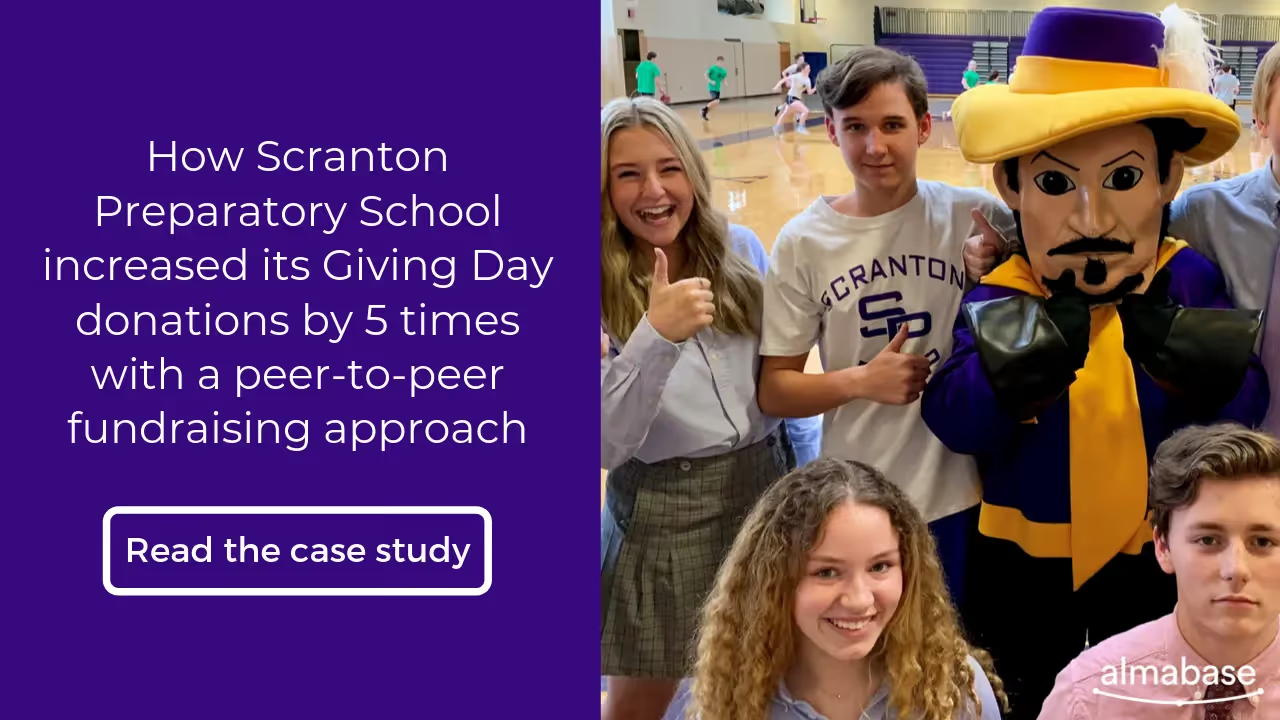
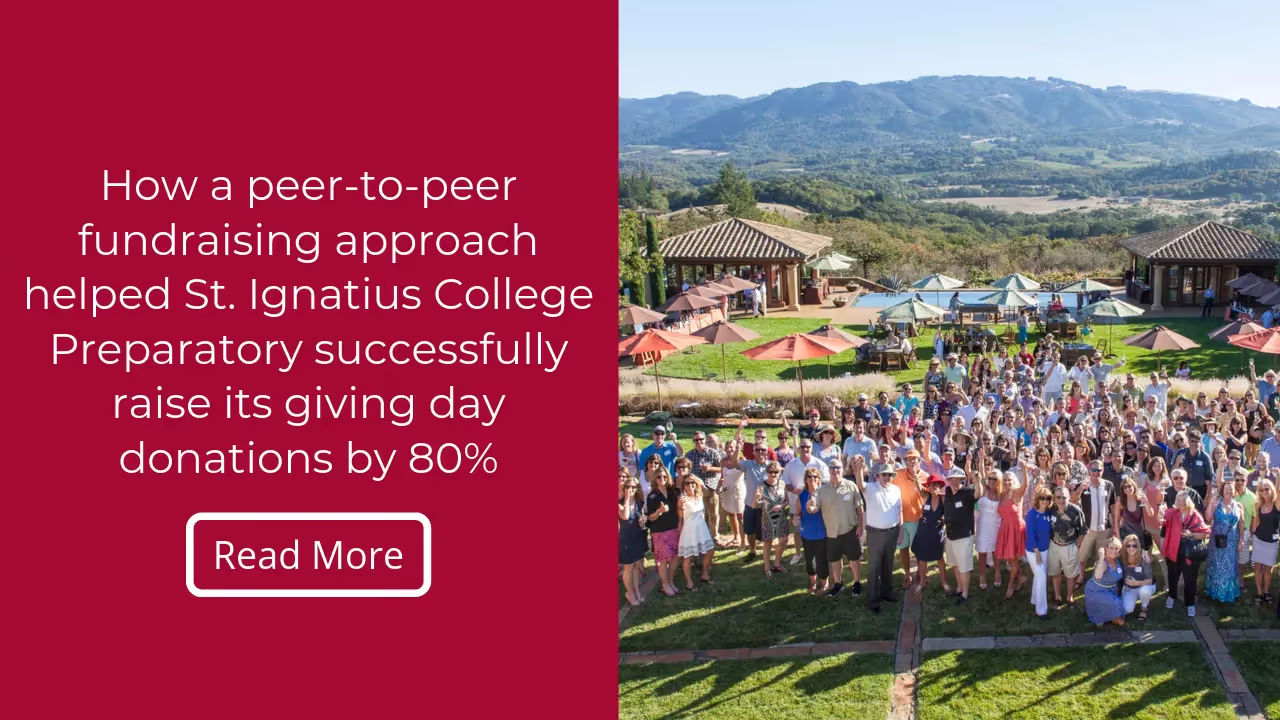
Peer-to-peer fundraising is a powerful social giving tool that many educational institutions have employed to increase their donations while expanding their donor audience. Through peer-to-peer fundraising campaigns, these organizations empower their supporters to raise money on their behalf.
While peer-to-peer fundraising is an effective fundraising strategy especially for nonprofits, other forms of educational institutions too have raised a lot of revenue for their programs and missions by leveraging social networks.
1. Develop a campaign page featuring your institution's fundraising goal
2. Recruit supporters (e.g., current students and alumni) to create their own campaign pages that demonstrate their personal tie to your institution's cause
3. Share their pages with friends and family and encourage them to donate
4. Provide them with the tools to make peer-to-peer fundraising social, mobile, and fun!
Peer-to-peer fundraising is a great way to maintain relationships with alumni. To get the most out of it, there are certain strategies you should incorporate to ensure success. These include:
1. Using a peer-to-peer platform
2. Offering training
3. Promoting on and offline
4. Leveraging giving days
5. Using gamification
6. Combining with events
Are you ready to take a closer look at peer-to-peer best practices to grow your fundraising? Get ready to take some notes!
Providing an easy giving experience is one of the most important things you can do when launching a peer-to-peer fundraising campaign for your institution. This means offering easy-to-use donation pages that provide a mobile-optimized experience and an overall convenient process.
The majority of the population owns a cell phone and with mobile users increasing, donors are also starting to prefer making contributions via their mobile devices. Therefore, your cause needs to meet supporters where they are: on their phones, giving them the tools to donate anywhere and anytime.
To provide the easiest experience, it’s critical to invest in a peer-to-peer fundraising platform. Peer-to-peer software will allow your institution to:
1. Easily set up a main donation page for your fundraising goal
2. Let your college supporters create personal pages that harness their social networks
3. Track your progress and analyze important data
A peer-to-peer fundraising platform streamlines your fundraising process and expands your potential donor circle, introducing friends, family, and other alumni to your cause.
When you prepare to launch a peer-to-peer fundraising campaign, it’s important that you offer training opportunities to your supporters. Most of your supporters might not have a ton of experience as fundraisers, so getting them set up on the platform and providing tools will boost results and engagement.
Managing your modern day alumni relations is a great way to encourage alumni to become fundraisers for your cause. To make fundraising easy for them, be sure to provide the following resources:
1. Training: Educate supporters about your cause so they know exactly what they’re fundraising for. Make sure you have access to your platform’s tools and resources so you can pass along training knowledge to your supporters.
2. Mission and impact: Tie supporters to your cause and help them understand why this campaign matters. Social donors prioritize understanding the mission and impact of their efforts, as key motivators for fundraising.
3. Templates. Social media and email templates are an excellent way to give your supporters the materials they need to get the word out. This makes it easy for them to share the campaign and ask for donations while still adding their own personal touch.
4. Ongoing support: Regularly check in and monitor the progress of your supporters. Offer words of encouragement where needed and recognize high-performing fundraisers for their achievements.
5. Customizable pages: Give your supporters the ability to customize their individual campaign pages so they can demonstrate their connection to your cause. Allow them to upload photos, for example, and create their own content to tell their story.
Offering training and support is a surefire way to set supporters up for success. In order to reach your institution’s fundraising goal, your supporters must communicate to their networks in the way you need them to, while offering their own personal touch to the campaign. This will encourage donors to pay attention and give to the causes their friends and family care about.
While your students may be online constantly, it’s a good practice to diversify your promotional strategies to create maximum reach. According to the OneCause guide to peer-to-peer fundraising, this means using a mix of traditional and modern marketing methods.
Donor and alumni networks consist of different generations, so be sure to encourage your peer-to-peer participants to meet all of them where they are. Use multi-channel promotional strategies, including:
1. Social media
2. Email
3. Direct mail
4. Printed marketing materials
5. Phone calls
While the above list is a combination of all the approaches that your peer-to-peer participants should leverage, which approach works best needs to be identified with respect to your donor audience. If your older alumni prefer direct mail or email, that’s what your participants must resort to. Similarly, if your younger alumni prefer social media, that’s how they should be pursued.
Giving days are designated days of the year where donors will contribute to a cause or institution they care about. These are often virtual fundraising campaigns with a 24-hour time-frame to capitalize on donations.

The most popular giving day is, of course, Giving Tuesday. Widely recognized as an annual day of giving, Giving Tuesday has helped universities engage with potential donors and raise the money they need. Paired with a peer-to-peer fundraiser, you can raise even more.
In order to make the most of Giving Tuesday and your peer-to-peer campaign, you should:
1. Plan ahead: While giving days are only one day out of the year, there’s a lot you can do to plan ahead and make sure donors know about your institution's giving campaign and ways to get involved. This ranges from social ads to printed marketing materials and ensuring your internal operations run smoothly. Prepare your peer-to-peer participants to make use of these materials.
2. Create a compelling campaign theme: A compelling theme will help your donors connect with your cause and inspire. Create a unique hashtag and make your campaigns easy to share among peers.
3. Call on your top supporters: Solicit personal appeals from famous alumni, board members, and other influential people associated with your institution. These peer-to-peer participants will further encourage donors to give. One thing that has worked well for institutions is "Gift Unlocking". Influence your top donors to pledge a donation based on a goal. For instance, once your Giving Day hits the 500 donor mark, a donation of $5000 will be made by the donor who had taken the pledge.
4. Show gratitude: Be sure to acknowledge those who contribute to your institution on Giving Tuesday. Appreciation goes a long way toward ensuring donors know their gift will go to good use and encouraging them to give again in the future.
Giving days can make a huge difference in donor acquisition and retention rates, and are a great way to spread the word about your institution and fundraising mission, especially during a peer-to-peer fundraiser. Explore even more ways you can leverage Giving Tuesday with best practices like gamification and others with this guide by OneCause.
Who isn’t motivated by a little friendly competition? Donors love to be recognized for their contributions, and your institution can benefit from leveraging gamification tools throughout your peer-to-peer fundraising campaign.
Gamification tools include:
1. Influencer dashboard (Reward those who influence donations)
3. Matching gifts
4. Fundraising thermometers
Gamification motivates supporters through friendly competition. These peer-to-peer tactics create and sustain momentum, inspiring donors to continue giving so you can reach the next benchmark in your fundraising progress.
By incorporating gamification tools into your institution’s peer-to-peer fundraising campaign, you’ll encourage more giving, more participation, and boost your chances of reaching fundraising goals.
Peer-to-peer fundraisers work well with events. Whether you’re planning a walkathon, gala, or other engaging event for your institution, there are many ways your peer-to-peer fundraiser can boost engagement and promote your event. For example, people who donate to their friend’s peer-to-peer campaign will also be more likely to attend the event.
In addition to this, you can leverage:
1. Recognition: Events are a great way to recognize your fundraisers. Highlight some of your top supporters at your event to show them how much you appreciate their effort.
2. Merchandise: Set up a table at your event to sell items that promote your institution’s cause. You can even offer free event merch to your top peer-to-peer participants. This will also help raise awareness after the event when people walk around wearing your merch!
3. Social elements: Peer-to-peer fundraising campaigns pair well with active and community-based events such as 5K races, obstacle courses, walkathons, and others. Encourage friendly competition and teamwork, just like the campaign itself!
4. Wrap around events: “Wrap around” events are usually managed by teams and individual participants and can include smaller events like car washes and garage sales, or larger events like auctions. These activities foster a community vibe and attract new donors.
Pairing your peer-to-peer fundraiser with an event is an impactful way to bring your campaign full circle. You can even set the event date as the last day to fundraise to drive a sense of urgency in your supporters and encourage them to reach the goal.

Joshua Meyer
Joshua Meyer brings over 14 years of fundraising, volunteer management, and marketing experience to his current role as the Director of Marketing for OneCause. Currently, as a member of the OneCause sales and marketing team, Josh manages all of the firm’s marketing efforts. He has a passion for helping to create positive change and loves that his current role allows him to help nonprofits engage new donors and achieve their fundraising goals.

Peer-to-Peer Fundraising in Higher Education: 6 proven strategies that bring success
Here's our detailed guide on how to get started with a peer-to-peer fundraising campaign and proven strategies that can boost your fundraising.
Lorem ipsum dolor sit amet, consectetur adipiscing elit. Suspendisse varius enim in eros elementum tristique. Duis cursus, mi quis viverra ornare, eros dolor interdum nulla, ut commodo diam libero vitae erat. Aenean faucibus nibh et justo cursus id rutrum lorem imperdiet. Nunc ut sem vitae risus tristique posuere.
Online fundraising can be a deceptively tricky subject. While the term simply refers to the process of raising money online, making the most of this strategy requires a dynamic approach on the part of your school.
When it comes to engaging with alumni, in particular, it’s doubly important to have a robust online fundraising strategy in place.
For this reason, your team should take a look at how you fundraiser online right now and decide whether or not you’re getting all you can out of this strategy.In this article, we’ll help you begin this process by discussing:
1. How your alumni engagement strategy can benefit from online fundraising
2. Online fundraising trends you should be using
3. Ways to boost alumni giving through online fundraising
4. Fundraising software tools that can improve your alumni engagement.
Ready to master online fundraising and improve your alumni engagement tactics? Let’s dive in!

Making the most of your online fundraising capabilities should be your first priority when perfecting how you engage with alumni!
As a school, your institution's fundraising needs and limitations likely look very different from other nonprofit organizations. For one thing, your core donor base (your alumni) are often spread far and wide across the country.
This means that to connect with alumni supporters, you’ll have to go the extra mile to meet them where they are.
The best way to do this? By fundraising online, your team can easily reach geographically-diverse alumni. This starts with accepting donations online, but also allows your school to regularly interact with your supporters via email, social media and more!
When your school makes the effort to interact with supporters online, you avoid the trap of remaining “out of sight and out of mind” to these individuals.
Through frequent online interaction, alumni are more likely to donate on a regular basis, as well as more likely to encourage their friends and family to give to your institution.
In addition to strengthening ties between your school and your alumni, online fundraising has several other key benefits:
1. Low overhead cost: After your initial investment in online fundraising software, online fundraising proves to more than make up for its upfront cost. Since everything is virtual, your team can allocate less personnel to manage your online fundraising efforts, as well as save money on physical marketing materials.
2. Simple setup: Once you pick the right software, your team can easily set up your online fundraising tools with little stress. Many services offer consultation during the implementation process, or you might lean on your fundraising consultant during this time for their expertise.
3. Increased donor knowledge: Another reason why online fundraising tools are so effective is because they can provide unmatched insight into your supporters. With every interaction your school has with alumni online, you will collect important data that can inform your engagement tactics moving forward.
The bottom line: By investing time and energy into perfecting your school’s online fundraising strategy, you’ll have an easier time reaching alumni donors while saving money and effort. Even better, when you do connect with these donors, your interactions will be more streamlined and more informative than traditional methods allow.

With the right strategy, your school can benefit from powerful new trends in online fundraising that simply can’t be matched by traditional fundraising methods.
In this section, we’ll highlight tactics that make the most of online fundraising’s dynamic potential by going further than simply accepting donations.
First, we’ll go over social fundraising techniques like crowdfunding and peer-to-peer campaigns, and then we’ll show you how online fundraising can be paired with on-site events to help your school make the donation more accessible to your alumni supporters.
1. Crowdfunding. With the right crowdfunding software, your school can grow your donor base while raising money. Look for tools that allow you to easily brand donation pages, share campaigns across social media and email, and ones with team crowdfunding capabilities.
2. Peer-to-peer: Tapping into your alumni’s social network, donors can help your school reach more eyes online. By associating campaigns with your alumni fundraisers, potential supporters are more inclined to give since they’ll more closely associate your school with their friend, family member, or colleague.
1. Kiosks and card swipers: By investing in an on-site donation kiosk or card swiper, your team can accept donations from those who prefer to pay with a credit or debit card. Gifts are then transferred online to your bank account, so you never have to worry about depositing checks or keeping track of cash donations. You might use a kiosk or card swiper at events like walkathons, talent shows, charity auctions etc.
2. Live event streaming: Another dynamic way to raise money for your cause is to stream fundraising events online. Alumni who can’t make it will be able to participate in the festivities from their computer or mobile device, and because of your online donation tools, giving will be as easy as the click of a button.
The bottom line: As part of your fundraising strategy, your school shouldn’t discount tactics that marry the best parts of in-person fundraising methods with the functionality and ease-of-use that online fundraising provides.

Looking to optimize your online giving channels to boost alumni donations?
What’s so unique about online fundraising is that your team can truly customize the giving experience to make donation as seamless as possible for your alumni donors.
Check out some of these online fundraising best practices to maximize your alumni’s donor potential:
1. Offer simple donation forms: You don’t want to lose out on potential alumni gifts because your online donation form was too lengthy, confusing, or required too much effort to complete. Be sure to make your online donation forms as streamlined as possible and don’t require givers to register for an account to make a donation.
2. Encourage recurring giving: The quickest way to make sure you’re able to get the most out of your fundraising efforts? Prompt alumni to opt-into recurring giving when they make a donation. Give them the freedom to set the gift amount and the donation schedule so that they’re able to tailor the process to their preferences.
3. Match alumni gifts: With the right software, your school can increase your fundraising potential by receiving matched gifts from alumni who work for corporations that have a matching gift program in place. One convenient way to do this is to direct alumni to a matching gift database tool on your school’s website or to implement an automated matching gift software to streamline the process for your school’s team.
The bottom line: Offering online donation channels to your alumni donors will boost giving, but only if your school is able to make the most of these dynamic giving tools.

One of the most important parts of perfecting your school’s online fundraising strategy is picking the right online fundraising software to help you get the job done.
With all the options out there, it can be tricky to know what software to invest in and what kind of functionality you’ll need to stay on top of your online fundraising game.
Luckily, we’ve compiled a list of all the tools you need to look out for when picking your software!
Donation pages are the bread and butter of your online fundraising efforts. To make sure you reach the maximum number of alumni donors, your team should be sure to invest in online fundraising software that provides you with dynamic tools to customize your pages.
Invest in a software solution that allows you to:
1. Brand pages to your school with colors, logos, pictures, video, etc.
2. Integrate donation pages with social media to make them easily shareable
3. Customize donation pages with suggested giving amounts, recurring giving opt-ins, and more.
Having a successful communications strategy in place is the first step to boosting your alumni fundraising online. If your team isn’t able to get the word out to your supporters, your online fundraising efforts will falter.
When choosing which online fundraising software to invest in, keep an eye out for a solution that enables :
1. Automated constituent email that can be customized to your different alumni donor segments
2. Engagement tracking and analytics to help you learn all you can about what strategies work for your supporters
3. Social share buttons that enable your donors to easily broadcast to their social networks once they give
The vast majority of your alumni use their mobile devices as their primary way to access the internet. Don’t miss out on all of these potential alumni donors!
As part of your online fundraising strategy, your school should be sure to have functional mobile giving tools in place. These can include:
1. Donation pages that are optimized for mobile devices
2. Embedded donation pages across your various social media platforms
3. Text giving tools that allow donors to give simply by sending you a customizable keyword.
The bottom line: When choosing online fundraising software, your team should select a platform that offers dynamic tools to meet your alumni engagement needs at every level.
When it comes to alumni engagement, having a next-level online fundraising strategy in place is crucial With these tips in mind, there’s nothing stopping your school from making connections with alumni and raising more than ever before!

Online Fundraising: What You Need to Know to Engage Alumni
Are you ready to master online fundraising and improve your alumni engagement tactics? Take a deep dive into this blog post to get your process right.
Lorem ipsum dolor sit amet, consectetur adipiscing elit. Suspendisse varius enim in eros elementum tristique. Duis cursus, mi quis viverra ornare, eros dolor interdum nulla, ut commodo diam libero vitae erat. Aenean faucibus nibh et justo cursus id rutrum lorem imperdiet. Nunc ut sem vitae risus tristique posuere.

.svg)

.avif)
.webp)