Did you know digital waivers can do more for your school? Learn how to get started with digital waivers and take advantage of these three top benefits.

If you’ve ever been rock climbing or whitewater rafting, you probably remember signing a waiver before getting started. While these documents are just a small part of your experience as a participant, they are incredibly important to the business or organization hosting the activity.
By choosing digital waivers, your school can see why waivers are so beneficial to the organizations that use them. From using the data you gather via waivers to develop deeper relationships with your donors to going paperless, digital waivers are designed to make the process easier and more convenient for everyone.
Before diving into the benefits of digital waivers, let's cover the basics you’ll need to get started.
Most often, waivers are used prior to events or activities that involve some level of risk to participants, such as injury or financial loss
Because waivers are legal documents, it’s important to take care when creating them—fortunately, digital waiver tools can streamline the process for you. Smartwaiver’s guide to creating a waiver breaks down this process into four steps:
Once you’ve loaded your completed waiver into your waiver software, you can start sharing it with participants ahead of the event. This way, participants can access the waiver in advance and skip the check-in desk at your event or activity.
In addition to added convenience for your supporters, here are three more benefits to switching to digital waivers:
If your school already uses physical waivers and other paper forms, you know how much time (and funding) printing and organizing those papers can take. Digital waivers are hosted entirely online, meaning they’ll lend much more convenience and flexibility to you and your donors or alumni.
Here are three ways you’ll save time and bring opportunities to participate to more people:
In addition to saving you time and money, a paperless approach is much more sustainable. For schools that value sustainability and limiting their negative impact on the environment, this can be a significant reason to start using digital waivers.
Whether your school is hosting an important annual fundraiser or building relationships with alumni, data can come in handy. Waivers can help you collect this data so you can tailor the way you communicate with donors, parents, and other supporters.
With personal data gleaned from waivers, you can make the following types of messages feel more genuine:
While it is possible to collect this data with traditional paper waivers, your school would need to spend hours translating those records into digital spreadsheets. Make sure to work with a digital waiver provider that has robust data analytics tools so you can take full advantage of this valuable information.
Because of their added convenience and ease of use, digital waivers can even have a positive impact on parents, donors, alumni, and anyone else who uses these documents.
For example, you can enhance their experiences by:
These enhancements make for extremely positive experiences with your school. Over time, this will drive more attendance at events, help boost revenue, and empower you to cultivate lasting relationships with donors, alumni, and your community.
While waivers are extremely important for legal reasons, don’t miss out on the benefits that go beyond liability protection. A digital waiver makes the process easy and approachable for your school, and you can rest assured that sensitive data is kept safe. When you can leverage this data, you’ll be able to learn more about your school’s supporters to foster deeper relationships, provide them with positive experiences, and have authentic, connection-promoting interactions with them.
Subscribe
See how modern advancement teams bring alumni engagement and fundraising together.
Plan faster. Execute better
Explore free templates designed for alumni and fundraising teams.
.png)

.avif)
Welcome back, this is the third part of Modern day Alumni Relations series. We have discussed in the part1 (Millennials and their impact) how the world around your alumni is going online. We are going to discuss more on how this affects alumni relations.
Recent studies by the Case Foundation reveal that Millennials associate with a cause beginning with smaller actions rather than diving into a long-term commitment. This is the generation of people who are more motivated to “like” a Facebook page or share a video before participating in higher engagement.
However, with constant fuel to their inspiration, they develop long-standing relationships and give wholeheartedly while encouraging their near and dear ones to contribute too! A large part of this inspiration comes from peers and social media.
Generation X has also caught on to the social media buzz of late. They witnessed the exponential rise of technology. Even the generation of baby boomers, who are often cited as the most generous givers, are not far behind. Social media is turning out to be the common thread between three generations by bringing them together on the same platform.
The entire world coming together online holds massive potential for alumni relations to leverage.
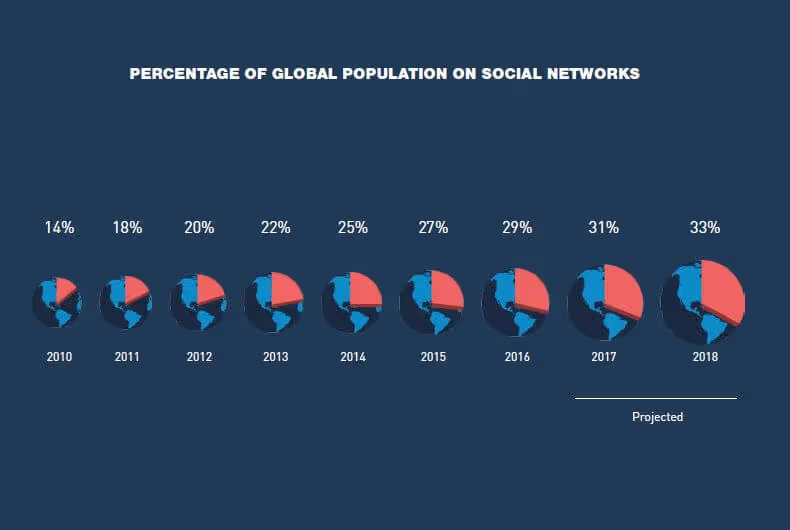
If you think that this is a trend that represents only the current generation, you are wrong. The entire world is moving online and we should be ready to ride the wave.
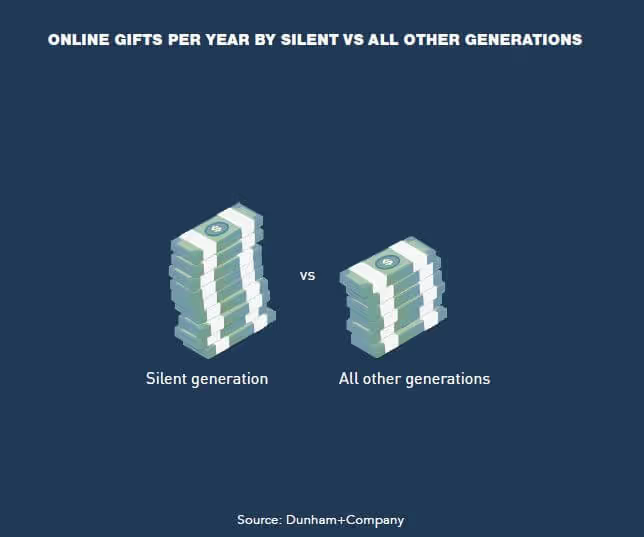
Engagement itself has shifted definitions from bulky books describing stats to interactive videos conveying the same message but more effectively that retains the viewer’s attention. Information spreads to people now at a skyrocketing pace via social media.
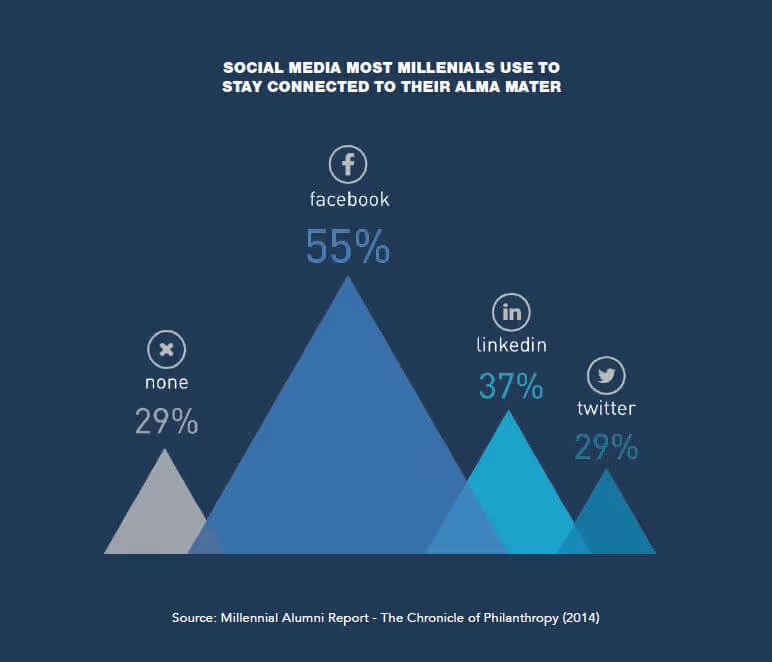
However, once they engage via social media, people prefer donating through a secure online portal.
It is clear that social media tools aid in creating the first engagement option but they should be backed by engagement platforms and Giving channels to serve the greater goal.
The key takeaway here is that through social media, people play a huge role in drawing like-minded individuals towards giving to the cause of their choice. But it’s in the hands of an organization to equip these generations of people with the right content to resonate with their cause and the right online platform to contribute to it.
This is a golden chance to make the most of your social presence and hit that home run for future engagement goals!
In the next post in this series, Alumni management platforms, we will discuss more on how to make the most of your online presence. Stay tuned!

Modern Day Alumni Relations 3 - Digital Is Default
Lorem ipsum dolor sit amet, consectetur adipiscing elit. Suspendisse varius enim in eros elementum tristique. Duis cursus, mi quis viverra ornare, eros dolor interdum nulla, ut commodo diam libero vitae erat. Aenean faucibus nibh et justo cursus id rutrum lorem imperdiet. Nunc ut sem vitae risus tristique posuere.
The past five or so years changed the landscape of innumerable things around us, and alumni relations was no exception. Existing boundaries were pushed, which resulted in new virtual methods emerging to resolve the challenges that the pandemic brought about.
While alumni engagement in 2022 looked promising as many institutions open up their campuses with adequate restrictions, the alumni relations landscape is currently undergoing a tremendous transformation.
Traditional alumni engagement metrics like event attendance and in-person fundraisers can no longer be relied upon entirely. Ever since the pandemic, schools, colleges, and universities have taken a step back and plan their programming in accordance with the ‘new normal’ and have continued to innovate and look for flexible solutions.

As you start planning your strategy for the year, here are five alumni engagement ideas you don’t want to miss out on.
The pandemic had everyone bottled up inside their homes for far too long. While you can’t go all out and invite all your alumni to campus every time, you can start the year with small meet-and-greets across various cities around the country, with the help of your local volunteers and chapters. We suggest creating proper guidelines, which can help the volunteers organize these events to increase engagement and guarantee a good time for everyone involved. These small-scale events can be a refreshing break from the webinars and large-scale fundraisers often attended by your alumni and students alike. This is also a great opportunity to help your alumni meet peers in and around their area, creating strong bonds within the alumni community.
Today, it is essential to find the right balance between online and offline events that stay relevant and useful for the near future.
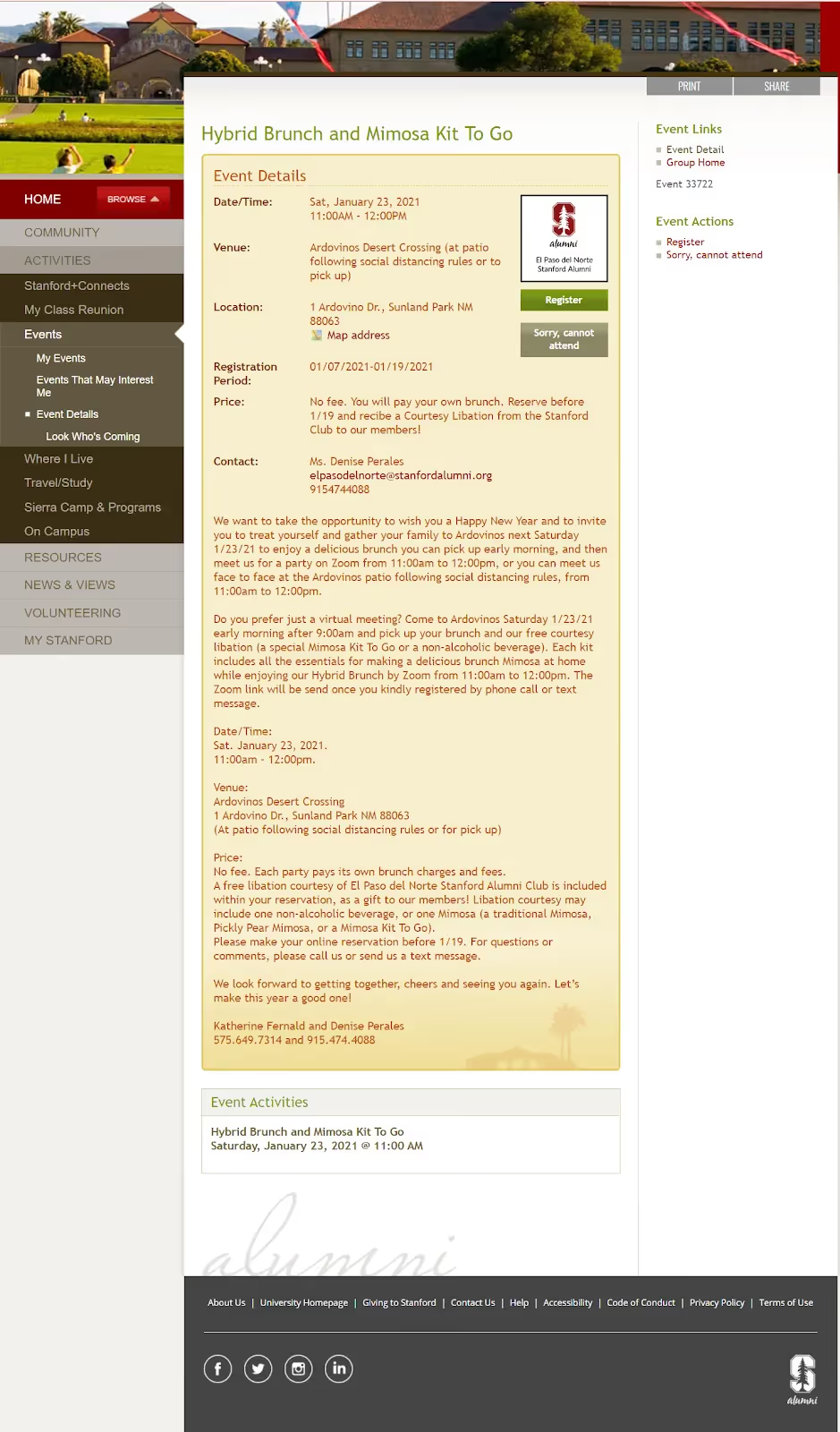
Your alumni programming should be centered on your alumni. Regularly collect feedback and ask your alumni what they’d love to see. Open yourself to ideas beyond events and fundraising campaigns, when you ask for suggestions. An easy way to do this would be to send out questionnaires to your alumni via email or conduct polls on social media. Whether it is an online networking fair to promote interaction between alumni or a virtual dance party: you could be surprised at the innovative suggestions you might get from your alumni.
The best way to encourage alumni to share their suggestions is by providing lucrative incentives. An e-gift card or a small memento from their time at college could be a great motivation for your alumni to participate.
West Virginia Wesleyan College conducted a survey to ensure the opinions of their alumni are heard and taken into consideration while planning the virtual homecoming for the class of 2015.
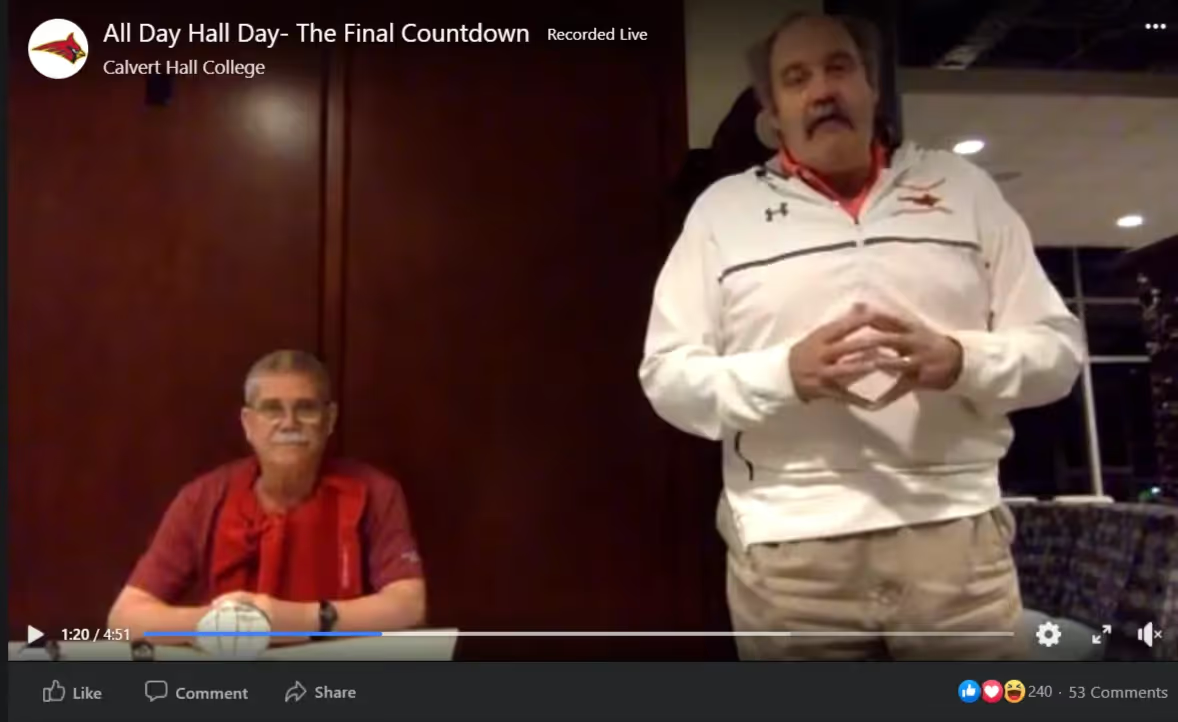
Fundraisers continue to be a mainstay for any alumni relations program. Along with aiding important causes, turn your fundraisers into fun and festive affairs. Drive competition amongst alumni, students, and faculty members by setting challenges to unlock new milestones. To make it more engaging, conduct a poll with some challenges for alumni to choose from! Have a look at Calvert Hall College High School’s out-of-the-box challenge at their 5th Annual All Day Hall Day.
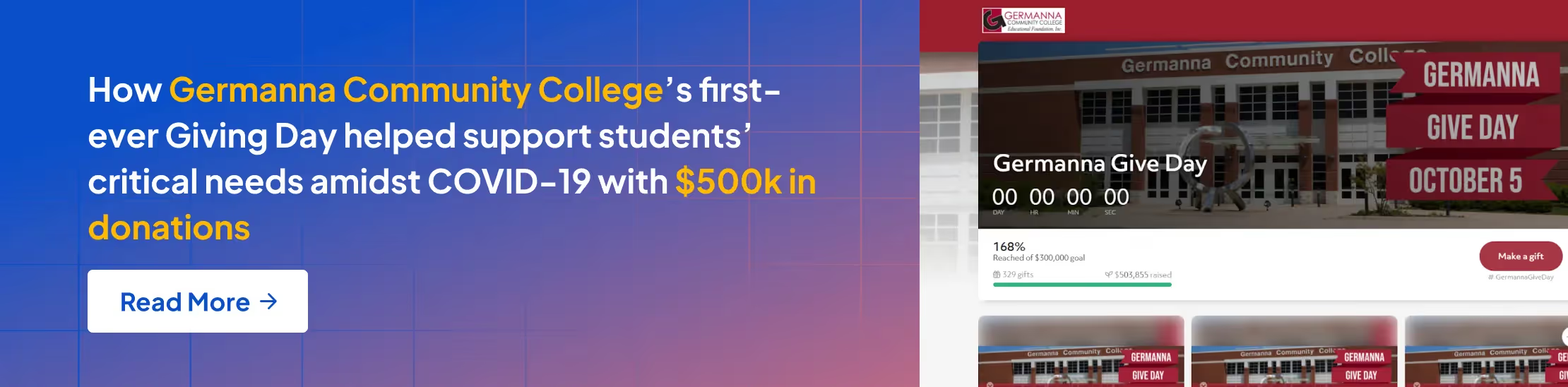
Ever since the pandemic forced forced furloughs and small alumni businesses to shut down, professional networking events such as job fairs and virtual conferences slowly became an integral part of alumni programming. After all, there is no better way to build strong relationships with your alumni than helping them power through when they need you the most.
Speaking of those hit the worst by the pandemic, one cannot overlook the Class of 2020, 2021, and 2022. These young graduates are looking at a potentially rough start to their careers even in 2024 as the economic situation and job market continues to prove hard to navigate. Your alumni network is a valuable source of opportunities for these new graduates looking for internships and jobs. Organizing virtual networking events can help facilitate job shadowing services, and serve as a major boost towards career development and discovery, helping students find their field of interest and get hands-on experience.

Social media has undeniably become the most powerful tool for communication, particularly in the last few years. A strong social media presence is not only advisable but almost necessary to keep your alumni engaged. While young alumni are turning towards more instant modes of communication, your regular mail in their inbox can go unnoticed. Start a trend to share a memorable moment from their college years with a hashtag on your handles, post a picture from their graduation days, the ideas are unlimited!
Here is an idea to try: Invite your alumni to write open letters of support to your current students. As your students feel fatigued with online classes, assignments, and exams, and struggle to find internships and jobs, letters from their favorite alumni can help put a much-needed smile on their faces.
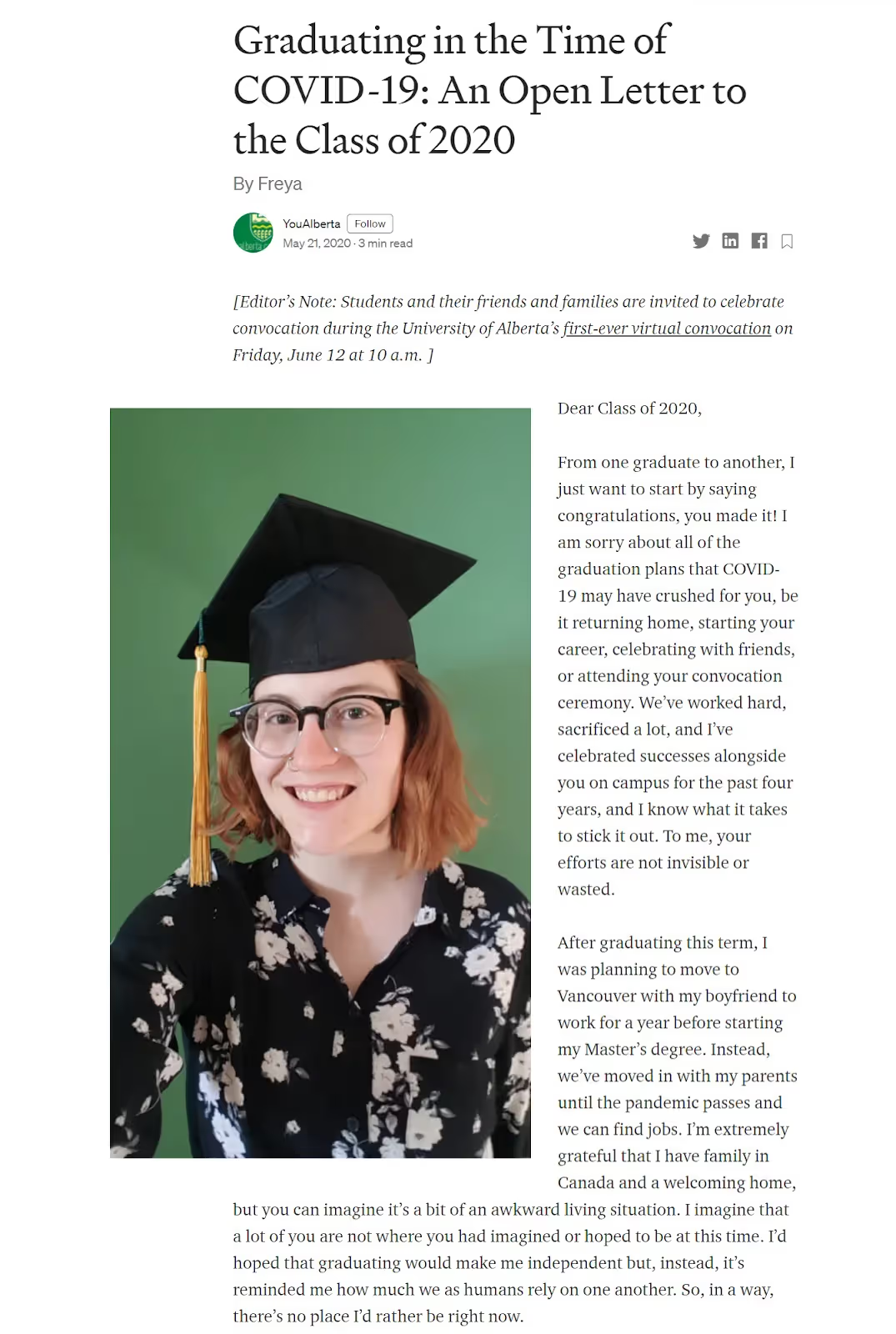
While the pandemic brought along its own set of challenges, it also provided us with ample room for trying out new ideas. Traditionally, it would have been harder to implement these new ideas, especially with the pre-existing programs giving us fairly good results. But we have learned valuable lessons from both the pandemic and the post-pandemic situation, and as the alumni relations keeps evolving, the best time to experiment with your alumni programs is now.

5 Ways To Level-up Your Alumni Relations Program
Lorem ipsum dolor sit amet, consectetur adipiscing elit. Suspendisse varius enim in eros elementum tristique. Duis cursus, mi quis viverra ornare, eros dolor interdum nulla, ut commodo diam libero vitae erat. Aenean faucibus nibh et justo cursus id rutrum lorem imperdiet. Nunc ut sem vitae risus tristique posuere.
K-12 schools and higher ed institutions, public and private alike, rely on smart fundraising strategies to generate the revenue needed to maintain and grow their operations. But planning and carrying out fundraising initiatives without the donor data to inform them can feel like a shot in the dark.
By harnessing the power of data analytics, however, educational institutions can unlock new avenues of support and establish personalized fundraising tactics that resonate with supporters on a deeper level.
In this blog post, we delve into the world of data-driven fundraising and explore what schools of all shapes and sizes need to know.
.jpeg)
A data-informed fundraising approach empowers school fundraisers to build and strengthen donor relationships in a rapidly changing landscape. Today, tailored engagement efforts are seeing particularly high levels of success, with personalized initiatives resonating deeply with organizations’ support networks.
In fact, according to industry research, personalized emails see open rates over 82% higher than generic emails, while segmented campaigns produce up to 760% revenue growth!
Each contact in your CRM is a different person who has their own unique set of behaviors, preferences, and history with your school. For example, Sarah (a recent college grad and devoted alumnus who has recently begun donating to the college's scholarship fund) and John (a retired faculty member who actively participates in campus events and has supported the annual fund campaign for the past twenty years) should not be engaged with in the same way.
Instead, the insights gleaned from personal interactions, surveys and forms, and third-party resources—powered by smart technology—can guide your efforts with individualized engagement recommendations and more.
In this guide, we’ll explore several critical donor data points and how each one can inform your school’s efforts. These include:
The more you know, the better you can tailor your strategy for each person supporting your cause. By establishing donor-centric fundraising practices, you can create a positive giving experience that fosters long-term engagement that goes beyond any single transaction.
Demographic data is some of the most basic information you can collect about a donor. And it’s the foundation of a successfully personalized strategy.
Key demographic points to look out for include a supporter’s name (full name and preferred name or nickname, if applicable), contact information (phone number, email address, social media handles, etc.), address and geographic location, age or D.O.B., and more.
How to get this data point: Ask for these details on your online donation pages. While you’ll want to limit the number of required form fields to the must-haves (typically name and email), the rest can be optional requests. Tons of donors are willing to provide additional information when asked!
Understanding a donor or prospect’s affiliation with your school can be the key to pulling off an effectively tailored strategy. After all, it’s likely one of the primary motivations behind an individual’s giving.
For example, you’d likely take a different approach to alumni engagement than you would for a current student, faculty member, or unrelated donor. Each group has its own unique set of defining characteristics, and acknowledging a supporter’s relationship with your school can establish a more personalized giving experience.
How to get this data point: This is another piece of information you can ask for in your donation form. Consider implementing an optional drop-down field that encourages donors to mark their status as a student, alumnus, family member, friend, faculty/staff, or other.
A donor’s past giving patterns can be one of the largest indicators of future behavior. By tracking how your supporters are involved with your school, you can take key steps to encourage further support. For example, you’ll be able to better understand giving motivations, predict engagement trends, and even uncover major donor opportunities.
Keep in mind that engagement history should go beyond traditional donations—and encompass all instances of giving, volunteering, peer-to-peer fundraising, attending events, matching gifts, and more.
How to get this data point: This information should be quick and easy to locate in your donor database. To ensure you have a thorough understanding of each individual’s engagement with your institution, regularly updating your CRM is a must.
If you send donation appeals using a channel that a donor doesn’t care for, your outreach is more likely to be discarded without consideration. On the other hand, if you use an individual’s favorite means of communication, you can expect a significantly greater response.
Thus, tracking and analyzing donor communication preferences can go a long way—not only in securing more gifts for your school, but also in reducing costs invested in non-responsive channels.
How to get this data point: Take a look at your recent interactions with a donor. Do they tend to be more responsive over email compared to direct mail? Do they favor phone calls or text messages? Your past campaign conversion rates can provide a ton of useful details. Alternatively, consider sending a donor survey that asks respondents to share their preferred communication channels to get straight to the point!
Knowing where your donors work is one of the most impactful data points you can have. Not only does employment data allow your team to uncover existing workplace giving opportunities (i.e., matching gifts, volunteer grants, annual giving stipends, and more) within your support network, but it can also inform your broader corporate partnership strategy, provide wealth insights, and allow for increasingly personalized outreach.
While the employing company is the most important aspect, it also helps to have additional insights such as their job title, rank, and part-time versus full-time status. Many companies even match donations made by their retirees—so don’t count them out, either!
How to get this data point: Employment information is another data point that can be collected directly within the online giving experience. But our #1 recommendation is to integrate your fundraising platform with an innovative matching gift tool—like Double the Donation’s partnership with Almabase!
Leveraging a solution like this empowers your school to collect employment data from donors as they reach the confirmation screen. Plus, it allows you to screen contact information for corporate email addresses and trigger automated post-donation outreach—each of which provides your team with employer insights.
Asking for too much from your donors can lead to extra “no’s,” while asking for too little often leaves available dollars on the table. Thus, having a basic understanding of an individual’s wealth level and capacity to give can help your development team tailor gift requests with optimal donation suggestions that resonate with the prospect.
This information can also help uncover major donation opportunities that already exist in your network—you just might not know it yet!
How to get this data point: Conduct a wealth screening of the donors, prospects, and alumni in your database to identify those with the ability to contribute substantial gifts. Take a look at common wealth markers like stock ownership, real estate holdings, past giving, and previously uncovered employment details to estimate an individual’s capacity to give.
Beyond a donor’s financial giving abilities, another key tenet of prospect research includes looking into the person’s affinity to give. In other words—do they take a natural liking to your cause?
If an individual has an existing relationship with your school (i.e., student, alumnus, faculty member, family, etc.), that connection often does produce an affinity to support your efforts. However, you’d want to note that a chemistry student would likely be more inclined to donate to an expansion of the college’s science wing rather than a scholarship fund for incoming art classes.
How to get this data point: Make a note in your donor database after each meeting with a major donor or prospect. If they mention any particular interests, jot it down to have on record going forward. If an individual is an alumnus of your institution, their major or field of study can provide some insight into their personal and professional interests.
.png)
As the educational fundraising landscape continues to evolve, data-driven fundraising becomes increasingly essential to unlocking untapped potential.
The invaluable insights gleaned from supporter data can empower your institution to make the most of available resources, identify and engage effectively with high-value prospects, and enhance donor retention—from first-time donors to life-long supporters.
Make sure your development team has the tools and the strategies in place to collect, store, and analyze the data available to you. Don’t let that resource go to waste!
Data-Driven Fundraising for K12 and Higher Ed: What to Know
Lorem ipsum dolor sit amet, consectetur adipiscing elit. Suspendisse varius enim in eros elementum tristique. Duis cursus, mi quis viverra ornare, eros dolor interdum nulla, ut commodo diam libero vitae erat. Aenean faucibus nibh et justo cursus id rutrum lorem imperdiet. Nunc ut sem vitae risus tristique posuere.

Adam Weinger
October 10, 2023
12 minutes
%201.svg)
%201.svg)
%204.svg)


.svg)