Almabase vs Vaave: Compare CRM integration, AI tools, fundraising & events. See which alumni platform fits your institution's advancement goals.

Summary
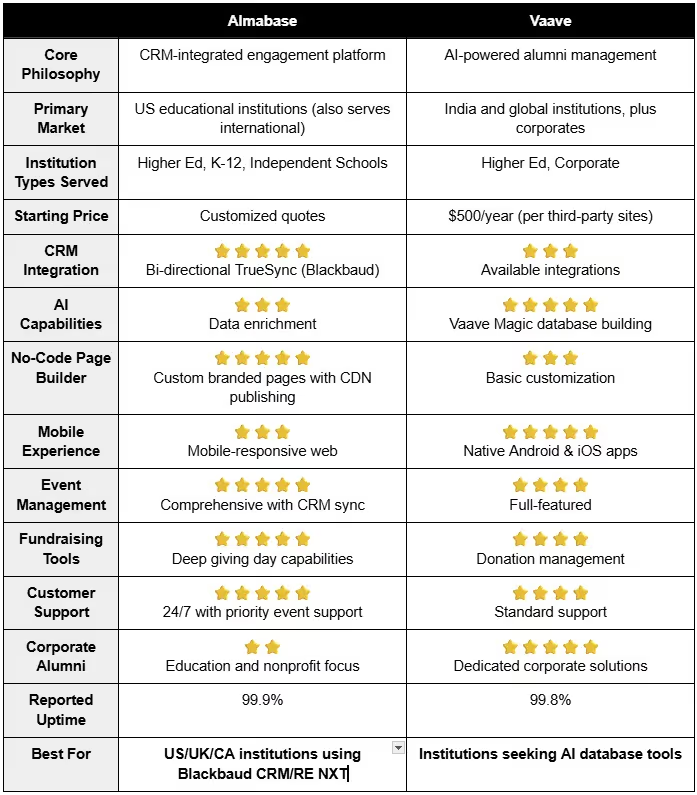
• CRM Integration First: If your institution already uses a robust CRM like Raiser's Edge NXT or Salesforce, prioritizing a platform like Almabase with deep, bi-directional integration is key to keeping your data consistent and avoiding manual entry. This ensures all your engagement and giving data flows seamlessly into your system of record.
• Database Building vs. Syncing: For teams looking to build or significantly enrich their alumni database from scratch, Vaave offers AI-powered tools like "Vaave Magic" to automatically create detailed profiles and identify potential donors. However, if you have an established database, Almabase excels at keeping it synchronized with engagement activities.
• Event Management Streamlining: Almabase provides end-to-end event management specifically for educational advancement, handling everything from custom branded pages for complex reunions to QR code check-ins, all while syncing data back to your CRM. This can greatly simplify managing your alumni events and capturing attendance details.
• Boosting Fundraising Campaigns: If your goal is to run sophisticated fundraising campaigns like competitive giving days or peer-to-peer initiatives, Almabase offers a complete fundraising engine purpose-built for schools and universities. It helps you nurture relationships with constituents before making asks, potentially increasing donor participation.
• Geographic and Program Focus: Consider if your institution needs a platform tailored for US-based educational advancement (Almabase) or one with a strong presence in emerging markets and capabilities for corporate alumni programs (Vaave). This choice impacts how effectively the platform supports your specific strategic goals.
• User-Friendly Tools for Small Teams: Almabase empowers even small advancement teams with no-code tools for creating custom pages and managing operations, alongside 24/7 customer support, making it easier to execute large-scale initiatives without needing heavy technical expertise.
Institutions searching for Vaave alternatives or evaluating the best alumni engagement platforms often find themselves comparing Vaave's AI-powered database tools against Almabase's CRM-integrated approach. Both platforms serve the alumni management space, but they're built for different institutional needs, and understanding those differences can save months of evaluation time.
So, choosing between Almabase and Vaave for your alumni management needs often comes down to these five critical questions:
In short, here's what we recommend:
👉 Almabase is the purpose-built alumni engagement platform designed specifically for educational institutions that want to integrate digital engagement, event management, and online giving with their existing CRM. With its native bi-directional sync with Blackbaud Raiser's Edge NXT through its "TrueSync" technology (plus separate integrations for Salesforce and other CRMs), it ensures data consistency without manual entry. The platform includes no-code tools for creating custom branded pages that can be published directly on institutional websites, along with finance management capabilities for tracking donor transactions and gift processing. With 24/7 customer support, priority assistance during critical events like giving days and homecoming, and a 95% customer retention rate, Almabase empowers even small advancement teams to achieve significant results.
Take a quick product tour →
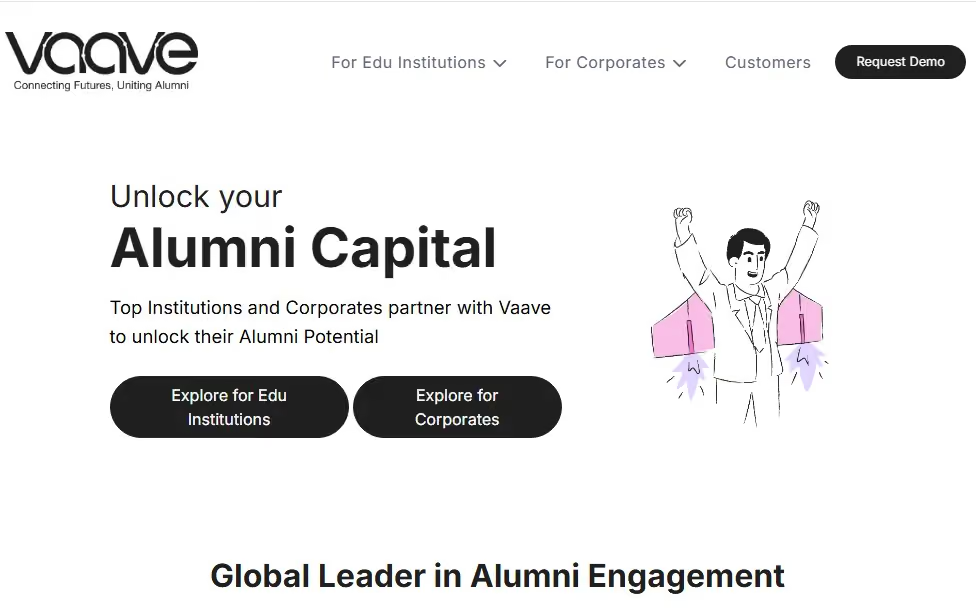
👉 Vaave is the alumni engagement platform serving over 1,200 institutions across 28 countries, with a particular strength in both educational and corporate alumni programs. Its standout feature is "Vaave Magic," an AI-powered engine that automatically builds and enriches alumni profiles using LinkedIn URLs and resumes, identifying potential mentors, recruiters, and donors. With native mobile apps for Android and iOS, pricing starting at $500 per year (according to third-party comparison sites), and certifications including ISO 27001 and SOC 2 Type 2, Vaave offers a cost-effective solution particularly well-suited for institutions in India and those seeking to establish corporate alumni networks.
The core philosophical difference between these platforms is about how they approach the challenge of alumni data management.
Almabase was built on the premise that educational institutions already have a system of record, typically a CRM like Blackbaud Raiser's Edge NXT or Salesforce, and that the biggest challenge is keeping that data synchronized with engagement activities.
Founded in the early 2010s by Kalyan Varma and Sri Maneru after witnessing the impact of scholarship shortages during their college years, Almabase set out to help institutions build meaningful, lifelong relationships with alumni rather than simply asking for donations.
The platform's TrueSync technology represents this philosophy in action.
Rather than creating yet another data silo, Almabase ensures that every email open, event registration, and donation flows automatically back to the institution's primary database. This approach means advancement teams can trust their CRM remains the single source of truth while using Almabase's modern engagement tools.

Vaave emerged from a different observation.
Founded by Paresh Masade and co-founders, Vaave recognized that many institutions, particularly outside the top-tier universities, lacked comprehensive alumni databases entirely. Alumni information was scattered across Excel spreadsheets, outdated contact lists, and fragmented social media groups.
Vaave's answer was "Vaave Magic," an AI-powered engine that can build complete alumni profiles from LinkedIn URLs or resumes. This approach assumes institutions need help constructing their database, not just synchronizing it.
The platform also expanded beyond educational institutions to serve corporate alumni programs, recognizing that companies face similar challenges in maintaining connections with former employees.
Almabase's defining strength is its deep, bi-directional integration with Blackbaud Raiser's Edge NXT. The platform's partnership with Blackbaud enables what they describe as the only native two-way sync with Raiser's Edge NXT.
This integration goes far beyond simple data export.
When a constituent updates their information on the Almabase portal, that change can flow automatically to Raiser's Edge with customizable rules governing how data moves. When someone registers for an event, makes a donation, or even opens an email, that engagement data syncs back to enrich the constituent record in the CRM. Gift data, including recurring donations processed through Blackbaud Merchant Services, syncs automatically without manual reconciliation.
It also integrates with Salesforce and Ellucian for institutions using those systems, though the TrueSync technology is specifically built for Blackbaud.

Beyond synchronization, Almabase enables automated engagement workflows that trigger based on constituent behavior.
When an alumnus opens an email, registers for an event, or makes their first gift, the platform can automatically enqueue follow-up communications or update segments. This level of email marketing for alumni relations allows advancement teams to deliver personalized outreach at scale, addressing the low personalization problem that plagues institutions using disconnected tools.
The platform's community and directory management features further enable alumni to self-update their information, reducing manual data entry while keeping records current.
While both platforms primarily serve higher education, Almabase has expanded its focus to include K-12 alumni management solutions for independent schools and private academies.
These institutions face similar challenges to universities (maintaining alumni relationships, organizing reunions, and building giving programs) but often with smaller advancement teams.
Vaave's core capability is "Vaave Magic," an AI-powered tool. Rather than relying solely on alumni to self-report information, Vaave Magic can automatically create complete profiles from LinkedIn URLs or uploaded resumes.
The AI analyzes collected data to provide actionable insights, identifying alumni who are CXOs, entrepreneurs, or working at Fortune 500 companies. The system can score profiles to highlight their potential as mentors, donors, or recruiters, helping advancement teams prioritize their outreach.
Vaave's approach also reflects its dual focus on educational institutions and corporate alumni programs. For companies looking to maintain connections with former employees (sometimes called "boomerang hiring" pipelines), the same AI tools can build and maintain databases of corporate alumni.

Almabase provides end-to-end event management designed for advancement offices, positioning itself as a market-leading solution for education-focused event management.
It handles everything from creating custom-branded event pages to managing registrations, processing payments, and tracking attendance with QR code check-in. Using no-code tools, teams can create custom branded pages for any event or engagement activity and publish them directly on their institutional websites without technical expertise, as Almabase's infrastructure acts as a content delivery network.
Particularly notable is its handling of complex events like reunions and homecomings, with support for sub-events, conditional ticket visibility, and detailed guest itineraries.
The differentiator is how event data flows back to the CRM. Every registration, ticket purchase, and check-in automatically syncs with the institution's database, providing a complete picture of constituent engagement. The platform also integrates with Zoom for virtual events and supports hybrid formats.

Vaave offers a similarly comprehensive event management suite with tools for event creation, promotion, registration, and payment processing. The platform supports both virtual and in-person events, with features for QR code-based check-in and automated reminder emails. Event data is tracked within Vaave's centralized database system.
Where Vaave differs is in its integration with the broader alumni network features.
Events can be promoted through the platform's chapter system and special interest groups, creating natural distribution channels. The corporate alumni functionality also means Vaave's event tools can support use cases like company reunions and former employee networking events.
Almabase positions itself as a complete fundraising engine for educational institutions.
The platform supports multiple campaign types, from competitive giving days with leaderboards and countdown timers to year-round crowdfunding pages and peer-to-peer fundraising. Campaign hubs allow institutions to organize multiple causes under a single giving day, letting donors support the areas they're most passionate about.
The payment processing infrastructure is notably robust, with support for Blackbaud Merchant Services, Stripe, PayPal, Authorize.net, CyberSource, and TouchNet. Recurring donations are supported through BBMS and Stripe, with options for monthly pledges ranging from 3 to 36 months. The integration with Double the Donation helps identify and process corporate matching gifts.
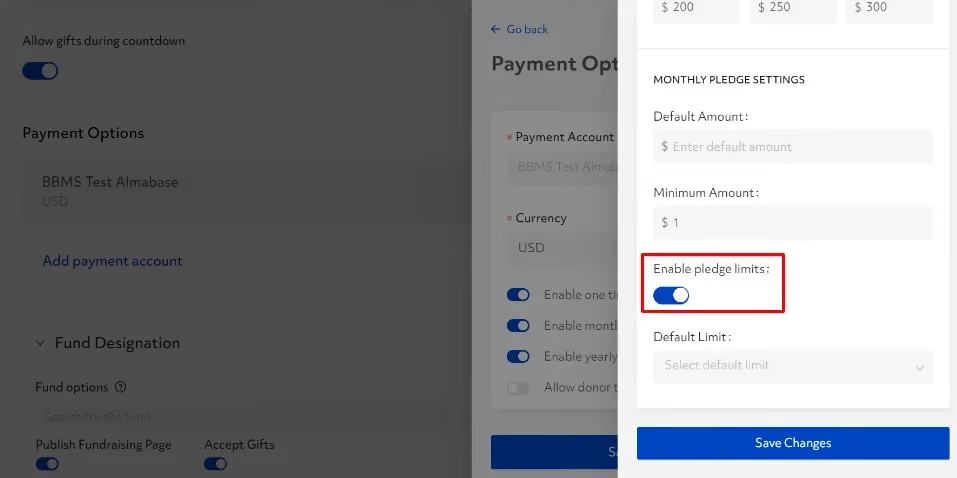
Beyond donation collection, Almabase includes finance management capabilities designed for educational advancement operations, enabling institutions to better manage donor transactions, gift processing, and financial tracking related to alumni engagement and fundraising activities.
What makes Almabase's fundraising powerful is how it connects to engagement.
Because the platform also handles email marketing, events, and community features, institutions can build a donor pipeline by first nurturing relationships. The data shows who opened emails, attended events, and engaged with content, helping advancement teams identify likely donors before making asks.
Vaave provides solid fundraising capabilities including donation management, payment gateway integration, recurring donation support, and pledge management. The platform enables online donation collection and tracks funds raised through various campaigns.
The integration with Vaave's broader platform means fundraising can be promoted through the alumni directory, chapter groups, and mobile app. For institutions using Vaave's AI tools, the system can help identify potential major donors by analyzing professional information.
However, the fundraising feature set is less specialized for educational advancement compared to Almabase's giving day and peer-to-peer capabilities.
The pricing structures of these platforms reflect their different market positions and go-to-market strategies.
Vaave's pricing information as seen through third-party comparison sites, with a starting point of $500 per year, which includes a basic portal with Android and iOS mobile apps and no setup cost.
Per-user costs decrease as the number of users increases, from $3.50-5.00 per user monthly for smaller organizations to around $2.00 per user monthly for 1,000 users. Implementation costs range from $500-1,000 for small to medium organizations and $2,000-5,000 for larger enterprises. Vaave offers a free trial without requiring a credit card.
Almabase operates on a customized, quotation-based pricing model. The cost depends on the size of the alumni database and the specific functionalities required.
The choice between Almabase and Vaave depends on your institution's specific circumstances, technical environment, and priorities. For advancement teams evaluating modern alumni engagement tools or seeking all-in-one advancement software, the decision often comes down to infrastructure and goals.
Choose Almabase if:
Choose Vaave if:
Institutions exploring alumni software for higher ed or K-12 advancement should request demos from both platforms. While feature comparisons provide a starting point, the right choice depends on your existing technology stack, team capacity, and strategic priorities for alumni engagement.
If you'd like to see how Almabase can fit the alumni management needs of your institution or nonprofit, request a personalized demo today!
Subscribe
See how modern advancement teams bring alumni engagement and fundraising together.
Plan faster. Execute better
Explore free templates designed for alumni and fundraising teams.


Alumni are among the most valuable assets of any educational institution. They provide mentorship, offer career opportunities, donate generously, and serve as brand ambassadors. But maintaining meaningful relationships with a growing alumni base is no small feat. That’s why alumni management software such as Almabase have become essential, enabling advancement teams to streamline engagement, personalize outreach, and elevate alumni experiences.
Almabase is a leading alumni management software trusted by advancement teams at top institutions. Almabase stands out by helping institutions manage all aspects of alumni relations from one unified platform.
Almabase is built to meet the practical, day-to-day needs of advancement teams:
💡 Check out how Almabase helped Thomas Aquinas College alumni community grow 3x in just 3 months by setting up an online directory.
💡 Check out how we worked with Concordia College to level up their alumni communication and engage 10k+ alumni monthly.

💡 Check out how Alumni Association, SMLLU successfully raised $1.15 million in a single giving day with Almabase.
Almabase’s interface is built with two things in mind:
Almabase emphasizes the need for alumni software to integrate with existing technology ecosystems of educational institutions, particularly CRM systems and social platforms. This focus ensures data flows efficiently and remains consistent across tools.
Almabase distinguishes itself with stellar customer support as seen through their customer reviews in review websites like Capterra and G2:

Almabase offers pricing based on the size of your contactable alumni base, making it accessible for institutions of all sizes. For RE NXT users, the Blackbaud partnership also enables savings on payment processing if they use BBMS. With no hidden costs and flexible plans, Almabase delivers high value for the investment.
It centralizes alumni and donor data in one place, reducing duplicates and manual work. You also get more targeted campaigns because engagement and giving history are synced for better segmentation.
Any institution or nonprofit with a growing alumni base that runs events, communities, or fundraising should consider it. It’s especially useful once spreadsheets and email lists are no longer enough to manage outreach.
Yes, platforms like Almabase and many others are built to integrate with popular CRMs like Salesforce or Blackbaud rather than replace them. Engagement data (events, communities, mentoring) syncs back to your main CRM and fundraising systems.
It brings profiles, communications, events, and mentoring into one hub, making it easier to stay in touch over time. Automation and analytics help you send more relevant messages and keep alumni active at different life stages.
Managing alumni relationships at scale requires more than spreadsheets and disconnected tools. Almabase brings together alumni data, engagement, events, and giving into a single, user-friendly platform that advancement professionals can rely on. From automation and integration to ongoing support, it’s a solution built for modern alumni engagement.
To see how Almabase can help your institution strengthen alumni relationships and increase fundraising outcomes, book a free, personalized demo at a time that works best for you 🔽


What makes Almabase a good alumni management software?
Lorem ipsum dolor sit amet, consectetur adipiscing elit. Suspendisse varius enim in eros elementum tristique. Duis cursus, mi quis viverra ornare, eros dolor interdum nulla, ut commodo diam libero vitae erat. Aenean faucibus nibh et justo cursus id rutrum lorem imperdiet. Nunc ut sem vitae risus tristique posuere.
If you’ve looked at fundraising and alumni engagement platforms for educational institutions, you’ve probably seen Almabase and GiveCampus get mentioned frequently.
With two great options, it might seem a difficult choice at first. However, depending on your needs for a peer-to-peer fundraising platform, an all-around digital engagement solution, or other needs, your choice can vary greatly. With this blog, we’d like to provide a buyer’s guide to help you make an informed choice to see what each platform does well and which of the two might fit your team better. Let’s get started:
Almabase is a SaaS platform designed to empower alumni teams across schools, colleges, and universities. It integrates with existing CRM systems to enhance digital engagement, event management, and online giving campaigns. Almabase is effective for small teams looking to amplify their impact without expanding resources.
GiveCampus is a fundraising platform specifically built for educational institutions. It streamlines the fundraising lifecycle by identifying, engaging, soliciting, and stewarding donors. GiveCampus is known for its user-friendly interface and robust volunteer management features.
1. Integration and Efficiency: Almabase seamlessly integrates into most educational institution CRM systems, especially those based on Raiser’s Edge NXT thanks to a long-standing partnership, which ensures:
2. Digital Engagement Tools: Almabase offers advanced digital engagement tools that help institutions build lifelong relationships with alumni through a comprehensive alumni directory, personalized emails, text communication, etc. to reach out to alumni more effectively.
3. Excellent Customer Support: Almabase offers both email and chat-based support that can be reached at any time, with a focus on quick response and resolution time.
1. User-Friendly Interface: GiveCampus is praised for its intuitive design, making it easy for both fundraisers and donors to use. It simplifies the donation process, leading to higher conversion rates.
2. Volunteer Management: GiveCampus offers a robust volunteer management system that empowers volunteers to track their outreach efforts effectively. This feature is great for successful peer-to-peer fundraising campaigns.
3. Extensive support for mobile payment: GiveCampus supports most popular mobile/digital wallets and a large number of cryptocurrencies, allowing more flexibility for donors.
If you are an educational institution that already has a digital engagement platform and only needs a fundraising module, both solutions will provide with you a robust fundraising and event solution. However, if you are looking for all-around alumni engagement on top of fundraising, Almabase might suit your needs better.
If your institution already uses a CRM like Raiser’s Edge NXT, Almabase might be more suitable due to its seamless integration capabilities. While GiveCampus also has several amazing integrations, it incurs additional charges for third-party integrations.
If volunteer management and peer-to-peer fundraising are key priorities, GiveCampus offers more robust features in this area.
Almabase supports several payment platforms and is a great choice due to its integration with Blackbaud Merchant Services (BBMS). However, if you are looking to support as many platforms as possible including cryptocurrency, GiveCampus does give you more choices.
Both platforms have slightly different pricing structures. Almabase’s pricing primarily depends on the size of your institution, the number of records, and how many modules you need. On the other hand, GiveCampus has different plans depending on the number of features you need, and may also charge fees for exceeding goals on top of integration charges. You should ideally consider both options to get a quote that fits your needs and your budget.
If yours or a related nonprofit wants to make use of either option, it is certainly possible. However, Almabase has more experience working with nonprofits while GiveCampus exclusively caters to educational institutions.
What we advise when picking any platform is that you consider the budget, skillset, and time available to your team above all else (even if that means you choose a platform that’s not ours). What works really well for a similarly sized school might not work for you due to nuanced aspects like state regulations, donor experiences, extra fee scaling, etc.
Once everything seems aligned, make sure to pursue a demo or free trial (ideally one that’s personalized for your needs) to confirm. That being said, we hope you are able to make a decision you, your team, and your alumni are comfortable with.

Almabase vs GiveCampus: What is the right tool for you?
Lorem ipsum dolor sit amet, consectetur adipiscing elit. Suspendisse varius enim in eros elementum tristique. Duis cursus, mi quis viverra ornare, eros dolor interdum nulla, ut commodo diam libero vitae erat. Aenean faucibus nibh et justo cursus id rutrum lorem imperdiet. Nunc ut sem vitae risus tristique posuere.
Alumni are among your institution's most valuable assets. They provide mentorship, career opportunities, financial support, and serve as natural, authentic brand ambassadors for your school. This, of course, depends on the extent to which they feel connected to their alma mater once they’ve graduated. But nurturing relationships is a complex undertaking, and especially so at scale. Keeping alumni engaged across multiple touchpoints like events, communications, giving, and career networking remains a persistent (as well as rewarding) challenge for advancement teams. The right alumni management software solves this by bringing engagement activity, fundraising, and community into a single system.
Choosing the right alumni management system cuts through the fragmentation that typically forces teams to stitch together multiple disconnected tools, and makes it easier to track which initiatives drive outcomes.
With so many options available, this blog compares the ten best platforms that could help you get there, based on your specific requirements.

Almabase brings alumni engagement and fundraising into the same workflow, connecting the activities between constituents and institutions. The platform builds interactions such as alumni events, email campaigns, or giving days into a shared engagement history rather than treating them as standalone features, giving your team a complete picture of constituents’ journeys.
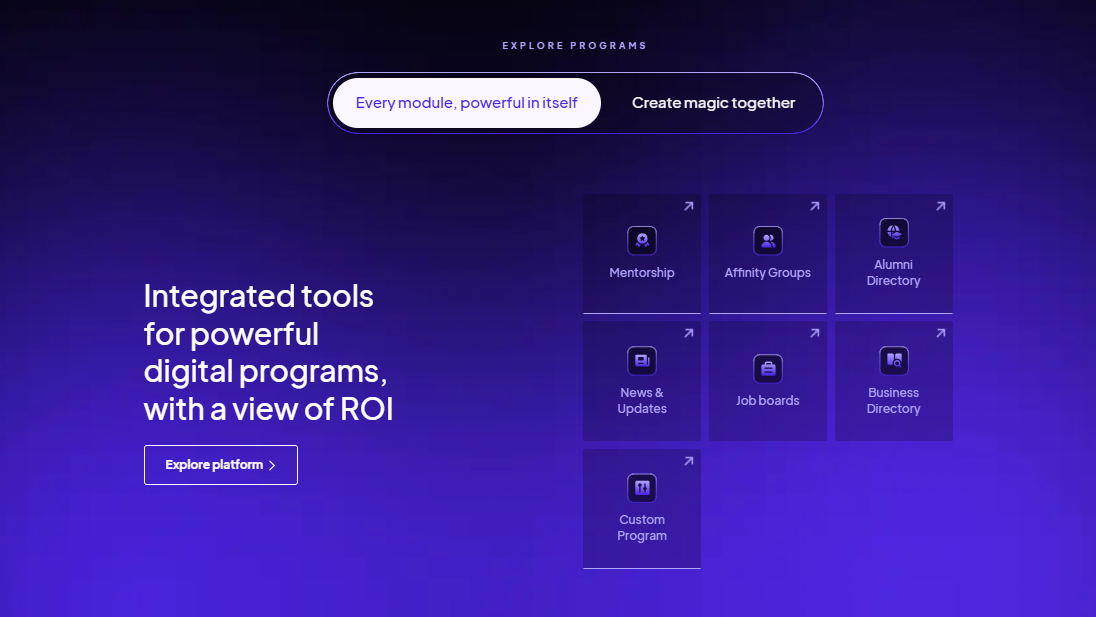
Almabase’s engagement tools connect with your CRM seamlessly. Its TrueSync integration with Raiser’s Edge NXT supports two-way, real-time data sync, so information can move between Almabase and RE NXT without the recurring exports, imports, and manual updates that can come with managing separate systems.
The platform also brings alumni-facing programs such as directories, mentorship, job boards, events, and email campaigns into the same environment. This means fewer disconnected tools and less work trying to piece together engagement data afterward for institutions running several of these programs at the same time.
That makes it relevant for teams of all sizes running all types of events: reunions, regional events, giving days, donor events, and ongoing alumni communications.
All of these features make Almabase particularly suited to advancement teams that want engagement activity and fundraising data to work together. It's also a natural fit for institutions already working in Raiser’s Edge NXT and looking to connect their alumni-facing activities more closely to their advancement database.
Pricing: Custom pricing based on institution size, requirements and alumni count.
EverTrue is a fundraising intelligence and donor engagement platform built to help advancement teams find better prospects, understand their constituents, and give fundraisers more context for their outreach. EverTrue sits alongside your CRM and enriches constituent records with engagement, career, social, and wealth information.
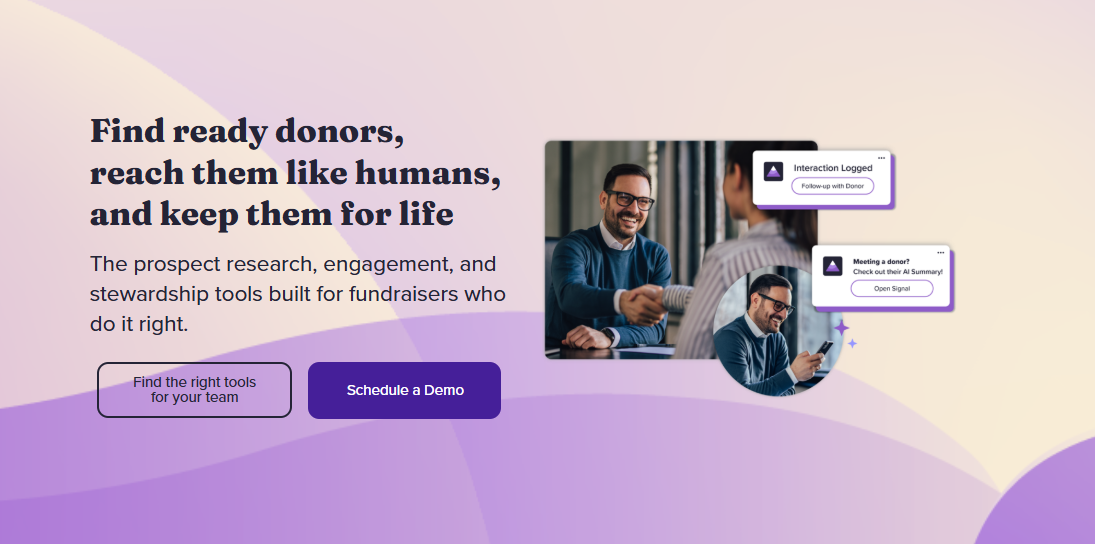
EverTrue brings a lot of external intelligence into constituent records. TrueView profiles can combine your existing CRM data with career changes, social media activity, donor interests, wealth indicators, and other signals, giving fundraisers a more current picture of the people they're trying to engage. The platform also supports prospect discovery, segmentation, mapping, and alerts to help teams identify people who may be worth a closer look.
It's a good fit when you already have a CRM you want to keep and need additional intelligence to help fundraisers identify prospects, prioritize portfolios, plan visits, and personalize outreach. However, it's less suited to institutions looking for a single platform to run their broader alumni engagement program.
Pricing: Custom pricing based on the EverTrue products and capabilities an institution selects. Estimates place the starting quote at about $5000 a year.
360Alumni brings together an alumni directory, networking, events, fundraising, mentoring, job boards, and email marketing in a single branded environment. Its focus is less on advancement operations and more on giving alumni a place to find each other, build connections, and participate in their alumni community.
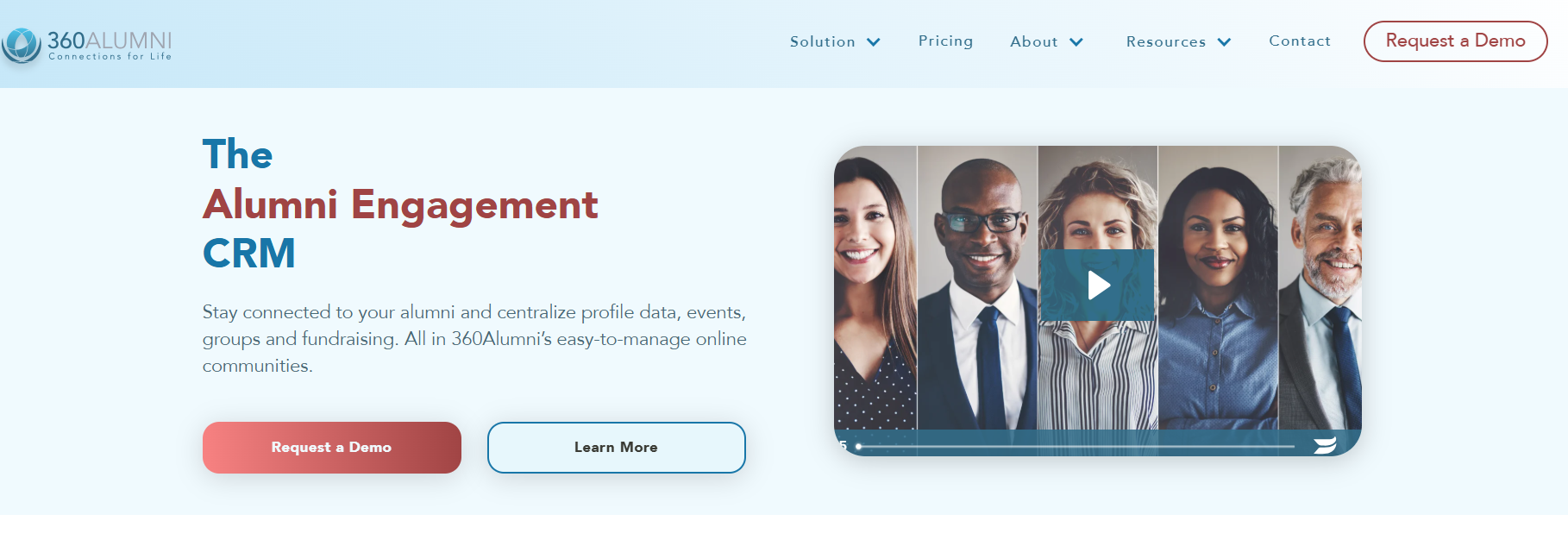
360Alumni stands out as being a more alumni-facing platform. It puts its interactive alumni directory and map at the center and makes it easy for users to search for other alumni by a range of metrics: location, profession, interests, and other criteria.
360Alumni is well suited for schools where an alumni directory, career networking, mentoring, and geographically based connections are all important parts of the engagement strategy.
Pricing: Custom pricing based on record count, with an initial setup cost and annual subscription. 360Alumni also charges a 3% credit-card processing fee plus a plan-dependent service charge on event ticket sales, donations, and membership payments.
Graduway is built around the idea of an alumni community as an active digital space, giving alumni a place to connect with each other as well as stay connected to their institution.
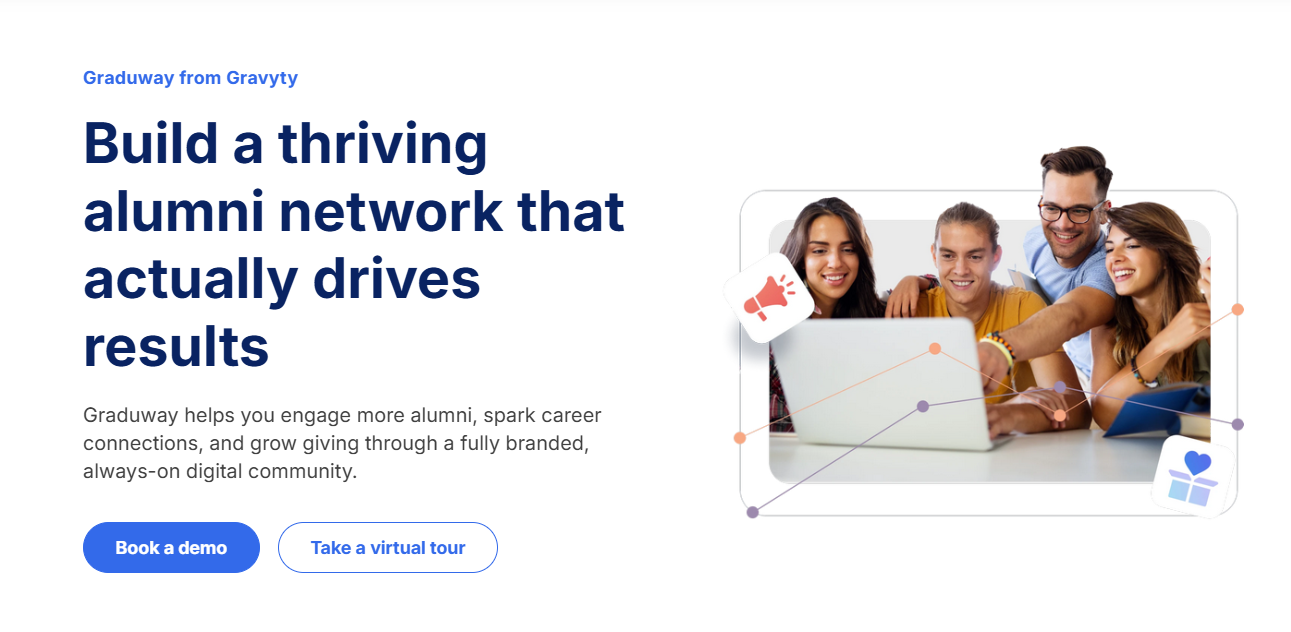
What sets Gravyty apart is alumni-to-alumni engagement. Alumni can connect with peers, participate in mentoring programs, join communities, and build professional relationships through the platform.
Graduway is particularly suited to institutions where community building, networking, and mentoring are central to the alumni engagement strategy. It's especially relevant for institutions with geographically dispersed alumni or large professional networks, where mentoring, career connections, affinity groups, and peer networking offer a major push to stay engaged throughout the year.
Pricing: Custom pricing based on the institution's requirements and alumni community size.
HiveBrite is a community platform designed for organizations that want more control over how their online communities look, work, and evolve. For higher education, it can bring alumni networking, groups, events, mentoring, career opportunities, and other engagement programs into a branded community environment.
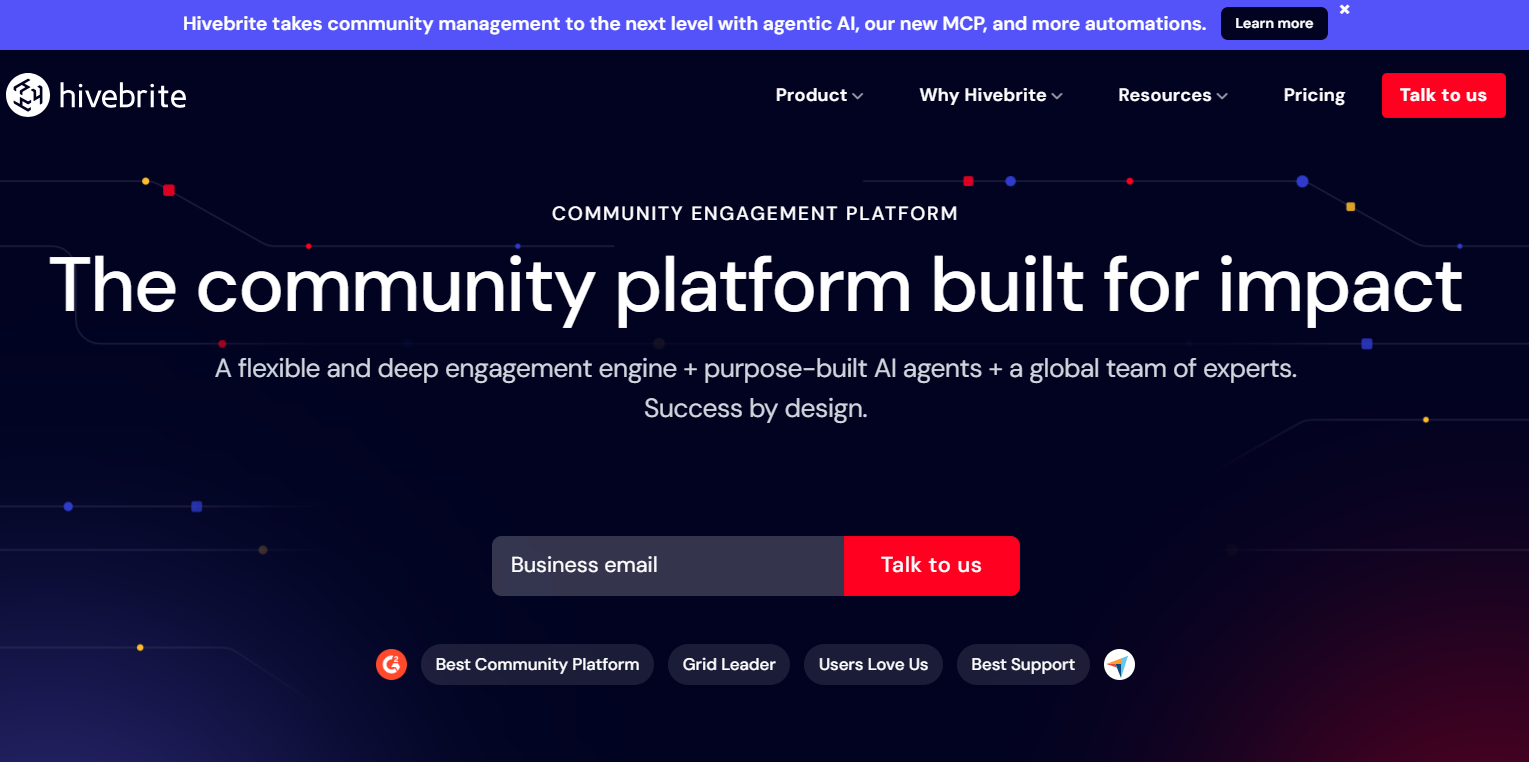
HiveBrite offers a good level of customization: institutions can shape member journeys, create different community spaces and permissions, customize the platform's design, and tailor experiences for different audiences.
The platform also supports events, groups, discussions, mentoring, career networking, and other community activities. Its multilingual capabilities and support for international communities make it relevant for institutions managing alumni networks across multiple countries and regions.
HiveBrite is particularly suited to larger institutions that want to build a highly tailored alumni community and have the resources to support implementation and ongoing administration.
Pricing: HiveBrite offers tiered and custom pricing starting at $895/month depending on the size and requirements of the community.
PeopleGrove is an alumni engagement platform built around helping institutions create stronger connections between students and alumni.
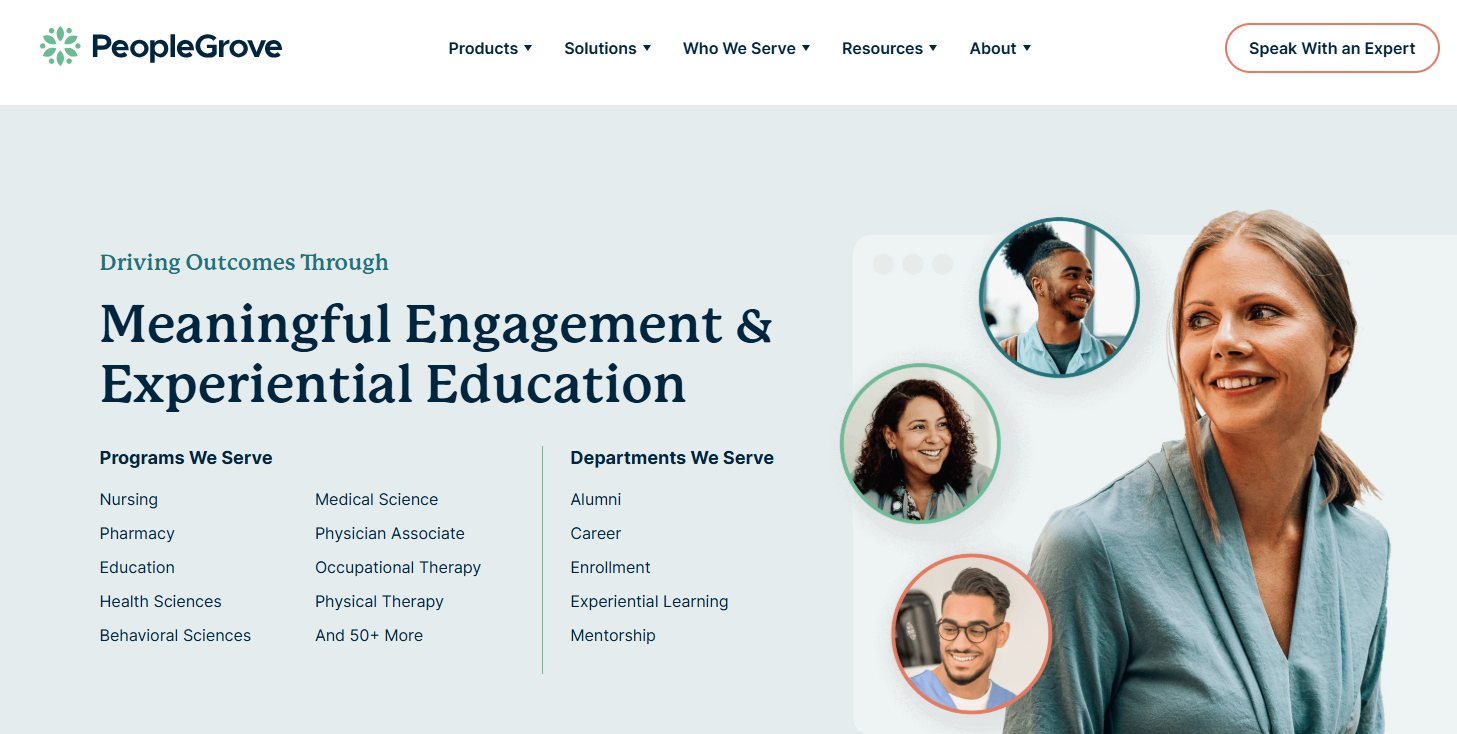
PeopleGrove particularly excels at structured program management. Teams can set up mentoring programs, match participants based on skills, interests, and goals, establish milestones, and track participation and outcomes. Rather than simply giving alumni a directory and letting them find one another, the platform gives institutions tools to actively shape how those connections happen.
The platform also enriches profiles with professional information from LinkedIn, helping you maintain more current information about where alumni work and what they do without relying entirely on manual profile updates. This information is useful when building targeted programs or helping users find relevant connections.
Pricing: Custom pricing offered based on the institution's requirements.
Encoura Encompass is a constituent engagement platform for higher education that brings website management, email marketing, event management, online giving, membership, and other alumni-facing functions into one system.
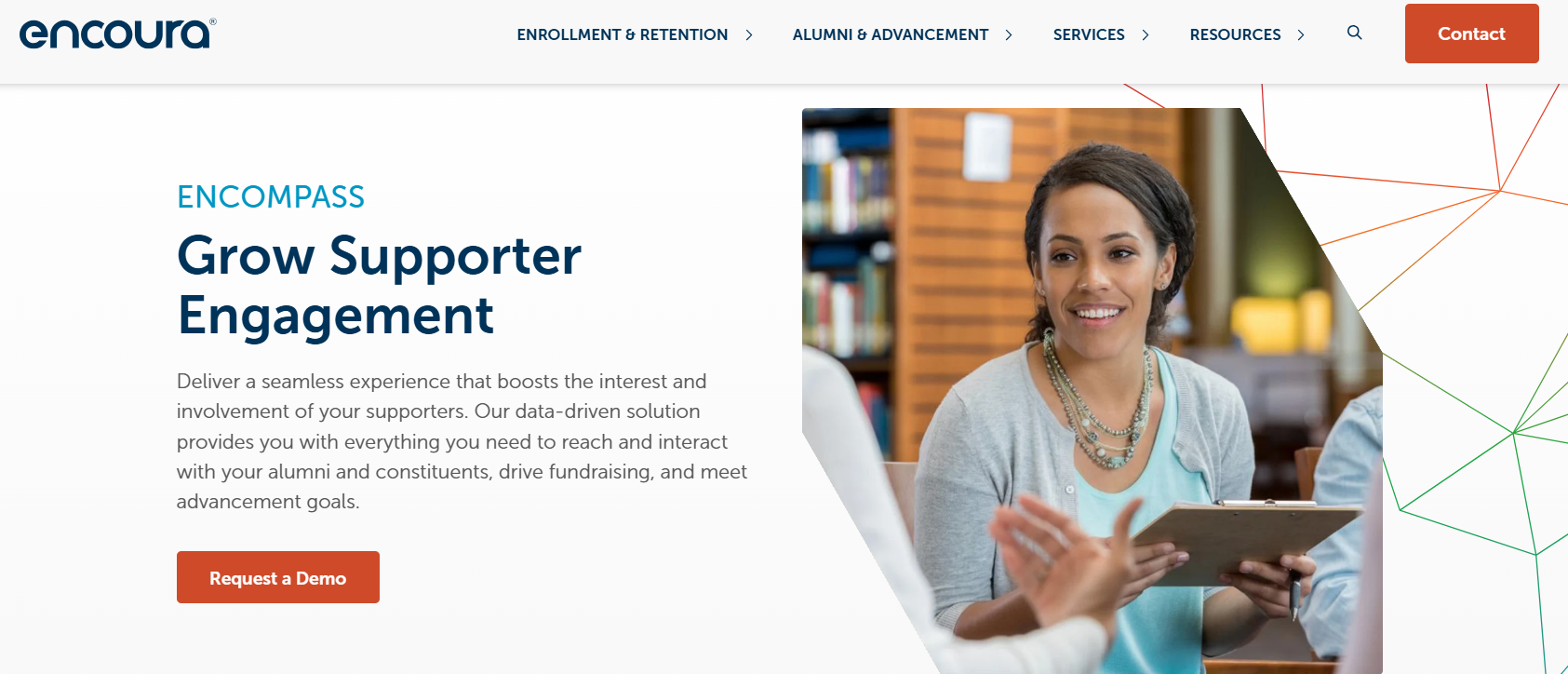
One of Encompass's biggest strengths is its breadth of constituent-facing functionality. Instead of using separate systems for an alumni website, communications, events, giving, and membership management, institutions can manage these activities through one connected platform. This breadth is particularly useful for institutions already working within the Anthology ecosystem.
For institutions evaluating it, the recent ownership transition is an important part of the conversation: Encoura acquired the service in 2026, so teams should evaluate the current product roadmap, support model, and integration plans alongside the platform's existing functionality.
Pricing: Estimate currently place pricing starting at $7,500 per year, but the platform does not publicly disclose its prices.
ToucanTech is an alumni and community platform that brings together an alumni database, website and portal, email marketing, events, fundraising, memberships, and career networking. Built specifically for schools and educational institutions, it aims to give teams a broad set of alumni engagement tools without requiring extensive technical configuration.
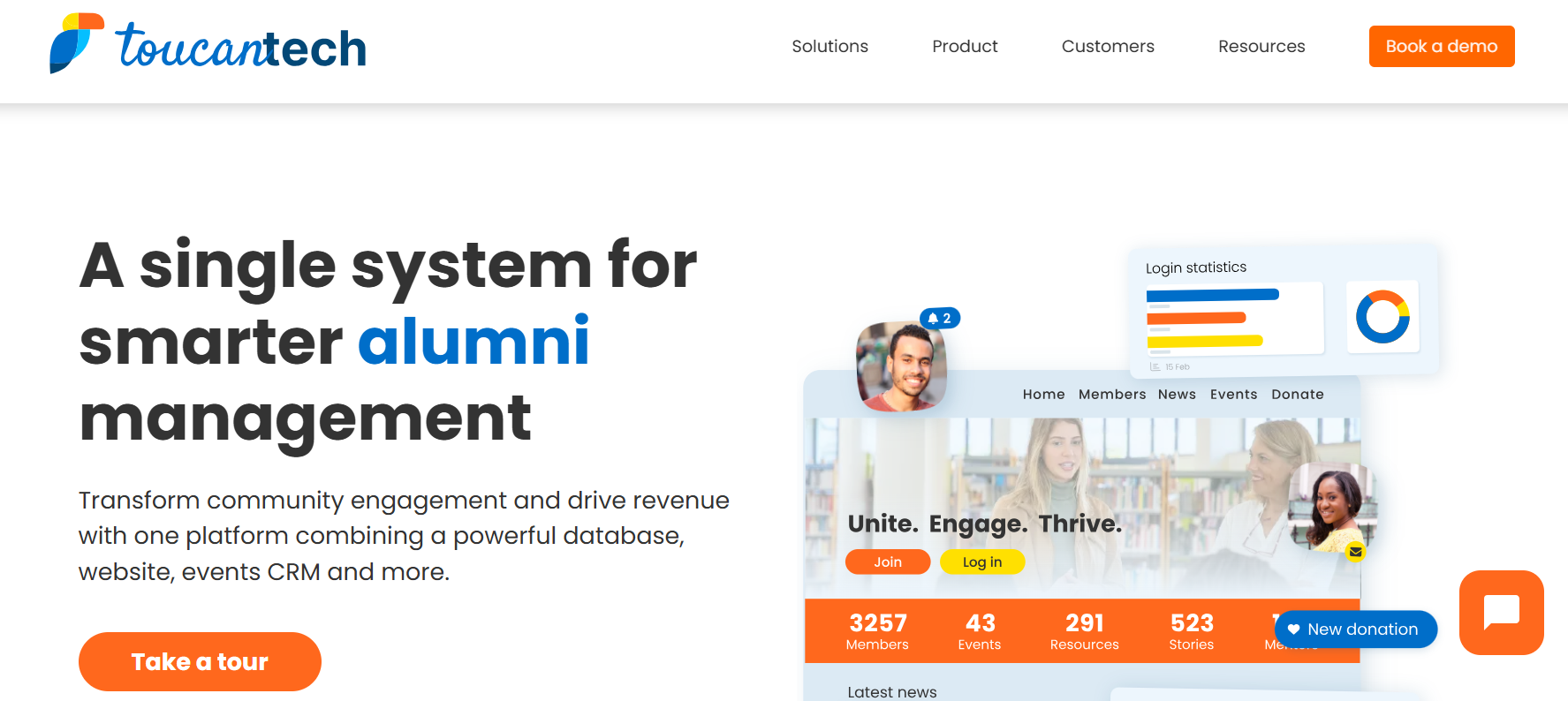
ToucanTech champions ease of use as one of its core principles. Users frequently highlight its intuitive interface and customer support. The platform also keeps common alumni activities connected. Event registrations, donations, communications, memberships, and constituent information can be managed within the same system, giving teams one place to work from rather than stitching together several point solutions.
It's a useful option for teams replacing a legacy alumni system, building a program with a relatively small staff, or looking to consolidate several alumni-facing tools into one platform.
Pricing: ToucanTech's core plan has a flat rate of $8,000 per year.
WildApricot is a membership management platform used by associations, nonprofits, and community organizations.
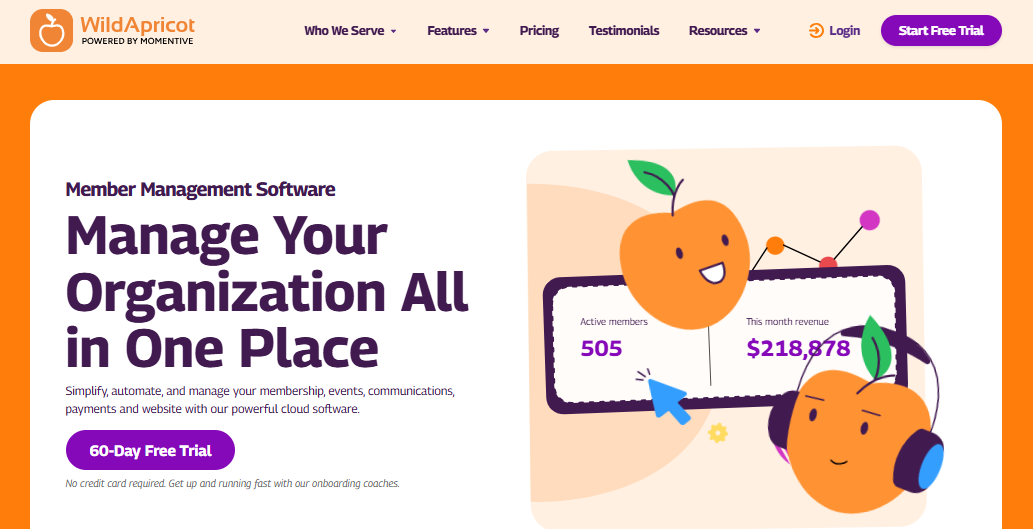
The platform sets itself apart with its straightforward pricing and setup. Unlike many enterprise alumni platforms that require a sales conversation before you can estimate costs, WildApricot publishes its plans based on the number of contacts you manage. It also offers a 60-day free trial, making it easier for smaller organizations to test the platform before committing.
The platform is also designed to be managed without extensive technical expertise. Teams can build a member-facing website, maintain a directory, create events, collect payments, and send communications from the same system.
WildApricot is a good fit for small alumni associations and organizations with simpler membership and event needs, such as maintaining a member directory, managing memberships, organizing events, sending communications, and collecting payments.
It may become less suitable as an institution's needs expand into larger and more specialized alumni engagement or advancement workflows.
Pricing: Plans are based on contact volume, starting at $63/month for 100 contacts and increasing with database size. WildApricot also offers a 60-day free trial.
GiveCampus is built around fundraising, alumni engagement, events, volunteer management, and frontline fundraising. As an engagement layer that sits on top of your CRM, it brings together constituent, gift, event, volunteer, and frontline fundraising data.
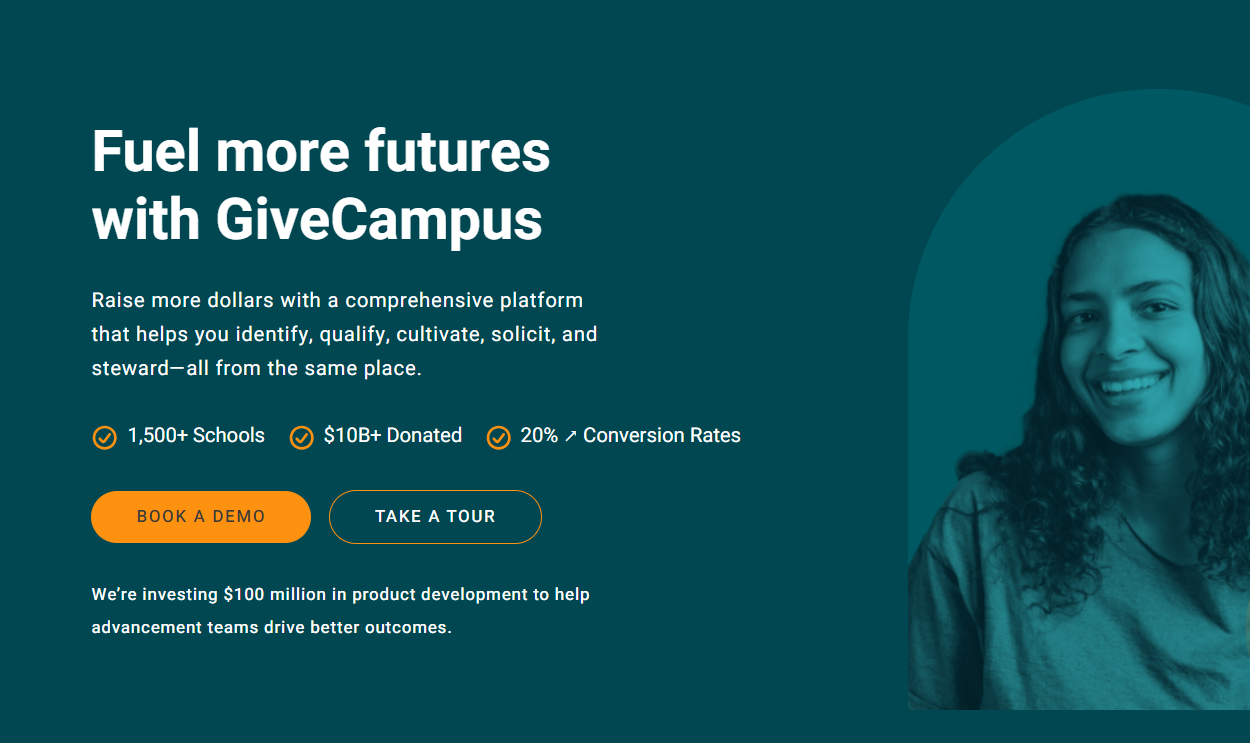
This is particularly useful for advancement teams that want events and alumni engagement to feed directly into fundraising workflows. GiveCampus also supports email and text outreach, volunteer management, and fundraising campaigns within the same ecosystem.
It's a strong fit for institutions running a lot of giving campaigns, reunions, alumni events, volunteer programs, and donor outreach from the same advancement operation.
It's less of a traditional alumni-community platform built primarily around directories, mentoring, or social networking.
Pricing: Custom pricing offered based on the institution and products selected.
There’s no single alumni management platform that will be the right fit for every institution. Think on the question of what you need the platform to do, and you’ll be able to approach the decision with much clarity.
If fundraising and advancement are at the center of your alumni strategy, look for a platform that can connect engagement activity with your CRM and give your advancement team useful donor context. Almabase and GiveCampus are worth a closer look here, while EverTrue makes more sense for teams that need deeper prospect and donor intelligence.
If your priority is building an active alumni community, Graduway and HiveBrite take a more community-first approach, with tools for networking, groups, mentoring, and member interaction.
For institutions where alumni-to-student connections, mentoring, and career engagement are a major part of the strategy, PeopleGrove is built around those programs rather than treating them as an add-on. And if you're looking for something simpler to get up and running, ToucanTech offers a broader set of alumni tools, but with less emphasis on extensive customization.
Before you start booking demos, definitely get clear on what your institution actually needs from an alumni management platform and what you can realistically expect from your budget, team, and existing tech stack. That’s exactly what we cover in our Alumni Management Software Buying Guide. It walks through the key features to evaluate, questions to ask vendors, implementation considerations, and how to compare platforms against your institution’s specific needs.
If you’re unsure what to prioritize, flipping through the guide before comparing vendors might help!
Choosing alumni management software is a big decision, especially when your team will be relying on it for everything from everyday alumni communications to major events and fundraising campaigns. Take the time to see how each platform handles your actual workflows, what implementation involves, and how well it works with the systems you already use.
Almabase is worth exploring if bringing alumni engagement and fundraising closer together is a priority. It brings events, communications, giving, and alumni data into one platform, with CRM integrations to reduce manual work for your team. 🤗
You can read more about what makes Almabase a good alumni management software and how it supports different alumni programs.
Ultimately, the goal is to find the platform your team can comfortably use, your alumni will want to engage with, and your institution can continue to rely on as its programs grow.
Request a demo today to see how Almabase can help your institution nurture deeper relationships with your alumni. 💜

An institution can get by with spreadsheets and basic CRM functions, but a dedicated alumni management software makes a huge difference when you need to map engagement, personalize communications, giving, and complex events. So while not always necessary, it becomes almost essential as an institution scales its alumni management efforts.
There’s no single best option for every institution. The right platform depends on your goals, existing technology, budget, and whether you need deeper capabilities or customizations. Ultimately it’s about finding the right fit for your requirements.
Pricing varies widely depending on the platform, number of alumni, and features you need. Some platforms offer tiered pricing, while others use custom pricing based on the institution’s requirements.
Free tools can work for institutions with smaller alumni programs or straightforward needs, but they often come with limits on features, users, data, or customization. If your programs are growing, paid software may offer more room to scale.
You might find the terms being used interchangeably, but an alumni platform usually focuses on the alumni-facing experience, while alumni management software could also include the operational side, including data management, events, communications, and fundraising.

The Best Alumni Management Software in 2026
Lorem ipsum dolor sit amet, consectetur adipiscing elit. Suspendisse varius enim in eros elementum tristique. Duis cursus, mi quis viverra ornare, eros dolor interdum nulla, ut commodo diam libero vitae erat. Aenean faucibus nibh et justo cursus id rutrum lorem imperdiet. Nunc ut sem vitae risus tristique posuere.
Almabase
April 20, 2026
12 minutes