Digitization has changed the definition of engagement. We have emerged to live in a new digital ecosystem, where everything important to us must be in our grasp, and engagement must feel easy and personal.
Published:
December 15, 2022
Updated:
December 15, 2022

Digitization has changed the definition of engagement. We have emerged to live in a new digital ecosystem, where everything important to us must be in our grasp, and engagement must feel easy and personal.
Alumni Relations are not exempt from these expectations. And so, to our best efforts, we leverage solutions to give our alumni experiences that align with their expectations.
.jpeg)
Where, then, may the gap exist?
It's in how we limit our lens to view their engagement in sign-ups, gifts, and event registrations. But, Alumni Relations have a much larger scope.
Sign-ups are a critical measure of how well our constituents have adopted the platform, but they tell us only half the story.
They don't give us a holistic view of engagement, which can mean many more activities beyond sign-ups, event registrations, and gifts - activities that happen only once a year, disregarding the many other ways they engage with us.
Moreover*, sign-ups* don't align with the tendencies of our alumni; our alumni sign up on the platform, but how often are they logging in to engage?
To overcome this, Almabase enables constituents to engage without necessarily going through the hassle of logging into the platform every time.

Our alumni are engaging with us in many ways throughout the year; they are replying to emails, liking social posts, visiting a job board, or viewing an archive of newsletters - all of which have taken much effort from the Alumni Relations office to set up.
Each interaction tells us so much more about them, giving us additional opportunities to engage them further.
And yet, these engagement activities don't show up in our reports, leading us sometimes to wonder why our efforts don't lead to higher engagement.
Almabase will soon revamp its admin dashboard to start helping us shift from focusing solely on sign-ups to viewing results of everything our alumni do across channels and programs, all at our fingertips.
This change will give us a view of how many alumni have engaged and in which ways, showing us an instant view of the value we create for alumni and a better sense of direction for us.
Stay tuned for early access to the revamped admin dashboard, which will come your way shortly.
Subscribe
See how modern advancement teams bring alumni engagement and fundraising together.
Plan faster. Execute better
Explore free templates designed for alumni and fundraising teams.
.png)

.avif)
Alumni are an institution’s most precious asset. However, the reality is that while alumni will often have a sense of belonging to their alma mater, a constant connection is needed to cultivate this relationship. While there are a bunch of ways to achieve this, today, we’re focusing on one of the most effective communication methods employed by schools and universities around the globe – email communication.
While there’s a plethora of information on best practices for email marketing, our experience with various schools has helped us understand email best practices specific to alumni.
Email has an ability many channels don’t: creating valuable, personal touches – at scale.
- David Newman
While email communication plays a crucial role in the digital engagement strategy of many institutions, the rate of success for each school may differ greatly. The difference lies in the approach that each school takes. Here’s a list of tested techniques that have brought success to most schools:
To be able to engage alumni via emails, it is pivotal to maintain updated email lists. Over time, alumni contact information is bound to get outdated. For your email campaigns to have higher alumni engagement rates, it is integral that your emails reach the right people, and that’s only possible if you have updated information about your alumni.
Whether you’re a small school or a larger university, there are various ways to keep your alumni database up-to-date. Tap on the banner below to read more about the complete list of all the database update techniques that are typically employed by schools and their relative benefits.
While creating an email, it is important to be able to evaluate what alumni would value. Sticking to a template might look like the easiest route, but schools have witnessed greater success with personalized email campaigns. One way of personalizing your emails is by segmenting alumni based on gender, class year, and other relevant criteria.
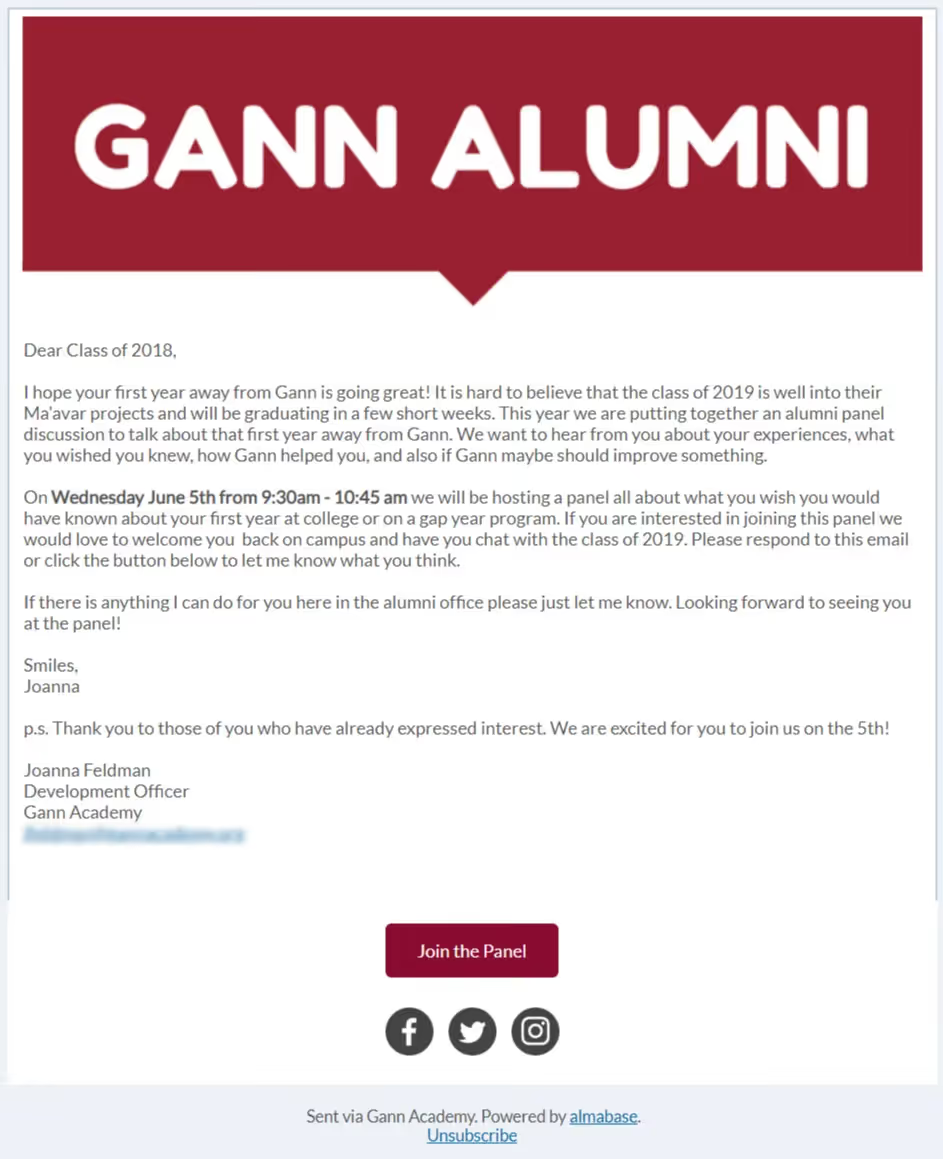
It’s always a good practice to use a real name as opposed to a common name such as ‘Your Alumni Association’ as the sender of your emails. Using a person who your alumni may already be familiar with is ideal. You could even add in a picture and signature of the person at the end of the email to make the email seem more genuine.

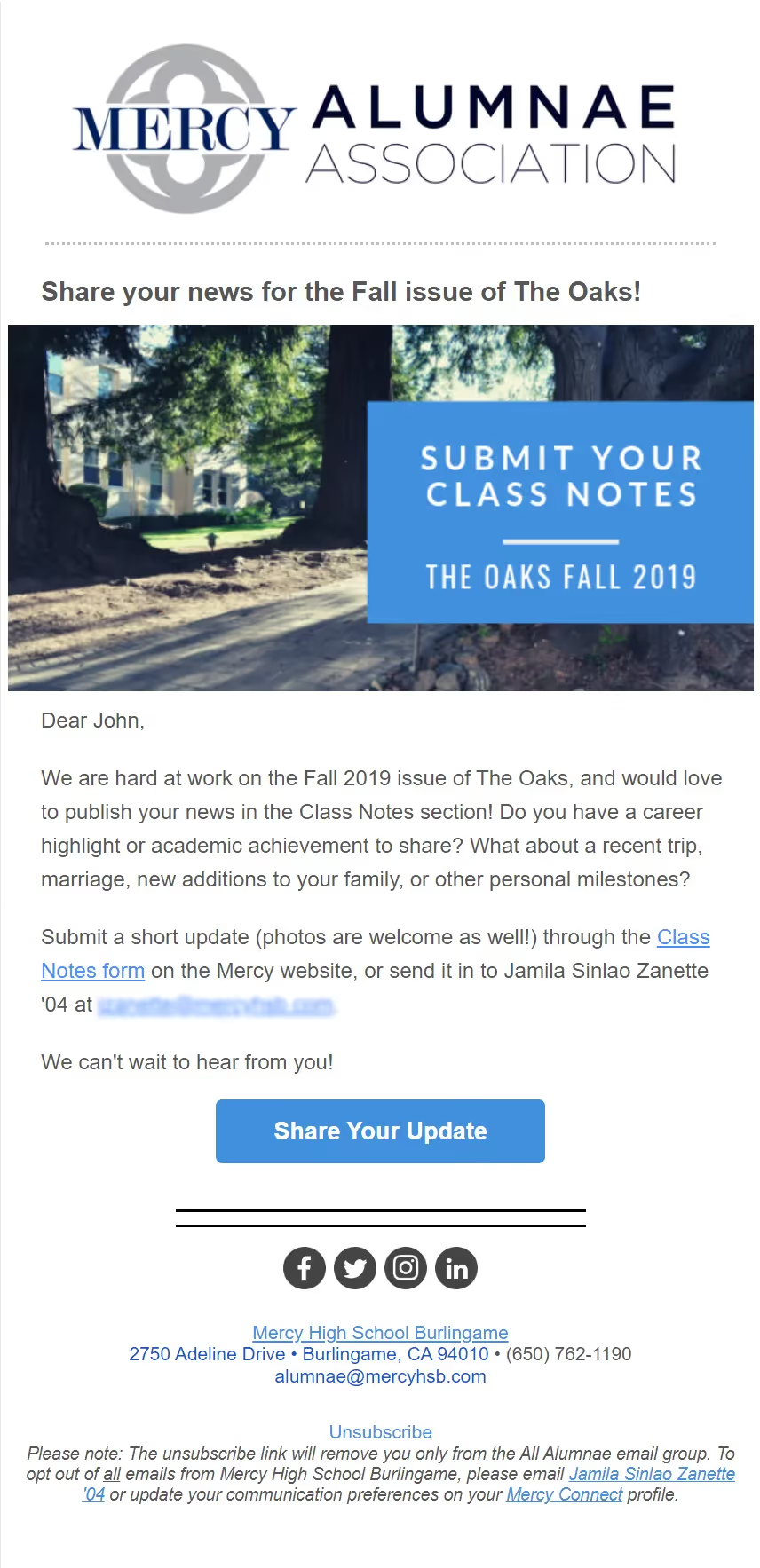
Other than the high risk of your alumni email landing in spam, adding multiple links often comes at the expense of having an unfocused message, severely impacting your click-through rates. Sticking to a clear call-to-action button is the best practice.
Mercy High School, Burlingame does an amazing job at targeting its alumni with emails that have a clear call-to-action.
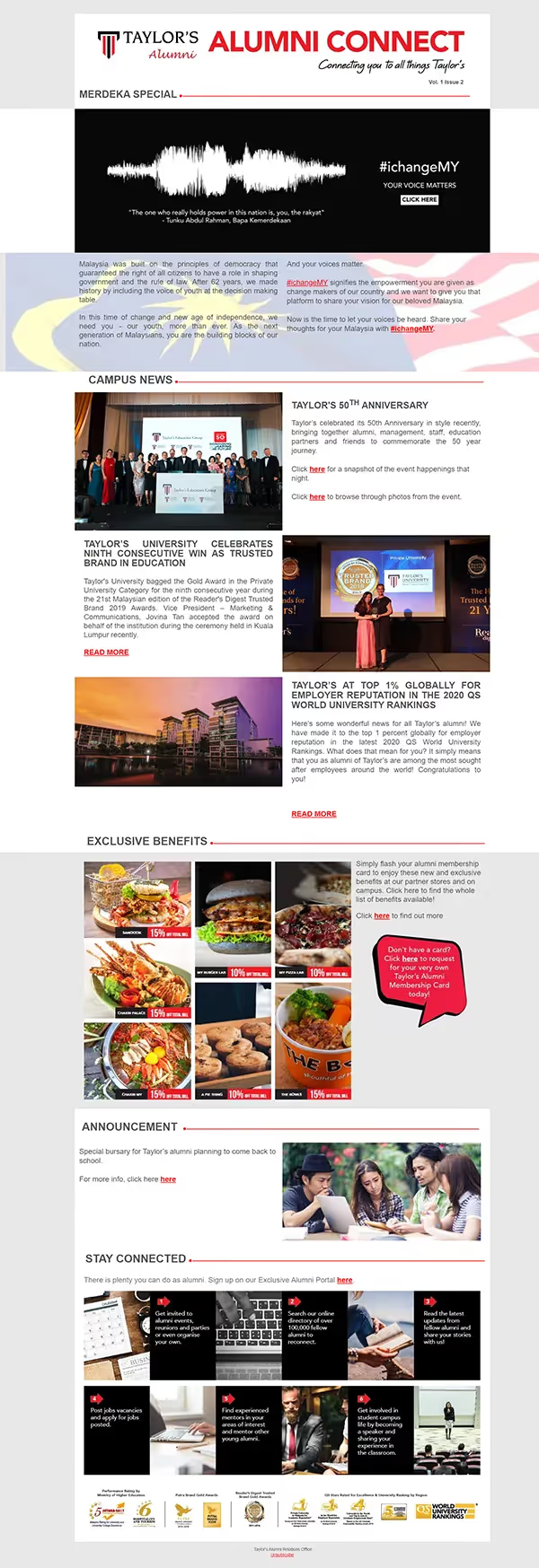
While we discussed how personalized email campaigns can help boost alumni engagement rates, monthly alumni newsletters and weekly updates have also proven to be highly effective. Monthly alumni newsletters and weekly update emails act as a source for alumni to stay updated with all that’s happening at their school and often evoke nostalgia and a sense of pride.
Here’s how Upper St. Clair School District & Taylor’s University keep their alumni engaged with informational monthly newsletter emails.

This is probably the most basic yet the most essential part of creating a successful email campaign. Optimizing your emails so that they appear in your alumni’s inbox at the right time and in the right format is critical to your campaign’s success. Here are some key aspects that should be ensured with respect to email optimization:
1. Ensure that alumni receive your emails during their active hours. If your alumni are in a different time zone, scheduling your emails is highly recommended. Analyzing past email delivery statistics might help in scheduling the timings for your new campaigns.
2. While attaching any images to your email, it is recommended to stick to a maximum file size of 1 MB.
3. Subject lines play an integral part in the success of any email marketing campaign. Including your alumni’s first name within the subject line is a great practice that we’ve seen schools achieve success with. Adhering to shorter, to-the-point subject lines is also highly recommended.
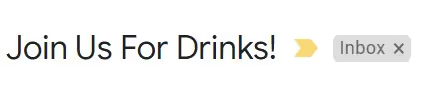
When it comes to engaging subject lines, QuestBridge Academy hands-down wins the game. For its September Bar Night event, the institution reached out to its alumni with a simple, yet highly effective subject line:

Here are some outreach email templates to kickstart your emails:
Subject: Connect & Grow: Your [Institution Name] Network
Dear [Alumni Name],
Hello from [Institution Name]! We hope you're doing well.
Did you know your connection to [Institution Name] offers a powerful way to boost your career? Our alumni network is full of people in many different fields, ready to connect.
We've made it easy for you to use this network:
- Network Platform: [Link to platform] - Join our special online platform to find and connect directly with fellow alumni for advice, opportunities, and shared experiences.
- Virtual Event: [Link to event details] - Sign up for our next online networking event. It's a great chance to meet alumni working in specific areas you're interested in.
- Career Help: [Link to career services page] - Visit our career services page just for alumni. You can find job postings, get tips, and learn about workshops to help you move forward.
Make the most of your [Institution Name] connections today.
Best regards,
The [Institution Name] Alumni Relations Team
Subject: Support [Institution Name]: Help Students Succeed
Dear [Alumni Name],
We're reaching out because you can make a real difference at [Institution Name]. Your time here helped shape your path, and now you can help shape the path of current students.
Supporting [Institution Name] is a direct way to invest in the future. Your contribution, no matter the size, can help provide essential resources:
- Give Now: [Link to donation page] - A financial gift helps fund scholarships for deserving students, support important research, and improve campus facilities.
- Volunteer: [Link to volunteer page] - If you have time to share, consider volunteering. You could mentor a student, help at an event, or offer your professional skills.
Every bit of support helps us give students the best possible experience.
Thank you for considering how you can help.
With sincere gratitude,
The [Institution Name] Advancement Team
Subject: Stay Connected to [Institution Name]
Dear [Alumni Name],
Life after graduation takes you to new places, but your connection to [Institution Name] and the people you met here is still important. We love sharing what's happening and hearing about your journey.
Here are a few simple ways to stay part of the [Institution Name] community:
- Read Our Magazine: [Link to magazine] - Check out the latest alumni magazine for campus news, stories about fellow graduates, and updates on upcoming events.
- Follow Us: [Links to social media profiles] - Connect with us on social media for daily updates, photos, and a chance to interact with the wider community online.
- Find a Local Chapter: [Link to chapter list] - Look for an alumni chapter in your area. It's a great way to meet up with other alumni near you for social events and activities.
- Update Info: [Link to update form] - Please take a moment to make sure we have your current contact information so you don't miss out on important news and invitations.
We value your connection. Stay in touch!
Warmly,
The [Institution Name] Alumni Relations Team
Subject: Keep Learning with [Institution Name]
Dear [Alumni Name],
The world keeps changing, and learning new things is key to staying ahead. As a graduate of [Institution Name], you have access to special resources to help you keep learning and growing in your career and personal life.
We offer opportunities designed just for our alumni:
- Online Courses: [Link to course platform/library] - Explore our library of online courses to learn new skills or brush up on topics relevant to your field.
- Webinars/Workshops: [Link to events page] - Attend online sessions led by our faculty or industry experts on a variety of interesting topics.
- Library Access: [Link to library access info] - Access many of the academic databases and publications available through the campus library from wherever you are.
- Mentorship: [Link to mentorship program details] - Whether you want to share your experience or learn from someone further along in their career, our mentorship program connects alumni.
Keep your mind sharp and continue your learning journey with [Institution Name].
Sincerely,
The [Institution Name] Professional Development Team
Subject: Share Your [Institution Name] Story
Dear [Alumni Name],
Your time at [Institution Name] gave you unique experiences and memories. Your positive stories are the best way to show others what makes our institution special and why it's a great place to learn.
We invite you to share your pride and help us tell the [Institution Name] story:
- Share Your Story: [Link to testimonial submission form or social media hashtag] - Tell us about your favorite memories or how [Institution Name] impacted you. We might feature your story!
- Represent Us: [Link to volunteer page] - Volunteer to represent [Institution Name] at college fairs or other events to talk to prospective students about your experience.
- Engage Online: [Links to social media profiles] - Like, share, and comment on our social media posts. This helps our news reach more people.
- Refer a Student: [Link to referral form] - If you know a student who would be a great fit for [Institution Name], encourage them to apply and let us know.
Your voice is important in helping us build a strong future for [Institution Name].
Best regards,
The [Institution Name] Communications & Alumni Relations Team
We hope we’ve given you some new ideas and motivations to make the most out of your email channels. If you’re looking for a tool to streamline your communication efforts, let us know and we’d love to show you how we can help.

6 ways to increase alumni engagement over emails
Lorem ipsum dolor sit amet, consectetur adipiscing elit. Suspendisse varius enim in eros elementum tristique. Duis cursus, mi quis viverra ornare, eros dolor interdum nulla, ut commodo diam libero vitae erat. Aenean faucibus nibh et justo cursus id rutrum lorem imperdiet. Nunc ut sem vitae risus tristique posuere.
This is a common catchphrase that everyone in our industry has come across, in some shape or form. But how many of us are actually leveraging the power of engagement metrics to drive alumni participation and improve programming? Measuring data can be tricky, and there’s no universal playbook around to help advancement teams create and implement suitable frameworks in their institution.
That’s why my teammate Sushmitha and I put together a little webinar, to give advancement professionals the foothold they need to track engagement like a pro. We were fortunate to be joined by Adam Dunigan of Franklin College. Adam has had over a decade of experience working with various alumni engagement metrics, and we had a blast imbibing all the nuggets of wisdom that he had to share.
.png)
Here’s a snippet of the insights Adam shared during the webinar.
Initially, the Advancement team at Franklin College was largely focused on tracking attendance at events. As their alumni programs became more diverse, the team recognized the need to track metrics beyond event participation rate. That’s why the College built a solid framework to measure alumni engagement that enabled them to track metrics in a more comprehensive manner.
Aided by Adam’s rich history in data management and working with databases, the team at Franklin College slowly scaled their framework, from tracking metrics using spreadsheets, to creating complex data models by tinkering around with APIs and Microsoft Power BI. Today, Franklin College also has an automated process of tracking their data, and they also have powerful custom dashboards that offer them up-to-date data at a glance.
| Key Takeaway – Don't worry about the tools you have - your main focus should lie on what metrics you can track. While starting off, even spreadsheets are a great way to track your data.
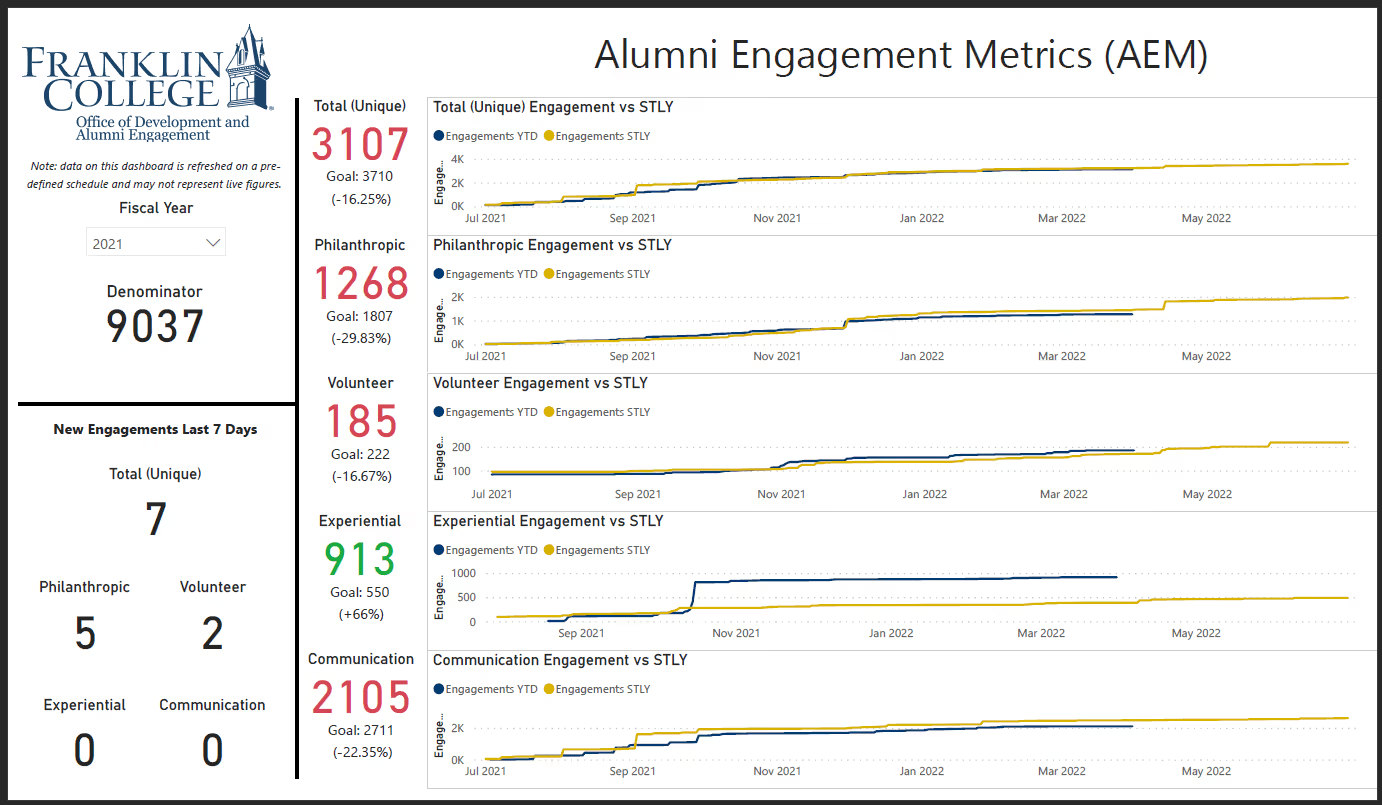
An age-old problem with most engagement frameworks is this – tracking quantitative data will eventually become rinse-and-repeat, but how do you track qualitative data? For instance, what your constituents feel about your programming isn’t something you can quantify using numbers alone.
One way Franklin College tackled this challenge is by using surveys. Whether they are short surveys after every event, or they are more comprehensive surveys sent out every couple of years, they are a great channel to understand what your alumni really want out of your programming. CASE AEM surveys also enable the team to compare their programming with other institutions, and allows them to gain new ideas from their peers.
| Key Takeaway – Survey a great tool to leverage if you want to understand what your alumni think of your programming.
Even though everyone knows the importance of engagement metrics, only a small percentage of institutions actually leverage them to track alumni engagement. If your institution is just starting out with engagement metrics, Adam’s advice would be to start tracking whatever you can, and work your way towards a robust framework that aligns with your objectives.
Adam also recommends upskilling yourself whenever you can, either through a plethora of resources available online, or by learning through your peers, as well as experts in the field. This is precisely how Adam became a data expert himself – he started off by working with spreadsheets, but eventually got to a point where he mastered various tools like Microsoft Power BI.
| Key Takeaway – Take advantage of all the resources at your disposal to get better with engagement metrics.

Adam Dunigan has been working with his alma mater for over 12 years now, and he’s spent a good deal of that time with data. He has worn multiple hats working with Franklin College, and his area of expertise revolves around database design and management, data analytics, and working with advancement services. He is a self-taught data enthusiast, who has a penchant for finding new ways to collect and utilize data to make programming more alumni-centric.
If you want to learn more about how Adam helped set up a robust framework to track alumni engagement at Franklin College, tune in to the first episode of Advancement Spotlight, which is on our YouTube channel!

How Franklin College is Measuring Alumni Engagement Like a PRO
Lorem ipsum dolor sit amet, consectetur adipiscing elit. Suspendisse varius enim in eros elementum tristique. Duis cursus, mi quis viverra ornare, eros dolor interdum nulla, ut commodo diam libero vitae erat. Aenean faucibus nibh et justo cursus id rutrum lorem imperdiet. Nunc ut sem vitae risus tristique posuere.
Last updated: 26th October, 2021
With rapid technology growth, the trend of creating mobile apps has reached a level where organizations tend to focus on developing mobile apps instead of solving a real problem or pain point for the end user.
Since the advent of the app store, apps have flooded phones with a use for everything. But not all apps remain on the user's mobile device for long and as mobile phones become increasingly personal and tend to behave as a natural extension of oneself, the challenge to stay relevant to the user continues to get harder.
Here are a few of the reasons we think the ROI on mobile app engagement is questionable for alumni relations.
For the app creator, the need is almost obvious. But is it really?
A lot of businesses can't wait to jump on the app bandwagon. But the craze for apps has been in continuous decline. Many users prefer using limited apps; because most of them remain unused and build up on precious storage unnecessarily. A recent survey from Nielsen lists the most popular smartphone apps of the year. The results indicate that Google and Facebook dominate the mobile app space. In the entire app universe, about 200 apps (out of 1.6million) take up most of the eyeball time of the world's population. That is just about 0.01%.
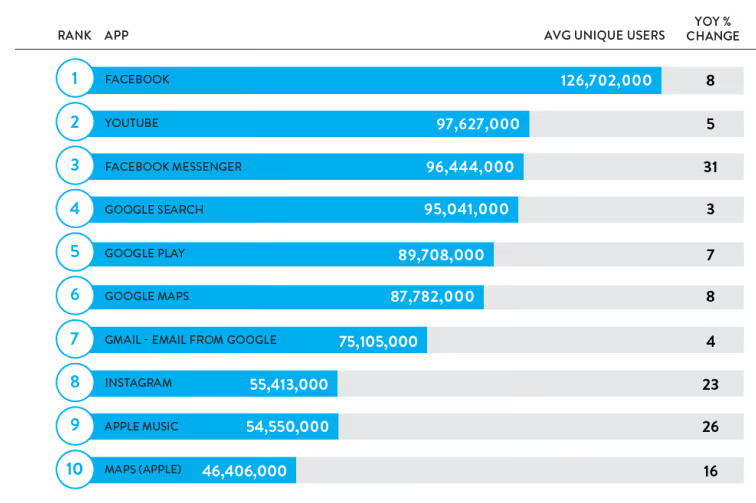
In the fourth quarter of 2015, iPhone and Android smartphone users in the U.S. used an average of 27.1 apps per month, spending more than 40 hours with them. Interestingly, the amount of time people spend with apps continues to increase, whereas the number of apps they use pretty much stopped growing three years ago. Apparently, there's a limit to how many apps people actually use, regardless of how many apps are available and how much time they spend using them.
To put it differently: there's an app for every need, but there's no need for every app.
As people continue to consume content on their mobile devices, providing a stream of relevant content to engage your alumni on a daily or weekly basis can get very challenging.
Which begs us to ask the question - does the app provide relief or gain to the user frequently? Or will it turn out to be just another a channel for you to push notifications to your user base?
"80-90% of all downloaded apps are used once and then eventually deleted by the users."
- Compuware
The average number of apps that apps users have on their phones is just about 27. And everyone is competing for that space. Your school's app competing with Youtube, Google, Email, Facebook, Uber and others to stay relevant on the user, every day.
According to Swerve, the world's leading mobile marketing automation platform, More than 1/3rd of mobile app engagement last less than a minute and unless it is your objective to be time saving, like the ability to order food or hail a cab in less than a minute, that is not a good sign.
Only 13.3 percent of sessions last longer than 10 minutes. 13.13 percent is not a lot considering the fact that you are going to compete with platforms like Youtube, Facebook, Instagram and other places, where people are likely to stick on for more than 10 minutes in every session.
Let us also take a look at the effort required by the user to use the app. As opposed to a mobile responsive website, where the information is accessible at any time - a user will have to wait for download and installation before they can access the information they need from your alumni network. It would be justified if the alumni would 'need' to use it regularly to access information, but that tends to not be the case in most apps.
Sure, an alumni app is great to download at first and take a quick glance around when you are curious about what has happened to your old buddies, but what happens next?
Is there a clear reason for the user to keep the app on the phone 2 weeks later? a month later?
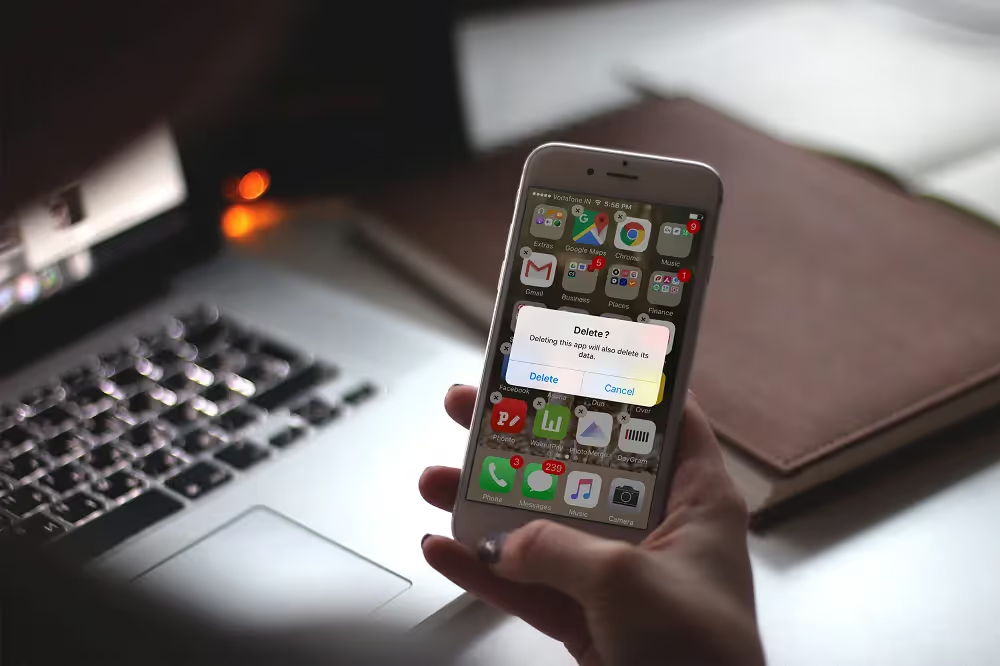
If the user's phone starts to run out of storage space, is your app going to be one that they are OK with deleting?
And when it comes to mobile apps, you kinda only have one shot at it.
"79 percent report that they would only retry an app once or twice if it failed to work the first time. Only 16 percent said they would give it more than two attempts."
- Compuware
Web and mobile technologies are advancing at an unprecedented pace even in 2021. 5 years ago, Apps looked like they were the only way forward and the bridge between websites and mobile apps were so far off, that a lot of companies were forced into taking sides with one of the two formats. But fortunately, that is no longer the case.
As hybrid architectures evolve, the divide between web and mobile technologies are closing in.
Browsers are growing more capable of creating lighter versions of apps that don't require a download or an install, but come with a lot of the benefits of native mobile apps.
Push notifications, for example, was a luxury only apps could boast of 2 years ago. But with popular browsers like Google Chrome, Mozilla Firefox embracing push notifications, users can simply subscribe to notifications from your website to receive updates even while they are not on your website.
At Almabase, we are by no means opposed to mobile platforms and app development. We do however strongly believe that there is a lot more to an app than just being able to download an install an icon on your phone. Before you decide that you need to start development on a mobile app or hire developers to build your app. Here are a few questions we think you should ask yourself:
1. Is there enough daily/weekly engagement on all current channels that can just be extended to the mobile platform?
2. Is there a clear value proposition for alumni to keep the app on their phone over the next year or more?
3. What are the key takeaways with a mobile app? Can they be achieved them over a single integrated web platform, instead of having to build a parallel platform?
On the Almabase platform, as an integrated system, we will continue to embrace technology that helps alumni relations professionals reach the users at their point of need across different channels and platforms.
3 Reasons you should reconsider using mobile apps for alumni engagement
Lorem ipsum dolor sit amet, consectetur adipiscing elit. Suspendisse varius enim in eros elementum tristique. Duis cursus, mi quis viverra ornare, eros dolor interdum nulla, ut commodo diam libero vitae erat. Aenean faucibus nibh et justo cursus id rutrum lorem imperdiet. Nunc ut sem vitae risus tristique posuere.
%201.svg)
%201.svg)
%204.svg)


.svg)