We've scoured the internet and found your some email examples you can use to inspire your Giving Tuesday campaign this year and drive donations!

Anwesha Kiran
Updated:
April 16, 2026
Summary
• To significantly boost your Giving Tuesday donor participation, start by segmenting your audience and personalizing messages with their names or past giving history. This makes your ask feel much more relevant and engaging.
• Craft compelling emails that showcase tangible impact through personal stories or clear data points, helping donors visualize exactly how their contributions will support students and programs.
• Broaden your fundraising strategy by incorporating various email types, from urgent countdowns and matching gift announcements to non-monetary asks like sharing the campaign, to maximize alumni engagement.
• Ensure your calls-to-action are unmistakably clear, mobile-friendly, and paired with short, action-oriented subject lines to cut through inbox clutter and drive immediate gifts.
• Don't forget the importance of post-campaign communication: a prompt thank-you and a results update show donors their collective impact, fostering trust and strengthening long-term relationships.
• The full article dives deeper into ten specific email examples with visuals, offering even more creative ideas to streamline your annual giving campaigns and connect effectively with your community.
Giving Tuesday has become one of the most significant fundraising moments of the year, with organizations worldwide mobilizing their communities to give back. For educational institutions, it’s an opportunity to reconnect with alumni, celebrate school spirit, and fund programs that directly impact students. The average email open rate on Giving Tuesday 2024 was 21.56%, with a click-through rate of 2.57%, indicating strong donor engagement via email campaigns.
In this blog, we’ll explore ten real-world Giving Tuesday email examples from schools and nonprofits, examine what makes them effective, and share practical tips you can use to boost donor engagement this year.
Giving Tuesday is a global day of generosity that takes place annually on the Tuesday after Thanksgiving. It began in 2012 as a social movement encouraging people to do good, and has since grown into a worldwide event involving individuals, nonprofits, and educational institutions. It evolved as a response to the consumerism of Black Friday and Cyber Monday, inviting individuals and organizations to give back to causes they care about.
For schools and universities, it’s a moment to also celebrate community impact, highlight student stories, and engage alumni around shared values. Campaigns that tie giving to real outcomes, such as scholarships, research opportunities, or student welfare, tend to resonate the most.
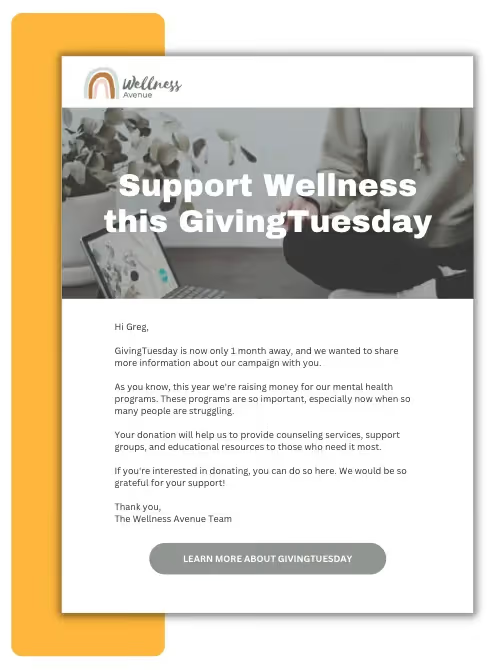
Countdown emails are a great way to not just promote your cause but also to inform your potential donors of your upcoming plans for Giving Tuesday. You should ideally have multiple emails (30 days away, 14 days away, 7 days away, etc. for example) as the day gets closer. This is also particularly great if you have an in-person or online event attached to your event.
💡If you are planning an event, add a button that allows your recipient to add the event to their calendar.
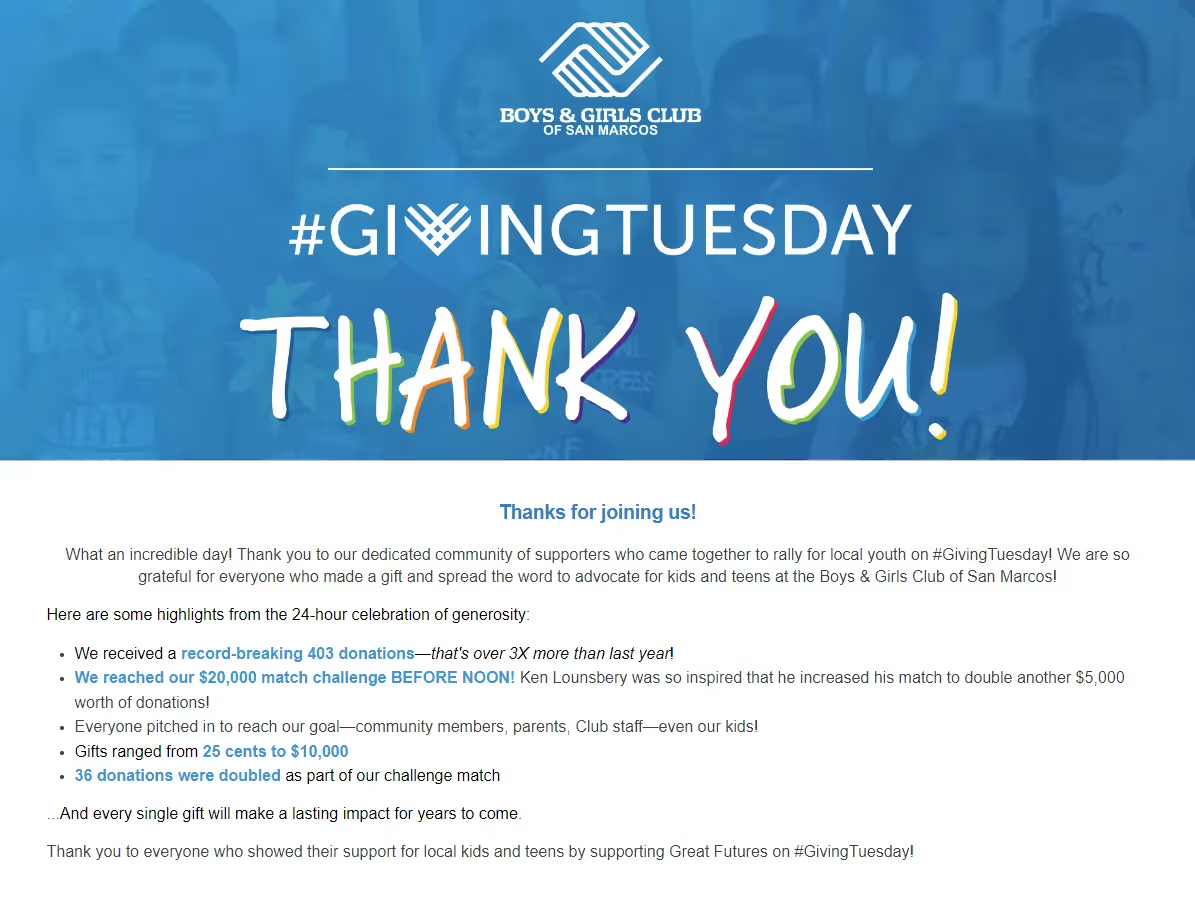
A core part of any fundraiser, thank-you emails are nowadays a necessity. You can keep it simple with a personalized thank you note, or you can provide readers with the opportunity to find resources they might like, join communities and events with like-minded people, or see how their donations will be used in the future.
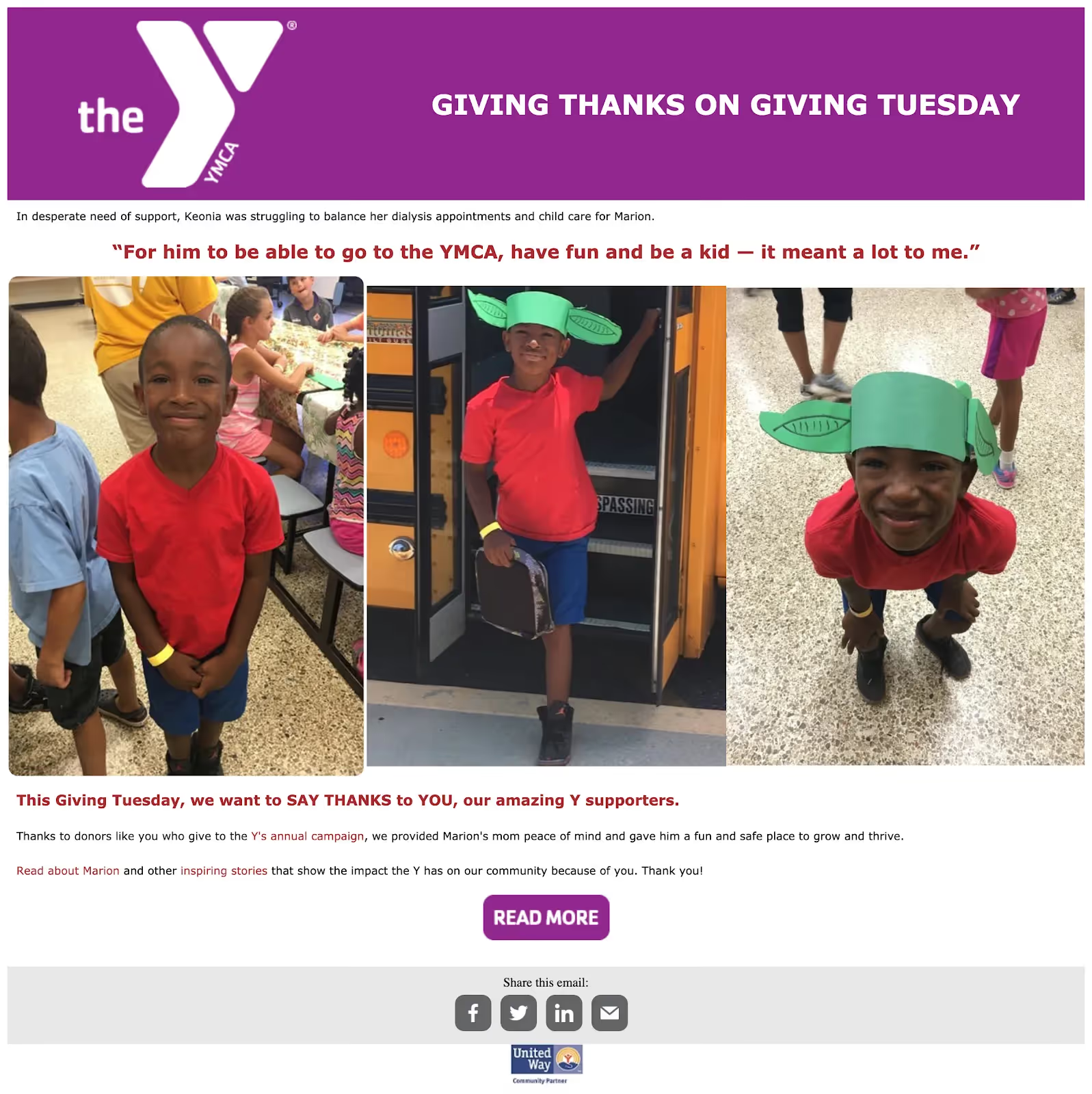
Personal stories are a great way to tell heartfelt and impactful stories to inspire giving. You can zoom in on an individual’s story to give your recipients a glimpse into the lives they are impacting through their gift. Remember that when it comes to raising funds, you can never underestimate the impact of a powerful story.
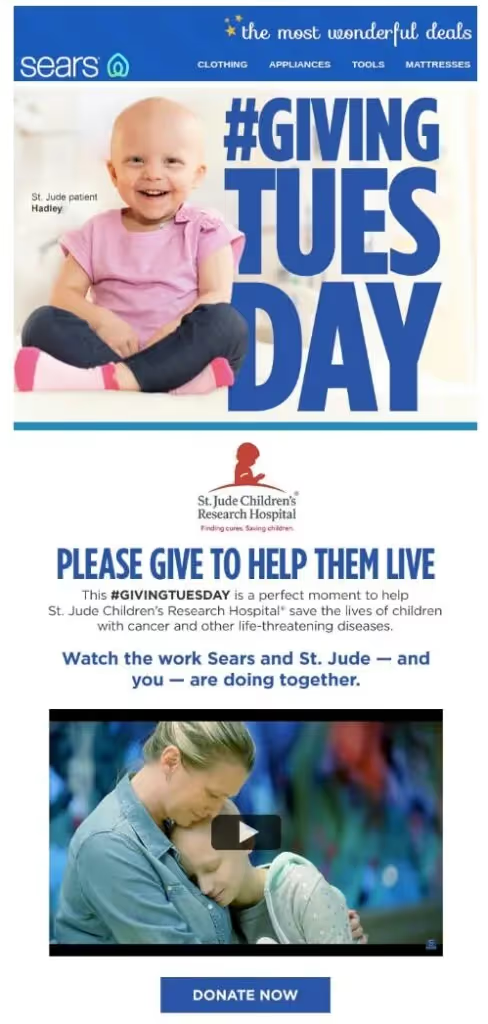
Whether it’s a simple hyperlinked thumbnail or an embedded video, giving your readers more to go on beyond just words can go a long way in setting your ask apart. Since it’s possible for certain email clients or apps to block embedded media, it would probably be best to do this for contacts that are already in touch such as past donors or active alumni members.
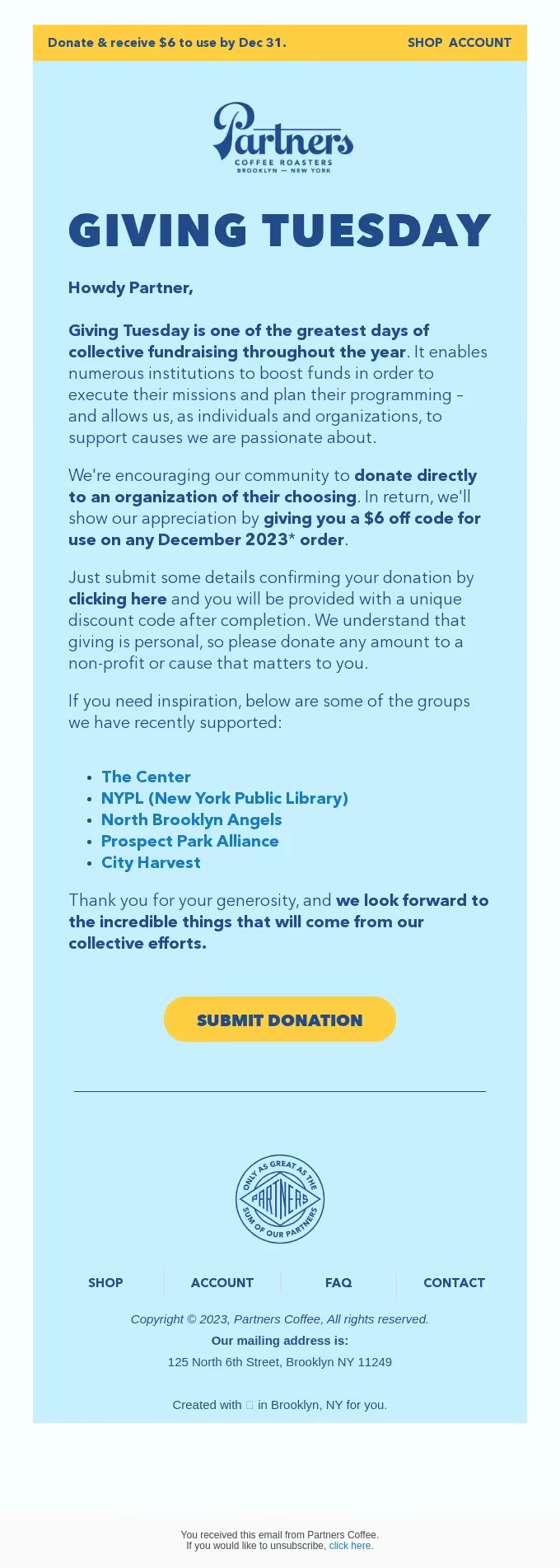
If your Giving Tuesday fundraiser has a strong connection to particular chapters, affinity groups, or geography locations, you can center your emails around building a supportive community aligned to common causes. The goal is to make donors feel like they can be a part of a bigger family of like-minded supporters.
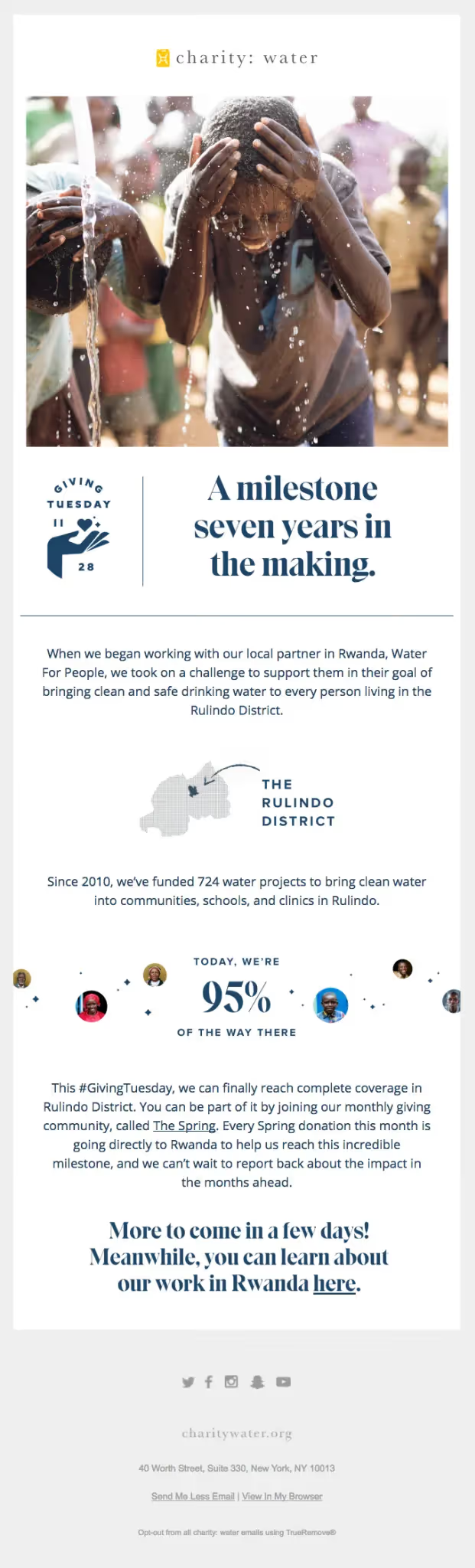
You can highlight the support you’ve garnered and how that has translated into real-world impact in your emails. Think graphs, journeys, percentages, and impact numbers that give your recipients confidence in how their contributions will be used.
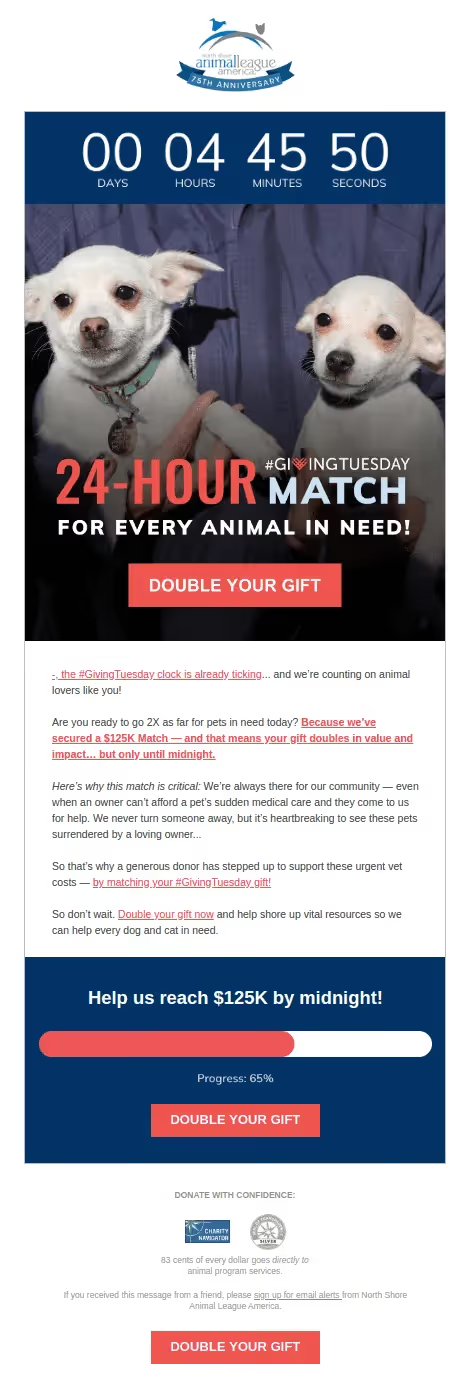
Matching gifts not only increase your funds raised but also inspire giving from eligible potential donors. This email should be sent just before or as the campaign launches, prominently featuring the match to create urgency and double the perceived impact of a donation.
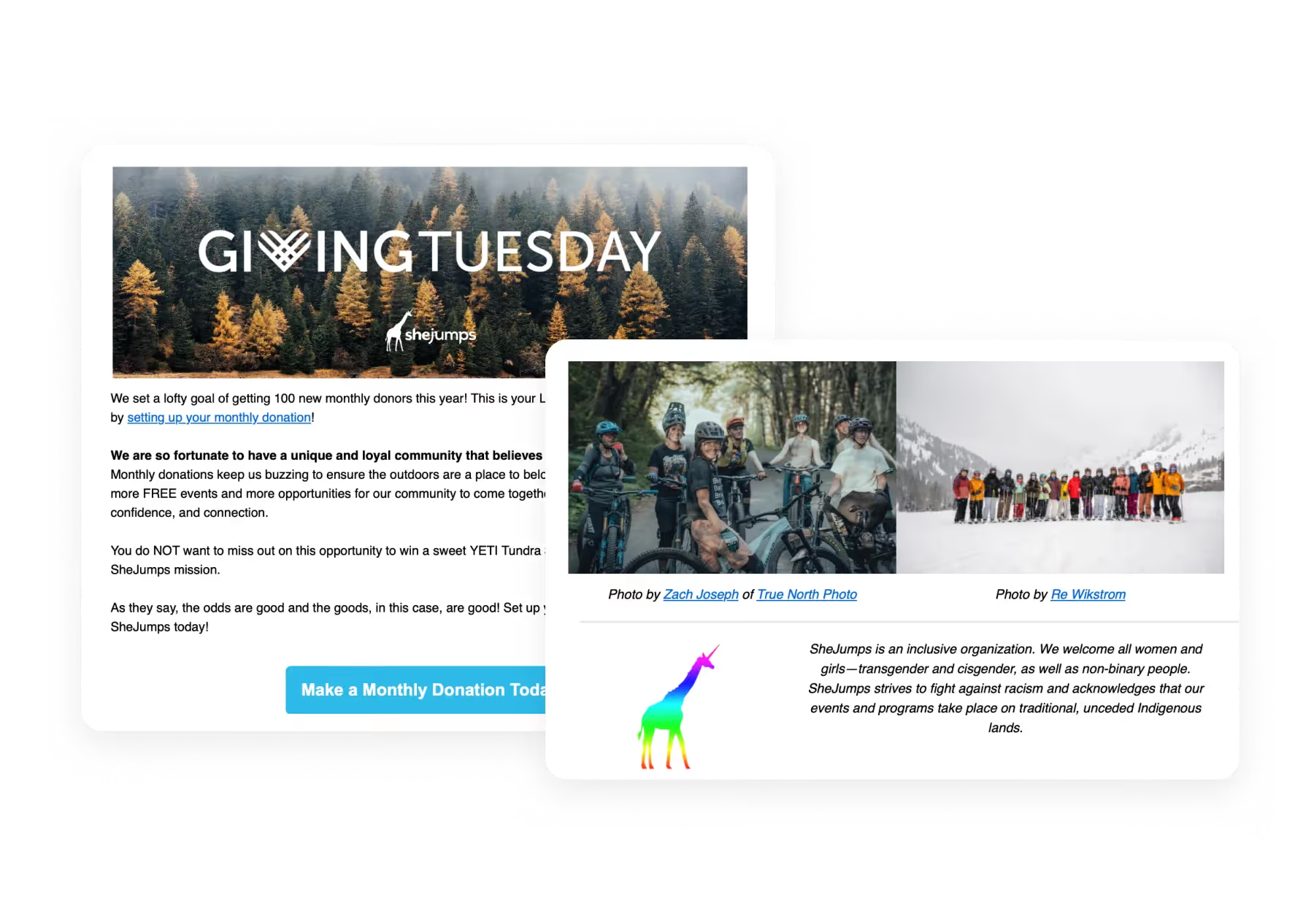
Targeting your most engaged one-time donors, this email focuses on the power of a monthly donation to create sustained, long-term impact. Highlight the total annual impact of a small monthly gift and explain why sustained funding is critical to your long-term mission.
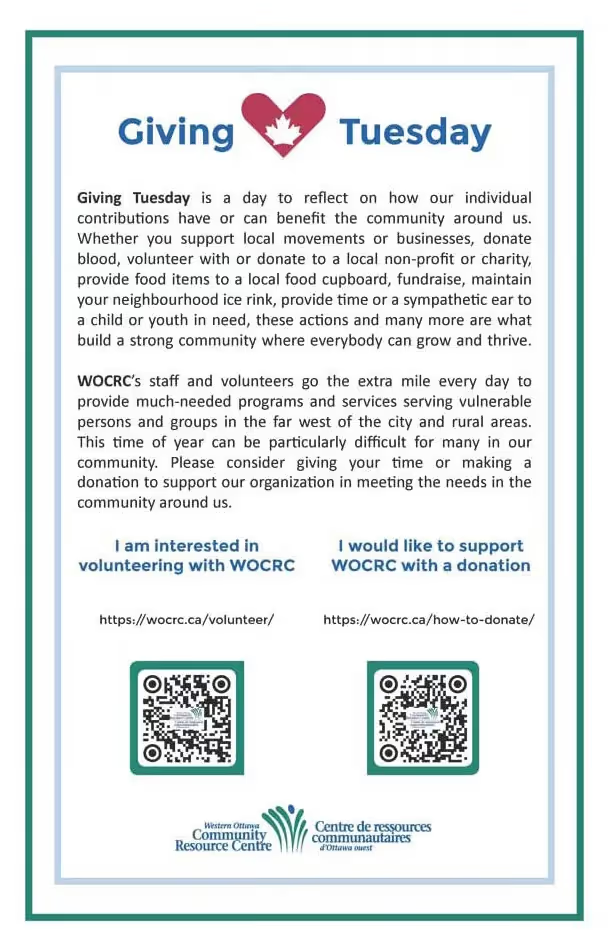
Not everyone can donate, but they can still help. This email encourages advocates to share the campaign with their network or contribute in equally important ways. Leverage your existing community for peer-to-peer sharing and invite volunteers to help out.
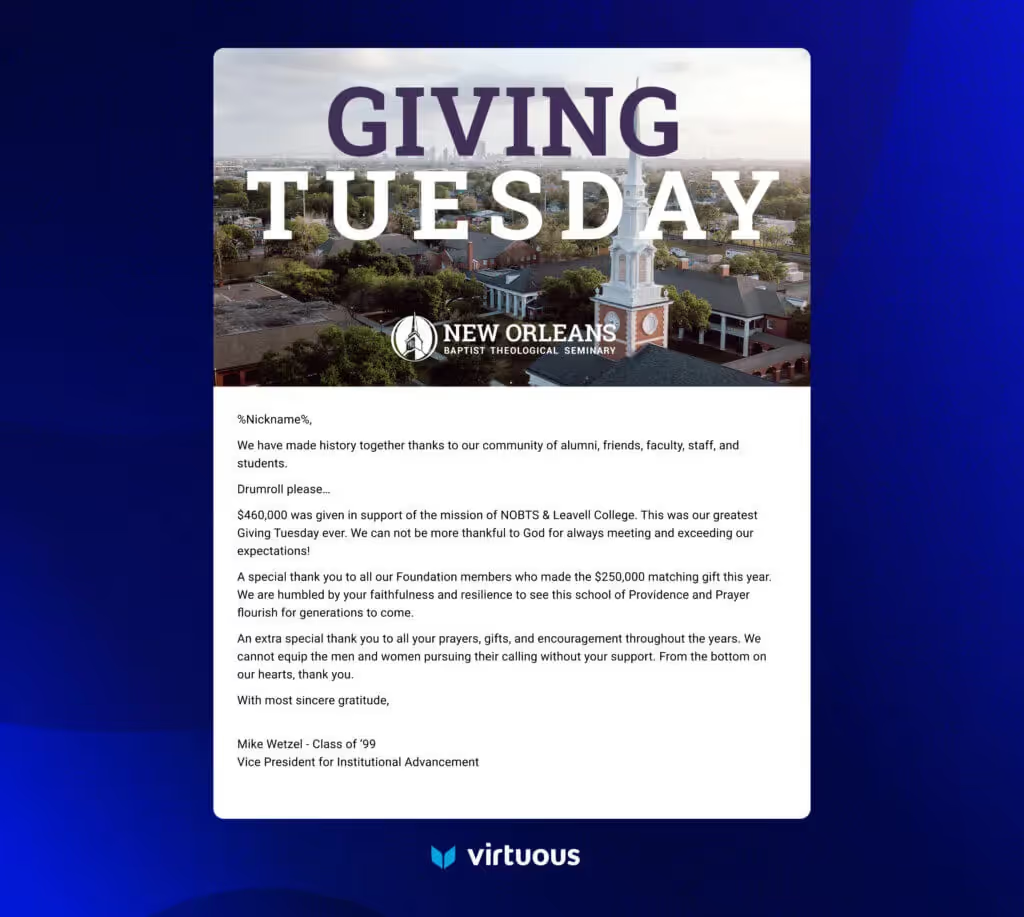
After your thank you email, the next email you send should probably have something to do with how your Giving Tuesday went, including key numbers such as how many funds were raised, some key shoutouts, and of course, a couple of words of gratitude. These are just the basics and your institution or organization’s own email can be as minimal or as detailed as you need it to be.
While inspiration matters, execution drives results. Here are tested ways to strengthen your Giving Tuesday emails:
1. Segment your audience.
Avoid sending the same message to everyone. Segment by alumni, parents, students, or past donors. Alumni may respond better to nostalgic stories, while parents might engage more with student success narratives.
2. Personalize your message.
Use merge tags to include names, past donation amounts, or causes supported. Referencing a donor’s previous impact (“Your gift last year helped fund...”) can increase click-through rates and repeat giving.
3. Make your CTA unmistakable.
Your call-to-action button should be clear, visible, and direct: “Give Now”, “Support Students Today”, or “Double Your Impact”. Keep the design mobile-friendly, as most users read these emails on their phones.
4. Mobile-first design.
Design emails primarily for smartphones since most recipients check messages on mobile devices. A clean, responsive layout ensures readability and higher engagement.
5. Short, urgent subject lines.
Keep subject lines short and use action-oriented language, e.g., “Match alert: Give by noon to double your impact!” This grabs attention and encourages quick action.
6. Clear impact statements.
Show donors exactly what their contributions accomplish. Concrete examples, like “$25 provides one week of meals for a student”,make giving tangible and motivating.
Running a Giving Tuesday campaign shouldn't feel like juggling ten different tools at once. That's where Almabase comes in. It brings your communication, donations, and reporting together in one streamlined platform, so your advancement team can focus on what matters most: connecting with donors.
You can segment your alumni by class year, giving history, or engagement level, then craft messages that actually speak to them. And because Almabase syncs seamlessly with systems like Blackbaud RE NXT, every gift is tracked automatically: no manual entry, no spreadsheet chaos.
At the end of the day, the best Giving Tuesday campaigns feel genuine. They're clear about their goals, relevant to their audience, and authentic in their ask.
Before launch day, test your subject lines, preview your emails on mobile, and schedule follow-ups for the week after. With thoughtful planning and the right tools, your Giving Tuesday campaign can do more than raise funds and strengthen your school’s community for years to come.
Subscribe
See how modern advancement teams bring alumni engagement and fundraising together.
Plan faster. Execute better
Explore free templates designed for alumni and fundraising teams.
.png)

.avif)
Anwesha Kiran
What started in 2012 as a small social media campaign has grown into a global giving phenomenon that now inspires millions across 90+ countries to support the causes they love, all in just 24 hours. This brings us to the point of this blog. The fundraising platform you choose to build your Giving Tuesday events and fundraisers on can make or break your annual experience drastically.
We’ve curated a handful of platforms designed for education-focused teams to do more with less, so you can spend time building relationships, not battling technology.
Here’s a closer look at some platforms that can help your institution raise more and engage better for this year’s Giving Tuesday and beyond. Let’s get started:

Almabase often comes up first when education teams want a platform that balances rich tools with actual ease. It is purpose-built for advancement, blending fundraising, alumni engagement, and events into one modular platform. It shines when teams want depth, data, and scalability with the support of a dedicated team. Here’s how it stacks up-
Advancement teams that want a long-term, comprehensive platform to integrate fundraising with a strategic alumni engagement and community-building effort.
Almabase offers pricing based on your needs and the size of your alumni and donor base that you want to engage with. You can book a personalized demo and get a quote here.

Givebutter is known for its modern, donor-friendly design and transparent pricing. It combines crowdfunding, peer-to-peer fundraising, and event ticketing in one platform. Here’s how it stacks up –
Schools, nonprofits, and small teams wanting an easy-to-launch Giving Tuesday campaign platform with built-in social tools and no upfront software cost.
It operates on a 100% transparent tip-or-fee model, meaning it's free to use with a voluntary tipping system. Organizations can choose to cover the platform fee themselves or let donors cover it with an optional tip.

Donorbox is a platform known for its focus on providing a secure, reliable, and conversion-optimized donation experience through its simple, yet powerful, features. It is designed for nonprofits of all sizes, including schools and universities with diverse fundraising needs.
Mid-sized to large schools and universities that need a reliable, cost-effective, and conversion-optimized tool to run a Giving Tuesday campaign, especially for direct online appeals and recurring giving.
Donorbox offers a free standard plan, a pro plan at $150/month, and a premium plan with custom pricing.

Givecampus is a fundraising platform for educational institutions, empowering fundraisers at every stage of the fundraising lifecycle. Its core value proposition is its deep understanding of and specialization in the unique needs of schools and universities, from online giving days to volunteer management.
Key Features
Large, established colleges and universities with a strategic focus on alumni engagement and a dedicated advancement team that can leverage its enterprise-grade features for a high-impact Giving Tuesday.
GIveCampus has three platform plans: Essentials, Professional and Enterprise. On top of this, your price will vary depending on the modules you need.

Bonterra, formerly a suite of tools including EveryAction, is a comprehensive, enterprise-grade solution that has garnered a reputation as a robust fundraising platform for larger nonprofit organizations with complex needs. It aims to provide a single, unified solution for fundraising and donor engagement.
Large universities and institutions that need a long-term, comprehensive CRM and fundraising solution, and for whom Giving Tuesday is a part of a larger, integrated annual giving strategy.
Tailored to the organization's unique needs, with pricing based on size, complexity, and features.

Onecause is a fundraising platform with a particular focus on events, auctions and peer-to-peer campaigns. It is designed to help organizations streamline the guest experience and run successful events.
Educational institutions with a Giving Tuesday strategy built around a live or virtual event, auction, or other high-energy initiative.
Onecause has different pricing plans based on which features you need to use between fundraising and text-to-give, auction and events, and peer-to-peer fundraising.
Maybe you just need a simple crowdfunding platform this year to complement an event you are already planning with another tool, or you just want to use an easy-to-set-up fundraising page with names that have become synonymous with raising money for causes. If that’s what you’re looking for, here are some of the popular ones to choose from:
…and more depending on your institution’s geographic location.
Not every platform is built with education teams in mind, and choosing wrong can cost you both time and momentum. With so many options, the right fit depends on what your team actually needs, not just flashy features. So, while deciding, keep these factors in mind:
Want a deeper breakdown of these essentials? Take a look at our guide on giving day platform features every institution should consider.
The right Giving Tuesday platform should lighten your team’s load while helping you hit ambitious goals. The platforms we’ve covered are built with education teams in mind; it’s just a matter of matching your goals, team size, and budget to the right solution. Once done, you’ll set yourself up for more than just a one-day win.

6 Great Giving Tuesday Platforms for Schools & Universities (2026)
Lorem ipsum dolor sit amet, consectetur adipiscing elit. Suspendisse varius enim in eros elementum tristique. Duis cursus, mi quis viverra ornare, eros dolor interdum nulla, ut commodo diam libero vitae erat. Aenean faucibus nibh et justo cursus id rutrum lorem imperdiet. Nunc ut sem vitae risus tristique posuere.

Sharada Koti
August 26, 2025
12 minutes
Giving Days are one of the most important fundraising events today for institutions and nonprofits alike. According to EAB, 12.7% of private institution alumni and 19.8% of public institution alumni make their first gift on a giving day. In turn, powerful Giving Day platforms have cropped up to help teams get the most out of these events.
With so many excellent giving platforms available today, we’d like to zoom out and let you know which features you should consider essential and how you can make the most of your eventual choice. Let’s get started:
A good giving platform should ideally be:
Test your dashboards, giving pages, forms, and all other touchpoints to make sure all the people involved in your Giving Day have a smooth and memorable experience across all devices.
For social media, your team should be looking for features such as:
💡 Consider which social media your donors and supporters are most active in. You’ll want a platform that integrates to the same level of depth on those specific platforms.
Giving Days, due to the nature of being a focused fundraiser within a short window, will naturally need a platform that can handle many transactions at the same time. You will have bursts of transactions, such as when the campaign launches and after a successful promotion. A good Giving Day platform also needs to incorporate SSL/PCI-compliant payment processing as well as any other compliance requirements depending on the national or state laws applicable to your fundraiser.
You need to be able to engage donors and potential donors before, during, and after your Giving Day. Automated and personalized engagement through email, text, and social media may be crucial, especially if communicating with a larger pool of donors.
💡 Depending on your overall engagement strategy, you may want a fundraising platform that has a few donor engagement features on top or a dedicated engagement platform that works in tandem with your fundraising tool.
With a relatively short burst of high activity, you should be looking for platforms that support:
💡 Keep the above features as well as your needs in mind as different might CRMs interact with different tools in varying capacities.
Engaging and enabling donations from mobile device users are no longer something novel. Today, you’ll want a giving platform that not only engages mobile users but also optimizes their experience so that they don’t end up with an inferior experience.
Some platforms provide an app-based approach, while others go for mobile-optimized browser experiences.
💡Surveys and donor device metrics should help you get a sense of how much of a priority mobile features are for you as well as which method your donors prefer.
The cornerstone of any modern-day Giving Day campaign is a well-designed, customizable fundraising page that captures your organization's unique brand and mission. Customization is especially important for peer-to-peer fundraisers, where you’ll want to find the right mix between flexible templates and recognizable branding.
If you are regularly hosting Giving Day fundraisers, chances are that you have a long-term fundraising plan. This is where you’ll want a giving platform that is viable for both long-term and short-term fundraising efforts. Depending on your needs, look for platforms that include:
to make sure that your Giving Days produce an effective ripple effect.
It’s easy to get lost in all the fancy and innovative features that fundraising platforms offer today. Instead of trying to use a feature simply for the sake of trying something new, keep your mission and the people involved at the heart of your Giving Day campaign by enabling your storytelling and vision through the features available.
Whether it’s connected to an existing CRM or comes with its own, you will most likely get a good amount of data about your supporters, donors, and prospects throughout your campaign. Make detailed segments to optimize your outreach and communication efforts and enrich these segments after your campaign to make your engagement better with each fundraiser.
Always test your forms, pages, and communication efforts on mobile devices to check how they would feel for a donor trying to donate. Your CTAs might be a couple of scrolls away and on the side of your giving page when it’s front and center on other devices.
Your recent first-time donor might just be your next superstar supporter. Make sure your donors feel good about their contribution by keeping them informed on goals reached throughout the day. Keep them looped in on how the funds are being used and inform them about future initiatives coming up.
Giving Days are so integral to your long-term fundraising plan that you might feel like the choice of platform might make or break your strategy entirely. However, a lot of work goes into making these platforms work optimally for a specific institution or organization.
If you’re looking for a platform that syncs effortlessly with CRMs with a team committed to ensuring your giving day success, get in touch with us, and we’d be glad to show you how we can help. 🫡
Giving Day Platforms: Essential Software Features
Lorem ipsum dolor sit amet, consectetur adipiscing elit. Suspendisse varius enim in eros elementum tristique. Duis cursus, mi quis viverra ornare, eros dolor interdum nulla, ut commodo diam libero vitae erat. Aenean faucibus nibh et justo cursus id rutrum lorem imperdiet. Nunc ut sem vitae risus tristique posuere.
The final months of the year are a very important fundraising season, accounting for nearly 30% of annual gifts. For institutions and nonprofits, this is a vital period to reach or stretch fundraising goals, build relationships, and kickstart momentum you can take forward into the next year.
A great year-end fundraising campaign is usually the result of thoughtful planning, great storytelling and successful execution. In this blog, we’ll help you pick out the best campaign strategies for all your year-end giving campaigns. Let’s get started.
You know December is the gift-giving season, but it’s also a giving season, plain and simple. In fact, nonprofits receive about 30% of their annual donations in December, with 10% of the total coming in just the last three days of the year. This volume is driven by holiday generosity, tax deadlines, and that final push before the calendar turns.
For schools, colleges, and universities, this time can be especially powerful. Alumni often feel nostalgic and generous during the holidays. When your messages pair real impact stories with easy donation paths, you’re giving donors a chance to be part of something meaningful.
For many institutions and nonprofits, Giving Tuesday has become the unofficial kickoff for year-end fundraising. Institutions that treat it as a launchpad rather than a one-off event can potentially build and sustain more momentum throughout December.
Pace University’s 2024 Giving Tuesday campaign brought in 2,674 gifts and $768,822, far exceeding its goals. The university framed Giving Tuesday as the beginning of a season-long campaign, using the energy of that day to drive continued appeals through December.
How to set it up:
Giving Tuesday already benefits from broad awareness and media attention. Donors expect to see appeals that day, so it’s easier to capture their attention. But the real payoff comes when institutions carry that enthusiasm forward, turning a single day into a multi-week narrative of giving.
💡Use visuals like countdown timers or progress bars to keep the sense of urgency alive beyond Giving Tuesday.
Many donors don’t realize their employers will match their contributions, often doubling or even tripling the donation amount. By highlighting this opportunity, you can inspire donors to give more confidently, knowing their gift will go further.
For example, Blair Academy integrated a matching gift lookup tool and automated follow-up emails into their year-end outreach. This simple addition drove a 32% lift in December matching gifts, with an impressive 68% open rate on emails.
Why it works: This makes it easy for donors to discover their eligibility, and reminding them at the right time can significantly boost year-end revenue.
💡Always remind donors that they can often double their gift in just a few minutes by submitting a matching request through their employer. It’s one of the easiest ways for them to increase their impact without spending extra.
Peer-to-peer fundraising allows supporters to share your cause with their networks, bringing in donations you might not reach otherwise. Friends and family are more likely to give when the ask comes from someone they trust.
A standout example is Turnstone’s “It Can Be Done” year-end campaign, which raised over $220,000: 360% of their initial goal. Beyond the impressive total, the campaign brought in 34 new donors organically through peer-to-peer channels. This fueled immediate results and built a base of long-term supporters.
How to set it up:
Why it works: activating your community as ambassadors during the year-end season can multiply your impact far beyond what your team could accomplish alone.
💡Celebrate and spotlight your peer-to-peer fundraisers publicly, whether through social media shoutouts, leaderboards, or small rewards. Recognition keeps them motivated and inspires others.
As with any other time of the year, social media plays a pivotal role during the year-end fundraising window too, but success depends on thoughtful, multi-channel engagement rather than isolated posts.
Donors often need 3–5 touchpoints across email, social media, and direct mail to be motivated to give. 55% of people who engage with nonprofits on social media take action (such as donating), indicating strong ROI when social posts are part of a coordinated strategy.
How to set it up:
Why it works: In year-end campaigns, social media works best when it’s part of a well-timed, multi-channel orchestration.
💡Schedule your posts in advance and align them with your email and event calendar. This ensures consistency across channels and frees you up to focus on real-time engagement with donors during the busiest giving days.
At year-end, donors may want to see tangible proof of fundraisers earlier in the year or from last year’s year-end campaign to prove that their support actually changes lives. Storytelling is one of the most powerful ways to make that impact real. When donors hear directly from students and families, they connect emotionally and see exactly how their generosity creates opportunities.
A recent example comes from the Aim Higher Foundation, which made storytelling the centerpiece of its fundraising strategy. Through emotionally compelling videos featuring authentic family stories, they drove a 242% increase in fundraising, raising $13 million and expanding scholarships from 400 to 2,550 annually.
How to set it up:
Why it works: authentic storytelling transforms fundraising from transactional to relational, showing donors that they’re changing lives.
💡Repurpose stories across channels—turn a long-form video into short clips for social media, pull quotes for emails, and highlight key outcomes in infographics. This maximizes impact while keeping your storytelling fresh and consistent.
Many one-time supporters are inspired during the holidays, making it the perfect moment to convert them into long-term givers. By branding a recurring giving program, you create a sense of belonging to a special community.
A great example comes from Noble and Greenough School, whose branded program, the “Dawg Pack” successfully converted 26 of 121 graduating seniors into recurring donors. Framing recurring giving as membership in a group made participation aspirational, especially for young alumni looking to stay connected.
How to set it up:
Why it works: turning seasonal generosity into sustained support ensures predictable revenue and builds a loyal donor community that lasts well beyond December.
💡Test names and perks with a small group before launching your recurring program.
Year-end giving is the perfect moment to spotlight corporate philanthropy and employer-matching opportunities. These programs can double or even triple donor impact, but they’re often overlooked. By highlighting matches in December campaigns, you can significantly boost giving while helping donors feel their support goes further.
For instance, in 2024 Benevity reported $140 million donated through corporate platforms on GivingTuesday alone. Yet, research shows that many donors are still unaware their employers offer matching gifts.
How to set it up:
💡Make matching gifts impossible to miss: add an employer lookup tool and show donors how their gift can go twice (or three times!) as far.
Generic year-end emails often blur together in crowded inboxes. A personalized approach, however, makes donors feel recognized, and that recognition drives action. Campaigns using tailored messaging and donor segmentation see up to a 61% jump in average gift size and a 10% increase in conversion rates.
How to set it up:
Start preparing your assets, campaign theme, and key messaging by October or November. A strong plan ensures you’re not rushing in December, when donor inboxes and social feeds are crowded and many donors may be on vacation.If planning involves advancement, marketing, and alumni teams, an AI meeting note taker can help document campaign decisions, ownership, and follow-up tasks before the year-end rush begins.
To give your communication that personalized touch, create specific appeals for first-time donors, monthly givers, and lapsed supporters. Segmented campaigns can boost conversion rates and significantly increase average gifts.
Combine email, social media, direct mail, text messaging, and even phone calls to reach donors where they are. A consistent message across channels keeps your campaign top of mind.
Use fundraising thermometers, live updates, or social posts to track how close you are to your goal. Celebrating milestones encourages more donors to join in and push you over the finish line.
A quick, heartfelt thank-you message whether by email, phone, or video strengthens relationships and sets the stage for future giving.
Year-end giving is a high-stakes but high-reward period. As you prepare for year-end giving, remember that small changes in your strategy can make a big difference. Use these tips to make donors feel connected and valued, and you’ll set your campaign up for success.
Capitalize on the charitable nature of the end of the year by putting your cause, supporters, and progress at the heart of your campaign. Highlight the value of maximizing tax benefits for donors and build anticipation for how funds will be used next year.
Almabase simplifies your giving day campaigns through simple yet flexible tools for everything from giving pages and event management to communications and attendee engagement.
Donors usually act give towards the end of the year due to a combination of holiday generosity, a desire for tax deductions, and the emotional impact of year-end appeals.

8 Creative Ideas For Year-End Giving Campaigns
Lorem ipsum dolor sit amet, consectetur adipiscing elit. Suspendisse varius enim in eros elementum tristique. Duis cursus, mi quis viverra ornare, eros dolor interdum nulla, ut commodo diam libero vitae erat. Aenean faucibus nibh et justo cursus id rutrum lorem imperdiet. Nunc ut sem vitae risus tristique posuere.
Anwesha Kiran
September 4, 2025
12 minutes
%201.svg)
%201.svg)
%204.svg)




.svg)