Stop losing hours to manual event work! Discover the Five Hidden Costs of manual gala operations, including HIPAA compliance risks and staff burnout. See how Almabase saves time for hospital fundraising teams.

Wendy Johnson
Published:
November 6, 2025

Discover AI Summary
• To maximize your fundraising event ROI, start by identifying repetitive manual tasks in your workflow and explore how automation can free up your team: This shifts focus from endless data entry to actual donor engagement and strategic planning.
• Manual event processes aren't just tedious; they lead to lost revenue from errors, missed donor follow-ups, and a constant struggle to keep CRM data clean: This directly impacts your fundraising campaigns and donor participation, making accurate reporting nearly impossible.
• The hidden costs of manual work also include significant staff burnout and turnover, as teams spend up to 50% of their time on data entry: Reducing this "busy work" can dramatically improve job satisfaction and help retain your talented advancement professionals.
• Juggling multiple systems for events creates a mess in your CRM, making accurate reporting and donor segmentation a nightmare: Seamless integration between your event platform and CRM (like Raiser's Edge NXT) is key for clean data and better insights.
• For healthcare organizations, relying on non-compliant third-party tools or manual data handling for events poses serious HIPAA risks: A secure, compliant event platform is crucial for protecting sensitive donor information and maintaining trust.
• Imagine cutting down the hours spent on post-event reconciliation from days to minutes: Streamlining your event operations can save hundreds of staff hours annually, allowing your team to focus on high-impact initiatives and strengthen donor relationships.
Your fundraising team just spent 40 hours planning a successful gala that raised $250,000. Now they'll spend another 40 hours manually entering guest lists into spreadsheets, reconciling payments across multiple systems, and sending individual thank-you emails.
This is the hidden cost of manual event workflows. While manual processes might seem like a cost-saving measure, they drain staff time, increase error rates, create HIPAA compliance risks, and pull your team away from what matters most: building donor relationships.
Hospital fundraising teams lose nearly five hours every day to these repetitive tasks. Almabase's fundraising event management software eliminates manual data entry, keeps Raiser's Edge NXT data in sync, and can save hundreds of staff hours each year.
Hospital fundraising teams rely on galas and events to fund critical programs, but manual processes drain staff time, increase the risk of errors, and make it harder to measure results accurately.
Here are just five ways your hospital foundation loses opportunities, revenue, and time by relying on outdated manual processes to manage your galas, golf tournaments and other fundraising events.
Manual workflows force staff to re-enter information across multiple systems — CRMs, payment systems, spreadsheets, and more. One analysis found that nonprofit staff spend up to 50 percent of their time on manual data entry. This kind of work is boring, wasteful and can lead to burnout.
Almabase’s TrueSync™ integration with Blackbaud Raiser’s Edge NXT and Blackbaud CRM reduces manual handling of sensitive records while maintaining clean, consistent data across systems.
A gala can generate thousands of data points, from attendee names and guest additions to dietary preferences and sponsorship tiers. That leaves too much room for error, since there are errors in about one percent of manual data entry keystrokes.
The result is delayed or missed donations and inconsistent communications—a major turnoff for donors. These mistakes often ripple downstream, leading to inaccurate reports and missed follow-ups that weaken donor trust.
Every hour spent on repetitive administrative work, like re-entering event registrations or sending one-off acknowledgments, detracts from opportunities to build meaningful donor relationships, plan strategic campaigns, and focus on high-impact activities that drive ROI for your organization.
Nearly 75% of nonprofits report persistent job vacancies tied to heavy workloads and manual processes. But one study found that turnover drops significantly when organizations shift away from the soul-sucking “busy work” of manual processes.
Many third-party vendors aren’t HIPAA-compliant or won’t sign BAAs—making them risky for fundraising for healthcare. Almabase’s HIPAA-compliant event registration platform is designed specifically for healthcare foundations, maintaining data security and compliance while integrating seamlessly with Raiser’s Edge NXT.
Trying to manage event registration, ticketing, and communications manually creates major inefficiencies.
Almabase’s event management software gives hospital foundations a single, HIPAA-compliant event registration software solution to handle every step from setup to stewardship.
For teams used to navigating disconnected tools, the results are immediate: faster event setup, fewer errors, and greater visibility into event ROI. Dashboards track participation, sponsorships, and giving in real time, helping staff quickly identify top prospects and follow up while engagement is fresh.
Key Benefits:
Almabase’s ticketing software for healthcare simplifies operations and keeps all event data connected to Raiser’s Edge, allowing fundraisers to spend more time on what matters—strengthening relationships and driving impact in healthcare fundraising.
Hospital foundations juggling multiple systems from spreadsheets to payment platforms and CRMs often leave staff buried in administrative work instead of engaging donors. Almabase eliminates that burden by creating a single, accurate source of truth so teams no longer need to chase down lists or reconcile records after every gala.
By automating event ticketing and maintaining HIPAA secure event registration, Almabase helps foundations run compliant, efficient, and mission-focused events that fuel sustainable fundraising for hospitals.
See how Almabase's fundraising event management software helps hospital foundations save hours, ensure compliance, and raise more funds.

Almabase replaces time-consuming manual workflows with automation that integrates every step of your event management process. Hospital foundations can set up event registration, ticketing, sponsorships, and communications in minutes—not weeks—through one platform that syncs directly with Raiser’s Edge NXT.
That means no more redundant data entry, disconnected spreadsheets, or manual imports. Event data, donor engagement, and payments all flow seamlessly in real time, ensuring accuracy and saving hours of administrative work.
Yes. Almabase is built with healthcare fundraising compliance in mind, offering SOC 2 Type II certification and Business Associate Agreement (BAA) support to meet HIPAA standards. The platform separates patient health information from donor engagement data, so hospital foundations can manage events, donor communications, and grateful patient programs securely and confidently. Compliance, data protection, and privacy are embedded into every workflow.
Through TrueSync, Almabase’s bi-directional Raiser’s Edge NXT integration ensures that all guest registrations, donations, and communications automatically sync with your CRM. This eliminates data duplication, reduces reporting errors, and gives fundraising teams real-time insights into donor engagement and event ROI. It also allows fundraisers to identify follow-up opportunities faster—translating event participation into sustained donor relationships.
Table of Contents
Subscribe
See how modern advancement teams bring alumni engagement and fundraising together.
The best peer-to-peer fundraising platforms help educational institutions and nonprofits boost donor engagement through personalized giving pages, social fundraising, and CRM integration. These tools streamline campaigns with built-in analytics, gamification, and mobile optimization. While some options are completely free, others cater to large-scale fundraisers that require advanced data synchronization and scalability.
The right tools can make all the difference in modern fundraising. In this blog, we’ll highlight some of the best options on the market and explore what you can expect out of them.
.avif)
Peer-to-peer fundraising, or P2P fundraising, is a type of crowdfunding in which your organization encourages its supporters to fundraise for your cause. Typically, these supporters will create an individual fundraising page and share it with their friends, family members, and social media followers to raise money.
A peer-to-peer fundraising site is the software that allows your supporters to create a donation page, share it with their personal network, and collect donations to support your mission.
Typically, most fundraising tools today include features such as:
When shopping for a peer-to-peer fundraising tool, you’ll need to weigh the cost of the tool against the value it provides. However, it can be difficult to know the true cost of using the platform, depending on the software’s pricing structure. Get familiar with these common structures:
To compare tools with different pricing structures, calculate what each platform will cost you, on average, for a certain period of time.
Whether you’re a K-12 school ,higher ed institution, or a nonprofit, in no particular order, here are some peer-to-peer fundraising platforms that you should consider:
(Prices are based on publicly available data at the time of writing and are subject to change over time)
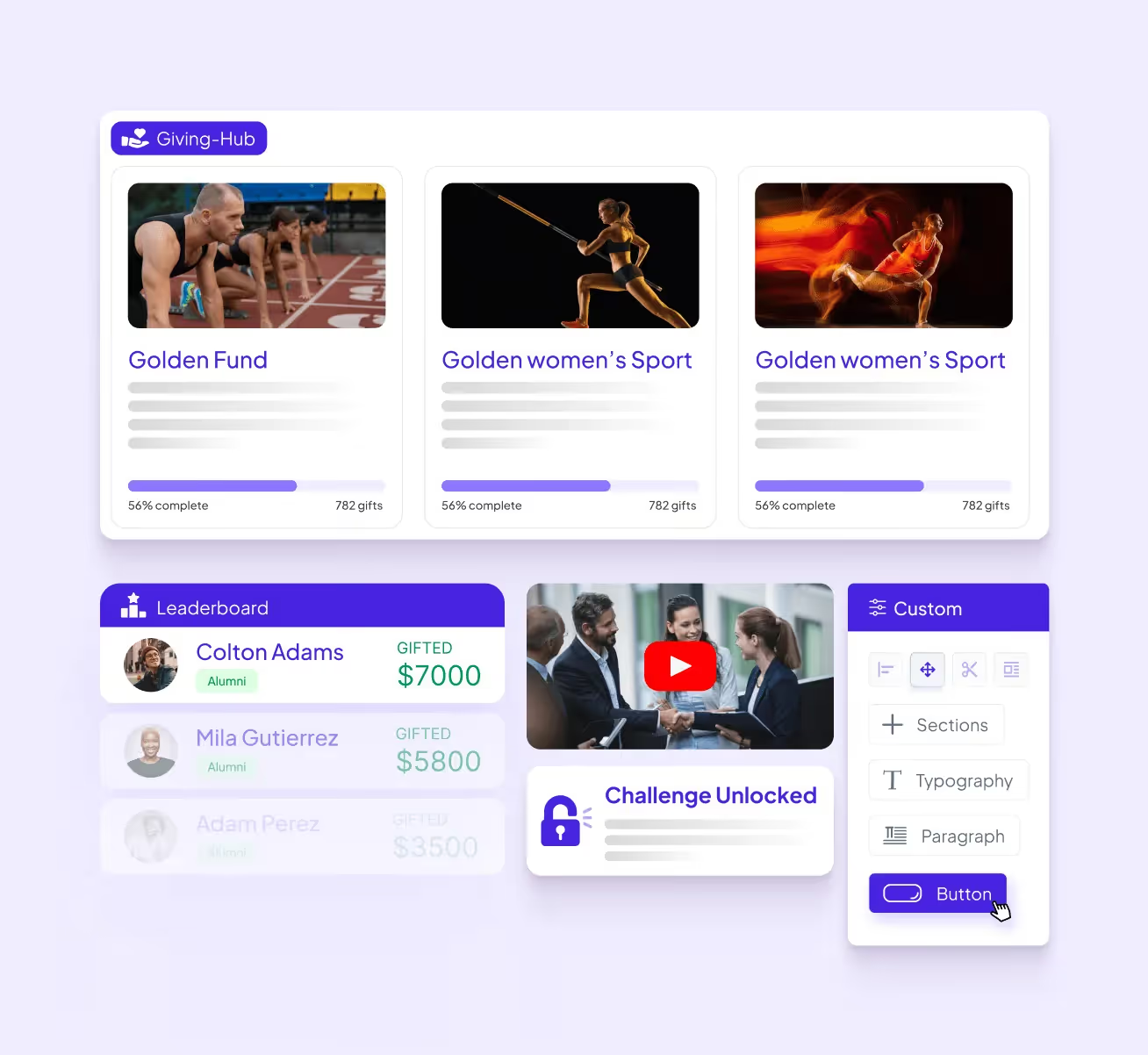
Almabase runs on a philosophy of integrating into your CRM and existing workflows, which remains true for their peer-to-peer fundraising features. Almabase boasts native sync with most higher-ed CRMs due to their TrueSync integration, combined with superior customer support and a willingness to integrate your ideas into their long-term vision. Almabase offers customizable pages and leaderboards powered with inbuilt text and email communication features built to drive donor engagement through organic and personalized communication.
Almabase’s pricing depends entirely on your needs. Learn how Almabase empowers your p2p strategy, Schedule a personalized demo and get a quote.
GoFundMe Pro (formerly Classy) is a peer-to-peer fundraising platform optimized for maximum nonprofit impact. It provides ready-to-use templates for scalable, high-impact campaigns and equips supporters with intuitive tools to advocate for the cause.
GoFundMe Pro offers features like campaign templating, embedded videos and livestreams, progress thermometers, team structures, and mobile-optimized pages. The platform also supports recurring gift options and flexible payment processing, and has a mobile- and user-friendly interface.
GoFundMe Pro offers a standard “Essentials” plan and a “Partner” custom plan.
Bloomerang Fundraising (formerly Qgiv) is a fundraising platform offering tools for donation management, event planning, and donor engagement. It provides features like customizable donation forms, peer-to-peer fundraising, and text-to-give options
Bloomerang Fundraising starts at $40 per month if purchased as part of a bundle with Bloomerang CRM.
Zeffy is a 100% free fundraising platform for nonprofits, offering peer-to-peer fundraising, crowdfunding, donation pages, and recurring giving options. This tool generates revenue through optional tips that donors can provide in addition to their donation. It allows fundraisers to join as individuals or teams and create their own fundraising pages. The platform is also known for being simple, intuitive, and customizable
Zeffy has no fees and instead runs on optional tips from donors.
Donorbox is a fundraising platform that allows nonprofits to launch peer-to-peer fundraisers in a few steps. It provides customizable donation forms and supports recurring donations via various payment methods.
Donorbox also offers features for managing donors, sending personalized emails, and recording donor communications. The platform provides resources like onboarding emails, courses, and templates to support nonprofits in their fundraising efforts.
For peer-to-peer fundraisers, Donorbox charges a flat 1.75% platform fee for a main campaign and 2.95% for a supporter’s campaign.
Bonfire specializes in fundraising through custom merchandise sales. Nonprofits, schools, and even individuals can design their own custom merch and sell it via Bonfire’s free online stores.
Bonfire supports peer-to-peer campaigns (which it refers to as “giving campaigns”) by allowing your supporters to create and share t-shirt fundraisers on behalf of your organization—then, all of the money they raise is sent directly to your nonprofit.
Bonfire is completely free to use, and your nonprofit keeps 100% of the profits. There’s an 8% processing fee on additional donations, but if you verify your nonprofit status with Bonfire, that fee is reduced to 3.5%
Givebutter provides tools to launch peer-to-peer campaigns, complete with donation forms, fundraising pages, event management, a built-in CRM, and marketing tools to analyze your progress and streamline workflows. Their fundraiser teams offer a great choice for organizations looking to gamify their peer-to-peer fundraisers as well.
Givebutter offers a popular “free forever” plan, as well as a paid option starting at $29/month. If your organization opts out of having donors cover fees, Givebutter charges 1% for donation forms, 3% for pages, and 5% for events and auctions, as well as a payment processing charge of 2.9% + ¢0.30 per transaction.
GiveCampus is a fundraising platform for educational institutions, providing solutions for online giving, giving days, crowdfunding, P2P fundraising, and more. It blends peer-to-peer outreach, social media, and gamification to engage more donors and increase fundraising. The platform allows schools to execute giving days, year-end appeals, and crowdfunding campaigns.
GiveCampus also offers features like matches and challenges to inspire donors and make them feel like their contributions are making a difference
GiveCampus has three platform plans: Essentials, Professional, and Enterprise. Additionally, pricing will vary depending on the modules you require.
As a Blackbaud product, JustGiving is a great choice if you are used to the Blackbaud CRM environment. Compared to other platforms on this list, JustGiving is relatively simple both in its presentation and its scope. This makes it an easy choice for teams just starting out or looking for something simple for a one-off event. However, there may be better choices for teams that want a more comprehensive solution that spans multiple fundraisers and year-long campaigns.
JustGiving charges platform fees and a standard payment processing fee based on your geographical location and payment platform. Crowdfunding pages are free to set up. While UK charities do not need to pay a platform fee, they do have a subscription model.
Gravyty leverages predictive AI technology to provide frontline fundraisers with personalized insights into donor behavior. This innovative approach helps organizations enhance their outreach efforts by automating email drafts tailored to individual donors while integrating seamlessly with existing CRM systems. Gravyty's focus on personalization empowers fundraisers to build stronger relationships with donors.
While some information is available online, interested organizations will need to contact Gravyty for a custom quote.
Bonterra’s peer-to-peer fundraising product (formerly DonorDrive) offers smart and customizable P2P fundraising solutions that empower supporters to create personalized experiences at scale. Its features include an intuitive event builder, personalized coaching for fundraisers, gamification elements like leaderboards, social media integrations, and seamless CRM integration, which enhances supporter engagement significantly
Bonterra offers three tiers—Essentials, Pro, and Enterprise—with pricing based on customer needs.
With so many unique platforms out there, choosing the right one can be a little overwhelming. However, there are several key factors to consider when selecting the right peer-to-peer fundraising software for your team:
Each platform will offer peer-to-peer fundraising capabilities, but you should dig a little deeper to find the right fit for your needs. For example, if you are a small team looking to organize a quick fundraiser, you may end up paying for features you don’t need. On the other hand, if you are looking for a long-term solution, a platform without built-in analytics would be a dealbreaker. Look for features that boost, rather than hamper, your fundraising efforts, and aim for a high return on investment.
Many teams want a tool that scales up alongside them as they engage more donors and alumni, but there is often a point where their needs outgrow the platform. To avoid this, consider both your short-term and long-term goals to determine if the platform’s upgraded pricing tiers will meet your team’s requirements later on. This way, you can simply upgrade to a plan with more advanced features or storage rather than migrating to a completely new platform.
Your staff, fundraisers, and donors should all have positive, smooth experiences when engaging with your fundraising pages. For example, if you want to sell custom merch, both the designing process and purchasing process should be easy and intuitive for supporters. From payment processing to reporting workflows to page load times, there are many aspects you should ask about or test out during a free trial or demo to see if a platform is the right one for you.
Some solutions come with a relatively low learning curve but offer limited functionality. Some, on the other hand, can be the driving force behind all your fundraising strategies but may require in-depth technical and/or coding experience. Try to find a balance between the training time required and potential functionality to ensure high adoption.
Pricing is a key consideration for any tool, but it’s also important to consider the nuances that may arise down the line. Always consider the rates associated with upfront costs, renewals, transaction fees, upgraded plans, and other relevant expenses. Additionally, switching to a new platform inevitably leads to more expenses through database transfers and staff upskilling. Consult with your database managers and other staff members before making a decision.
In the event that something goes wrong, you need to be able to reach the platform provider to resolve the issue. Keep factors like response times on live chat or email support channels in mind. For the long term, you also want to support platforms that onboard customer feedback and have detailed roadmaps for upcoming features.
Both your staff and donors need to be assured that sensitive data like payment information will be kept safe and secure. Always look out for a platform’s data encryption measures, as well as its compliance and authentication processes, to see if it inspires confidence from your donors.
Third-party review sites like G2 and Capterra offer insight into what customers think about specific tools. Keep in mind that these reviews are subjective, but they can be a great indication of how a platform is perceived overall, highlighting positive and negative software trends.
There is no single “best” fundraising website, but you can find the one that is best for your organization. Choose a platform that aligns with your goals, budget, audience, and campaign type.
Yes, a reputable fundraising platform should be able to integrate with your CRM to ensure donor data flows automatically into your central database. This eliminates data silos and the need for manual data transfers.
GoFundMe is a popular tool for personal crowdfunding, but it may lack the tools you need to run a full-fledged campaign. The platforms referenced in this guide offer the specialized tools mission-driven organizations need for branding, tracking donor data, and communications.
Crowdfunding is a centralized process led by your organization using a single donation page. On the other hand, peer-to-peer campaigns decentralize fundraising, empowering many supporters to help you raise money. Peer-to-peer campaigns empower supporters to help you raise money, meaning there are many people fundraising for your cause. Make sure your platform has the tools to support a peer-to-peer campaign.
Look for platforms that include gamification features, such as fundraising thermometers, badges, and leaderboards. These tools spark friendly competition among fundraisers and help them visualize their progress to maintain momentum and engagement.
We hope we’ve given you the tools you need to choose or at least consider some of the best peer-to-peer fundraising solutions out there, as well as the questions you need to ask yourself before adopting one. Whether you’re a higher ed institution optimizing your peer-to-peer fundraisers or a K-12 school just looking to get started, we hope you pick out the right solution and can make a great positive change.
If you’ve had successful peer-to-peer fundraisers before, learn how you can build a peer-to-peer fundraising community to help you keep providing meaningful experiences
.avif)
11 great peer-to-peer fundraising platforms for Institutions and Nonprofits 2026
Explore 11 of the best peer-to-peer fundraising sites for schools, higher ed, and nonprofits. Discover how to select the right one for your fundraising needs.
Lorem ipsum dolor sit amet, consectetur adipiscing elit. Suspendisse varius enim in eros elementum tristique. Duis cursus, mi quis viverra ornare, eros dolor interdum nulla, ut commodo diam libero vitae erat. Aenean faucibus nibh et justo cursus id rutrum lorem imperdiet. Nunc ut sem vitae risus tristique posuere.
Giving Days are one of the most important fundraising events today for institutions and nonprofits alike. According to EAB, 12.7% of private institution alumni and 19.8% of public institution alumni make their first gift on a giving day. In turn, powerful Giving Day platforms have cropped up to help teams get the most out of these events.
With so many excellent giving platforms available today, we’d like to zoom out and let you know which features you should consider essential and how you can make the most of your eventual choice. Let’s get started:
A good giving platform should ideally be:
Test your dashboards, giving pages, forms, and all other touchpoints to make sure all the people involved in your Giving Day have a smooth and memorable experience across all devices.
For social media, your team should be looking for features such as:
💡 Consider which social media your donors and supporters are most active in. You’ll want a platform that integrates to the same level of depth on those specific platforms.
Giving Days, due to the nature of being a focused fundraiser within a short window, will naturally need a platform that can handle many transactions at the same time. You will have bursts of transactions, such as when the campaign launches and after a successful promotion. A good Giving Day platform also needs to incorporate SSL/PCI-compliant payment processing as well as any other compliance requirements depending on the national or state laws applicable to your fundraiser.
You need to be able to engage donors and potential donors before, during, and after your Giving Day. Automated and personalized engagement through email, text, and social media may be crucial, especially if communicating with a larger pool of donors.
💡 Depending on your overall engagement strategy, you may want a fundraising platform that has a few donor engagement features on top or a dedicated engagement platform that works in tandem with your fundraising tool.
With a relatively short burst of high activity, you should be looking for platforms that support:
💡 Keep the above features as well as your needs in mind as different might CRMs interact with different tools in varying capacities.
Engaging and enabling donations from mobile device users are no longer something novel. Today, you’ll want a giving platform that not only engages mobile users but also optimizes their experience so that they don’t end up with an inferior experience.
Some platforms provide an app-based approach, while others go for mobile-optimized browser experiences.
💡Surveys and donor device metrics should help you get a sense of how much of a priority mobile features are for you as well as which method your donors prefer.
The cornerstone of any modern-day Giving Day campaign is a well-designed, customizable fundraising page that captures your organization's unique brand and mission. Customization is especially important for peer-to-peer fundraisers, where you’ll want to find the right mix between flexible templates and recognizable branding.
If you are regularly hosting Giving Day fundraisers, chances are that you have a long-term fundraising plan. This is where you’ll want a giving platform that is viable for both long-term and short-term fundraising efforts. Depending on your needs, look for platforms that include:
to make sure that your Giving Days produce an effective ripple effect.
It’s easy to get lost in all the fancy and innovative features that fundraising platforms offer today. Instead of trying to use a feature simply for the sake of trying something new, keep your mission and the people involved at the heart of your Giving Day campaign by enabling your storytelling and vision through the features available.
Whether it’s connected to an existing CRM or comes with its own, you will most likely get a good amount of data about your supporters, donors, and prospects throughout your campaign. Make detailed segments to optimize your outreach and communication efforts and enrich these segments after your campaign to make your engagement better with each fundraiser.
Always test your forms, pages, and communication efforts on mobile devices to check how they would feel for a donor trying to donate. Your CTAs might be a couple of scrolls away and on the side of your giving page when it’s front and center on other devices.
Your recent first-time donor might just be your next superstar supporter. Make sure your donors feel good about their contribution by keeping them informed on goals reached throughout the day. Keep them looped in on how the funds are being used and inform them about future initiatives coming up.
Giving Days are so integral to your long-term fundraising plan that you might feel like the choice of platform might make or break your strategy entirely. However, a lot of work goes into making these platforms work optimally for a specific institution or organization.
If you’re looking for a platform that syncs effortlessly with CRMs with a team committed to ensuring your giving day success, get in touch with us, and we’d be glad to show you how we can help. 🫡
Giving Day Platforms: Essential Software Features
With many excellent giving platforms available, learn which features to consider essential and how to make the most of your choice of fundraising platform
Lorem ipsum dolor sit amet, consectetur adipiscing elit. Suspendisse varius enim in eros elementum tristique. Duis cursus, mi quis viverra ornare, eros dolor interdum nulla, ut commodo diam libero vitae erat. Aenean faucibus nibh et justo cursus id rutrum lorem imperdiet. Nunc ut sem vitae risus tristique posuere.
A strong donation page can be the difference between an inspired gift and a missed opportunity. With donors expecting a fast, trustworthy experience, the design and strategy of your giving page matter more than ever.
In this article you’ll find best-in-class donation page examples from schools, universities, and nonprofits, as well as actionable takeaways to help your institution inspire more gifts.
💡If you want a page that inspires giving and syncs seamlessly with your donor database, check out Almabase’s Giving Module.
Punahou leveraged their 175th anniversary celebration to create their most successful fundraising campaign in school history. The Ku'u Punahou campaign raised over $176 million from more than 12,800 donors with 40,000 individual gifts. The campaign effectively connected historical legacy with future vision, emphasizing how gifts would support cutting-edge learning environments, expand need-based financial aid, and inspire students to "pursue lives of purpose".
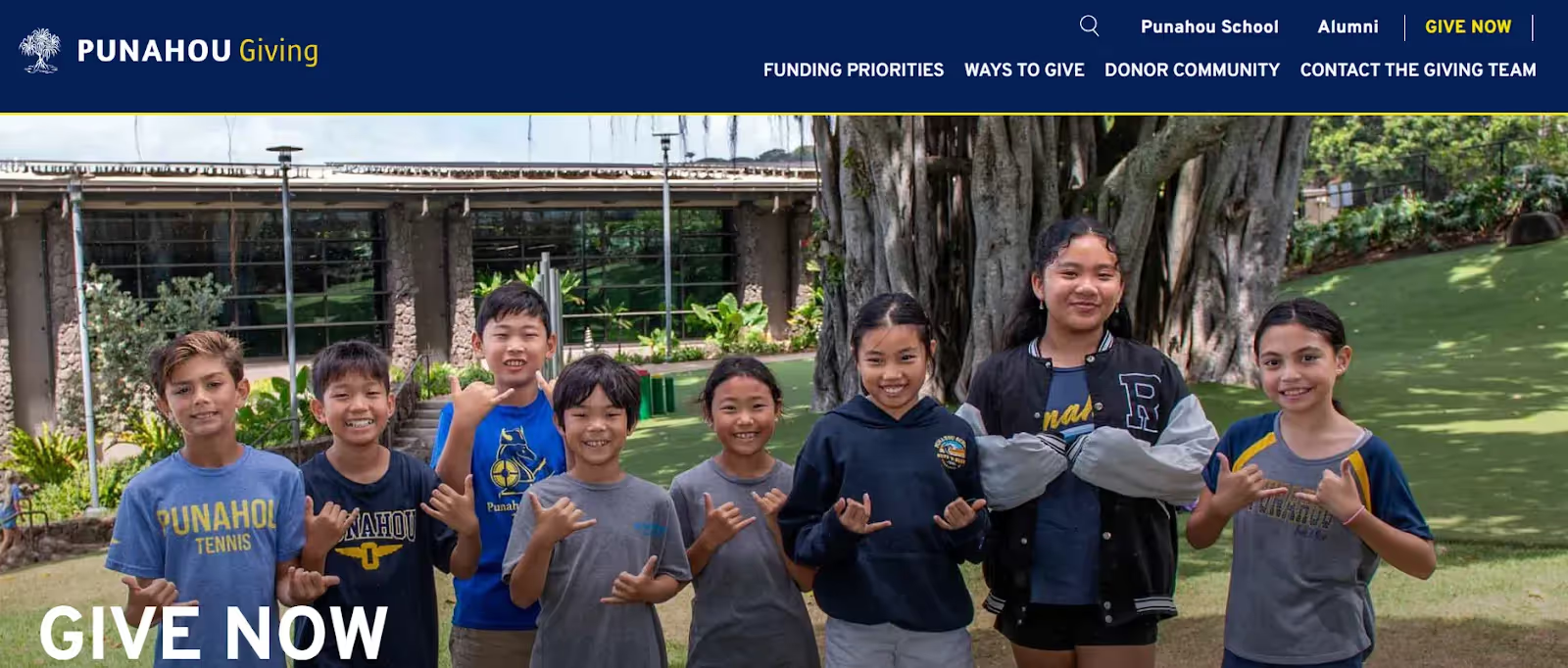
Why it works: Their donation platform provides clear funding priorities including the Punahou Fund for current needs, PunsUnited for student financial aid, and specific capital projects, while offering multiple giving vehicles from cryptocurrency to IRA distributions.
Takeaway: Tie major fundraising campaigns to significant institutional milestones while providing clear, varied pathways for different donor interests and capacities.
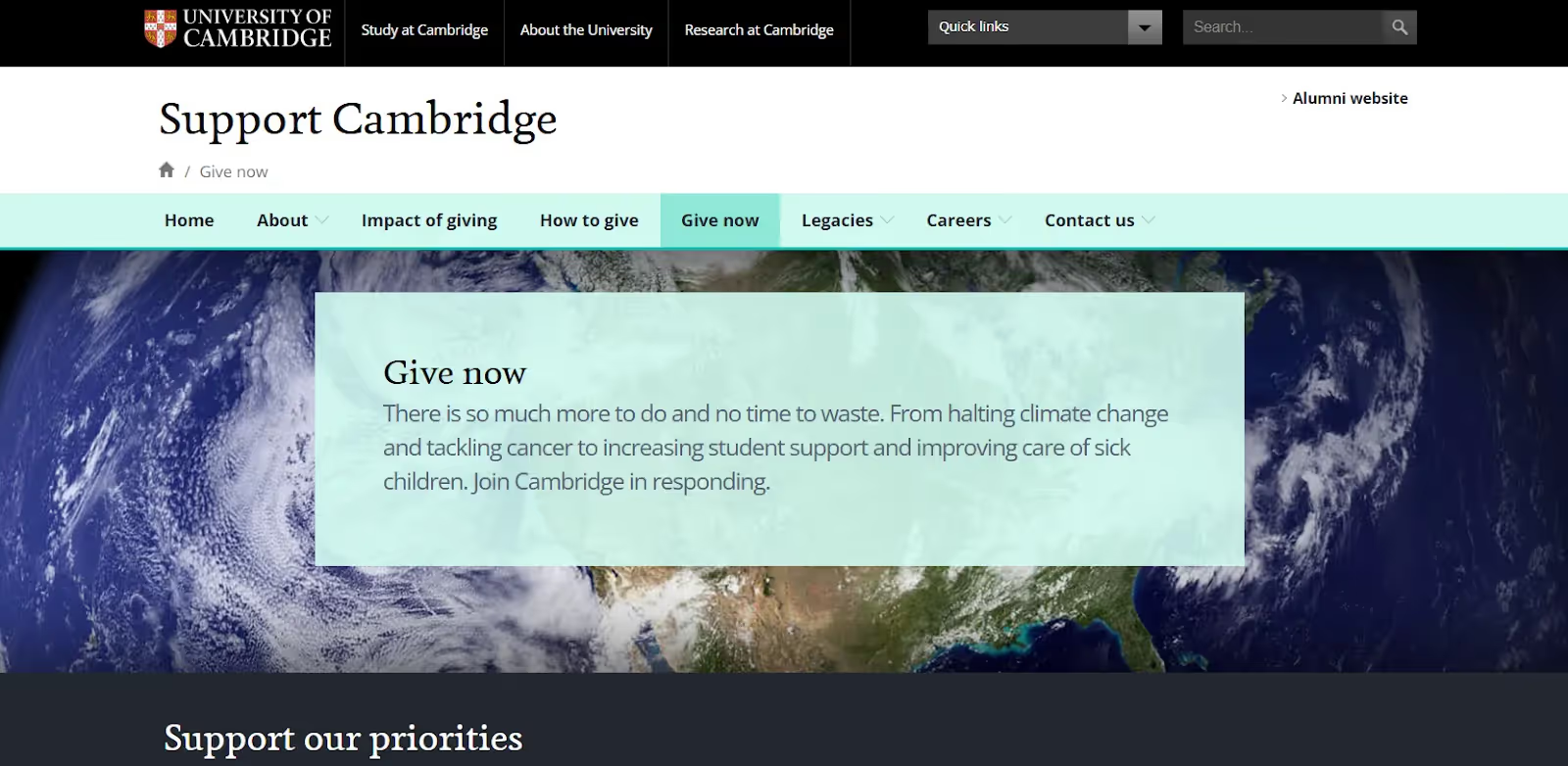
Why it works: The platform supports over 150 academic departments, faculties, and research institutes, offering donors a comprehensive range of causes from student support (including scholarships and bursaries) to cutting-edge research spanning climate change to cancer research, plus historic preservation and global outreach programs.
The platform is genuinely international-friendly, supporting multiple currencies and UK Gift Aid (adding 25% to donations). It uses various payment methods including international bank transfers, and provides tax-efficient giving structures through partnerships like Cambridge in America and Transatlantic Giving Circle, making it accessible to donors from the US, Europe, India, and beyond.
Key feature: Comprehensive cause selection across all academic disciplines combined with seamless international giving infrastructure.
Takeaway: Offering diverse funding priorities while optimizing for global accessibility significantly expands both donor engagement and gift potential.
UCLA’s donation page emphasizes the collective impact of gifts of all sizes, framing every donation as a valuable contribution to a larger circle of support. The page spotlights the university’s multi-year fundraising drive, presenting goals and clear priorities such as student scholarships, faculty research, and campus initiatives. Donors can choose from a wide range of designations: schools, departments, or specific programs, and the form makes it easy to give once or set up a recurring pledge. Campaign progress updates and donor stories reinforce momentum, while the blue-and-gold branding keeps the experience unmistakably UCLA.
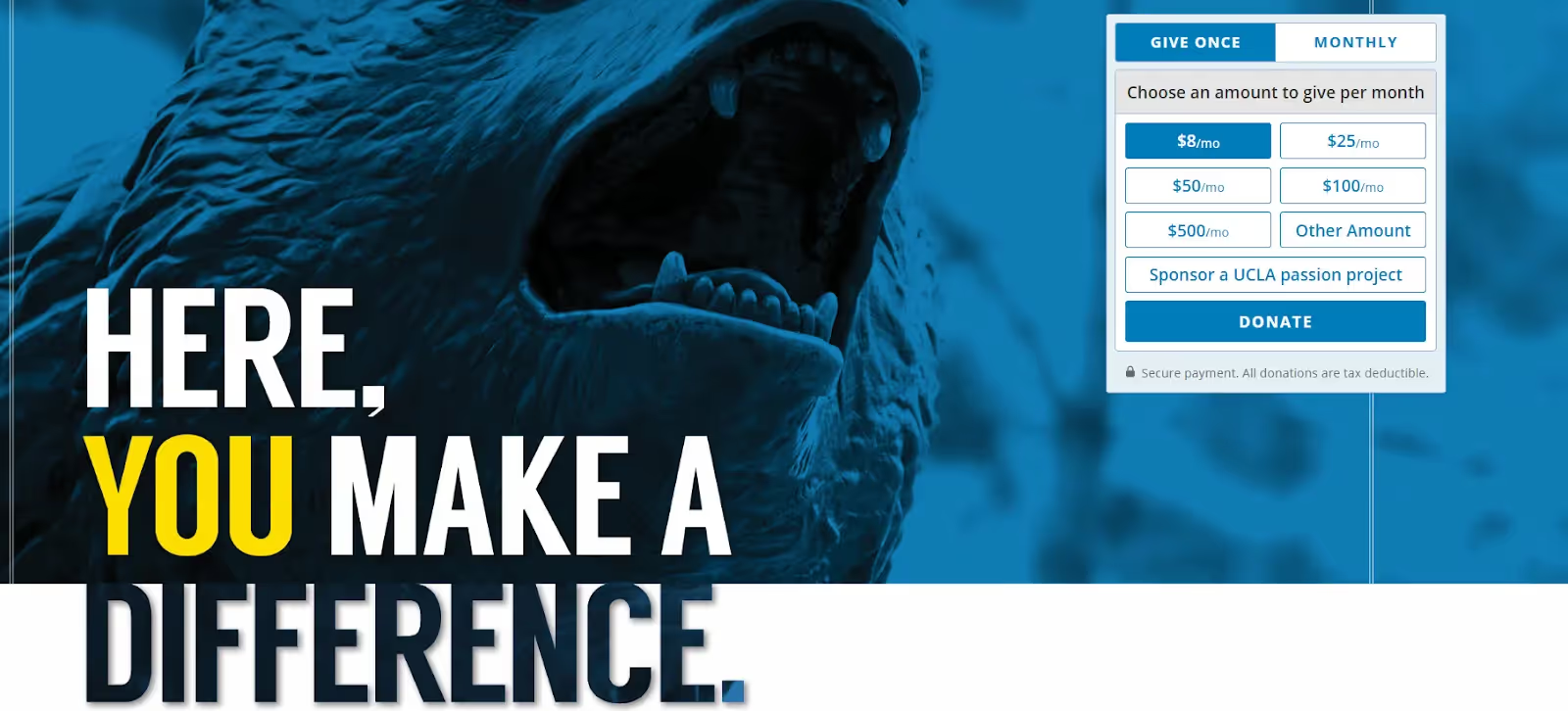
Why it works: By reinforcing that every gift counts and supports a shared mission, UCLA creates an inclusive and motivating environment for donors at all capacity levels. This sense of community nurtures donor loyalty and encourages repeat giving, from modest contributions to major philanthropic commitments.
Key feature: Messaging that connects individual gifts to a broad, impactful community mission.
Takeaway: Position donations as part of a collective effort that transcends the institution, inspiring donors with a compelling sense of shared purpose.
MIT’s donation page uses an interactive grid of impact cards instead of a traditional banner. Each card highlights a key funding priority—such as “Approximately 40% of MIT’s operating budget relies on unrestricted dollars,” and “Over 25% of first-year graduate students are supported by fellowships.” Donors can hover over each card to reveal concise impact statements and click “Learn More” to dive deeper or give directly to that area.
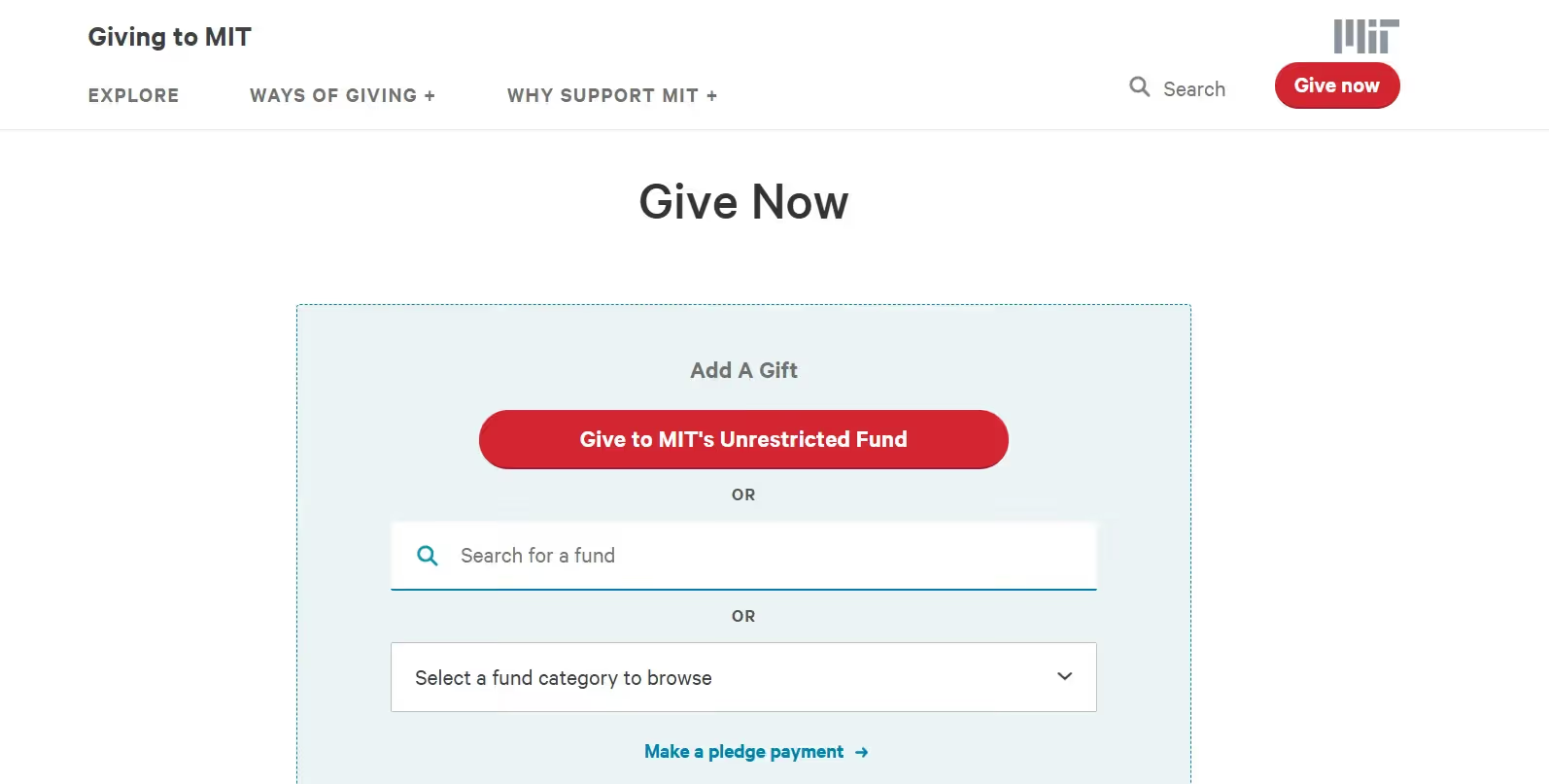
Why it Works: The card-based layout engages donors by inviting exploration and discovery, turning passive scrolling into active interaction. By surfacing bite-sized data points about financial aid, unrestricted funding, and fellowship support, MIT appeals to diverse donor motivations, whether they value student support, institutional flexibility, or graduate research. The clear, quantifiable facts build credibility, while the hover-to-reveal design keeps the page visually clean yet informative.
Key feature: Interactive impact cards with hover-revealed data points tying gift options to specific institutional needs.
Takeaway: Use interactive, data-driven elements to educate donors about multiple priorities, letting them choose what resonates most while maintaining a clean, engaging design.
UT Austin’s “Ways to Give” page offers a comprehensive menu of 14 distinct giving channels, from traditional methods like mail-in gifts and wire transfers to strategic options such as matching gifts, appreciated securities, endowments, and estate/planned gifts. They also feature specialized pathways for UT employees (payroll deduction), international donors, and industry or foundation partnerships. Each option includes a brief description of benefits, such as tax advantages for securities gifts or legacy impact for endowed funds, guiding donors to the method that best aligns with their needs and goals.
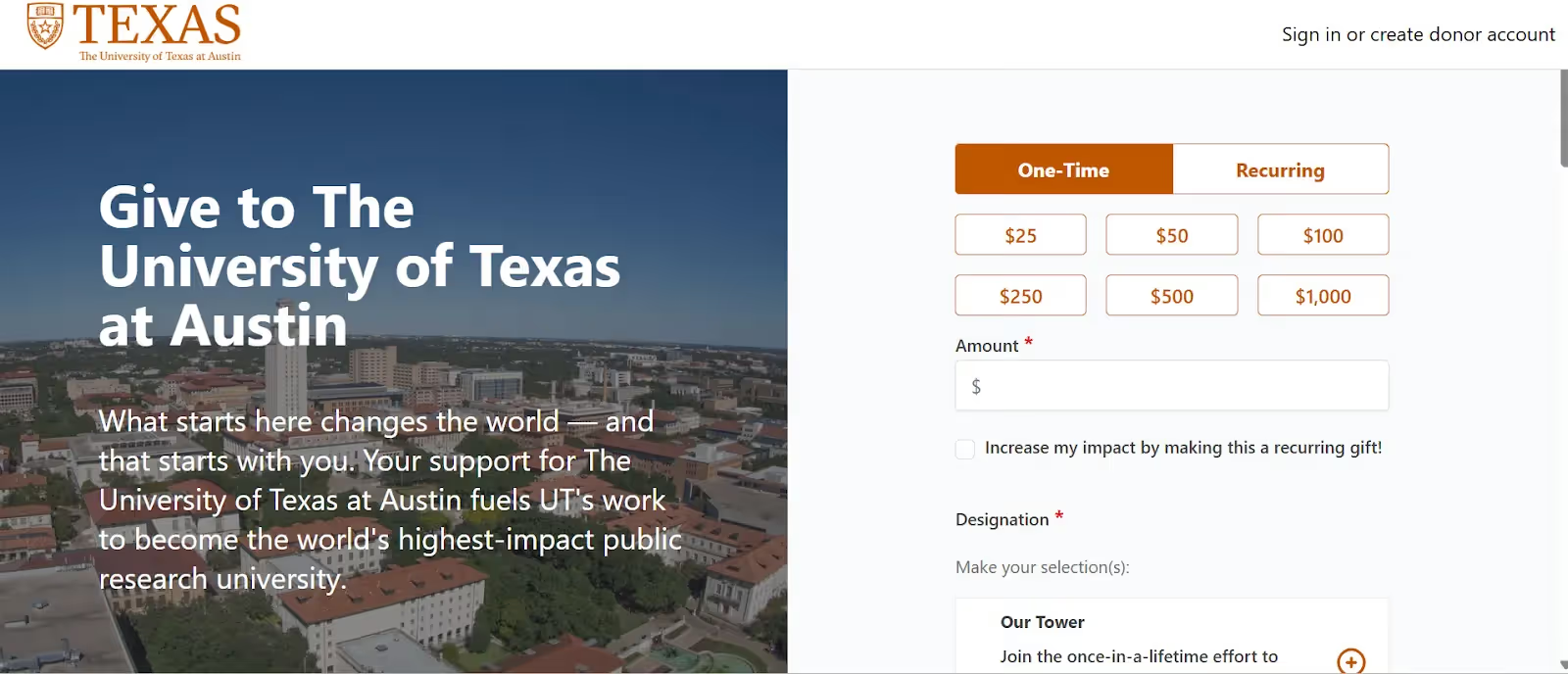
Why it works: By presenting diverse giving vehicles in a single, clearly structured page, UT Austin accommodates donors at every level and life stage. This breadth of options signals inclusivity and respect for individual donor circumstances, strengthening trust and inspiring larger, more strategic commitments.
Key feature: Detailed, side-by-side descriptions of multiple giving vehicles tailored to varied donor profiles.
Takeaway: Empower donors by offering clear, well-explained giving channels that match diverse preferences, maximizing both participation and gift size.
What they did: Stanford’s Giving site serves as a one-stop destination for every type of donor. “How to Make a Gift” section organizes every giving method into three clear columns: Give Now, Give Over Time, and Plan Your Gift. Under “Give Now,” donors can contribute online, by phone or mail, through stocks or wire transfers, or via memorial, matching, or international gifts. “Give Over Time” highlights new pledges, pledge payments, and recurring gifts, while “Plan Your Gift” details options like bequests, life-income gifts, donor-advised funds, and other asset-based contributions. Each link opens concise guidance so donors immediately understand requirements and benefits such as tax advantages or long-term impact.
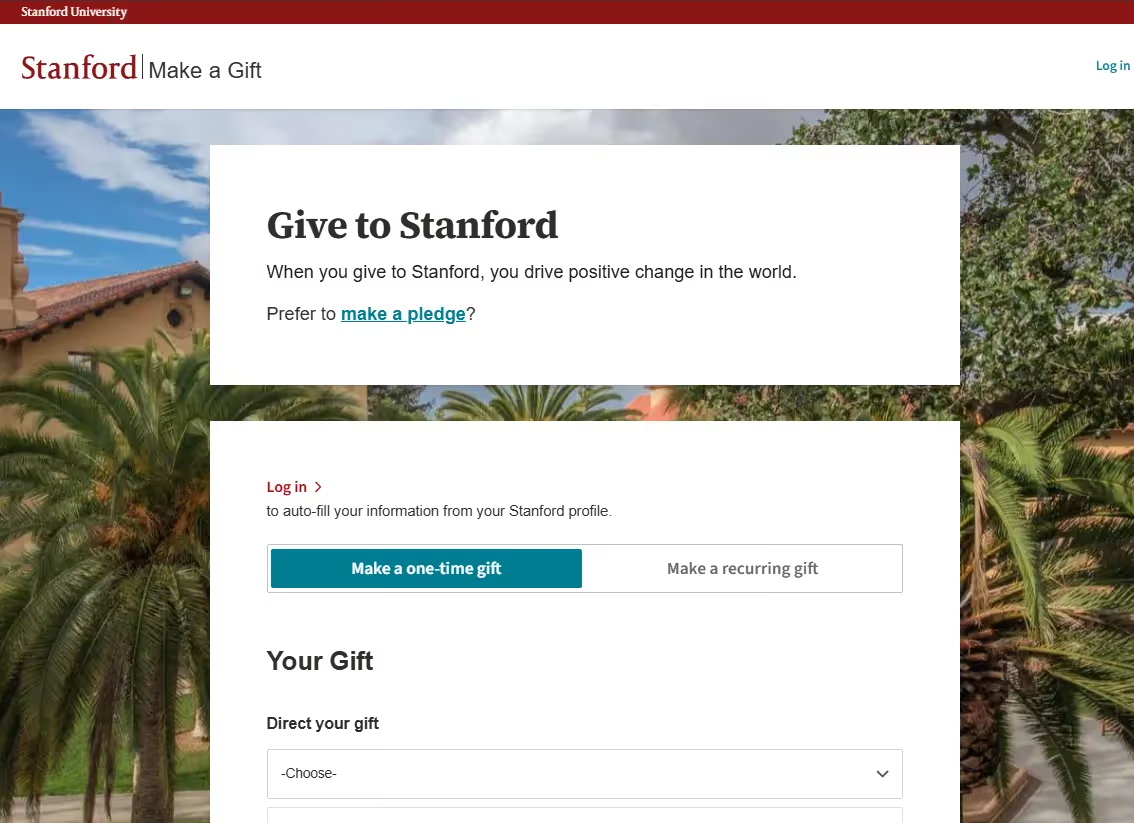
Why it works: This tiered layout simplifies a complex set of choices. Donors can instantly self-select whether they want to give immediately, spread payments over time, or create a legacy gift, without wading through multiple pages. By presenting planned giving alongside quick online options, Stanford invites both spontaneous and strategic donors, signaling professionalism and respect for different financial circumstances.
Key feature: Three-column structure, “Give Now,” “Give Over Time,” and “Plan Your Gift”, that clarifies intent and shortens the path to the right giving vehicle.
Takeaway: Grouping donation methods by timing and complexity helps donors quickly find an approach that fits their goals, increasing both participation and the likelihood of larger, long-term commitments.
Charity: water did something exemplary with online giving through their “100% Model”, ensuring every public donation funds clean water projects, while operational costs come from private supporters. Their donation page appeals to donors of all levels, highlighting that just $40 can bring one person reliable access to clean water. The giving form encourages small, meaningful gifts, reinforced by clear, low-pressure messaging and a welcoming design. Donors can also give in honor of someone special, adding a personal touch that widens participation.
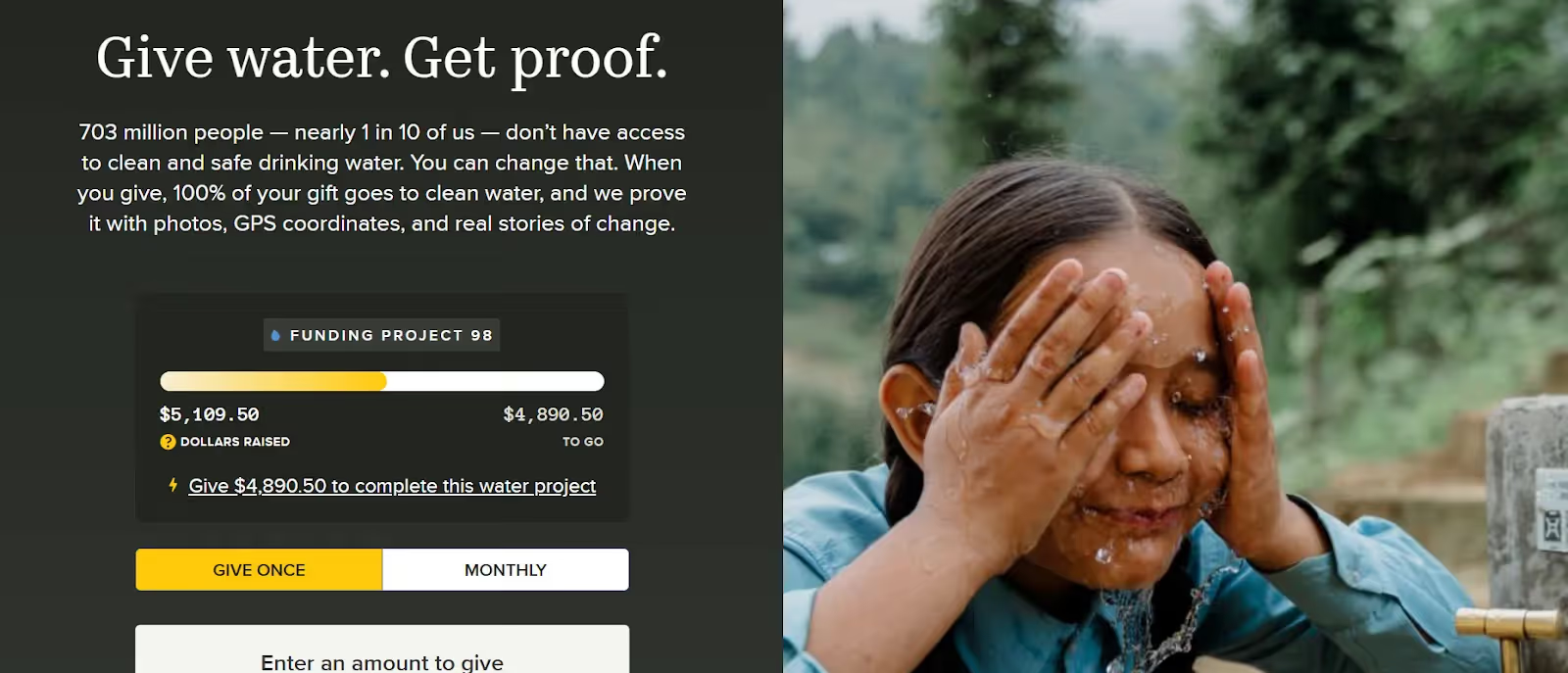
Why it works: The low-barrier entry point clearly states the tangible impact of every dollar, making action feel accessible to all. This transparent, approachable style removes hesitation from new and returning donors alike.
Key feature: Transparent cost-of-impact messaging (“$40 brings clean water to 1 person”) and personalized giving options.
Takeaway: A combination of radical transparency and inclusive, low-pressure donation options makes every supporter feel valued, lowering the barrier for action and building long-term loyalty.
The American Red Cross places credibility and transparency at the forefront on their donation page by prominently displaying their 4-star Charity Navigator rating.
They provide donors clear choices to give toward specific disaster relief efforts (such as wildfire relief or hurricane response) or general emergency preparedness, ensuring funds are allocated to donor-intended uses. These trust badges and fund-designation options reassure potential donors about the responsible handling of contributions in times of crisis.
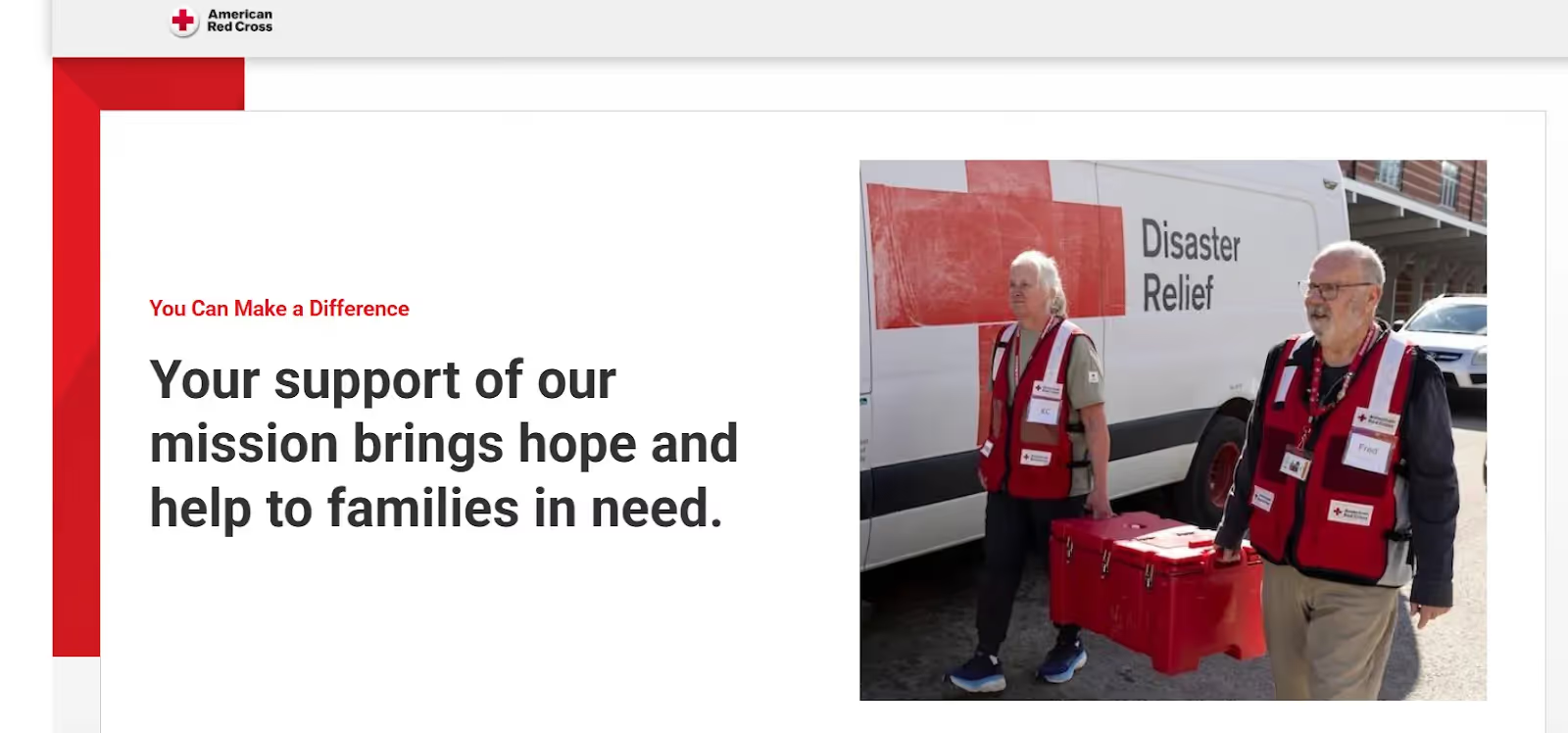
Why it works: In disaster fundraising, trust is paramount. The presence of third-party certifications and transparent fund allocation reduces donor skepticism and encourages first-time giving. Having clear, situational giving opportunities tied to recent emergencies increases relevance and urgency, motivating donors to act quickly.
Takeaway: Demonstrating strong third-party accountability and offering clear, cause-specific giving choices build donor confidence, especially important in emergency response fundraising.
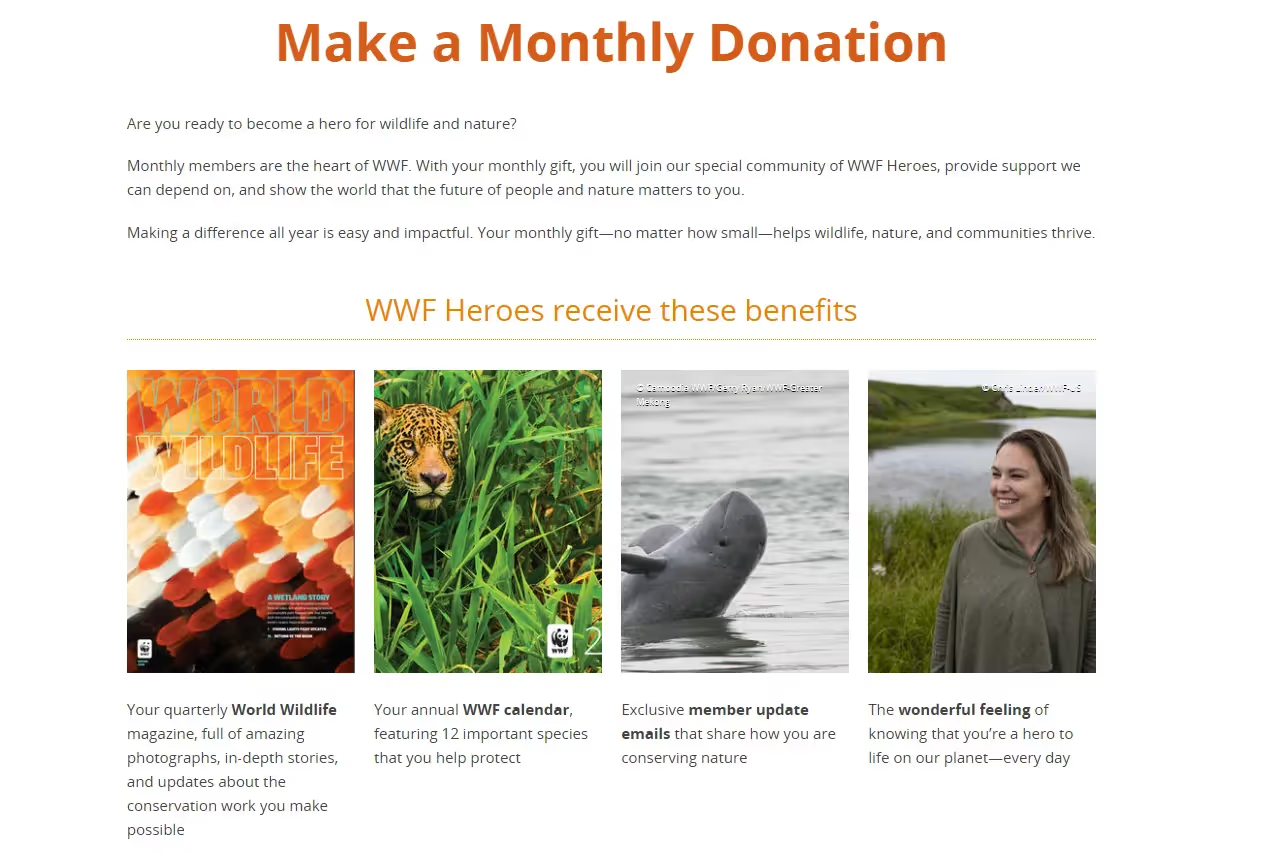
Why it works: WWF frames monthly giving as joining their "WWF Heroes" community, emphasizing how monthly donations provide "dependable support for global conservation efforts". Their donation pages offer membership benefits including quarterly World Wildlife magazine, annual calendars, and exclusive updates. They make monthly giving attractive by highlighting that 84% of spending goes directly to conservation and offering thank-you gifts for donations of $16+ per month.
Key feature: Monthly giving positioned as exclusive membership with tangible benefits.
Takeaway: Present recurring gifts as joining a special community with exclusive perks rather than just a payment method.
The examples above show that high-performing giving pages share a core set of traits:
These shared elements ensure donors can give with confidence, understand their impact, and complete a gift in minutes. These are key ingredients for sustainable, long-term fundraising success.
Use this short checklist when reviewing your site:
💡Almabase’s Giving Module integrates directly with RE NXT to automate processing and personalize appeals. → Learn more
Whether you run a K-12 school, university, or global nonprofit, we hope that these donation pages and our tips have proven that clear design, trust signals, and emotional storytelling go a long way in the effort to convert visitors into donors.
9 Best Donation Page Examples for Better Fundraising
Donation pages are the interface for your donors to make a change. In this blog, we're going through 9 great examples you can take inspiration for your next page.
Lorem ipsum dolor sit amet, consectetur adipiscing elit. Suspendisse varius enim in eros elementum tristique. Duis cursus, mi quis viverra ornare, eros dolor interdum nulla, ut commodo diam libero vitae erat. Aenean faucibus nibh et justo cursus id rutrum lorem imperdiet. Nunc ut sem vitae risus tristique posuere.

September 26, 2025
12 minutes

.svg)

.avif)
.webp)