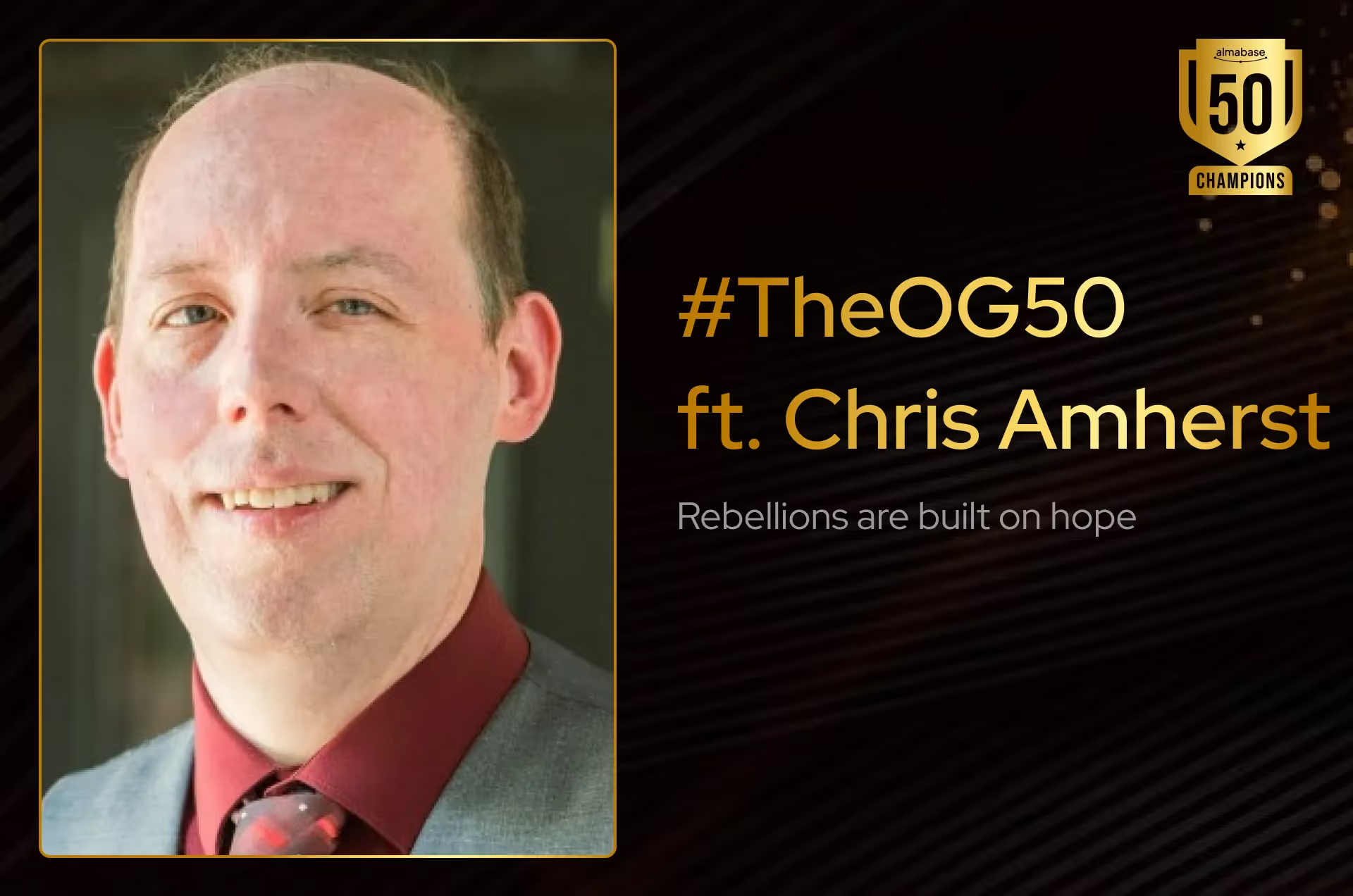
We recently caught up with Christopher Amherst, who is the Director of Data Management at University of Chicago. As a thought leader and a veteran in his field, Chris has elevated the conversation around data and technology in the advancement field.
Summary
We are not the ones curing cancer. We are changing lives by enabling the ones who will.
- Christopher Amherst, Director of Data Management, University of Chicago
Christopher Amherst isn’t your typical advancement professional. With a background in computer science and a career that spans pre-internet AI to modern CRM transformations, Christopher brings a uniquely systems-driven, yet deeply human approach to his role as Director of Data Management at the University of Chicago. Since being named an OG50 Champion in 2023, he’s continued to push the envelope on how data can—and should—serve advancement teams and fundraisers, helping them build trust, automate intelligently, and ultimately change lives. Chris is also an OG Star Wars fan.

Chris didn’t just join the University of Chicago to manage data; he came in to reimagine how advancement data teams operate. Instead of the traditional records management structure, Chris built a lean, five-person data operations and quality team modeled after modern for-profit data teams.
Think automations at scale. Cross-functional collaboration. Christopher’s philosophy? Build a system that delivers trust in data, so fundraisers and engagement officers can do their best work without second-guessing what’s in the CRM.
One of Christopher’s proudest achievements is overhauling address entry within the CRM. A seemingly simple update—autocomplete and address validation at point-of-entry—led to reduced cost, improved data quality, and smoother user experiences for everyone.
His team has also introduced automation for householding logic (think: donor relationships and marital status changes), reducing manual work and minimizing errors. These may seem small on paper, but for advancement teams juggling dozens of tasks daily, they’re transformative.
While Christopher’s team hasn’t gone all-in on AI-powered personalization just yet, they’re getting there thoughtfully. The goal isn’t just sending alumni flashy emails. It’s about deeply understanding what made their UChicago experience special, and reflecting that in how the university engages them today.
As a seasoned technologist, Christopher’s take on AI is both grounded and visionary. He’s excited about the agentic AI future - not because it’s trendy, but because it can free humans to focus on relationships. “AI has been around for decades,” he says. “Now it’s just about using it better.”
Christopher is focused on helping his team evolve into a strategic enablement function. That means more automation, better insights, and a stronger foundation for alumni engagement and fundraising personalization in the years ahead.

And of course, he’s watching the data maturity space closely—hoping to see more teams in advancement shift from records management to true data strategy.

Want to keep up with Christopher’s journey? Connect with him on LinkedIn.
Subscribe
See how modern advancement teams bring alumni engagement and fundraising together.
Plan faster. Execute better
Explore free templates designed for alumni and fundraising teams.
.png)

.avif)
“You don’t need to chase shiny things to make a difference—just do the work, stay grounded, and focus on what truly matters.”
— Tyler Reich, AVP for Advancement and Executive Director of University Relations, Willamette University
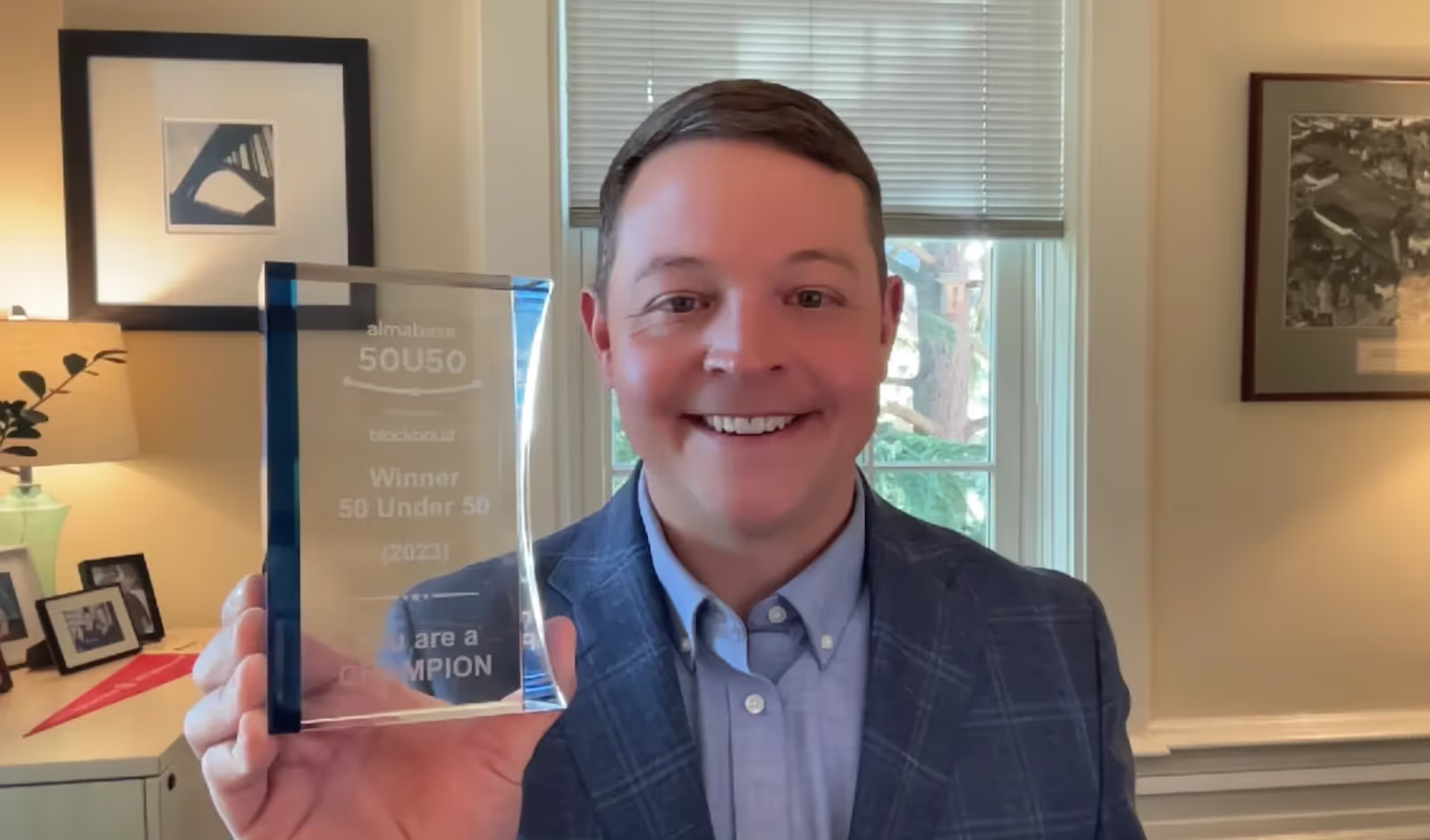
We recently caught up with Tyler to talk about his quietly powerful $160M campaign, a complete rethink of alumni communications, and his philosophy of doing the work that matters.
Tyler is the AVP for Advancement/Executive Director of University Relations at Willamette University. With over 18 years of experience, he has successfully closed significant gifts, implemented data-driven programs, and achieved notable results in team expansion, volunteer engagement, and annual fund growth. Tyler's approach combines innovation and data-driven decision-making with the art of relationship-building. He believes in creating joyful philanthropic experiences and meaningful donor engagement.
Willamette wrapped up a seven-year comprehensive campaign in 2023, exceeding its $150M goal with $160M raised - all without ever making a public announcement. When the pandemic hit, Tyler and team made the bold decision to reallocate campaign launch resources to student support instead.
That meant no “campaign” fanfare. No glossy countdowns. Just results.
They later celebrated the impact through storytelling and video, highlighting what the institution accomplished thanks to donors - without ever calling it a campaign. Now that’s impact, minus the noise.
Tyler led an 18-month overhaul of Willamette’s alumni magazine, transitioning from siloed, outdated publications to one unified storytelling vehicle.
The result? A modern, institution-wide magazine that tells the stories of “Willamette characters” solving the world’s wicked problems. Outdated class notes and obituaries were moved online for timeliness and sensitivity.
The printed version now focuses purely on powerful stories and has already won multiple national awards. With 38,000+ households reached annually, it’s become a lasting engagement tool - one that even alumni spouses have requested to receive.
Understanding today’s alumni preferences, Tyler’s team created a hybrid model - class notes, updates, and social content online for real-time engagement; rich storytelling in print for longevity.
When Tyler saw the magazine in a local dentist’s office (a proud alum’s waiting room), it was a full-circle moment: “That’s our work, sitting right there in the wild.”
Now post-campaign, Tyler is focused on foundation-building over trend-chasing. That means:
Tyler believes that thoughtful, strategic tech adoption—done right—can power deeper, more personal alumni engagement. But it must always serve the mission, not replace the people.
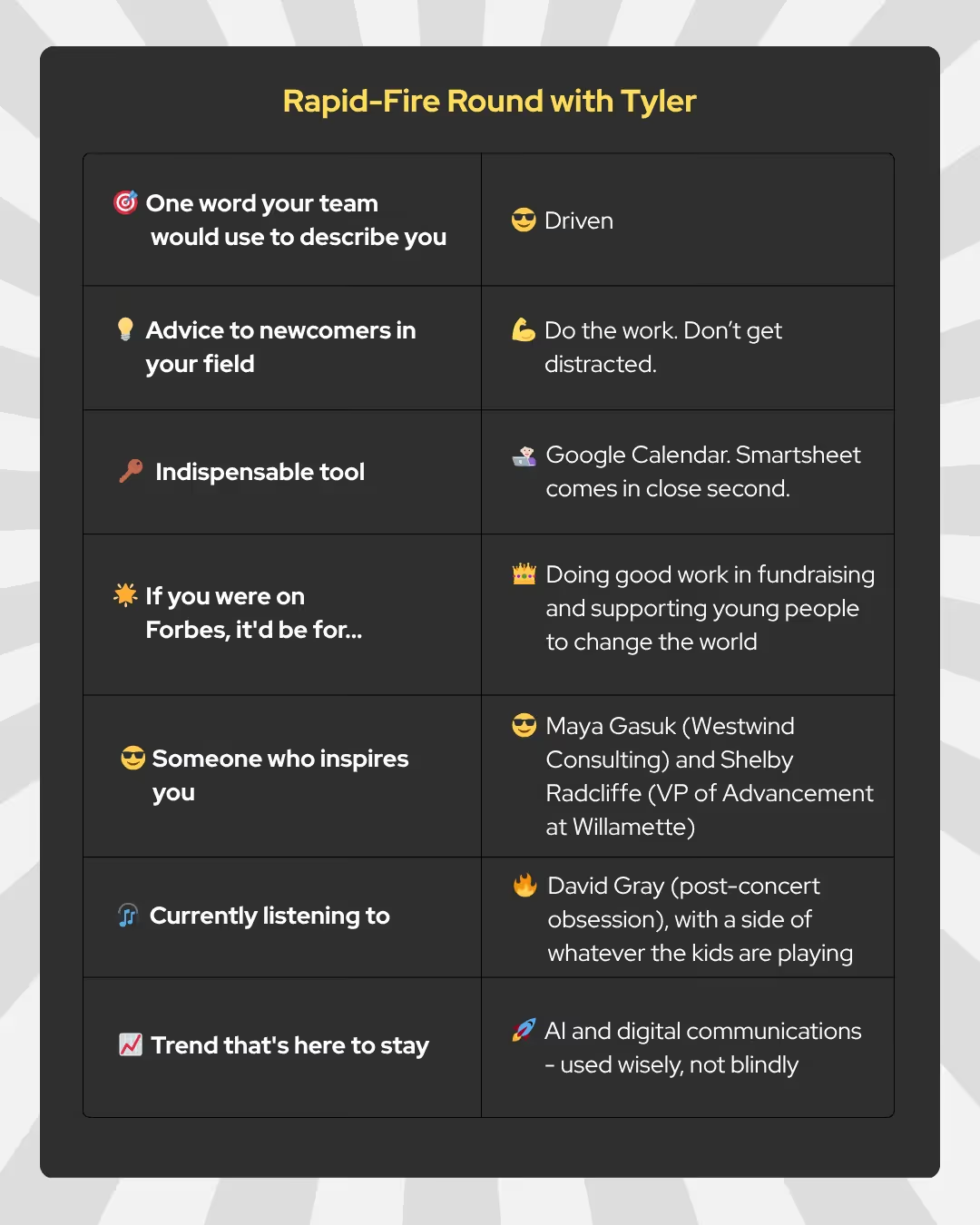
Tyler Reich is proof that lasting change doesn’t always need a spotlight. Whether he’s leading a $160M campaign without a big reveal or rebuilding alumni communications from scratch, Tyler stays rooted in impact and relationships.

Want to follow Tyler’s journey? Here’s his LinkedIn.
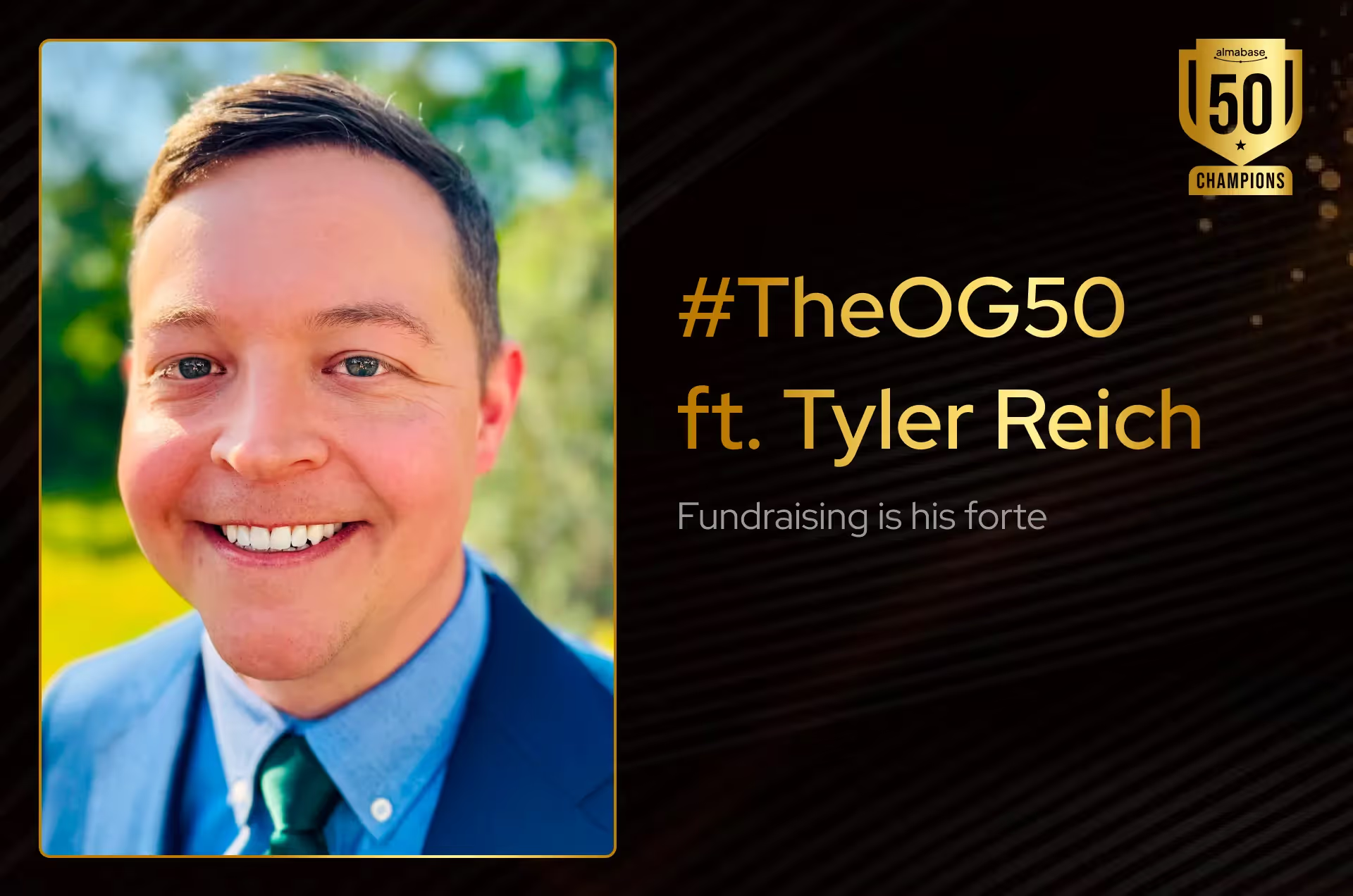
#TheOG50: The one with Tyler Reich
Lorem ipsum dolor sit amet, consectetur adipiscing elit. Suspendisse varius enim in eros elementum tristique. Duis cursus, mi quis viverra ornare, eros dolor interdum nulla, ut commodo diam libero vitae erat. Aenean faucibus nibh et justo cursus id rutrum lorem imperdiet. Nunc ut sem vitae risus tristique posuere.
“I work with great people. That’s what makes this job easier.”
— Joe Volin, Associate Vice President for Constituent Engagement, Illinois Tech
We recently caught up with Joe to talk about his work on alumni engagement, how he's using AI to scale relationships, and why sometimes, the best strategy is just listening.
When we first recognized Joe as part of the original 50 Under 50 list, he was already making waves at Illinois Tech. Today, as Associate VP for Constituent Engagement, he continues to build meaningful connections between the university and its alumni - but with a much bigger toolbox.
Joe now leads a team of nine and oversees alumni engagement, annual giving, boards of advisors, and the Mies van der Rohe Society. But beyond the titles and org charts, what really drives Joe? “I work with great people who are passionate about what they do. That’s what keeps me going,” he says.

Joe led the transition from their previous alumni platform to Illinois Tech Connect, powered by Almabase. The change wasn’t just a software swap - it was a total reimagining of how alumni connect with their alma mater.
With a sharp focus on user experience, Joe’s team merged the engagement platform with their alumni database and even extended it to support mentoring. The result? An increase from ~2,000 active users to nearly 4,000 engaged alumni - and a new way to define and measure engagement meaningfully.
Ahead of the curve, Illinois Tech became one of the first to adopt Givzey’s virtual engagement officer, Scarlet. The adoption of Scarlet was led by Susan Lewers. Since October, Scarlett has been managing a portfolio of 1,000 alumni - digesting emails, tracking interactions, and driving outreach. Joe credits Scarlet with helping do more with the same resources and sees AI as a core part of future advancement strategy.
Joe’s not just about gut feel - he’s got the reports to back it up. Following an all-alumni survey, Illinois Tech now knows their most active volunteers are from the 90s and 2000s, while their most generous donors are from the 70s and 80s. These insights have helped refine engagement strategies and personalize outreach based on where alumni are in their life journey.
With a strong, cross-functional team and data-led strategies, Joe’s eyes are set on deepening engagement across decades, expanding mentorship, and unlocking more ways for alumni to feel seen and valued - even as the world shifts toward AI and automation.
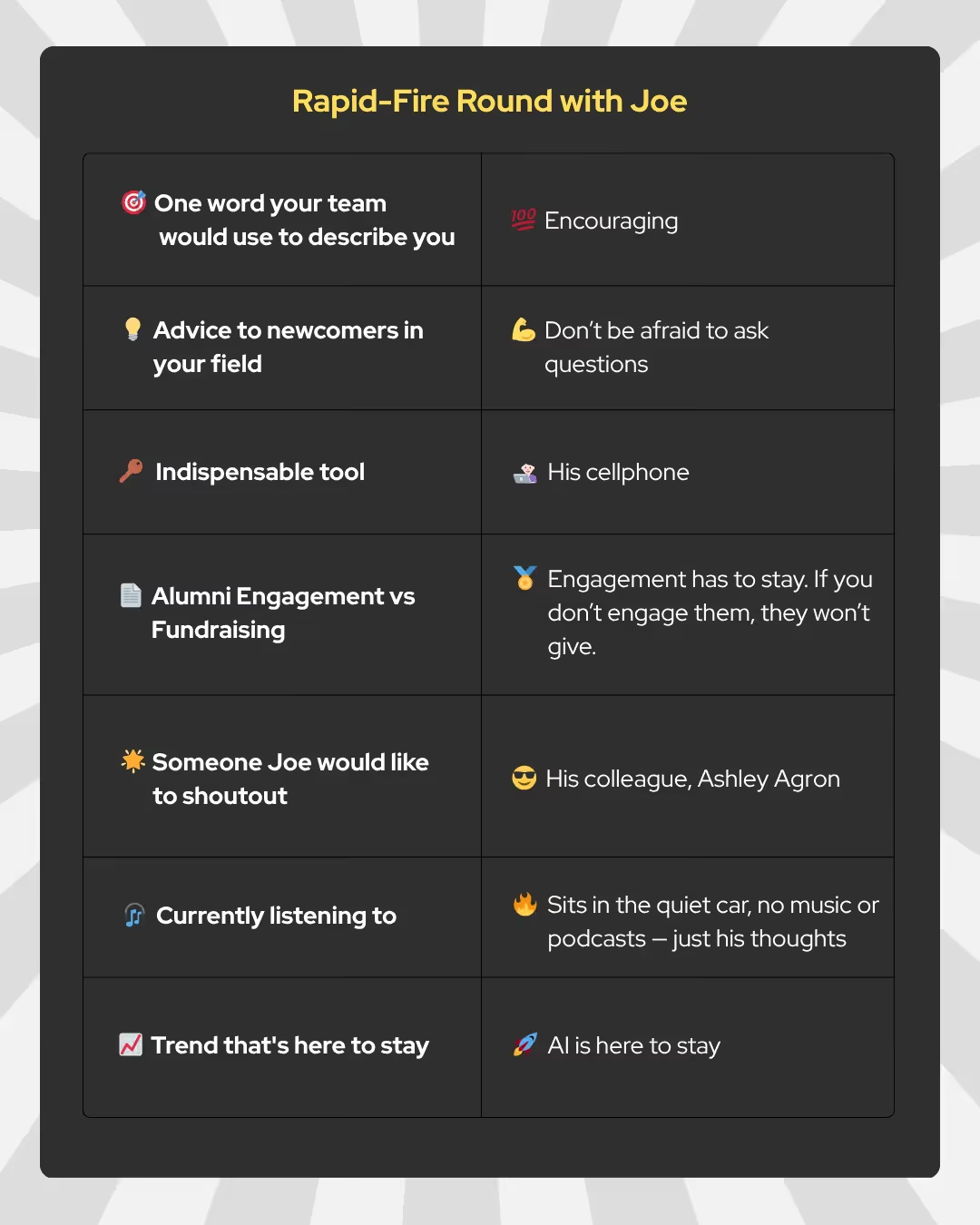

Want to connect with Joe?
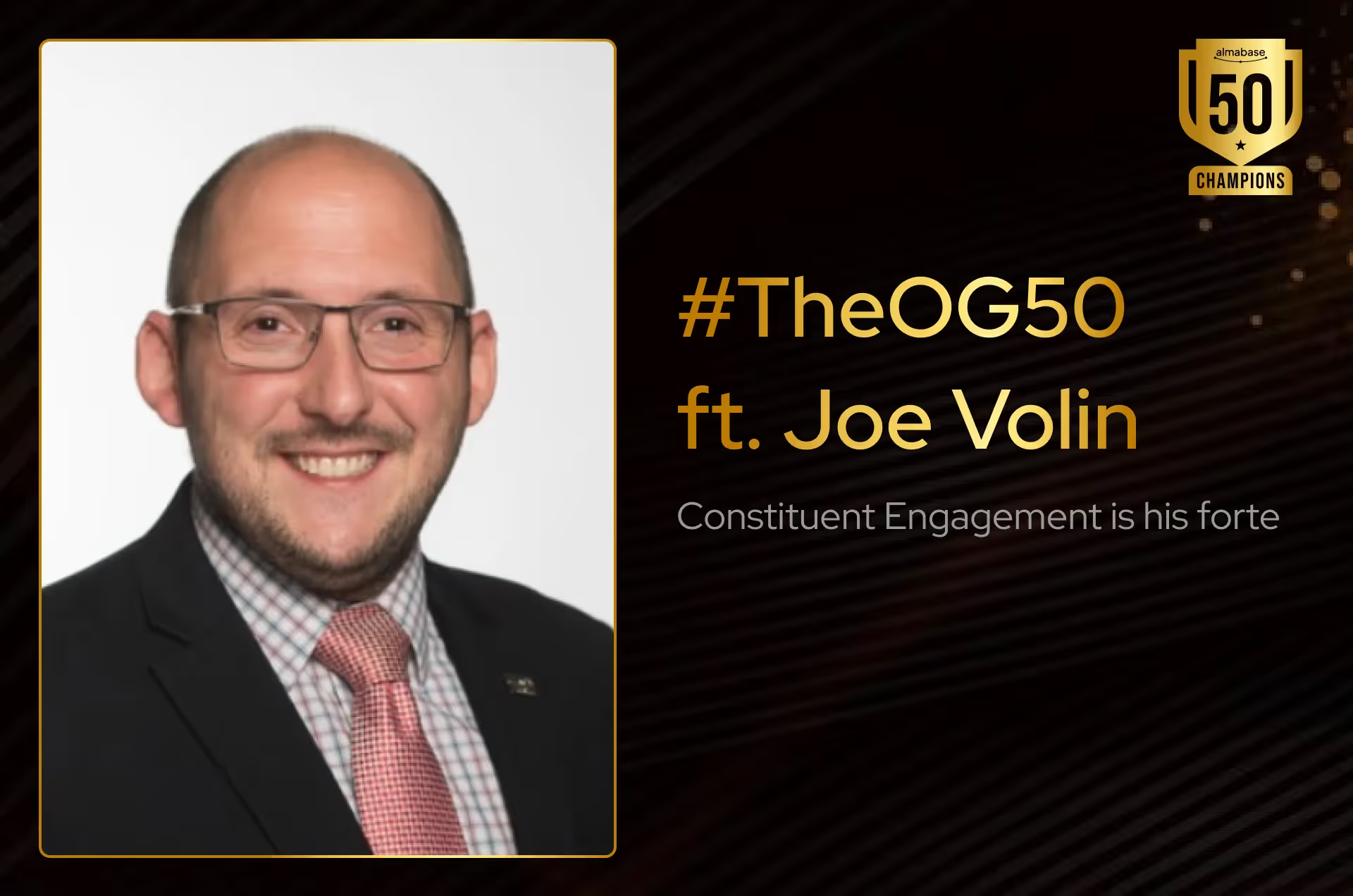
#TheOG50: The one with Joe Volin
Lorem ipsum dolor sit amet, consectetur adipiscing elit. Suspendisse varius enim in eros elementum tristique. Duis cursus, mi quis viverra ornare, eros dolor interdum nulla, ut commodo diam libero vitae erat. Aenean faucibus nibh et justo cursus id rutrum lorem imperdiet. Nunc ut sem vitae risus tristique posuere.
%201.svg)
%201.svg)
%204.svg)


.svg)