Discover how institutions build strong alumni networks in 2026 using the right strategy, alumni engagement platforms, and data-driven programs

Sharada Koti
Published:
January 27, 2026
Updated:
May 11, 2026
Discover AI Summary
• Don't guess what your alumni want: Start by having quick chats or surveys and use your CRM to segment your community, ensuring your engagement efforts hit the mark for different groups.
• Streamline your efforts with a dedicated platform: Trying to manage engagement across various tools quickly leads to chaos, but a central system can consolidate everything from events to communications and giving, making your life easier and data cleaner.
• Lead with value, not just asks: Building a strong network means offering genuine support like career opportunities or mentorship first, because sustained engagement naturally leads to better participation in fundraising efforts.
• Create spaces where alumni truly connect: Design your online community with clear, intuitive sections and smaller groups based on interests or regions, which makes participation feel more personal and keeps engagement vibrant.
• Launch smart and keep evolving: Don't try to do everything at once; start by inviting a small group of champions, track what genuinely engages your alumni, and then refine your programs based on real feedback.
Over several decades, alumni networks all over the world have supported institutions, bringing in perspective and support from beyond the campus. As institutions adapt to a modern alumni landscape, the alumni experience has started to play a more visible role in shaping decisions, relationships, and long-term goals.
Drawing from what we’ve seen across institutions, we’ve pulled together practical ways to build an alumni network that goes beyond traditional approaches. In this blog, we will reflect on how to build a strong alumni network that builds, nurtures, and makes the most out of your institution’s relationship with your alumni.
An alumni network is the community an institution builds with its former students after they graduate. It brings alumni together through shared experiences, interests, and professional paths, while keeping a connection to the institution beyond graduation.
Alumni relationships don’t end at graduation, and in many ways, that’s when they start to matter most. A strong network can mean access to career opportunities, mentorships, peers, and continued learning beyond formal education. It gives them a sense of connection that continues as their lives and careers evolve.
That same engagement also matters on the institutional side. They influence admissions decisions, strengthen brand advocacy, and often show up as donors, volunteers, and mentors in meaningful ways. Online alumni networks make this easier to sustain by extending traditional chapters and reunions, allowing institutions to stay connected with alumni across locations, time zones, and life stages.
Understanding why alumni networks matter is one thing. Building one that works is another. Let’s go through the steps that help institutions build an alumni network that stays active, relevant, and useful-
Start by listening to the people that will make up your network. You can use short surveys, quick conversations, or simple polls through email, LinkedIn, or small alumni meetups. You don’t need deep research to have a starting point but it should be enough to let you know which affinity groups and regional groups might need attention, or which programs they would look forward to the most.
Your alumni’s needs change as their lives and careers evolve. Use an alumni management system or CRM to segment them by career stage, geography, interests, affinities, etc. This groundwork makes it easier to create focused groups and relevant content inside your community later down the line, giving a personalized touch to your communications.
Clear goals keep an alumni network from turning into a set of disconnected activities. From the alumni side, value often shows up in practical ways, such as access to people in similar fields, guidance during career transitions, or opportunities to stay connected with familiar communities. Institutions, on the other hand, look for outcomes that strengthen long-term relationships, whether that means deeper engagement, more consistent participation, or stronger links between alumni and current students. With these in mind, you should be able to make out the general goals involved with setting up your alumni network.
Once you have your goals, it’s time to make sure you track the right metrics to see your progress. Focus on a small set of signals that show alumni are returning, participating, and contributing in meaningful ways. This could include patterns of repeat engagement, ongoing conversations beyond single events, or connections that lead to mentoring, referrals, or collaboration. Keeping metrics focused makes it easier to understand what’s working and adjust before engagement starts to drop.
Most alumni networks start with what’s already available. Email lists, spreadsheets, a LinkedIn group, or a chat group that someone from the alumni office set up years ago. This patchwork works for a while, then it quickly becomes chaotic when you want to really mobilize it. Data lives in too many places, events are hard to organize, and engagement becomes guesswork.
A dedicated alumni engagement platform simplifies this. It gives alumni one place to find people, attend events, share updates, and give back. For your team, it replaces juggling tools with a single system that’s easier to manage and measure. Take a look at how the Rhode Island School of Design approached alumni engagement. After moving away from multiple disconnected tools to a single platform, the team reduced manual work significantly and ran dozens of events more efficiently, without the hassle, frustration and loss of time.
Not every feature matters at one stage for every team. But there are a few essentials that consistently support long-term engagement.
Together, these features reduce manual work and create a more consistent experience for alumni.
Almabase brings these capabilities together in a single platform built for higher education. Institutions can manage alumni directories, community groups, events, communication, and giving without relying on disconnected tools.
Because it integrates directly with institutional CRMs and tracks engagement across activities, Almabase makes it easier to understand what alumni care about and scale programs without adding complexity.
Alumni should be able to find their way around the community without thinking too much. The less your alumni have to learn about your platform, the better.
At a minimum, most communities need a clear home feed, an alumni directory, groups, events, and a space for giving or causes. When these sections are easy to spot, the community feels like a product of genuine care and invites participation.
Most alumni connect through smaller circles, not the entire network at once. Regional groups, academic programs, athletics, and interest-based or identity-based communities give alumni spaces that feel relevant. These sub-communities keep engagement active by making participation feel personal and manageable instead of broad and impersonal
Don’t launch to everyone on day one. Start with a handful of alumni who already care. Class reps, chapter leads, alumni volunteers, or people who regularly engage with the institution.
Bring them in early. Let them set up profiles, post a few updates, and activate initial groups. When the larger alumni base joins, they should walk into something that already feels alive.
When you’re ready to go public, your email, social posts, and website banners should answer one simple question: “why should I join?”
Jobs, mentorships, reunions, and familiar faces are some common things that draw alumni in. Pick a few strong reasons and then make the first action obvious. It should be as simple as joining the community, completing your profile, and easily finding what drew you in as an alumni.
This is where the login experience matters. Make onboarding effortless. Use easy login and single sign-on so alumni can access the community without creating new passwords. Once they’re in, relevant group suggestions based on graduation year, location, or interests help them settle in quickly.
Platforms like Almabase support easy login and single sign-on, so alumni don’t have to create new passwords or struggle with access. For example, when SUNY New Paltz simplified access and registration with Almabase, alumni consistently rated the event registration experience 4.6 out of 5, and the team ran 21 events in just 10 months without crashing registrations or manual bottlenecks. This smoother login and registration experience helped the community gain early traction and kept alumni coming back.
You don’t need many programs to keep a network active. A few well-run ones are enough. Mentoring tends to work especially well, whether it’s alumni supporting students or peers helping each other through career moves. Themed event series also help create rhythm, like occasional industry panels, regional meetups, or short webinars that alumni can join without much planning.
Giving moments can fit in here too, particularly when they involve alumni ambassadors or small challenges that feel collective rather than transactional.
Content doesn’t have to be frequent to be effective. Alumni stories, short career spotlights, or behind-the-scenes updates often do more than long announcements. Interactive formats like casual AMAs usually spark more responses than polished posts.
Practical content matters as well. Career tips, networking advice, or ways to support current students tend to get revisited and shared over time.
Some engagement is best handled in the background. Automated nudges for new sign-ups, alumni who haven’t returned recently, or highly active members help maintain momentum without constant manual effort.
With Almabase’s TrueSync integration, institutions can run engagement workflows knowing the underlying data is reliable. With accurate, real-time data syncing through TrueSync, your community software has the right information to automate communication like welcome emails, reminders, and personalized suggestions without manual updates. This helps your automation feel relevant and reduces administrative overhead while improving alumni experiences.
Strong alumni networks don’t rely entirely on central teams. They grow when alumni are trusted to take ownership. Give group leaders the ability to create events within their groups, post updates, and welcome new members.
This shifts the community from staff-led to shared, while keeping engagement closer to where alumni already feel connected.
Autonomy works best with a light structure. Simple playbooks, email templates, and ready-to-use event descriptions help alumni leaders act without hesitation or guesswork.
Recognition closes the loop. Highlighting active volunteers in the community or acknowledging them during key events reinforces participation and signals that leadership is valued.
Look beyond sign-ups to see how alumni are participating. Profile completion, repeat visits, and month-to-month activity offer a clearer picture than raw member counts. Event attendance, group participation, and responses to messages also signal whether engagement is sticking. If your network includes mentoring, careers, or giving, activity in those areas often reflects a deeper commitment.
Focus less on one-off wins and more on patterns over time. Notice which groups stay active without constant nudging, which programs see repeat participation, and where conversations continue after events. These signals show what alumni truly value.
Use these insights to make small, ongoing adjustments. Strengthen what’s working, pause initiatives that require effort without results, and test new formats before scaling. Alumni networks stay relevant through steady iteration, not one-time success.

A few common missteps can quietly slow things down or limit engagement over time. Let’s take a look at the mistakes institutions often make and how to avoid them.
The first 90 days are about setting direction and building early momentum, not doing everything at once. If you’re looking for practical ways to turn alumni engagement into long-term value, this blog on how to leverage alumni networks offers useful context before you plan your first 90 days.
At this stage, it also helps to understand what a modern alumni relations solution looks like and how it supports community building, engagement, and coordination at scale.
Building an alumni network is a long but worthy process. What matters most is staying intentional and being willing to evolve. With the right structure and tools in place, you can move from scattered outreach to a connected alumni network that continues to grow long after graduation.
Whether you are looking to build a new alumni network or revamp an existing one, Almabase is designed to help you transition from setup to sustained engagement in one place. You can explore the product through a personalized demo to see how it fits your alumni network goals.
Table of Contents
Subscribe
See how modern advancement teams bring alumni engagement and fundraising together.
Alumni networks are a vital part of any institution. Beyond the fond memories, they offer a lot of opportunities and goodwill that can help your institution tremendously. However, figuring out how to leverage alumni networks effectively is a long-term problem that requires quite a bit of work.
In this blog, we’ll break down the basics of getting the most out of your alumni network to help you grow your institution. But first, let’s talk about why these alumni networks are so important today.
As advancement leaders look for scalable, mission-aligned growth, the role of alumni networks has steadily shifted from tradition to transformation. Here’s how a well-engaged alumni network can drive impact where it matters most:
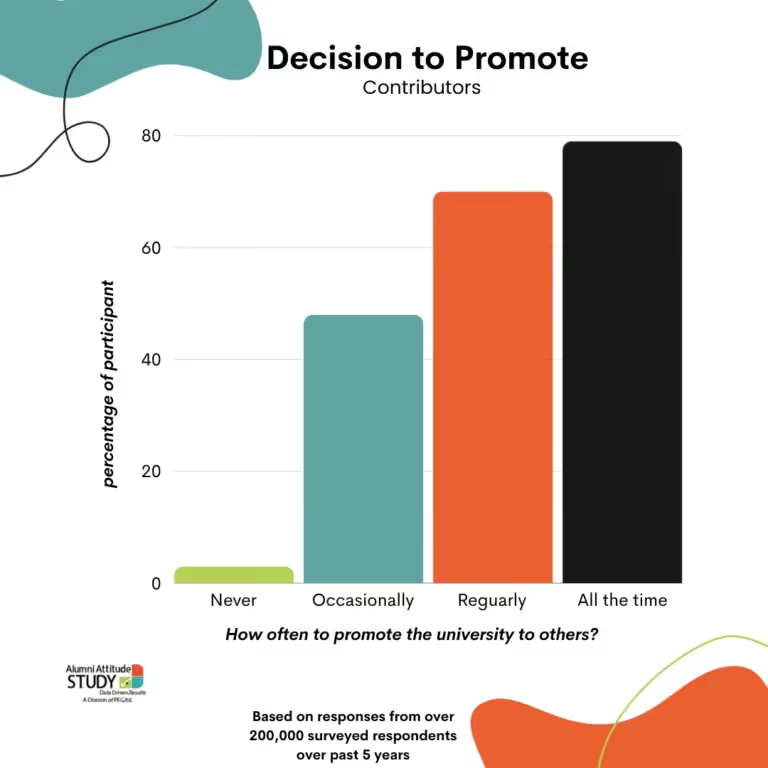
No two alumni networks are the same, and neither should be your approach to engaging them. From digital tools to personal outreach, the most effective strategies blend data, storytelling, and real connection. Whether you’re just getting started or looking to scale, here are 9 proven ways to make your alumni network a powerful engine for advancement:
Segmentation helps personalize your outreach and gives you a great view of which part of your alumni network will work best for any specific program or initiative. For example, major donors might be great for ambassador programs while successful business owners would make for great mentors or career opportunity programs.
Segment your alumni by:
And much more depending on what segments and programs you have in mind
💡 Tools like Almabase’s Engagement Tile on RE NXT help you track and act on these segments directly inside your CRM. You can filter alumni by dozens of variables and send targeted campaigns based on real-time data.
Alumni want to feel remembered, not marketed to, and any attempts at making the most of your network will fall flat if your alumni feel you are simply extracting what value they can provide. Automate your communication with personalized email flows that address alumni by name, acknowledge their class year, or tailor messages based on past engagement. These could be:
Giving is perhaps the most direct way in which your alumni network can provide value to your institution. Providing an accessible point for all your programs, events, and fundraisers as well as having flexible giving options will allow you to give your alumni the best experience possible and encourage future support. Providing a smooth giving experience is your way of telling alumni that you are also doing your best to fuel vital fundraising efforts for your institution.
Events remain at the core of both growing and leveraging your alumni network. A well-timed event can not only engage but also expand your alumni network while raising funds and providing value for your wider constituent base.
Personalized events can take this a step further by engaging specific chapters or affinity groups. These events may be smaller than your homecomings or reunions but go a long way in turning specific segments into loyal supporters and ambassadors.
💡Active members of your alumni network make for great ambassadors to promote events or as champions for peer-to-peer fundraisers.
Mentorships are one of the most time-tested and easy value programs for both students and alumni. You’ll want to match mentors and mentees based on career goals, fields of study, or shared interests for maximum impact.
Beyond mentorship, alumni can open doors by sharing job leads, offering internships, or speaking on industry panels for fresh graduates. Even alumni looking for a career change or new job opportunities can benefit from it. These opportunities build professional loyalty and turn alumni into ambassadors. You’ll want to create a centralized hub where alumni can:
Stories and recognitions not only make alumni feel seen but can also create a ripple effect that inspires more participation and giving on your various future programs. Recognition fosters pride and loyalty and inspires other alumni to reconnect or contribute. Highlight the impact by showcasing the alumni's success through storytelling, visuals, and transparent updates. Offer ways to give back that match their preferences:
Spotlight their wins in:
and much more...
On a more strategic side, understanding what works and what doesn’t requires consistent data tracking. Monitor open rates, event registrations, volunteer activity, and giving behavior to refine your engagement approach. Use these insights to:
Finally, for your various alumni programs and features, you’ll want to create self-serve opportunities wherever possible. The most common examples are in alumni directories where alumni can update their own information and create their own groups, or in mentorships and career opportunities where they can both share and find jobs all on their own.
These opportunities allow your community to grow and help each other organically, creating a sense of kinship with little oversight from your team apart from the initial setup and continued moderation.
Your alumni network is an invaluable resource that grows or declines variably depending on the effort and opportunities you provide it with. While fundraising, events, and mentorships remain the staples, the scalable value in segmentation, personalization, self-serve engagement, etc. have become indirect yet essential strategies for getting the most out of your alumni network.
Use it to fuel scholarships, boost enrollment, and strengthen career services. Alumni can help with fundraising, mentor students, open doors to jobs, and advocate for your institution in the real world. It’s about turning connections into impact.
Penn State University boasts the largest alumni network with over 800,000 living alumni, leveraging its scale for diverse regional chapters and industry-specific affinity groups.
Alumni networks operate on engagement hubs; both digital (platforms, social media groups) and in-person (meetups, reunions), facilitating connections through curated content, career fairs, and volunteer opportunities that match members’ interests.
It is a roadmap that integrates communication, events, data analytics, and targeted campaigns to deepen bonds, track engagement metrics, and align alumni activities with institutional goals.
Absolutely! When designed around clear outcomes (job placements, fundraising benchmarks, mentorship matches), they yield a high ROI by activating ambassadors who drive referrals, donations, and brand awareness.

How to Leverage Alumni Networks to Boost Your Institution’s Growth
Learn how to get the most out of your alumni network to help your grow your institution's programs and efforts. We'll explore a variety of strategies.
Lorem ipsum dolor sit amet, consectetur adipiscing elit. Suspendisse varius enim in eros elementum tristique. Duis cursus, mi quis viverra ornare, eros dolor interdum nulla, ut commodo diam libero vitae erat. Aenean faucibus nibh et justo cursus id rutrum lorem imperdiet. Nunc ut sem vitae risus tristique posuere.
July 25, 2025
12 minutes
Emma left school five years ago and, like many alumni, slowly faded from the radar of her alma mater. One day, however, she received an email that wasn’t just a generic “we miss you” message, but a thoughtful invitation that highlighted her achievements and why it mattered for a mentorship they were setting up. That single outreach was personalised enough to catch Emma’s interest, and today she’s an active mentor guiding current students through career challenges.
This transformation—from silence to strategic engagement is not unique. Many development teams in the UK have dormant alumni lists full of untapped potential. Here’s a clear, actionable roadmap to convert these silent contacts into career mentors and network catalysts using innovative tools and processes.
The first step is not about reaching out blindly; it’s about understanding your alumni data. Most institutions maintain extensive CRM systems, yet few leverage these databases to pinpoint the “Emma’s” hidden among thousands of names.
Start by conducting a data audit–segment your alumni by leaving year, career milestones (promotions, industry recognition and awards, entrepreneurial success, career transitions, etc), and engagement history.
You don’t need to be a tech expert here. Many user-friendly platforms can integrate with your current CRM to automatically update and sort your data. Think of it as a smart way to group your contacts so you can easily identify those with strong professional trajectories.
Tool Tip: Use segmentation tools available within your CRM to flag dormant alumni. Consider employing predictive analytics to identify profiles with untapped mentorship potential. For example, a simple analysis might reveal that alumni who have not engaged in the past 3–5 years still have a strong professional trajectory—exactly the group that can become powerful mentors.
Generic emails are a dime a dozen now. Emma’s re-engagement wasn’t sparked by a blanket email—in her case, it was the result of an AI-powered, personalised outreach campaign. Instead of a mass email, she was part of the target audience for a campaign that used natural language processing to analyse each alum’s profile and craft messages that speak directly to her journey.
Emma might not have responded to a generic mass email campaign. It might not have even entered her primary inbox. But by making the outreach less about the institution and more about her and why they needed her, they were able to catch her interest. Today, you can go even further by integrating your CRM with AI tools capable of advanced segmentation features to create drip campaigns that adapt based on user responses.
Even if technology handles the initial outreach, remember that a human touch goes a long way. After sending a personalized email, consider a follow-up phone call or in-person meeting to further the connection. This blend of digital and personal interaction ensures your message resonates.
Process Insight: Develop an automated workflow that triggers personalised emails based on alumni behavior. For instance, if an alum clicks on a mentorship invitation link but doesn’t complete the registration, the system should automatically follow up with a reminder tailored to their interests. Then, have a member of your development team reach out personally—perhaps with a quick call—to offer additional support and answer any questions.
Once an alum like Emma expresses interest, the next step is to make their transition into a mentorship role as frictionless as possible. Many alumni become disillusioned by cumbersome registration processes. You can set your institution apart by creating an intuitive online portal where interested alumni can quickly update their profiles, indicate areas of expertise, and sign up for mentoring roles–all within a few clicks.
Re-engaging alumni requires continuous reinforcement. After a few mentoring sessions, reach out to your mentors with brief surveys that ask about their experiences along with a snapshot of how their mentorship impacted a current student’s career trajectory. This isn’t just about collecting feedback—it’s about creating a continuous loop where alumni see the tangible impact of their contributions and feel motivated to continue or spread the word.
An article in The Times highlights how robust alumni networks can positively impact career guidance and student success. Integrating similar continuous engagement practices will help your institution achieve comparable outcomes.
Dormant alumni are not relics of the past; they are reservoirs of untapped potential that can drive career mentoring and network growth. Emma’s transformation illustrates that with the right tools and processes, development teams can convert silence into strategic, measurable impact.
This is a clear, actionable strategy built on data-driven discovery, personalised outreach, streamlined onboarding, and continuous engagement that can drive impactful results for your school, such as:
1. Audit & Segment Your Alumni Data: Use segmentation tools to sort contacts by leaving year, career milestones, and past engagement.
2. Personalised Outreach: Combine smart, tailored emails with personal follow-ups (calls or meetings) to make genuine connections.
3. Seamless Onboarding: Offer an easy online registration process and follow up with personal touches to welcome new mentors.
4. Continuous Engagement: Use a mix of automated surveys and personal check-ins to gather feedback and maintain strong relationships.
5. Scale to Your Needs: Adapt these strategies whether you re managing a large mentoring programme or seeking a few key mentors for specific events.
Take a moment to consider what untapped potential lies in your dormant alumni list and how a balanced approach of technology and human interaction can unlock that potential.


How to Turn Dormant Alumni into Career Mentors and Network Catalysts
Take a moment to consider what untapped potential lies in your dormant alumni list and what a balanced approach of technology and human interaction can unlock
Lorem ipsum dolor sit amet, consectetur adipiscing elit. Suspendisse varius enim in eros elementum tristique. Duis cursus, mi quis viverra ornare, eros dolor interdum nulla, ut commodo diam libero vitae erat. Aenean faucibus nibh et justo cursus id rutrum lorem imperdiet. Nunc ut sem vitae risus tristique posuere.
Every institution has its own story, and alumni are a big part of it. Hence, keeping your alumni together can be a mammoth task. If done correctly, it helps you tap into a vast network that will do wonders for your institution’s community and growth. To see what a strong alumni community can achieve, take a look at some of the largest alumni associations for inspiration. If you've felt this pull but have had no idea how to start, you're in the right place. We’ve come up with a step-by-step guide to building a strong, sustainable alumni association that goes much beyond the conventional routes.
In this blog, we’ll explore how to form your founding team, plan your first events, and keep momentum going long after launch. These steps provide a basic outline on which you can start working and can be followed despite diverse factors like the size of the Alumni/Alumni Team/Institution. By the end, you’ll have a clear picture of turning your alumni network into a thriving, lifelong community.
A former students’ association, or alumni association, is simply a group that keeps graduates connected to one another and to their alma mater. While the exact structure varies depending on the size, interests, and resources of the institution, most associations organize alumni talks, social gatherings, and charity events; run fundraising campaigns; publish newsletters; and maintain updated alumni databases.
At its core, an alumni association helps in building lifelong relationships, mentoring current students, organizing events, raising funds, and creating professional networks. It’s the hub where alumni continue to share experiences, celebrate milestones, donate and contribute to the growth of their institution. According to the 2024 RNL Alumni national survey alumni who feel connected to their alma mater are 23 times more likely to give. That connection often translates into funding scholarships, launching new programs, and transforming campuses. Which is why investing in nurturing strong alumni associations is essential for ensuring the long-term growth and stability of the institution itself.
💡Looking for ways to keep your alumni active and connected? Explore our Alumni Engagement Ideas blog for practical strategies you can start implementing today.
Building an alumni association is about a long-term network that supports both alumni and the institution fruitfully. Here’s how to set it up thoughtfully, step by step.
Every successful alumni association starts with a handful of people who genuinely care. Begin by identifying alumni who’ve stayed active in your school’s community. Class representatives, event organizers, or those who often show up to reunions. Bring in a teacher or staff member who can bridge communication with the institution.
During your first few meetings, talk through what it means to be part of this network. Clarify how to become an alumni member, whether that includes every graduate, people who completed a specific program, or even long-term attendees. This definition matters later when you build your directory or collect membership fees.
Create a shared document that outlines each founding member’s role, be it outreach, event planning, data collection, or communication setup. Keeping early accountability simple and visible builds trust from the start.
Before planning events or fundraisers, decide what your alumni association truly stands for. Gather a few founding members and talk through your “why.” Do you want to build a stronger alumni network, mentor students, or support campus projects? Choose two or three priorities to start with and revisit them every year as your community grows.
Once you’re clear, put it into a short mission statement that feels real, not corporate. Something like: “To help every graduate stay connected, supported, and proud of where they came from.”
Start small, and let your goals evolve each year as engagement deepens. Make it a routine to send a quick alumni survey to see what people actually value (career support, reunions, or volunteering). Setting goals based on real input keeps your association’s energy focused and sustainable.
A clear structure keeps your alumni association running smoothly as it grows. Start by deciding how leadership works, who’s on the executive committee, how often roles rotate, and how decisions are approved. Typical roles include a President, Vice President, Treasurer, and Secretary. You can also add subcommittees for events, fundraising, or communication.
Next, put your basic bylaws in writing. Keep it simple but clear. Include things like how members are admitted, how meetings are held, voting procedures, and how funds are managed. Bylaws make your group credible and protect it from misunderstandings later, so it is important to have them defined clearly.
If you plan to collect membership fees or donations, define transparent financial practices early on; who manages the money, how records are kept, and when reports are shared with members.
You can also introduce membership tiers like annual, lifetime, or honorary members with specific benefits such as early event access or recognition on your alumni website. A short, one-page charter or handbook can summarize all this (you can share this with new members or partners as your association grows).
Your alumni won’t engage if they don’t know what’s happening. Start by outlining how and when you’ll communicate, what channels you’ll use, how often you’ll share updates, and who manages each platform. Choose two or three reliable options to begin with, such as an email newsletter for official updates, LinkedIn for professional networking, and WhatsApp, Instagram or Slack for informal conversations.
Next, decide what kind of communication builds trust and interest. Mix institutional updates with alumni-focused stories, success highlights, and opportunities to give back. Make space for interaction, surveys, polls, or alumni Q&As so that communication doesn’t feel one-sided.
Once your network feels connected online, bring it to life offline. Start small, a local coffee meetup, a virtual game night, or a “Back to Campus” open day. Follow it up with programs that add value for both alumni and students: mentoring circles, speaker panels, or internship drives.
To spark participation, launch a simple challenge like “100 Days of Giving” or “10 Hours to Mentor” that ties directly to your mission. Encourage batch-wise teams or friendly competition to keep things fun.
After each event, gather photos, testimonials, and short videos. Share them in your newsletter, social media and tag participants online. This not only builds momentum for the next event but also answers the long-term question of how to engage alumni consistently through stories, recognition, and shared purpose.
If you’re looking to simplify how you plan, promote, and measure your alumni events, explore how Almabase’s Alumni Relations platform helps institutions run all this from one place.
Every six months, take stock. Are your events getting traction? Are new members joining? Is communication steady or fading? Use simple metrics such as email open rates, social engagement, and event turnout to gauge what’s working.
Invite feedback through short polls or virtual “town hall” chats. Alumni are more likely to stay involved when they see their input shaping the next phase. Keep evolving your association to stay relevant to changing alumni interests, industries, and life stages.
An alumni association turns graduation into the beginning of a lifelong connection. Beyond nostalgia, it fuels mentorship, fundraising, and community pride. Here’s what makes it essential for your institution-
Launching your alumni association is just the start; sustaining engagement is where the real work begins. Here’s how to keep the momentum going long after your first event-
Even the most well-intentioned alumni groups can lose traction if they overlook a few basics. The good news? Most of these missteps are easy to fix with a little structure and the right tools. Here are some common pitfalls to watch out for (and how to stay ahead of them)-
It’s easy to think of an alumni association as just another organizational task but really, it’s weaving a living, breathing community that lasts. If you’re part of an institution looking to strengthen alumni ties, remember that it doesn’t happen overnight. It starts with a few dedicated people who care enough to keep the connection alive and grows through steady communication, thoughtful events, and genuine appreciation.
Focus on creating a few moments that matter, a reunion that sparks old friendships, a mentoring session that changes a student’s path, or a simple thank-you note that reminds alumni they’re valued. That’s when alumni transition from “former students” to lifelong supporters, people who cheer you on, show up, and make a real impact.
If you’d like to make alumni engagement easier to manage and more personal, see how Almabase helps institutions stay connected with their graduates in meaningful ways.
How to Build a Successful Alumni Association: A Step-by-Step Guide
An alumni association is the focal point of your institution's alumni engagement. But how do you get started, and what are the basics? All that and more in this blog
Lorem ipsum dolor sit amet, consectetur adipiscing elit. Suspendisse varius enim in eros elementum tristique. Duis cursus, mi quis viverra ornare, eros dolor interdum nulla, ut commodo diam libero vitae erat. Aenean faucibus nibh et justo cursus id rutrum lorem imperdiet. Nunc ut sem vitae risus tristique posuere.
October 28, 2025
12 minutes

.svg)

.avif)
.webp)