Your digital fundraising strategy decides which donors give, how often, and how much. Here are 8 steps schools and nonprofits can act on today

Hari Govind
Updated:
May 27, 2026

Summary
• Get your data house in order first: A solid digital fundraising strategy starts with a clean, well-organized CRM that tracks key donor information, giving history, and engagement; this is crucial for targeted campaigns and improving donor participation.
• Set smart, specific goals: Move beyond "raise more money" to define clear, measurable objectives like "$X from new donors this fiscal year" to guide all your digital investment decisions effectively.
• Make your website an impact hub: Transform your website into a place where donors can see real stories, understand fund designations, and track progress, which builds trust and encourages repeat giving.
• Build a content engine, not just campaigns: Develop a consistent storytelling approach across all channels to deeply connect donors with your mission and foster stronger alumni engagement, rather than relying on one-off appeals.
• Don't just track vanity metrics: Focus on what truly matters for long-term fundraising success, like donor acquisition cost, retention rates, and lifetime value, and schedule regular reviews to continuously refine your strategy.
• Avoid common digital pitfalls: Ensure your giving pages are mobile-friendly, offer diverse payment options, use clear and concise messaging, and always be transparent about any fees to prevent donors from abandoning their gifts.
With donors more virtually active than ever, a successful digital fundraising strategy today does more than just getting the word out.
Your digital fundraising strategy now plays a large part in connecting the right donors to the right causes, and making the giving experience from first gift to repeated gifts as convenient as possible. For new and younger donors especially, digital modes are becoming the more obvious choice.
So what is digital fundraising exactly? How do you create a digital strategy for schools and nonprofits? How do you measure and track success? We’ll cover all that and more in this blog.
A digital fundraising strategy is your institution or nonprofit’s plan for for your online channels and tools to identify, engage, solicit, and steward donors. In advancement work specifically, it sits alongside (and increasingly integrates with) traditional fundraising pillars like major gifts, annual giving, planned giving, and corporate/foundation relations.
In terms of visibility, think of the following channels: email, social media, search, video, mobile, and LLMs nowadays.
Beyond visibility, it also means having digital interfaces that provide the right data for your analytics, and of course, your donor’s digital user experience from their first solicitation email all the way through to their giving and post-giving communications.
Many of the steps for any digital fundraiser such as setting financial goals, targeting segments, and performance reviews rely on the integrity of data, so this should be your first priority.
To start off, decide the fields associated with alumni or donors that are important to your organization and campaign goals. Some non-negotiables for universities and schools are program details, graduation year, giving history, geography, and contact information. Nonprofits might focus on age categories and volunteering preferences instead of program/graduation details.
Finally, add workflows inside to track activity automatically for each prospect ranging from email opens to donations to a particular cause.
Tips for schools/universities
Tips for Nonprofits
"Raise more money online" doesn't really help you decide whether to invest in paid social or hire a content writer or finally fix your giving page. A specific goal such as “$850,000 in digital-attributed gifts this fiscal year, with 30% from new donors” forces every downstream decision to justify itself against that target.
Always start off by reviewing past performance data for similar events. This would involve looking at old emails, attendance, campaign reports, and the like. It can lead you to many insights on the best event formats, messaging styles that worked, effective outreach channels, speakers that your audience resonated with, and so on.
Now that you have clean, dependable data, building different segments of alumni or donors based on a variety of factors is the next natural step.
Different prospects sympathize with different causes, prefer different methods of contribution, and have to be targeted accordingly.
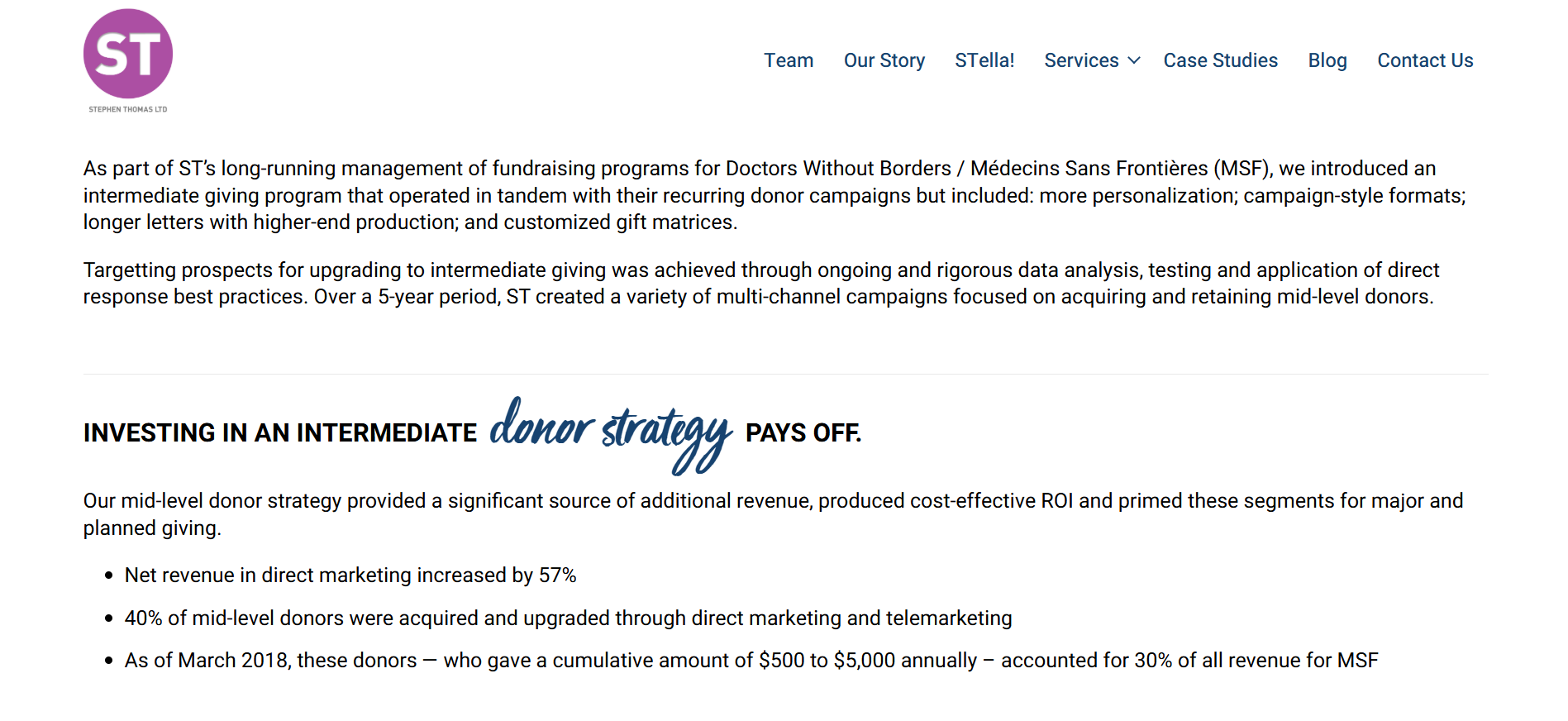
For schools, that usually means current parents, alumni by decade, grandparents, past parents, and faculty/staff. For nonprofits, it's often first-time donors, recurring donors, lapsed donors (12-24 months), mid-level donors ($1K–$10K), and event attendees who haven't given.
A working digital fundraising stack nowadays usually include:
This is just the bare minimum and you and/or your team will likely realize how many moving parts have dedicated tools as you build your strategy.
As for choosing the tools themselves, we usually see teams go for either an integrated platform that touches the entire donor journey, or a set of specialized tools to tackle each stage separately.
Ultimately, your mileage WILL vary even against similar teams but we recommend that all teams ask themselves these four questions:
Your website serves as the hub for all your digital efforts both for fundraising and beyond. Strong narratives, beneficiary accounts, and campaign updates give donors the context they need to feel connected to what they're funding. Other aspects such as donor testimonials or visible fundraising progress bars give them the confidence to act on it.
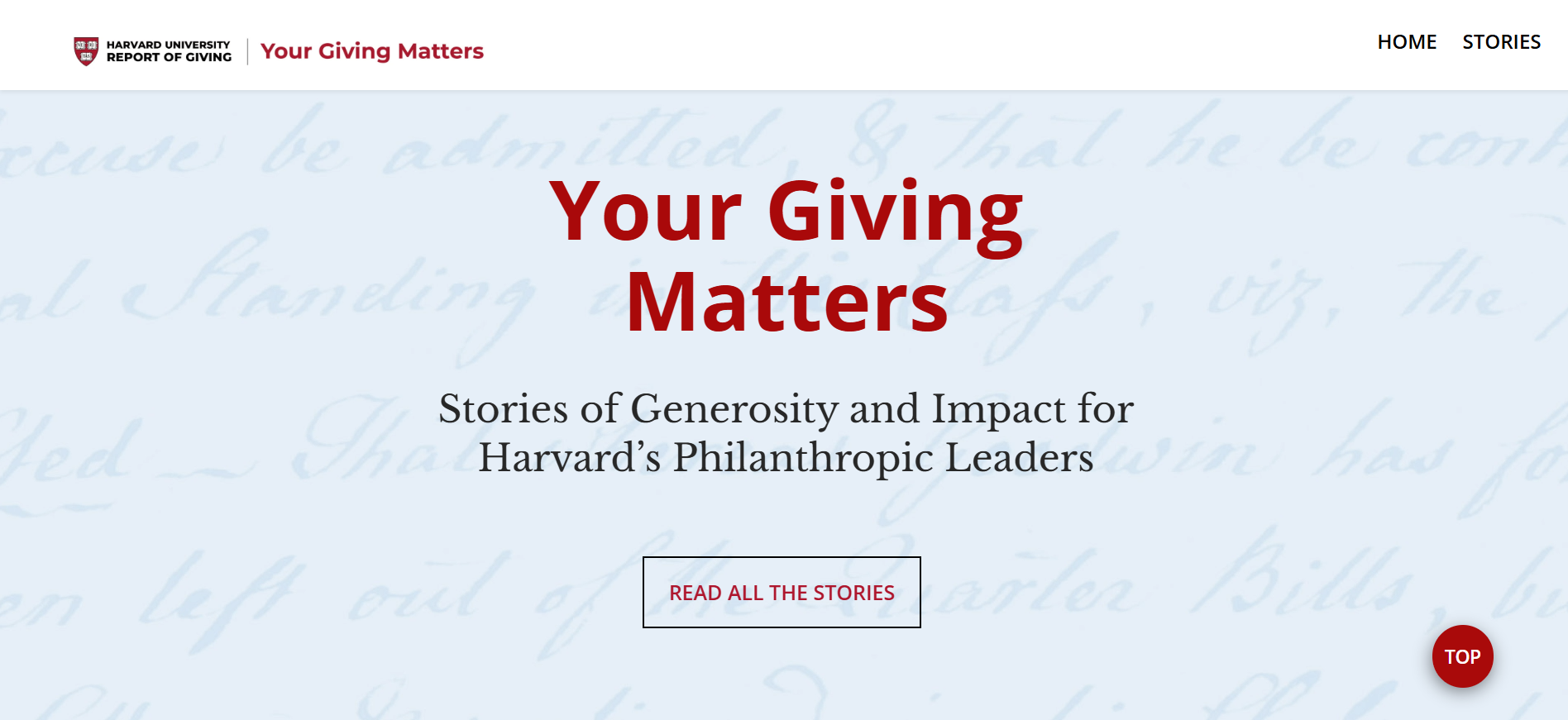
Closing the loop is just as important. Donors who can clearly see where their money went are significantly more likely to give again. Dedicated fund pages, impact summaries, and project updates go a long way toward building that transparency.
Website features to consider for schools and colleges:
Web features to consider for nonprofits:
A content calendar will naturally be a huge strategic checklist for your team. However, you might want to go one step further with a content engine (or at least a content strategy aimed long-term)
Both terms might seem synonymous but we do notice that many teams go from campaign to campaign, event to event, with only a few common threads between each other. The institutions and organizations that consistently raise money online have a small number of strong narratives that they tell in many forms across many channels. A research university might have three or four flagship stories per year and those stories show up as long-form features, short videos, Instagram carousels, email appeals, and giving day rallying cries. For teams without a dedicated video production resource, an ai video generator can help turn those stories into polished, shareable videos quickly without needing a full production budget.
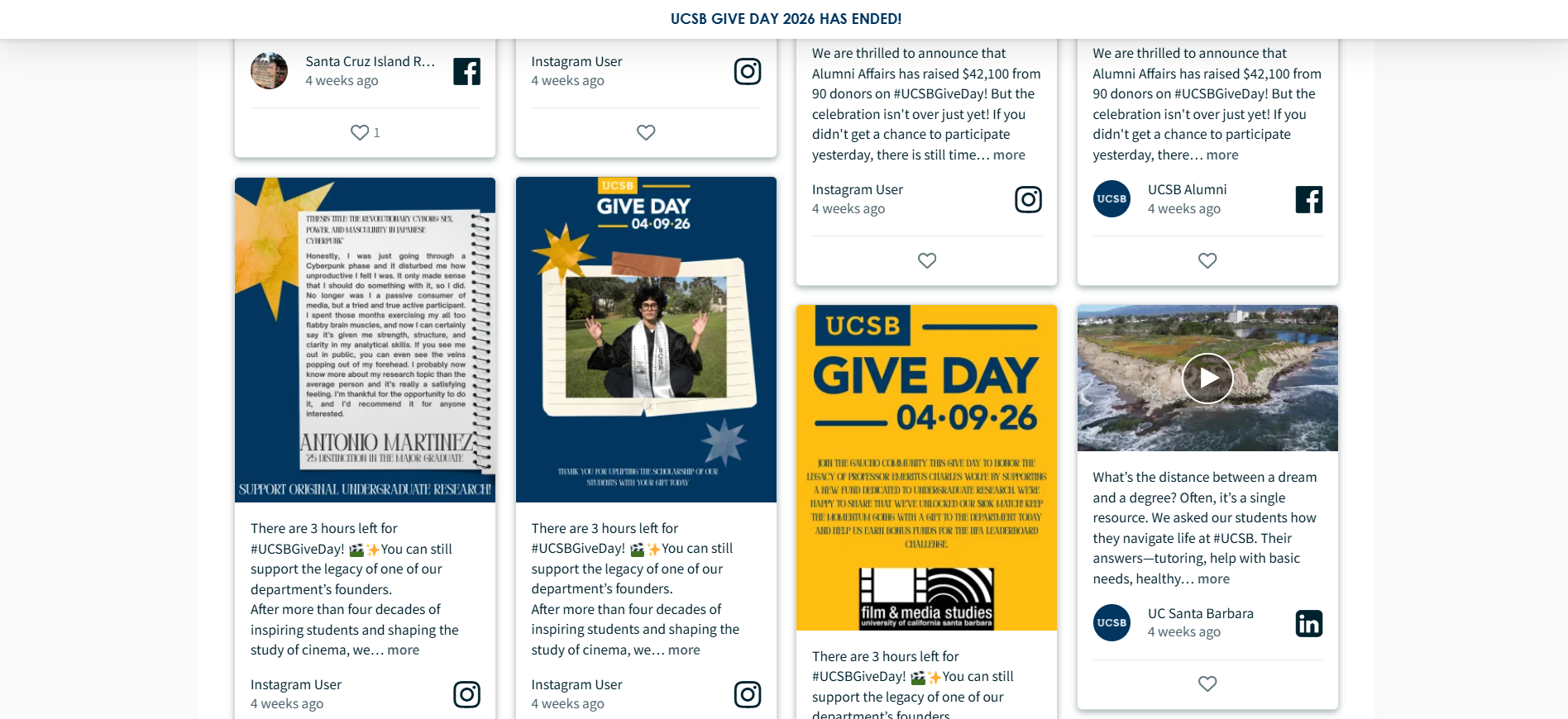
With donors becoming more selective than ever, you’ll need a content engine that unifies your storytelling across different channels, feels like communication worth listening to, and conveys your message at the right time to the right people.
Most fiscal years have natural high points such as year-end giving, giving days, spring appeals tied to graduations or mission moments, and fiscal year-end pushes in May or June.
When shaping your content engine, build the calendar around those anchors first. Layer in mid-level cultivation campaigns, recurring giving acquisition pushes, and lapsed donor reactivation between the peaks.
Leave room for reactive moments such as a news cycle that connects to your mission or a milestone that deserves a campaign. The best strategies don’t miss out on featuring a remarkable story
Beyond your institution or organization’s usual high and low points, also look at your year-on-year online traffic, event attendance, and giving patterns to surface potential yearly opportunities that you might have missed in the past. Together, these checks should give you a great idea of when you’ll want to push hard and how to go about it.
Vanity metrics will eat your strategy alive if you let them. The metrics that matter are:
Build a quarterly review rhythm where these numbers and their underlying causes get discussed honestly to constantly improve your digital fundraising strategy . While the strategy document you wrote in Q1 will remain useful, the tweaks you make in Q3 might be the turning point for years to come.
The sheer variety of data tools and metrics is a double-edged sword for advancement and nonprofit teams. Tracking way too many things at once can be counterproductive, so we’ve put together a table with the most helpful or insightful data points. Pick what’s needed based on your event formats, goals, and current capabilities.
| Category | Metrics to Track |
|---|---|
| Revenue | Total online revenue, average gift size, revenue by fund/designation, recurring vs. one-time revenue split, revenue per donor segment |
| Donor Growth | New donor count, first-time donor conversion rate, reactivated donor count, cost per acquired donor, channel attribution for new donors |
| Donor Retention | Year-over-year retention rate, lapsed donor rate, recurring donor retention rate, average donor lifespan, churn by segment |
| Engagement | Email open rate, click-to-open rate, event attendance rate, social media reach and shares, peer-to-peer participation rate |
| Conversion | Donation page conversion rate, form abandonment rate, CTA click-through rate, mobile vs. desktop conversion rate, average sessions before donation |
| Campaign Performance | Revenue per campaign, fund-specific revenue, giving day donor count, matching gift utilization rate, peer-to-peer revenue contribution |
| Email Health | List growth rate, unsubscribe rate, deliverability rate, bounce rate, revenue attributed per email send |
| Recurring Giving | Monthly recurring revenue (MRR), recurring donor upgrade rate, failed payment rate, recurring donor conversion rate from one-time donors |
| Fundraising Efficiency | Cost per dollar raised, fundraising cost ratio, return on ad spend (ROAS), staff hours per campaign |
| CRM Health | Duplicate record rate, missing or invalid email percentage, outdated communication preferences, untracked gift sources, data entry lag time |
Achieving high conversion rates boils down to one key aspect – providing a smooth, frictionless experience for the donors. Having said that, there are some common pitfalls teams might run into while organizing digital fundraising campaigns, highlighted below.
About 60% of regular donations were made through mobile. That’s a lot!
Forms, pages, and sites are often clunky, on a medium that offers the most convenience to donors. This often results in prospects dropping out at the last stage, after all the effort that went into convincing them. Make sure your pages are well-optimized for both desktops and mobile devices.
You might not be a fan of long screen times, but you can certainly take advantage of them.
People have grown accustomed to completing payments, big or small, through a single tap. They expect the same convenience here; donations are no exception.
Offer a good mix of payment options. Including credit cards, netbanking, and mobile-friendly options like digital wallets or text-to-give features means you won’t be missing out on the smaller donations especially.
The easier it is to donate, the more gifts you receive.
Whether it’s on your site, email campaigns, giving pages, or socials, having clear, concise messaging is extremely important. Get straight to the point, and avoid dumping jargon. Doing so might cause the prospect to lose attention and the interest to contribute.
Using simple, engaging language helps build trust and clarity. The objective, beneficiaries, and the importance of your campaign is all that matters, the rest is fluff.
Nothing is more annoying than processing fees, convenience charges or other unexpected components to show up out of nowhere on the final step. More often than not, this just leads to abandoned carts and you losing a potential donor.
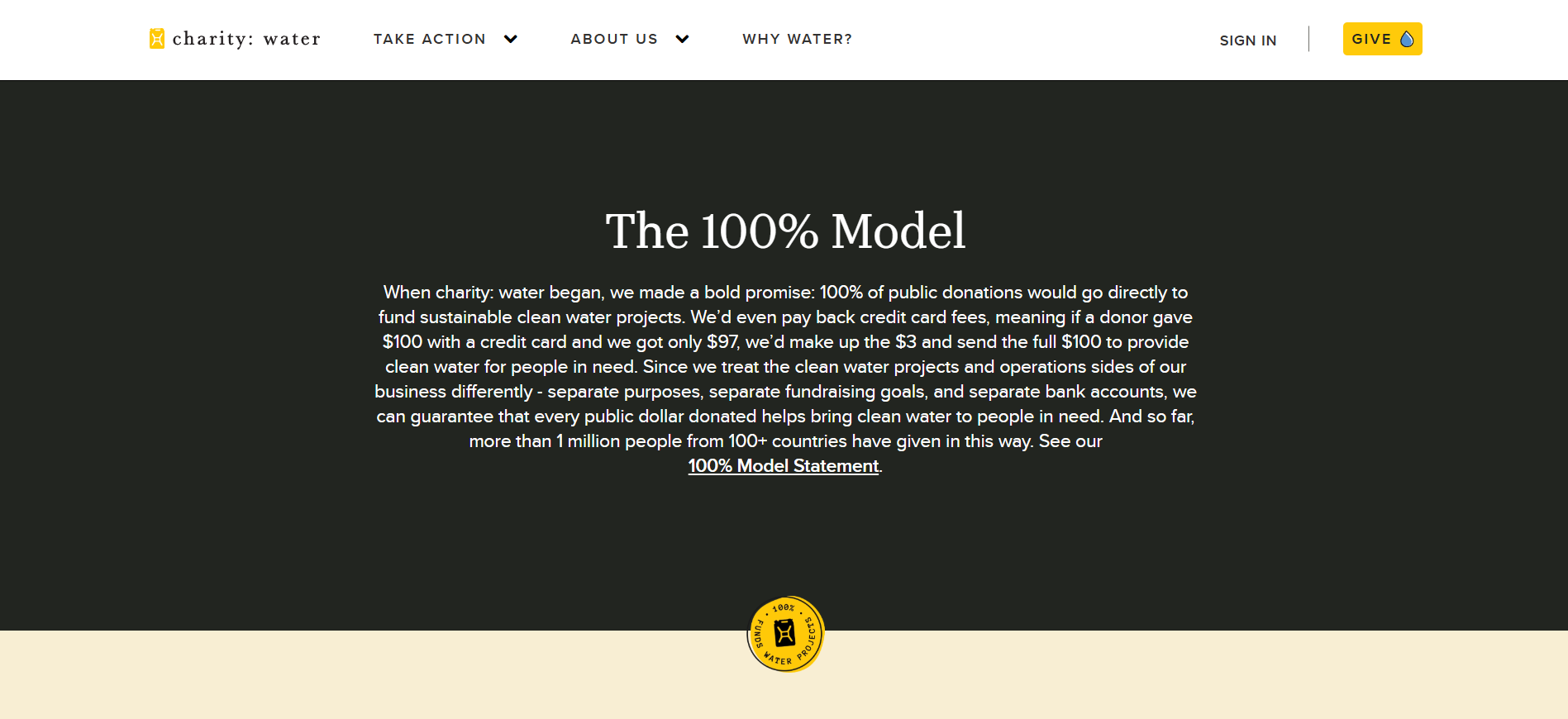
Always be upfront about all the costs involved during a transaction, or better yet, absorb them if you can.
Digital fundraising involves multiple teams and operations, often running concurrently. Scattering them across too many platforms is a recipe for chaos; a good platform should offer almost all the essential tools for online giving, while integrating seamlessly with other necessary software.
Almabase, in combination with a fundraising-focused CRM, is a powerful tool through which your team can frame and execute the strategies mentioned in this article. We can broadly classify the features under three important digital fundraising pillars:
If you’d like to explore Almabase’s capabilities more, it doesn’t get much better than a comprehensive tour of the platform. Book your demo here.
Subscribe
See how modern advancement teams bring alumni engagement and fundraising together.
Plan faster. Execute better
Explore free templates designed for alumni and fundraising teams.
.png)

.avif)
Hari Govind
%201.svg)
%201.svg)
%204.svg)




.svg)