Discover strategies for early alumni engagement and how alumni software can enhance career connections, personalization, and lifelong giving.

Sharada Koti
Published:
April 30, 2025

Discover AI Summary
• To truly engage alumni early, start by providing meaningful career and networking opportunities to students and recent graduates while they're still on campus. Think about how a robust mentorship program or dedicated job boards can keep them connected from day one, laying a strong foundation for future alumni engagement.
• Make the transition from student to alum effortless by automating welcome journeys and offering timely, helpful resources like guides for moving or interviewing tips. This thoughtful approach helps maintain strong alumni engagement and connection during a critical time.
• Forget generic mass emails; a scalable personalization strategy is vital for effective alumni relations and better donor participation. Leverage your platform to segment alumni by interests or graduation year, ensuring your communication and event invitations truly resonate.
• Cultivate a culture of giving from the start by making philanthropy fun and visible for young alumni. Gamified campaigns and transparent impact storytelling can encourage early, modest contributions, fostering long-term donor participation.
• Build strong micro-communities and affinity groups around shared interests to deepen alumni engagement and improve event management for niche gatherings. Empowering alums to connect over common passions creates a strong sense of belonging.
• Establish a long-term data strategy right from the start by integrating student data and encouraging self-service profile updates. Accurate CRM data is the backbone for personalized outreach, successful fundraising campaigns, and measuring overall alumni engagement impact.
Modern alumni engagement starts long before the first donation appeal or reunion invitation. Proactive alumni engagement begins when students are still on campus and making a bond with the institution. Keeping those bonds strong, however, gets complicated fast. This is where purpose-built alumni management software have come in over the past few years to change the game and help you do more, earlier, and better.
In this blog, we’ll explain why starting sooner leads to better relationships, and how to set your institution up for long-term success by making the most of alumni management systems and engagement platforms to solve issues and empower your team. Let’s get started.
Today’s alumni are looking for real value from their alma mater, especially regarding career growth, mentorship, and professional networking. Trying to fulfill all of this manually is nearly impossible, and honestly, not optimal for a modern advancement team to try to do so. Recent graduates and soon-to-be alumni are at pivotal points in their careers, eager for guidance, mentorship, and meaningful opportunities.
The months right after graduation are a critical and tricky window. New alumni are stepping into busy, unfamiliar lives, and staying connected with their alma mater isn't always at the top of their minds. That’s why meeting them where they are — with timely, meaningful touchpoints is so important. A modern alumni engagement platform helps you build those bridges early by having updated data, dedicated segments, and recent graduate-specific outreach to make the transition from student to alumni feel natural.
As your alumni base increases, bulk emails or one-size-fits-all newsletters will become increasingly less useful. Modern alumni expect well-timed and relevant communication from their alma mater. Delivering these personalized experiences manually across thousands of graduates is simply not practical. To make your personalization efforts scalable, you’ll want to:
You’ll want to present the idea of lifelong learning to your upcoming and recent graduates to highlight the idea that learning doesn’t end once they leave campus and that your institution is willing to be a long-term partner for their growth. Engaging young alumni with opportunities to further their skills keeps them connected long after graduation.
Philanthropy is a pillar of strong alumni programs, but it starts with cultivating the right mindset and experiences. Young alumni, in particular, are much more likely to give back when they feel involved and can see the impact of their contributions.
Engaged alumni most often cite personal connections—to people, passions, or activities—as the reason they stay involved. Creating affinity groups and micro-communities around these interests supports a sense of belonging while also narrowing the focus for targeted engagement.
Strong alumni engagement relies on accurate and up-to-date information. From the first student interaction, data should be captured, protected, and continuously updated to support outreach efforts and measure impact.
Early and intentional alumni engagement seems to be another underrated part of an increasingly complex alumni engagement process today. Alumni software empowers advancement teams to launch mentorship programs, simplify transitions, personalize outreach, nurture alumni volunteers, and connect across digital channels.
If you’re looking for a platform that provides:
Give us a shout and we’d be more than happy to talk to you on how we can help 🔽

Table of Contents
Subscribe
See how modern advancement teams bring alumni engagement and fundraising together.
Billionaire and former New York City Mayor Michael Bloomberg made his first donation of $5 to his alma mater, Johns Hopkins University, at the age of 23. Since then, he has donated close to $1.8 billion to support research, teaching, and financial aid at the university.
What if one of your young alumni is the next Michael Bloomberg? You see them every day in the hallways, on campus, and at events. They’re your future donors and advocates! And yet, we all know that engaging young alumni can be challenging. It takes time, energy, and resources to build lasting relationships with these future donors.
But exactly HOW do you engage with your young alumni, you ask? To answer this question, we spoke to Dr. Glenn Kosse in a recent LinkedIn live session. Dr. Glenn recently published his dissertation on “The Relationship Between Young Alumni Participation and Giving”, and he shared some expert insights on what it takes to get your young alumni engaged.
The average age of a young alum is between 22-32 years. However, this can vary depending on the type of institution. For example, a young alum from a business school would typically be older than a young alum from, let’s say, a university.
However, what remains constant is that most institutions classify those who’ve graduated in the last decade as their young alumni. In other words, they’re usually Graduates Of the Last Decade (or GOLD for short).
Between 2001 to 2014, alumni participation went down from 14% to 8.3%. Here’s what’s more alarming – although there has been a rise in the total gifts received, there has been a steady decline in the number of new donors.
With institutions struggling to build a fresh pipeline of new donors, this trend will only continue if we do not put the time, effort, and resources to meaningfully engage the young alumni.
If you take a quick look at all your major donors, you might notice that their first gift was probably a few dollars when they were just out of college. Young alumni engagement is a long-term game where you sow the seeds while they’re young, nurture them consistently, and reap the benefits down the line.
💡A young alum donor is 5.6 times more likely to give in the future than a young alum non-donor.
The student experience has a strong influence on future alumni giving. Positive experiences like developing deep relationships with faculty and staff, receiving financial aid/scholarships, and having a holistic learning experience can play a vital role. After all, those who strongly identify with their institution are more likely to give back in the future.
Being an alum means you're part of something bigger than yourself – you belong to a community that can help shape your future. Those with enriching alumni experiences are more likely to give back to their alma mater. That’s why it’s necessary for your institution to create alumni-centric programs that cater to your alumni’s needs at various stages in their lives.
Here are a few low-effort, high-impact ideas to elevate alumni experience:

Motivation to give can also stem from a personal affinity for a cause or mission. Whether this originates from past or present experiences, people develop connections with the institution and become inspired to lend support.
Demographic characteristics such as age, proximity, income, and gifts to other organizations are predictors of giving as well.
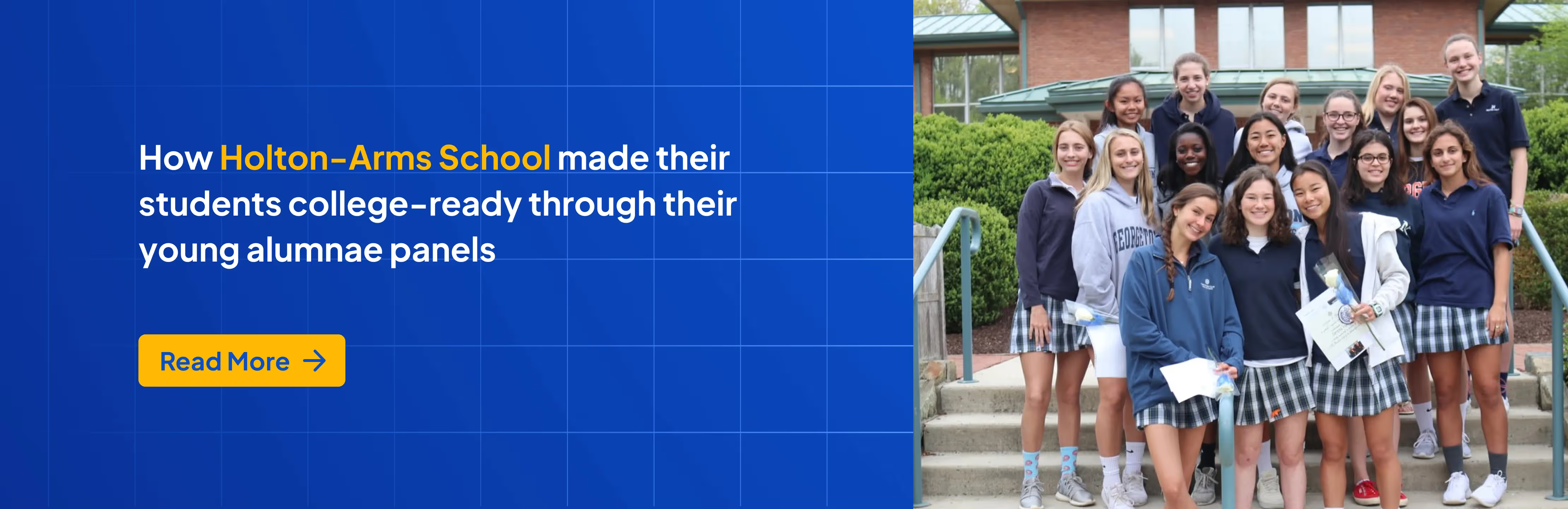
Bellarmine University pioneered a young alumni mentorship program in collaboration with the career services department to connect students with alumni based on their career paths and shared interests.
🔥95% of the participants said they felt a deeper sense of connection to their alumni association and 99% of them said that they would recommend it to their friends
Focus on interactive and skill-enhancement workshops - Resume reviews; Workshops on Office etiquette, Soft Skills, and Professional Skills.
Every institution has an alumni base that they can boast of. So, why not leverage it to create opportunities for both the alumni and students?
Learning needn’t end after graduation. Help your alumni pursue personal interests, passions, or professional ambitions by creating a repository of courses that help with upskilling. You could also host webinars and create content repositories that provide value to your alumni.
For institutions with different segments of alumni (based on interests, purposes, life experiences, and social identity), affinity groups help create a safe space for alumni where they can communicate freely and collaborate on ideas.

If there’s one thing alumni around the world will always love, it’s to get together for a social event and reminisce the good old days. Why not leverage this and create fun events that will help your alumni connect with each other? From cocktail parties and sporting events, to live game screenings and happy hours – the possibilities are endless!
A young alum who attended an event gave 2x more compared to those who didn’t attend.
So that wraps up our take on why young alumni engagement is the need of the hour. We thought we'd leave you with Glenn's thoughts on young alumni engagement and its impact on giving and participation.
“We have found that young alumni look for engagement that goes beyond social events. While social activities are important, initiatives that provides career advice, mentorship, and potential career opportunities can help leverage the alumni association’s role with new graduates, and create a positive association with engagement and giving.
”Studies show that those who get engaged and give at a young age are more likely to give and remain engaged throughout their career. Engaging alums with current students keeps the mission and the outcomes of the university on top of their minds and reinforces engagement.”

Glenn F. Kosse, Ph.D. is Vice President of H2R Consulting LLC and focuses his expertise on fundraising development, non-profit management, and strategic planning. Prior to joining H2R, he enjoyed a 35-year career in development and non-profit leadership experience with Bellarmine University, University of Louisville, and St. Jude Children’s Research Hospital in increasing levels of leadership.
Source: Glenn Kosse's dissertation

Young Alumni Engagement - Need of the Hour
How exactly do you engage with your young alumni? We spoke to Dr. Glenn Kosse in a recent LinkedIn live session to answer this question.
Lorem ipsum dolor sit amet, consectetur adipiscing elit. Suspendisse varius enim in eros elementum tristique. Duis cursus, mi quis viverra ornare, eros dolor interdum nulla, ut commodo diam libero vitae erat. Aenean faucibus nibh et justo cursus id rutrum lorem imperdiet. Nunc ut sem vitae risus tristique posuere.
As an institution, you are naturally interested in the professional success of your alumni. While many graduates can find their own way or may even prefer to do so, it is important to have a robust system in place to ensure young alumni can start out on the right foot.
First, it is important to understand the unique situation that the young alumni and fresh graduates of today find themselves in. In the post-COVID job market, remote and hybrid work models have become more of a norm than ever before, yet many large businesses that had overhired during the pandemic have started to cut down, saturating the job searching market massively. This is just one example of a unique challenge that young alumni have to face today.
At the end of the day, communication and goodwill alone won’t give your new batch of alumni the desired transition to a professional career if you don’t have the right resources and programs in place. Thankfully, the past decade has taught us valuable lessons in terms of options that institutions can take. Here’s a brief look at some of the commonly employed strategies:
Establishing connections and bringing awareness to opportunities have always been major hurdles for graduates who are only just beginning to explore their field on a professional level. Online alumni communities allow younger alumni to connect with peers and staff easily. Today, the best alumni networks also provide a unique opportunity for international alumni to stay involved and find opportunities that they may have otherwise missed out on. If you need some inspiration, check out how Punahou School built a global alumni community!
In the past, alumni events were synonymous with simple reunion dinners or fundraisers. Nowadays, it is a much more flexible and interactive affair. The best institutions create value for both young and older alumni through enjoyable activities. These events can range from conventions, creative luncheons, or even a rubber duck race! What matters is that young alumni, donors, and parents get a chance to socialize and form connections with both the institution and their peers.
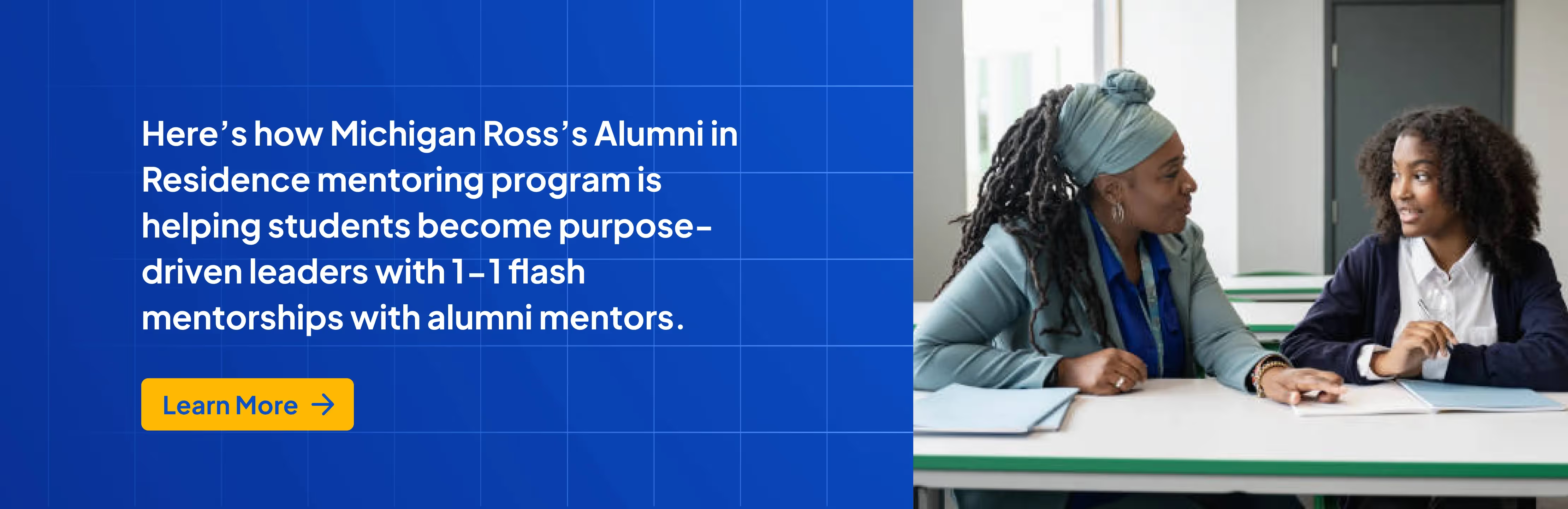
Mentorship programs allow young alumni to learn from fellow alumni who have gathered expertise in a specific field. As young alumni gather more experience, it also gives them an opportunity to give back by becoming mentors themselves and cultivating their relationship with their alma mater. If you are wondering how to set up the right mentorship program for your institution, make sure to check out this blog to help you out.
The most straightforward way to help young alumni get started on their professional career is to have career opportunity systems put in place. Job placements, internship invitations, and facilitating campus drives from attractive employers are just some of the more popular ways. It also allows alumni to give back by creating opportunities. These systems can be made flexible depending on the resources available and willingness of employers and alumni alike.
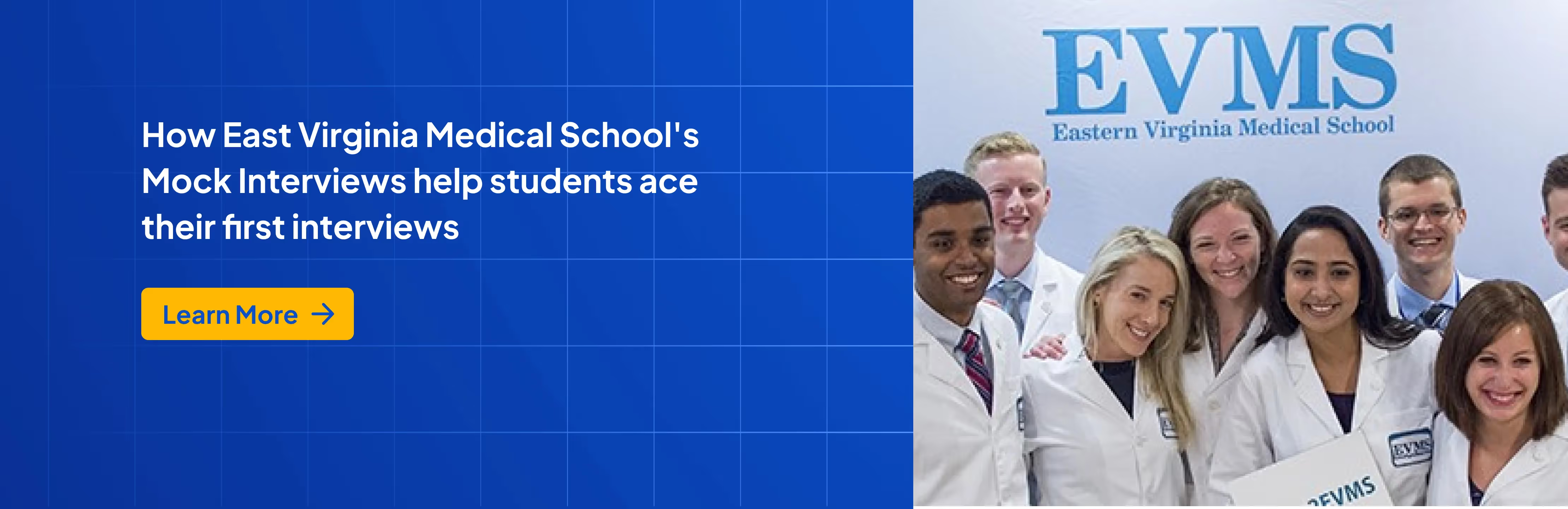
It is also important to consider the next batch of young alumni who will soon graduate. You can tap into your network of employers or businesspeople to host workshops, lectures, and training events at your institution. Successful alumni are an excellent source of inspiration as they have the required expertise as well as a personal connection to their alma mater, making it easier for audiences and staff to connect with them.
At the end of the day, what truly matters is that the institution feels like a supportive entity for young alumni at a very crucial and often uncertain time for them. From an institution’s perspective, this can be seen as the last step for a successful graduate as well as the first for a satisfied and promising alumni. It is also crucial to keep in mind the unique needs and circumstances of your institution. Keep in mind your budget, current alumni pool, specialized fields, etc., to find the right way to connect both your current and new generation of alumni.
Need some help getting started or leveling up your young alumni relation efforts? Book a demo or reach out to us. We’re always happy to help!

Supporting Young Alumni in Their Transition to the Workforce
For young alumni, it can be daunting to step into today's job market. Here are some ways you can help them as an institution.
Lorem ipsum dolor sit amet, consectetur adipiscing elit. Suspendisse varius enim in eros elementum tristique. Duis cursus, mi quis viverra ornare, eros dolor interdum nulla, ut commodo diam libero vitae erat. Aenean faucibus nibh et justo cursus id rutrum lorem imperdiet. Nunc ut sem vitae risus tristique posuere.
If you’re someone handling alumni engagement for your school, you know that engaging recent graduates is one of the most challenging aspects. So, before diving right in, let’s take a closer look at why young alumni need to be engaged and its long-term impact.
Young alumni have the potential to turn into future major donors. But, they must be approached the right way. Billionaire and former New York City Mayor Michael Bloomberg’s first donation to his alma mater, Johns Hopkins University, was at the age of 23 and the amount was $5. Since then, he has donated close to $1.8 billion to support research, teaching, and financial aid at the university.

Yep, that’s accurate.
Chances are this segment of your alumni population won’t respond to your fundraising asks for the next few years. They are just starting a career and personal financial problems such as paying off student loans or relocating to a new city for college are likely to get prioritized over donating to or engaging with their alma mater.
While young alumni may not be the biggest contributors over the next few years, they can be of great help to your school by offering you their valuable time, in the form of volunteer work and internships.

Here’s a look at the 6 most effective strategies employed by schools to engage their young alumni.
While this is something that is recommended irrespective of whether or not your school is catering to young alumni, having a responsive alumni website is especially great for capturing the attention of the younger generation. As the younger generation is more inclined towards using mobile devices, being able to easily access all the websites and their resources on their devices helps provide more opportunities for them to engage with their alma mater.
Take a look at Nicholls State University’s up-to-date and easily accessible mobile-friendly website below.

As recent graduates, your alumni already have a lot to worry about. The key to building a lasting relationship is to address these issues and provide them with valuable support. This could be in the form of workshops, job prospects, mentorships, social networking mixers, or even emotional support.

A time-tested technique for finding out what your young alumni would be most interested in, alumni surveys are great at saving time and effort. Creating a short survey asking alumni what they would like to hear about from their alma mater is an effective way of grabbing attention and delivering value. There are various tools such as Typeform and Survey Monkey that can help you create short surveys. For example, The College of Idaho took a short survey that revealed ‘Financial Planning’ as the most pressing concern for a majority of young alumni. Based on the results of this survey, the college organized a free workshop on Saving Money & Paying Off Debts, as a way to support its young alumni.

Instead of the usual marketing email blasts, focused emails targeted at specific segments of alumni are bound to yield better results. The most effective way to keep young alumni engaged with emails is to provide them with consistent value, right from the start. If you are trying to engage alumni who recently graduated, targeting them with emails that showcase relevant job opportunities is the best way to do it.
Take a look at how T. Howard Foundation, a non-profit organization based out of Silver Spring, Maryland, shares job opportunities with its young alumni via emails.

According to a recent study published by Broadband Search, 79% of college graduates use at least one social media site.
Social media is a great tool for engaging young alumni not just because of its high accessibility and adaptability but also because of the flexibility it provides. There is no limit to how creative you can get and that’s what resonates the most with young alumni. Incorporating more video content and trying to create campaigns that urge alumni to take action are ideal components of a great social media strategy. Here’s how William Peace University drew the attention of its young alumni and got them talking about their upcoming reunion.

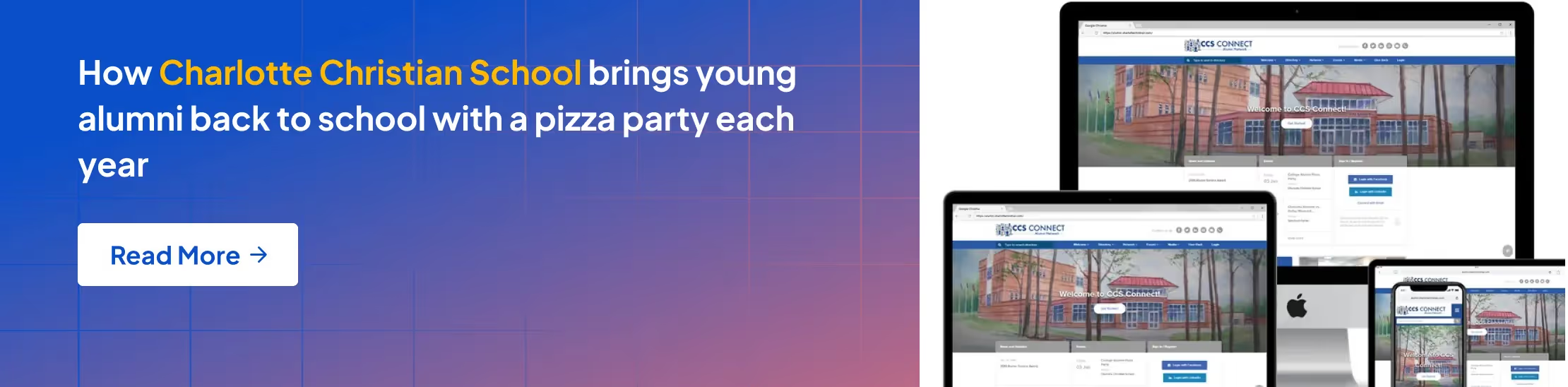
While having a digital engagement strategy in place is pivotal, completely depending on it is not recommended. In-person interaction is a fundamental part of fostering lasting relationships with young alumni. Here’s how our customer, Charlotte Christian School got this right.
As a way of extending support to young alumni, Charlotte Christian School sent out a video featuring beloved teachers wishing alumni good luck ahead of their exams and conveying to them how much they care. The video also acts as a special appeal for alumni to come back to school for a wonderful time with their teachers and friends.


6 strategies for increasing engagement from young alumni
Engaging recent graduates of alumni engagement can be a challenging aspect. Here’s a look at the 6 effective strategies peers use to engage their young alumni.
Lorem ipsum dolor sit amet, consectetur adipiscing elit. Suspendisse varius enim in eros elementum tristique. Duis cursus, mi quis viverra ornare, eros dolor interdum nulla, ut commodo diam libero vitae erat. Aenean faucibus nibh et justo cursus id rutrum lorem imperdiet. Nunc ut sem vitae risus tristique posuere.

.svg)

.avif)
.webp)