Every institution knows the value of personalizing alumni engagement. But how can you scale your personalization efforts as your alumni base grows?

When it comes to personalization, we all know that a simple “Hi, {{${first_name}}}” is no longer enough. It involves understanding their interests, history with the institution, and current needs to deliver relevant and timely communication
While the topic of personalizing alumni engagement is no longer new to any of us, scaling personalization efforts is an increasingly important follow-up problem that needs solving. With thousands of alumni across different backgrounds, locations, and careers, how can institutions create a truly tailored experience for each individual?
In this blog, we’ll explore some strategies and tools that can help institutions scale their alumni engagement personalization efforts.
Start by segmenting your alumni based on various criteria such as graduation year, degree program, geographic location, and past engagement levels. Advanced segmentation can also include career fields, personal interests, and giving history. By creating detailed alumni profiles, you can tailor your messages to resonate with specific groups. If you already have all the required information you need, make sure that it is organized effectively for analytics tools to read from.
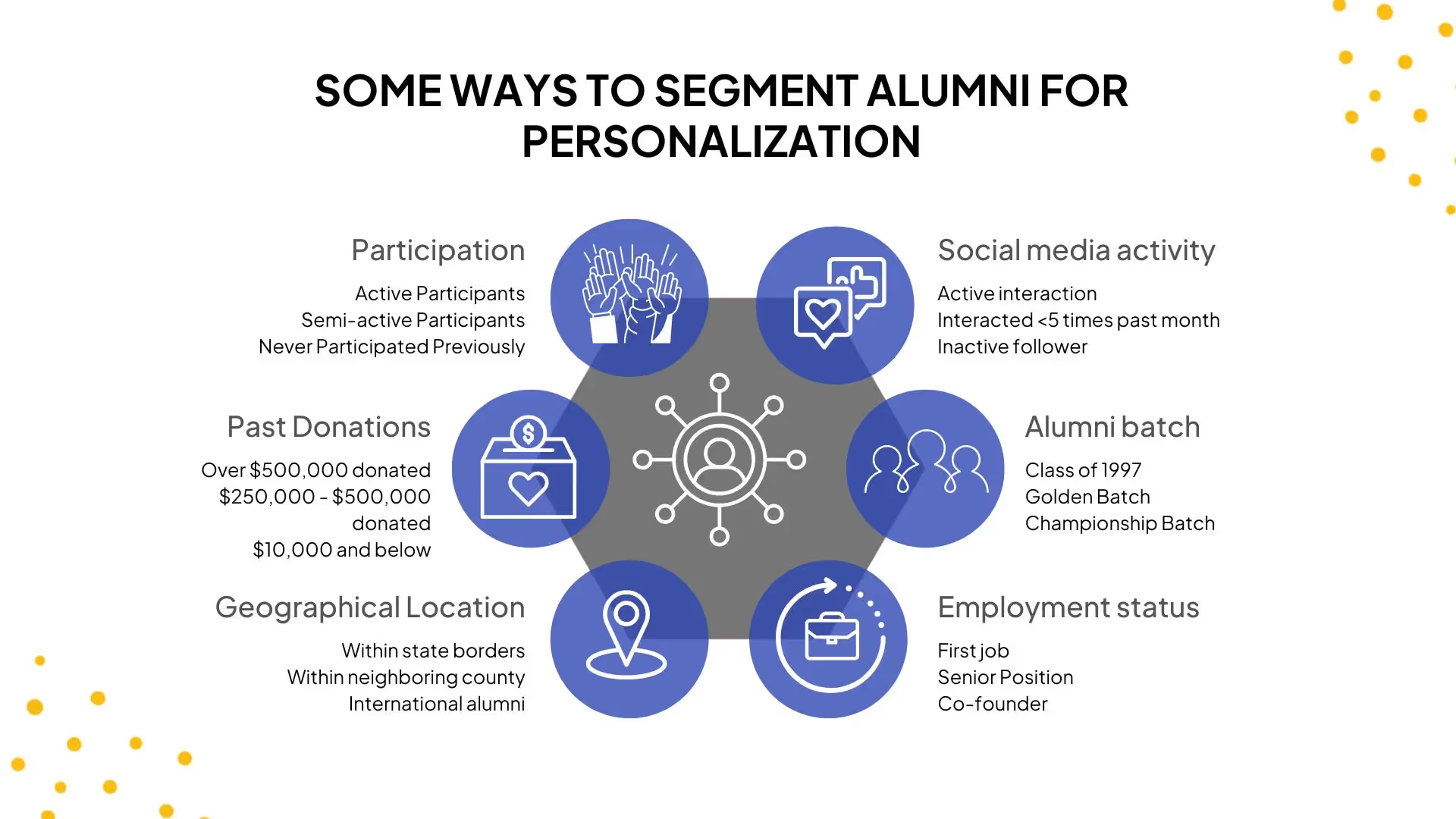
Utilize data analytics to gain insights into alumni behavior and preferences. This includes tracking event attendance, email open rates, social media interactions, and donation patterns. Let’s say you noticed that 30% of your alumni have browsed the mentorship program but haven't enrolled. With this insight, you can send targeted emails highlighting the benefits of joining, featuring success stories, and offering a simple sign-up process to boost participation. Analytics can help identify trends and identify gaps or pain points in your engagement strategy, allowing for more targeted and effective communication.
Invest in a robust CRM system that supports automation. Automated workflows today can trigger very well-personalized messages based on alumni actions or milestones. For example, an automated email congratulating an alum on their promotion could have details on their employer, how long they’ve been there, what roles they’ve worked there, and also mention any institution events or resources that they might be interested in.
.avif)
.avif)
Customize the content of your communications to align with alumni interests and engagement history. This could involve sharing news about specific academic departments, highlighting alumni success stories in relevant industries, or inviting them to events in their area based on their availability. Personalization should extend to all touchpoints, including emails, social media, and direct mail.
Dynamic content allows you to tailor the information presented to each alum based on their profile. For example, an email newsletter can have different sections that change according to the recipient’s interests or past interactions. This ensures that each alum receives content that is most relevant to them.
Provide alumni with engagement opportunities that match their interests and availability. This could include virtual events, mentorship programs, volunteer opportunities, or exclusive alumni groups depending on their professions, years of experience, past participation, etc. By offering a variety of options, you cater to diverse preferences and increase overall participation.
Different alumni prefer different communication channels. While some may prefer emails, others might be more active on social media or prefer text messages. Use a multi-channel approach to ensure you reach alumni where they are most comfortable and likely to engage. Be sure to maintain an active presence and make your institution as approachable as possible.
Surprisingly, 52% of alumni organizations have never conducted a survey of their alumni. Regularly seek feedback from your alumni to understand what’s working and what’s not. Surveys, focus groups, and direct conversations can provide valuable insights. Use this feedback to continuously refine and improve your personalization strategies.
Most modern alumni engagement tools today support personalization to a good extent. However, you need to think of a long-term strategy when you consider scalability. [Whether you prefer to work with an integrated tool or multiple best-in-class tools], you need to make sure that it fits in with your existing systems and staff. Products/software such as Almabase also give you the choice of choosing a few features to complement your setup such as [automated emails], as well as a modular approach if you want something more extensive. If you plan to build a platform that your alumni will love engaging with, you need tools that centralize data, create effective segments, and enable personalized communication at scale, streamlining your engagement efforts.
Today, making your efforts at personalizing alumni engagement scalable is not only possible but also essential for building lasting relationships and fostering a loyal alumni community. By taking advantage of data, automation, and strategic segmentation, institutions can deliver tailored experiences that enhance engagement, drive participation, and strengthen the bond between alumni and their alma mater.
Table of Contents
Subscribe
See how modern advancement teams bring alumni engagement and fundraising together.
We’ve come a long way from relying on large registry books to sprawling Excel sheets, and now to databases. An alumni database is a robust, interactive system to record alumni information as the data can be accessed, represented, and used to fuel powerful digital initiatives. That last bit is important because having a well-oiled database is only as effective as how you use it. In today’s blog, we’ll go over some ways in which you can maximize the potential of your institution’s database for higher fundraising success:
Any good giving campaign today needs to know for sure what kind of alumni they want or can reach out to. This is where having a well-built database comes in handy. Having detailed records of past donations is a great way to guide your fundraising strategy. A regularly updated database can take your planning further to an even higher level through details such as stock ownership, business affiliations, political donations, real estate value, etc. to help you find the perfect prospects for your giving campaign.
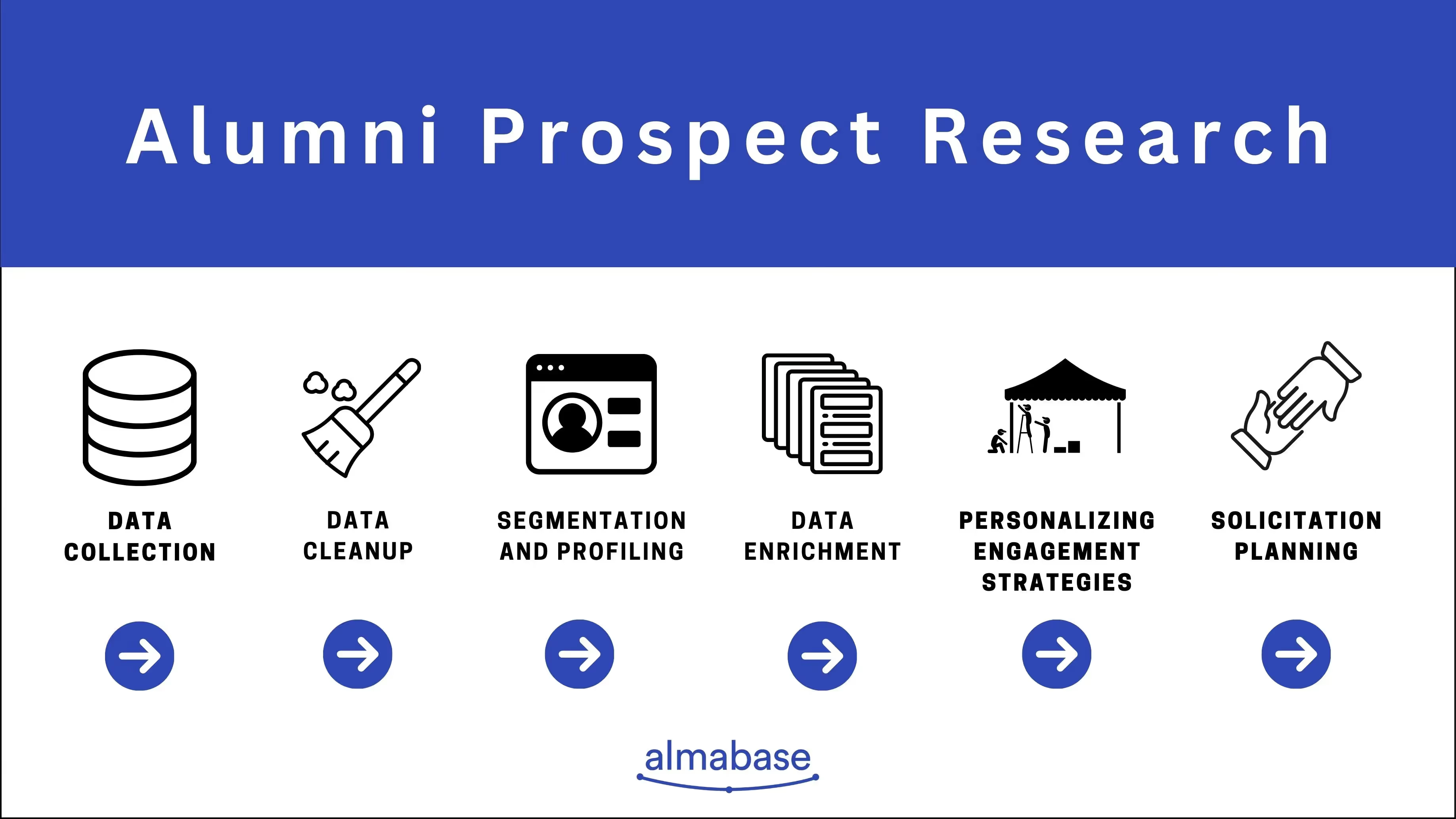
Modern alumni database tools are capable of automated and customizable segmentation. This can help you create more targeted giving campaigns. Take the following common segmentations for example:
You can already start to imagine a more targeted experience based on the above examples. However, it is important to remember that you’ll need to ensure that your database is updated regularly for all your segmentation needs.
CRM (Customer Relationship Management) systems enhance the usability of your data, enabling you to take advantage of powerful automation features that do the menial tasks such as personalizing emails based on donor segments, sending surveys, requesting feedback, etc. in a system that continuously updates with each alumni interaction.
Matching gifts have emerged as a great way to attract donors, amounting to 2 to 3 Billion USD of donations annually. Donors can be sure that their donations are being multiplied without any additional cost from themselves. A customizable database should allow you to segment prospective donors who have employers that provide matching gift opportunities, allowing you to create targeted communication strategies for them. On the flip side, it will be crucial to ensure your database is up to date to ensure that any career changes from your alumni are accounted for.
Donor retention is crucial and making sure your donors feel appreciated is a huge part of it. A well-built database will be able to categorize donors based on gift size, location, physical presence, etc. to allow you to send gifts, emails, and other forms of appreciation in a more personalized way. This will be especially helpful for multi-channel giving campaigns where you may want to thank donors in different channels while making sure nothing feels generic.
It is crucial to look back at your most recent giving campaign (or even group a few recent ones) and see where you can improve. While you may have noticed a lot of verbal feedback, it is also important to consult your data. Any decent database will work well with tools that can visualize reports for you to easily see what you got right and where you can do better. It should also allow you to compare it with past giving campaigns.
While AI/ML technologies are very much still finding their feet in advancement, it is important to understand the potential they hold, and whether that suits you. Even for simple implementations such as a chatbot to answer potential donor questions, you want to make sure it provides the right information, and that depends entirely on the data you are able to train it on. A comprehensive, well-structured database is the foundation of any technological implementation today.

How to Leverage Your Alumni Database to Drive Fundraising Success
Learn how your alumni database ensures fundraising success from prospect research and alumni segmentation all the way to measuring results and more.
Lorem ipsum dolor sit amet, consectetur adipiscing elit. Suspendisse varius enim in eros elementum tristique. Duis cursus, mi quis viverra ornare, eros dolor interdum nulla, ut commodo diam libero vitae erat. Aenean faucibus nibh et justo cursus id rutrum lorem imperdiet. Nunc ut sem vitae risus tristique posuere.
Digitization has changed the definition of engagement. We have emerged to live in a new digital ecosystem, where everything important to us must be in our grasp, and engagement must feel easy and personal.
Alumni Relations are not exempt from these expectations. And so, to our best efforts, we leverage solutions to give our alumni experiences that align with their expectations.
.jpeg)
Where, then, may the gap exist?
It's in how we limit our lens to view their engagement in sign-ups, gifts, and event registrations. But, Alumni Relations have a much larger scope.
Sign-ups are a critical measure of how well our constituents have adopted the platform, but they tell us only half the story.
They don't give us a holistic view of engagement, which can mean many more activities beyond sign-ups, event registrations, and gifts - activities that happen only once a year, disregarding the many other ways they engage with us.
Moreover*, sign-ups* don't align with the tendencies of our alumni; our alumni sign up on the platform, but how often are they logging in to engage?
To overcome this, Almabase enables constituents to engage without necessarily going through the hassle of logging into the platform every time.

Our alumni are engaging with us in many ways throughout the year; they are replying to emails, liking social posts, visiting a job board, or viewing an archive of newsletters - all of which have taken much effort from the Alumni Relations office to set up.
Each interaction tells us so much more about them, giving us additional opportunities to engage them further.
And yet, these engagement activities don't show up in our reports, leading us sometimes to wonder why our efforts don't lead to higher engagement.
Almabase will soon revamp its admin dashboard to start helping us shift from focusing solely on sign-ups to viewing results of everything our alumni do across channels and programs, all at our fingertips.
This change will give us a view of how many alumni have engaged and in which ways, showing us an instant view of the value we create for alumni and a better sense of direction for us.
Stay tuned for early access to the revamped admin dashboard, which will come your way shortly.

Engagement standards have evolved, and so should our ways of viewing them
Digitization has changed the definition of engagement. We have emerged to live in a new digital ecosystem, where everything important to us must be in our grasp, and engagement must feel easy and personal.
Lorem ipsum dolor sit amet, consectetur adipiscing elit. Suspendisse varius enim in eros elementum tristique. Duis cursus, mi quis viverra ornare, eros dolor interdum nulla, ut commodo diam libero vitae erat. Aenean faucibus nibh et justo cursus id rutrum lorem imperdiet. Nunc ut sem vitae risus tristique posuere.
If you’re someone handling alumni engagement for your school, you know that engaging recent graduates is one of the most challenging aspects. So, before diving right in, let’s take a closer look at why young alumni need to be engaged and its long-term impact.
Young alumni have the potential to turn into future major donors. But, they must be approached the right way. Billionaire and former New York City Mayor Michael Bloomberg’s first donation to his alma mater, Johns Hopkins University, was at the age of 23 and the amount was $5. Since then, he has donated close to $1.8 billion to support research, teaching, and financial aid at the university.

Yep, that’s accurate.
Chances are this segment of your alumni population won’t respond to your fundraising asks for the next few years. They are just starting a career and personal financial problems such as paying off student loans or relocating to a new city for college are likely to get prioritized over donating to or engaging with their alma mater.
While young alumni may not be the biggest contributors over the next few years, they can be of great help to your school by offering you their valuable time, in the form of volunteer work and internships.

Here’s a look at the 6 most effective strategies employed by schools to engage their young alumni.
While this is something that is recommended irrespective of whether or not your school is catering to young alumni, having a responsive alumni website is especially great for capturing the attention of the younger generation. As the younger generation is more inclined towards using mobile devices, being able to easily access all the websites and their resources on their devices helps provide more opportunities for them to engage with their alma mater.
Take a look at Nicholls State University’s up-to-date and easily accessible mobile-friendly website below.

As recent graduates, your alumni already have a lot to worry about. The key to building a lasting relationship is to address these issues and provide them with valuable support. This could be in the form of workshops, job prospects, mentorships, social networking mixers, or even emotional support.

A time-tested technique for finding out what your young alumni would be most interested in, alumni surveys are great at saving time and effort. Creating a short survey asking alumni what they would like to hear about from their alma mater is an effective way of grabbing attention and delivering value. There are various tools such as Typeform and Survey Monkey that can help you create short surveys. For example, The College of Idaho took a short survey that revealed ‘Financial Planning’ as the most pressing concern for a majority of young alumni. Based on the results of this survey, the college organized a free workshop on Saving Money & Paying Off Debts, as a way to support its young alumni.

Instead of the usual marketing email blasts, focused emails targeted at specific segments of alumni are bound to yield better results. The most effective way to keep young alumni engaged with emails is to provide them with consistent value, right from the start. If you are trying to engage alumni who recently graduated, targeting them with emails that showcase relevant job opportunities is the best way to do it.
Take a look at how T. Howard Foundation, a non-profit organization based out of Silver Spring, Maryland, shares job opportunities with its young alumni via emails.

According to a recent study published by Broadband Search, 79% of college graduates use at least one social media site.
Social media is a great tool for engaging young alumni not just because of its high accessibility and adaptability but also because of the flexibility it provides. There is no limit to how creative you can get and that’s what resonates the most with young alumni. Incorporating more video content and trying to create campaigns that urge alumni to take action are ideal components of a great social media strategy. Here’s how William Peace University drew the attention of its young alumni and got them talking about their upcoming reunion.

While having a digital engagement strategy in place is pivotal, completely depending on it is not recommended. In-person interaction is a fundamental part of fostering lasting relationships with young alumni. Here’s how our customer, Charlotte Christian School got this right.
As a way of extending support to young alumni, Charlotte Christian School sent out a video featuring beloved teachers wishing alumni good luck ahead of their exams and conveying to them how much they care. The video also acts as a special appeal for alumni to come back to school for a wonderful time with their teachers and friends.


6 strategies for increasing engagement from young alumni
Engaging recent graduates of alumni engagement can be a challenging aspect. Here’s a look at the 6 effective strategies peers use to engage their young alumni.
Lorem ipsum dolor sit amet, consectetur adipiscing elit. Suspendisse varius enim in eros elementum tristique. Duis cursus, mi quis viverra ornare, eros dolor interdum nulla, ut commodo diam libero vitae erat. Aenean faucibus nibh et justo cursus id rutrum lorem imperdiet. Nunc ut sem vitae risus tristique posuere.

.svg)

.avif)
.webp)