Know the best practices for writing effective emails that maximize your open rates and replies. Read these 5 tips that all the email tricks on the internet boil down to.
Published:
September 26, 2017
Updated:
April 16, 2025

Is sending out periodic e-mails to your alumni an important part of your job?
If yes, congratulations you are among the 46% of the schools who have recognized the need for engaging alumni over emails and newsletters.
Did you know?
61 % of all the communication with alumni is via e-mails.
But an alum on an average receives 16 e-mails in a year and there has been a 23.4 % increase in opt-outs of the communication.
What do all these stats point to? There is a clear room for improvement in this regard. In the age of too much information sending out e-mails that people love is a rare talent indeed. But don’t worry, we got your back.
In this post, we’ll cover some of the best practices for writing effective alumni emails that maximize your open rates and replies. When we're talking about creating an effective alumni message, there are 5 things that all the email tricks on the internet boil down to:
1. Find a reason to connect
2. Tell them why they should care
3. Bridge the gap
4. Give a clear CTA (Call-To-Action)
5. Write the subject
Let's take a deeper look at each of these.
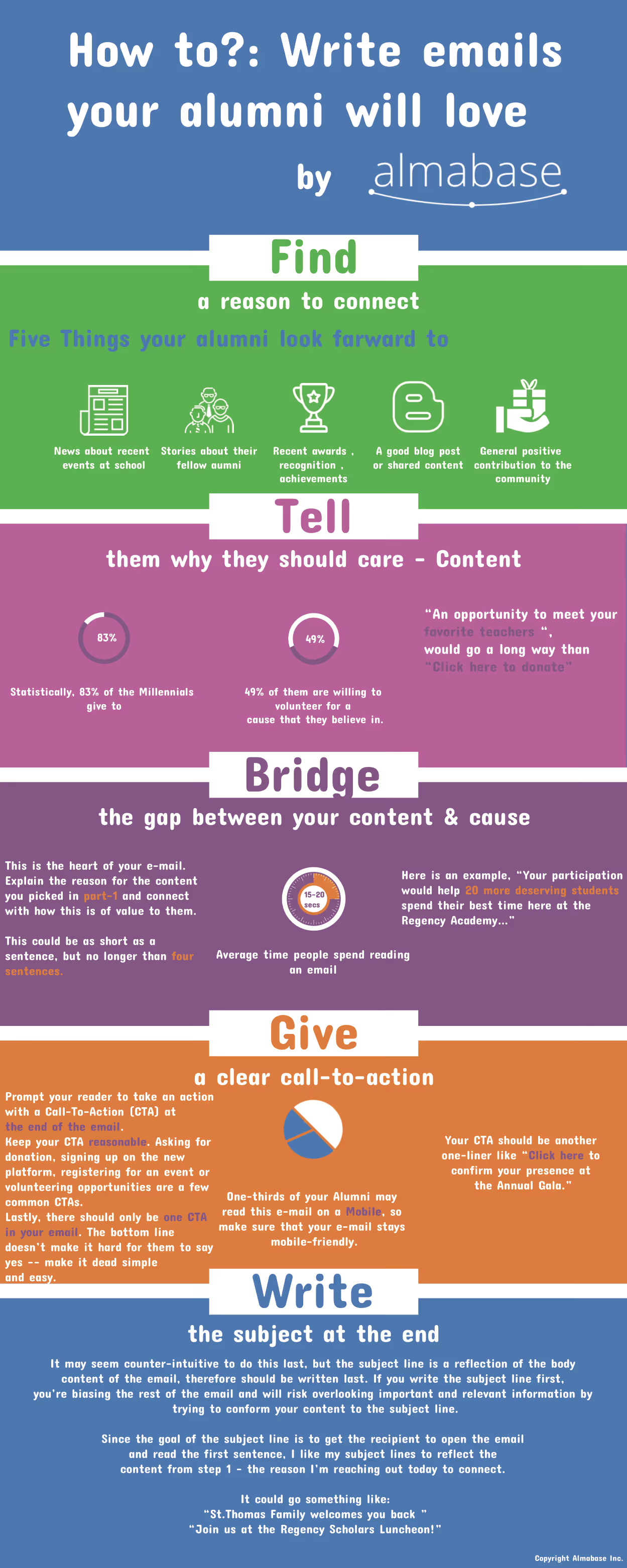
Give your alumni a reason they should connect with you; a reason to care. There is no real easy way to do this. You really have to forget about your job, your school and your advancement goals for a moment, and really dive deep into what your alumni want. Keep in mind, you may not be able to take a one size fits all approach here. Your millennials segment may want something different from your GOLDS segment.
If you don't know the specifics of what your alumni want. You can start with some general survey data done in the past by numerous organizations.Here are some of the most common things alumni look forward to from their school/college.
1. News about recent events at the school
2. Stories on their fellow alums
3. Recent awards, recognition or achievements
4. A good blog post or shared content
5. General positive contribution to the community
A lot of first reactions to this list are, " Well, that doesn't seem like much!", but keep in mind that what you are trying to do is reinforce your mission to your constituents, showcase success and progress. If executed properly, this inevitably (though slowly) creates a vacuum, a fear of missing out from what is happening within the community - pushing more alumni to engage with your campaigns.
A lot of people make the mistake of rambling on with email content, without mentioning why all of it matters. Be sure to clearly and concisely explain your value to your alumni. It’s not going to be easy, and will take a lot of iteration, tweaking, testing, and wordsmithing before you seem to get it right, but is tremendously powerful when you nail it.
Statistically, 83% of the Millennials give to, and 49% of them are willing to volunteer for a cause that they believe in.
Are you reinforcing your value well enough in a manner that your alumni can relate?
Something like “An opportunity to meet your favorite teachers “, would go a long way than “Click here to donate"
.jpeg)
This is the heart of your email. Explain the reason for the content you picked in Step-1 and connect with how this is of value to your alumni.
This could be as short as a sentence, but no longer than four sentences.
Since the Avg. time people spend on reading an e-mail is 15-20 seconds, brevity is our best friend here.
Here is an example, “Your participation would help 20 more deserving students spend their best time here at the Regency Academy…"
At this point, you should have three things in your email: a reason to connect, a transition word or statement and more information on the reason you are emailing them today with your content.
Don’t forget why you’re there in the first place. Did you just want your alumni to read your email and get back to whatever they were doing?
Prompt your reader to take an action with a Call-To-Action (CTA) at the end of the email.
Keep your CTA reasonable. Asking for donation, signing up on the new platform, registering for an event or volunteering opportunities are a few common CTAs. Make the hurdle as low as you can.
Lastly, there should only be one CTA in your email. The bottom line doesn't make it hard for them to say yes -- make it dead simple and easy.
Your CTA should be another one-liner like “Click here to confirm your presence at the Annual Gala.”
It is also important to note that more than one-third of your alumni may read emails on their phones, so make sure that your email is mobile-friendly.
It may seem counterintuitive to do this last, but the subject line is a reflection of the body content of the email, therefore should be written last. If you write the subject line first, you’re biasing the rest of the email and will risk overlooking important and relevant information by trying to conform your content to the subject line.
Since the goal of the subject line is to get the recipient to open the email and read the first sentence, you want your subject lines to reflect the content from step 1 - the reason you are reaching out today to connect.
It could go something like:
“St.Thomas Family welcomes you back ”
“Join us at the Regency Scholars Luncheon!”
Keep your subject line to seven words or fewer.
But, there's one more thing... Edits
At this point, you could step away from my email for a little bit and come back later with a fresh set of eyes. When you come back you can evaluate the email again over a checklist.
→ Is it personal? Emails that are obviously automated are immediately ignored. Remember, customization is not personalization.
→ Does it sound like a sales email? People love to give but hate to be sold to. At the first sign of an appeal, your reader is most likely to raise the fence.
→ Does the email have a natural flow to it? Stitching otherwise meaningful sentences may make up a confusing paragraph. One sentence should lead right into the next, and reading the email should be effortless. Also, be sure to write in a conversational tone.
→ Is it short, concise and to the point? After your first draft, cut it in ½. Then cut out another 20%. Remove extemporaneous words that don’t add to the message. Don’t use 15 words when 8 will do.
→ Does it offer value? This may seem obvious, but how many emails have you received that don’t offer any value?
→ Would I open it, read it and respond to it? Step into their shoes. Would I open the email? Would I feel compelled to respond?
→ Is it a truly thoughtful email with your Alumni in mind? Use the word “you” more than “I.” Have I made it obvious that I took the time to research my Alumni?
You can get really creative with the content of the email, but if you use this general outline, you'll be able to quickly and easily create effective emails that work. You'll see that most of the templates follow this relative structure.
Now that you know how to write some excellent emails, let’s take a refresher on the more common kinds of emails you are most likely to send out:
Now, let’s look at a few solid templates that you can take inspiration from for your own emails:
Subject Line: “Join Us for the 2025 Alumni Homecoming Weekend!”
Dear [First Name],
As a valued member of the [University Name] Class of [Graduation Year], you’re invited to reconnect with classmates at our Homecoming Weekend from [Dates]. This year’s agenda includes:
- A keynote speech by [Notable Alumnus] on [Topic]
- Campus tours showcasing the new [Facility Name]
- Networking sessions in [Industry-Specific Groups]
RSVP by [Date] to secure your spot and enjoy early-bird pricing. We’d love to hear how [University Name] shaped your journey!
Best regards,
[Your Name]
Alumni Relations Office
[University Name]
Subject Line: “Help Shape the Next Generation of [University Name] Leaders”
Dear [First Name],
Did you know 85% of current students rely on scholarships made possible by alumni like you? Your gift of [$50/$100/$500] directly funds:
- Merit-based scholarships for first-generation students
- Cutting-edge research labs in [Department Name]
- Campus sustainability initiatives
Click here to make a tax-deductible donation before [Fiscal Year-End Date]. Every contribution, no matter the size, makes a difference.
With gratitude,
[Your Name]
Advancement Team
[University Name]
Subject Line: “Thank You for Attending [Event Name]!”
Dear [First Name],
On behalf of [University Name], thank you for joining us at [Event Name]. We hope you enjoyed [Keynote Speaker’s] insights and reconnecting with classmates.
Share your feedback via our survey to help us improve future events. As a token of appreciation, you’ll receive early access to [Upcoming Resource/Event].
Stay connected:
- Follow us on [Social Media Links]
- Save the date for [Next Event] on [Date]
Warm regards,
[Your Name]
Events Team
[University Name]
Subject Line: "Share Your Expertise: Join Our Alumni Mentorship Program"
Dear [First Name],
Your journey since graduating from [University Name] in [Year] with a degree in [Major] has been remarkable. Your work at [Company/Organization] exemplifies the kind of success we hope all our graduates achieve.
Would you consider sharing your professional insights with current students through our Alumni Mentorship Program? The commitment is flexible:
- Virtual mentoring sessions (1-2 hours monthly)
- Career panel participation (quarterly)
- Resume review opportunities (as your schedule permits)
Last year, 87% of student participants reported that alumni mentorship significantly influenced their career decisions. Your expertise in [Industry/Field] would be invaluable to students exploring similar paths.
Please complete our brief interest form by [Date] to join our mentor network. We'll match you with students based on your field and availability.
Warm regards,
[Your Name]
Alumni Relations Coordinator
[University Name]
Despite all the advice and templates we offer, your alumni are individuals with their motivations and concerns. Remember to personalize your overall outreach to give your alumni the value they deserve from each email you send out.
If you’re looking for a platform to power your outreach efforts and streamline your communications, do give us folks at Almabase a try! 🤗 ⬇️

Subscribe
See how modern advancement teams bring alumni engagement and fundraising together.
Plan faster. Execute better
Explore free templates designed for alumni and fundraising teams.
.png)

Alumni are an institution’s most precious asset. However, the reality is that while alumni will often have a sense of belonging to their alma mater, a constant connection is needed to cultivate this relationship. While there are a bunch of ways to achieve this, today, we’re focusing on one of the most effective communication methods employed by schools and universities around the globe – email communication.
While there’s a plethora of information on best practices for email marketing, our experience with various schools has helped us understand email best practices specific to alumni.
Email has an ability many channels don’t: creating valuable, personal touches – at scale.
- David Newman
While email communication plays a crucial role in the digital engagement strategy of many institutions, the rate of success for each school may differ greatly. The difference lies in the approach that each school takes. Here’s a list of tested techniques that have brought success to most schools:
To be able to engage alumni via emails, it is pivotal to maintain updated email lists. Over time, alumni contact information is bound to get outdated. For your email campaigns to have higher alumni engagement rates, it is integral that your emails reach the right people, and that’s only possible if you have updated information about your alumni.
Whether you’re a small school or a larger university, there are various ways to keep your alumni database up-to-date. Tap on the banner below to read more about the complete list of all the database update techniques that are typically employed by schools and their relative benefits.
While creating an email, it is important to be able to evaluate what alumni would value. Sticking to a template might look like the easiest route, but schools have witnessed greater success with personalized email campaigns. One way of personalizing your emails is by segmenting alumni based on gender, class year, and other relevant criteria.
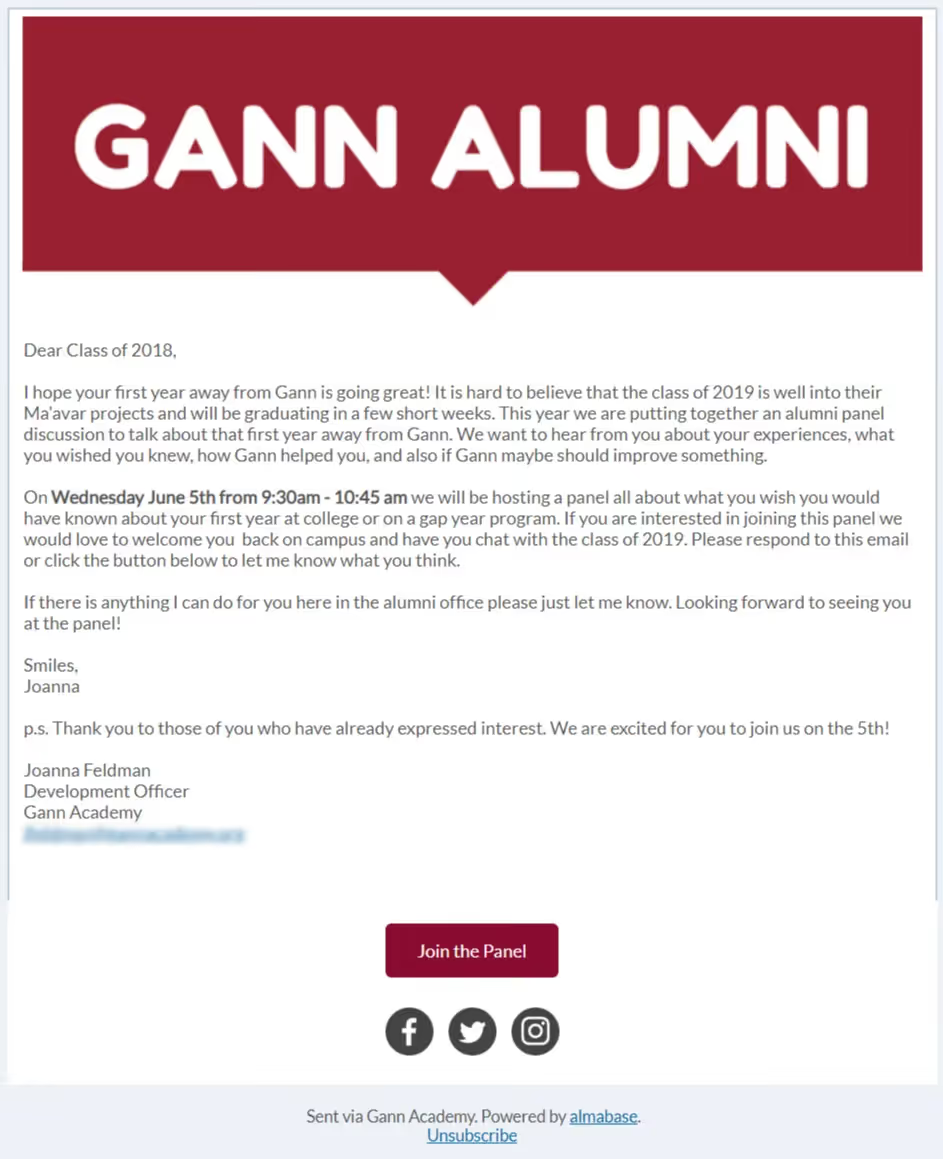
It’s always a good practice to use a real name as opposed to a common name such as ‘Your Alumni Association’ as the sender of your emails. Using a person who your alumni may already be familiar with is ideal. You could even add in a picture and signature of the person at the end of the email to make the email seem more genuine.

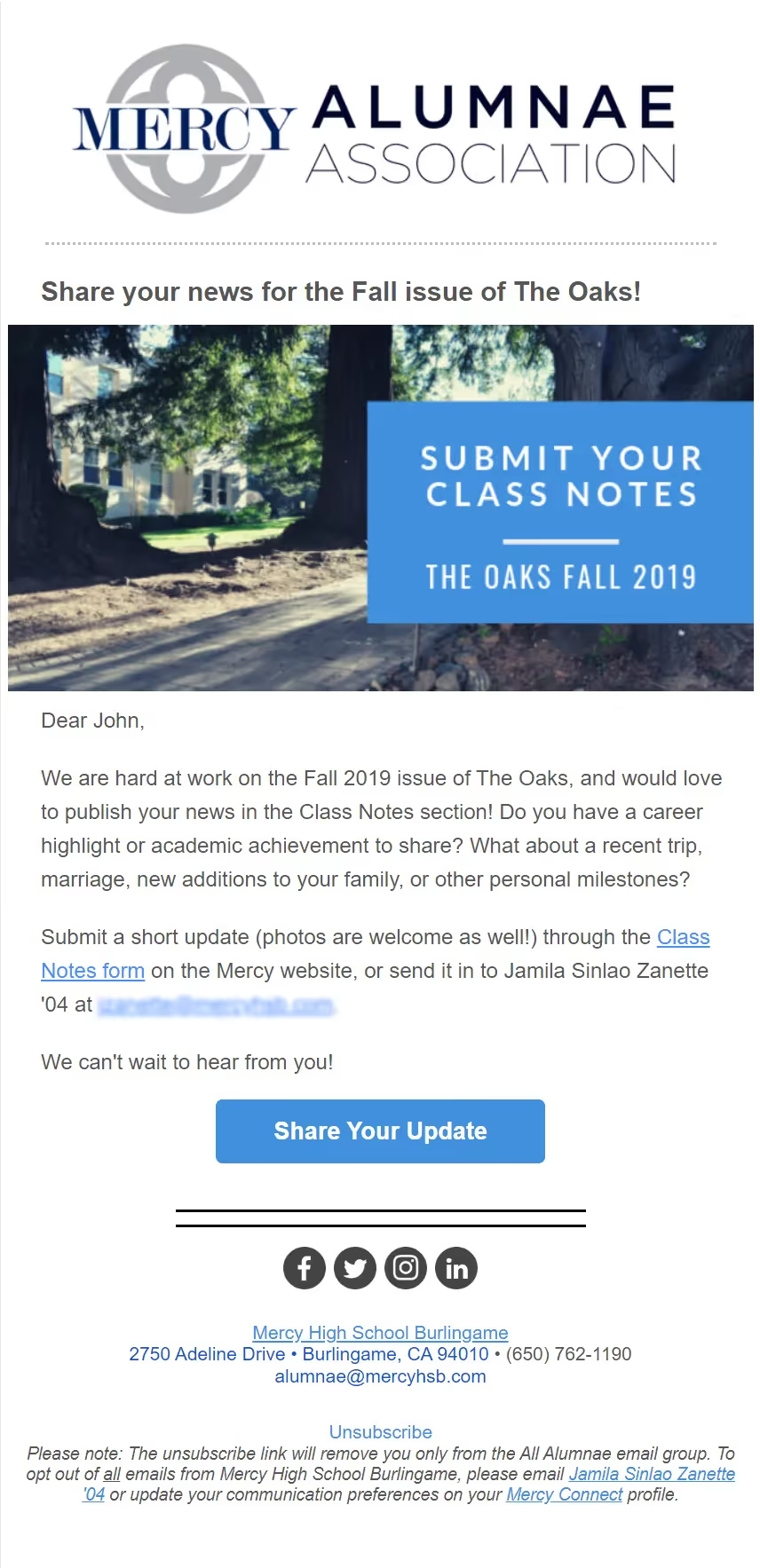
Other than the high risk of your alumni email landing in spam, adding multiple links often comes at the expense of having an unfocused message, severely impacting your click-through rates. Sticking to a clear call-to-action button is the best practice.
Mercy High School, Burlingame does an amazing job at targeting its alumni with emails that have a clear call-to-action.
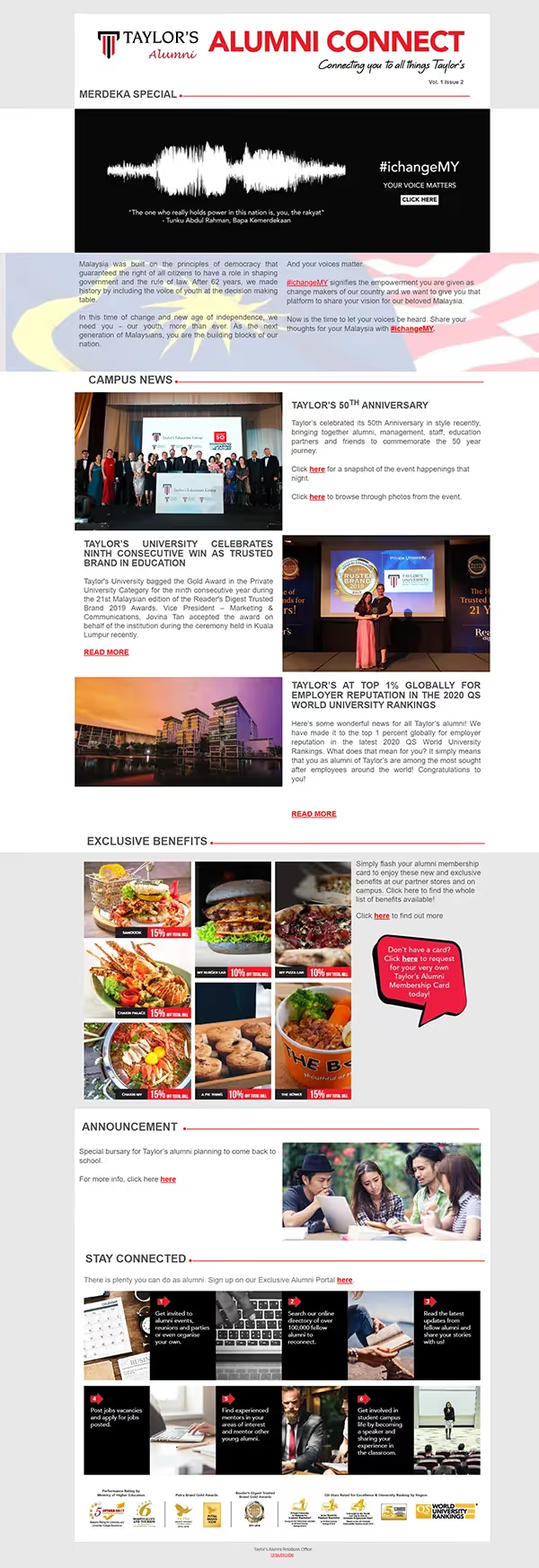
While we discussed how personalized email campaigns can help boost alumni engagement rates, monthly alumni newsletters and weekly updates have also proven to be highly effective. Monthly alumni newsletters and weekly update emails act as a source for alumni to stay updated with all that’s happening at their school and often evoke nostalgia and a sense of pride.
Here’s how Upper St. Clair School District & Taylor’s University keep their alumni engaged with informational monthly newsletter emails.

This is probably the most basic yet the most essential part of creating a successful email campaign. Optimizing your emails so that they appear in your alumni’s inbox at the right time and in the right format is critical to your campaign’s success. Here are some key aspects that should be ensured with respect to email optimization:
1. Ensure that alumni receive your emails during their active hours. If your alumni are in a different time zone, scheduling your emails is highly recommended. Analyzing past email delivery statistics might help in scheduling the timings for your new campaigns.
2. While attaching any images to your email, it is recommended to stick to a maximum file size of 1 MB.
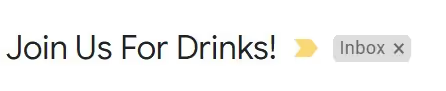
3. Subject lines play an integral part in the success of any email marketing campaign. Including your alumni’s first name within the subject line is a great practice that we’ve seen schools achieve success with. Adhering to shorter, to-the-point subject lines is also highly recommended.
When it comes to engaging subject lines, QuestBridge Academy hands-down wins the game. For its September Bar Night event, the institution reached out to its alumni with a simple, yet highly effective subject line:

Here are some outreach email templates to kickstart your emails:
Subject: Connect & Grow: Your [Institution Name] Network
Dear [Alumni Name],
Hello from [Institution Name]! We hope you're doing well.
Did you know your connection to [Institution Name] offers a powerful way to boost your career? Our alumni network is full of people in many different fields, ready to connect.
We've made it easy for you to use this network:
- Network Platform: [Link to platform] - Join our special online platform to find and connect directly with fellow alumni for advice, opportunities, and shared experiences.
- Virtual Event: [Link to event details] - Sign up for our next online networking event. It's a great chance to meet alumni working in specific areas you're interested in.
- Career Help: [Link to career services page] - Visit our career services page just for alumni. You can find job postings, get tips, and learn about workshops to help you move forward.
Make the most of your [Institution Name] connections today.
Best regards,
The [Institution Name] Alumni Relations Team
Subject: Support [Institution Name]: Help Students Succeed
Dear [Alumni Name],
We're reaching out because you can make a real difference at [Institution Name]. Your time here helped shape your path, and now you can help shape the path of current students.
Supporting [Institution Name] is a direct way to invest in the future. Your contribution, no matter the size, can help provide essential resources:
- Give Now: [Link to donation page] - A financial gift helps fund scholarships for deserving students, support important research, and improve campus facilities.
- Volunteer: [Link to volunteer page] - If you have time to share, consider volunteering. You could mentor a student, help at an event, or offer your professional skills.
Every bit of support helps us give students the best possible experience.
Thank you for considering how you can help.
With sincere gratitude,
The [Institution Name] Advancement Team
Subject: Stay Connected to [Institution Name]
Dear [Alumni Name],
Life after graduation takes you to new places, but your connection to [Institution Name] and the people you met here is still important. We love sharing what's happening and hearing about your journey.
Here are a few simple ways to stay part of the [Institution Name] community:
- Read Our Magazine: [Link to magazine] - Check out the latest alumni magazine for campus news, stories about fellow graduates, and updates on upcoming events.
- Follow Us: [Links to social media profiles] - Connect with us on social media for daily updates, photos, and a chance to interact with the wider community online.
- Find a Local Chapter: [Link to chapter list] - Look for an alumni chapter in your area. It's a great way to meet up with other alumni near you for social events and activities.
- Update Info: [Link to update form] - Please take a moment to make sure we have your current contact information so you don't miss out on important news and invitations.
We value your connection. Stay in touch!
Warmly,
The [Institution Name] Alumni Relations Team
Subject: Keep Learning with [Institution Name]
Dear [Alumni Name],
The world keeps changing, and learning new things is key to staying ahead. As a graduate of [Institution Name], you have access to special resources to help you keep learning and growing in your career and personal life.
We offer opportunities designed just for our alumni:
- Online Courses: [Link to course platform/library] - Explore our library of online courses to learn new skills or brush up on topics relevant to your field.
- Webinars/Workshops: [Link to events page] - Attend online sessions led by our faculty or industry experts on a variety of interesting topics.
- Library Access: [Link to library access info] - Access many of the academic databases and publications available through the campus library from wherever you are.
- Mentorship: [Link to mentorship program details] - Whether you want to share your experience or learn from someone further along in their career, our mentorship program connects alumni.
Keep your mind sharp and continue your learning journey with [Institution Name].
Sincerely,
The [Institution Name] Professional Development Team
Subject: Share Your [Institution Name] Story
Dear [Alumni Name],
Your time at [Institution Name] gave you unique experiences and memories. Your positive stories are the best way to show others what makes our institution special and why it's a great place to learn.
We invite you to share your pride and help us tell the [Institution Name] story:
- Share Your Story: [Link to testimonial submission form or social media hashtag] - Tell us about your favorite memories or how [Institution Name] impacted you. We might feature your story!
- Represent Us: [Link to volunteer page] - Volunteer to represent [Institution Name] at college fairs or other events to talk to prospective students about your experience.
- Engage Online: [Links to social media profiles] - Like, share, and comment on our social media posts. This helps our news reach more people.
- Refer a Student: [Link to referral form] - If you know a student who would be a great fit for [Institution Name], encourage them to apply and let us know.
Your voice is important in helping us build a strong future for [Institution Name].
Best regards,
The [Institution Name] Communications & Alumni Relations Team
We hope we’ve given you some new ideas and motivations to make the most out of your email channels. If you’re looking for a tool to streamline your communication efforts, let us know and we’d love to show you how we can help.

6 ways to increase alumni engagement over emails
Lorem ipsum dolor sit amet, consectetur adipiscing elit. Suspendisse varius enim in eros elementum tristique. Duis cursus, mi quis viverra ornare, eros dolor interdum nulla, ut commodo diam libero vitae erat. Aenean faucibus nibh et justo cursus id rutrum lorem imperdiet. Nunc ut sem vitae risus tristique posuere.
Any educational institution’s most valuable asset is its alumni body. By cultivating relationships, you’ll transform alumni into recruiters and advocates for their entire lives. Ultimately, positive alumni relationships are crucial to what your institution can accomplish now and down the line. That’s why ongoing communication is vital, and email is among the best channels.
Sending alumni emails allows you to keep in touch with former students and inspire them to continue supporting their alma mater years after graduating. If you’re responsible for sending outreach to your alumni, that’s not a task you should take lightly!
After all, email accounts for 28% of online charitable giving and has the highest ROI of any outreach channel, according to Double the Donation’s fundraising statistics page.
To help you tap into this channel, we’ll cover some best practices for writing effective alumni emails. In turn, you’ll be able to maximize your open and response rates, ultimately cultivating stronger relationships. When crafting outreach, stick to these tips:
Your alumni emails can generate real value for your institution and former students if you put some thought into your messages. Let’s dive in.
Give your alumni a reason they should connect with you — a reason to care. For a moment, forget about your school and its advancement goals. Dive deep into what your alumni want. Know you may not be able to take a one-size-fits-all approach. Your Gen Z segment may want something completely different from your Boomer segment.
If you’re unsure specifically what your alumni want, start with some general survey data from the industry. Kwala’s guide to nonprofit newsletters provides some excellent content recommendations. Here are some of the most common things alumni look forward to from their schools:
Not every alumni email needs to feature hard-hitting news. Remember, you’re trying to reinforce your mission, showcase success, and communicate progress. If executed properly, this inevitably creates a fear of missing out on what’s happening within your school’s community, pushing more people to engage.
Don’t ramble in your alumni emails! You need to explain why they should care without all the extra fluff. Your alumni are busy people, and with attention spans shorter than ever, you need to tell them why they should care as quickly as possible.
Maybe you’re encouraging them to:
It won’t be easy and will take a lot of iteration, tweaking, testing, and wordsmithing before you get it right. However, concise communication is tremendously powerful when you nail it.
This is the heart of your alumni email. Explain why you picked the content you did in step 1 and why it’s valuable to your alumni. This could be as short as a sentence but no longer than four sentences.
Remember, our attention spans are decreasing. People spend less than 10 seconds reading an email, so brevity is our best friend here. Take these for example:
At this point, you should have three things in your alumni email: a reason to connect, a transition word or statement, and more information on why you’re reaching out.
Visual content is just as important as written content! Put simply, images and other visuals are more memorable than text alone. Your alumni will likely engage and retain your content if you pair it with stunning visuals. Plus, this will help get your point across, contributing to your ability to communicate information quickly.
As you jump into the design phase of your alumni email, keep these tips in mind:
Not every email from your institution needs a highly detailed infographic. However, touching up your alumni emails with images, colors, and graphics will help capture readers’ attention.
Don’t forget why you’re there in the first place. Did you just want your alumni to read your email and get back to whatever they were doing?
Prompt your reader to take action with a call-to-action (CTA) at the end of the email. Keep your CTA reasonable, such as:
Be concise with your wording. Your CTA should be another one-liner like “Click here to confirm you’ll attend the annual gala.”
Ideally, make the ask as low as possible and only include one CTA. The bottom line doesn't make it hard for them to say yes — make it dead simple and easy.
It may seem counterintuitive to do this last, but the subject line reflects the content of your email. Therefore, you should write it last. If you write the subject line first, you’re biasing the rest of the email and will risk overlooking relevant information by trying to conform your content to the subject line.
Keep it short and sweet, ideally nine words and 60 characters max. Think back to the reason you’re reaching out to connect. Then, compose an intelligent subject line that reflects the content and communicates urgency.
It could go something like:
First impressions mean everything. Your subject line can mean the difference between someone clicking your email and scrolling past it. Put thought behind your subject line, and you’ll ultimately see more clicks.
At this point, step away from your email and come back later with a fresh set of eyes. When re-evaluating your alumni email, walk through this checklist:
☐ Is it personal? Emails that are obviously automated are immediately ignored. Remember, customization is not personalization.
☐ Does it sound like a sales email? People love to give but hate to be sold to. Lean into the value for alumni.
☐ Does the email flow? Stitching otherwise meaningful sentences may make up a confusing paragraph. One sentence should lead right into the next, and reading the email should be effortless. Also, be sure to write in a conversational tone.
☐ Is it concise? After your first draft, cut it in half. Then cut another 20%. Remove extraneous words that don’t add to the message.
☐ Does it offer value? This may seem obvious, but how many emails have you received that don’t offer any value?
☐ Does the design make it clear that your school wrote it? Making sure your organization’s brand shines through will help establish trust.
☐ Would you open it, read it, and respond to it? Step into their shoes. Would you feel compelled to respond or scroll past it?
☐ Was it written with alumni in mind? Use the word “you” more than “I.” Make it obvious that you took the time to research the recipients.
Most templates follow this relative structure. You can get creative with the email's content, but if you use this general outline, you can quickly and easily create effective alumni emails.
Now, let’s look at a few solid templates that you can take inspiration from for your own emails:
Subject Line: “Join Us for the 2025 Alumni Homecoming Weekend!”
Dear [First Name],
As a valued member of the [University Name] Class of [Graduation Year], you’re invited to reconnect with classmates at our Homecoming Weekend from [Dates]. This year’s agenda includes:
- A keynote speech by [Notable Alumnus] on [Topic]
- Campus tours showcasing the new [Facility Name]
- Networking sessions in [Industry-Specific Groups]
RSVP by [Date] to secure your spot and enjoy early-bird pricing. We’d love to hear how [University Name] shaped your journey!
Best regards,
[Your Name]
Alumni Relations Office
[University Name]
Subject Line: “Help Shape the Next Generation of [University Name] Leaders”
Dear [First Name],
Did you know 85% of current students rely on scholarships made possible by alumni like you? Your gift of [$50/$100/$500] directly funds:
- Merit-based scholarships for first-generation students
- Cutting-edge research labs in [Department Name]
- Campus sustainability initiatives
Click here to make a tax-deductible donation before [Fiscal Year-End Date]. Every contribution, no matter the size, makes a difference.
With gratitude,
[Your Name]
Advancement Team
[University Name]
Subject Line: “Thank You for Attending [Event Name]!”
Dear [First Name],
On behalf of [University Name], thank you for joining us at [Event Name]. We hope you enjoyed [Keynote Speaker’s] insights and reconnecting with classmates.
Share your feedback via our survey to help us improve future events. As a token of appreciation, you’ll receive early access to [Upcoming Resource/Event].
Stay connected:
- Follow us on [Social Media Links]
- Save the date for [Next Event] on [Date]
Warm regards,
[Your Name]
Events Team
[University Name]
Subject Line: "Share Your Expertise: Join Our Alumni Mentorship Program"
Dear [First Name],
Your journey since graduating from [University Name] in [Year] with a degree in [Major] has been remarkable. Your work at [Company/Organization] exemplifies the kind of success we hope all our graduates achieve.
Would you consider sharing your professional insights with current students through our Alumni Mentorship Program? The commitment is flexible:
- Virtual mentoring sessions (1-2 hours monthly)
- Career panel participation (quarterly)
- Resume review opportunities (as your schedule permits)
Last year, 87% of student participants reported that alumni mentorship significantly influenced their career decisions. Your expertise in [Industry/Field] would be invaluable to students exploring similar paths.
Please complete our brief interest form by [Date] to join our mentor network. We'll match you with students based on your field and availability.
Warm regards,
[Your Name]
Alumni Relations Coordinator
[University Name]
If you're looking for some quotes to inspire your alumni or add a motivational flair into your emails, here are some you can consider using:
All of this is surely not a magical formula. They’re just pointers to guide you in the right direction. Embrace the process of crafting engaging alumni emails. The best way to keep yourself in the game is by monitoring data and what’s working for your emails. This will help you strengthen your outreach and figure out what inspires alumni to engage.
To write an effective alumni email, focus on crafting a clear and concise message. Use a friendly and professional tone, and ensure your content provides value to recipients, such as updates, opportunities to network, or engaging stories about fellow alumni. Incorporate a strong call-to-action to encourage interaction.
A good subject line is short, compelling, and relevant to your audience. Personalize it when possible by including the recipient’s name or references to their graduation year. Use action-oriented language or tease intriguing content to encourage recipients to open the email.
To personalize emails at scale, use an email marketing tool that offers dynamic content fields or personalization tags. These tools allow you to include individual-specific details like names or programs automatically. Additionally, segment your audience based on shared interests, graduation years, or past engagement to tailor content effectively.
The frequency of your emails should balance engagement and value. Monthly or quarterly communications are ideal for maintaining consistent connection without overwhelming recipients. Adjust the frequency for special occasions, campaigns, or updates to ensure relevance.

How To Write Alumni Emails That People Want To Read
Lorem ipsum dolor sit amet, consectetur adipiscing elit. Suspendisse varius enim in eros elementum tristique. Duis cursus, mi quis viverra ornare, eros dolor interdum nulla, ut commodo diam libero vitae erat. Aenean faucibus nibh et justo cursus id rutrum lorem imperdiet. Nunc ut sem vitae risus tristique posuere.
The journey from being a student to an alumnus is a memorable one. Alumni leave their definitive footprints that fuel the growth of their institution or university. And all the alumni who spend a considerable amount of time and money at their institutions would definitely want to feel valued by it.
Let’s be honest, universities and schools attain an impressive social ranking with the help of alumni to attract students from all around the world. Therefore, it becomes essential for institutions to honor their contribution.
And, it all boils down to one thing: communication.
Choosing a mode of communication is a critical standpoint. And sending out genuinely crafted emails can make you the winner. Email marketing is one of the best ways to engage all your alumni. But blasting them with bulk emails is not the road you want to take, for you will just end up annoying them altogether. Moreover, all your emails might just end up in the spam box.
To give you an insight, a well-crafted personalized email makes alumni feel valued than sending the same email with a general template to your entire alumni base.
So, the question is, how can ensure top-notch alumni email open rates and boost your overall email engagement metrics? Here’s your answer:
You might want to segment your alumni base according to your different target audience. Which translates to segregating your alumni base into different groups and sending out the emails accordingly.
For instance, would you put a 1990 grad who listens to Guns N' Roses and a 2016 grad who listens to Billie Eilish in the same category?
Probably not!
Segmenting your alumni base helps in curating personalized messages according to the target group. It doesn’t matter if you have a small email base, what matters is segmenting it into different groups. It might take some effort in the beginning to sort out the contacts and create separate email lists but the end result will be worth it. And this one-time effort can help you achieve more engagement and open rates.
There are ample email marketing tools that can make this segmentation process a breeze. While many choose to go in for a popular tool like Mailchimp (learn about their new pricing) you can consider other alternatives that provide many refined features at affordable prices.
After picking up the best-in-class email marketing tool, you may make your target lists according to the year, course, subjects, seniority, career/job field, time zone, or more. When you successfully segment your alumni email base, you can work on your key messaging and tone of the content according to the interest level of the target groups.
Pro Tip - Keep updating your alumni email lists at regular intervals
Now let’s hop on to the format of your emails.
I know. It’s super easy to pick a standard newsletter template, change the content, throw in some pictures, and voila! Your email is ready to send.
Please don’t do this. There are high chances for your email to remain unopened or even land up in the spam box.
With a definitive hike in the number of email marketing software, almost all your alumni must be aware of the “standard newsletter template” you are using daily. Even if you spend a good amount of time writing the content of your email, it might get ignored due to the format you used.
A decent email marketing tool comes with a variety of options and pre-made templates to suit your needs. But don’t go for just any tool, rather, do your research, take free trials, consider your budget, and then carefully make a decision.
Speaking from experience, don’t believe the first thing that shows up in your search results. Choosing a newsletter tool that is tailor-made for niches like schools and universities will go a long way.
Change the format and see the wonders!
Pro tip - Keep a clean design with minimal graphics and a uniform font style to make your email look mature.

Crafting personalized emails is an art. And marketers are trying their best to master it. So personalized emails entail three touch-points:
It is recognized as an engaging practice to include the name of the recipient in the subject line. It has a positive effect on the open rate of the email as “Personalized subject lines can increase open rates by 50%” (Source).
While people are accepting this practice, including the sender's name also makes your email more personalized. For instance, include the name, designation, and a picture of the sender to make the email look more authentic. Consider it like an author’s bio.
You have included the name of the recipient in the subject line and sprinkled it here and there. Now what? How could you make it more personalized?
While sending out weekly updates or monthly newsletters is necessary, you may also consider sending birthday wishes, specialized holiday messages, virtual postcards, calendar invitations for alumni events, etc. to add more value and personalization to your email campaigns.
This is a key strategy to follow if you want a significant boost in your email open rate. Your alumni might be all over the world. Then why do you send emails to your entire alumni base at one particular time? Before you say anything, I have come backed by a fact.
To determine top open and click-through rates, research was carried out by sending 21 million messages from US email accounts. The results? If you send messages between 6 am and 12 pm, it would lead to inbox clutter, thereby decreasing the open rates. Following the same, if you want the best results, try sending them out in the early afternoon. (Source)

Pro Tip- Keep a tab on the analytics and messaging style of all your email marketing campaigns and compare them to find the roadblocks.
You have chosen an email marketing tool, segmented your alumni base into target groups, and optimized your subject line, content, and timing. Now it’s time to work on your CTA.
The first insight to master this art is to decide the purpose of the email campaign. If you have that purpose clear, you will easily nail the ‘call to action’ phase. Including a lot of options, buttons, and unnecessary links might lead to a lower engagement rate.
Use this mantra: “One purpose, one action”.
For instance, if your purpose is to get maximum contacts for your alumni base or to create an exclusive alumni community, don’t include multiple CTAs like joining in for an event or a donation drive. Keep it for a separate email campaign.
Moreover, don’t keep a complex CTA format. You don’t want your alumni base to jump from one form to another. Rather, keep it a one-step process. This practice would surely pull up your dipping engagement metric.
Pro Tip - You may include a special “What’s ahead” section with one-line information as to what your next email shall entail improving your engagement metric. (P.s.- This needs a lot of planning)
The goal was to paint a clear picture of what maintaining relationships with alumni through email communication entails. And if you follow these touch-points religiously, then you can definitely see a boost in your open rates and engagement metrics.

This blog is written by Shivani Srivastava. A content marketer by heart, Shivani is passionate about writing anything in the field of the technological landscape. She's written this guest blog for SendX: Email Marketing Software.

How to Improve Alumni Email Open Rates and Engagement
Lorem ipsum dolor sit amet, consectetur adipiscing elit. Suspendisse varius enim in eros elementum tristique. Duis cursus, mi quis viverra ornare, eros dolor interdum nulla, ut commodo diam libero vitae erat. Aenean faucibus nibh et justo cursus id rutrum lorem imperdiet. Nunc ut sem vitae risus tristique posuere.
%201.svg)
%201.svg)
%204.svg)


.svg)