Veteran fundraiser Louis Diez, Founder of the Donor Participation Project, recently joined Almabase as VP, Community. Read on to learn more about his journey so far, and the future of communities in alumni relations.

After over a decade of front-line fundraising for worthy causes, I'm starting a new chapter as VP, Community at Almabase and Host of the Donor Participation Project
My first real job in this industry began almost exactly ten years ago, when I networked my way into the alumni office of my alma mater, the University of Tennessee-Knoxville as an administrative assistant with an MBA and a Ph.D. The passion for the backend of fundraising has remained with me ever since. How do things get done in fundraising offices? What processes help—or hinder—our success? Will looking at things differently help? Or are we “building on the shoulders of giants” and shouldn’t change what isn’t broken?
However, my passion for the space started much before that.
Armed with a stack of resumes, the Internet, and a place to stay in NYC, I ran my first direct response campaign to find myself an internship. As I think of the outcome now, the results were life-changing and yet the ROI at the time didn’t feel so great: maybe an early fundraising lesson?
I landed two internships at Lincoln Center for the Performing Arts and a similarly prestigious boutique consulting firm: AEA. Lincoln Center’s CEO at the time was known for his fundraising prowess. Reynold Levy would tell his employees that the only reason he would ever interrupt their meetings was if a trustee was calling. As I progressed into more strategic roles, planned successful fundraising campaigns, and managed talented teams these early lessons stayed with me.
Fast-forward ten years, and here I am with Almabase and as the founder of the fastest-growing professional organization in philanthropy (joindpp.org).
To those who aren’t familiar with Almabase or what we do – we are a team of 40-something innovators on a mission that’s very dear to me: making quality education accessible to everyone.
This is what brought me to this organization. Their heart is in helping nonprofits, mainly in higher education, improve in the area of biggest opportunity in our industry. How do you make it easy to run highly engaged communities? How do you connect engagement to giving behaviors? What do annual giving, alumni affairs, and communication professionals need to do a better job? Yes, they have an incredibly user-friendly software but their true superpower is in caring about the right things.
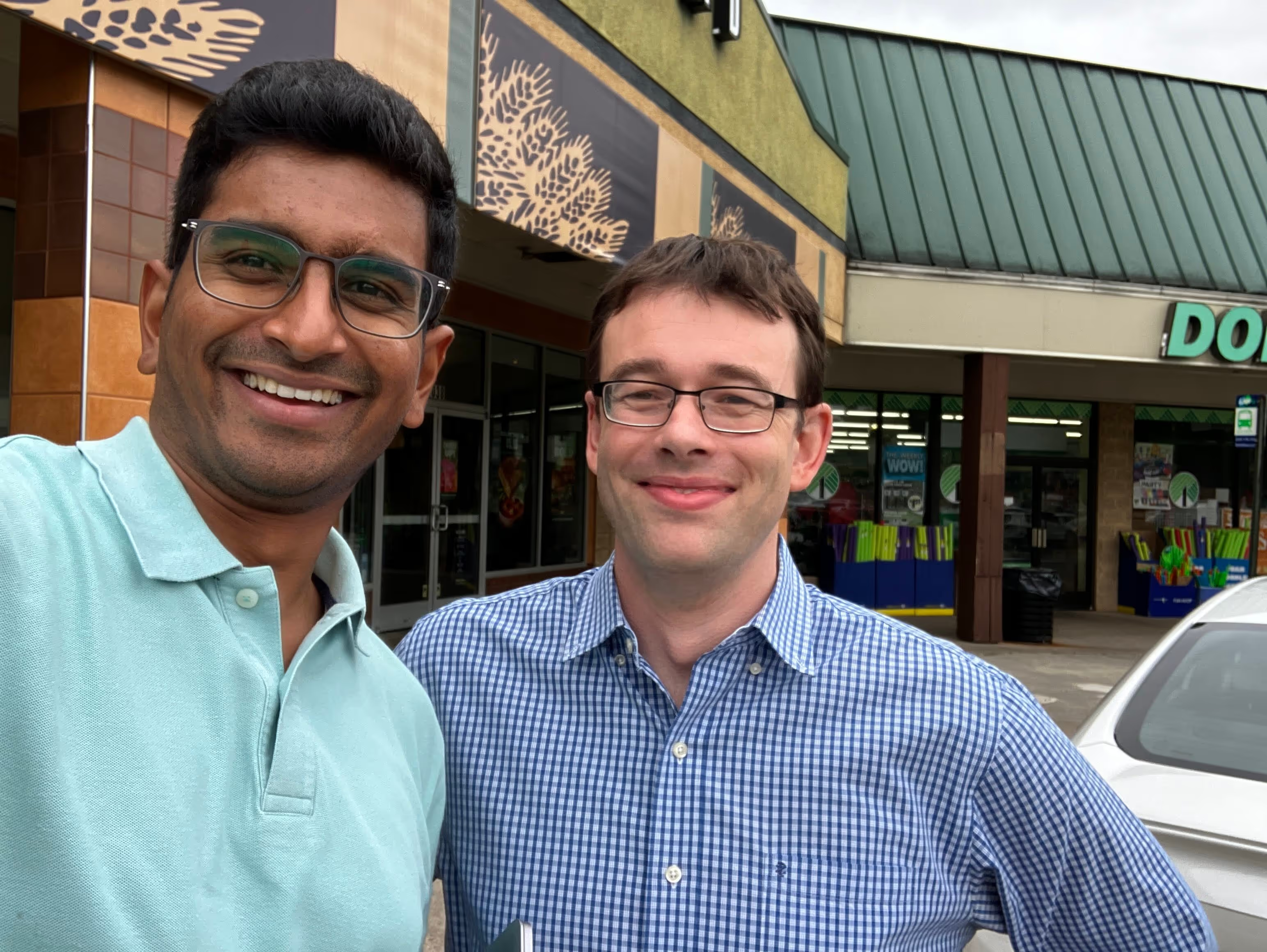
When Kalyan flew in to meet at my neighborhood coffee store, he had an interesting idea to run by me: powerful communities are poised to rule the non-profit sector, but the problem right now is in setting up these communities.
That’s where I came into the picture. With my experience building thriving communities like the Donor Participation Project, I could see where Kalyan was headed with this vision, and naturally, I wanted in.
However, having an interesting problem to work on is only half the reason I chose to join Almabase. The other half, the one that resonates with me on a personal level, is about their values.
With student debt being a growing challenge, it's only natural for alumni to be the bridge that makes education accessible to all.
"If I were to create a platform to support our community-building and fundraising work, it would be Almabase."
Almabase is making a huge bet on communities being one of the central drivers of success for nonprofits in the next few years, and I’m thrilled to get a front-row seat on the ride.
Almabase lives and swears by alumni-centricity – the idea of building value-driven relationships with your alumni network. Incidentally, creating and sharing value is what makes a community strong and purposeful for all its members. Clearly, there are common threads between the two.
The way I see it, if institutions want to get better at alumni centricity, they need to leverage the power of strong alumni networks. That’s how I come into the picture – I’ve had my fair share of experience building communities that work. That’s why I’ll be working with Almabase’s vast network of institutions in helping them shape these communities.
It’s a big bet, but powerful alumni communities lead to higher donations raised with lower costs, which can empower the next generation of students with quality education. Everyone’s a winner, and I’m thrilled to see how this shapes up.
So there you have it – the not-so-brief recap of the events over these last few weeks. What are your predictions for the future of this space?

Louis Diez is an expert in annual fund development, digital fundraising, and engagement strategies. He's the founder and host of the Donor Participation Project and VP, Community at Almabase.
Table of Contents
Subscribe
See how modern advancement teams bring alumni engagement and fundraising together.
Matthew Plaisted joins Almabase as a Director of Partnerships. Matthew is an advancement professional with nearly three years of experience in the industry.
Matthew was formerly the Director of Annual Giving at Thomas Aquinas College, a private, Roman Catholic, need-blind college in California. During his tenure there, Matthew worked with the College’s Advancement team to engage with their 3,000+ constituents across 14 countries around the world. Under his wings, the College also achieved one of the highest alumni donor participation rates of any educational institution in the US. Matthew is also an alum of Thomas Aquinas College, having obtained his B.A. in Liberal Studies in 2018.

“My role at TAC not only involved fundraising and alumni engagement, but I was also working with advancement services. Working on different projects (especially with alumni) gave me some good insights to better understand Almabase’s partners. I understood what alumni really want from their alma mater, and how advancement teams can tune their mission and programming accordingly. It's great to be in a position where I have experience on both sides of the table,” says Matthew.
"It's great to be in a position where I have experience on both sides of the table."
Matthew Plaisted
At Almabase, Matthew will use his expertise and technical skill to empower advancement teams across the country to bridge the gap with their alumni. He is at the forefront of a team that is helping top schools, colleges, and universities boost alumni engagement and participation, and develop life-long relationships with their alumni community. Matthew’s unique perspectives and fresh ideas will help Almabase better understand how advancement teams can become truly alumni-centric.
“Matt's experience as a Director of Annual Giving gives him three unique advantages. His empathy towards our partner institutions will come naturally, as he’s been in their shoes at some point. Having been a former user of Almabase, Matt will be able to communicate the power of the platform more effectively. Finally, Matt’s strong knowledge of the domain will help us identify new problems to keep the innovation going,” says Kalyan Varma, the Co-Founder & CEO of Almabase.
Matthew began his journey with Almabase in September, 2021.
Thomas Aquinas College is a private Roman Catholic Liberal Arts College, with campuses in Ventura County, California, and Northfield, Massachusetts. They are a need-blind institution with 46 faculty members, and more than 3,000 Alumni residing in 50 states and 14 countries around the world. The college has bagged numerous accolades along the way, such as “#1 Best Value in Private Colleges” by Kiplinger’s and “Best Value” by US News & World Report.
Almabase is the world’s most loved alumni management software. The platform empowers advancement teams with the right Lego blocks to build, grow, and sustain alumni-centric programming. Almabase has partnered with advancement teams of more than 300 leading institutions across the US to unlock more participation and drive more donations from their alumni.

Matthew Plaisted, Former Director of Annual Giving at Thomas Aquinas College, Joins Almabase
Matthew Plaisted joins Almabase as a Director of Partnerships. Matthew is an advancement professional with nearly three years of experience in the industry.
Lorem ipsum dolor sit amet, consectetur adipiscing elit. Suspendisse varius enim in eros elementum tristique. Duis cursus, mi quis viverra ornare, eros dolor interdum nulla, ut commodo diam libero vitae erat. Aenean faucibus nibh et justo cursus id rutrum lorem imperdiet. Nunc ut sem vitae risus tristique posuere.
The graduation season is upon us and it usually brings with itself, accompanying feelings of nostalgia and happiness. As graduates move towards a new chapter in their lives with the blessings of their beloved teachers, graduation is one of the happiest moments in a student’s life.
But, is the world still the same place since the last graduation season?

The upcoming batch of graduates is being deprived of once-in-a-lifetime moments like dancing the night away at their senior prom, walking across the stage to receive the diploma that they spent countless hours of hard work on, and even a chance to simply say goodbye to the people that have been an important part of their lives - friends, mentors, and beloved teachers.
On top of this, these young graduates find themselves thrust into the worst job market in modern history. Many of them have lost their on-campus jobs, internships, and are already witnessing dwindling job opportunities.
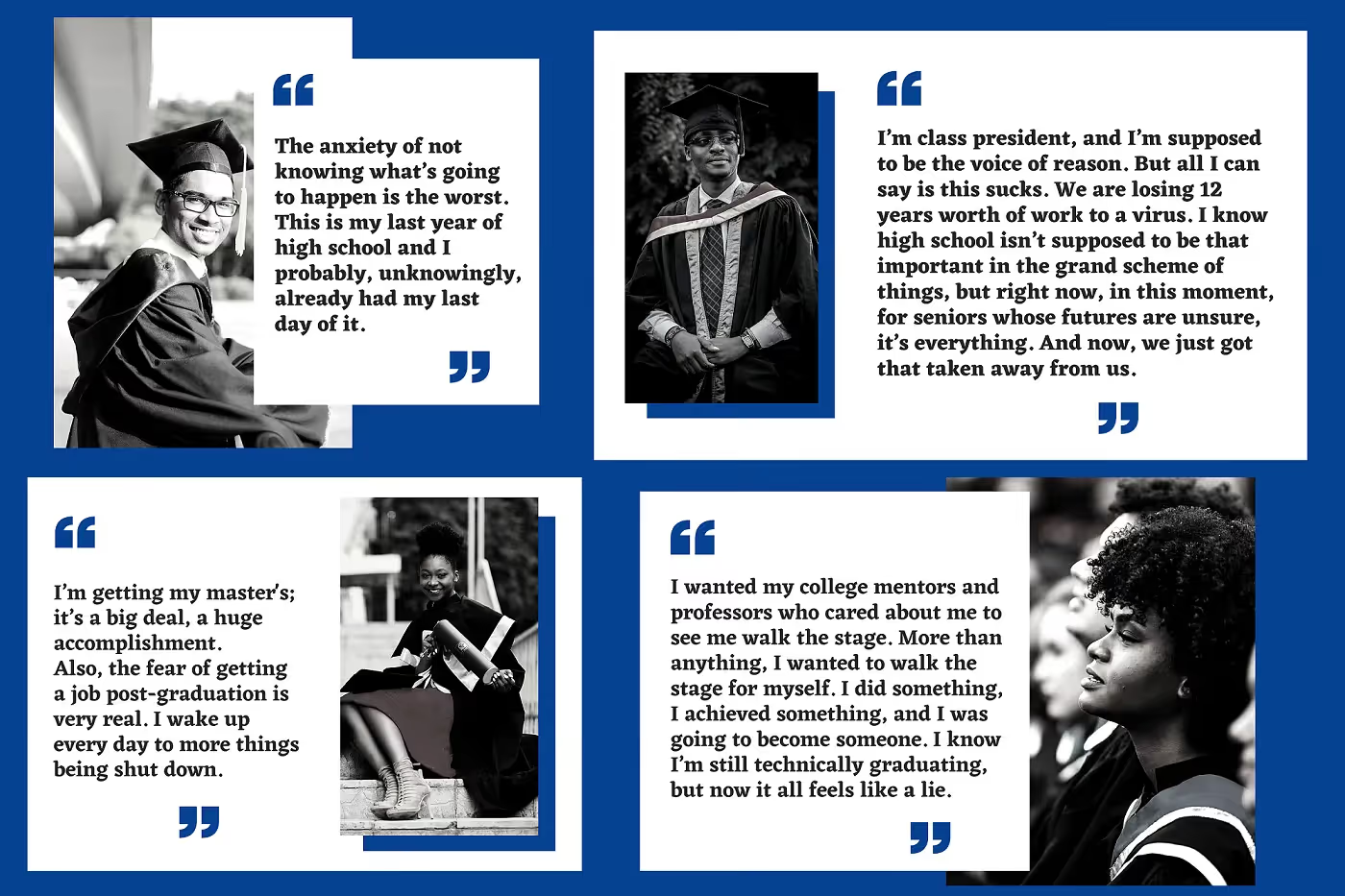
Now more than ever, the graduates need to know that their alma mater and alumni have their back. In a post-pandemic world, it is imperative that the university community join hands to help soon-to-be graduates, and eliminate the risk of a lost connection with them.

Here are 5 ways in which alumni can get involved and help the next batch of graduates overcome their unique challenges during these testing times.
The post-pandemic world keeps throwing oddballs at all of us, and it’s only natural that your graduates need some additional help. Whether it’s emotional support from a friendly alum or an alum that can offer career guidance, your graduates need all the support they can get to power through this crisis. As the situation at hand is unique, encourage your alumni to go the extra mile and offer one-on-one support to your graduates.
Facilitate direct conversations between alumni and graduates via emails or social media, or create an affinity group to connect graduates with alumni who can cater to their needs. While enabling group conversations is a good approach, in these challenging times, a little one-on-one treatment might go a long way in building deeper connections and imbibing a greater sense of loyalty in your new alumni.
Barcelona Graduate School of Economics facilitates a unique one-on-one chat experience to help graduates, students, and candidates applying to the institution via an online chat platform.
Your alumni network is a valuable resource for your upcoming graduates who are currently on the lookout for job and internship opportunities. These networks also serve exclusive job and internship listings in cases where they’re not widely published elsewhere, giving graduates first dibs. Additionally, having an alum guide these graduates with their job search and provide an endorsement at their companies greatly improves the chances of the latter landing a job offer.
In case your graduates have to miss their traditional end-of-year programming and brace themselves for a plethora of challenges coming their way, it is all the more important that they hear encouraging words of wisdom from their seniors. Urge your alumni community to create short video messages, offering words of encouragement, praises, and congratulations to the young graduates.
Add an element of surprise by getting a star alum to make an appearance on the video.
Read how Carnegie Mellon University roped in 13 high-profile alumni to surprise their Class of 2020 graduates during their virtual conferral of degrees ceremony. Head over to CMU’s website to read more.
Job shadowing plays a pivotal role in career development and discovery as it helps a graduate gauge and identify their field of interest, assess if they are the right fit for a particular position or industry, learn skills via hands-on experience, network and build relationships with relevant professionals, and receive invaluable career advice from experienced alumni. Give your graduates the opportunity to explore different career-fields and gain real-world experience in the field of their choice by matching them with alumni hosts interested in job shadowing.
You can facilitate job shadowing by using an online network that automatically matches alumni and graduates based on their needs, interests, and other relevant criteria.
Boston College’s Eagle Exchange Job Shadowing Program is an exclusive online platform that matches students with college alumni who serve as hosts for one-day shadowing experiences. Alumni hosts represent diverse industries and job functions. Read more about the Eagle Exchange program here.
As your graduates come to terms with a hostile job market and mourn loss of traditions, there’s so many questions that these new graduates need answered. Provide value to your new graduates by organizing an Ask Me Anything session by roping in expert alumni to answer specific questions. If your graduates are concerned about getting a job in this bad economy, get career specialists in your alumni community on board and schedule an open AMA session to allow your graduates to ask away.
Washington State University Alumni Association’s hosting weekly AMA sessions with alumni employers who are ready to talk to all majors in the fields of arts, science, and health. Head over to WSU’s alumni website to read more.
To the next batch of graduates, hang in there, as this is only the ending of the first chapter of a grand adventure. And to all our incredible partners who are going above and beyond to help and support their young graduates, we stand with you and promise to continue delivering the best ideas and strategies to make your job easier.

How your alumni community can support new graduates
Here are 5 ways in which your alumni community can support the Class of 2020 graduates overcome their unique challenges during the COVID-19 crisis.
Lorem ipsum dolor sit amet, consectetur adipiscing elit. Suspendisse varius enim in eros elementum tristique. Duis cursus, mi quis viverra ornare, eros dolor interdum nulla, ut commodo diam libero vitae erat. Aenean faucibus nibh et justo cursus id rutrum lorem imperdiet. Nunc ut sem vitae risus tristique posuere.
Estimated Reading time: 5 minutes
When you dig down to the fundamentals - the most significant challenge with alumni relations is the same for most of us.
“How do I continuously engage all my alumni, yet remain personal, at scale, with a small team and limited resources?”
Not easy. Certainly.
Over the last five years, we’ve been doing much research to try and address this.
What we’ve come to believe is that there isn’t a silver bullet that will solve this problem. What we’ve also come to realize is that alumni will not regularly engage amongst themselves without something external that drives them to do so.
This is precisely why social network groups (Facebook/LinkedIn) fall flat. Over time, the group and the content within it become stale. The content that does get added becomes irrelevant and fails to provide enough value to its members. Since there isn’t anything of value to bring people back to the group, the group eventually dies out.
This is an age of specialized solutions for specific problems. It’s no different with alumni. They are most likely to listen when they’re receiving communication relevant to and targeted at them. If not, they tune it out.
So, what is the solution?
Like I’d said - there is no silver bullet to this problem. However, we are attempting to solve it - step by step.
Our first step to address this was taken last year -- with v1.0 of the Groups module on Almabase. With this, we wanted to understand how effectively a group would engage when someone drove the engagement.
Of course, we understand how stretched alumni offices are. We needed to do this without adding additional load to you and your team.
So, we built groups 1.0 focused around ‘Group Admins’.This would help you break down your alumni into smaller chunks, and help you delegate this responsibility of engaging smaller communities to those who are possibly more attached to the community.
Like a class leader for a class, a football coach to former football players, or a chapter president for a regional group.
1. For the most part, Group admins, on their own are not always incentivized to drive engagement
2. Fresh, valuable content drives engagement - and the group admin(s) alone cannot generate enough content to keep a group from going stale.
3. Unlike social networks - the purpose of an alumni network is more specific. Members arrive with particular objectives in mind (attend an event, reconnect with classmates, career networking, seek advice, find a job, etc.) The frequency of interaction is much lesser - so it’s all the more critical that the content they interact with be very relevant to them.
4. Different kinds of groups have different requirements from their administrators - some might want to be deeply involved, and some just superficially.
5. The frequency of engagement is vital - too frequent, and your community tunes out. Too infrequent, and your loses relevance and becomes stale.
We summarized this into three key challenges that we need to address, to be able to engage alumni:
Creation: Creating valuable content, frequently, without the burden for this falling on one or a few people.
Curation: Collating content such that each member of the community receives relevant content that is of value to them
Distribution: Distributing this curated content to appropriate people at a frequency with which they are comfortable.
Earlier, each of these three challenges fell on the shoulders of you and your office.
We want to build a solution that shifts most of this responsibility to the technology that powers almabase. It will automatically take care of Curation and Distribution while driving people to Create more content.
We are building a ‘Feed.’ All users can now post, like, comment and react. Content creation is no longer a job for just admins. Everyone can contribute to communities that they care.
The system will look across the groups that are relevant to each alum, and curate content that they are most likely to find value. For instance, if someone is part of the groups for ‘Class of 86’, ‘Law Alumni,’ ‘Alumni in San Francisco’ and ‘Baseball,’ the system will take care of curating the most relevant content from those groups and then send it to this person.
The feedback loop. We’ll be building an automated digest that is curated and personalized for each member based on what they choose to stay connected with. It will then be delivered at a frequency of their choice. All without you having to get involved. This will drive alumni back to the platform and hopefully urge them to create more content and close the loop.
1. Groups are going to become very central to all engagement on your alumni platform.
2. As it ties together all these different components for engagement, the product going forward would focus a lot on ‘groups.’
3. Increased peer to peer alumni engagement
4. A ‘feed’ within each group or module will allow users to post, like, comment, and interact with others in the community.
5. Distributed Fine grain control for group administrators
6. You’ll have much more control over the permissions of each group administrator. You can set different levels/combinations of permissions for each. E.g., if you want a group admin to be able to approve users, or update profile data of members - but just within that group.
7. Personalization gets more powerful
8. Customized email digests, notifications, segmentation based on engagement on the ‘Feed.’
9. ‘Chapters,’‘MyClass,’’ Sub-Colleges’ will get deprecated by November 2019
10. These discrete modules all going to be absorbed into groups. For those of you that use it, we’ll help you migrate to Groups.
We wanted to be upfront about this.
All of these are hard problems to solve and will take time to get them right?
However, we’ll get there.
Such an integrated system is something that has not been attempted before in the industry, but we’re finally at a time where we have the technology to pull it off.
We’re going to build this step by step, and we’d love to hear feedback along the way. Bear with us till we reach the final state, and I’m sure you’ll come to love the product. :)
1. The first noticeable change on the product is going to be with events
2. You’ll now see a Feed within each of your events where alumni can post, like, comment, and interact with each other.
3. Events are always a gathering point for people to interact with. It’s currently the single most significant driver for online alumni engagement across our partners. Adding a feed within events first will give us a lot of great insights that we can take back to the drawing board before rolling it out to groups.
4. Within the next one-two months, you’ll see Feeds within Groups as well, as well as the first version of the notification system!
Big changes ahead!
We’re excited. Hope you are too :)

Building the Next Generation of Online Communities
Here's our attempt at trying to solve the challenge of continuously keeping alumni engaged yet remain personal, at scale, with a small team and limited resources.
Lorem ipsum dolor sit amet, consectetur adipiscing elit. Suspendisse varius enim in eros elementum tristique. Duis cursus, mi quis viverra ornare, eros dolor interdum nulla, ut commodo diam libero vitae erat. Aenean faucibus nibh et justo cursus id rutrum lorem imperdiet. Nunc ut sem vitae risus tristique posuere.
We are thrilled to announce that we have been featured as a Top Community Software by three Gartner Digital Markets sites, Capterra, Software Advice and GetApp in their following flagship reports:
.avif)
.avif)
These reports evaluate verified end-user reviews, positioning the top scoring products based on their usability and customer satisfaction ratings for small businesses. Almabase earned an incredible overall rating of 4.7 (out of 5). Almabase was also crowned as The Best Alumni Management Software Company Of 2021 By Digital.Com. Read the full story here.
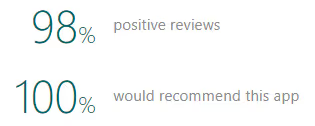
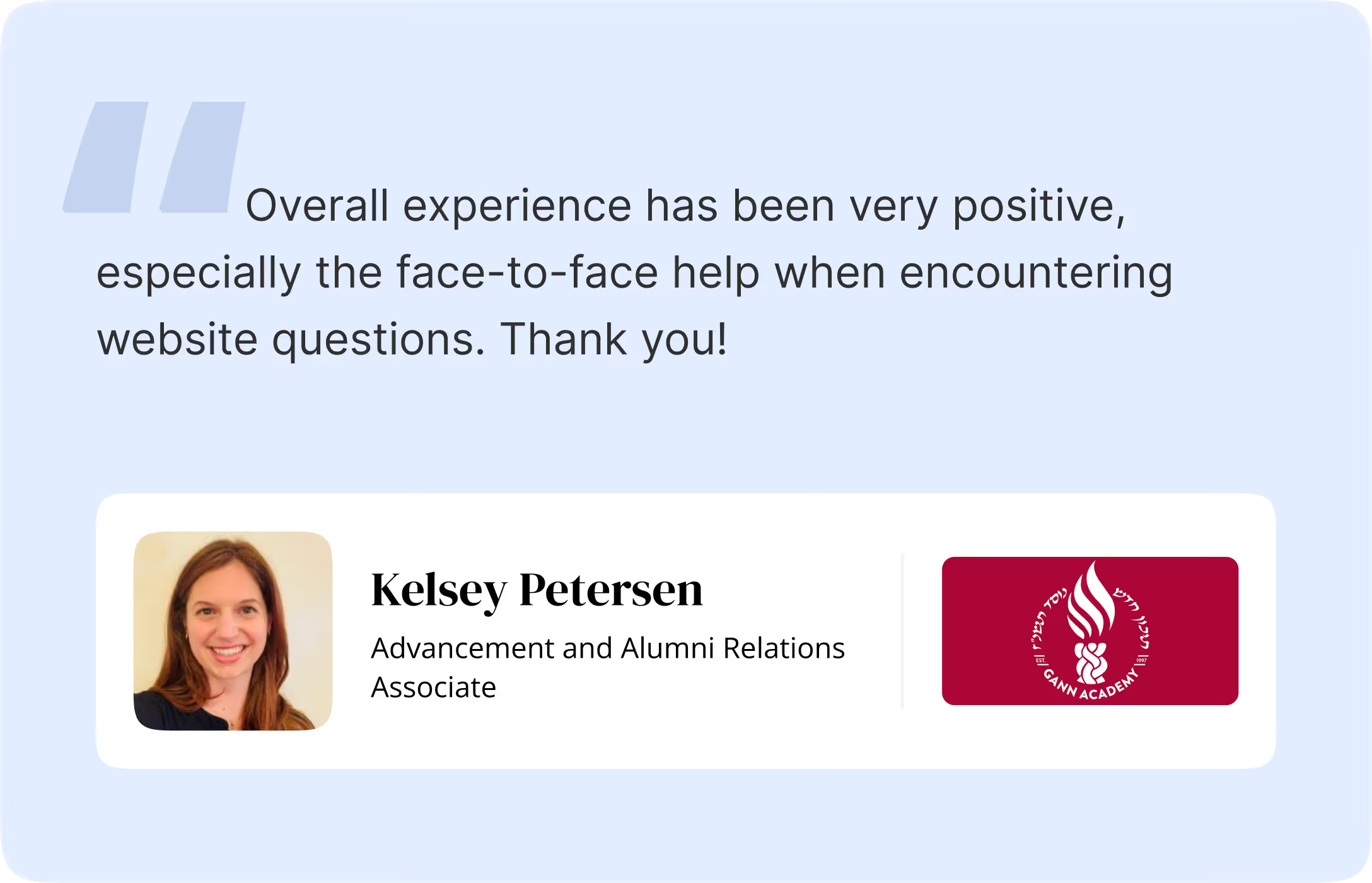
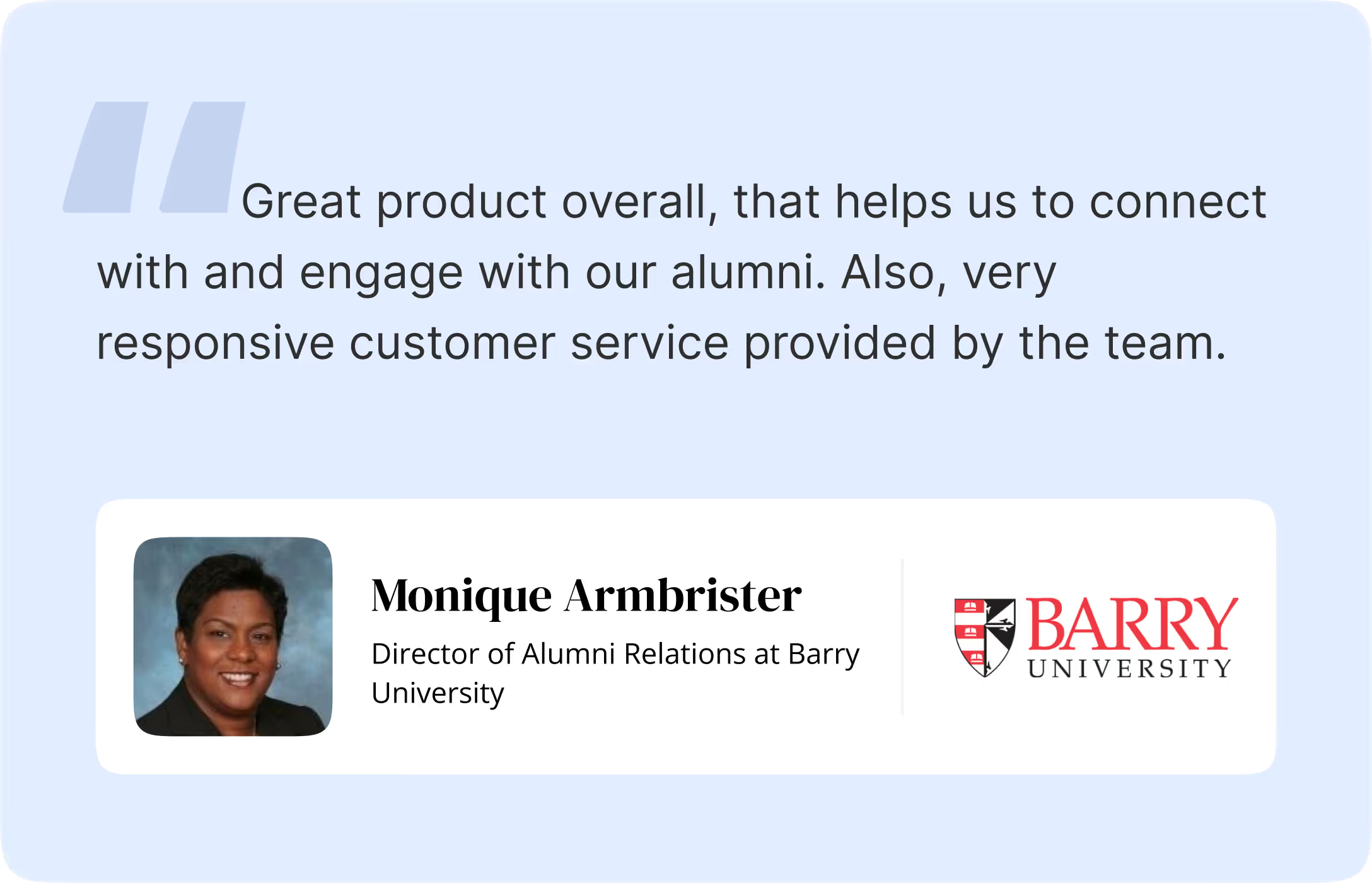
Here’s what our customers have to say about us:
.avif)
.svg)
.avif)
Gartner Digital Markets comprises the three leading B2B software search websites — Capterra, GetApp and Software Advice. Together, it is the top destination for software buyers to discover, research and connect with the best software for their needs It is the world’s premier source for software vendors to connect with in-market buyers, through research, reviews, and lead generation.
Almabase is the world’s most loved alumni management software. Our platform empowers advancement teams with the right Lego blocks to build, grow, and sustain alumni-centric programming. Almabase has partnered with advancement teams of more than 300 leading institutions across the U.S. to unlock more participation and drive more donations from their alumni.

Almabase Recognized as Top Community Software by Gartner Digital Markets
Almabase was recognized among the Top Community Software that drive higher alumni engagement and donations for leading educational institutions.
Lorem ipsum dolor sit amet, consectetur adipiscing elit. Suspendisse varius enim in eros elementum tristique. Duis cursus, mi quis viverra ornare, eros dolor interdum nulla, ut commodo diam libero vitae erat. Aenean faucibus nibh et justo cursus id rutrum lorem imperdiet. Nunc ut sem vitae risus tristique posuere.

.svg)

.avif)
.webp)