Peer-to-peer fundraising is a powerful way to tap into your institution’s network of alumni and donors. Learn how to get started with these 6 top strategies in 2025.
Published:
May 30, 2022
Updated:
August 13, 2025
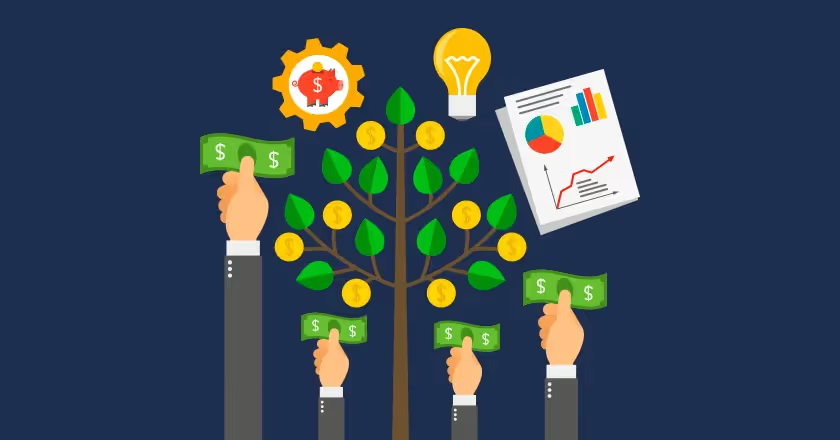
Peer-to-peer fundraising is a powerful social giving tool that many educational institutions have employed to increase donations while expanding their donor base. Through these campaigns, schools of all sizes empower their donors to raise money on their behalf.
Peer-to-peer fundraising campaigns have become a mainstay of fundraising for higher education causes and charities because they tap into the power of your donors’ social connections. Plus, they’re extremely flexible and easily adapted to today’s virtual and hybrid fundraising landscapes.
.jpeg)
Schools are especially well-positioned to benefit from peer-to-peer fundraising since they have large communities of alumni, current students, and family networks who have emotional connections to their mission and the overall institution. These supporters are also likely to share your campaign online, and the social proof of their support encourages their wider social networks to get involved, too.
This guide will cover six key strategies that higher ed institutions need to succeed with peer-to-peer fundraising. But first, let’s review how these campaigns work.
There are a few core steps to executing peer-to-peer fundraisers. Every campaign will follow this general structure:
Within this easy-to-launch campaign process, there are plenty of other steps, tools, and strategies that you’ll need to succeed. Although your supporters are doing the actual fundraising, these campaigns aren’t hands-off. Use these six strategies to help you reach (and exceed) your campaign goals:
Providing an easy giving experience is one of the most important things you can do to drive supporter engagement and increase donations. The fundraising software you use directly impacts the donors’ experiences with your campaign.
Peer-to-peer fundraising software should allow you to:
By leveraging dedicated tools designed specifically for peer-to-peer fundraising, launching and managing your campaign and individual giving pages can be easy. Using peer-to-peer fundraising software that offers robust features, mobile-optimized giving pages, offline donation tracking, real-time reporting, and CRM integrations allows you to easily launch new campaigns and meet and exceed your annual fundraising goals.
Before launching your peer-to-peer fundraising campaign, you’ll need to create a core campaign page. The next obvious step would be to spread the word online, allowing anyone to get involved to help you fundraise. While this approach definitely works, we also recommend taking a more strategic approach by actively recruiting ambassadors for peer-to-peer fundraising campaigns.
Fundraising ambassadors are your most passionate and well-connected supporters. Rather than hope they’ll join your campaign, personally reach out to them in advance! Ambassadors can help your campaign by:
This strategy is particularly effective for peer-to-peer campaigns leading up to an annual gala or other large-scale events. Just be sure to provide your ambassadors (and all of your volunteer fundraisers) with the resources they need to succeed.
When you prepare to launch a peer-to-peer fundraising campaign, it’s important to offer training opportunities to your supporters. Most supporters might not have a ton of experience as fundraisers, so getting them set up on the platform and providing them with resources will boost results and engagement. This is particularly important for ambassadors, who you may work with to set specific fundraising and event sign-up goals.
To make fundraising easy for these supporters, be sure to provide the following resources:
In order to reach your institution’s fundraising goal, your supporters must communicate to their networks in the way you need them to while offering them a way to put their own personal touches on the campaign. Training and support are also essential for making your peer-to-peer fundraising campaign a positive experience for your fundraisers. This will help ensure that the campaign pulls double-duty—raising donations and boosting alumni relations.
While your students may be online constantly, it’s a good practice to diversify your fundraising campaign’s promotional strategies to create maximum reach and appeal to a wide range of donors.
Donor and alumni networks consist of different generations, so you and your volunteer fundraisers will need to meet all of them where they are.
According to the OneCause guide to peer-to-peer fundraising, this means using a mix of traditional and modern marketing methods, including:
The various approaches you and your fundraisers use should be tailored to your donor audience to maximize impact. If you’re trying to reach a broad range of alumni and donors, you should use outlets that will help you reach a variety of age and location demographics. But if your fundraising campaign is mainly geared toward younger alumni, focusing on email and social media (and forgoing expensive direct mail) can be a smarter way to focus your efforts.
It’s helpful at this stage to review the performance of your previous fundraising campaigns. What marketing tactics worked best to engage particular donor segments? Use these insights to guide your new promotional strategy, and encourage your volunteer to rely on those outlets as well.
Peer-to-peer fundraisers work well with events, and you have tons of flexible options. Organizations often host a range of kickoff events, mid-campaign gatherings, and grand finale events like walkathons or galas for their fundraising campaigns. The rise of virtual fundraising events has opened up even more opportunities to efficiently plan and host a variety of events.
Take some time early in the planning process to brainstorm a few options based on the scale of your campaign. As you’re brainstorming, keep these top of mind:
Pairing your peer-to-peer fundraiser with an event or two can be an impactful way to bring your campaign full circle. Using peer-to-peer fundraising software that’s part of a broader suite of fundraising tools, including registration and virtual event features, makes it easy to diversify all of your future campaigns with a variety of events and donor engagement options.
Who isn’t motivated by a little friendly competition? Donors love to be recognized for their contributions, and your institution can benefit from leveraging gamification tools throughout your peer-to-peer fundraising campaign.
Classic gamification tools include:
Gamification and goal-setting are especially important if you’ve recruited fundraising ambassadors for your campaign. Give them plenty of support and specific goals to reach. This will help them better motivate their audiences to give. During your grand finale event, honor your fundraising ambassadors, have them complete fun challenges, and reward your top fundraiser.
And don’t forget that gamification and add-on strategies can help to boost your donations in more direct ways, too. Try implementing a matching donation challenge during which a corporate partner matches all incoming donations. Or challenge your fundraisers to see who can secure the most employer-matched gifts overall through any corporate philanthropy programs that donors may be eligible for—more on that in the next section.
Meanwhile, appended employer information can help you identify more opportunities among your alumni and guide your matching gift strategy during the campaign.
Peer-to-peer fundraising isn’t just about tapping into your alumni and student networks—it’s also about unlocking the extended networks they’re connected to. One powerful and often overlooked strategy is to leverage corporate giving programs, such as matching gifts and volunteer programs, to amplify peer-led efforts.
After all, many companies offer matching gift programs, where they’ll match donations their employees make to eligible nonprofits. This can double—or even triple—the impact of every peer-to-peer gift. Encourage your fundraisers to check if their employers (or their donors’ employers) offer these programs. Better yet, embed a matching gift search tool into your campaign pages or emails so supporters can find their company’s guidelines in seconds.
In addition to matching gifts, corporate volunteer grants are another valuable opportunity. Many companies reward volunteer hours with financial donations. If your peer-to-peer participants are also volunteering (for example, by hosting events, organizing campaigns, or participating in service projects), their employers may provide funding in recognition of that time.
To make the most of these opportunities, consider using an employer appends tool to identify where your supporters work. These resources can fill in employment information gaps in your donor database, helping you target the right individuals with corporate giving messaging.
.png)
Peer-to-peer fundraising has proven to be one of the most flexible and effective ways to reach donors in recent years. For higher ed institutions with a large alumni community, launching a campaign that capitalizes on all those connections is a win-win: more donations to support your work and strengthened donor relationships.
Study up on these tips and other expert peer-to-peer fundraising best practices, equip your team with the right tools, and be prepared to help your volunteer fundraisers promote your campaign. You’ll be reaching your goals in no time!
Subscribe
See how modern advancement teams bring alumni engagement and fundraising together.
Plan faster. Execute better
Explore free templates designed for alumni and fundraising teams.
.png)

Back in 2020, advancement teams across the country had to shift to rethink their programming to find unique ways of engaging alumni and donors. Fundraising professionals have since leveraged virtual platforms to engage donors through more accessible programs and events. With the fall spirit of giving upon us, now's the right time to start thinking about ways to boost donations at your Fall Giving Day 2024.
Giving Day is a powerful online fundraising campaign conducted for 24 hours with the purpose of raising money and finding new donors. Giving Days provide alumni with the ideal opportunity to serve their alma mater by helping the institution in a time of need.
As the pandemic continues, it's evident that Giving Day 2026 will be unlike any of the previous traditional Giving Days. With advancement teams shifting their focus to raising money online at their fall Giving Day and upcoming Giving Tuesday, here are 5 innovative strategies to help them get started.
It's always a best practice to start promoting your Giving Day as early as possible and build-up to the day of the event. While you can't invite your alumni to campus to let them know about your fall Giving Day, countdown posts on social media are a great way to spread the word.
Instead of merely creating posters or event notifications at intervals like, say, 15, 10, and 5 days before the Giving Day, think of ways to incentivize donors to participate. For instance, along with every countdown post, you can also share testimonials of past donors on social media. Seeing a friend believe in your institution’s cause can be a strong motivator for more alumni to donate.
Including photos and videos of how your institution has utilized funds raised at past fundraising events is another great way to motivate potential donors. Scranton Preparatory School's fundraising campaign is an excellent example of how they leveraged countdowns to their benefit.

As the pandemic forces us to be confined to our homes, now more than ever, is the perfect time for your institution to invest greatly in building and growing an online community that your constituents can benefit from.
While an online community is great for driving engagement, not all potential donors will react the same way to your fundraising asks. For instance, an alum who's been working as an investment banker for 10 years might be more receptive to your fundraising ask this Giving Day than a young alum who's just graduated college and is still reeling under the pressure of repaying his student loan.
Personalizing your fundraising asks, therefore, plays a crucial role in building a unique connection with each constituent and paving the way for lasting relationships. Check out Archbishop Riordan High School's campaign that encouraged alumni to contribute towards improving their school campus.
Use dynamic segmentation to segregate your constituents based on class year, location, donation history, interests, etc. and personalize your emails right from the first message to the final thank you.

While promoting your Giving Day via in-person events does not look likely this fall, an increasing number of advancement teams are contemplating virtual events.
In the past couple of years, the industry has seen a ton of successful virtual events being implemented by institutions, big and small. Many have seen a steady rise in participation at virtual events because they're easily accessible irrespective of location or time. Virtual events, therefore, can help you tap into a wider network of donors and be a valuable addition to your marketing plan for Giving Day 2026.
As an added tip, you can use virtual event management software to engage alumni and drive participation at your fall Giving Day 2026.

As online engagement becomes pivotal for a successful Giving Day campaign in 2026, it is equally important to make the best use of the channels at your disposal.
Social media is the ideal place to meet and connect with new people, with platforms like LinkedIn and Facebook enabling you to explore potential donors. Calvert Hall College's picture slideshow on Facebook went viral to help them boost their fundraising campaign.
While you may already be connected with some of your donors on shared groups, use the network of your existing supporters to influence new donors. In addition to social media, emails and personal one-on-one calls are popular channels employed by most institutions for fundraising asks. If you are worried that alumni might ignore your email requests, here are some tips for you.
While driving more donors online may be your priority, also ensure that the online giving experience is smooth and flexible.

Now that you have done your bit to promote the campaign, how can you leverage your supporters to maximize the impact? Your donors are the ones who can carry your fundraising campaign forward by spreading the word through their networks.
You can find ways to make social sharing easy for donors and create more incentives for them to influence others in their network. For example, encourage your supporters to broadcast and share their contributions on social media. Offer them a customized template and prompt them to share this message on social media right after they've completed a gift.
You can also create a filter for Instagram or Facebook that donors can apply to their profile photos. Seeing their peers support their alma mater's cause can act as a strong driving factor for other constituents to contribute to the same cause. Here are other ways to build stronger online communities in today's times.
Gamification techniques like leaderboards, challenges, and tributes are some additional great ways for invoking a healthy sense of competition amongst various constituent groups and amplifying the impact of gifts at your Giving Day. Need more information on how to run crowdfunding campaigns? Learn more here.
Planning a Giving Day has never been an easy task, but, with the pandemic leaving a majority of institutions around the world with a severe financial crisis, Giving Day 2026 is a big opportunity.

5 Fundraising Tips for Fall Giving Day in 2026
Lorem ipsum dolor sit amet, consectetur adipiscing elit. Suspendisse varius enim in eros elementum tristique. Duis cursus, mi quis viverra ornare, eros dolor interdum nulla, ut commodo diam libero vitae erat. Aenean faucibus nibh et justo cursus id rutrum lorem imperdiet. Nunc ut sem vitae risus tristique posuere.
Online fundraising can be a deceptively tricky subject. While the term simply refers to the process of raising money online, making the most of this strategy requires a dynamic approach on the part of your school.
When it comes to engaging with alumni, in particular, it’s doubly important to have a robust online fundraising strategy in place.
For this reason, your team should take a look at how you fundraiser online right now and decide whether or not you’re getting all you can out of this strategy.In this article, we’ll help you begin this process by discussing:
1. How your alumni engagement strategy can benefit from online fundraising
2. Online fundraising trends you should be using
3. Ways to boost alumni giving through online fundraising
4. Fundraising software tools that can improve your alumni engagement.
Ready to master online fundraising and improve your alumni engagement tactics? Let’s dive in!

Making the most of your online fundraising capabilities should be your first priority when perfecting how you engage with alumni!
As a school, your institution's fundraising needs and limitations likely look very different from other nonprofit organizations. For one thing, your core donor base (your alumni) are often spread far and wide across the country.
This means that to connect with alumni supporters, you’ll have to go the extra mile to meet them where they are.
The best way to do this? By fundraising online, your team can easily reach geographically-diverse alumni. This starts with accepting donations online, but also allows your school to regularly interact with your supporters via email, social media and more!
When your school makes the effort to interact with supporters online, you avoid the trap of remaining “out of sight and out of mind” to these individuals.
Through frequent online interaction, alumni are more likely to donate on a regular basis, as well as more likely to encourage their friends and family to give to your institution.
In addition to strengthening ties between your school and your alumni, online fundraising has several other key benefits:
1. Low overhead cost: After your initial investment in online fundraising software, online fundraising proves to more than make up for its upfront cost. Since everything is virtual, your team can allocate less personnel to manage your online fundraising efforts, as well as save money on physical marketing materials.
2. Simple setup: Once you pick the right software, your team can easily set up your online fundraising tools with little stress. Many services offer consultation during the implementation process, or you might lean on your fundraising consultant during this time for their expertise.
3. Increased donor knowledge: Another reason why online fundraising tools are so effective is because they can provide unmatched insight into your supporters. With every interaction your school has with alumni online, you will collect important data that can inform your engagement tactics moving forward.
The bottom line: By investing time and energy into perfecting your school’s online fundraising strategy, you’ll have an easier time reaching alumni donors while saving money and effort. Even better, when you do connect with these donors, your interactions will be more streamlined and more informative than traditional methods allow.

With the right strategy, your school can benefit from powerful new trends in online fundraising that simply can’t be matched by traditional fundraising methods.
In this section, we’ll highlight tactics that make the most of online fundraising’s dynamic potential by going further than simply accepting donations.
First, we’ll go over social fundraising techniques like crowdfunding and peer-to-peer campaigns, and then we’ll show you how online fundraising can be paired with on-site events to help your school make the donation more accessible to your alumni supporters.
1. Crowdfunding. With the right crowdfunding software, your school can grow your donor base while raising money. Look for tools that allow you to easily brand donation pages, share campaigns across social media and email, and ones with team crowdfunding capabilities.
2. Peer-to-peer: Tapping into your alumni’s social network, donors can help your school reach more eyes online. By associating campaigns with your alumni fundraisers, potential supporters are more inclined to give since they’ll more closely associate your school with their friend, family member, or colleague.
1. Kiosks and card swipers: By investing in an on-site donation kiosk or card swiper, your team can accept donations from those who prefer to pay with a credit or debit card. Gifts are then transferred online to your bank account, so you never have to worry about depositing checks or keeping track of cash donations. You might use a kiosk or card swiper at events like walkathons, talent shows, charity auctions etc.
2. Live event streaming: Another dynamic way to raise money for your cause is to stream fundraising events online. Alumni who can’t make it will be able to participate in the festivities from their computer or mobile device, and because of your online donation tools, giving will be as easy as the click of a button.
The bottom line: As part of your fundraising strategy, your school shouldn’t discount tactics that marry the best parts of in-person fundraising methods with the functionality and ease-of-use that online fundraising provides.
Looking to optimize your online giving channels to boost alumni donations?
What’s so unique about online fundraising is that your team can truly customize the giving experience to make donation as seamless as possible for your alumni donors.
Check out some of these online fundraising best practices to maximize your alumni’s donor potential:
1. Offer simple donation forms: You don’t want to lose out on potential alumni gifts because your online donation form was too lengthy, confusing, or required too much effort to complete. Be sure to make your online donation forms as streamlined as possible and don’t require givers to register for an account to make a donation.
2. Encourage recurring giving: The quickest way to make sure you’re able to get the most out of your fundraising efforts? Prompt alumni to opt-into recurring giving when they make a donation. Give them the freedom to set the gift amount and the donation schedule so that they’re able to tailor the process to their preferences.
3. Match alumni gifts: With the right software, your school can increase your fundraising potential by receiving matched gifts from alumni who work for corporations that have a matching gift program in place. One convenient way to do this is to direct alumni to a matching gift database tool on your school’s website or to implement an automated matching gift software to streamline the process for your school’s team.
The bottom line: Offering online donation channels to your alumni donors will boost giving, but only if your school is able to make the most of these dynamic giving tools.

One of the most important parts of perfecting your school’s online fundraising strategy is picking the right online fundraising software to help you get the job done.
With all the options out there, it can be tricky to know what software to invest in and what kind of functionality you’ll need to stay on top of your online fundraising game.
Luckily, we’ve compiled a list of all the tools you need to look out for when picking your software!
Donation pages are the bread and butter of your online fundraising efforts. To make sure you reach the maximum number of alumni donors, your team should be sure to invest in online fundraising software that provides you with dynamic tools to customize your pages.
Invest in a software solution that allows you to:
1. Brand pages to your school with colors, logos, pictures, video, etc.
2. Integrate donation pages with social media to make them easily shareable
3. Customize donation pages with suggested giving amounts, recurring giving opt-ins, and more.
Having a successful communications strategy in place is the first step to boosting your alumni fundraising online. If your team isn’t able to get the word out to your supporters, your online fundraising efforts will falter.
When choosing which online fundraising software to invest in, keep an eye out for a solution that enables :
1. Automated constituent email that can be customized to your different alumni donor segments
2. Engagement tracking and analytics to help you learn all you can about what strategies work for your supporters
3. Social share buttons that enable your donors to easily broadcast to their social networks once they give
The vast majority of your alumni use their mobile devices as their primary way to access the internet. Don’t miss out on all of these potential alumni donors!
As part of your online fundraising strategy, your school should be sure to have functional mobile giving tools in place. These can include:
1. Donation pages that are optimized for mobile devices
2. Embedded donation pages across your various social media platforms
3. Text giving tools that allow donors to give simply by sending you a customizable keyword.
The bottom line: When choosing online fundraising software, your team should select a platform that offers dynamic tools to meet your alumni engagement needs at every level.
When it comes to alumni engagement, having a next-level online fundraising strategy in place is crucial With these tips in mind, there’s nothing stopping your school from making connections with alumni and raising more than ever before!

Online Fundraising: What You Need to Know to Engage Alumni
Lorem ipsum dolor sit amet, consectetur adipiscing elit. Suspendisse varius enim in eros elementum tristique. Duis cursus, mi quis viverra ornare, eros dolor interdum nulla, ut commodo diam libero vitae erat. Aenean faucibus nibh et justo cursus id rutrum lorem imperdiet. Nunc ut sem vitae risus tristique posuere.
As part of the higher education sector, your university likely depends on social campaigns like peer-to-peer fundraising and crowdfunding to fund its projects and initiatives. While these campaigns have the potential for a wide reach, they require effective promotion to maximize alumni support.
How can you retain alumni support long after they receive their diplomas? Let’s explore the top marketing practices your university should employ when planning your outreach strategy.
Your alumni may be eager to support your university, but many are unaware of the opportunities available to help them maximize their contributions—namely, matching gifts.
Matching gifts are a type of corporate social responsibility initiative wherein businesses match donations made by their employees. Double the Donation defines corporate social responsibility as “a company’s efforts to improve society” in a multitude of ways, from directly donating to supporting employee giving. Matching gifts combine both of these efforts and represent a major revenue opportunity for universities.
Identify match-eligible alumni by looking into your existing donor base. Specifically, take a look at your alumni and major donors who represent your largest match opportunities. Then, secure matching gifts from alumni by promoting the opportunity to match-eligible individuals through:
As you solicit matched gifts, maintain an open line of communication with major employers who offer matches. Periodically review their policies and ask them to notify you if any changes are made to their matching gift program. Both universities and donors should stay on top of employers’ match guidelines to avoid missing out on matching gift revenue.
Communication is the foundation of a successful fundraising campaign. While some approaches are more effective than others, the best results come from incorporating multiple channels—especially for larger donor bases.
There are two types of marketing your university can leverage, and each type has a plethora of channels you can use to spread the word about your campaigns:
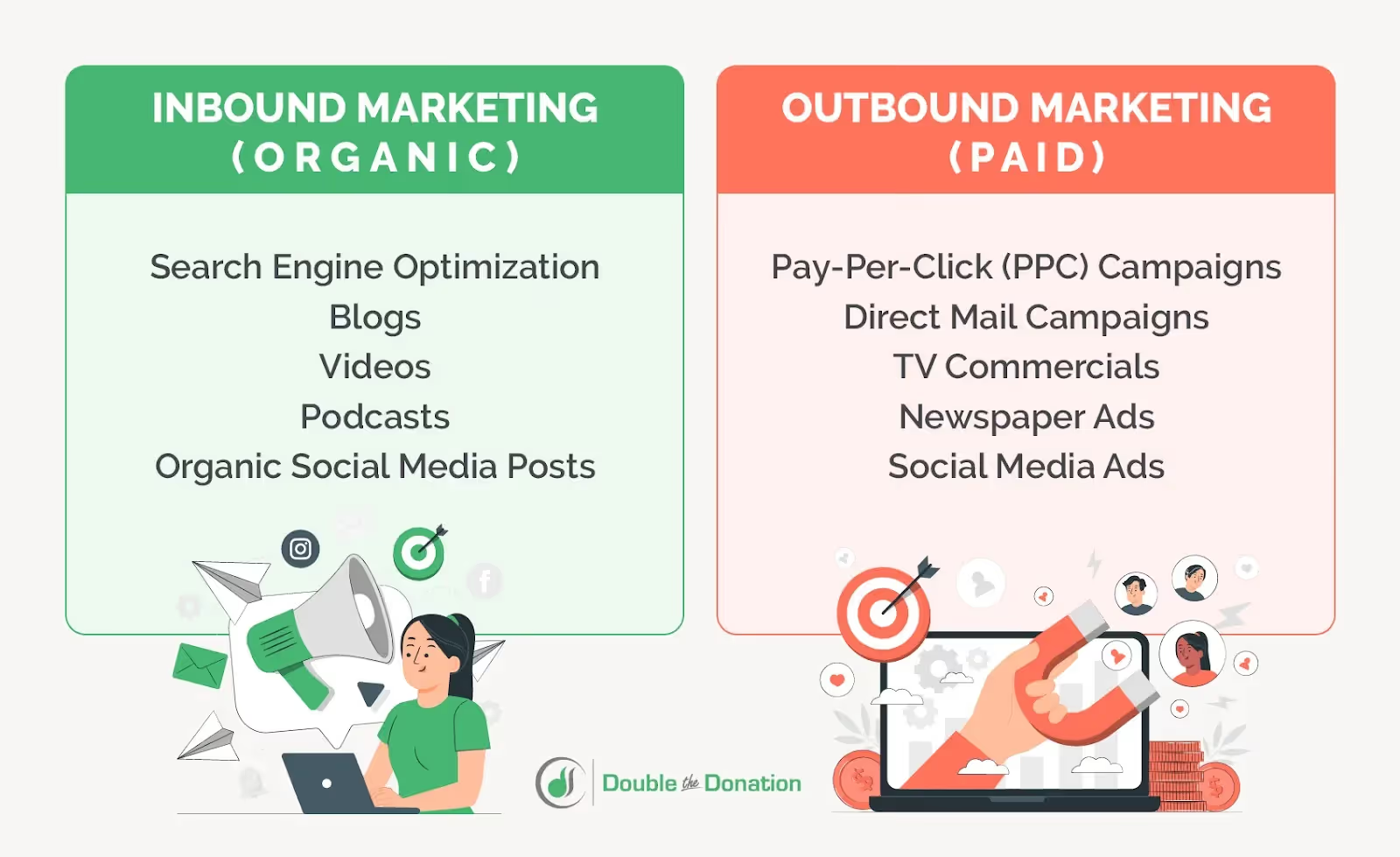
Remember, communication is a two-way street. You won’t just want to send messages to alumni, but to stay in touch with them over time. Ensure that alumni and any volunteer fundraisers feel free to voice their feedback or concerns.

Effective communication is about more than just an open line of communication—it’s about powerful storytelling, too. Stories encourage alumni to form stronger connections with your university’s mission, students, and impact.
As part of your marketing approach, implement the following storytelling strategies into your content:
Storytelling and powerful imagery compel users to share content with their networks, so it’s crucial that you make your storytelling components shareable. For example, you might place a “Share” button next to the content on your alumni website that makes it easy for viewers to repost an article or video to their social media channels.
In all your digital marketing materials, make it easy for viewers to take action by directing them to your donation page. Make the most of clear calls to action, prominent buttons, and QR codes across all the channels you use. To ensure shareability, use an effective social campaigning platform and the right social media platforms.
Additionally, when alumni land on your fundraising page, they should be able to take action easily. Check to ensure your donation form can be quickly completed and doesn’t require any unnecessary steps. With a compelling marketing strategy and simple form, your university can seamlessly convert alumni into dedicated supporters.
Now that you know the best marketing practices, share this information with your fundraising team, and plan your best campaign yet! Then, as donations start to roll in, be sure to show your appreciation for donors’ support and continue to engage them by offering additional involvement opportunities. The more active your donors are in your university’s activities, the more likely they’ll be to continue their support.

Adam Weinger is the President of Double the Donation, the leading provider of tools to nonprofits to help them raise more money from corporate matching gift and volunteer grant programs.
Double the Donation's robust solution, 360MatchPro, provides nonprofits with automated tools to identify match-eligible donors, drive matches to completion, and gain actionable insights. 360MatchPro integrates directly into donation forms, CRMs, social fundraising software, and other nonprofit technology solutions to capture employment information and follow up appropriately with donors about matching gifts.

4 Marketing Strategies University Fundraisers Need to Know
Lorem ipsum dolor sit amet, consectetur adipiscing elit. Suspendisse varius enim in eros elementum tristique. Duis cursus, mi quis viverra ornare, eros dolor interdum nulla, ut commodo diam libero vitae erat. Aenean faucibus nibh et justo cursus id rutrum lorem imperdiet. Nunc ut sem vitae risus tristique posuere.
%201.svg)
%201.svg)
%204.svg)



.svg)