Read how personalized, targeted emails and alumni segmentation can help improve your outreach and boost open and click-through rates for your alumni email campaigns.

Schools around the world invest greatly in building ‘personal relationships’ with alumni but, when it comes to outreach, many often overlook this critical aspect.
Have you also been taking the umbrella approach and using generic messaging for your constituents?

In today’s digital age where we receive hundreds of spam emails daily, the chance of your generic email cutting through the clutter is low.
Let’s look at another situation: would a 1970 grad feel the same way as a 2010 grad about your upcoming K-Pop music night event?
You get my point.
So, what’s the best approach for reaching out to diverse alumni?
Instead of the usual marketing email blasts, we’ve witnessed schools achieve greater success by incorporating personalized email campaigns for targeted groups of alumni.
Each segment of your alumni population will have different needs and would engage more with your institution if you catered to those needs. For instance, alumni who just graduated from the university might be interested in internship updates via emails but the same outreach will be ineffective for older alumni who are already well settled in their careers.
Each segment of your alumni population can give back in different ways to the institution. Older alumni who are at respectable positions in their careers are more likely to respond to giving asks. On the other hand, younger alumni who are fresh out of college are more likely to provide value to their alma mater in the form of volunteer support.
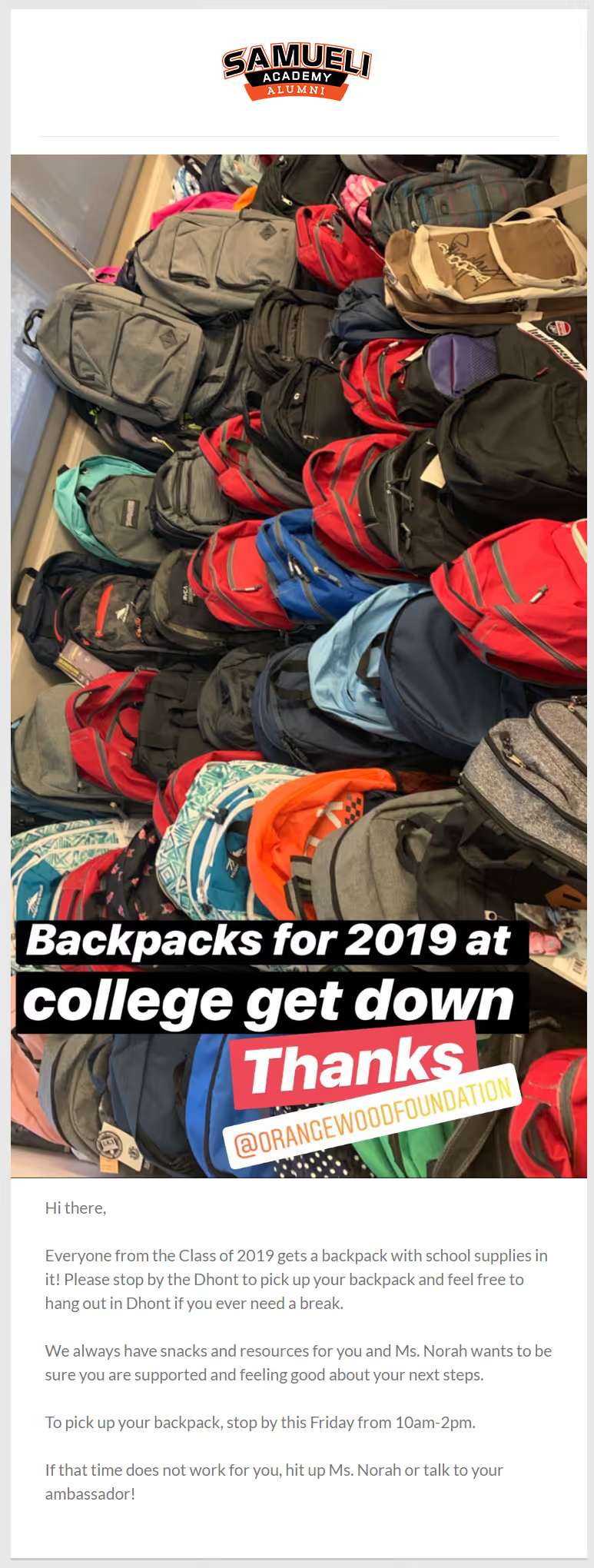
Segregating alumni on the basis of class years is a common approach employed by institutions worldwide. Here’s how Samueli Academy, a free, public charter high school in Santa Ana, targeted its Class of 2019 alumni with a personalized email campaign and witnessed increased alumni engagement.
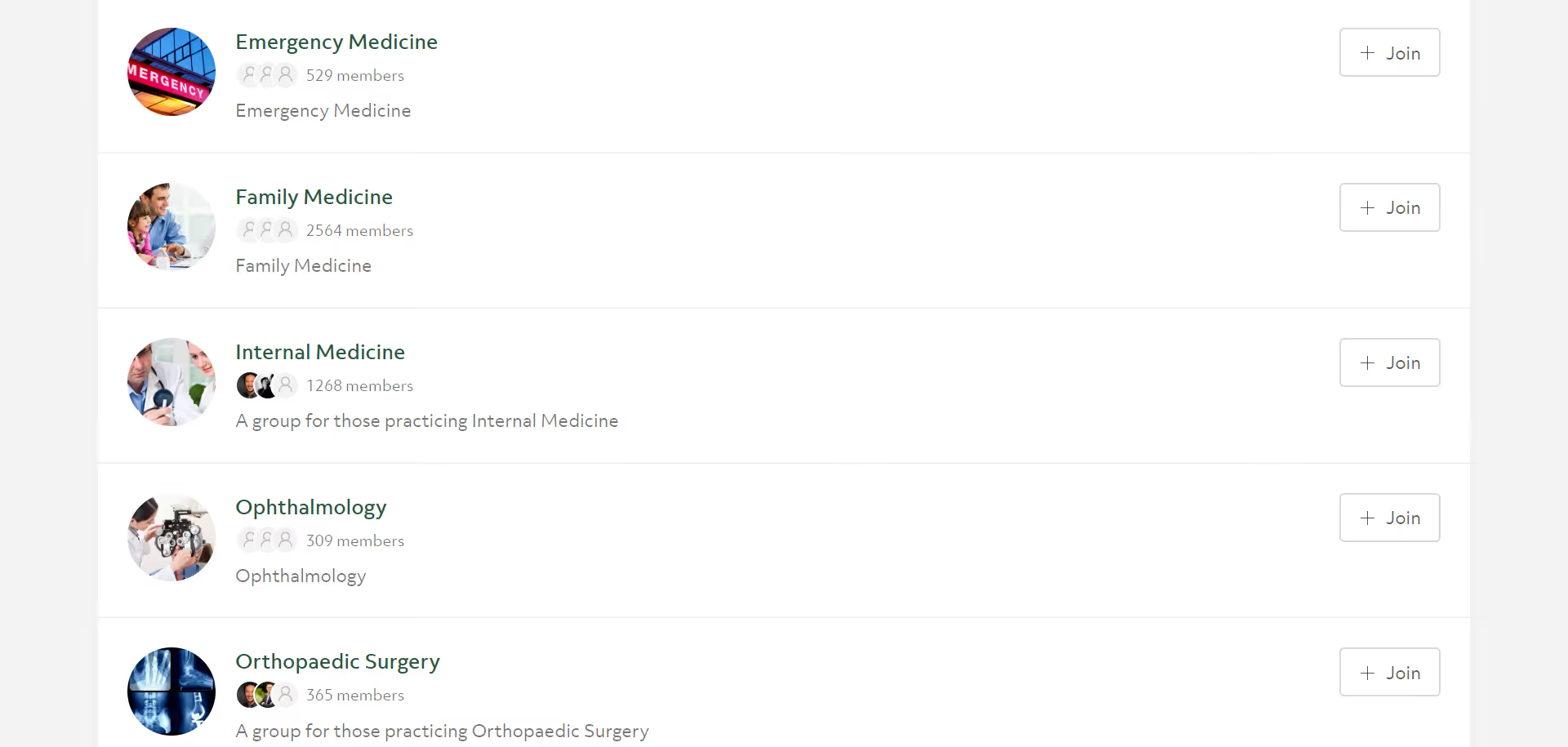
Creating content and valuable resources based on different industries or specialties alumni work in is a great way to keep alumni engaged. This allows alumni to connect and network with fellow alumni for professional development, new business opportunities, etc. Take a look at how Loma Linda School of Medicine creates groups based on its alumni’s work specializations.
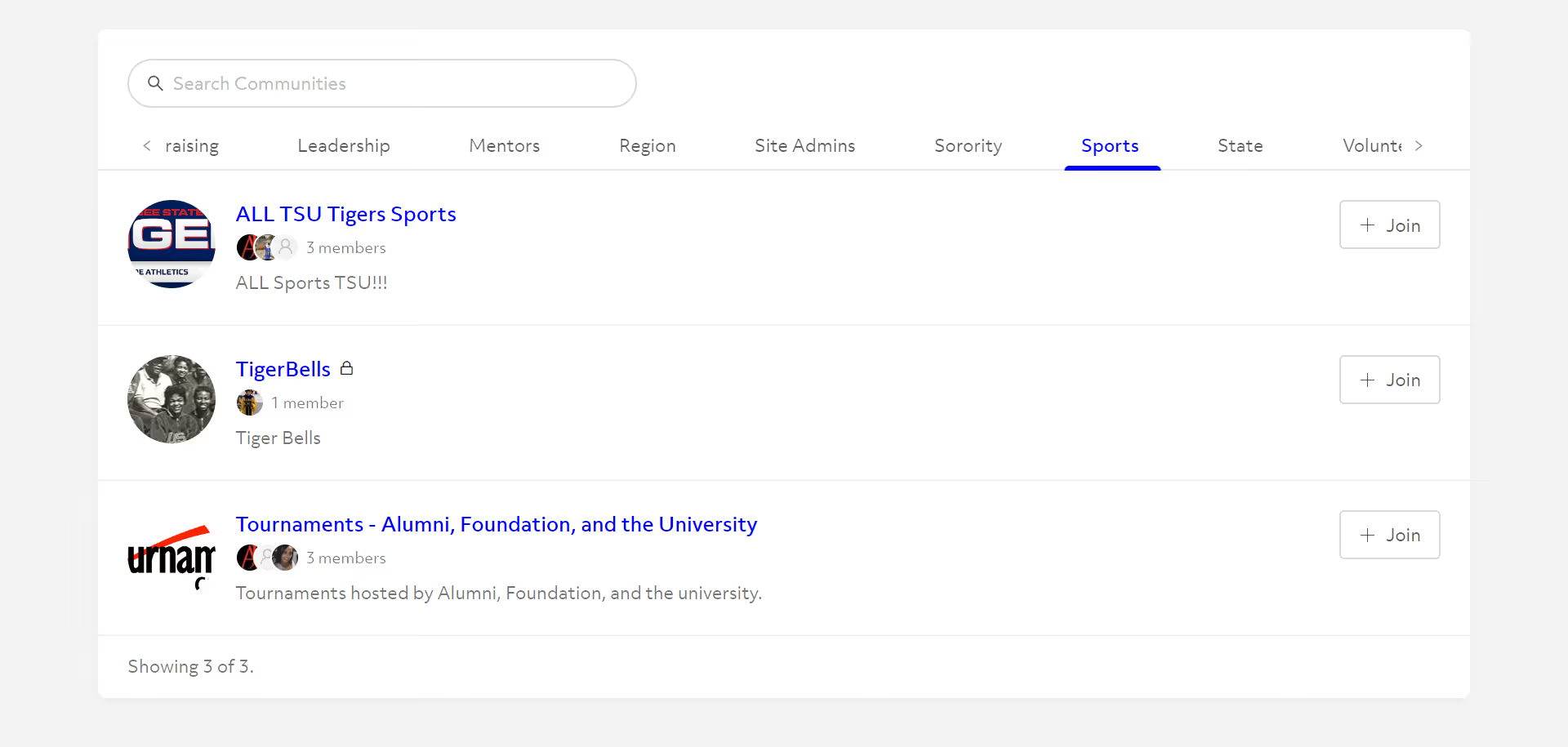
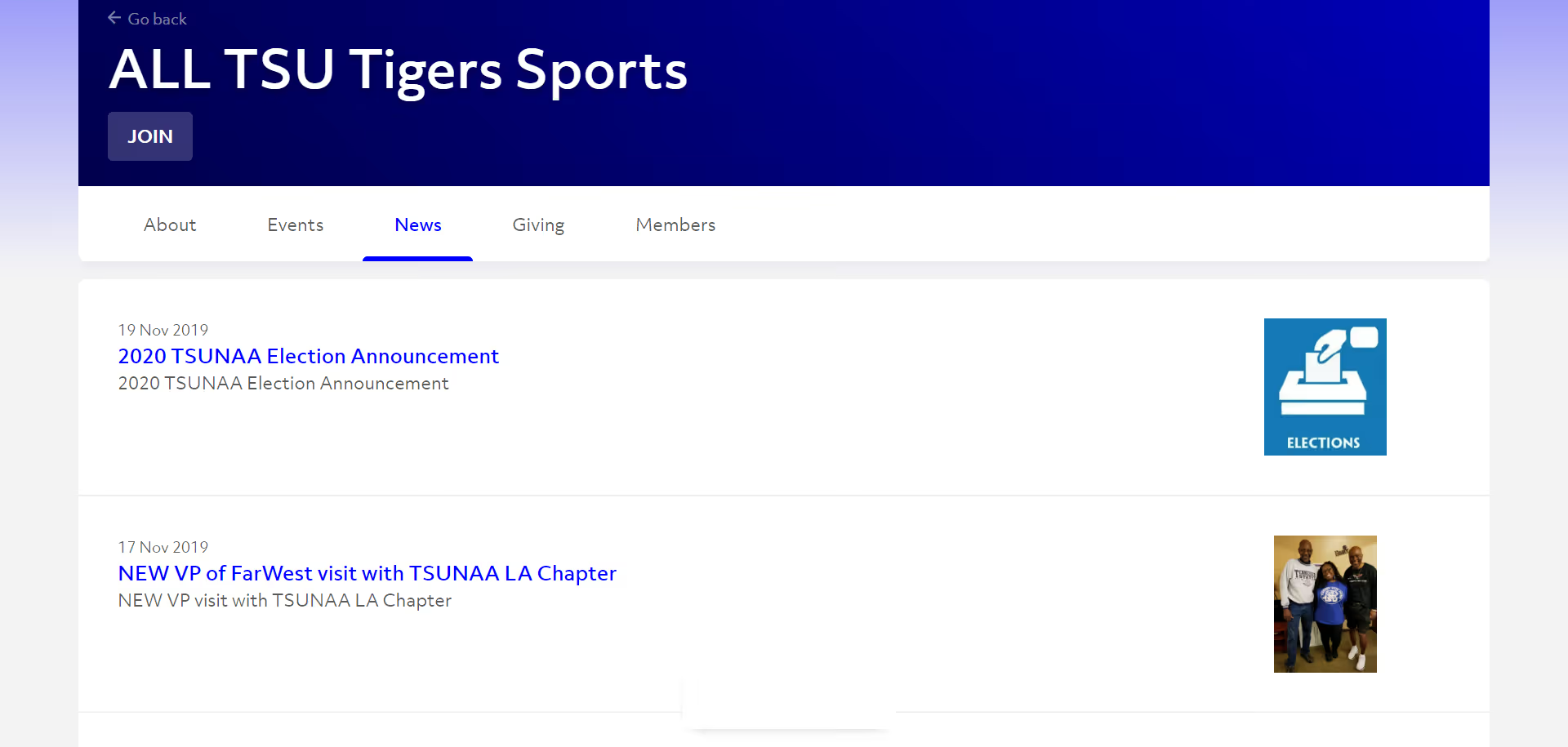
Another way to segment alumni is on the basis of shared interests. For example, all former football players can be engaged with content around the current team or exclusive fundraising campaigns asking for their contributions to the sports fund. See how Tennessee State University utilizes affinity groups to segregate alumni based on their interests.
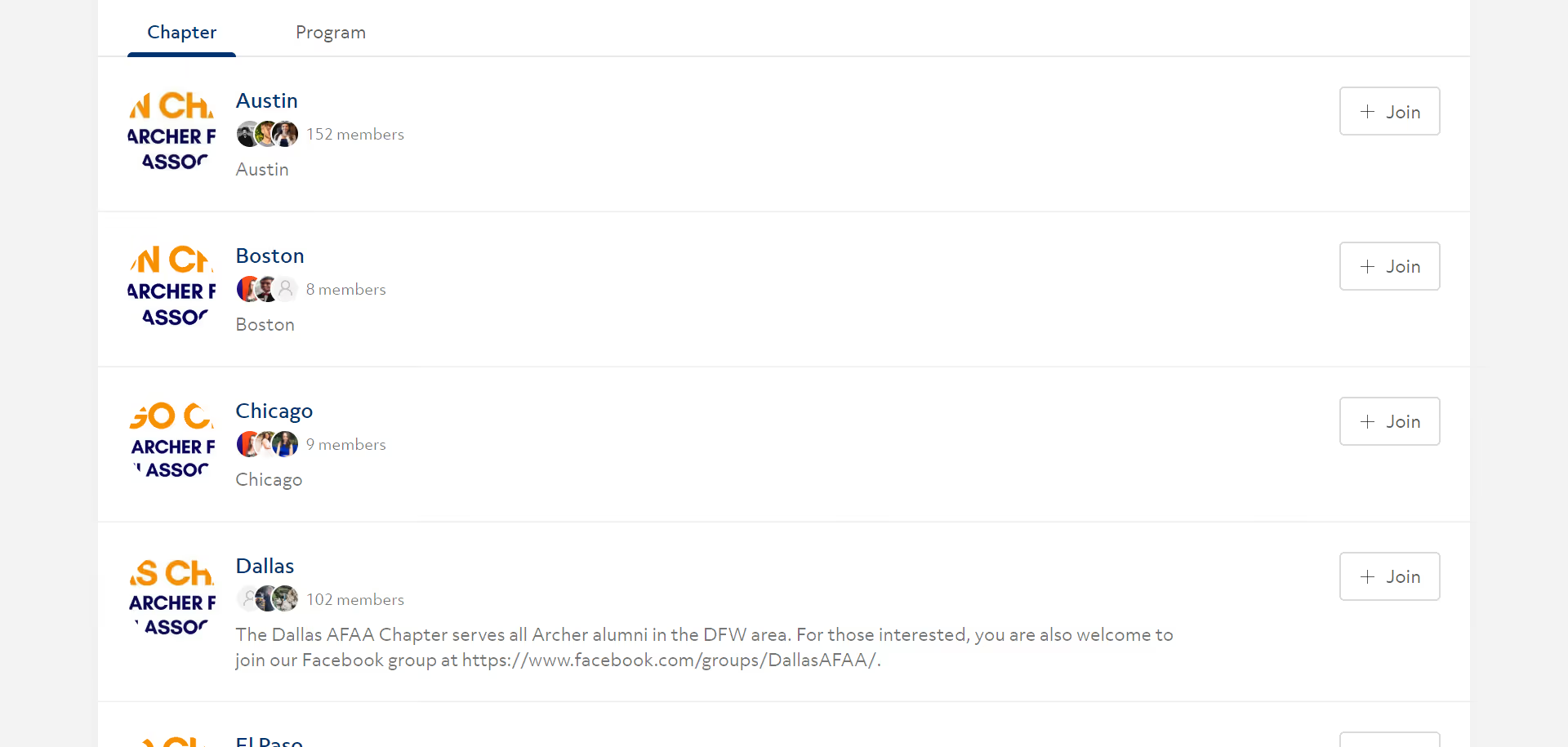
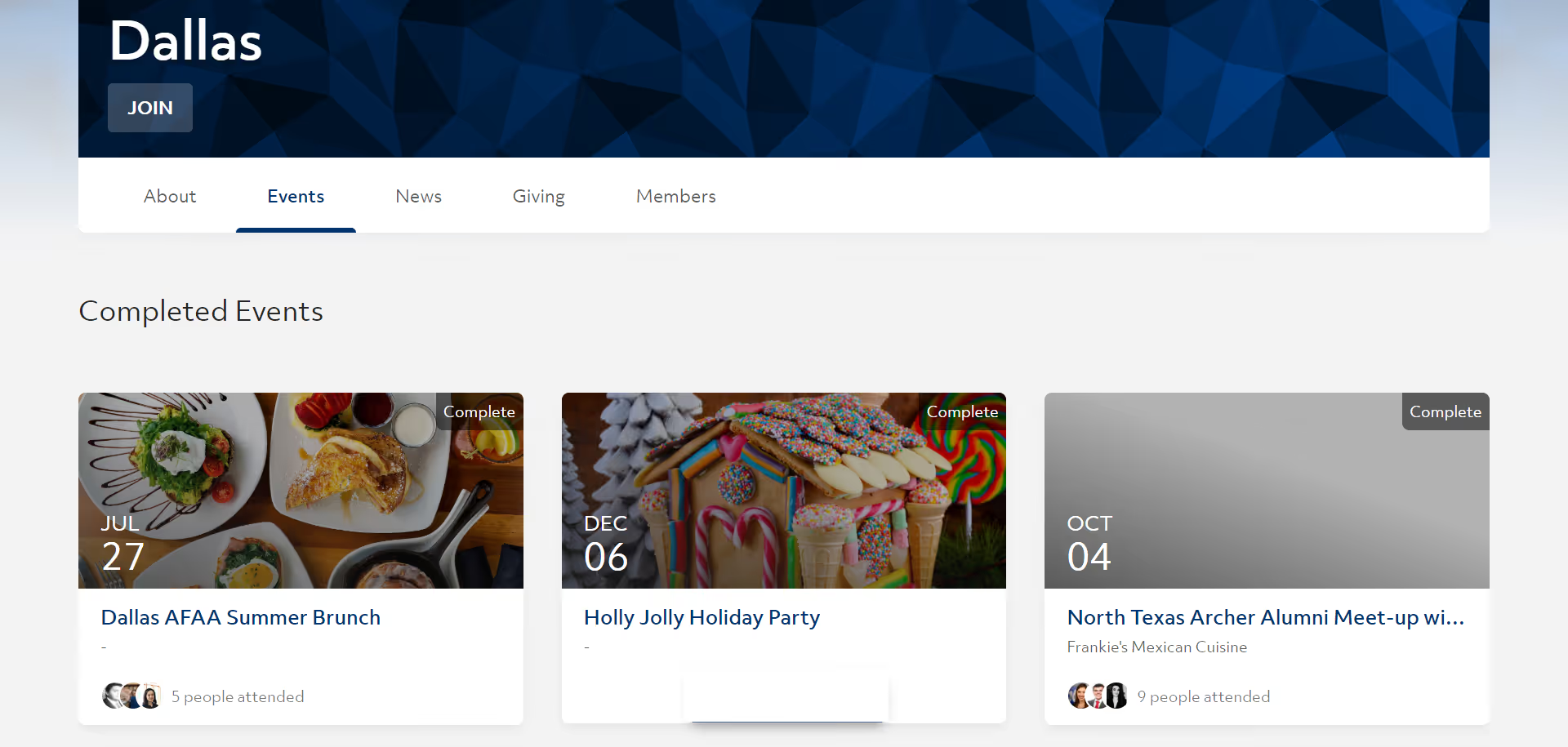
Alumni segmentation on the basis of the location is especially of great value when you want to do an event in multiple locations. Some institutions have formal alumni chapters but some also have regional alumni volunteers who help engage alumni in their location.
Take a look at Archer Center’s city-wise alumni chapters below.
While there is no limit to the number of alumni segments that can be created, it is vital to consider these two factors before you get started:
Some institutions might have a large staff handling advancement whereas some might just be a single-person advancement shop. The number of segments you can handle is largely dependent on the staff members and resources available to manage the unique engagement needs of these groups.
The most important aspect of creating an alumni community is identifying what your alumni would benefit from. For instance, if your school had an active photography club, chances are, your alumni would love to reconnect with fellow alumni who were a part of that club.
While all of this may sound overwhelming, alumni community platforms like Almabase can simplify the entire process for you.

Table of Contents
Subscribe
See how modern advancement teams bring alumni engagement and fundraising together.
Having an updated alumni database is a massive asset to any alumni program. Unfortunately, very few schools actually have a database that is seamless and functional enough. While we all understand the herculean task of tracking thousands of our graduates across the decades, we cannot ignore how pivotal a role it plays in our alumni engagement strategies.
Having observed hundreds of institutions around the globe take up various approaches with respect to updating their alumni databases, we’ve compiled for you the best techniques that are typically employed by schools and their relative benefits.

Address Finder Services look up publicly available information on individuals and matches them against your database. Typically these services are charged on a success fee model - so if they help you find new data then you pay for it, otherwise, you don’t. Some of these services are integrated into your database, and some are independent. A few popular service providers are — LexisNexis, AlumniFinder, and Raiser’s Edge Address Finder.
1. Affordable for low-volume data appends: For organizations that work with low volumes of data, Address Finder Services can be affordable but the costs are high if you have a large alumni base.
Quick results: Address Finder Services eliminate the need to manually collect data, thereby saving time and resources.
1. No user consent: Since you are not asking your alumni for this information, they are not giving you explicit consent to use their information to communicate with them. The recommended practice here is to get consent from your alumni once you get new contact information, but this is a separate effort you’ll have to take up.
2. Incomplete Data: Since these services compile data based on publicly available information, more often than not, you may find yourself dealing with incomplete information as it is likely for people to limit their personal data online.
3. Inaccurate Data: As these services extract data from various public sources, you might often come across outdated alumni data. While some of the data may be accurate, it is highly likely that all of it isn’t.
4. No ongoing updates: In order to keep your alumni database updated, you will have to run this service regularly.
This is an easy option and almost every school includes a form on their website requesting alumni to update their information using that form. Within the alumni page of your website, this is a key section. However, the challenge that every school reports is that very few alumni actually fill it. Think about it — what is the motivation for alumni to go to your website regularly and fill out a long form to update their information?
1. Data accuracy: Since your alumni are providing this information voluntarily, it would be accurate at least for then.
2. Easy to setup: Setting up a form on your website that captures information from your website visitors or in this case - alumni, doesn’t take much time or effort.
3. User consent: Unlike address finder services, forms collect information from only those who are willing to provide their information, thereby establishing user consent.
1. Low volume: Without an incentive in place, very few alumni actually fill out the form.
2. Manual efforts: While setting up a form may be easy, the challenge lies in entering the data collected by these forms into your database.
3. No ongoing updates: Most updates are not captured on time. For example: if an alum finds a new job and moves from Boston to San Francisco, how likely are they to immediately update you via the form?
LinkedIn is a great source of information, some schools turn to the social media platform to capture relevant alumni information. LinkedIn has an alumni tool that you can use to find your alumni who have indicated an education at your school on their profile. You can either have a staff member use their personal LinkedIn account and browse through alumni or create a separate account using your school’s name only for this purpose. The major problem here is that beyond a point LinkedIn will detect that you are browsing through too many profiles and will block you.
1. Data Accuracy: LinkedIn being a professional networking platform, alumni are much more likely to keep their profiles updated here.
2. Beneficial for smaller institutions: For smaller organizations, with a smaller alumni base, capturing alumni data via LinkedIn is feasible.
1. Limitations by LinkedIn: Since LinkedIn only allows a fixed number of searches, upon exceeding that limit, you will be either blocked or asked to shift to a paid account.
2. No user consent: Similar to address finder services, the data collection process is discrete and user consent is not involved.
3. Expensive & time-consuming: You would need to appoint designated people to solely do this job which can make this process rather time-consuming and expensive.
4. High risk of error: Where there’s manual extraction of data involved, there is always a high risk of error.
Events are wonderful opportunities to re-engage alumni and offer a chance to gather relevant information from event attendees. The data collected from these event registrations is highly accurate since it’s provided by your own alumni who are actively engaging with you.
1. Data accuracy : Since the source of this information is your alumni, there’s no doubting its credibility.
2. User consent : Since the information collected via events is provided by your own alumni, user consent is established.
1. Low volume : If your institution doesn’t see a lot of alumni participation at events, you might not be able to capture enough information to update your alumni database.
2. Manual effort : While alumni information collected from events can be highly useful, this information needs to be manually entered into your database, thereby increasing the risk of errors and time taken.

4 ways to update your alumni database
Looking to update your school's, college's or university's alumni database? Find the top 5 ways to update your alumni database and engage with more alumni.
Lorem ipsum dolor sit amet, consectetur adipiscing elit. Suspendisse varius enim in eros elementum tristique. Duis cursus, mi quis viverra ornare, eros dolor interdum nulla, ut commodo diam libero vitae erat. Aenean faucibus nibh et justo cursus id rutrum lorem imperdiet. Nunc ut sem vitae risus tristique posuere.

August 26, 2019
12 minutes

.svg)

.avif)
.webp)