Use this alumni engagement checklist to strengthen connections with your community. Covers essential strategies for communications, events, fundraising, and measuring what works.

Sharada Koti
Updated:
May 19, 2026

Summary
• Prioritize clean, segmented data in your CRM: Cluttered data leads to generic outreach, so regularly audit and segment your database to truly personalize communications and boost engagement across all your alumni and donor groups.
• Ditch one-size-fits-all communications for good: Today's alumni expect messages tailored to their interests, class year, or even past interactions, which is key to cutting through the noise and encouraging deeper engagement.
• Modernize your events to reach more people: Go beyond traditional gatherings by diversifying event types, offering virtual or hybrid options, and making registration super easy to broaden participation and engagement.
• Connect fundraising to true engagement, not just asks: Enhance your giving platforms for convenience, explore peer-to-peer campaigns, and always show the tangible impact of donations to build trust and lasting donor relationships.
• Don't guess, measure what really moves the needle: Implement an engagement scoring system and A/B test your communications to understand what truly resonates with different alumni segments and continually refine your strategy.
For advancement and alumni relations teams today, the days of annual newsletters and homecoming weekends solely being enough to keep your community connected are long gone. A lot of alumni engagement strategy efforts from institutions and organizations unfortunately get lost in the hundreds of emails, notifications, and phone calls that they experience on a daily basis.
This is why today's advancement landscape demands a modernized approach that stands out to people who are digitally savvy, time-constrained, and expecting personalized experiences.
We've come up with an alumni engagement checklist to help you audit your current engagement strategy to help your engagement stand out and build meaningful relationships for many years to come.
A decade or two ago, staying in touch with alumni was simpler. A semi-regular newsletter, a reunion, and the occasional email update were often enough to signal effort. Nowadays, most alumni are overwhelmed with communication every hour of their lives, and yours needs to stand out.
To meet the expectations of today's alumni and stand out, it is important to know what engagement looks like in the first place:
Engagement is a journey with various checkpoints: An alum may attend an event, mentor a student in the next couple of months, and join an advisory group a year later. Modern teams need to be able to pinpoint which part of the journey motivated them to take it one step further. Sometimes it's the most mundane things but
Alumni have more diverse motivations than: The same person might be one of your most regular volunteer mentors, yet hardly ever donate, while an alum that hasn't even updated their contact information in years feels compelled to donate generously whenever possible. This is a good thing as alumni have more ways to connect with their alma mater than ever! However, teams today need to tailor their engagement to each alum's personal motivations.
The questions leadership asks have changed: Attendance still matters, but it's no longer enough. Teams are increasingly asked who is deepening their involvement, where engagement is leading, and how today's activity supports longer-term relationships. It ties into the data-driven nature of modern advancement.
Alumni engagement now sits closer to planning and strategy than ever before, compared to the pure programming that it sometimes used to be. Teams are often not just asked to run things, they're asked to explain what's working, what's not, and why.
You've probably heard it all before but your data infrastructure has never been more important. It is no longer enough to just have a bunch of standardized metrics and be content at looking at them from time to time.
A CRM is the bare minimum but it is only as good as the data inside it. Start with a comprehensive data audit with questions such as:
Data tends to get messy regardless over time so you should implement quarterly data hygiene protocols and assign ownership for data maintenance.
As mentioned earlier, alumni today face more emails, notifications, and ads than ever before. This means generic mass communications, whether they are from a well meaning nonprofit or from their alma mater are likely to end up in the spam folder. Your database should support segmentation by at least a few common criteria such as:
Having well categorized lists and segments will make any engagement efforts much easier to personalize as well as measure impact for.
Integrating an advancement CRM with giving platforms and event management tools creates a unified "source of truth" that eliminates data silos and manual entry errors. The goal is for teams to gain a 360-degree view of reliable donor behavior and to be able to use your other tools to their fullest potential.
Take stock of your required compliance certifications as well as your privacy policy. You need documented consent for communications, clear opt-out mechanisms, and the ability to fulfill data deletion requests. Beyond legal compliance, transparency about data use also builds trust with your community.
💡Go through the privacy and data policies of tools you use as well. Some alumni may end up being uncomfortable with the policies of certain tools you use.
Finally, you want all that data to be easy to look at and study. Your dashboard should not only track all the metrics you need but also be able to surface engagement patterns and be customizable as per your team's needs. Tools like Almabase present alumni engagement and donor management data in an easy to use format.
In 2026, your digital ecosystem is usually your primary touchpoint with most constituents. There are some things you definitely want to pay attention to here.
With so much web traffic coming from mobile devices, your alumni and donor portals must function flawlessly on smartphones. Test your site on multiple devices and screen sizes. Can users register for events, update their information, and make gifts in three taps or less?
A content calendar ensures you're not scrambling for last-minute ideas or going silent for months. Most teams today have an assigned person to handle content and manage social media accounts.
An alumni directory is one of the most important features of any alumni engagement strategy. It helps people find former classmates, build professional networks, and reconnect with their community. Today, institutions and organizations often stand out by having features such as detailed privacy settings, search filters, and integration with LinkedIn for professional networking.
Career support is always a highly ranked priority for alumni. A mentorship platform that connects students and young alumni with established professionals creates value for both parties. Include job boards, resume resources, resume examples, templates and industry-specific networking groups.
Whether it's through dedicated platforms or integrated social features, give your community space to connect directly with each other (not just with you). Online alumni communities allow niche interest groups whether it's from specific academic programs or shared hobbies, to reconnect and thrive without requiring institutional staff to facilitate every interaction.
How you communicate is as important as what you communicate. This section is mostly to do with best practices to ensure each touchpoint is meaningful.
The last thing you want is for alumni to get email fatigue from you. Establish a predictable rhythm, whether it's monthly newsletters, event invitations, campaign updates, and ad-hoc announcements. Each message should have one clear call to action. You'll also want to track metrics such as open rates, click-through rates, and unsubscribe rates to know what works and what doesn't.
True personalization references specific attributes, behaviors, or history. "As a member of the Class of 2015" or "Given your recent attendance at our Denver event" makes messages feel relevant. Experiment with variable content blocks that change based on segment. For example, you can try showing different event listings to different regions.
Different segments naturally prefer different channels. Your volunteer leaders might respond best to personal calls, while recent graduates engage primarily through the odd Instagram comment. A sophisticated engagement strategy should ideally coordinate messages across channels for maximum reach without feeling repetitive or disjointed.
For urgent updates, last-minute event reminders, or breaking institutional news, text messaging can be pretty effective. Keep messages brief and include clear opt-out instructions. You will ideally want to use this channel sparingly to maintain its effectiveness.
Don't spread yourself thin across every platform. Focus on where your community actually spends time. LinkedIn works well for professional content and networking, Instagram resonates with younger alumni, and Facebook still hosts active regional chapters for older demographics. And of course, this can vary greatly between different institutions and individual segments.
Video outperforms other content types across nearly every metric. Short-form video (under 90 seconds) works for social media, while longer documentary-style pieces showcase impact. Student and alumni testimonials, campus updates, and event recaps all translate well to video as they exude authenticity.
Events remain the cornerstone of engagement, but the engagement practices involved before, during, and after an event have changed a lot over the years.
Your calendar should include networking events, educational webinars, social gatherings, volunteer opportunities, family-friendly activities, and regional meetups. Survey your community about preferences and track attendance patterns to build an event calendar that fits your team's capacity as well as your alumni's demands.
The best virtual alumni events support breakout rooms for networking, interactive Q&A, live polling, and chat features that facilitate connection. Record sessions for on-demand viewing, extending the event's value.
Hybrid events expand reach without sacrificing the intimacy of in-person gatherings. But executing them well requires a lot of moving parts such as dedicated facilitators for virtual attendees, cameras positioned to include remote participants, and technology that makes virtual attendees feel included.
Nowadays, you need to ensure your event registrations and check-ins are as easy as possible. Registration forms should request only essential information, save progress automatically, and provide immediate confirmation. QR code check-in at events eliminates lines and automatically updates attendance records in your CRM.
Send thank-you messages within 24 hours, share photos and recordings within a week, and follow up with non-attendees who registered. Track which attendees might be prospects for deeper engagement such as leadership roles, giving opportunities, or other events.
Strong regional chapters extend your reach but can struggle without institutional support. Provide chapters with event toolkits, budget assistance, branded materials, and coordination help.
Engagement strategies and best practices often empower fundraising. Here are some ways you can ensure that your community's generosity feels valuable and cyclical.
Your donation form is a critical point of engagement. Therefore, it needs to load quickly, work flawlessly on mobile devices, offer multiple payment methods (credit card, ACH, PayPal, Venmo, Apple Pay), and support recurring gifts. Try to minimize or remove unnecessary fields as you can always gather additional information later.
Peer-to-peer tools let individuals create personal fundraising pages, share them with their networks, and track progress toward goals. These campaigns work particularly well for reunion giving, athletic fundraising, and milestone campaigns. It is a great way to fundraise while acknowledging the value that your most engaged supporters provide to your organization or institution.
Giving societies create identity and belonging around philanthropy. Consider exclusive events, leadership opportunities, insider campus updates, or impact reports showing exactly how gifts are used. Segment benefits by giving level and donor interests to personalize these programs even further.
The most successful campaigns tell stories and invite participation beyond a simple donation form. For example, a capital campaign for a new building that includes construction updates, naming opportunities, volunteer roles in outreach, and events celebrating milestones. Every campaign should have engagement opportunities at all levels.
Donors want to know their gifts matter. Regular impact reporting with specific outcomes, stories, and data builds trust and encourages continued giving. Common practices here include annual impact reports, endowment updates, and scholarship recipient stories all demonstrate stewardship. Share these widely, not just with current donors, but with all constituents to grow your community's giving culture
The most effective advancement teams treat engagement as an ongoing experiment, constantly testing and refining their approach.
Obviously, not all engagement is equal. Attending a webinar is different from volunteering for a committee, which is different from making a major gift. Define a particular outcome you are aiming for, such as a donation. Develop a point system that weights different actions contributing to that objective, creating an engagement score for each constituent. This lets you identify your most engaged community members, track score changes over time, and target interventions to those at risk of disengagement.
Whether it's class year, acquisition source, geography, or other meaningful segments, ask yourself which cohorts show the strongest engagement? Which are declining? Where are you gaining ground, and where are you losing it? Analyzing these metrics by cohorts can provide interesting insights that overall engagement metrics sometimes miss.
Keep testing subject lines, send times, message length, calls-to-action, imagery, and personalization strategies. Even small improvements tend to compound over time. Document what works and build those learnings into your standard practices.
After every major initiative, conduct a retrospective of what worked, what didn't, and what you or your team would do differently. Document these learnings so institutional knowledge survives staff transitions. You can even consider creating a campaign playbook that evolves based on repeated learnings over time.
Compare your performance to your peers whether it's on an institutional level or simply on a similar engagement campaign. Where are you ahead? Where are you behind? Is there something you're missing out on? Use these insights to prioritize improvements and set realistic goals.
Building a comprehensive engagement program requires the right infrastructure. Many advancement teams find themselves juggling multiple disconnected systems. One for events, another for communications, a third for giving, and spreadsheets filling the gaps. This fragmentation creates data silos, duplicated records, and missed opportunities.
Almabase provides an integrated platform designed specifically for advancement and alumni relations teams. Rather than piecing together generic tools, you get purpose-built solutions that understand the unique needs of alumni, donors, and constituents in general. This includes:
For teams working through this checklist, Almabase may address many of the foundational infrastructure requirements such as data integration, mobile responsiveness, multi-channel communication, fundraising, and analytics, allowing you to focus on strategy and relationships.
It should go without saying that this checklist is not something to be easily completed in a few days, a week, or even a month. Even the most sophisticated advancement operations have gaps that can sometimes take years to fix. Our goal is to help you identify your current engagement potential, prioritize improvements based on potential impact, and create a roadmap for enhancing your engagement infrastructure.
Remember that the ultimate goal has and will always be building genuine relationships with your community, creating value for them, and inviting them into the ongoing story of your institution. The tactics and tools matter of course, but they're in service of a larger and deeper purpose.
If you are interested in learning how Almabase helps you engage alumni effectively, request a personalized demo and we'd love to chat!
Meet them where they are. Younger alumni prioritize career value, peer connections, and convenience over institutional nostalgia. Offer short-form virtual programming that fits their schedules, create affinity groups around shared interests
Start with optimizing what you already have. Better segmentation of your existing database, improved email content, and systematic follow-up don't require new tools.
People give to institutions they feel connected to, and connection doesn't happen through solicitation alone. The most successful advancement operations view every interaction as both an engagement opportunity and a potential step in someone's philanthropic journey.
Treating it as a series of transactions rather than building genuine, long-term relationships that provide consistent value to your community.
Subscribe
See how modern advancement teams bring alumni engagement and fundraising together.
Plan faster. Execute better
Explore free templates designed for alumni and fundraising teams.
.png)

.avif)
Sharada Koti
Every thriving community begins with participation. For schools, higher ed institutions, and nonprofits, that might look like an alum mentoring a student, a parent joining a virtual town hall, or donors rallying behind a cause. Small contributions like these build on each other, shaping the volunteerism, advocacy, and momentum that sustain your mission.
When you have a community that spans multiple time zones and busy schedules, the real challenge is to design experiences that truly feel inclusive. Getting people involved can feel like an uphill battle, but it doesn’t have to. A few thoughtful adjustments to your approach can unlock more consistent and meaningful engagement.
With that in mind, we’ve compiled over 20+ ideas to simplify and enhance engagement in 2026. These are practical ways to boost participation, turn involvement into long-term support, and keep the energy in your community moving.
Looking for a roadmap tailored to your needs? Discover how Almabase helps communities run events, engagement, and giving on one platform.
An online community that has consistent and meaningful interaction can unlock advantages that traditional channels often can’t for advancement teams. These interactions leave behind clear signals of interest, making it easier to understand alumni priorities and build stronger connections. They also remove barriers of distance and time, creating opportunities to involve graduates who might otherwise remain out of reach.
Here are 25 ideas, each to transform your online community into an essential resource for your alumni-
Your alumni community becomes stronger when it helps members grow in their careers. By positioning your network as a space for guidance, connections, and learning, you create lasting value.
Offer flexible formats that connect alumni at different stages of their careers. Structured programs can match mentors and mentees through data-driven pairings, while flash mentoring events provide quick, focused conversations without long-term commitment. Together, they make it easy for alumni to give and receive guidance in ways that fit their schedules.
Create spaces where alumni learn directly from one another. Small roundtables can dive into industry trends, while themed panels highlight career pivots and personal journeys. Both formats give members access to insider knowledge and relatable stories, making the community a go-to place for real-world insights.
Build a digital library that alumni can access anytime. This could include resume guides, salary negotiation tips, or recorded lectures from faculty and industry experts. Keeping this content exclusive adds clear, practical value to being part of your network.
Host short, focused workshops led by alumni or faculty on topics like leadership, data storytelling, or personal branding. These sessions offer hands-on learning and help members pick up new tools they can apply right away.
Centralize job and internship postings within your platform. Alumni can share openings from their organizations, giving others a direct path to opportunities while reinforcing the idea that the network actively supports their professional growth.
Some of the strongest connections happen when alumni drive momentum themselves. Your role is to create the space and tools for those peer-to-peer bonds to thrive.
Create a searchable hub where alumni can list and discover businesses owned by fellow graduates. Beyond visibility, it encourages alumni to support each other’s ventures, fostering a “buy alumni” culture. Featuring rotating spotlights like a “Business of the Month” which adds recognition and keeps the directory lively.
Empower passionate alumni to take on leadership roles. Ambassadors can organize meetups in their city, welcome new graduates, or rally volunteers for campaigns. Equip them with a toolkit of templates, brand resources, and event ideas so they feel supported while extending your reach.
Instead of every appeal coming from the institution, let alumni take the lead. With personal fundraising pages, they can champion causes that matter to them. Whether that’s a scholarship fund or a student club initiative. This grassroots approach creates deeper ownership and often draws in gifts from networks you might never reach directly.
Offer short-term opportunities for alumni to collaborate. For example, a three-month committee to plan a cultural showcase, designing a mentorship toolkit, curating alumni stories, mentoring a student for an hour, reviewing portfolios, or providing professional feedback. These projects appeal to busy professionals who can’t commit year-round but are eager to contribute in bursts of time and expertise.
Invite alumni to host informal webinars or live Q&As on topics they’re passionate about, from launching a startup to balancing career and family. These sessions position alumni as thought leaders, while providing practical, real-world learning for the community.
Stories are at the heart of engagement. Sharing authentic experiences and milestones reminds alumni of their shared identity and the impact they continue to make.
Celebrate alumni achievements while highlighting their long-term paths. This could feature recent success stories, career transitions, or reflections from former student leaders and creatives. Combining recognition with narrative, these stories inspire peers, show the value of an education from your institution, and reinforce community pride.
Reconnect alumni with professors through live "Ask Me Anything" events. These sessions provide a casual, engaging way for graduates to ask questions, hear about current research from their favourite faculty and feel connected to the evolving campus life.
Showcase the accomplishments of current students to bridge generations. Highlight scholarship recipients, award-winning teams, or innovative projects. Seeing the tangible results of their support strengthens alumni pride and encourages ongoing involvement.
Offer alumni the chance to run your social media channels for a day. They can share personal stories, career experiences, or campus memories, giving peers an authentic look into their lives and perspectives. This fresh, unfiltered content keeps engagement lively and relatable.
Launch campaigns around themes like “Alumni Making a Difference” or “Campus Then & Now.” Curate photos, videos, and short written reflections to weave a narrative across channels. Themed campaigns provide structure while still allowing many alumni to participate and share their stories.
Creating memorable, accessible experiences keeps alumni connected to each other and the institution. The right events spark engagement, foster nostalgia, and make participation easy across geographies.
Broadcast homecoming, lectures, or student showcases so alumni can join from anywhere. Interactive features like live chat, polls, or Q&A sessions make virtual attendees feel part of the action, not just observers. These events give alumni who can’t travel a chance to celebrate milestones and stay connected to campus life.
Engage alumni through curated groups that meet online regularly around shared hobbies or interests like hiking, photography, cooking, or book discussions. Inviting a graduate to lead sessions or spotlighting alumni contributions adds a personal touch. Over time, these groups create smaller, dedicated communities within your network, encouraging repeat engagement and fostering meaningful conversations around shared passions.
Host friendly, competitive events focused on university history, campus traditions, or milestone decades. Trivia nights encourage alumni to reminisce, spark laughter, and connect across generations. They’re low-pressure, fun events that make it easy for alumni from anywhere in the world to join and interact, often sparking follow-up conversations long after the event ends.
Organize short, informal meetups with specific themes or for select groups (e.g., young alumni in tech, regional chapters, or parents of current students). These casual settings encourage alumni to talk, exchange ideas, and meet new people without committing to a full-scale event. They’re perfect for building local or niche communities while keeping energy high and logistics simple.
Bring together alumni from different decades to share personal stories and lessons learned. These small-group conversations help newer alumni see the long-term impact of their education, while older graduates reconnect with the evolving culture of the institution. Cross-generational exchanges build a sense of legacy and continuity, strengthening bonds across the entire alumni network.
This section focuses on innovative ways to involve alumni that go beyond traditional events or giving, making participation fun, purposeful, and mutually beneficial.
Pair younger alumni with seasoned professionals to share insights on emerging technologies, industry trends, or modern work practices. This two-way exchange benefits both groups: younger alumni gain guidance, while senior alumni stay updated and connected to the latest developments.
Use interactive social media features to spark participation with fun, university-related questions. Polls or quizzes about campus history, student life, or alumni trivia keep the community active and encourage sharing, creating low-effort but high-value engagement.
Make it easy for recent graduates to join the alumni community with a simple, compelling online form. Feature it on your website and in welcome emails, giving newcomers a clear first step to participate in programs, discussions, and events tailored to their interests.
Turn updating alumni contact information into a friendly competition. Offer a prize for the class or affinity group that verifies the most profiles. This gamified approach keeps data accurate while making the process engaging and rewarding.
Organize short, themed challenges that alumni can participate in over a day or week like submitting a campus memory, sharing a professional tip, or posting a photo from their graduation year. These bite-sized activities drive engagement, create shareable content, and make alumni feel involved.
Creating lasting connections goes beyond hosting events or sending newsletters. Here’s what to keep in mind to make every initiative count:
A comprehensive and customizable alumni and donor engagement platform like Almabase makes it simple to put these strategies into motion. From branded directories and seamless onboarding to virtual events and mentoring programs, everything lives in one place. Built-in analytics show in real time which initiatives are driving participation, connections, and impact, so you know where to double down.
For community managers and advancement teams, the day-to-day tasks like messaging members, segmenting groups, or surfacing the right opportunities take just a few clicks. With our Re: NXT integration, all engagement data flows directly into your advancement CRM, so nothing gets lost between platforms. Features like Next-Gen Directories, Event Management, and Affinity Groups go beyond the basics, making it effortless for alumni to connect, RSVP, and engage on their own terms. With an all-in-one platform powering your strategy, advancement teams can focus less on logistics and more on creating meaningful engagement.
Hopefully, this blog gave you a chance to step back and appreciate one of the cornerstones of advancement and alumni relations. Even the most experienced teams benefit from revisiting why these events exist in the first place; it’s a chance to approach your next one with fresh ideas and renewed perspective. Because when done well, they remind graduates why they belong, spark pride in your institution, and create new ways for alumni to support one another.
If you’re looking for a partner to help plan your next alumni event and make it a success, we’d love to chat. Whether it’s brainstorming, planning, or running the event, you can start a conversation or request a personalized demo, and we’ll help you bring your vision to life.
20+ Online Community Engagement Ideas for 2026
Lorem ipsum dolor sit amet, consectetur adipiscing elit. Suspendisse varius enim in eros elementum tristique. Duis cursus, mi quis viverra ornare, eros dolor interdum nulla, ut commodo diam libero vitae erat. Aenean faucibus nibh et justo cursus id rutrum lorem imperdiet. Nunc ut sem vitae risus tristique posuere.
Sharada Koti
September 30, 2025
12 minutes
Alumni engagement is not just a buzzword—it’s a critical component of an institution’s long-term success. It involves cultivating meaningful, lasting connections between graduates and their alma mater, relationships that provide mutual value.
In fact, 87% of alumni professionals acknowledge the need to improve member engagement, underscoring the demand for approaches that go beyond traditional methods. And in a world where digital communication is so crucial, implementing alumni engagement best practices means having a solid alumni engagement strategy backed by thoughtful planning and the right technology to bring it to life.
This guide takes you through ten proven strategies to refresh your approach and build stronger, more sustainable bonds with your alumni community.
Alumni engagement refers to all the ways in which graduates stay connected to their alma mater after they’ve moved on—whether it’s by attending reunions, mentoring students, offering their professional expertise, or even making a donation. The Council for Advancement and Support of Education (CASE) defines alumni engagement as any activity that alumni find valuable, that helps build long-term, mutually beneficial relationships, and that encourages loyalty, support, and a stronger institutional image.
And the benefits go well beyond fundraising. When alumni are actively engaged, they become powerful allies for the institution. They:
A great real-world example comes from Franklin College, which built a comprehensive scoring system to track alumni interaction across multiple channels. Using tools like Power BI and automation, they created a live dashboard that gave them a clear view of engagement metrics. This helped them pinpoint their most involved alumni and personalize their outreach—an excellent model of how a data-driven alumni engagement plan can deliver impressive results.
Another success story comes from the California College of the Arts’ MBA in Design Strategy (DMBA) program. With limited resources, the team launched a crowdfunding initiative using Almabase. In just 21 days, they raised $4,534—not only covering their platform costs but also jumpstarting a dynamic online alumni community. It’s a perfect example of creative and strategic alumni engagement that brings people together and makes a lasting impact.
Here are ten strategies for boosting alumni engagement this year, with insights into how Almabase can help institutions implement these approaches effectively.
Tailored outreach is essential for meaningful engagement. Generic mass emails and one-size-fits-all communications no longer resonate with today's alumni, who expect personalized experiences in all their digital interactions.
According to Campaign Monitor, segmented email campaigns can result in a 760% increase in revenue compared to non-segmented campaigns. Additionally, emails with personalized subject lines are 26% more likely to be opened.
Almabase enables institutions to automate personalized communications at scale by analyzing alumni data and creating dynamic content based on individual preferences, career paths, and past engagement history.
Many institutions struggle with scattered data across multiple systems, making it difficult to gain a holistic view of alumni engagement.
Tracking alumni behavior—such as event attendance, volunteer participation, or donation patterns—provides insights that can optimize engagement strategies. Today, a well-maintained CRM combined with an effective tool can allow your institution to automate and personalize alumni communications at scale, track engagement through synced dashboards, and continuously enrich alumni data to keep relationships strong.
Almabase's engagement reporting consolidates touchpoints like email interactions, event registrations, and volunteer hours into actionable data. Institutions can categorize activities into experiential, philanthropic, voluntary, or communication-based touchpoints to better understand alumni interests and patterns of engagement.
Events that address specific career stages or interests typically see significantly higher attendance than general alumni gatherings.
Creating events tailored to specific alumni segments—such as virtual networking sessions for young professionals, industry-specific panels, or exclusive reunions—can drive higher participation rates.
An event management suite allows institutions to manage complex events easily, providing attendees with a seamless experience from registration to check-ins and payments. This comprehensive approach enables advancement teams to focus on creating meaningful experiences rather than managing logistics.
Connecting alumni with current students through structured mentorship programs fosters meaningful relationships while enhancing career opportunities for students. These programs also provide alumni with a tangible way to give back beyond financial contributions.
Many alumni engagement tools today support mentorship initiatives by offering tools that facilitate easy sign-ups, mentor-mentee matching based on career paths or interests, and tracking participation metrics. These tools usually include guided checklists and templates to assist institutions in setting up mentorship programs effectively. It also enables automated feedback loops, allowing for regular check-ins and the collection of feedback to improve the program over time.
Giving Empowering engaged alumni to act as ambassadors can significantly amplify outreach efforts. Ambassadors can lead initiatives such as fundraising campaigns, host regional meetups, or serve as points of contact for fellow alumni in their geographic area.
Many engagement tools can be used for ambassador programs to recruit, train, and support these volunteer leaders effectively. The platform offers resources like communication templates, marketing toolkits, and real-time tracking metrics to help ambassadors promote campaigns and events successfully.
Segmenting alumni into interest groups based on graduation year, academic program, career field, or geographic location ensures that communication remains relevant.
Beyond newsletters, creating dedicated content hubs where alumni can access resources related to their interests—whether it's career development, continuing education, or industry insights—provides value and keeps them connected to their alma mater between your events and campaigns.
Check out how institutions can use segmentation and automation to send personalized newsletters to different alumni groups, increasing both open rates and engagement here.
Recognition is a powerful motivator for continued engagement. It tells your alumni base that you value their time and contribution, and that you want to keep having them around. Digital badges, alumni spotlights, and public acknowledgment of volunteer contributions or professional achievements can significantly boost participation rates.
💡Almabase allows you to build alumni spotlights to recognize and celebrate alumni achievements.
Creating spaces for alumni with shared interests, identities, or experiences builds stronger connections to the institution. Whether based on student organizations, cultural backgrounds, or professional fields, these communities foster a sense of belonging that enhances overall engagement.
With tools such as Almabase's community-building tools, institutions can create dedicated spaces for affinity groups to connect, share resources, and organize their own events, driving deeper engagement through peer-to-peer relationships.
Institutions often struggle to maintain updated contact information for all graduates. As alumni change jobs, relocate, or adopt new email addresses, they can become disconnected from their alma mater despite a willingness to stay involved.
💡Almabase’s alumni directory addresses this challenge by enabling alumni to update their own profiles through user-friendly portals. Additionally, the platform simplifies the data enrichment process by allowing alumni to pull updated information from their Facebook and LinkedIn profiles. This data is presented in a neat dashboard for all your alumni outreach needs.
Fundraising is a key aspect of alumni engagement, but its success depends on offering diverse giving options that resonate with alumni interests and capacities.
Institutions that provide multiple channels for giving—such as annual funds, crowdfunding campaigns for specific projects, and peer-to-peer fundraising—often see higher participation rates across all metrics.
💡If you’re looking for an effective and easy-to-set-up giving platform, do check us out!
Alumni engagement is a long-term commitment to nurturing meaningful connections that benefit both the institution and its graduates. With the right approach, these relationships can evolve into powerful partnerships that support everything from mentorship and advocacy to fundraising and brand building.

10 Strategies to Boost Alumni Engagement in 2026
Lorem ipsum dolor sit amet, consectetur adipiscing elit. Suspendisse varius enim in eros elementum tristique. Duis cursus, mi quis viverra ornare, eros dolor interdum nulla, ut commodo diam libero vitae erat. Aenean faucibus nibh et justo cursus id rutrum lorem imperdiet. Nunc ut sem vitae risus tristique posuere.

Anwesha Kiran
April 22, 2025
12 minutes
We’re already deep into the first quarter of 2024, and this year promises to be nothing short of exciting for Alumni Relations and Advancement. From transitioning towards a hybrid event model to placing emphasis on alumni and their needs, educational institutions across the country have slowly started rethinking events, and the way they engage with their alumni.
We’ve seen so many outstanding engagement ideas ever since the pandemic began in 2020, and so many teams have implemented out-of-the-box events that successfully engaged with alumni around the world. That’s when we realized we should compile some of these ideas that your alumni will LOVE.
Here are 12 alumni-centric engagement ideas for higher educational institutions that will inspire you in 2024.
Marietta College is a private liberal arts college in Marietta, Ohio. They managed to raise over $190,000 for their Giving Day in 2020, from over 1,200 donors!
They achieved this magnificent feat through their #Luv4MC campaign on social media. The hashtag encouraged the College’s alumni community to come forward and show their support by sharing their most cherished stories and pictures of their alma mater.
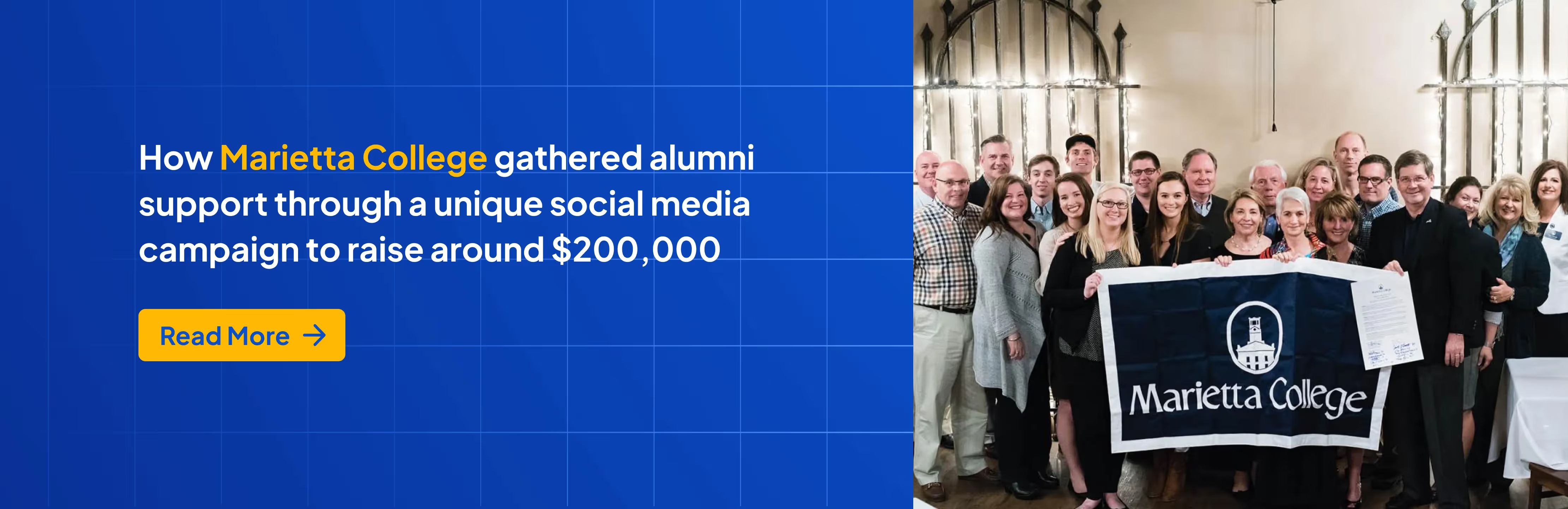
We were inspired by the efforts of Kathryn Gloor (Senior Director of Annual Giving at Marietta College) and their amazing team, for rallying so much support to make their Giving Day immensely successful.
Willamette University is a private university in Salem, Oregon. The University’s Advancement team managed to successfully engage with their alumni through a virtual content repository, called the WU Stream Initiative.
The initiative was based on the idea of providing an array of content to every alumni member in their community to choose from. This included virtual lectures, videos, podcasts, and an archive of content that serves the likes of every alum, no matter where they are and what they prefer.

A huge shoutout to Tyler Reich and their team for implementing such an incredible alumni-centric idea to engage with the University’s community.
Wesleyan College is a private, liberal arts women's college in Macon, Georgia. The College managed to keep their alumnae engaged and entertained through their unique “Lunch & Learn” series.
The College’s Office of Alumnae Affairs wanted to do something memorable to engage with their constituents during the pandemic. The series features one-hour Zoom sessions where the President or Provost and a faculty or staff member engage in meaningful discussions about relevant topics like diversity and inclusion on campus, and athletics during the new normal.
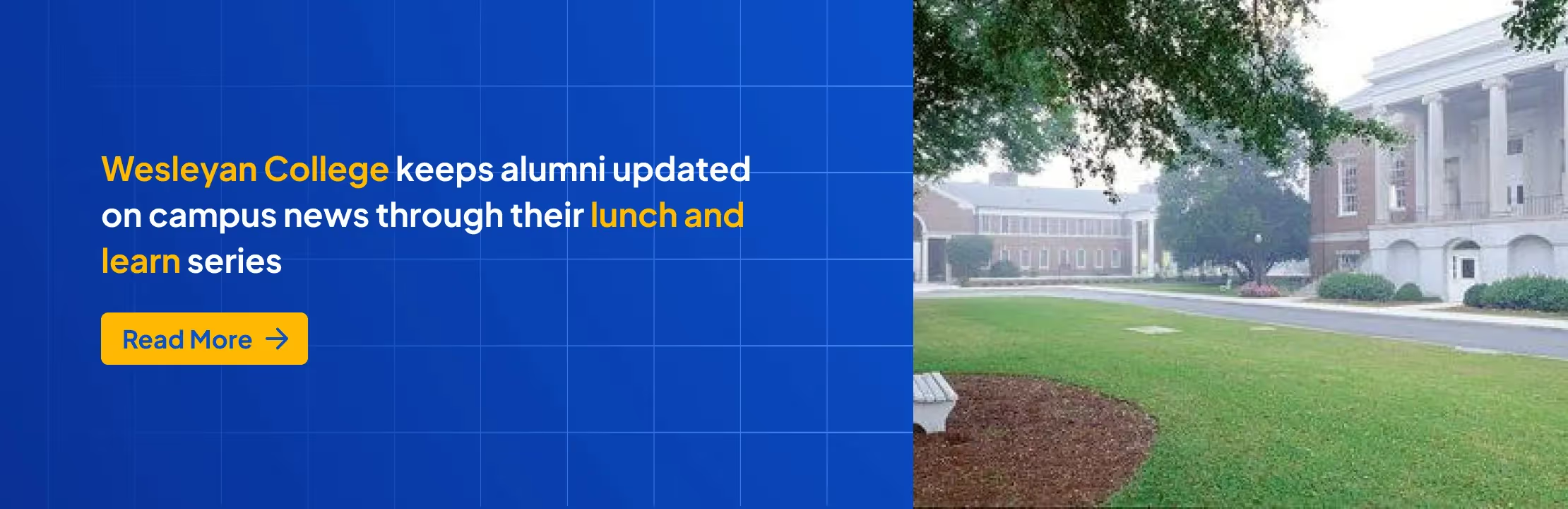
We love how Cathy Coxey Snow (Director of Alumnae Affairs at Wesleyan College since 1993) and their team have been creating meaningful engagement opportunities for the College’s alumnae during the pandemic.
Madonna University is a private Catholic university in Livonia, Michigan. Ahead of the University’s St. Felix Day of Giving, the Alumni Office created a touching communication plan to encourage participation and raise more funds.
The pandemic forced the Office to rethink their strategies for the campaign, and they decided to keep the messaging behind the appeal simple and from the heart. By focusing on the immediate needs of current students, and the impact each gift would make on their education. The heartfelt communication clearly left a mark on the University’s alumni, as the campaign was a huge success.

A huge shoutout to Katie Dougherty and their team for putting together such an inspiring campaign in such a short timeframe.
The Evergreen State College is a public liberal arts and sciences college in Olympia, Washington. Their Return To Evergreen event featured an array of events that helped engage with their alumni, while also creating discussions and raising awareness on important societal issues.
The campaign included a few breakout sessions like Art in a Time of Resistance and Change, which served as a beacon to bring racial, cultural, and social justice to the forefront. Topics like wealth disparity, immigration, racism, climate change, and gun violence were a vital part of the conversations.

We love how Correan Barker (Associate Director of Events, Alumni & Donor Relations) and their team put together an event that managed to keep the College’s alumni engaged.
University of the Ozarks is a private university in Clarksville, Arkansas. Their Virtual Homecoming 2020 merged three distinct events – alumni weekend, family weekend, and homecoming, into one iconic week of virtual events.
The University’s Virtual Homecoming contained a plethora of fun-filled activities for alumni around the world to partake in, such as Virtual Campus Tours, Spirits Wars Launch, Virtual Bingo, and Ozarks Reunion. The new format enabled the University to engage with its large international alumni community, thereby making the event more accessible. Winners of certain events were also awarded with Ozarks gears and merchandise.

Putting together one virtual event can be a lot of work, so imagine putting together an entire week of virtual events for alumni! A huge shoutout to Justin McCormick (Associate Director of Alumni Relations) and their team for pulling it off.
Whitman College is a private liberal arts college in Walla Walla, Washington. Amidst the pandemic, the Alumni Relations Staff wanted to engage with alumni meaningfully, which was how the idea for “Virtual Whitman” was born.
Essentially, “Virtual Whitman” is an online resource repository built with the intent of staying connected with each other during the pandemic. This initiative enabled the College’s alumni to have easy access to relevant resources such as recordings of past virtual events, historical archives about the college and the city, and kid-friendly science experiments for alumni to try out at home.
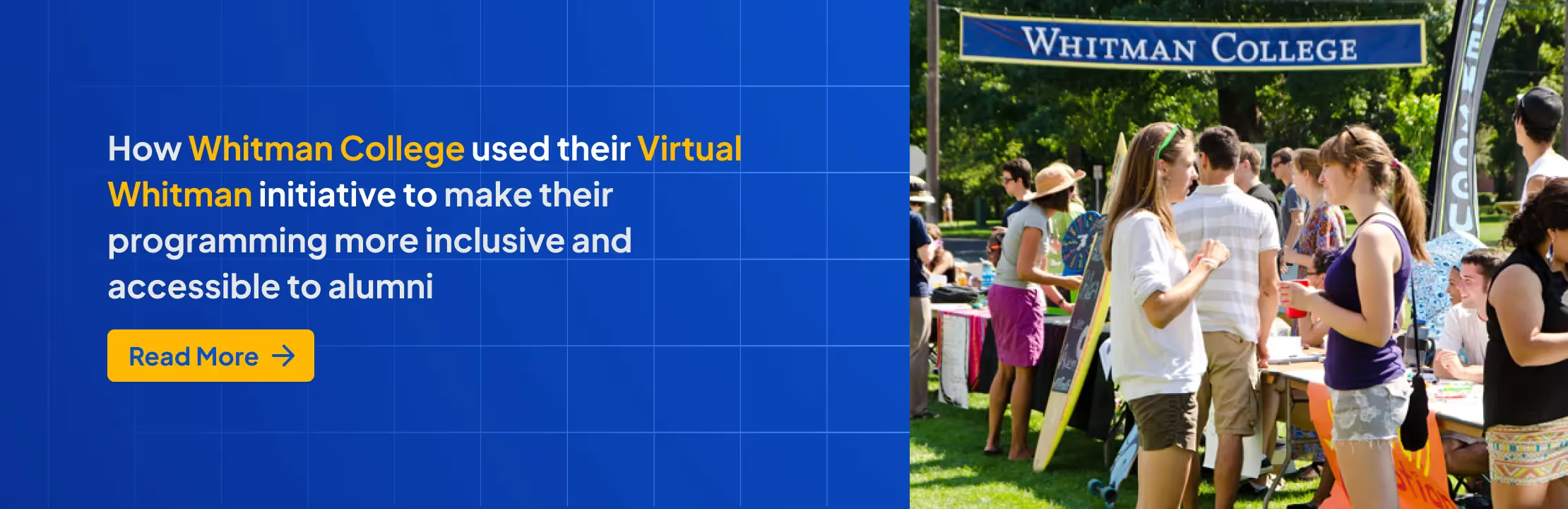
We love how Jennifer Dilworth Northam (Director Of Alumni Relations) and their team put together such an amazing initiative.
Wartburg College is a private Lutheran liberal arts college in Waverly, Iowa. The College’s Alumni and Parent Programs Office turned to their alumni to raise funds for various ongoing infrastructural projects, which turned out to be a huge success.
Wartburg College’s “Fund the Fortress” campaign was essentially an affinity-based campaign to raise funds for projects that alumni cared for. Some of the projects involved raising funds for exercise science equipment, and for a living classroom in honor of a late faculty member. The campaign turned out to be very successful, owing to how targeted and specific the asks were.

A huge shoutout to Robert Ruchotzke (Director Of Annual Giving) and their amazing team for putting together such an awe-inspiring fundraising campaign.
The Stephen M. Ross School of Business is a business school operated by the University of Michigan. Their unique “Alumni in Residence” mentorship program focused on engaging with their alumni, while also creating value and opportunities for current students.
The “Alumni in Residence” program focuses on the concept of 1-1 flash mentorships, where each session lasts for about 30 minutes. While current students have wonderful opportunities to learn from their seniors, alumni also get to showcase their achievements in their respective fields and share their talents with the next generation.
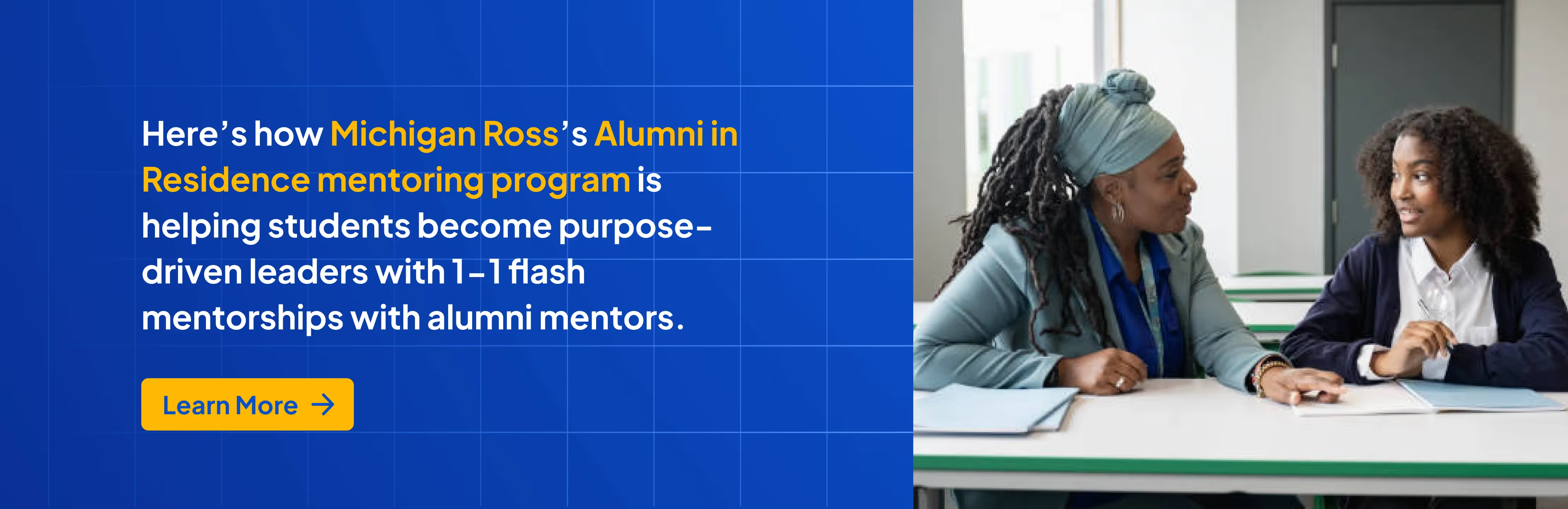
Kudos to Caitlyn Johnson (Director of Alumni Engagement) and their incredible team for putting together a program that both current and former students of the School get to benefit from.
The University of Georgia is a public land-grant research university with its main campus in Athens, Georgia. The University’s Bulldog 100 celebrates top businesses operated or owned by the University’s alumni.
Every year, the Bulldog 100 ranks the top 100 businesses, based on CAGR (Compound Annual Growth Rate) over the last three years. The list comprises businesses from over two dozen industries, including non-profits, healthcare, and software. The Alumni Association usually hosts a grand celebration for the Bulldog 100, where they count down the businesses that made the cut, until finally revealing the overall winner.
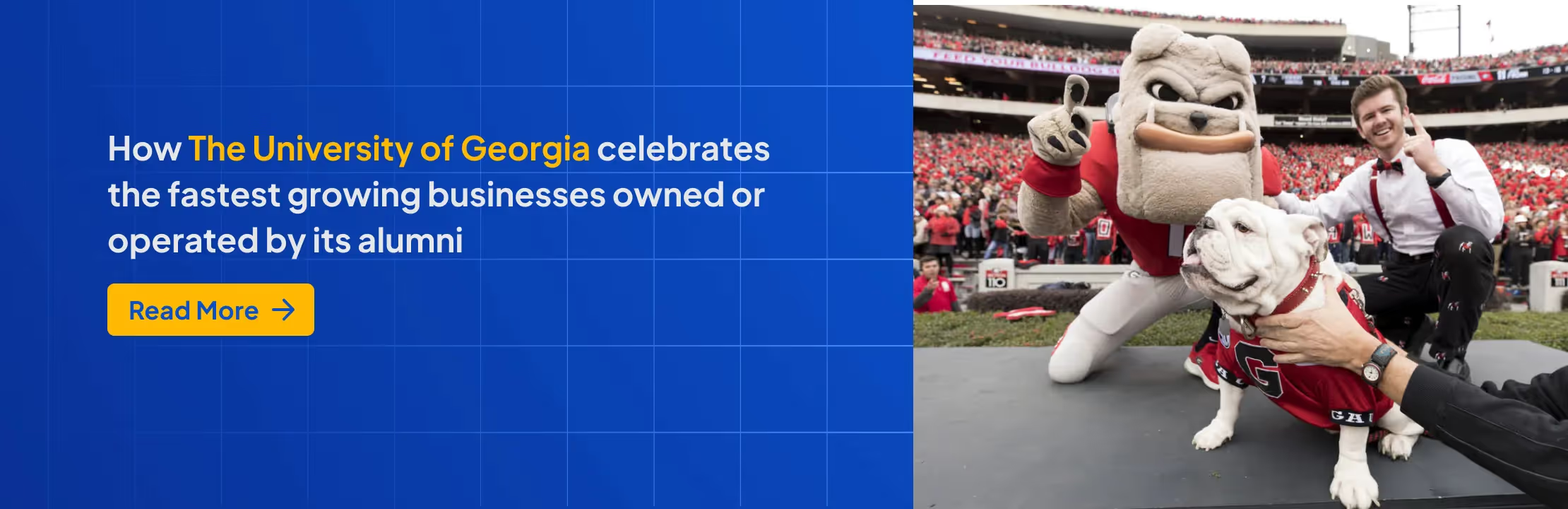
We love how Meredith Johnson (Executive Director of Alumni Relations) and their team are engaging with alumni by shining the spotlight on amazing business ventures.
California State University, Chico, commonly, Chico State, is a public university in Chico, California. Their “Wildcat Connect Webinar Series” was immensely successful in engaging with their large alumni community across the world.
Essentially a simple idea, the “Wildcat Connect Webinar Series” consists of a series of informative webinars that would benefit the University’s alumni. Topics for these webinars ranged from entrepreneurship and startups to career advice, to tips on financial planning. The series was a huge success, as over 1,200 alumni poured their appreciation and support. The initiative also won the coveted CASE Platinum Award in 2021, in the Best Practices in Alumni Relations category.
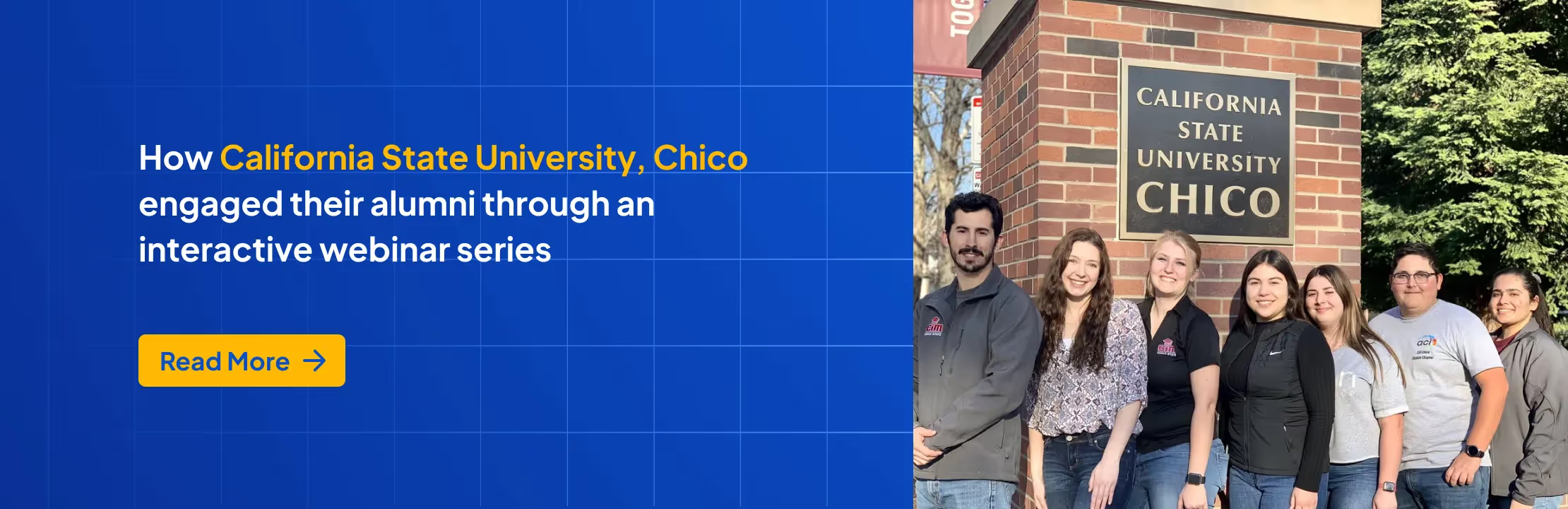
A huge shoutout to Tania Miranda Rueda and their incredible team for putting together an award-winning campaign to engage with so many alumni across the world.
Pittsburg State University is a public university in Pittsburg, Kansas. Their “Great Gorilla Tour” enabled the University to (quite literally) meet their alumni where they were, through an elaborately planned road trip across the country.
The most recent “Great Gorilla Tour: West Coast Edition” featured the advancement team in an amazing road trip where they met with alumni in different cities along the way. The trip lasted for over two weeks, and the team toured across nine cities in nine different states, not to mention the hundreds of alumni they got to engage with along the way.
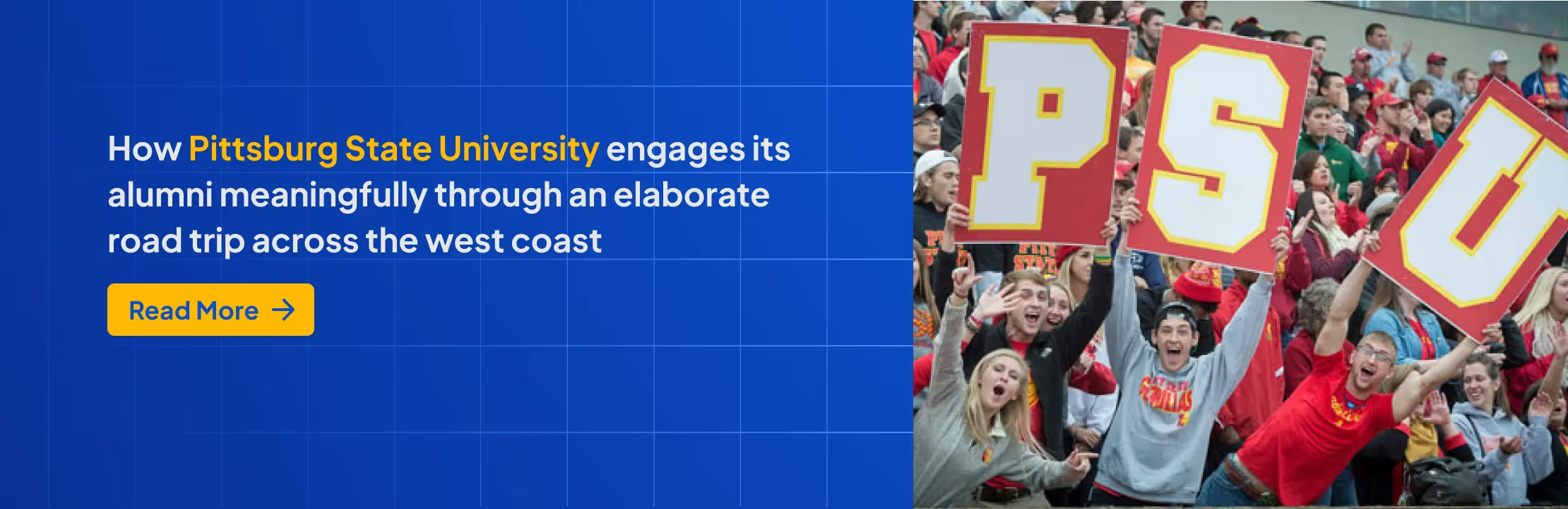
We love how Danielle Driskill (Assistant Director of Alumni & Constituent Relations), Jon Bartlow (Director of Alumni & Constituent Relations) and the rest of their team put together this incredible road trip.
That wraps up our list of ideas to inspire you this year. Hopefully, you enjoyed these ideas just as much as we did. We can’t wait to see what this year has in store for us!
12 Higher-Ed Alumni-Centric Engagement Ideas To Inspire You in 2026
Lorem ipsum dolor sit amet, consectetur adipiscing elit. Suspendisse varius enim in eros elementum tristique. Duis cursus, mi quis viverra ornare, eros dolor interdum nulla, ut commodo diam libero vitae erat. Aenean faucibus nibh et justo cursus id rutrum lorem imperdiet. Nunc ut sem vitae risus tristique posuere.
%201.svg)
%201.svg)
%204.svg)


.svg)