Looking for ideas for you next alumni event? We've got you covered with plenty of creative ideas that we've found from institutions in recent years.
Published:
July 16, 2025
Updated:

Summary
• Diversify your event calendar: Moving beyond just homecomings and reunions with fresh, varied events throughout the year can significantly increase sustained alumni engagement and participation.
• Offer career development opportunities: Hosting workshops or pitch competitions provides tangible value to alumni, especially recent graduates, which strengthens loyalty and can encourage future support for your institution.
• Engage alumni through service and shared interests: Events like themed days of service or cultural outings help alumni connect with your institution's mission and each other, fostering a deeper sense of community beyond campus visits.
• Cultivate deeper connections with exclusive experiences: Consider offering "behind-the-scenes" tours or intimate dinner events to create special moments that build rapport and can be excellent opportunities for donor cultivation.
• Leverage simple, family-friendly events: Casual options like outdoor movie screenings are an easy win to get alumni and their families back on campus or connected with the institution in a relaxed, low-pressure setting.
• Prioritize open communication: Hosting town halls or Q&A sessions with leadership offers transparency and builds trust, strengthening your relationship with alumni which is vital for long-term engagement and successful fundraising campaigns.
Beyond the homecomings and reunions, your alumni event calendar needs a whole host of events to round out the year and keep them engaged. These alumni events can either be one-off ideas or recurring occurrences that become a key part of your institution or organization’s brand.
Today, we’re helping you conceptualize those events with some alumni event ideas that you can host as their own thing, or alongside other events. So before we bore you like a nervous host, let’s get straight to the ideas!
✒️ Author’s note: The examples we list throughout this blog are purely appreciative and not a result of any promotion or partnership. If you know some good advancement work that you think deserves more attention, please let us know at marketing@almabase.com!
Let’s start with one of the more time-tested ideas that has evolved significantly: family weekends. Depending on your institution’s event calendar, these can be small one-time picnics, fairs, showcases, etc. or recurring major events that multiple generations of alumni come to appreciate over the years.

Family weekends are largely in-person although virtual or hybrid elements can certainly be introduced especially if you want to have your global alumni feel part of your event.
💡Looking for inspiration for your next family weekend? Check out these upcoming family weekend schedules!
- Syracuse University (link)
- University of Arkansas (link)
- Cornell University (link)
- Washington University in St. Louis (link)
- University of Colorado Boulder (link)
A popular notion that’s taken root over the past couple of decades is the fact that learning in your alma mater doesn’t stop after graduation. With job boards, mentorship programs, and placement opportunities, institutions have become springboards for career growth.

Career and skill-focused workshops can take this direction to the next level by providing valuable networking and upskilling opportunities (especially for recent graduates) that many people across industries often have to pay money to access.

Philanthropy is not just about financial donations. Service-based events attract alumni who want to make a tangible difference and live out the institution's mission. Think of a day of service centered around a theme that reflects your institution’s values or a current campaign. Examples include an environmental cleanup at a local park, a literacy drive for local schools, or a build-a-thon for a community housing project.
With both physical and mental health awareness becoming more widespread, institutions can lean into this by providing health and wellness focused events. These can be something educational (webinars, awareness sessions, etc.) or activity-focused (marathons, healthcare visits, care center volunteering, etc.).

Healthcare or health department alumni associations in particular are well suited for these events but they can extend their reach and invite more participation by collaborating with other departments or associations.
💡 Over time, these events can become recurring series and form support groups
For institutions that want to take their alumni’s career advancement a step further, an alumni venture acceleration event is a great idea to show how much your institution cares about inspiring innovators and creating jobs.
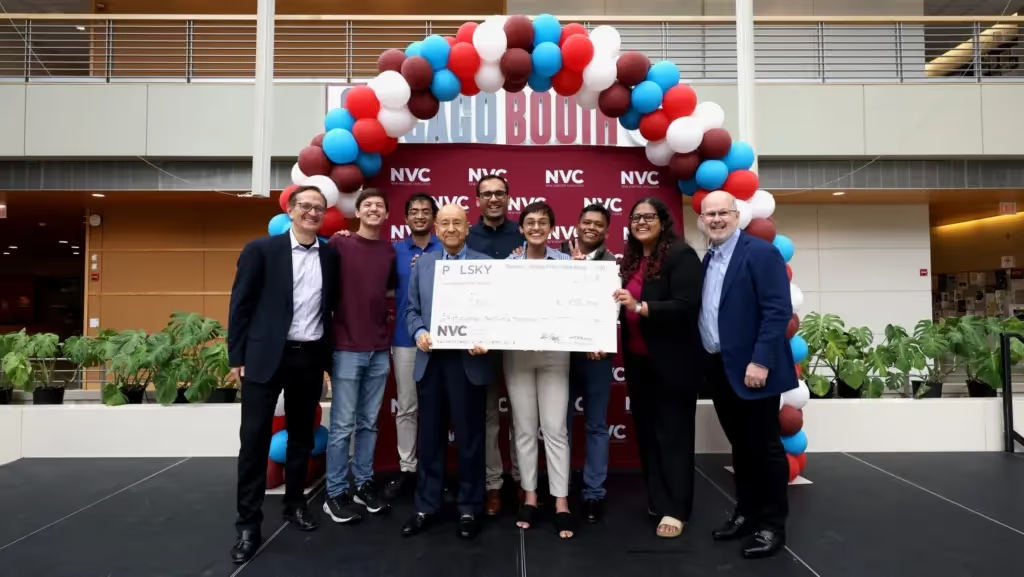
Take for example the Edward L. Kaplan, ‘71, New Venture Challenge (NVC) by the Polsky Center under The University of Chicago (that’s a mouthful 😝). The NVC invests more than $1 million in startups each year through the generosity of donors and investors. As a result, it claims to have graduated more than 600+ startups and created thousands of jobs in the process.
💡You can start small and help small or local alumni initiatives or businesses get their footing. An accelerator program doesn’t necessarily need to have a “shark tank” feel to it.

A casual, family-friendly, and low barrier of entry event you can consider is to host a movie screening on a suitable field, park, or similar campus area. It's an easy way for alumni to reconnect with the campus in a relaxed setting and is highly suitable for families and recent graduates. The communal experience of watching a film under the stars also makes for great material to promote on your social media channels.
💡 Movie screenings can also be an additional event on top of other events, say, a family weekend picnic or scavenger hunt.
Offer alumni exclusive access to a place not open to the general public. This could be a tour of a cutting-edge university research lab, the athletic team's new training facility, the university's special collections archive, or a local landmark led by a revered alumnus.

Looking outside the institution, you can plan small-scale outgoings for alumni to visit showcases, performances, museums, etc. You can book meals and other activities around the outings themselves so that your participants have time to bond and share their experiences.
💡 Need inspiration on what kinds of outings you can consider? Here are some examples you can look at:
- Wagner College - Moulin Rouge Alumni Outgoing
- Brown University - Private Tour of Stanford’s Cantor Museum
- Columbia College, NY - Asian Columbia Alumni Association’s Annual Lunar New Year Banquet
- USF Chicago Alumni Chapter - Millennium Park Summer Music Series
- Joint Ivy League (and select other university) Alumni - SF Opera’s Performance of Mozart’s Idomeneo
Based on your institution’s cultural heritage or alumni talents, you may be able to create a variety of incredibly personalized events for both general and specific alumni groups.

Dinner events can be surprisingly flexible. From small, recurring dinners for local alumni to reunion dinners as part of award ceremonies, you can make them as grand or as budget-friendly as you need them to be. These dinner events are also a great opportunity to build partnerships with local businesses and services. Even better if you can partner with an alumni-affiliated business!
Not all events need to be large parties or massive volunteering opportunities. Sometimes, a simple unfiltered town hall-style meeting between alumni and institution leaders or prominent alumni can help build trust and rapport within your community.
The best part is that these events can just as easily be in-person, virtual, or hybrid, making them one of the more flexible ideas on this list. It can also be a great follow-up to some of the other ideas we’ve presented throughout this list.
💡 These sessions can be repurposed into podcasts and key snippets can be used for other marketing material.
Pretty much any major alumni event today is powered by tools that handle minute details such as ticketing, giving, event pages, and more. Almabase offers a zero-code yet advanced set-up environment that streamlines how you plan your events from setting up pages and forms to integrated communications and enhancing guest experiences.
Yet Almabase is just one of many options available for advancement teams today. Depending on your needs and resources available, you may prefer a specialized tool just for events, or an integrated tool for which event management is just one of many modules.
Events remain one of the core pillars of alumni and donor engagement and the ideas and tools behind them have only continued to evolve. It’s certainly heartwarming to see that people and their experiences remain the ultimate goal of events and advancement teams as a whole.
If you’re looking for a partner to level up your upcoming events, request a personalized demo with us and we’d love to help!
Subscribe
See how modern advancement teams bring alumni engagement and fundraising together.
Plan faster. Execute better
Explore free templates designed for alumni and fundraising teams.
.png)

.avif)
Event planning in the education sector is no small feat. From homecoming and graduation ceremonies to parent-teacher conferences and student workshops, K-12 schools and higher education institutions juggle a dizzying array of events each year. The right event management software can be a game-changer—streamlining registrations, automating communications, and ensuring every detail runs smoothly. In this guide, we'll break down what event management software is, what features to look for, and the top solutions for 2026 that are transforming event coordination software for schools, colleges, and universities.
.avif)
An event management software is a digital platform designed to streamline the entire event lifecycle—from planning and promotion to registration, execution, and post-event analytics. These event planning software solutions centralize all event-related tasks, making it easier to coordinate logistics, track attendees, manage communications, and measure event success. For educational institutions, an event management tool can handle everything from classroom bookings and campus tours to large-scale conferences and alumni reunions.
Modern event management platforms often offer features such as:
By automating manual processes and centralizing information, these platforms help schools and universities save time, reduce errors, and deliver a seamless experience for staff, students, parents, and alumni.
With so many event management tools on the market, it’s important to choose one that fits your institution’s specific needs. Here are key factors to consider:
Below, in no particular order, are our picks of some of the top event management software platforms making waves in the education sector this year.
Almabase is an all-in-one event management platform designed specifically for educational advancement, alumni relations, and fundraising teams. It streamlines the planning and execution of complex events—whether in-person, virtual, or hybrid—while offering seamless CRM integration and a user-friendly interface.
Almabase offers personialized custom pricing based on your needs, number of constituent records, etc. You can request a personalized demo here
Blackbaud is a comprehensive solution built for large nonprofits and institutions, offering robust event planning, CRM, and analytics tools. Its event management features are deeply integrated with donor data to maximize fundraising outcomes.
Custom pricing. Request a quote.
Cvent delivers enterprise-grade solutions trusted by higher education institutions managing complex, large-scale events—from campus-wide conferences to alumni reunions.
Custom pricing. Request a demo.
Bonterra’s fundraising software includes specialized solutions and features for nonprofit events, auctions, peer-to-peer fundraisers, and giving days, along with unified donor management tools. Its event management features include ticketing, sponsorship tracking, mobile bidding, and more. Ultimately, Bonterra helps organizations streamline their events with a centralized fundraising and donor management solution.
Custom pricing. Request a demo.
Idloom is crafted specifically for universities and colleges, supporting diverse academic events from online examinations to graduation ceremonies.
Custom pricing. Request a demo.
Eventbrite is a versatile event management platform perfect for everything from concerts to community meetups. It offers intuitive tools for ticketing, promotion, and on-site check-ins, making it easy to manage both virtual and in-person events.
Pricing is 2% + $0.79 per paid ticket (Essentials) or 3.7% + $1.79 per paid ticket (Professional); free for free events. See pricing.
Eventcube is a white-label event management platform for K-12 schools and higher education institutions. It helps you manage all the in-person, virtual, and hybrid events with full control. This includes your branding, ticketing, and attendee engagement.
It is designed for flexibility and accessibility. This makes Eventcube reliable for day-to-day events like open days, student conferences, parent meetings, community gathering and even virtual graduation ceremonies.
Eventcube offers tiered pricing. 5% of the transaction total for the Starter package which is free. 3% of the transaction total for Pro along $99 a month. And custom Enterprise options. You can start with a demo or create a branded ticket store directly on Eventcube.
Giveffect combines event management with nonprofit automation, allowing you to handle ticketing, email campaigns, and donor records in one platform. It’s ideal for organizations looking to unify event planning with fundraising and CRM.
Custom pricing. Request a demo.
Remo, now integrated with Events.com, delivers an immersive platform for virtual, hybrid, and in-person events, with unique emphasis on networking and engagement.
Starts at $299 per month. See pricing.
Qgiv supports nonprofits with customizable tools for event registration, peer-to-peer fundraising, and mobile giving. Its user-friendly interface makes it easy to plan and promote fundraising events of all sizes.
Plans start at $0/month with no contracts, plus a 3.95% + $0.30 per transaction fee. Learn more.
Choosing the right event management software can transform how your institution plans, promotes, and executes events—whether you’re managing a single school assembly or a multi-day university conference. The platforms highlighted above offer a range of solutions tailored for K-12 and higher education, each with unique strengths and a few caveats to consider. Take advantage of free demos, explore user reviews, and assess your specific needs to find the event management tool that will best support your school’s goals in 2026 and beyond.
Looking for more inspiration? Explore event ideas that raise money and connect with alumni or see how advanced event management can drive registrations and engagement for your institution.

Best Event Management Tools for K-12 & Higher Ed (2026)
Lorem ipsum dolor sit amet, consectetur adipiscing elit. Suspendisse varius enim in eros elementum tristique. Duis cursus, mi quis viverra ornare, eros dolor interdum nulla, ut commodo diam libero vitae erat. Aenean faucibus nibh et justo cursus id rutrum lorem imperdiet. Nunc ut sem vitae risus tristique posuere.

Anwesha Kiran
April 30, 2025
12 minutes
We’ve talked in length about some good events and the event management or fundraising tools that can make them succeed consistently. This time, we’re taking a step back and at the basics of fundraising event planning.
In this blog, we’re going through the essentials to turn your fundraising ideas into successful events that don’t just reach your targets but create powerful memories to strengthen your cause. Let’s get started.
As with every advancement initiative, the goals are where everything starts and leads back to. We’ve talked about the importance of Smart, Measurable, Attainable, Relevant, and Time-based (SMART) goals in a past blog. While creating the goals that will define your fundraising event, keep the following questions your attendees would have in mind:
Apart from these questions, your available staff time, target audience, budget, and other upcoming institution events will play a big part in shaping your scope for your event. Take your time with this step as the right goals are the foundation of a successful event.
Depending on your audience, budget, and goals, you may choose from a variety of fundraiser ideas, such as:
No two events are truly alike, and depending on the success of your fundraiser, a bold new approach might just be your next hallmark annual event.
As you’re not just planning any event, how you want to introduce fundraising to your event is going to be very important. Remember, a fundraising event can have multiple revenue streams. For example:
Nowadays, institutions usually look to include diverse fundraising methods in their fundraisers. This is also where pairing the right event with the right fundraising method can greatly impact your raised amount.
Now that you know what type of event you want as well as how you’re going to raise funds during it, it’s time to put the right tools to work. Pretty much every modern institution uses a fundraising platform to streamline their events and fundraisers. These tools help you:
and much more.
Platforms like Almabase help streamline these logistical elements, allowing you more time and energy to focus on fostering genuine connections with your donors.
Now that the building blocks are coming into place, it’s time to decide on arguably the most important part of an event, the people. You’ll want to form a committee of people to take on and help with specific parts of the event including but not limited to:
Apart from the above, you’ll want to think about corporations, non-profits, and associations that may want to play a pivotal role in helping you bring your event to life.
Now that all the bits and bobs are there, it’s time to lock in a specific place and time. It seems fairly basic but keep in mind that:
You’ve got all the info ready to go. But it doesn’t mean anything if it doesn’t reach the right audience. And even if it does, what type of messaging should they receive and when should they receive it so that they truly feel like attending or giving? That’s where your event marketing comes into play. You’ll want to make use of channels such as:
and much much more to get your event and your cause heard. Make sure that your marketing emphasizes how your fundraiser can help your cause of choice.
Even the most tight-knit plans have a chance of going wrong. A 10-minute delay caused by faulty audio equipment might just be that small little factor that disinterests a potential first time donor.
These are good things to keep in mind but ultimately, your contingencies may have to be just as unique as your event.
Nowadays, the event doesn’t truly end when the last guest leaves. Following up with attendees is crucial to maintaining their engagement and potentially turning them into loyal supporters. Post-event action items include:
Gratitude and proactive follow-ups go a long way in building long-term relationships with your supporters.
The ultimate measure of a successful fundraising event isn’t just the dollar amount raised but also the connections made and how deep those connections go over time. To turn your attendees into loyal supporters, you’ll want to consider some steps such as:
By nurturing these relationships, you're creating a network of passionate supporters who are more likely to advocate for your cause and contribute to future initiatives.
Fundraising events have certainly not gotten any easier to plan and host in the past few years. Donors and alumni in general simply expect more, and you can’t just rely on your long-time donors alone. However, we hope that this guide, despite just scratching the surface, was able to give you some ideas for your next fundraising event.
If you’re looking for a partner to help you manage events, engage alumni, and raise funds, do give us a shout and we’ll happily walk you through how we can help with your own personalized demo! ⤵️


How to Plan a Fundraising Event to Maximize Donations
Lorem ipsum dolor sit amet, consectetur adipiscing elit. Suspendisse varius enim in eros elementum tristique. Duis cursus, mi quis viverra ornare, eros dolor interdum nulla, ut commodo diam libero vitae erat. Aenean faucibus nibh et justo cursus id rutrum lorem imperdiet. Nunc ut sem vitae risus tristique posuere.
The pandemic posed a formidable challenge to alumni volunteer program coordinators, complicating the ways in which they were able to engage, communicate, and connect with their alumni. Luckily, constraints for physical gatherings have eased as the crisis has progressed, and we seem to have entered a new and exciting era of hybrid engagement where program coordinators have more agency over their volunteer offerings than ever.
In fact, with in-person events having opened up again and new digital engagement strategies cropping up every day, now is the best time to level up your alumni program in and beyond 2022.
Volunteering is an essential element of any robust alumni program because it can form long-lasting relationships between alumni and your institution and boost donation revenue through volunteer grant funds. Read on to maximize these benefits and increase the success of your alumni volunteer program.
With each new generation of alumni more frequently engaging online through using their phones, interacting with social media, and discovering new virtual platforms, your alumni program must adapt to these changes to secure their attention. Add an insightful social media strategy to your current marketing initiatives to create a more effective, multichannel campaign for your volunteer program.
Virtual marketing mediums not only allow you to directly connect with alumni where they live, chat, and play, but they also offer unique opportunities to engage with your audience. You simply need to know how to leverage these platforms to their fullest potential.
Be mindful of these social media best practices to engage alumni and increase interest in your volunteer opportunities:
While email, direct mail, and other, more traditional channels are essential to your alumni communications, new mediums like social media will allow you to take your marketing materials to new heights.
Get Connected by Galaxy Digital’s guide to starting a volunteer program cites opportunity matching as one of the most effective methods to recruit and engage volunteers. This strategy allows you to fine-tune your communications by sharing volunteer positions and events with alumni based on their skills, experience, and interests.
The following data metrics can help you tailor your event invitations to the right alumni:
Keep your alumni involved and encourage their participation in volunteering by sharing opportunities that they would be most likely to participate in. Rather than sending out general email blasts describing all of your volunteer experiences, opportunity matching will enable you to personalize all of your alumni communications and thereby increase engagement.
The number of event registrations, total volunteer hours, and similar key performance indicators (KPIs) should all be automatically logged into your alumni and volunteer databases. However, there’s another important piece of information that too many alumni programs neglect: alumni feedback.
Regular volunteer surveys and polls allow you to gauge opinions, experiences, and reactions that would have been difficult to measure with raw data alone.
Many volunteer or alumni management solutions already exist that can help you create, send, and create reports based on these surveys. But if you’re still struggling to think of how you could make the most of these forms, here are a few of the different kinds of alumni volunteer surveys you should send out:
By spacing out these surveys during opportune times in each volunteer’s involvement with your program, you will be able to gather valuable information while it is still fresh in their minds. This information can then be used to directly address the issues raised by volunteers, improve your program, and further personalize your messaging to maximize engagement.
Whether your alumni are longtime volunteer program members or they have yet to participate, the promise of being a part of a community is an enticing prospect for any alumni.
The lockdown era of the COVID-19 pandemic left many people feeling more distant than ever, and it’s essential to combat these lingering effects by coming up with opportunities for alumni to connect with one another.
Whether you conduct virtual and hybrid alumni events or in-person gatherings, these engaging initiatives will encourage community-building between your alumni volunteers:
While alumni may be motivated to participate in your volunteer opportunities to support their alma mater or help the less fortunate, it will take more than an altruistic impulse to keep them involved in your program. Offering the opportunity to form a community with like-minded people will ensure that alumni stick with your volunteer program for far more than a single event.

To effectively carry out these volunteer program best practices, you might also consider investing in an alumni or volunteer management solution. From locating qualified nonprofits for partnership opportunities to facilitating social media outreach strategies, the right management software will streamline volunteer recruitment, engagement, and retention.
However, regardless of whatever software solutions you may choose, these strategies should set you up to ensure the future success of your own alumni volunteer program.

4 Ideas to Boost Alumni Engagement in Volunteering
Lorem ipsum dolor sit amet, consectetur adipiscing elit. Suspendisse varius enim in eros elementum tristique. Duis cursus, mi quis viverra ornare, eros dolor interdum nulla, ut commodo diam libero vitae erat. Aenean faucibus nibh et justo cursus id rutrum lorem imperdiet. Nunc ut sem vitae risus tristique posuere.
%201.svg)
%201.svg)
%204.svg)



.svg)