Curious about what makes a great alumni program? Check out insights and examples from 7 top institutions, plus get practical tips to boost alumni engagement!

Summary
• To truly boost alumni engagement and participation, dig into your current program's data and alumni feedback to pinpoint specific needs and opportunities. This targeted approach helps you move beyond generic strategies to make a real impact.
• Successful programs consistently offer clear, mutual value to their graduates, whether it’s through career support, professional networking, or access to lifelong learning. When alumni feel continuously valued, they are more likely to stay connected and give back.
• Many top institutions stand out by leveraging unique traditions and creating memorable events that foster a strong sense of belonging and loyalty. Consider what special experiences or shared histories can unite your alumni.
• Embracing a digital-first approach and delivering consistent, personalized communication is essential for today's alumni to feel connected and informed. Tailoring messages ensures they resonate with diverse interests across your entire network.
• Make sure to measure success beyond just fundraising numbers; look at metrics like event attendance, platform activity, and overall participation to understand your program's full impact. This broader view helps refine your strategies for better outcomes.
• The full post dives into how leading institutions, from large universities to independent schools, apply these principles to create vibrant alumni communities. You'll find plenty of inspiration for your own advancement work.
For the most forward-thinking institutions, graduation is just the beginning of a lifelong partnership. A thriving alumni program is more than just a fundraising channel, it's a vibrant ecosystem that provides continuous value to its members, fosters a powerful sense of community, and, in turn, strengthens the university's reputation and future.
But what separates a standard alumni association from a truly exemplary one? We’re exploring just that as we look at seven great institutions and their alumni programs to uncover the winning strategies that keep their graduates engaged, supportive, and proud to be part of their alma mater's continuing story.
With alumni expecting more out of a typical alumni program, the standard for institutions has certainly risen. Today, these alumni programs are not just about maintaining connections but in building a thriving and engaged community. Here’s what sets the most successful programs apart:
When a program embodies these characteristics, it not only strengthens alumni relationships but also fosters a culture of giving back, whether that’s through donations, volunteering, mentorships, or more.
The Penn State Alumni Association boasts the largest dues-paying alumni network in the US, and it leverages this incredible scale to create a powerful sense of community and support with hundreds of alumni chapters and affiliate groups worldwide hosting a constant stream of events, from football tailgates to professional development workshops.

The sheer size of the network provides an incredible breadth of connections in nearly every industry and geographic location. It is also a great brand to constantly attract alumni enrollment. Beyond just the size of their alumni network, Penn State has done a great job in creating opportunities for alumni to connect both with the institution as well as each other wherever they are.
The Princeton Alumni Association is renowned for its ability to cultivate an exceptionally strong and loyal alumni network. The cornerstone of this engagement is the annual "Reunions," a massive, multi-day event that draws tens of thousands of alumni back to campus for parades, performances, and class-specific gatherings. This tradition, combined with a deep-seated culture of mentorship and giving back, creates a powerful sense of belonging that extends far beyond graduation. The university's commitment to lifelong learning and career support further solidifies the enduring bond between alumni and their alma mater.

Princeton’s annual reunions provide a great example of the power of events for any alumni network. The annual event has evolved into an annual event with its own culture and reputation, with key occurrences such as the P-rade, fireworks display, and more culminating into a massive 4-day event that regularly brings over 25,000 attendees each year.
Texas A&M University is renowned for one of the most fervent and loyal alumni bases, often referred to as the "Aggie Network." The Association of Former Students (the official alumni organization) fosters an incredibly strong sense of tradition, camaraderie, and lifelong connection. Their program is built around unique Aggie traditions like Muster, the 12th Man, and their deep-seated military heritage, which instill a profound sense of identity and shared purpose among graduates. This leads to exceptional levels of engagement, including robust regional clubs, a powerful and active professional network, and an unwavering commitment to supporting the university and fellow Aggies throughout their lives.

Texas A&M's alumni program refers to its alumni as “former students” which immediately paints a picture of lifelong connection with the institution. This eases the transition into the "Aggie Network" as a lifelong family, offering robust professional connections and an ingrained culture of mutual support that is unique in its intensity and reach.
The Dalton School, a highly respected independent school in New York City, has a dynamic alumni program that reflects its progressive educational philosophy. What makes it great is its focus on leveraging alumni expertise and providing networking opportunities. Dalton regularly invites alumni back to speak, conduct workshops, and offer internships across diverse fields. The program emphasizes professional networking and continued learning, connecting alumni with each other and with the school's evolving educational initiatives.

Dalton's program distinguishes itself by actively integrating alumni into the current educational experience, providing real-world perspectives and opportunities for students through a strong emphasis on mentorship and professional development.
The University of Michigan Alumni Association is celebrated for its highly engaged and passionate alumni base, often referred to as the "Leaders and Best." Their program excels in fostering a deep sense of tradition and pride, particularly through their robust athletic programs which serve as a major rallying point for alumni worldwide. Beyond sports, Michigan offers extensive professional networking opportunities, mentorship programs, and a strong focus on giving back to the university and current students. Their active regional clubs and a commitment to lifelong learning through various educational initiatives further strengthen the alumni bond.

The University of Michigan effectively harnesses the power of its passionate fan base and strong athletic traditions to create a highly unified and engaged alumni network. This shared sense of identity, coupled with diverse professional and social programming, ensures a consistently high level of alumni participation and support.
Stanford University's alumni program is characterized by its strong emphasis on innovation, entrepreneurship, and lifelong learning. The Stanford Alumni Association offers a wealth of resources, including career services, online courses, and networking events tailored to various industries and interests. Their vibrant regional chapters worldwide provide platforms for professional development and social connection. What truly sets Stanford apart is its ability to harness the entrepreneurial spirit of its alumni, fostering a culture of mentorship and investment within the network, often leading to groundbreaking collaborations and ventures.

Stanford makes the most of its strong brand and reputation for innovation to create an alumni network deeply intertwined with the tech and startup ecosystems. Their programs often focus on facilitating mentorship, venture capital connections, and entrepreneurial initiatives among alumni, making it a hub for professional growth and innovation.
Rye Country Day School, a prominent independent school, excels at building a strong and supportive alumni network. Their program is notable for its emphasis on **community service and giving back**. Alumni are actively encouraged to participate in service initiatives, both locally and globally, reflecting the school's values. They also have strong mentorship programs that connect current students with alumni for career guidance and real-world insights, fostering a pay-it-forward culture.

Rye Country Day's alumni program is distinguished by its strong **service-oriented focus**, inspiring graduates to make a positive impact and engage with the school's mission beyond fundraising.
The most effective alumni programs create clear value propositions for both the institution and its graduates. This reciprocal relationship might include professional development opportunities, networking events, continued learning, or special access to campus resources.
Successful modern programs embrace digital platforms to expand reach and accessibility. From alumni directories and job boards to virtual events and webinars, technology enables connections regardless of geographic location or schedule constraints.
One-size-fits-all approaches rarely succeed nowadays in alumni engagement. Leading programs segment their alumni populations based on graduation year, interests, career fields, and engagement history to deliver relevant communications and opportunities.
Alumni want to feel connected to their institution's ongoing story. Effective programs highlight alumni achievements, institutional developments, and student successes through compelling narratives across multiple channels.
The most valued alumni programs provide ongoing professional development through job boards, mentorship opportunities, continuing education, and career resources that evolve with alumni through different life stages.
Want to create a program that rivals the examples above? Here are actionable steps to take your alumni engagement to the next level:
The most successful alumni programs recognize that engagement is a journey, not a transaction. Your alumni program doesn’t have to look exactly like the examples we’ve given, but you can take inspiration from them to build or reinvent an alumni program that truly makes your alumni want to connect with your institution.
If you’re looking for a long-term partner to help you set-up or reinvent your alumni programs, give us a call and we’d be more than happy to help!
Subscribe
See how modern advancement teams bring alumni engagement and fundraising together.
Keep exploring
Plan faster. Execute better
Explore free templates designed for alumni and fundraising teams.
.png)

.avif)
The past five or so years changed the landscape of innumerable things around us, and alumni relations was no exception. Existing boundaries were pushed, which resulted in new virtual methods emerging to resolve the challenges that the pandemic brought about.
While alumni engagement in 2022 looked promising as many institutions open up their campuses with adequate restrictions, the alumni relations landscape is currently undergoing a tremendous transformation.
Traditional alumni engagement metrics like event attendance and in-person fundraisers can no longer be relied upon entirely. Ever since the pandemic, schools, colleges, and universities have taken a step back and plan their programming in accordance with the ‘new normal’ and have continued to innovate and look for flexible solutions.

As you start planning your strategy for the year, here are five alumni engagement ideas you don’t want to miss out on.
The pandemic had everyone bottled up inside their homes for far too long. While you can’t go all out and invite all your alumni to campus every time, you can start the year with small meet-and-greets across various cities around the country, with the help of your local volunteers and chapters. We suggest creating proper guidelines, which can help the volunteers organize these events to increase engagement and guarantee a good time for everyone involved. These small-scale events can be a refreshing break from the webinars and large-scale fundraisers often attended by your alumni and students alike. This is also a great opportunity to help your alumni meet peers in and around their area, creating strong bonds within the alumni community.
Today, it is essential to find the right balance between online and offline events that stay relevant and useful for the near future.
Your alumni programming should be centered on your alumni. Regularly collect feedback and ask your alumni what they’d love to see. Open yourself to ideas beyond events and fundraising campaigns, when you ask for suggestions. An easy way to do this would be to send out questionnaires to your alumni via email or conduct polls on social media. Whether it is an online networking fair to promote interaction between alumni or a virtual dance party: you could be surprised at the innovative suggestions you might get from your alumni.
The best way to encourage alumni to share their suggestions is by providing lucrative incentives. An e-gift card or a small memento from their time at college could be a great motivation for your alumni to participate.
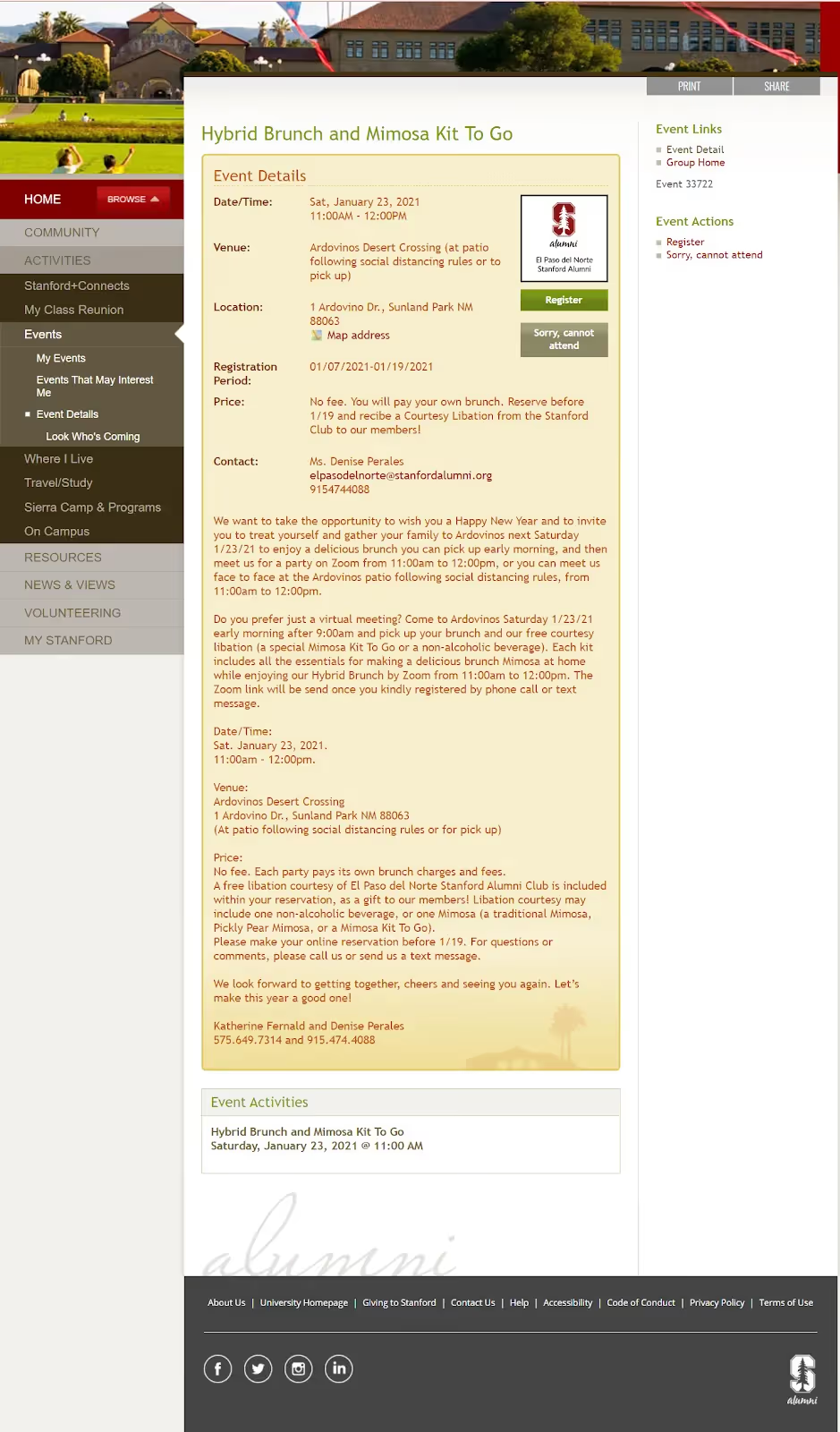
West Virginia Wesleyan College conducted a survey to ensure the opinions of their alumni are heard and taken into consideration while planning the virtual homecoming for the class of 2015.
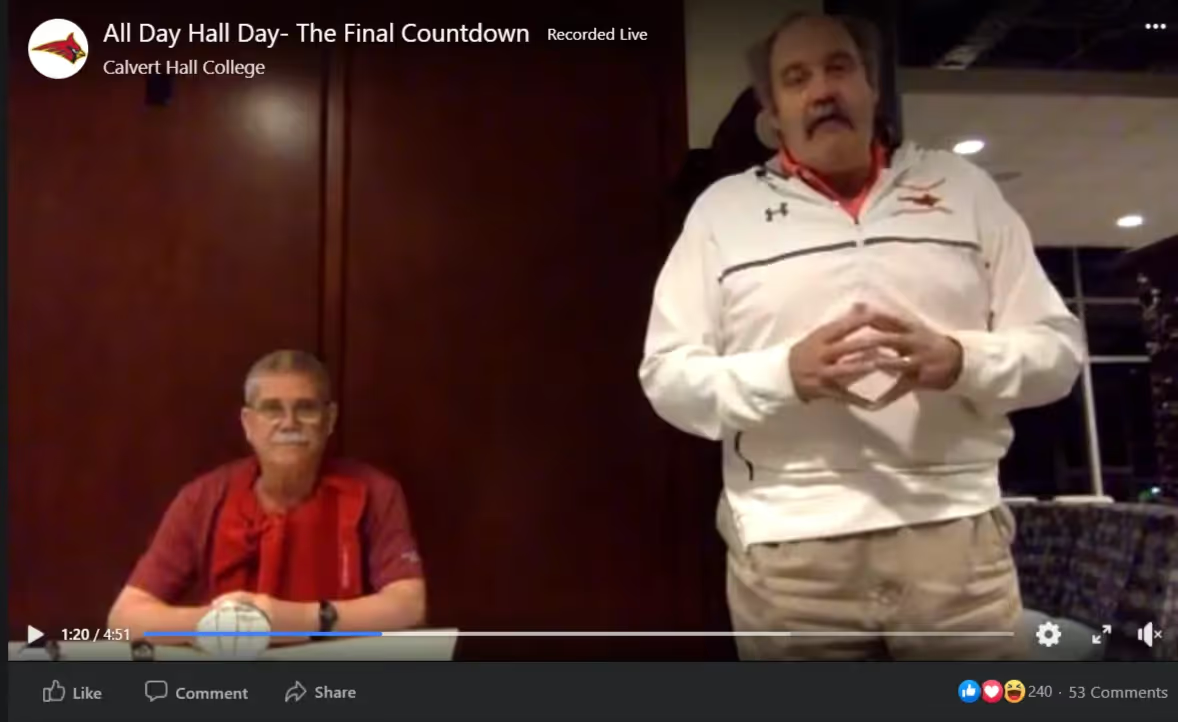
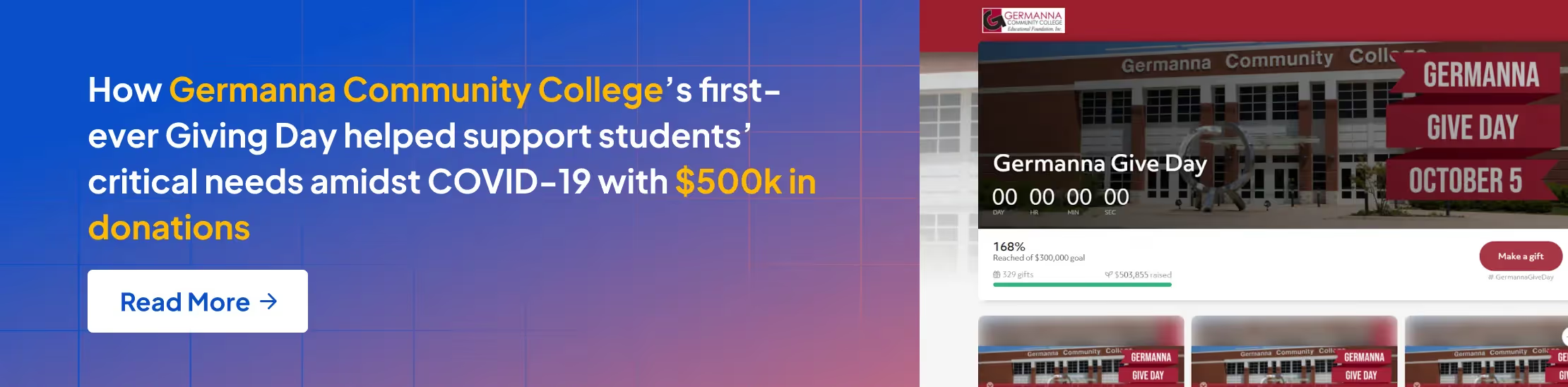
Fundraisers continue to be a mainstay for any alumni relations program. Along with aiding important causes, turn your fundraisers into fun and festive affairs. Drive competition amongst alumni, students, and faculty members by setting challenges to unlock new milestones. To make it more engaging, conduct a poll with some challenges for alumni to choose from! Have a look at Calvert Hall College High School’s out-of-the-box challenge at their 5th Annual All Day Hall Day.
Ever since the pandemic forced forced furloughs and small alumni businesses to shut down, professional networking events such as job fairs and virtual conferences slowly became an integral part of alumni programming. After all, there is no better way to build strong relationships with your alumni than helping them power through when they need you the most.
Speaking of those hit the worst by the pandemic, one cannot overlook the Class of 2020, 2021, and 2022. These young graduates are looking at a potentially rough start to their careers even in 2024 as the economic situation and job market continues to prove hard to navigate. Your alumni network is a valuable source of opportunities for these new graduates looking for internships and jobs. Organizing virtual networking events can help facilitate job shadowing services, and serve as a major boost towards career development and discovery, helping students find their field of interest and get hands-on experience.

Social media has undeniably become the most powerful tool for communication, particularly in the last few years. A strong social media presence is not only advisable but almost necessary to keep your alumni engaged. While young alumni are turning towards more instant modes of communication, your regular mail in their inbox can go unnoticed. Start a trend to share a memorable moment from their college years with a hashtag on your handles, post a picture from their graduation days, the ideas are unlimited!
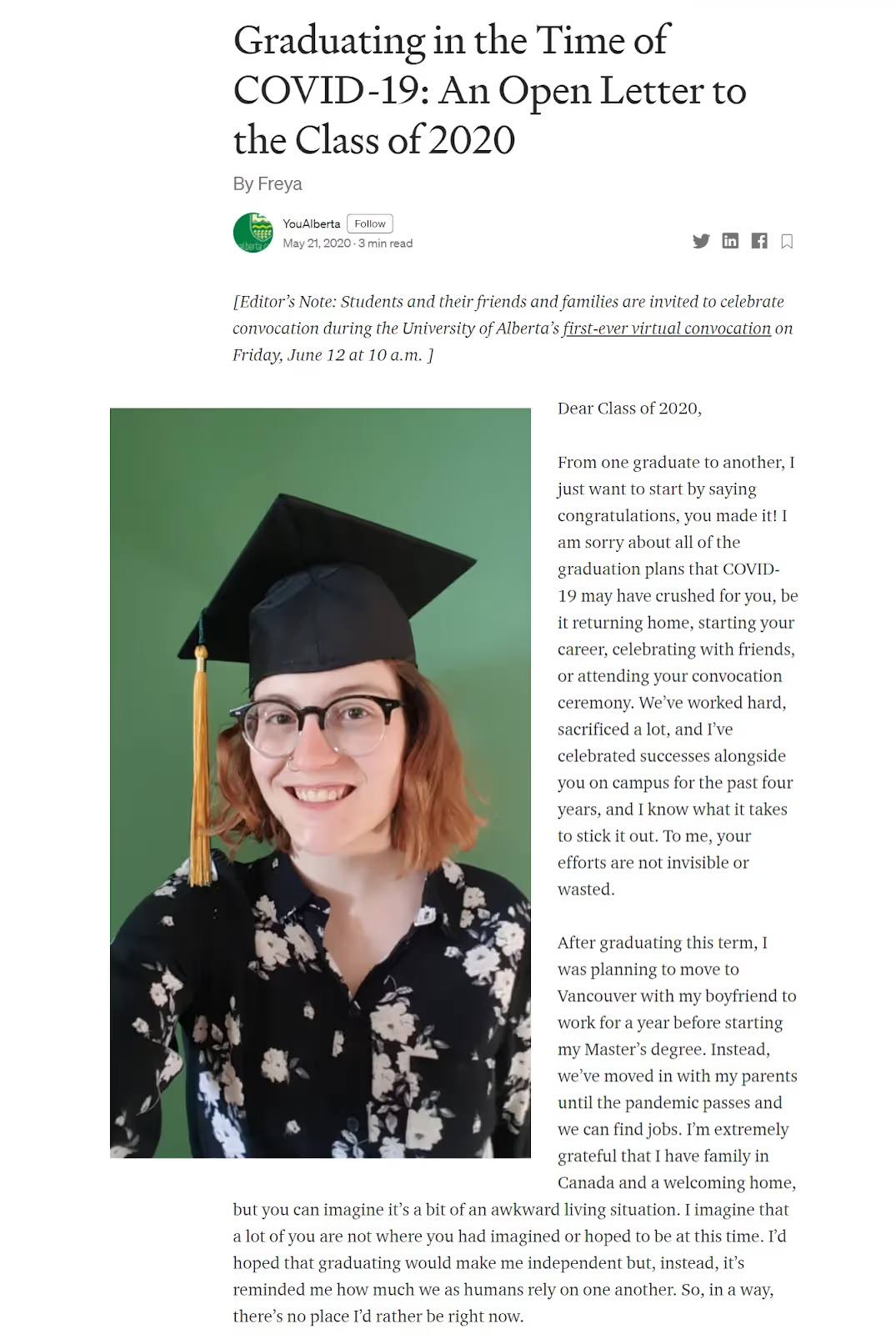
Here is an idea to try: Invite your alumni to write open letters of support to your current students. As your students feel fatigued with online classes, assignments, and exams, and struggle to find internships and jobs, letters from their favorite alumni can help put a much-needed smile on their faces.
While the pandemic brought along its own set of challenges, it also provided us with ample room for trying out new ideas. Traditionally, it would have been harder to implement these new ideas, especially with the pre-existing programs giving us fairly good results. But we have learned valuable lessons from both the pandemic and the post-pandemic situation, and as the alumni relations keeps evolving, the best time to experiment with your alumni programs is now.

5 Ways To Level-up Your Alumni Relations Program
Lorem ipsum dolor sit amet, consectetur adipiscing elit. Suspendisse varius enim in eros elementum tristique. Duis cursus, mi quis viverra ornare, eros dolor interdum nulla, ut commodo diam libero vitae erat. Aenean faucibus nibh et justo cursus id rutrum lorem imperdiet. Nunc ut sem vitae risus tristique posuere.
Engaging alumni has been a critical part of your alumni programming but, the bigger question here is - how many of these initiatives are truly accessible to every single one of your alums?
Traditional alumni engagement initiatives include organizing local mixers, career networking events, and workshops on campus but 2020 has put an end to all of these in-person activities. While these initiatives will continue to be an integral part of your alumni program in the longer run, the one downside that has become evident in these past few months is that they’re not accessible to everyone.
If your programming involves quarterly class reunions on campus or Friday night happy hours at a nearby club, alumni who live far away are most likely to miss out. Also, some of your busier alumni might not have enough time to come to your in-person event and some may not see enough value in providing their services as a mentor. Various factors such as location, time, and the right value are crucial in defining how accessible your alumni programming is.
As advancement teams increasingly need to think out of the box in order to penetrate wider segments of alumni, institutions have found the perfect way to make their alumni programming more accessible to everyone - On-Demand Alumni Programs. On-demand alumni programs are services that any alum can access from anywhere, ideally anytime they want.
As 2020 throws one curveball after another, here’s a closer look at how your peers are fighting these challenges by implementing on-demand alumni programs.
Events have and will always be at the forefront of your alumni programming. However, the pandemic has completely transformed the way alumni events are now being hosted. An increasing number of institutions are choosing to include virtual events in their alumni programming owing to strict social distancing measures in place.
Virtual events allow more flexibility and that’s also a major reason behind this format seeing a huge traction over the last few months. As your alumni mostly stay confined to their homes, time and location are no longer a constraint when it comes to participation. Moreover, events like social mixers and happy hours hosted virtually are also helping institutions provide their alumni with some much-needed respite in the face of rising anxiety and stress due to isolation.
Career support networks offer incredible opportunities for alumni and students to interact with one another, increasing the chances of students landing job offers, internships, and finding the right mentors. For your alumni community, a career support network acts as a great source for professional networking opportunities and helps alumni make valuable connections to further accelerate their careers.
With unemployment an ever-looming problem on the horizon for students and alumni alike, career support networks have become even more relevant in 2020. As alumni and students count on their peers and alma mater respectively to navigate the tough job market, career support networks should be a mainstay feature to your alumni programming in 2020.
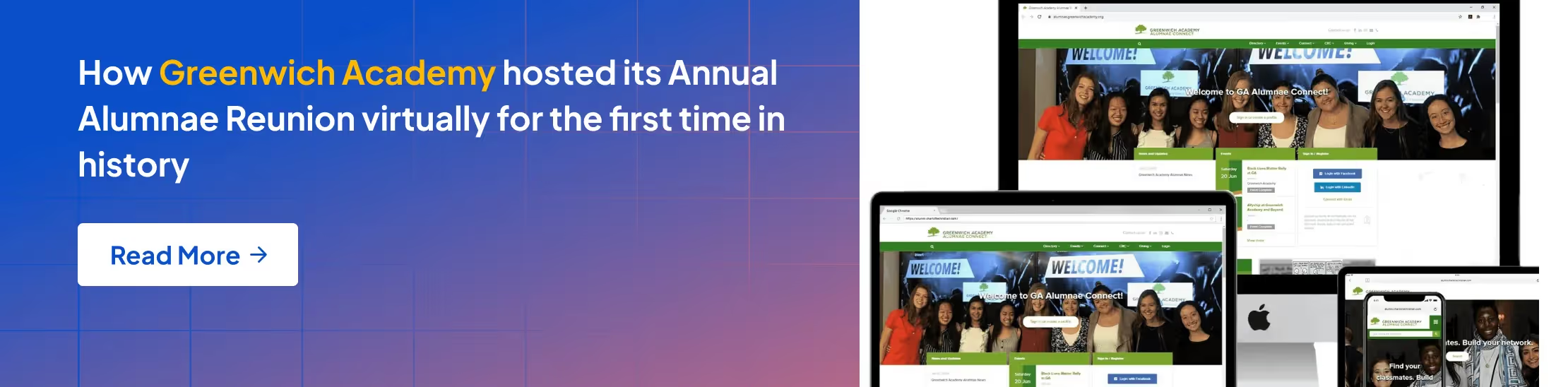
While traditional job fairs or in-person networking sessions are currently on hold due to the pandemic, institutions have switched to the virtual format to host these events.
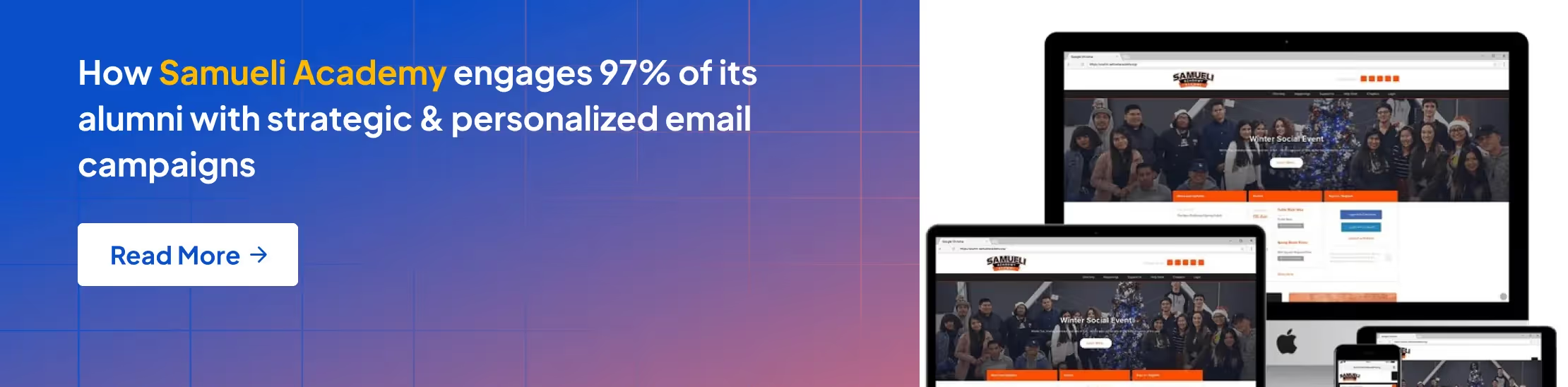
Alumni business directories are a great way to empower businesses owned by your community members. These directories are perfect for showcasing your solidarity with budding entrepreneurs in your community and help uplift their efforts by leveraging the power of your alumni network. Not only do these networks help promote local alumni businesses, they’re also super helpful in building avenues for collaboration between alumni business owners.
According to data from Yelp, a platform used widely by local businesses to advertise their services in the US, nearly 66,000 businesses have folded since March 1. Researchers at Harvard believe that the rates of business closures across various markets are likely to be even higher. (Information source: The New York Times)
If the above data is to be believed, investing in an online alumni business directory for your alumni may no longer be an option but a necessity in 2020.
If your institution believes in providing value to alumni and foster lasting relationships, you have to find ways beyond the traditional. Continued learning programs are a great way to ensure that your alumni stay actively engaged with you long after they’ve left campus.
While you may already have monthly guest lecture programs or seminars where your notable alumni come to campus and share their experiences with invited community members, just imagine the impact of doing all of this virtually. If you share the same resources in an educational webinar, podcast, or video format and live-stream it, or just publish it on your alumni website, your alumni community will be able to access all this information anytime they want, at their own convenience. More importantly, they can always come back to these resources and even re-share them with their own networks, helping you tap into a wider network of alumni.
The best way to identify what learning resources your alumni find valuable is by asking them. You could start by conducting a short survey to gauge their interest in different topics ranging from professional to personal development.
Take inspiration from Fielding Graduate University’s Alumni Association that did a phenomenal job of providing on-demand learning resources to their alumni community in the form of webinars, virtual workshops, and learning guides amidst COVID-19. Head over to Fielding Graduate University’s alumni website to learn more.
From increasing meaningful engagement to facilitating professional development for your alumni and students, a mentoring program is a great addition to your alumni programming. While some of you might already have this in place, how much of this is truly accessible for every single one of your constituents?
Do you have a mentoring program where your alumni have to visit your campus to talk to students or answer their questions, even if it is for a couple of days in a year? What if this process could be completely moved online adding more flexibility? Digitizing your mentoring program means increased flexibility for both alumni and students as they get to avail the benefits of this program right from their homes at their own convenience.
Now that your alumni program is accessible and easy to engage for all your alumni, let’s look at some of the things you can do with it.
Alumni programs readily lend themselves to alumni engagement strategies. Your emails, newsletters, social media posts, and online communities all combine to keep your alumni engaged while providing a sense of community. What sets an accessible alumni program apart is its ability to provide personalized, two-way communication channels that make alumni feel valued and, therefore, willing to support.
💡Check out how Almabase empowers your alumni relations efforts
Alumni who are actively part of your program are more likely to have a personal connection and sense of loyalty. Nurturing these sentiments is a huge part of any institution’s fundraising strategy. An accessible alumni program should also help you nurture first-time donors and turn them into loyal supporters.
💡 Check out how we helped Boyd-Buchanan School turn alumni engagement into fundraising success.
Alumni programs provide a pool of well-nurtured contacts and probable volunteers for upcoming events such as your homecoming and reunions, among others. These programs become increasingly important for hosting affinity reunions or special events meant for a specific segment of alumni.
Your alumni should be able to easily see opportunities to help your next wave of graduates, either by providing mentorships or sharing career opportunities. A well-functioning and accessible alumni program reinforces a sense of lifetime partnership between your institution and your alumni to motivate both alumni and current students to get involved.
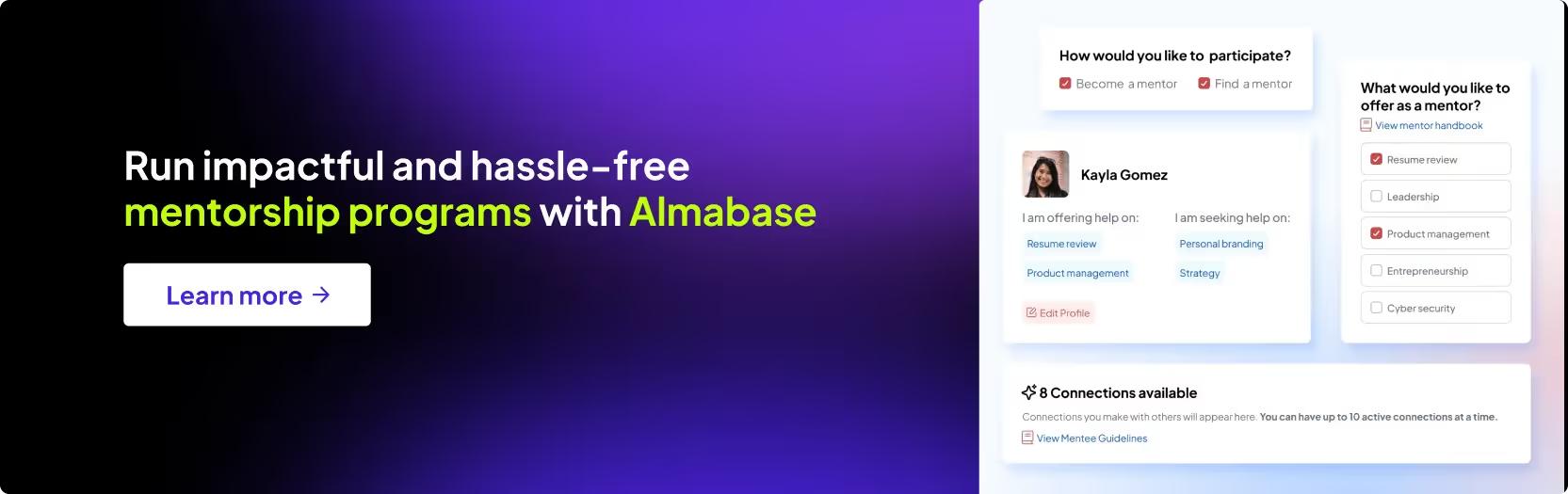
Alumni are not only stakeholders and supporters but can also be organic partners in shaping your educational programs. Your alumni program could either invite feedback or have a formal structure through, say, an **alumni advisory board** for specific departments or courses. Thesis assistance, curriculum enrichment, and extracurricular assistance are some other avenues through which your alumni program can become a valuable pool of educational partners.
An accessible and well-run alumni program naturally develops into a long-term partnership with a body of loyal supporters and advisors who share a common educational and philanthropic goal with you.
Today, there are a lot of tools and platforms out there that will help you build that partnership and nurture it. If you’re looking for a platform that integrates with your CRM, springboards your engagement, and streamlines your fundraising goals, why not give Almabase a try? 👇

5 ways to make your alumni program more accessible to all your alumni
Lorem ipsum dolor sit amet, consectetur adipiscing elit. Suspendisse varius enim in eros elementum tristique. Duis cursus, mi quis viverra ornare, eros dolor interdum nulla, ut commodo diam libero vitae erat. Aenean faucibus nibh et justo cursus id rutrum lorem imperdiet. Nunc ut sem vitae risus tristique posuere.
Peer-to-peer mentoring in higher ed can help increase student persistence, alumni connection, and academic donorship.
A recent research by Inside Higher Ed indicates that three-quarters of students wanted career advice from a mentor.
Peer-to-peer mentorship programs in higher ed offer numerous benefits. They create a sense of community, enhance academic and professional skills, and provide emotional support. Such programs also help new students transition into college life more smoothly by pairing them with experienced peers who can offer guidance and insights. For alumni, these programs foster a sense of belonging and encourage ongoing engagement with the institution. Additionally, they can lead to increased donor support as alumni feel more connected and valued.
That’s why we have curated these tips to help you design, launch, and scale effective mentoring programs.
Define the objectives of your mentorship program before diving into the logistics. Are you aiming to support career development, personal growth, or networking among alumni? Align these objectives with your university’s broader advancement strategy. For instance, if your goal is to enhance alumni engagement, focus on creating meaningful connections and knowledge-sharing opportunities.
Various mentorship models include one-on-one, group, and flash mentorship, each with distinct advantages. For example:
Choose a model that best fits your institution’s needs and objectives. Utilize your peer-to-peer mentoring tool to facilitate these models effectively, ensuring ease of communication and tracking progress.
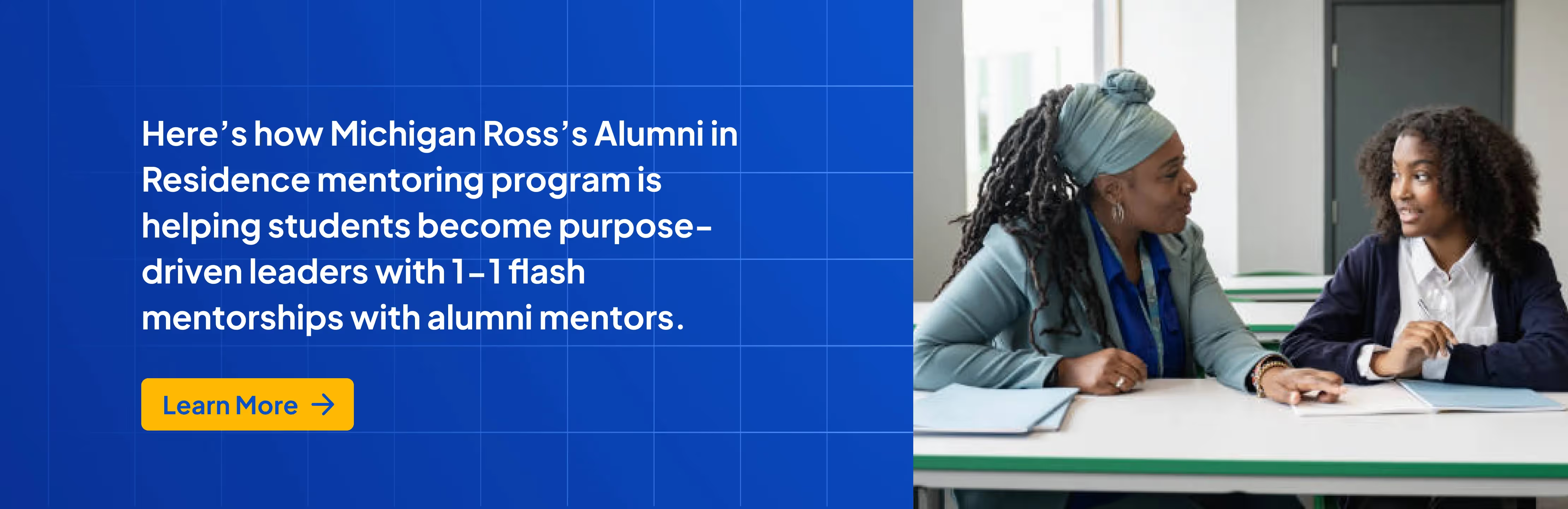
A successful mentorship program requires a solid framework. Start by defining the roles and responsibilities of mentors, mentees, and program coordinators. Develop a structured plan that includes:
The recruitment phase is critical. Identify potential mentors who are experienced alumni willing to share their knowledge. Simultaneously, attract mentees who are eager to learn and grow. To ensure a diverse and inclusive pool, consider:

Effective matching is key to the success of your mentorship program. Consider factors such as:
Your peer-to-peer mentoring tool can automate and optimize this matching process, ensuring compatibility and increasing the likelihood of successful mentorship relationships.
💡 You can also leverage a mentoring tool that uses AI and automation to manage applications, track engagement, and match mentors with mentees. This helps you drive impactful mentorship programs with minimal manual effort.
Providing adequate training and ongoing support is essential for both mentors and mentees. Develop training materials that cover:
Offer continuous support through regular check-ins, resources, and troubleshooting assistance. Utilize your mentoring tool to facilitate these training sessions and provide a repository of resources accessible to all participants.
To maintain engagement throughout the mentorship program, create opportunities for mentors and mentees to interact regularly. Organize events, workshops, and social gatherings to keep participants motivated and connected. Encourage mentors and mentees to set regular meetings, and follow up on goals and progress. You can also send reminder emails, track interactions, and provide updates through nudges.
Building a community around your mentorship program is crucial for continuous engagement. Create forums, social media groups, or dedicated communication channels where participants can share their experiences, ask questions, and provide support to each other. Regularly recognize and celebrate milestones and achievements within the program to keep the momentum going.
To ensure your mentorship program remains effective and impactful, establish clear metrics for success. Regularly collect feedback from participants and analyze data to identify areas for improvement. Key metrics to monitor include:
Use this data to make informed adjustments and continuously improve the program. Share the results of your monitoring and evaluation efforts with stakeholders to demonstrate the program’s value and impact.


Guide to Setting up a Mentorship Program
Lorem ipsum dolor sit amet, consectetur adipiscing elit. Suspendisse varius enim in eros elementum tristique. Duis cursus, mi quis viverra ornare, eros dolor interdum nulla, ut commodo diam libero vitae erat. Aenean faucibus nibh et justo cursus id rutrum lorem imperdiet. Nunc ut sem vitae risus tristique posuere.
%201.svg)
%201.svg)
%204.svg)



.svg)