Looking to make your alumni programming more accessible? Here are 5 ways to make alumni programs accessible in schools, colleges, and universities in the US
Published:
August 17, 2020
Updated:
April 11, 2025

Engaging alumni has been a critical part of your alumni programming but, the bigger question here is - how many of these initiatives are truly accessible to every single one of your alums?
Traditional alumni engagement initiatives include organizing local mixers, career networking events, and workshops on campus but 2020 has put an end to all of these in-person activities. While these initiatives will continue to be an integral part of your alumni program in the longer run, the one downside that has become evident in these past few months is that they’re not accessible to everyone.
If your programming involves quarterly class reunions on campus or Friday night happy hours at a nearby club, alumni who live far away are most likely to miss out. Also, some of your busier alumni might not have enough time to come to your in-person event and some may not see enough value in providing their services as a mentor. Various factors such as location, time, and the right value are crucial in defining how accessible your alumni programming is.
As advancement teams increasingly need to think out of the box in order to penetrate wider segments of alumni, institutions have found the perfect way to make their alumni programming more accessible to everyone - On-Demand Alumni Programs. On-demand alumni programs are services that any alum can access from anywhere, ideally anytime they want.

As 2020 throws one curveball after another, here’s a closer look at how your peers are fighting these challenges by implementing on-demand alumni programs.
Events have and will always be at the forefront of your alumni programming. However, the pandemic has completely transformed the way alumni events are now being hosted. An increasing number of institutions are choosing to include virtual events in their alumni programming owing to strict social distancing measures in place.
Virtual events allow more flexibility and that’s also a major reason behind this format seeing a huge traction over the last few months. As your alumni mostly stay confined to their homes, time and location are no longer a constraint when it comes to participation. Moreover, events like social mixers and happy hours hosted virtually are also helping institutions provide their alumni with some much-needed respite in the face of rising anxiety and stress due to isolation.
Career support networks offer incredible opportunities for alumni and students to interact with one another, increasing the chances of students landing job offers, internships, and finding the right mentors. For your alumni community, a career support network acts as a great source for professional networking opportunities and helps alumni make valuable connections to further accelerate their careers.
With unemployment an ever-looming problem on the horizon for students and alumni alike, career support networks have become even more relevant in 2020. As alumni and students count on their peers and alma mater respectively to navigate the tough job market, career support networks should be a mainstay feature to your alumni programming in 2020.
While traditional job fairs or in-person networking sessions are currently on hold due to the pandemic, institutions have switched to the virtual format to host these events.
Alumni business directories are a great way to empower businesses owned by your community members. These directories are perfect for showcasing your solidarity with budding entrepreneurs in your community and help uplift their efforts by leveraging the power of your alumni network. Not only do these networks help promote local alumni businesses, they’re also super helpful in building avenues for collaboration between alumni business owners.
According to data from Yelp, a platform used widely by local businesses to advertise their services in the US, nearly 66,000 businesses have folded since March 1. Researchers at Harvard believe that the rates of business closures across various markets are likely to be even higher. (Information source: The New York Times)
If the above data is to be believed, investing in an online alumni business directory for your alumni may no longer be an option but a necessity in 2020.
If your institution believes in providing value to alumni and foster lasting relationships, you have to find ways beyond the traditional. Continued learning programs are a great way to ensure that your alumni stay actively engaged with you long after they’ve left campus.
While you may already have monthly guest lecture programs or seminars where your notable alumni come to campus and share their experiences with invited community members, just imagine the impact of doing all of this virtually. If you share the same resources in an educational webinar, podcast, or video format and live-stream it, or just publish it on your alumni website, your alumni community will be able to access all this information anytime they want, at their own convenience. More importantly, they can always come back to these resources and even re-share them with their own networks, helping you tap into a wider network of alumni.
The best way to identify what learning resources your alumni find valuable is by asking them. You could start by conducting a short survey to gauge their interest in different topics ranging from professional to personal development.
Take inspiration from Fielding Graduate University’s Alumni Association that did a phenomenal job of providing on-demand learning resources to their alumni community in the form of webinars, virtual workshops, and learning guides amidst COVID-19. Head over to Fielding Graduate University’s alumni website to learn more.
From increasing meaningful engagement to facilitating professional development for your alumni and students, a mentoring program is a great addition to your alumni programming. While some of you might already have this in place, how much of this is truly accessible for every single one of your constituents?
Do you have a mentoring program where your alumni have to visit your campus to talk to students or answer their questions, even if it is for a couple of days in a year? What if this process could be completely moved online adding more flexibility? Digitizing your mentoring program means increased flexibility for both alumni and students as they get to avail the benefits of this program right from their homes at their own convenience.
Now that your alumni program is accessible and easy to engage for all your alumni, let’s look at some of the things you can do with it.
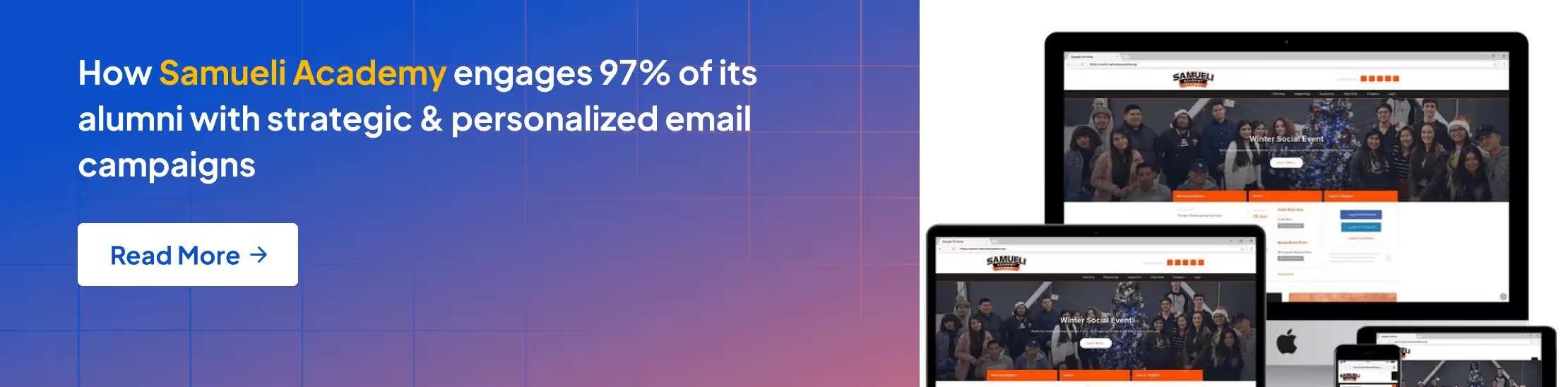
Alumni programs readily lend themselves to alumni engagement strategies. Your emails, newsletters, social media posts, and online communities all combine to keep your alumni engaged while providing a sense of community. What sets an accessible alumni program apart is its ability to provide personalized, two-way communication channels that make alumni feel valued and, therefore, willing to support.
💡Check out how Almabase empowers your alumni relations efforts
Alumni who are actively part of your program are more likely to have a personal connection and sense of loyalty. Nurturing these sentiments is a huge part of any institution’s fundraising strategy. An accessible alumni program should also help you nurture first-time donors and turn them into loyal supporters.
💡 Check out how we helped Boyd-Buchanan School turn alumni engagement into fundraising success.
Alumni programs provide a pool of well-nurtured contacts and probable volunteers for upcoming events such as your homecoming and reunions, among others. These programs become increasingly important for hosting affinity reunions or special events meant for a specific segment of alumni.
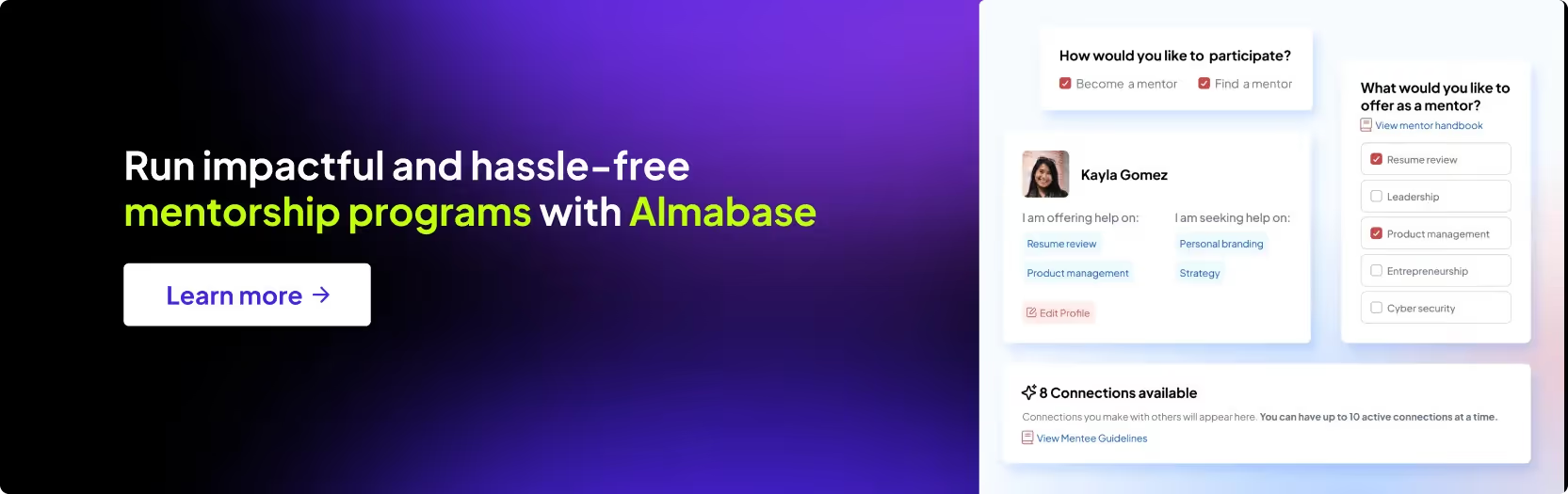
Your alumni should be able to easily see opportunities to help your next wave of graduates, either by providing mentorships or sharing career opportunities. A well-functioning and accessible alumni program reinforces a sense of lifetime partnership between your institution and your alumni to motivate both alumni and current students to get involved.
Alumni are not only stakeholders and supporters but can also be organic partners in shaping your educational programs. Your alumni program could either invite feedback or have a formal structure through, say, an **alumni advisory board** for specific departments or courses. Thesis assistance, curriculum enrichment, and extracurricular assistance are some other avenues through which your alumni program can become a valuable pool of educational partners.
An accessible and well-run alumni program naturally develops into a long-term partnership with a body of loyal supporters and advisors who share a common educational and philanthropic goal with you.
Today, there are a lot of tools and platforms out there that will help you build that partnership and nurture it. If you’re looking for a platform that integrates with your CRM, springboards your engagement, and streamlines your fundraising goals, why not give Almabase a try? 👇
Subscribe
See how modern advancement teams bring alumni engagement and fundraising together.
Plan faster. Execute better
Explore free templates designed for alumni and fundraising teams.

The graduation season is upon us and it usually brings with itself, accompanying feelings of nostalgia and happiness. As graduates move towards a new chapter in their lives with the blessings of their beloved teachers, graduation is one of the happiest moments in a student’s life.
But, is the world still the same place since the last graduation season?

The upcoming batch of graduates is being deprived of once-in-a-lifetime moments like dancing the night away at their senior prom, walking across the stage to receive the diploma that they spent countless hours of hard work on, and even a chance to simply say goodbye to the people that have been an important part of their lives - friends, mentors, and beloved teachers.
On top of this, these young graduates find themselves thrust into the worst job market in modern history. Many of them have lost their on-campus jobs, internships, and are already witnessing dwindling job opportunities.
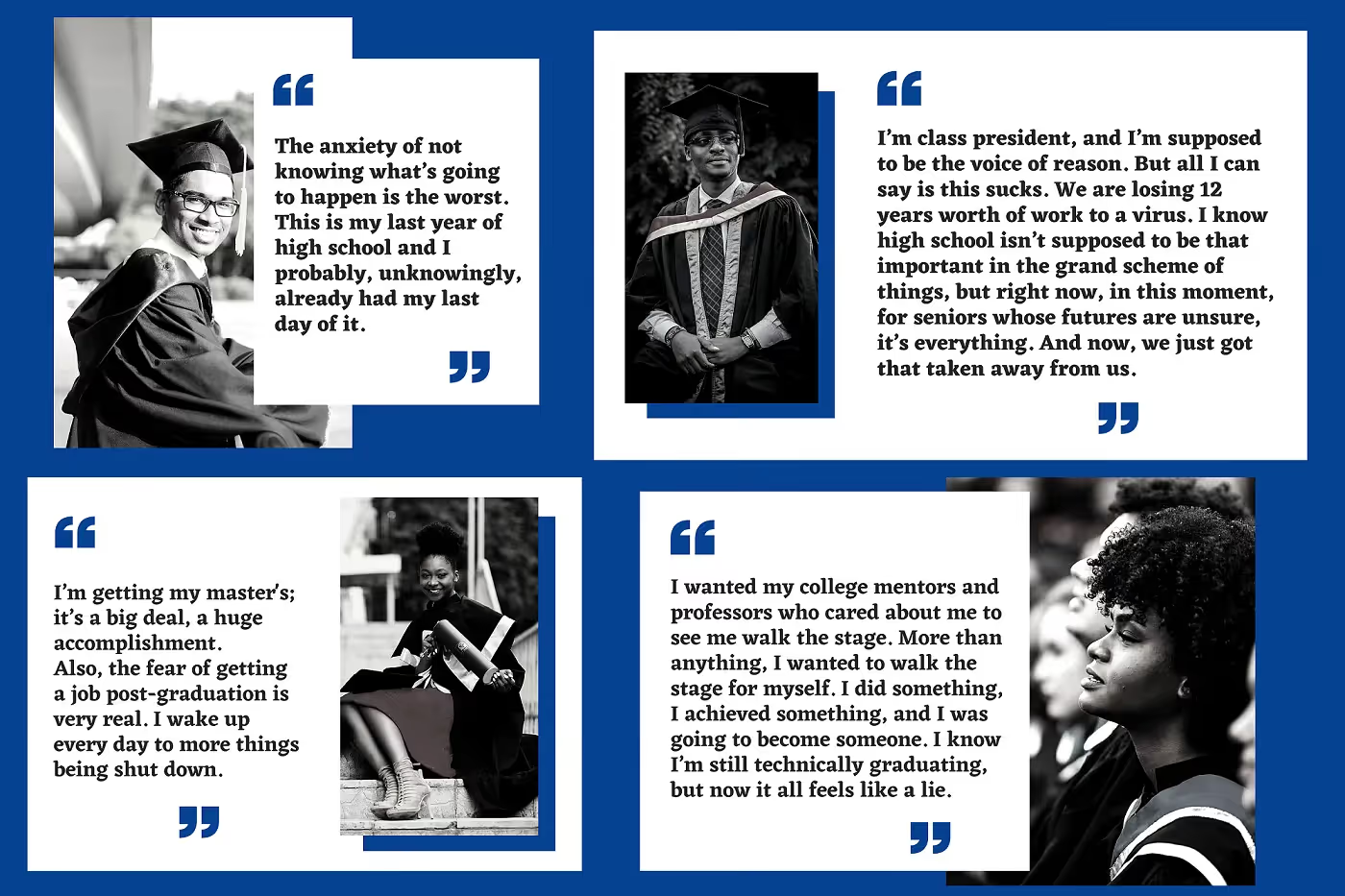
Now more than ever, the graduates need to know that their alma mater and alumni have their back. In a post-pandemic world, it is imperative that the university community join hands to help soon-to-be graduates, and eliminate the risk of a lost connection with them.

Here are 5 ways in which alumni can get involved and help the next batch of graduates overcome their unique challenges during these testing times.
The post-pandemic world keeps throwing oddballs at all of us, and it’s only natural that your graduates need some additional help. Whether it’s emotional support from a friendly alum or an alum that can offer career guidance, your graduates need all the support they can get to power through this crisis. As the situation at hand is unique, encourage your alumni to go the extra mile and offer one-on-one support to your graduates.
Facilitate direct conversations between alumni and graduates via emails or social media, or create an affinity group to connect graduates with alumni who can cater to their needs. While enabling group conversations is a good approach, in these challenging times, a little one-on-one treatment might go a long way in building deeper connections and imbibing a greater sense of loyalty in your new alumni.
Barcelona Graduate School of Economics facilitates a unique one-on-one chat experience to help graduates, students, and candidates applying to the institution via an online chat platform.
Your alumni network is a valuable resource for your upcoming graduates who are currently on the lookout for job and internship opportunities. These networks also serve exclusive job and internship listings in cases where they’re not widely published elsewhere, giving graduates first dibs. Additionally, having an alum guide these graduates with their job search and provide an endorsement at their companies greatly improves the chances of the latter landing a job offer.
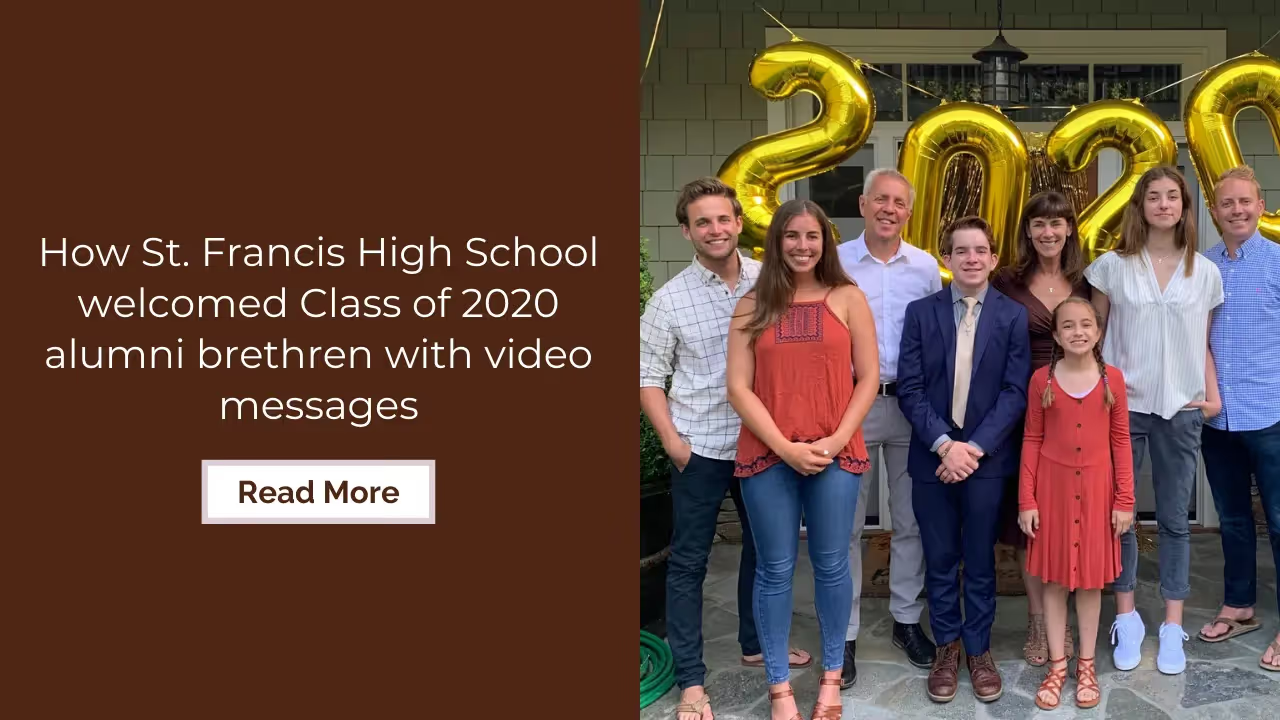
In case your graduates have to miss their traditional end-of-year programming and brace themselves for a plethora of challenges coming their way, it is all the more important that they hear encouraging words of wisdom from their seniors. Urge your alumni community to create short video messages, offering words of encouragement, praises, and congratulations to the young graduates.
Add an element of surprise by getting a star alum to make an appearance on the video.
Read how Carnegie Mellon University roped in 13 high-profile alumni to surprise their Class of 2020 graduates during their virtual conferral of degrees ceremony. Head over to CMU’s website to read more.
Job shadowing plays a pivotal role in career development and discovery as it helps a graduate gauge and identify their field of interest, assess if they are the right fit for a particular position or industry, learn skills via hands-on experience, network and build relationships with relevant professionals, and receive invaluable career advice from experienced alumni. Give your graduates the opportunity to explore different career-fields and gain real-world experience in the field of their choice by matching them with alumni hosts interested in job shadowing.
You can facilitate job shadowing by using an online network that automatically matches alumni and graduates based on their needs, interests, and other relevant criteria.
Boston College’s Eagle Exchange Job Shadowing Program is an exclusive online platform that matches students with college alumni who serve as hosts for one-day shadowing experiences. Alumni hosts represent diverse industries and job functions. Read more about the Eagle Exchange program here.
As your graduates come to terms with a hostile job market and mourn loss of traditions, there’s so many questions that these new graduates need answered. Provide value to your new graduates by organizing an Ask Me Anything session by roping in expert alumni to answer specific questions. If your graduates are concerned about getting a job in this bad economy, get career specialists in your alumni community on board and schedule an open AMA session to allow your graduates to ask away.
Washington State University Alumni Association’s hosting weekly AMA sessions with alumni employers who are ready to talk to all majors in the fields of arts, science, and health. Head over to WSU’s alumni website to read more.
To the next batch of graduates, hang in there, as this is only the ending of the first chapter of a grand adventure. And to all our incredible partners who are going above and beyond to help and support their young graduates, we stand with you and promise to continue delivering the best ideas and strategies to make your job easier.

How your alumni community can support new graduates
Lorem ipsum dolor sit amet, consectetur adipiscing elit. Suspendisse varius enim in eros elementum tristique. Duis cursus, mi quis viverra ornare, eros dolor interdum nulla, ut commodo diam libero vitae erat. Aenean faucibus nibh et justo cursus id rutrum lorem imperdiet. Nunc ut sem vitae risus tristique posuere.
Pandemic or not, nothing stops advancement teams from coming up with the best ideas to engage alumni virtually and support them.

So, with the current state of things prompting schools and universities to digitally engage their constituents, one trend that’s picking up is virtual events.
Having observed over a hundred schools and universities host successful virtual alumni events in the past three months, here’s the list of the top 10 trending ones being adopted by advancement teams in the US.
While nothing replaces the feeling of reuniting with old friends at a class reunion, strict social distancing measures are leading to an increasing number of institutions adopting the virtual format to host their reunions.
Translating these large constituent gatherings into an online celebration is a great way to drive more attendance as constituents from all over the world, irrespective of their geographical location can join, granted they have a good internet connection. Whether it’s a short social mixer or a longer event spread over the weekend, effective planning is the key to hosting a successful virtual alumni event.
In lieu of social distancing measures, Brenau’s Office of constituents and Constituent Engagement hosted its Constituents Reunion Weekend online, bringing its community together to connect and catch up during these challenging times.
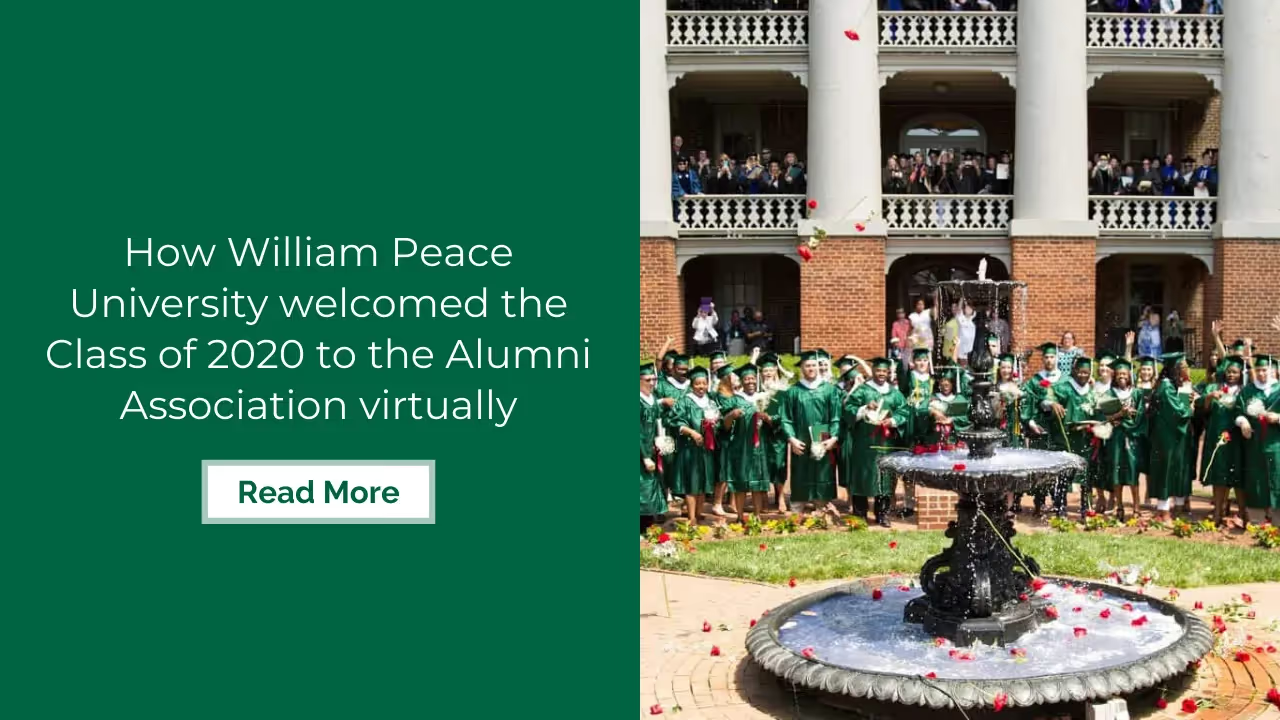
Commencement is a milestone in every student’s life and deserves to be celebrated with grandeur. Unfortunately, the COVID-19 crisis has led to many ceremonies being called off leaving students around the world in a state of despair.
If you’re concerned about your Class of 2020, use this opportunity to reach out to leaders in your alumni community and urge them to reach out to your young graduates. As an alma mater, this is the time for you to boost their morale and foster leadership skills needed to navigate the new world.
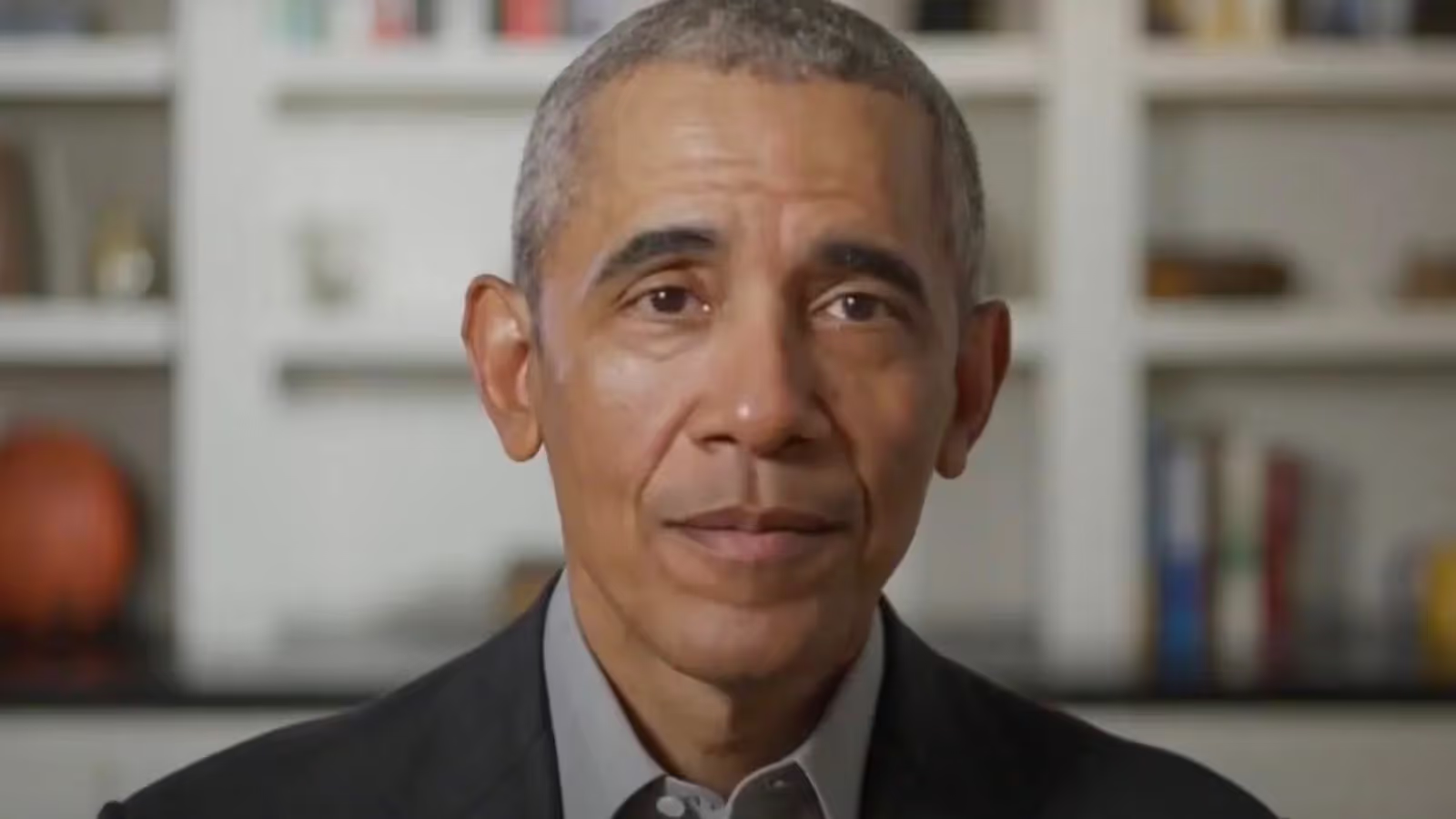
In a grand gesture, high school students, educators, and world leaders came forward for a television special Graduate Together: America Honors the High School Class of 2020 on May 16th, 2020, to honor those high school graduates whose graduation ceremonies and proms were canceled due to the COVID-19 pandemic. The show included a variety of commencement addresses, celebrity performances and inspirational speeches.
Another great virtual commencement ceremony that deserves a shoutout is by the University of Pittsburgh. The first-of-its-kind in the history of the university, degrees were awarded to nearly 8,000 undergraduate, master’s, professional and doctoral candidates. Students were emailed a “virtual” diploma immediately after the ceremony.
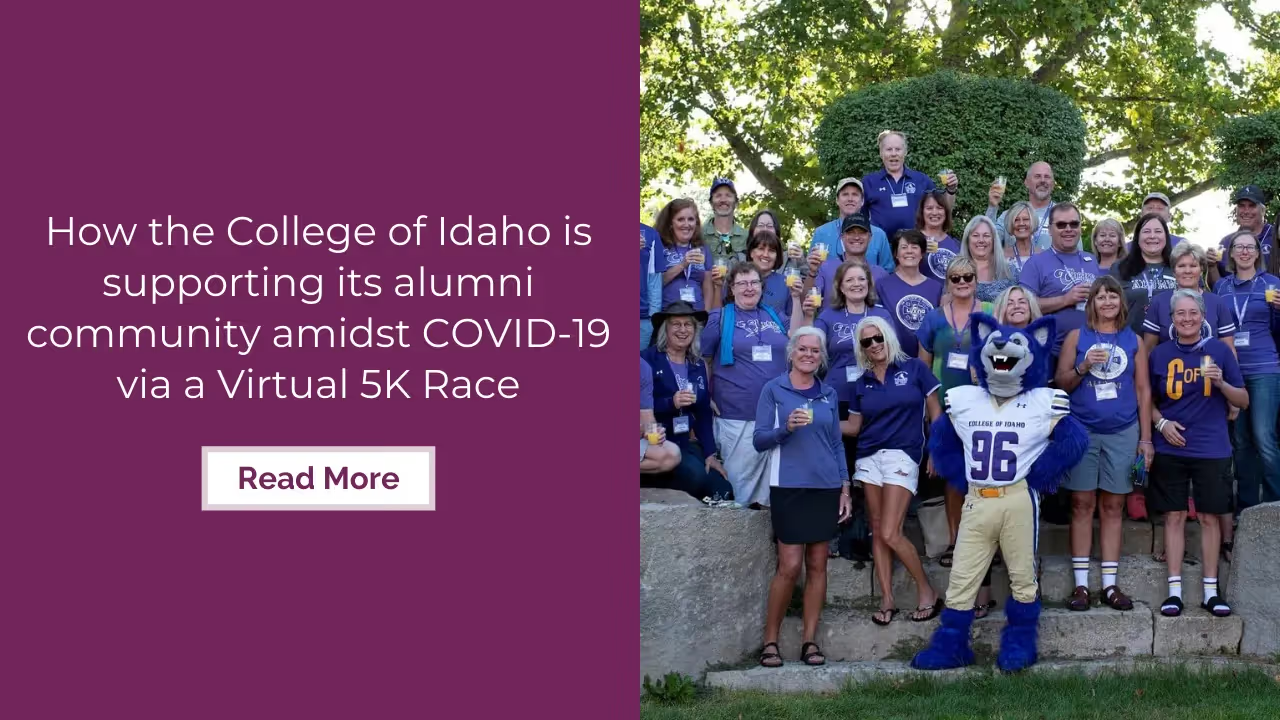
With everyone confined to their houses, forced to work from home, schools closed, and limitations on social interactions, physical fitness and well-being is getting deprioritized for a lot of people. Virtual runs/walkathon events are a great approach to bringing your alumni community together, driving more conversations and most important of all - creating an avenue for them to make time for their well being.
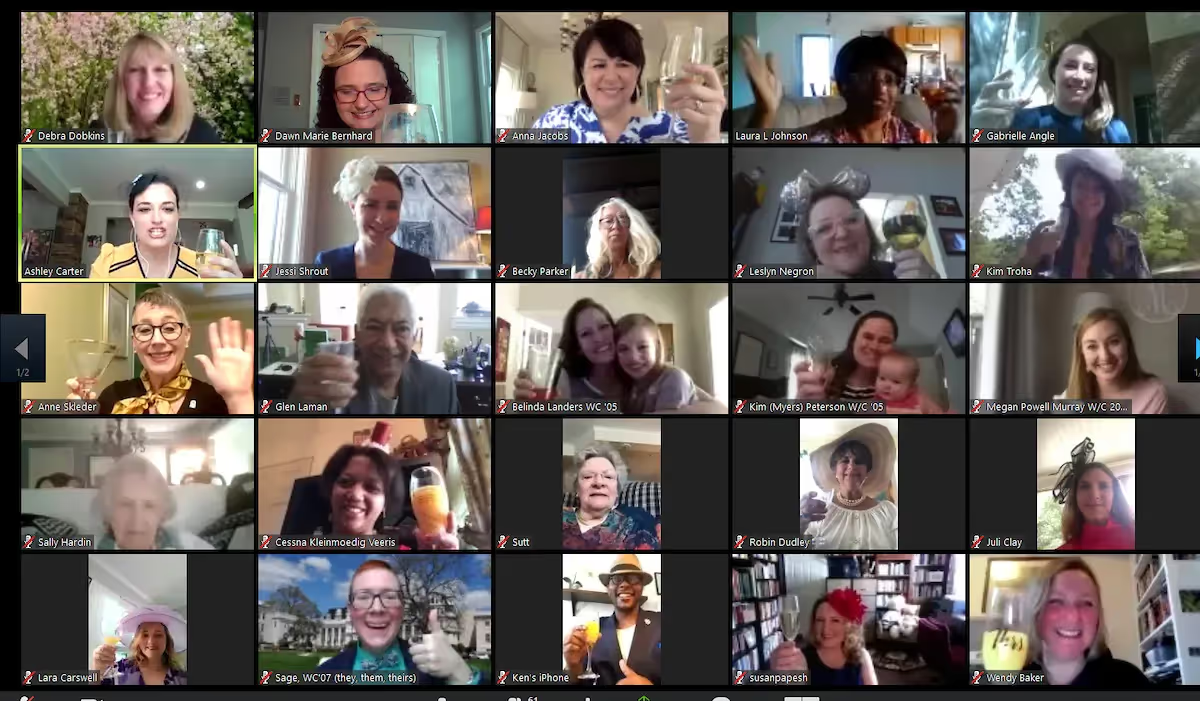
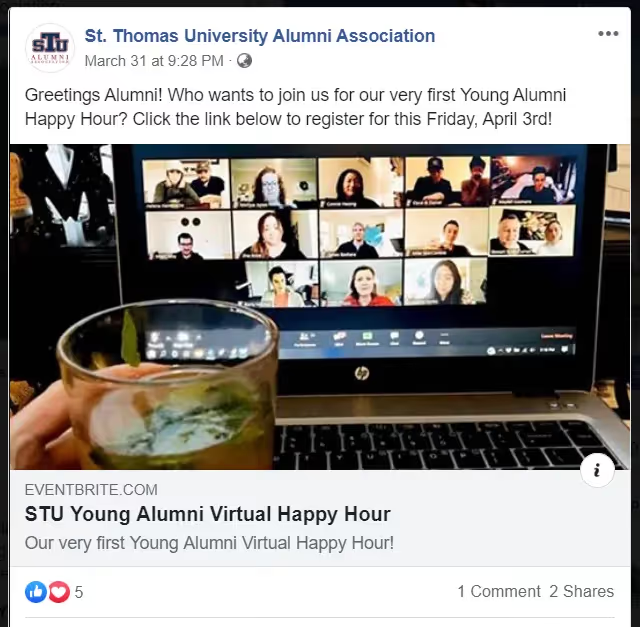
Virtual happy hours are the perfect approach to helping your alumni relieve stress and overcome the fear of isolation as they open up to their friends over drinks. Create a dedicated event page for collecting RSVPs and lay down all the details on this page. Ask your alumni to grab a beverage of their choice, join the meeting link, and drink away the night!
St. Thomas University School of Law created a dedicated event page for its first-ever Young constituents Virtual Happy Hour and promoted the event via social media.
It’s going to be a while before your alumni can go out to their favorite club or invite their friends over for a crazy dance party but don’t let that stop you from bringing the experience home to them. Host a virtual dance party to bring out those crazy moves.

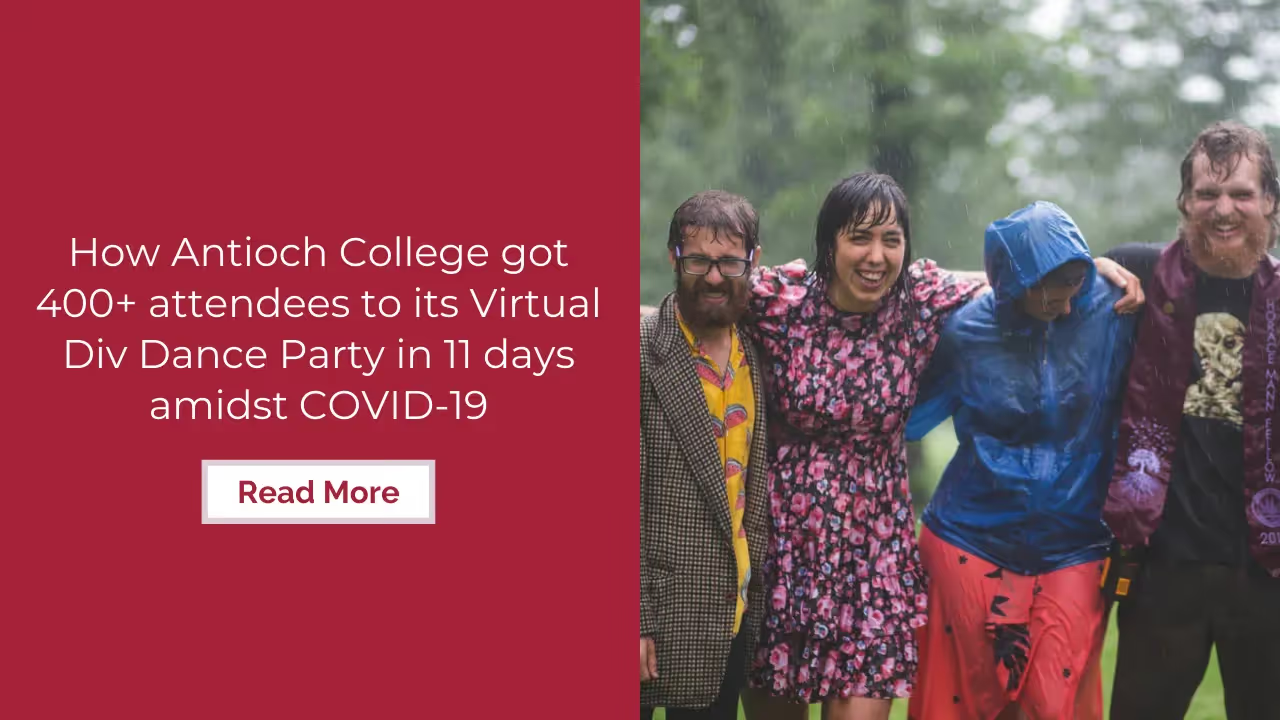
Antioch College roped in their alumni DJs from across generations and got 400+ registrations to its Virtual Div Dance Party event in just 11 days! The college set up a dedicated event page on its alumni network, laying down all the details needed for alumni to be able to participate and extensively promoted the event via Facebook.
While many institutions are still in a dilemma of whether or not to make a fundraising ask during an ongoing global crisis, the recent #GivingTuesdayNow saw some super creative virtual giving campaigns.
As schools and universities face a desperate need to maintain their revenue streams especially in the face of a looming economic crisis, many institutions are opting for student emergency campaigns and online auctions.
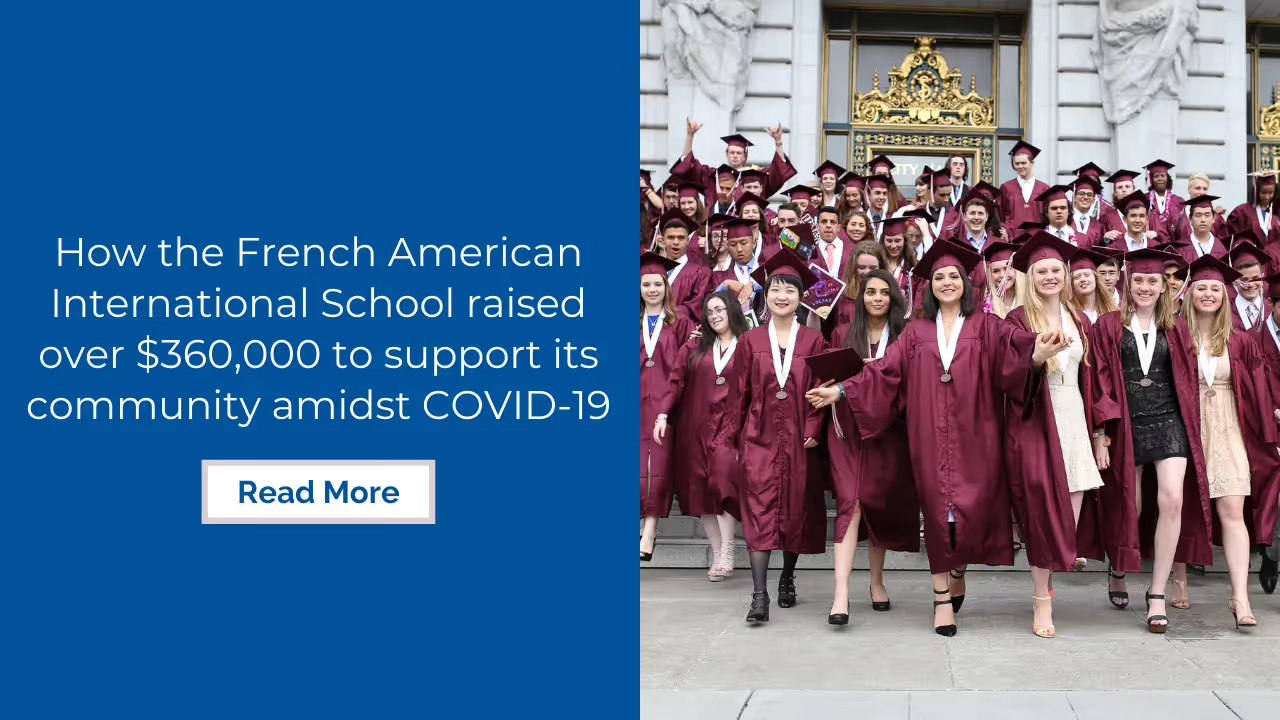
The French American International School anticipated a need for an increase in financial aid for next year as it provides support to its students in the form of tuition, books, lunches, and to every family that needs help during these tough times.
Support your alumni community with vital resources required to deal with the coronavirus via a virtual webinar or a seminar. As the world deals with uncertainty, fear, and anxiety amidst this crisis, bring health experts, career coaches, and your university leadership to come together and disseminate helpful information.
In response to COVID-19, University of Washington’s Department of Global Health initiated a weekly virtual lecture series featuring UW researchers who are coronavirus and pandemic preparedness experts, covering topics from testing and response measures to vaccine development and social & economic impacts.
With the ongoing coronavirus lockdown, your alumni now have the time to catch up on that old classic that they never got to complete and even reconnect with their long-lost reading groups.
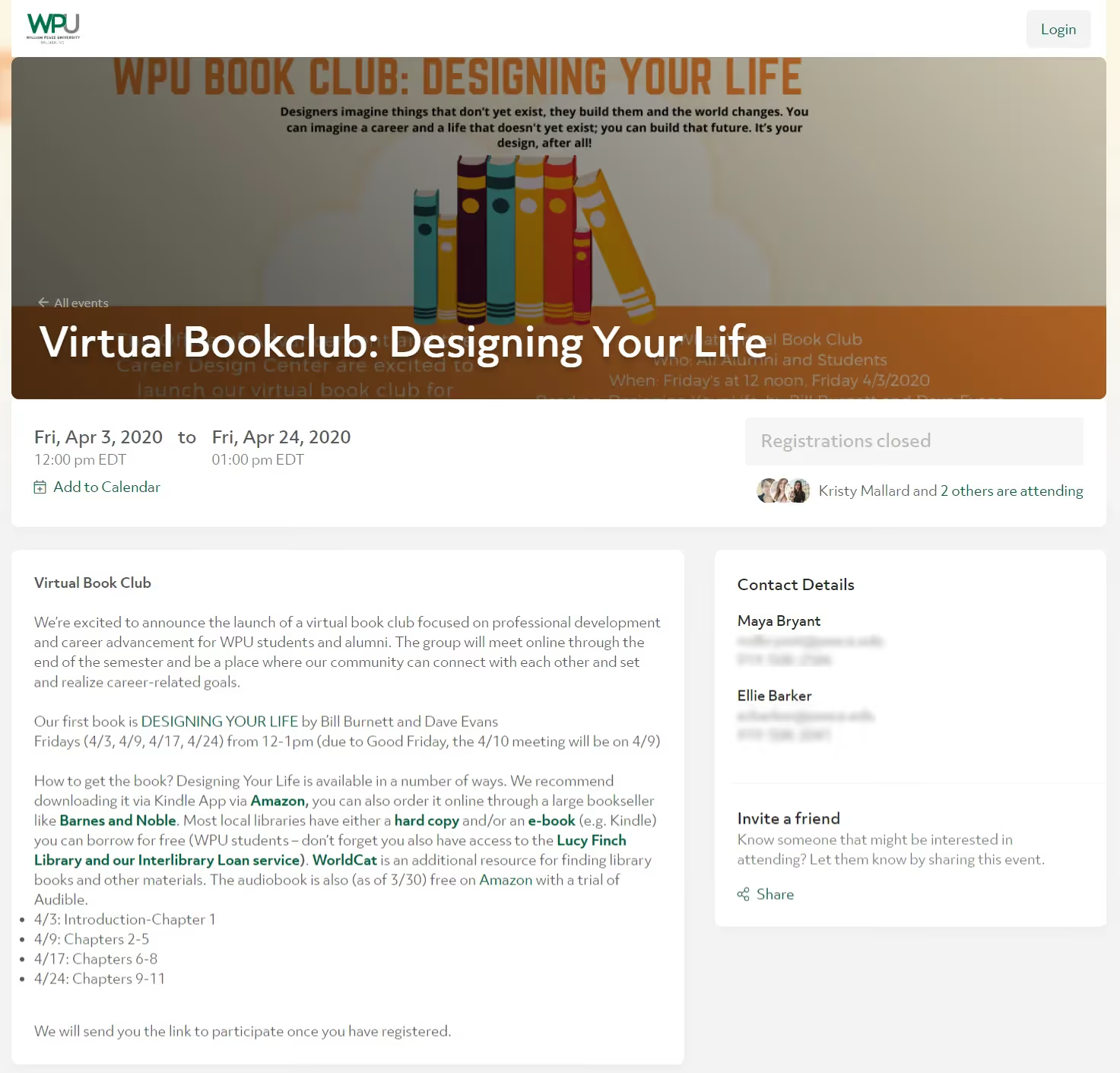
Create virtual book clubs and target interested audiences with invitations to join these exclusive communities where they can connect with like-minded peers and have fruitful conversations that stir every book lover’s soul. Share a reading schedule allowing members time to read the book, participate in the discussion, and allow them to choose if they want to participate in the next reading session.
William Peace University, a liberal arts college in downtown Raleigh, North Carolina, launched a Virtual Book Club focused on professional development and career advancement for the university students and alumni. The group acts as a community that collectively sets and realizes career-related goals.
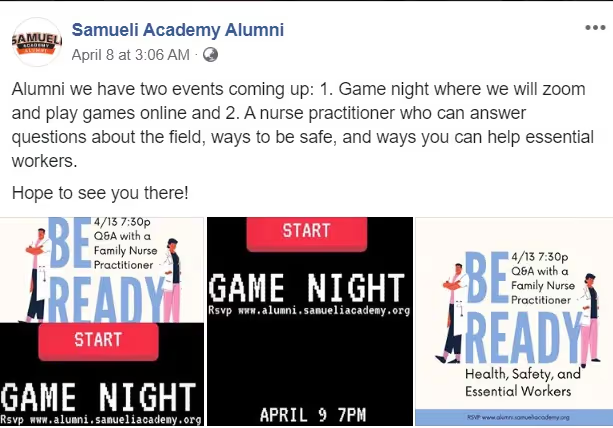
A virtual gaming night can be a great way to de-stress and relax with friends. Bring your alumni community together for a fun night of online poker, charades, or pictionary to inspire a healthy sense of competition amongst your alumni. You could even get some of your favorite staff members to make a special appearance to spruce up the night.
Here’s how Samueli Academy brought its alumni community together during COVID-19 with Social Distancing Gaming Night over Zoom.
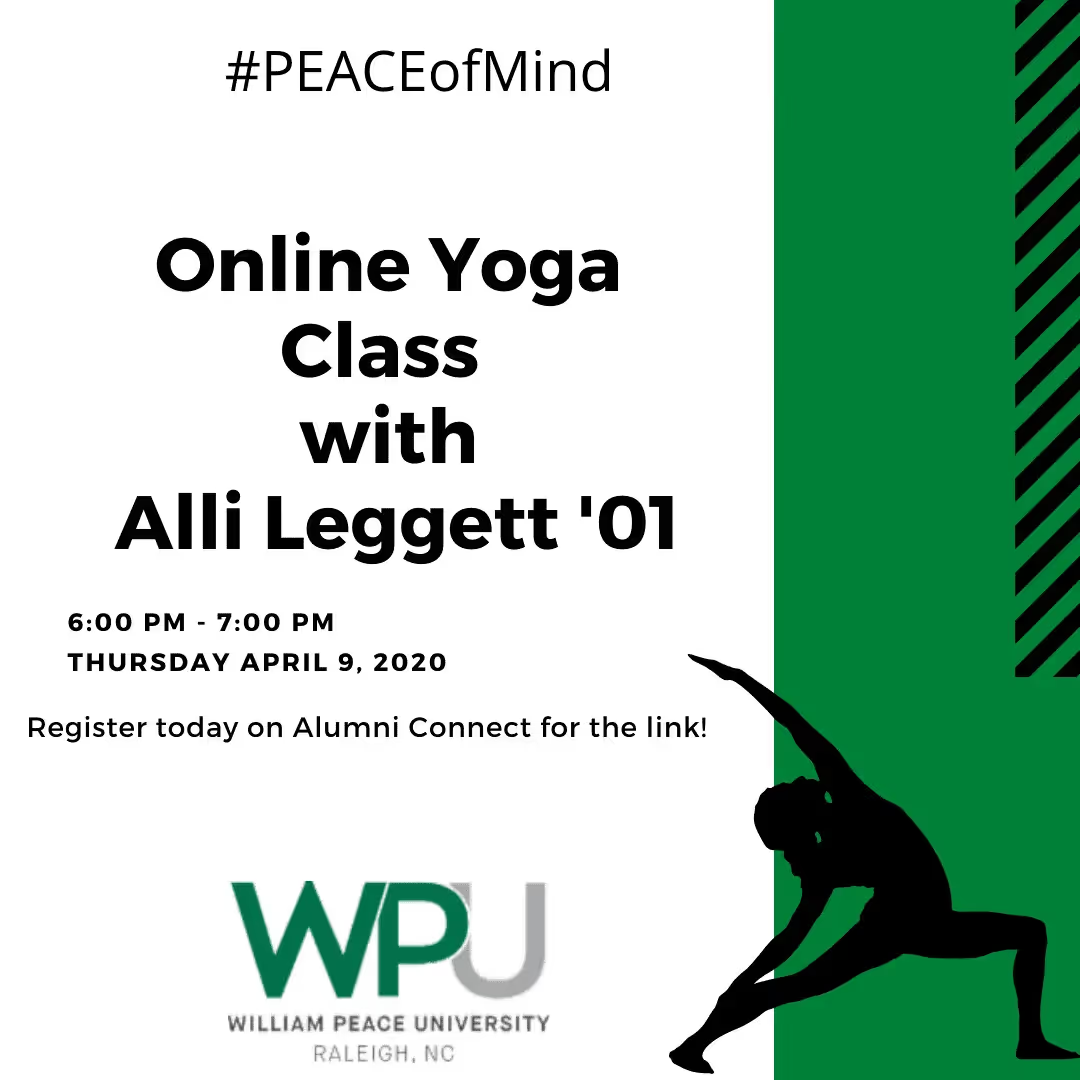
With the rising stress and anxiety levels owing to COVID-19, now’s the best time for your school or university to start a virtual exercise or yoga program for your alumni. Organizing virtual exercise or yoga sessions for your alumni community during these tough times can help them deal with stress, depression, anxiety, fatigue, and motivate them to work towards their overall physical and mental well-being.
Get certified Yoga practitioners/trainers from your community to lead these sessions to help their peers become fitter and better.
William Peace University roped in its former Alumni Board President, Alli Leggett '01 to organize a virtual yoga session for alumni to join from the comfort of their home.

Top 10 Trending Virtual Alumni Events In Higher-Ed Amidst COVID-19
Lorem ipsum dolor sit amet, consectetur adipiscing elit. Suspendisse varius enim in eros elementum tristique. Duis cursus, mi quis viverra ornare, eros dolor interdum nulla, ut commodo diam libero vitae erat. Aenean faucibus nibh et justo cursus id rutrum lorem imperdiet. Nunc ut sem vitae risus tristique posuere.
As a remote working professional with years of experience in alumni relations & fundraising, Nita June, Director of Alumni Relations at The Association of Waldorf Schools (AWSNA) finds that working remotely offers flexibility and freedom that is refreshing and gratifying. She also feels that this same freedom can be challenging to manage successfully and that everyone has their own methods that work for them. Check out our Advancement from Home eBook to read what Nita and other advancement professionals are saying.

With schools and universities closed for a long time now, advancement staff members are gradually adapting to the new norm of working from home while effectively engaging alumni and donors via virtual events.
Backed by data from 200+ schools and universities who have hosted successful virtual events over the last two months, here’s a virtual event checklist for advancement teams.
With tons of creative virtual event ideas floating around the internet, the best way to figure out what’s best for you is to ask yourself these questions:
- How can you offer support to your audience during these testing times?
- How can you solve a particular pain point of your constituents with your event?
Based on what your audience will resonate with the most, get started with building your virtual event.
The French American International School anticipated a need for an increase in financial aid for next year as it provides support to its students in the form of tuition, books, lunches, and to every family that needs help during these tough times.

Once you’ve decided your virtual event theme, put together your event agenda and figure out what tools you need to execute your event.
You can set up a dedicated event page on your alumni website or create a Facebook event page to capture registrations. If you need additional software such as Zoom for video conversations with attendees, Trello for organizing your event, or Almabase or Blackbaud to send emails to your attendees, this is the right time to talk to the experts on each team.
Take a cue from Antioch College’s incredible success with its first Virtual Div Dance Party. The Alumni Association set up an event page on its alumni website and Facebook to capture registrations. In addition to this, Antioch College needed funds to be able to host the 6-hours long virtual event which had 400+ registrations. So, the college set up a virtual fundraiser and urged attendees to contribute. Read how Antioch College got 400+ attendees to its Virtual Div Dance Party in 11 days amidst the COVID-19 outbreak.

Your virtual event’s success is largely dependent on your marketing strategy. O, how do you build a solid marketing strategy? The answer is by following the basics - emails and social media.
Use past data including event attendance, Facebook engagement, donation history and email engagement to identify highly engaged constituents and retarget them with personalized emails for your virtual event.
Social media is a powerful tool when it comes to maximizing the reach of your virtual event. Create a hashtag, a series of posts, get your followers to join in and encourage them to share these posts with their network.

You’re done with the planning, you got people to register for your virtual event, and with that awesome tool you signed-up for, your event is going great. Now what?
Having a good measure of engagement is critical to report on the success of your virtual event while working remotely. Measure your event based on metrics like registrations, check-ins, email open and click rates, and social media impressions and reactions.
Another key metric that helps determine the success of your virtual events is post-event feedback. This is crucial in improving the quality of future events and boosting participation. It reveals what attendees, sponsors, and stakeholders loved about your event and what you can do to make it even better next time. There are various ways to collect high-quality feedback from your event attendees.

4 simple steps to host a successful virtual event while you’re working from home
Lorem ipsum dolor sit amet, consectetur adipiscing elit. Suspendisse varius enim in eros elementum tristique. Duis cursus, mi quis viverra ornare, eros dolor interdum nulla, ut commodo diam libero vitae erat. Aenean faucibus nibh et justo cursus id rutrum lorem imperdiet. Nunc ut sem vitae risus tristique posuere.