Looking for the best Graduway alternatives to consider? We've picked out 5 options to consider for all your advancement needs in 2026

Anwesha Kiran
Updated:
September 29, 2026

Summary
• When exploring new alumni engagement platforms, start by listing your team's specific needs for things like CRM integration, personalized communications, and branded experiences; this helps narrow down the best fit.
• Almabase, for example, is highlighted for its all-in-one approach, offering tight, bidirectional integration with Raiser’s Edge NXT to streamline fundraising and alumni engagement efforts.
• If your team heavily relies on social media insights for donor identification and targeted outreach, EverTrue stands out with its ability to track Facebook interactions and segment audiences effectively.
• For institutions looking for a comprehensive system with its own built-in CRM, Anthology or ToucanTech could be worth exploring to simplify data management and reduce the need for multiple integrations.
• Meanwhile, Hivebrite is a strong contender if your priority is creating robust, customizable online communities with extensive features for networking, groups, and mentorship programs.
• Ultimately, choosing the right platform means carefully considering your budget, team comfort, and long-term goals to ensure you select a partner that truly supports your alumni engagement and fundraising success.
If you're exploring Graduway alternatives, you're likely in the middle of evaluating what your advancement team truly needs from an alumni engagement platform in 2026. Maybe you're looking for tighter CRM integration, a more tailored user experience, or modular functionality that aligns better with your internal workflows.
This blog is designed to help you identify the best-fit solutions. We’ve researched five leading platforms that advancement professionals are turning to—each offering a slightly different approach to engagement, community management, and fundraising. Whether you’re focused on alumni networking, giving days, mentorship programs, or branded experiences, these alternatives are worth your time.
Not every platform will meet every institution’s needs. That’s why the best Graduway alternatives are flexible, powerful, and deeply connected to the daily operations of advancement teams. Here's what to look for:
Each of these platforms offers a unique value proposition. Here's a deep dive into why they stand out in 2026:

Almabase is an all-in-one alumni engagement and fundraising platform purpose-built for educational institutions. It’s known for its tight integrations, intuitive interface, and ability to run giving, events, email, and community features from a single platform.
Almabase is designed around the real workflows of advancement teams. It integrates directly with Blackbaud Raiser’s Edge NXT, enabling bidirectional sync of contacts, activities, and gifts. Teams can automate email cadences, launch giving day microsites, run peer-to-peer campaigns, and manage alumni directories—all without code.
Advancement teams at higher-ed and K-12 schools as well as small to mid-sized nonprofits that want to focus on alumni engagement, events, and fundraising.
Modular pricing based on features and alumni database size. Book a demo here.

Anthology offers a wide range of solutions for institutions to engage, raise funds, and host events within their platform ecosystem. Some tools such as their Anthology Encompass and Anthology Raise will be of interest to advancement teams.
Anthology comes with its own CRM to complement its ecosystem as it covers both students and alumni as well as a few complementary tools to help advancement tasks such as marketing.
Institutions or nonprofits that are used to the Anthology environment or preferred the previous iteration of iModules
No publicly available pricing sheet. You can book a demo and ask for a quote here.

EverTrue is an alumni engagement and fundraising platform designed for educational institutions and nonprofits. It stands out for its deep integration with social media, advanced segmentation, and real-time analytics, enabling advancement teams to connect with donors and alumni in highly personalized ways.
EverTrue’s unique TrueView profiles aggregate up-to-date career, giving, and engagement data—including Facebook interactions—into a single dashboard. Teams can segment audiences with 80+ filters, automate outreach, manage events, and identify new ambassadors or volunteers using actionable engagement insights. Its mobile-friendly interface and seamless integrations with popular tools (like Eventbrite and Emma) help advancement teams save time and boost participation.
Teams who want to engage alumni active on Facebook and mainly prioritize fundraising
EverTrue’s pricing is not publicly available. You can request a demo to get a quote here.

ToucanTech is a CRM-driven engagement platform designed for schools, colleges, and nonprofits. It combines fundraising, alumni engagement, and communication into a single interface.
ToucanTech is praised for its ease of use and built-in CRM, which removes the need to integrate with a third-party system. It's particularly popular among K–12 independent schools and smaller colleges that want an all-in-one system without heavy tech lift.
Advancement offices that want a branded alumni website with an in-built back-end CRM.
ToucanTech’s pricing is not publicly available. You can request a demo to get a quote here.

Hivebrite is a powerful community management platform used across education, enterprise, and nonprofit sectors. It offers robust customizability and scalability for complex engagement needs.
Hivebrite excels at creating branded online communities for alumni, offering tools for networking, groups, forums, events, mentorship programs, and content sharing.
Large universities or Advancement teams that need deep customization, API access, and enterprise-level security for complex engagement structures.
Hivebrite offers three pricing plans: “Connect”, “Scale” and "Enterprise" with each tier having custom pricing. You can find out more here
The platforms above offer different strengths. What you ultimately choose as an alternative to Graduway will depend on:
Ultimately, integrated platforms that offer a variety of tools are meant to be long-term partnerships and you’ll want to make sure you land on the right platform for your institution and your team.
If you’re considering Almabase, we’d love to sit down with you and show you how we can help. We’re always open for a personalized demo or conversation! ⤵️

Subscribe
See how modern advancement teams bring alumni engagement and fundraising together.
Plan faster. Execute better
Explore free templates designed for alumni and fundraising teams.
.png)

.avif)
Anwesha Kiran
Event planning in the education sector is no small feat. From homecoming and graduation ceremonies to parent-teacher conferences and student workshops, K-12 schools and higher education institutions juggle a dizzying array of events each year. The right event management software can be a game-changer—streamlining registrations, automating communications, and ensuring every detail runs smoothly. In this guide, we'll break down what event management software is, what features to look for, and the top solutions for 2026 that are transforming event coordination software for schools, colleges, and universities.
.avif)
An event management software is a digital platform designed to streamline the entire event lifecycle—from planning and promotion to registration, execution, and post-event analytics. These event planning software solutions centralize all event-related tasks, making it easier to coordinate logistics, track attendees, manage communications, and measure event success. For educational institutions, an event management tool can handle everything from classroom bookings and campus tours to large-scale conferences and alumni reunions.
Modern event management platforms often offer features such as:
By automating manual processes and centralizing information, these platforms help schools and universities save time, reduce errors, and deliver a seamless experience for staff, students, parents, and alumni.
With so many event management tools on the market, it’s important to choose one that fits your institution’s specific needs. Here are key factors to consider:
Below, in no particular order, are our picks of some of the top event management software platforms making waves in the education sector this year.
Almabase is an all-in-one event management platform designed specifically for educational advancement, alumni relations, and fundraising teams. It streamlines the planning and execution of complex events—whether in-person, virtual, or hybrid—while offering seamless CRM integration and a user-friendly interface.
Almabase offers personialized custom pricing based on your needs, number of constituent records, etc. You can request a personalized demo here
Blackbaud is a comprehensive solution built for large nonprofits and institutions, offering robust event planning, CRM, and analytics tools. Its event management features are deeply integrated with donor data to maximize fundraising outcomes.
Custom pricing. Request a quote.
Cvent delivers enterprise-grade solutions trusted by higher education institutions managing complex, large-scale events—from campus-wide conferences to alumni reunions.
Custom pricing. Request a demo.
Bonterra’s fundraising software includes specialized solutions and features for nonprofit events, auctions, peer-to-peer fundraisers, and giving days, along with unified donor management tools. Its event management features include ticketing, sponsorship tracking, mobile bidding, and more. Ultimately, Bonterra helps organizations streamline their events with a centralized fundraising and donor management solution.
Custom pricing. Request a demo.
Idloom is crafted specifically for universities and colleges, supporting diverse academic events from online examinations to graduation ceremonies.
Custom pricing. Request a demo.
Eventbrite is a versatile event management platform perfect for everything from concerts to community meetups. It offers intuitive tools for ticketing, promotion, and on-site check-ins, making it easy to manage both virtual and in-person events.
Pricing is 2% + $0.79 per paid ticket (Essentials) or 3.7% + $1.79 per paid ticket (Professional); free for free events. See pricing.
Eventcube is a white-label event management platform for K-12 schools and higher education institutions. It helps you manage all the in-person, virtual, and hybrid events with full control. This includes your branding, ticketing, and attendee engagement.
It is designed for flexibility and accessibility. This makes Eventcube reliable for day-to-day events like open days, student conferences, parent meetings, community gathering and even virtual graduation ceremonies.
Eventcube offers tiered pricing. 5% of the transaction total for the Starter package which is free. 3% of the transaction total for Pro along $99 a month. And custom Enterprise options. You can start with a demo or create a branded ticket store directly on Eventcube.
Giveffect combines event management with nonprofit automation, allowing you to handle ticketing, email campaigns, and donor records in one platform. It’s ideal for organizations looking to unify event planning with fundraising and CRM.
Custom pricing. Request a demo.
Remo, now integrated with Events.com, delivers an immersive platform for virtual, hybrid, and in-person events, with unique emphasis on networking and engagement.
Starts at $299 per month. See pricing.
Qgiv supports nonprofits with customizable tools for event registration, peer-to-peer fundraising, and mobile giving. Its user-friendly interface makes it easy to plan and promote fundraising events of all sizes.
Plans start at $0/month with no contracts, plus a 3.95% + $0.30 per transaction fee. Learn more.
Choosing the right event management software can transform how your institution plans, promotes, and executes events—whether you’re managing a single school assembly or a multi-day university conference. The platforms highlighted above offer a range of solutions tailored for K-12 and higher education, each with unique strengths and a few caveats to consider. Take advantage of free demos, explore user reviews, and assess your specific needs to find the event management tool that will best support your school’s goals in 2026 and beyond.
Looking for more inspiration? Explore event ideas that raise money and connect with alumni or see how advanced event management can drive registrations and engagement for your institution.

Best Event Management Tools for K-12 & Higher Ed (2026)
Lorem ipsum dolor sit amet, consectetur adipiscing elit. Suspendisse varius enim in eros elementum tristique. Duis cursus, mi quis viverra ornare, eros dolor interdum nulla, ut commodo diam libero vitae erat. Aenean faucibus nibh et justo cursus id rutrum lorem imperdiet. Nunc ut sem vitae risus tristique posuere.
Anwesha Kiran
April 30, 2025
12 minutes
With 88% of US institutions using some type of CRM solution, two choices in particular, Raiser’s Edge NXT (also referred to as RE NXT) and Salesforce, have emerged as the time-tested options for institutions and nonprofits not looking to build a custom CRM system from scratch.
In this blog, we’ll compare RE NXT vs. Salesforce and dissect where they each excel, where they fall behind, and which option you should consider.
With Blackbaud having over 30 years of experience in the field, they have developed an understanding of what goes into making a CRM focused on engaging alumni and raising funds. In 2015, Blackbaud introduced Raiser’s Edge NXT, a modernized, cloud-based version of Raiser’s Edge (also called Raiser’s Edge 7). Built specifically for donor management and fundraising, it has thrived as one of the most popular CRM choices for advancement teams and nonprofits over the years.
Blackbaud maintains both versions at the moment but currently focuses on updating RE NXT to replace the legacy Raiser’s Edge CRM eventually.
💡Advancement teams often extend the power of Raiser’s Edge NXT with Almabase, enabling powerful alumni engagement, streamlined events, and the best two-way sync with RE NXT in the industry — eliminating manual pulls or connectors.
Salesforce itself probably needs no introduction. Being a big player in the global CRM market, it is no surprise that they eventually moved into advancement needs as well. Their Education Cloud and Nonprofit Success Pack (NPSP), in particular, are what advancement teams look to as the other major offering to consider beyond Raiser’s Edge NXT.
Depending on your needs, Salesforce may provide you with simple donor management software or an all-around student and alumni management ecosystem.
Now that you have a general refresher on these two CRM choices, let’s break down the key differences between them.
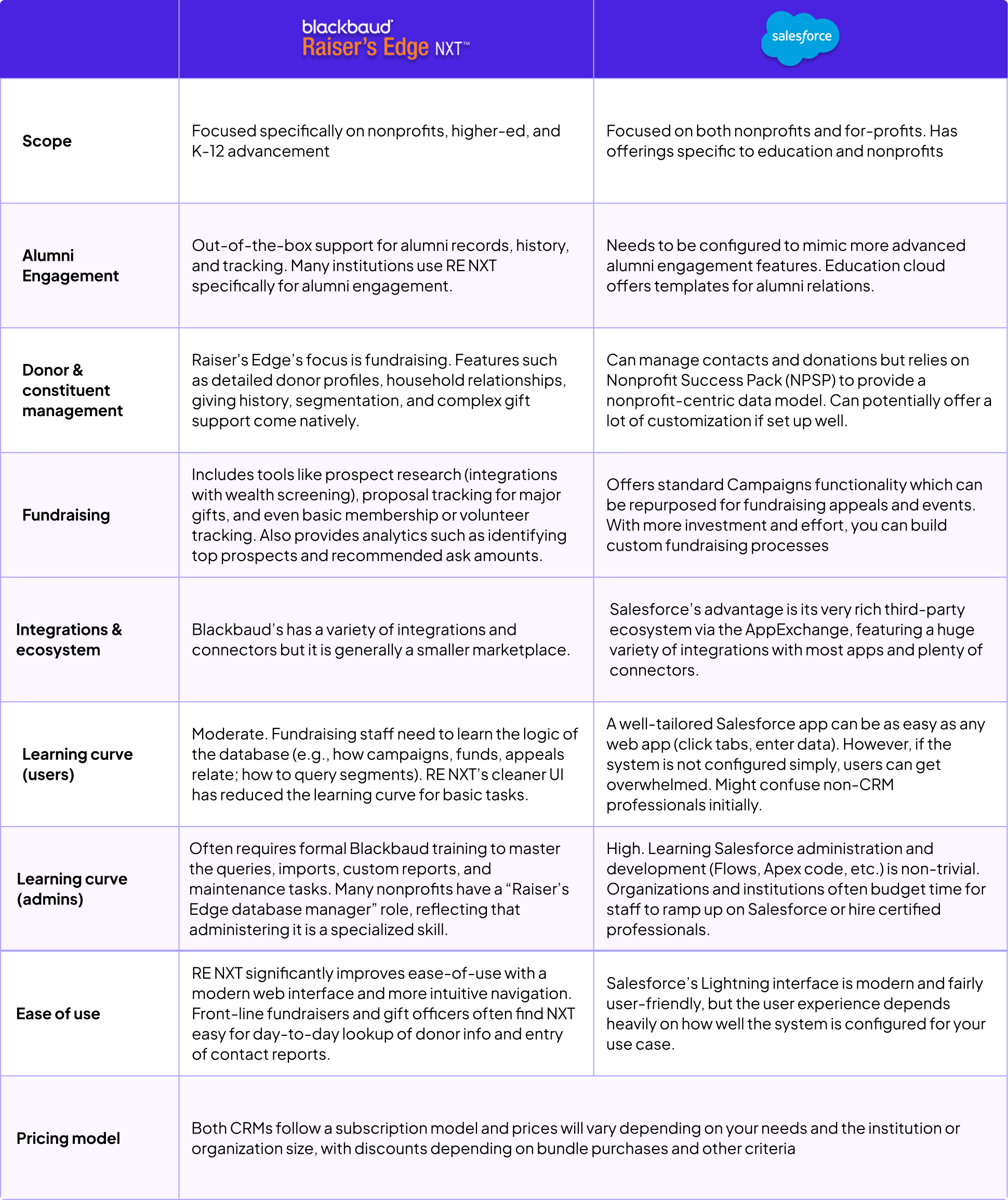
RE NXT is undeniably a strong choice for institutions and nonprofits whose main goal is to manage constituents and raise funds without having to think about too many integrations. Blackbaud’s long-term experience in their specific niche means that teams can have incredibly deep processes and granular data for advancement needs.
On the other hand, Blackbaud’s more focused approach does mean that for-profits and teams looking for deep integrations with a wide variety of multi-industry tools may find Raiser’s Edge lacking in certain areas.
💡See how Almabase’s Raiser’s Edge NXT integration helped The Master’s Seminary automate its process and get 37% of its database updated in 45 days.
→ Learn more
Salesforce’s strengths lie in its ecosystem and the extensive customization it offers. If you have the time and resources to allocate to setting everything up properly and training staff, Salesforce can fulfill your advancement needs and your institution’s other needs, such as admissions, recruitment, student success, etc., pretty well.
On the flipside, Salesforce requires a lot of investment to bring out its true potential as integrations add up, and more people need to be assigned for maintenance.
The two choices essentially boil down to whether you are looking for a CRM specialized for advancement and fundraising or an all-in-one CRM that you can spend some time with to build your preferred CRM environment.
While both options offer great CRM functionality, Raiser’s Edge NXT, in our opinion, slightly edges it out as the go-to for teams focused solely on fundraising, constituent management, and engagement. When paired with a platform like Almabase, institutions unlock a new level of functionality for all their engagement, fundraising, and event management needs.
Regardless of which choice seems better for you at this point, it will require a huge chunk of your time and effort to migrate to any CRM, as well as investment and training to find all the integrations you need and get your staff up to speed with the respective environments.

Raiser’s Edge NXT vs Salesforce: Which CRM Works Best for Advancement?
Lorem ipsum dolor sit amet, consectetur adipiscing elit. Suspendisse varius enim in eros elementum tristique. Duis cursus, mi quis viverra ornare, eros dolor interdum nulla, ut commodo diam libero vitae erat. Aenean faucibus nibh et justo cursus id rutrum lorem imperdiet. Nunc ut sem vitae risus tristique posuere.
Alumni are among your institution's most valuable assets. They provide mentorship, career opportunities, financial support, and serve as natural, authentic brand ambassadors for your school. This, of course, depends on the extent to which they feel connected to their alma mater once they’ve graduated. But nurturing relationships is a complex undertaking, and especially so at scale. Keeping alumni engaged across multiple touchpoints like events, communications, giving, and career networking remains a persistent (as well as rewarding) challenge for advancement teams. The right alumni management software solves this by bringing engagement activity, fundraising, and community into a single system.
Choosing the right alumni management system cuts through the fragmentation that typically forces teams to stitch together multiple disconnected tools, and makes it easier to track which initiatives drive outcomes.
With so many options available, this blog compares the ten best platforms that could help you get there, based on your specific requirements.

Almabase brings alumni engagement and fundraising into the same workflow, connecting the activities between constituents and institutions. The platform builds interactions such as alumni events, email campaigns, or giving days into a shared engagement history rather than treating them as standalone features, giving your team a complete picture of constituents’ journeys.
Almabase’s engagement tools connect with your CRM seamlessly. Its TrueSync integration with Raiser’s Edge NXT supports two-way, real-time data sync, so information can move between Almabase and RE NXT without the recurring exports, imports, and manual updates that can come with managing separate systems.
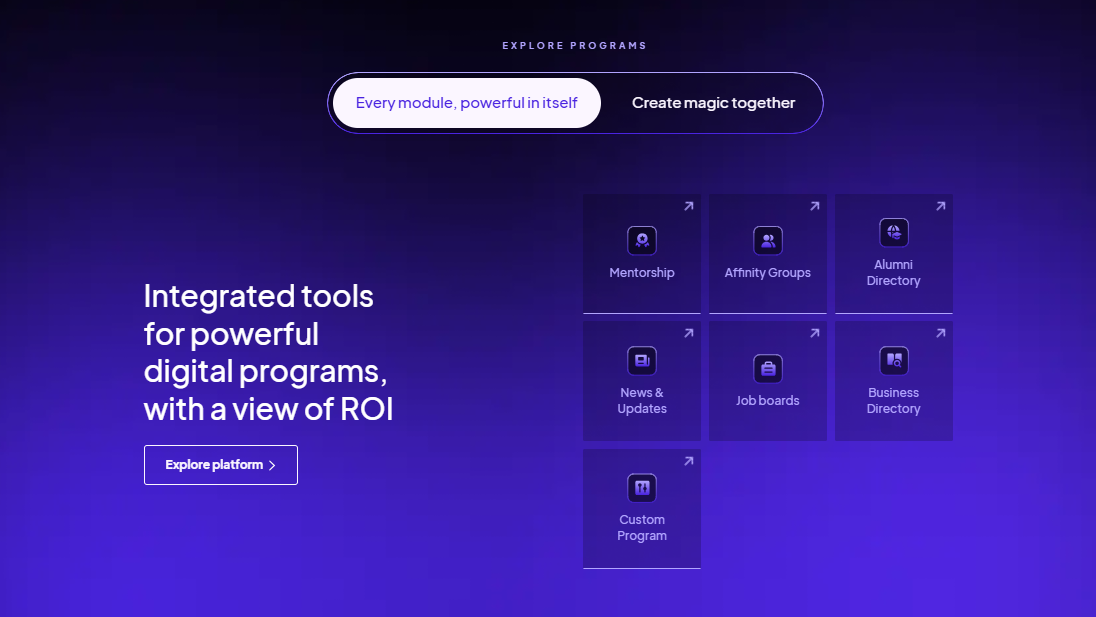
The platform also brings alumni-facing programs such as directories, mentorship, job boards, events, and email campaigns into the same environment. This means fewer disconnected tools and less work trying to piece together engagement data afterward for institutions running several of these programs at the same time.
That makes it relevant for teams of all sizes running all types of events: reunions, regional events, giving days, donor events, and ongoing alumni communications.
All of these features make Almabase particularly suited to advancement teams that want engagement activity and fundraising data to work together. It's also a natural fit for institutions already working in Raiser’s Edge NXT and looking to connect their alumni-facing activities more closely to their advancement database.
Pricing: Custom pricing based on institution size, requirements and alumni count.
EverTrue is a fundraising intelligence and donor engagement platform built to help advancement teams find better prospects, understand their constituents, and give fundraisers more context for their outreach. EverTrue sits alongside your CRM and enriches constituent records with engagement, career, social, and wealth information.
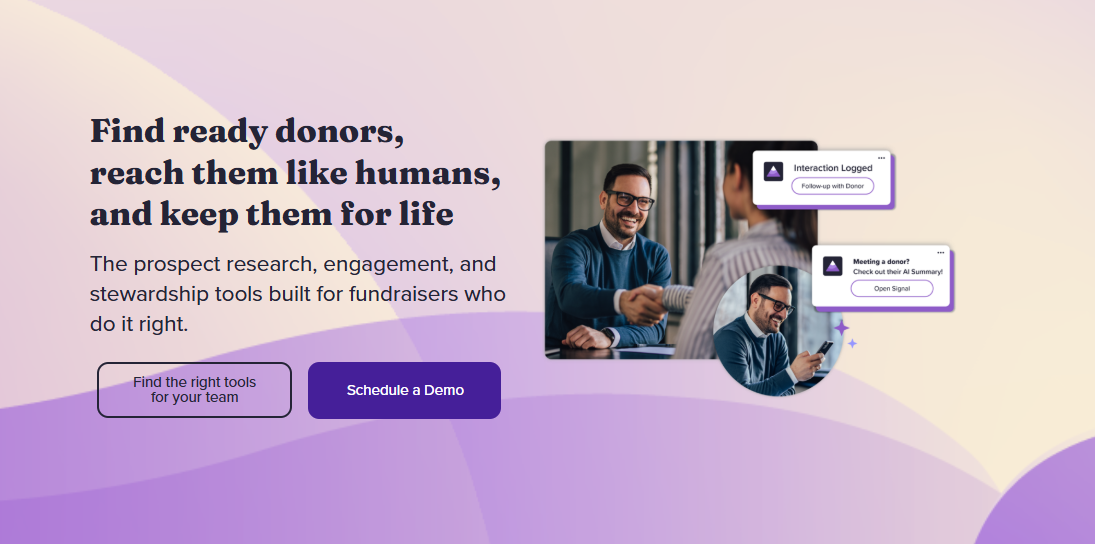
EverTrue brings a lot of external intelligence into constituent records. TrueView profiles can combine your existing CRM data with career changes, social media activity, donor interests, wealth indicators, and other signals, giving fundraisers a more current picture of the people they're trying to engage. The platform also supports prospect discovery, segmentation, mapping, and alerts to help teams identify people who may be worth a closer look.
It's a good fit when you already have a CRM you want to keep and need additional intelligence to help fundraisers identify prospects, prioritize portfolios, plan visits, and personalize outreach. However, it's less suited to institutions looking for a single platform to run their broader alumni engagement program.
Pricing: Custom pricing based on the EverTrue products and capabilities an institution selects. Estimates place the starting quote at about $5000 a year.
360Alumni brings together an alumni directory, networking, events, fundraising, mentoring, job boards, and email marketing in a single branded environment. Its focus is less on advancement operations and more on giving alumni a place to find each other, build connections, and participate in their alumni community.
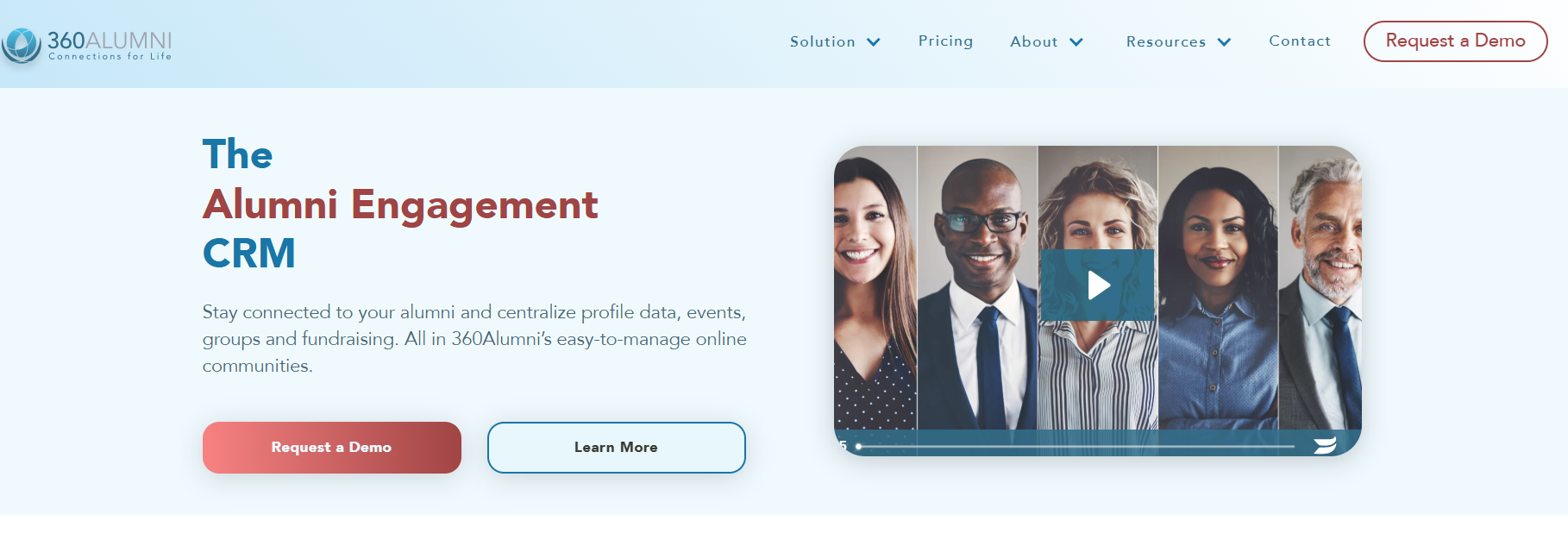
360Alumni stands out as being a more alumni-facing platform. It puts its interactive alumni directory and map at the center and makes it easy for users to search for other alumni by a range of metrics: location, profession, interests, and other criteria.
360Alumni is well suited for schools where an alumni directory, career networking, mentoring, and geographically based connections are all important parts of the engagement strategy.
Pricing: Custom pricing based on record count, with an initial setup cost and annual subscription. 360Alumni also charges a 3% credit-card processing fee plus a plan-dependent service charge on event ticket sales, donations, and membership payments.
Graduway is built around the idea of an alumni community as an active digital space, giving alumni a place to connect with each other as well as stay connected to their institution.
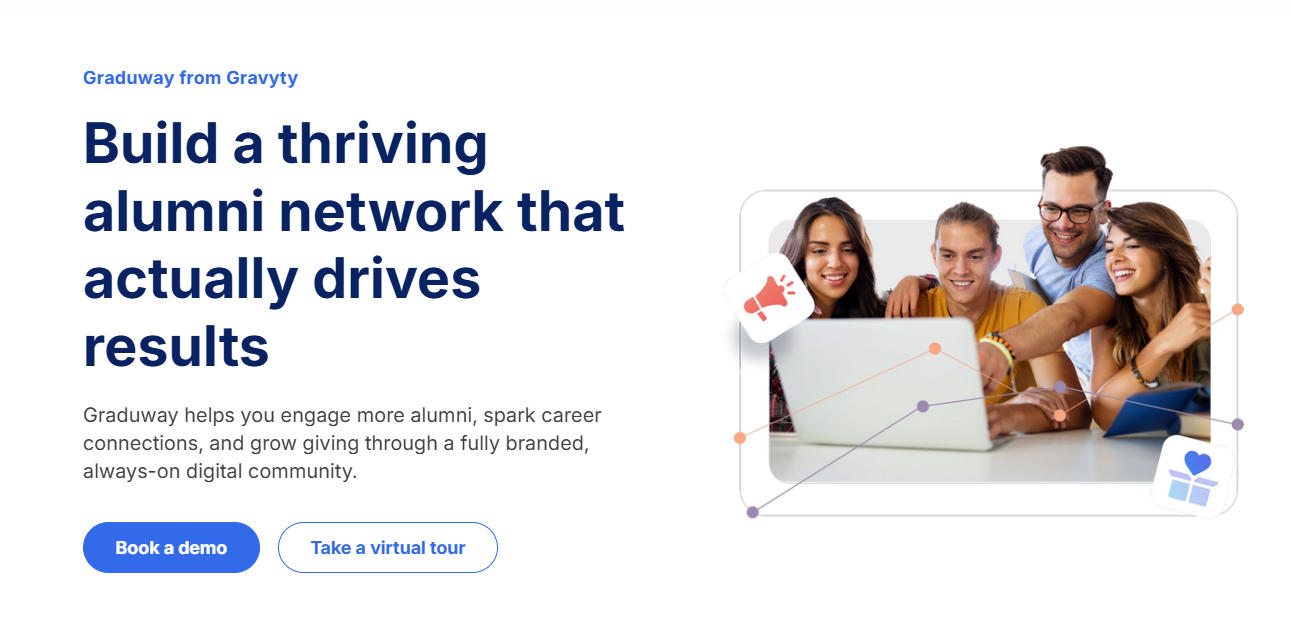
What sets Gravyty apart is alumni-to-alumni engagement. Alumni can connect with peers, participate in mentoring programs, join communities, and build professional relationships through the platform.
Graduway is particularly suited to institutions where community building, networking, and mentoring are central to the alumni engagement strategy. It's especially relevant for institutions with geographically dispersed alumni or large professional networks, where mentoring, career connections, affinity groups, and peer networking offer a major push to stay engaged throughout the year.
Pricing: Custom pricing based on the institution's requirements and alumni community size.
HiveBrite is a community platform designed for organizations that want more control over how their online communities look, work, and evolve. For higher education, it can bring alumni networking, groups, events, mentoring, career opportunities, and other engagement programs into a branded community environment.
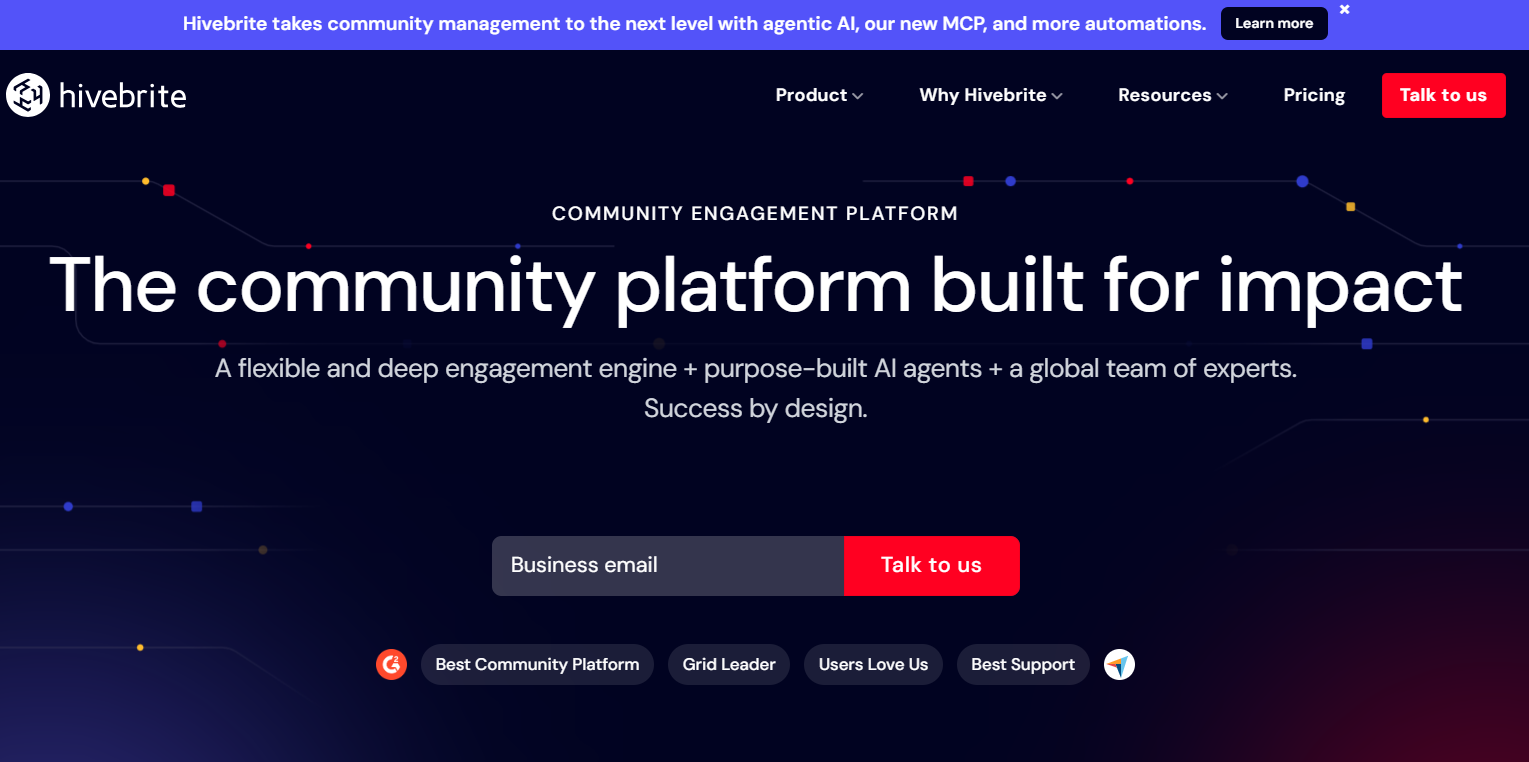
HiveBrite offers a good level of customization: institutions can shape member journeys, create different community spaces and permissions, customize the platform's design, and tailor experiences for different audiences.
The platform also supports events, groups, discussions, mentoring, career networking, and other community activities. Its multilingual capabilities and support for international communities make it relevant for institutions managing alumni networks across multiple countries and regions.
HiveBrite is particularly suited to larger institutions that want to build a highly tailored alumni community and have the resources to support implementation and ongoing administration.
Pricing: HiveBrite offers tiered and custom pricing starting at $895/month depending on the size and requirements of the community.
PeopleGrove is an alumni engagement platform built around helping institutions create stronger connections between students and alumni.
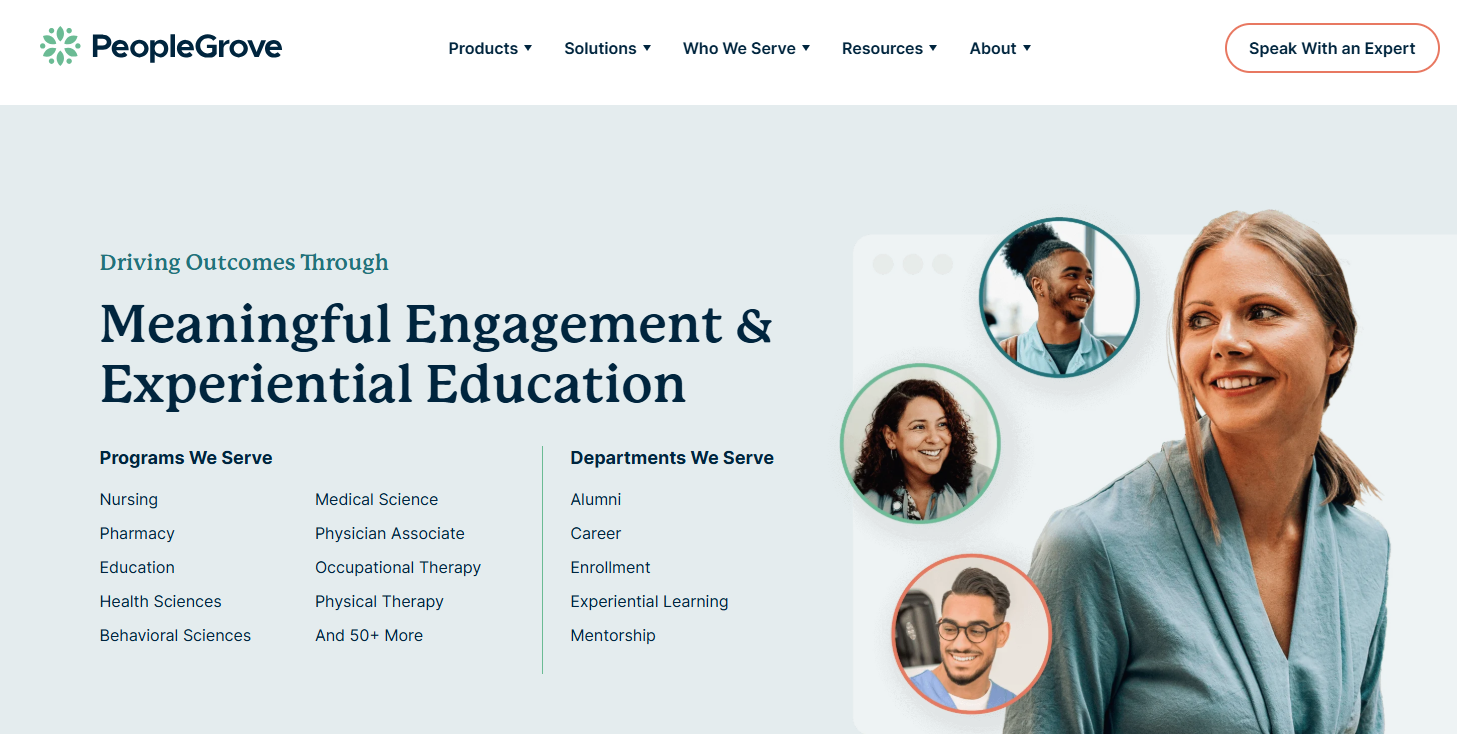
PeopleGrove particularly excels at structured program management. Teams can set up mentoring programs, match participants based on skills, interests, and goals, establish milestones, and track participation and outcomes. Rather than simply giving alumni a directory and letting them find one another, the platform gives institutions tools to actively shape how those connections happen.
The platform also enriches profiles with professional information from LinkedIn, helping you maintain more current information about where alumni work and what they do without relying entirely on manual profile updates. This information is useful when building targeted programs or helping users find relevant connections.
Pricing: Custom pricing offered based on the institution's requirements.
Encoura Encompass is a constituent engagement platform for higher education that brings website management, email marketing, event management, online giving, membership, and other alumni-facing functions into one system.
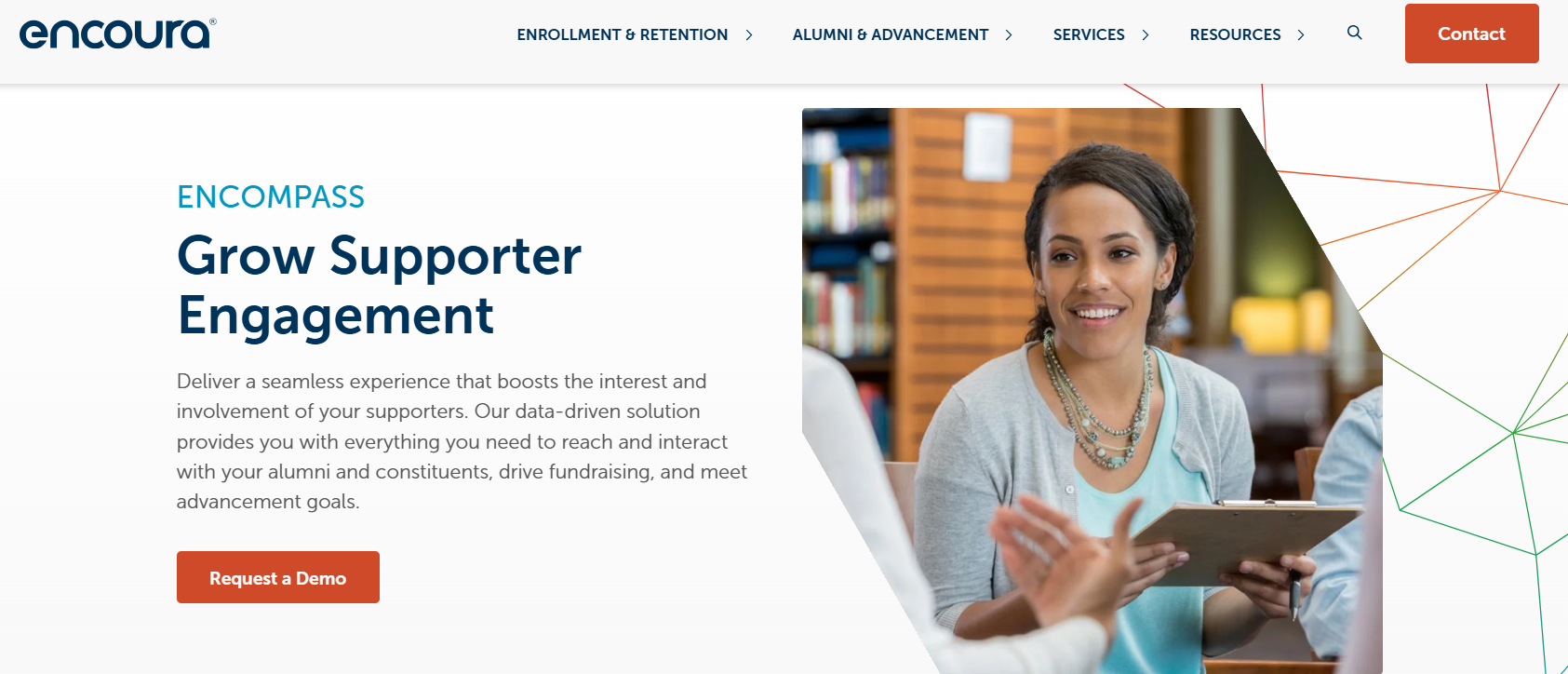
One of Encompass's biggest strengths is its breadth of constituent-facing functionality. Instead of using separate systems for an alumni website, communications, events, giving, and membership management, institutions can manage these activities through one connected platform. This breadth is particularly useful for institutions already working within the Anthology ecosystem.
For institutions evaluating it, the recent ownership transition is an important part of the conversation: Encoura acquired the service in 2026, so teams should evaluate the current product roadmap, support model, and integration plans alongside the platform's existing functionality.
Pricing: Estimate currently place pricing starting at $7,500 per year, but the platform does not publicly disclose its prices.
ToucanTech is an alumni and community platform that brings together an alumni database, website and portal, email marketing, events, fundraising, memberships, and career networking. Built specifically for schools and educational institutions, it aims to give teams a broad set of alumni engagement tools without requiring extensive technical configuration.
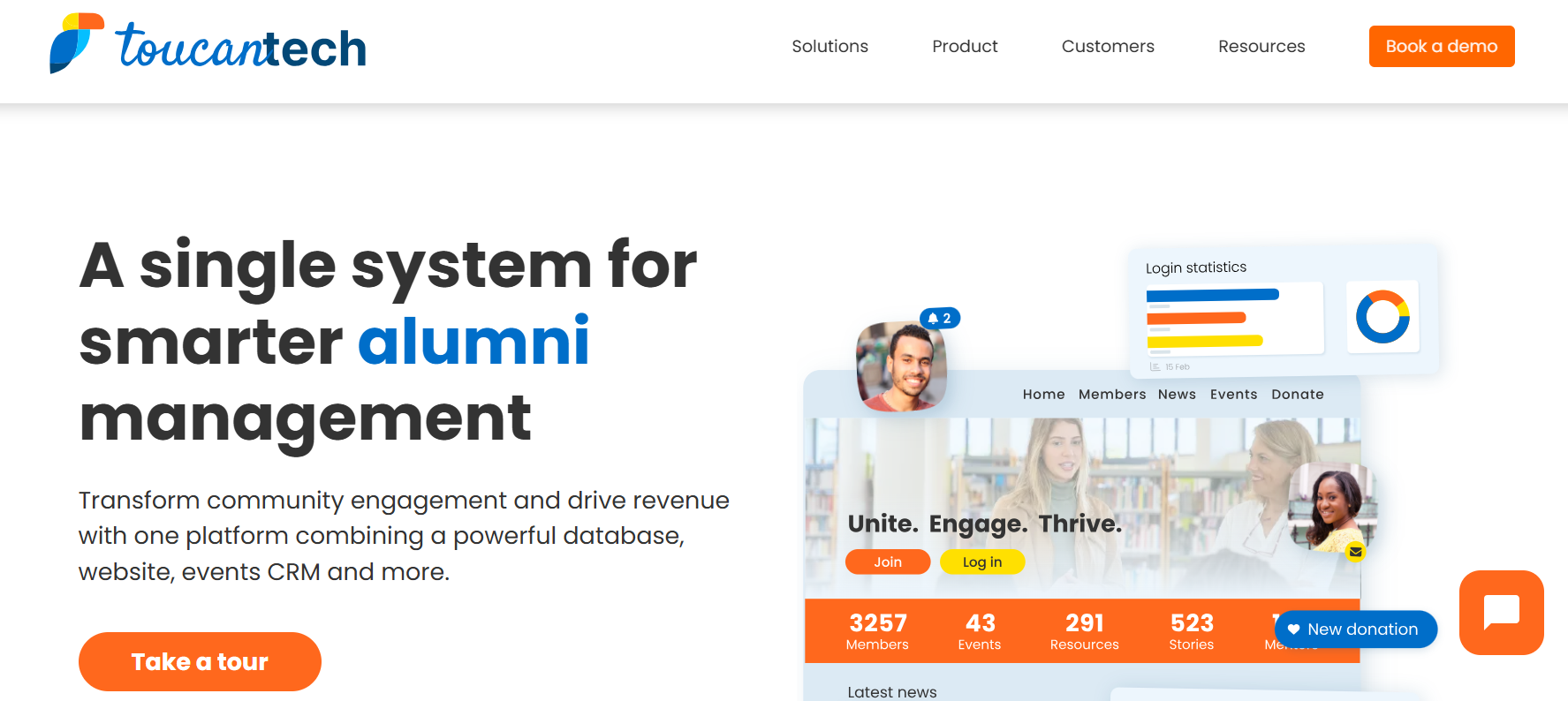
ToucanTech champions ease of use as one of its core principles. Users frequently highlight its intuitive interface and customer support. The platform also keeps common alumni activities connected. Event registrations, donations, communications, memberships, and constituent information can be managed within the same system, giving teams one place to work from rather than stitching together several point solutions.
It's a useful option for teams replacing a legacy alumni system, building a program with a relatively small staff, or looking to consolidate several alumni-facing tools into one platform.
Pricing: ToucanTech's core plan has a flat rate of $8,000 per year.
WildApricot is a membership management platform used by associations, nonprofits, and community organizations.
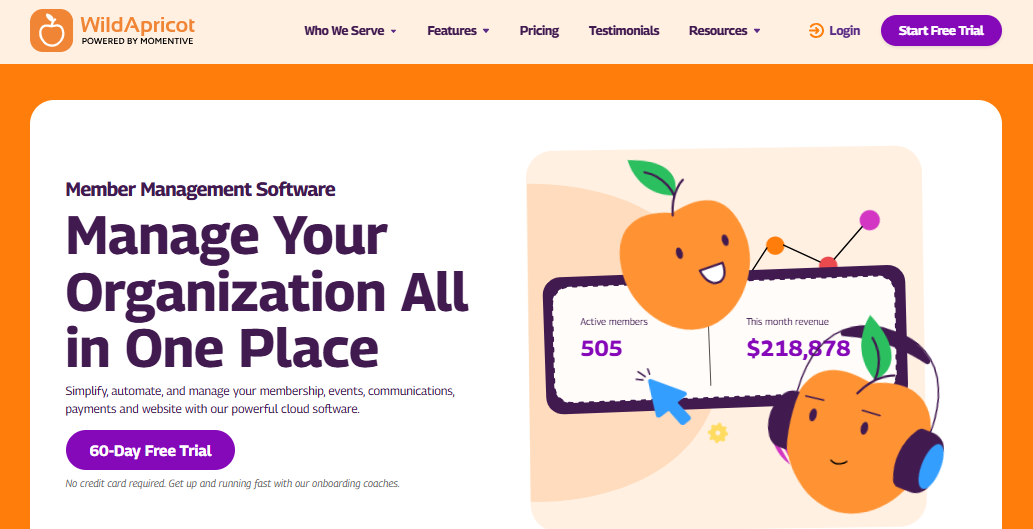
The platform sets itself apart with its straightforward pricing and setup. Unlike many enterprise alumni platforms that require a sales conversation before you can estimate costs, WildApricot publishes its plans based on the number of contacts you manage. It also offers a 60-day free trial, making it easier for smaller organizations to test the platform before committing.
The platform is also designed to be managed without extensive technical expertise. Teams can build a member-facing website, maintain a directory, create events, collect payments, and send communications from the same system.
WildApricot is a good fit for small alumni associations and organizations with simpler membership and event needs, such as maintaining a member directory, managing memberships, organizing events, sending communications, and collecting payments.
It may become less suitable as an institution's needs expand into larger and more specialized alumni engagement or advancement workflows.
Pricing: Plans are based on contact volume, starting at $63/month for 100 contacts and increasing with database size. WildApricot also offers a 60-day free trial.
GiveCampus is built around fundraising, alumni engagement, events, volunteer management, and frontline fundraising. As an engagement layer that sits on top of your CRM, it brings together constituent, gift, event, volunteer, and frontline fundraising data.
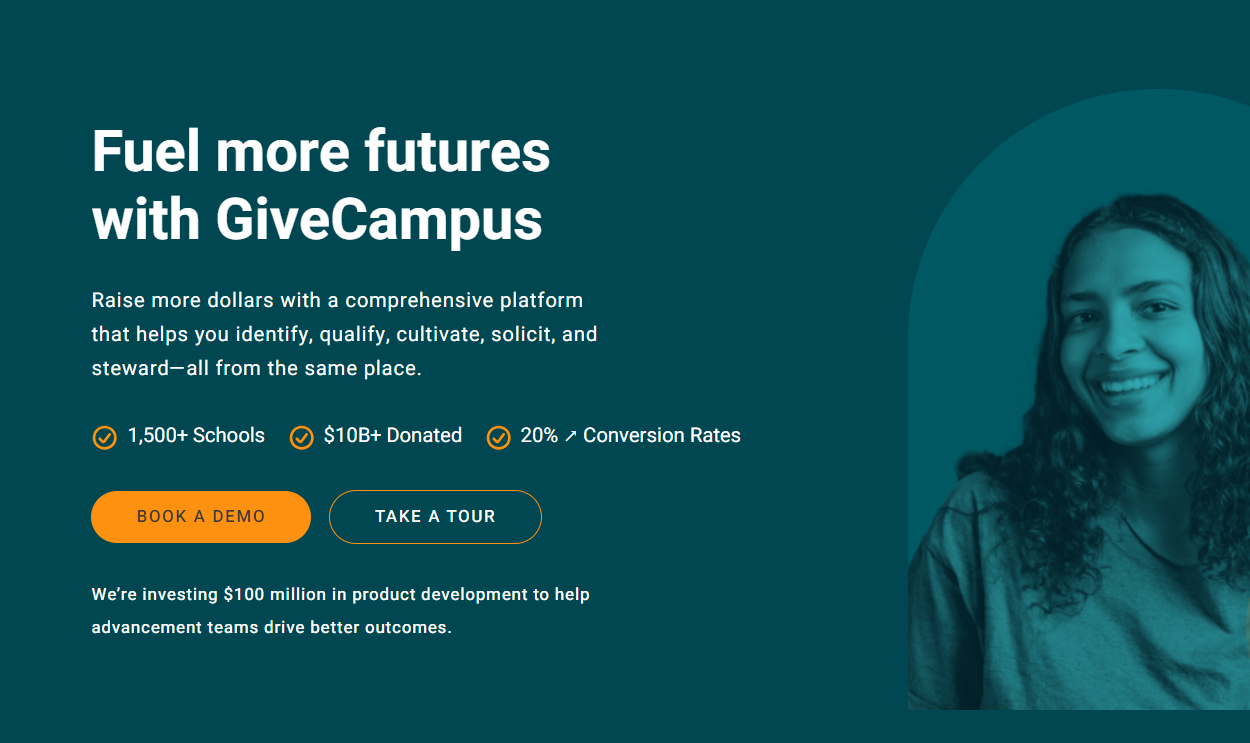
This is particularly useful for advancement teams that want events and alumni engagement to feed directly into fundraising workflows. GiveCampus also supports email and text outreach, volunteer management, and fundraising campaigns within the same ecosystem.
It's a strong fit for institutions running a lot of giving campaigns, reunions, alumni events, volunteer programs, and donor outreach from the same advancement operation.
It's less of a traditional alumni-community platform built primarily around directories, mentoring, or social networking.
Pricing: Custom pricing offered based on the institution and products selected.
There’s no single alumni management platform that will be the right fit for every institution. Think on the question of what you need the platform to do, and you’ll be able to approach the decision with much clarity.
If fundraising and advancement are at the center of your alumni strategy, look for a platform that can connect engagement activity with your CRM and give your advancement team useful donor context. Almabase and GiveCampus are worth a closer look here, while EverTrue makes more sense for teams that need deeper prospect and donor intelligence.
If your priority is building an active alumni community, Graduway and HiveBrite take a more community-first approach, with tools for networking, groups, mentoring, and member interaction.
For institutions where alumni-to-student connections, mentoring, and career engagement are a major part of the strategy, PeopleGrove is built around those programs rather than treating them as an add-on. And if you're looking for something simpler to get up and running, ToucanTech offers a broader set of alumni tools, but with less emphasis on extensive customization.
Before you start booking demos, definitely get clear on what your institution actually needs from an alumni management platform and what you can realistically expect from your budget, team, and existing tech stack. That’s exactly what we cover in our Alumni Management Software Buying Guide. It walks through the key features to evaluate, questions to ask vendors, implementation considerations, and how to compare platforms against your institution’s specific needs.
If you’re unsure what to prioritize, flipping through the guide before comparing vendors might help!
Choosing alumni management software is a big decision, especially when your team will be relying on it for everything from everyday alumni communications to major events and fundraising campaigns. Take the time to see how each platform handles your actual workflows, what implementation involves, and how well it works with the systems you already use.
Almabase is worth exploring if bringing alumni engagement and fundraising closer together is a priority. It brings events, communications, giving, and alumni data into one platform, with CRM integrations to reduce manual work for your team. 🤗
You can read more about what makes Almabase a good alumni management software and how it supports different alumni programs.
Ultimately, the goal is to find the platform your team can comfortably use, your alumni will want to engage with, and your institution can continue to rely on as its programs grow.
Request a demo today to see how Almabase can help your institution nurture deeper relationships with your alumni. 💜

An institution can get by with spreadsheets and basic CRM functions, but a dedicated alumni management software makes a huge difference when you need to map engagement, personalize communications, giving, and complex events. So while not always necessary, it becomes almost essential as an institution scales its alumni management efforts.
There’s no single best option for every institution. The right platform depends on your goals, existing technology, budget, and whether you need deeper capabilities or customizations. Ultimately it’s about finding the right fit for your requirements.
Pricing varies widely depending on the platform, number of alumni, and features you need. Some platforms offer tiered pricing, while others use custom pricing based on the institution’s requirements.
Free tools can work for institutions with smaller alumni programs or straightforward needs, but they often come with limits on features, users, data, or customization. If your programs are growing, paid software may offer more room to scale.
You might find the terms being used interchangeably, but an alumni platform usually focuses on the alumni-facing experience, while alumni management software could also include the operational side, including data management, events, communications, and fundraising.

The Best Alumni Management Software in 2026
Lorem ipsum dolor sit amet, consectetur adipiscing elit. Suspendisse varius enim in eros elementum tristique. Duis cursus, mi quis viverra ornare, eros dolor interdum nulla, ut commodo diam libero vitae erat. Aenean faucibus nibh et justo cursus id rutrum lorem imperdiet. Nunc ut sem vitae risus tristique posuere.
Almabase
April 20, 2026
12 minutes
%201.svg)
%201.svg)
%204.svg)



.svg)