Take a peek at some fundamental tips on engaging your event attendees to turn them into loyal supporters and long-term donors for you institution or cause.

Kalyan Varma
Updated:
April 16, 2026

Summary
• Send a personal thank you within 24 hours: This immediate, personalized outreach, perhaps a quick video or text, makes event attendees feel truly valued and is critical for maintaining post-event momentum.
• Capitalize on the event buzz: Share highlights on social media within two days to extend the event's reach and reinforce community, acting as both a cherished memory and a powerful promotional tool for future engagement.
• Gather feedback and listen carefully: Sending a short survey within five days helps you understand alumni interests and philanthropic passions, providing valuable data for personalized future appeals and building trust.
• Offer continued value beyond the event: Keep alumni engaged by delivering segmented resources or opportunities relevant to their life stage, like career webinars or mentoring, keeping your institution top of mind.
• Make a targeted ask at the right time: Direct alumni to a customized giving page that aligns with their interests, showing how their gift can make a tangible difference and converting engagement into lasting donor participation.
While a well-attended alumni event is a victory in itself, the true value for an institution lies in what happens next. The ultimate goal of alumni engagement is to foster a relationship that translates into lasting support, and events are a powerful catalyst in this process. Research confirms a strong correlation between event attendance and giving; according to RNL's 2024 National Alumni Survey, alumni who participate in events are 2.5 times more likely to donate compared to those who don't attend.
This makes the immediate post-event period an unmissable window of opportunity for advancement teams. Yet, it’s all too easy for that momentum to dissolve as everyone’s fatigued from planning and executing the event to immediately start work on the next.
While there’s no one-size-fits-all approach in fundraising or alumni relations and each institution’s culture and alumni base is unique, here’s a simple, actionable playbook that’s helped advancement teams like yours keep alumni engaged and turn great events into deeper commitment and support. Adapt, personalize and experiment while keeping these simple tips in mind as a flexible foundation.
.avif)
Step 1. Send a Timely Personalized Thank You (within 24 hours): A timely, personalized thank-you message makes attendees feel valued. A video message is better than a generic email. Even just a quick video shot on phone can be a great personalized touch. Consider using texting as an alternate channel to email. Aim to send these out to all attendees within 24 hours of the event.
✉️Email Template
Subject: Thank you for joining us at [Event Name]!
Hi [First Name],
Thank you so much for being a part of our recent [Event Name]! Your presence made the day truly special for everyone at Example University.
We loved having you back on campus (or seeing you virtually) and hope you enjoyed reconnecting with classmates and friends.
If you have a moment, reply to this email and tell us your favorite part of the event. Thanks again for being such an important part of the Example University family.
Warm wishes,
[Your Name]
Advancement Team, Example University
📽️Video Script Template (30–45 seconds):
Hi [First Name],
I’m [Your Name] from Example University.
I just wanted to send a quick note of thanks for joining us at [Event Name] here at Example University. It was so wonderful to see you reconnecting with classmates and enjoying the [mention a highlight—e.g., keynote, activity, or fun moment].
Your presence made the day truly memorable for us. We’re grateful to have you as part of our alumni family and look forward to staying connected.
Thanks again for being with us—and see you at the next one!
Take care.
📱Text Message Template
Hi [First Name]! This is [Your Name] from Example University.
Thank you for joining us at [Event Name]—it wouldn’t have been the same without you. Hope you had a great time! If you have any photos or favorite moments to share, just reply to this message.
Step 2. Share Event Highlights on social media (within 2 days): Capitalize on the post-event buzz by sharing photos, video clips, and testimonials across your digital channels. Tagging attendees (with permission) and encouraging them to share their own content extends the event's reach and reinforces the sense of community. This visual recap serves as both a fond memory for attendees and a promotional tool for future events.
Step 3. Ask for feedback and listen (within 5 days): A couple of days later, send a short survey to gather feedback on the event experience. In addition to questions about logistics and programming, include a question to gauge their philanthropic interests, such as, "Which university initiatives are you most passionate about supporting?" This provides valuable data for future, personalized fundraising appeals. Showing alumni that you are acting on their feedback builds trust and makes them feel heard.
✉️Email Template
Subject: Help us make your next Example University event even better
Hi [First Name],
We’d love your feedback! Your experience matters to us and helps shape future events at Example University.
Would you take 2 minutes to fill out this quick survey? ([Survey Link])
P.S. Is there a cause or program at Example University that inspires you? Let us know at the end of the survey—we want to make our alumni programs even more meaningful for you!
Thank you so much for your input,
[Your Name]
Advancement Team, Example University
Step 4. Offer them value (following week): Go beyond the event by actively connecting alumni to resources, programs, or information relevant to their interests and life stage through segmented, personalized communication. For example: graduates of the last decade might appreciate career development webinars, mid-career alumni could be interested in industry networking or continuing education, while older alumni may enjoy mentoring opportunities or exclusive campus updates. Curate and deliver value based on what each group cares about most, keeping your institution top of mind beyond just the event.
Email Template
✉️ Subject: Stay connected - opportunities just for you
Hi [First Name],
At Example University, we want to be part of your journey—no matter where life takes you!
Here are some ways to stay connected this season:
• Recent grads: Join our next career development workshop ([date/link])
•Mid-career alumni: Register for our professional networking series
•Senior alumni: Discover volunteer and mentorship opportunities
Check out more events and exclusive resources here: [Link]
Let us know how you’d like to be more involved. We’re excited to grow with you!
Best regards,
[Your Name]
Advancement Team, Example University
Step 5. Make an ask (a few days later):
Don’t let the momentum fade—when the time is right, invite alumni to take the next step with a targeted ask. Direct them to a customized online giving page that reflects the theme or purpose of the event (for example, supporting scholarships if the event honored student achievements). Personalize the ask based on what you’ve learned about their interests and past engagement, wherever possible. Show them how their gift—large or small—will make a tangible difference in a cause that resonates with them. It’s also particularly useful for those that have made a donation in the past to be acknowledged again.
✉️Email Template (for those who have never made a donation to your institution)
Subject: Continue the [Event Name] Spirit—Support What Matters to You
Hi [First Name],
Thank you for your continued connection to Example University.If you were inspired by [highlight/story from event] and want to help [cause/theme, e.g., “future students achieve their dreams”], I invite you to visit your personal giving page: [Custom giving link]
No gift is too small—your generosity makes all the difference! Thank you for being a champion for Sample University.
With appreciation,
[Your Name]
Advancement Team,
Sample University
✉️Email Template (for those who have made at least one gift before)
Subject: Continue the Legacy - Support [Initiative/Event Theme] at Example University
Hi [First Name],
We’re so grateful for your past generosity and for joining us at [Event Name]. Your support has already created new opportunities for our students and campus community.
Because you care deeply about [previous fund/support area or reference their prior gift if possible], we wanted to let you know about a special opportunity to make an even greater impact. This time, your support for [specific initiative or theme connected to event] can [briefly mention anticipated outcome, e.g., “help award five new scholarships”].
If you’d like to continue your tradition of giving, you can make your gift here: [Personalized Giving Link]
Thank you again for everything you do for Example University. Together, we’re building a legacy that lasts for generations.
With gratitude,
[Your Name]
Advancement Team,
Example University
Almabase’s guest communication tools allow you to create personalized emails for all your post-event engagement needs.
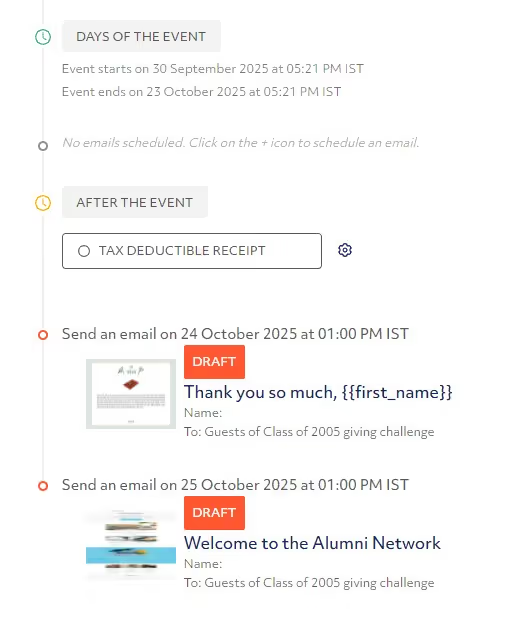
The events module allows you plan your email communications ahead of time, leading to an automated yet personalized experience for your attendees before, during, and after your event.
Our recently introduced Emily AI also allows you to effortlessly craft amazing emails with just a few prompts in minutes. Perfect for when you’ve got your attendee segments in place and want to focus on cultivating your relationships with donors and attendees from past events without the hassle of designing emails from scratch.
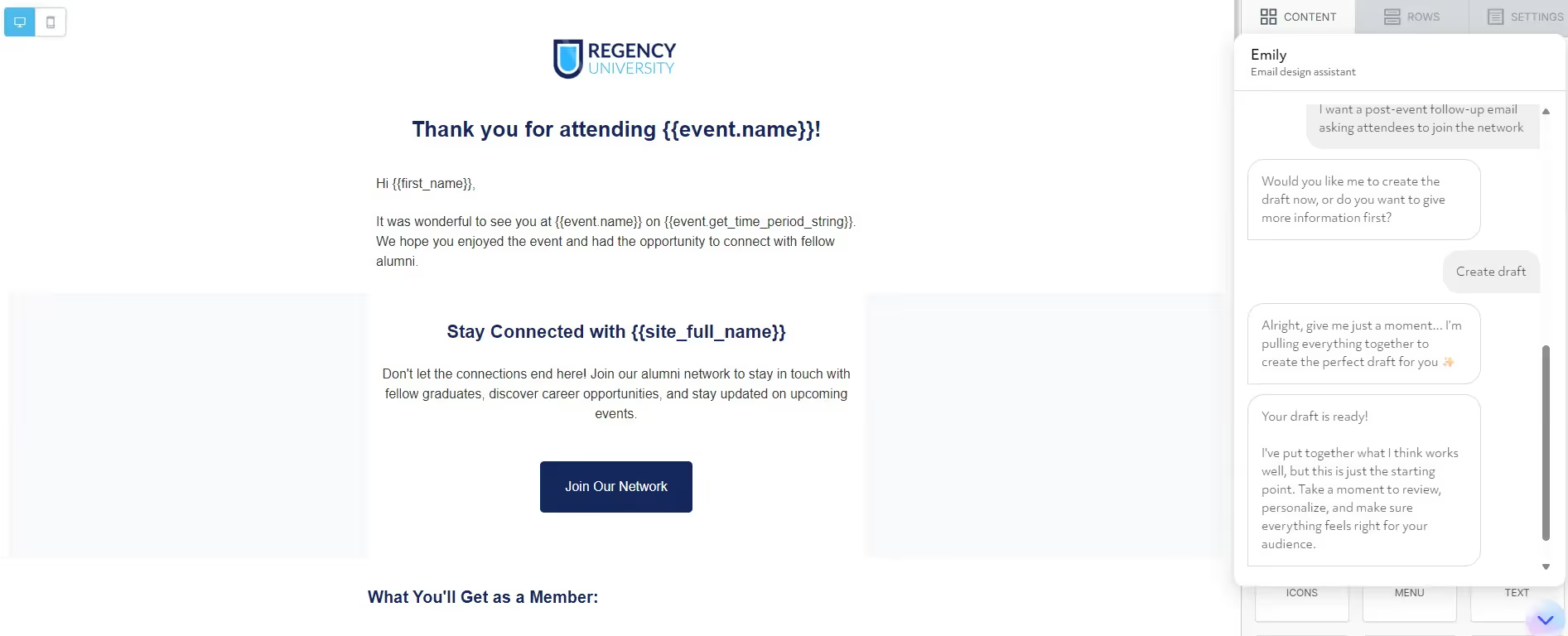
Almabase also allows provides text and video messages, making your update alerts and storytelling efforts as streamlined or meticulous as you need them to be. Almabase offers a great toolbox to help you get started with post-event engagement. This is just a very brief glimpse at what Almabase has to offer, and combined with streamlined engagement reports, consent collection, and native two-way data sync with Raiser’s Edge NXT (RE NXT).
Remember, even a simple, thoughtful follow-up can set your institution apart and turn meaningful moments into lasting relationships. By adapting this playbook to fit your alumni community and celebrating what makes them unique, you’ll not only increase engagement and support, but also foster a true sense of pride and belonging. Start small, keep it genuine, and you’ll be amazed by the connections and generosity that follow.
Subscribe
See how modern advancement teams bring alumni engagement and fundraising together.
Plan faster. Execute better
Explore free templates designed for alumni and fundraising teams.
.png)

.avif)
Kalyan Varma
Alumni events have evolved throughout the decades and have taken many forms to become the powerful touchpoints that strengthen engagement, loyalty, and fundraising that we know them for today.
Their importance has only grown for advancement teams looking to fundraise and engage alumni. For example, the University of Delaware partnered with Blackbaud to refine its event-driven outreach and reported a 43% increase in fundraising dollars. It’s a reminder of how events stay at the heart of alumni experiences and drive both engagement and fundraising simultaneously.
Today, we’re going back to the basics and looking at why events continue to be at the heart of advancement teams and what they bring to the table today.
Advancement professionals generally consider events as the most effective activity to engage alumni. In-person gatherings in particular offer the irreplaceable value of face-to-face connections, while hybrid formats make it possible for alumni across the globe to join in. Together, these formats keep communities active and connected in ways that emails or newsletters alone can’t achieve.
A well-planned alumni event often becomes the spark that triggers mentorship drives, giving, and the gradual growth of your constituent community. They serve as anchors in the alumni journey, offering memorable moments that fuel long-term engagement and creating touchpoints that keep alumni coming back.
Here are 10 key benefits of alumni events in 2026, each showing how the right strategy can turn a simple gathering into a lasting impact for your institution and community.
The true mark of an alumni program is when events evolve from being occasional highlights to becoming part of the institution’s culture. Alumni who attend one event and have a positive experience are more likely to show up for the next, to mentor a student, to make a gift, and to stay connected in between. Over time, these small touchpoints compound into lifelong support, and mutual support is crucial for building communities.
Events have become cultural community touchstones that are both natural and enduring, creating a culture that grows stronger with every gathering. This is why alumni events today are both a great opportunity as well as an important responsibility.
When alumni attend a reunion, regional mixer, or even a casual alumni picnic, they’re showing they still feel connected to the institution. That act of participation often becomes the first step toward giving back. Engaged alumni are naturally more likely to become donors.
By creating an inspiring and positive atmosphere, you can motivate alumni to give back. Whether it’s through a direct fundraising appeal during the event or as a follow-up, a well-executed gathering often leads to a significant increase in contributions.
Events are a natural setting for pairing seasoned professionals with recent graduates or current students. The conversations between professionals and current students or recent graduates can often lead to internships, referrals, or ongoing mentorships that wouldn’t happen through online platforms alone.
For students and young alumni, meeting someone who once sat in their classroom but is now established in their field is motivating. For senior alumni, offering advice strengthens their pride in the institution and renews their connection to the community. Both sides walk away with value.
Enthusiastic and successful alumni are your best ambassadors. When prospective students and their families see a thriving alumni network, it serves as powerful social proof of the institution's value. Alumni can share their positive experiences and career successes, making a compelling case for why your institution is an excellent choice.
Every successful alumni event is a public relations opportunity. Positive social media mentions, photos, and testimonials from attendees amplify your institution's brand and showcase a vibrant, active community. This positive exposure can attract prospective students, impress stakeholders, and solidify your institution's reputation as a place that cares for its community long after graduation.
For many alumni, professional networking is a primary reason to attend events. By connecting individuals from various industries and career stages, you provide a valuable resource for career development and mentorship. Facilitating these connections not only benefits your alumni but also positions your institution as a hub for professional growth, enhancing its reputation.
Activities and features such as flash mentoring, corporate matching gifts, and networking-specific events and online communities are great ideas to make both prospects and professionals feel appreciated.
Every institution has a segment of alumni who have lost touch. Your institution can attempt to re-engage these segments. A compelling milestone, tailored reunion, or a unique themed gathering, can be the perfect excuse to re-establish contact. By offering an experience they don't want to miss, you can bring lapsed members back into the fold and remind them of their connection to the institution.
An alumni event is the perfect stage to unveil new campus developments, academic programs, or research breakthroughs. Bringing alumni back to campus allows them to see the tangible results of their past and future support. This transparency builds trust and excitement, making them more likely to stay involved and contribute to future projects.
Events offer a direct line to your alumni. Informal conversations and structured feedback sessions can provide honest insights into what your alumni want and need from your institution. This information is gold for refining your engagement strategies, academic programs, and communication efforts, ensuring they remain relevant and impactful..
While alumni increasingly prefer smaller affinity-based events and reunions, there is great value in fostering engagement between different generations through your events. While this mostly comes through major events such as family weekends and homecomings apart from the obvious mentorship-related events, you can tailor events to mingle specific segments to promote a sense of community among different generations.
These multi-generational connections ensure that alumni don’t just stay tied to their classmates, but to the broader community itself.
The alumni events that stand out today are the ones that feel intentional. It’s not about how big the guest list is, but how well the event reflects the needs of your community. A small, personalized dinner can often create more impact than a large formal gala. Adding hybrid access for those who live abroad, collecting fresh alumni data at check-in, and following up with clear impact reports are simple shifts that transform events from “one-off memories” into long-term engagement drivers.
We’ve prepared a simple checklist that covers the basics you should look out for when planning your next event. Have a look:
Set the Purpose
Pick the Right Time & Place
Budget with intention
Design the Experience
Spread the Word
Welcome with Warmth
Keep Energy Flowing
Support Behind the Scenes
Capture the Magic
Share, Listen & Learn
Reflect & Refine
Hopefully, this blog helped you revisit and re-appreciate the wonderful cornerstone of advancement and alumni relations which is the alumni events. Even the most experienced teams sometimes need to take a step back and look at the rudimentary reasons why these events happen in the first place to help them approach their next event with fresh ideas, which is what this blog was meant to do.
That being said, if you’re looking for a partner to help you and your institution/organization set up your next alumni event and make it a big success, feel free to start a conversation or request a personalized demo with us and we’d love to get in touch!
A successful alumni event has clear goals, provides tangible value to attendees (like networking or learning opportunities), is well-organized, and is effectively promoted to the right audience. Post-event follow-up is also crucial for maintaining momentum.
Measure ROI by tracking metrics tied to your event goals. These can include attendance numbers, a survey of attendee satisfaction, the number of new volunteers or mentors, and the amount of donations raised. Tracking website traffic to alumni pages or social media engagement around the event can also provide valuable data.
Popular ideas include traditional homecomings and reunions, professional networking nights, industry-specific panels, family-friendly picnics, virtual workshops or webinars, and exclusive gatherings for major donors. The best idea will depend on your specific alumni base and institutional goals.

10 Key Benefits of Alumni Events in 2026
Lorem ipsum dolor sit amet, consectetur adipiscing elit. Suspendisse varius enim in eros elementum tristique. Duis cursus, mi quis viverra ornare, eros dolor interdum nulla, ut commodo diam libero vitae erat. Aenean faucibus nibh et justo cursus id rutrum lorem imperdiet. Nunc ut sem vitae risus tristique posuere.

Sharada Koti
September 18, 2025
12 minutes

Fundraising is a necessity for any school to support its educational activities.
It seems you can never fundraise too much or accept too many donations, but you don’t want to bore your supporters with the same fundraisers year after year. Is your school tired of the same old fundraisers and looking for new ideas that are guaranteed to work?
Your search ends here! Follow these 7 proven fundraising ideas for schools to raise money for your students:
1. Walkathon
2. Partner with a local restaurant chain
3. Multicultural fair
4. Car wash
5. Coffee Drive
6. Trivia Night
7. Envelope Fundraiser
Want something focused specifically on fundraising for private schools? Look to DonorSearch’s 5 Steps to A+ Private & Independent School Fundraising.
Read on to boost your mentoring skills and learn about these school fundraising ideas!


Typically annual, a walkathon event is a long-distance walk meant to fundraise for a cause.
Walkathons are usually encouraging and successful events because they support:
1. Health: All participants walk around your designated course, encouraging a healthy habit.
2. Community: Usually hosted on a public field or in a public park, walkathons are open to the public for the most exposure and therefore, evoke a sense of community and develop relationships as they bring people together.
3. Accessibility: Participants will be at different levels athletically, and that’s fine. Some will be participating to challenge themselves, and some will just be participating for fun. The more the merrier.
4. Affordability: Walkathons are fairly inexpensive fundraising events.
Pledges are placed on participants and how far they’re able to walk the day of the event. For example, if Sabrina pledges $5 for every mile Alex walks and Alex walks 7 miles, you’ve raised $35 for your school.
There’s a list of things to do when organizing your walkathon event.
1. Determine a location. You’ll need to decide if you want a course that gets you from Point A to Point B or a circular course that starts and ends at Point A, a straight course or a circuit course, respectively.
2. Pick a date and rain date. Make sure you pick a date in a warmer season, but not a hot one. Try May instead of August. And select a rain date, just in case!
3. Recruit sponsors. Approach previous gala sponsors to see if they’d like to run tents or water stations.
4. Promote your event. You can look into merchandise providers to customize your own t-shirts and water bottles. Promote your event through flyers and word-of-mouth, as well.
For a more extensive description on organizing a walkathon, check out Booster’s walkathon guide.

There are plenty of restaurants that partner with schools and educational clubs to help create awareness and raise money. These restaurants will have school fundraising nights, during which a portion of the sales from the night are donated to the school.
Everyone has to eat. The partnership between restaurants and your school converts a daily task into a charity event.
All you have to do is:
1. Pick a participating restaurant. Many fast food places like Chick-fil-a or Moe’s Southwest Grill have fundraising programs. Just contact your local restaurant for more information. Be sure to check with your local small-business restaurants, too! Many of their owners’ kids have gone through your school system and will be open to help you fundraise.
2. Promote the night. Send out email blasts, create flyers, even make t-shirts, if you’d like. Your fundraiser’s success will depend on your dedication to promotion.
Turn your community’s next good meal into a successful fundraising idea by partnering with a restaurant!

A multicultural fair allows students to showcase their heritage and learn about their peers’ heritage.
Students get a chance to perform cultural demonstrations and sell their culture’s products and food. On top of being a great fundraising opportunity and satisfying the mentor in you, it’s educational and a fun way to immerse the students in different cultures.
There’s a bit of planning that goes into organizing this fair:
1. Pick a location. This fair will be easiest if you have an accessible field if weather permits. If it doesn’t, try a gymnasium.
2. Set a date. If it’s outside, choose a rain date, too.
3. Recruit students to participate. Start a discussion and sign-up sheet to see which students would like to hold a booth at the fair. Ask which foods they’ll be making and selling and which cultural performances they’d like to display.
4. Promote! Post flyers. You might try to schedule the fair during lunch periods to reach the most students and/or during the evening to reach parents, too.
No matter what, make sure your students will have fun during the event–they need to be excited enough to sell and excited enough to learn.

Your school can put together a group of students to organize a car wash. Besides being a quick and simple fundraising idea, it gets your students outside (and away from tablets, phones, and the tv).
A car wash is an easy fundraiser to set up. Plus, everyone needs the pollen rinsed off their cars in the spring so who can pass up just $5 for a car wash?
There are just a few basic planning steps before you hold your car wash:
1. Pick a location. The school’s parking lot is probably your safest bet, just make sure it’s close to a hose!
2. Gather the materials. You need minimal supplies for this event. Invest in some soap, sponges, towels for drying, buckets, and of course, make sure you have a hose!
3. Promote and Advertise. Charge $5 per car and spread the word. You can advertise the day off by having students holding signs at the closest busy road.
Now that you have everything to start, pick a sunny day and hold your fundraiser.

With 83% of American adults drinking coffee, a coffee drive is bound to be a successful fundraiser. Partnering with a fair trade roaster can let you sell both packaged coffee beans and hot cups of joe.
Your students can sell beans to their peers, family, and others, while your school sells cups of coffee during lunch periods. Local coffee shops may partner with you and sell your school coffee at a discounted rate.
You’ll need to find a wholesaler to work with. Do your research and decide which blends at what prices work for your school’s community. Once you’ve found a supplier, all that’s left to do is promote and sell!
Get the word out and recruit students to sell.
Depending on how you want to organize sales, you can have students directly sell the product or keep a sales and orders sheet, like how girl scouts sell cookies.
Be sure to plan out your fundraiser and promote your coffee drive!

A trivia night will spark a friendly sense of competition among your students. You can have students register as teams or individuals.
Again, this fundraiser brings your students together to form a community. It works because who doesn’t love a little bit of rivalry and healthy competition?
Pick a location to host your trivia night. Your school’s gymnasium is a great option, but you can always try to partner with a local restaurant for space.
Make sure you have a plan for advertising and promoting your event to draw a crowd! Charge a small admission fee to trivia teams who want to compete. Plan out how your trivia game will start and finish. You don’t want an unorganized game.
Your trivia night can easily be an exciting and successful fundraiser as long as you plan ahead and organize.

An envelope fundraiser is a super inexpensive and simple way for your school to raise some extra dough. You’ll need 100 envelopes numbered 1 through 100, which you can easily find in your school’s office. Then, supporters who pass by the envelopes will choose one and donate that amount. For example, if Sally picks up envelope 13, she’ll give $13.
Easy, easy, easy. A fundraiser can’t get much more simple than this one. Plus, the envelope fundraiser doesn’t pressure supporters to give!
Get a pack of 100 envelopes and number them. From there, you can pin them to a corkboard in your school’s lobby or front office so students, parents, and others will see it and can make their donations.
All you need is 100 envelopes and a place to hang them and with the generosity of your supporters, you can accept donations.
Just remember to spread the word about your envelope fundraiser so people know where and when they can give because you’re relying directly on individual supporters’ donations.
Throughout your fundraising event, whichever idea you decide to go with, you can build a relationship with your students, like a mentor should. Don’t put too much pressure on them to sell and raise money, but instead encourage them to have fun with the fundraiser.
Still, want more ideas? Check out this list of fundraising ideas for schools and education.

Adam Weinger is the President of Double the Donation, the leading provider of tools to nonprofits to help them raise more money from corporate matching gift and volunteer grant programs. Connect with Adam via email or on LinkedIn.

7 Proven School Fundraising Ideas
Lorem ipsum dolor sit amet, consectetur adipiscing elit. Suspendisse varius enim in eros elementum tristique. Duis cursus, mi quis viverra ornare, eros dolor interdum nulla, ut commodo diam libero vitae erat. Aenean faucibus nibh et justo cursus id rutrum lorem imperdiet. Nunc ut sem vitae risus tristique posuere.
Advancement professionals understand that successful fundraising isn’t simply about donations; it’s about building lasting relationships with donors. This is where donor cultivation comes in—a proactive, intentional approach to developing meaningful connections with supporters over time.
In this blog, we explore what donor cultivation means, how it differs from stewardship, its key benefits, and the lifecycle involved. We'll also discuss several practical strategies to take your advancement team’s fundraising efforts to the next level, as well as tips for building your own donor cultivation plan.
Donor cultivation is the ongoing process of engaging, educating, and building relationships with current and potential donors before a gift is solicited. The ultimate goal of donor cultivation is to create a sense of connection and commitment to your institution’s mission, making donors more likely to give and continue supporting you in the long term.
Cultivation is not just a fundraising tactic but also a critical element in sustainable advancement work as it paves the way for more support. A well-implemented donor cultivation not only gains and retains its donors but also empowers them to become valuable assets of their institution or cause.
While both donor cultivation and stewardship are crucial elements of fundraising, they refer to distinct phases of the donor relationship. Cultivation typically occurs before and up to the point of making a gift, focusing on building awareness, interest, and excitement around your mission. It includes outreach, education, and connection activities designed to encourage a prospective donor to contribute for the first time or to increase their giving.
Stewardship, on the other hand, begins after a donation is made. It centers on showing appreciation, ensuring donor satisfaction, and demonstrating the impact of gifts. The goal of stewardship is to foster continued and increased support over time. Simply put, while cultivation is about earning a donor’s first or next gift, stewardship is about thanking them and keeping them engaged for the future.
As you can see, the two are far from exclusive and on the contrary, are best used to complement each other to both gain and retain donors.
Investing in donor cultivation offers several important advantages to advancement teams, including:
.avif)
The donor cultivation lifecycle outlines the stages that prospects move through, from first contact to becoming a loyal supporter. While there will be variations between donors in different institutions and nonprofits, it mostly follows the stages of:
To build a robust donor pipeline and grow long-term relationships, try these proven donor cultivation strategies:
Every advancement office is unique, but certain cultivation strategies consistently deliver the highest return on investment. Below, we explore ten in depth, each accompanied by actionable examples.
Personalization is not just about using a donor’s name; it means tailoring messages to interests, giving history, and engagement preferences. For instance, referencing a donor’s support of a specific scholarship in a thank-you letter creates a sense of individual recognition.
Example: Sending a note about campus news related to the exact project a donor previously funded.
Sharing compelling stories about your institution’s impact helps donors see themselves as catalysts for change. When you relay a student’s success thanks to a funded scholarship, it illustrates the real results of generosity.
Example: Featuring a short video testimonial from a student who benefited from donor-supported programs.
Smaller, mission-focused gatherings cultivate deeper engagement by allowing donors greater access to leadership and beneficiaries. Such settings foster meaningful exchanges and feedback.
Example: Organizing a dinner for science program supporters to meet student researchers and faculty innovators.
Utilize data from your CRM to segment donors, predict giving potential, and optimize outreach. Data-driven insights inform when and how to engage each segment.
Example: Using analytics to identify lapsed donors and launching a targeted re-engagement campaign.
Inviting donors to serve as event hosts, mentors, or advisory board members strengthens their ties to your organization. Active roles often lead to increased sense of ownership and higher giving levels.
Example: Encouraging alumni to speak at career panels for current students.
Exclusive tours or previews make donors feel like insiders, offering a tangible sense of impact and belonging. These experiences create lasting memories and stories to share.
Example: Hosting a guided tour of a new research facility before its public opening.
Keep donors informed about the results of their contributions with regular, clear updates. Reports should tie outcomes directly back to donor support to reinforce their value.
Example: Sending a detailed impact report showing scholarship recipients’ progress at semester’s end.
Use a mix of phone calls, handwritten notes, emails, and social media to maintain connection without overwhelming donors. Multi-channel touchpoints accommodate diverse engagement preferences.
Example: Following up an in-person event with a social media post that tags and thanks attendees.
Acknowledging anniversaries of giving, birthdays, or other life milestones demonstrates genuine care beyond financial support.
Example: Mailing a birthday card or small gift to a long-time donor, expressing appreciation for ongoing partnership.
Encouraging donors to share their thoughts and preferences positions your institution as a true partner. Two-way communication builds trust and surfaces new ideas for engagement.
Example: Sending a survey after major events to ask donors what resonated and what could be improved.
While even seasoned teams strive for excellence, pitfalls are common and can undermine even the strongest cultivation plans.
Focusing exclusively on major gift prospects risks neglecting the broader donor base, which collectively offers immense value and potential for growth. For example, loyal annual donors can often grow into major contributors over time if properly engaged.
Mass, impersonal communications signal a lack of investment in individual relationships and often lead to disengagement. For example, sending the same form letter to every donor, regardless of past giving or interest area, misses crucial opportunities for connection.
Advancement teams that don’t systematically track interactions lose valuable insight into donor journeys and can easily miss timely follow-ups. For example, failing to record attendance at events can lead to missed thank-yous or future invitations.
Teams sometimes forget that collaboration across departments can deepen donor engagement and streamline outreach. For example, event planners sharing donor preferences with communications staff can help tailor invitations and follow-ups more effectively.
Failing to re-engage lapsed or inactive donors can lead to long-term attrition. Proactively reach out to those who have stepped back, and offer pathways for renewed involvement.
Now that you have the what, why, how and how nots of a donor cultivation plan, here are some things to keep in mind when building (or reworking) your cultivation plan:
Having a robust and well-maintained strategy for your database/CRM straight from the get-go will save you weeks of headaches and manual work when you eventually want to scale your fundraisers or incorporate more tools to complement your donor acquisition and retention.
Include a mix of personal outreach, digital communications, and live or virtual events. Use your data to schedule when and how you’ll engage prospects throughout the year.
Set up systems to acknowledge milestones, celebrate donor achievements, and collect feedback regularly. This creation of genuine two-way communication cultivates loyalty and trust.
With the number of individual donors falling consistently for the past 4 years, it is important that your long-term donor cultivation hinges on meaningful engagement that will resonate with your donors and keep them coming back in one way or another. Have your fundraising and cultivation strategy be diverse, flexible, and transparent to engage any past, potential, and current supporters.
Fundraising success grows from genuine relationships and thoughtful engagement. By understanding the stages of donor cultivation and applying strategies tailored to your audience, your advancement team will be well-positioned for sustainable support and long-term impact. Start building your customized donor cultivation plan today to foster partnerships that fuel your mission.
If you’re looking for a platform that covers your entire fundraising journey from cultivation to stewardship and everything in between, give us at Almabase a try and we’d love to help!

Donor Cultivation Strategies for Advancement Teams: 10 Useful Ideas
Lorem ipsum dolor sit amet, consectetur adipiscing elit. Suspendisse varius enim in eros elementum tristique. Duis cursus, mi quis viverra ornare, eros dolor interdum nulla, ut commodo diam libero vitae erat. Aenean faucibus nibh et justo cursus id rutrum lorem imperdiet. Nunc ut sem vitae risus tristique posuere.
%201.svg)
%201.svg)
%204.svg)



.svg)