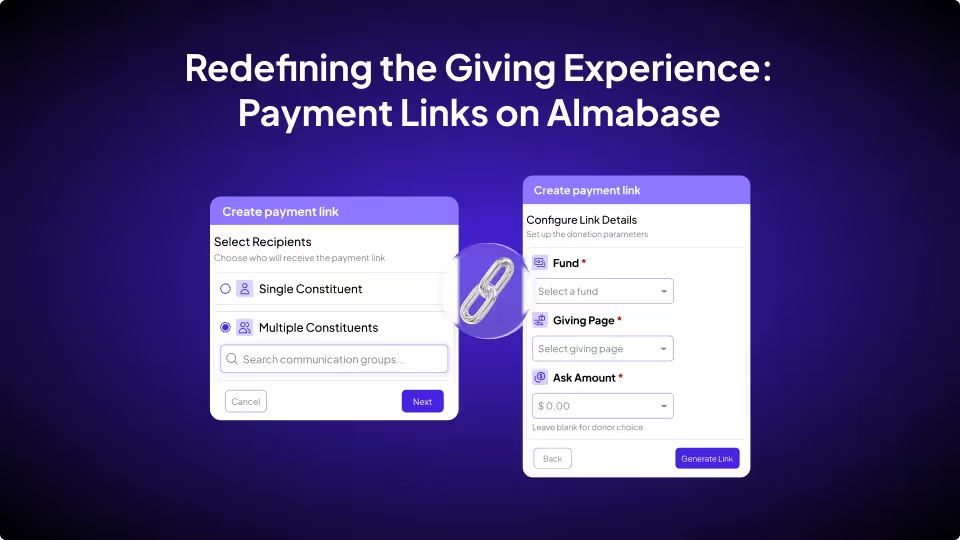
The new Payment Links brought to you by Almabase turn giving into a seamless experience. Pre-filled funds, bulk distribution, and full tracking help teams design smarter fundraising workflows. Learn how it works in this blog.
Summary
• To boost donor participation and average gift size, use trackable payment links that pre-fill gift amounts and funds, making the giving experience effortless for your donors.
• Many fundraising campaigns struggle because traditional donation forms are clunky, leading to nearly 60% of donors abandoning the process. These new payment links aim to eliminate that friction.
• Imagine being able to send a targeted link directly to a donor via email or text, guiding them to give to a specific fund they care about without them having to navigate complex forms.
• You'll finally get clear visibility into your CRM data with real-time statuses like 'Paid,' 'Pending,' or 'Failed' for each link, making donor follow-ups smarter and more timely.
• This means less administrative headache because you can create and manage links in bulk, freeing up your team to focus on building donor relationships instead of manual tasks.
• These links aren't just for big campaigns; they can enhance your giving days or even encourage spontaneous generosity year-round by simply making it easier for donors to act.
• Ultimately, this is about designing a better giving experience that turns donor intent into impact seamlessly, making fundraising more effective and less burdensome for everyone involved.
The right way to fundraise means creating experiences that make giving feel natural, meaningful, and rewarding for the donors.
Universities and nonprofits spend countless hours building campaigns, yet too often the actual act of giving feels clunky. Donors drop off, admins lose time, and campaigns miss their potential.
With Almabase’s new spin on Payment Links, we’re changing that.
Not just with another feature, but with a smarter way to design giving experiences that encourage participation and generosity at scale.
%2520(4).png)
Until now, payment links have been a black box:
This meant lost opportunities for follow-ups, messy attribution, and a lot of wasted admin effort.
Research confirms why this is such a problem: nearly 60% of donors abandon online donation forms when the process feels long or confusing, and pre-filled amounts have been shown to increase average gift size by up to 20%.
Traditional donation forms work, but they put the burden on donors to find the right fund, enter the right amount, and complete multiple steps.
Payment Links flip this dynamic. Instead of asking donors to figure it out, admins can now:
%2520(5).png)
%2520(1)%2520(1).png)
%2520(3)%2520(1).png)
The result? A smoother, more personal giving journey.
Payment Links are part of a broader shift in fundraising: designing experiences that reduce friction, highlight the right opportunities, and make generosity the easy choice.
All of these, including Payment Links, are about the same thing: turning intent into impact, without extra steps.
Fundraising technology shouldn’t just digitize processes. It should optimize experiences for donors who want to give, and for admins who need to scale their efforts.
That’s what Payment Links are designed to do.
👉 Curious to see how this works in practice? Explore Almabase Giving and reimagine how your next campaign can feel effortless, personal, and powerful.
Subscribe
See how modern advancement teams bring alumni engagement and fundraising together.
Plan faster. Execute better
Explore free templates designed for alumni and fundraising teams.
.png)

.avif)
Every year, GivingTuesday (or Giving Tuesday) gives schools the chance to rally their communities around generosity. With the right Giving Tuesday campaign ideas, you can turn a single day of giving into something that strengthens your institution’s pride, deepens connections, and funds the programs that make a difference. Last year alone, donors contributed $3.6 billion across the United States, marking a 16% jump from the previous year
But a successful Giving Tuesday campaign doesn’t happen by accident. In this blog we will take you through a few proven strategies you can adopt to make sure your Giving Tuesday campaign is at its most effective.
The institutions that meet (and often surpass) their Giving Tuesday goals have one thing in common: they start early.
Giving Tuesday lands right after Thanksgiving, competing for attention with Black Friday sales, holiday shopping, and countless nonprofit appeals. To cut through the noise, your best move is to begin preparing well before November, ideally in September or early October.
The good news? You don’t have to build your plan from scratch. GivingTuesday's official website offers a 12-week countdown planning guide that walks you through exactly what to do each week leading up to the big day. Starting three months out gives you the breathing room to think creatively, build momentum, and avoid the last-minute scramble.
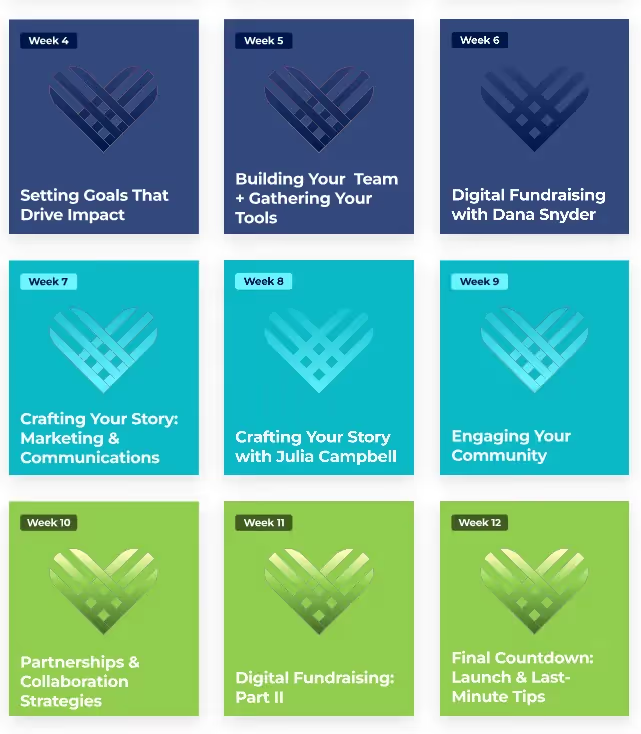
Here’s what early planning gives you:
Start now by planning backwards from Giving Tuesday. What should happen a month before? Two weeks before? One week before? Lock in those milestones early and you’ll be thanking yourself later.
A number can be motivating, but a purpose is unforgettable.
A goal might say, “We want to raise $25,000.”, but a purpose says, “We’re raising $25,000 to launch scholarships for three first-generation students this year.” One is a target; the other tells a story of the real impact donors could be making. When your campaign clearly connects donations to outcomes, people give with confidence and heart.
A message that inspired giving could look like:
Whatever you choose, make sure your purpose reflects your school’s mission and resonates emotionally with your supporters. When donors can picture the result, they’re far more likely to take action.
Your Giving Tuesday message has just a few seconds to capture attention and spark generosity. The best ones are short, emotional, and focused on impact.
A simple framework that works:
Take NYU’s example. Their messaging connected the global GivingTuesday movement directly to tangible student impact.
"GivingTuesday is about unleashing the power of generosity worldwide. At NYU, it means investing in the next generation of leaders whose work will create lasting change. Your support today can provide scholarships, mentorship, emergency funds, and countless opportunities for students to flourish at NYU."
Notice how they started with the big picture (global generosity) but quickly zeroed in on specific ways donations make a difference Then, they immediately connected that message to real outcomes: scholarships, mentorships, and emergency funds. That balance between vision and specificity is what makes a message stick.
And don’t forget to mention that small donations matter. Many people assume their $10 or $25 won’t move the needle, but it absolutely does. Try messages like:
Sample Giving Tuesday Messages for Schools:
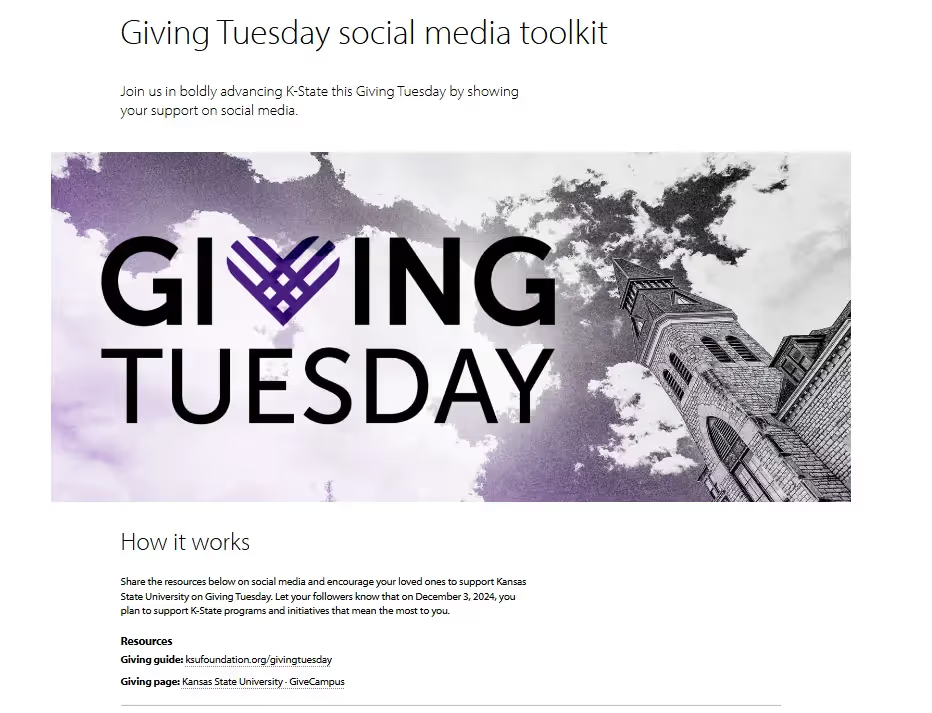
Create three to five variations of your core message and rotate them across platforms. Include your school’s unique hashtag alongside #GivingTuesday to boost visibility. Need inspiration? Check out Kansas State University’s social media toolkit for adaptable message ideas.
For Giving Tuesday, visuals are your first impression with potential donors. A well-designed graphic makes your campaign instantly recognizable and emotionally engaging.
Rockhurst High School in Kansas City nailed this with their #RockGivingTuesday campaign. Their posts consistently featured:
That consistency built trust and recognition at a glance.
You don’t need to start from scratch. GivingTuesday.org offers free branded templates and logo guidelines to help you maintain a professional look while saving time.
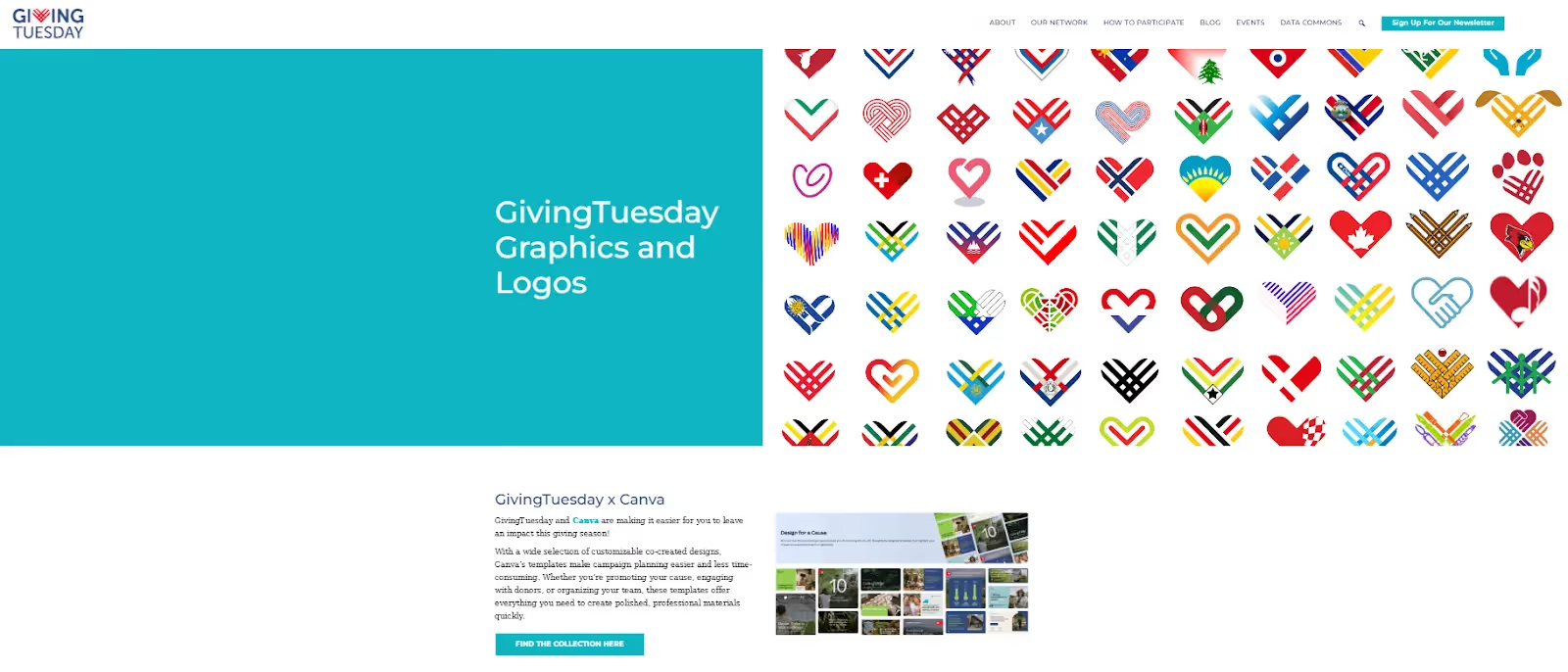
What Makes a Great Giving Tuesday Graphic?
Directing donors to your general donation page might seem simple, but it could actually hurt conversions. On Giving Tuesday, people expect a focused, emotionally engaging experience that feels unique to the day.
A dedicated Giving Tuesday landing page reminds visitors why they’re giving and shows exactly how their gift will be used.
Here’s what to include:
Take inspiration from Grace School’s approach. They embedded a short student video on their landing page and linked it in social posts to drive emotional connection.
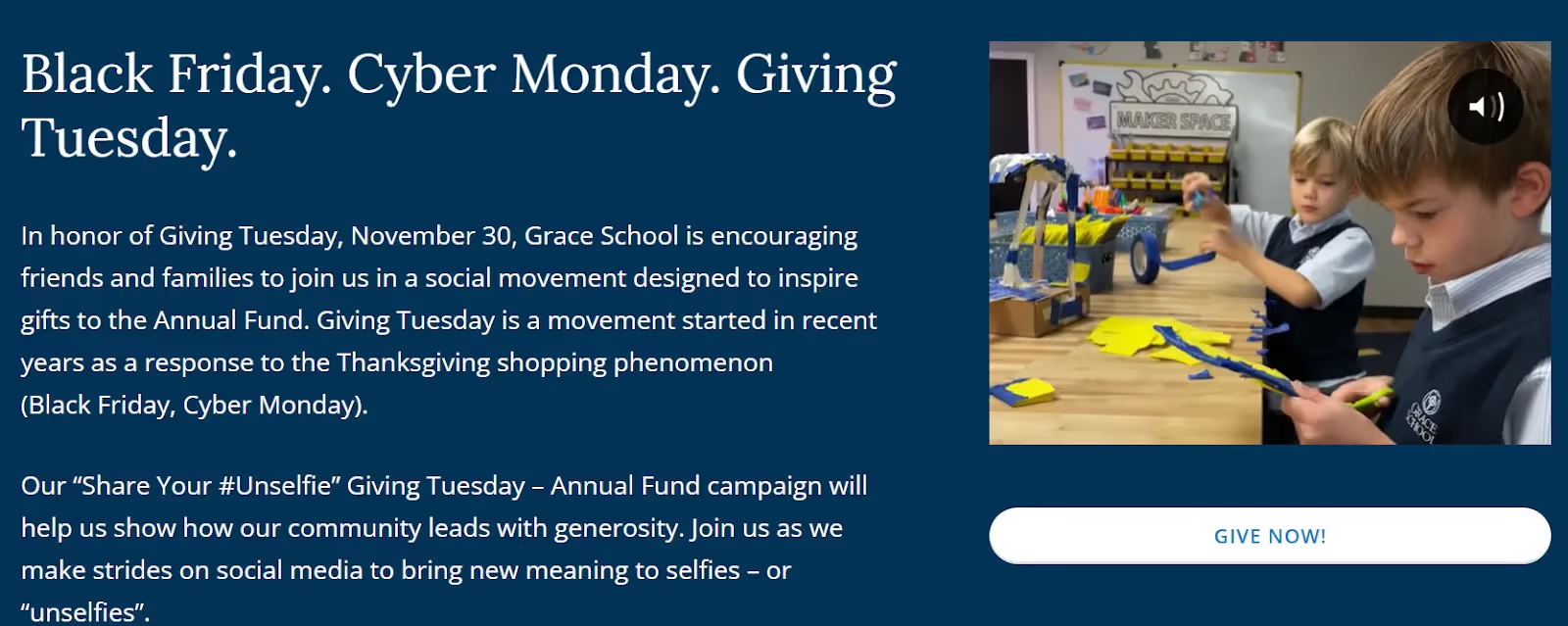
Social media can turn your Giving Tuesday campaign from good to unforgettable, but it takes planning your content calendar and rhythm. Create a simple calendar that builds anticipation, peaks on Giving Tuesday, and ends with gratitude.
Here’s an example of what that might look like:
And some platform-specific tips:
Take a page from Save the Elephants. Their Giving Tuesday video of elephants roaming freely, coupled with a triple-match promise, stopped people mid-scroll. For schools, that could be students in action, classrooms buzzing, or alumni sharing quick stories. Even a small paid ad budget ($100–$200) can expand reach to specific alumni groups or parent audiences.
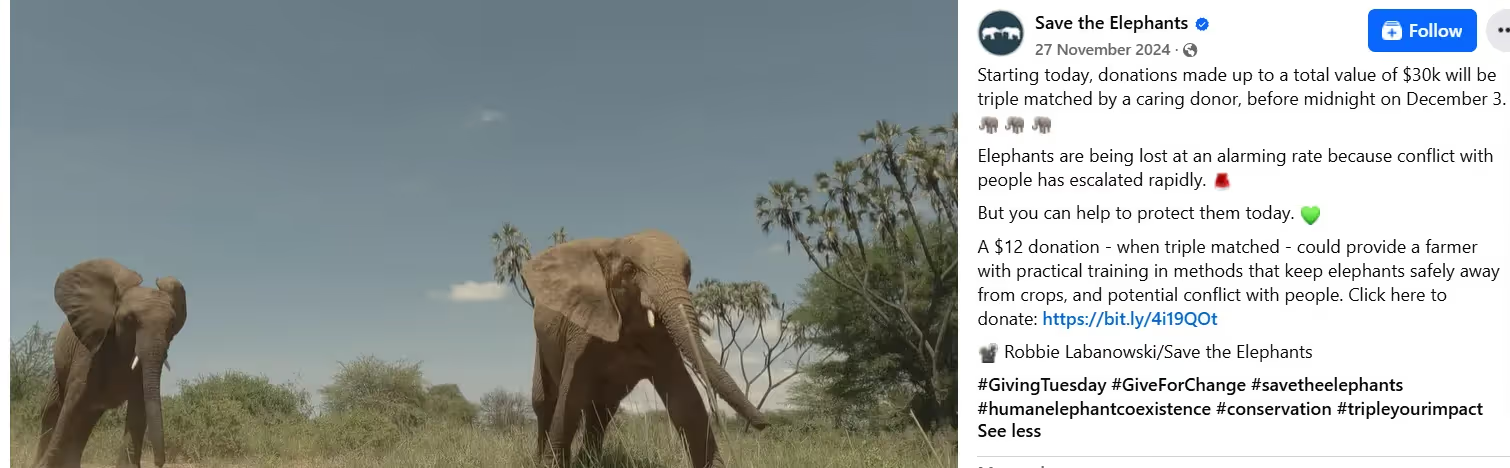
Here’s the not-so-secret secret behind the most successful Giving Tuesday campaigns: they’re powered by people. Specifically, it's peer-to-peer fundraising: alumni ambassadors, parent volunteers, student leaders, and faculty champions who create their own mini-campaigns and ask their personal networks to give. When a message comes from someone you know, it hits differently.
Research backs this up: 56% of donors say they’re more likely to give when asked by someone in their circle.
How to make it happen:
The best part is that ambassador-driven campaigns often bring in new donors who never would have heard about your school otherwise.
The official GivingTuesday Peer-to-Peer Fundraising Toolkit highlights that donors are far more likely to give when a request comes from someone they know and trust, rather than from the institution itself. The toolkit also offers simple ways for ambassadors, such as alumni or parent volunteers, to create personalized fundraising pages, share campaign links across their networks, and rally support for your school’s cause.
Email remains one of the most elegant and effective tools for Giving Tuesday: simple, direct, and measurable. But success comes from a sequence, not a single blast.
Try the Four-Email Timeline:
Don't send the exact same email to everyone. You can boost your email open rates average by personalizing your approach.
Create different versions for:
Minor tweaks to subject lines and opening paragraphs can make a huge difference in engagement.
Even the most inspiring campaign can lose momentum if donating is a hassle. Think about it from a donor’s point of view: they’re scrolling on their phone during a quick break, they see your post, feel moved to give, click the link… and then get stuck on a clunky, confusing donation form that doesn’t work well on mobile. That’s a lost gift (sometimes multiple ones).
Here’s how to keep the process effortless:
The campaign doesn't end when Giving Tuesday is over. In fact, what you do the next day might be just as important as what you did during the campaign itself. Donor retention is a bit of a challenge right now: that means if you don't immediately thank your Giving Tuesday donors and show them the impact of their gift, there's a chance they won't give again.
The City University of New York (CUNY) used their dedicated thank you page at cunytuesday.org as a central hub to express gratitude and celebrate their record-breaking Giving Tuesday 2024 campaign.
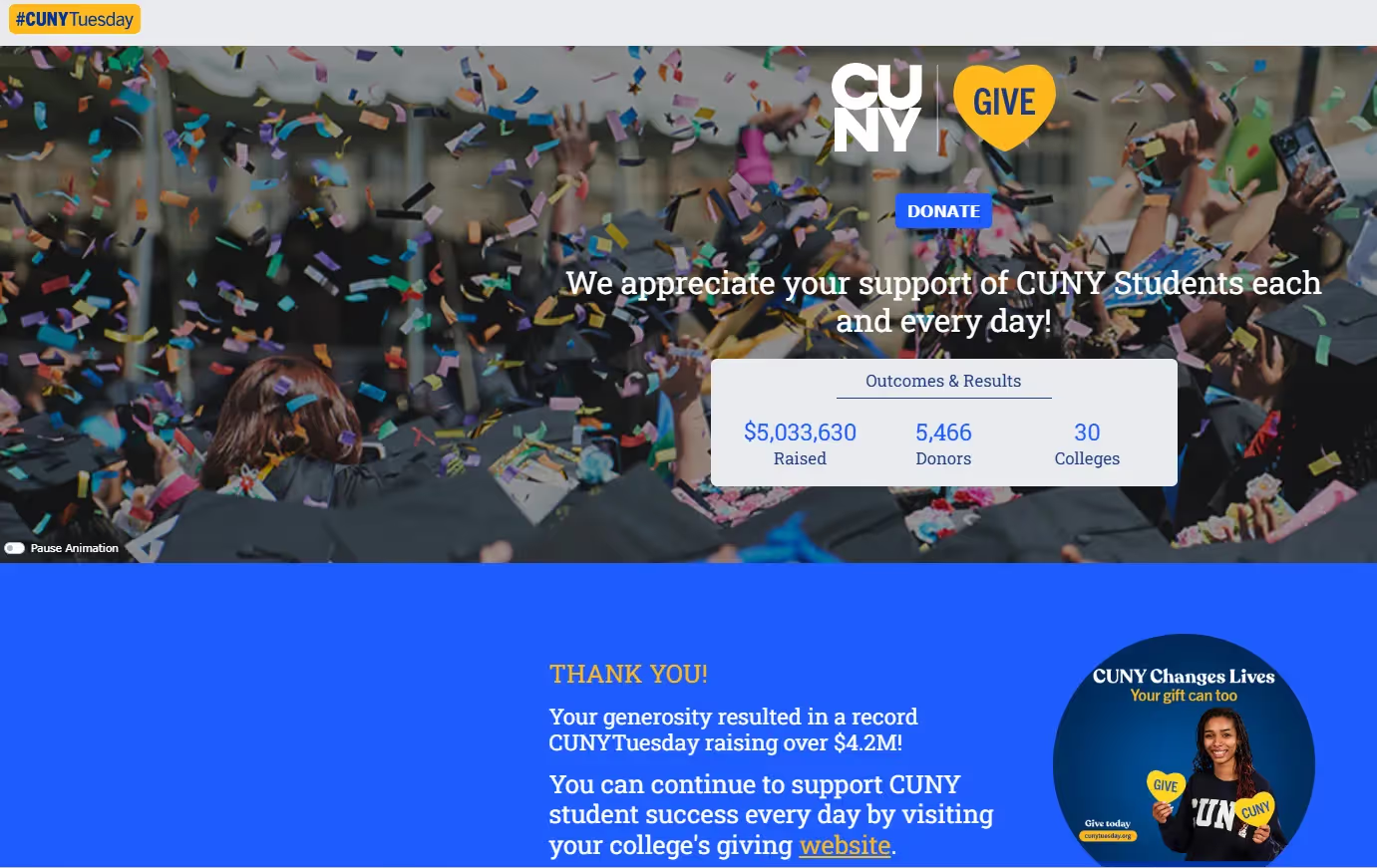
Follow up effectively:
Example:
"Thanks to 237 donors like you, we reached 120% of our $20,000 goal! That means we can fully fund our student emergency grant program and help 15 students overcome unexpected financial challenges this semester."
With these steps you can cultivate long-lasting relationships with your supporters.
Your Giving Tuesday campaign is a treasure trove of content you can use year-round.
Use Giving Tuesday as a springboard for recurring donations. A follow-up email in January might say: “Your Giving Tuesday gift made a real difference. Would you consider making it monthly?”
Highlight your most engaged ambassadors in annual reports or invite them to participate in alumni boards. Celebrate your super-fans! They’re critical for future campaigns.
Social proof also matters: “Last year, 500 donors came together on Giving Tuesday to raise $35,000” is a powerful motivator for new donors and ambassadors.
Back in 2021, the School of the Holy Child in Rye, New York, used a smart strategy that still works beautifully today. Their GivingTuesday campaign celebrated the success of the previous year, proudly sharing that in 2020, their community raised $375,000 from 525 donors — and invited supporters to help surpass that goal. The result? They raised $402,855 in 2021, proving how past impact can motivate even greater generosity year after year.
Giving Tuesday doesn't have to be a one-off event. When you treat it as part of your larger annual fundraising strategy, you maximize its impact well beyond a single day.
Giving Tuesday is only growing. With projections estimating $4 billion raised in 2025, schools that show up prepared will see significant returns.
But true success is at the confluence of an effective hashtag, a simple but elegant landing page, and driving connection with your donors. It comes from showing donors exactly how their gift makes a difference. It comes from making it easy to give and impossible to ignore.
Start early. Tell compelling stories. Activate your community. Make giving frictionless. Show gratitude.
When you follow this approach, Giving Tuesday can be your most successful campaign yet. Almabase helps schools bring it all together: personalized campaigns, streamlined donation processing, and purpose-built tools that maximize giving. Request a demo today and transform how your school connects with donors.
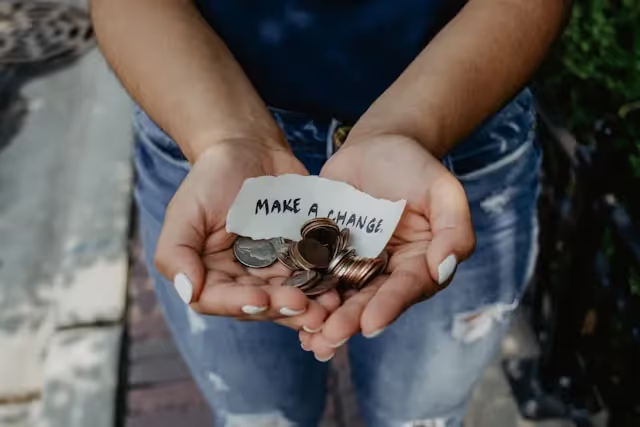
How to Improve Your School’s Giving Tuesday Campaign
Lorem ipsum dolor sit amet, consectetur adipiscing elit. Suspendisse varius enim in eros elementum tristique. Duis cursus, mi quis viverra ornare, eros dolor interdum nulla, ut commodo diam libero vitae erat. Aenean faucibus nibh et justo cursus id rutrum lorem imperdiet. Nunc ut sem vitae risus tristique posuere.

Anwesha Kiran
October 29, 2025
12 minutes

With the overwhelming success that Giving Tuesdays have shown to have brought to schools and universities across the globe, it is time we started talking about how to make the most of your Giving Tuesday.
Giving Tuesday, widely recognized as an annual day of giving, is a great opportunity for your school or university to engage with potential donors and raise funds.
With Giving Tuesday 2021 just around the corner, here’s our checklist to help you plan an awesome Giving Tuesday.
1. Choose your core team, define responsibilities, and have regular meetings to plan and track execution
2. Set a defined structure, target audience, and actionable goals while creating the plan
3. Finalize the budget
4. Identify and begin to solicit prospective donors and other sponsors
5. Create a branded donation page to showcase your school spirit. Data shows that donors are much more comfortable to donate on a donation page that looks like yours than to an unbranded Venmo or Paypal page.
1. A unique and compelling theme helps your donors connect better and acts as an incentive for them to donate to a cause that they believe in. One of our customers, Don Bosco Prep High School raised more than $25K, asking its alumni to donate towards the specific cause of building a Wellness Center for its students.

2. Build all of your communication collateral about the Giving Day around it
3. Create a unique hashtag to help spread the word about your Giving Day further and faster on social media.
1. Bring your ambassadors on board to promote your Giving Day and take ownership or share your team’s responsibilities
2. Solicit personal appeals from influential people of your school like teachers, famous alumni, board members, etc. further inspiring donors to donate
3. Spread the word about your Giving Day extensively amongst your faculty and staff inclusive of board members, class representatives, and chapter admins
1. With recent trends suggesting that an increasing number of donations are being made from mobile devices, ensure that your platform is mobile compatible
2. Enable peer-to-peer solicitation for your donors to reach out to their network
3. Display challenges and leaderboards to help donors get a sense of their contribution and encourage more participation through healthy competition
1. Create a detailed communication plan and calendar much ahead of your Giving Tuesday
2. Build a social media toolkit to help your team and ambassadors promote your Giving Tuesday campaign
3. Use Facebook or Instagram Live scheduling to actively engage with your donors and share with them live updates on the day itself to influence bigger contributions.
1. You don’t have to necessarily stick to one format or channel. Experiment with multiple formats such as images, videos, or long-form captions.
2. Videos can help a great deal in the promotion of your Giving Tuesday campaign and encourage donors. Just a short video created with a smartphone can create a more personalized approach aimed at your donors. Try to involve the head of school or faculty in creating these videos.
3. Utilize offline channels to promote your campaign. Publishing updates in your print newsletter and distributing flyers in local coffee shops are some of the techniques you can try to publicize your campaign offline.
Sending a simple and short thank you email to your donors at the end of the day is a great practice to let them know how thankful you are for their contribution. Ensure that this note doesn’t ask for another donation and instead, only is a means of expressing gratitude. The thank-you gesture has shown to have increased the chances of the same donors contributing again.
Giving Tuesday has become a global movement that celebrates and supports giving and philanthropy with events throughout the year.
We wish your team make it BIG and make the best of this Giving Tuesday.
Need more pointers on planning your Giving Day?
Check out our Comprehensive Guide on Planning A Giving Day for Schools & Universities.


How to make the most of Giving Tuesday?
Lorem ipsum dolor sit amet, consectetur adipiscing elit. Suspendisse varius enim in eros elementum tristique. Duis cursus, mi quis viverra ornare, eros dolor interdum nulla, ut commodo diam libero vitae erat. Aenean faucibus nibh et justo cursus id rutrum lorem imperdiet. Nunc ut sem vitae risus tristique posuere.

Here are two main reasons why Online Giving is the best place to invest your time and talent.
1. It is the hottest form of giving right now – Online giving in Education sector has risen by a staggering 12.3 % and 15 % in last two years.
2. It has seen the largest adoption rates by the Millennials
62% of donors worldwide prefer to give online
Our experience with over hundred partner schools across the world had taught a few things about various friction points on Giving Pages. Some common examples include:
1. excessive steps or clicks in the giving process
2. multiple or conflicting calls-to-action, non-essential buttons, menus, or navigational elements.
Simple math tells us that:
1. Even under the assumption of a very conservative conversion rate of 1 % for every 1,000 visitors, you will have 10 donors.
2. For the same 1,000 visits to your online donation form, if 3% of them convert into donors, you’ll have 30 donors. That’s a 200% improvement! And depending on your average gift amount, this could equate to a significant increase for your organisation.

.%20money-card-business-credit-card-50987-1920x1280.avif)
7- Effective Online Giving Practices
Lorem ipsum dolor sit amet, consectetur adipiscing elit. Suspendisse varius enim in eros elementum tristique. Duis cursus, mi quis viverra ornare, eros dolor interdum nulla, ut commodo diam libero vitae erat. Aenean faucibus nibh et justo cursus id rutrum lorem imperdiet. Nunc ut sem vitae risus tristique posuere.
%201.svg)
%201.svg)
%204.svg)




.svg)