Get this GivingTuesday checklist for hosting a successful campaign for your school, college, or university in 2021. Boost alumni donations & drive peer-to-peer fundraising.


With the overwhelming success that Giving Tuesdays have shown to have brought to schools and universities across the globe, it is time we started talking about how to make the most of your Giving Tuesday.
Giving Tuesday, widely recognized as an annual day of giving, is a great opportunity for your school or university to engage with potential donors and raise funds.
With Giving Tuesday 2021 just around the corner, here’s our checklist to help you plan an awesome Giving Tuesday.
1. Choose your core team, define responsibilities, and have regular meetings to plan and track execution
2. Set a defined structure, target audience, and actionable goals while creating the plan
3. Finalize the budget
4. Identify and begin to solicit prospective donors and other sponsors
5. Create a branded donation page to showcase your school spirit. Data shows that donors are much more comfortable to donate on a donation page that looks like yours than to an unbranded Venmo or Paypal page.
1. A unique and compelling theme helps your donors connect better and acts as an incentive for them to donate to a cause that they believe in. One of our customers, Don Bosco Prep High School raised more than $25K, asking its alumni to donate towards the specific cause of building a Wellness Center for its students.

2. Build all of your communication collateral about the Giving Day around it
3. Create a unique hashtag to help spread the word about your Giving Day further and faster on social media.
1. Bring your ambassadors on board to promote your Giving Day and take ownership or share your team’s responsibilities
2. Solicit personal appeals from influential people of your school like teachers, famous alumni, board members, etc. further inspiring donors to donate
3. Spread the word about your Giving Day extensively amongst your faculty and staff inclusive of board members, class representatives, and chapter admins
1. With recent trends suggesting that an increasing number of donations are being made from mobile devices, ensure that your platform is mobile compatible
2. Enable peer-to-peer solicitation for your donors to reach out to their network
3. Display challenges and leaderboards to help donors get a sense of their contribution and encourage more participation through healthy competition
1. Create a detailed communication plan and calendar much ahead of your Giving Tuesday
2. Build a social media toolkit to help your team and ambassadors promote your Giving Tuesday campaign
3. Use Facebook or Instagram Live scheduling to actively engage with your donors and share with them live updates on the day itself to influence bigger contributions.
1. You don’t have to necessarily stick to one format or channel. Experiment with multiple formats such as images, videos, or long-form captions.
2. Videos can help a great deal in the promotion of your Giving Tuesday campaign and encourage donors. Just a short video created with a smartphone can create a more personalized approach aimed at your donors. Try to involve the head of school or faculty in creating these videos.
3. Utilize offline channels to promote your campaign. Publishing updates in your print newsletter and distributing flyers in local coffee shops are some of the techniques you can try to publicize your campaign offline.
Sending a simple and short thank you email to your donors at the end of the day is a great practice to let them know how thankful you are for their contribution. Ensure that this note doesn’t ask for another donation and instead, only is a means of expressing gratitude. The thank-you gesture has shown to have increased the chances of the same donors contributing again.
Giving Tuesday has become a global movement that celebrates and supports giving and philanthropy with events throughout the year.
We wish your team make it BIG and make the best of this Giving Tuesday.
Need more pointers on planning your Giving Day?
Check out our Comprehensive Guide on Planning A Giving Day for Schools & Universities.

Table of Contents
Subscribe
See how modern advancement teams bring alumni engagement and fundraising together.
Having observed 100+ Giving Days, we have enough data to conclude that Giving Days can provide a major boost to your fundraising efforts.

A Giving Day is a powerful online fundraising campaign conducted for 24 hours with the purpose of raising money and finding new donors. On every calendar, there are special days, or holidays, dedicated for different purposes or activities. For example, most calendars automatically include holidays like Independence Day, Mother’s Day, and Halloween. A giving day could be one such special day marked on your school’s event calendar, dedicated to fundraising and known to your constituents as a special day for your school.

If you’re asking yourself why a designated day should be any different from any other day of the year, read on. While your constituents can donate throughout the year, asking them to participate in a 24-hour event exclusive to a cause helps create a sense of urgency. Giving Days also help create healthy competition and a sense of community as your constituents get an opportunity to contribute towards a common goal.
A well planned Giving Day can entirely transform your fundraising approach by helping you acquire new donors, enrich the giving experience, and instill a culture of giving in your constituents.

Need more information on how to plan for a Giving Day? Click on the image below to get a free copy of our Planning a Giving Day Handbook today!

Why are Giving Days so important?
Giving Days have proven to be highly successful in boosting fundraising efforts. Learn how they can help you acquire new donors, enrich the giving experience, and instill a culture of giving in your constituents.
Lorem ipsum dolor sit amet, consectetur adipiscing elit. Suspendisse varius enim in eros elementum tristique. Duis cursus, mi quis viverra ornare, eros dolor interdum nulla, ut commodo diam libero vitae erat. Aenean faucibus nibh et justo cursus id rutrum lorem imperdiet. Nunc ut sem vitae risus tristique posuere.
If you’re involved in fundraising efforts for your school, chances are you’ve already been hearing a lot about Giving Days. With this year’s #GivingTuesday i.e. December 3rd fast approaching, it’s likely you won’t stop hearing about it any time soon.
.avif)
Giving Day was first introduced in 2012 and has since helped institutions around the world boost their fundraising efforts tremendously. A well-planned Giving Day can entirely transform your fundraising approach by helping you acquire new donors, enrich the giving experience, and instill a culture of giving in your constituents.
However, the success of a Giving Day depends not only on planning but equally on its promotion. While there are many ways to promote Giving Days, in this blog post, we’re looking at the 8 most effective ones that have helped our customers achieve Giving Day success.

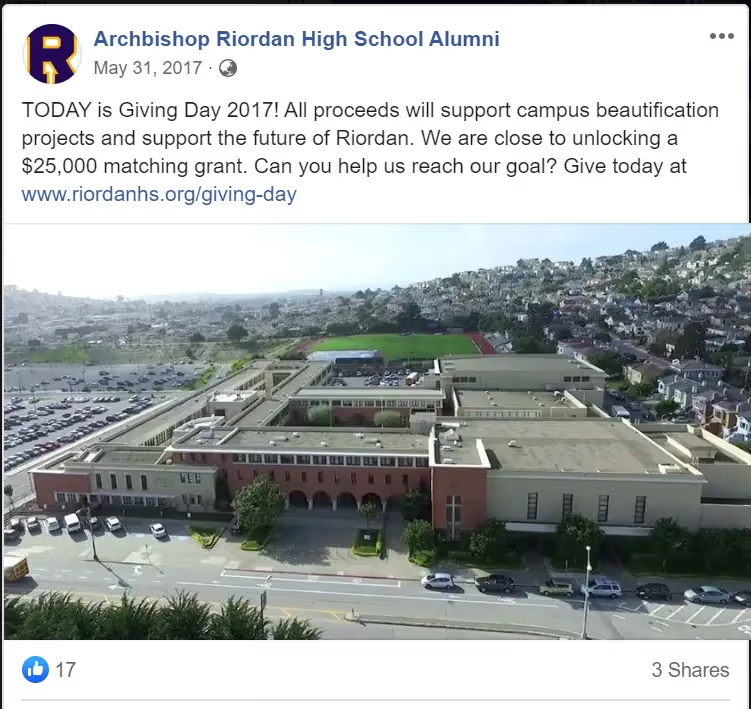
One of the best means for influencing donors is by carefully selecting a cause that they relate to and would most likely contribute towards. Making donors believe in your cause is pivotal to your fundraising efforts. Here’s how Archbishop Riordan High School targeted its alumni by asking them to contribute towards campus improvements.
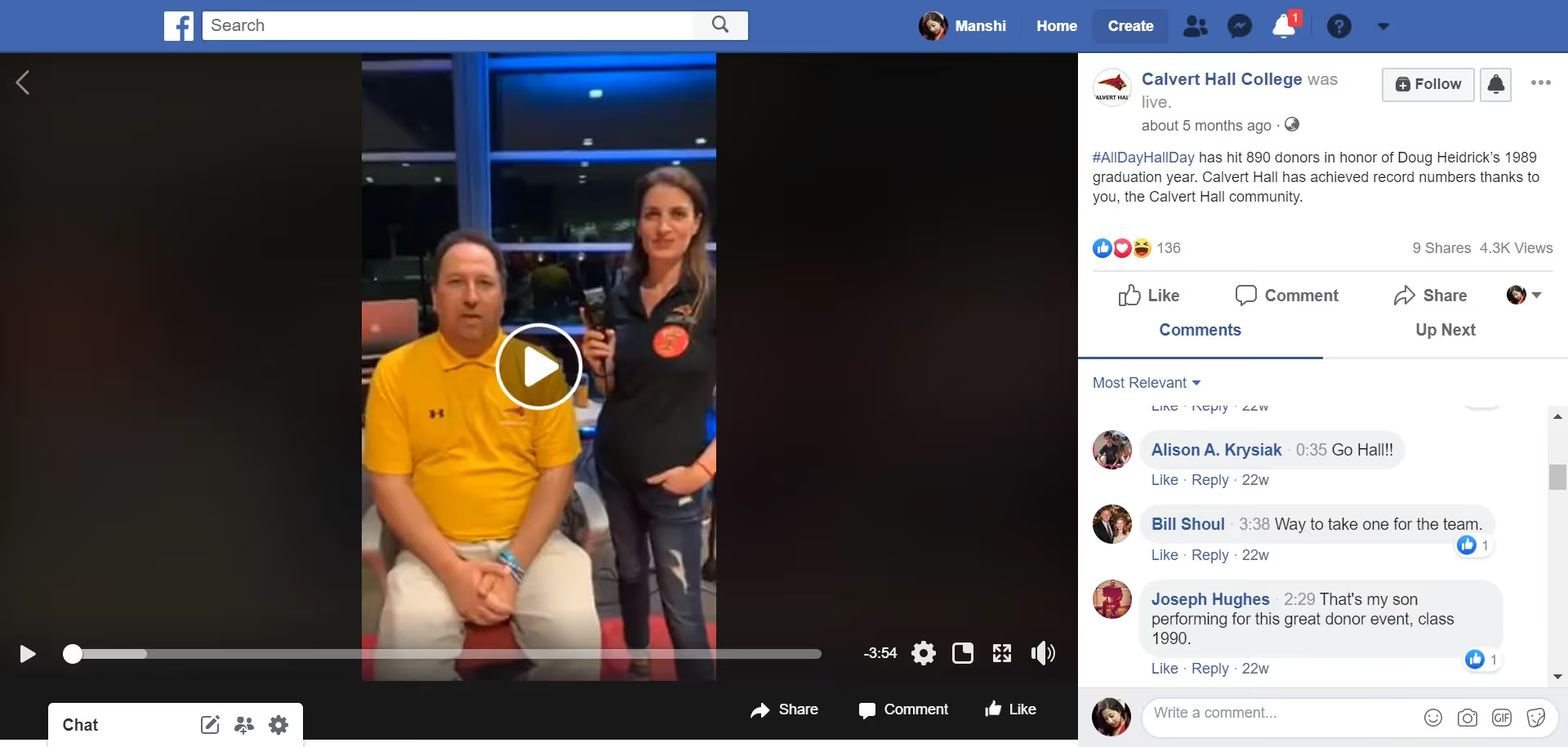
If you’re on social media, you obviously know how hashtags can boost your marketing efforts. While #GivingTuesday is a generic hashtag that almost everyone follows during the Giving season, creating a unique hashtag, relevant to your cause is highly recommended. Using your own unique hashtag makes it easier for your community to share your posts on their network, and for you to effectively monitor and further promote your social message. Calvert Hall College High School made great use of a unique hashtag. Check the full post here.
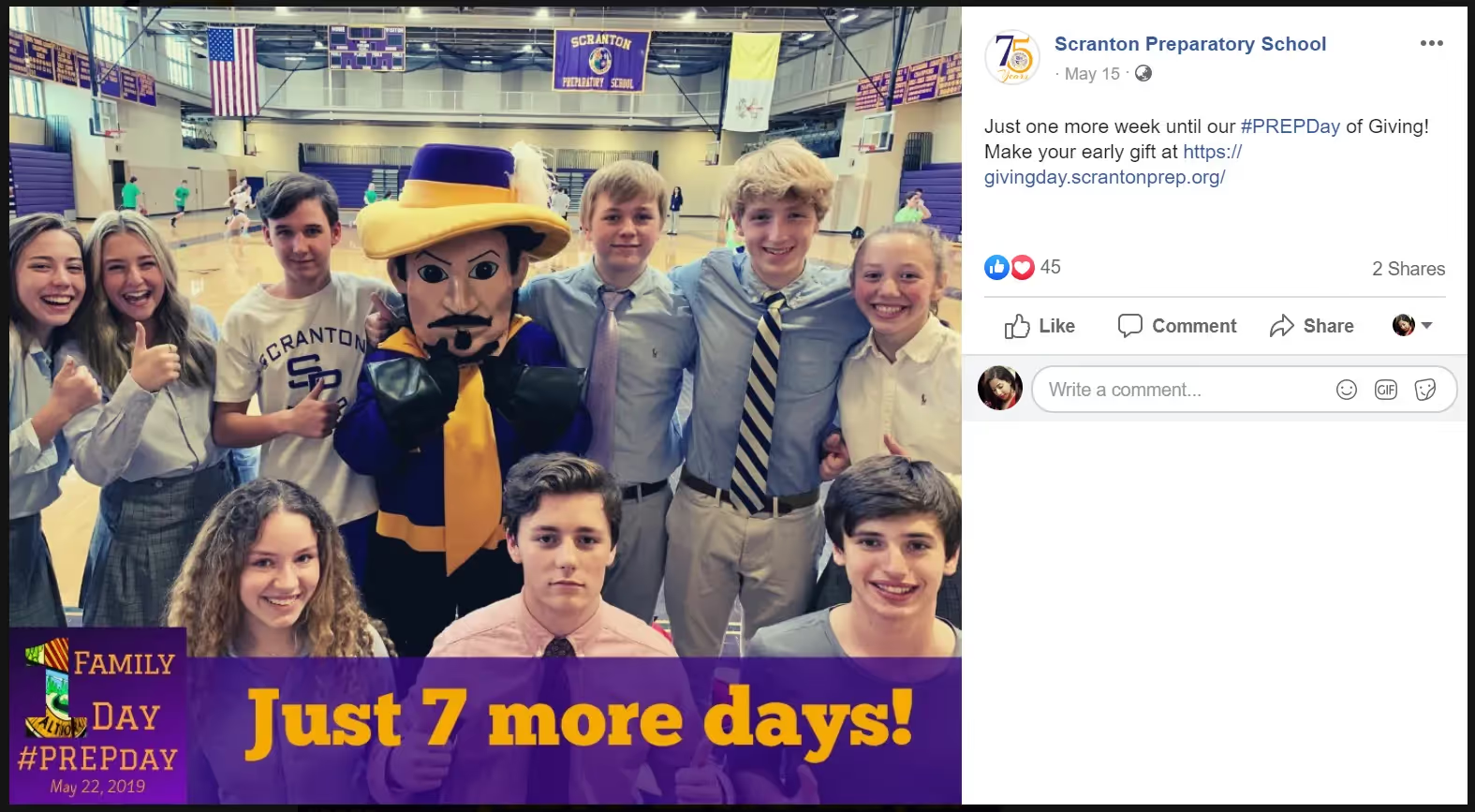
You might have seen a lot of people use countdown posts as a part of their social media marketing plan. They have proven to be highly effective as they help serve as constant reminders for the upcoming event and also arouse curiosity.
Here’s how Scranton Preparatory School got this right.
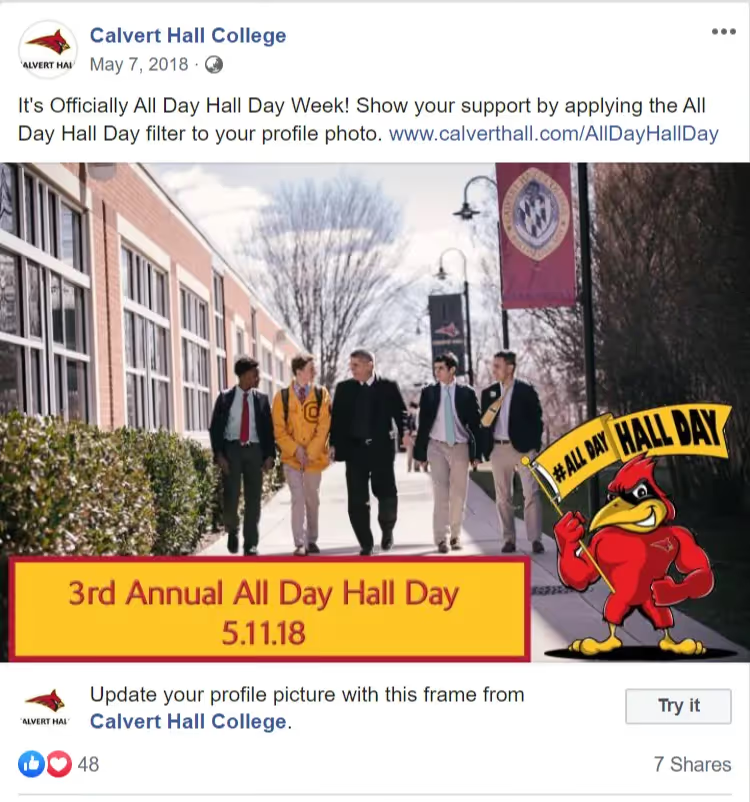
A great way to capture the attention of donors is to create opportunities that influence them to actively engage. Unlike fundraising campaigns that are run over a period of time, Giving Days provide an opportunity for your constituents to donate to your cause within a 24-hour time frame. Other than the sense of urgency already being created, any low-effort activities on your part can help channel your donors toward making a contribution.
For the college’s 3rd Annual All Day Hall Day campaign, Calvert Hall College High School asked its followers on Facebook to show support by applying the All Day Hall Day filter to their profile pictures. Calvert Hall’s followers loved this approach and many took to applying the filter to their profile picture and pledging support to the Giving Day campaign. Here’s how Calvert Hall creatively provided an opportunity for its Facebook followers to actively engage & support the upcoming Giving campaign.
As of 2022, videos are undoubtedly the most powerful marketing tool.
People gaze five times longer at video than at static posts on Facebook & 71% of people have increased their online video viewing in 2018 alone.
As users on social media increasingly prefer the video format, it is a good practice to incorporate more videos in your Giving Day marketing strategy. Here are some ways in which schools have leveraged videos on their social media:
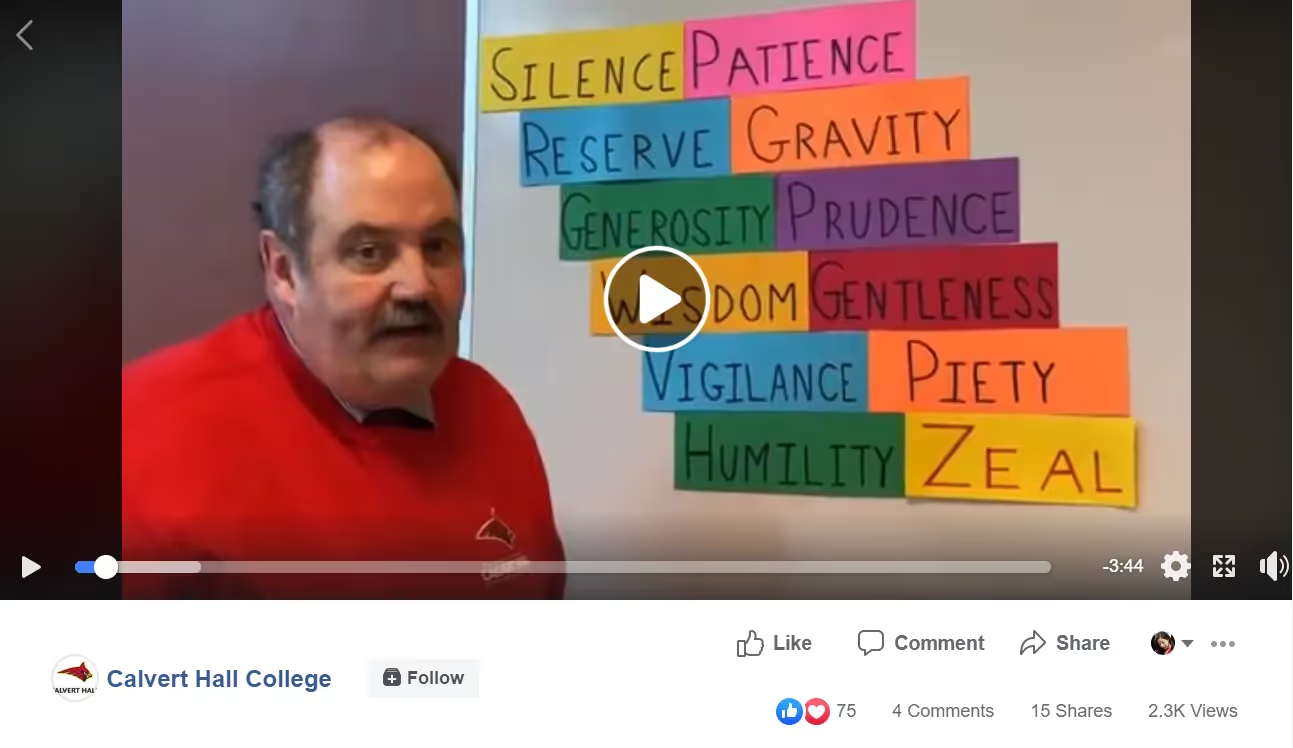
Creating a video that boasts of your school’s legacy is a great way of showing donors why their contributions matter. In this video, Calvert Hall College High School’s CAO/Director of Advancement, Joe Baker talks about all that Calvert Hall stands for and passionately urges donors to contribute to keep the tradition of the school intact. View the post here.
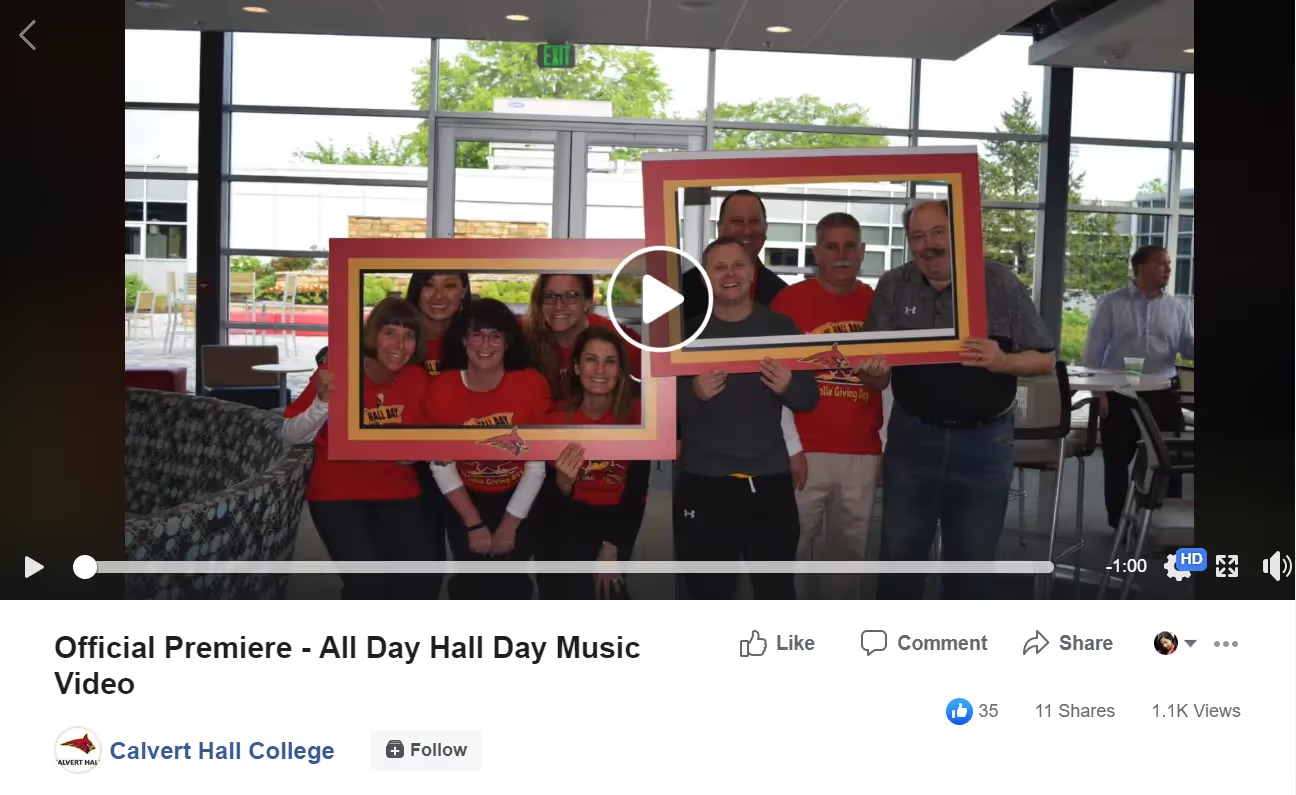
If you’re worried that a professional video might be too expensive or time-consuming, a simple slideshow video is the next best thing! Including pictures of students and faculty members clicked on-campus in the video can be a great way to influence participation from donors. Calvert Hall created an amazing music slideshow video for its 3rd All Day Hall Day giving campaign.
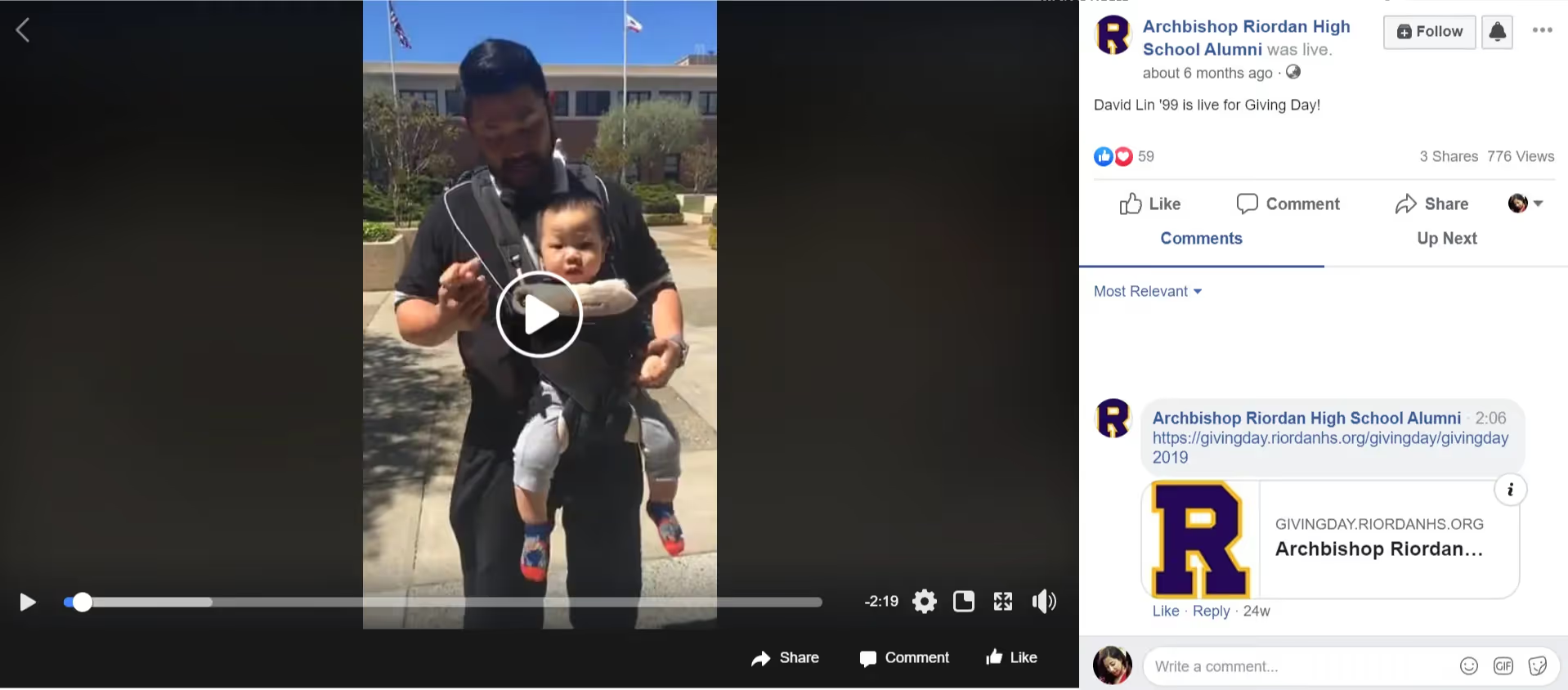
Going live on the day of the event is one of the most commonly employed methods to promote Giving Days. This helps donors view real-time progress and get an inside picture of the events and activities planned during the day.
According to SproutSocial, Facebook users spend 3X more time watching a live video than a pre-recorded one.
Here’s David Lin, Director of Boarding at Archbishop Riordan High School going live on the school’s campus, during 2019’s Giving Day campaign. View the post here.
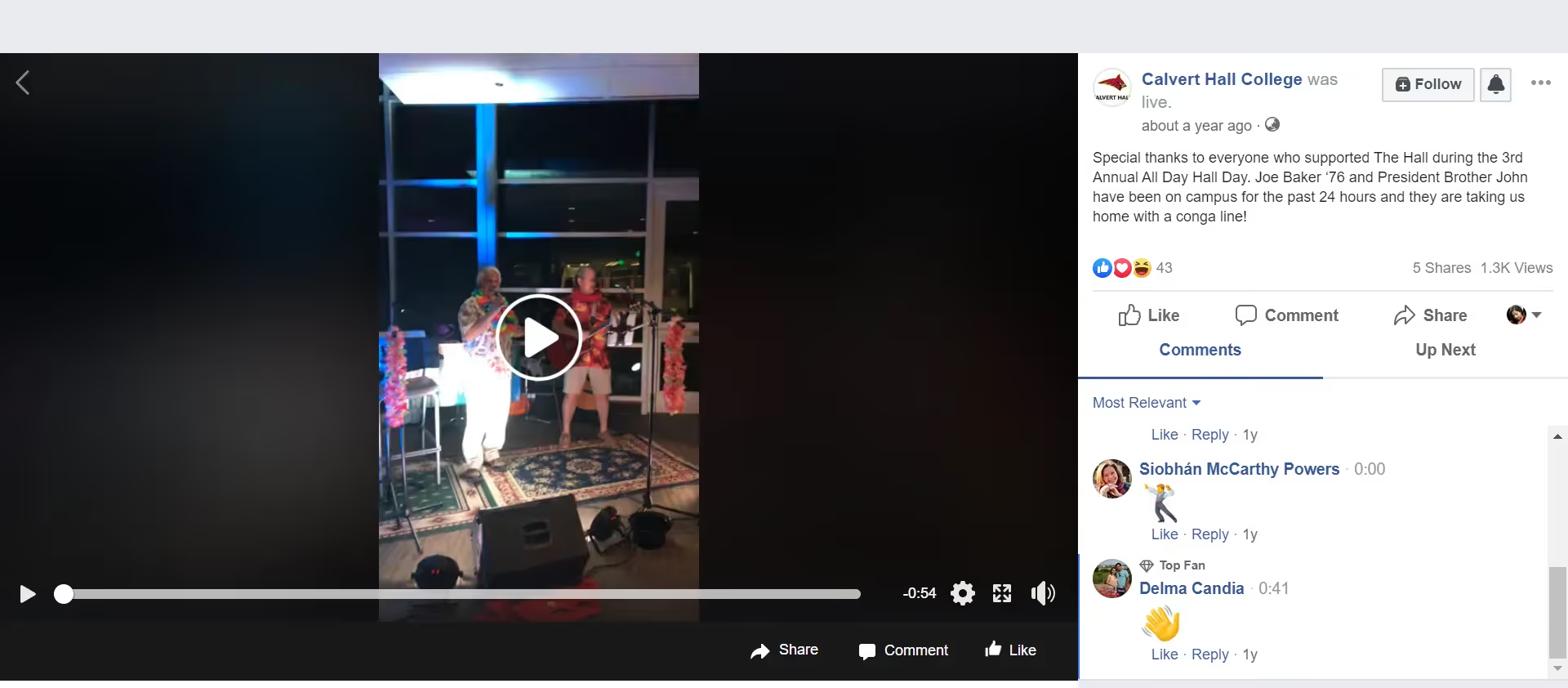
When it comes to sharing updates about your giving day via videos, go beyond the usual formula of simply announcing these updates. Check out how Calvert Hall College High School created an awesome video, sharing updates from its 2018 All Day Hall Giving Day campaign.

The team responsible for running your giving campaign definitely deserves a special shout-out for their endless dedication and hard work. There’s no better way to do this than showcasing their efforts for donors to see. This creates a sense of gratitude and acts as a strong incentive for people to do their part by contributing towards a noble cause. Here again, Calvert Hall wins our hearts by creating a beautiful video dedicated to its passionate team members.
Email marketing continues to play a crucial role in the success of Giving Days for most schools.
Here’s a look at how email marketing has been leveraged by schools to boost Giving Day donations:
While schools start planning their Giving Days much ahead, why don’t a lot of them recognize the need to market their campaign in advance? From the initial announcement informing potential donors about the campaign right down to the thank-you email to all participants, every email must be well-timed and carefully crafted. At the same time, be careful not to overdo it by sending too many emails. Take a cue from Scranton Preparatory School’s immaculate planning for the school’s Giving Day 2022 campaign.
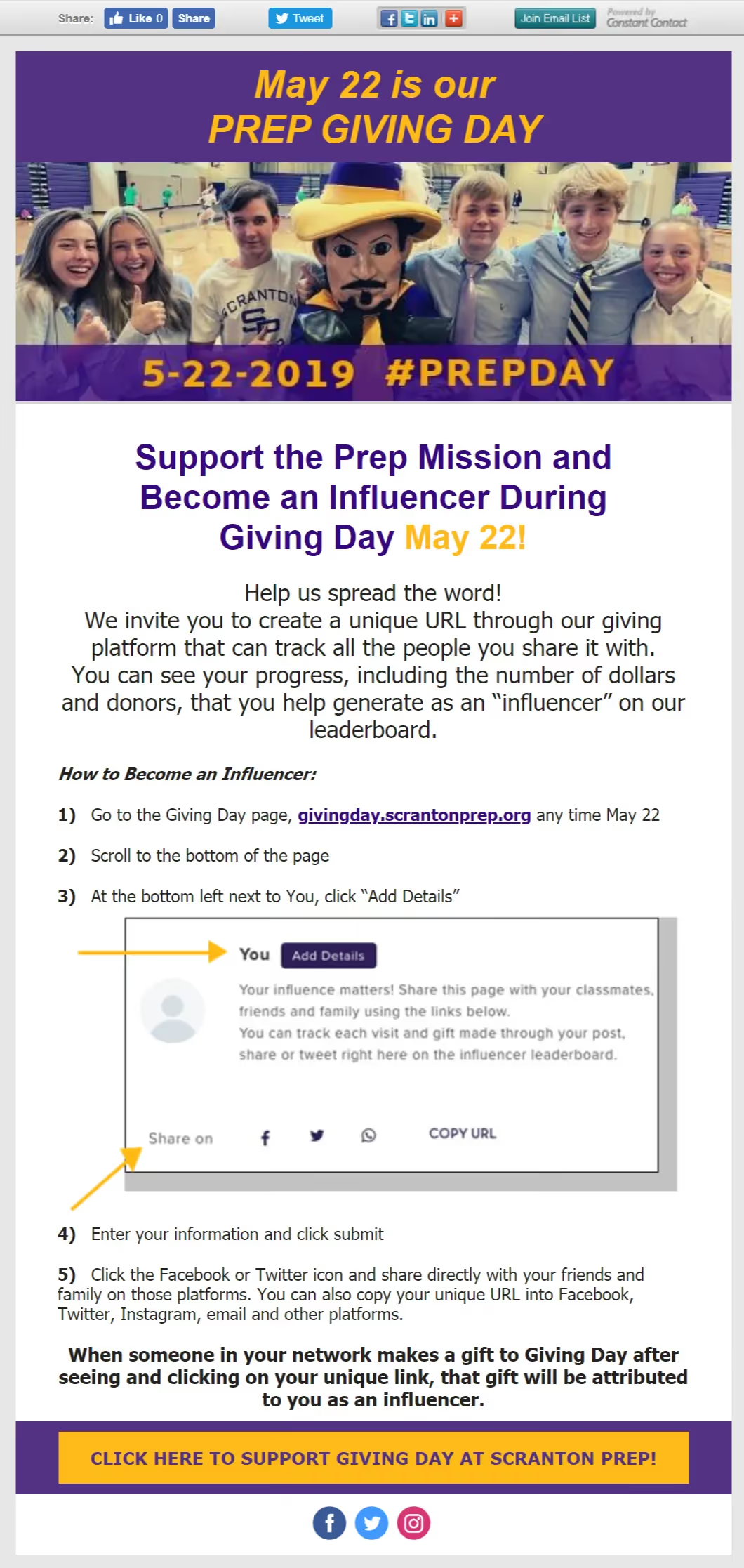
In addition to generating awareness about the upcoming Giving Day via emails, another way of capturing donors is by informing them of incentives. By providing exclusive benefits to select donors, the chances of securing early bird donations significantly increase.
Your approach to marketing a Giving Day can vary greatly depending on who you’re reaching out to. Long-time donors, for instance, are the most loyal of your followers and therefore, it is best to personalize your approach while asking for their contribution. Here’s how Scranton Preparatory School created a customized email invite for its Class of ‘79, asking for their support during the school’s Giving Day 2019 campaign.
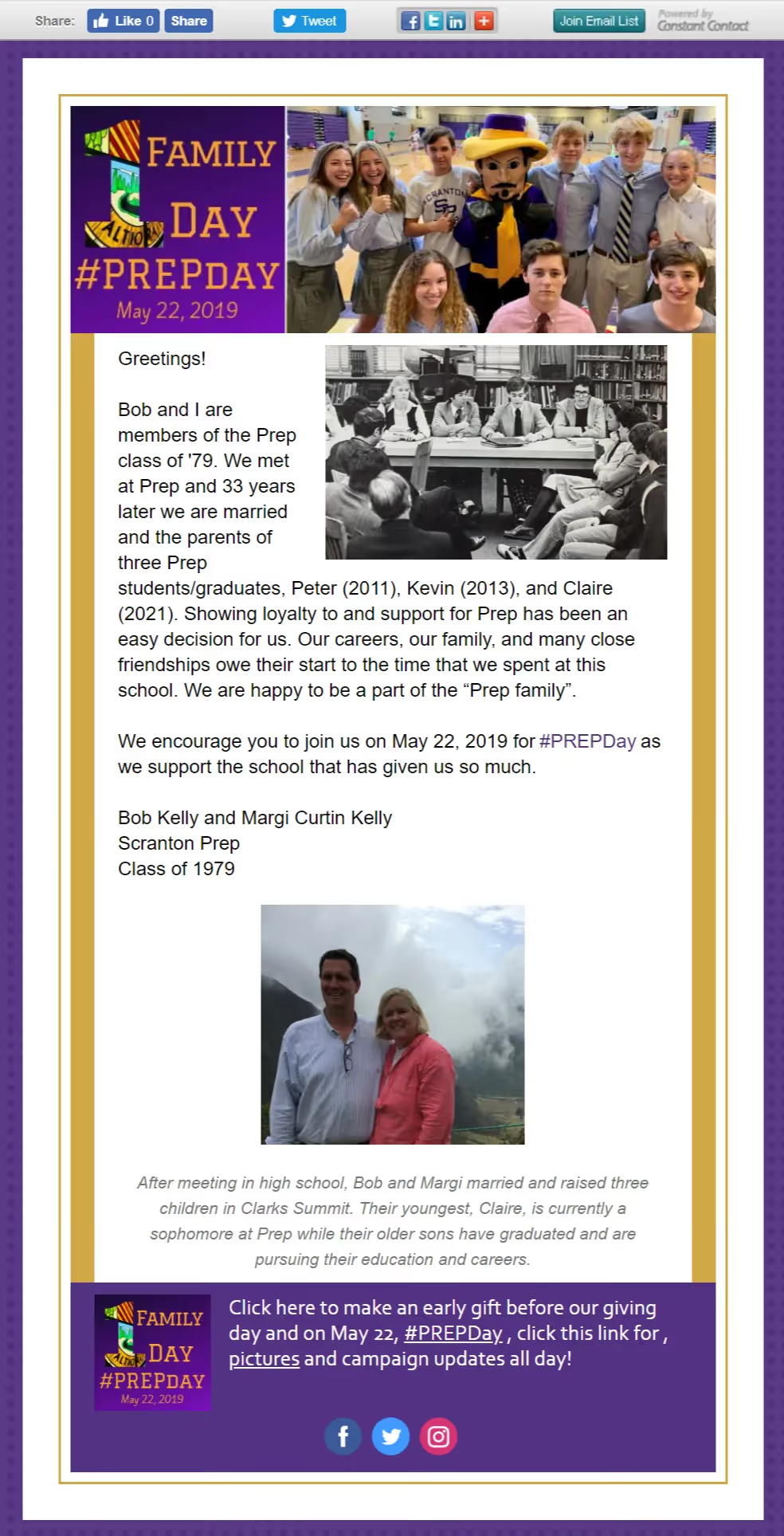
Peer-to-peer fundraising has proven to be highly effective for most schools. Emails or referrals from peers help create a personalized touch and act as a strong incentive for fellow alumni to contribute.

8 Proven Ideas for Promoting Giving Days
The success of your Giving Day depends not only on planning but equally on its promotion. While there are many ways to promote Giving Days, in this blog post, we’re looking at the 7 most effective ones that have helped our customers achieve Giving Day success.
Lorem ipsum dolor sit amet, consectetur adipiscing elit. Suspendisse varius enim in eros elementum tristique. Duis cursus, mi quis viverra ornare, eros dolor interdum nulla, ut commodo diam libero vitae erat. Aenean faucibus nibh et justo cursus id rutrum lorem imperdiet. Nunc ut sem vitae risus tristique posuere.
Peer-to-peer fundraising is a powerful social giving tool that many educational institutions have employed to increase their donations while expanding their donor audience. Through peer-to-peer fundraising campaigns, these organizations empower their supporters to raise money on their behalf.
While peer-to-peer fundraising is an effective fundraising strategy especially for nonprofits, other forms of educational institutions too have raised a lot of revenue for their programs and missions by leveraging social networks.
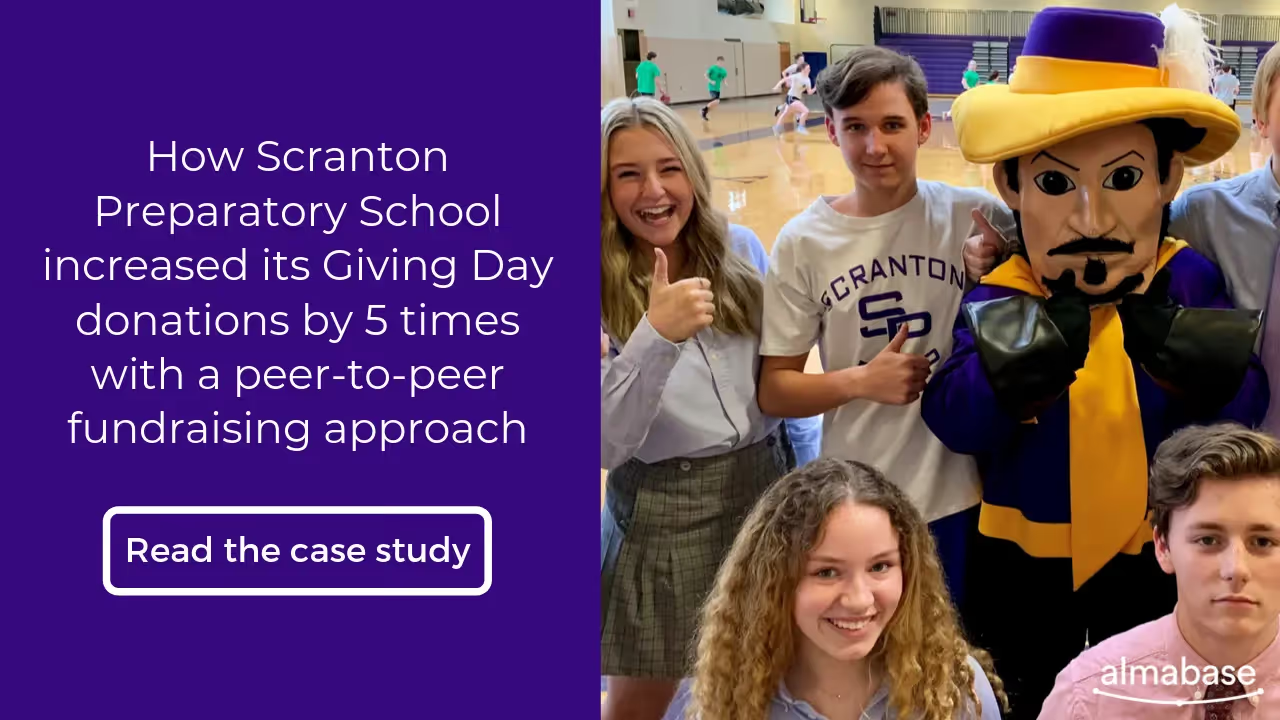
1. Develop a campaign page featuring your institution's fundraising goal
2. Recruit supporters (e.g., current students and alumni) to create their own campaign pages that demonstrate their personal tie to your institution's cause
3. Share their pages with friends and family and encourage them to donate
4. Provide them with the tools to make peer-to-peer fundraising social, mobile, and fun!
Peer-to-peer fundraising is a great way to maintain relationships with alumni. To get the most out of it, there are certain strategies you should incorporate to ensure success. These include:
1. Using a peer-to-peer platform
2. Offering training
3. Promoting on and offline
4. Leveraging giving days
5. Using gamification
6. Combining with events
Are you ready to take a closer look at peer-to-peer best practices to grow your fundraising? Get ready to take some notes!
Providing an easy giving experience is one of the most important things you can do when launching a peer-to-peer fundraising campaign for your institution. This means offering easy-to-use donation pages that provide a mobile-optimized experience and an overall convenient process.
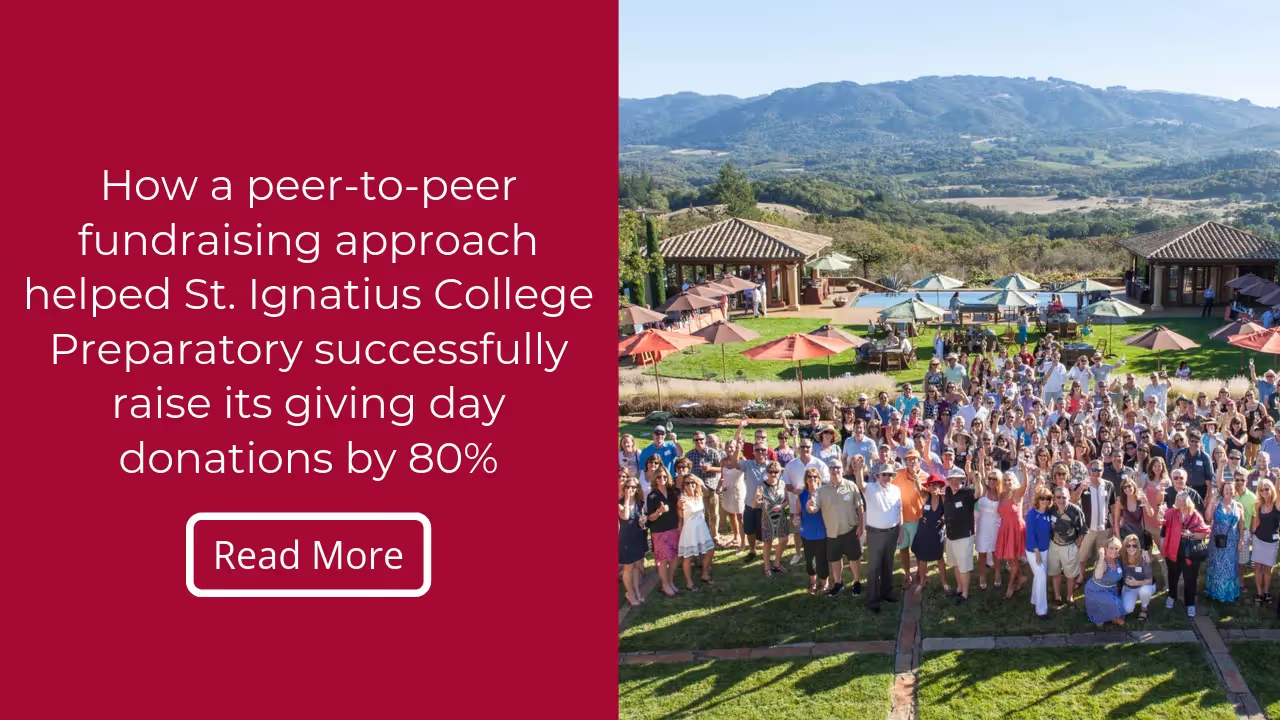
The majority of the population owns a cell phone and with mobile users increasing, donors are also starting to prefer making contributions via their mobile devices. Therefore, your cause needs to meet supporters where they are: on their phones, giving them the tools to donate anywhere and anytime.
To provide the easiest experience, it’s critical to invest in a peer-to-peer fundraising platform. Peer-to-peer software will allow your institution to:
1. Easily set up a main donation page for your fundraising goal
2. Let your college supporters create personal pages that harness their social networks
3. Track your progress and analyze important data
A peer-to-peer fundraising platform streamlines your fundraising process and expands your potential donor circle, introducing friends, family, and other alumni to your cause.
When you prepare to launch a peer-to-peer fundraising campaign, it’s important that you offer training opportunities to your supporters. Most of your supporters might not have a ton of experience as fundraisers, so getting them set up on the platform and providing tools will boost results and engagement.
Managing your modern day alumni relations is a great way to encourage alumni to become fundraisers for your cause. To make fundraising easy for them, be sure to provide the following resources:
1. Training: Educate supporters about your cause so they know exactly what they’re fundraising for. Make sure you have access to your platform’s tools and resources so you can pass along training knowledge to your supporters.
2. Mission and impact: Tie supporters to your cause and help them understand why this campaign matters. Social donors prioritize understanding the mission and impact of their efforts, as key motivators for fundraising.
3. Templates. Social media and email templates are an excellent way to give your supporters the materials they need to get the word out. This makes it easy for them to share the campaign and ask for donations while still adding their own personal touch.
4. Ongoing support: Regularly check in and monitor the progress of your supporters. Offer words of encouragement where needed and recognize high-performing fundraisers for their achievements.
5. Customizable pages: Give your supporters the ability to customize their individual campaign pages so they can demonstrate their connection to your cause. Allow them to upload photos, for example, and create their own content to tell their story.
Offering training and support is a surefire way to set supporters up for success. In order to reach your institution’s fundraising goal, your supporters must communicate to their networks in the way you need them to, while offering their own personal touch to the campaign. This will encourage donors to pay attention and give to the causes their friends and family care about.
While your students may be online constantly, it’s a good practice to diversify your promotional strategies to create maximum reach. According to the OneCause guide to peer-to-peer fundraising, this means using a mix of traditional and modern marketing methods.
Donor and alumni networks consist of different generations, so be sure to encourage your peer-to-peer participants to meet all of them where they are. Use multi-channel promotional strategies, including:
1. Social media
2. Email
3. Direct mail
4. Printed marketing materials
5. Phone calls
While the above list is a combination of all the approaches that your peer-to-peer participants should leverage, which approach works best needs to be identified with respect to your donor audience. If your older alumni prefer direct mail or email, that’s what your participants must resort to. Similarly, if your younger alumni prefer social media, that’s how they should be pursued.
Giving days are designated days of the year where donors will contribute to a cause or institution they care about. These are often virtual fundraising campaigns with a 24-hour time-frame to capitalize on donations.

The most popular giving day is, of course, Giving Tuesday. Widely recognized as an annual day of giving, Giving Tuesday has helped universities engage with potential donors and raise the money they need. Paired with a peer-to-peer fundraiser, you can raise even more.
In order to make the most of Giving Tuesday and your peer-to-peer campaign, you should:
1. Plan ahead: While giving days are only one day out of the year, there’s a lot you can do to plan ahead and make sure donors know about your institution's giving campaign and ways to get involved. This ranges from social ads to printed marketing materials and ensuring your internal operations run smoothly. Prepare your peer-to-peer participants to make use of these materials.
2. Create a compelling campaign theme: A compelling theme will help your donors connect with your cause and inspire. Create a unique hashtag and make your campaigns easy to share among peers.
3. Call on your top supporters: Solicit personal appeals from famous alumni, board members, and other influential people associated with your institution. These peer-to-peer participants will further encourage donors to give. One thing that has worked well for institutions is "Gift Unlocking". Influence your top donors to pledge a donation based on a goal. For instance, once your Giving Day hits the 500 donor mark, a donation of $5000 will be made by the donor who had taken the pledge.
4. Show gratitude: Be sure to acknowledge those who contribute to your institution on Giving Tuesday. Appreciation goes a long way toward ensuring donors know their gift will go to good use and encouraging them to give again in the future.
Giving days can make a huge difference in donor acquisition and retention rates, and are a great way to spread the word about your institution and fundraising mission, especially during a peer-to-peer fundraiser. Explore even more ways you can leverage Giving Tuesday with best practices like gamification and others with this guide by OneCause.
Who isn’t motivated by a little friendly competition? Donors love to be recognized for their contributions, and your institution can benefit from leveraging gamification tools throughout your peer-to-peer fundraising campaign.
Gamification tools include:
1. Influencer dashboard (Reward those who influence donations)
3. Matching gifts
4. Fundraising thermometers
Gamification motivates supporters through friendly competition. These peer-to-peer tactics create and sustain momentum, inspiring donors to continue giving so you can reach the next benchmark in your fundraising progress.
By incorporating gamification tools into your institution’s peer-to-peer fundraising campaign, you’ll encourage more giving, more participation, and boost your chances of reaching fundraising goals.
Peer-to-peer fundraisers work well with events. Whether you’re planning a walkathon, gala, or other engaging event for your institution, there are many ways your peer-to-peer fundraiser can boost engagement and promote your event. For example, people who donate to their friend’s peer-to-peer campaign will also be more likely to attend the event.
In addition to this, you can leverage:
1. Recognition: Events are a great way to recognize your fundraisers. Highlight some of your top supporters at your event to show them how much you appreciate their effort.
2. Merchandise: Set up a table at your event to sell items that promote your institution’s cause. You can even offer free event merch to your top peer-to-peer participants. This will also help raise awareness after the event when people walk around wearing your merch!
3. Social elements: Peer-to-peer fundraising campaigns pair well with active and community-based events such as 5K races, obstacle courses, walkathons, and others. Encourage friendly competition and teamwork, just like the campaign itself!
4. Wrap around events: “Wrap around” events are usually managed by teams and individual participants and can include smaller events like car washes and garage sales, or larger events like auctions. These activities foster a community vibe and attract new donors.
Pairing your peer-to-peer fundraiser with an event is an impactful way to bring your campaign full circle. You can even set the event date as the last day to fundraise to drive a sense of urgency in your supporters and encourage them to reach the goal.

Joshua Meyer
Joshua Meyer brings over 14 years of fundraising, volunteer management, and marketing experience to his current role as the Director of Marketing for OneCause. Currently, as a member of the OneCause sales and marketing team, Josh manages all of the firm’s marketing efforts. He has a passion for helping to create positive change and loves that his current role allows him to help nonprofits engage new donors and achieve their fundraising goals.

Peer-to-Peer Fundraising in Higher Education: 6 proven strategies that bring success
Here's our detailed guide on how to get started with a peer-to-peer fundraising campaign and proven strategies that can boost your fundraising.
Lorem ipsum dolor sit amet, consectetur adipiscing elit. Suspendisse varius enim in eros elementum tristique. Duis cursus, mi quis viverra ornare, eros dolor interdum nulla, ut commodo diam libero vitae erat. Aenean faucibus nibh et justo cursus id rutrum lorem imperdiet. Nunc ut sem vitae risus tristique posuere.
Get ready for #GivingTuesday with a plan from MobileCause that guarantees to win over the hearts and minds of all your supporters with proven strategies that will help drive awareness and attract new donors to your nonprofit organizations this year on November 28, 2017. This infographic lays out everything you need to know to maximize your efforts on #GivingTuesday.


#GivingTuesday Infographic: Campaign Planning Tips
This #GivingTuesday, try out these proven strategies to help drive awareness and attract new donors to your nonprofit organizations.
Lorem ipsum dolor sit amet, consectetur adipiscing elit. Suspendisse varius enim in eros elementum tristique. Duis cursus, mi quis viverra ornare, eros dolor interdum nulla, ut commodo diam libero vitae erat. Aenean faucibus nibh et justo cursus id rutrum lorem imperdiet. Nunc ut sem vitae risus tristique posuere.

.svg)

.avif)
.webp)