.svg)
Humans of Advancement - Alice Eekman
Last year, the AB50C Awards honored 50 exceptional leaders. But who are they beyond their roles? We spoke with these leaders to uncover the stories, passions, and perspectives that shape them and what truly sets them apart.
Why She’s an AB50C Champion
From building international alumni communities to creating spaces where people living abroad can reconnect with a familiar culture, Alice Eekman approaches advancement with a simple belief: connection and belonging matter.
As Alumni Relations Manager, responsible for international engagement at Rotterdam School of Management, Erasmus University, Alice works with alumni and volunteers across the world, helping create communities for people who may be far from home but still want to feel connected.
Her work is shaped by an experience she knows personally: what it feels like to arrive somewhere new without knowing a single person.
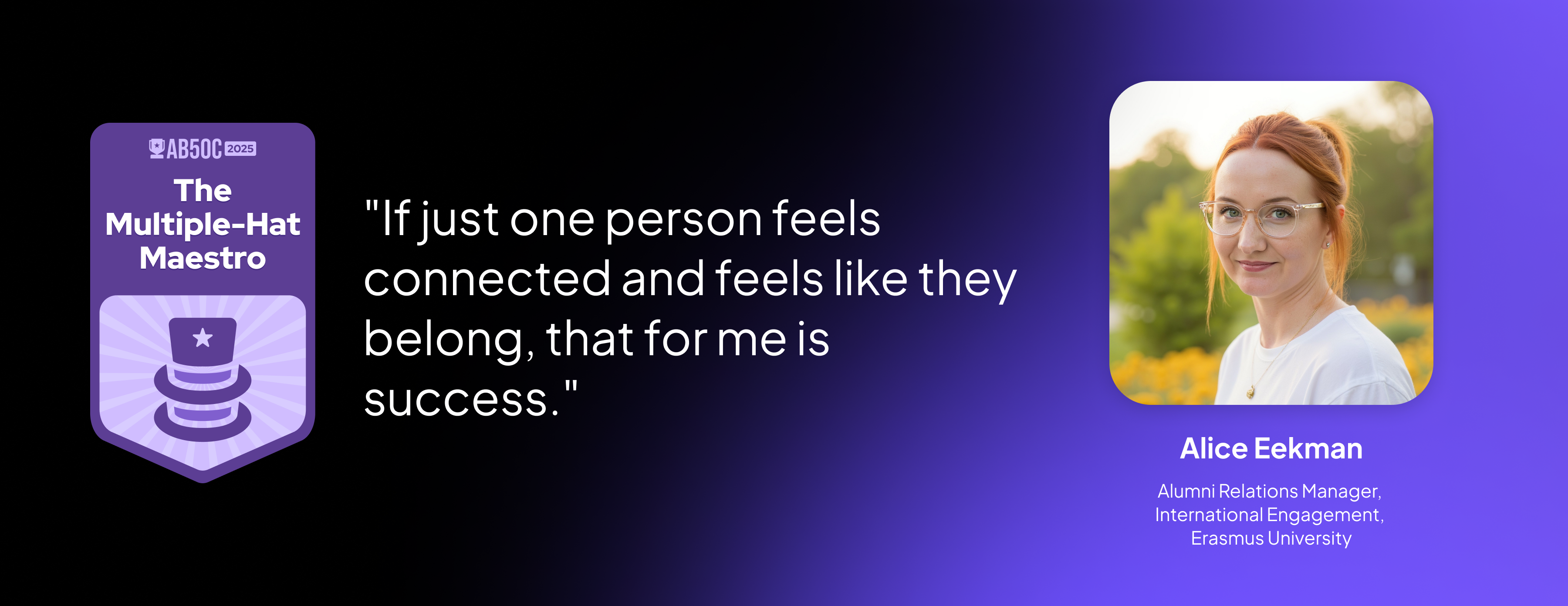
“If just one person feels connected and feels like they belong, that for me is success.”
Beyond the Title
There’s a personal reason Alice understands the importance of community so well.
Before she began helping alumni find their people, she had to find her own.
She once packed a bag, bought a one-way ticket to the Netherlands, and arrived without a job, an apartment, or anyone to call. She had to build a life from scratch and figure things out along the way.
That experience has stayed with her.
Today, Alice works with alumni who have experienced something similar: moving to a new country, starting over somewhere unfamiliar, and looking for people who understand what that feels like.
For Alice, alumni engagement isn’t simply about creating events or maintaining relationships with graduates. It’s about creating the kind of connection that can make an unfamiliar place feel a little more like home.
What Winning AB50C Meant to Her
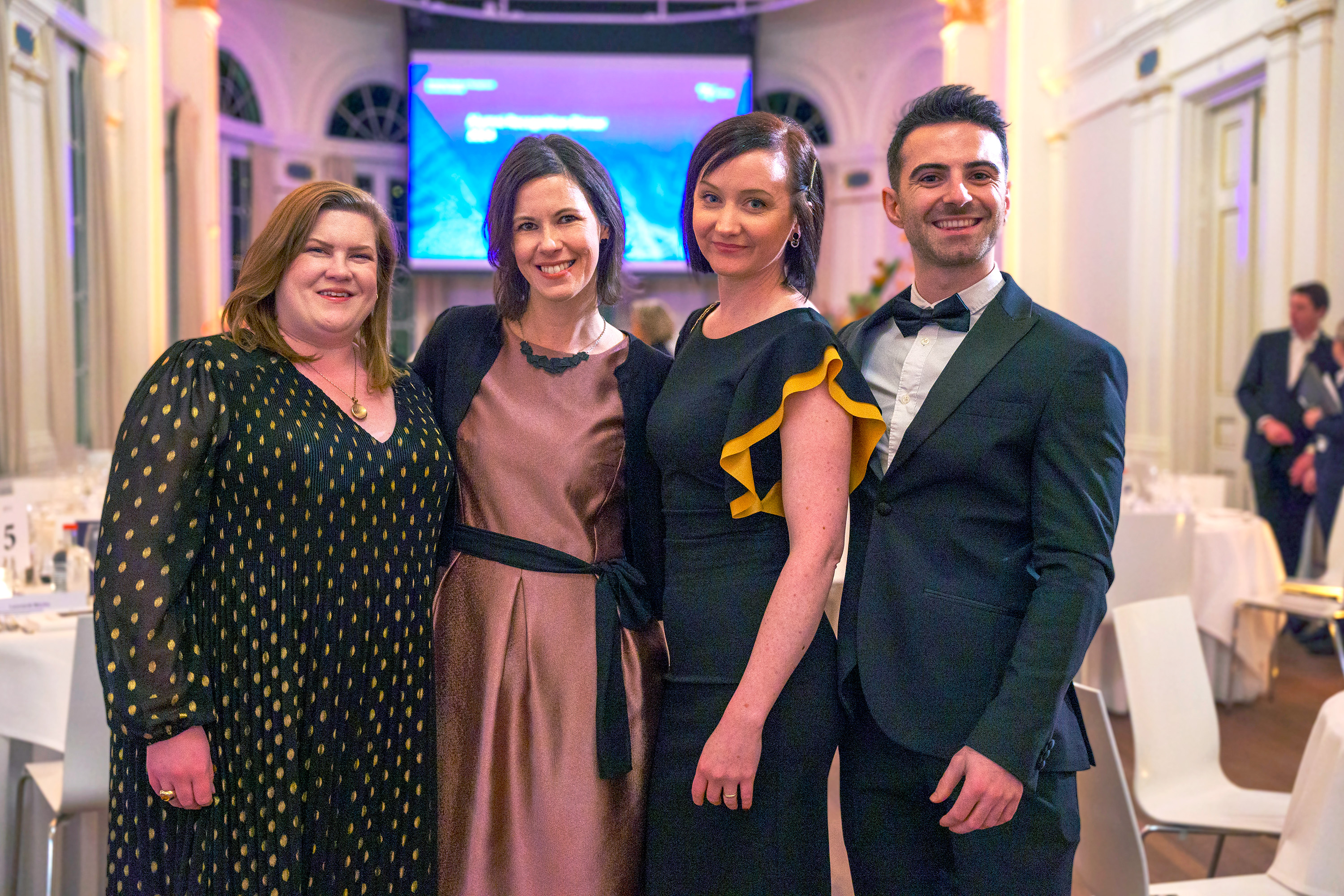
When Alice learned that she had been recognized as an AB50C Champion, the award meant more than simply receiving professional recognition.
She was one of the few winners doing this work outside North America, in a country where advancement is still a relatively emerging field.
For Alice, the recognition helped shine a light not only on her own work but also on the broader role advancement can play.
“The award helps put attention on advancement and how beneficial it can be.”
There is still an element of education involved in her work. Sometimes that means educating alumni on the benefits of community. Sometimes it means helping volunteers understand their role. And sometimes it means helping current students and colleagues understand what alumni relations actually is.
The AB50C recognition gave Alice an opportunity to bring more visibility to that work.
It also felt fitting that she was recognized as a Multiple Hat Maestro.
International alumni engagement requires exactly that: moving between strategy, volunteer management, community building, event planning, relationship management, and everything else required to support a global network with a small team.
But Alice doesn’t see wearing multiple hats as doing everything herself.
She sees it as creating the conditions for other people to succeed.
Finding Her Way into Advancement
Alice’s path into alumni relations wasn’t exactly planned.
Her career began in teaching before moving into marketing and eventually into education administration. Then she joined a school at a particularly interesting moment: its very first graduating class was about to leave.
Alice looked at the situation and saw an obvious question. What happens to these students once they graduate?
She believed they needed a way to stay connected.
The rest of the management team wasn’t immediately convinced. At the time, alumni relations in the Netherlands was still a relatively unfamiliar concept. Unlike in North America or the UK, it wasn’t yet an established function that institutions naturally invested in.
But instead of seeing that as a barrier, Alice saw an opportunity.
She eventually moved into higher education, working across different levels of education before finding her place in tertiary education and international alumni engagement.
“You get to actually see what happens with people once they’ve received their diploma. The transformation that education can do to someone’s life, we get to see where they end up.”
That perspective continues to shape how she approaches her work today.
.jpg)
Building Communities Across Borders
At Erasmus University, Alice leads international alumni engagement for Rotterdam School of Management, working with volunteers and communities across the globe.
Her role involves supporting alumni communities in cities and countries she may never have visited and working with volunteers she may never meet in person.
But Alice is intentional about how she describes her role.
She doesn’t see herself as the person who owns these communities.
“I don’t want to take the credit for this because they do the work themselves. These are their communities, not mine, but I support them and help facilitate what they’re doing there.”
That distinction matters.
Alice isn’t an alumna of the university herself, and she doesn’t live in every location where RSM alumni communities exist. She recognizes that these communities belong to the people who build and participate in them.
Her role is to give those volunteers the support, structure, and encouragement they need to bring their ideas to life.
.png)
The Work That Matters
Ask Alice what makes alumni engagement meaningful, and she doesn’t start with strategy or metrics.
She talks about something much more human.
It’s the feeling of hearing your own language after spending months speaking another one. It’s sharing food that reminds you of home. It’s meeting someone who understands the cultural references, traditions, and experiences you’ve been missing.
For someone living abroad, those seemingly small moments can carry enormous weight.
“To be able to help them find people who can support them on their way, this makes it so rewarding.”
That’s what keeps Alice invested in the work: creating opportunities for people to find connection when they might otherwise feel alone.
An Initiative She’s Proud Of
One initiative Alice is particularly passionate about is the university’s Diaspora Chapters.
The chapters connect international alumni living in the Netherlands with others from their home country.
The goal isn’t necessarily professional networking or career development.
It’s something much simpler: finding people who understand you.
For someone living abroad, being surrounded by people who share your language, cultural references, food, traditions, and sense of humour can provide a powerful sense of comfort and belonging.
“You can see the relief on people’s faces when they realise, oh, I can relax in this environment.”
The initiative is still growing. Alice is actively recruiting volunteers and establishing new chapters across the Netherlands.
For her, that growth represents what alumni relations can become when it moves beyond transactional engagement and focuses on the human experience.
“It’s so nice to find people who understand you when you’re living abroad.”
Always Learning
Alice’s commitment to learning doesn’t stop at her professional work.
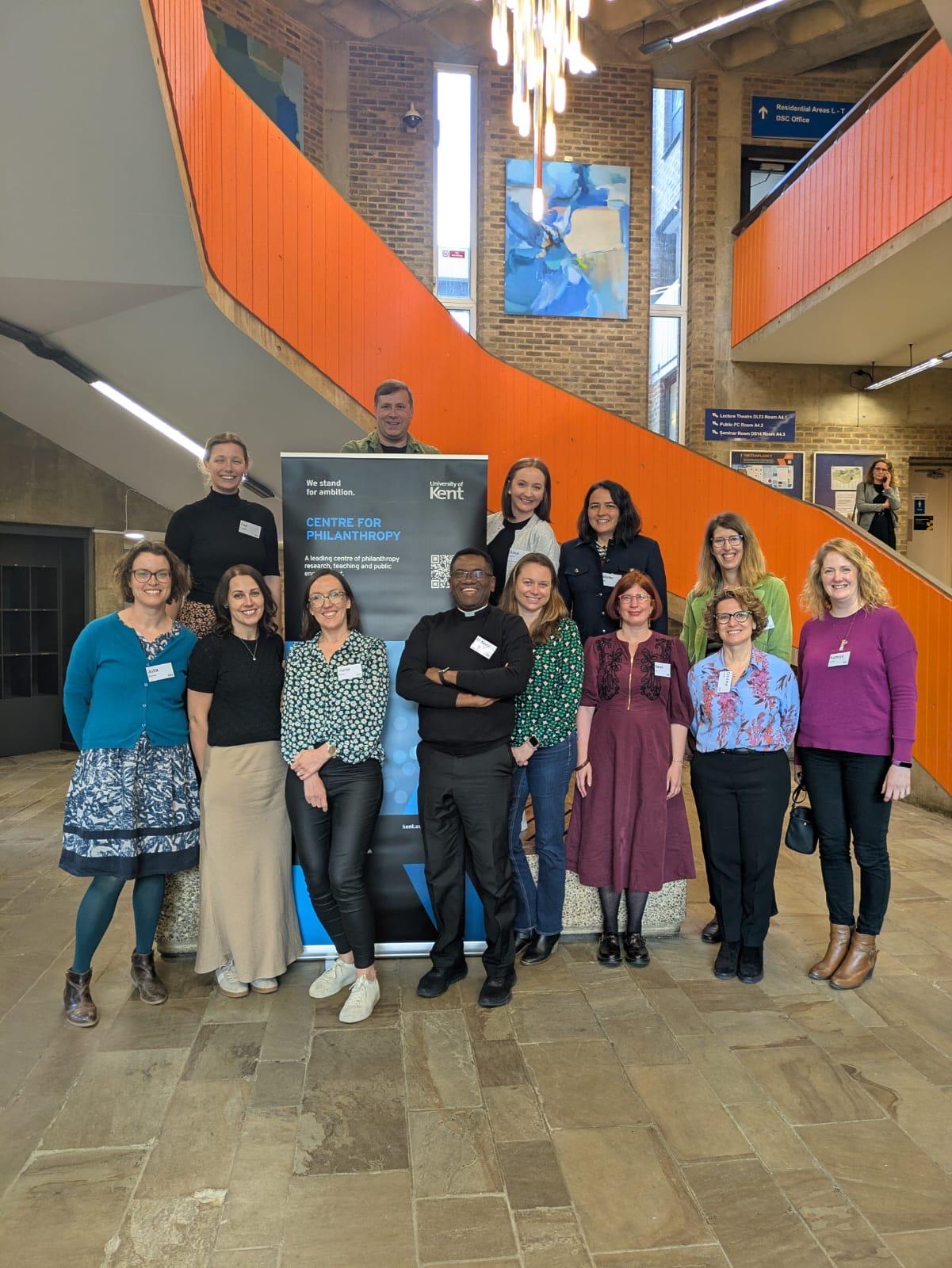
She is currently completing a master's in philanthropic studies at the University of Kent, with a dissertation focused on institutional support for volunteer managers in higher education in the Netherlands.
In many ways, she’s researching the same space she works in every day: how institutions can better support the people who make volunteer-led communities possible.
She is set to graduate in November and is currently pushing through the final stretch.
For Alice, continuing to learn is part of staying effective in advancement.
“You have to keep learning. That’s how you stay on top of things.”

AI: A Tool, Not a Replacement
Like many advancement professionals, Alice is finding ways to incorporate artificial intelligence into her work.
She’s pragmatic about it. If AI can save time or make certain tasks more efficient, she’s happy to use it.
But she also knows where she draws the line.
For Alice, technology should support human connection, not replace it.
“I want to get the benefits out of it, but I don’t want it to replace that really important human connection.”
That distinction is particularly important in community building and volunteer engagement, where authenticity and trust are central to the work.
AI can help with efficiency.
But it can’t replace the feeling of finding someone who makes an unfamiliar place feel like home.
Rapid Fire
.png)
Where It All Comes Together
Alice could tell her story through the numbers: 100+ volunteers, 130+ events, and communities spanning the globe.
But the numbers only tell part of the story.
At the heart of Alice’s work is something much simpler.
She knows what it feels like to arrive somewhere new and have to build a life from scratch. She knows the comfort of finding people who understand you. And she understands how powerful a small moment of connection can be when you’re far from home.
That perspective has shaped the communities she’s built, the volunteers she supports, and the alumni experiences she creates.
Because sometimes advancement isn’t about making a bigger ask, organizing a bigger event, or reaching a bigger audience.
Sometimes it’s about helping one person walk into a room of strangers and realize:
I belong here.