To help your university improve your alumni appreciation strategy and increase fundraising, send personalized messages, custom merchandise, and host alumni events.

Your university likely often brainstorms new fundraising ideas to engage alumni, from Giving Tuesdays to tele-a-thons. However, one of the most effective ways to earn alumni support is to demonstrate your appreciation before pitching for a donation.
According to NPO Info’s charitable giving statistics report, alumni are an important donor group for higher education institutions, contributing approximately 26% of all gifts to colleges and universities.
Theoretically, your university should see a regular increase in alumni giving year after year as each class graduates and enters the workforce.
However, universities will only be able to set themselves up for this growing support if they take the proper steps to retain their alumni donors. To help your university improve your alumni donor appreciation strategy and increase fundraising, this article will explore how to:
When reaching out to current and potential alumni donors, keep in mind that just because an alumni isn’t able to give now, doesn’t mean they won’t be able to in the future. Keeping these relationships strong long-term can be well worth the effort.
Each of your alumni had a unique experience at your university, making life-long connections with professors, faculty, and fellow students. Show them that they are still an important part of this community by reaching out to them with personalized messages.
Basic personalization includes doing small things like addressing your alumni by name. But you can go a step further and create messages that will truly capture their attention by:
Personalized messages strengthen your donation requests and show your alumni that your university acknowledges and appreciates their support. Additionally, be sure to reach out to alumni volunteers to thank them for their efforts. This will help secure their support long-term, and may even lead to future donations as volunteers can often turn into donors.
Chances are that you or someone (or many people) you know still have school spirit for their alma mater, even decades later. You can help your alumni continue to represent their school years after graduation with custom merchandise with your university’s name and logo.
Of course, your university likely already has an on-campus store where visiting alumni can pick up merchandise. However, you can give them more options by creating an online storefront or even sending merchandise in the mail as a thank-you for donating.
When it comes to creating custom merchandise, you can stick to old classic designs or mix things up to create apparel that plays with your university’s branding in a unique way to make items that are stylish and maybe a bit out of the box, but still unquestionably represent your university. For example, try playing with the color and even the overall style of items to create something eye-catching.
You can also create merchandise lines exclusively for alumni who donate or volunteer. This can make alumni feel not just appreciated, but that they are members of an exclusive group powering their school’s success.
Although with time, your alumni will move on with new friends, coworkers, and raising families, many of them will likely enjoy reconnecting with old college friends and professors, revisiting campus, and reliving the time spent at their alma mater. Alumni events provide the opportunity for them to do just that and are an impactful way to show that their alma mater still considers them to be a valuable member.
You can gather your alumni together to show your appreciation and garner support with events like:
To host an alumni event, use your alumni management tools to identify alumni you would like to invite, create personalized invitations, and track how your event turned out. After each event, follow up with alumni to thank them for attending and create a communication stream to strengthen your relationship and encourage them to make a contribution in the future.
Your alumni will have a connection to your school forever, and you can transform those feelings into lasting support with the right appreciation strategies. Show donors that their contributions matter by reaching out to them with custom messages, providing them with custom merchandise, and bringing them back to your university with numerous events. Good luck!
Table of Contents
Subscribe
See how modern advancement teams bring alumni engagement and fundraising together.
As a fundraising professional, you understand the importance of building relationships with your valuable donors. They’re the ones who provide the funding that make it possible to provide new opportunities for students and alumni. Therefore, building relationships with them secures support both now and in the future for these fundraising programs to continue taking place.

Considering the disruptions that everyone experienced (and continues experiencing) during the COVID-19 pandemic and how the industry has evolved since then, your relationships with many donors might appear to be volatile or different. When everyone changed up their strategies to incorporate the latest trends in engagement, some strategic aspects undoubtedly fell through the cracks.
We recommend taking your approach back to the basics of engagement and donor relationships this coming year. Revisit some tried-and-true ideas that have been proven time and time again to bolster relationships with your supporters. After all, these are the strategies that are most often forgotten when we embrace new methods and change up our approach to relationships.
The tips we’re covering in this article are ones that you may have seen before. However, they’re immensely important to maintain throughout the hubbub and chaos of the year. Without further ado, let’s dive deeper into these important and timeless strategies to help take your donor relationships to the next level.

For students, alumni, and donors, it’s painfully obvious when you send out emails or other communications that do not employ segmentation or other personalization strategies. Everything from a “To whom it may concern” introduction to the lack of personal details in the message makes it clear that you sent the same message to everyone on your email list.
Generic, impersonalized outreach is the easiest to ignore and causes the downfall of many marketing programs. See how institutions such as Gann Academy increased alumni email open rates by personalizing their email campaigns.
When it comes to your donors, you should include the same personalization strategies for outreach.
The easiest way to start making the most of personalization is to use the same approach as Gann Academy: start with your email campaigns. Use the information in your donor database to fill in some gaps and to show your supporters that the message you’re sending is customized just for them. You can do this by:
- Using the donor’s preferred name in the introduction.
- Including details about the supporters’ engagement history.
- Approaching specific segments of donors with targeted messages.
- Sending messages relevant to the interests of the donor.
When you have access to an effective donor database, a lot of this information can be automated to save you time and energy in sending these highly targeted messages. This effective donor database buyer’s guide explains that automation features, when used correctly, can make personalization more effective and efficient.
Your database can be used to auto-populate details into message templates and ensure you reach the right audience segments in your communications to enhance donor engagement.

Building relationships is impossible if it’s a one-sided effort. Your institution needs to not only work to communicate and show your donors that you care, you need to invite them to engage back with you by providing ample opportunities.
Since COVID-19, engaging opportunities look a little different than they have in the past. To create engaging opportunities amidst of a pandemic, many institutions had to adhere to social distancing guidelines by coming up with new virtual event ideas.
We’ve come up with a list of our favorite virtual fundraising ideas that any educational institution, nonprofit, or other organization can make use of. While you can find the full list here, we’ll highlight some of the options below:
- Online Gala - This is a great opportunity to encourage your major donors to get dressed up and network with one another using virtual conferencing software.
- TED Talk Events - Encourage your donors while enforcing your emphasis on education by providing TED Talk-style events to spread knowledge about certain topics.
- Online Classes - Provide online class opportunities for donors as well as students. These may not be full-fledged courses, but mini opportunities to sharpen skills.
- Annual Giving Days - Giving days encourage a great number of people (especially alumni) to give on a very specific day, similar to #GivingTuesday.
- Matching Gift Drives - This is a great way to encourage more donations and maximize impact. Promote corporate giving opportunities and remind supporters to check their eligibility for matched gifts.
When your donors get involved with all of the opportunities you offer, they strengthen their ties to your institution. This makes it all the more likely that they’ll continue supporting you in your upcoming fundraising events.

A phone call is an often overlooked relationship-building strategy because it can be somewhat time-consuming. However, it’s a valuable tool and makes a huge difference, especially when it comes to new donors.
For instance, consider the new donor cultivation timeline below. It shows that a thank-you call within 48 hours of a donation can dramatically improve your donor retention rates. Plus, it’s the first step to begin a strong relationship with your donors. This is because you establish a personal connection with the donor while showing your appreciation for their contribution.

Phone calls are a great way to start a relationship with donors on the right foot. However, don’t forget to employ the strategy with your seasoned donors as well! Call them to maintain regular contact and to express your gratitude for their continued support in your fundraising initiatives.

You’ll notice that on the cultivation timeline from the previous section that the step after a “thank you phone call” is sending a “signed thank you letter.” While email is likely your primary method of communication with the donors, the power of a physical letter of appreciation should not be underestimated, especially when it’s hand-written.
Handwritten notes are a classic way to show your donors that you will truly take the time out of your day for them. They want to feel like a priority for your organization, which is what a hand-written note should communicate.
When you write these notes, there are specific elements that you should make sure to include, such as:
- The preferred name of the donor. Just like in email communications, you should make sure to refer to the specific donor as you hand-write letters (be sure to double-check your spelling, too!)
- The activity they participated in. If your donor has just contributed funds, be sure to thank them for the specified amount. If they attended an event, thank them for their involvement and participation.
- The president’s signature. Letters are generally better received when they come from the top office of your institution. Therefore, you should make sure the president of your institution’s signature is on each and every one of them.
Just like phone calls, hand-written letters tend to be important strategies as you cultivate relationships with your new donors. However, don’t forget about the strategy for your veteran donors!
Be sure both phone calls and hand-written letters are a part of both your cultivation and stewardship strategies to strengthen donor relations.
.avif)
Don’t we all love stories? Your donors want to hear your inspiring story. They want to hear the reason behind all the great work that you do and the support that you provide to your community. Sharing these stories with your donors is a great way to show them what it is that their contributions support.
One of the current trends in the higher education space is the use of images to communicate these types of narratives. This trend is important to keep in mind because there are so many different platforms on which you’ll be telling stories. For instance, consider the following examples:
- Email - Whether it’s an email to a certain segment of your audience or a regular newsletter sent to many, include an image of an individual who attended your institution along with their story. This adds a face to the name and a personal touch to show the impact of donations.
- Social media - Platforms like Instagram and Facebook are made for visual storytelling. Be sure to use an image that tugs at the heartstrings to gain the attention of your audience, then caption it with details about the story itself. If it’s a longer story, be sure to provide a link to where donors can read the rest of it.
- Blog posts - Blogs are the perfect way to write long stories about individuals or about the progress of your institution. Showing images, faces, and specific names makes them even more powerful.
They say a picture is worth a thousand words. And it’s true! Be sure to leverage both text and image when you tell the story of your institution’s successes.

In the last section, we mentioned briefly that stories are a method of showing impact. Communicating impact is critical for donor engagement and continued support down the line. Think about it. If you give to an organization, you’re not contributing money for the sake of spending it. That would be silly! Rather, you’re donating to help accomplish a mission.
Communicating the progress of this mission and the impact of specific donations is a great way to give your donors the warm and fuzzy feeling in the pit of their stomachs that was probably what drove them to contribute in the first place. You’re reinforcing the positive aspect of donating.
Check out this nonprofit annual report guide that conveys the story of The Johnsons and how their impact was communicated to all contributors in an end-of-year report.

Notice some key aspects of this example:
- It shows a picture of The Johnsons
- The text uses a statistic showing the impact their contributions made
- The text is framed to put all of the emphasis on the Johnsons rather than on the efforts of the organization
These aspects are some of the most important things to remember when you communicate the impact of specific donors. Generally, on annual reports such as this, it’s your major donors that you’ll highlight. However, you can still use these strategies in emails, letters, phone calls, and other methods of communication to show any supporter that they’ve made a difference.
Building donor relationships is an incredibly important part of the fundraising strategy at your institution. Therefore, even as you explore all of the new and exciting ways to communicate and engage with them, don’t forget about the basics. Form a strong foundation for your donor relationships by using these tried-and-true strategies. Then, continue to cultivate and build these relationships to watch your fundraising soar!


Co-Founder and current Chief Relationship Officer at Bloomerang
He has served this sector for 33 years and is considered the most well-known senior statesman whose advice is sought constantly.
Prior to Bloomerang, he was the CEO and Co-Founder of eTapestry for 11 years, which at the time was the leading SaaS technology company serving the charity sector. Jay and his team grew the company to more than 10,000 nonprofit clients, charting a decade of record growth.
He is a graduate of Butler University with a B.S. in Business Administration. Over the years, he has given more than 2,500 speeches around the world for the charity sector and is often the voice of new technology for fundraisers.

6 Ways to Take Your Donor Relationships to the Next Level
Donor relationships are necessary to maximize fundraising and support retention rates. Check out these six expert tips to take relationship-building further.
Lorem ipsum dolor sit amet, consectetur adipiscing elit. Suspendisse varius enim in eros elementum tristique. Duis cursus, mi quis viverra ornare, eros dolor interdum nulla, ut commodo diam libero vitae erat. Aenean faucibus nibh et justo cursus id rutrum lorem imperdiet. Nunc ut sem vitae risus tristique posuere.

Here are two main reasons why Online Giving is the best place to invest your time and talent.
1. It is the hottest form of giving right now – Online giving in Education sector has risen by a staggering 12.3 % and 15 % in last two years.
2. It has seen the largest adoption rates by the Millennials
62% of donors worldwide prefer to give online
Our experience with over hundred partner schools across the world had taught a few things about various friction points on Giving Pages. Some common examples include:
1. excessive steps or clicks in the giving process
2. multiple or conflicting calls-to-action, non-essential buttons, menus, or navigational elements.
Simple math tells us that:
1. Even under the assumption of a very conservative conversion rate of 1 % for every 1,000 visitors, you will have 10 donors.
2. For the same 1,000 visits to your online donation form, if 3% of them convert into donors, you’ll have 30 donors. That’s a 200% improvement! And depending on your average gift amount, this could equate to a significant increase for your organisation.

.%20money-card-business-credit-card-50987-1920x1280.avif)
7- Effective Online Giving Practices
Here are two main reasons why Online Giving is the best place to invest your time and talent.1. It is the hottest form of giving right now – Online giving in Education sector has risen by a staggering 12.3 % and 15 % in last two years.
Lorem ipsum dolor sit amet, consectetur adipiscing elit. Suspendisse varius enim in eros elementum tristique. Duis cursus, mi quis viverra ornare, eros dolor interdum nulla, ut commodo diam libero vitae erat. Aenean faucibus nibh et justo cursus id rutrum lorem imperdiet. Nunc ut sem vitae risus tristique posuere.
Peer-to-peer fundraising is a powerful social giving tool that many educational institutions have employed to increase donations while expanding their donor base. Through these campaigns, schools of all sizes empower their donors to raise money on their behalf.
Peer-to-peer fundraising campaigns have become a mainstay of fundraising for higher education causes and charities because they tap into the power of your donors’ social connections. Plus, they’re extremely flexible and easily adapted to today’s virtual and hybrid fundraising landscapes.
.jpeg)
Schools are especially well-positioned to benefit from peer-to-peer fundraising since they have large communities of alumni, current students, and family networks who have emotional connections to their mission and the overall institution. These supporters are also likely to share your campaign online, and the social proof of their support encourages their wider social networks to get involved, too.
This guide will cover six key strategies that higher ed institutions need to succeed with peer-to-peer fundraising. But first, let’s review how these campaigns work.
There are a few core steps to executing peer-to-peer fundraisers. Every campaign will follow this general structure:
Within this easy-to-launch campaign process, there are plenty of other steps, tools, and strategies that you’ll need to succeed. Although your supporters are doing the actual fundraising, these campaigns aren’t hands-off. Use these six strategies to help you reach (and exceed) your campaign goals:
Providing an easy giving experience is one of the most important things you can do to drive supporter engagement and increase donations. The fundraising software you use directly impacts the donors’ experiences with your campaign.
Peer-to-peer fundraising software should allow you to:
By leveraging dedicated tools designed specifically for peer-to-peer fundraising, launching and managing your campaign and individual giving pages can be easy. Using peer-to-peer fundraising software that offers robust features, mobile-optimized giving pages, offline donation tracking, real-time reporting, and CRM integrations allows you to easily launch new campaigns and meet and exceed your annual fundraising goals.
Before launching your peer-to-peer fundraising campaign, you’ll need to create a core campaign page. The next obvious step would be to spread the word online, allowing anyone to get involved to help you fundraise. While this approach definitely works, we also recommend taking a more strategic approach by actively recruiting ambassadors for peer-to-peer fundraising campaigns.
Fundraising ambassadors are your most passionate and well-connected supporters. Rather than hope they’ll join your campaign, personally reach out to them in advance! Ambassadors can help your campaign by:
This strategy is particularly effective for peer-to-peer campaigns leading up to an annual gala or other large-scale events. Just be sure to provide your ambassadors (and all of your volunteer fundraisers) with the resources they need to succeed.
When you prepare to launch a peer-to-peer fundraising campaign, it’s important to offer training opportunities to your supporters. Most supporters might not have a ton of experience as fundraisers, so getting them set up on the platform and providing them with resources will boost results and engagement. This is particularly important for ambassadors, who you may work with to set specific fundraising and event sign-up goals.
To make fundraising easy for these supporters, be sure to provide the following resources:
In order to reach your institution’s fundraising goal, your supporters must communicate to their networks in the way you need them to while offering them a way to put their own personal touches on the campaign. Training and support are also essential for making your peer-to-peer fundraising campaign a positive experience for your fundraisers. This will help ensure that the campaign pulls double-duty—raising donations and boosting alumni relations.
While your students may be online constantly, it’s a good practice to diversify your fundraising campaign’s promotional strategies to create maximum reach and appeal to a wide range of donors.
Donor and alumni networks consist of different generations, so you and your volunteer fundraisers will need to meet all of them where they are.
According to the OneCause guide to peer-to-peer fundraising, this means using a mix of traditional and modern marketing methods, including:
The various approaches you and your fundraisers use should be tailored to your donor audience to maximize impact. If you’re trying to reach a broad range of alumni and donors, you should use outlets that will help you reach a variety of age and location demographics. But if your fundraising campaign is mainly geared toward younger alumni, focusing on email and social media (and forgoing expensive direct mail) can be a smarter way to focus your efforts.
It’s helpful at this stage to review the performance of your previous fundraising campaigns. What marketing tactics worked best to engage particular donor segments? Use these insights to guide your new promotional strategy, and encourage your volunteer to rely on those outlets as well.
Peer-to-peer fundraisers work well with events, and you have tons of flexible options. Organizations often host a range of kickoff events, mid-campaign gatherings, and grand finale events like walkathons or galas for their fundraising campaigns. The rise of virtual fundraising events has opened up even more opportunities to efficiently plan and host a variety of events.
Take some time early in the planning process to brainstorm a few options based on the scale of your campaign. As you’re brainstorming, keep these top of mind:
Pairing your peer-to-peer fundraiser with an event or two can be an impactful way to bring your campaign full circle. Using peer-to-peer fundraising software that’s part of a broader suite of fundraising tools, including registration and virtual event features, makes it easy to diversify all of your future campaigns with a variety of events and donor engagement options.
Who isn’t motivated by a little friendly competition? Donors love to be recognized for their contributions, and your institution can benefit from leveraging gamification tools throughout your peer-to-peer fundraising campaign.
Classic gamification tools include:
Gamification and goal-setting are especially important if you’ve recruited fundraising ambassadors for your campaign. Give them plenty of support and specific goals to reach. This will help them better motivate their audiences to give. During your grand finale event, honor your fundraising ambassadors, have them complete fun challenges, and reward your top fundraiser.
And don’t forget that gamification and add-on strategies can help to boost your donations in more direct ways, too. Try implementing a matching donation challenge during which a corporate partner matches all incoming donations. Or challenge your fundraisers to see who can secure the most employer-matched gifts overall through any corporate philanthropy programs that donors may be eligible for—more on that in the next section.
Meanwhile, appended employer information can help you identify more opportunities among your alumni and guide your matching gift strategy during the campaign.
Peer-to-peer fundraising isn’t just about tapping into your alumni and student networks—it’s also about unlocking the extended networks they’re connected to. One powerful and often overlooked strategy is to leverage corporate giving programs, such as matching gifts and volunteer programs, to amplify peer-led efforts.
After all, many companies offer matching gift programs, where they’ll match donations their employees make to eligible nonprofits. This can double—or even triple—the impact of every peer-to-peer gift. Encourage your fundraisers to check if their employers (or their donors’ employers) offer these programs. Better yet, embed a matching gift search tool into your campaign pages or emails so supporters can find their company’s guidelines in seconds.
In addition to matching gifts, corporate volunteer grants are another valuable opportunity. Many companies reward volunteer hours with financial donations. If your peer-to-peer participants are also volunteering (for example, by hosting events, organizing campaigns, or participating in service projects), their employers may provide funding in recognition of that time.
To make the most of these opportunities, consider using an employer appends tool to identify where your supporters work. These resources can fill in employment information gaps in your donor database, helping you target the right individuals with corporate giving messaging.
.png)
Peer-to-peer fundraising has proven to be one of the most flexible and effective ways to reach donors in recent years. For higher ed institutions with a large alumni community, launching a campaign that capitalizes on all those connections is a win-win: more donations to support your work and strengthened donor relationships.
Study up on these tips and other expert peer-to-peer fundraising best practices, equip your team with the right tools, and be prepared to help your volunteer fundraisers promote your campaign. You’ll be reaching your goals in no time!
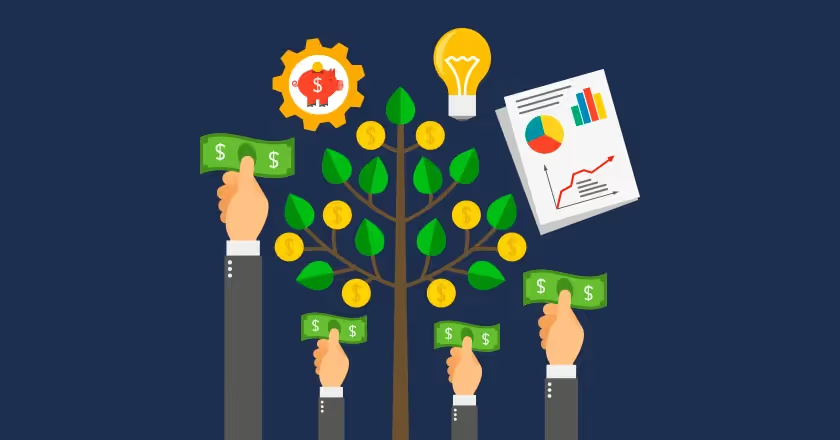
Peer-To-Peer Fundraising in Higher Ed: 7 Proven Strategies for 2026
Peer-to-peer fundraising is a powerful way to tap into your institution’s network of alumni and donors. Learn how to get started with these 6 top strategies in 2025.
Lorem ipsum dolor sit amet, consectetur adipiscing elit. Suspendisse varius enim in eros elementum tristique. Duis cursus, mi quis viverra ornare, eros dolor interdum nulla, ut commodo diam libero vitae erat. Aenean faucibus nibh et justo cursus id rutrum lorem imperdiet. Nunc ut sem vitae risus tristique posuere.

.svg)

.avif)
.webp)