Most fundraising campaigns and engagement events were held virtually in the wake of the pandemic last year, and have continued to leverage the virtual platform ever since. Have a look at three key strategies that can help you improve your virtual alumni engagement in 2022.

Adam Weinger
Updated:
April 1, 2026

It’s no secret that keeping alumni engaged in the post-pandemic landscape will present unique challenges, considering most events and fundraising efforts have moved online. Fortunately, many educational institutions have risen to meet those challenges and sharpened their abilities to maintain and even increase alumni engagement in the past year.
If you’re wondering what are some key strategies your organization can utilize to keep that momentum going and continue peaking alumni engagement in 2022 - we have got you covered. Let’s dive into some of the best approaches to keep your alumni virtually engaged with your institution going forward this year.
.png)
Nothing encourages former students to stay plugged-in with their alma mater like the opportunity to create a community with other alumni. Many people have struggled with a lack of social interaction during the pandemic, and virtual community-building events are the perfect remedy for this situation.
In order to plan a successful virtual event be sure to nail down key logistics beforehand like an event agenda, promotional efforts, and setting up a plan to analyze post-event feedback. Let your alumni know in advance what the event has to offer and make sign-up as seamless as possible by offering quick registration supported on a variety of devices.
When it comes to promoting the event, use multiple channels to maximize your outreach. For example, you could create Facebook pages alongside email invitations to reach alumni no matter how they prefer to communicate. A good way to increase engagement would be to make your promotional efforts interactive. Ask your alumni to RSVP using a hashtag or commenting on a Facebook post - this will ensure better reach and engagement on your social media handles.
Finally, you can create opportunities for post-event feedback to tailor your approach for future events and increase alumni turnout. You want your former students to know that their opinions matter to you, so make sure you ask them to share it! This will also make planning your next event simple since you can build on the feedback and experience that your alumni share.
Check out how various institutions have leveraged the virtual space for innovative online events like virtual happy-hours, book clubs, and flagship events.
A good social media presence can undoubtedly do wonders for your engagement goals. You likely already have a social media strategy in place, but how tailored is it to empower alumni to interact with one another and the institution? A simple way to get alumni engaged is to interact with their posts and to invite them to interact with yours!
One option is to create content that invites alumni to post photos of them at college events or even happy memories from their time at the school, college, or university. This is a great method to evoke nostalgia in your alumni and encourage them to remember the positive impact that your institution had on their academic experience.
You can even personalize these calls-to-action by tailoring them to specific programs or organizations involved within your school. For example, you could ask all journalism students to post a memory of why they chose to pursue journalism - or maybe ask all of the students involved in your athletics program to post a photo of their team. These specific calls-to-action are more likely to fetch responses from the targeted group of alumni.
Ensure social media calls-to-action remain engaging and personal by applauding donor efforts and the impact their gifts have on opportunities for future students. You can even share narratives of these impact stories by showcasing the effect their donations have made on a particular student or program. This is a great way to remind them that they are a part of the good change which will surely translate to donor engagement and retention.
Finally, you can encourage peer-to-peer giving campaigns through social media, so that alumni feel more directly involved with their community fundraising. By encouraging students to fundraise directly with their peers, you ensure an organic giving environment that fosters the sense of community that many alumni might associate with your school - making it a win for everyone involved!
When it comes to finding new ways to keep alumni engaged with your giving campaigns, matching gifts is a valuable giving option to consider. Matching gifts are a form of corporate philanthropy in which companies financially match the individual donations their employees make to charitable organizations - sometimes even at a 2:1, 3:1, and even 4:1 ratio.
Donors love to discover their eligibility for these programs as it allows them to instantly double the impact their donation can have on causes they care about, without having to reach back into their wallets. Informing donors of their eligibility can encourage higher donations; 84% of donors are more likely to give a donation in the first place if they know their gift will be matched and 1 in 3 donors indicate that they would donate a larger amount if their gift will be matched.
Many donors are actually unaware that they qualify for a matching gift program - in fact, 78% of match-eligible donors don’t know about their employer’s matching gift program. That’s why we recommend marketing matching gifts to your former students to help them discover eligibility and submit their matching request. This is a great way to add value to their donation experience while boosting revenue for your fundraising campaign. You can utilize a variety of avenues for this outreach, such as on a “Ways-to-Give” page, via social media, and through email outreach.
Moving forward into 2022 with these alumni engagement strategies in your toolbox, you can ensure your alumni remain not only plugged-in, but also well engaged, which is sure to reflect in your fundraising campaigns.
Subscribe
See how modern advancement teams bring alumni engagement and fundraising together.
Plan faster. Execute better
Explore free templates designed for alumni and fundraising teams.
.png)

.avif)
Adam Weinger
As part of the higher education sector, your university likely depends on social campaigns like peer-to-peer fundraising and crowdfunding to fund its projects and initiatives. While these campaigns have the potential for a wide reach, they require effective promotion to maximize alumni support.
How can you retain alumni support long after they receive their diplomas? Let’s explore the top marketing practices your university should employ when planning your outreach strategy.
Your alumni may be eager to support your university, but many are unaware of the opportunities available to help them maximize their contributions—namely, matching gifts.
Matching gifts are a type of corporate social responsibility initiative wherein businesses match donations made by their employees. Double the Donation defines corporate social responsibility as “a company’s efforts to improve society” in a multitude of ways, from directly donating to supporting employee giving. Matching gifts combine both of these efforts and represent a major revenue opportunity for universities.
Identify match-eligible alumni by looking into your existing donor base. Specifically, take a look at your alumni and major donors who represent your largest match opportunities. Then, secure matching gifts from alumni by promoting the opportunity to match-eligible individuals through:
As you solicit matched gifts, maintain an open line of communication with major employers who offer matches. Periodically review their policies and ask them to notify you if any changes are made to their matching gift program. Both universities and donors should stay on top of employers’ match guidelines to avoid missing out on matching gift revenue.
Communication is the foundation of a successful fundraising campaign. While some approaches are more effective than others, the best results come from incorporating multiple channels—especially for larger donor bases.
There are two types of marketing your university can leverage, and each type has a plethora of channels you can use to spread the word about your campaigns:
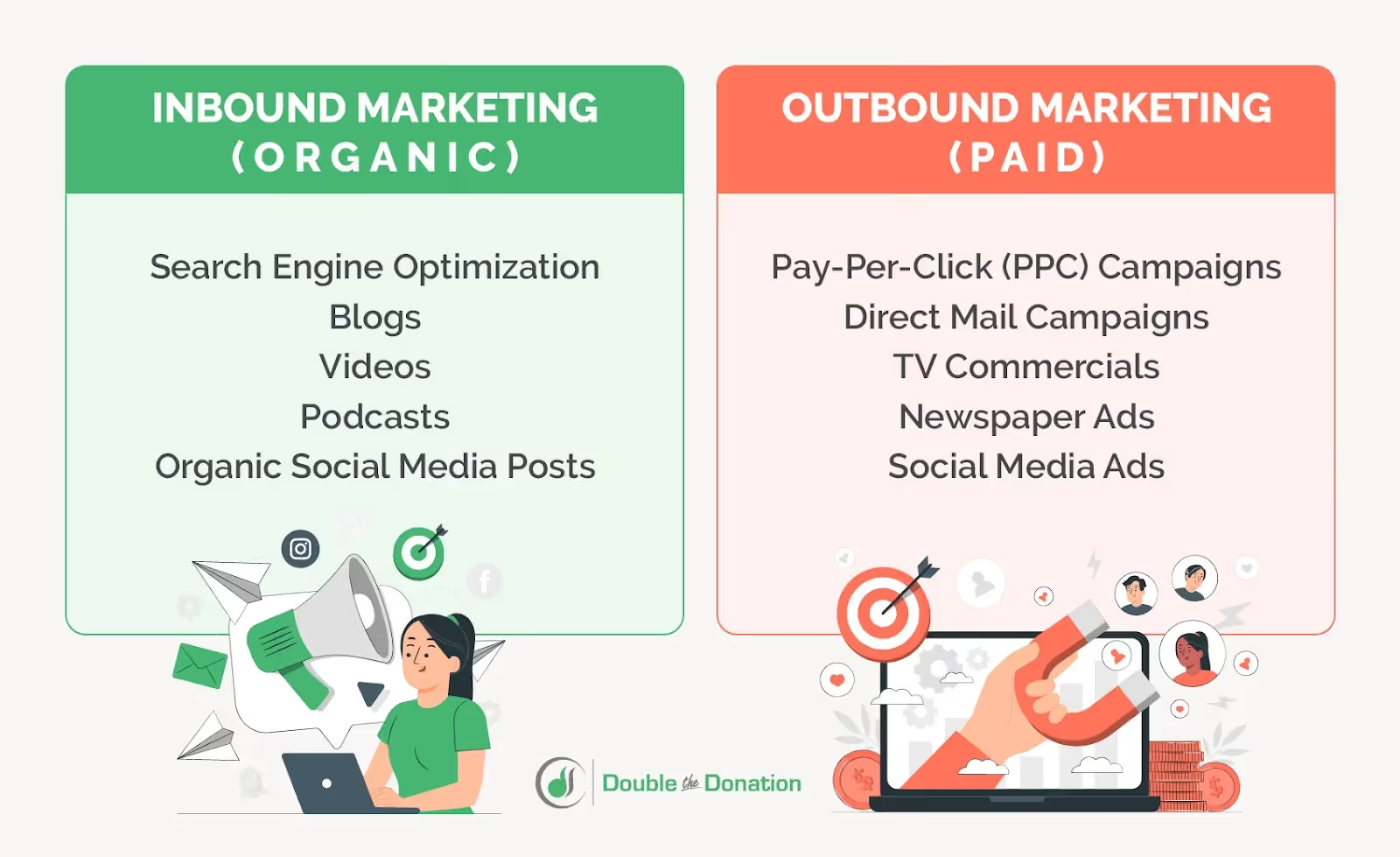
Remember, communication is a two-way street. You won’t just want to send messages to alumni, but to stay in touch with them over time. Ensure that alumni and any volunteer fundraisers feel free to voice their feedback or concerns.

Effective communication is about more than just an open line of communication—it’s about powerful storytelling, too. Stories encourage alumni to form stronger connections with your university’s mission, students, and impact.
As part of your marketing approach, implement the following storytelling strategies into your content:
Storytelling and powerful imagery compel users to share content with their networks, so it’s crucial that you make your storytelling components shareable. For example, you might place a “Share” button next to the content on your alumni website that makes it easy for viewers to repost an article or video to their social media channels.
In all your digital marketing materials, make it easy for viewers to take action by directing them to your donation page. Make the most of clear calls to action, prominent buttons, and QR codes across all the channels you use. To ensure shareability, use an effective social campaigning platform and the right social media platforms.
Additionally, when alumni land on your fundraising page, they should be able to take action easily. Check to ensure your donation form can be quickly completed and doesn’t require any unnecessary steps. With a compelling marketing strategy and simple form, your university can seamlessly convert alumni into dedicated supporters.
Now that you know the best marketing practices, share this information with your fundraising team, and plan your best campaign yet! Then, as donations start to roll in, be sure to show your appreciation for donors’ support and continue to engage them by offering additional involvement opportunities. The more active your donors are in your university’s activities, the more likely they’ll be to continue their support.

Adam Weinger is the President of Double the Donation, the leading provider of tools to nonprofits to help them raise more money from corporate matching gift and volunteer grant programs.
Double the Donation's robust solution, 360MatchPro, provides nonprofits with automated tools to identify match-eligible donors, drive matches to completion, and gain actionable insights. 360MatchPro integrates directly into donation forms, CRMs, social fundraising software, and other nonprofit technology solutions to capture employment information and follow up appropriately with donors about matching gifts.

4 Marketing Strategies University Fundraisers Need to Know
Lorem ipsum dolor sit amet, consectetur adipiscing elit. Suspendisse varius enim in eros elementum tristique. Duis cursus, mi quis viverra ornare, eros dolor interdum nulla, ut commodo diam libero vitae erat. Aenean faucibus nibh et justo cursus id rutrum lorem imperdiet. Nunc ut sem vitae risus tristique posuere.
Social media is a pivotal tool for alumni engagement, especially for young alumni who spend a lot more time on social media platforms than older generations. Engaging young alumni after graduation is crucial to building lifelong relationships. In order to stay connected with these young alumni after graduation, the two must-haves are: an effective alumni social media strategy and high-quality content.
Let’s take a look at some of the best practices for engaging alumni using social media from world-famous educational institutions, and how they use social media posts and content for engagement:

Alumni respect the professors who helped them master new skills and gain valuable knowledge during their formative years. A social media post featuring one of your beloved professors can tap into your alumni’s sense of gratitude and nostalgia, strengthening the sense of belongingness to the institution.
Keeping alumni regularly informed about deceased professors also offers a good opportunity for the former to pay their respects.

One of the ways to engage and motivate your followers is to share inspiring alumni stories. It can be stories related to internships, scientific research, entrepreneurship projects, or other topics that resonate with your audience on social media.
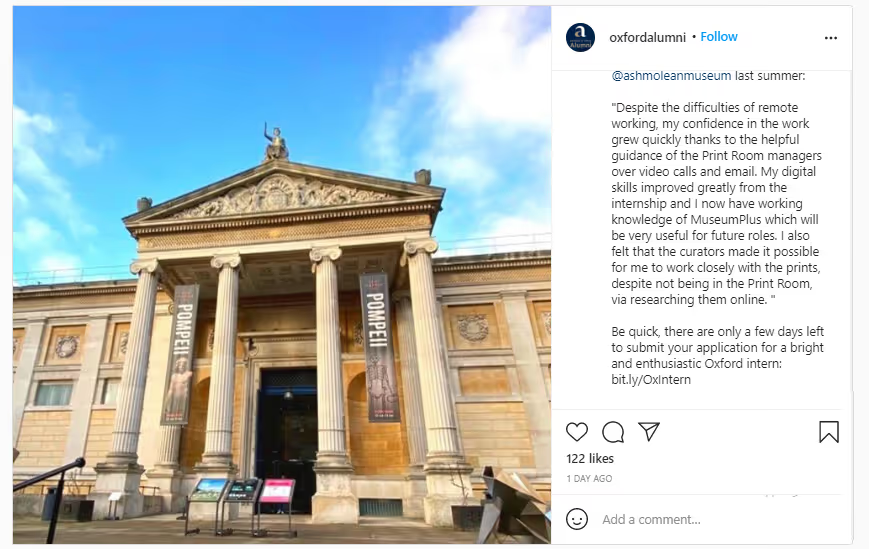
Celebrating the small and big wins of your alumni paves the way for stronger bonds.
If one of your alumni gets recognized for an academic or business front, don’t forget to give a shout-out to this achievement. Show your followers that you are truly proud of people who glorify their alma mater. Genuine appreciation for your alumni's success will make them feel valued and more connected to your institution.
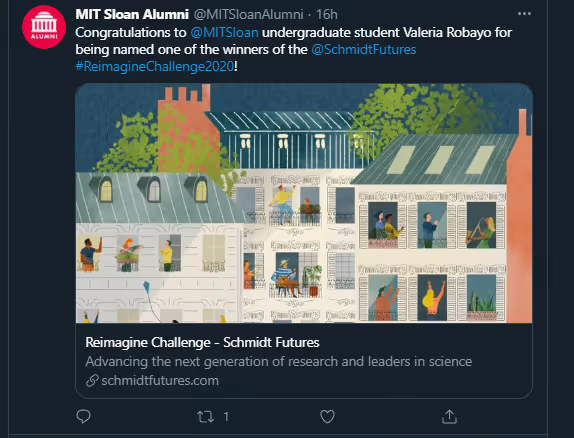
One way to truly create an alumni community is to help them display their skills. Encourage them to create and share the artworks that represent your educational institution. Creative works of your alumni would perfectly complement your social media content strategy and help your alumni feel welcomed.
Remember that you can’t share your alumni’s work without getting their permission and you should always tag the original content creators in your posts.
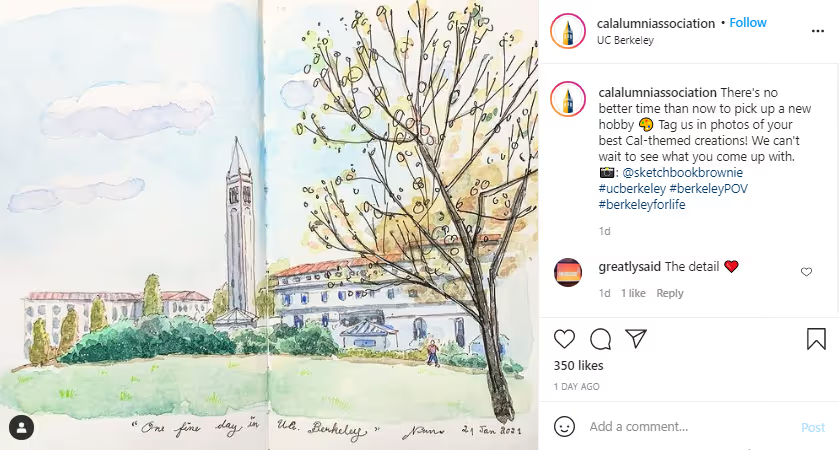
Hashtags play an essential role in content promotion. If you want to improve the visibility of your social media content and increase reach and alumni engagement, you should add relevant hashtags to each post.
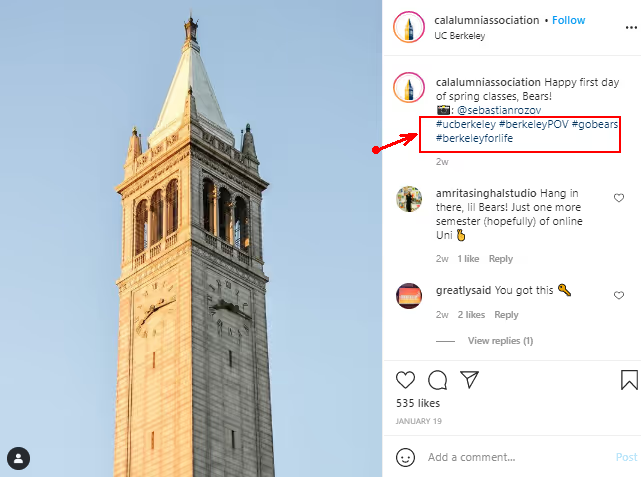
Here are a few basic rules to follow:
- Add three to seven hashtags to each caption or tweet
- Create your own branded hashtags (e.g., #berkeleyforlife, #berkeleyPOV)
- Make sure that all hashtags you are using are relevant to the image and message of your post
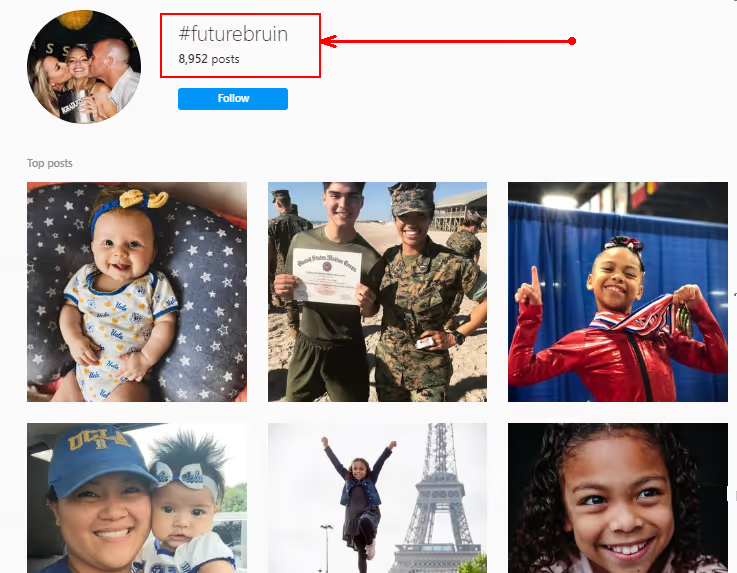
If you have already mastered the art of using hashtags, you can start a hashtag to collect a specific type of alumni content.
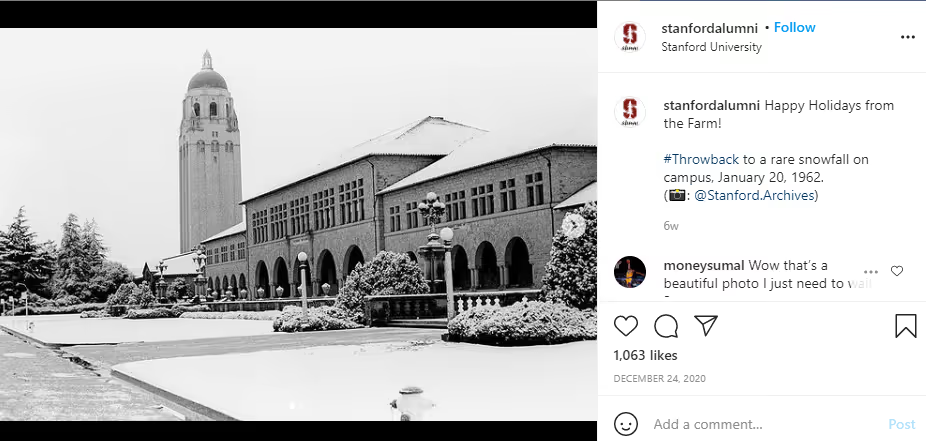
“Throwback-to-the-good-old-days” posts resonate with graduate students on a deep emotional level. Sharing black-and-white photographs of campus buildings and other old pictures that evoke nostalgia is bound to grab attention and further boost alumni engagement on social media.
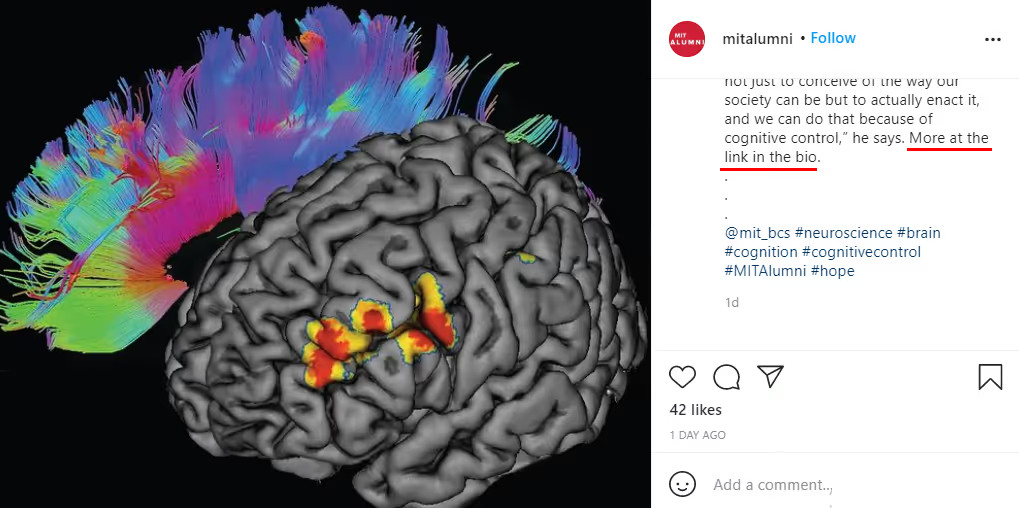
Whenever you post a new article in your blog or add a thought-provoking research paper to your publication database, you should share updates on social media with the alumni. Try writing a short caption to intrigue your readers and use a call-to-action to invite them to your website. Here are a few examples of call-to-actions you can use: check the link in the bio, browse this site, or hit the link below.
If you want to engage your alumni, you should provide them with useful information. For instance, you can give tips on how to apply for an internship or how to stay productive while working from home. Also, you can share checklists, guides, templates, or any other helpful alumni-centric content.
Stanford University published a holiday gift guide for book lovers and invited its alumni to check it out. It’s a great example of helpful and relevant content to use on Instagram.

Do you use social media to sell college merchandise? Offer your alumni a special discount, and you will hit two birds with one stone – boost your alumni engagement on social media and increase sales. Numerous institutions have used this approach and seen great results.
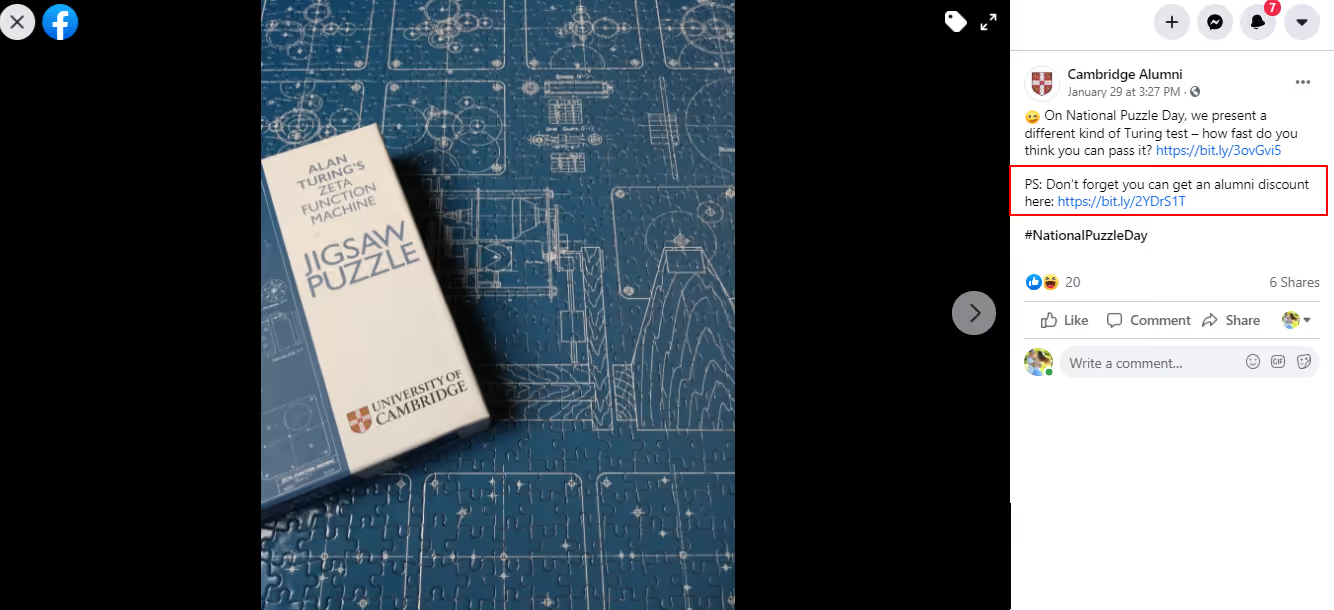
People like to share inspirational quotes with their friends, family, and coworkers. Inspirational quotes are a big hit amongst alumni of all ages. Posting daily or weekly inspirational quotes to motivate your audience is a great way to drive alumni engagement on social media. Remember to choose quotes that resonate the most with your alumni.
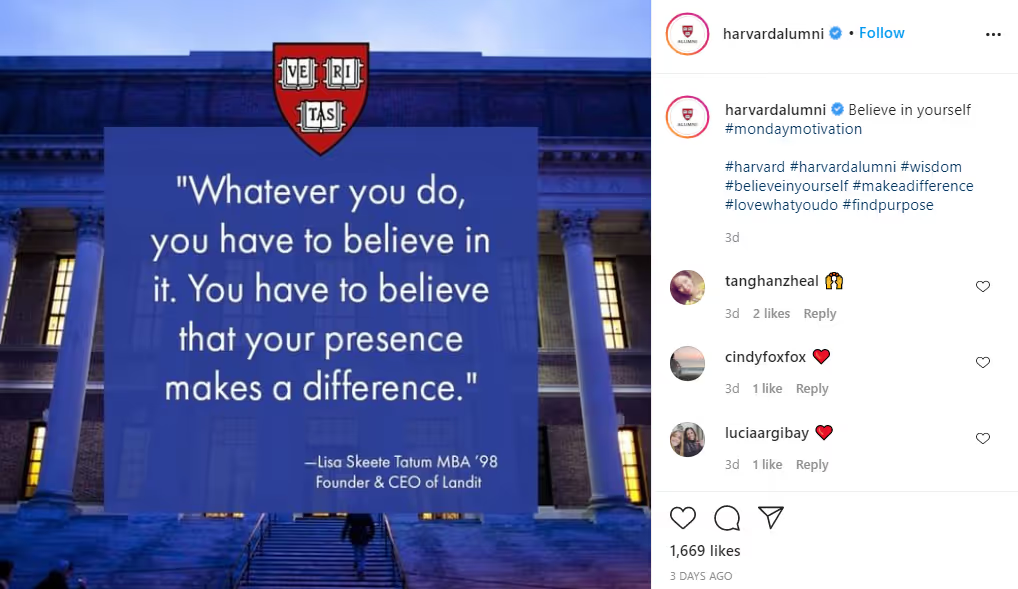
Today, social media has become the prime platform for alumni engagement and if you’re not leveraging it already, you’re missing out on engagement opportunities. A vast majority of your alumni community is more active on social media than anywhere else, so a strong social media presence should be a part of your alumni engagement strategy. Incorporate these 10 tried and tested strategies to drive higher alumni engagement than ever via social media.
.avif)
10 Best Practices for Engaging Your Alumni on Social Media
Lorem ipsum dolor sit amet, consectetur adipiscing elit. Suspendisse varius enim in eros elementum tristique. Duis cursus, mi quis viverra ornare, eros dolor interdum nulla, ut commodo diam libero vitae erat. Aenean faucibus nibh et justo cursus id rutrum lorem imperdiet. Nunc ut sem vitae risus tristique posuere.
For universities and other higher education institutions across the country, alumni engagement is essential to maintain a steady stream of support for driving programs. Historically, alumni engagement relied heavily on in-person events, but your alumni programs in 2021 probably don’t feature the same in-person happy hours, mixers, and fundraising events that they once did.
COVID-19 has curtailed in-person gatherings, but it’s still possible to engage with your school’s alumni in an effective and meaningful way. Zoom has emerged as the most popular virtual conferencing software option and has played a significant role in continued alumni engagement during the pandemic.
.jpeg)
While it’s not quite the same as meeting in person, Zoom can still provide a venue for your alumni to build relationships, network, and learn. Using the knowledge and experience we’ve picked up from these industries, we’ve compiled a list of tips for using Zoom to engage with your alumni virtually.
When planning virtual events for your alumni on Zoom, there are two broad categories to choose from: meetings and webinars.
Zoom meetings allow for more significant interaction among attendees. Attendees can see each other on screen, write messages to one another in a group chat, share their screens, and ask questions. Alternatively, webinars are well-suited to facilitating virtual presentations where audience interaction isn’t necessary. In a Zoom webinar, attendees don’t see each other on the platform—they’ll only see the presentation that the host is sharing on their screen. This is a perfect space for conducting webinars with multiple panelists, addressing relevant topics such as managing time while working from home, career coaching, etc. - here's a recent webinar on combatting Zoom Fatigue.
There are all sorts of engaging ideas schools have used in the past year when it comes to Zoom meetings. Perhaps the most popular has been the virtual happy hour, where alumni gather in a Zoom room to have a drink after work, network and listen to a speaker. A few other ideas are conducting virtual yoga classes, game nights, or organizing virtual book clubs for your alumni.
The overall purpose for all virtual Zoom events is to engage your alumni and maintain a sense of community despite the distance we have to keep due to the pandemic. A mix of fun, social meetings, and educational webinars can accomplish those goals and provide additional value to your alumni.
Before you have your Zoom meeting or webinar, make sure you prepare ahead of time. First, set a goal for your virtual Zoom event: What is the purpose? What do you hope the meeting will accomplish? Next, make a plan for how the event will go. How long will it last? What will happen during the event? Who will be invited?
Let’s say you’re planning a happy hour. You’ll want to make a schedule ahead of time to help the event run smoothly. The schedule might include:
- Alumni introductions: 15min
- Group screenshot: 5min
- Speaker: 10min
- Q&A: 20min
Once you have a schedule in place, gather the necessary staff members involved in the event and do a run-through of the event activities beforehand. Test your internet connection and familiarize yourself with all of Zoom’s features to avoid technical issues during the actual event. Using a Zoom ai note taker can also help automatically capture meeting notes and ensure nothing important is missed during discussions. Some additional tips to prepare well for your event are:
Promote the event
An essential aspect of Zoom event preparation is promoting the event to your school’s alumni network. Using your alumni CRM, segment your potential supporters and send emails informing alumni about the event. Use your segments to reach your alumni with personalized messages that will most intrigue your audience. For instance, you may provide additional information about your speaker’s newest book in invitations to your supporters who studied English.
Include the agenda for the event in these promotional emails so that the attendees know what to expect from the opportunity.
Ensure security
You may have heard of “Zoom bombers”—people who join Zoom meetings to which they were not invited in order to disrupt the event. To avoid having your event bombarded with Zoom bombers, there are a few security measures you can take, like:
- Require a password to enter the event.
- Use the waiting room function.
- Lock the event room after ten minutes.
- Do not allow attendees to screen share.
Taking these steps will help to keep Zoom bombers out of your event so the focus can remain on your alumni.
While general alumni events like happy hours are fun and engaging, consider hosting events specific to certain topics or audiences to provide real value to your alumni. One example is hosting life skills workshops for fresh graduates on topics like financial literacy and home buying. According to DonorSearch’s guide to alumni giving, building relationships with recent graduates is an effective strategy to increase the likelihood of future giving.
Other events might be geared toward different segments within your alumni network.
For example, The College of William & Mary has a virtual alumni event titled “Women’s Health Series: Improving Maternal Health” and a webinar about diversity in the workplace. Providing high-value content to specific segments of your alumni in addition to the camaraderie naturally involved in these events will strengthen alumnae’s ties to their alma mater. Plus, they’ll be appreciative of the genuinely helpful programming and services your events provide—and odds are, they’ll remember that when you reach out to them for your next fundraising campaign.
If you’re unsure which events or webinars would be desirable to your alumni, consider asking some of your alumni leaders for ideas and/or sending out a questionnaire to your alumni as a whole to gauge interest in specific topics. A fitting event for the current era might be geared toward the class of 2020 and helping them navigate the COVID-affected job market.
It’s challenging to engage a nation of alumni with Zoom meetings—they can easily become large and overwhelming, not conducive to networking and connecting with other alumni. Smaller, location or interest-based virtual events may be just the thing your alumni need to connect with one another. Empower engaged alumni with the ability to run their own Zoom events. These leaders may be presidents of their local alumni associations or just particularly involved former students. Consider reaching out to alumni who previously ran in-person events and gauge their interest in launching Zoom events during the COVID era.
Once you have a list of interested and qualified alumni leaders, ask them to pitch event ideas, design agendas, and receive approval before moving forward with the events. Develop detailed training materials to distribute to these alumni about running successful Zoom events in order to ensure all alumni engagement opportunities run smoothly.
Zoom is an easy-to-use platform that can do wonders for your engagement strategy if used the right way. Organizing webinars, group calls, and virtual events are great ways to with your alumni - no matter where they are. Incorporate these four tips to create a meaningful presence within your alumni community during the Zoom era.

4 Tips for Using Zoom to Virtually Engage Alumni
Lorem ipsum dolor sit amet, consectetur adipiscing elit. Suspendisse varius enim in eros elementum tristique. Duis cursus, mi quis viverra ornare, eros dolor interdum nulla, ut commodo diam libero vitae erat. Aenean faucibus nibh et justo cursus id rutrum lorem imperdiet. Nunc ut sem vitae risus tristique posuere.
As a remote working professional with years of experience in alumni relations & fundraising, Nita June, Director of Alumni Relations at The Association of Waldorf Schools (AWSNA) finds that working remotely offers flexibility and freedom that is refreshing and gratifying. She also feels that this same freedom can be challenging to manage successfully and that everyone has their own methods that work for them. Check out our Advancement from Home eBook to read what Nita and other advancement professionals are saying.

With schools and universities closed for a long time now, advancement staff members are gradually adapting to the new norm of working from home while effectively engaging alumni and donors via virtual events.
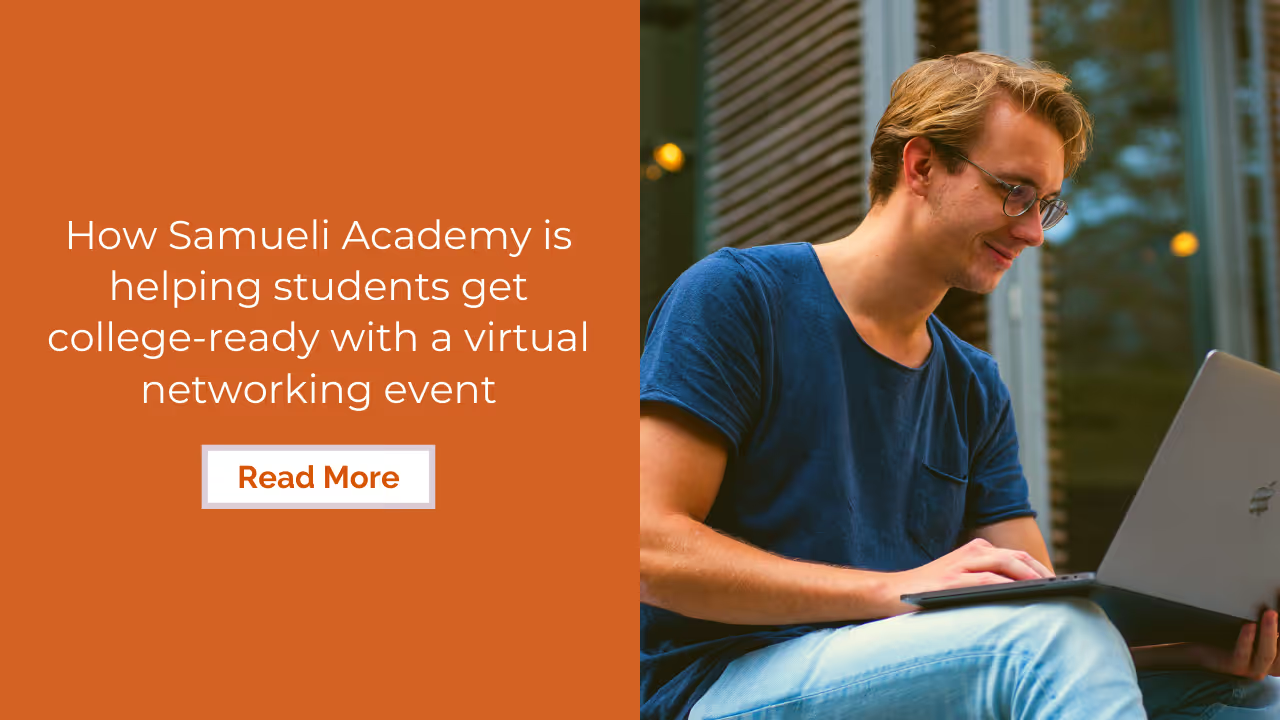
Backed by data from 200+ schools and universities who have hosted successful virtual events over the last two months, here’s a virtual event checklist for advancement teams.
With tons of creative virtual event ideas floating around the internet, the best way to figure out what’s best for you is to ask yourself these questions:
- How can you offer support to your audience during these testing times?
- How can you solve a particular pain point of your constituents with your event?
Based on what your audience will resonate with the most, get started with building your virtual event.
The French American International School anticipated a need for an increase in financial aid for next year as it provides support to its students in the form of tuition, books, lunches, and to every family that needs help during these tough times.

Once you’ve decided your virtual event theme, put together your event agenda and figure out what tools you need to execute your event.
You can set up a dedicated event page on your alumni website or create a Facebook event page to capture registrations. If you need additional software such as Zoom for video conversations with attendees, Trello for organizing your event, or Almabase or Blackbaud to send emails to your attendees, this is the right time to talk to the experts on each team.
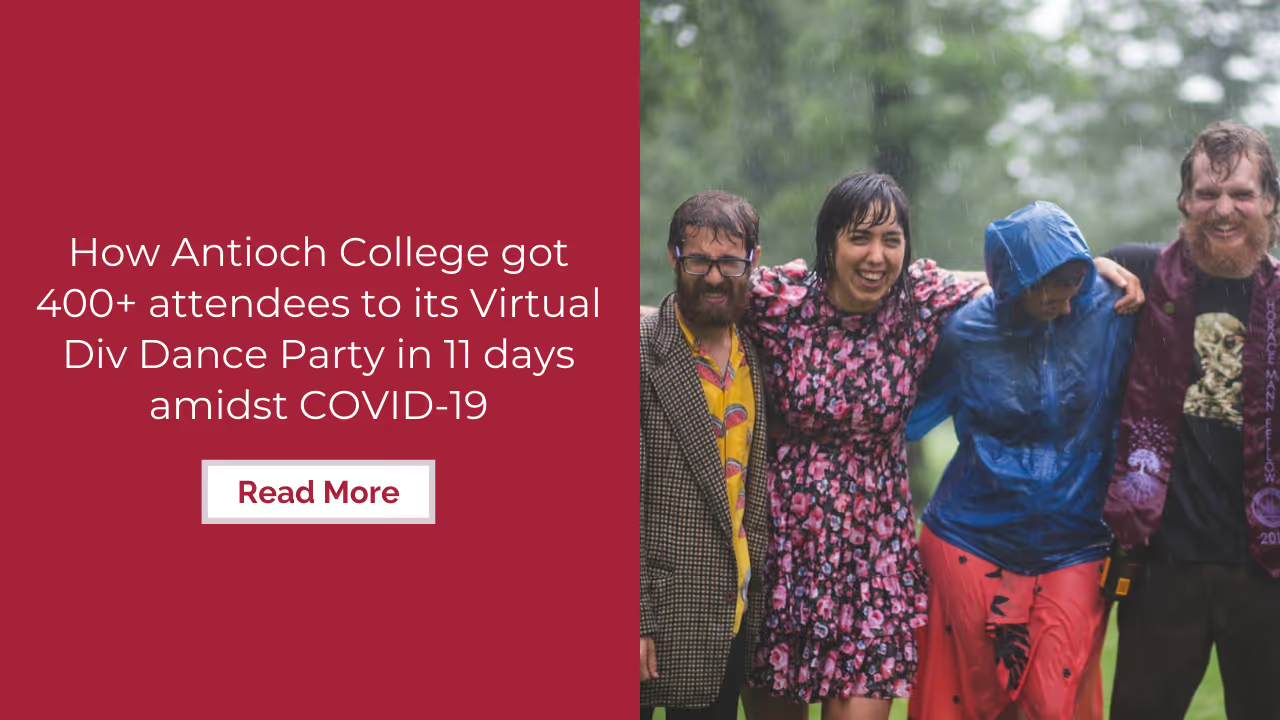
Take a cue from Antioch College’s incredible success with its first Virtual Div Dance Party. The Alumni Association set up an event page on its alumni website and Facebook to capture registrations. In addition to this, Antioch College needed funds to be able to host the 6-hours long virtual event which had 400+ registrations. So, the college set up a virtual fundraiser and urged attendees to contribute. Read how Antioch College got 400+ attendees to its Virtual Div Dance Party in 11 days amidst the COVID-19 outbreak.

Your virtual event’s success is largely dependent on your marketing strategy. O, how do you build a solid marketing strategy? The answer is by following the basics - emails and social media.
Use past data including event attendance, Facebook engagement, donation history and email engagement to identify highly engaged constituents and retarget them with personalized emails for your virtual event.
Social media is a powerful tool when it comes to maximizing the reach of your virtual event. Create a hashtag, a series of posts, get your followers to join in and encourage them to share these posts with their network.

You’re done with the planning, you got people to register for your virtual event, and with that awesome tool you signed-up for, your event is going great. Now what?
Having a good measure of engagement is critical to report on the success of your virtual event while working remotely. Measure your event based on metrics like registrations, check-ins, email open and click rates, and social media impressions and reactions.
Another key metric that helps determine the success of your virtual events is post-event feedback. This is crucial in improving the quality of future events and boosting participation. It reveals what attendees, sponsors, and stakeholders loved about your event and what you can do to make it even better next time. There are various ways to collect high-quality feedback from your event attendees.


4 simple steps to host a successful virtual event while you’re working from home
Lorem ipsum dolor sit amet, consectetur adipiscing elit. Suspendisse varius enim in eros elementum tristique. Duis cursus, mi quis viverra ornare, eros dolor interdum nulla, ut commodo diam libero vitae erat. Aenean faucibus nibh et justo cursus id rutrum lorem imperdiet. Nunc ut sem vitae risus tristique posuere.
%201.svg)
%201.svg)
%204.svg)



.svg)