If you're planning a charity golf event, we've rounded up 26 fun, creative golf fundraiser ideas bring people together and help your cause raise more.
Almabase
Updated:
June 5, 2026
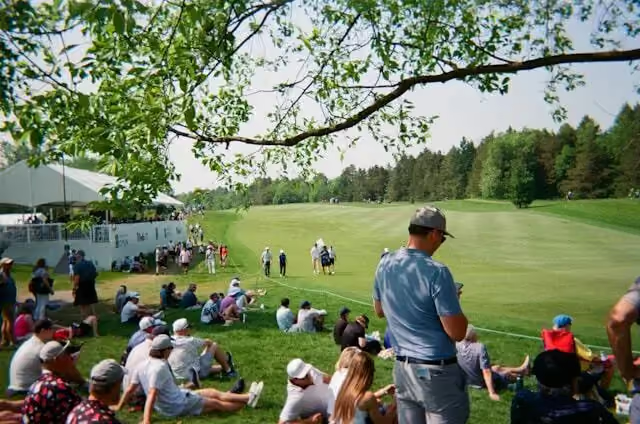
In 2022 alone, charity golf events at U.S. courses raised an estimated $4.6 billion, with more than 141,000 events held and roughly 80% of all U.S. golf facilities hosting at least one. The average event raised about $29,500, but the ceiling is far higher: a well-structured tournament with the right sponsorship strategy can clear six figures in a single afternoon.
The best golf fundraising ideas however, look different depending on who you are. A K-12 booster club has different assets, different donors, and different cost structures than a hospital foundation courting major-gift prospects, and both look different from a community nonprofit trying to reach a new audience. Below are the ideas that actually work for each, with real examples of organizations putting them into practice.
Over the last few years, golf tournaments have become a staple of nonprofit fundraising, and for good reason. They attract donors who might not engage through traditional channels, create natural sponsorship opportunities, and give your team multiple moments to ask for support before, during, and after the event. And it’s always great to engage in a bit of goodwill and fun over a game! Essentially, golf fundraisers are built-in community experiences.
Here are a few reasons why golf tournaments work so well for fundraising:
Healthcare foundations occupy a different fundraising universe. Their donor base often skews into the wealthier and more philanthropic demographic, their cause has obvious emotional weight, and their boards often include physicians and executives who are themselves avid golfers. The events here tend to be larger, more polished, and more sponsorship-heavy.
The flagship model is an annual event hosted by the foundation at a premier course, often featuring physicians and executives as players.
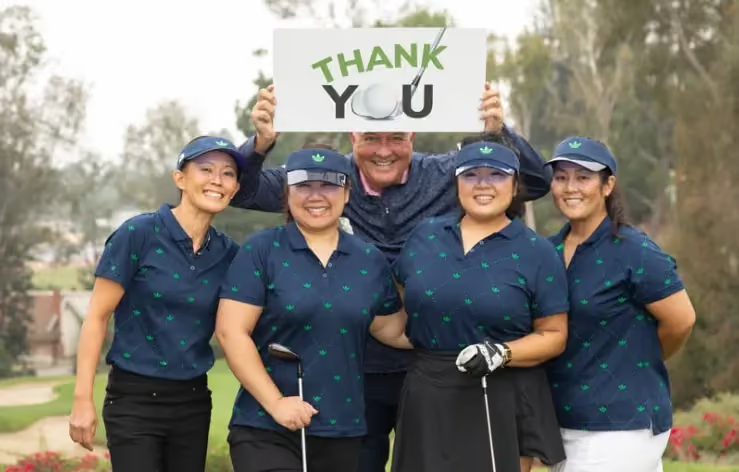
PIH Health Foundation's 2025 golf tournament raised $400,000 to support hospital priorities ranging from medical technology to caregiver support. The Edward Foundation, the fundraising arm of Edward Hospital in Illinois, raised more than $460,000 at its 30th Annual Charity Golf Tournament at Cog Hill Golf & Country Club, with more than 300 golfers contributing through sponsorships, donations, raffles, and games. Since its founding in 1990, that foundation has raised over $57 million for community healthcare initiatives, and the annual golf tournament is a meaningful piece of that total.
These events succeed because they bundle three things: a beautiful course experience, peer recognition (physicians playing alongside major donors), and a clear connection to a hospital service line the donor cares about.
Tying the tournament to a specific disease, program, or population sharpens the emotional pull.
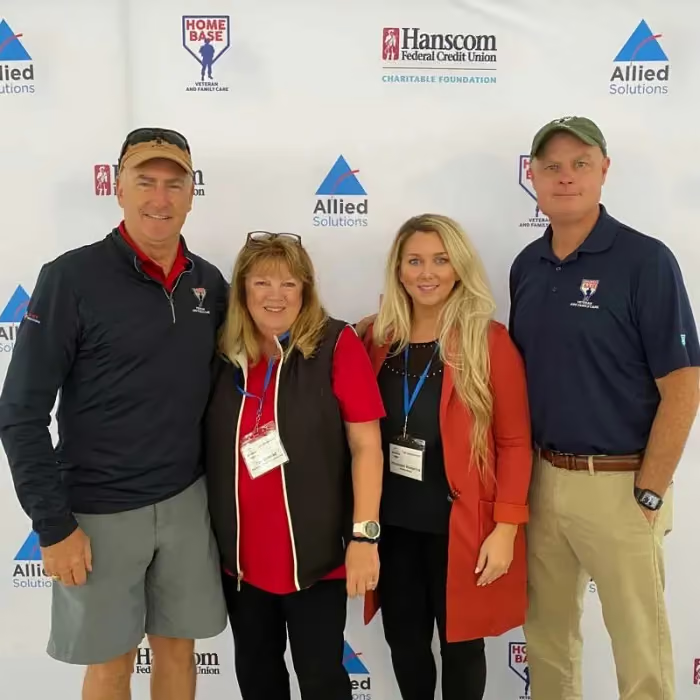
The Hanscom FCU Charitable Foundation's Alan M. Hart Memorial Charity Golf Classic raised $150,000 in a single year for Home Base, a Red Sox Foundation and Mass General Hospital program supporting veterans dealing with the invisible wounds of war. Over time, the tournament has contributed to more than $1.2 million in support for that program.
St. Jude Children's Research Hospital has been the beneficiary of the FedEx St. Jude Championship for more than 50 years, with the event helping raise over $60 million for pediatric cancer and life-threatening disease research.
If your foundation supports multiple service lines, picking one cause per tournament and rotating year by year keeps the storytelling sharp.
A first-ever tournament tied to a specific capital project creates urgency that recurring events lack.
The Seneca Healthcare Foundation in California hosted its inaugural charity golf tournament at Bailey Creek Golf Course and raised more than $85,000 while building awareness for the construction of the new Lake Almanor Community Hospital.
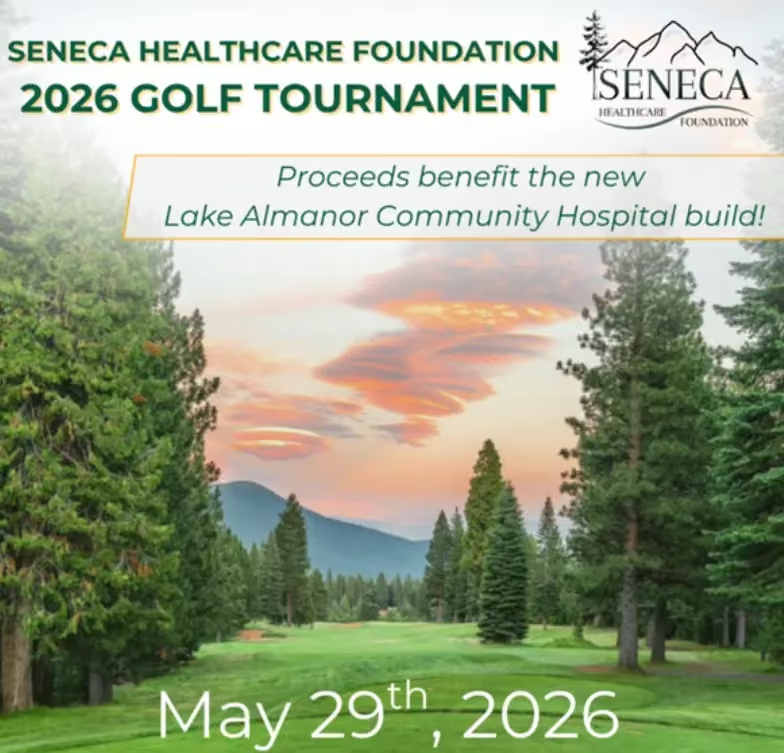
Th event drew over 100 golfers and featured creative touches including a MASH-themed drink station and live stand-up comedy from a group called the Hole Hecklers. Pairing the tournament with a tangible "we're building this" story gives donors something concrete to point to.
For events that already have momentum, layered add-ons are where the real money is.
The Edward Foundation's 30th Annual Charity Golf Tournament raised more than $460,000 at Cog Hill Golf & Country Club in Lemont, with more than 300 golfers donating through sponsorships, donations, raffles, and games. The event even featured a Helicopter Ball Drop contest, where entrants paid for the chance to have a numbered golf ball dropped from a helicopter to land closest to the flag.
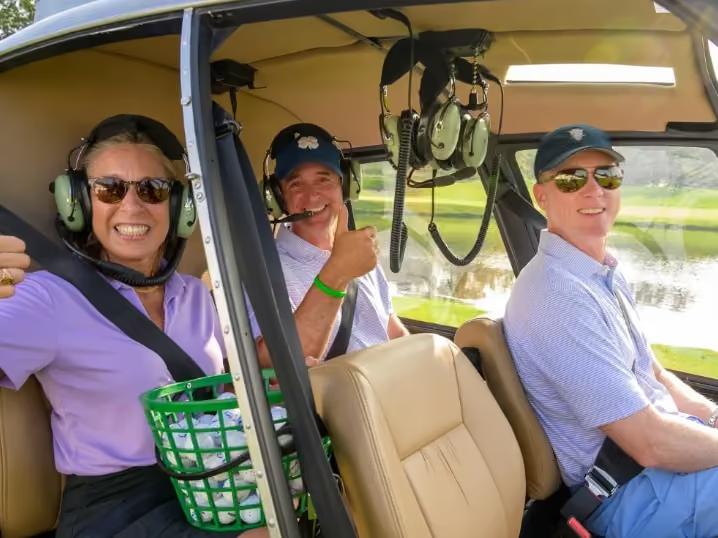
Ball drops are particularly effective because they sell to people who aren't golfing, including hospital staff, board members, and community supporters who want to participate without playing 18 holes.
Offering a $10,000 cash prize, a luxury car, or a luxury trip for a hole-in-one creates outsized excitement at relatively low cost. Most foundations partner with a hole-in-one insurance provider to cover the prize, paying a small premium for enormous marketing buzz. Co-sponsoring the prize with a local car dealership turns the sponsorship into a billboard for the dealer at the event.
Schools and universities have one fundraising asset most other organizations would kill for: a built-in, lifelong community of alumni, parents, and boosters who already feel emotionally invested.
The single most reliable model in higher ed is a recurring, branded scholarship tournament that runs every year on the same calendar slot. Take the three below examples:
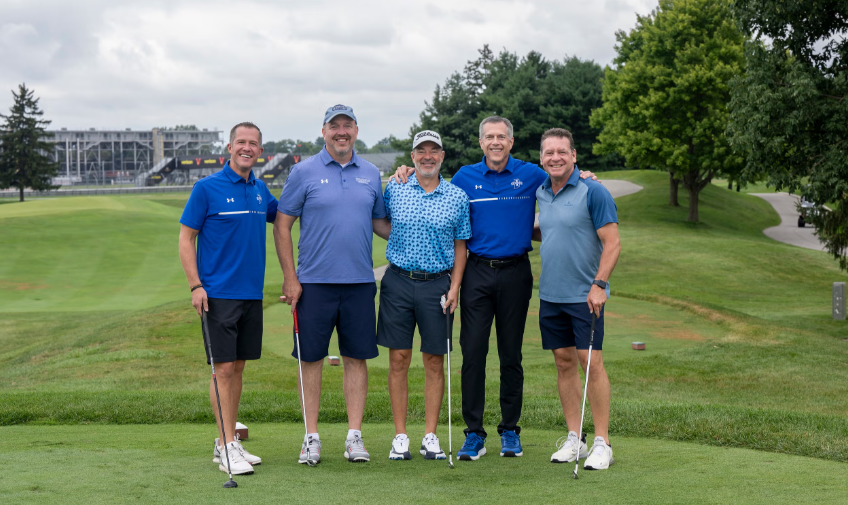
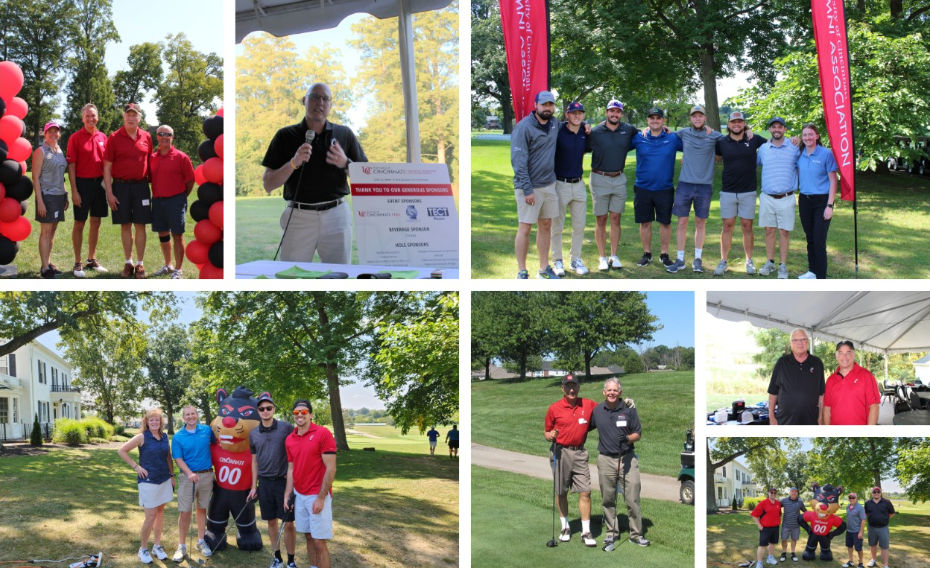
For institutions that have had a rich history of golfing alumni or golf fundraisers in the past, it should be a no brainer. However, the only way tradition gets built is if something gets it started in the first place. So maybe this can be the year where your institution starts to grow that tradition if it already hasn’t?
If your school has lost a beloved coach, professor, or alum, a memorial tournament builds extraordinary loyalty. Freed-Hardeman University's annual tournament honors the legacy of Dr. Cliff Bennett, a 1961 alumnus and former golf coach whose endowed scholarship still supports students. These events draw deeper giving because donors aren't just buying a foursome but also honoring someone who mattered to them.
It also provides a natural storytelling opportunity that builds a strong emotional connection for your next and future golf fundraisers within this frame.
For K-12 and college club teams that don't have a country club or alumni database, one thing you can consider is to sell labor and small experiences.
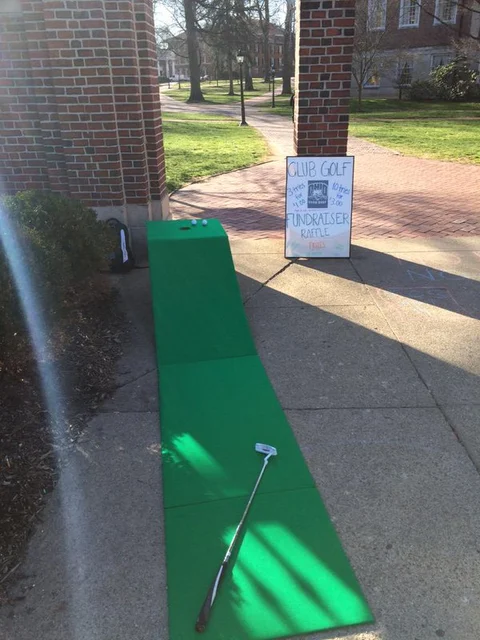
Ohio University's club team brought a putting green carpet to the busy College Green area and sold $1 putts to students for a chance to win a prize.
Similarly, The Citadel's club team works local tournaments in exchange for reduced greens fees and sells mulligans for $1 each on a single hole with the course's permission. These ideas also have the added benefit of almost zero overhead and turn a team into a visible part of campus life.
Smaller, themed tournaments hosted by fraternities, sororities, or specific academic departments can sometimes surprise you and outperform their size.
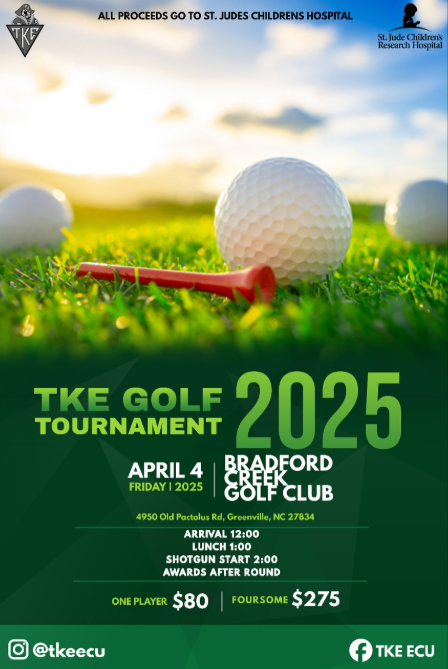
The Tau Kappa Epsilon chapter runs an annual golf tournament to raise funds for St. Jude Children’s Research Hospital. These events benefit from tight-knit communities where attendance feels almost obligatory in the best way.
Community nonprofits typically have smaller donor lists and tighter budgets than hospital foundations, but they also have more flexibility to experiment. The best ideas in this category lean toward inclusivity (so non-golfers can participate), creativity (so the event is shareable on social media), and modern formats that don't require a 7am tee time at a country club.
The single biggest shift in nonprofit golf fundraising over the past five years has been the move to Topgolf and similar venues. Topgolf events are accessible to people who don't actually play golf, run in 2-3 hour windows instead of full days, and feel more like a party than a tournament.
Avery's Hope, an all-volunteer nonprofit supporting families of pediatric GI patients, hosts an annual Topgolf fundraiser specifically to be more inclusive for patient families and children.
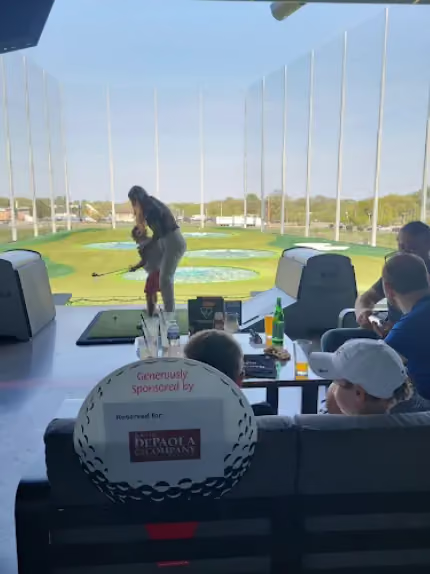
They drive revenue through bay sponsorships, a silent auction, and a raffle.
A glow golf night tournament uses glow-in-the-dark balls, LED-lit flags, and illuminated tee markers across nine holes after sunset.
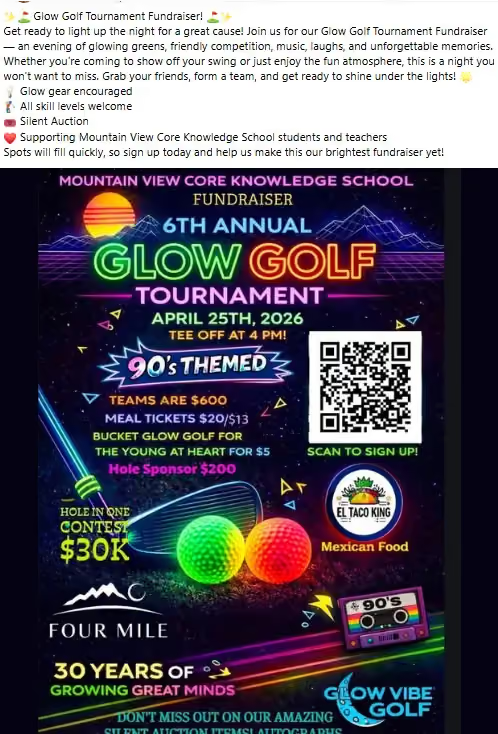
The format is highly photogenic, perfect for social media promotion, and stands out in a market where most prospects have already been invited to half a dozen "traditional" golf scrambles this year. The lower hole count also means a lower entry barrier for casual players.
If your donor base skews younger or has lots of families with kids, a charity mini-golf tournament is a high-yield option. The economics are excellent: course rental is cheap compared to a country club, kids can play, and the whole event runs in an afternoon. This format works especially well for nonprofits serving children, families, or schools.
A golf ball drop doesn't actually require a tournament. Sell numbered balls for $10 to $25 each, drop them from a helicopter or crane over a target, and award prizes to the closest balls. The model is brilliantly simple: supporters who can't golf, won't golf, or live nowhere near the course can still buy a ball and watch the drop on a livestream. Many nonprofits run a ball drop as a low-effort revenue add-on to an existing event.
Indoor golf simulator venues let nonprofits run "tournaments" in November, December, January, and February when outdoor courses are closed in most of the country. Players can compete on famous courses like Pebble Beach or St. Andrews without leaving the building. Because most other nonprofits cluster their fundraising in spring and fall, a winter simulator event lands in a less competitive calendar window for donor attention.
You don't need a full tournament to run a hole-in-one challenge. Some nonprofits set up a single par-3 hole at a community event, charity festival, or even a parking lot driving range and charge $10 to $20 per shot. The prize, again, can be insured for a small premium. It's a strong choice for organizations that want some "golf" energy without the operational complexity of running 18 holes.
For nonprofits already running events, putting contests are an easy revenue layer. Charge $5 per putt at a fundraising gala, festival, or community event with a prize for the longest putt sunk. Operationally simple, instantly fun, and works at almost any venue with 30 feet of flat ground.
A stacked list of sponsors can bring in a lot of revenue for a fundraiser. From an organizer’s perspective, you can work in various tiers based on the scale of your event and make each feel valuable, while giving sponsors visibility that justifies their investment.
Here are the sponsorship tiers that work across different golf fundraising contexts:
The headline sponsorship tier. Your title sponsor gets naming rights: their name appears on all promotional materials, event signage, email campaigns, and social posts as "The [Sponsor Name] Golf Tournament."
They also receive premium recognition during opening remarks and the awards dinner. This is your main sponsorship and should carry the highest price tag.
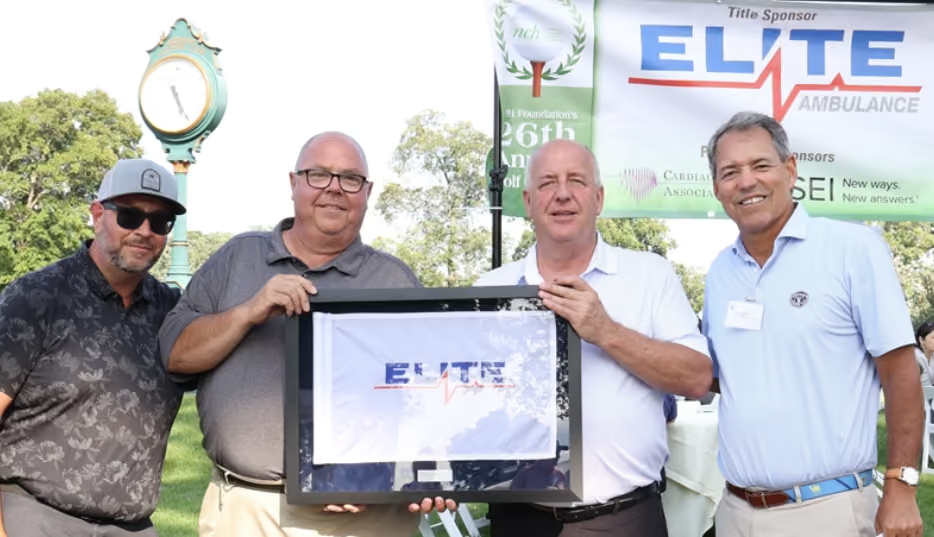
At Northwest Community Hospital’s 26th annual Golf Classic, Elite Ambulance served as the Title Sponsor at Medinah Country Club, which raised $784,000 to support cancer care initiatives. The ‘Elite’ logo appears front and center across all branding and promotional materials used during the event.
Presenting sponsors appear alongside the title sponsor in most materials and get recognition during the event. However, owing to an investment lower than the title sponsor, they don’t get the full naming rights. This tier works well for major local businesses or corporate partners who want significant visibility but may not need the top-tier sponsorship.
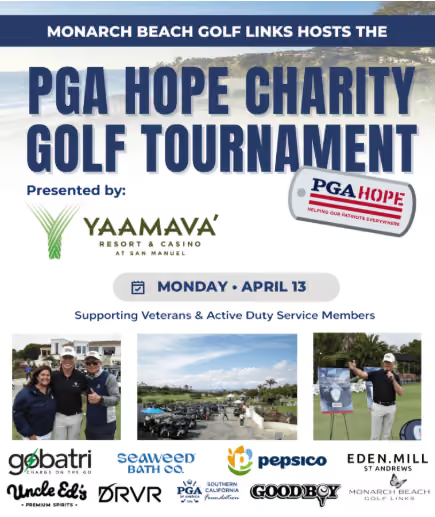
The 3rd Annual PGA Hope Charity Golf tournament took place on April 13, 2026, with presenting sponsor Yaamava Resort and Casino. As presenting sponsor, Yaamava received high-level brand visibility alongside the event name, as well as recognition across select signage, digital promotions, and on-site materials.
The 2026 event raised over $50,000, which will directly fund free six-week adaptive golf instruction, camaraderie building, and wellness programs for at least 45 local military veterans.
For schools especially, hole sponsorships are the unsung hero of the budget. Local businesses pay $250 to $1,000 for a sign on a tee box, and parents who own those businesses are an easy first ask. This tier is easy to sell to smaller, local businesses because the investment is modest and the visibility is clear.
Most tournaments have 18 holes, so you can easily move 18+ sponsors at this level. Having multiple sponsors builds more credibility for your event and cause as well.
Think of golf carts as little, mobile billboards. Cart sponsors get branded decals on every cart in the tournament, meaning their logo is visible to golfers all day across the golf course.
A beverage cart sponsor for example, provides (or co-sponsors) the drinks and snacks on the course. Golfers encounter this sponsor multiple times during the round, and beverage sponsors often get naming recognition: "Powered by [Company Name]." Local restaurants, beverage distributors, or quick-service businesses are good fits here.
This is a great way to create a lasting impression with your attendees and bring multiple local businesses or small sponsors together. If you're creating a gift bag for golfers, a swag bag sponsor (or sponsors, if there are multiple,) covers the items or the cost. This tier works well for local businesses, vendors, and corporate sponsors looking for an approachable way to get involved.
Raffles and auctions unlock revenue from people who may not necessarily participate in the tournament. At the same time, a golfer who plays in the scramble may buy a raffle ticket for the silent auction in the tournament, while a board member who attends only the dinner might bid on a live auction item. These revenue moments, layered into the event flow, could even equal or exceed registration fees.
Run before or during the event (usually during lunch or dinner), silent auctions work well for items in the $50-$500 range and let attendees bid at their own pace. Items might include local experiences, golf packages, sports memorabilia, or services. It might be a good idea to display items prominently so golfers and guests can browse before they tee off, and to open bidding a day or two before the tournament so people have time to consider their bids.
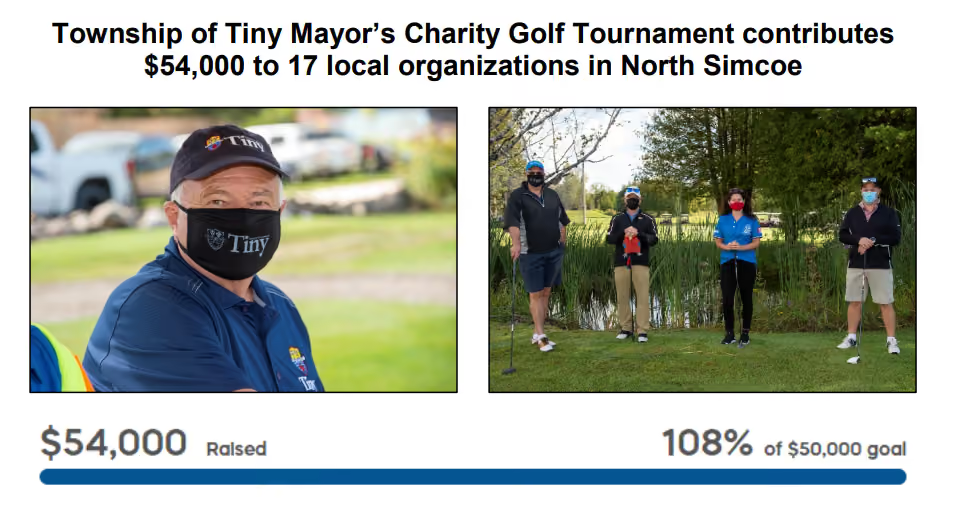
The Township of Tiny Mayor’s Charity Golf Tournament successfully integrated a digital silent auction and raffle alongside their traditional on-course play. By taking the auction virtual, they allowed participants to browse, helping the tournament surpass its goals to raise $54,000 for 17 local non-profit organizations.
A live auction is best-suited for a faster-paced moment, usually at the awards dinner, where an auctioneer drives energy and competition. Live auctions work best for high-value items ($1,000+) or experiences (golf trips, private lessons with pros, VIP event tickets). The auction moment also energizes the room and typically generates larger bids than silent formats.
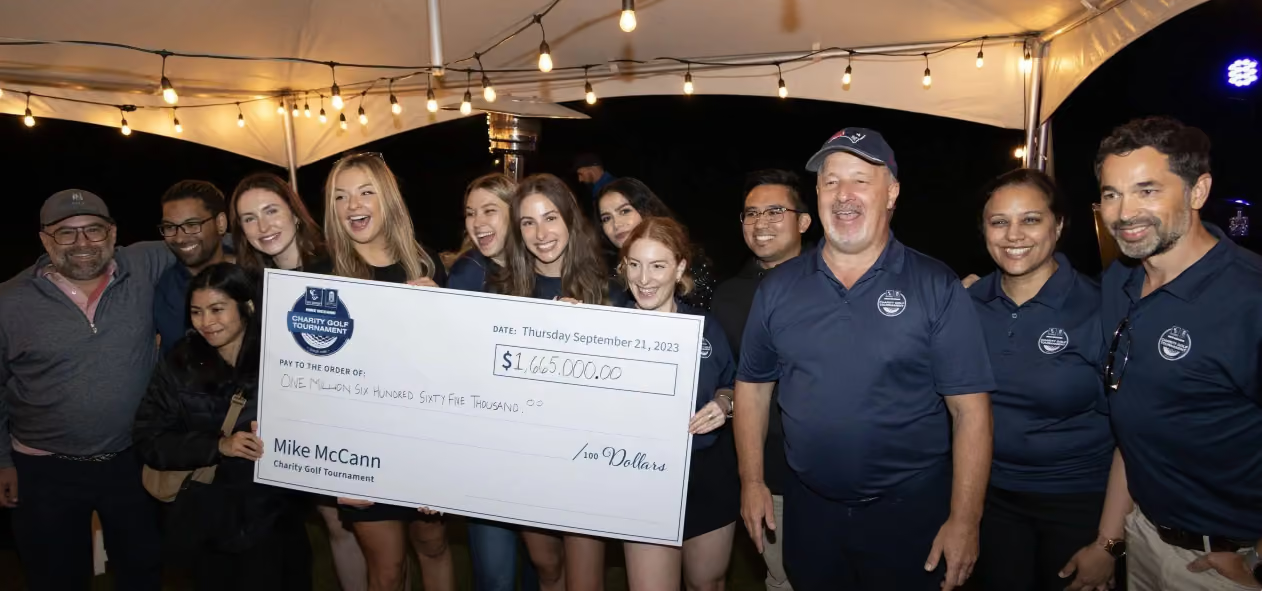
The 2023 edition of the Mike McCann Charity Golf Tournament concluded its multi-course event with a high-energy award dinner and live auction run by a professional auctioneer. There were more than 80 items for attendees to bid on and the dinner portion of the event helped push the envelope to achieve $1.6 million in fundraising totals. These funds went on to support communities across Ottawa, Southwestern Ontario, Montreal, and British Columbia.
A raffle runs on a high participation model: sell tickets for $5, $10, or $20 each; winner takes home half the pot, and the other half goes to your organization. It's easy to explain and you can expect high buy-in from attendees.
Ask local restaurants, salons, spas, and boutiques to donate items or gift cards. You can build themed baskets (wine and cheese, spa day, date night) and raffle them. This benefits local businesses by bringing them visibility and gets you donated items at no cost.
Golf trips, resort weekends, or sporting event packages command high bids and create aspirational excitement. You can partner with travel agents, resorts, or event venues to secure donated or discounted packages.
Planning a golf fundraiser might look like a lot, but breaking it into clear steps keeps the project manageable and helps you stay on schedule.
As the very first step, decide how much money you need to raise. All your other decisions, like how many golfers you need to register, what sponsorship packages to offer, will be built around this.
A golf tournament typically raises $20,000 to $50,000, but it depends on your donor base, the course quality, and your sponsorship capacity.
Once you know your goal, you can work backward. For example, if you need $40,000 and you expect 80 golfers at $150 per player, that's $12,000 from registrations. You'll need sponsorships to cover the rest.
The venue sets the tone for your entire event. Look for a course that fits your budget and has availability on a date that works for your supporters. Ask about their nonprofit rates: many courses offer discounts for charity events.
Once shortlisted, do a bit of background check as well: a well-maintained, scenic course attracts sponsors and golfers. Also confirm what facilities the course provides (cart rental, beverages, lunch) and what you would need to source separately.
Create 4-6 sponsorship tiers that appeal to different business sizes and budgets. Start with your anchor tiers (Such as: Title Sponsor at $10,000+, Presenting Sponsor at $5,000), then add mid-level options (Hole Sponsors at $1,000 to $2,000, Cart Sponsors, Beverage Cart Sponsor, etc).
Make sure each tier includes clear benefits: logo placement, signage, recognition; it’s best to be very specific about what sponsors get in exchange for their investment. A well-designed sponsorship deck should be able to generate 50% of your fundraising goal. Set this target with your team.
Set up an online registration page where golfers can sign up and pay. Include clear pricing (foursome rate, individual player rate, dinner-only ticket), event details (start time, course, what's included), and a simple checkout process.
You could offer early-bird discounts to incentivize early registration. Make registration mobile-friendly since many golfers are likely to sign up on their phones.
Start with your board members, major donors, and corporate relationships. Assign specific team members to each prospect and get started on personalized sponsorship pitches, not generic emails.
For team recruitment, ask golfers to form teams of four and invite their friends and offer team entry at a discount if they register early. Use email, social media, and direct outreach to build visibility. Open registration 8-10 weeks before the event so you have time to follow up with people who express interest.
Once you have your core registration and sponsorships, layer in revenue boosters. Contests like longest drive, closest to the pin, and putting contests are easy to sponsor and fun to participate in.
Work in a silent auction during lunch (aim for items in the $50-$500 range) and a live auction at dinner for high-value items ($1,000+). You could also sell raffle tickets throughout the event. These add-ons, when carefully built into the event flow, could bring in as much as 20-30% of your total revenue without requiring much operational overhead.
Build awareness early and often. Send email updates to your donor list at 8 weeks out, 4 weeks out, 2 weeks out, and 1 week before the event. The content could include sponsorship opportunities, team registrations, and special features (live auction, concert, celebrity attendee, etc.).
Post on social media weekly with photos from past tournaments, sponsor spotlights, and registration reminders. Create and promote event hashtags and encourage participants to share during the tournament. Promotion should emphasize the mission impact, not just the golf.
Plan your check-in process weeks in advance. Create a registration table with volunteer stations: one for name lookup, one for payment, one for name badges and cart assignments. Print scorecards, provide tee times, and ensure volunteers understand the day's schedule.
It’s always good to have a backup plan for weather (rain, extreme heat). Brief all volunteers on the mission, key talking points, and where to direct questions.
During registration and checkout, collect names, email addresses, phone numbers, and company affiliations. This data is gold for future stewardship and fundraising. If you’d rather not do this manually, you can use a registration system that automatically captures this information and integrates with your donor database.
If you're using paper forms, set time aside to enter the data afterward. The goal is to know who attended, what they gave, and how to stay in touch.
Once the event is over, it’s time to show gratitude! Send thank-you emails within 48 hours to participants, sponsors, and volunteers. Share photos and impact metrics (total raised, number of veterans served, students supported, etc.).
Follow up with sponsors who expressed interest in next year. For major sponsors, consider a personal call or thank-you lunch. Send a final thank-you with tax documentation for donors.
Golf fundraisers generate significant revenue, and keeping track of everything that went on becomes much easier when registration, sponsorships, auctions, and follow-up are coordinated seamlessly. Almabase consolidates the entire flow in one platform, so you can manage the event, capture data, and steward supporters without having to switch between systems.
Almabase's event management suite lets you handle everything from a single dashboard. Golfers can register for individual spots or groups, ticket-only guests purchase dinner seats, sponsors select their sponsorship tier and complete payment, all in one integrated flow.
You set registration pricing, ticket tiers, and sponsorship packages and Almabase handles the checkout, payment processing, and confirmation emails.
Guest management keeps track of who's coming, dietary preferences, and seating assignments, while real-time reporting shows you registration progress, sponsorship status, and revenue toward your goal, so you know exactly where you stand at any point in the campaign.
Almabase’s fundraising and event tools let you seamlessly integrate raffles, fund-a-need campaigns, and auction checkout directly into the event experience.
Attendees can purchase raffle tickets right at check-in, participate in a live paddle raise via optimized mobile giving pages, or pay for winning auction items.
Post-event, you can extend the giving window by promoting online donation campaigns to your entire donor base, ensuring supporters who couldn't attend in person can still drive revenue toward your goal.
With Almabase, you can place the golf tournament within a longer stewardship journey. Almabase's email communication tools let you segment your donor list and send targeted messages at each stage.
Send save-the-date announcements to past donors, early-bird registration reminders to your core supporter list, and event reminders to registered participants.
After the event, you’ll be able to send personalized thank-you emails to golfers, sponsors, and auction winners within hours.
Almabase syncs all registrations, sponsorships, and final auction payments directly to Raiser's Edge NXT. Rather than having to plan for tedious manual entry, your team can review and push gift data directly into your CRM.
Registration details map to participant records, sponsorship packages are accurately attributed, and event revenue ties to the right constituent profiles. This seamless flow maintains absolute data integrity, giving your team an updated, clear view of tournament revenue without the post-event administrative scramble.
Golf fundraisers will likely continue to be an important part of fundraising culture, especially in the US. With their added advantage of flexibility across institutions and nonprofit organizations, they also serve as one of the more flexible options (provided a golf course is geographically practical).
All that said, we hope we’ve given you plenty of ideas for your next (or first) golf fundraiser! And if you are looking for a platform to help you host your fundraiser, engage donors, and raise funds, book a personalized demo with us and we’d love to know how we can help!
Subscribe
See how modern advancement teams bring alumni engagement and fundraising together.
Plan faster. Execute better
Explore free templates designed for alumni and fundraising teams.
.png)

.avif)
Almabase
Hospital foundation leaders are always searching for the most effective ways to improve healthcare fundraising results with limited staff, tighter oversight, and increasing pressure to demonstrate impact. Instead of reinventing the wheel, let’s borrow a few pages from the operational playbooks of the highest performing hospital foundations in the field.
The Association for Healthcare Philanthropy (AHP) defines a high-performing hospital foundation as being in the top 25% for net fundraising returns (revenue minus expenses) compared to peers in their specific category (such health systems, community hospitals, or academic medical centers), and which consistently deliver stronger net revenue, higher return on investment, and closer alignment with health system priorities. Notably, many of these leaders generate returns of $8 or more for every $1 invested.
Below are five proven hospital fundraising strategies used by these AHP leaders to structure their work, allocate resources, and manage relationships for consistent, long-term results.
High-performing hospital foundations work with executive leaders to embed philanthropy directly into the health system’s multi-year operating and capital plans, ultimately treating philanthropy goals with the same weight as clinical growth or operational objectives.
To sustain this strategic growth, high-performing hospital foundations use standardized metrics to advocate for resources and prove their value to the C-suite. The AHP Report on Giving provides annual healthcare fundraising data that allows hospital foundations to compare their performance against peer institutions on metrics like Cost to Raise a Dollar, Return on Investment, and Net Fundraising Revenue per FTE.
Beyond data, high performers focus on shifting fundraising for hospitals from a transactional activity into an ongoing, relationship-based, and transformational process. This “advisor-led” approach requires development professionals to act as trusted advisors who prioritize the donor's "True North"—their passions, values, and desired lasting impact—over organizational deadlines or immediate monetary concerns.
The most natural source for these major gifts is often within the hospital's own walls. Grateful patients account for approximately 88% of hospital donations and are the only donor group that consistently increases their giving over time, making them a cornerstone of effective fundraising for hospital foundations. High performers coordinate these programs through a partnership between development officers and physician champions.
While major gifts are vital, foundations must also feed the pipeline with structured mid-level programs. "Missing Middle" donors who give between $1,000 and $10,000 account for 30% of individual giving revenue. High-performing hospital foundations recognize that these loyal supporters are the future of the major gift pipeline for healthcare fundraising.
Designed specifically for hospital foundations that use Blackbaud Raiser’s Edge NXT® or Blackbaud CRM™, Almabase provides a HIPAA-compliant platform to manage events, engage grateful communities, and automate marketing—all while keeping your "source of truth" perfectly in sync.
Effortless Event Execution & Marketing Automation
Almabase’s event management tools are built to capture engagement signals, reduce post-event cleanup, and move qualified donors into the pipeline faster.
HIPAA-Compliant Data Integrity
Almabase supports HIPAA-aligned engagement workflows purpose-built for healthcare fundraising teams and integrates directly with Blackbaud systems.
A Secure "Grateful Community"
Almabase enables foundations to support grateful patient engagement without exposing teams to compliance risk or fragmented workflows.
Ready to see how your foundation can work smarter? Book a demo with the Almabase team today.

5 Proven Fundraising Strategies of High-Performing Hospital Foundations
Lorem ipsum dolor sit amet, consectetur adipiscing elit. Suspendisse varius enim in eros elementum tristique. Duis cursus, mi quis viverra ornare, eros dolor interdum nulla, ut commodo diam libero vitae erat. Aenean faucibus nibh et justo cursus id rutrum lorem imperdiet. Nunc ut sem vitae risus tristique posuere.

Wendy Johnson
January 13, 2026
12 minutes
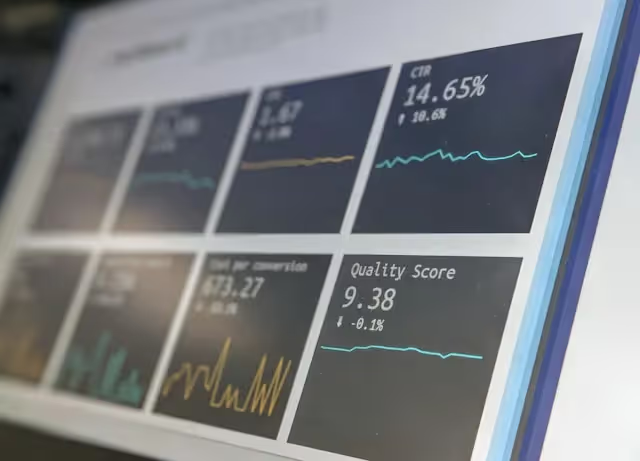
Hospital foundations pour immense resources into signature galas, golf tournaments, and auctions, but without concrete data, how do you measure actual success?
These 2026 hospital fundraising event benchmarks show hospital foundation teams how to assess event performance, improve donor experience, and convert fundraising event attendees into long-term supporters.
To help healthcare teams bridge this gap, Almabase’s event management platform for healthcare foundations uses TrueSync integration to sync clean, real-time data directly into Raiser’s Edge NXT, enabling you to evaluate your hospital fundraising event metrics with significantly less manual effort.
The Benchmark: 75% of in-person fundraising events and 76% of hybrid fundraising events met or exceeded budget goals.
Why this matters: Face-to-face connection remains a reliable baseline for high-stakes fundraising, providing the space for grateful patient storytelling and high-touch donor cultivation.
How to use it:
The Benchmark: 77% of virtual-only events met or exceeded goals—a massive jump from 59% the previous year.
Why this matters: There’s a common misconception that virtual events were a "pandemic-only" trend, but the data tells a different story.
How to use it:
The Benchmark: 83% of nonprofits said their in-person auction events meet or exceed their fundraising goals.
Why this matters: Auctions are the highest-rated revenue drivers, signaling strong sector-wide confidence in their donor appeal.
How to use it:
The Benchmark: The average net worth of golf tournament attendees is $768,000.
Why this matters: Golf tournaments attract high-value corporate sponsors and offer predictable revenue potential and strong donor engagement.
How to use it:
The Benchmark: 39% of nonprofits plan on investing in more modern technology and automation in 2026.
Why this matters: Event technology platforms like Almabase’s reduce friction during high-emotion donor moments. Any technical barrier at check-in or bidding can break momentum and cost real revenue.
How to use it:
The Benchmark: 41% of Gen X donors attend in-person fundraising events.
Why this matters: Gen X is entering their highest-earning years. Ignoring this segment weakens your future donor pipeline.
How to use it:
The Benchmark: 50% of Baby Boomer donors don’t like attending fundraising events.
Why this matters: Boomers are major donors, but half actively dislike large events. Relying on broad invitations can weaken donor trust.
How to use it:
The Benchmark: Mid-level “Engagement Seeker” donors have a strong appetite for in-person involvement.
Why this matters: These donors are the most likely to respond to deeper cultivation and upgraded giving.
How to use it:
The Benchmark: 67% of donors who were asked to give again after attending a recognition event did so, and they attributed their willingness partly to the event.
Why this matters: Recognition events are not just stewardship; they are strategic revenue drivers that reinforce trust.
How to use it:
The Benchmark: Only 23% of first-time donors return for a second gift.
Why this matters: Event attendees often give impulsively and drift away without a structured touchpoint.
How to use it:
The Benchmark: Healthcare nonprofits retain just 14% of new donors—the lowest in the nonprofit sector.
Why this matters: Low retention erodes event ROI. When 7 out of 10 new attendees don’t turn into repeat donors, your hospital foundation is forced into a permanent, expensive cycle of donor acquisition rather than building on previous successes.
How to use it:
Evaluating your hospital fundraising event benchmarks is only possible with a clean data stream. Almabase simplifies performance management by:
Ready to turn your hospital foundation’s fundraising event data into a strategic advantage for 2026? [Request a Demo]
11 Hospital Fundraising Event Benchmarks to Track in 2026
Lorem ipsum dolor sit amet, consectetur adipiscing elit. Suspendisse varius enim in eros elementum tristique. Duis cursus, mi quis viverra ornare, eros dolor interdum nulla, ut commodo diam libero vitae erat. Aenean faucibus nibh et justo cursus id rutrum lorem imperdiet. Nunc ut sem vitae risus tristique posuere.
Wendy Johnson
December 23, 2025
12 minutes
If you’ve run fundraising campaigns, you know that email is crucial for sending reminders, continuing donor conversations, and broadcasting updates. And yet, writing those emails over and over again isn’t always easy. Keeping them clear, relevant, and worth opening without slipping into repetition can be annoying and time consuming. That’s where having fundraising email templates starts to help by giving you an easy to follow starting point.
We’re bringing you 10 practical templates you can use across different scenarios with alumni fundraising examples. Along the way, we’ll also look at best practices that can improve open rates and responses without adding more complexity to your workflow, and get results.
Even with the rise of social media, texting, and peer-to-peer apps, email continues to be one of the most reliable ways to reach and inspire donors. Alumni may scroll past a post or miss a text, but emails land in their inbox and give them space to read, reflect, and act. Its strength lies in:
To help you get started, here are 10 fundraising email templates you can adapt across different campaign scenarios, depending on who you’re writing to and when you’re reaching out.
This usually goes out at the start of your annual fund campaign or early in the cycle when you’re setting the tone. A good donation request email at this stage keeps it simple and gets the campaign moving. A clear ask, a quick line on where the money goes, and a direct link to give.
What makes this email work is its simplicity. There’s no competing message, no urgency to explain everything. It gives the reader just enough context to understand where their contribution goes and lets them decide without friction. That clarity is what drives early participation.
Hi [First Name]
Each year, alumni support plays a crucial role in sustaining student experiences across [Institution Name]
This year, the Annual Fund is focused on supporting [scholarships / student initiatives / a specific area] where consistent funding makes a difference
If this is something you’d like to be part of, you can make your gift here
[CTA: Make your gift]
Every contribution helps keep this moving forward
Warm regards
[Name]
This goes out on D-Day itself or in the final lead-up, when momentum matters. What works here is showing that something is already happening; people are giving, progress is moving, and there’s a shared push.
What makes this effective is the timing and the momentum. People are more likely to act when they see others already participating and when the window to join is short. The email works because it feels current rather than planned.
Hi [First Name]
Giving Day is underway at [Institution Name], and we’re already seeing strong participation from alumni across batches
Today’s support is going toward [specific area scholarships student programs a named initiative], and the early response has helped us reach [progress update if available]
There’s still time to be part of this
You can make your gift here
[CTA: Give now]
We’re working toward [goal] before the day ends, and every contribution helps carry this forward
Thanks for being part of the community
[Name]
This goes out in the lead-up to a reunion, often alongside event communication or just after registrations open. At this point, alumni are already thinking about their time on campus, their batch, and whether they’ll show up.
What makes this work is the shift from an individual ask to a collective moment. Reunion emails that perform well usually do three things: remind alumni of a shared experience, show that others are already participating, and position the gift as part of marking the milestone.
Hi [First Name]
With our [X] year reunion coming up, this has been a good moment to look back at what [Institution Name] has meant to all of us
A lot has changed since then, but the one thing that stays consistent is how each batch shows up during reunion year
Many in the Class of [year] have already contributed toward this year’s class gift supporting [specific area scholarships, programs, etc.]
You can take a look at where things stand and add your name here.
[CTA: Give to your class gift]
It’s a simple way to be part of this year as a batch
Hope to see you at the reunion
[Name]
This goes out to alumni who haven’t given before. It works well after an event, a recent touchpoint, or as part of an early-stage campaign when you’re reaching out to first-time prospects. You’re not asking for a big commitment here, just opening the door.
What makes this effective is how it lowers the barrier. Instead of positioning it as a donation decision, it frames it as a first step. Clear, simple, and easy to act on.
Hi [First Name]
Many alumni choose to stay connected in different ways, and for some, that starts with a first contribution. For [years/months], we’ve been dedicated to [briefly describe your mission], and with your help, we can continue to make a real impact.
If you’ve been considering it, this is a simple way to get involved. As a first-time donor, your contribution of just [amount] can help us [specific impact, such as provide meals, fund a project, etc.]. Your support is critical to our work, and we would be honored to have you join us in our mission. We look forward to having you as part of our team and making a difference together.
Making your first donation is easy- simply click here: [Link to donation page]
Thank you for your consideration
[Name]
This goes out when someone hasn’t given in a while. The tone needs to feel like a continuation, not a fresh ask. Start with what they’ve already done, bring in what’s changed since, and then open the door again. That’s usually enough to restart the conversation.
It works because it reminds them of a decision they’ve already made. You’re not introducing the institution or the cause again. You’re reconnecting them to something they were part of and showing where it has moved since.
Hi [First Name]
It’s been some time since your last contribution, but your past support has made a real difference.
It helped [specific impact scholarships program students], and that continues to carry forward.
Since then, we’ve seen [one update or change tied to the same area]
Sharing this in case you’d like to be part of what comes next.
You can take a look here
[CTA: Give again]
Thank you for the role you’ve already played
[Name]
This works well when you want to bring the focus back to students. It can go out mid-campaign or alongside broader fundraising emails when you want to make the impact more visible and immediate.
What helps here is staying close to one story or one outcome. Instead of listing everything scholarships support, narrowing it down to a single student experience or moment makes the ask easier to connect with.
Hi [First Name]
This year, students at [Institution Name] are continuing their education with support that comes directly from alumni
For many, scholarships are what make it possible to stay on track and take part fully in campus life. One student recently shared how this support helped them [brief specific moment or outcome]
If you’d like to be part of this, you can contribute here
[CTA: Support scholarships]
Your support goes directly toward students who need it most
Warm regards
[Name]
This goes out within 24-48 hours after the event. At this point, people still remember specific moments. It could be something a speaker said, a student interaction, a conversation that turned into an actionable item. That’s what you build from.
What tends to work is picking one concrete moment or takeaway and extending it. When the email reconnects them to something they experienced, you can open multiple next steps: staying involved, attending future events, mentoring, or giving.
Hi [First Name]
Thank you for being part of [event name]
One moment that stayed with many of us was when [specific reference to a student story, a line from a speaker, a moment in the event]
That piece of the conversation is already shaping how we’re taking this work forward, especially around [specific scholarships/ programs/ initiatives discussed at the event]
If that resonated with you, there are a few ways to take it forward-
[CTA 1: Stay involved / Join the community]
[CTA 2: Attend upcoming events / Volunteer / Mentor]
[CTA 3: Support this work]
It was good to have you in the room and part of that conversation.
[Name]
This works when you have a confirmed match in place and a clear window to communicate it. It can go out as a standalone email or as part of a broader campaign.
What makes this effective is the multiplier. People respond differently when they know their contribution will be doubled or matched against a goal. The email works when that’s made clear early, along with how much of the match is already claimed and what’s left.
Hi [First Name]
A matching contribution has been set up for [specific area scholarships programs initiative], which means every gift made right now will be matched
So far, [progress update if available eg X% of the match has been claimed], and support is already moving toward [specific outcome or area]
If you’ve been considering a contribution, this is a good moment to make it count twice. The match is available until [deadline or condition].
You can take part here
[CTA: Double your impact]
Thank you for continuing to support [MISSION] and for being part of our journey!
[Name]
This goes out in the final stretch of the year when people are already closing things out. A quick recap of the year, notes on what’s being carried forward, and a simple next step is enough.
It works because it aligns with timing. There’s a natural pause at year-end where people take stock and act on things they’ve been putting off. When your emails reflect that moment and give the alumni a nudge, it yields better results.
Hi [First Name]
As the year comes to a close, this is a quick note to share where things stand
This year, alumni support has helped move [scholarship results, student initiatives, campaign outcomes/results] forward in a steady way
(Include stats of year-end goals - Our goal is to raise [$ AMOUNT] by Dec 31. Your donation will help ensure we can [OUTCOME]. We’re so grateful that you continue to stand up for [MISSION]. )
You can take a moment to contribute here.
[CTA: Give before year-end]
We are thankful for your support throughout the year.
[Name]
This works best a few weeks or a month after a campaign, when you have something real to point to. It’s not a thank-you, not a soft ask, but rather just an update that closes the loop.
What tends to hold attention here is detail. By providing the impact, you give concrete evidence that a donor can picture: where the support showed up, who it reached, and what changed because of it.
Hi [First Name]
Over the past few months, a lot of what was set in motion earlier this year has started to take shape on campus.
Support from alumni has been going directly into [specific area scholarships, lab upgrades, student programs, etc.], and that’s already visible in a few ways.
[Example 1: one clear outcome, e.g., X students received support this term or a specific facility upgrade]
[Example 2: one more grounded detail, e.g., a program launched or expanded]
[Example 3: One moment that stood out recently was when [short student or campus moment- be specific and visual]
All of these wonderful changes are taking shape because of your contribution. Your generosity brings support to those who need it most and fuels hope in the lives of those we work to serve.
Thank you for being part of this. Want to continue making a difference?
[CTA: Click here to know more]
[Name]
Fundraising emails work best when they guide the reader smoothly from opening the message to taking action. Beyond personalization and segmentation, here are practices that add extra weight and help drive conversions:
For most advancement teams, sending one or two fundraising emails isn’t the problem; it’s keeping up when you need to reach thousands of alumni across different segments, events, and campaigns. Emails quickly become generic, and alumni tune out. To avoid this, it’s necessary to scale, as it lets you maintain that personal touch while expanding your reach without overwhelming your staff. Let’s take a look at some practical ways to make that happen for your team:
Platforms like Almabase bring these steps together, helping advancement teams send personalized emails, track engagement, and sync with CRM data. Ready to see how scaling can feel simple? Request a demo and explore smarter email fundraising today.
What makes a good fundraising email?
It’s short, personal, and focused. A clear subject line, a quick impact story, and one strong call-to-action that makes it easy for alumni to read and give without distraction.
How often should I send fundraising emails?
Send 3-4 fundraising emails per semester. Space them out: too frequent, and alumni feel overwhelmed; too rare, and they forget your cause. Balance consistency with respect for their inbox.
How long should the email be?
Stick to 100-150 words, 200 at maximum. Anything longer risks losing attention.
What if someone unsubscribes?
Respect it. But make sure your system doesn’t cut them off from non-fundraising updates like events or volunteer opportunities. Alumni may want a connection without solicitation.
How do I measure success?
Track open rates, click-throughs, and actual donations. Opens tell you if your subject line worked, clicks show interest, and donations prove impact
If you’re trying to start afresh or scale this across campaigns, batches, and donor segments, Almabase is built to take that operational load off, so your team can spend more time on the outreach that actually moves people.
Explore how Almabase supports fundraising outreach across your institution across email and beyond.

10 Fundraising Email Templates to Increase Donations
Lorem ipsum dolor sit amet, consectetur adipiscing elit. Suspendisse varius enim in eros elementum tristique. Duis cursus, mi quis viverra ornare, eros dolor interdum nulla, ut commodo diam libero vitae erat. Aenean faucibus nibh et justo cursus id rutrum lorem imperdiet. Nunc ut sem vitae risus tristique posuere.

Sharada Koti
March 25, 2026
12 minutes
%201.svg)
%201.svg)
%204.svg)


.svg)