10 practical fundraising email templates for you to use and adapt for your next fundraising campaign. Cut down on time spent creating email drafts from scratch.

Sharada Koti
Published:
March 25, 2026
Updated:
May 8, 2026
Discover AI Summary
• Boost your fundraising email game by leveraging smart scaling techniques like donor segmentation and automated follow-ups; this helps you personalize outreach for thousands of alumni, keeping your team efficient and your CRM data clean.
• Dive into 10 practical email templates tailored for different fundraising scenarios, from annual appeals and giving days to reunion campaigns and thanking first-time donors, saving you time and effort in crafting compelling messages.
• Improve your email open rates and donor responses by crafting strong, specific subject lines and weaving in genuine human stories; these tactics make your appeals more engaging and hard for alumni to ignore.
• Tackle common advancement challenges like re-engaging lapsed donors or effectively following up after an event with proven strategies and template examples; they help continue the conversation naturally.
• Make sure your fundraising campaigns are always improving by tracking key metrics like open rates and donations in real-time; this insight lets you adjust your approach on the fly for better results and more agile fundraising.
If you’ve run fundraising campaigns, you know that email is crucial for sending reminders, continuing donor conversations, and broadcasting updates. And yet, writing those emails over and over again isn’t always easy. Keeping them clear, relevant, and worth opening without slipping into repetition can be annoying and time consuming. That’s where having fundraising email templates starts to help by giving you an easy to follow starting point.
We’re bringing you 10 practical templates you can use across different scenarios with alumni fundraising examples. Along the way, we’ll also look at best practices that can improve open rates and responses without adding more complexity to your workflow, and get results.
Even with the rise of social media, texting, and peer-to-peer apps, email continues to be one of the most reliable ways to reach and inspire donors. Alumni may scroll past a post or miss a text, but emails land in their inbox and give them space to read, reflect, and act. Its strength lies in:
To help you get started, here are 10 fundraising email templates you can adapt across different campaign scenarios, depending on who you’re writing to and when you’re reaching out.
This usually goes out at the start of your annual fund campaign or early in the cycle when you’re setting the tone. A good donation request email at this stage keeps it simple and gets the campaign moving. A clear ask, a quick line on where the money goes, and a direct link to give.
What makes this email work is its simplicity. There’s no competing message, no urgency to explain everything. It gives the reader just enough context to understand where their contribution goes and lets them decide without friction. That clarity is what drives early participation.
Hi [First Name]
Each year, alumni support plays a crucial role in sustaining student experiences across [Institution Name]
This year, the Annual Fund is focused on supporting [scholarships / student initiatives / a specific area] where consistent funding makes a difference
If this is something you’d like to be part of, you can make your gift here
[CTA: Make your gift]
Every contribution helps keep this moving forward
Warm regards
[Name]
This goes out on D-Day itself or in the final lead-up, when momentum matters. What works here is showing that something is already happening; people are giving, progress is moving, and there’s a shared push.
What makes this effective is the timing and the momentum. People are more likely to act when they see others already participating and when the window to join is short. The email works because it feels current rather than planned.
Hi [First Name]
Giving Day is underway at [Institution Name], and we’re already seeing strong participation from alumni across batches
Today’s support is going toward [specific area scholarships student programs a named initiative], and the early response has helped us reach [progress update if available]
There’s still time to be part of this
You can make your gift here
[CTA: Give now]
We’re working toward [goal] before the day ends, and every contribution helps carry this forward
Thanks for being part of the community
[Name]
This goes out in the lead-up to a reunion, often alongside event communication or just after registrations open. At this point, alumni are already thinking about their time on campus, their batch, and whether they’ll show up.
What makes this work is the shift from an individual ask to a collective moment. Reunion emails that perform well usually do three things: remind alumni of a shared experience, show that others are already participating, and position the gift as part of marking the milestone.
Hi [First Name]
With our [X] year reunion coming up, this has been a good moment to look back at what [Institution Name] has meant to all of us
A lot has changed since then, but the one thing that stays consistent is how each batch shows up during reunion year
Many in the Class of [year] have already contributed toward this year’s class gift supporting [specific area scholarships, programs, etc.]
You can take a look at where things stand and add your name here.
[CTA: Give to your class gift]
It’s a simple way to be part of this year as a batch
Hope to see you at the reunion
[Name]
This goes out to alumni who haven’t given before. It works well after an event, a recent touchpoint, or as part of an early-stage campaign when you’re reaching out to first-time prospects. You’re not asking for a big commitment here, just opening the door.
What makes this effective is how it lowers the barrier. Instead of positioning it as a donation decision, it frames it as a first step. Clear, simple, and easy to act on.
Hi [First Name]
Many alumni choose to stay connected in different ways, and for some, that starts with a first contribution. For [years/months], we’ve been dedicated to [briefly describe your mission], and with your help, we can continue to make a real impact.
If you’ve been considering it, this is a simple way to get involved. As a first-time donor, your contribution of just [amount] can help us [specific impact, such as provide meals, fund a project, etc.]. Your support is critical to our work, and we would be honored to have you join us in our mission. We look forward to having you as part of our team and making a difference together.
Making your first donation is easy- simply click here: [Link to donation page]
Thank you for your consideration
[Name]
This goes out when someone hasn’t given in a while. The tone needs to feel like a continuation, not a fresh ask. Start with what they’ve already done, bring in what’s changed since, and then open the door again. That’s usually enough to restart the conversation.
It works because it reminds them of a decision they’ve already made. You’re not introducing the institution or the cause again. You’re reconnecting them to something they were part of and showing where it has moved since.
Hi [First Name]
It’s been some time since your last contribution, but your past support has made a real difference.
It helped [specific impact scholarships program students], and that continues to carry forward.
Since then, we’ve seen [one update or change tied to the same area]
Sharing this in case you’d like to be part of what comes next.
You can take a look here
[CTA: Give again]
Thank you for the role you’ve already played
[Name]
This works well when you want to bring the focus back to students. It can go out mid-campaign or alongside broader fundraising emails when you want to make the impact more visible and immediate.
What helps here is staying close to one story or one outcome. Instead of listing everything scholarships support, narrowing it down to a single student experience or moment makes the ask easier to connect with.
Hi [First Name]
This year, students at [Institution Name] are continuing their education with support that comes directly from alumni
For many, scholarships are what make it possible to stay on track and take part fully in campus life. One student recently shared how this support helped them [brief specific moment or outcome]
If you’d like to be part of this, you can contribute here
[CTA: Support scholarships]
Your support goes directly toward students who need it most
Warm regards
[Name]
This goes out within 24-48 hours after the event. At this point, people still remember specific moments. It could be something a speaker said, a student interaction, a conversation that turned into an actionable item. That’s what you build from.
What tends to work is picking one concrete moment or takeaway and extending it. When the email reconnects them to something they experienced, you can open multiple next steps: staying involved, attending future events, mentoring, or giving.
Hi [First Name]
Thank you for being part of [event name]
One moment that stayed with many of us was when [specific reference to a student story, a line from a speaker, a moment in the event]
That piece of the conversation is already shaping how we’re taking this work forward, especially around [specific scholarships/ programs/ initiatives discussed at the event]
If that resonated with you, there are a few ways to take it forward-
[CTA 1: Stay involved / Join the community]
[CTA 2: Attend upcoming events / Volunteer / Mentor]
[CTA 3: Support this work]
It was good to have you in the room and part of that conversation.
[Name]
This works when you have a confirmed match in place and a clear window to communicate it. It can go out as a standalone email or as part of a broader campaign.
What makes this effective is the multiplier. People respond differently when they know their contribution will be doubled or matched against a goal. The email works when that’s made clear early, along with how much of the match is already claimed and what’s left.
Hi [First Name]
A matching contribution has been set up for [specific area scholarships programs initiative], which means every gift made right now will be matched
So far, [progress update if available eg X% of the match has been claimed], and support is already moving toward [specific outcome or area]
If you’ve been considering a contribution, this is a good moment to make it count twice. The match is available until [deadline or condition].
You can take part here
[CTA: Double your impact]
Thank you for continuing to support [MISSION] and for being part of our journey!
[Name]
This goes out in the final stretch of the year when people are already closing things out. A quick recap of the year, notes on what’s being carried forward, and a simple next step is enough.
It works because it aligns with timing. There’s a natural pause at year-end where people take stock and act on things they’ve been putting off. When your emails reflect that moment and give the alumni a nudge, it yields better results.
Hi [First Name]
As the year comes to a close, this is a quick note to share where things stand
This year, alumni support has helped move [scholarship results, student initiatives, campaign outcomes/results] forward in a steady way
(Include stats of year-end goals - Our goal is to raise [$ AMOUNT] by Dec 31. Your donation will help ensure we can [OUTCOME]. We’re so grateful that you continue to stand up for [MISSION]. )
You can take a moment to contribute here.
[CTA: Give before year-end]
We are thankful for your support throughout the year.
[Name]
This works best a few weeks or a month after a campaign, when you have something real to point to. It’s not a thank-you, not a soft ask, but rather just an update that closes the loop.
What tends to hold attention here is detail. By providing the impact, you give concrete evidence that a donor can picture: where the support showed up, who it reached, and what changed because of it.
Hi [First Name]
Over the past few months, a lot of what was set in motion earlier this year has started to take shape on campus.
Support from alumni has been going directly into [specific area scholarships, lab upgrades, student programs, etc.], and that’s already visible in a few ways.
[Example 1: one clear outcome, e.g., X students received support this term or a specific facility upgrade]
[Example 2: one more grounded detail, e.g., a program launched or expanded]
[Example 3: One moment that stood out recently was when [short student or campus moment- be specific and visual]
All of these wonderful changes are taking shape because of your contribution. Your generosity brings support to those who need it most and fuels hope in the lives of those we work to serve.
Thank you for being part of this. Want to continue making a difference?
[CTA: Click here to know more]
[Name]
Fundraising emails work best when they guide the reader smoothly from opening the message to taking action. Beyond personalization and segmentation, here are practices that add extra weight and help drive conversions:
For most advancement teams, sending one or two fundraising emails isn’t the problem; it’s keeping up when you need to reach thousands of alumni across different segments, events, and campaigns. Emails quickly become generic, and alumni tune out. To avoid this, it’s necessary to scale, as it lets you maintain that personal touch while expanding your reach without overwhelming your staff. Let’s take a look at some practical ways to make that happen for your team:
Platforms like Almabase bring these steps together, helping advancement teams send personalized emails, track engagement, and sync with CRM data. Ready to see how scaling can feel simple? Request a demo and explore smarter email fundraising today.
What makes a good fundraising email?
It’s short, personal, and focused. A clear subject line, a quick impact story, and one strong call-to-action that makes it easy for alumni to read and give without distraction.
How often should I send fundraising emails?
Send 3-4 fundraising emails per semester. Space them out: too frequent, and alumni feel overwhelmed; too rare, and they forget your cause. Balance consistency with respect for their inbox.
How long should the email be?
Stick to 100-150 words, 200 at maximum. Anything longer risks losing attention.
What if someone unsubscribes?
Respect it. But make sure your system doesn’t cut them off from non-fundraising updates like events or volunteer opportunities. Alumni may want a connection without solicitation.
How do I measure success?
Track open rates, click-throughs, and actual donations. Opens tell you if your subject line worked, clicks show interest, and donations prove impact
If you’re trying to start afresh or scale this across campaigns, batches, and donor segments, Almabase is built to take that operational load off, so your team can spend more time on the outreach that actually moves people.
Explore how Almabase supports fundraising outreach across your institution across email and beyond.

Table of Contents
Subscribe
See how modern advancement teams bring alumni engagement and fundraising together.
Donation request letters remain one of the most effective ways for schools, colleges, and universities to raise funds and strengthen community bonds. Whether sent by email or printed and mailed, these letters go beyond simply asking for money, they tell a story, create an emotional connection, and make donors feel part of something meaningful.
For institutions and organizations looking to boost their fundraising efforts, pairing the right words, tone, and structure with a clear purpose can transform a simple note into a powerful appeal.. Today, we’re helping you craft these letters and providing ready-to-use donation request letter templates alongside best practices to help you craft appeals that truly resonate.
It’s tempting to think that today, email and social media are all you need. But the data tells a different story. Institutions are still seeing significantly higher engagement from direct-mail appeals compared to digital-only outreach.
48% of donors say email is their preferred channel for receiving updates and appeals, while 21% still prefer direct mail. This shows that a hybrid approach, combining both digital and physical touchpoints, helps maximize reach and impact.
Each of these templates is designed for a specific use case, audience, and channel. You can copy them directly or customize them for your institution.
A fundraising letter that supports tuition assistance, classroom materials, and extracurricular programs, sent through email or print.
Subject: Together, We Can Help Every Student Thrive
Dear [First Name],
Every child deserves the chance to learn, dream, and succeed. This year, our classrooms are buzzing with curiosity, but some students are struggling to access the resources they need.
With your support, we can provide essential materials, fund extracurricular programs, and ensure no student is left behind. A gift of $50 can supply an entire class with art supplies for a semester.
Will you join us in making this possible?
[Donate Now]
Thank you for being part of our school community. Your generosity changes lives every day.
With gratitude,
[Your Name]
[Your Title]
A template for annual fund drives, Giving Tuesday, or Reunion Giving, shared by email or as a mail-merged PDF.
Subject: Your Legacy at [School Name] Continues
Dear [First Name],
Every time a student walks across the graduation stage, your legacy grows. As an alum, you know how life-changing an education at [School Name] can be.
This year, our Annual Fund supports scholarships, research opportunities, and campus programs that define the [School Name] experience. Your contribution, no matter the size, makes that possible.
Will you help the next generation of students thrive by making a gift today?
[Give to the Annual Fund]
Thank you for keeping the spirit of [College/University/Association Name] alive.
Warm regards,
[Your Name]
[Your Title]
A short, urgent appeal crafted for global giving days, delivered via email.
Subject: Join Thousands Changing Lives This Giving Tuesday
Dear [First Name],
Today, we join millions worldwide for Giving Tuesday—a celebration of generosity and community. Our goal is to raise $[Goal Amount] in just 24 hours to support [specific program/cause].
Every gift, no matter the size, will help us reach our target and create real change. Your $25 today could fund [specific, tangible impact] for a student in need.
Please don’t wait—this opportunity to make an immediate difference ends at midnight.
[Give Now]
Thank you for standing with us and with the community we serve.
With gratitude,
[Your Name]
[Your Title]
💌Each email click during Giving Tuesday 2024 was worth an average of $39 in donations—proving that every subject line, call-to-action, and send time matters. Perhaps that's why 33% of donors say email is the channel that most inspires them to give.
Here’s a version suited for monthly giving programs, sent by email or as a print follow-up.
Subject: Make an Impact Every Month
Dear [First Name],
Every month, your generosity can bring steady, lasting change. By joining our monthly giving program, you can provide steady, reliable support for [cause/program].
Just $15 a month can [specific impact], and over a year, your generosity will [larger outcome].
Become a monthly supporter today and watch your impact grow all year long.
[Join Monthly Giving]
Gratefully,
[Your Name]
[Your Title]
A request focused on post-donation matching, sent through email or mailed as a postcard.
Subject: Double Your Recent Gift at No Extra Cost
Dear [First Name],
Thank you for your generous gift of $[Gift Amount] to [Organization Name]. Did you know your donation may be eligible for a match from your employer?
Many companies match charitable contributions, effectively doubling your impact. To check if your gift qualifies, visit [Matching Gift Portal Link] and follow the quick steps.
Thank you for helping us do even more with your generosity.
Sincerely,
[Your Name]
[Your Title]
A formal print letter for scholarships, facility upgrades, or endowment campaigns.
Dear [First Name],
We are embarking on one of the most ambitious projects in our history, the [Campaign Name]. This initiative will [describe vision: build a new library, endow scholarships, expand labs].
We invite you to be part of this legacy. Your gift will not only transform our campus but also shape the futures of generations to come.
Please consider a contribution to the [Campaign Name with link]. Together, we can make this vision a reality.
With deepest appreciation,
[Your Name]
[Your Title]
A stewardship message for post-campaign follow-up, shared through email or print.
Subject: Look What We Achieved Together!
Dear [First Name],
Thanks to your generosity, our [Campaign Name] has raised $[Total Raised], surpassing our goal! Your gift helped make [specific result] possible.
[Insert photo of completed project or impact in action]
While this chapter is complete, our work continues. We’d love for you to stay connected as we take the next steps toward [future initiative].
Thank you for believing in our mission. It would not be possible without supporters like you.
Warmly,
[Your Name]
[Your Title]
A stewardship and donor retention note, best suited for email or handwritten delivery.
Subject: Your Gift Made an Immediate Difference
Dear [First Name],
Thank you for your recent gift of $[Gift Amount] to [Organization Name]. Because of you, we were able to [specific impact, e.g., “provide 200 meals to students in need”].
Your generosity inspires us and the community we serve. We are honored to have you as part of our donor family.
We’ll keep you updated on the difference you’re making, but for now, please know how much you are appreciated.
With heartfelt thanks,
[Your Name]
[Your Title]
Whether you’re writing to a long-time supporter or a first-time donor, your letter should check these boxes:
This level of personalization shows donors that you’ve taken the time to understand who they are, which builds trust and strengthens your appeal.
Avoid abstract language like "supports our programs." Instead, paint a picture of the specific change their generosity will create in the world.
The easier you make it, the more likely they are to follow through in the moment when they're most motivated.
Remember, personalization and segmentation can yield massive improvements. Segmented emails have demonstrated the potential to drive 30% more open rates and 50% more click-throughs than unsegmented campaigns, making audience segmentation a critical success factor for educational institutions.
Here’s how we're helping advancement teams connect technology to their storytelling:
More than asking for money, donation request letters help keep relationships strong. In a world full of emails and notifications, a letter can stand out because it feels personal and genuine.
With the right timing and smart segmentation, these letters do more than raise funds. They remind alumni and supporters why they matter, spark pride in your community, and strengthen the connection between your school and its graduates.


Donation Request Letter Best Practices + Templates
We're bringing you tips and templates for all your donation request letters and emails to get the most out of your asks with this blog.
Lorem ipsum dolor sit amet, consectetur adipiscing elit. Suspendisse varius enim in eros elementum tristique. Duis cursus, mi quis viverra ornare, eros dolor interdum nulla, ut commodo diam libero vitae erat. Aenean faucibus nibh et justo cursus id rutrum lorem imperdiet. Nunc ut sem vitae risus tristique posuere.

August 19, 2025
12 minutes
Texting has quietly become one of the most effective ways to reach donors. In this blog, you’ll see real examples of fundraising texts, understand what makes them effective, see sample fundraising text message templates that work and learn simple ways to use them in your next campaign.
Text messages have an open rate of about 98%, while email averages only 20–28%. Even better, nine out of ten texts are read within three minutes of landing on someone’s phone.
SMS also drives faster action. The average response time for a text is 90 seconds, while emails take 90 minutes on average. For time-sensitive campaigns like Giving Tuesday, Fundraising Galas or end-of-year appeals, that speed matters.
SMS also outperforms email when it comes to conversions. Depending on the campaign, texts convert between 21–30%, while email responses stay closer to 2–3%. On Giving Tuesday, organizations that used texting saw 84% higher conversion rates than those that relied only on email.
For institutions using RE NXT or similar CRMs, text messaging can work alongside your existing donor segmentation. You can reach people based on giving history, event participation, or engagement level, through the channel they’re most likely to open.
💡Learn how to use text messaging for donor engagement and fundraising
These examples work well for ongoing or all-year fundraising campaigns when you want to make a simple, heartfelt ask.
Hi [Name], it’s [Organization]. We’re $5,000 away from our goal for [specific program]. Can you chip in $25 today? [Link]
Hi [Name], your gift can make a real difference for [specific cause]. Every contribution helps us keep [impact statement, such as “meals on the table for families in need”]. Donate here: [Link]
Quick question, [Name]. Would you consider giving $50 to help [specific outcome]? Every bit of support brings us closer to our goal. [Link]
Hi [Name]. We’re reaching out to our most engaged supporters first. Can you make an early gift of [amount] to [campaign name]? [Link]
[Name], we have a shortfall in funding for [program]. Your gift of any amount today will help us close the gap. Give here: [Link]
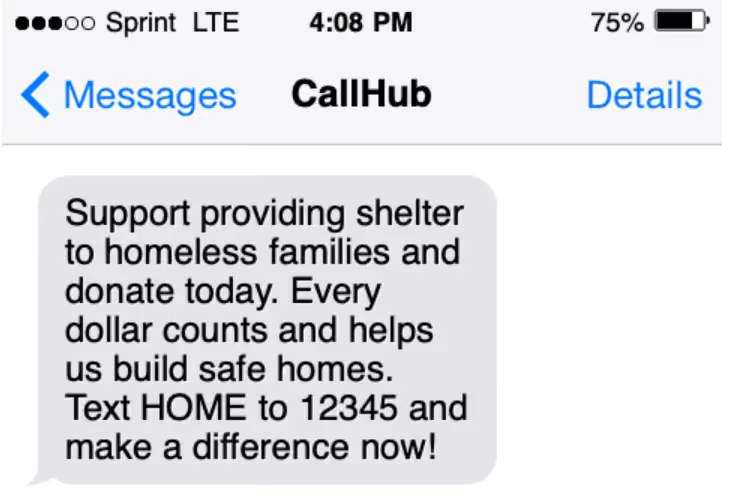
Urgency can be one of the strongest motivators for giving. When your donors know there’s a deadline or a goal within reach, they’re more likely to take action right away. Short, time-bound messages like these can help you make the most of that window of attention.
Hi [Name], we have 48 hours left to reach our goal. We’re still $3,000 short. Can you give $25 right now? [Link]
Only 6 hours remain! We need 50 more donors to unlock our challenge grant. Be one of them: [Link]
Deadline tonight at midnight. Your gift will be matched dollar for dollar, but only if you give before [time]. [Link]
[Name], we're 80% to our goal with just 12 hours left. Can you help us finish strong? [Link]
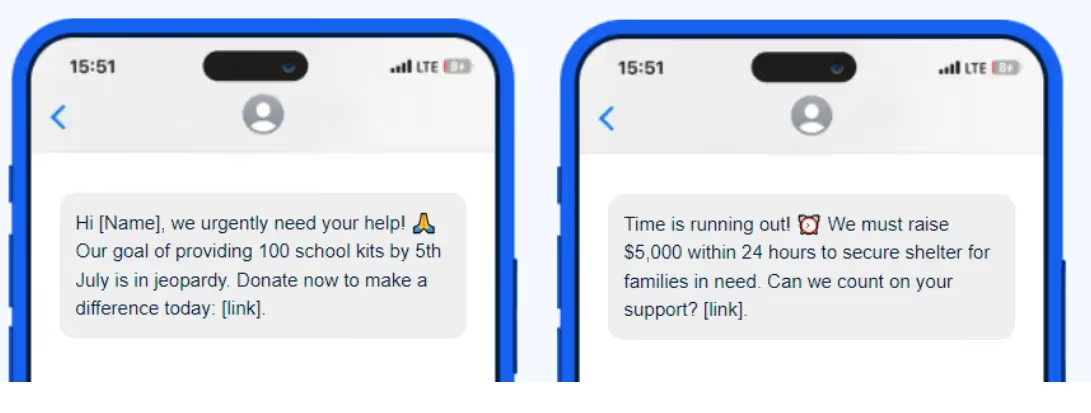
Events give you a chance to bring donors together, celebrate milestones, and raise additional support. A well-timed text can boost attendance and remind supporters why their presence, and their gifts, matter.
Hi [Name], join us for [event name] on [date]. Your participation helps raise funds for [cause or program]. Save your spot: [Link]
Only 20 seats left for [event name] this [day]. Every ticket supports [specific goal or program]. Register now before they’re gone: [Link]
[Name], [event name] happens tomorrow at [time]! Your attendance helps us reach our fundraising goal for [cause]. Here’s a key detail before you arrive: [Key detail]. See you there!
Last call for [event name]! Doors open in two hours. Join us and help make a difference for [cause]. RSVP now: [Link]
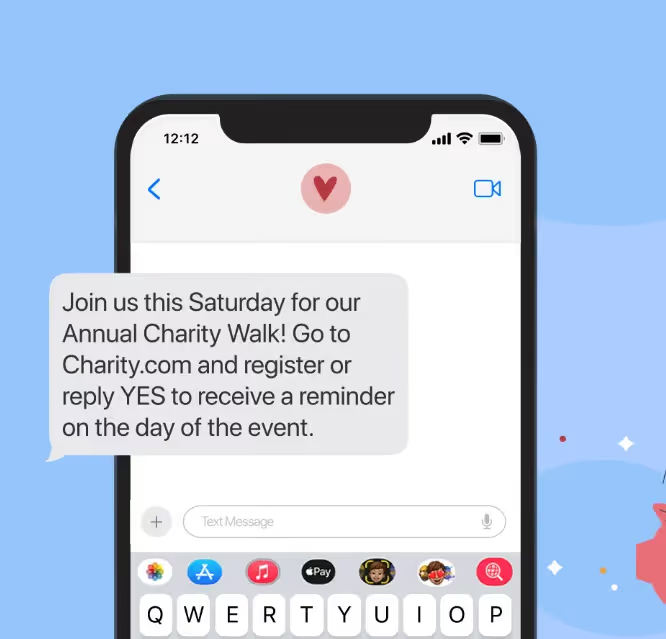
Few messages spark action faster than one that says, “Your gift counts twice.” Matching gift campaigns work because donors can immediately see the bigger impact of their support. A short, clear text that highlights the multiplier effect often drives quick responses.
Great news, [Name]! Every gift made today will be matched two to one. Your $50 turns into $150 for [cause or program]. Give now: [Link]
[Name], a generous supporter is matching all donations up to $10,000. This is your chance to double your impact for [specific cause]. Donate here: [Link]
Your employer might match your gift to [Organization]. Check your eligibility and make your donation go twice as far: [Link]
[Name], we still have $5,000 left in matching funds, but only until [time]. Give today and see your contribution doubled instantly: [Link]
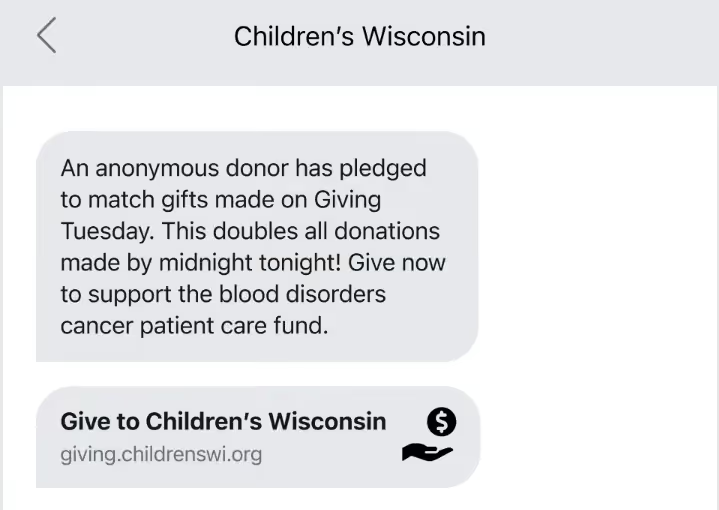
Giving Tuesday has become one of the biggest global movements in philanthropy. In 2024 alone, supporters contributed more than $3.6 billion, and text messaging played a huge part in that momentum. The immediacy of SMS helps organizations reach donors throughout the day, keeping the energy and generosity flowing.
Here are a few text ideas you can adapt for your next Giving Tuesday campaign.
It’s Giving Tuesday! Join [number] supporters who’ve already given today. Your gift of any amount makes a difference: [Link]
[Name], all Giving Tuesday donations are being matched. Your $25 becomes $50, and your $100 becomes $200. Give before midnight: [Link]
We’re halfway through Giving Tuesday and $8,000 short of our goal. Can you help us close the gap? [Link]
Only four hours left on Giving Tuesday! We need 75 more donors to reach our target. Be one of them: [Link]
[Name], thank you for considering a Giving Tuesday gift. Here’s what your donation supports: [specific outcome]. Give here: [Link]
Once the campaign ends, send a brief thank-you message the next day. A quick note of gratitude keeps the connection warm and helps donors feel part of the success they made possible.
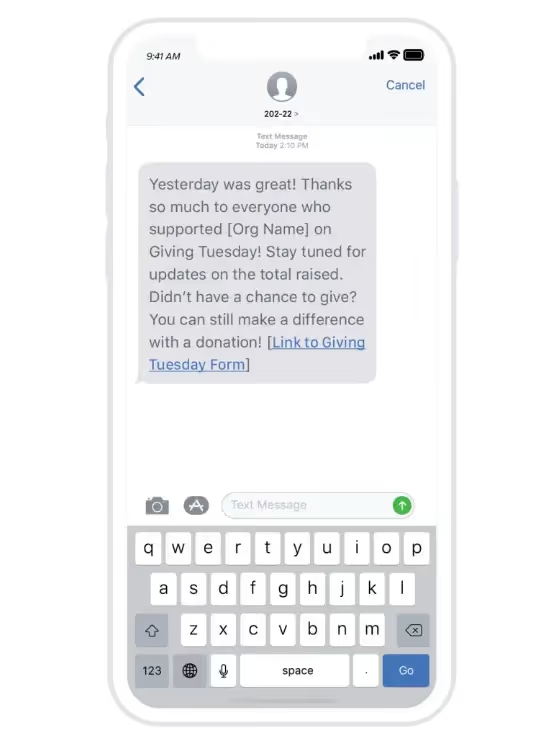
Your past donors are those who already believe in your mission. They just need a reminder of the difference they’ve made. Re-engagement texts work best when they sound personal, share a quick update, and show donors how their earlier support still creates impact.
Hi [Name], we haven't heard from you in a while, but we'd love to have you back. Here's what we've been up to: [Brief update]. Interested in getting involved again? [Link]
[Name], you gave to [campaign name] last year and it made a real difference. We're running a similar campaign now. Would you consider giving again? [Link]
We miss you, [Name]! Your last gift helped [specific outcome]. We're working on [new project] and would love your support: [Link]
[Name], your support in [year] helped us [achievement]. This year, we're trying to [new goal]. Will you help us again? [Link]
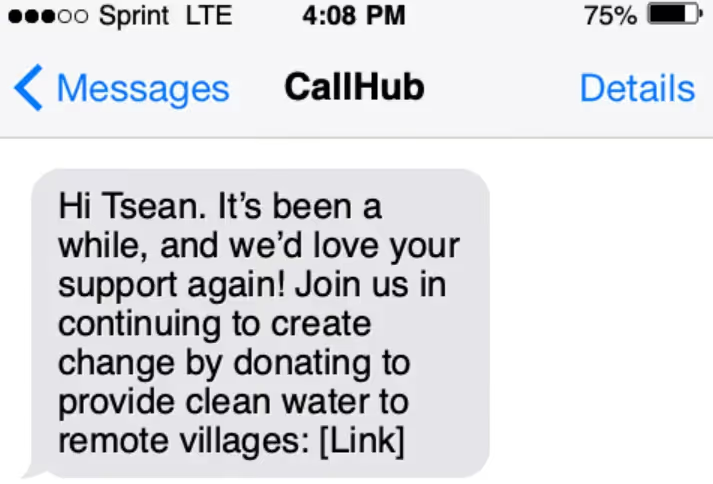
Gratitude matters. Donors who feel seen and appreciated are far more likely to stay connected and give again. Send one of these right after someone gives:
Thank you, [Name]! Your gift of [amount] just came through. You're making [specific impact]. We're grateful.
[Name], your donation means [specific outcome, e.g., '3 students will get scholarships']. Thank you for believing in our mission.
We got your gift of [amount], [Name]. Thank you! Here's your receipt: [Link]. Your support makes our work possible.
[Name], you just became donor #[number] in our campaign! Thank you for joining [number] others who are making this possible.
Your gift is already at work, [Name]. Thank you! Watch for updates on what we accomplish together.
Text messaging works best when it's part of an integrated strategy. Here's how advancement teams can automate their fundraising sms campaigns:
The result is a text messaging program that runs efficiently without eating up your team's time on manual tasks.
Text messaging can deliver results that other channels struggle to match, but only when you have the right tools and strategy in place.
Almabase helps advancement teams run text campaigns that convert, with built-in segmentation, personalization, and automated workflows that save time while raising more.
Request a demo to see how Almabase can power your next text messaging campaign.

Fundraising Text Message Examples
We've collected a whole bunch of fundraising text message templates for you to use for your upcoming giving days, events, and fundraisers.
Lorem ipsum dolor sit amet, consectetur adipiscing elit. Suspendisse varius enim in eros elementum tristique. Duis cursus, mi quis viverra ornare, eros dolor interdum nulla, ut commodo diam libero vitae erat. Aenean faucibus nibh et justo cursus id rutrum lorem imperdiet. Nunc ut sem vitae risus tristique posuere.
November 24, 2025
12 minutes
A strong donation page can be the difference between an inspired gift and a missed opportunity. With donors expecting a fast, trustworthy experience, the design and strategy of your giving page matter more than ever.
In this article you’ll find best-in-class donation page examples from schools, universities, and nonprofits, as well as actionable takeaways to help your institution inspire more gifts.
💡If you want a page that inspires giving and syncs seamlessly with your donor database, check out Almabase’s Giving Module.
Punahou leveraged their 175th anniversary celebration to create their most successful fundraising campaign in school history. The Ku'u Punahou campaign raised over $176 million from more than 12,800 donors with 40,000 individual gifts. The campaign effectively connected historical legacy with future vision, emphasizing how gifts would support cutting-edge learning environments, expand need-based financial aid, and inspire students to "pursue lives of purpose".
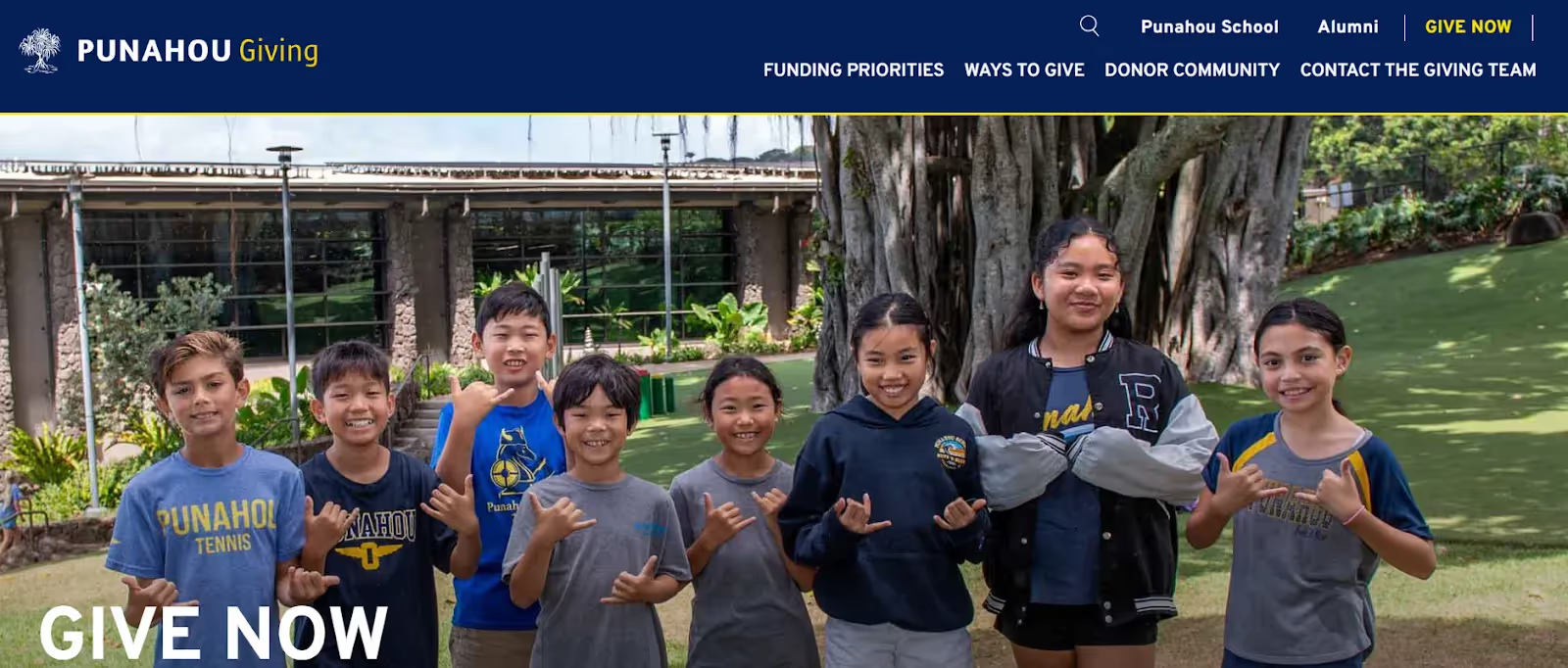
Why it works: Their donation platform provides clear funding priorities including the Punahou Fund for current needs, PunsUnited for student financial aid, and specific capital projects, while offering multiple giving vehicles from cryptocurrency to IRA distributions.
Takeaway: Tie major fundraising campaigns to significant institutional milestones while providing clear, varied pathways for different donor interests and capacities.
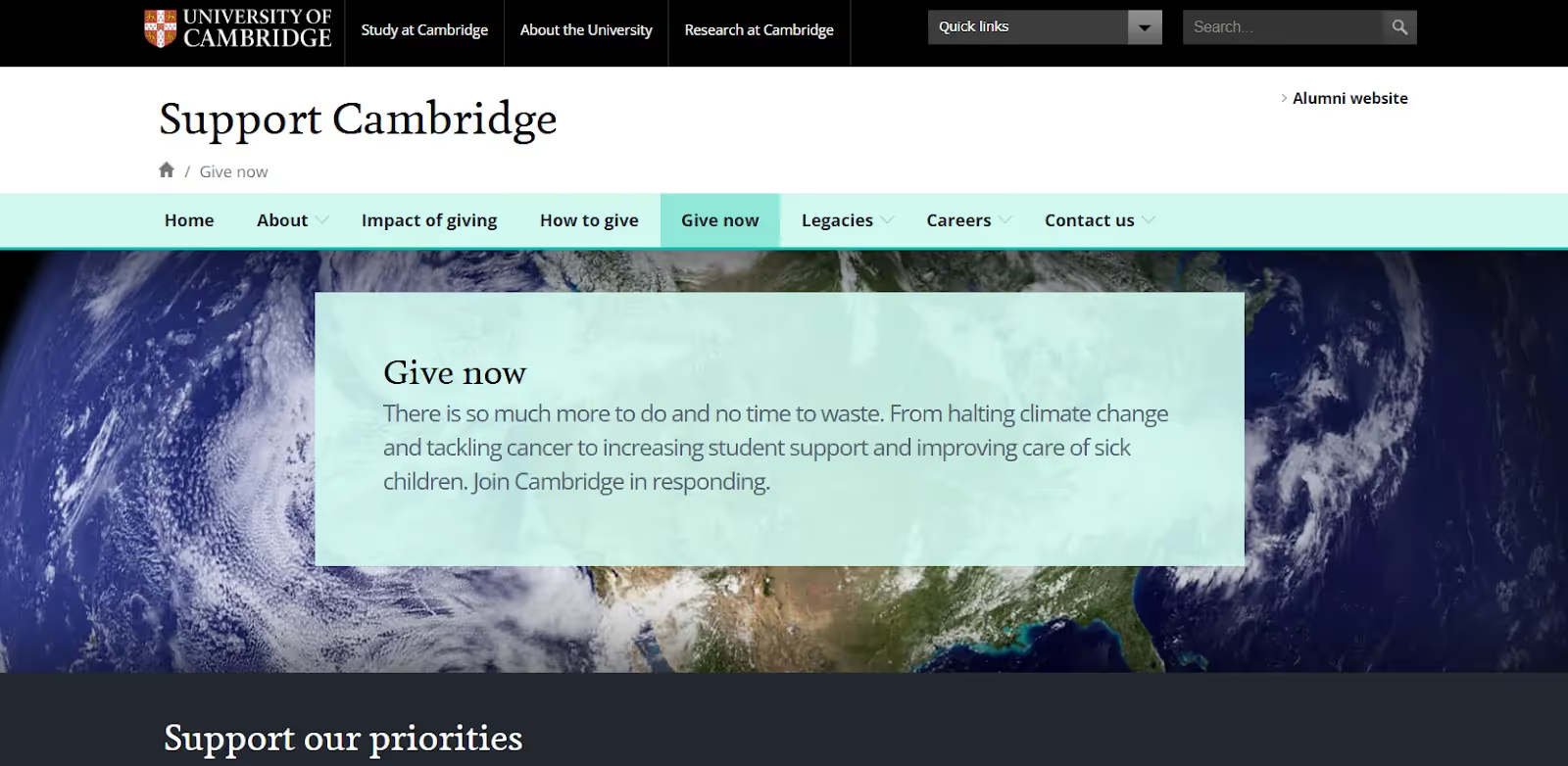
Why it works: The platform supports over 150 academic departments, faculties, and research institutes, offering donors a comprehensive range of causes from student support (including scholarships and bursaries) to cutting-edge research spanning climate change to cancer research, plus historic preservation and global outreach programs.
The platform is genuinely international-friendly, supporting multiple currencies and UK Gift Aid (adding 25% to donations). It uses various payment methods including international bank transfers, and provides tax-efficient giving structures through partnerships like Cambridge in America and Transatlantic Giving Circle, making it accessible to donors from the US, Europe, India, and beyond.
Key feature: Comprehensive cause selection across all academic disciplines combined with seamless international giving infrastructure.
Takeaway: Offering diverse funding priorities while optimizing for global accessibility significantly expands both donor engagement and gift potential.
UCLA’s donation page emphasizes the collective impact of gifts of all sizes, framing every donation as a valuable contribution to a larger circle of support. The page spotlights the university’s multi-year fundraising drive, presenting goals and clear priorities such as student scholarships, faculty research, and campus initiatives. Donors can choose from a wide range of designations: schools, departments, or specific programs, and the form makes it easy to give once or set up a recurring pledge. Campaign progress updates and donor stories reinforce momentum, while the blue-and-gold branding keeps the experience unmistakably UCLA.
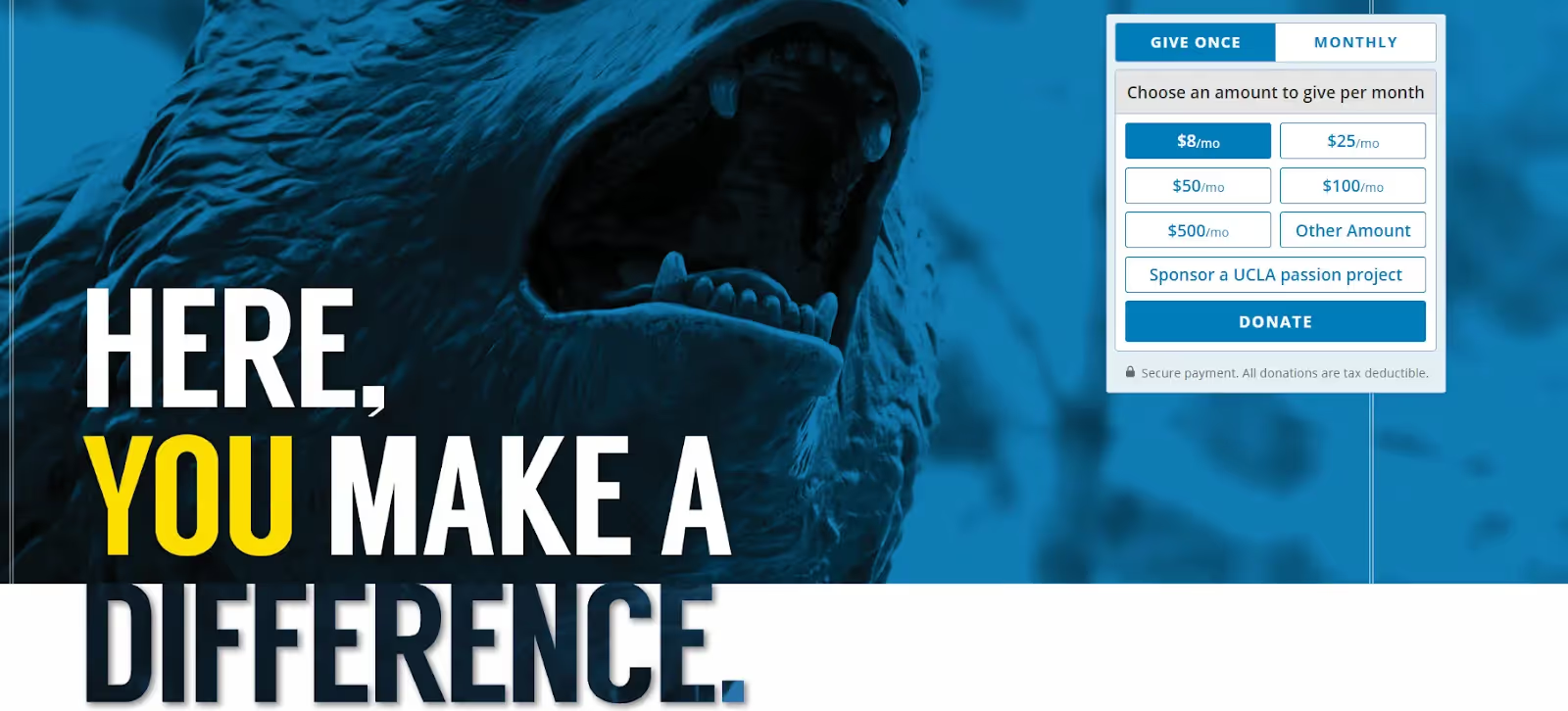
Why it works: By reinforcing that every gift counts and supports a shared mission, UCLA creates an inclusive and motivating environment for donors at all capacity levels. This sense of community nurtures donor loyalty and encourages repeat giving, from modest contributions to major philanthropic commitments.
Key feature: Messaging that connects individual gifts to a broad, impactful community mission.
Takeaway: Position donations as part of a collective effort that transcends the institution, inspiring donors with a compelling sense of shared purpose.
MIT’s donation page uses an interactive grid of impact cards instead of a traditional banner. Each card highlights a key funding priority—such as “Approximately 40% of MIT’s operating budget relies on unrestricted dollars,” and “Over 25% of first-year graduate students are supported by fellowships.” Donors can hover over each card to reveal concise impact statements and click “Learn More” to dive deeper or give directly to that area.
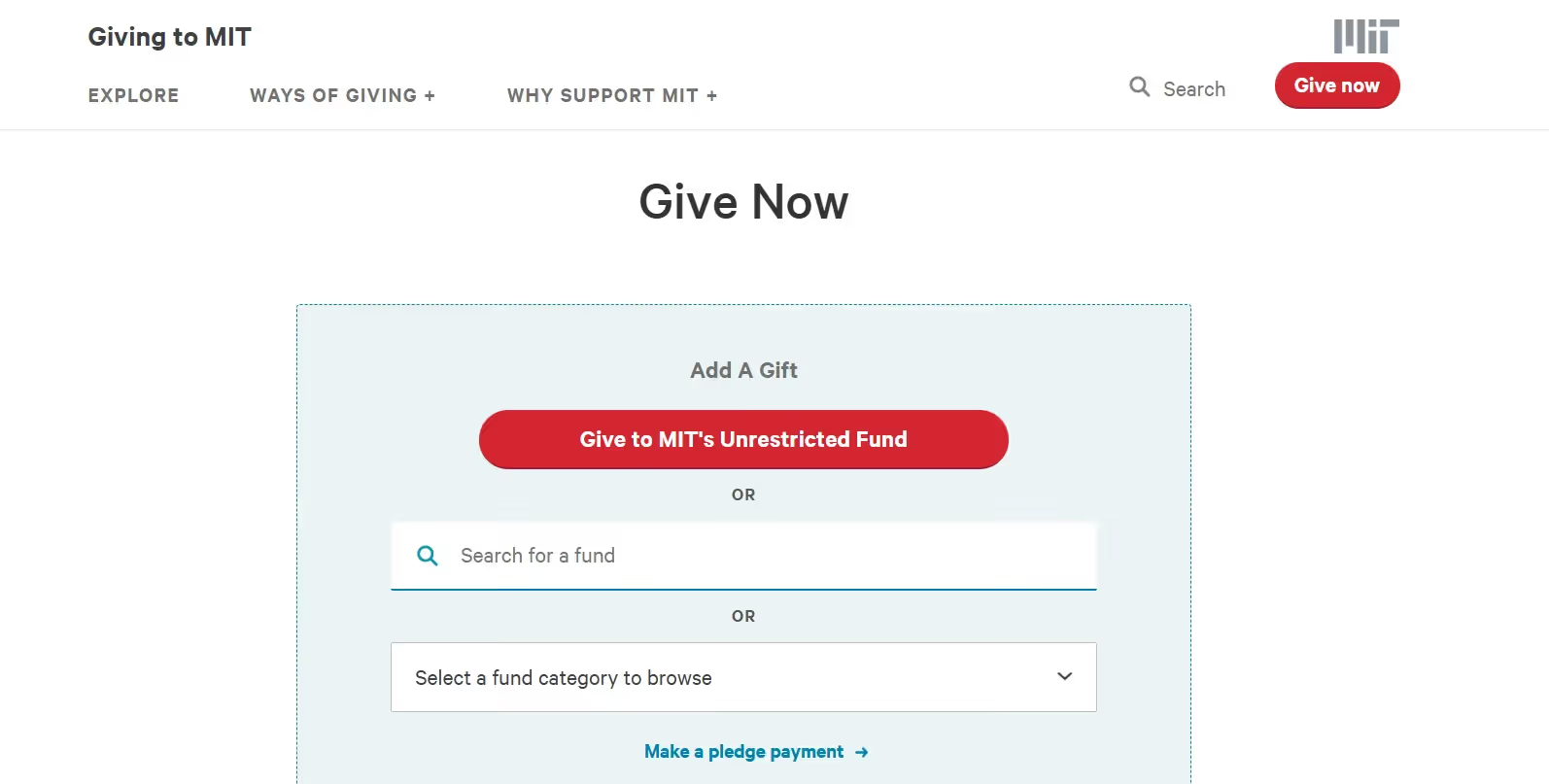
Why it Works: The card-based layout engages donors by inviting exploration and discovery, turning passive scrolling into active interaction. By surfacing bite-sized data points about financial aid, unrestricted funding, and fellowship support, MIT appeals to diverse donor motivations, whether they value student support, institutional flexibility, or graduate research. The clear, quantifiable facts build credibility, while the hover-to-reveal design keeps the page visually clean yet informative.
Key feature: Interactive impact cards with hover-revealed data points tying gift options to specific institutional needs.
Takeaway: Use interactive, data-driven elements to educate donors about multiple priorities, letting them choose what resonates most while maintaining a clean, engaging design.
UT Austin’s “Ways to Give” page offers a comprehensive menu of 14 distinct giving channels, from traditional methods like mail-in gifts and wire transfers to strategic options such as matching gifts, appreciated securities, endowments, and estate/planned gifts. They also feature specialized pathways for UT employees (payroll deduction), international donors, and industry or foundation partnerships. Each option includes a brief description of benefits, such as tax advantages for securities gifts or legacy impact for endowed funds, guiding donors to the method that best aligns with their needs and goals.
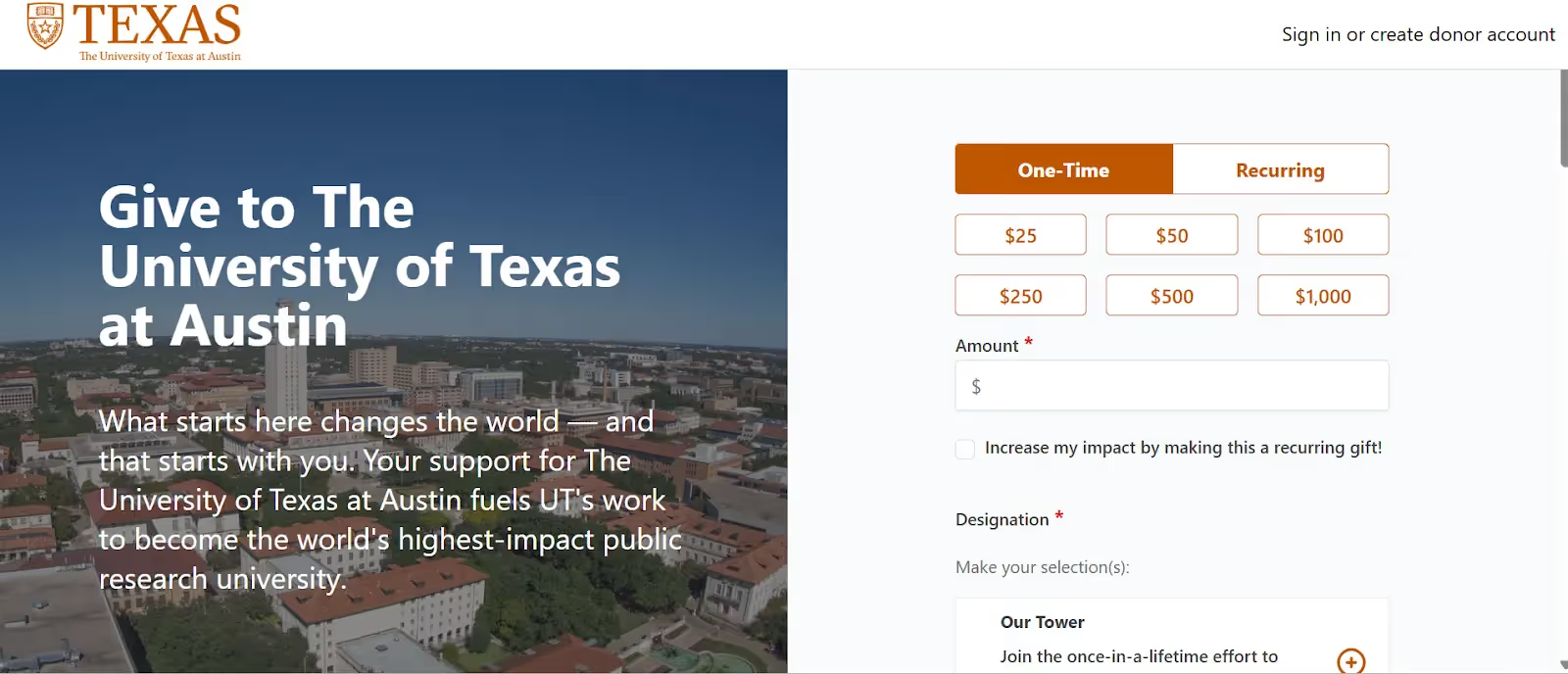
Why it works: By presenting diverse giving vehicles in a single, clearly structured page, UT Austin accommodates donors at every level and life stage. This breadth of options signals inclusivity and respect for individual donor circumstances, strengthening trust and inspiring larger, more strategic commitments.
Key feature: Detailed, side-by-side descriptions of multiple giving vehicles tailored to varied donor profiles.
Takeaway: Empower donors by offering clear, well-explained giving channels that match diverse preferences, maximizing both participation and gift size.
What they did: Stanford’s Giving site serves as a one-stop destination for every type of donor. “How to Make a Gift” section organizes every giving method into three clear columns: Give Now, Give Over Time, and Plan Your Gift. Under “Give Now,” donors can contribute online, by phone or mail, through stocks or wire transfers, or via memorial, matching, or international gifts. “Give Over Time” highlights new pledges, pledge payments, and recurring gifts, while “Plan Your Gift” details options like bequests, life-income gifts, donor-advised funds, and other asset-based contributions. Each link opens concise guidance so donors immediately understand requirements and benefits such as tax advantages or long-term impact.
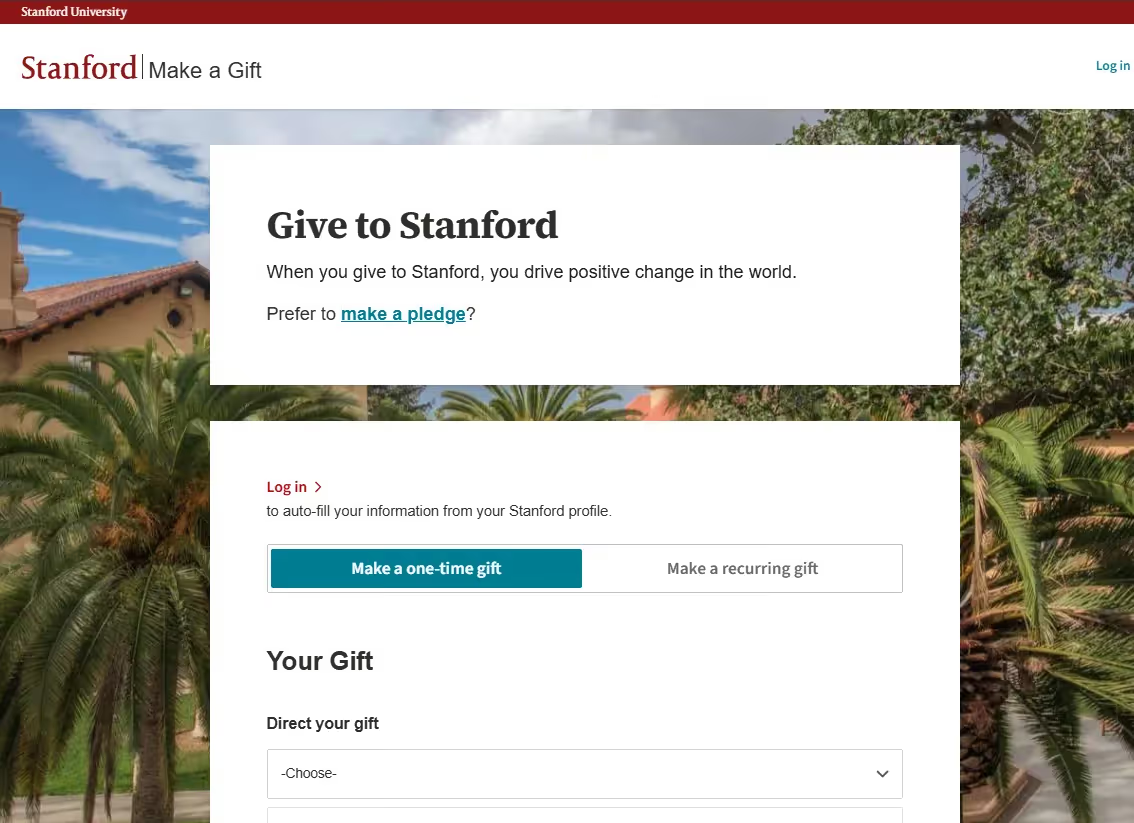
Why it works: This tiered layout simplifies a complex set of choices. Donors can instantly self-select whether they want to give immediately, spread payments over time, or create a legacy gift, without wading through multiple pages. By presenting planned giving alongside quick online options, Stanford invites both spontaneous and strategic donors, signaling professionalism and respect for different financial circumstances.
Key feature: Three-column structure, “Give Now,” “Give Over Time,” and “Plan Your Gift”, that clarifies intent and shortens the path to the right giving vehicle.
Takeaway: Grouping donation methods by timing and complexity helps donors quickly find an approach that fits their goals, increasing both participation and the likelihood of larger, long-term commitments.

Charity: water did something exemplary with online giving through their “100% Model”, ensuring every public donation funds clean water projects, while operational costs come from private supporters. Their donation page appeals to donors of all levels, highlighting that just $40 can bring one person reliable access to clean water. The giving form encourages small, meaningful gifts, reinforced by clear, low-pressure messaging and a welcoming design. Donors can also give in honor of someone special, adding a personal touch that widens participation.
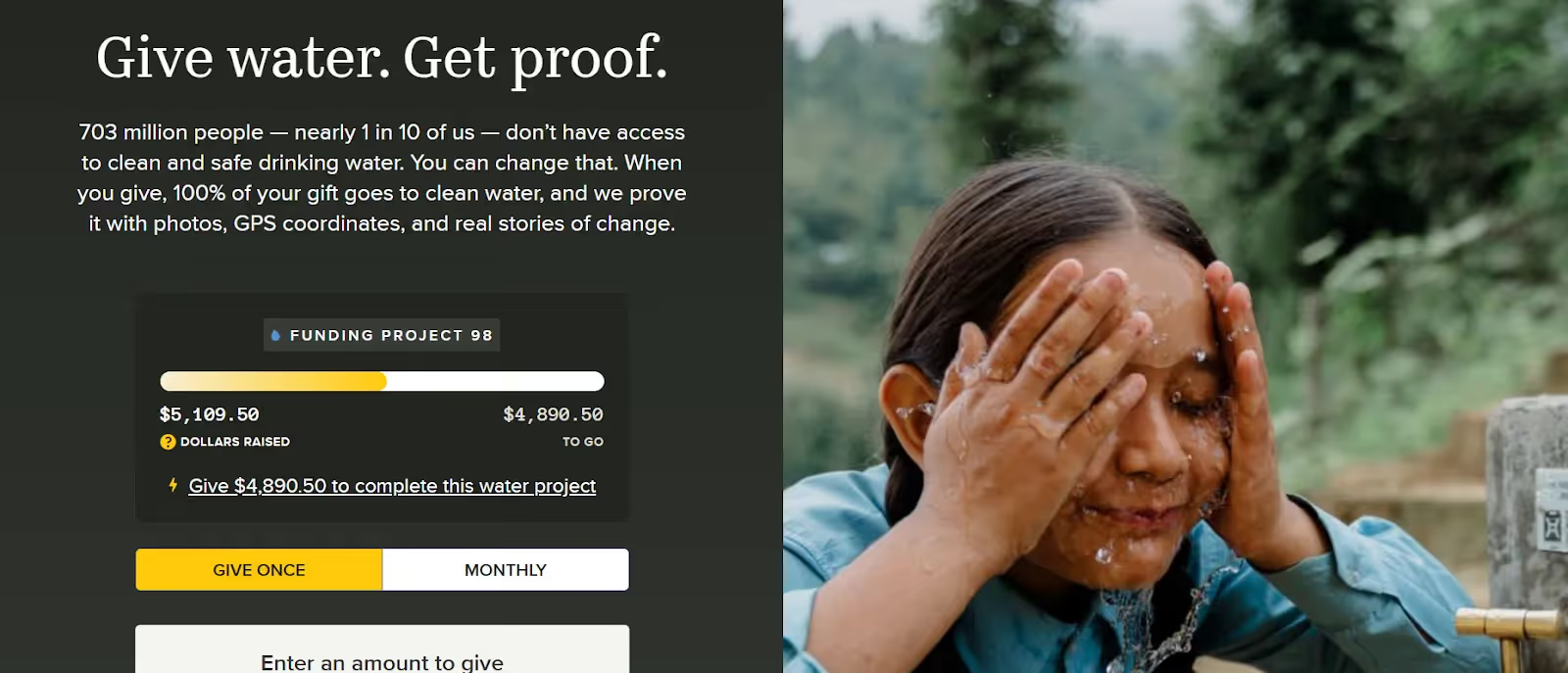
Why it works: The low-barrier entry point clearly states the tangible impact of every dollar, making action feel accessible to all. This transparent, approachable style removes hesitation from new and returning donors alike.
Key feature: Transparent cost-of-impact messaging (“$40 brings clean water to 1 person”) and personalized giving options.
Takeaway: A combination of radical transparency and inclusive, low-pressure donation options makes every supporter feel valued, lowering the barrier for action and building long-term loyalty.
The American Red Cross places credibility and transparency at the forefront on their donation page by prominently displaying their 4-star Charity Navigator rating.
They provide donors clear choices to give toward specific disaster relief efforts (such as wildfire relief or hurricane response) or general emergency preparedness, ensuring funds are allocated to donor-intended uses. These trust badges and fund-designation options reassure potential donors about the responsible handling of contributions in times of crisis.
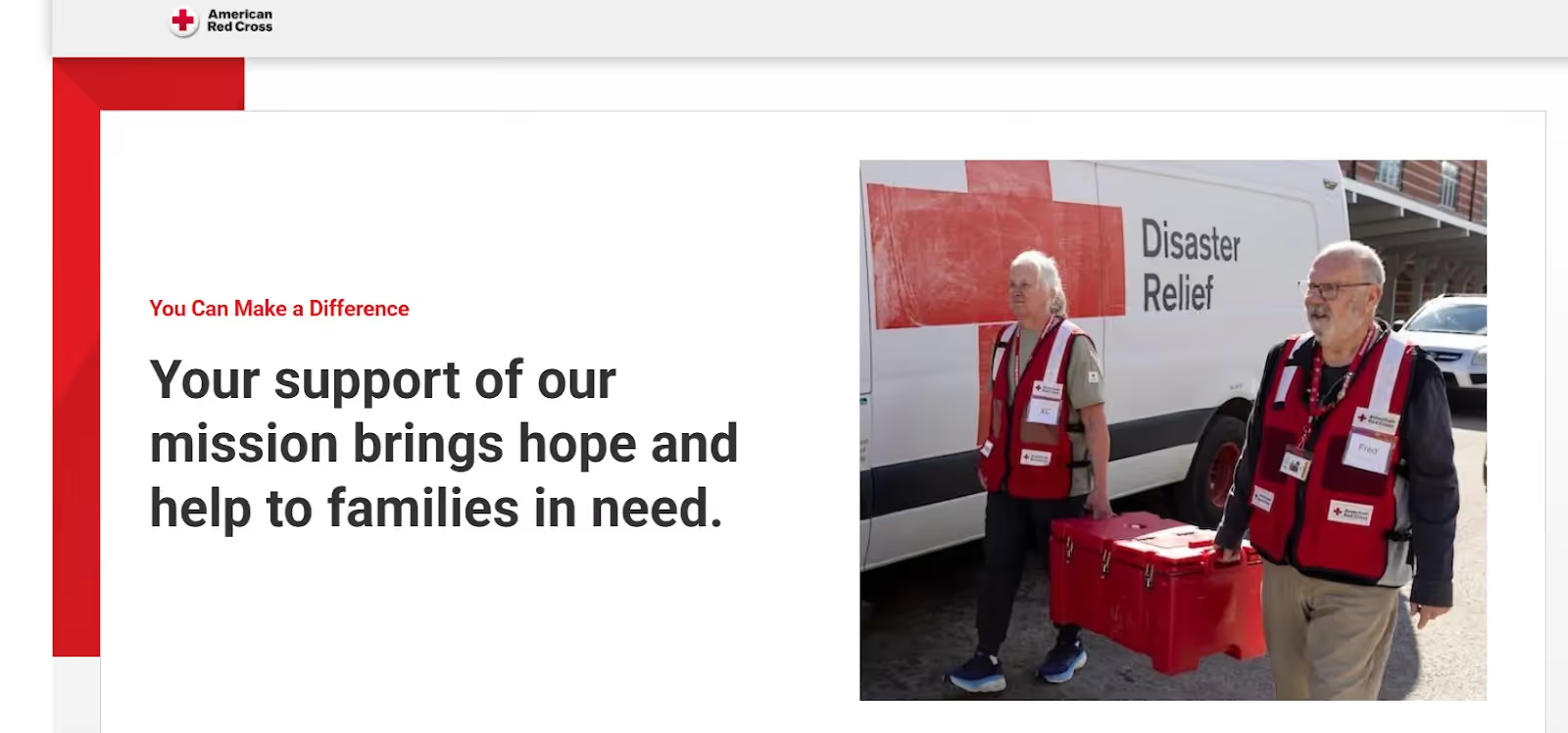
Why it works: In disaster fundraising, trust is paramount. The presence of third-party certifications and transparent fund allocation reduces donor skepticism and encourages first-time giving. Having clear, situational giving opportunities tied to recent emergencies increases relevance and urgency, motivating donors to act quickly.
Takeaway: Demonstrating strong third-party accountability and offering clear, cause-specific giving choices build donor confidence, especially important in emergency response fundraising.
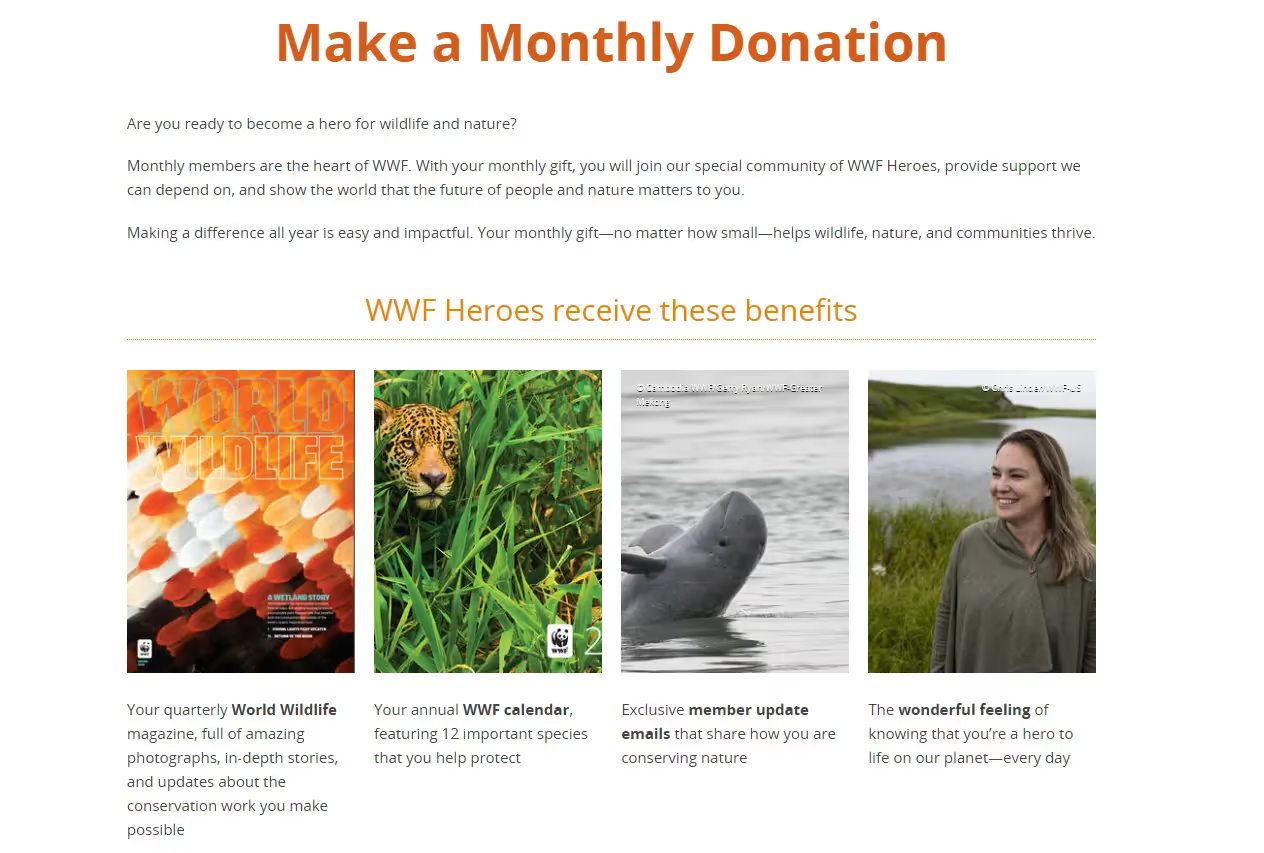
Why it works: WWF frames monthly giving as joining their "WWF Heroes" community, emphasizing how monthly donations provide "dependable support for global conservation efforts". Their donation pages offer membership benefits including quarterly World Wildlife magazine, annual calendars, and exclusive updates. They make monthly giving attractive by highlighting that 84% of spending goes directly to conservation and offering thank-you gifts for donations of $16+ per month.
Key feature: Monthly giving positioned as exclusive membership with tangible benefits.
Takeaway: Present recurring gifts as joining a special community with exclusive perks rather than just a payment method.
The examples above show that high-performing giving pages share a core set of traits:
These shared elements ensure donors can give with confidence, understand their impact, and complete a gift in minutes. These are key ingredients for sustainable, long-term fundraising success.
Use this short checklist when reviewing your site:
💡Almabase’s Giving Module integrates directly with RE NXT to automate processing and personalize appeals. → Learn more
Whether you run a K-12 school, university, or global nonprofit, we hope that these donation pages and our tips have proven that clear design, trust signals, and emotional storytelling go a long way in the effort to convert visitors into donors.

9 Best Donation Page Examples for Better Fundraising
Donation pages are the interface for your donors to make a change. In this blog, we're going through 9 great examples you can take inspiration for your next page.
Lorem ipsum dolor sit amet, consectetur adipiscing elit. Suspendisse varius enim in eros elementum tristique. Duis cursus, mi quis viverra ornare, eros dolor interdum nulla, ut commodo diam libero vitae erat. Aenean faucibus nibh et justo cursus id rutrum lorem imperdiet. Nunc ut sem vitae risus tristique posuere.
September 26, 2025
12 minutes

.svg)

.avif)
.webp)