See how institutions can increase alumni donations by keeping alumni engaged, planning stronger campaigns, and making the giving experience easier.
Almabase
Updated:
May 27, 2026

The annual giving campaign was once the primary window for alumni fundraising. Institutions could send a few emails with a year-end giving appeal, and still see support from alumni who felt a strong sense of loyalty to the institution.
That approach is harder to rely on today, as alumni are now asked to support many causes outside their alma mater. If the institution reaches out only during fundraising season, the appeal can feel disconnected.
Despite this, the opportunity to grow alumni donations remains strong. CASE’s latest findings show that giving to U.S. colleges and universities reached $78.8 billion in FY2025, up 4% from the previous year.
In this blog, we’ll cover how to keep alumni engaged before the ask and plan campaigns that make giving timely, relevant, and easier to repeat.
Alumni donations today depend on the relationship alumni have with the institution before a campaign goes live. Loyalty still matters, but it carries more weight when alumni hear from the institution regularly and understand why their support is needed.
Here are the shifts shaping alumni giving today:
Increasing alumni donations starts with making the ask feel earned. Alumni are more likely to participate when the institution has stayed relevant before the campaign begins.
The sections below focus on the parts institutions can improve directly.
A donation request works better when alumni already feel involved with the institution. Regular communication helps maintain that connection.
For example, a useful alumni newsletter can keep alumni connected between campaigns. It can share student stories, highlight meaningful campus updates, and point alumni toward ways to participate.
Institutions can strengthen alumni engagement by:
Teams that need more practical alumni engagement ideas can start with programs that give alumni a reason to participate before the donation ask. The goal is to make giving feel like a continuation of the relationship.
A strong campaign can still lose participation if the giving page is difficult to use. This is especially important on mobile. Many alumni will arrive from an email, text message, social post, or event reminder. If the page is slow or the form asks for too much information, the donor may leave before completing the gift.
A better giving experience should make the next step obvious:
The point is to remove friction. Once alumni have decided to give, the donation flow should not make them rethink the decision.
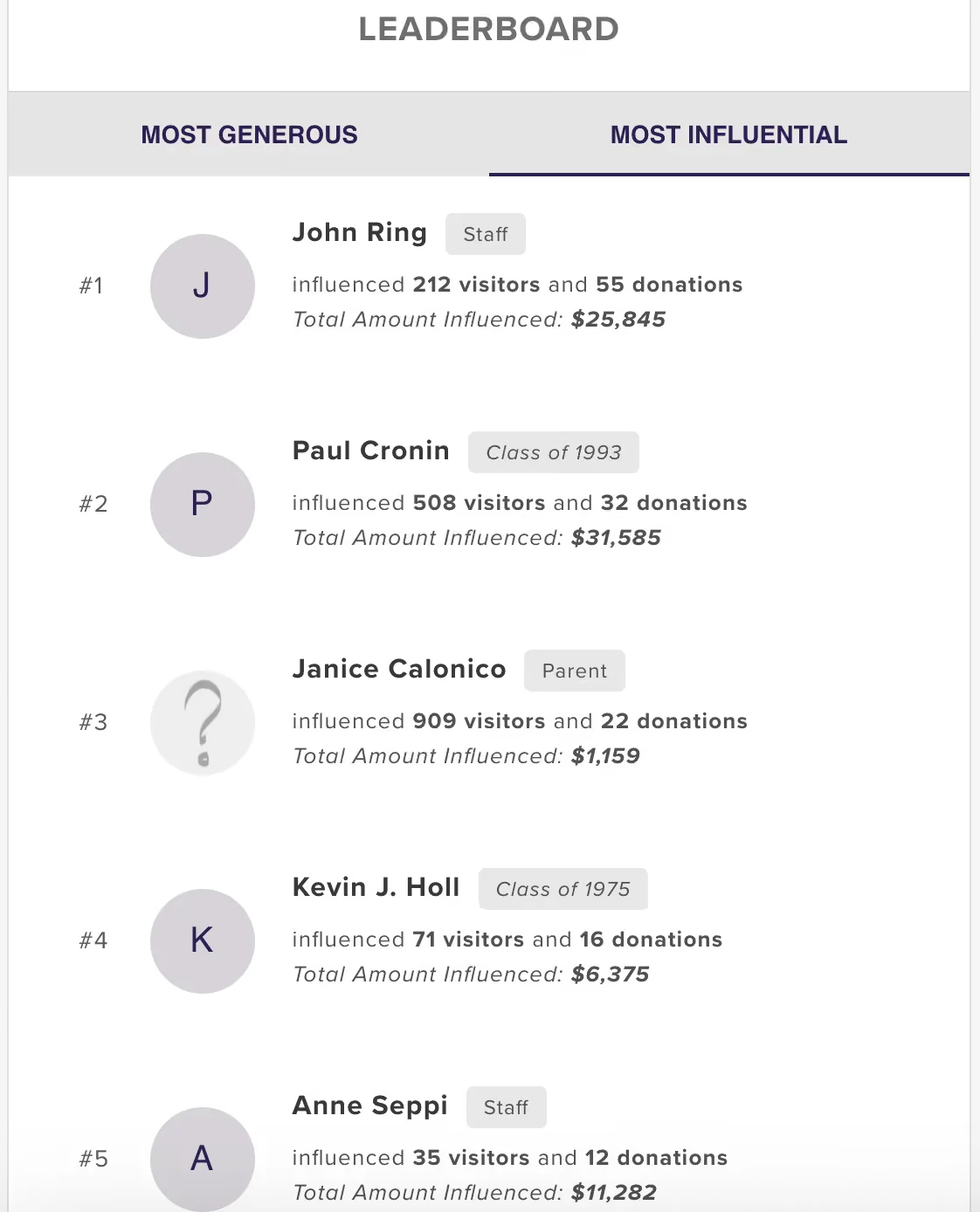
Alumni campaigns work better when people can see activity around them. A time-bound campaign gives alumni a reason to act soon. An event gives the ask a natural moment. Peer outreach can make the invitation feel more personal because it comes from someone alumni recognize.
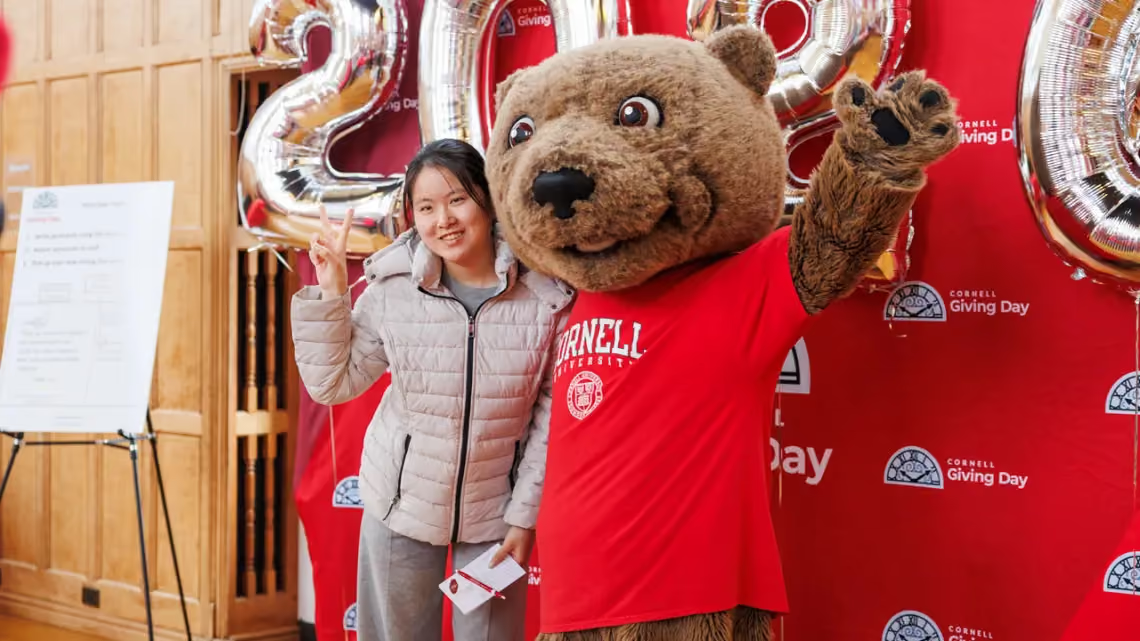
Cornell University’s 2026 Giving Day shows how peer activity can strengthen a short campaign window. In 24 hours, the campaign brought together 17,011 donors and raised $11.3 million. Cornell also had 704 Giving Day champions. Their personal outreach helped bring in more than 4,037 gifts.
To build momentum, every campaign element should give alumni a reason to act:
First-time donors help institutions grow alumni participation beyond the same group of regular contributors. A first gift may be modest, but it gives the institution a real starting point for a longer donor relationship.
Institutions can encourage first-time alumni donors by:
Campaign framing also matters here. If the message only emphasizes dollars raised, smaller donors may feel their gift will not make a difference. A better approach is to frame the campaign around participation as well as revenue.
For example, instead of only saying “Help us raise $100,000,” the campaign can also say “Help us bring 500 alumni donors together for student scholarships.”
Matching gifts can make the impact of a donation easier to understand. When alumni know their gift can go further within a specific window, they have a stronger reason to act. Giving challenges work in a similar way by giving alumni a clear goal to rally around.
Good challenge structures include:
The challenge should be simple enough for alumni to understand quickly. They should know what the goal is, what their gift helps unlock, and why taking part now makes a difference.
Recurring giving helps institutions build steadier alumni support after a campaign ends. It gives donors a simple way to continue contributing without waiting for the next appeal.
Recurring giving works best when donors understand why it matters:
That message should continue after sign-up. Regular updates, thank-you notes, and impact stories help recurring donors see that their support is still active and appreciated. This gives them more reason to keep giving over time.
Alumni are more likely to give when the outcome is clear. Institutions should show how donations are used in practical terms. The more specific the connection, the easier it is for alumni to understand the value of giving.
Impact communication should help donors see what happened because they gave:
Follow-up matters just as much as the appeal. After the campaign ends, alumni should hear what happened. Share the result, thank donors clearly, and explain what comes next. This closes the loop and gives alumni a stronger reason to participate again.
Data helps institutions see how alumni are responding to a campaign. It can show where interest is building, where follow-up is needed, and which parts of the campaign are helping alumni take action.
The most useful signals often come from activity the institution already tracks. Event attendance can show which alumni are already involved. Email engagement can show which messages are getting attention. Giving history can help teams separate new donors from lapsed or repeat donors.
Digital tools make these signals easier to use. Institutions can:
Platforms like Almabase help institutions streamline alumni donations and improve visibility into donor engagement. They bring the work around alumni giving into one connected system. Teams can see engagement, event activity, and online giving in one place, which makes follow-up easier to manage.
For example, Archbishop Riordan High School used Almabase to improve its giving day experience. The team could customize campaigns with less dependence on IT and see gift activity in real time. The school reported a 550% increase in giving day donations, from $60,646 to $338,724.
A good alumni donation campaign starts before the first appeal goes out. The team needs to know what the campaign is trying to achieve. It should also be clear which alumni groups matter most and why the timing feels relevant.
Start with the result the campaign needs to achieve. A financial target sets a revenue goal, while a donor target indicates whether the campaign is increasing alumni participation.
Past campaign data can help keep both targets realistic. If one class year, department, or program performed well earlier, that group can receive a focused goal rather than being treated like the entire alumni base.
Setting clear fundraising goals helps the team decide what to measure before the campaign begins and what to improve after it ends.
A useful goal plan should answer five questions:
Segmentation helps institutions avoid sending the same appeal to every alum. The message should reflect what each group already knows, values, or has done with the institution. The question is simple: what does this group already care about, and what would make this campaign feel relevant to them?
Institutions can group alumni by relationship stage and recent activity:
The campaign format should make the goal easier to act on. A participation-focused campaign needs urgency. It also needs visible progress so alumni can see others getting involved. But if alumni attention is already close to an event, the giving ask should connect naturally to that moment.
Here are a few ways to choose the right format:
Promotion should build attention before the ask becomes urgent. Alumni may not give after the first message, so the campaign needs a steady rhythm across the full timeline.
Email can carry the main story. SMS can support short reminders. Social posts can show progress, and peer outreach can make the ask feel more personal.
A simple campaign timeline can include:
Stronger alumni donations come from the work institutions do before the appeal goes out. Regular engagement keeps alumni connected before the appeal. Clear campaign goals give the ask a reason to exist. A smooth giving experience helps donors complete the gift.
Each campaign should also improve the next one. Teams can look at which alumni responded, which messages worked, and where follow-up was needed. That insight helps institutions make future campaigns more relevant instead of repeating the same appeal with a new deadline.
Over time, this builds a healthier alumni giving program. First-time donors have a clearer path into participation. Repeat donors see why continued support matters. Recurring donors stay connected to the impact their gifts make possible.
Almabase helps institutions bring alumni engagement, fundraising campaigns, and events into one connected place. For teams trying to grow alumni donations without adding more manual work, that connected view makes it easier to focus on participation and results.
Book a demo today to see how Almabase can support your alumni giving strategy.
The best way to increase alumni donations is to keep alumni engaged before the campaign begins. A donation request is easier to act on when alumni already understand the institution’s priorities and feel connected to its community.
Start with regular communication that gives alumni a reason to stay involved. The message should not always be about giving. It can share student stories that show impact. It can also invite alumni into events, mentoring, or other ways to stay involved before the next campaign.
Effective alumni donation strategies give alumni a clear reason to participate. A giving day works well when the campaign needs urgency. A matching gift can help donors see how their contribution goes further. Recurring giving gives alumni a way to continue their support after the campaign ends.
Giving days work because they focus attention within a short time frame. Alumni can see the campaign’s progress as it unfolds, which makes participation feel more active and easier to join.
First-time donors are more likely to give when the ask feels approachable. A smaller suggested gift can help, especially when it is tied to a clear outcome such as student support or scholarships.
Institutions can improve participation by staying connected with alumni between campaigns. When the appeal arrives, the purpose should be clear, and the donation process should be easy to complete.
Subscribe
See how modern advancement teams bring alumni engagement and fundraising together.
Plan faster. Execute better
Explore free templates designed for alumni and fundraising teams.
.png)

.avif)
Almabase
Donation request letters remain one of the most effective ways for schools, colleges, and universities to raise funds and strengthen community bonds. Whether sent by email or printed and mailed, these letters go beyond simply asking for money, they tell a story, create an emotional connection, and make donors feel part of something meaningful.
For institutions and organizations looking to boost their fundraising efforts, pairing the right words, tone, and structure with a clear purpose can transform a simple note into a powerful appeal.. Today, we’re helping you craft these letters and providing ready-to-use donation request letter templates alongside best practices to help you craft appeals that truly resonate.
It’s tempting to think that today, email and social media are all you need. But the data tells a different story. Institutions are still seeing significantly higher engagement from direct-mail appeals compared to digital-only outreach.
48% of donors say email is their preferred channel for receiving updates and appeals, while 21% still prefer direct mail. This shows that a hybrid approach, combining both digital and physical touchpoints, helps maximize reach and impact.
Each of these templates is designed for a specific use case, audience, and channel. You can copy them directly or customize them for your institution.
A fundraising letter that supports tuition assistance, classroom materials, and extracurricular programs, sent through email or print.
Subject: Together, We Can Help Every Student Thrive
Dear [First Name],
Every child deserves the chance to learn, dream, and succeed. This year, our classrooms are buzzing with curiosity, but some students are struggling to access the resources they need.
With your support, we can provide essential materials, fund extracurricular programs, and ensure no student is left behind. A gift of $50 can supply an entire class with art supplies for a semester.
Will you join us in making this possible?
[Donate Now]
Thank you for being part of our school community. Your generosity changes lives every day.
With gratitude,
[Your Name]
[Your Title]
A template for annual fund drives, Giving Tuesday, or Reunion Giving, shared by email or as a mail-merged PDF.
Subject: Your Legacy at [School Name] Continues
Dear [First Name],
Every time a student walks across the graduation stage, your legacy grows. As an alum, you know how life-changing an education at [School Name] can be.
This year, our Annual Fund supports scholarships, research opportunities, and campus programs that define the [School Name] experience. Your contribution, no matter the size, makes that possible.
Will you help the next generation of students thrive by making a gift today?
[Give to the Annual Fund]
Thank you for keeping the spirit of [College/University/Association Name] alive.
Warm regards,
[Your Name]
[Your Title]
A short, urgent appeal crafted for global giving days, delivered via email.
Subject: Join Thousands Changing Lives This Giving Tuesday
Dear [First Name],
Today, we join millions worldwide for Giving Tuesday—a celebration of generosity and community. Our goal is to raise $[Goal Amount] in just 24 hours to support [specific program/cause].
Every gift, no matter the size, will help us reach our target and create real change. Your $25 today could fund [specific, tangible impact] for a student in need.
Please don’t wait—this opportunity to make an immediate difference ends at midnight.
[Give Now]
Thank you for standing with us and with the community we serve.
With gratitude,
[Your Name]
[Your Title]
💌Each email click during Giving Tuesday 2024 was worth an average of $39 in donations—proving that every subject line, call-to-action, and send time matters. Perhaps that's why 33% of donors say email is the channel that most inspires them to give.
Here’s a version suited for monthly giving programs, sent by email or as a print follow-up.
Subject: Make an Impact Every Month
Dear [First Name],
Every month, your generosity can bring steady, lasting change. By joining our monthly giving program, you can provide steady, reliable support for [cause/program].
Just $15 a month can [specific impact], and over a year, your generosity will [larger outcome].
Become a monthly supporter today and watch your impact grow all year long.
[Join Monthly Giving]
Gratefully,
[Your Name]
[Your Title]
A request focused on post-donation matching, sent through email or mailed as a postcard.
Subject: Double Your Recent Gift at No Extra Cost
Dear [First Name],
Thank you for your generous gift of $[Gift Amount] to [Organization Name]. Did you know your donation may be eligible for a match from your employer?
Many companies match charitable contributions, effectively doubling your impact. To check if your gift qualifies, visit [Matching Gift Portal Link] and follow the quick steps.
Thank you for helping us do even more with your generosity.
Sincerely,
[Your Name]
[Your Title]
A formal print letter for scholarships, facility upgrades, or endowment campaigns.
Dear [First Name],
We are embarking on one of the most ambitious projects in our history, the [Campaign Name]. This initiative will [describe vision: build a new library, endow scholarships, expand labs].
We invite you to be part of this legacy. Your gift will not only transform our campus but also shape the futures of generations to come.
Please consider a contribution to the [Campaign Name with link]. Together, we can make this vision a reality.
With deepest appreciation,
[Your Name]
[Your Title]
A stewardship message for post-campaign follow-up, shared through email or print.
Subject: Look What We Achieved Together!
Dear [First Name],
Thanks to your generosity, our [Campaign Name] has raised $[Total Raised], surpassing our goal! Your gift helped make [specific result] possible.
[Insert photo of completed project or impact in action]
While this chapter is complete, our work continues. We’d love for you to stay connected as we take the next steps toward [future initiative].
Thank you for believing in our mission. It would not be possible without supporters like you.
Warmly,
[Your Name]
[Your Title]
A stewardship and donor retention note, best suited for email or handwritten delivery.
Subject: Your Gift Made an Immediate Difference
Dear [First Name],
Thank you for your recent gift of $[Gift Amount] to [Organization Name]. Because of you, we were able to [specific impact, e.g., “provide 200 meals to students in need”].
Your generosity inspires us and the community we serve. We are honored to have you as part of our donor family.
We’ll keep you updated on the difference you’re making, but for now, please know how much you are appreciated.
With heartfelt thanks,
[Your Name]
[Your Title]
Whether you’re writing to a long-time supporter or a first-time donor, your letter should check these boxes:
This level of personalization shows donors that you’ve taken the time to understand who they are, which builds trust and strengthens your appeal.
Avoid abstract language like "supports our programs." Instead, paint a picture of the specific change their generosity will create in the world.
The easier you make it, the more likely they are to follow through in the moment when they're most motivated.
Remember, personalization and segmentation can yield massive improvements. Segmented emails have demonstrated the potential to drive 30% more open rates and 50% more click-throughs than unsegmented campaigns, making audience segmentation a critical success factor for educational institutions.
Here’s how we're helping advancement teams connect technology to their storytelling:
More than asking for money, donation request letters help keep relationships strong. In a world full of emails and notifications, a letter can stand out because it feels personal and genuine.
With the right timing and smart segmentation, these letters do more than raise funds. They remind alumni and supporters why they matter, spark pride in your community, and strengthen the connection between your school and its graduates.

Donation Request Letter Best Practices + Templates
Lorem ipsum dolor sit amet, consectetur adipiscing elit. Suspendisse varius enim in eros elementum tristique. Duis cursus, mi quis viverra ornare, eros dolor interdum nulla, ut commodo diam libero vitae erat. Aenean faucibus nibh et justo cursus id rutrum lorem imperdiet. Nunc ut sem vitae risus tristique posuere.

Anwesha Kiran
August 19, 2025
12 minutes
Today's alumni represent far more than potential donors. They're engaged community members, passionate advocates, and partners in your institution's mission. Nowadays, the most effective ways to boost alumni donations are more aligned than ever with forging long-term relationships.
Building meaningful relationships with them requires a strategic blend of personalization, compelling storytelling, targeted outreach, innovative digital tools, and authentic community building. In this blog, we’ll be exploring some of the most effective ways to boost alumni donations to ensure a long-term mutually beneficial relationship with your community.
Nobody wants to feel like just another name on a mailing list. Research from Salesforce reveals that 66% of people expect organizations to truly understand their individual needs and preferences, and alumni are no exception.
The most successful donation campaigns start with smart segmentation that treats each alumnus as a unique individual with distinct interests and giving patterns. Instead of generic appeals, imagine sending messages like: "Remember the library you helped fund five years ago? Here's how students are using it today to launch groundbreaking research." Or: "We know you were passionate about theatre during your time here - would you consider supporting this year's student production?"
💡Behaviorally-targeted email campaigns see conversion rates that are 2.8 to 300 times higher than those using generic messaging. A simple personal touch can deliver remarkable results.
A donation is as much about impact as it is about money. It’s about making a contribution. When alumni understand how their contribution changes lives, they're far more likely to give.
Research shows that 87% of donors are influenced by emotional appeals. Some research even suggests that when people view emotional narratives, their brains release oxytocin, the "connection hormone," leading participants to donate 56% more compared to those who didn't experience this response.
The best alumni stories follow a simple arc: challenge, impact, and hope. "Sarah couldn't afford textbooks. Thanks to alumni donations, she received a scholarship. Today, she's a pediatric nurse saving lives."
Alumni are far more likely to give when they feel part of a vibrant community rather than simply being solicited for gifts. According to RNL's 2024 National Alumni Survey, alumni who feel connected to their alma mater are 23× more likely to donate than those who feel disconnected.
Regional in-person and virtual events such as coffee chats, panel discussions, live webinars re-establish bonds among classmates and with the institution. Alumni who participate in live events are 2.5× more likely to donate compared to non-attendees.
Formal mentoring pairs current students with alumni, fostering intergenerational relationships and affinity. Alumni who serve as mentors are 156% more likely to have donated to their institution.
Feeling part of an alumni "in-group" fosters lasting emotional bonds. Regular non-fundraising interactions build credibility, making alumni more receptive to donation appeals when they come.
Pro Tips:
By prioritizing genuine community building before making asks, institutions cultivate lifelong relationships that underpin sustainable fundraising success.
The most successful fundraising are extremely data-driven. A truly data-driven campaign goes beyond email open rates to leverage the full spectrum of alumni behavior at every stage of your strategy.
Website behavior, such as, time on your giving page, clicks on impact stories can reveal "warm leads." For most nonprofits for example, a good donation-page conversion rate falls between 1% and 4%.
Social media engagement also uncovers high-potential donors. Institutions that adopt integrated social media tools see up to 40% higher fundraising results compared to peers who don't. Social referrals drive 87% of second gifts, making click-path tracking from posts to donation forms essential.
Among Americans who volunteer with a nonprofit, 79% also make a financial contribution to that organization. High-net-worth volunteers are 69% likely to volunteer after giving, creating a powerful cycle of engagement.
Small tweaks in email subject lines, calls to action, or landing-page layouts can yield large gains. A/B testing subject lines can improve open rates by up to 49%. Test one variable per experiment, such as the subject line, the preview text, or sender name,to achieve statistical significance.
💡Use platforms like Almabase to unify event, web, social, and volunteer data into a single dashboard. This enables you to segment audiences by real-time engagement and launch targeted campaigns while reducing donor fatigue.
Adding a competitive edge to your annual giving day can transform a simple fundraising push into an immersive, high-energy event that drives both participation and dollars. Real-time leaderboards, head-to-head challenges, and unlockable goals create urgency, community pride, and social proof that motivate alumni to give and give again.
Not everyone can give $10,000, and that's okay. Micro-impact appeals show donors exactly how their small gift drives real outcomes, making a donation feel both achievable and meaningful.
According to NextAfter’s CaringBridge micro-ask experiment, framing a $25 ask lifted conversion rate by 39.1% and revenue by 32.9% over a control group.
Effective Micro-Impact Examples:
- $50: "Buys textbooks for one undergraduate student"
- $100: "Funds one month of internet connectivity for a remote learner"
- $250: "Underwrites a weekend retreat for four at-risk youth"
By showcasing how every dollar makes a clear difference, you empower more alumni to give and sustain long-term engagement through visible, immediate impact.
Former donors are some of your best prospects. Having given before, they already understand and care about your mission. A separate, impact-focused campaign such as "Here's what's changed since you last gave" could reignite their support.
According to Avid AI, reactivating a lapsed donor is 5× more likely to succeed than acquiring a new one. Blackbaud's research reports a first-year reactivation rate of 8.2% for donors lapsed in the last 1–5 years.
The most effective approach to lapsed donor reactivation starts with sophisticated segmentation using RFM (Recency, Frequency, Monetary) analysis. This method evaluates when donors last gave (Recency), how often they contributed (Frequency), and their total giving amount (Monetary value). Each factor serves as a predictor of future giving likelihood.
Then layer in peer-cohort data (“Class of ’19 peers have funded three new research labs this year”) to harness social proof.
Institutions using RFM segmentation isolate over 90% of dollars likely to be raised in a reactivation campaign, driving highly targeted asks that respect donor history and maximize ROI
Instead of generic appeals, send a concise impact report—“Since your 2019 gift, 1,200 graduates have completed their degrees debt-free, and our new scholarship program supports 45 students each year”—paired with a 60-second video testimonial from a beneficiary. The Association of Fundraising Professionals has found that as many as 87% of donors are influenced by emotional appeals in their decision to give. Universities using video in alumni campaigns see up to 72% quicker giving-day participation.
Just as companies conduct exit interviews with departing employees, nonprofits should reach out to lapsed donors to understand why they stopped giving. According to The Chronicle of Philanthropy, conducting thoughtful exit interviews with lapsed donors can provide crucial insights into retention issues and help prevent future lapses.
Over half of nonprofit website traffic now comes from mobile devices, yet, mobile donation forms still underperform. If your alumni reach your page and are met with clunky design, tiny buttons, or endless fields to fill, they’ll bounce before you even register their intent.
Optimize your mobile giving flow with these evidence-backed tactics:
💡 Treat your donation form as a product. Use heatmaps to pinpoint drop-off points, and A/B test individual elements like field count, button text, or layout. Check out this blog on creating accessible, high-performance donation forms
Matching gifts don’t just double the donation they double motivation. When alumni know their contribution will be matched dollar-for-dollar, 84% say they’re more likely to give.
To make the most of this:
Matching and challenge campaigns work best when they’re highly visible, time-limited, and framed as collective impact tools. You’re not just asking for a gift, you’re offering alumni the chance to unlock additional funding, spark friendly competition, and amplify every individual contribution into a larger community achievement.
Timely, specific, and authentic gratitude closes the loop and transforms one-time givers into lifelong supporters.
First, thank donors within 24 hours. Nonprofits that acknowledge gifts in under 24 hours achieve a 60% donor retention rate, compared to the industry average which comes in at just under 35%.
Next, send short visual impact updates. This could look like a short 60-second video or an infographic that spotlights exactly what their gift accomplished. Crowdfunding campaigns featuring personal videos raise 150% more on average than those without.
Then, mark donation anniversaries with personal reminders like, “One year ago today, you funded our new reading room—here’s how it’s thriving.” Simply repeating your impact message in a follow-up mailing can boost campaign revenue by 33%, adding new gifts without cannibalizing the original appeal.
Finally, share real stories from beneficiaries: quotes or brief clips from students and faculty, so alumni see their legacy in action. When donors feel consistently seen and valued, they’re far more likely to give again when the next ask comes around.
The most successful fundraising programs have one thing in common: they treat alumni as partners, not prospects. When you combine data-driven insights with authentic storytelling and seamless giving experiences, you create a foundation where donors feel valued, informed, and eager to contribute.
Start with the strategies that align with your current resources—whether that's launching your first giving day competition or implementing micro-impact messaging. The institutions seeing 2-3x higher giving rates aren't doing anything magical; they're simply executing these proven approaches consistently.

10 Effective Ways to Boost Alumni Donations
Lorem ipsum dolor sit amet, consectetur adipiscing elit. Suspendisse varius enim in eros elementum tristique. Duis cursus, mi quis viverra ornare, eros dolor interdum nulla, ut commodo diam libero vitae erat. Aenean faucibus nibh et justo cursus id rutrum lorem imperdiet. Nunc ut sem vitae risus tristique posuere.
Anwesha Kiran
July 18, 2025
12 minutes
Strong donor retention strategies are becoming essential as institutions prepare for another year of unpredictable fundraising behavior. Leaders across the sector are noticing sharper swings in donor loyalty and gift frequency, and many are rethinking how they engage supporters in a landscape shaped by rapid shifts in expectations.
At the same time, organizations are experimenting with donor acquisition strategies that reflect how people now discover, evaluate, and choose the causes they want to support. New donor audiences bring different motivations, attention patterns, and communication preferences, and advancement teams are realizing that older playbooks are no longer enough to sustain growth.
This article walks you through the changes shaping 2026 and what teams can do to build acquisition and retention plans that work.
Recent findings show that nearly seventy percent of nonprofits identify donor acquisition and retention as their top challenges - pressures that are increasingly mirrored across educational institutions, alumni networks, and member-based organizations.
While donations are dropping, there's also a growing disconnect between what donors want and what institutions are delivering. Today's donors want quick responses, clear communication, and seamless experiences, just like they get from Amazon or their banking app. Many institutions are struggling to keep pace with these expectations.
Generational shifts are adding to this pressure. Younger donors respond to immediacy and values alignment, while older donors still carry much of the giving power but prefer steady, relationship-focused outreach. These realities make it harder to build a consistent experience for supporters.
Education institutions feel the weight of these changes in very specific ways. Many are navigating declining alumni participation, shifting enrollment patterns, and tighter advancement teams that must do more with less. In this environment, acquisition and retention depend on teams having a clear understanding of which donors support them, why they give, and how those motivations evolve across different moments.
The takeaway is simple: strategies that carried institutions through the last decade will not be enough in 2026. Advancement and development teams need smarter segmentation, stronger personalization, more thoughtful automation, and integrated data workflows that remove unnecessary administrative work.

Many organizations are seeing a sharp increase in episodic donors. These are supporters who give during election cycles, crisis moments, or highly publicized events. (Tip: Many companies roll out special workplace giving programs during these time periods, too!) Their motivations often revolve around urgency rather than a long-term relationship with the institution.
The challenge is that once the moment passes, the emotional trigger disappears. Episodic donors rarely self-identify as long-term supporters, which leads to a steep drop-off in future engagement.
In 2026, this segment will require:
• mission-centered storytelling
• consistent stewardship beyond the initial gift
• automated follow-ups that keep the donor connected to impact.
These steps help move episodic donors from reactive giving to more intentional, recurring support.
Giving motivations can vary significantly across generations. While Boomers prioritize loyalty and tangible legacy, Gen X donors appreciate clarity and practical outcomes. On the other hand, Millennials look for values alignment and evidence of change. Gen Z leans toward authenticity, peer influence, and causes with clear moral grounding. Not to mention, both Gen Z and Millennials are increasingly likely to work for companies with workplace giving programs, which can grow their chances of getting involved.
Communication preferences also differ:
• Boomers respond well to phone calls, mailed updates, and personal touchpoints.
• Gen X tends to read emails and appreciates concise follow-ups.
• Millennials engage through social storytelling and mission-driven content.
• Gen Z prefers short-form video, mobile-first communication, and quick transparency.
To reach each group effectively, teams need adaptable acquisition and retention plans. A single message cannot serve a multigenerational donor base. Personalized content and varied channel strategies will be essential.
Supporters in 2026 will not wait for delayed thank-you notes or quarterly updates. Donors are now accustomed to the immediacy of digital experiences, from online retail to financial apps.
A timely, personalized acknowledgment is no longer a nice-to-have. It is an expectation.
Organizations that want to maintain loyalty must invest in:
Strong donor journeys help supporters understand how their contribution matters and build a sense of partnership throughout the year.
The sector is moving toward wider adoption of data-driven tools. Predictive scoring, segment-based automation, and donor pipeline visibility are now part of everyday planning for many institutions managing donor and alumni relationships. These tools allow teams to identify who is likely to give, who may lapse, and which donors need more personal attention.
Automation in this context is not a replacement for human connection. Instead, it removes repetitive tasks so staff can focus on meaningful interactions.
With stronger data intelligence, teams can personalize outreach, improve retention, and allocate limited resources more strategically.
Corporate philanthropy has entered a new era of record-breaking growth. According to the recent Giving USA report, total corporate giving reached $44.4 billion, a year-over-year increase of more than 9%. This growth signals that even in unpredictable economic climates, businesses are doubling down on social impact.
In 2026, corporate giving trends show companies moving away from top-down annual grants and toward year-round, employee-led initiatives. These include:
For advancement teams, this trend represents a massive opportunity. As companies become more generous, often matching gifts at higher ratios or lowering minimum donation requirements, the institutions that proactively help donors navigate these corporate benefits will be the ones that see the highest ROI in 2026 and beyond.
A strong 2026 strategy starts with a clear look at how donors have behaved over the last five years. Patterns in first-time donor retention, gift frequency, and year-over-year participation can reveal where engagement is strong and where attention is slipping.
Many institutions are already noticing declines in donor counts even when revenue grows.
Pay attention to which channels bring in the most consistent supporters. Email may drive volume, while events or direct mail might produce higher-value relationships.
The goal here is to gather data and to read it and uncover the shifts that will shape your acquisition and retention plan for 2026.
Segmentation is one of the clearest levers for improving both acquisition and retention. Different groups give for different reasons, and treating them as one audience leads to missed opportunities.
At minimum, your segments should include:
Each group requires a different message, tone, and cadence. This type of segmentation helps institutions invest effort where it matters most and make each supporter feel understood.
In 2026, single-channel communication will not be enough. Donors interact with organizations through email, SMS, social media, direct mail, and event experiences. A multi-channel approach increases the number of meaningful touchpoints without overwhelming your audience.
Storytelling plays a central role here. Donors want to understand how their gift fits into the broader mission. They want updates that show real progress, not general statements. Maintaining relevance across channels helps reinforce the emotional connection.
Here are three donor journey examples you can build:
New donor journey
- Send an immediate thank-you that clearly acknowledges the donor and their reason for giving.
- Follow up within the first week with a short impact story that shows how their contribution is already making a difference.
- Make a thoughtful follow-up ask that reflects the donor’s initial interest or motivation.
Event attendee journey
- Thank attendees soon after the event while the experience is still fresh.
- Share photos, highlights, or a brief recap to help them relive the moment and feel connected to the community.
- Introduce a giving prompt tied directly to the themes or outcomes of the event.
- Continue with stewardship updates that show how contributions are supporting the mission.
Matching gift donor journey
- Send a reminder immediately after an eligible gift is made, providing a direct link to the donor’s company-specific matching gift portal.
- Deliver an update once the corporate match has been verified or received, showing exactly how the combined total is moving the needle.
- Follow up on unclaimed matchinges at the end of the calendar year to drive requests before many companies’ deadlines close.
- Send an annual impact summary, reminding donors of their matched total and encouraging them to leverage their company’s benefits again the following year.
Lapsed donor journey
- Reach out with a warm “we miss you” message that acknowledges the past relationship without pressure.
- Share a meaningful update that highlights recent impact and progress since their last gift.
- Invite them to re-engage through an event, campaign, or low-barrier opportunity to reconnect.
Consistency strengthens retention. Sporadic campaigns cannot build the same sense of coherence and connection as throughout-the-year communication. Give your cause a story that donors can connect with year-around.
Learn how event participation triggers donor journeys automatically using Almabase Events.
Stewardship remains one of the strongest predictors of donor retention. According to donor loyalty surveys, personalized thank-yous and clear impact updates significantly increase a donor’s likelihood of giving again.
Stewardship remains one of the strongest predictors of donor retention. Research shows that personalized thank-yous and clear impact updates significantly increase a donor's likelihood of giving again. Findings suggest that timely acknowledgements are directly tied to higher lifetime giving, emphasising that donors should receive prompt confirmation of their gifts (ideally within 48 hours) and appreciate knowing the concrete impact of their contributions.
Strong stewardship includes:
The national donor retention average still hovers around 45 percent, based on industry-wide studies. Schools and mission-driven organizations that invest in consistent stewardship often achieve 55 to 60 percent retention or higher. These extra touches make donors feel seen and valued, which strengthens long-term loyalty.
Donors increasingly expect a smooth and intuitive giving process. This includes mobile-friendly donation pages, support for digital wallets, streamlined forms, and saved payment options.
Research from Blackbaud Institute shows that over 28 percent of online donations now come through mobile devices, highlighting how critical ease of use has become. Reference: Blackbaud Institute Index.
Additional friction reducers include:
Reducing friction in giving directly improves donor retention. It makes the act of giving feel effortless, which encourages supporters to return.
Technology should serve as an enabler of donor relationships. Clean data, reliable CRM integration, and unified systems help teams avoid errors and eliminate duplicate work. With proper infrastructure, organizations gain better visibility into donor behavior and can react to trends more quickly.
Automation also helps teams operate more efficiently. Many institutions today plan to expand their use of AI tools for donor engagement, reporting, and segmentation. This shift reflects a desire to scale personalized outreach without hiring significantly larger teams.
Predictive AI, too, is becoming an important tool for teams that want to make smarter decisions about where to invest their time. By analyzing patterns in donor behavior, such as giving history, demographics, event attendance, and past engagement, predictive models can highlight which supporters are most likely to give again and which new or lapsed donors are worth prioritizing.
Beyond behavioral patterns, smart technology now plays a critical role in identifying employment data: an often untapped goldmine for fundraising growth. By integrating tools that automatically verify a supporter’s workplace information, advancement teams can move beyond guessing and start strategically identifying who is eligible for corporate perks.
Investing in data intelligence allows teams to identify warm leads, detect at-risk donors earlier, and plan stewardship cycles with more accuracy.
A strategy only works if teams monitor its performance. Setting monthly or quarterly KPIs ensures that priorities stay aligned and progress remains visible. Each KPI should connect directly to acquisition or retention outcomes.
Key metrics to track include:
These metrics matter because they reveal where teams should invest time, where communication might be falling short, and which donor groups are strengthening or weakening. Tracking KPIs consistently allows institutions to adjust their strategy before problems escalate.
To capitalize on the $44.4 billion corporate giving landscape, organizations must move beyond a passive "wait and see" approach. Integrating workplace giving into your nonprofit’s daily operations turns a standard gift into a high-impact partnership.
Here’s how you can operationalize these programs to drive both acquisition and retention.
Workplace giving is a powerful tool for acquisition because it appeals to a donor's sense of efficiency. Use your marketing channels to target employees at local or major corporations known for generous matching (e.g., "Calling all Apple employees! Did you know your gift can be tripled for our cause?").
By highlighting that their contribution goes further with a matching gift, you create a compelling value proposition that attracts new, first-time supporters who want to maximize their impact.
The biggest hurdle to workplace giving is the administrative gap. Many donors intend to submit a match request, but forget once they leave your site. To drive retention, you must make the process instantaneous. Use technology that enables matching gift auto-submission or provides a direct, one-click link to the donor’s submission portal. The easier you make it for them to get involved, the more likely you are to secure that second (corporate) check.
Volunteer grants (or "Dollars for Doers") are a goldmine for volunteer retention. Many supporters who lack the disposable income to give cash are happy to donate their time. When you inform a volunteer that their 20 hours of service could trigger a $500 corporate grant from their employer, you validate their effort and provide them with a way to give financially. This transforms a volunteer into a donor without requiring them to open their own wallet, deepening their loyalty to your mission.
Acquisition is expensive, but recurring giving is the "holy grail" of retention. Therefore, encourage your supporters to look into payroll giving programs. Because these donations are deducted automatically and often pre-tax, they have a much lower pain point for the donor than a large one-time gift. This creates a predictable, recurring revenue stream for your organization that is much less likely to lapse than other repeating gifts.
Retention isn't just about thanking the individual; it's about acknowledging the ecosystem that made the gift possible. When a match comes through, send a personalized update to the donor: "Thanks to you and your team at [Company], we were able to fund two scholarships instead of one." This reinforces their professional identity and encourages them to spread the word among their colleagues, potentially opening doors for broader corporate partnerships.
You can also reach out to the company itself and thank them for their workplace giving contributions, though this step is largely considered unnecessary.
Advancement teams today juggle a lot. They are expected to run events, stay active on multiple channels, thank donors quickly, and keep data clean, often with small teams and limited time. Almabase helps by bringing all of this work together in one place so teams can focus on people instead of processes. Here's how:
Want to see Almabase in action? Request a demo.

Donor Acquisition and Retention Strategies for 2026
Lorem ipsum dolor sit amet, consectetur adipiscing elit. Suspendisse varius enim in eros elementum tristique. Duis cursus, mi quis viverra ornare, eros dolor interdum nulla, ut commodo diam libero vitae erat. Aenean faucibus nibh et justo cursus id rutrum lorem imperdiet. Nunc ut sem vitae risus tristique posuere.
Anwesha Kiran
December 18, 2025
12 minutes
%201.svg)
%201.svg)
%204.svg)


.svg)