School fundraising brings unique excitement as well as challenges. Whether you're looking for a solution or a fresh batch of ideas, this blog should help.

Almabase
Published:
July 31, 2025
Updated:
June 30, 2026
.avif)
Discover AI Summary
• To boost donor participation and overall success for your next fundraising campaign, start by setting clear, measurable goals that everyone understands, and actively engage your students in the planning and execution. This collaborative approach not only raises funds but also builds a stronger school community and helps segment your audience for future outreach.
• Consider hosting a community-wide Fun Run or a vibrant School Carnival, as these events are not just profitable but also fantastic for alumni engagement and strengthening school spirit by bringing everyone together. You can incorporate creative themes or multiple revenue streams to keep things fresh and exciting for your community.
• For significant fundraising results, explore hosting auction events—either in-person or online—to tap into competitive bidding, or launch digital crowdfunding campaigns to extend your reach beyond geographical limits. Remember to set specific, transparent goals and share regular updates to maintain momentum and donor trust.
• Don't overlook easy wins like Restaurant Partnership Nights with local eateries, which require minimal organization but offer great community-building opportunities and a steady fundraising stream. These low-effort events are excellent for consistent, predictable support for your annual giving efforts.
• Combine educational goals with fundraising through Read-a-thons or Academic Challenges, where students seek sponsorships for their learning efforts, or showcase student talent with school performances. These initiatives not only raise funds but also highlight student achievements and foster deeper connections with your school's mission.
• For any fundraiser, leveraging social media, publicly recognizing volunteers and donors, and consistently sharing updates on how funds are used are crucial steps to build long-term trust and loyalty within your advancement community. These practices enhance donor relations and encourage continued support.
Organizing a school fundraiser is no mean feat, and takes a lot of planning and effort. It’s also one of the most powerful vehicles to shape your community’s experience beyond just raising money. Over time, many of these events become traditions that people look forward to year after year.
Of course, turning an idea into a successful fundraiser isn't at all easy. Every school has different budgets, volunteer capacity, and fundraising goals, so what works for one community may not work for another. While there are many formats and ideas to choose from, finding the one that fits your school and the people who support it can seem just that much more overwhelming.
This blog brings together more than 25 school fundraising ideas, organized by type so you can quickly find the ones that make the most sense for your community. Along the way, you'll find real examples from schools and tips for organizing similar events, so you can put your own spin on these ideas.

A school fundraiser is an organized campaign or event run by a school, PTA/PTO, parent group, or student organization to raise money for a specific goal, which usually looks like buying new equipment, paying for field trips, extracurricular programs, facility improvements, or scholarships.
Modern school fundraisers today look very different from the humble bake sale: today's campaigns use digital giving, matching gifts, text-to-give platforms, and peer-to-peer fundraising to reach supporters, while also experimenting with fun new formats.
Today, fundraisers help schools in many ways including:
Successful fundraisers do raise money but they also support strong community bonds and remind supporters why their school matters.
These are low-lift ideas which require minimal planning and coordination but deliver dependably. They're perfect for filling gaps in your annual fundraising calendar, bringing novelty to your fundraising strategy with new formats, and are also launched relatively quickly.
Partner with a local restaurant that agrees to donate 10-25% of sales during a designated evening when customers mention your school or present a flyer or invitation. The restaurant handles the food and service and you bring in foot traffic for the evening.
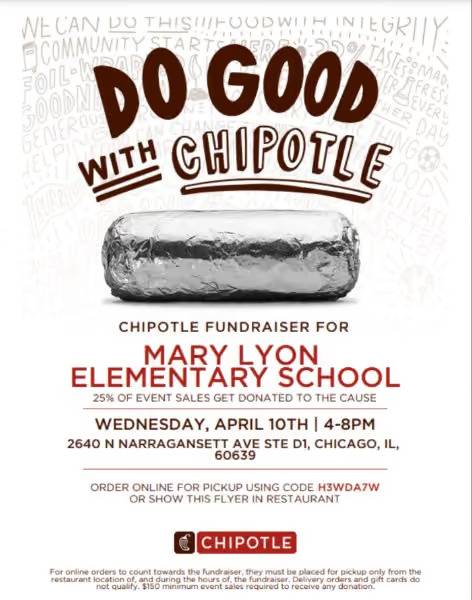
Mary Lyon Elementary School in Chicago partnered with Chipotle for a fundraising night on April 10, 2024, raising funds with minimal effort on the school's part. It largely looked like announcing the partnership, coordination and sending out an email reminder. Chipotle rang up sales from those who ordered and used a dedicated code in the designated location, and donated 25% of the sales.
Why it works: It requires very little set up and comes together quickly. It brings in traffic for the partner restaurant and builds giving into something attendees were going to do anyway.
💡 Restaurant partnerships are among the lowest-friction fundraisers you can run. You can build relationships with 2–3 local spots and rotate quarterly for recurring revenue.
For schools that already have an auditorium, organizing a school-wide tournament is an easy way to generate funds.

The 5th Grade Committee in Hendrick Hudson School District (Montrose, NY) organized a successful kickball tournament fundraiser on January 31, 2025, held in the Hendrick Hudson High School Dome. Multiple grades joined in, making it a huge success.
To organize something similar, you can begin with 6-10 teams, where each pays an amount to enter the tournament. Each match gives rise to multiple fundraising moments including tickets, concessions and merchandising. You can partner with local sellers for the latter.
Why it works: For very low overhead, it generates many fundraising moments and creates a high-spirits moment for all involved: parents, students and local businesses.
💡 To elevate the experience and ensure attendance, you could reach out to alumni athletes who might want to participate.
Create branded school apparel (hoodies, t-shirts, hats, stationery) and sell through an online platform or pre-order system on your school website. Students, parents and alumni browse an online catalog, pre-order their size, and the vendor ships directly to your school, from where buyers pick it up. You could even host sales each season (fall, winter, spring).
Why it works: It builds school spirit year-round, minimizes delivery-related expenses, and delivers results, since students and alumni are generally interested in school merchandise.
💡 You can use these sales to promote budding designers in your student body, by featuring their art on school merch. This brings an element of exclusivity and appreciation to the campaign and builds goodwill.
Hold a friendly competition between grades or classes to see who can bring the most coins or bills. Set up labeled jars in the main hallway (one per grade) and update totals daily or weekly on a poster. The winning grade gets a prize (extra recess, pizza lunch, or bragging rights).

Why it works: The competitive aspect keeps energy high, involves all students without much effort, and teaches giving habits early. It’s also a visibly exciting goal to work together towards for the grades.
💡Take this a step further by pairing the prize a secondary incentive ( for instance, everyone who brings money gets entered into a raffle) to boost participation beyond the classroom winners.
In this staple format, students and families bring baked goods to sell them at school events, outside grocery stores, or during lunch.

Why it works: For the low-lift set up of a table with homemade brownies, cookies, and cupcakes, it brings together the community effortlessly. It can be run during a school event or outside a location that gets a lot of footfall on a Saturday morning.
💡Stack your bake sale alongside another school event (game day, book fair) to leverage existing foot traffic. You could even make it a weekly or monthly affair if the format resonates with your community.
Have students pay a certain amount ($2-$5) to wear pajamas, sports jerseys, themed outfits, or other fun themes on designated days. It’s a fun idea that gets students excited and takes very little outside of verbal and email coordination, to set up.
Why it works: It has a remarkably low barrier to entry since students will be able to use mostly things in their closet to participate. It gives them something to look forward to, keeps spirits high and photos are shareable on social media.
💡Themed dress-up days (like "90s day" or "crazy hair day" ) drive higher participation than plain pajamas.
These events require more planning and upfront effort but deliver significantly higher returns. These can be built into your annual fundraising calendar as anchor events.
In Fun Runs, students collect pledges based on the number of miles or laps they complete during a school-wide run or walk. Alternatively, supporters can also pledge a fixed amount if participants finish the course without stopping.
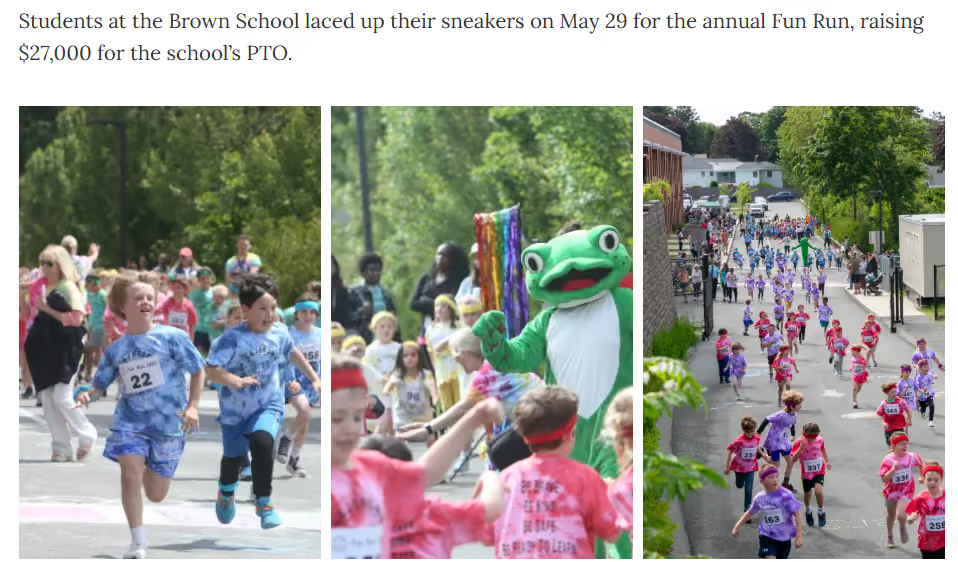
Brown School in Massachusetts hosted its annual Fun Run in 2025, raising $27,000 with the help of pledges from community members, local businesses, and alumni.
To organize something similar, set up a simple route around your campus and have students collect pledges on the days leading up to the event. On the day of, invite families and staff to cheer participants on and add fundraising opportunities through refreshments or school merchandise.
Why it works: It combines fundraising with physical activity, involves the entire student body, and gives your community an easy way to support students by sponsoring a child, grandchild, or favorite teacher.
💡 Set up an online peer-to-peer fundraising page so alumni who can't attend can still pledge and support participants from anywhere.
Similar to the Fun Run format, students collect pledges based on academic milestones such as books read, pages completed, minutes spent reading. Weave in friendly class competitions and small rewards help keep motivation high throughout the challenge.

Edgewood Elementary in Scarsdale, New York held its first Read-A-Thon in 2024. Held annually in March, this fundraiser has since raised more than $27,000, showing how fundraising can naturally tie into school routines.
Why it works: It reinforces academic goals while giving students an active role in fundraising. The impact is also easily observable, making donors more likely to participate.
💡 Consider running your Read-a-Thon during National Reading Month in March, when schools are already focused on reading and alumni may be especially eager to support the initiative.
A student talent show, concert, theatre production, or comedy night is a great fundraising opportunity with ticket sales, concessions, and community support.
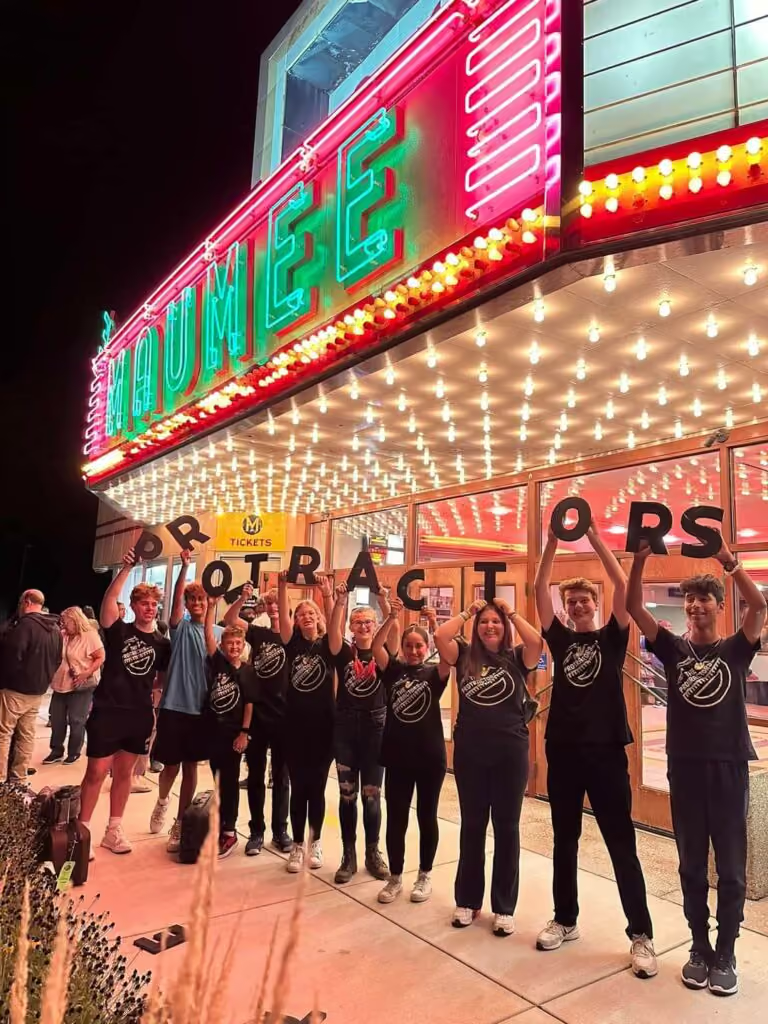
Teachers and students in Perrysburg, Ohio hosted a benefit concert that raised more than $4,000 for the district's Full Experience Fund, bringing the community together around student performances.
To organize something similar, invite students to audition and plan an evening of performances for families, alumni, and the wider community. Charge for admission and set up concession stands selling snacks and drinks before the show and during the interval.
Why it works: It celebrates student talent while creating multiple fundraising opportunities through ticket sales and concessions. It also gives families and alumni another reason to reconnect with the school.
💡 Record the performance and offer a virtual viewing option for alumni and supporters who can't attend in person.
Instead of a traditional bake sale, sell seasonal or specialty food items such as fruit boxes, chocolate, cookie dough, or candy through a pre-order campaign. Students collect orders, and the school earns a percentage from every sale.

Dow High School's music program raised more than $51,000 through its annual fruit sale during the 2025-26 school year, showing how a well-established seasonal fundraiser can generate significant revenue. Each student sold a $35 dollar box of fruits (navel oranges, grapefruits, tangerines) that families, friends and alumni bought as holiday gifts.
To organize something similar, partner with a vendor and ask students to collect orders from family, friends, and neighbours over a few weeks. Schedule deliveries around the holiday season, when many people are already buying gifts or stocking up on fresh produce.
Why it works: Seasonal food is easy to sell, and the fundraiser can become something your community looks forward to each year.
💡 Choose a vendor that handles packing and distribution, so your team can spend its time promoting the fundraiser instead of coordinating deliveries.
Turn your school grounds into a day of games, food, entertainment, and family activities. Revenue can come from admission tickets, game booths, food sales, and vendor partnerships.
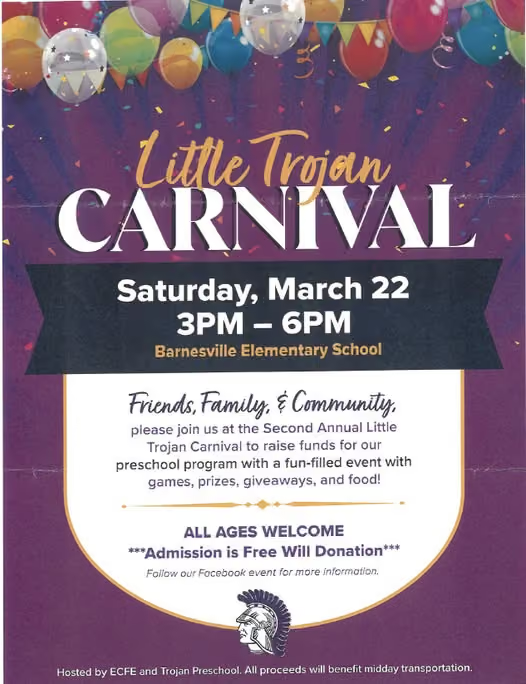
The Annual Little Trojan Carnival, hosted by Barnesville ECFE and Trojan Preschool, has become a community tradition by bringing together multiple fundraising activities in a single event.
To organize something similar, you need a host of easily set up, classic carnival games like the ring toss, face painting, and dunk tanks, alongside food stalls or local food trucks. You can also invite local businesses and community organisations to rent booth space, creating another source of income.
Why it works: Instead of relying on a single fundraiser, it brings together several revenue streams while creating a memorable community event that families look forward to each year.
💡 Start planning a few months in advance and partner with local businesses wherever possible to reduce costs and secure vendors early.
Host a trivia night or board game tournament where teams pay an entry fee to compete. To this, add prizes for the winners and refreshments for sale to create additional fundraising opportunities.
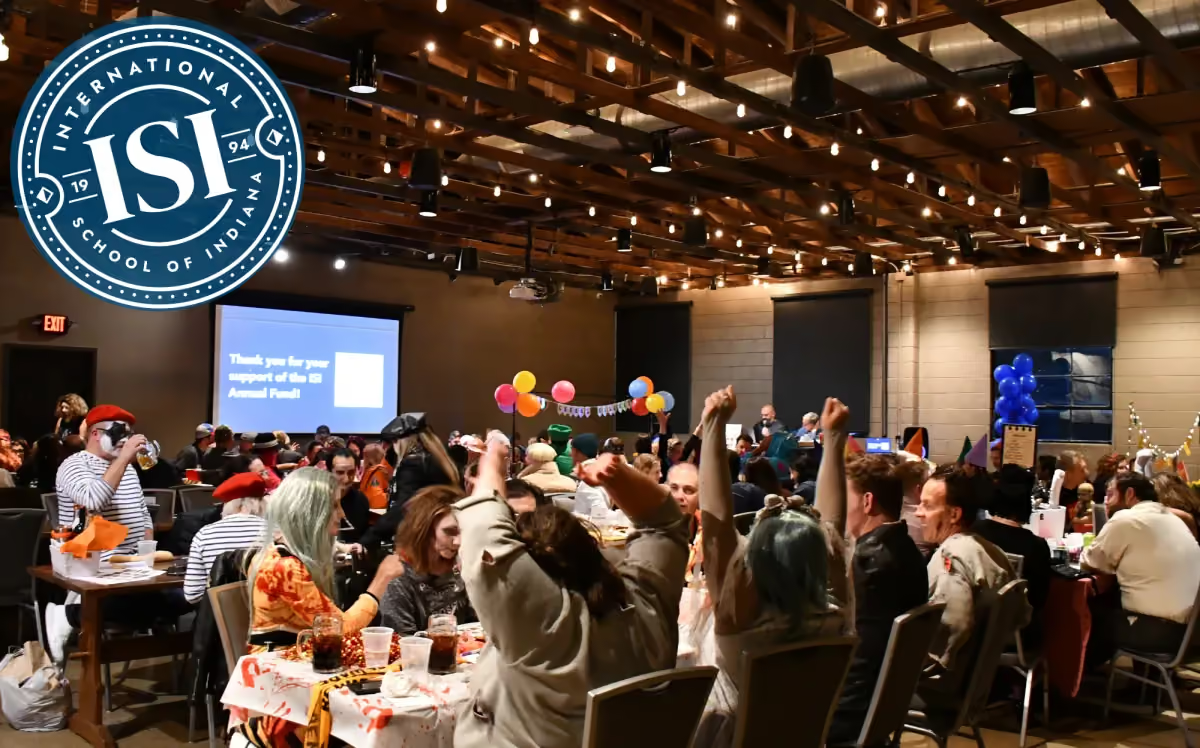
The International School of Indiana hosted a Trivia Night in 2024 that raised nearly $9,000 for its annual fund, showing how a simple evening event can attract strong community participation.
To organize one at your school, invite teams of parents, alumni, staff, and older students to compete across a mix of fun and accessible topics. Offer a small prize for the winners and keep refreshments available throughout the evening.
Why it works: It has relatively low setup costs, appeals to a wide audience, and creates a relaxed social event that encourages people to stay, compete, and support the school.
💡 Schedule it on a Friday or Saturday evening and include a few school-themed questions to bring back memories for alumni without making the quiz too difficult. A nostalgia angle built into the event might just increase willingness to give.
These ideas are especially well suited to PTAs and parent groups. They work well on their own but also alongside larger school fundraising campaigns.
A PTA walk-a-thon is a good way to bring families together while raising money for the school. Students collect donations in the weeks leading up to the event before walking laps around the school with classmates.

Sandy Hook Elementary School's PTA in Connecticut raised around $27,000 through its annual Walk-a-Thon in 2021. Students worked towards school-wide fundraising goals, unlocking rewards like pajama days, a homework-free week, and even a relay race where teachers dressed in costume.
For your own version of this, encourage students to collect donations ahead of the event and create fundraising milestones that the whole school can work towards. On the day, invite parents to cheer from the sidelines or walk alongside the students to make it a celebration for everyone.
Why it works: The fundraising spirit is brought alive well before event day, and shared goals encourage every classroom to participate. The celebration at the end gives the whole school something to look forward to.
💡 Instead of rewarding only the top fundraisers, set school-wide milestones with prizes everyone can enjoy. It keeps more students involved throughout the campaign.
Host an evening for parents with a silent auction, refreshments such as wine and cheese, and allow time to socialize. Funds would be raised through ticket sales, auction items, raffles, or combination of all three.

Lakewood Elementary School hosts a silent auction each spring, with the proceeds supporting the school through its PTA.
To organize something similar, ask local businesses and school families to donate auction items or experiences, and invite parents to an evening at the school or a nearby venue. You can also sell refreshments or raffle tickets to raise additional funds.
Why it works: It gives parents a chance to connect while supporting the school. Auction items donated by local businesses and families also help keep costs low.
💡 Include a segment to auction student artwork or handmade crafts in the evening. They're very popular and among the top sellers in a school auction.
Ask families to donate gently used books, toys, clothes, furniture, and household items, then organize a community yard sale with all proceeds going to the PTA or school.
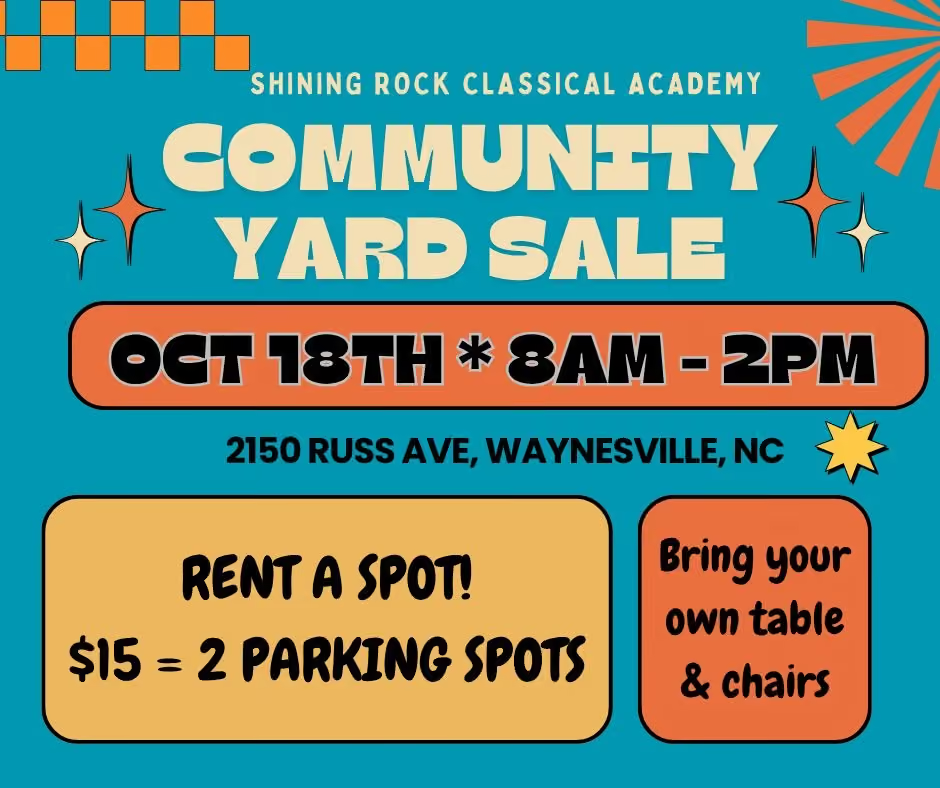
Shining Rock Classical Academy held its first community yard sale in 2025, turning donated items into a successful fundraiser for the school.
To organize your own yard sale, collect donations over a few weeks, ask your PTA to sort and price everything in advance, and hold the sale on a weekend when families are most likely to attend.
Why it works: Most of the items are donated, so costs stay low while the event brings families and neighbors onto campus.
💡 Start promoting the sale a few weeks ahead through neighborhood groups and school social media pages to attract more buyers.
Partner with a local organization or retailers to sell items. These could be gift cards or regular household items. The draw is that families get to purchase common items they were already planning to use, and the PTA or school gets to keep a portion of each sale.
To create your own version of this, partner with a gift card provider or local businesses and offer popular retailers that families are likely to shop with throughout the year. Parents can order online or through the school, making it easy to run more than once.
Why it works: It is simple to organize, requires very little storage or planning, and works because families are purchasing something they already intended to buy.
💡 Run gift card sales ahead of major holidays when many families are already buying gifts, making it an easy addition to their shopping.
These events scale easily and help you reach supporters who cannot attend in person. Given their digital nature, they integrate readily with matching gift programs for amplified results.
Instead of organizing a physical event, rally families, alumni, and the local community around a specific fundraising goal through an online campaign.

Beechen Cliff School's PTA in Bath, UK raised £20,000 (around US$27,000) in just one month through a crowdfunding campaign to improve mental health services, school facilities, and technology. The PTA promoted the campaign through weekly parent emails, QR codes around the community, local press coverage, and support from alumni, helping them reach their goal within weeks.
To organize something similar, start with a clear project that donors can easily understand, then promote it consistently across your school website, email newsletters, and social media. Share regular updates throughout the campaign so supporters can see how close you are to your goal.
Why it works: Supporters can give from anywhere, and smaller donation amounts make it easier for more people to participate. Regular updates also help maintain momentum throughout the campaign.
💡 Invite alumni to become campaign ambassadors by sharing the fundraiser with their own friends and colleagues. Personal recommendations often reach donors you wouldn't find otherwise.
Give supporters an easy way to donate by text message. Set up a text-to-give campaign through a fundraising platform and promote the keyword wherever your school communicates with families and supporters. Include it on event signage, email newsletters, social media posts, and printed materials so people can donate whenever they're ready.
Why it works: It removes barriers to giving by letting people donate in just a few steps from their phones. It also works well alongside other fundraising campaigns and events.
💡 Feature your text-to-give information on email signatures and event programs so supporters always have an easy way to give.
An online fundraising classic, this is a great way to mobilize your community. Create individual fundraising pages for students, teams, classrooms, or clubs, then combine every donation toward one larger school goal.
For example, you could ask each participant to personalize their fundraising page with a short message about why they're raising money, then encourage them to share it with friends and family. As donations come in, celebrate milestones and recognize top fundraisers to keep everyone motivated.
Why it works: Every participant reaches a different network of supporters, helping your campaign grow far beyond your immediate school community. Friendly competition between teams or classes also keeps the momentum going.
💡 Give participants an email or social media template so they can start sharing their fundraising page with little effort.
Offer parents, alumni, and other supporters the option to make a recurring monthly gift instead of a one-time donation. You can build this into your annual fundraising strategy: create a giving page with a few suggested monthly amounts and explain what each level helps fund. Once supporters sign up, donations will follow.
Why it works: Monthly giving creates predictable support for your school while making it easier for donors to contribute smaller amounts over time instead of making one large gift.
💡 Show supporters what a monthly gift can accomplish. For example, explain how $25 a month could help fund classroom supplies, field trips, or student scholarships.
These ideas lend themselves to the capabilities of high-school students as they grow up and take up more responsibilities.
Give high school students the opportunity to plan and run their own fundraiser, whether it's a car wash, clothing drive, or social media campaign. With a little guidance, they can take ownership of everything: promotion, invitations, partnerships and budgeting.
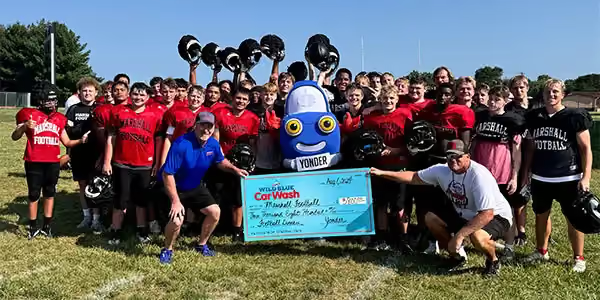
On July 27, 2024, the Marshall High School Football Team raised $3,800 at a fundraiser hosted by Wild Blue Car Wash. Wild Blue Car Wash donated 50% of their wash sales to the team, while team members and volunteers also sold refreshments and offered additional services like vacuuming and hand-drying for tips.
By allowing students to partner with local shops and businesses, you will be raising money for your school and teaching them the value of giving back to the community from a young age.
Why it works: It raises money while giving students real experience in planning, teamwork, and leadership. Older students are also more confident taking on larger projects and interacting with the community.
💡 Let students make the key decisions wherever possible. The more ownership they have, the more invested they'll be in making the fundraiser a success.
Turn student projects into a community event by inviting families, alumni, and local supporters to explore STEM exhibits, research projects, and other academic competitions. Charge admission or pair the event with another fundraiser, such as a silent auction.
To set this up, assign booths to students where they can demonstrate robotics projects, engineering prototypes, coding apps, or science research. As visitors move from exhibit to exhibit, students explain their work and answer questions, giving everyone a closer look at what they're learning in the classroom.
Why it works: It celebrates student achievement while giving families and alumni a reason to visit campus. It also connects fundraising with visible impact.
💡 Invite alumni working in STEM fields to attend as judges, guest speakers, mentors or even collaborators. Their participation adds another reason for families to attend.
These are your out-of-the-box ideas which have yielded results in fundraisers and are also easily put together.
Collect gently used shoes, electronics, aluminum cans, or other recyclable items, then partner with a local organization that purchases or recycles them. It's an easy fundraiser that also encourages students to think about sustainability.

Many schools across the U.S. have successfully run shoe drives, using them to raise money while teaching students about recycling and environmental responsibility. USAgain, for example, is an organization that sets up bins around campuses to collect these clothing and shoes and pays for every pound of donated items collected.
Why it works: It has very little upfront cost, requires minimal selling, and gives families an easy way to support the school while getting rid of items their kids have outgrown or no longer need.
💡 Work with a recycling partner that handles pickup so your volunteers only need to collect and sort donations.
Set up a book fair in your library or gym and partner with a book vendor to sell new books over several days. You can also include author visits, reading events, or family literacy nights to bring more people through the doors.

To make this format your own, start with scheduling the book fair over several school days so students can visit with their classes as well as after school with their families. If possible, add an evening event with a local author or guest reader to encourage even more visitors.
Why it works: It supports literacy, which is a cause that naturally generates interest. A vendor partnership also makes inventory much easier to manage.
💡 Hold your book fair during the back-to-school season or National Reading Month, when books are already top of mind for many families.
Host a pancake breakfast, chili cook-off, or family dinner and invite the community to enjoy a meal together. Charge per plate and keep the menu simple so volunteers can prepare and serve everything with ease.
To make this a success, choose a weekend morning or evening and recruit parents, staff, and older students to help cook, serve, and clean up. Pair the meal with another school event if you can, such as a game, concert, or open house, to encourage more families to attend.
Why it works: Sharing a meal naturally brings people together, and a volunteer-run menu keeps costs and efforts low, making the experience enjoyable for all involved.
💡 Check with local grocery stores or farms if they want to donate ingredients or offer discounts. Many are happy to support school events.
Turn the wealth of skills already available in your school community into a fundraiser by offering online classes in subjects like test prep, coding, acting, creative writing, music, or study skills. Invite teachers, alumni, or older students to lead short online courses and charge a registration fee. These live online sessions make it easy for families to participate from anywhere, and recordings can provide value for those who can't attend.
Why it works: It builds on expertise your school already has without requiring a venue and offers a platform for the community to show off their expertise and share it. This naturally builds credibility, which goes a long way.
💡 Promote classes beyond your own school community. Alumni and families from neighboring schools may also be interested in joining.
Open a small holiday gift shop where students can buy affordable gifts for family and friends before occasions like Thanksgiving, the winter holidays, Mother's Day, or Father's Day. Stock a selection of inexpensive gifts such as mugs, journals, candles, or handmade items, then open the shop during lunch periods or after school for a week.
Why it works: It gives students a fun shopping experience while raising money through items they’ll be able to afford.
💡 Include handmade gifts created by students or local artisans to make the shop feel more unique while supporting your wider community.
Every school community is different, and the fundraiser that works for one may fall flat for another. The key is to choose an approach that feels natural to your audience and achievable for your team. Here are a few things to keep in mind:
At this point, you’re not choosing from a long list anymore. You’re down to options that fit your audience, your timing, and your capacity, and that’s what you move forward with.
You’ve got the ideas lined up, and the D-day is near. But even the best idea won’t raise a dollar if people don’t know about it. This is where promotion comes in. Here are the best practices for how to spread the word and get the community genuinely excited to participate.
When promotion is planned this way, you don’t have to rely on one big push. It builds steadily through consistent, well-timed touchpoints.
Fundraising, especially at the school level, requires a great emotional connection. This means that school fundraisers have more people turn up when it starts to feel like something people are running with you rather than for you. That difference usually comes from how you involve them.
Here’s what helps make that happen:
Even the best fundraising ideas can fall short if they’re not executed thoughtfully. Schools often make the same mistakes, and avoiding them can save your team time, energy, and donor goodwill-
School fundraising can be challenging as it often involves complex planning and a lot of time and resources. But having the right fundraising platform that aligns with your mission and your capacity to deliver can be a game-changer. Almabase helps you do exactly that.
It provides an integrated platform designed specifically for advancement and alumni relations teams. You get purpose-built solutions that simplify your workload, including:
Almabase helps address all the challenges from infrastructure to logistics, so your team can focus on building authentic relationships and driving long-term support.
Successful school fundraising requires a thoughtful approach that considers your community's unique interests and capacity. The most effective fundraisers not only generate necessary funds but also build school spirit, engage families, and create lasting traditions that strengthen your educational community.
If you’re a school on the lookout for a partner for your next fundraiser, do give us a shout! We’d love to help 🤗
A school fundraiser is an organized campaign or event run by a school, PTA/PTO, parent group, or student organization to raise money for a specific goal. This could be equipment, field trips, facility improvements, extracurricular programs, scholarships, or emergency support.
Some of the most reliable school fundraisers include fun runs, bake sales, car washes, silent auctions, spirit wear sales, book fairs, restaurant nights, and text-to-give campaigns. The best choice depends on your school’s budget, volunteer capacity, and the kind of community participation you're hoping to create.
Fun runs and fitness challenges typically raise the most, often bringing in $5,000–$30,000+ depending on participation and constituent size. Silent auctions, peer-to-peer campaigns, corporate challenge fundraisers, and product sales can also generate anywhere from $2,000–$20,000+, especially when paired with matching gift programs or strong community support.
Table of Contents
Subscribe
See how modern advancement teams bring alumni engagement and fundraising together.
Event planning in the education sector is no small feat. From homecoming and graduation ceremonies to parent-teacher conferences and student workshops, K-12 schools and higher education institutions juggle a dizzying array of events each year. The right event management software can be a game-changer—streamlining registrations, automating communications, and ensuring every detail runs smoothly. In this guide, we'll break down what event management software is, what features to look for, and the top solutions for 2026 that are transforming event coordination software for schools, colleges, and universities.
.avif)
An event management software is a digital platform designed to streamline the entire event lifecycle—from planning and promotion to registration, execution, and post-event analytics. These event planning software solutions centralize all event-related tasks, making it easier to coordinate logistics, track attendees, manage communications, and measure event success. For educational institutions, an event management tool can handle everything from classroom bookings and campus tours to large-scale conferences and alumni reunions.
Modern event management platforms often offer features such as:
By automating manual processes and centralizing information, these platforms help schools and universities save time, reduce errors, and deliver a seamless experience for staff, students, parents, and alumni.
With so many event management tools on the market, it’s important to choose one that fits your institution’s specific needs. Here are key factors to consider:
Below, in no particular order, are our picks of some of the top event management software platforms making waves in the education sector this year.
Almabase is an all-in-one event management platform designed specifically for educational advancement, alumni relations, and fundraising teams. It streamlines the planning and execution of complex events—whether in-person, virtual, or hybrid—while offering seamless CRM integration and a user-friendly interface.
Almabase offers personialized custom pricing based on your needs, number of constituent records, etc. You can request a personalized demo here
Blackbaud is a comprehensive solution built for large nonprofits and institutions, offering robust event planning, CRM, and analytics tools. Its event management features are deeply integrated with donor data to maximize fundraising outcomes.
Custom pricing. Request a quote.
Cvent delivers enterprise-grade solutions trusted by higher education institutions managing complex, large-scale events—from campus-wide conferences to alumni reunions.
Custom pricing. Request a demo.
Bonterra’s fundraising software includes specialized solutions and features for nonprofit events, auctions, peer-to-peer fundraisers, and giving days, along with unified donor management tools. Its event management features include ticketing, sponsorship tracking, mobile bidding, and more. Ultimately, Bonterra helps organizations streamline their events with a centralized fundraising and donor management solution.
Custom pricing. Request a demo.
Idloom is crafted specifically for universities and colleges, supporting diverse academic events from online examinations to graduation ceremonies.
Custom pricing. Request a demo.
Eventbrite is a versatile event management platform perfect for everything from concerts to community meetups. It offers intuitive tools for ticketing, promotion, and on-site check-ins, making it easy to manage both virtual and in-person events.
Pricing is 2% + $0.79 per paid ticket (Essentials) or 3.7% + $1.79 per paid ticket (Professional); free for free events. See pricing.
Eventcube is a white-label event management platform for K-12 schools and higher education institutions. It helps you manage all the in-person, virtual, and hybrid events with full control. This includes your branding, ticketing, and attendee engagement.
It is designed for flexibility and accessibility. This makes Eventcube reliable for day-to-day events like open days, student conferences, parent meetings, community gathering and even virtual graduation ceremonies.
Eventcube offers tiered pricing. 5% of the transaction total for the Starter package which is free. 3% of the transaction total for Pro along $99 a month. And custom Enterprise options. You can start with a demo or create a branded ticket store directly on Eventcube.
Giveffect combines event management with nonprofit automation, allowing you to handle ticketing, email campaigns, and donor records in one platform. It’s ideal for organizations looking to unify event planning with fundraising and CRM.
Custom pricing. Request a demo.
Remo, now integrated with Events.com, delivers an immersive platform for virtual, hybrid, and in-person events, with unique emphasis on networking and engagement.
Starts at $299 per month. See pricing.
Qgiv supports nonprofits with customizable tools for event registration, peer-to-peer fundraising, and mobile giving. Its user-friendly interface makes it easy to plan and promote fundraising events of all sizes.
Plans start at $0/month with no contracts, plus a 3.95% + $0.30 per transaction fee. Learn more.
Choosing the right event management software can transform how your institution plans, promotes, and executes events—whether you’re managing a single school assembly or a multi-day university conference. The platforms highlighted above offer a range of solutions tailored for K-12 and higher education, each with unique strengths and a few caveats to consider. Take advantage of free demos, explore user reviews, and assess your specific needs to find the event management tool that will best support your school’s goals in 2026 and beyond.
Looking for more inspiration? Explore event ideas that raise money and connect with alumni or see how advanced event management can drive registrations and engagement for your institution.


Best Event Management Tools for K-12 & Higher Ed (2026)
We're helping you break down what you should look in an event management software, along with some of our top picks for 2026 to power your events.
Lorem ipsum dolor sit amet, consectetur adipiscing elit. Suspendisse varius enim in eros elementum tristique. Duis cursus, mi quis viverra ornare, eros dolor interdum nulla, ut commodo diam libero vitae erat. Aenean faucibus nibh et justo cursus id rutrum lorem imperdiet. Nunc ut sem vitae risus tristique posuere.

April 30, 2025
12 minutes
Crowdfunding has become a powerful tool for social good. Educational institutions throughout the past several years have taken well to it as a vehicle to raise funds, foster engagement, and bring exciting new projects to life. From supporting innovative learning initiatives to preserving cultural landmarks, schools and universities across the US, UK, and Canada are tapping into the potential of crowdfunding to drive meaningful change.
In this blog, we’ll explore 10 inspiring crowdfunding campaigns in K-12 and higher education. We’ll break down what made each campaign unique, how much they raised, and key takeaways your institution can apply to your next crowdfunding effort.
Before we examine the campaigns, it’s worth understanding what sets apart successful crowdfunding campaigns in education. While every campaign is unique, they often share these key elements:
Now, let's explore how these principles were applied in real-life campaigns that not only met but often exceeded their goals.
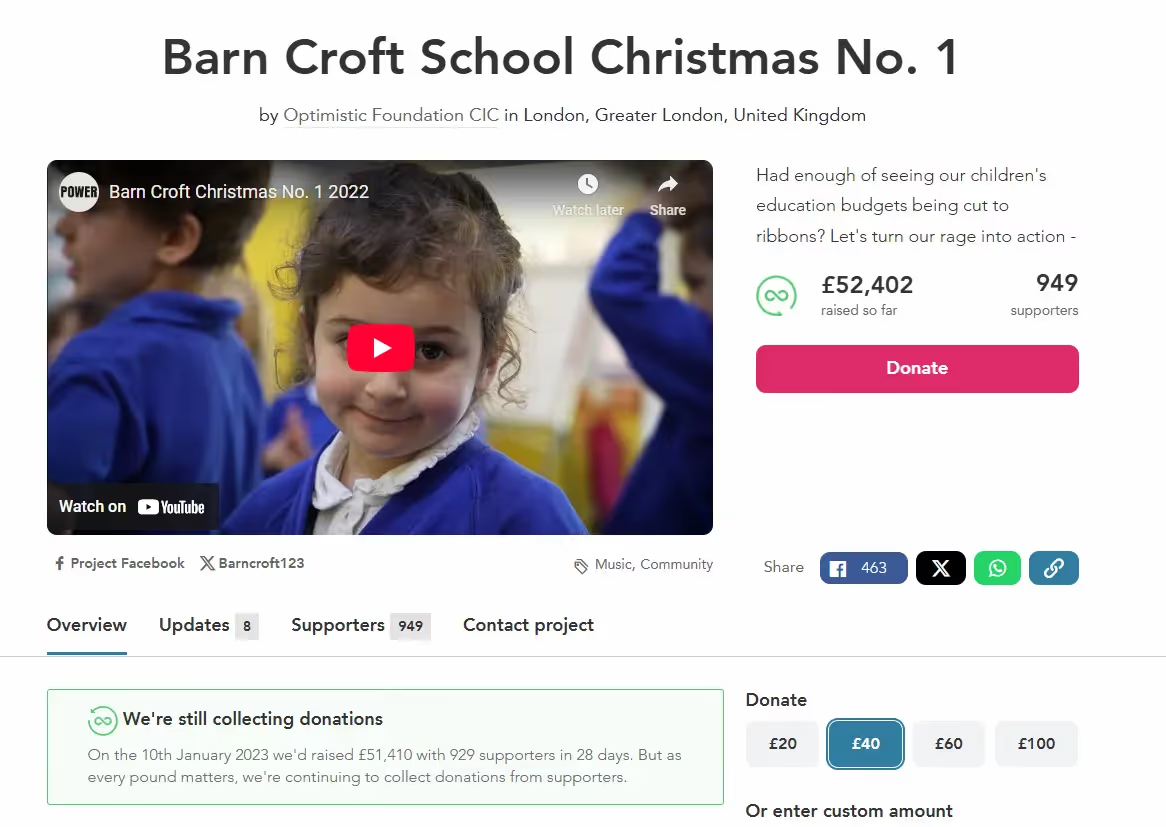
£52,402 out of a £50,000 goal
Barn Croft School in the UK launched a crowdfunding bid on Crowdfunder, uniquely utilizing music to elevate the school's profile and secure vital funds. The campaign aimed to highlight the severe impact of education cuts and ensure the school's resilience in the face of financial challenges.
The campaign's innovative use of music, specifically aiming for a "Christmas No. 1" song, to draw national attention to education budget cuts is highly distinctive. It transformed a financial appeal into a public awareness campaign with a creative, engaging, and emotionally resonant hook, garnering national attention.
Creative and unconventional approaches can significantly amplify a campaign's reach and impact, turning a local funding need into a national conversation. Linking fundraising to a broader social issue, such as education cuts, can galvanize wider support beyond the immediate school community.

$181,749+ out of a $30,000 goal
Launched in 2024 as part of McGill24, McGill University's annual day of giving, this crowdfunding campaign honors the legacy of Dr. Paul Farmer. It aims to recognize individuals working in underserved communities whose groundbreaking work in health equity often goes unrecognized. The campaign garnered donations from over 600 individuals and remains active, continuing to raise funds.
This campaign uniquely focuses on honoring unsung heroes in global health equity, aligning with a powerful humanitarian legacy. Its success, attracting over 600 donors, demonstrates the strong resonance of a cause that celebrates impactful, often overlooked, work in underserved communities.
Campaigns tied to the legacy of influential figures or addressing global humanitarian causes can inspire broad support. Leveraging institutional giving days, like McGill24, can provide a powerful platform and amplify reach for such initiatives by creating a collective sense of purpose and urgency.
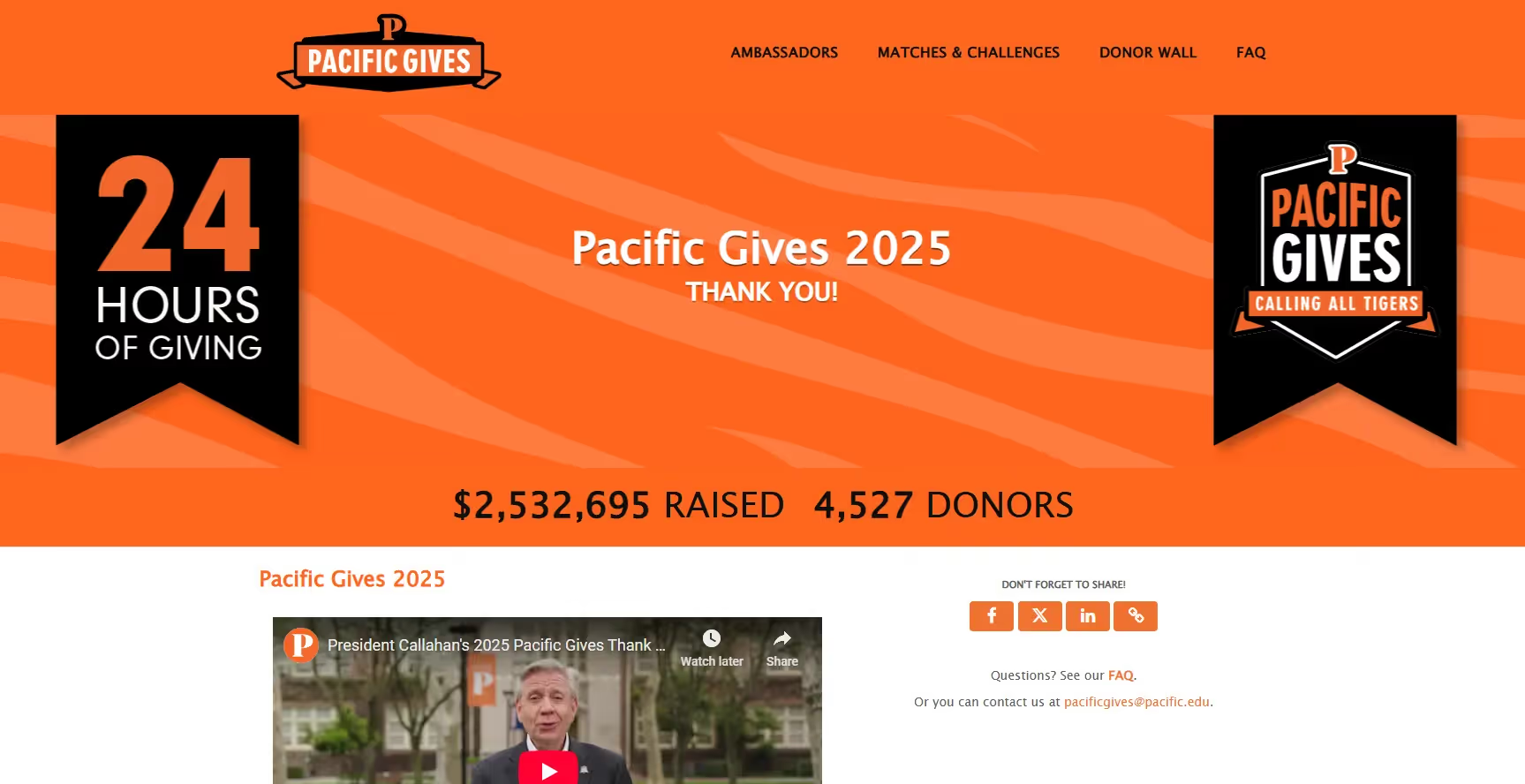
$2.5 million at the time of writing
University of the Pacific's annual 24-hour day of giving returned on April 8 and 9, 2025 (reporting 2024 results). It brought together a global community to support scholarships, academic programs, athletics, and student clubs. In 2024, an emergency grant funded during Pacific Gives 2024 provided financial and emotional support to a student whose home was destroyed in wildfires.
A Giving Day that specifically highlighted and responded to immediate student crises (like wildfire impact) through emergency grants, demonstrating direct and compassionate support beyond general academic funding. It also emphasized community connection and collective action.
Giving Days can effectively serve as rapid response mechanisms for student emergencies, fostering a strong sense of community and care. They also do a great job at inspiring supporters to become ambassadors and have a healthy giving ecosystem between their different departments/teams.
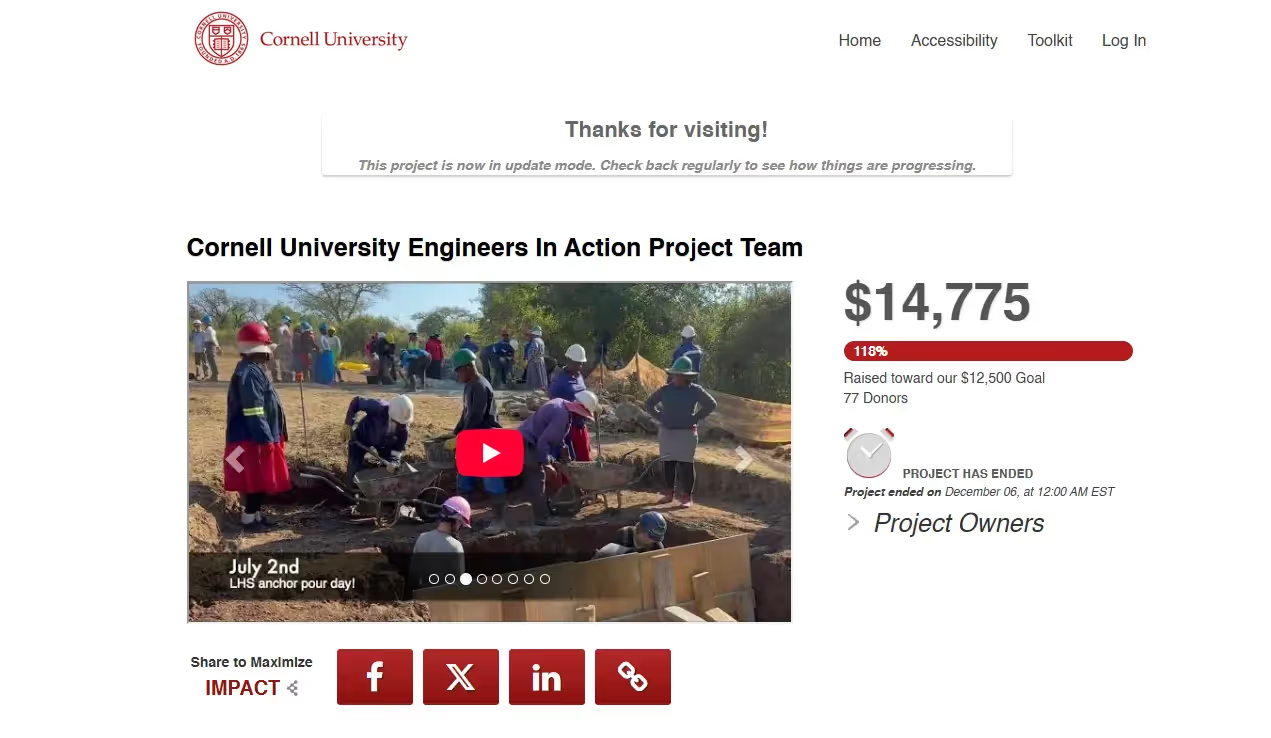
$14,775 out of a $12,500 goal
As stated on their giving page, the Cornell University Chapter of Engineers in Action is a student-run project team with the College of Engineering that works with the non-for-profit organization Engineers in Action to design and build pedestrian footbridges, WASH systems, and suspension bridges for rurally isolated communities.
The campaign focuses on helping students make real world impact in other parts of the world. With it’s extensive documentation, it does a great job in inspiring more donations. Donors naturally feel inspired when they see a long-term dedication to funds being put into action with a well-researched plan.
While your local community is essential, raising funds to help faraway rural areas makes for a compelling goal and provides valuable exposure to your volunteers. The extensive documentation history not only attracts donations but also inspires more trust in your institution’s other fundraisers.
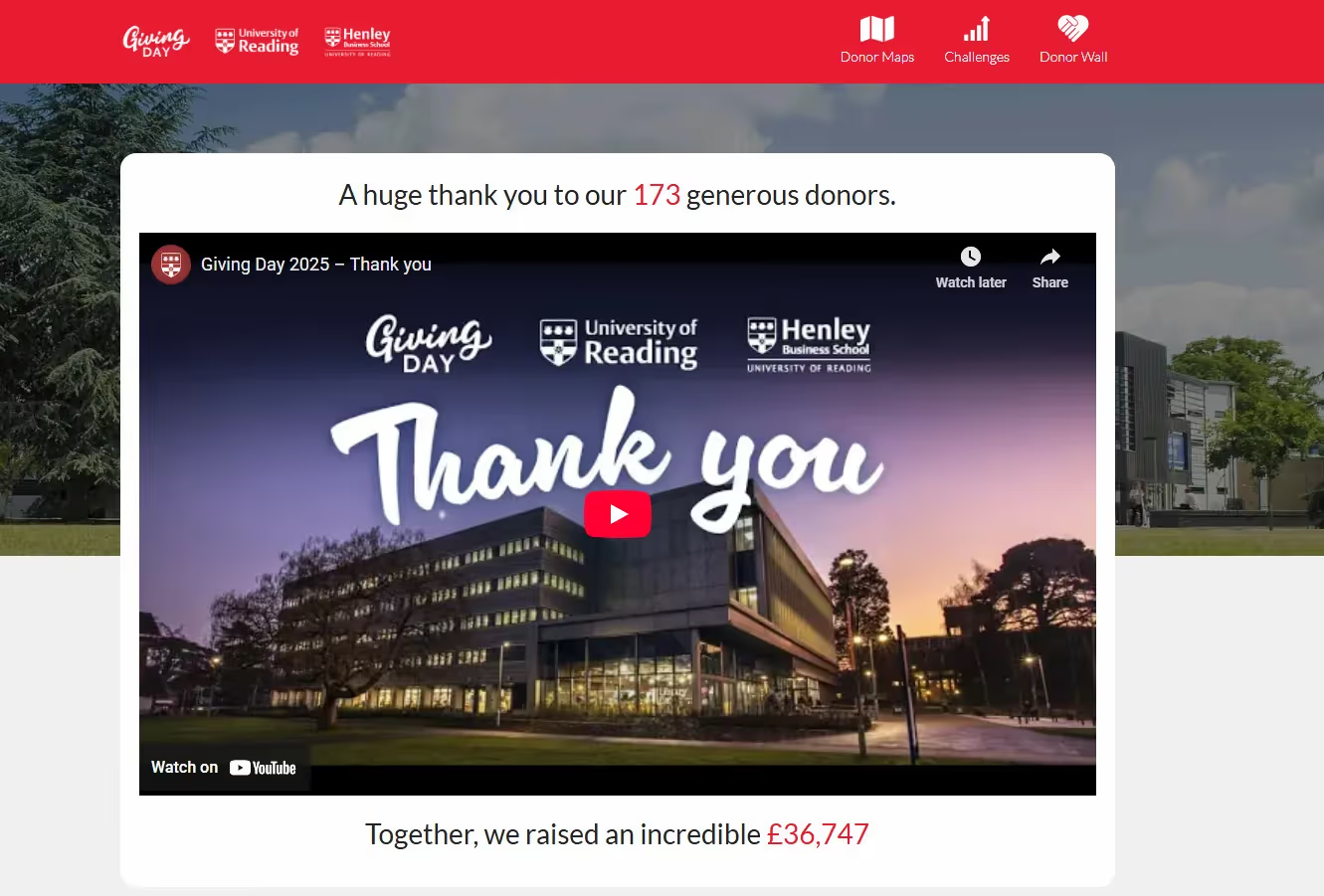
£36,747
The University's first-ever Giving Day (April 29-30, 2025), focusing on four key causes: student scholarships, the Centre for Autism Wellbeing Hub, Henley's entrepreneurship programmes, and flexible support. It featured match-funding challenges.
By providing diverse choices on donations, a simple giving page, and match-funding challenges totaling £20,000, the institution did well to inspire donors on their inaugural giving day.
Launching a dedicated Giving Day with clear, diverse causes and match funding can be a powerful way for institutions to initiate or revitalize their crowdfunding efforts.
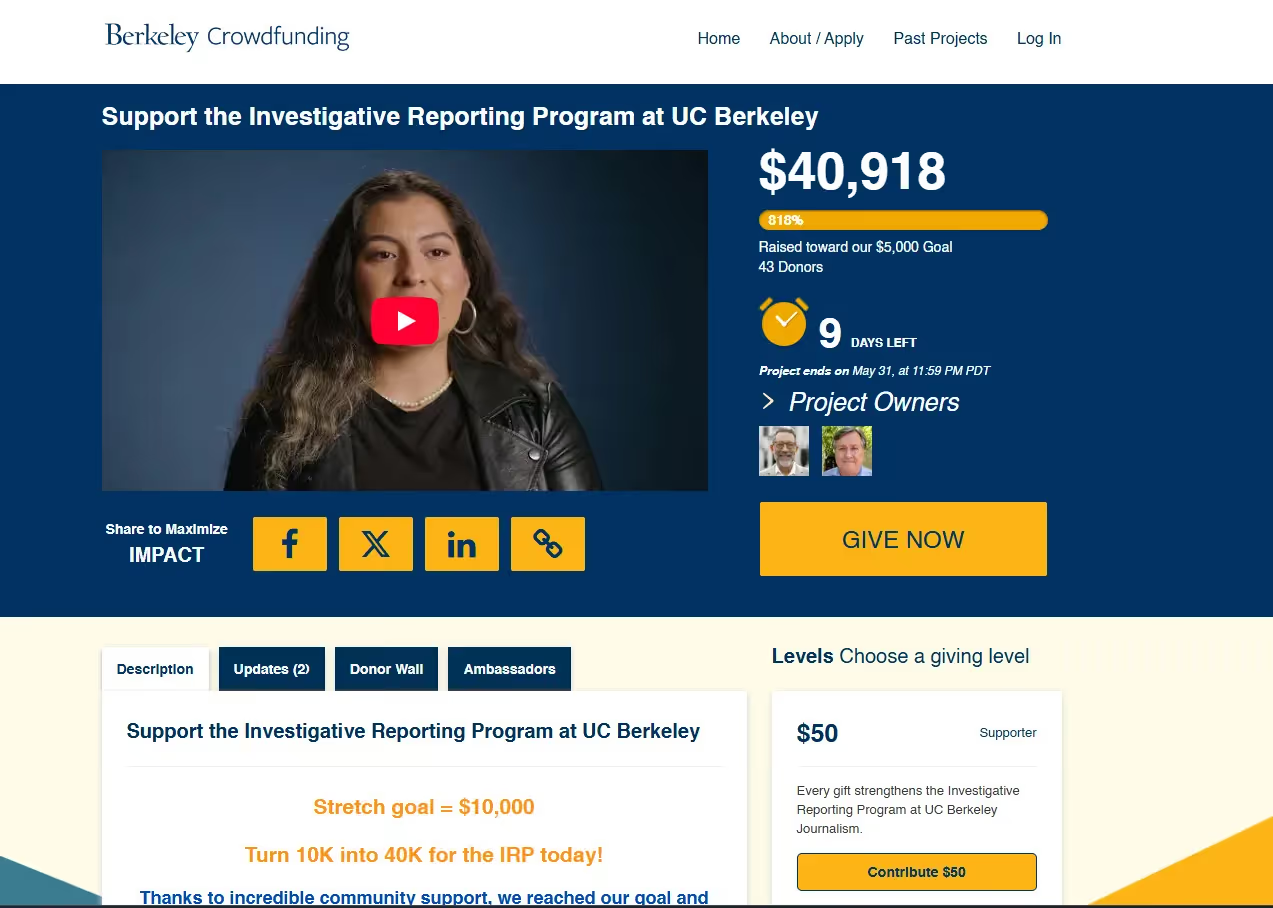
$40,918 (818% Funded)
This campaign was hosted on UC Berkeley's internal crowdfunding platform. It directly sought support for the Investigative Reporting Program (IRP) within the School of Journalism. The campaign's core appeal encouraged donors to empower students to delve into social justice issues that were often overlooked or ignored by traditional newsrooms.
Its explicit focus on public service journalism and social justice provided a clear, impactful mission that extended beyond typical academic funding, tapping into a broader desire for societal betterment. The description of the program, emphasizing its role in empowering students to "dig into issues of social justice long overlooked or ignored by newsrooms," framed the campaign not merely as funding for a department, but as supporting a cause aligned with broader societal values.
Campaigns with a strong, clear social impact and a compelling narrative can significantly outperform their targets. Direct alignment with societal benefit, such as social justice or accountability, serves as a powerful motivator for donors.
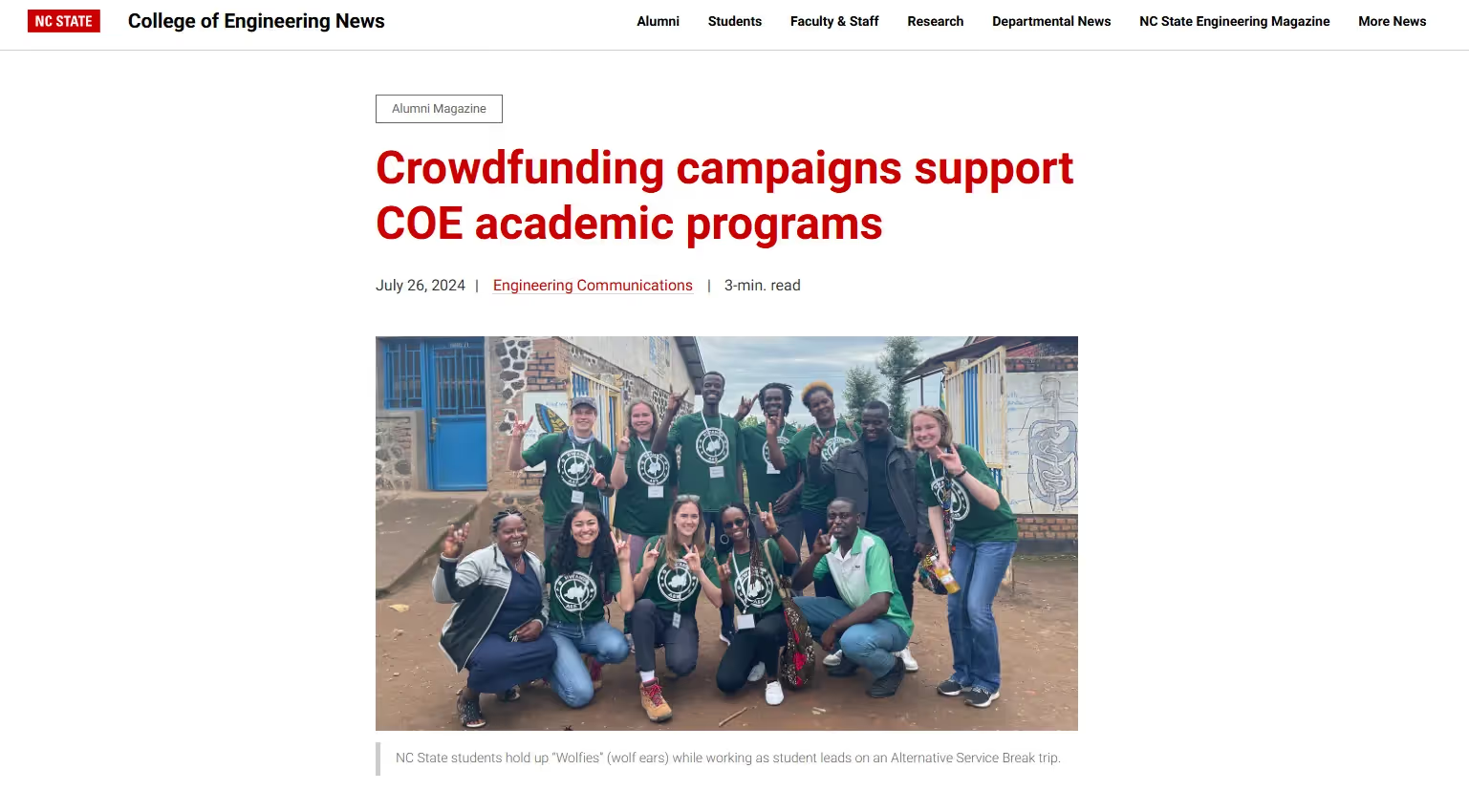
$25,000~
Launched during the fall 2023 semester on NC State Crowdfunding, this campaign aimed to support the annual spring Alternative Service Break (ASB) trip to Rwanda. The trip was led by the Women and Minority Engineering Programs, and the funds specifically covered costs for students to participate in cultural experiences during their journey
This campaign uniquely combined international service, cultural immersion, and direct support for women and minority students in engineering. Volunteers can visualize their contribution directly and share their own worldview and professional development, making the impact highly relatable and inspiring.
Campaigns that integrate multiple positive outcomes, such as global engagement, diversity, and service learning, and feature authentic student voices, are highly effective and motivate volunteers especially well.

Over $12.2 million
This initiative marked the inaugural "I⚓VU Week," a week-long celebration designed to elevate "Commodore spirit" and culminate in Giving Day. It encompassed diverse activities such as #TravelingMrC photo submissions, which showcased Vanderbilt's global presence, and a first-ever "I Bleed Black and Gold Blood Drive," representing a non-monetary giving opportunity. The campaign successfully closed out over 35 matches and challenges. Donations supported various university areas, including schools, labs, athletics, student organizations, and scholarships, all contributing to the overarching "Dare to Grow" campaign.
Vanderbilt transformed a traditional Giving Day into a comprehensive, week-long "spirit celebration," incorporating diverse, non-monetary engagement activities like the blood drive and photo contests to build community and pride alongside financial solicitations. The campaign achieved impressive global reach, with donors participating from all 50 US states and 23 countries. This builds a broader base of goodwill, participation, and emotional investment that can translate into financial giving, either immediately or in the future.
Integrating fundraising with broader community engagement and spirit-building activities can significantly amplify results. Offering diverse ways to participate, beyond just financial giving, fosters a more inclusive culture of philanthropy.
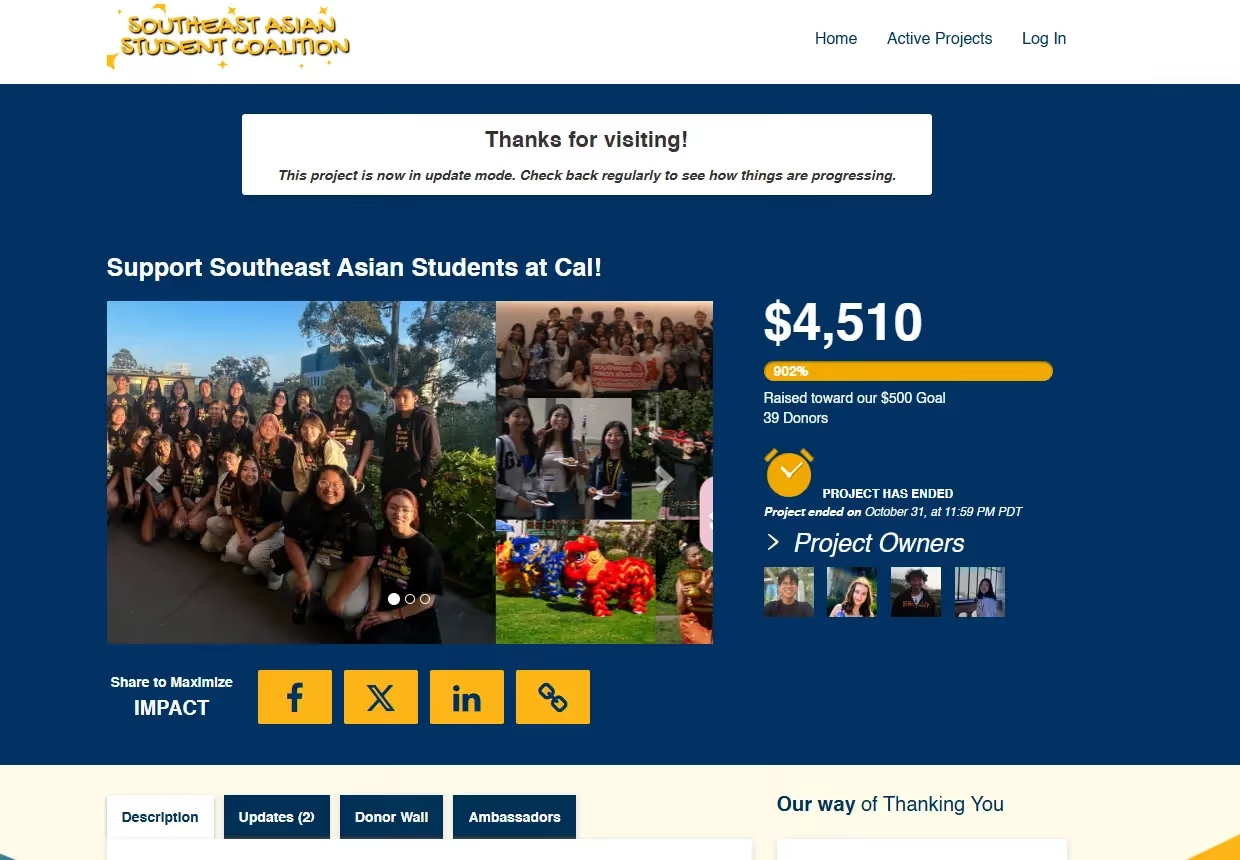
$4,510 (902% of goal)
Part of the Berkeley Crowdfunding program, this campaign was led by the **Southeast Asian Student Coalition (SASC)** in 2024. Using Berkeley’s official platform, SASC created a project page describing how donations would support their events and initiatives (such as cultural festivals, mentorship programs, and graduation stoles for low-income members). Donors (students, alumni, community members) contributed online during a month-long drive. Berkeley’s platform provided tools and training even though it was SASC’s first crowdfunding attempt.
This success funded free community meals (feeding 150+ students at events) and graduation regalia for students who couldn’t otherwise afford it. The uniqueness lies in empowering a student-run, diversity-focused club to raise money typically beyond their reach. Their story of supporting first-generation Southeast Asian American students deeply resonated. Even without prior fundraising experience, the students’ authentic mission and collaboration paid off hugely
Even new fundraisers can succeed wildly if the cause strikes a chord. By emphasizing inclusion and tangible student support (food, cultural events, mentorship), SASC attracted donations far beyond expectations. Providing donors with a clear vision of where funds go (directly to student needs) and leveraging social networks were key.
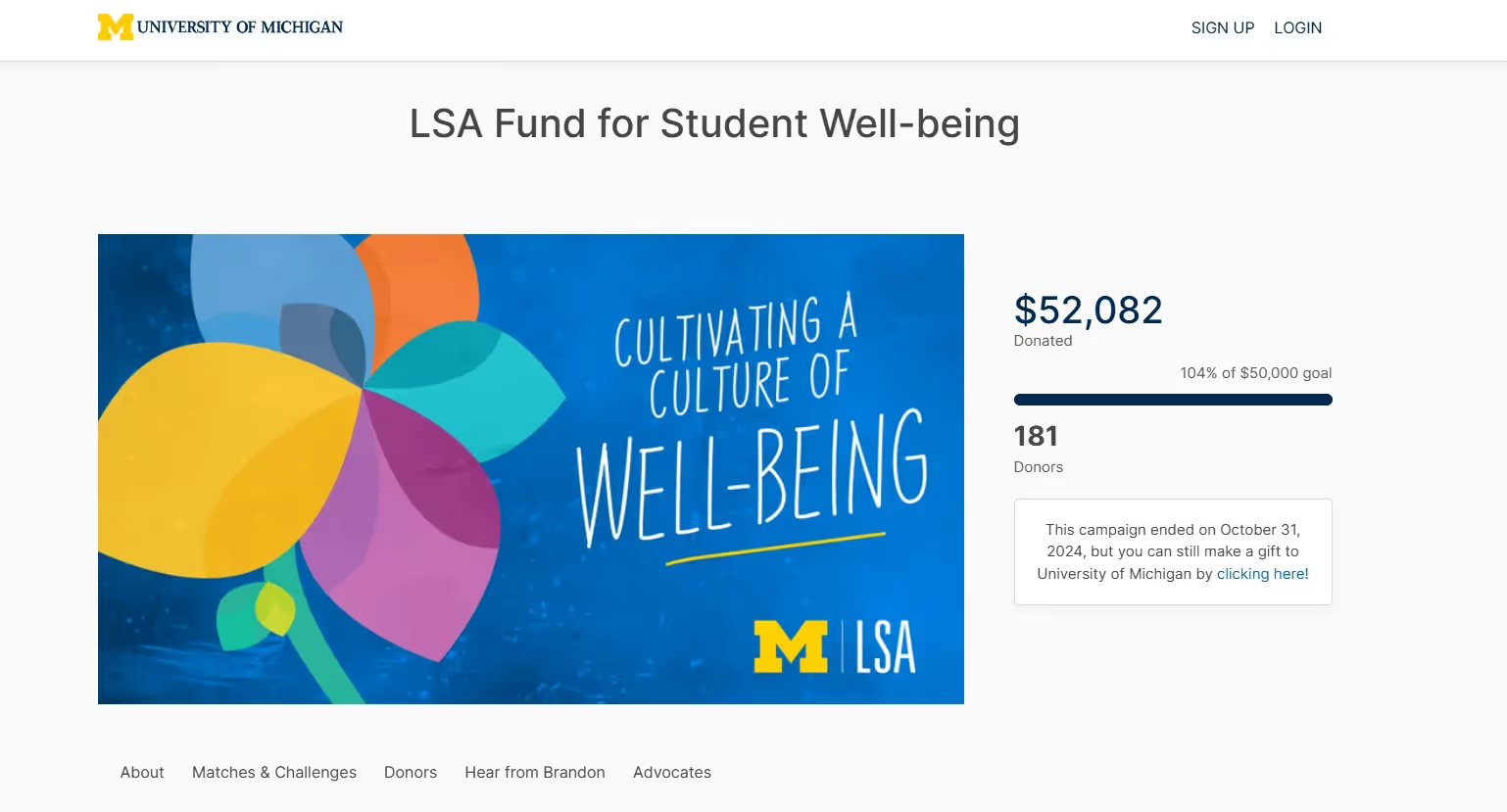
$52,082
In October 2024 (aligned with World Mental Health Day), the U-M College of Literature, Science and Arts (LSA) launched a crowdfunding drive on its official platform to support the LSA Fund for Student Well-Being. The campaign lasted 3 weeks, with a goal of $50K, and utilized a matching challenge and social media pushes around Mental Health Day. The campaign emphasized that gifts would fund resources like counseling, wellness programming, and emergency aid for student mental health.
This campaign addressed the growing mental health needs on campus – a cause both urgent and somewhat intangible. By tying the launch to World Mental Health Day, it gained topical relevance. Uniquely, it was a time-limited “flash” campaign that still hit a relatively large target ($50K)
Framing the ask around World Mental Health Day gave it momentum and meaning. Transparency about the use of funds (every dollar to the Student Well-Being Fund in this case) builds trust.
Crowdfunding succeeds when institutions tell compelling stories, engage their communities, and provide a clear sense of purpose. Whether you're looking to fund a new initiative, preserve a cultural landmark, or support students in need, the examples shared here demonstrate the power of collaboration and the impact of a well-executed campaign.
Are you ready to run your own successful crowdfunding campaign? Start by analyzing these examples and tailoring their strategies to your unique goals and community. Need help with your next crowdfunding campaign? We’d love to help!

10 Inspiring Crowdfunding Campaigns in K-12 and Higher Ed
Explore 10 successful crowdfunding campaigns in K-12 and higher ed and learn valuable tips to launch your next impactful initiative.
Lorem ipsum dolor sit amet, consectetur adipiscing elit. Suspendisse varius enim in eros elementum tristique. Duis cursus, mi quis viverra ornare, eros dolor interdum nulla, ut commodo diam libero vitae erat. Aenean faucibus nibh et justo cursus id rutrum lorem imperdiet. Nunc ut sem vitae risus tristique posuere.
The importance of fundraising needs no introduction. However, with social, political, and economic elements proving increasingly tricky to predict, institutions of all sizes need to consider how they can make their fundraising strategy resilient to policy changes or the possibility of economic uncertainty.
Even before the sweeping education policy changes, fundraisers were proving increasingly reliant on large donors. According to the Fundraising Effectiveness Project, the dollars raised increased every quarter throughout 2024, but there were fewer donors at every turn. It goes without saying that an increasing reliance on large donors at a time of declining donor retention runs a huge risk.
In this blog, we’ll guide you through some key points you should look to integrate in order to futureproof your fundraising strategy.
Your large donors are undeniably your biggest champions. However, a future-proof fundraising strategy requires all its donor segments to believe in your cause. You should look to:
Some donors may simply not have felt as connected to your cause as your larger donors. Keeping in mind that every $10 or $50 donation adds up over time, have specific segments and nurture processes for your small and mid-sized donors with a focus on donor retention and long-term community building.
Data is the backbone of modern advancement and fundraising. A well-maintained data system ensures you know who your donors are and how to engage them meaningfully.
Knowing is half the battle, and CRMs should be the knowledge hub to drive your current and future fundraising strategies.
Trust is the foundation of sustainable giving. Being upfront about how funds are used can inspire trust to snowball your donors’ perception of your cause.
Transparency builds credibility, making donors more likely to continue supporting your initiatives.
Corporate entities, especially those associated with your alumni provide great scope for collaborations and can significantly expand your fundraising impact.
There is no guarantee that your emails and events will be noticed by your alumni and donors at the perfect time. Providing a multitude of giving options not only increases the timeframe for donors to contribute but also attracts smaller and irregular donors.
Fundraising goes beyond monetary gifts. Non-financial contributions foster the culture of giving back and are crucial to building your donor community.
These contributions build community goodwill and often pave the way for future financial support.
While your institution would obviously have some common points of contact, you’ll need to go further to inspire donor loyalty. Your institution needs to feel approachable, and your donors need to feel heard. Here are some things to keep in mind:
At the end of the day, fundraising relies on your donors and their willingness to support your cause(s). By focusing on sustainable practices, your institution gains the flexibility to adapt to donor trends and economic shifts, essentially future-proofing your fundraising strategy.
If you’re looking for a long-term partner for your fundraising efforts, do give us a shout and we’d love to answer your questions and show you how we can help!
Sustainable fundraising focuses on creating long-term financial stability for an institution by diversifying revenue sources and fostering regular contributions. It ensures that you maintain consistent supporter engagement while adapting to changing economic and political dynamics.
While building a sustainable fundraising strategy requires effort, it becomes manageable with the right tools and approaches. Leveraging data, fostering trust, and offering flexible giving options can simplify and strengthen your efforts.
Start by identifying companies that share your institution’s values. Reach out with a concise and clear proposal that highlights mutual benefits. Focus on co-branded initiatives and emphasize the positive publicity their business can gain through the partnership.
Sustainable fundraising reduces reliance on unpredictable sources of income, enables long-term planning, and fosters stronger donor relationships. It ensures financial stability, even in uncertain times, and allows institutions to focus more on their mission.

Sustainable fundraising: Future-proofing K-12 and Higher-ed fundraising
Discover actionable strategies for sustainable fundraising to secure long-term support for K-12 schools and higher-ed institutions.
Lorem ipsum dolor sit amet, consectetur adipiscing elit. Suspendisse varius enim in eros elementum tristique. Duis cursus, mi quis viverra ornare, eros dolor interdum nulla, ut commodo diam libero vitae erat. Aenean faucibus nibh et justo cursus id rutrum lorem imperdiet. Nunc ut sem vitae risus tristique posuere.

.svg)

.avif)
.webp)