Getting a one time sponsor is one thing. Turning it into a long term sponsorship is another. We'll you through all you need to know to turn one offs into partnerships.

Sharada Koti
Updated:
August 28, 2026

A sponsorship can be a good deal for everyone involved and remain a one-time arrangement. The organization gets the support it needs, the sponsor gets the benefits it signed up for, and the relationship ends when the event or campaign is over. The real challenge is taking that first successful sponsorship and giving the relationship a reason to continue.
But turning this potential into a lasting relationship takes a fair bit of deliberate work.
In this article, we will look at what attracts and dissuades sponsors, the common mistakes that can quietly turn a promising relationship into a one-off, and practical ways to build on a successful sponsorship and create more opportunities together. The aim is to help you look at sponsorships with a longer view and make better choices about which relationships are worth taking further.
A sponsorship may start with a simple exchange, but whether that relationship goes any further often depends on what the sponsor sees in it beyond that first commitment. For Momentum's 2025 research found that 91% of companies considered brand and mission alignment important when choosing a nonprofit partner, while 85% looked for community or social impact and tangible program outcomes.
Those factors can bring in a sponsor, but they are not enough on their own to keep the relationship going. The experience of working with the organization matters too. 70% of companies said they had ended a nonprofit partnership because the organization failed to deliver on its promises, while 52% pointed to insufficient support or stewardship. So there are two sides to the equation. Understanding both is a useful starting point when you're trying to turn a one-time sponsorship into something longer term.
Getting a sponsor to say yes once is one thing. Giving them a reason to keep saying yes is where the real work begins. That means thinking beyond the original event and being deliberate about what happens next. A few ways to approach that are:
Not every company that is willing to sponsor your event is necessarily a good long-term partner. Before you start pitching, spend some time understanding what a company already cares about. Look at its CSR priorities, community programs, employee engagement efforts, giving history, and the causes it has supported in the past. Then look at where those interests overlap with your own work. You can ask questions like:
That research can save you from chasing one-off sponsorships that go nowhere. Five companies with a genuine reason to keep working with you are worth more than fifteen that only see your event as a one-time opportunity. And when you approach a potential sponsor, you have something much more useful to talk about than a sponsorship package. You can show why the partnership makes sense for both sides and where it could go over time.
Once you have a sponsor that looks like a good fit, the next step is to be clear about what the partnership should achieve. This is also where it helps to stop thinking of sponsorship as a fixed package that gets renewed every year. Set clear goals for the sponsorship and agree on how you will measure them. At the same time, give the company a clear path forward rather than making every year a new negotiation.
You could:
A sponsor doesn't have to remain a silent partner once the cheque is signed. Look for ways to involve them in the work itself. Their employees may be able to volunteer, mentor students, share professional expertise, support a community initiative, or take part in a program connected to the cause they are funding.
This also gives you a chance to build a relationship around what the sponsor cares about, rather than around what you can put their logo on. The more involved they become, the easier it is for both sides to see the partnership as something they are building together.
Say your university’s annual homecoming is being sponsored by a software company. Instead of stopping at the traditional give and take, you invite them to run a coding workshop for students during the semester. This opens the door to something the sponsor can actively contribute to, rather than ending with event branding, and now their support has real, measurable alignment with their business.
The relationship should not go quiet as soon as the event is over. There are plenty of ways to stay connected without turning every interaction into another sponsorship ask.
Thank sponsors and recognize their contribution after an event. Share stories about what their support made possible. Invite them to a sponsored program day, introduce them through a sponsor spotlight series, or involve their employees in something that fits their interests. Use email, calls, events, social media, and other channels where they make sense. The idea is to give sponsors reasons to hear from you throughout the year, not just when the next sponsorship package is ready.
Managing year-round relationships with multiple corporate sponsors requires organization and consistency that’s impossible to maintain with spreadsheets and good intentions alone. A sophisticated nonprofit CRM can become your best friend with sponsor relationship management. When choosing a system, look for features that help you:
Even when a sponsorship has gone well, there are a few things that can keep the relationship from moving forward. Some are easy to overlook because they don't affect the event itself. They show up later, when you're trying to pick the relationship back up or work out what comes next.
Once you have several sponsors, there is a lot to keep track of. Sponsorship levels, benefits, payments, invoices, guest names, logos, and other materials can quickly end up across different spreadsheets and email threads. It becomes harder to know what is still pending, and easy for something to slip through.
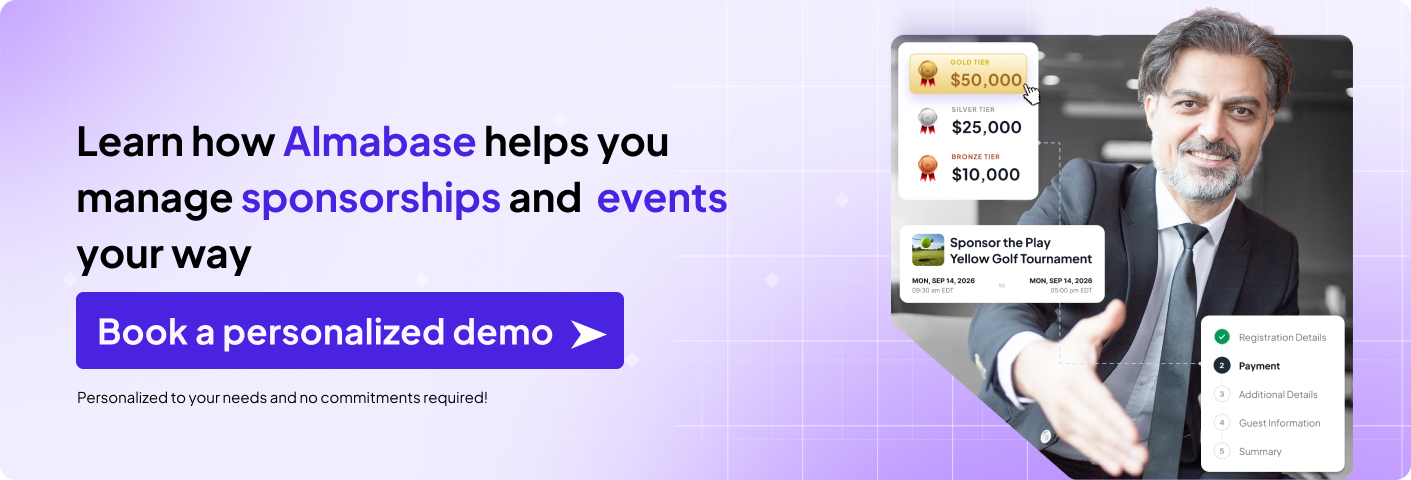
This is where Almabase's Sponsorship Management can take some of that work off your plate. Sponsors can choose their tier, accept the terms, pay, and submit guest details and other collateral through a self-service portal. Once a sponsor signs up, you have their sponsorship details, payment status, and pending information in one place. Invoices can also be generated automatically based on the sponsorship they selected. The system also syncs sponsorship and guest information with Raiser’s Edge NXT.
Essentia Health Foundation saw this difference firsthand. Before Almabase, sponsor commitments, invoices, logos, and guest information were handled manually, with weeks spent on follow-ups. After moving to Almabase, the foundation managed 25+ sponsors across $1,000–$40,000 tiers through one system. At the same time guest information flowed into Raiser’s Edge NXT as named constituent records and sponsorship and event operations themselves were handled through a much more structured process. That also meant 90% of event revenue came from sponsorships, with $200,000 raised at the Essentially Yours gala.
That is the kind of operational foundation you need when sponsorships become long-term commitments. You can keep the process organized, protect the revenue you've committed to, and have reliable sponsor and guest data to work with post-event.
Looking ahead
There is no formula for turning every sponsor into a long-term partner. Not every sponsor is going to be the right partner, and that is worth figuring out before you invest too much time in the relationship. The best partnerships are usually built by staying curious about what the other side needs and being willing to suggest something that wasn't part of the original plan. You don't have to wait for renewal season or for a sponsor to come to you with the next idea.
We hope this article gave you a few useful ideas for approaching sponsorships with a longer view, whether you're building your first partnerships or deciding which existing ones are worth developing further. Want to see how Almabase can help you manage those sponsorships as they grow? Book a personalized demo of Almabase’s Sponsorship Management and see the platform in action.
Subscribe
See how modern advancement teams bring alumni engagement and fundraising together.
Plan faster. Execute better
Explore free templates designed for alumni and fundraising teams.
.png)

.avif)
Sharada Koti
%201.svg)
%201.svg)
%204.svg)




.svg)