Practical resources to help alumni relations, fundraising, and advancement teams work smarter.

Every year, GivingTuesday (or Giving Tuesday) gives schools the chance to rally their communities around generosity. With the right Giving Tuesday campaign ideas, you can turn a single day of giving into something that strengthens your institution’s pride, deepens connections, and funds the programs that make a difference. Last year alone, donors contributed $3.6 billion across the United States, marking a 16% jump from the previous year
But a successful Giving Tuesday campaign doesn’t happen by accident. In this blog we will take you through a few proven strategies you can adopt to make sure your Giving Tuesday campaign is at its most effective.
The institutions that meet (and often surpass) their Giving Tuesday goals have one thing in common: they start early.
Giving Tuesday lands right after Thanksgiving, competing for attention with Black Friday sales, holiday shopping, and countless nonprofit appeals. To cut through the noise, your best move is to begin preparing well before November, ideally in September or early October.
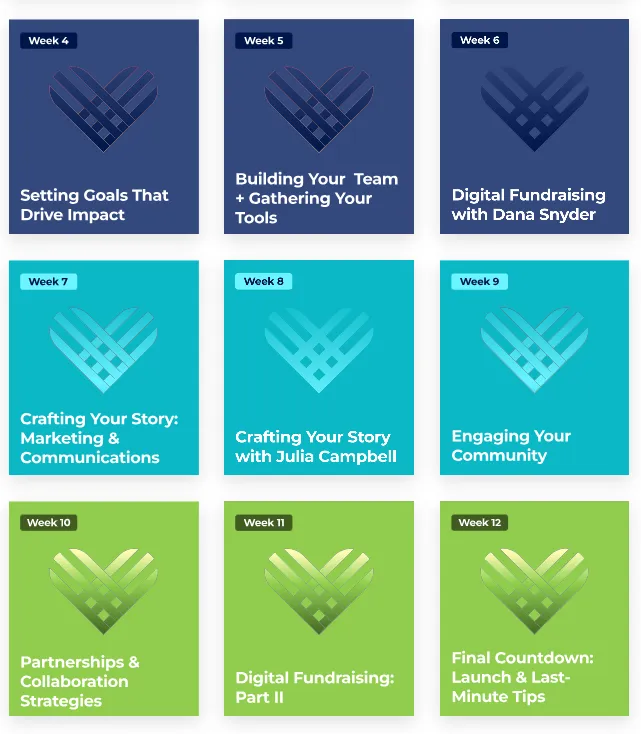
The good news? You don’t have to build your plan from scratch. GivingTuesday's official website offers a 12-week countdown planning guide that walks you through exactly what to do each week leading up to the big day. Starting three months out gives you the breathing room to think creatively, build momentum, and avoid the last-minute scramble.
Here’s what early planning gives you:
Start now by planning backwards from Giving Tuesday. What should happen a month before? Two weeks before? One week before? Lock in those milestones early and you’ll be thanking yourself later.
A number can be motivating, but a purpose is unforgettable.
A goal might say, “We want to raise $25,000.”, but a purpose says, “We’re raising $25,000 to launch scholarships for three first-generation students this year.” One is a target; the other tells a story of the real impact donors could be making. When your campaign clearly connects donations to outcomes, people give with confidence and heart.
A message that inspired giving could look like:
Whatever you choose, make sure your purpose reflects your school’s mission and resonates emotionally with your supporters. When donors can picture the result, they’re far more likely to take action.
Your Giving Tuesday message has just a few seconds to capture attention and spark generosity. The best ones are short, emotional, and focused on impact.
A simple framework that works:
Take NYU’s example. Their messaging connected the global GivingTuesday movement directly to tangible student impact.
"GivingTuesday is about unleashing the power of generosity worldwide. At NYU, it means investing in the next generation of leaders whose work will create lasting change. Your support today can provide scholarships, mentorship, emergency funds, and countless opportunities for students to flourish at NYU."
Notice how they started with the big picture (global generosity) but quickly zeroed in on specific ways donations make a difference Then, they immediately connected that message to real outcomes: scholarships, mentorships, and emergency funds. That balance between vision and specificity is what makes a message stick.
And don’t forget to mention that small donations matter. Many people assume their $10 or $25 won’t move the needle, but it absolutely does. Try messages like:
Sample Giving Tuesday Messages for Schools:
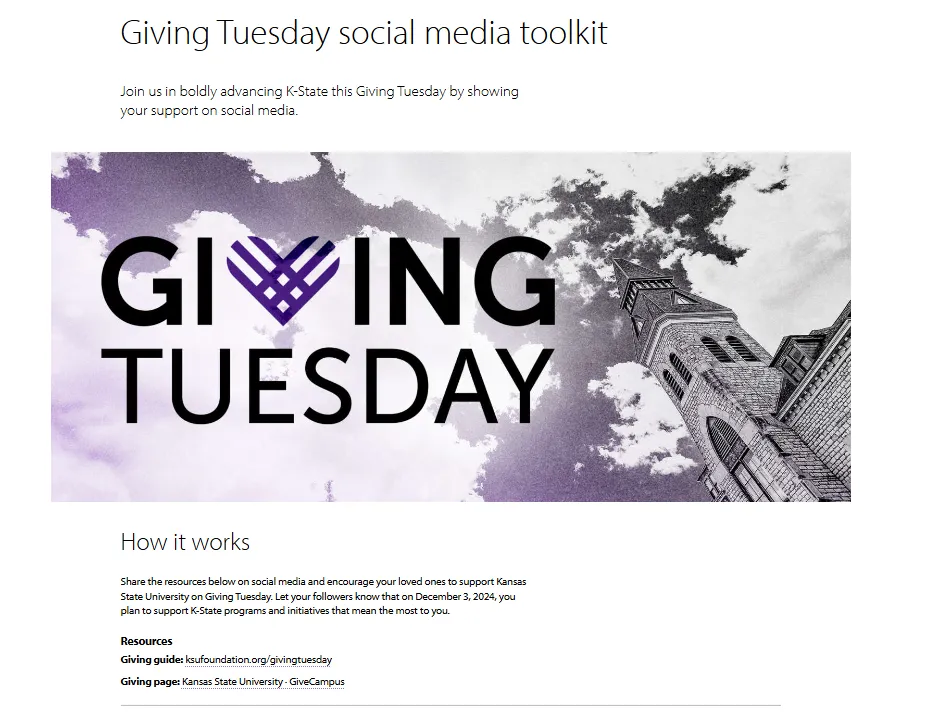
Create three to five variations of your core message and rotate them across platforms. Include your school’s unique hashtag alongside #GivingTuesday to boost visibility. Need inspiration? Check out Kansas State University’s social media toolkit for adaptable message ideas.
For Giving Tuesday, visuals are your first impression with potential donors. A well-designed graphic makes your campaign instantly recognizable and emotionally engaging.
Rockhurst High School in Kansas City nailed this with their #RockGivingTuesday campaign. Their posts consistently featured:
That consistency built trust and recognition at a glance.
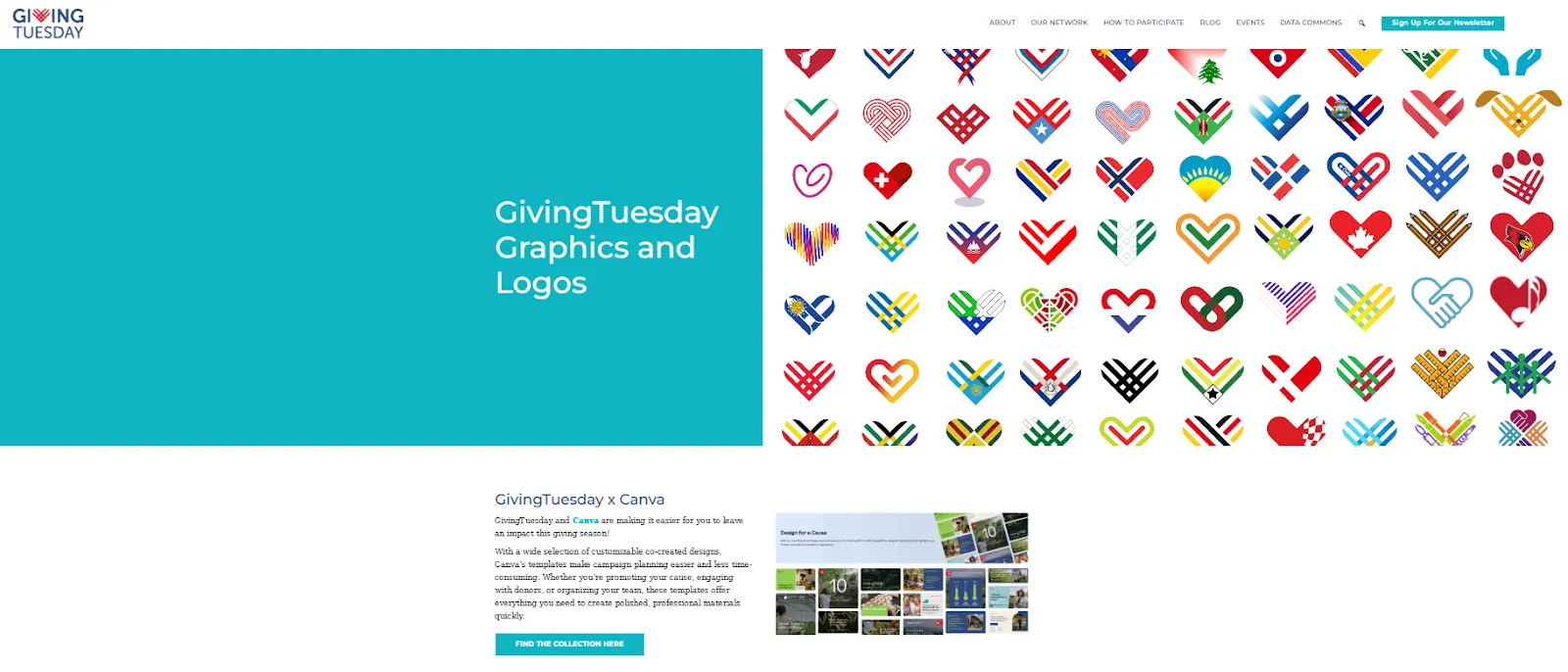
You don’t need to start from scratch. GivingTuesday.org offers free branded templates and logo guidelines to help you maintain a professional look while saving time.
What Makes a Great Giving Tuesday Graphic?
Directing donors to your general donation page might seem simple, but it could actually hurt conversions. On Giving Tuesday, people expect a focused, emotionally engaging experience that feels unique to the day.
A dedicated Giving Tuesday landing page reminds visitors why they’re giving and shows exactly how their gift will be used.
Here’s what to include:
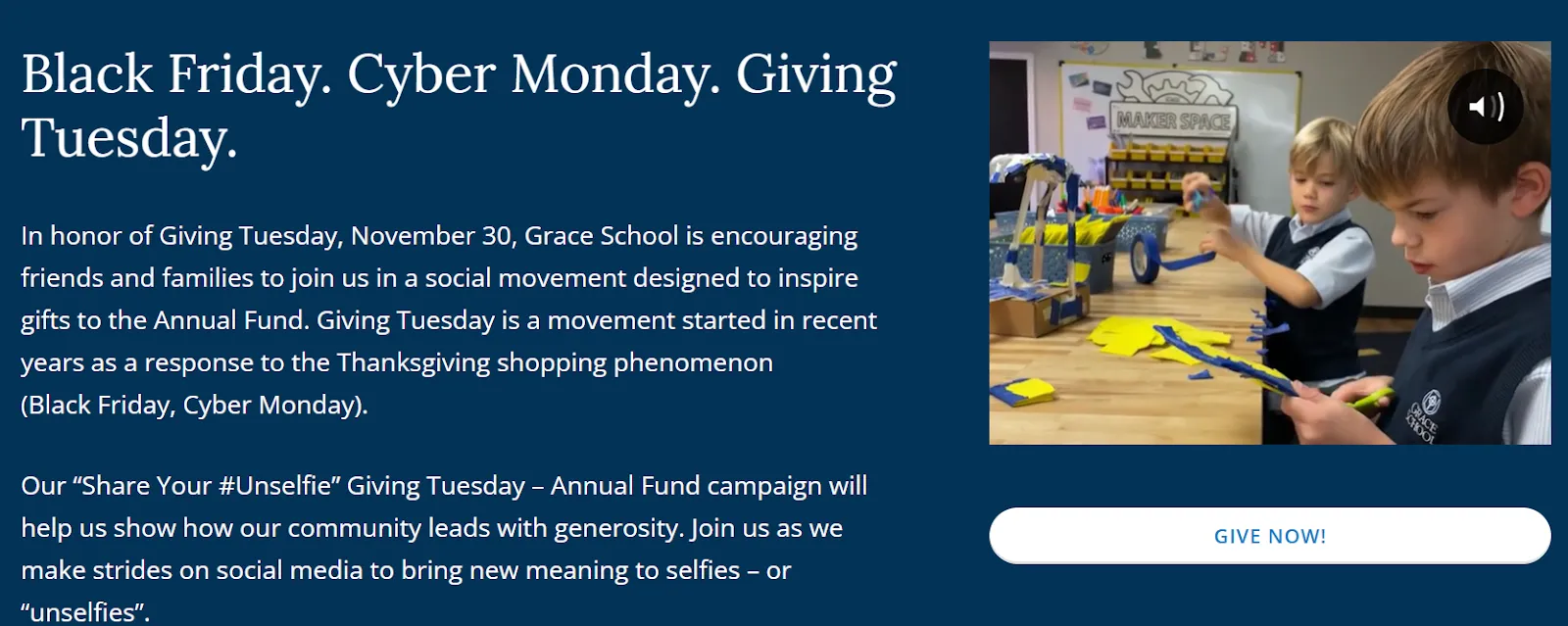
Take inspiration from Grace School’s approach. They embedded a short student video on their landing page and linked it in social posts to drive emotional connection.
Social media can turn your Giving Tuesday campaign from good to unforgettable, but it takes planning your content calendar and rhythm. Create a simple calendar that builds anticipation, peaks on Giving Tuesday, and ends with gratitude.
Here’s an example of what that might look like:
And some platform-specific tips:
Take a page from Save the Elephants. Their Giving Tuesday video of elephants roaming freely, coupled with a triple-match promise, stopped people mid-scroll. For schools, that could be students in action, classrooms buzzing, or alumni sharing quick stories. Even a small paid ad budget ($100–$200) can expand reach to specific alumni groups or parent audiences.

Here’s the not-so-secret secret behind the most successful Giving Tuesday campaigns: they’re powered by people. Specifically, it's peer-to-peer fundraising: alumni ambassadors, parent volunteers, student leaders, and faculty champions who create their own mini-campaigns and ask their personal networks to give. When a message comes from someone you know, it hits differently.
Research backs this up: 56% of donors say they’re more likely to give when asked by someone in their circle.
How to make it happen:
The best part is that ambassador-driven campaigns often bring in new donors who never would have heard about your school otherwise.
The official GivingTuesday Peer-to-Peer Fundraising Toolkit highlights that donors are far more likely to give when a request comes from someone they know and trust, rather than from the institution itself. The toolkit also offers simple ways for ambassadors, such as alumni or parent volunteers, to create personalized fundraising pages, share campaign links across their networks, and rally support for your school’s cause.
Email remains one of the most elegant and effective tools for Giving Tuesday: simple, direct, and measurable. But success comes from a sequence, not a single blast.
Try the Four-Email Timeline:
Don't send the exact same email to everyone. You can boost your email open rates average by personalizing your approach.
Create different versions for:
Minor tweaks to subject lines and opening paragraphs can make a huge difference in engagement.
Even the most inspiring campaign can lose momentum if donating is a hassle. Think about it from a donor’s point of view: they’re scrolling on their phone during a quick break, they see your post, feel moved to give, click the link… and then get stuck on a clunky, confusing donation form that doesn’t work well on mobile. That’s a lost gift (sometimes multiple ones).
Here’s how to keep the process effortless:
The campaign doesn't end when Giving Tuesday is over. In fact, what you do the next day might be just as important as what you did during the campaign itself. Donor retention is a bit of a challenge right now: that means if you don't immediately thank your Giving Tuesday donors and show them the impact of their gift, there's a chance they won't give again.
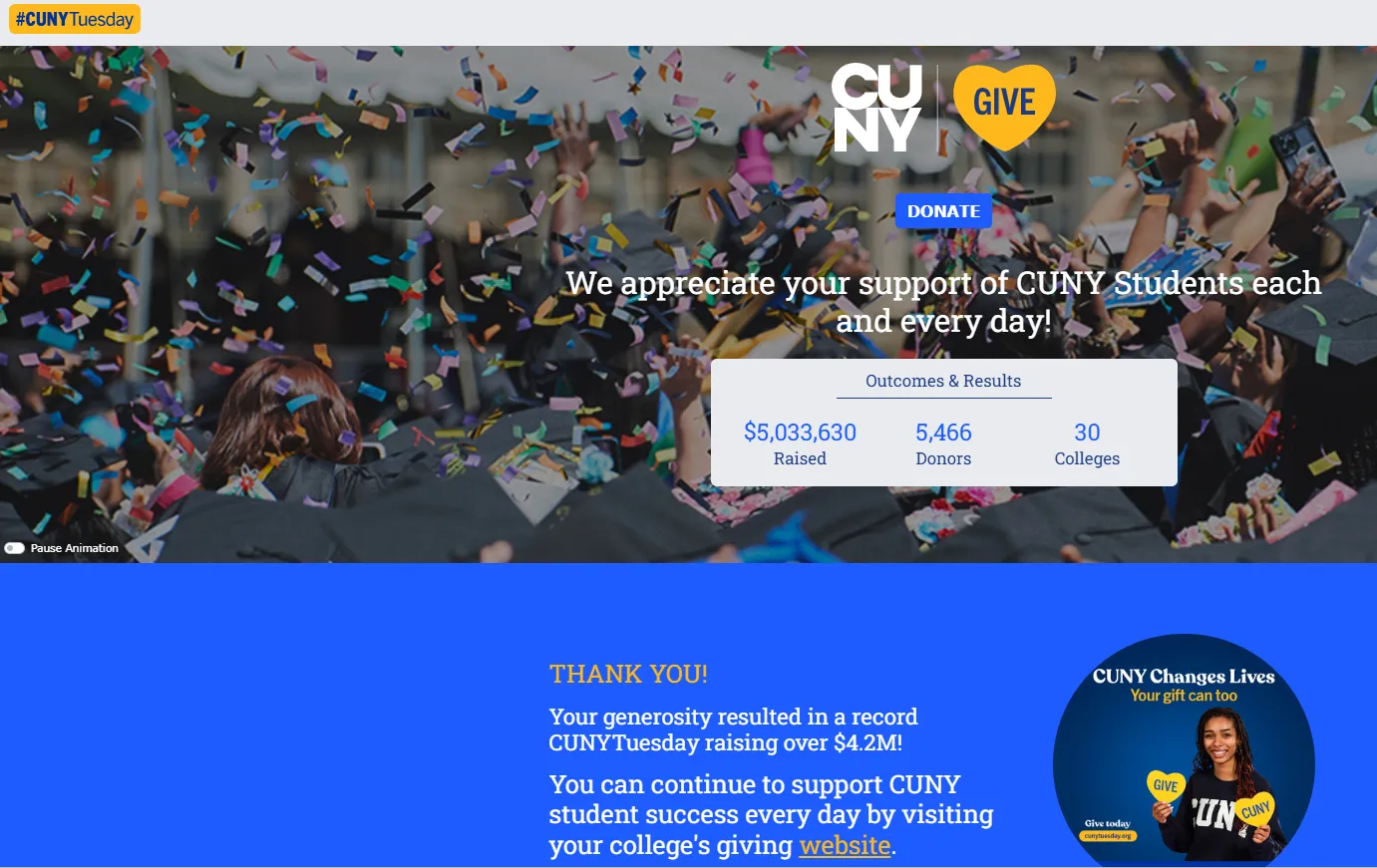
The City University of New York (CUNY) used their dedicated thank you page at cunytuesday.org as a central hub to express gratitude and celebrate their record-breaking Giving Tuesday 2024 campaign.
Follow up effectively:
Example:
"Thanks to 237 donors like you, we reached 120% of our $20,000 goal! That means we can fully fund our student emergency grant program and help 15 students overcome unexpected financial challenges this semester."
With these steps you can cultivate long-lasting relationships with your supporters.
Your Giving Tuesday campaign is a treasure trove of content you can use year-round.
Use Giving Tuesday as a springboard for recurring donations. A follow-up email in January might say: “Your Giving Tuesday gift made a real difference. Would you consider making it monthly?”
Highlight your most engaged ambassadors in annual reports or invite them to participate in alumni boards. Celebrate your super-fans! They’re critical for future campaigns.
Social proof also matters: “Last year, 500 donors came together on Giving Tuesday to raise $35,000” is a powerful motivator for new donors and ambassadors.
Back in 2021, the School of the Holy Child in Rye, New York, used a smart strategy that still works beautifully today. Their GivingTuesday campaign celebrated the success of the previous year, proudly sharing that in 2020, their community raised $375,000 from 525 donors — and invited supporters to help surpass that goal. The result? They raised $402,855 in 2021, proving how past impact can motivate even greater generosity year after year.
Giving Tuesday doesn't have to be a one-off event. When you treat it as part of your larger annual fundraising strategy, you maximize its impact well beyond a single day.
Giving Tuesday is only growing. With projections estimating $4 billion raised in 2025, schools that show up prepared will see significant returns.
But true success is at the confluence of an effective hashtag, a simple but elegant landing page, and driving connection with your donors. It comes from showing donors exactly how their gift makes a difference. It comes from making it easy to give and impossible to ignore.
Start early. Tell compelling stories. Activate your community. Make giving frictionless. Show gratitude.
When you follow this approach, Giving Tuesday can be your most successful campaign yet. Almabase helps schools bring it all together: personalized campaigns, streamlined donation processing, and purpose-built tools that maximize giving. Request a demo today and transform how your school connects with donors.

How to Improve Your School’s Giving Tuesday Campaign
GivingTuesday is a key part of the end of the year fundraising season. Learn how to make the most of this global day of charity for your educational institution
Best practices
Every institution has its own story, and alumni are a big part of it. Hence, keeping your alumni together can be a mammoth task. If done correctly, it helps you tap into a vast network that will do wonders for your institution’s community and growth. To see what a strong alumni community can achieve, take a look at some of the largest alumni associations for inspiration. If you've felt this pull but have had no idea how to start, you're in the right place. We’ve come up with a step-by-step guide to building a strong, sustainable alumni association that goes much beyond the conventional routes.
In this blog, we’ll explore how to form your founding team, plan your first events, and keep momentum going long after launch. These steps provide a basic outline on which you can start working and can be followed despite diverse factors like the size of the Alumni/Alumni Team/Institution. By the end, you’ll have a clear picture of turning your alumni network into a thriving, lifelong community.
A former students’ association, or alumni association, is simply a group that keeps graduates connected to one another and to their alma mater. While the exact structure varies depending on the size, interests, and resources of the institution, most associations organize alumni talks, social gatherings, and charity events; run fundraising campaigns; publish newsletters; and maintain updated alumni databases.
At its core, an alumni association helps in building lifelong relationships, mentoring current students, organizing events, raising funds, and creating professional networks. It’s the hub where alumni continue to share experiences, celebrate milestones, donate and contribute to the growth of their institution. According to the 2024 RNL Alumni national survey alumni who feel connected to their alma mater are 23 times more likely to give. That connection often translates into funding scholarships, launching new programs, and transforming campuses. Which is why investing in nurturing strong alumni associations is essential for ensuring the long-term growth and stability of the institution itself.
💡Looking for ways to keep your alumni active and connected? Explore our Alumni Engagement Ideas blog for practical strategies you can start implementing today.
Building an alumni association is about a long-term network that supports both alumni and the institution fruitfully. Here’s how to set it up thoughtfully, step by step.
Every successful alumni association starts with a handful of people who genuinely care. Begin by identifying alumni who’ve stayed active in your school’s community. Class representatives, event organizers, or those who often show up to reunions. Bring in a teacher or staff member who can bridge communication with the institution.
During your first few meetings, talk through what it means to be part of this network. Clarify how to become an alumni member, whether that includes every graduate, people who completed a specific program, or even long-term attendees. This definition matters later when you build your directory or collect membership fees.
Create a shared document that outlines each founding member’s role, be it outreach, event planning, data collection, or communication setup. Keeping early accountability simple and visible builds trust from the start.
Before planning events or fundraisers, decide what your alumni association truly stands for. Gather a few founding members and talk through your “why.” Do you want to build a stronger alumni network, mentor students, or support campus projects? Choose two or three priorities to start with and revisit them every year as your community grows.
Once you’re clear, put it into a short mission statement that feels real, not corporate. Something like: “To help every graduate stay connected, supported, and proud of where they came from.”
Start small, and let your goals evolve each year as engagement deepens. Make it a routine to send a quick alumni survey to see what people actually value (career support, reunions, or volunteering). Setting goals based on real input keeps your association’s energy focused and sustainable.
A clear structure keeps your alumni association running smoothly as it grows. Start by deciding how leadership works, who’s on the executive committee, how often roles rotate, and how decisions are approved. Typical roles include a President, Vice President, Treasurer, and Secretary. You can also add subcommittees for events, fundraising, or communication.
Next, put your basic bylaws in writing. Keep it simple but clear. Include things like how members are admitted, how meetings are held, voting procedures, and how funds are managed. Bylaws make your group credible and protect it from misunderstandings later, so it is important to have them defined clearly.
If you plan to collect membership fees or donations, define transparent financial practices early on; who manages the money, how records are kept, and when reports are shared with members.
You can also introduce membership tiers like annual, lifetime, or honorary members with specific benefits such as early event access or recognition on your alumni website. A short, one-page charter or handbook can summarize all this (you can share this with new members or partners as your association grows).
Your alumni won’t engage if they don’t know what’s happening. Start by outlining how and when you’ll communicate, what channels you’ll use, how often you’ll share updates, and who manages each platform. Choose two or three reliable options to begin with, such as an email newsletter for official updates, LinkedIn for professional networking, and WhatsApp, Instagram or Slack for informal conversations.
Next, decide what kind of communication builds trust and interest. Mix institutional updates with alumni-focused stories, success highlights, and opportunities to give back. Make space for interaction, surveys, polls, or alumni Q&As so that communication doesn’t feel one-sided.
Once your network feels connected online, bring it to life offline. Start small, a local coffee meetup, a virtual game night, or a “Back to Campus” open day. Follow it up with programs that add value for both alumni and students: mentoring circles, speaker panels, or internship drives.
To spark participation, launch a simple challenge like “100 Days of Giving” or “10 Hours to Mentor” that ties directly to your mission. Encourage batch-wise teams or friendly competition to keep things fun.
After each event, gather photos, testimonials, and short videos. Share them in your newsletter, social media and tag participants online. This not only builds momentum for the next event but also answers the long-term question of how to engage alumni consistently through stories, recognition, and shared purpose.
If you’re looking to simplify how you plan, promote, and measure your alumni events, explore how Almabase’s Alumni Relations platform helps institutions run all this from one place.
Every six months, take stock. Are your events getting traction? Are new members joining? Is communication steady or fading? Use simple metrics such as email open rates, social engagement, and event turnout to gauge what’s working.
Invite feedback through short polls or virtual “town hall” chats. Alumni are more likely to stay involved when they see their input shaping the next phase. Keep evolving your association to stay relevant to changing alumni interests, industries, and life stages.
An alumni association turns graduation into the beginning of a lifelong connection. Beyond nostalgia, it fuels mentorship, fundraising, and community pride. Here’s what makes it essential for your institution-
Launching your alumni association is just the start; sustaining engagement is where the real work begins. Here’s how to keep the momentum going long after your first event-
Even the most well-intentioned alumni groups can lose traction if they overlook a few basics. The good news? Most of these missteps are easy to fix with a little structure and the right tools. Here are some common pitfalls to watch out for (and how to stay ahead of them)-
It’s easy to think of an alumni association as just another organizational task but really, it’s weaving a living, breathing community that lasts. If you’re part of an institution looking to strengthen alumni ties, remember that it doesn’t happen overnight. It starts with a few dedicated people who care enough to keep the connection alive and grows through steady communication, thoughtful events, and genuine appreciation.
Focus on creating a few moments that matter, a reunion that sparks old friendships, a mentoring session that changes a student’s path, or a simple thank-you note that reminds alumni they’re valued. That’s when alumni transition from “former students” to lifelong supporters, people who cheer you on, show up, and make a real impact.
If you’d like to make alumni engagement easier to manage and more personal, see how Almabase helps institutions stay connected with their graduates in meaningful ways.

How to Build a Successful Alumni Association: A Step-by-Step Guide
An alumni association is the focal point of your institution's alumni engagement. But how do you get started, and what are the basics? All that and more in this blog
Best practices
Fundraising for educational institutions has always been a challenging landscape to navigate, but recent shifts have made it even harder to maintain momentum. The donor pipeline is shrinking, and major donors, many of whom are aging, are not being replaced. At the same time, younger generations of alumni remain disengaged, with many opting out of giving or not participating in the same ways as their predecessors.
As communication channels become increasingly crowded and competitive, educational institutions face the ongoing challenge of standing out in a noisy environment. However, one area of fundraising that remains underutilized, yet can play a significant role in differentiating appeals, is matching gifts.
By leveraging alumni matching gifts, educational institutions can significantly amplify the impact of each donor’s contribution, helping to close the gap between dwindling donor pools and the need for sustainable funding. In this guide, we’ll walk you through everything you need to know to make the most of these programs’ potential. We’ll cover:
Interested in accessing the full insights this blog was inspired by? Register here to receive the on-demand recording of the presentation.
Let’s begin!
With the right strategies, school fundraisers can create an environment where alumni feel engaged, valued, and empowered to give. Let’s first lay the groundwork for successful alumni engagement here.
The first step to raising more donations from alumni is building the foundation of a strong, connected network. It’s not enough to simply ask for donations once or twice a year; your alumni need to feel personally invested in your cause. In fact, alumni who are more engaged with their alma mater are 23 times more likely to give.
Creating meaningful connections is key, and there are many ways to do so. Community-building initiatives, mentorship programs, and volunteering opportunities not only foster these bonds but also open the door to new funding opportunities.
Once you've built a strong foundation, it's time to fine-tune your approach. Each interaction with your alumni, whether via email, social media, or through your website, should be optimized for maximum impact.
The key to success in fundraising is understanding your audience. Use A/B testing to optimize subject lines, email content, and calls to action. By tracking alumni behavior on your website, you can identify warm leads and tailor your outreach for maximum effectiveness.
With over 50% of web traffic coming from mobile devices, optimizing your donation forms for mobile users is crucial. A mobile-friendly donation form, with pre-filled fields and a progress indicator, can increase conversion rates by up to 200%.
A well-rounded fundraising strategy should include more than just a generic appeal. Consider running micro-impact funds, gamifying donations, or launching re-engagement campaigns. Matching gifts are a key component of these strategies, as they create an immediate incentive for donors to give more.
People give to causes they care about, and one of the most effective ways to connect with your alumni is through storytelling. Use the "Challenge → Impact → Hope" narrative arc to highlight the tangible outcomes of donations. For example, "15 students graduated debt-free because of your support" can show alumni exactly where their money is going.
One of the most underutilized tools in educational fundraising is matching gift programs. These corporate giving initiatives offer employees the opportunity to double their donations, multiplying the impact of their contributions.
Corporate matching gifts are employer-sponsored programs in which companies match the charitable contributions made by their employees. For example, if an alumnus donates $100 to your school, their employer may match that donation with another $100, effectively doubling the gift and allowing your institution to do more with the funds.
The specifics of matching gift programs can vary by company, but there are some common parameters to be aware of as you navigate these initiatives. These include:
The more you know about a matching gift program, the better you can target donors who work for the company.
Many prominent companies offer matching gifts specifically to or including educational institutions, providing a valuable opportunity for your alumni to maximize their donations.
Here’s a list of notable companies that match donations to higher education institutions like yours:
These companies represent just a few of the thousands that match employee donations to schools and other educational institutions. By encouraging alumni to check if their employer participates in a matching gift program, you can tap into additional resources to drive fundraising success.
Top tip: It's important to maintain an up-to-date list of companies offering matching gifts and provide an easy way for alumni to identify these opportunities. Consider integrating matching gift company databases directly into your donation forms and communications, so donors can quickly see if their employer is eligible for a match.
Matching gifts are a powerful way to amplify alumni donations without asking for more money from your donors. Here’s how they can significantly boost your fundraising efforts:
By promoting matching gifts within your overall fundraising strategy, you can significantly increase both the amount and engagement of alumni donations.
Despite the clear benefits of matching gifts, many organizations are still missing out on this opportunity. A major reason for this is a lack of education and promotion. Only 7% of donors are aware that matching gift programs exist, and even fewer know how to apply for them.
To fully leverage matching gifts and maximize their potential, fundraisers need to implement strategic tactics. These efforts will help ensure that alumni are aware of matching opportunities, motivated to participate, and supported throughout the process.
The first step in boosting matching gift participation is educating your donors about the programs. Many alumni may not be aware that their employers offer matching gifts, or they might not know how to access this benefit. To bridge this gap, make sure to clearly communicate the value of matching gifts in all your fundraising materials.
Include matching gift information in your alumni communications, such as email newsletters, donation receipts, and event invitations. Remind alumni that their donations can go further without additional spending, which can incentivize them to engage.
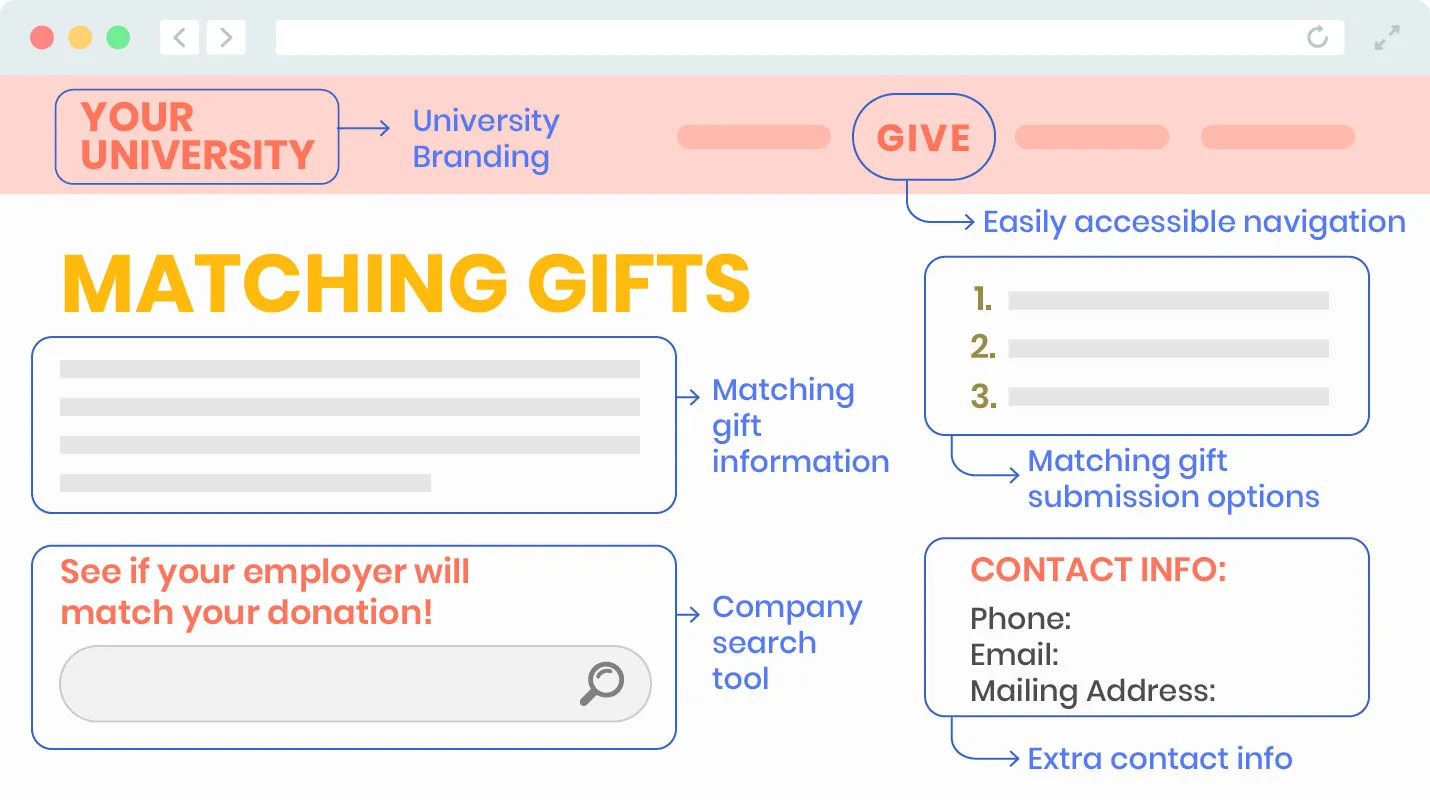
Your school’s website is one of the most important tools for promoting matching gifts. We recommend creating a dedicated landing page that explains how matching gifts work, provides a list of participating companies, and includes easy-to-follow instructions for how donors can claim a match.
To ensure maximum participation, integrate matching gift opportunities directly into your donation page. When donors contribute online, include a prominent option for them to check if their employer offers matching gifts.
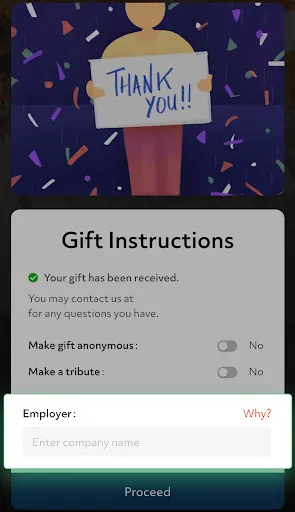
This ensures that matching gifts are top-of-mind as donors finalize their contributions.
Send reminder emails shortly after donations are made to encourage alumni to take advantage of matching gift opportunities. These emails should include clear instructions and links to facilitate the process.
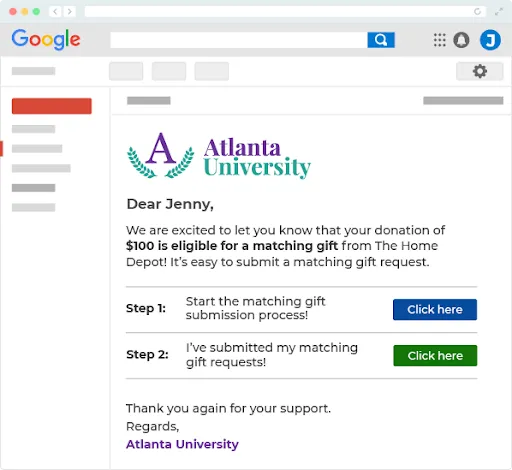
Follow-up emails should be sent periodically, especially if a donor has expressed interest in matching gifts but hasn't yet completed the submission.
Donor appreciation is a key factor in retaining donors and encouraging future contributions. Make sure to thank your donors promptly, and include a special thank-you for their matching gift contributions.
Not only should you thank them for their original gift, but also for the additional impact their employer’s match has made. Personalized acknowledgment of the matching gift will reinforce the donor’s positive experience and show them that their generosity, both as an individual and through their employer, has a significant effect.
To ensure that your matching gift efforts are successful, your team needs to be well-prepared. Provide your staff with the necessary training and resources to effectively communicate with donors about matching gifts. Make sure everyone on the team understands the details of how matching gifts work and can guide donors through the process.
Further, implementing a matching gift tracking system can help streamline the process, ensuring that no matching gifts are overlooked. Consider using software like Double the Donation, which automates the process of identifying and tracking matching gifts, making it easier for your team to manage.
Matching gifts present a golden opportunity for fundraising organizations to significantly boost their alumni donations. This not only increases the amount raised but also strengthens relationships with alumni and corporate partners, fostering a deeper sense of engagement and commitment to the cause.
However, simply having a matching gift program in place isn't enough. To maximize the impact, you must take proactive steps to educate alumni, promote matching gifts at every touchpoint, and ensure the process is as seamless as possible. By integrating matching gift options into the donation flow, sending timely reminders, and expressing sincere gratitude for matching gifts, nonprofits and educational institutions alike can cultivate a more engaged and loyal donor base.

Double Alumni Impact: Maximize Donations with Matching Gifts
Discover how alumni matching gifts can maximize donations for schools. Learn strategies for effectively boosting donor participation and raising more funds
Live event recaps
Donor-Advised Funds (DAFs) are one of the fastest-growing giving channels for nonprofits and universities. Until now, accepting them on Almabase meant redirecting donors off the form, or worse, losing the gift altogether.
Today, that changes. 🎉
We’re excited to announce the launch of DAFpay on Almabase, powered by Chariot. Institutions can now offer DAF as a native payment option, right alongside Cards, ACH, PayPal, and Venmo. Donors complete their gift without ever leaving the form, while DAFpay automatically tracks fulfillment in the background. The result: higher conversion, cleaner data, and less admin work.
But the real impact comes from the fact that DAFpay expands giving potential. In Chariot’s 2025 DAF Fundraising Report, donors who began using a DAF to give to the same organization increased their annual support by a median of 100%, showing that DAFs meaningfully grow overall generosity.
That means every time you enable DAFpay, you’re not just making it easier to give, you’re unlocking access to significantly larger contributions that might have otherwise gone untapped.
Here’s the reality: many donors already have money available in their Donor-Advised Fund, earmarked for giving. If they can’t use those funds easily on your page, chances are the gift never happens, because why would they dip into other accounts when they’ve already set aside tax-free dollars to give?
That’s the gap we wanted to close. We asked ourselves: what if giving through a DAF felt as natural as paying with a card or PayPal?
That’s exactly what DAFpay does. Powered by *Chariot, it shows up as a payment option right inside your Almabase giving forms. Donors use the funds they’ve already set aside, without ever leaving your page, and Almabase tracks the gift automatically in the background.
At the end of the day, we built DAFpay into Almabase because we don’t want institutions to lose donors, and we don’t want donors to feel excluded just because they prefer giving through their DAF.
For institutions, DAFpay is more than just another payment method; it’s a way to align with your constituents’ giving preferences and expand your total giving pool.
By offering multiple payment options, Cards, ACH, PayPal, Venmo, and now DAFs, Almabase enables institutions to meet donors where they are, leading to higher conversion rates and larger average gift amounts.
When donors can give through their preferred method, everyone wins: you increase participation, streamline fulfillment, and make generosity frictionless.
Think about it this way: sometimes a donor wants to give, but the process gets in the way. Maybe they’ve already set aside money in a Donor-Advised Fund, but actually moving that gift feels clunky or confusing. With DAFpay, that hesitation disappears.
Now, when someone resonates with your cause, they can act on it right away without detours, redirects, or second-guessing.
Here’s what they experience:
The bottom line: it’s giving without friction.
Enabling DAFpay is simple. Institutions complete a quick onboarding with Chariot, and once connected, “DAF” appears as a native payment method right inside your Almabase giving forms.
From there, donors can choose DAF the same way they’d pick Card or PayPal. Gifts are tracked automatically in Almabase, with statuses updating in real time, so admins always know whether a grant is initiated, received, or cancelled, without touching a spreadsheet.
Recurring monthly gifts are also supported. The first gift shows up in Almabase, while future cycles are seamlessly handled through the donor’s DAF portal.
Philanthropy works best when generosity meets simplicity. Donors shouldn’t have to jump through hoops to support the causes they already believe in, and institutions shouldn’t lose gifts because of outdated workflows.
That’s why DAFpay matters. It bridges the gap between intent and action, helping donors use the funds they’ve already set aside, while giving your team a cleaner, smarter way to track every gift.
With DAFpay on Almabase, giving through Donor-Advised Funds no longer feels like the exception, it becomes just another effortless choice.
👉 Get started with DAFpay today and make giving feel as simple as it should.
Disclaimer - Chariot is a financial technology company, not a bank. Chariot Deposit Accounts are a Demand Deposit Account through our banking services partner, Column, N.A., Member FDIC. Deposits in Chariot Deposit Accounts are eligible for FDIC insurance up to $250,000 per depositor, for each insurable capacity in which the account is held.
Introducing DAFpay on Almabase: Seamless Donor-Advised Fund Giving
Accepting Donor-Advised Fund gifts just got easier. Learn how Almabase + DAFpay make giving effortless for donors and hassle-free for admins in this blog. Read in this blog!
Product
GivingTuesday is a critical day for all fundraising organizations, including higher education development teams. This global generosity movement provides an opportunity to engage various donor segments, from alumni to parents to friends of the university, and kick off the year-end giving season with excitement and momentum.
However, for your university’s GivingTuesday campaign to succeed, you also need to practice proper financial management. It can be tempting to dive straight into planning your fundraisers and trying to maximize revenue without considering upfront costs or contingency plans, but you’ll be more likely to achieve your goals if you consider financial aspects as you lay out your strategy.
Let’s look at three tips for integrating financial planning into your higher ed institution’s GivingTuesday strategy so you can boost your fundraising success—responsibly.
Your university likely creates several different types of budgets to lay out projected revenue and expenses for its annual operations, departmental or program-specific needs, and capital campaigns. You’ll likely also find fundraising campaign budgets helpful, especially when planning large-scale initiatives like GivingTuesday. This budget details the upfront costs associated with your fundraiser and explains how you’ll fund those expenses.
The old saying “you have to spend money to make money” rings true with fundraising. Your university might put resources toward the following expenditures as you plan for GivingTuesday:
On the revenue side of your budget, securing sponsorships and marketing grants can help you cover some of these campaign expenses, but you’ll mostly need to use other unrestricted funding sources (i.e., contributions that donors didn’t designate for specific purposes). Additionally, ensure your total expenses are significantly lower than your fundraising goal to allow for a positive return on investment (ROI) on GivingTuesday.
Like with general fundraising, it isn’t a good idea to put all of your revenue generation eggs in one basket for your university’s GivingTuesday campaign. As Jitasa’s guide to GivingTuesday best practices explains, “By generating revenue in multiple ways, you’ll be more likely to reach your goal. You’ll engage more supporters with different giving preferences and have a stronger safety net [for achieving that positive ROI] in case one source falls short of expectations.”
Here are a few ideas for diversifying your GivingTuesday funding, organized according to the major categories of revenue for exempt organizations:
Many community members also like getting involved with the organizations and causes they support in non-monetary ways on GivingTuesday, such as through volunteering, advocacy, or in-kind contributions. Ensure these avenues are open to your university’s supporters so you can benefit from different types of support and engage more individuals in your efforts.
Well before GivingTuesday, you should have systems in place to track various types of data on your campaign—revenue generated, expenses incurred, participation in each aspect of the day, marketing conversions, supporter feedback, and any other insights you may find useful. Doing so allows you to:
Make sure to practice good data hygiene (i.e., keep your records organized and free of extraneous or inconsistent information) and integrate your software (e.g., connecting your donor database to your fundraising and accounting tools) to make the collection and analysis processes as seamless as possible.
Planning a higher ed GivingTuesday campaign requires managing many moving parts, including its financial impacts. But by adapting the tips above to your university’s unique needs and goals, you’ll be well on your way to making this global fundraising day the best one yet for your team.
3 Tips to Plan a Financially Sound GivingTuesday Campaign
Especially on GivingTuesday, your higher ed institution’s fundraising and financial management efforts need to align for success. Learn more in this guide.
Best practices

.svg)