Humans of Advancement - Colin Hennessy
Last year, the AB50C Awards honored 50 exceptional leaders. But who are they beyond their roles? We spoke with these leaders to uncover the stories, passions, and perspectives that shape them and what truly sets them apart.
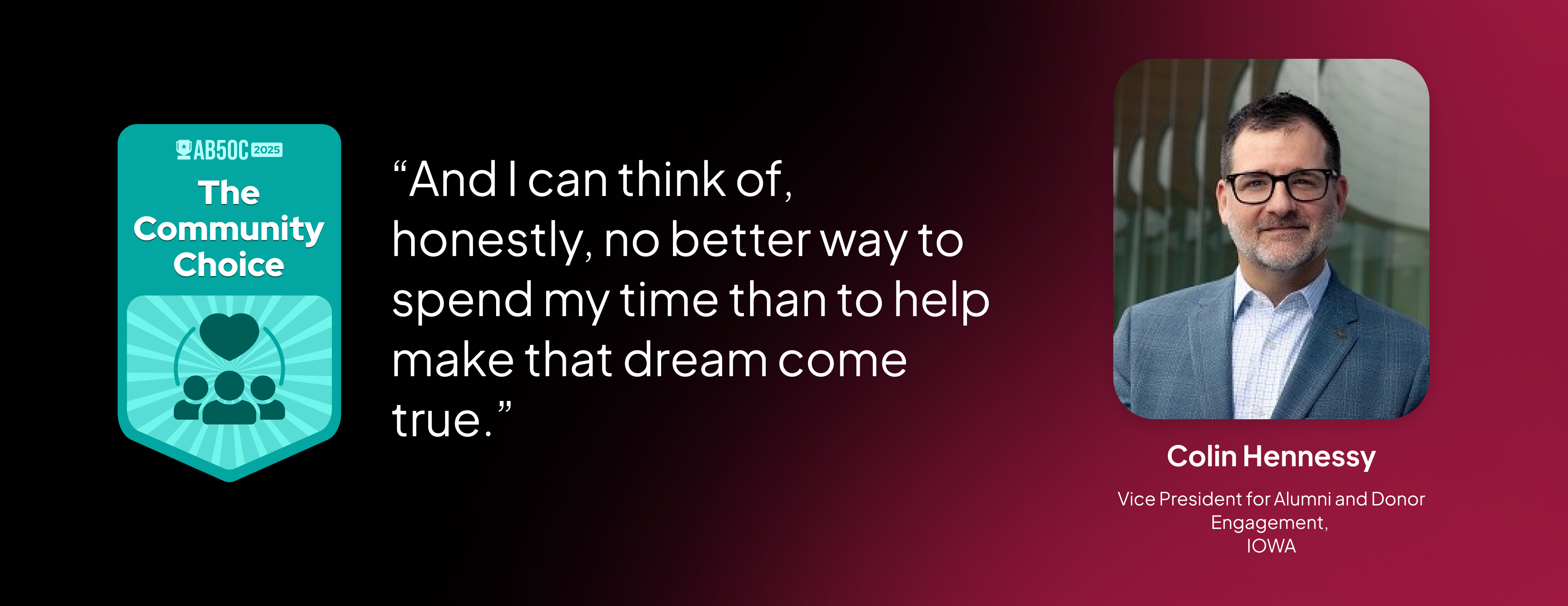
Why He’s an AB50C Champion
From leading a team of nearly 90 professionals at the University of Iowa Center for Advancement to championing the idea that alumni engagement deserves a place alongside philanthropy, Colin Hennessy is helping rethink what a successful advancement campaign looks like.
His approach is rooted in a simple but powerful belief: every person who loves an institution should have a way to be part of its story, whether or not they make a financial contribution.
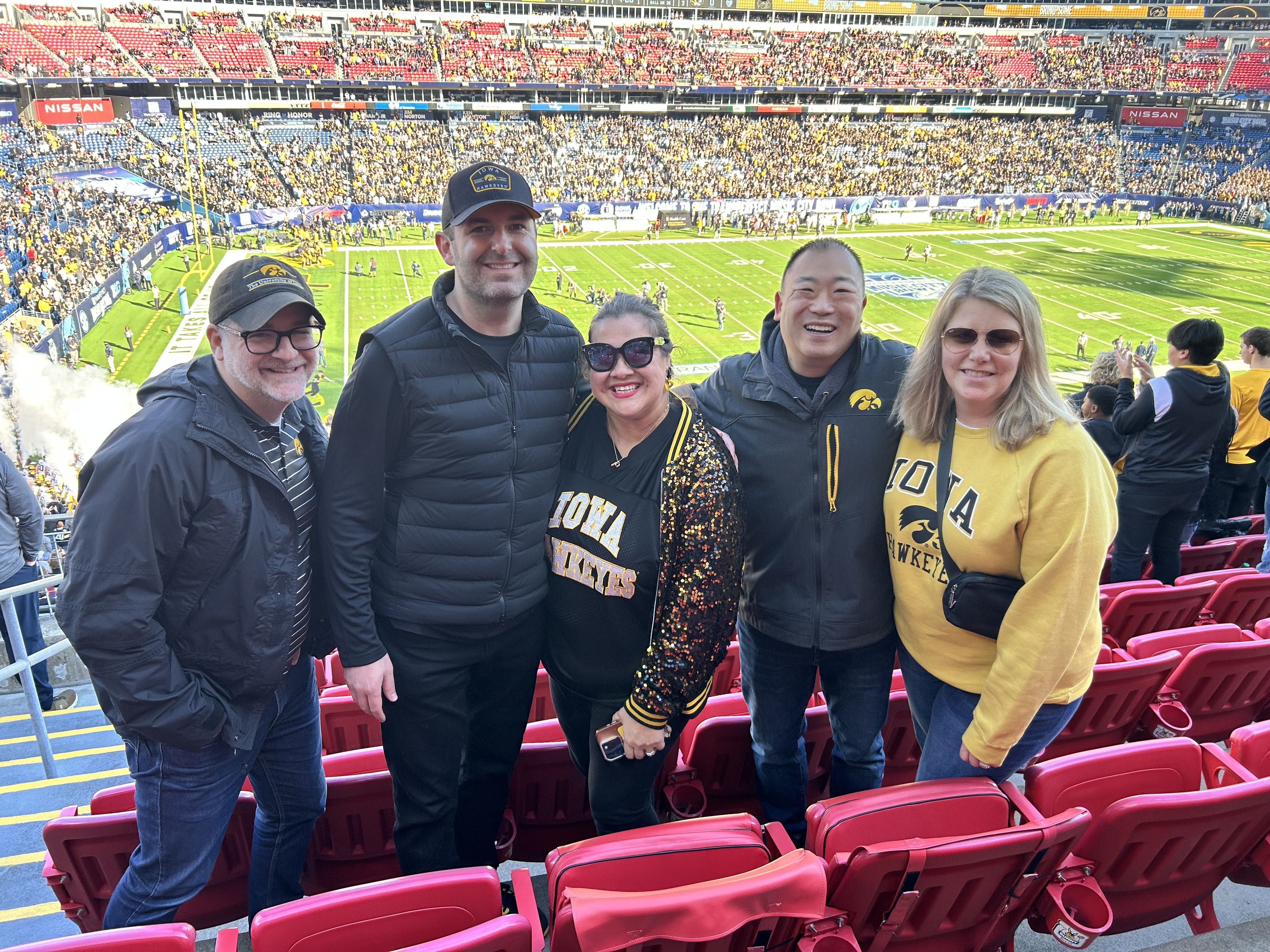
As Vice President of Alumni and Donor Engagement, Colin is helping put that belief into practice through the Together Hawkeyes campaign, where engagement is more than a supporting act. It's a central part of the mission.
Beyond the Title
Sometimes, the people who find their way into advancement aren't looking for a career in fundraising at all. Sometimes, all it takes is a conversation in a parking lot with someone who knows you better than you know yourself.
For Colin, that person was his twin sister.
At the time, Colin was working in IT, having studied communications and spent years working across technology and different sectors. Outside of work, he volunteered on the fundraising committee of his local public library, an organization that meant a lot to him and his community.
He enjoyed the work. He cared about the cause. But he hadn't quite connected the dots.
Then his sister did.
As they stood in a parking lot, Colin was trying to figure out what he wanted to do next. His twin sister suggested something he hadn't seriously considered before:
“You'd make a pretty great fundraiser for a college or university.”
That conversation changed the direction of his career.
Today, Colin leads a team that brings together annual giving, alumni relations, marketing and communications, donor engagement, stewardship, and events. It's a role that involves big-picture strategy, people management, and plenty of problem-solving along the way.
But beneath all those responsibilities is a common thread: helping people find meaningful ways to connect with an institution that matters to him and to them.
And perhaps the best part? After years of working across different institutions and roles, Colin has found his way back to where his fundraising career first began.
What Winning AB50C Meant to Him
When Colin received the AB50C Community Choice Award, he felt humbled, pleased, and excited. But what made the recognition particularly meaningful was where it came from.
For him, recognition from peers carries a different kind of weight. It validates the work he enjoys doing and the direction in which he's trying to move the field.
A significant part of that work involves integrating engagement metrics into comprehensive campaigns. Rather than treating engagement as something separate from fundraising, Colin is helping make it an integral part of how institutions define and pursue campaign success.
And seeing other institutions look to the University of Iowa's approach as a potential model has been especially gratifying.
The award, he felt, accurately reflected the work his team is doing. It was an acknowledgment that the conversation around advancement is expanding and that engagement deserves to be part of it.
For someone who believes that everyone should have a place in their institution's story, having that philosophy recognized by the wider community is a meaningful milestone.
Finding His Way into Advancement
Colin's path into advancement wasn't planned. In fact, he spent roughly a decade working in technology before making the move into fundraising.
After studying communications as an undergraduate, he worked in local government IT and later for a global company, helping implement technology across different sectors, including healthcare.
Alongside his professional work, however, he had discovered something he genuinely enjoyed: raising money for causes he cared about.
Volunteering with his local public library's fundraising committee gave him a glimpse of what fundraising could be. He liked the idea of helping an organization he believed in secure the resources it needed to serve its community.
His sister's suggestion helped him recognize that this could be more than volunteer work. It could be a profession.
In 2008, Colin took his first paid fundraising role at the University of Iowa, working on the annual giving team. His responsibilities included creating letters, emails, and other communications inviting alumni to make a gift.
A year later, he moved to the University of Pennsylvania in Philadelphia, where he spent almost a decade leading a team responsible for raising approximately $40 million annually. He subsequently moved to the University of Chicago, where he led an even larger team, before eventually returning to Iowa.
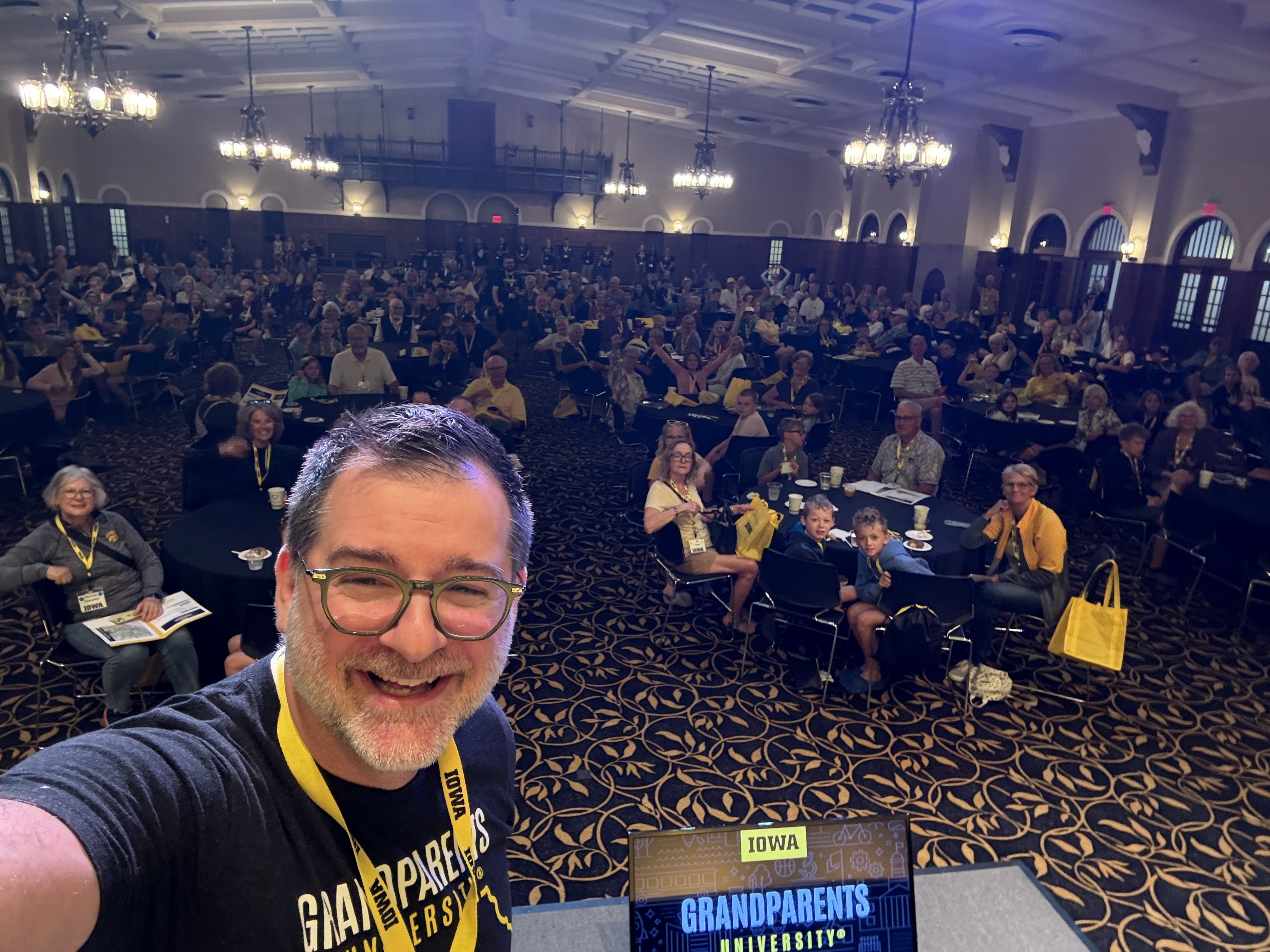
Today, as vice president of alumni and donor engagement at the University of Iowa Center for Advancement, Colin leads a group of approximately 90 people when fully staffed.
The team spans multiple functions, from annual giving and alumni relations to marketing, communications, stewardship, and events. Together, they help shape the strategy and execution of the university's comprehensive campaign, specifically its ambitious engagement goals.
Looking back, his journey is a reminder that the skills we develop in one field can lead us somewhere entirely unexpected. Sometimes, the experience we gain outside advancement becomes exactly what we need to approach its challenges differently.
After nearly two decades in advancement, Colin still gets energized by one thing: helping people grow. Whether he's teaching at the CASE Summer Institute for Educational Fundraising, serving on the Board of Directors for the Council for Alumni Association Executives, writing and speaking about the profession, or trading ideas with fellow Big Ten advancement leaders, he values the chance to learn from and invest in others.
Advancement is a profession built on relationships, and Colin believes some of the most meaningful relationships are the ones we build with colleagues. There's something special about helping spark an idea, encourage a new approach, or support someone's growth, knowing they may one day help shape the future of the profession themselves.
The Work That Matters
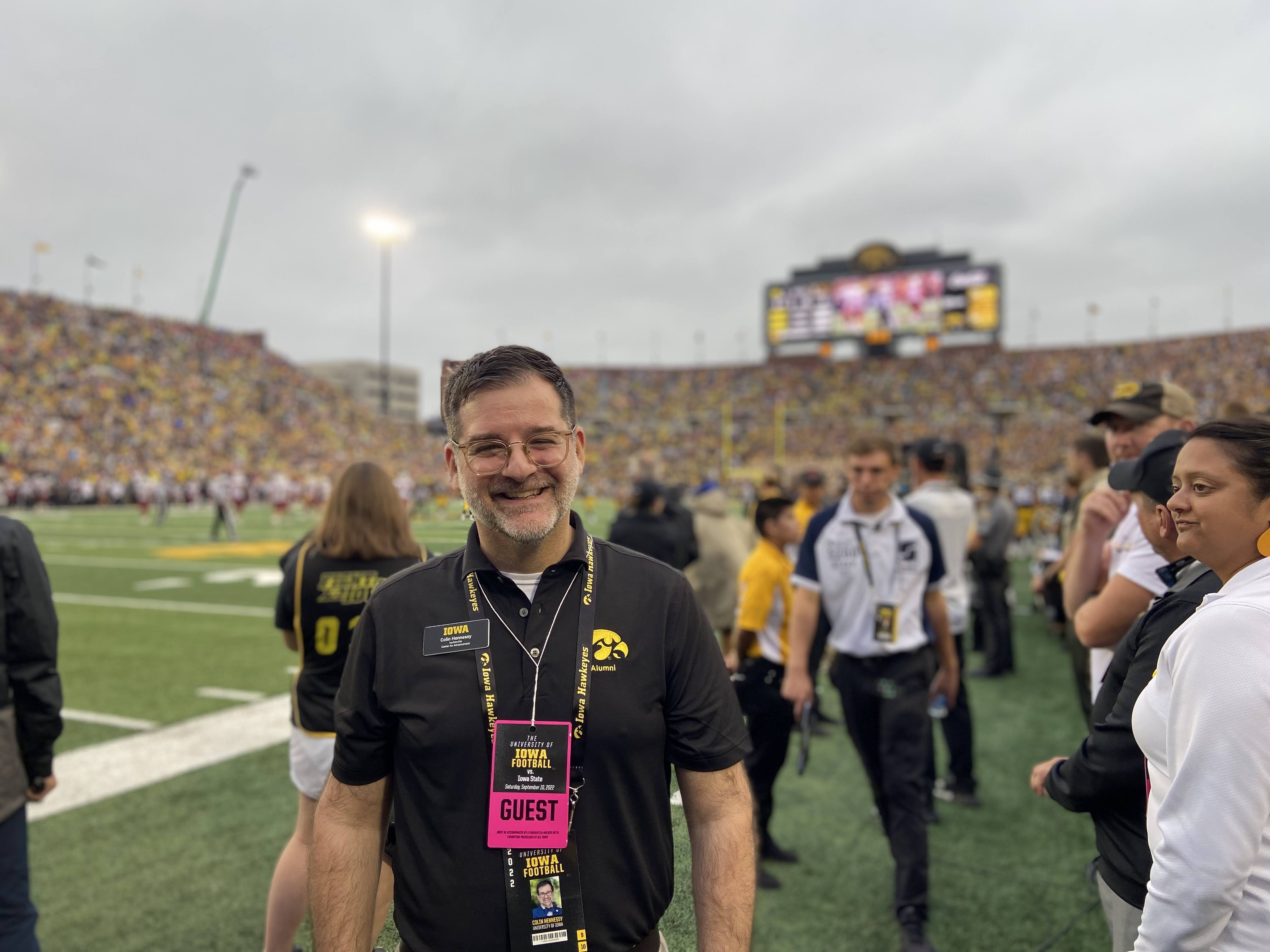
Ask Colin what gets him out of bed in the morning, and the answer isn't a campaign target, a fundraising milestone, or a leadership responsibility. It's the transformative power of education.
He believes deeply that education changes lives, not just for the students who receive it, but also for their families and communities.
He often comes back to the example of a student from a rural Iowa farming family who might not have been able to attend the University of Iowa without a scholarship supported by Giving Day.
For that student, a gift is more than a number in a campaign report. It's an opportunity to pursue an education, build a different future, and bring that opportunity back to their community.
Colin also points out that one in five University of Iowa students is the first in their family to attend college. For these students, the impact of education can extend well beyond their own lives.
As he puts it:
“I can think of, honestly, no better way to spend my time than to help make that dream come true.”
It's this connection between the work advancement teams do and the lives they help change that keeps him going, even on days filled with meetings and challenges that seem difficult to move forward.
For Colin, the real purpose of advancement is never far from the people it serves.
An Initiative He Is Proud of: Making Engagement Part of the Campaign
One of the initiatives Colin is particularly excited about is the University of Iowa's Together Hawkeyes campaign, the largest campaign in the history of the state of Iowa.
While the campaign has an ambitious financial goal, what makes it especially meaningful to Colin is the emphasis it places on engagement.
The idea is straightforward: everyone who loves the university should have a way to participate, regardless of how much money they can give.
That could mean attending an event, volunteering, engaging with social media content, or finding another way to stay connected to the Hawkeye community.
As Colin explains:
“Every person, regardless of their financial contribution, who loves this university, can be a part of this campaign.”
That belief challenges the idea that participation in a campaign must begin with a donation.
Of course, fundraising remains an important goal. But Colin is equally excited about creating opportunities for people to feel welcomed, included, and invested in the institution's future.
The campaign is also about what those contributions make possible. It supports faculty discovery, opens doors for students, and helps advance work addressing some of the world's most difficult challenges.
For Colin, the campaign isn't about reaching a number simply for the sake of reaching it. It's about what the university can do with the resources and community support it brings together.
And by making engagement goals a central part of that effort, the campaign offers a different way to think about participation and impact.
What makes this approach particularly interesting is that engagement isn't simply a means to an eventual gift. It is also an outcome worth pursuing in its own right.
AI: Making More Room for the Human Side of Advancement
Colin is thinking about how artificial intelligence can help advancement teams work smarter, particularly when it comes to repetitive, time-consuming tasks.
His approach is to identify work that can be automated and use AI to take some of that burden off employees. This could free up time for the work that requires human judgment, creativity, and relationship-building.
He's also thinking beyond immediate efficiencies. What might the future of advancement look like if AI could help answer questions from people visiting an institution's website, for example, without requiring someone to monitor every interaction?
At the same time, Colin believes institutions need to be thoughtful about adopting new technology. Rather than rushing toward every new tool, he sees value in observing, learning, and figuring out how emerging technologies can best support the work.
Because there are parts of advancement that technology simply cannot replicate.
He describes meeting an alum who attended Iowa 65 years ago, sitting together over coffee, and listening to their memories of arriving on campus for the first time. He also thinks about a young parent bringing their child to a university event in a little Hawkeye onesie, eager to connect with others who share their love for Iowa.
These are the moments that make relationships real.
As Colin puts it:
“AI will never be able to replace that.”
For him, the opportunity isn't to replace human connection with technology. It's to use technology thoughtfully so that advancement professionals have more time to create those connections.
The goal is to combine the best of what technology offers with the best of what people bring to the table.
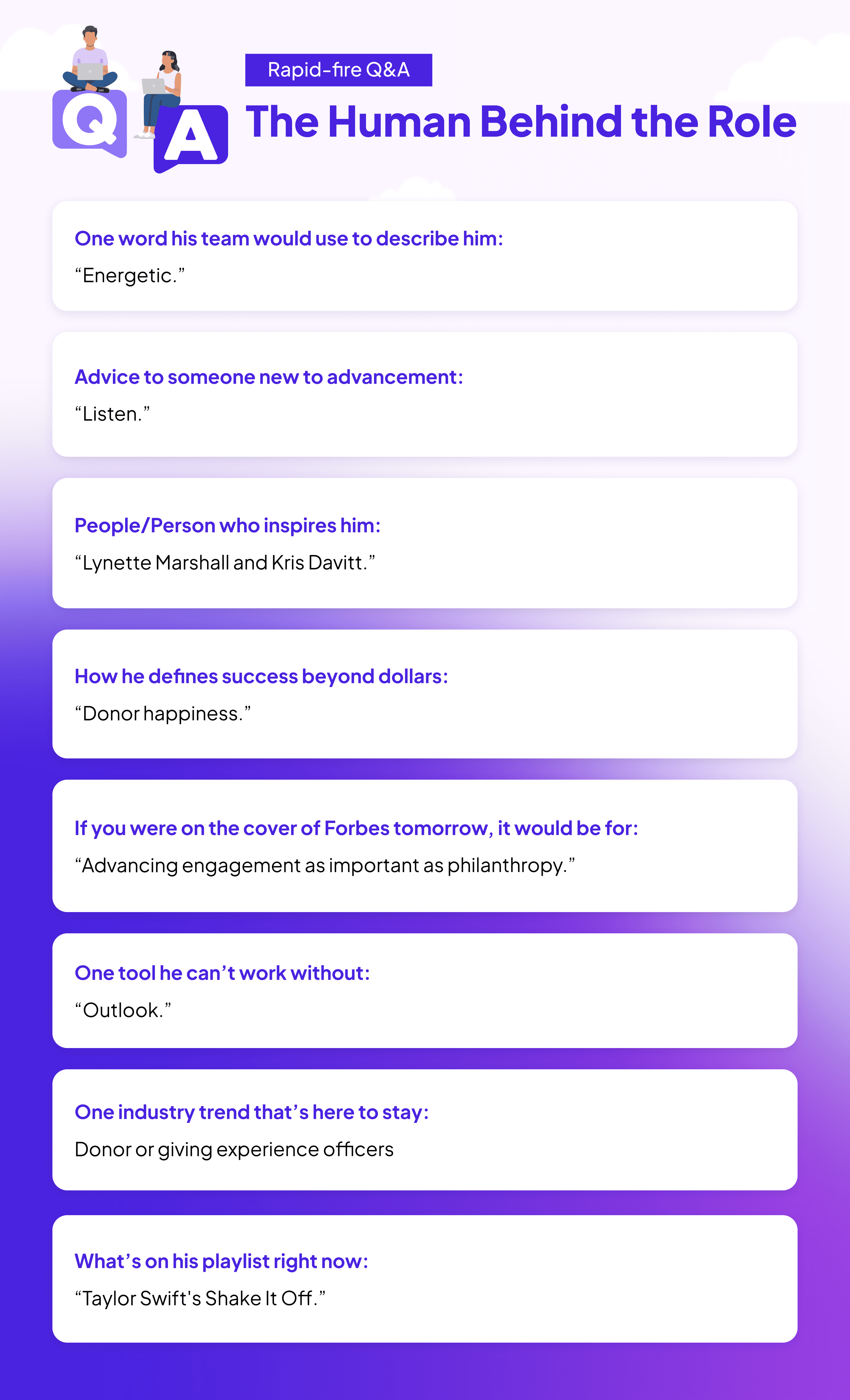
Rapid Fire
Where It All Comes Together
Advancement is often discussed through fundraising totals, campaign milestones, and the dollars that make institutional ambitions possible. But Colin's story reminds us that there's another part of the equation: the people who make up the community behind those numbers.
His journey began with a volunteer role at a local public library and a conversation with his twin sister. Years later, it has led him back to the University of Iowa, where he is helping shape a campaign that recognizes the many ways people can contribute to an institution they love.
Whether it's a student whose future is made possible by a scholarship, an alum reconnecting with the university over coffee, or a family attending their first campus event, these moments are part of what makes advancement meaningful.
And as technology continues to change the way institutions work, the challenge will be to use those tools to make room for more of these moments, not fewer.
Because giving matters. But so does showing up, staying connected, and feeling that you belong.