Are you a liberal arts institution looking for ideas to boost fundraising at your fiscal year-end Giving Day? Here are 5 strategies to help you drive year-end gifts & engage donors at your upcoming Giving Day campaign.
.avif)
More than a year after the pandemic had taken the world by storm, 2021 proves to be a challenging year ahead for liberal arts colleges across the country. The resulting disruption has caused advancement teams from institutions to rethink their programming and find unique ways to engage alumni and donors. With the end of the fiscal year already here, now is the right time for advancement teams to start thinking about ways to drive end-of-year gifts.
.jpeg)
Without further ado, here are 5 of our curated Giving Day tips, which can help increase those donation numbers significantly as we near the end of the fiscal year.
It's always a best practice to start promoting your Giving Day as early as possible and build-up to the day of the event. While inviting your alumni to campus is not exactly a viable option at the moment, social media is an excellent channel to engage with your community and build momentum. Countdown posts on social media are also a great way to spread the word.
Instead of merely creating posters or event notifications at intervals like, say, 15, 10, and 5 days before the , think of ways to incentivize donors to participate. For instance, along with every countdown post, you can also share testimonials of past donors on social media. Seeing a friend believe in your institution’s cause can be a strong motivator for more alumni to donate.
Alternatively, you can come up with a trendy social media campaign, which can help your event gain traction and virality on social media channels.

A great way to engage with your donors is to invest in developing and nurturing a personal relationship with them. The end of the fiscal year is an ideal time for your institution to start building and growing an online community that your constituents can benefit from.
While an online community is great for driving engagement, not all potential donors will react the same way to your fundraising asks. For instance, an alum who's been working as an investment banker for 10 years might be more receptive to your fundraising ask than a young alum who's just graduated college and is still reeling under the pressure of repaying his student loan.
Personalizing your fundraising asks ahead of your Giving Day plays a crucial role in building a unique connection with each constituent and paving the way for lasting relationships. We loved how Archbishop Riordan High School's 2017 campaign encouraged alumni to contribute towards improving their school campus.
Use dynamic segmentation to segregate your constituents based on class year, location, donation history, interests, etc. and personalize your emails right from the first message to the final thank you.

While we are nearing the end of another fiscal year, we are nowhere near the end of the pandemic that has forced us to reinvent the wheel. The situation we find ourselves in isn't exactly conducive for hosting in-person events. However, virtual events are all the rage right now, and the right idea and execution might just make an ordinary event extraordinary.
Over the last year, we have seen many exemplary virtual events that were executed by various institutions, both big and small.

Many institutions have seen a steady rise in participation at virtual events because they're easily accessible irrespective of location or time. Virtual events, therefore, can help you tap into a wider network of donors and be a valuable addition to your marketing plan during the end of the fiscal year.

As online engagement becomes pivotal for a successful Giving Day campaign, it is equally important to make the best use of the channels at your disposal. Social media is the ideal place to meet and connect with new people, with platforms like LinkedIn and Facebook enabling you to explore potential donors. Calvert Hall College's picture slideshow on Facebook went viral which helped them boost their fundraising campaign.
While you may already be connected with some of your donors on shared groups, use the network of your existing supporters to influence new donors. In addition to social media, emails and personal one-on-one calls are popular channels employed by most institutions for fundraising asks.
In case you feel ghosted by your alumni, having the right strategy in place might help ensure that your ask never goes unacknowledged.

Now that you have done your bit to promote the campaign, how can you leverage your supporters to maximize the impact? Your donors are the ones who can carry your fundraising campaign forward by spreading the word through their networks.
You can find ways to make social sharing easy for donors and create more incentives for them to influence others in their network. For example, encourage your supporters to broadcast and share their contributions on social media. Offer them a customized template and prompt them to share this message on social media right after they've completed a gift.
You can also create a filter for Instagram or Facebook that donors can apply to their profile photos. Seeing their peers support their alma mater's cause can act as a strong driving factor for other constituents to contribute to the same cause. Here are other ways to build stronger online communities in today's times.
Gamification techniques like leaderboards, challenges, and tributes are additional great ways that help invoke a healthy sense of competition amongst various constituent groups and hence amplifying the impact of gifts during your Giving Day.

We understand how planning and executing a successful Giving Day can be a nightmare for people behind the scenes. We hope that this article gives you some inspiration for your fiscal year-end Giving Day in 2021.
Subscribe
See how modern advancement teams bring alumni engagement and fundraising together.
Plan faster. Execute better
Explore free templates designed for alumni and fundraising teams.
.png)

.avif)
These are both exciting and nervous times for Liberal Arts Colleges in the United States as they go through a tremendous transformation in the way they approach, engage, and stay connected to their alumni. The pandemic almost makes it look like the world has hit the pause button but, for alumni relations professionals who have invested years in building meaningful relationships with their alumni, putting everything on hold is not an option.
Alumni Relations teams at Liberal Arts Colleges are going above and beyond to keep delivering value to their communities with incredibly creative digital engagement strategies. As we looked at the data based on strategies adopted by Liberal Arts Colleges in 2020 so far, we were able to put together some emerging trends.
While the future is still volatile and the long-term impact of the pandemic is highly debatable, here’s a closer look at the 5 emerging trends at Liberal Arts Colleges that are here to stay.
Events have always been at the heart of any alumni engagement program at Liberal Arts Colleges but COVID-19 completely transformed the way events are now being approached. As strict social distancing measures make it impossible to host in-person events, the pandemic paved the way for virtual events. A majority of institutions have already adopted this new format and hosted a slew of successful virtual events for their alumni.

While Alumni Relations teams at Liberal Arts Colleges may be embracing the shift to virtual events, most of these institutions are apprehensive about going fully virtual while planning their events calendar for this year. Some feel that virtual events can never substitute the feeling that alumni share at in-person events and also are apprehensive about security concerns such as Zoombombing. However, this new world order is gradually prompting many teams to think differently and explore all options.
So, while Liberal Arts Colleges might not shift to virtual only, 2020 is definitely going to see a lot of them. And, as institutions continue to experiment, events strategy, going forward, will most likely be a combination of both virtual and in-person events - the best of both worlds.

As virtual engagement strategies open up new avenues, Liberal Arts Colleges are now able to tap into a wider network of alumni. A large part of traditional alumni engagement strategies involved trying to get alumni back to campus for reunions, homecomings, or chapter meetings. Going to campus for these occasions was only possible for alumni who lived in the vicinity or had enough resources to travel from afar to attend. This way, a large segment of alumni were left unengaged.
However, with the adoption of digital engagement methods such as emails, social media, online communities, and virtual events, Liberal Arts Colleges no longer face this challenge.
Liberal Arts Colleges are now able to target alumni living miles away from their campus and invite them for a virtual reunion or homecoming. They can also easily stay connected to their younger alumni via social media, rally more support for their virtual events or giving campaigns, and build a loyal community online. Alumni relations teams will now see newer alumni that have never engaged in the past start to engage.
As a consequence of the pandemic, we saw countless fundraising campaigns getting postponed and cancelled but, on the other side, we also witnessed millions of people expressing their generosity on the global day of unity and giving - #GivingTuesdayNow. While most of the initial fundraising campaigns amidst the pandemic were student emergency campaigns or appeals that urged alumni to donate in kind, this seems to change as we move into the latter part of 2020.

Sure, institutions will still be apprehensive about asking their alumni to donate money but, that doesn’t mean that fundraising will be halted altogether. Here are the 3 major changes in the way Liberal Arts Colleges will fundraise going forward:
1. As things slowly resume to normalcy, fundraising will pick up the pace with one major change - it is not going to be as aggressive as it used to be.
2. As millions of people face pay cuts and undergo furloughs due to the economic crisis at hand, Liberal Arts Colleges will prioritize cultivating relationships and providing value to its community over chasing short-term fundraising goals.
3. Liberal Arts Colleges will continue to garner monetary support from their alumni but, the intent will change. 2020 and the future will see institutions urging their communities to come forward in order to support their alma mater and help them raise money to power through the economic crisis.
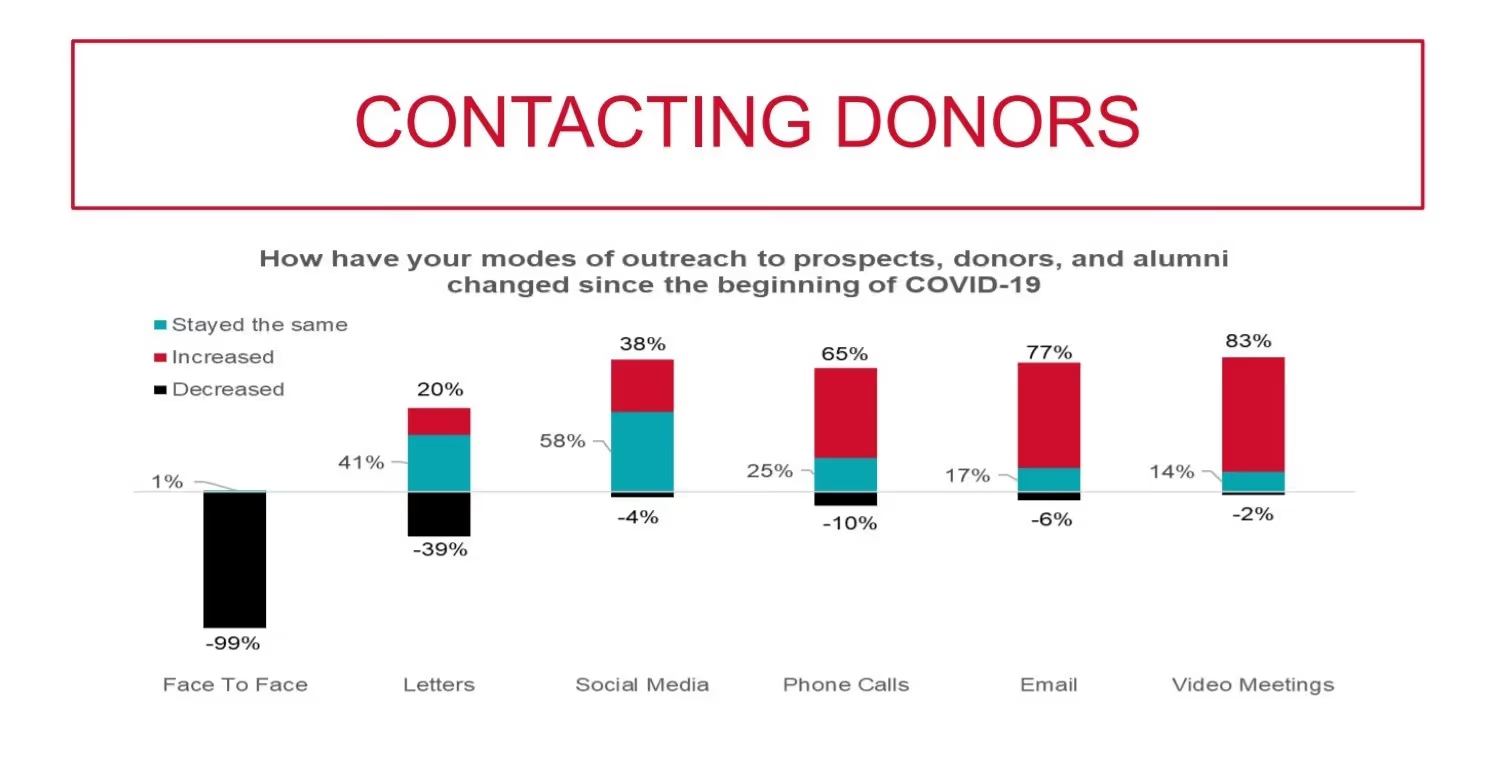
With the approach to fundraising changing, the outcomes will too. The economic impact of COVID-19 will leave a devastating impact on the total dollars raised but, as Liberal Arts Colleges continue to ramp up engagement & value-add services, relationships will grow stronger. While these loyal supporters may not be able to contribute big, institutions will see a rise in participation and the number of volunteers.
Traditional ways of adding value to alumni included organizing local mixers, career networking events, and workshops on campus but social distancing measures have put an end to all of these in-person activities. As Liberal Arts Colleges strive to keep their alumni digitally engaged and informed, closed affinity groups and online communities play a critical role.
Many Liberal Arts Colleges are adopting creative strategies to drive participation amongst these close-knit affinity groups and encouraging alumni to get more deeply involved. With recent reports showing over 21 million Americans as unemployed, industry based affinity groups will see a massive spike with alumni counting on their peers to navigate the tough job market.
The pandemic has also wreaked havoc on the United States’ mental-health system as the country witnesses a historic wave of mental health problems approaching. While the social distancing norms are creating a lot of mental health challenges, the dire situation of the economy is adding to that stress. Liberal Arts Colleges realize the immense need for alumni to connect virtually to get through these testing times, as a community.


Prior to COVID-19, a lot of Liberal Arts Colleges measured alumni engagement based on a set of parameters such as in-person event attendance or volunteer participation. With the pandemic forcing these colleges to function completely virtually since the past 5 months, engagement metrics have changed.
As alumni outreach initiatives shift to the virtual format, Liberal Arts Colleges are rapidly evolving to measure the outcome of each of these initiatives accurately.
The Liberal Arts Colleges that previously reached out to their alumni once a month via a monthly newsletter, have now ramped up the frequency. Colleges that were inactive on social media now take to Facebook live to announce an upcoming virtual event or a giving campaign. Liberal Arts Colleges are adopting tons of creative ideas to get accustomed to the new normal. Here are some of the virtual engagement metrics that will no longer be ignored:
1. Virtual event attendance
2. Email opens & click-through rates
3. Social media impressions, likes, and shares
4. Volunteer participation measured via online requests
5. Digital donors
.avif)
5 emerging Alumni Relations Trends at Liberal Arts Colleges
Lorem ipsum dolor sit amet, consectetur adipiscing elit. Suspendisse varius enim in eros elementum tristique. Duis cursus, mi quis viverra ornare, eros dolor interdum nulla, ut commodo diam libero vitae erat. Aenean faucibus nibh et justo cursus id rutrum lorem imperdiet. Nunc ut sem vitae risus tristique posuere.
If you’re involved in fundraising efforts for your school, chances are you’ve already been hearing a lot about Giving Days. With this year’s #GivingTuesday i.e. December 3rd fast approaching, it’s likely you won’t stop hearing about it any time soon.
.avif)
Giving Day was first introduced in 2012 and has since helped institutions around the world boost their fundraising efforts tremendously. A well-planned Giving Day can entirely transform your fundraising approach by helping you acquire new donors, enrich the giving experience, and instill a culture of giving in your constituents.
However, the success of a Giving Day depends not only on planning but equally on its promotion. While there are many ways to promote Giving Days, in this blog post, we’re looking at the 8 most effective ones that have helped our customers achieve Giving Day success.

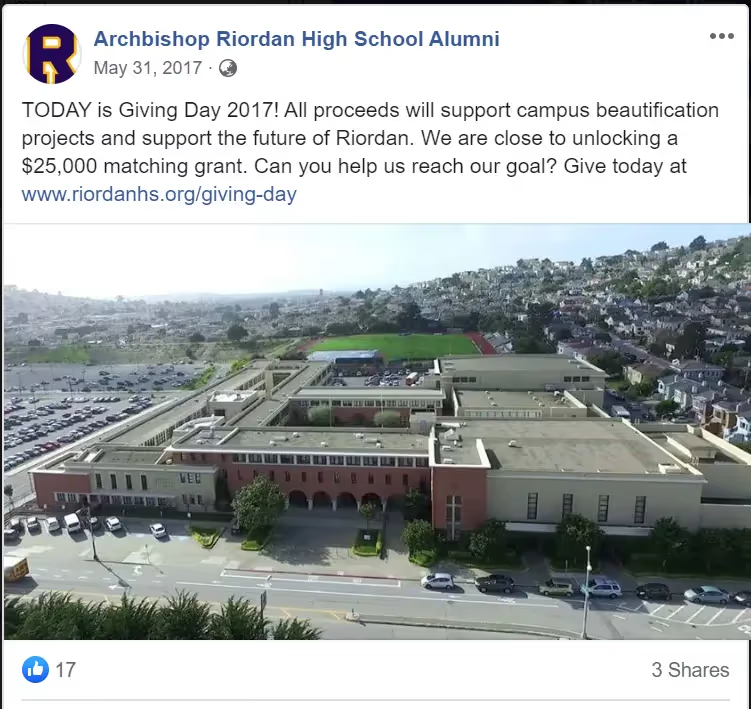
One of the best means for influencing donors is by carefully selecting a cause that they relate to and would most likely contribute towards. Making donors believe in your cause is pivotal to your fundraising efforts. Here’s how Archbishop Riordan High School targeted its alumni by asking them to contribute towards campus improvements.
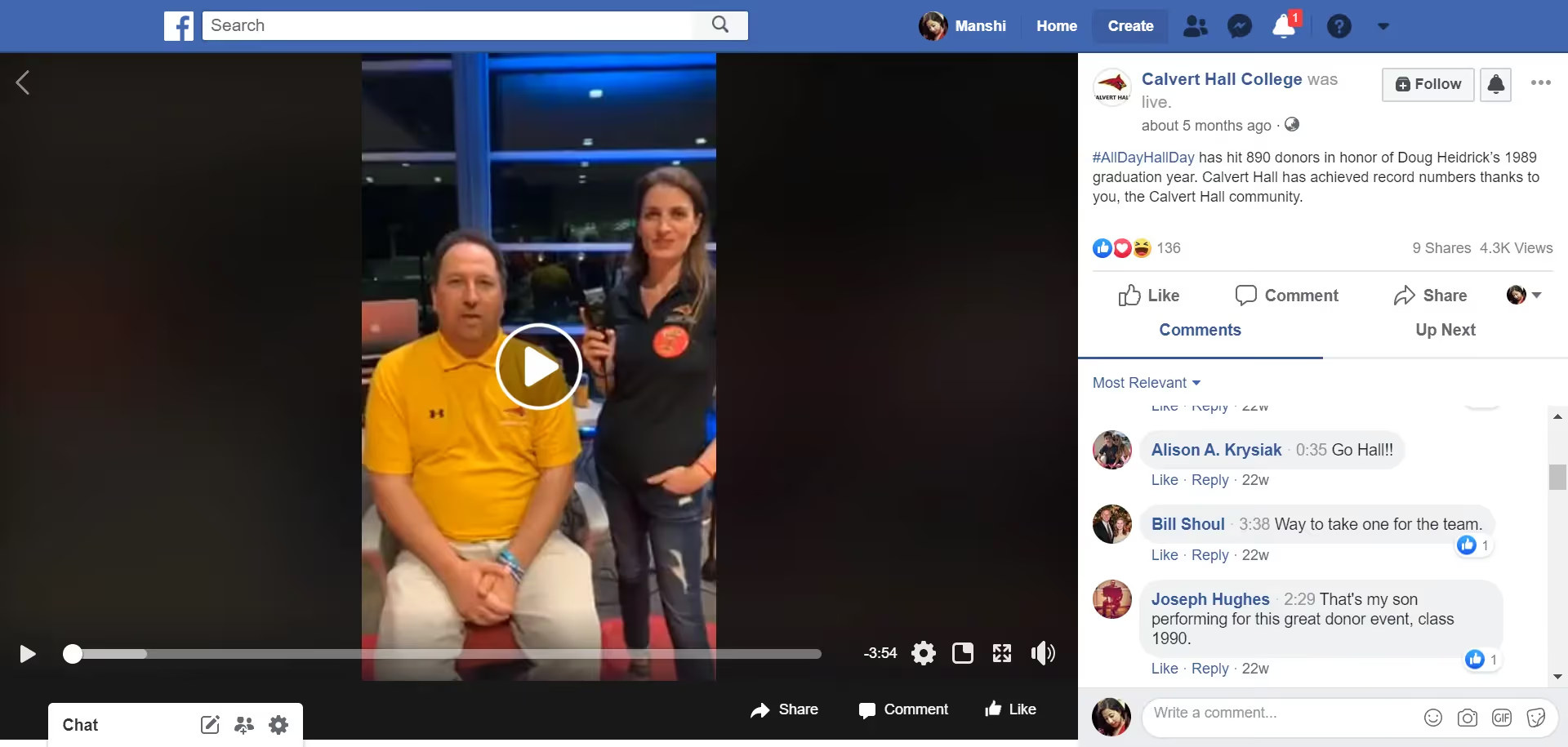
If you’re on social media, you obviously know how hashtags can boost your marketing efforts. While #GivingTuesday is a generic hashtag that almost everyone follows during the Giving season, creating a unique hashtag, relevant to your cause is highly recommended. Using your own unique hashtag makes it easier for your community to share your posts on their network, and for you to effectively monitor and further promote your social message. Calvert Hall College High School made great use of a unique hashtag. Check the full post here.
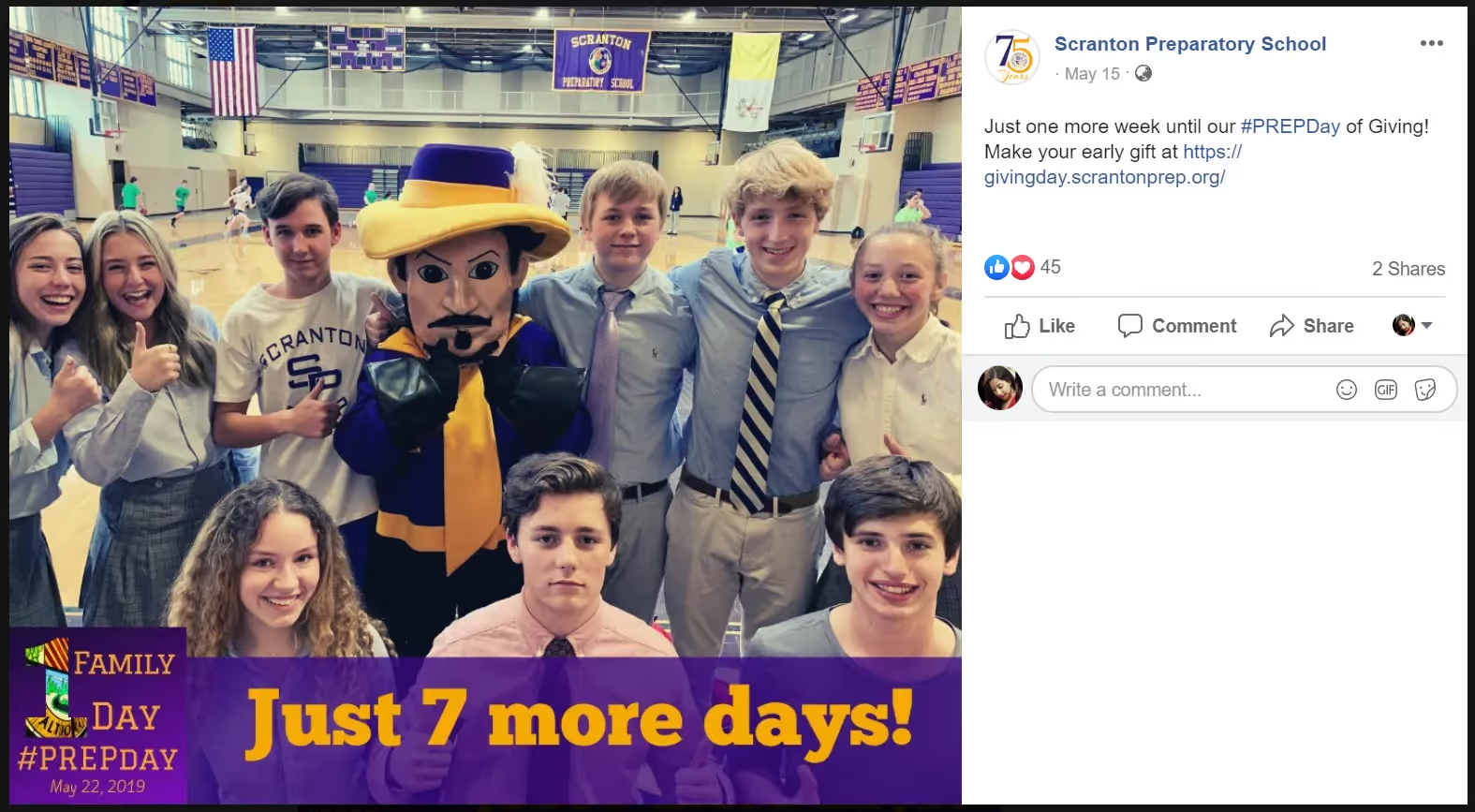
You might have seen a lot of people use countdown posts as a part of their social media marketing plan. They have proven to be highly effective as they help serve as constant reminders for the upcoming event and also arouse curiosity.
Here’s how Scranton Preparatory School got this right.
A great way to capture the attention of donors is to create opportunities that influence them to actively engage. Unlike fundraising campaigns that are run over a period of time, Giving Days provide an opportunity for your constituents to donate to your cause within a 24-hour time frame. Other than the sense of urgency already being created, any low-effort activities on your part can help channel your donors toward making a contribution.
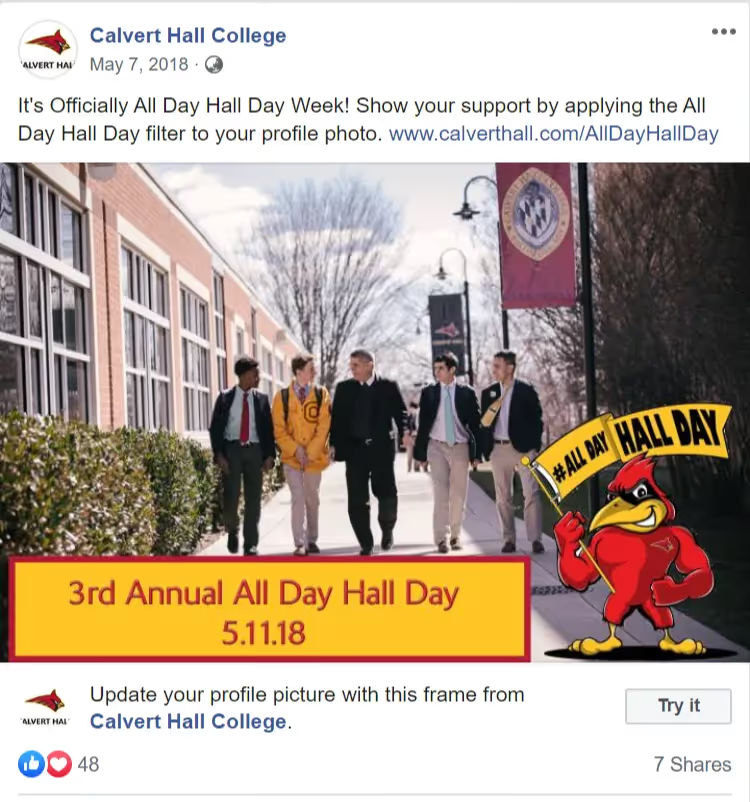
For the college’s 3rd Annual All Day Hall Day campaign, Calvert Hall College High School asked its followers on Facebook to show support by applying the All Day Hall Day filter to their profile pictures. Calvert Hall’s followers loved this approach and many took to applying the filter to their profile picture and pledging support to the Giving Day campaign. Here’s how Calvert Hall creatively provided an opportunity for its Facebook followers to actively engage & support the upcoming Giving campaign.
As of 2022, videos are undoubtedly the most powerful marketing tool.
People gaze five times longer at video than at static posts on Facebook & 71% of people have increased their online video viewing in 2018 alone.
As users on social media increasingly prefer the video format, it is a good practice to incorporate more videos in your Giving Day marketing strategy. Here are some ways in which schools have leveraged videos on their social media:
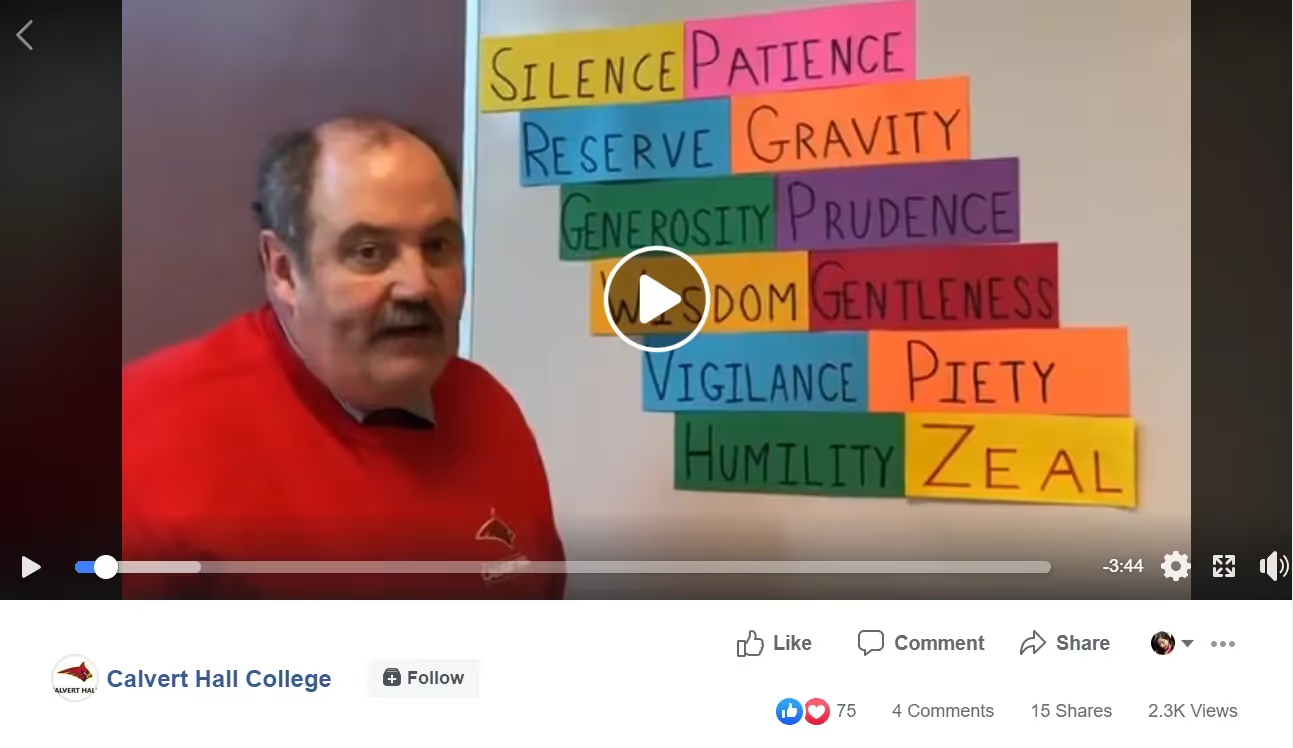
Creating a video that boasts of your school’s legacy is a great way of showing donors why their contributions matter. In this video, Calvert Hall College High School’s CAO/Director of Advancement, Joe Baker talks about all that Calvert Hall stands for and passionately urges donors to contribute to keep the tradition of the school intact. View the post here.
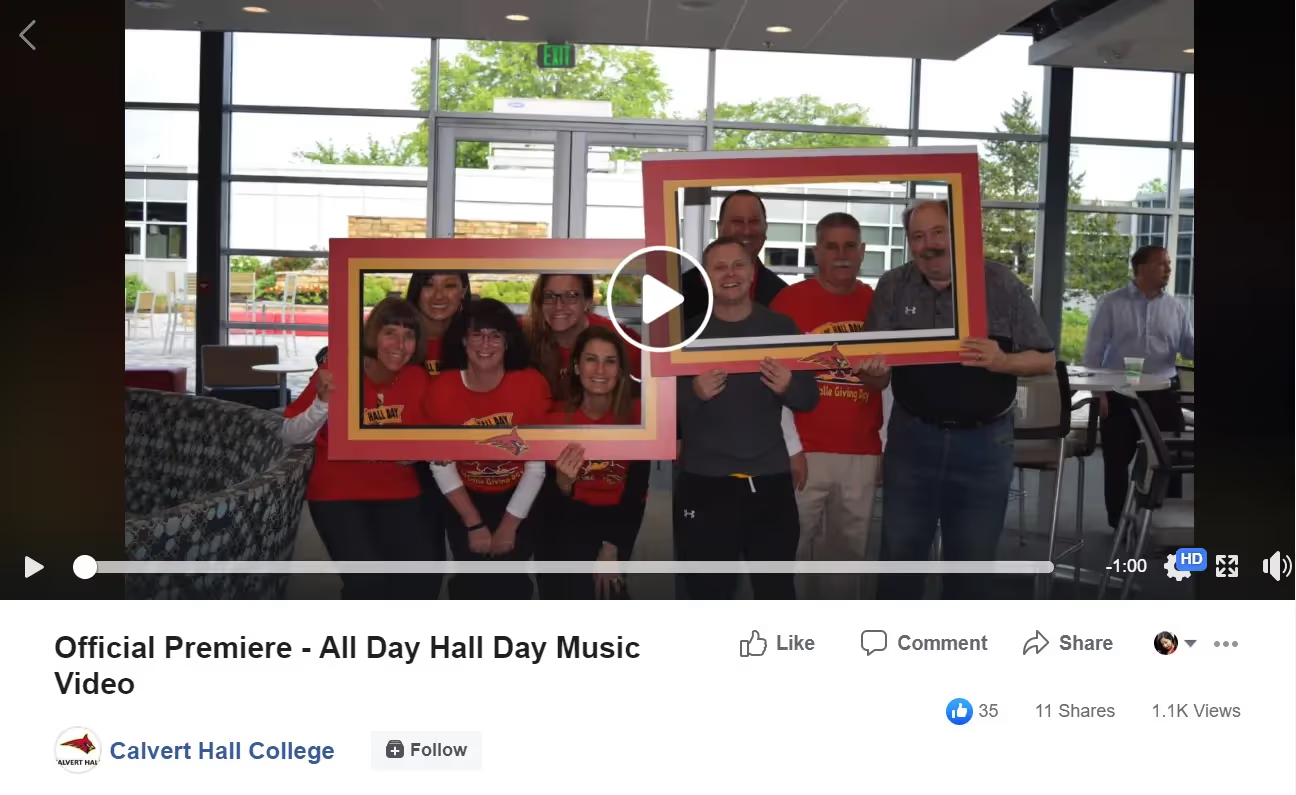
If you’re worried that a professional video might be too expensive or time-consuming, a simple slideshow video is the next best thing! Including pictures of students and faculty members clicked on-campus in the video can be a great way to influence participation from donors. Calvert Hall created an amazing music slideshow video for its 3rd All Day Hall Day giving campaign.
Going live on the day of the event is one of the most commonly employed methods to promote Giving Days. This helps donors view real-time progress and get an inside picture of the events and activities planned during the day.
According to SproutSocial, Facebook users spend 3X more time watching a live video than a pre-recorded one.
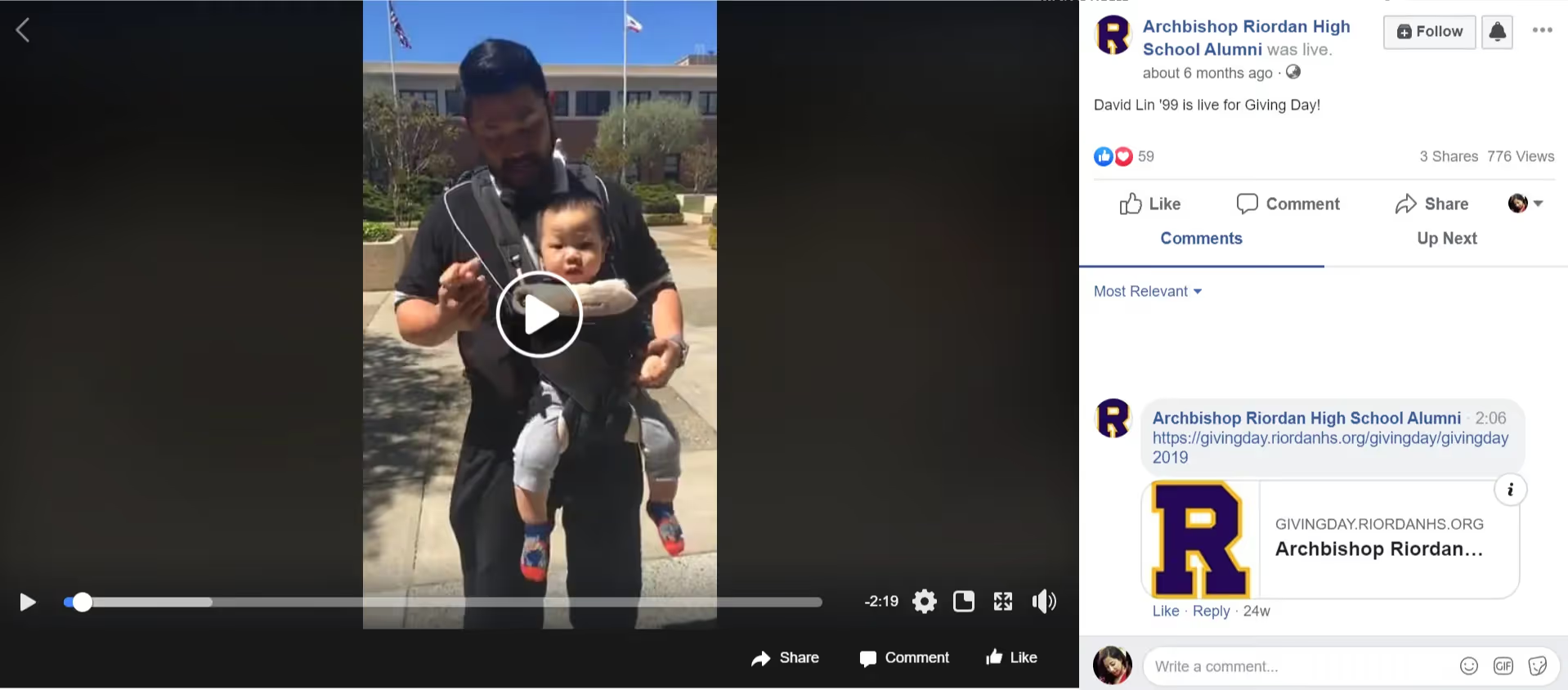
Here’s David Lin, Director of Boarding at Archbishop Riordan High School going live on the school’s campus, during 2019’s Giving Day campaign. View the post here.
When it comes to sharing updates about your giving day via videos, go beyond the usual formula of simply announcing these updates. Check out how Calvert Hall College High School created an awesome video, sharing updates from its 2018 All Day Hall Giving Day campaign.

The team responsible for running your giving campaign definitely deserves a special shout-out for their endless dedication and hard work. There’s no better way to do this than showcasing their efforts for donors to see. This creates a sense of gratitude and acts as a strong incentive for people to do their part by contributing towards a noble cause. Here again, Calvert Hall wins our hearts by creating a beautiful video dedicated to its passionate team members.
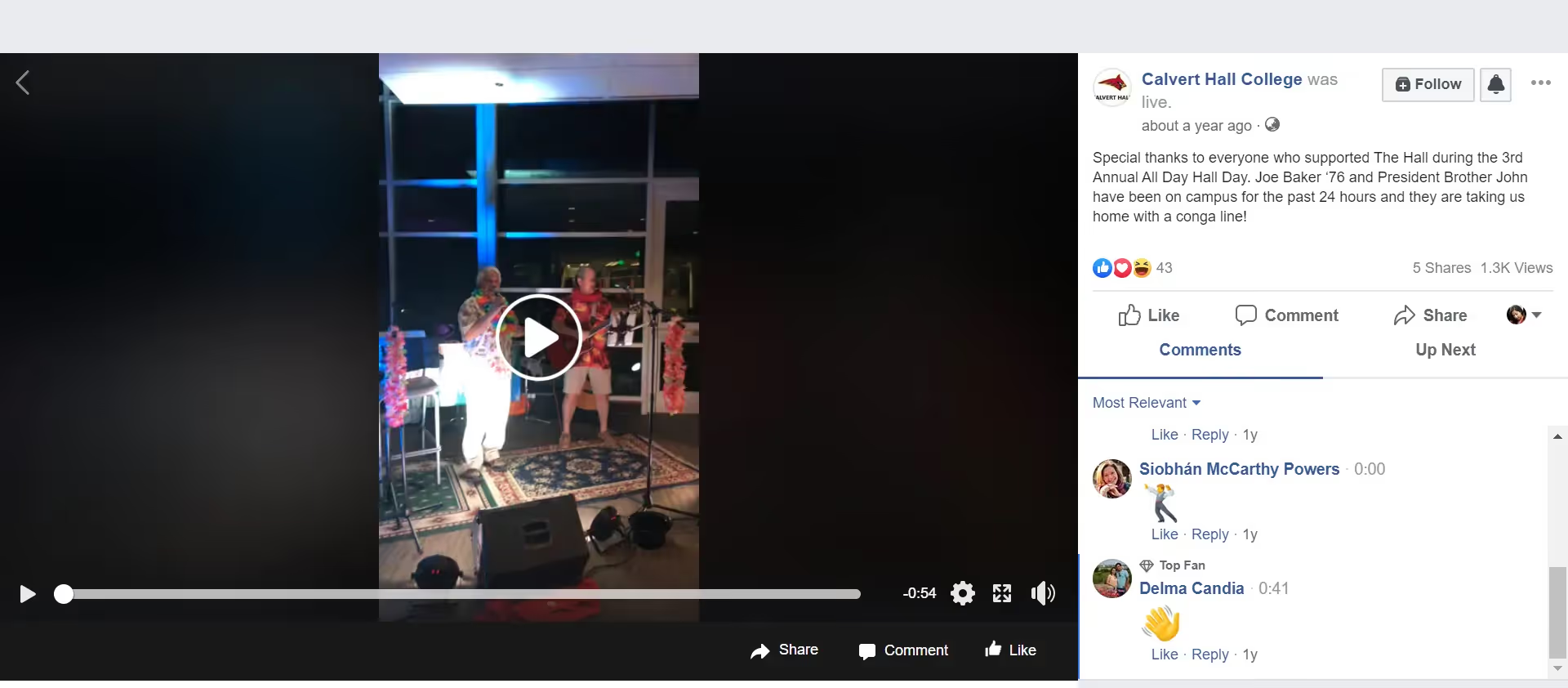
Email marketing continues to play a crucial role in the success of Giving Days for most schools.
Here’s a look at how email marketing has been leveraged by schools to boost Giving Day donations:
While schools start planning their Giving Days much ahead, why don’t a lot of them recognize the need to market their campaign in advance? From the initial announcement informing potential donors about the campaign right down to the thank-you email to all participants, every email must be well-timed and carefully crafted. At the same time, be careful not to overdo it by sending too many emails. Take a cue from Scranton Preparatory School’s immaculate planning for the school’s Giving Day 2022 campaign.
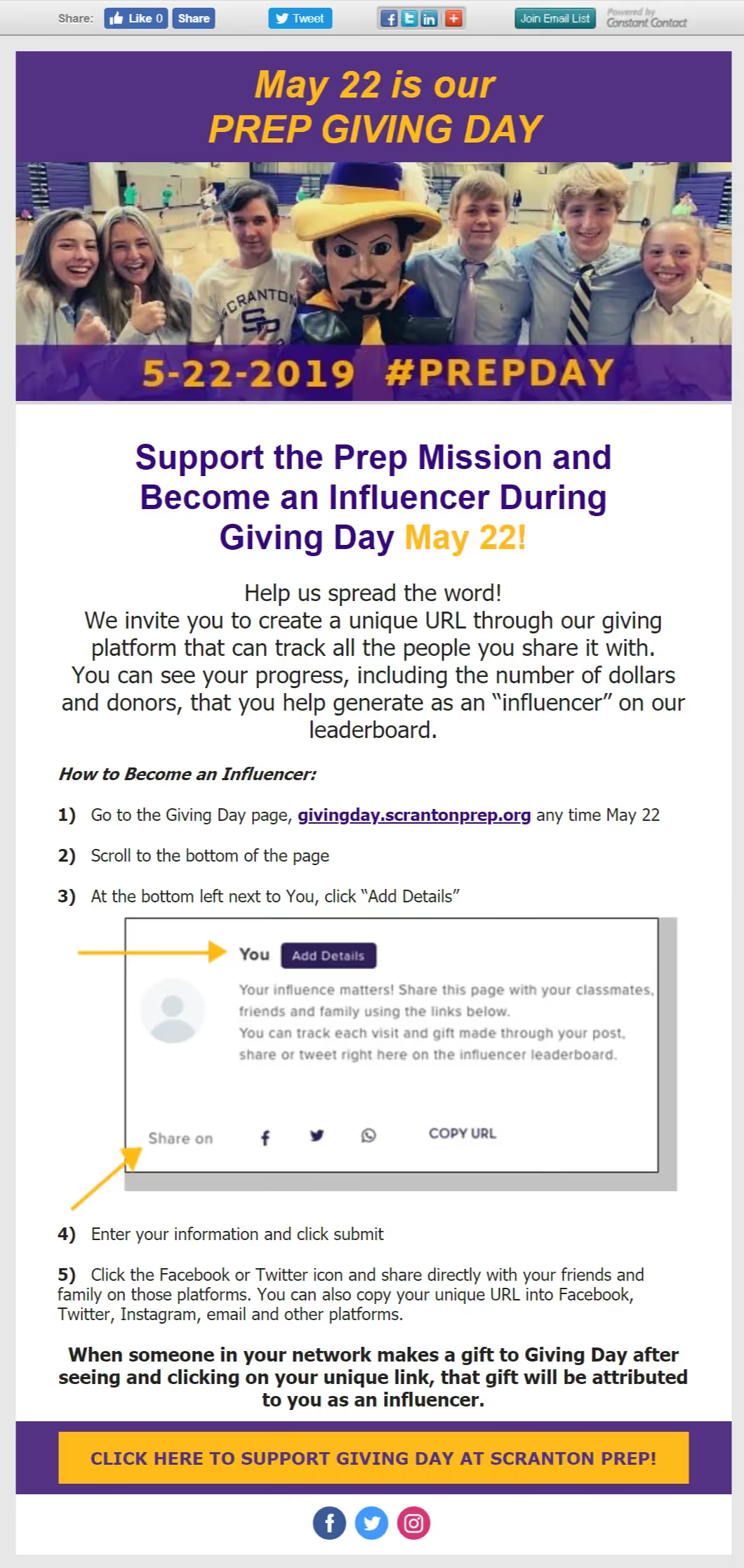
In addition to generating awareness about the upcoming Giving Day via emails, another way of capturing donors is by informing them of incentives. By providing exclusive benefits to select donors, the chances of securing early bird donations significantly increase.
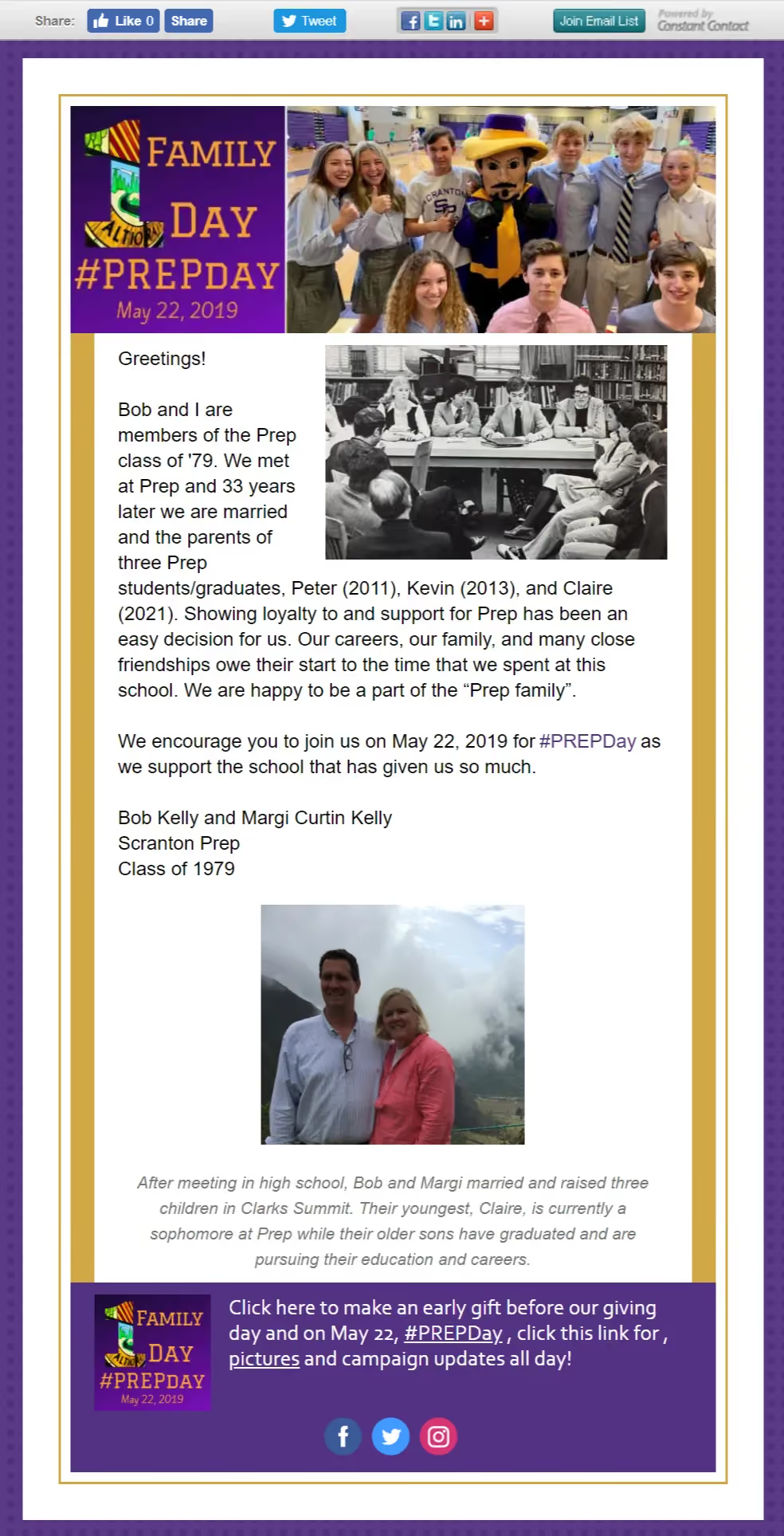
Your approach to marketing a Giving Day can vary greatly depending on who you’re reaching out to. Long-time donors, for instance, are the most loyal of your followers and therefore, it is best to personalize your approach while asking for their contribution. Here’s how Scranton Preparatory School created a customized email invite for its Class of ‘79, asking for their support during the school’s Giving Day 2019 campaign.
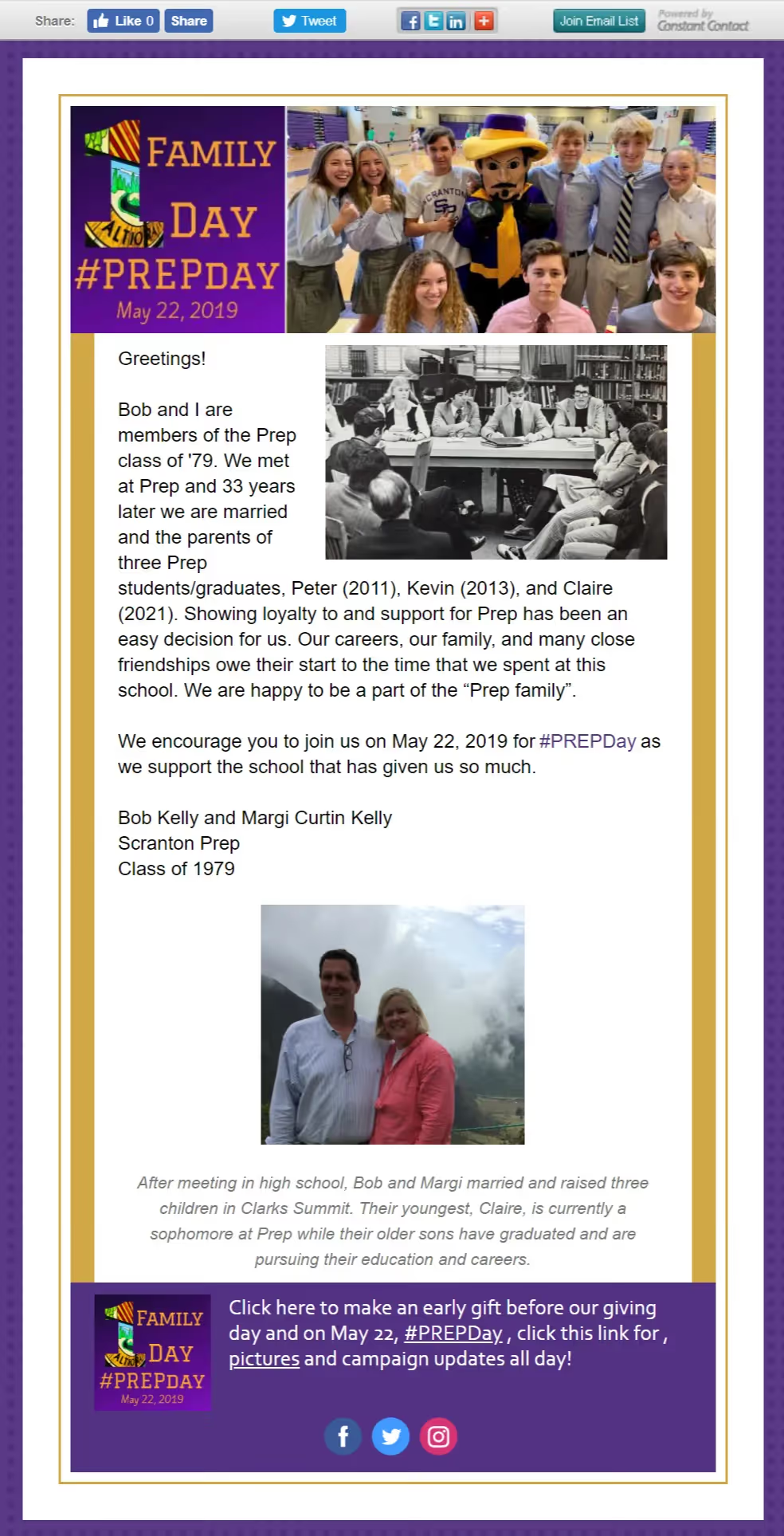
Peer-to-peer fundraising has proven to be highly effective for most schools. Emails or referrals from peers help create a personalized touch and act as a strong incentive for fellow alumni to contribute.

8 Proven Ideas for Promoting Giving Days
Lorem ipsum dolor sit amet, consectetur adipiscing elit. Suspendisse varius enim in eros elementum tristique. Duis cursus, mi quis viverra ornare, eros dolor interdum nulla, ut commodo diam libero vitae erat. Aenean faucibus nibh et justo cursus id rutrum lorem imperdiet. Nunc ut sem vitae risus tristique posuere.
Email marketing is crucial to the success of your online giving campaign. Does that sound like a used and abused fact to you?

While it may sound repetitive, it’s the gospel truth!
Advancement teams extensively use email marketing to promote their online giving campaigns but, what do they do differently to increase the sense of urgency?
Here’s a look at the 6 most effective email marketing hacks that can help you create a sense of urgency and drive more people to donate:
Segmenting your alumni into groups based on different parameters such as location, class year, interests, etc. and targeting them via personalized emails is a widely popular approach adopted by schools and universities worldwide.
Here’s how Centenary College of Louisiana personalizes emails for an affinity group - Women’s Basketball and asks group members to make a gift to support their cause.
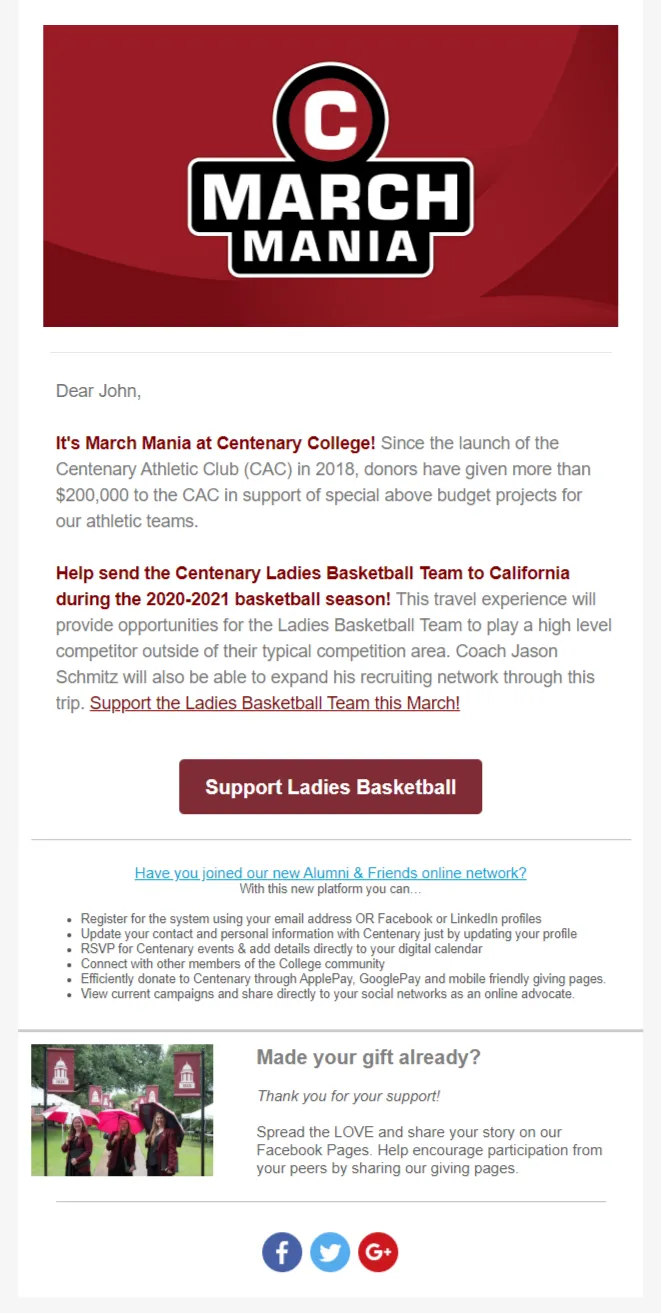
Apart from sending generic emails inviting donations, leveraging your influencers helps create a personalized touch and acts as a strong incentive for your alumni to contribute. These influencers should be people who your alumni can relate to and would appreciate hearing from.
See how Scranton Preparatory School used the peer-to-peer approach via emails to increase its Giving Day donations by 546%. Read the full story here.
Creating more opportunities for class years to compete with one another and gamifying this approach can significantly boost your giving day donations. Ensure that there’s an incentive tied in with the challenge and lay down the rules clearly in your email.
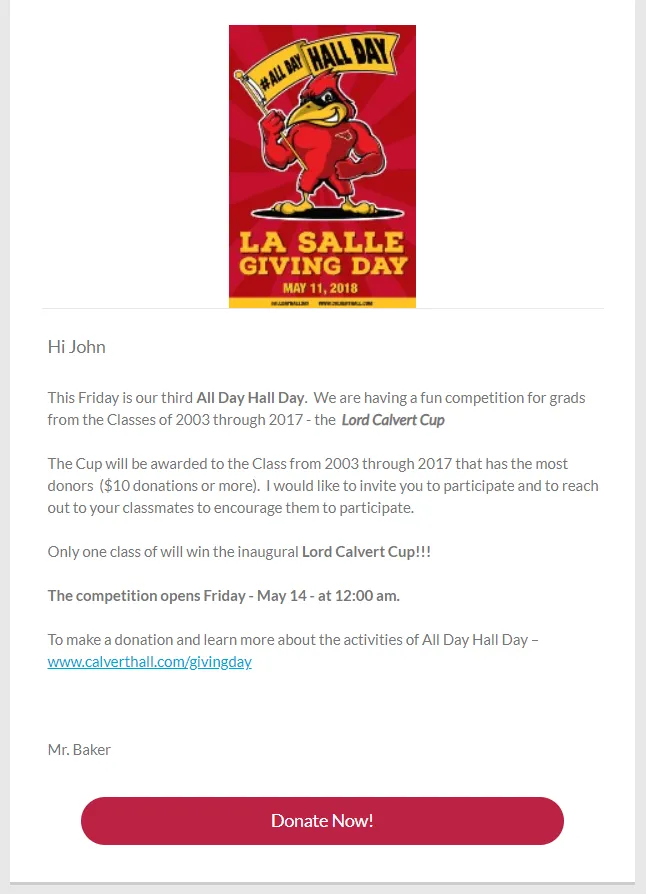
Here’s how Calvert Hall College High School emails alumni about the inter-class challenge and lays down clear guidelines & incentives. This approach helped create a healthy competition between classes leading to the school increasing its Giving Day donations by twice as much in 3 years. Read the full story here.
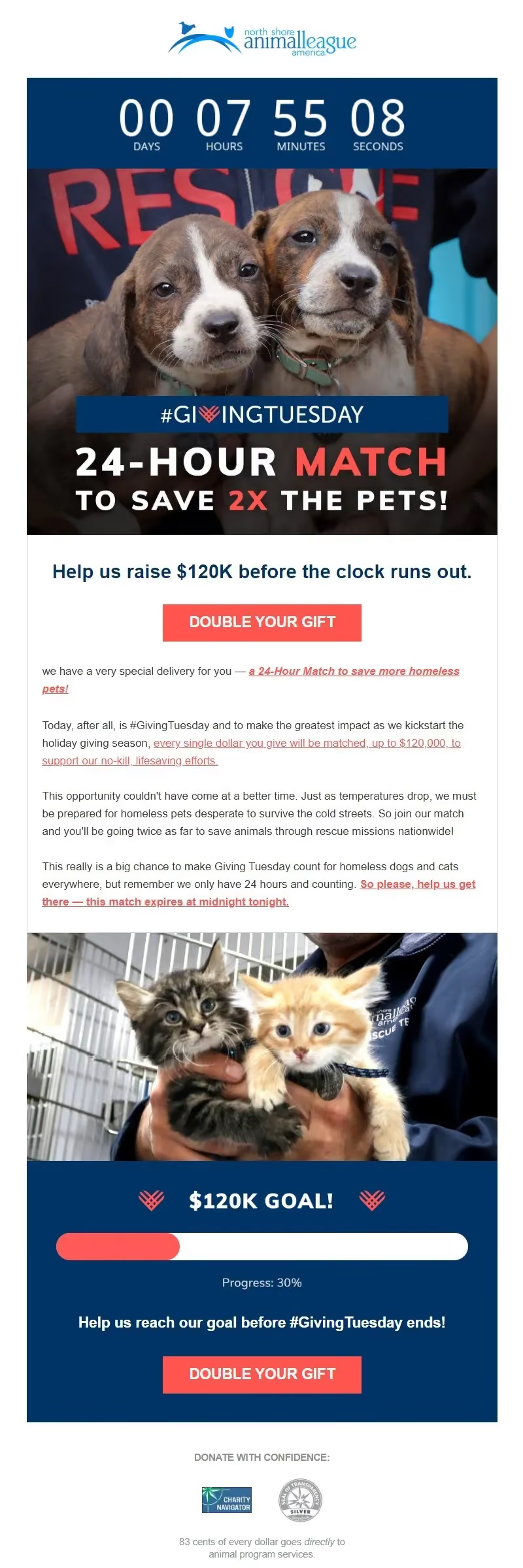
With shorter campaigns where timing is crucial, adding a countdown timer or a goal meter in your email creates a sense of urgency. Also, consider sharing a story that your alumni would relate to and feel the urge to contribute towards.
See how North Shore Animal League America includes a countdown timer to appeal to its donors.
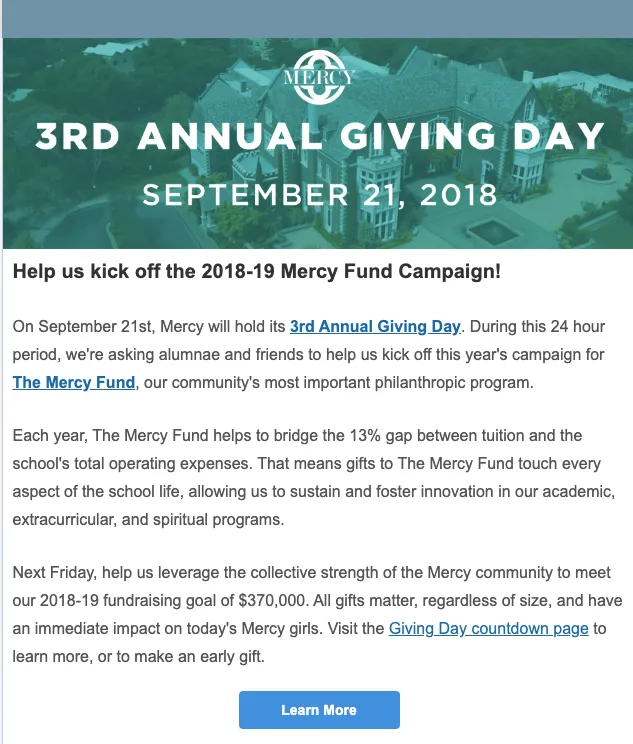
Whether it is a one-day or a week-long campaign, it’s always a best practice to keep your constituents informed of all that’s planned as a part of the campaign. Right from the campaign announcement down to thanking donors for their support, ensure that your audience is engaged throughout the campaign.
Here’s how Mercy High School announces its upcoming Giving campaign, complete with the information about the goal of the campaign and all relevant links.
Saying thank you never goes out of style. Sending donors a thoughtful thank you email is a great practice for not only expressing gratitude but more importantly, for building lasting relationships. A thank-you email goes a long way in retaining the same donors and getting them to contribute again.
Check out Scranton Preparatory School’s thoughtful ‘Thank You’ email to all alumni after the end of its #PrepDay campaign. Read the full story here.



6 email marketing ideas to drive participation towards your online giving campaigns
Lorem ipsum dolor sit amet, consectetur adipiscing elit. Suspendisse varius enim in eros elementum tristique. Duis cursus, mi quis viverra ornare, eros dolor interdum nulla, ut commodo diam libero vitae erat. Aenean faucibus nibh et justo cursus id rutrum lorem imperdiet. Nunc ut sem vitae risus tristique posuere.
As an alumni association professional, one of your most crucial responsibilities is to secure fundraising revenue. Giving days, such as Giving Tuesday, are a prime opportunity to raise a large amount of funds quickly.
While giving days last just 24 hours, you should begin preparing for Giving Tuesday far in advance. For universities today, attracting attention on Giving Tuesday requires a strong online presence and digital fundraising strategy. Using popular hashtags like #GivingTuesday is a step in the right direction. However, attracting alumni who will continue to give long-term requires developing engaging content, presenting it strategically, and maintaining communication to build a long-term relationship.

Based on years of experience assisting nonprofits and educational institutions in developing their Giving Tuesday fundraising strategies, here are four key best practices alumni associations can use next Giving Tuesday.
Set your alumni fundraiser up for success by conducting prospect research beforehand. Prospect research is the practice of evaluating your organization’s prospective donors by their capacity and affinity to give.
Essentially, prospect research allows your organization to identify alumni who are in the best financial position to donate, and that have the strongest affinity toward your organization. Ask yourself the following when evaluating prospects:
Use this information to focus your fundraising efforts. However, keep in mind that it can still be worthwhile to contact lower-earning recent graduates and alumni to begin building relationships for future engagements.
The more potential supporters you can get in touch with, the more your Giving Day fundraiser will raise. To reach more alumni, your university should take a multi-channel approach by marketing the campaign on a variety of platforms.
NXUnite’s guide to starting a fundraiser suggests several different outreach channels to market on:

Managing multiple communication channels can be a strain on your resources, and not all platforms will produce the same return on investment. When selecting your outreach channels, consider your data from past marketing campaigns to determine which platforms yielded the highest engagement rates.
Straightforward outreach through phone calls, direct mail, and email are all core parts of fundraising. However, you can leverage your technology to further engage your alumni and provide them with creative, memorable ways to give.
For example, many Giving Day campaigns include an event. Hosting an event provides a tangible reason why alumni should give on that specific day while also inviting them to participate in fun activities and engage with your university.
To make these events accessible to your entire alumni community, consider how you can take your Giving Day event online. Let’s walk through an example of a popular but often complex fundraiser, the silent auction. To encourage more bidding on your giving day, use gamification strategies like:
If you have never hosted an event like an auction virtually before, consider meeting with a technology consultant who can help you set up your event platform and step in quickly to resolve any technical issues that may occur during the event.
Recently alumni donations have been decreasing. This is due to a variety of factors, including economic instability, new legislation, and the fact that 93% of alumni organizations provide no benefits or only content that alumni do not find worthwhile.
Avoid this for your association by offering valuable content in exchange for alumni gifts. While alumni may no longer attend classes at your university, you can still demonstrate your value in their lives by publishing informative content, hosting networking events, and sharing stories about current students.
Effective data management can help you identify pertinent topics. Look into your database and find survey answers, demographic information, and more to base your content on. Then, host events and create content on subjects that are relevant to your alumni, such as current events or topics related to specific professions.
In your donation appeals, consider what content you can offer your alumni. For example, you could provide webinars or panels on current challenges your alumni might face in the workplace—such as how to succeed in a hybrid workplace—or virtual happy hours where they can connect with one each other. Consider getting faculty involved to provide their subject matter expertise and give former students the chance to talk with their former professors.

Giving days are an opportunity to rally your university’s community together and raise funds to continue providing current and former students with the resources they need to succeed professionally. Focus on your approach and engage alumni by using your data to guide outreach and event hosting.

Carl Diesing, Managing Director – Carl co-founded DNL OmniMedia in 2006 and has grown the team to accommodate clients with ongoing web development projects. Together DNL OmniMedia has worked with over 100 organizations to assist them with accomplishing their online goals. As Managing Director of DNL OmniMedia, Carl works with nonprofits and their technology to foster fundraising, create awareness, cure disease, and solve social issues. Carl lives in the Hudson Valley with his wife Sarah and their two children Charlie and Evelyn.
.avif)
Alumni Fundraising For Giving Days: 4 Technology-Driven Tips
Lorem ipsum dolor sit amet, consectetur adipiscing elit. Suspendisse varius enim in eros elementum tristique. Duis cursus, mi quis viverra ornare, eros dolor interdum nulla, ut commodo diam libero vitae erat. Aenean faucibus nibh et justo cursus id rutrum lorem imperdiet. Nunc ut sem vitae risus tristique posuere.
%201.svg)
%201.svg)
%204.svg)




.svg)