Do you think your higher education website could use a makeover? Here are five reasons why you should revamp your college website and expert tips to do so.
_Feature.avif)
When was the last time you took a good hard look at your higher education website? Your college’s website is one of your most important marketing tools for recruiting new students, connecting with alumni, driving donations, and demonstrating your school’s positive impact on the world. If it seems outdated, stale, or not reflective of your values, it could be time for a revamp.
In this guide, we’ll highlight five reasons to refresh your website and tips for making impactful updates. Along the way, we’ll highlight examples from the top college websites to show a few best practices in action.
When a visitor lands on your college website, what’s the first thing they do? The answer depends on who they are and what they’re hoping to get out of their visit. You can create a simple, user-friendly experience for all visitors by updating your user journeys.
The user journey encompasses the steps visitors take to engage with your website: the links they click, forms they fill out, pages they read, and more.
Kanopi’s guide to higher ed web design offers these tips for designing compelling user journeys:

Track website analytics, such as time on page, bounce rate, and conversion rates for different forms, to understand users’ satisfaction with your website. You can also track user flow to understand how visitors are moving throughout your website and the common steps they take as they navigate from page to page. Identify common drop-off or bounce points to investigate what causes visitors to leave your website, then adjust your user journey accordingly.
Plenty of people are willing to donate to colleges and universities, and the data reflects this commitment. Donations to higher education institutions in the U.S. rose 12.5% in the fiscal year ending June 30, 2022.
However, if your college website doesn’t offer a variety of giving opportunities or adequately show the impact of donations, you could be leaving valuable dollars on the table.
Therefore, consider revamping your website to include more elements that promote giving, including:
To learn more ways to target prospective donors on your website, create donor personas based on supporter data and demographics. Go beyond alumni donors to develop personas for faculty and staff, business leaders in the local community, families of students, and foundations. These personas can help you design unique, personalized user journeys for each donor segment.
If your university’s website isn’t up to accessibility standards (and sadly, the majority of them aren’t), it’s important to correct any issues as quickly as possible. This ensures that you can build an inviting environment for all users and comply with ADA regulations.
Review your website to see if you need to improve the following elements:
Offer an email address or form visitors can complete to report accessibility issues. For example, take a look at Adelphi University’s web accessibility information page and form for reporting issues:
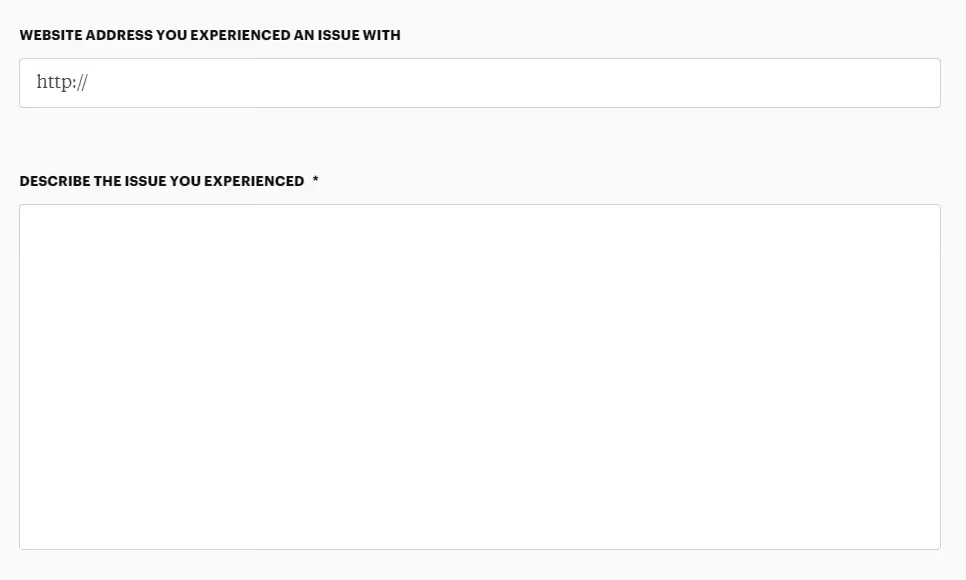
This demonstrates how simple it can be to provide a resource for visitors and gather feedback that helps continuously improve your website.
Your university’s alumni are among your most passionate supporters, lending a hand by participating in fundraising efforts, volunteer opportunities, and word-of-mouth marketing.
To show alumni that you appreciate them for more than just their financial support, your college website should provide a variety of ways for alumni to get involved beyond donating. For example, spotlight opportunities like:
Gather a few alumni testimonials to include on your alumni information page or microsite to show other former students the benefits of getting involved. For example, you could spotlight alumni who are involved in your mentoring program or who have been able to find their dream jobs with the help of your career services. Seeing other alumni’s success will help encourage more engagement with your alumni program.
Your university’s website should be a welcoming resource for all online audience members. Prioritizing inclusivity tells all visitors—current and potential students, alumni, staff, and community members—“You belong here.”
Promote inclusivity by taking these steps:
Diversity is improving at higher education institutions across the country, but there is still more work to be done. Make inclusivity a leading priority at your institution, and within your website’s content, to show prospective and current students you’re committed to developing an inviting campus community.
These tips are a great place to start when it comes to refreshing your website to align with current higher education trends. However, if your website needs more than a revamp, consult with a higher education website design professional. These experts can take a deep dive into your website strategy to design a user experience that appeals to multiple audiences, drives engagement, and enhances your university’s reputation.
Table of Contents
Subscribe
See how modern advancement teams bring alumni engagement and fundraising together.
Cultivating a strong alumni community is important for universities. Graduates tend to think fondly of their alma mater, and having a dedicated alumni section on your website offers an opportunity to stay connected with university activities. Your alumni website is also a great resource for connecting with potential alumni donors and showing appreciation for their ongoing support.
Nowadays, most alumni outreach takes place over online platforms. Your alumni network likely spans across the country and even worldwide, and the internet is one place where everyone can easily stay connected with your institution.
Plus, 93% of online experiences begin with using a search engine. That’s why your university’s website must be optimized for search engine performance as well as engaging alumni digitally. In this guide, we’ll review top tips for engaging your alumni using your website:
.avif)
Most top college websites include a link to their alumni website in the top navigation bar. This means it’s important to optimize your alumni information on your overall website and on the alumni website itself. Keep this in mind as we explore each tip. Let’s dive in!
You probably have a wide range of alumni who interact with your university, and you should take the opportunity to determine who they are and what they want out of your website. Remember that many alumni are potential donors, so learning more about them is crucial.
Review these metrics in your Google Analytics to learn more about your website visitors:
By examining your Google Analytics, you can learn more about how your university’s website can better serve its visitors by determining the most and least effective elements on it. Ultimately, when you get to know your user audience and alumni visitors better, you can design your site in a way that encourages them to engage with your content.
Streamlined, user-friendly design can go a long way toward inspiring alumni to explore your site. An enhanced user experience (UX) allows them to quickly find the information they need and discover all the opportunities for engaging with your institution. Plus, streamlined UX helps your website perform better in search engine result rankings.
Here are some tried-and-tested UX design tips for your website:
Your alumni website doesn’t need complex design elements or flashy graphics to be effective. A minimalistic design with a focus on accessibility will allow alumni to navigate your website easily and connect with your programs and opportunities faster. These updates are easy to make when your university is using a top content management system like Drupal or Wordpress. Both CMS platforms offer features like accessibility tips and a mobile editor to ensure an optimized user experience.
By implementing strategic calls-to-action (CTAs), you can help alumni easily find the information they’re looking for on your website. CTAs are typically buttons or menu links on your site that direct visitors to different pages. You can use CTAs to direct users to donate, register for mentorship opportunities, read recent news articles, or sign up for your newsletter.
Your CTAs should:
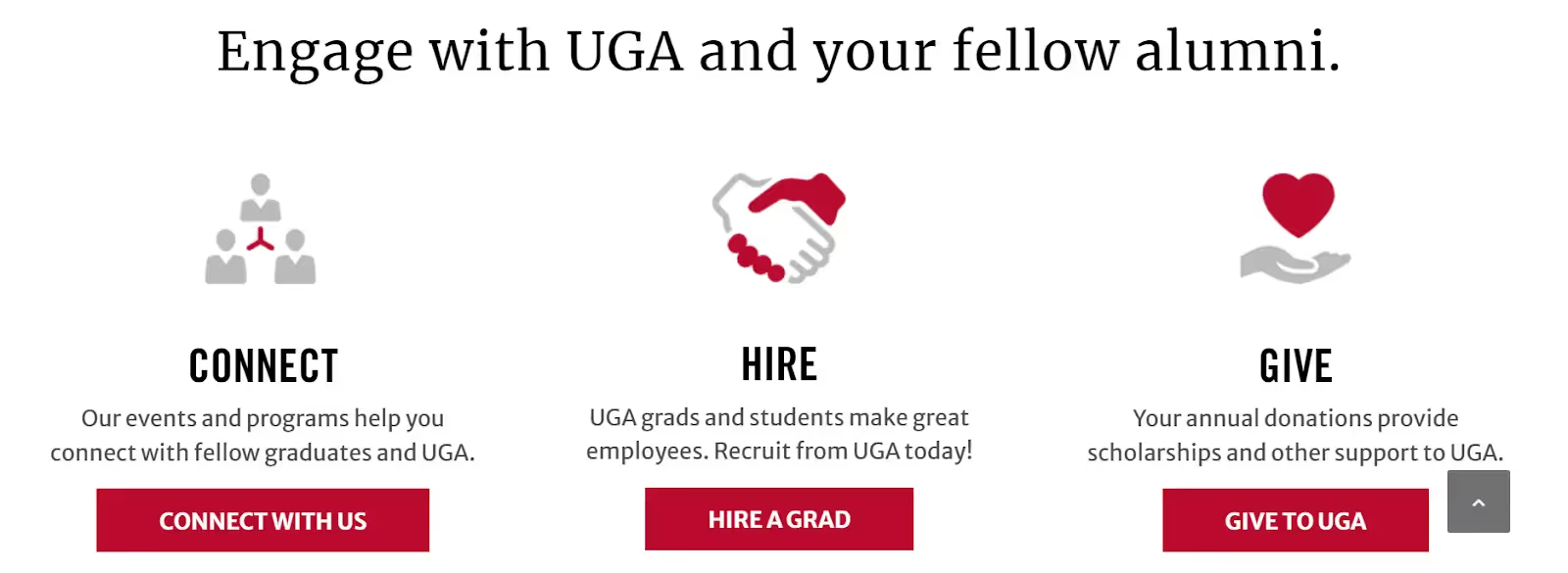
Here are some websites with examples of effective alumni engagement CTAs:
The University of Georgia’s alumni website includes multiple CTA buttons that pop against the background and include clear instructions for different actions that visitors may want to explore.
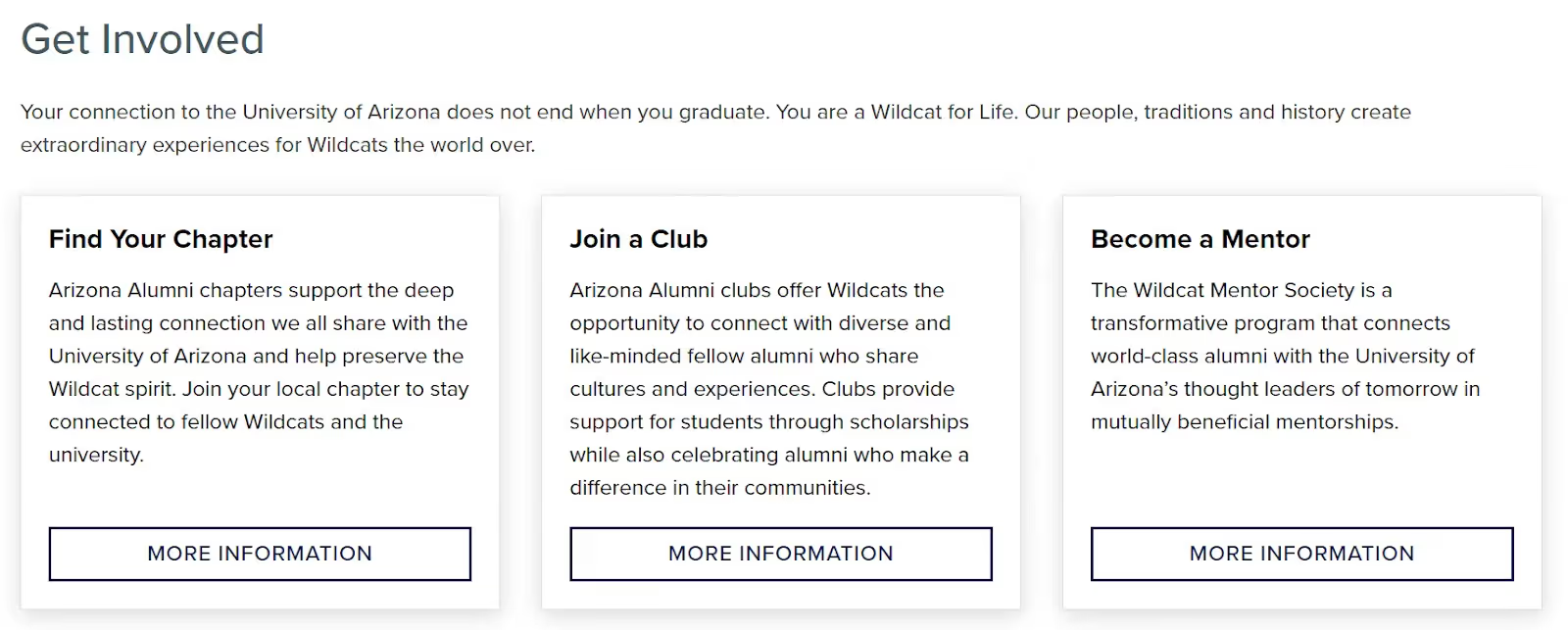
The University of Arizona’s alumni website features multiple CTAs under the “Get Involved” section that point alumni to different groups they might be interested in joining.
Georgetown University’s alumni website incorporates quick link CTAs near the top of the page, making it easier for visitors to navigate to what they’re looking for.

For more inspiration, take a look at Kanopi’s list of best college websites to see how other institutions incorporate unique, engaging CTA design and language.
Clear CTAs make it easy for visitors to figure out how to engage with your institution. Whether you want to recruit alumni to help plan a fundraiser or volunteer for your mentorship programs, making sure that alumni have an easy time navigating your site encourages their continued involvement.
Ultimately, to make your website as engaging as possible for alumni, you must put their interests at the heart of your content. Consider embracing the concept of alumni centricity— the process of building relationships with alumni that aren’t just based on loyalty to their alma mater, but also on the value that your program brings to their lives.
You can build even longer-lasting relationships by orienting your website content around the value that alumni involvement in your opportunities and programs will bring to the lives of former students. Here are a few benefits you can offer:
By striking a balance between donation requests and offering other opportunities such as mentorship programs, homecoming events, and networking opportunities, you can provide just as much value to your alumni as they provide to your university.
As you adjust your website content to appeal to alumni, be sure to continuously assess your data to determine what’s working and what needs improvement. This allows you to keep up with the evolving needs of your alumni base and avoid having to conduct major website overhauls. When your website is optimized, promote it through email newsletters and social media updates to drive more traffic. This allows you to engage alumni effectively, even if they’re located across the country or globe.

4 Tips to Use Your University Website to Engage Alumni
Your university website is a powerful tool to stay in touch with alumni. Incorporate these four tips to build long-lasting alumni relationships online
Lorem ipsum dolor sit amet, consectetur adipiscing elit. Suspendisse varius enim in eros elementum tristique. Duis cursus, mi quis viverra ornare, eros dolor interdum nulla, ut commodo diam libero vitae erat. Aenean faucibus nibh et justo cursus id rutrum lorem imperdiet. Nunc ut sem vitae risus tristique posuere.
As an alumni outreach specialist, it’s up to you to meet your alumni where they are—online. Your school likely already has a website where its entire community, from prospective students to faculty, can come together to learn more about the school's offerings and important updates. All of your stakeholders (prospective students, current students, family, faculty, and alumni) visit the website to learn more about the school and see its updates.
Do you want the same success for your alumni website? Your answer is likely, “Of course!”
However, it’s certainly possible that your alumni site doesn’t get as much traction from your target demographic as you need to sustain growth. However, maintaining a wealth of online resources and tools for your alumni association is important to keep them interested in their alma mater and, eventually, give back to it.

Here are some tips to spruce up your alumni website and infuse school spirit into your alumni culture.
Web design is perhaps the most important contributor to engaging visitors with your site. Conversion rates suffer with longer load times and confusing web design elements. Luckily, there are many ways for your nonprofit to improve usability and offer a user-friendly website experience.
If you’re creating your alumni website for the first time, make sure you use a nonprofit website builder. These platforms remove the guesswork and streamline the website design process.
From there, optimize your alumni website with intuitive navigation, fast load times, and accessibility for people of all abilities. This will ensure that when alumni arrive on your website, they’ll be inclined to stay and explore your educational resources, sign up for an event, or complete another desired action.
When your alumni visit your website, they need to find something meaningful, relevant, and valuable to them, not just information about your alumni association or annual fund. In fact, strong alumni networks are a major reason why students choose to attend your school in the first place. The best way to strengthen your alumni network is to create an online community for them to find and connect with each other. Alumni can use this network to access information about:
You can also use your website as a trove of resources for your alumni. For example, you can include content such as member directories, blogs, and calendars to keep your alumni in the loop about everything your organization is doing. These resources will attract alumni from around the world to your website and keep them involved with your school.
According to Cornershop Creative, there are numerous search engine optimization (SEO) practices you can use to make your alumni website more visible on search engines like Google. Industry-standard best practices have to be understood and included in your alumni website’s content. Research ways you can optimize your SEO strategy to get in front of your target audience. Here are some tips to get you started:
Incorporating these elements into your website will increase the likelihood of your page ranking higher on the results page, leading to more organic traffic to your site and engagement from your alumni audience.
There’s no question that mobile browsing is the new normal for surfing the web. Your alumni website should accommodate this huge traffic source by making your website mobile-friendly. Here are some suggestions for doing so:
Optimizing your website for mobile browsing is well worth the time and effort! Young alumni in particular comprise a huge portion of mobile browsers, so this is a great way to engage them.
Once alumni click on your site, you should provide them with reasons to revisit it again and again. While part of this is including worthwhile resources like the ones listed above, you can also encourage revisits with low-commitment subscription tools, like an email newsletter sign-up. This way, even your most passive alumni can get involved at their convenience.
You can also leverage your social media presence to get your members to return to your site. By integrating your website content into your social media posts and bios, you’ll encourage alumni not only to follow you there but also to click through and explore your site. Plus, they can see new fellow alumni interacting with your social content, thus opening up more opportunities for connection within your network.
The pandemic has ushered in a new era of digital opportunity. Your website can become a hotspot for alumni involvement and appreciation through virtual or hybrid events. So, you should clear some space on your calendar for new events popularized through the uptick in virtual offerings:

Virtual and hybrid events have numerous benefits. Not only will these events promote participation and increase member retention due to their flexibility, but it’s also a great way to increase organic traffic, which will help your site’s performance on Google.
Your alumni all have something in common: their connection to your school. As an alumni outreach specialist, it’s your responsibility to leverage this commonality, bringing them together and making their experience as beneficial as possible.
Work with your team to analyze ways you can improve your current website and implement these tips to see growth in your alumni involvement. Good luck!

Making Your Alumni Association Website More Effective
Even after they graduate, your alumni play a major role in your school’s success. Here’s how to engage them and get donations with your alumni webpage.
Lorem ipsum dolor sit amet, consectetur adipiscing elit. Suspendisse varius enim in eros elementum tristique. Duis cursus, mi quis viverra ornare, eros dolor interdum nulla, ut commodo diam libero vitae erat. Aenean faucibus nibh et justo cursus id rutrum lorem imperdiet. Nunc ut sem vitae risus tristique posuere.
For higher-education institutions, maintaining strong relationships with alumni is key to securing the necessary vocal and financial support to thrive year after year. While many of your alumni may have traveled away from campus to pursue their career goals after graduating, the distance doesn’t have to diminish their fondness for your institution.
With an effective strategy for engaging these former students, you can ensure that they remain invested in your school’s success for decades to come. One crucial way to maintain strong relationships with your alumni is by enhancing your institution’s website. This is where all alumni, no matter where they’re located, can go to stay connected with their alma mater and offer their support.
In this guide, we’ll discuss five essential tips for designing your school website to cultivate meaningful and lasting connections with alumni:
A well-designed alumni website demonstrates to graduates that you’d like for them to be a part of your institution’s future. By revamping your website content and design, you’ll be able to better appeal to your alumni around the world and expand your base of long-term supporters.
Designing a high-quality website begins with assembling the right tools for the job. To set your website up for success, your school should equip itself with a website builder, or content management system (CMS), that is tailor-made for the education sector. According to Morweb’s rundown of school website builders, the CMS you choose should be able to facilitate:
The right CMS should also be able to integrate easily with software that your school uses regularly, like your class registration software or your alumni relations software. With the right CMS at your disposal, you can focus on providing the content and resources that alumni will appreciate, while your website builder will take care of creating a positive user experience.
One impactful way to connect with your alumni is to remind them of their experience at your institution. Whether you’re looking to raise more funds or encourage more graduates to attend events, storytelling allows you to reach them on a more personal and emotional level. NPOInfo’s donor cultivation guide recommends emphasizing the impact of donor contributions through statistics and stories to inspire more support.
For instance, consider sharing a story about a current student who, thanks to a scholarship made possible by alumni gifts, is currently excelling in their studies. This helps graduates understand just how they have made and can continue making a difference in students’ lives. For more powerful storytelling ideas to add to your school website, consider featuring:
Feel free to get creative with your storytelling—infographics, GIFs, and podcasts can all elevate your content and motivate more alumni to discover the impact of their support. Be sure your CMS has multimedia capabilities that optimize your content for the web.
Once you’ve caught your alumni’s attention, make it easy for them to take action by incorporating compelling calls to action (CTAs) across your institution’s website. These eye-catching buttons will direct graduates to relevant web pages, such as your giving page. Your CTAs can direct alumni to take actions such as:
Remember to follow best practices when crafting calls to action to maximize their impact. Keep your wording brief, clear, and urgent so your alumni visitors don’t delay engaging with your institution. For example, you could write, “Give back today” or “Become a mentor now,” as possible CTAs. For further guidance, take a look at nonprofit website templates to see how they organize and display CTAs across each page.
There are many ways for your alumni to stay involved with your institution, from giving to attending events to volunteering. To nurture connections that last, encourage these graduates to expand their involvement. Make sure your most important resources are clearly visible and accessible on your alumni website so that visitors are aware of all possible engagement opportunities. It should be easy for alumni visitors to find information on:
Furthermore, invite graduates to interact with your institution beyond its website. You can use your CMS to add a social media widget that features your latest posts, alongside icons that allow visitors to share your content or follow your school on social media. If you have an alumni newsletter, asking alumni to subscribe can be another great way to keep your institution fresh on their minds.
After you’ve finished designing your school website, remember to keep track of relevant metrics to measure its performance over time. Just as your institution fosters growth among its students, it’s important to adopt that same mindset and learn from your alumni website engagement efforts to boost your results over time. For instance, your pageviews, bounce rate, and conversion rates can all reveal valuable insights into how effectively your website is engaging alumni.
Use the data you collect to identify how to better connect with graduates in the future. Fortunately, if you decide you’d like to further enhance your alumni website later on, there are many stellar nonprofit websites you can turn to for inspiration online.

Your website serves as an all-important hub for alumni to stay up-to-date on your institution, provide financial support, and ultimately, maintain the connection they forged when they first stepped foot on campus.
Remember to show your appreciation to graduates, so they’ll always feel like a valued part of your school. In addition to popular appreciation ideas such as sending school merchandise and hosting appreciation events, spotlight alumni supporters on your website. This way, they’ll always be reminded of their meaningful connections to your institution.
Now that you know the basics, let’s look at some great alumni websites to take inspiration from.
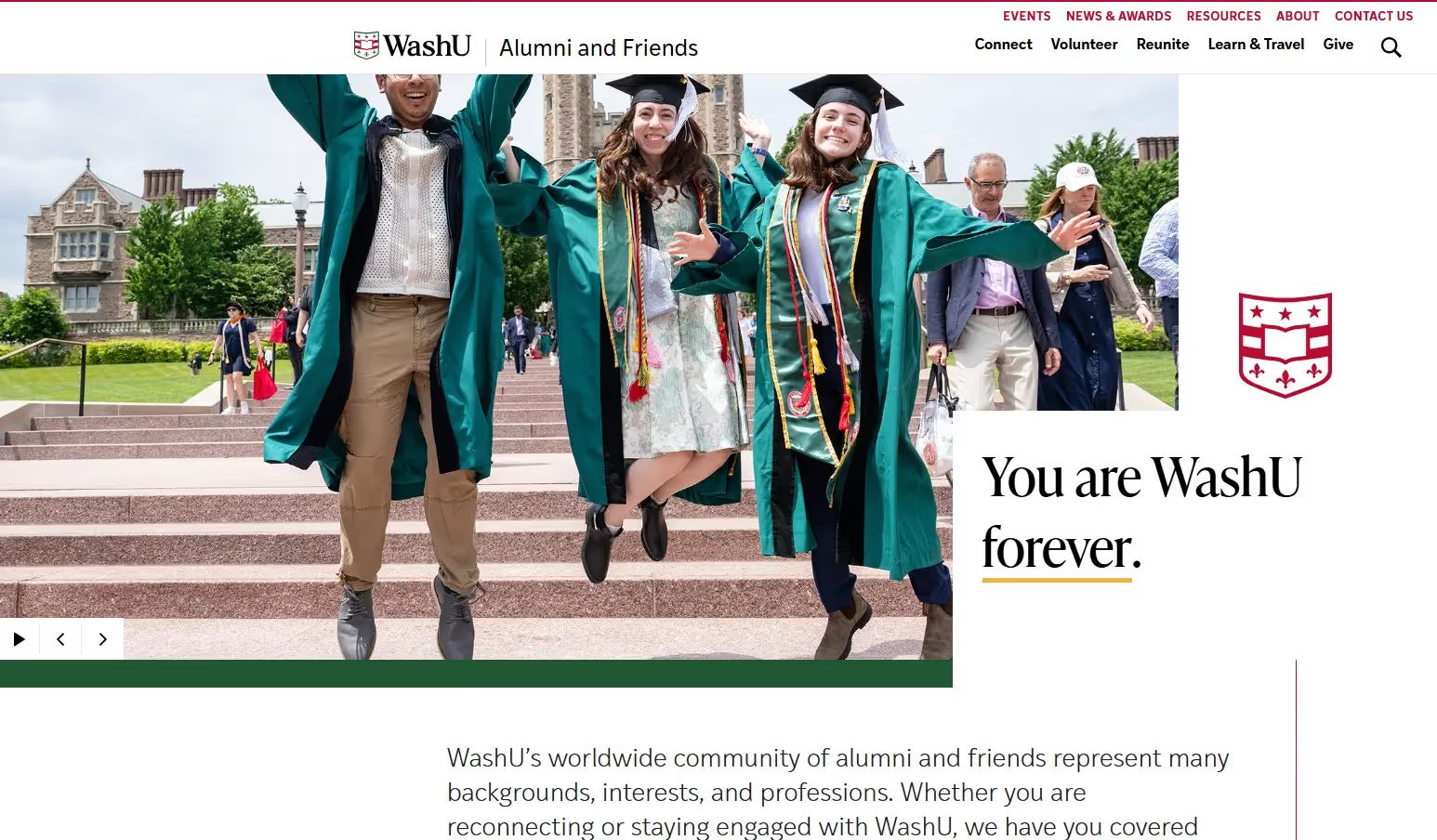
When you enter the alumni website of the Washington University in St. Louis, you are immediately welcomed by the slogan “You are WashU yesterday, today, forever” using an attractive slideshow design. It then follows it up with with clear pathways for alumni to find directories, events, and networking opportunities in a very natural manner with clear CTAs for everything.
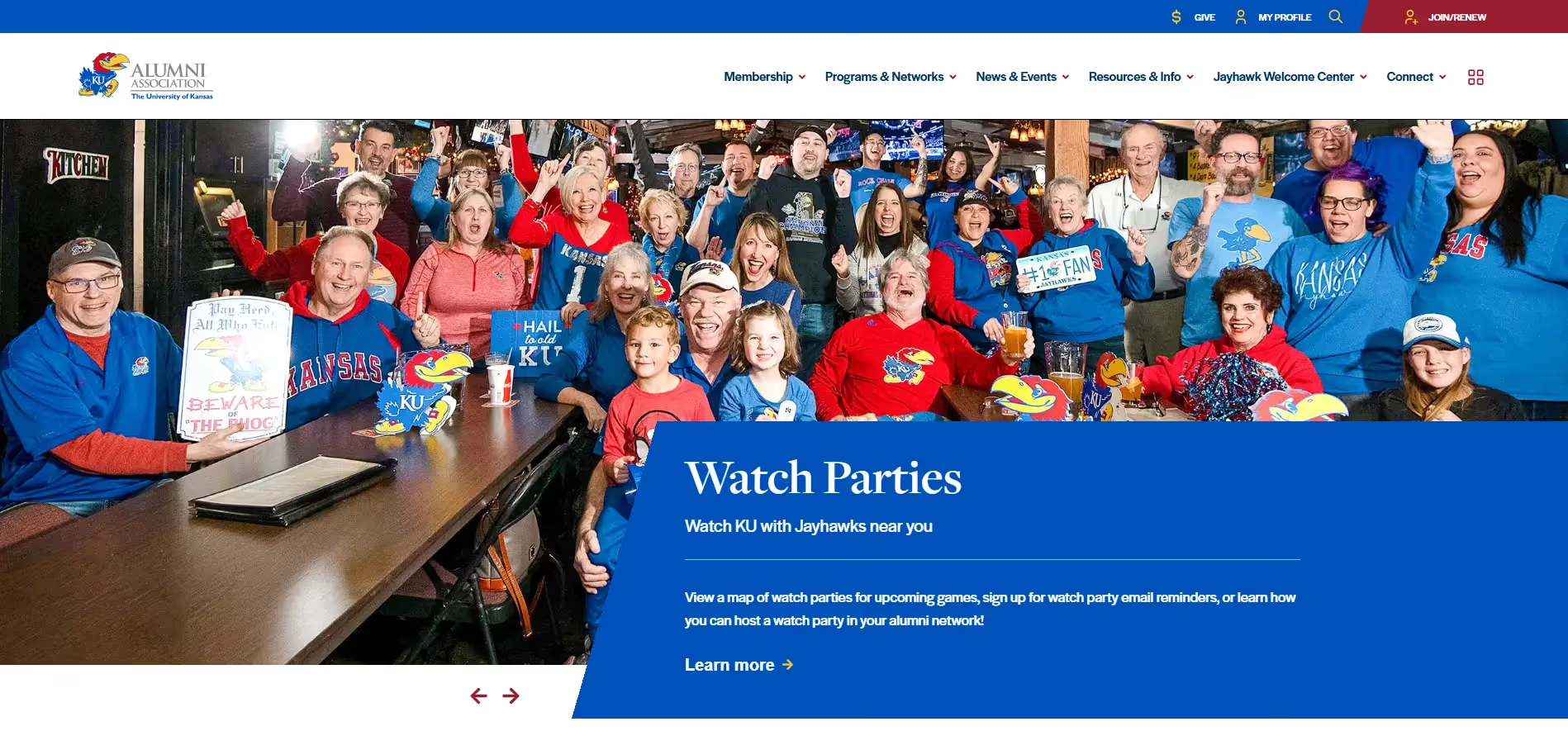
University of Kansas has an alumni page that really leans into clean and intuitive design. A sliding hero banner takes center stage and highlights most of the major alumni programs. Just below are the major programs and networks. This is followed by their main content hub where they display great effort at showcasing their alumni stories and events. The final section is filled with more focused CTAs to inspire action after the bulk of the programs and stories have been mentioned.
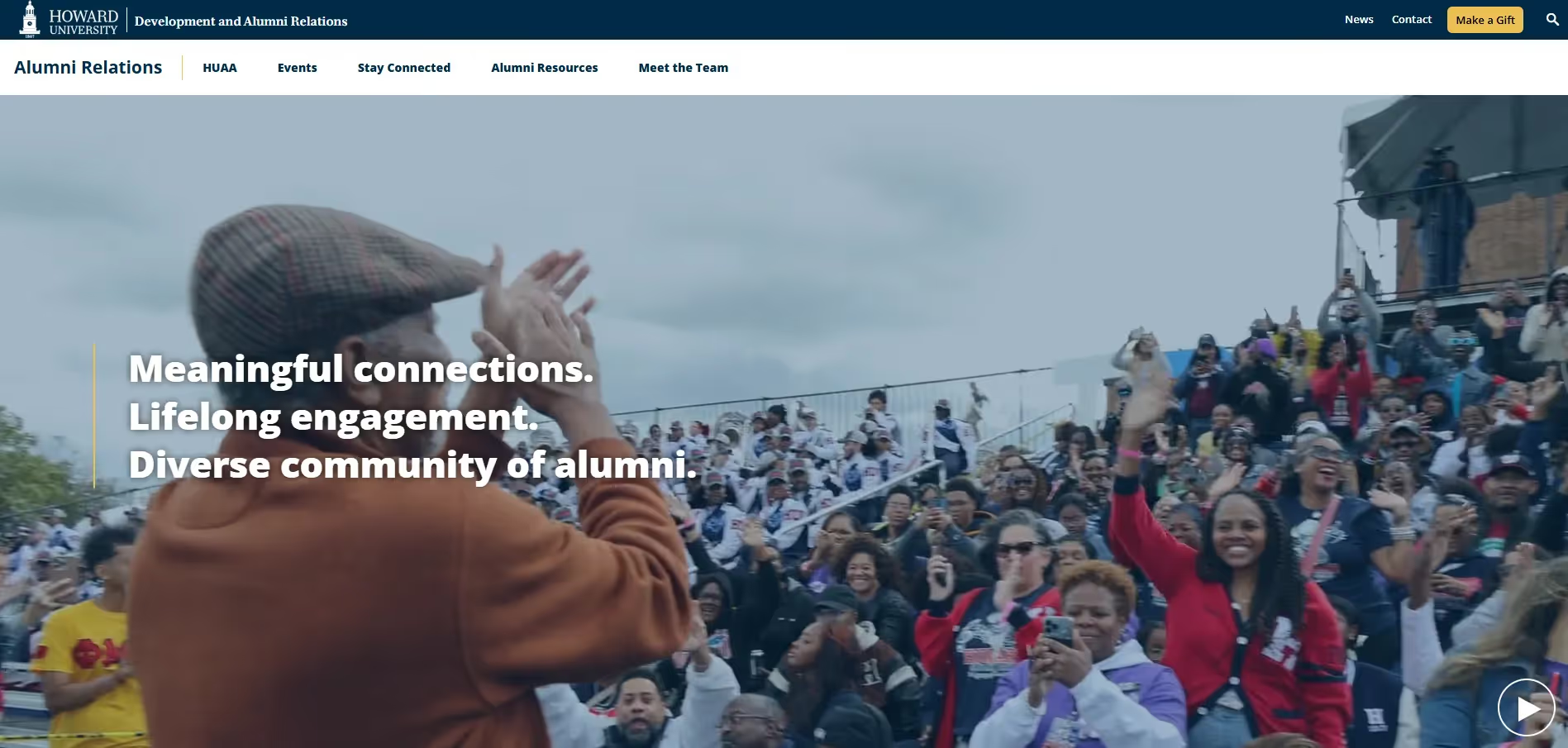
If you’re looking for inspiration on an alumni website that’s all about inspiring donors and highlighting events, Howard University’s alumni website is a great example. It heavily leans into making sure people and successful events stand front and center. Seeing videos and pictures of happy and committed crowds, alumni, and students really helps drive home the sense of community that’s inseparable from any alumni program, especially one that’s looking to emphasize on fundraising.
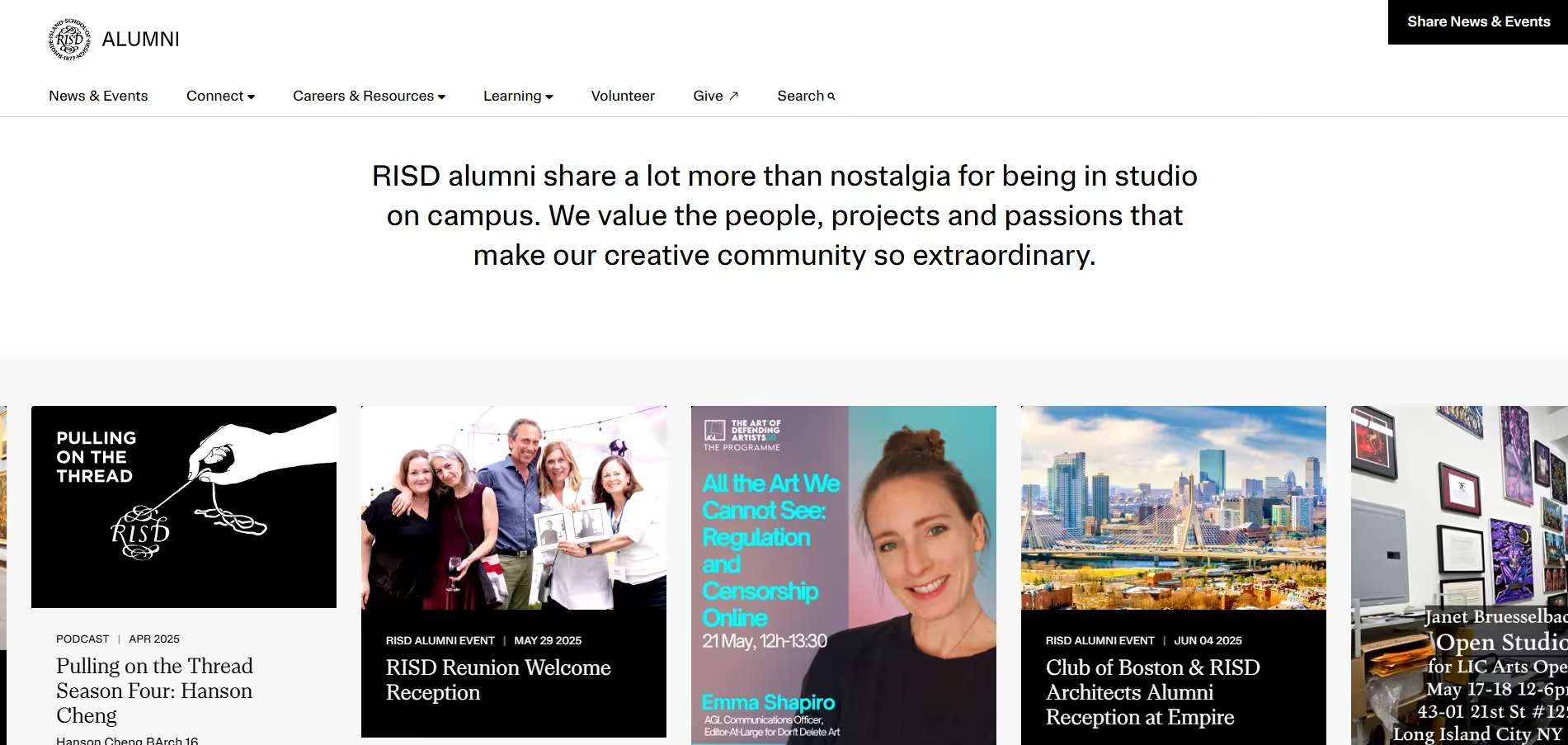
RISD’s alumni website is everything you’d expect from a design school. It makes great use of website animations and feels like walking into a virtual display. It doesn’t take long to scroll to the bottom but manages to insert a lot of information without making the website feel cluttered. The CTAs towards the end are very intent-focused and helpful for alumni visiting the website for a specific purpose.
With the above tips and examples to take inspiration from, we hope you’re ready to build (or revamp) your alumni website. Remember to keep your institution’s goals and your alumni’s sentiments in mind and we hope to see even more exciting alumni website designs in the future.

Designing School Websites that Connect with Alumni: 5 Tips
A well-designed website can strengthen your relationships with alumni. Boost their engagement by learning these five tips for designing school websites.
Lorem ipsum dolor sit amet, consectetur adipiscing elit. Suspendisse varius enim in eros elementum tristique. Duis cursus, mi quis viverra ornare, eros dolor interdum nulla, ut commodo diam libero vitae erat. Aenean faucibus nibh et justo cursus id rutrum lorem imperdiet. Nunc ut sem vitae risus tristique posuere.

.svg)

.avif)
.webp)