Cvent vs Eventbrite for education: Compare horizontal platforms vs Almabase's vertical solution built for alumni engagement & advancement.

Summary
• Prioritize a platform that truly integrates with your existing CRM: Generic community platforms often mean more manual data entry; tools like Almabase are purpose-built to work seamlessly with CRMs like Raiser's Edge NXT or Salesforce, enhancing your current database without replacing it.
• Consider specialized solutions over generic "all-in-one" platforms: While broad tools offer many features, they often come with steep learning curves and limited customization, making it tough for lean advancement teams to manage events, engagement, and fundraising effectively.
• Maximize fundraising by choosing education-specific tools: Look for solutions with market-leading event management, crowdfunding capabilities, and donor transaction processing, all designed to convert alumni engagement into philanthropic support for your campaigns.
• Find alternatives tailored to your team's size and budget: Smaller advancement offices or volunteer-run organizations can benefit from platforms offering transparent pricing, rapid implementation, and dedicated support, avoiding hidden costs or overwhelming technical demands.
• Evaluate tools based on your primary alumni engagement goals: Whether your priority is deep mentorship programs for career outcomes, building self-contained school communities, or simply robust discussion forums, there are specialized alternatives that can deliver more effectively.
• Explore how specific alternatives can solve your unique challenges: This guide breaks down options for everything from budget-friendly membership to integrated websites and deep CRM connections, offering a clearer path than struggling with an ill-fitting platform.
If you're comparing Cvent and Eventbrite for your institution's alumni events, you're probably asking the wrong question.
It's like trying to choose between a commercial airline and a cargo ship for your family vacation. Sure, both can transport people, but they're built for fundamentally different purposes. Cvent and Eventbrite are powerful horizontal event management platforms designed to serve all industries, from corporate conferences to music festivals. But alumni relations in higher education isn't just about managing events; it's about building lifelong relationships that translate into engagement and support.
The questions you should be asking are:
In short, here's what we recommend:
👉 Cvent is the enterprise powerhouse for large-scale, complex events across any industry. With over 5,000 employees and comprehensive features from venue sourcing to onsite solutions, it’s great for managing massive conferences and multi-day events. However it includes many features irrelevant to educational institutions while missing essential advancement-specific features. Its steep learning curve, complex implementation process, and premium pricing make it overkill for most educational institutions' alumni events.
👉 Eventbrite is the self-service champion for easy event creation and ticket sales across all event types. Its user-friendly interface and built-in marketplace help events get discovered by millions of potential attendees. While its simplicity is appealing, this horizontal platform comes with significant drawbacks: high ticketing fees for larger events, slow customer support response times, and limited customization options for branding and email communications. It lacks the education-specific features and comprehensive advancement tools that institutions in the US, UK, and Canada need for effective alumni engagement.
Both platforms are undeniably powerful for general event management. But managing alumni events for schools and higher educational institutions isn't just selling tickets and checking people in. It's all about nurturing relationships, tracking engagement across multiple touchpoints, managing donor finances, and ultimately driving philanthropic support. That's why we included Almabase in this comparison.
👉 Almabase is an alumni engagement platform designed specifically for educational institutions' advancement teams, now expanding into healthcare and other nonprofit verticals. It combines comprehensive event management with a complete alumni engagement ecosystem, including directories, email marketing, fundraising, finance management, and mentorship programs. With native two-way integration with the Blackbaud ecosystem and additional integrations with Raiser's Edge NXT and Salesforce, every event interaction automatically updates in your systems. Meanwhile, the platform's no-code tools let you create custom branded pages that can be published directly on your institutional website, creating a seamless experience for alumni while maintaining complete control over your brand.
Tired of juggling horizontal platforms with irrelevant features while missing the education-specific capabilities you actually need? Check out Almabase in action and see how it transforms alumni events into true relationship-building opportunities.
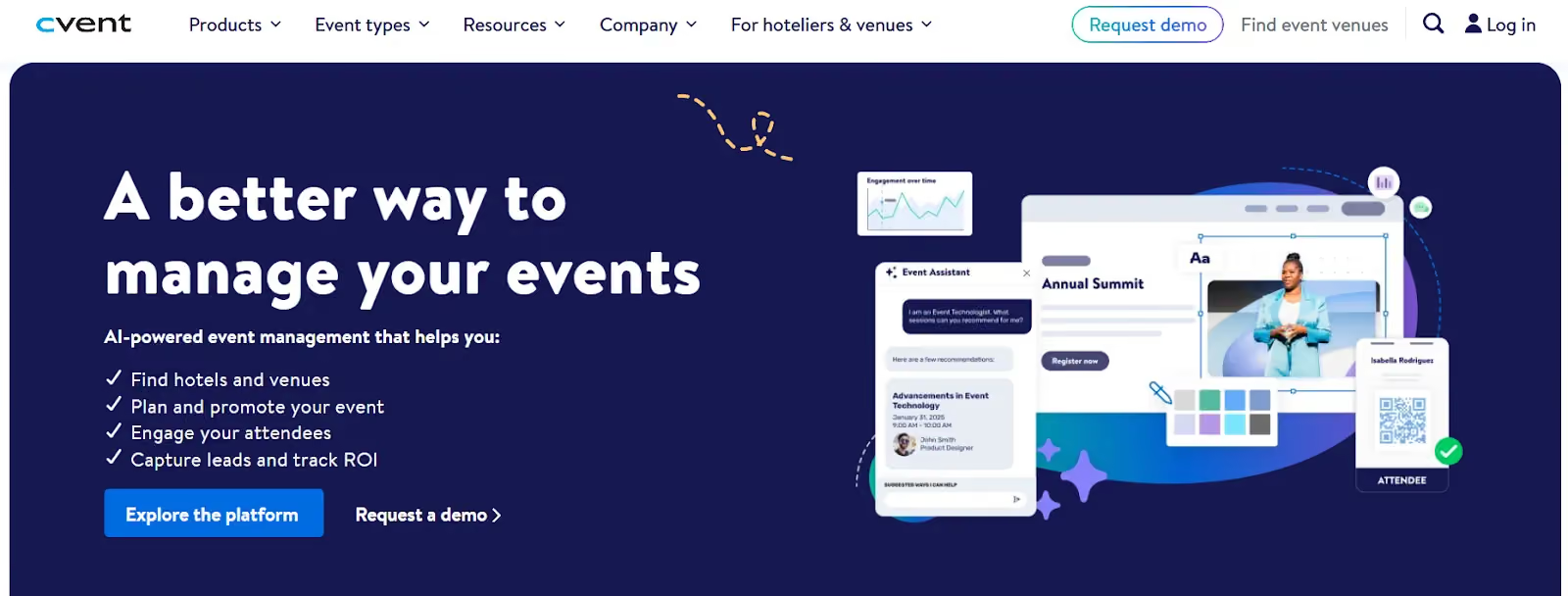
Cvent approaches events from a horizontal enterprise operations perspective, trying to be everything to everyone. Need to source venues through their Supplier Network? Check. Want to manage complex multi-track conferences? It supports it. Require detailed seating charts and meal preferences? They've got you covered. But these are features built for corporate trade shows and association conferences.
While Cvent does offer some education integrations through third-party connectors, these generic solutions don't fully understand the nuances of advancement workflows, constituent management, or the specific needs of institutions managing alumni databases of any size.
Eventbrite takes the horizontal approach to its extreme, democratizing event creation for anyone. Their platform makes it incredibly easy to create an event page, sell tickets, and check people in with their mobile app. Their marketplace helps events get discovered by 93 million potential attendees. But those attendees are looking for concerts and workshops, not exclusive alumni gatherings.
As a horizontal platform, Eventbrite not only includes features you'll never use (like public marketplace visibility) but also suffers from limited customization options for your registration pages and checkout process.
Users consistently report that branding options are restrictive, making it difficult to maintain your institution's visual identity throughout the registration experience. Combined with slow customer support response times and high fees that increase with event size, these limitations make Eventbrite poorly suited for sophisticated alumni engagement programs.

Almabase understands that alumni events exist within a larger engagement ecosystem specific to educational institutions and expanding nonprofit organizations. As a purpose-built advancement platform, every feature is designed for advancement teams.
When someone registers for your reunion through Almabase, it's not just a transaction. Their registration updates their alumni record through deep integrations with Blackbaud and other advancement systems, triggers automated communications, adds them to relevant segments for future outreach, and provides advancement officers with real-time insights into who's engaging with your institution.
Every event becomes a strategic touchpoint in your advancement strategy, with proper finance management tracking, not an isolated activity managed in a horizontal platform.

Let's look at how each platform handles the core aspects of event management.
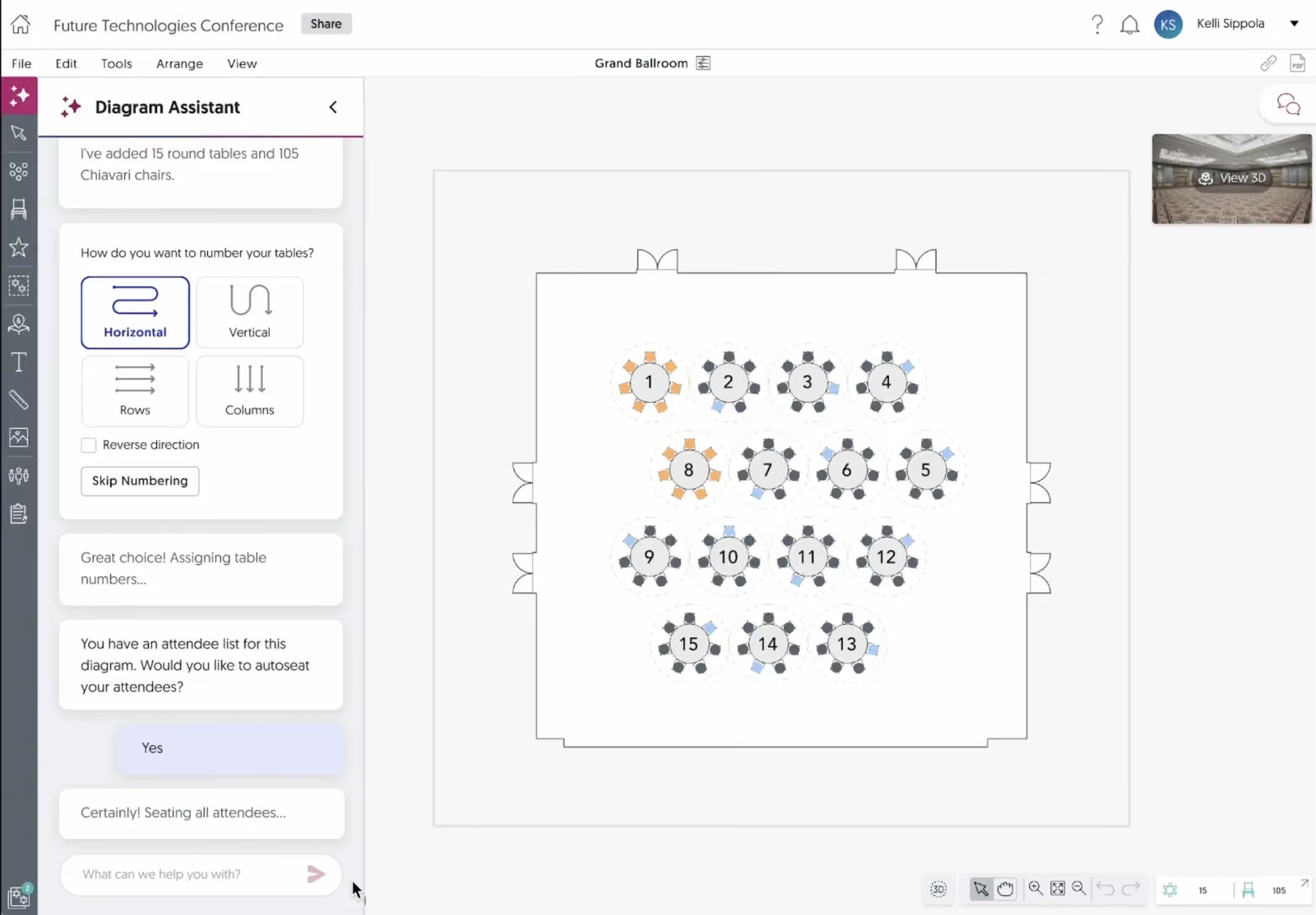
Cvent's horizontal approach is comprehensive. Their event creation process involves multiple stages, from defining event details to configuring registration paths, setting up sessions, and managing accommodations.
The platform offers incredible depth, with features like reserved seating maps, exhibitor management, and detailed analytics. But this power comes at a cost. Most of these features are irrelevant for educational institutions. After all, you’re not managing trade show exhibitors at your reunion.
Users report spending weeks learning the platform, and while some implementations can be completed in about two months, enterprise rollouts can extend much longer depending on complexity.
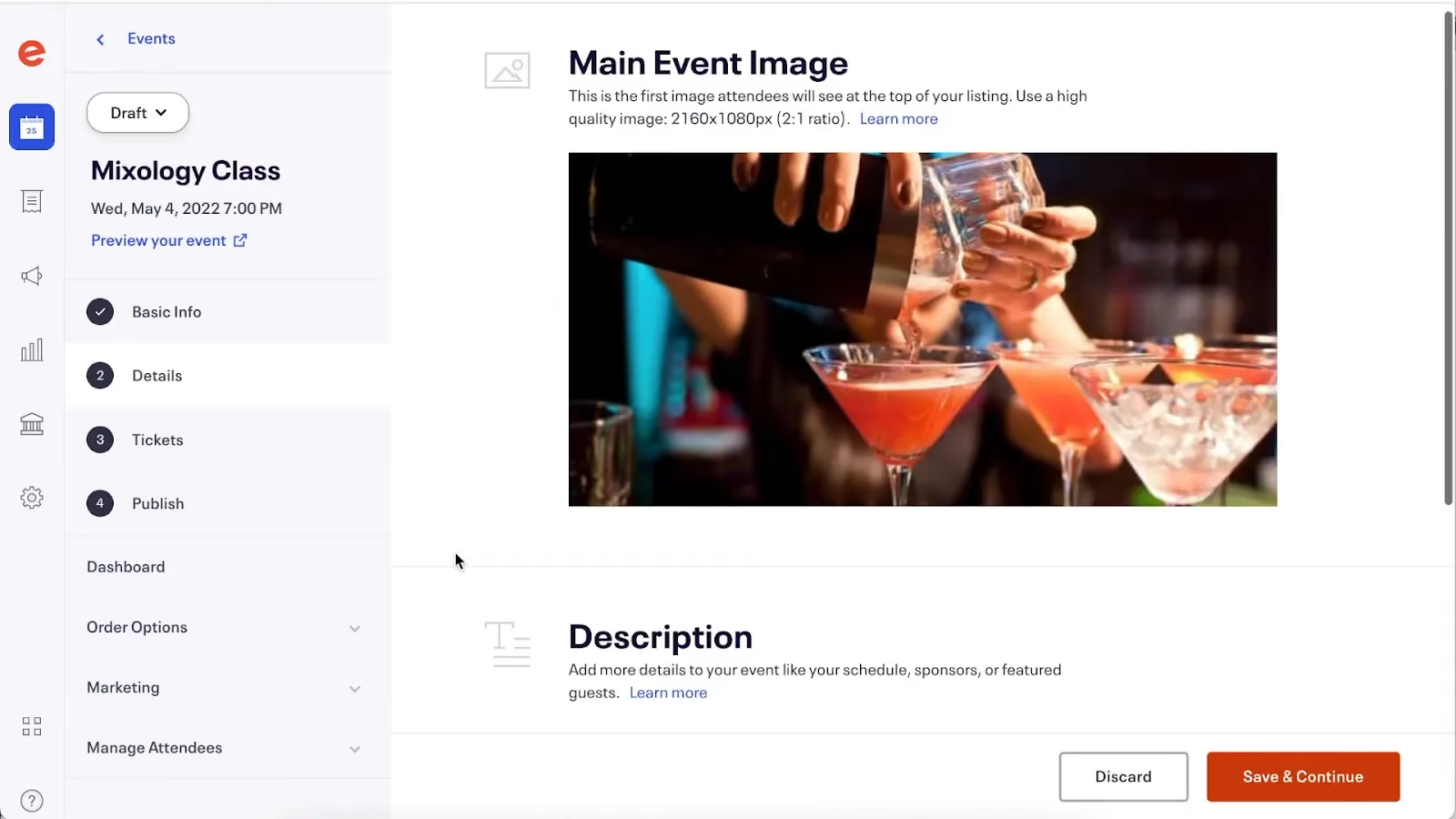
Eventbrite's horizontal approach is refreshingly simple.
You can create an event in minutes using their streamlined interface. Choose your event type, add a description and image, set up tickets, and publish. Their AI-powered tools can even generate event descriptions automatically.
The platform handles the basics brilliantly: ticketing, registration, and check-in. But as a horizontal platform designed for everything from yoga classes to music festivals, it lacks the education-specific features needed for complex alumni events with multiple activities, reunion classes, and varied pricing structures tied to giving levels.
The limited customization extends beyond just branding because users report frustration with inflexible email templates and restricted options for tailoring the registration flow to match institutional processes.
Almabase's vertical approach balances sophistication with usability, purpose-built for educational advancement.
It handles multi-day reunions with various sub-events, conditional ticket visibility, and complex pricing tiers, all while maintaining an interface that advancement teams can actually use.
Key differentiators include comprehensive end-to-end event management with badge generation and distribution, automated email workflows specific to alumni events, the ability to include fundraising options during registration, and guest itineraries that clearly show personalized schedules.

Plus, institutions can create custom branded event pages using no-code tools and publish them directly on their own websites, maintaining complete brand control while leveraging Almabase's infrastructure as a content delivery network.
Cvent offers integrations with business CRMs like Salesforce and Microsoft Dynamics.
These are powerful but designed for B2B sales tracking across all industries. They're built for tracking business contacts and sales opportunities, not alumni relationships, giving history, or the complex household structures common in advancement databases.
While Cvent can connect to some education systems through third-party tools, you're still dealing with data mapping challenges and the fundamental mismatch between horizontal CRM structures and advancement database needs.

Eventbrite provides integrations through platforms like Zapier and other connectors, offering both one-way and two-way data flow capabilities.
However, these integrations lack understanding of the complex relationships in advancement databases (soft credits, household management, giving history, pledge tracking). You'll likely spend significant time after each event ensuring data accuracy and maintaining constituent records because this is time that advancement teams of any size can't afford to waste.

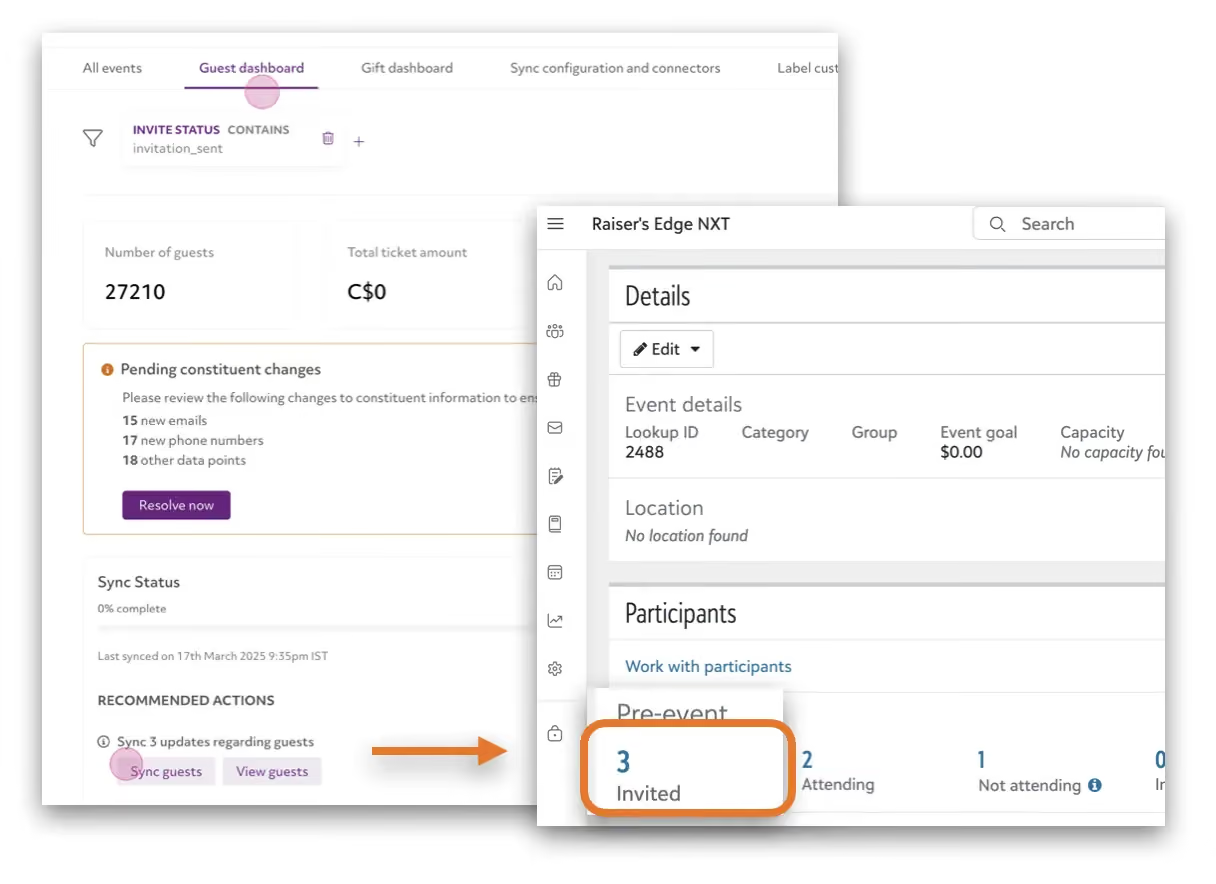
Almabase offers something different: native integration with advancement-specific systems, particularly excelling with its two-way Blackbaud ecosystem integration. The platform seamlessly retrieves data from and pushes data back to Blackbaud products, while also supporting integrations with Raiser's Edge NXT and Salesforce.
When an alumnus registers for an event, their participation is automatically recorded in their constituent record. Payment information flows directly to gift records through integrated finance management. Event attendance updates engagement scores.
Cvent uses a quote-based enterprise model with annual contracts and per-registrant fees.
Since it serves all industries, you're paying for capabilities designed for corporate conferences that you'll never use. You're looking at significant upfront costs, long-term commitments, and pricing that assumes you're running numerous large events annually.
The ROI calculation works for corporations running massive trade shows but rarely pencils out for alumni relations teams at educational institutions regardless of their alumni database size.
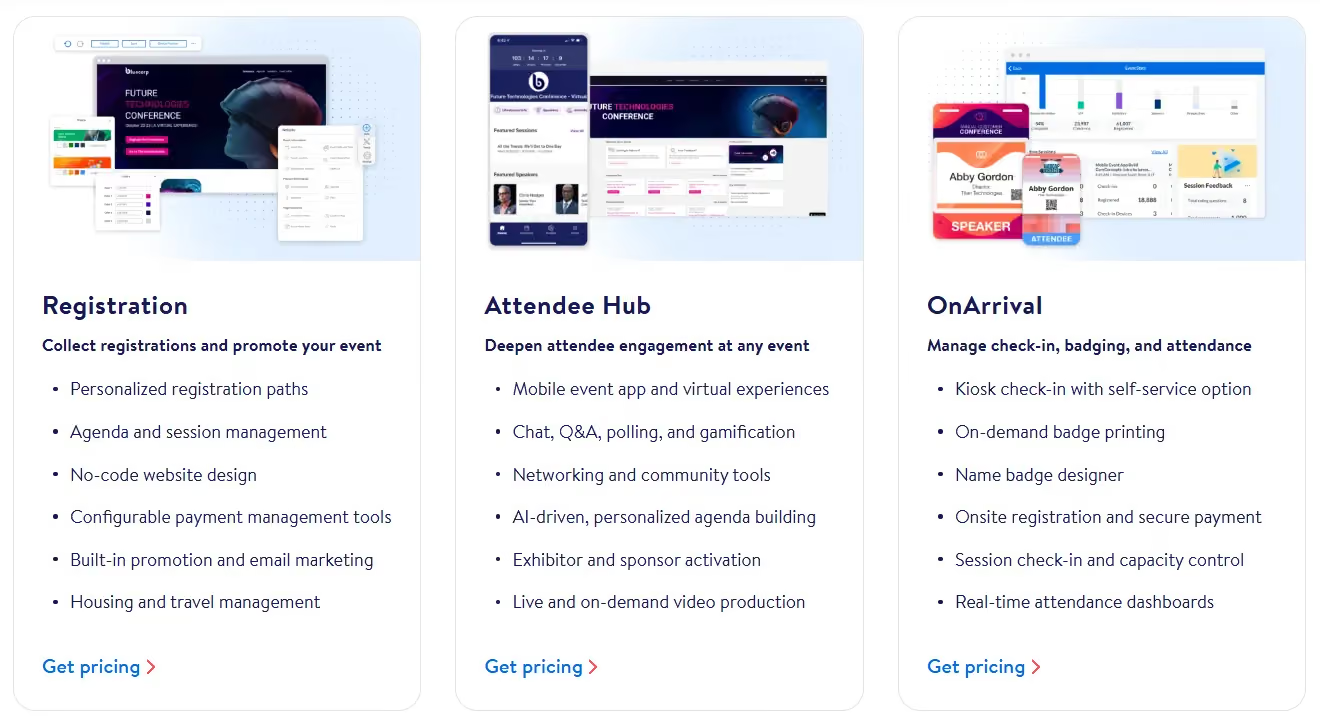
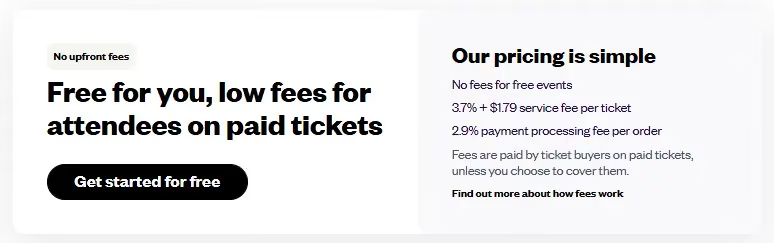
Eventbrite charges per ticket (3.7% + $1.79), which seems reasonable until you realize these fees add up quickly for larger events.
Combined with the fact that you're paying for horizontal features you don't need (marketplace visibility for public discovery) while missing ones you do (alumni data management, finance tracking for advancement), the value proposition weakens.
Free events are free to host and still provide data and reporting capabilities, though this data isn't automatically integrated with Blackbaud or other CRM systems and their reporting tools are less detailed than what advancement teams typically require.
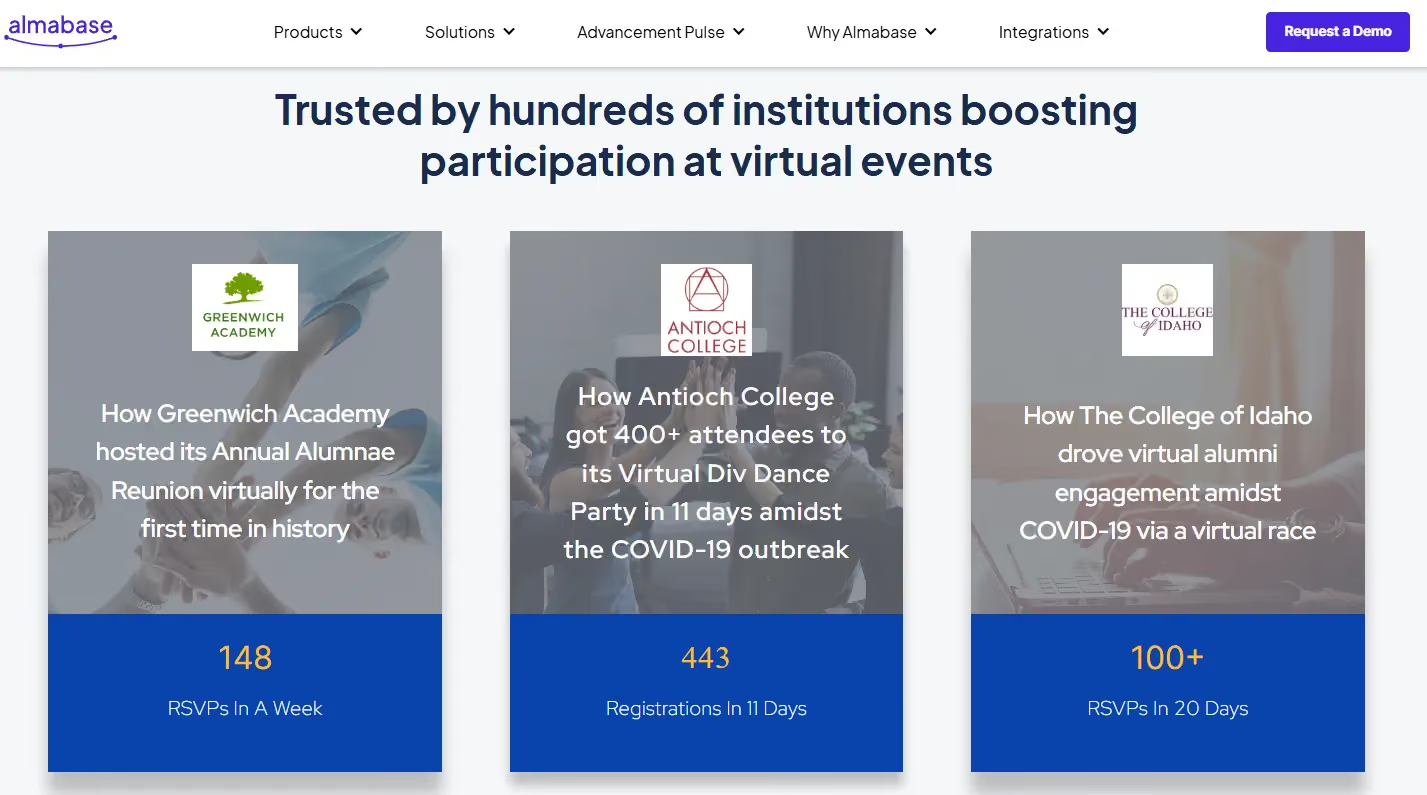
Almabase prices based on your contactable alumni database size, which makes sense for a specialized advancement platform.
You're not just buying event management; you're investing in a comprehensive alumni engagement platform designed specifically for educational institutions and expanding nonprofits. The cost is justified by the efficiency gains across your entire advancement operation, from events to giving campaigns to finance management, because the value extends far beyond isolated event functionality.
Here's what horizontal platforms like Cvent and Eventbrite fundamentally miss: alumni events in higher education don't exist in isolation. Modern educational institutions need integrated systems that connect every touchpoint.
Your events are part of a larger engagement strategy that includes:
While both Cvent and Eventbrite offer email marketing capabilities and Eventbrite supports fundraising through donation tickets, neither provides the comprehensive suite of education-specific features needed for a complete engagement strategy.
Almabase provides all of these in an integrated vertical platform, including alumni directories, mentorship programs, job boards, and business directories.
When an alumnus attends your entrepreneurship panel, they might join the business directory, sign up as a mentor, and increase their annual giving, all while being tracked in a single system with proper finance management that feeds back to your Blackbaud or other CRM systems.

Cvent, Eventbrite, and other horizontal platforms would require you to bolt on multiple additional platforms to achieve similar functionality, creating data silos, integration challenges, and higher overall costs.
All three platforms support virtual events, but they prioritize different use cases.
Cvent's Attendee Hub is built for large-scale virtual conferences with multiple tracks, exhibitor booths, and networking lounges, which are features designed for horizontal use cases like trade shows.
It's impressive technology, designed to handle events scaling to hundreds of thousands of attendees, though it's primarily oriented toward corporate events rather than intimate alumni gatherings or donor cultivation events.

Eventbrite provides virtual event support through integrations with streaming platforms like Zoom, Vimeo, and YouTube.
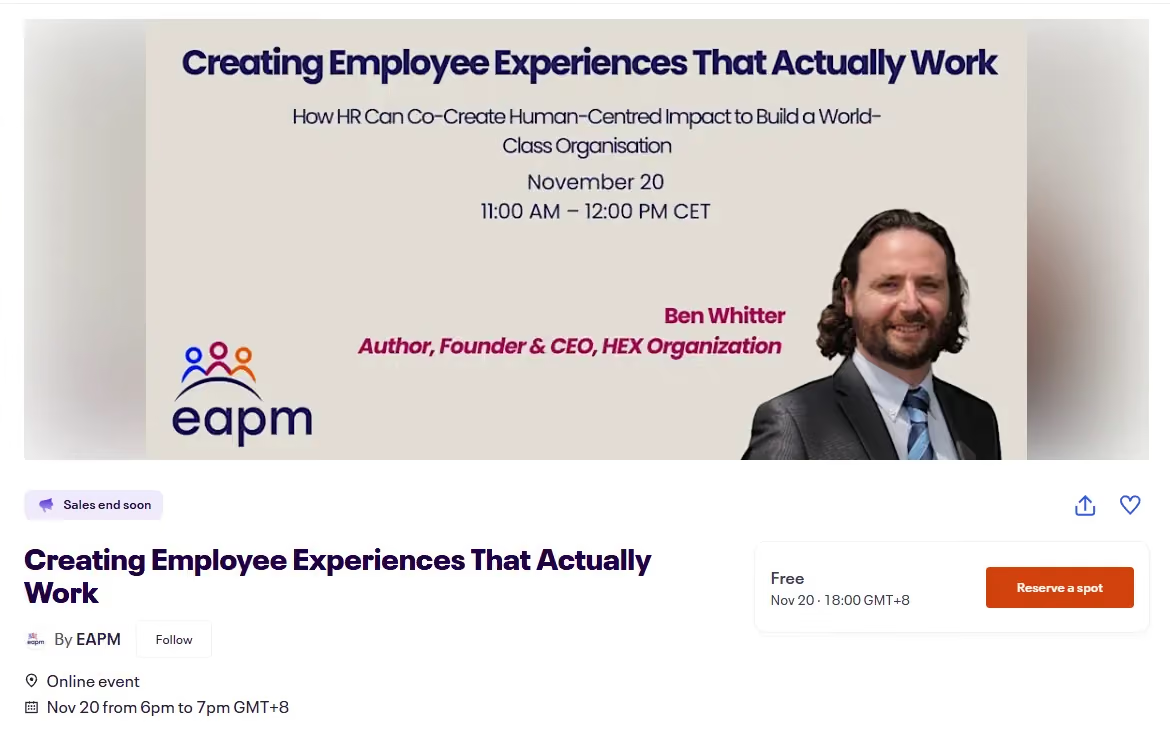
You can sell tickets to any type of online event and provide access links, with basic analytics and reporting available, though engagement tracking depends largely on your chosen streaming platform and won't integrate with your advancement systems.
Almabase approaches virtual events as another touchpoint in the alumni journey, purpose-built for education and nonprofit engagement.
Their Zoom integration handles registration and attendance tracking, with enhanced participation tracking features in development. Virtual attendees can still access alumni directories, participate in giving campaigns, and network with classmates, all within the same platform.
Custom branded virtual event pages can be created and published on your institutional website, maintaining a cohesive experience whether events are in-person, virtual, or hybrid.
Cvent provides 24/7 support but assumes you have dedicated event professionals on staff who understand general event management.
Their implementation process can range from a couple of months for simple setups to much longer for enterprise deployments, often involving consultants and project managers. This makes sense for enterprises with event teams but can overwhelm smaller advancement offices at educational institutions.

Eventbrite offers tiered support based on your plan, with options including email, chat, and phone support.
The platform is self-service by design, which works for simple events but users frequently report slow response times from their support team. Also, their support staff won't understand the specific needs of alumni gathering requirements or advancement operations, and may take days to resolve issues that are critical during event registration periods.
Almabase provides 24/7 support with a crucial difference: they understand advancement and are built for alumni events. As a bootstrapped, customer-first organization, their support consistently receives high ratings from educational institutions.

Their support team knows what Blackbaud is, understands gift processing and finance management, and can help with alumni engagement strategies specific to higher education in the US, UK, and Canada. The onboarding isn't just technical setup; it's strategic consultation on building your alumni engagement program for institutions of all sizes.
During critical periods like giving days and homecoming events, their priority support ensures your events run smoothly.
The choice becomes clear when you focus on your needs as an educational institution or nonprofit organization.
Choose Cvent if:
Need enterprise-scale power? Request a demo of Cvent now.
Choose Eventbrite if:
Choose Eventbrite if simplicity matters. Sign up to get started.
Choose Almabase if:
The reality is that most educational institutions don't need the horizontal complexity of Cvent or Eventbrite with their irrelevant features for all industries. They need a vertical platform that understands that every alumni event is an opportunity to strengthen relationships, gather data, manage finances, and advance their mission.
Ready to see how Almabase transforms your alumni events from isolated activities into integrated engagement opportunities? Schedule a demo to explore an advancement platform built specifically for educational institutions of all sizes.
Subscribe
See how modern advancement teams bring alumni engagement and fundraising together.
Plan faster. Execute better
Explore free templates designed for alumni and fundraising teams.
.png)

.avif)
What started in 2012 as a small social media campaign has grown into a global giving phenomenon that now inspires millions across 90+ countries to support the causes they love, all in just 24 hours. This brings us to the point of this blog. The fundraising platform you choose to build your Giving Tuesday events and fundraisers on can make or break your annual experience drastically.
We’ve curated a handful of platforms designed for education-focused teams to do more with less, so you can spend time building relationships, not battling technology.
Here’s a closer look at some platforms that can help your institution raise more and engage better for this year’s Giving Tuesday and beyond. Let’s get started:

Almabase often comes up first when education teams want a platform that balances rich tools with actual ease. It is purpose-built for advancement, blending fundraising, alumni engagement, and events into one modular platform. It shines when teams want depth, data, and scalability with the support of a dedicated team. Here’s how it stacks up-
Advancement teams that want a long-term, comprehensive platform to integrate fundraising with a strategic alumni engagement and community-building effort.
Almabase offers pricing based on your needs and the size of your alumni and donor base that you want to engage with. You can book a personalized demo and get a quote here.

Givebutter is known for its modern, donor-friendly design and transparent pricing. It combines crowdfunding, peer-to-peer fundraising, and event ticketing in one platform. Here’s how it stacks up –
Schools, nonprofits, and small teams wanting an easy-to-launch Giving Tuesday campaign platform with built-in social tools and no upfront software cost.
It operates on a 100% transparent tip-or-fee model, meaning it's free to use with a voluntary tipping system. Organizations can choose to cover the platform fee themselves or let donors cover it with an optional tip.

Donorbox is a platform known for its focus on providing a secure, reliable, and conversion-optimized donation experience through its simple, yet powerful, features. It is designed for nonprofits of all sizes, including schools and universities with diverse fundraising needs.
Mid-sized to large schools and universities that need a reliable, cost-effective, and conversion-optimized tool to run a Giving Tuesday campaign, especially for direct online appeals and recurring giving.
Donorbox offers a free standard plan, a pro plan at $150/month, and a premium plan with custom pricing.

Givecampus is a fundraising platform for educational institutions, empowering fundraisers at every stage of the fundraising lifecycle. Its core value proposition is its deep understanding of and specialization in the unique needs of schools and universities, from online giving days to volunteer management.
Key Features
Large, established colleges and universities with a strategic focus on alumni engagement and a dedicated advancement team that can leverage its enterprise-grade features for a high-impact Giving Tuesday.
GIveCampus has three platform plans: Essentials, Professional and Enterprise. On top of this, your price will vary depending on the modules you need.

Bonterra, formerly a suite of tools including EveryAction, is a comprehensive, enterprise-grade solution that has garnered a reputation as a robust fundraising platform for larger nonprofit organizations with complex needs. It aims to provide a single, unified solution for fundraising and donor engagement.
Large universities and institutions that need a long-term, comprehensive CRM and fundraising solution, and for whom Giving Tuesday is a part of a larger, integrated annual giving strategy.
Tailored to the organization's unique needs, with pricing based on size, complexity, and features.

Onecause is a fundraising platform with a particular focus on events, auctions and peer-to-peer campaigns. It is designed to help organizations streamline the guest experience and run successful events.
Educational institutions with a Giving Tuesday strategy built around a live or virtual event, auction, or other high-energy initiative.
Onecause has different pricing plans based on which features you need to use between fundraising and text-to-give, auction and events, and peer-to-peer fundraising.
Maybe you just need a simple crowdfunding platform this year to complement an event you are already planning with another tool, or you just want to use an easy-to-set-up fundraising page with names that have become synonymous with raising money for causes. If that’s what you’re looking for, here are some of the popular ones to choose from:
…and more depending on your institution’s geographic location.
Not every platform is built with education teams in mind, and choosing wrong can cost you both time and momentum. With so many options, the right fit depends on what your team actually needs, not just flashy features. So, while deciding, keep these factors in mind:
Want a deeper breakdown of these essentials? Take a look at our guide on giving day platform features every institution should consider.
The right Giving Tuesday platform should lighten your team’s load while helping you hit ambitious goals. The platforms we’ve covered are built with education teams in mind; it’s just a matter of matching your goals, team size, and budget to the right solution. Once done, you’ll set yourself up for more than just a one-day win.

6 Great Giving Tuesday Platforms for Schools & Universities (2026)
Lorem ipsum dolor sit amet, consectetur adipiscing elit. Suspendisse varius enim in eros elementum tristique. Duis cursus, mi quis viverra ornare, eros dolor interdum nulla, ut commodo diam libero vitae erat. Aenean faucibus nibh et justo cursus id rutrum lorem imperdiet. Nunc ut sem vitae risus tristique posuere.

Sharada Koti
August 26, 2025
12 minutes
Event planning in the education sector is no small feat. From homecoming and graduation ceremonies to parent-teacher conferences and student workshops, K-12 schools and higher education institutions juggle a dizzying array of events each year. The right event management software can be a game-changer—streamlining registrations, automating communications, and ensuring every detail runs smoothly. In this guide, we'll break down what event management software is, what features to look for, and the top solutions for 2026 that are transforming event coordination software for schools, colleges, and universities.
.avif)
An event management software is a digital platform designed to streamline the entire event lifecycle—from planning and promotion to registration, execution, and post-event analytics. These event planning software solutions centralize all event-related tasks, making it easier to coordinate logistics, track attendees, manage communications, and measure event success. For educational institutions, an event management tool can handle everything from classroom bookings and campus tours to large-scale conferences and alumni reunions.
Modern event management platforms often offer features such as:
By automating manual processes and centralizing information, these platforms help schools and universities save time, reduce errors, and deliver a seamless experience for staff, students, parents, and alumni.
With so many event management tools on the market, it’s important to choose one that fits your institution’s specific needs. Here are key factors to consider:
Below, in no particular order, are our picks of some of the top event management software platforms making waves in the education sector this year.
Almabase is an all-in-one event management platform designed specifically for educational advancement, alumni relations, and fundraising teams. It streamlines the planning and execution of complex events—whether in-person, virtual, or hybrid—while offering seamless CRM integration and a user-friendly interface.
Almabase offers personialized custom pricing based on your needs, number of constituent records, etc. You can request a personalized demo here
Blackbaud is a comprehensive solution built for large nonprofits and institutions, offering robust event planning, CRM, and analytics tools. Its event management features are deeply integrated with donor data to maximize fundraising outcomes.
Custom pricing. Request a quote.
Cvent delivers enterprise-grade solutions trusted by higher education institutions managing complex, large-scale events—from campus-wide conferences to alumni reunions.
Custom pricing. Request a demo.
Bonterra’s fundraising software includes specialized solutions and features for nonprofit events, auctions, peer-to-peer fundraisers, and giving days, along with unified donor management tools. Its event management features include ticketing, sponsorship tracking, mobile bidding, and more. Ultimately, Bonterra helps organizations streamline their events with a centralized fundraising and donor management solution.
Custom pricing. Request a demo.
Idloom is crafted specifically for universities and colleges, supporting diverse academic events from online examinations to graduation ceremonies.
Custom pricing. Request a demo.
Eventbrite is a versatile event management platform perfect for everything from concerts to community meetups. It offers intuitive tools for ticketing, promotion, and on-site check-ins, making it easy to manage both virtual and in-person events.
Pricing is 2% + $0.79 per paid ticket (Essentials) or 3.7% + $1.79 per paid ticket (Professional); free for free events. See pricing.
Eventcube is a white-label event management platform for K-12 schools and higher education institutions. It helps you manage all the in-person, virtual, and hybrid events with full control. This includes your branding, ticketing, and attendee engagement.
It is designed for flexibility and accessibility. This makes Eventcube reliable for day-to-day events like open days, student conferences, parent meetings, community gathering and even virtual graduation ceremonies.
Eventcube offers tiered pricing. 5% of the transaction total for the Starter package which is free. 3% of the transaction total for Pro along $99 a month. And custom Enterprise options. You can start with a demo or create a branded ticket store directly on Eventcube.
Giveffect combines event management with nonprofit automation, allowing you to handle ticketing, email campaigns, and donor records in one platform. It’s ideal for organizations looking to unify event planning with fundraising and CRM.
Custom pricing. Request a demo.
Remo, now integrated with Events.com, delivers an immersive platform for virtual, hybrid, and in-person events, with unique emphasis on networking and engagement.
Starts at $299 per month. See pricing.
Qgiv supports nonprofits with customizable tools for event registration, peer-to-peer fundraising, and mobile giving. Its user-friendly interface makes it easy to plan and promote fundraising events of all sizes.
Plans start at $0/month with no contracts, plus a 3.95% + $0.30 per transaction fee. Learn more.
Choosing the right event management software can transform how your institution plans, promotes, and executes events—whether you’re managing a single school assembly or a multi-day university conference. The platforms highlighted above offer a range of solutions tailored for K-12 and higher education, each with unique strengths and a few caveats to consider. Take advantage of free demos, explore user reviews, and assess your specific needs to find the event management tool that will best support your school’s goals in 2026 and beyond.
Looking for more inspiration? Explore event ideas that raise money and connect with alumni or see how advanced event management can drive registrations and engagement for your institution.

Best Event Management Tools for K-12 & Higher Ed (2026)
Lorem ipsum dolor sit amet, consectetur adipiscing elit. Suspendisse varius enim in eros elementum tristique. Duis cursus, mi quis viverra ornare, eros dolor interdum nulla, ut commodo diam libero vitae erat. Aenean faucibus nibh et justo cursus id rutrum lorem imperdiet. Nunc ut sem vitae risus tristique posuere.

Anwesha Kiran
April 30, 2025
12 minutes
The best peer-to-peer fundraising platforms help educational institutions and nonprofits boost donor engagement through personalized giving pages, social fundraising, and CRM integration. These tools streamline campaigns with built-in analytics, gamification, and mobile optimization. While some options are completely free, others cater to large-scale fundraisers that require advanced data synchronization and scalability.
The right tools can make all the difference in modern fundraising. In this blog, we’ll highlight some of the best options on the market and explore what you can expect out of them.
.avif)
Peer-to-peer fundraising, or P2P fundraising, is a type of crowdfunding in which your organization encourages its supporters to fundraise for your cause. Typically, these supporters will create an individual fundraising page and share it with their friends, family members, and social media followers to raise money.
A peer-to-peer fundraising site is the software that allows your supporters to create a donation page, share it with their personal network, and collect donations to support your mission.
Typically, most fundraising tools today include features such as:
When shopping for a peer-to-peer fundraising tool, you’ll need to weigh the cost of the tool against the value it provides. However, it can be difficult to know the true cost of using the platform, depending on the software’s pricing structure. Get familiar with these common structures:
To compare tools with different pricing structures, calculate what each platform will cost you, on average, for a certain period of time.
Whether you’re a K-12 school ,higher ed institution, or a nonprofit, in no particular order, here are some peer-to-peer fundraising platforms that you should consider:
(Prices are based on publicly available data at the time of writing and are subject to change over time)
Almabase runs on a philosophy of integrating into your CRM and existing workflows, which remains true for their peer-to-peer fundraising features. Almabase boasts native sync with most higher-ed CRMs due to their TrueSync integration, combined with superior customer support and a willingness to integrate your ideas into their long-term vision. Almabase offers customizable pages and leaderboards powered with inbuilt text and email communication features built to drive donor engagement through organic and personalized communication.
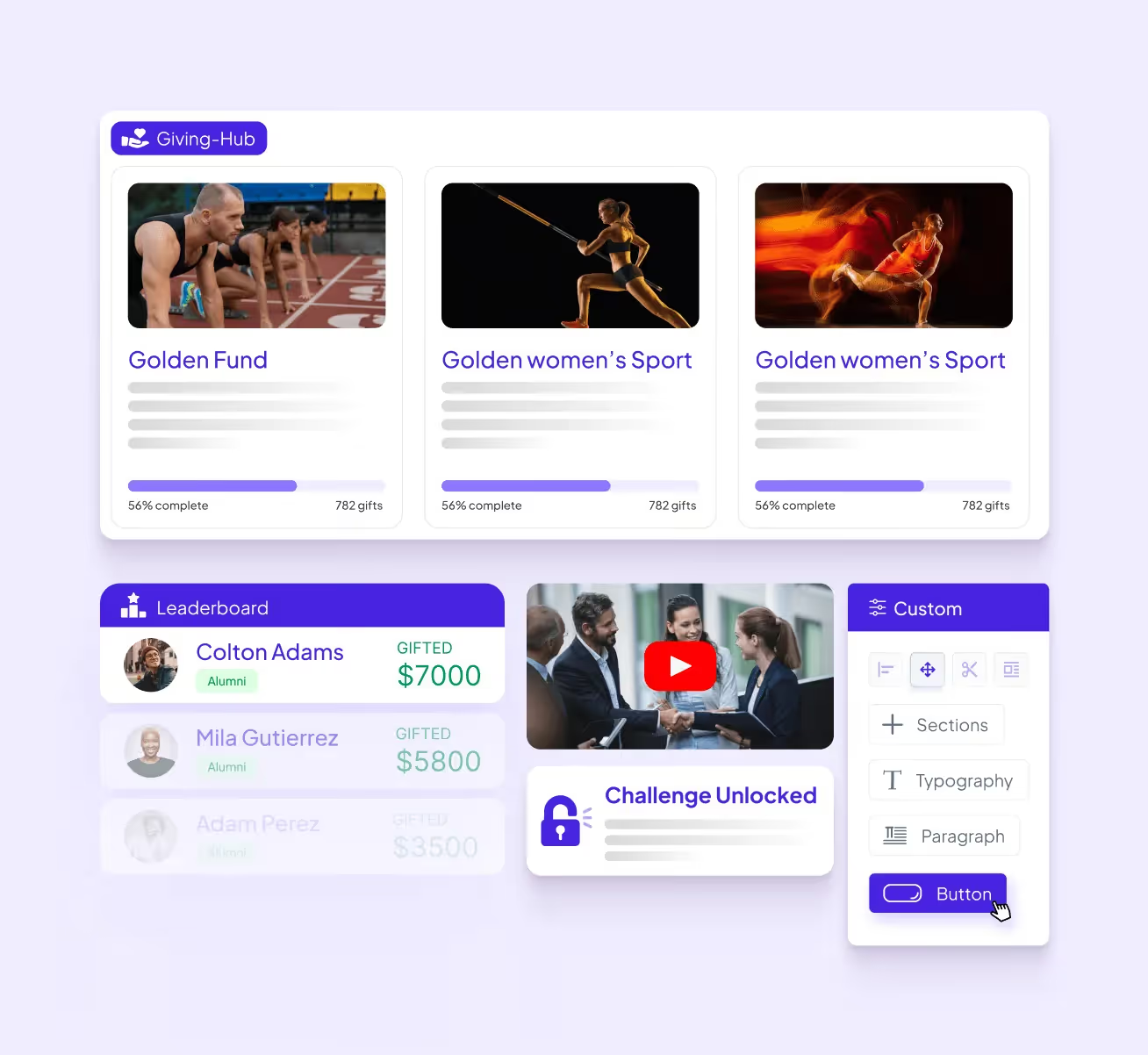
Almabase’s pricing depends entirely on your needs. Learn how Almabase empowers your p2p strategy, Schedule a personalized demo and get a quote.
GoFundMe Pro (formerly Classy) is a peer-to-peer fundraising platform optimized for maximum nonprofit impact. It provides ready-to-use templates for scalable, high-impact campaigns and equips supporters with intuitive tools to advocate for the cause.
GoFundMe Pro offers features like campaign templating, embedded videos and livestreams, progress thermometers, team structures, and mobile-optimized pages. The platform also supports recurring gift options and flexible payment processing, and has a mobile- and user-friendly interface.
GoFundMe Pro offers a standard “Essentials” plan and a “Partner” custom plan.
Bloomerang Fundraising (formerly Qgiv) is a fundraising platform offering tools for donation management, event planning, and donor engagement. It provides features like customizable donation forms, peer-to-peer fundraising, and text-to-give options
Bloomerang Fundraising starts at $40 per month if purchased as part of a bundle with Bloomerang CRM.
Zeffy is a 100% free fundraising platform for nonprofits, offering peer-to-peer fundraising, crowdfunding, donation pages, and recurring giving options. This tool generates revenue through optional tips that donors can provide in addition to their donation. It allows fundraisers to join as individuals or teams and create their own fundraising pages. The platform is also known for being simple, intuitive, and customizable
Zeffy has no fees and instead runs on optional tips from donors.
Donorbox is a fundraising platform that allows nonprofits to launch peer-to-peer fundraisers in a few steps. It provides customizable donation forms and supports recurring donations via various payment methods.
Donorbox also offers features for managing donors, sending personalized emails, and recording donor communications. The platform provides resources like onboarding emails, courses, and templates to support nonprofits in their fundraising efforts.
For peer-to-peer fundraisers, Donorbox charges a flat 1.75% platform fee for a main campaign and 2.95% for a supporter’s campaign.
Bonfire specializes in fundraising through custom merchandise sales. Nonprofits, schools, and even individuals can design their own custom merch and sell it via Bonfire’s free online stores.
Bonfire supports peer-to-peer campaigns (which it refers to as “giving campaigns”) by allowing your supporters to create and share t-shirt fundraisers on behalf of your organization—then, all of the money they raise is sent directly to your nonprofit.
Bonfire is completely free to use, and your nonprofit keeps 100% of the profits. There’s an 8% processing fee on additional donations, but if you verify your nonprofit status with Bonfire, that fee is reduced to 3.5%
Givebutter provides tools to launch peer-to-peer campaigns, complete with donation forms, fundraising pages, event management, a built-in CRM, and marketing tools to analyze your progress and streamline workflows. Their fundraiser teams offer a great choice for organizations looking to gamify their peer-to-peer fundraisers as well.
Givebutter offers a popular “free forever” plan, as well as a paid option starting at $29/month. If your organization opts out of having donors cover fees, Givebutter charges 1% for donation forms, 3% for pages, and 5% for events and auctions, as well as a payment processing charge of 2.9% + ¢0.30 per transaction.
GiveCampus is a fundraising platform for educational institutions, providing solutions for online giving, giving days, crowdfunding, P2P fundraising, and more. It blends peer-to-peer outreach, social media, and gamification to engage more donors and increase fundraising. The platform allows schools to execute giving days, year-end appeals, and crowdfunding campaigns.
GiveCampus also offers features like matches and challenges to inspire donors and make them feel like their contributions are making a difference
GiveCampus has three platform plans: Essentials, Professional, and Enterprise. Additionally, pricing will vary depending on the modules you require.
As a Blackbaud product, JustGiving is a great choice if you are used to the Blackbaud CRM environment. Compared to other platforms on this list, JustGiving is relatively simple both in its presentation and its scope. This makes it an easy choice for teams just starting out or looking for something simple for a one-off event. However, there may be better choices for teams that want a more comprehensive solution that spans multiple fundraisers and year-long campaigns.
JustGiving charges platform fees and a standard payment processing fee based on your geographical location and payment platform. Crowdfunding pages are free to set up. While UK charities do not need to pay a platform fee, they do have a subscription model.
Gravyty leverages predictive AI technology to provide frontline fundraisers with personalized insights into donor behavior. This innovative approach helps organizations enhance their outreach efforts by automating email drafts tailored to individual donors while integrating seamlessly with existing CRM systems. Gravyty's focus on personalization empowers fundraisers to build stronger relationships with donors.
While some information is available online, interested organizations will need to contact Gravyty for a custom quote.
Bonterra’s peer-to-peer fundraising product (formerly DonorDrive) offers smart and customizable P2P fundraising solutions that empower supporters to create personalized experiences at scale. Its features include an intuitive event builder, personalized coaching for fundraisers, gamification elements like leaderboards, social media integrations, and seamless CRM integration, which enhances supporter engagement significantly
Bonterra offers three tiers—Essentials, Pro, and Enterprise—with pricing based on customer needs.
With so many unique platforms out there, choosing the right one can be a little overwhelming. However, there are several key factors to consider when selecting the right peer-to-peer fundraising software for your team:
Each platform will offer peer-to-peer fundraising capabilities, but you should dig a little deeper to find the right fit for your needs. For example, if you are a small team looking to organize a quick fundraiser, you may end up paying for features you don’t need. On the other hand, if you are looking for a long-term solution, a platform without built-in analytics would be a dealbreaker. Look for features that boost, rather than hamper, your fundraising efforts, and aim for a high return on investment.
Many teams want a tool that scales up alongside them as they engage more donors and alumni, but there is often a point where their needs outgrow the platform. To avoid this, consider both your short-term and long-term goals to determine if the platform’s upgraded pricing tiers will meet your team’s requirements later on. This way, you can simply upgrade to a plan with more advanced features or storage rather than migrating to a completely new platform.
Your staff, fundraisers, and donors should all have positive, smooth experiences when engaging with your fundraising pages. For example, if you want to sell custom merch, both the designing process and purchasing process should be easy and intuitive for supporters. From payment processing to reporting workflows to page load times, there are many aspects you should ask about or test out during a free trial or demo to see if a platform is the right one for you.
Some solutions come with a relatively low learning curve but offer limited functionality. Some, on the other hand, can be the driving force behind all your fundraising strategies but may require in-depth technical and/or coding experience. Try to find a balance between the training time required and potential functionality to ensure high adoption.
Pricing is a key consideration for any tool, but it’s also important to consider the nuances that may arise down the line. Always consider the rates associated with upfront costs, renewals, transaction fees, upgraded plans, and other relevant expenses. Additionally, switching to a new platform inevitably leads to more expenses through database transfers and staff upskilling. Consult with your database managers and other staff members before making a decision.
In the event that something goes wrong, you need to be able to reach the platform provider to resolve the issue. Keep factors like response times on live chat or email support channels in mind. For the long term, you also want to support platforms that onboard customer feedback and have detailed roadmaps for upcoming features.
Both your staff and donors need to be assured that sensitive data like payment information will be kept safe and secure. Always look out for a platform’s data encryption measures, as well as its compliance and authentication processes, to see if it inspires confidence from your donors.
Third-party review sites like G2 and Capterra offer insight into what customers think about specific tools. Keep in mind that these reviews are subjective, but they can be a great indication of how a platform is perceived overall, highlighting positive and negative software trends.
There is no single “best” fundraising website, but you can find the one that is best for your organization. Choose a platform that aligns with your goals, budget, audience, and campaign type.
Yes, a reputable fundraising platform should be able to integrate with your CRM to ensure donor data flows automatically into your central database. This eliminates data silos and the need for manual data transfers.
GoFundMe is a popular tool for personal crowdfunding, but it may lack the tools you need to run a full-fledged campaign. The platforms referenced in this guide offer the specialized tools mission-driven organizations need for branding, tracking donor data, and communications.
Crowdfunding is a centralized process led by your organization using a single donation page. On the other hand, peer-to-peer campaigns decentralize fundraising, empowering many supporters to help you raise money. Peer-to-peer campaigns empower supporters to help you raise money, meaning there are many people fundraising for your cause. Make sure your platform has the tools to support a peer-to-peer campaign.
Look for platforms that include gamification features, such as fundraising thermometers, badges, and leaderboards. These tools spark friendly competition among fundraisers and help them visualize their progress to maintain momentum and engagement.
We hope we’ve given you the tools you need to choose or at least consider some of the best peer-to-peer fundraising solutions out there, as well as the questions you need to ask yourself before adopting one. Whether you’re a higher ed institution optimizing your peer-to-peer fundraisers or a K-12 school just looking to get started, we hope you pick out the right solution and can make a great positive change.
If you’ve had successful peer-to-peer fundraisers before, learn how you can build a peer-to-peer fundraising community to help you keep providing meaningful experiences
.avif)
11 great peer-to-peer fundraising platforms for Institutions and Nonprofits 2026
Lorem ipsum dolor sit amet, consectetur adipiscing elit. Suspendisse varius enim in eros elementum tristique. Duis cursus, mi quis viverra ornare, eros dolor interdum nulla, ut commodo diam libero vitae erat. Aenean faucibus nibh et justo cursus id rutrum lorem imperdiet. Nunc ut sem vitae risus tristique posuere.
%201.svg)
%201.svg)
%204.svg)



.svg)