Learn why generic giving pages hurt fundraising results and how customization and tiered giving experiences help universities increase donor conversion rates.
.webp)
Discover AI Summary
• Personalize giving pages to boost donor participation: Generic giving pages often lose donors because they don't connect with their specific interests, like supporting a particular school or cause.
• Guide donors to their passion with tailored paths: For institutions with many departments or funds, implement tiered giving with subpages or a fund search feature to help donors quickly find and support the causes they care about most.
• Craft a visually engaging and unique giving experience: Go beyond standard templates by customizing your page's layout, content, and visual elements to tell a compelling story that resonates with your campaign's specific message.
• Remove friction from the giving process with smart options: Offer clear, preset donation amounts with specific impact labels and ensure a variety of payment methods are available, including Donor-Advised Funds, to make giving easy and impactful.
• Evaluate your giving page's donor-centricity for future campaigns: The goal is to make the journey from a donor’s intent to their gift seamless and relevant, ensuring every touchpoint reinforces their connection to your institution.
Every year, institutions pour significant energy into Giving Days and fundraising campaigns. They craft compelling stories, set ambitious goals, and send thousands of emails. And yet, a surprising number of donors land on the giving page, and leave without giving.
It's rarely about a lack of generosity. More often, it's about a lack of connection.
The donor who graduated from the School of Medicine doesn't see themselves in a generic, one-size-fits-all giving page. The parent who cares deeply about student scholarships scrolls past a cluttered layout with no clear place to land. They came ready to give, but the page didn't meet them where they were.
The solution isn't more urgency or a louder call-to-action. It's relevance. And relevance starts with how you design the donor experience from the very first impression, to the moment they find their cause.
A giving page has three distinct jobs, and most fall short on at least one of them.
Think of it as the entrance to a building. When the lobby is warm, well-designed, and clearly organized, people feel confident walking further in. A giving page that earns the donor's attention opens the door to everything that comes next.
The first is to earn attention to make an immediate impression that signals this campaign is worth a donor's time and trust. The second is to create a path to guide each donor toward the specific cause that personally resonates with them.
Most giving pages are built to do neither particularly well. They look like every other page from the last five years, and they treat every donor the same regardless of their connection to the institution.
The good news is that both problems are now very solvable. Let's walk through how.
A university isn’t one cause. It’s dozens. The alumna from the law school and the parent supporting student life are both valuable donors, but they’re looking for completely different things. If your giving page treats them identically, you’re asking both of them to work for it. Most won’t.
This is the discoverability problem, and it’s especially acute for large institutions running Giving Days with many departments, schools, and funds competing for attention on a single page.

Tiered Giving solves this. Within a single Competitive Giving Page, admins can create Subpages, one for each school, department, or priority cause. Each subpage gets its own card image, summary, campaign goal, and leaderboard. The School of Business tells its story. The School of Medicine shows its momentum. Everything still lives under one Giving Day with one consistent checkout.
Think of it as “n” mini giving pages inside one. A donor lands on the main page, sees the cards, and immediately knows where to go. No scrolling through a flat list hoping to spot the right fund.
For donors who already know exactly what they want to support, fund search lets them look it up directly. Type a name, find the designation, and you’re done. No browsing required.
Discoverability gets donors to the right place. Once they are there, the page still has to earn their attention.
Most giving pages don’t do this well. They look like every other giving page from the last five years. The same layout. The same stock thermometer. The same default sections in the same order. It’s functional, but it doesn’t signal that this campaign is any different from the last one or from the one at the university down the road.
Donors notice this, even if they don’t voice it out. A page that feels generic unintentionally suggests that the institution may not have invested much in the moment either.
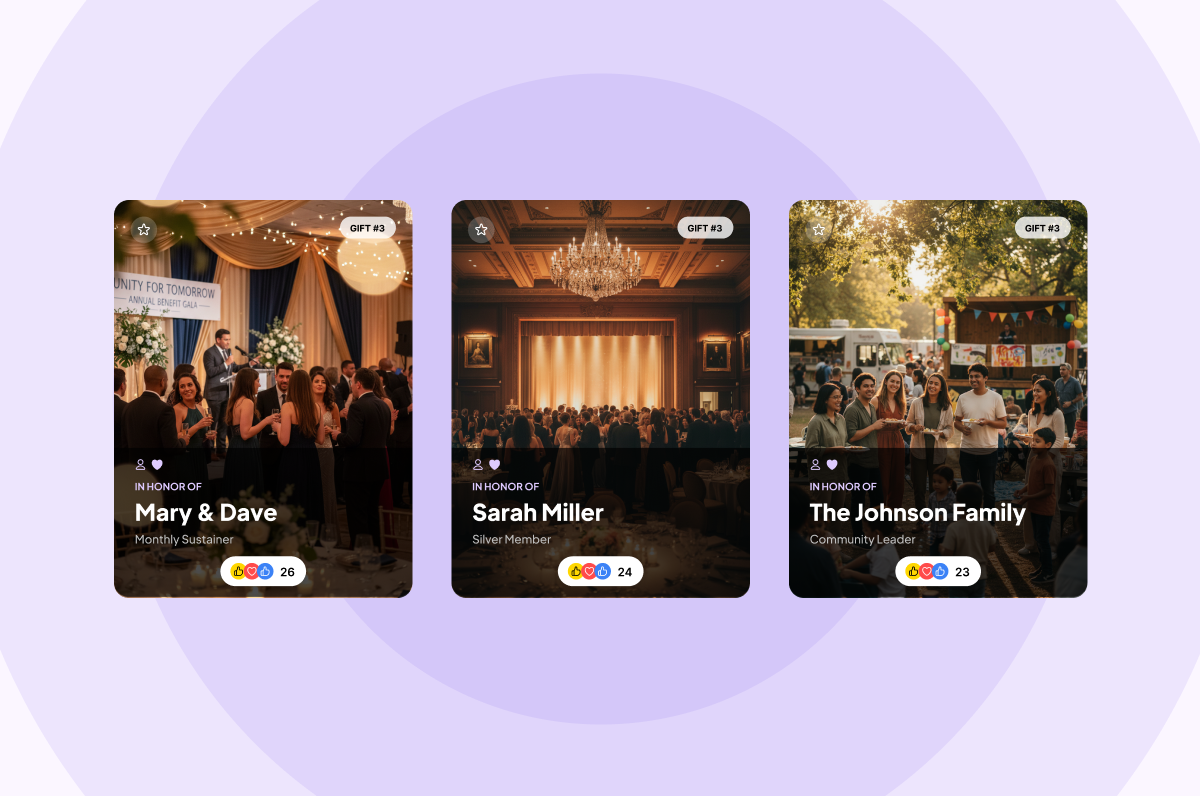
The Customize Page on Almabase changes this. It gives admins direct control over the visual identity of their giving page. Concretely, that means multiple layout options for the hero section, leaderboard, and tributes. A built-in content editor for adding richer storytelling sections beyond the standard fields. Drag-and-drop reordering so the page flow reflects what matters most to your donors. There is also control over elements like the donor ticker, so you decide how social proof appears.
Everything updates in real time through live preview, and it is safe to change during active campaigns. The people closest to the campaign, the ones who know the story, the audience, and the institutional voice, can shape the page directly.
This matters more than it might seem. A giving page that looks considered, with a clear visual hierarchy and a narrative arc that matches the campaign’s energy, sets the tone for everything that follows.

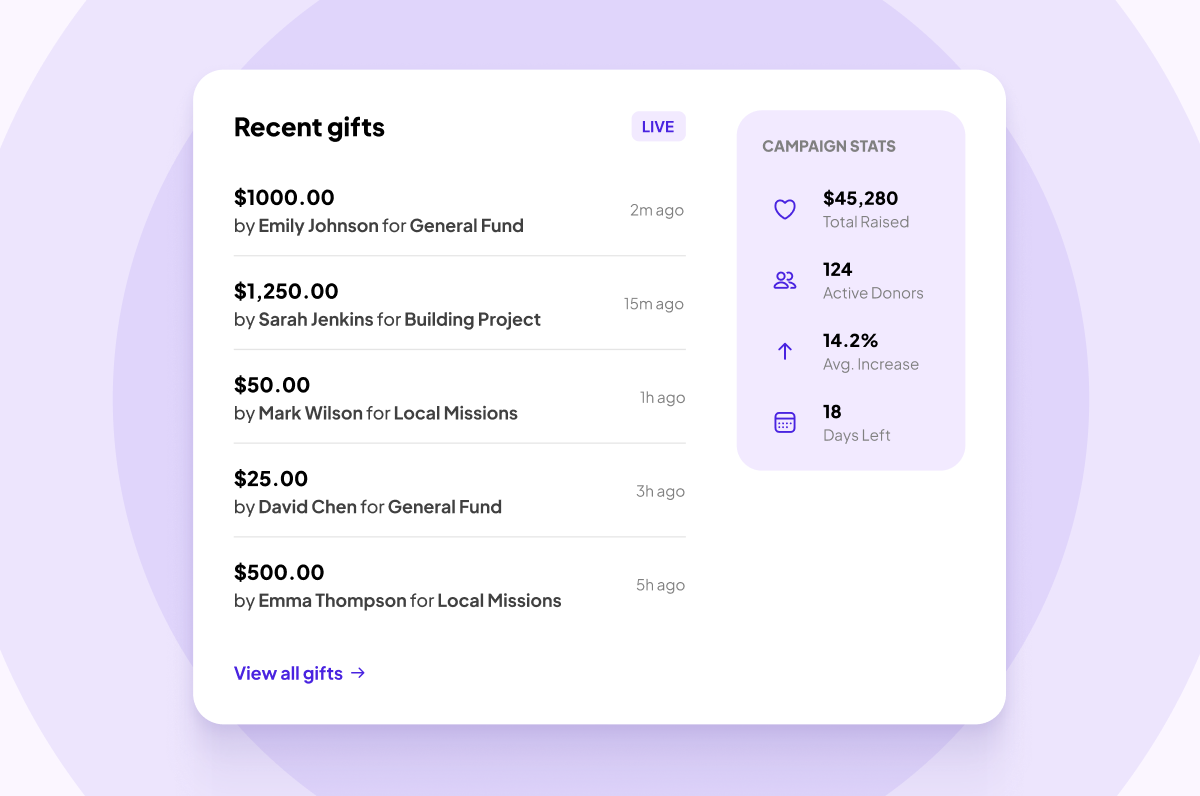
It is the difference between a donor who scrolls passively and one who leans in.
A donor has found their cause. The page has earned their attention. Now comes the part that should be the simplest: making the gift. Yet this is where a surprising number of donors drop off.
Sometimes the donation form feels disconnected from the page they just experienced. Sometimes donors cannot give the way they want to. Sometimes the options on the form don’t help them decide how much to give or why.
These are small friction points, but they add up. They are also fixable.
Donation options can now be configured with preset amounts and labels. Instead of a blank field and a generic “Other” button, donors see choices like “Fund a Scholarship: $100” or “Sponsor a Meal: $25.” Each option communicates impact, which makes the decision easier and the gift feel more meaningful.
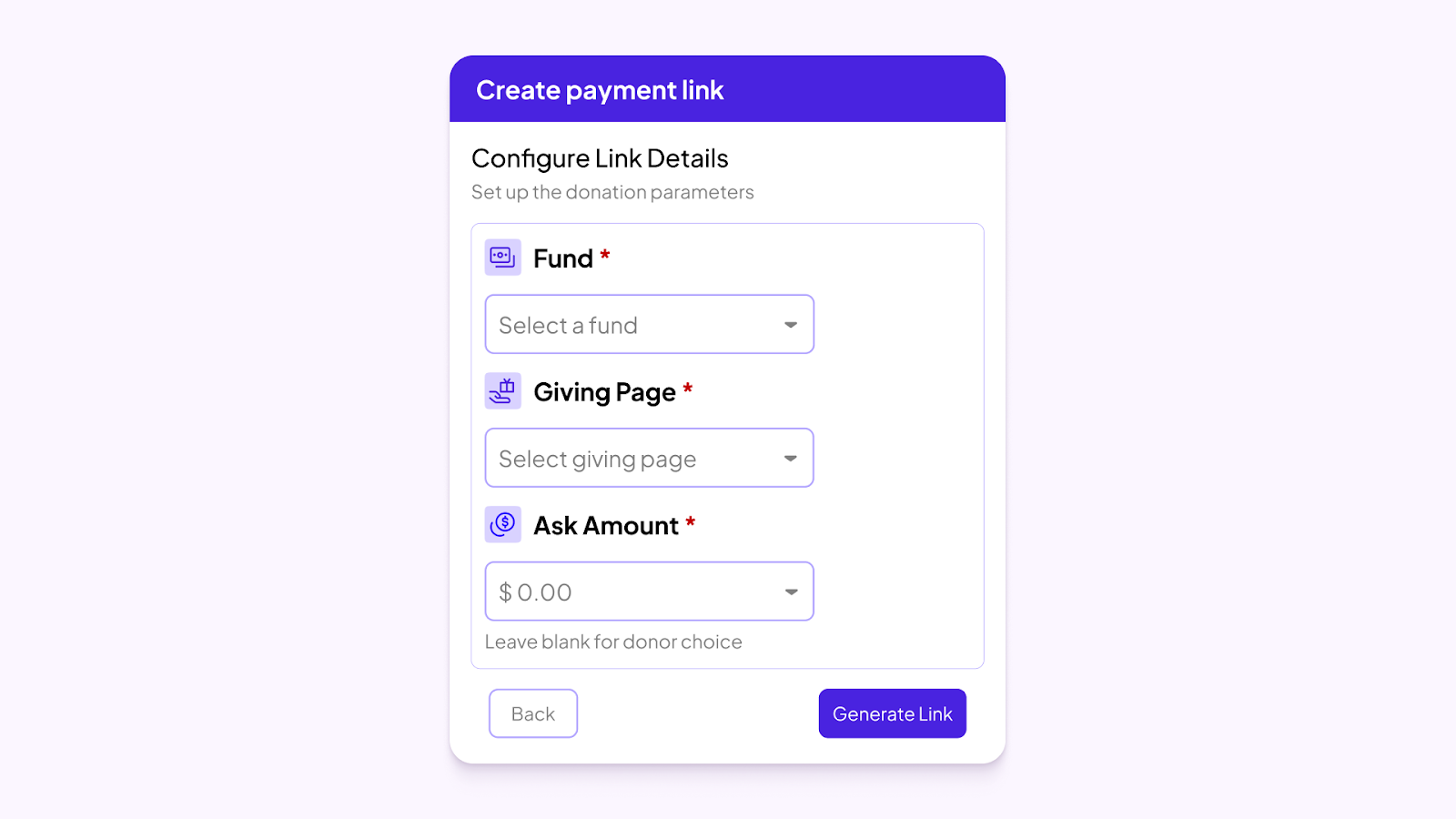
Payment methods matter too. Donors have strong preferences here. If their preferred method is unavailable, some will simply leave. Almabase supports Cards, ACH, PayPal, and Venmo. It now also supports Donor-Advised Funds through DAFpay. DAFs are one of the fastest-growing giving channels, and many donors already have funds set aside for giving. If they cannot use those funds easily on your page, the gift often doesn’t happen. With DAFpay, DAF appears as a native payment option directly in the form, and donors complete the gift without leaving the page.
Across all of this, checkout stays consistent. Whether a donor is giving through a subpage, a main campaign, or a specific fund they searched for, the experience remains the same. The flow doesn’t break. They never lose the thread of where they are or what they are supporting.
These are not three separate features solving three separate problems. They are one experience.
A donor lands on your Giving Day page and immediately finds the school or cause they care about. The page feels intentional and designed for this campaign, not recycled from last year.
Conversion is not about tricks or urgency tactics. It is about removing every unnecessary step between a donor’s intent and their gift. When the path is clear, people follow it.
That is the goal.
As you plan your next Giving Day, it is worth asking a simple question. Does your giving page help donors find their cause, tell a story worth their time, and make giving feel easy?
If not, the opportunity is right there on the page.
Both Customize Page and Tiered Giving are opt-in. If you are running a simpler campaign, nothing changes. For institutions that need their page to reflect the full depth of what they offer, these tools are in your arsenal!.
Table of Contents
Subscribe
See how modern advancement teams bring alumni engagement and fundraising together.
We've all been there. A donor is excited about your mission, they're on your checkout page, they want to help... but the timing just isn't right. Maybe it's the week before a big payment is due. Maybe they're waiting on a bonus. Maybe they just need a little more time.
Until now, you had two choices: lose that moment of connection entirely, or manually chase down pledges through spreadsheets and follow-up emails. Neither option is ideal.
Today, that changes.
We're excited to roll out a feature that lets you capture donor intent in the moment, even when they can't pay immediately. With "Pledge for later," your supporters can commit to a future gift right on your checkout page, and you can track every step of that commitment without lifting a finger.
Think of it as meeting donors where they are: ready to commit, just not ready to pay today.

Here's what you can do now that you couldn't before:
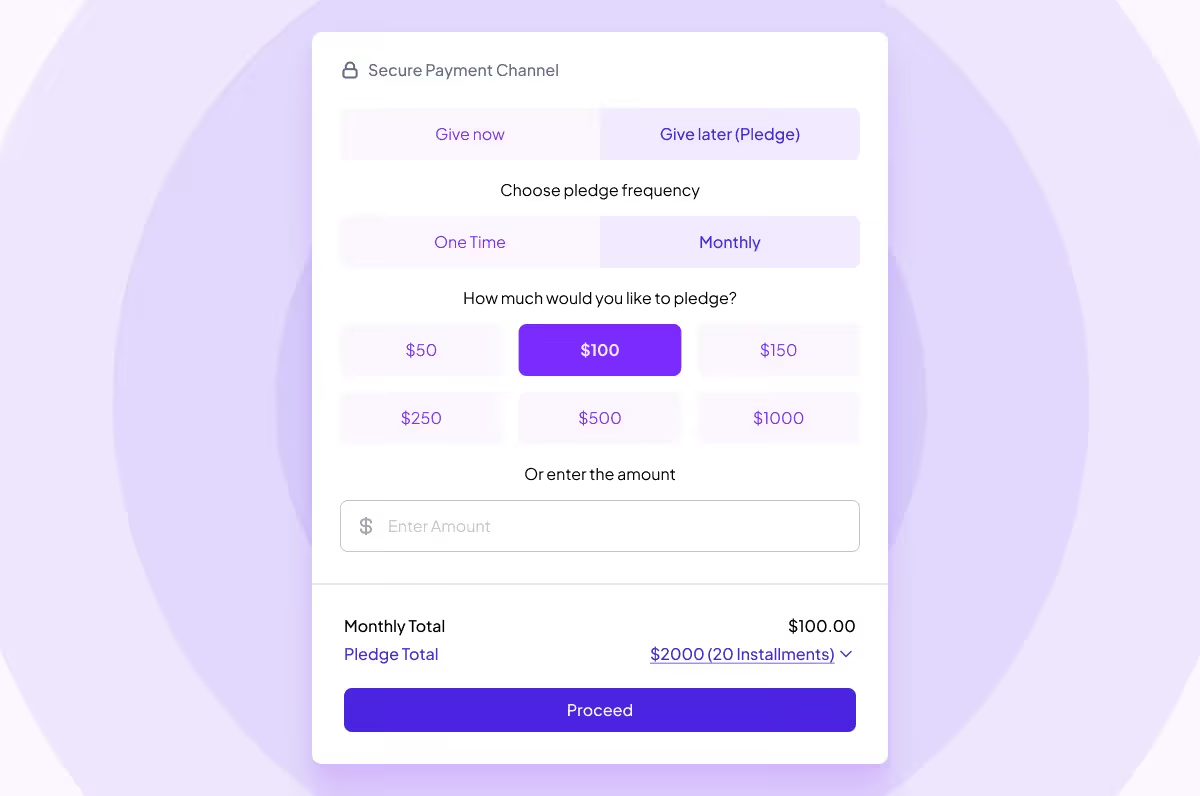
Donors see a simple "Pledge for later" option alongside one-time and recurring gifts. They choose their amount, pick a start date (at least 10 days out), and set up their payment schedule, whether that's a single future payment or monthly installments.
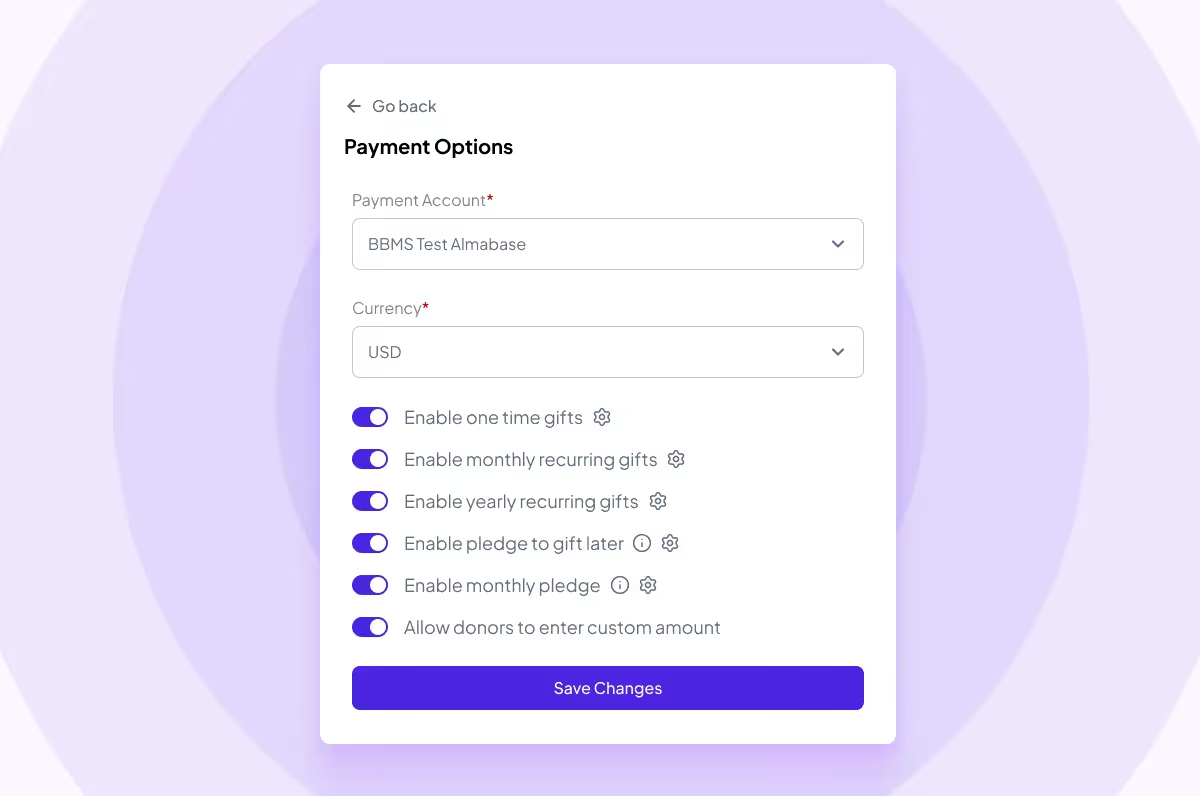
Donors add their payment card while pledging, but nothing gets charged by Almabase. Instead, the card is securely tokenized and passed to Blackbaud Merchant Services (BBMS) and Raiser's Edge NXT (RENXT), which handle all the actual charging. Your donor makes one commitment, and the system takes care of the rest.
Let the system do the follow-up
Each checkout page now includes a "Pledges" tab with full visibility into status, balance, and installment schedules. Paid, Failed, Overdue, all mirrored from RENXT every single day, automatically.

One important safeguard: pledge payments won't execute until they're synced to RENXT. If the first installment date arrives and the pledge hasn't synced, it's automatically cancelled. This keeps your data clean and prevents any surprises.
You stop losing people who want to give
When someone says "I really want to support this, just not this week", you don't have to let them walk away anymore. You've got a real answer for them.
Your follow-up basically runs itself
Remember those pledge tracking spreadsheets? The reminder emails you had to manually send? Yeah, you can retire those. RENXT handles the charges, Almabase keeps your dashboard current, and you get your evenings back.
You can actually plan ahead
There's a huge difference between "Sarah might give us $500" and "Sarah pledged $500 starting March 1st." That difference shows up in your forecasting, your board reports, and how you talk to major donors.
Everyone has less stress
Donors get a straightforward way to follow through. Your team gets reliable data. Nobody's chasing anybody down for forgotten promises.
Just create a new Checkout Page and you'll see the "Pledge for later" option. One heads up: your BBMS needs to have CSC set to "None," but don't worry. We'll let you know if you need to change that.
(Quick note: This is for BBMS users right now.)
Introducing Pledges on Checkout: Let Donors Commit Now, Pay Later
Introducing Pledge for Later. Let donors commit to future gifts on your checkout page, even when they can't pay today. Automate tracking, reduce follow-ups, and never lose a warm lead. Learn more
Lorem ipsum dolor sit amet, consectetur adipiscing elit. Suspendisse varius enim in eros elementum tristique. Duis cursus, mi quis viverra ornare, eros dolor interdum nulla, ut commodo diam libero vitae erat. Aenean faucibus nibh et justo cursus id rutrum lorem imperdiet. Nunc ut sem vitae risus tristique posuere.
The right way to fundraise means creating experiences that make giving feel natural, meaningful, and rewarding for the donors.
Universities and nonprofits spend countless hours building campaigns, yet too often the actual act of giving feels clunky. Donors drop off, admins lose time, and campaigns miss their potential.
With Almabase’s new spin on Payment Links, we’re changing that.
Not just with another feature, but with a smarter way to design giving experiences that encourage participation and generosity at scale.
%2520(4).png)
Until now, payment links have been a black box:
This meant lost opportunities for follow-ups, messy attribution, and a lot of wasted admin effort.
Research confirms why this is such a problem: nearly 60% of donors abandon online donation forms when the process feels long or confusing, and pre-filled amounts have been shown to increase average gift size by up to 20%.
Traditional donation forms work, but they put the burden on donors to find the right fund, enter the right amount, and complete multiple steps.
Payment Links flip this dynamic. Instead of asking donors to figure it out, admins can now:
%2520(5).png)
%2520(1)%2520(1).png)
%2520(3)%2520(1).png)
The result? A smoother, more personal giving journey.
Payment Links are part of a broader shift in fundraising: designing experiences that reduce friction, highlight the right opportunities, and make generosity the easy choice.
All of these, including Payment Links, are about the same thing: turning intent into impact, without extra steps.
Fundraising technology shouldn’t just digitize processes. It should optimize experiences for donors who want to give, and for admins who need to scale their efforts.
That’s what Payment Links are designed to do.
👉 Curious to see how this works in practice? Explore Almabase Giving and reimagine how your next campaign can feel effortless, personal, and powerful.
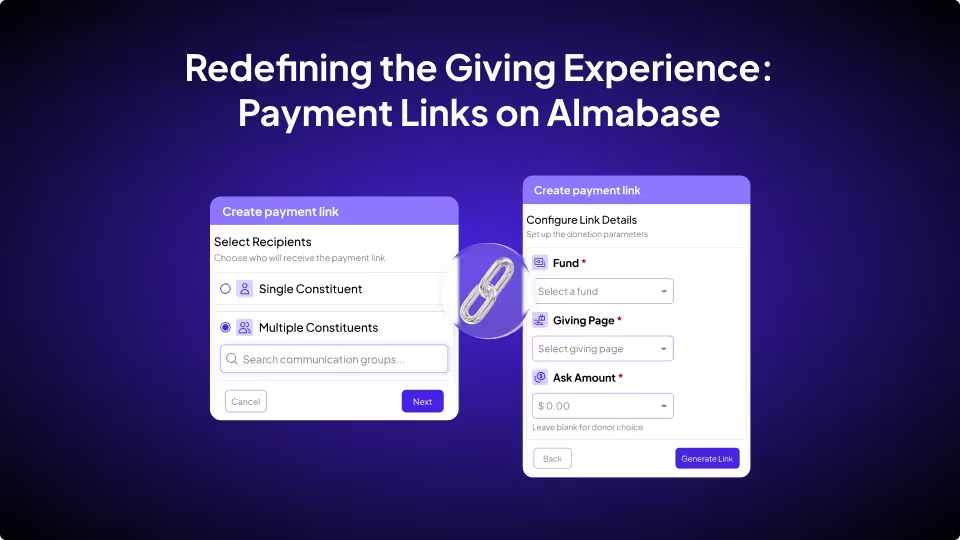
Redefining the Giving Experience: Payment Links on Almabase
The new Payment Links brought to you by Almabase turn giving into a seamless experience. Pre-filled funds, bulk distribution, and full tracking help teams design smarter fundraising workflows. Learn how it works in this blog.
Lorem ipsum dolor sit amet, consectetur adipiscing elit. Suspendisse varius enim in eros elementum tristique. Duis cursus, mi quis viverra ornare, eros dolor interdum nulla, ut commodo diam libero vitae erat. Aenean faucibus nibh et justo cursus id rutrum lorem imperdiet. Nunc ut sem vitae risus tristique posuere.
Matching gift challenges have always been a great way to motivate donors and boost participation—but keeping up with them? That’s another story. Manually tracking donations, updating totals, and making sure your campaign stays engaging can take up valuable time that could be spent building relationships with donors.
That’s why we built Almabase’s new Matching Gifts and Challenges—so you can run dynamic, high-impact fundraising challenges without the operational headaches. Here’s what makes it a game-changer:
What motivates your donors the most? Is it the thrill of a dollar-for-dollar match or a nostalgic nod to a class year? Or is it perhaps a time-sensitive goal that builds urgency?
.avif)
With the new matching gifts challenges, the admin can design and set custom participation, tiered donation, and time unlocks additional funds when a specific donor count is reached. This flexibility will allow you to create challenges unique to your mission and resonate with your donors.
.avif)
No more scrambling to update donors or manually tracking challenge progress. Every gift is instantly recorded, and challenges auto-update, giving your team a clear picture of campaign performance by automatically updating the matching gift thermometer. With less time spent on admin work, you can focus on what truly matters—building relationships, crafting compelling donor messaging, and driving long-term fundraising success.
Your giving page isn’t just a place to donate—it’s a dynamic hub for your fundraising priorities. With customizable layouts, you can categorize and highlight your most important campaigns, ensuring donors see what matters most. Whether it's donor participation challenges or time-sensitive giving day matchups, multiple campaign hubs help you tell a clearer story and drive more impact—while a frictionless donation process ensures more completed gifts and fewer drop-offs.
Gamifying your campaigns does more than raise funds—it builds community. Challenges like matching gifts or participation goals create shared milestones, helping donors feel part of something bigger. With Almabase's matching gifts challenges, you're not just creating campaigns—you're creating moments that bring your community together, inspire generosity, and leave a lasting impact.

2X fundraising impact with auto-updating matching challenges
Drive better fundraising outcomes with new auto-matching gifts and challenges! Automatically update matching gift thermometers, create dynamic fundraising challenges, and streamline your campaign management—no manual tracking needed.
Lorem ipsum dolor sit amet, consectetur adipiscing elit. Suspendisse varius enim in eros elementum tristique. Duis cursus, mi quis viverra ornare, eros dolor interdum nulla, ut commodo diam libero vitae erat. Aenean faucibus nibh et justo cursus id rutrum lorem imperdiet. Nunc ut sem vitae risus tristique posuere.

.svg)

.avif)
.webp)