Take the stress out of planning your next fundraising gala with this complete, step-by-step look at the process, from 6 months out to day-of logistics.

Sharada Koti
Updated:
October 8, 2026
.jpeg)
Hosting is often the most exciting part of a fundraising event like a gala. A room full of people, high energy, and months of work that finally comes together over a few hours. What guests see that evening is only a small part of everything that went into making it happen.
Nonprofits and foundations have been hosting galas for years, and they remain a popular choice because they bring people together, get them invested in a cause, and create a wonderful opportunity to raise funds. The format has changed over time, but the gala has hardly gone out of style.
Bringing hundreds of details together in one evening takes more than a few good ideas working well together. It takes planning, the kind that gives you the room to create an experience that feels true to your organization and leaves guests with something to remember. In this article, we’ll look at the different pieces that go into planning a fundraising gala and how thoughtful execution can turn a well-planned evening into lasting impressions and meaningful fundraising outcomes.
Planning your next fundraising gala? Check out our blog with 10+ Fundraising Gala Ideas for Nonprofits.
A fundraising gala calls for more preparation than other types of fundraisers. Its success depends on careful preparation, thinking ahead, and having the right people involved from the start. Put together a planning committee, assign clear responsibilities, and agree on what you want the gala to accomplish before getting into the finer details. With that foundation in place, you can work through the event's practicalities one area at a time.
Before you start planning the evening, decide what you want the gala to accomplish. For a healthcare organization, that usually starts with the need behind the fundraiser. Is it new equipment, patient care, research, or a capital project? Once you know what you’re raising money for, put a number to it. This number becomes the target everything else works toward.
Now that you have the fundraising target, work backwards to decide how you’ll get there. Build the event budget around the net amount you want to raise. Factor in the cost of the venue, food, production, entertainment, and other expenses, and leave room for unexpected costs.
Look at what each part of the event will cost and what each revenue stream will contribute. That means considering ticket pricing alongside the cost per guest, and sponsorship income and auction revenue alongside the time and resources it takes to secure and manage them. Consider what you’re promising in return and what it will cost to deliver those benefits.
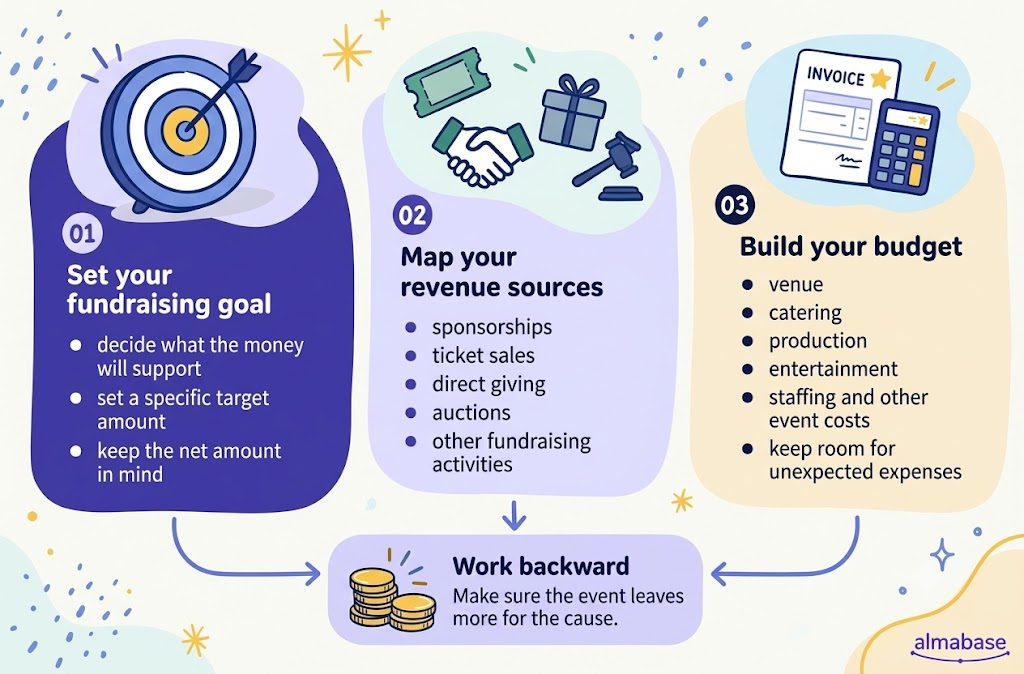
By the end, you should have a clear picture of what you want to raise, where it will come from, what the gala can afford to spend, and what should ultimately go to the cause.
These three decisions are easier when made together. The date affects who can attend, the format shapes how the evening will run, and the venue needs to support both.
Start with the people you most want in the room. Look at your key donors, sponsors, board members, and prospects, along with other events or busy periods that could compete for their attention. Once you have a few workable dates, think about what kind of evening makes sense for that audience and for the fundraising goal.
Then decide what you want guests to do during the evening. That will help you choose the format.
You don't have to choose one format from start to finish, either. A reception can lead into dinner, a silent auction can open before the main program, or an online auction can run for several days around the event. The best combination depends on how much time you want to give to networking, entertainment, storytelling, and fundraising.
Choose a venue around this plan: think about how guests will move through the evening, where the fundraising moment will happen, and how easily the space can accommodate catering, AV, auctions, sponsors, and accessibility needs.
Once you have a fundraising target in mind, think about who can help you get there. You need to bring together people who can support the cause, give, introduce others, or build a relationship with your organization.
Your list could include:
This is also where your past events and donor data can help. As you build the list, look at who attended, who gave, who brought guests, and who has stayed engaged since the last event. You may find people worth inviting who aren't obvious from your current donor list.
The seating plan can make a lot of difference as well. Think about who could make useful introductions, who should sit near a hospital leader or board member, and who can make a first-time guest feel welcome. Table hosts can take responsibility for some of these conversations rather than leaving them to chance.
Finally, give your most important guests some attention before they arrive. Know who invited them, who will greet them, and who should make the introductions. The right person at the right table can do more for a relationship than a perfectly planned seating chart.
At this point, you should have a clear idea of the net amount you want to raise and the total revenue you can expect. Decide what you expect from tickets, sponsorships, auctions, direct giving, and any matching gifts, then look at what each one will cost you to run. Ask yourself these questions:
Then look at the economics of each expense. What does it actually cost to put one guest in a seat? Add up the venue, food, rentals, production, and other per-guest expenses, then decide how much of that cost the ticket should cover. You may want tickets to cover the event itself while sponsorships and donations drive the actual fundraising, or you may choose a different mix based on your audience.
The same thinking applies to fundraising activities. An auction that brings in $30,000 still takes time and money to source items, manage bids, and run on the night. Factor in those costs, along with payment processing, event technology, marketing, and other fundraising expenses.
It’s also prudent to pay attention to when the money comes in. Sponsorships may be committed months before the gala, while ticket revenue comes in gradually and some donations may arrive after the event. Keep a running view of what has been promised, invoiced, paid, and still outstanding.
When the gala is over, close the loop. Compare the original budget with what you actually spent and collected, reconcile tickets, sponsorships, auctions, and donations, and work out the final net amount raised.
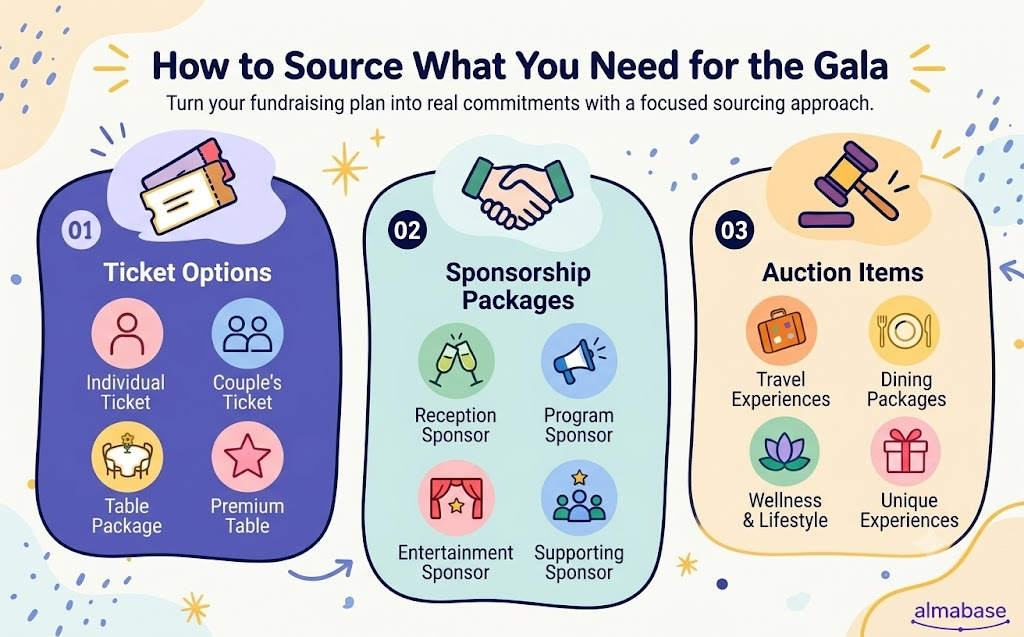
Build your sponsorship menu around the gala itself. Alongside the main sponsorship levels, look at the parts of the evening that have their own value, such as the Fund-A-Need, patient story, reception, dinner, live auction, or guest experience. Keep a few opportunities open so you can shape an offer around a strong prospect rather than forcing everyone into the same package.
This gives you more ways to match a prospect with something they genuinely want to support:
Ticket sales can help shape the room you want. Look at your previous gala data for where guests came from, which ticket types sold, how many seats sponsors filled, and how many first-time attendees you brought in. Use that to decide what you offer this year.
Use last year's bidding results to decide what you need this time. Look for categories that attracted strong bids and gaps in the catalog, then give your team specific categories to source.
The tracker should tell the team what has been asked for, who owns the relationship, and what happens next. Keep fields for:
Update the tracker as people respond, and record both the commitment and the next step. It should leave you with a quick view of what is locked in, what is still up for grabs, and who needs to hear from you next.
Build the evening around the moments that need to happen in a particular order. A healthcare gala might move from a welcome and patient story to dinner, auction, case for support, Fund-a-need, and closing, with the exact sequence shaped by the kind of response you want from guests.
Then work through the most important details: who speaks, how long each segment runs, when guests eat or move around, when the auction opens and closes, when the giving appeal happens, and how each transition is handled. Keep speeches short and put the strongest story close to the fundraising moment it supports.
The program also needs a production plan. Confirm scripts and talking points with speakers, give the AV team the final videos and presentations, prepare the auction and giving teams for their cues, and build a run-of-show that includes timings, transitions, responsibilities, and technical cues. Run through the program with the people involved before the event and have a backup for anything that could hold up the evening. The final plan should make it clear what happens, who owns it, what guests are doing at that point, and what needs to be ready before the next segment begins.
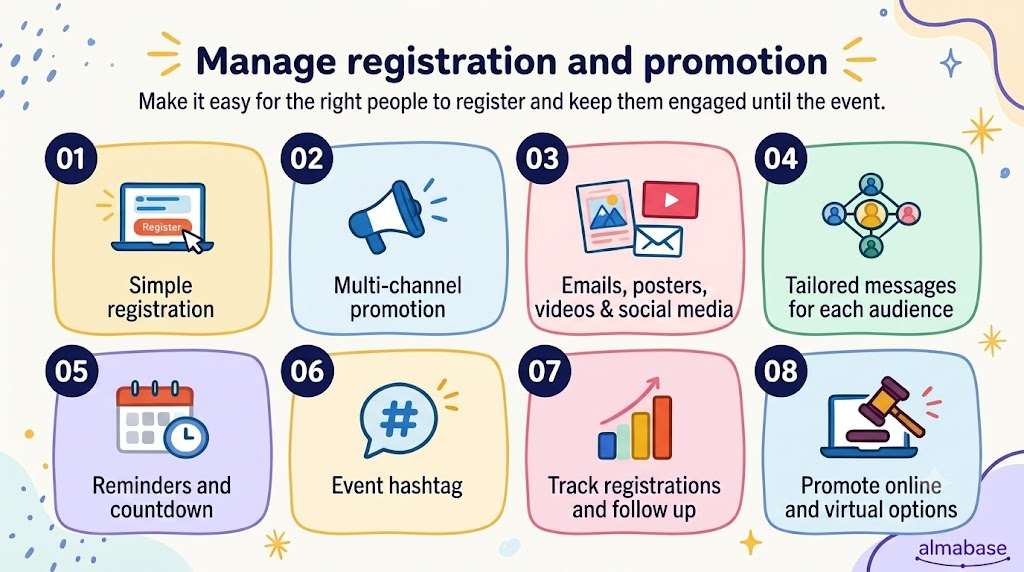
Make registration easy for everyone. Keep the form short, make ticket and table options clear, support mobile registration and multiple payment methods, and collect the guest details you actually need.
Start promotion early across email, social media, your website, posters, partner networks, and direct outreach. Tailor the message to each audience and give board members, sponsors, and table hosts ready-to-share emails, graphics, and videos.
Build momentum with an event announcement, speaker or patient-story videos, sponsor spotlights, countdown posts, and timely registration reminders. Use a simple event hashtag consistently across social posts and event-day content.
Watch registration as it builds. See which audiences and channels are responding, follow up with people who have shown interest but haven't registered, and help sponsors or table hosts fill their seats. If you have an online auction, livestream, or digital giving option, promote those alongside the gala so people who cannot attend can still participate.
By event day, every part of the gala should have a clear plan. Run through the guest journey, logistics, program, fundraising, and technology with the team so everyone knows what happens at every stage.
Assign people to registration, seating, sponsors, auction and giving, speakers and emcees, food and beverages, entertainment, AV, and guest support. Keep a run-of-show with timings, contacts, vendor details, speaker cues, and backup plans. Your emcee should have the latest script, including sponsor acknowledgments, auction instructions, giving cues, and what to do if a segment runs over time. Entertainment should have a defined setup and teardown window so it does not interfere with the program.
Walk through the venue once more to check signage, check-in, seating, stage access, parking, food service, auction displays, payment points, restrooms, and accessibility. Make sure dietary requirements, step-free routes, accessible seating, and other guest needs are covered.
If the gala has a virtual audience, test the stream, audio, captions, slides, giving and auction links, and assign someone to manage online interaction. Finally, give the team a clear escalation plan. If the auction system stops working, a speaker is late, a guest needs assistance, or the program falls behind, people should know who makes the call and what the backup is. That keeps small problems from becoming visible to the whole room.
Start with a timely thank-you. Send guests, donors, sponsors, volunteers, speakers, and partners a message that reflects their role in the evening rather than sending everyone the same note. Follow up separately on outstanding pledges, auction payments, sponsorship commitments, and promised introductions or next steps.
Keep the conversation going after the gala. Share event photos and videos, highlights from the evening, and early fundraising results through email and social media. For donors and sponsors, follow up with something more personal and show what their support will help fund. When you have a concrete update, share that to show what their contribution is making possible.
Then close the loop internally. Compare attendance, revenue, expenses, fundraising by source, auction performance, sponsor participation, and donor response against your original targets. Gather feedback from the team while the event is still fresh. Note what worked, what caused problems, which vendors or processes need changing, and what you would repeat next time. Keep those records with the event data so the next gala starts with a clear picture of what you already learned.
Keep these in mind as you work through the details:
There’s a lot to juggle as the gala gets closer, so we’ve put together a simple fundraising gala checklist to help your team keep track of it all. Add your own deadlines and owners, and use it as a shared document to keep everyone on the same page.
A gala has a lot of moving parts. Tickets, sponsors, auction items, guest information, communications, payments, and event-day check-in can quickly end up spread across different tools and make it harder to see what is happening across the event. Almabase brings these workflows together while keeping event and donor data connected to your CRM.
You can set up your event page, ticket tiers, registration forms, sponsorship packages, and fundraising asks in one place. Sponsors can have their own registration flow, select their package, submit guest details and collateral, and manage their payment separately from individual attendees.
For the auction, you can run silent, live, or hybrid auctions through Almabase. Set starting bids and increments, assign items to specific funds, send bid updates, and automate payments after the auction. That also means less cleanup afterward, with auction data syncing back to your CRM.
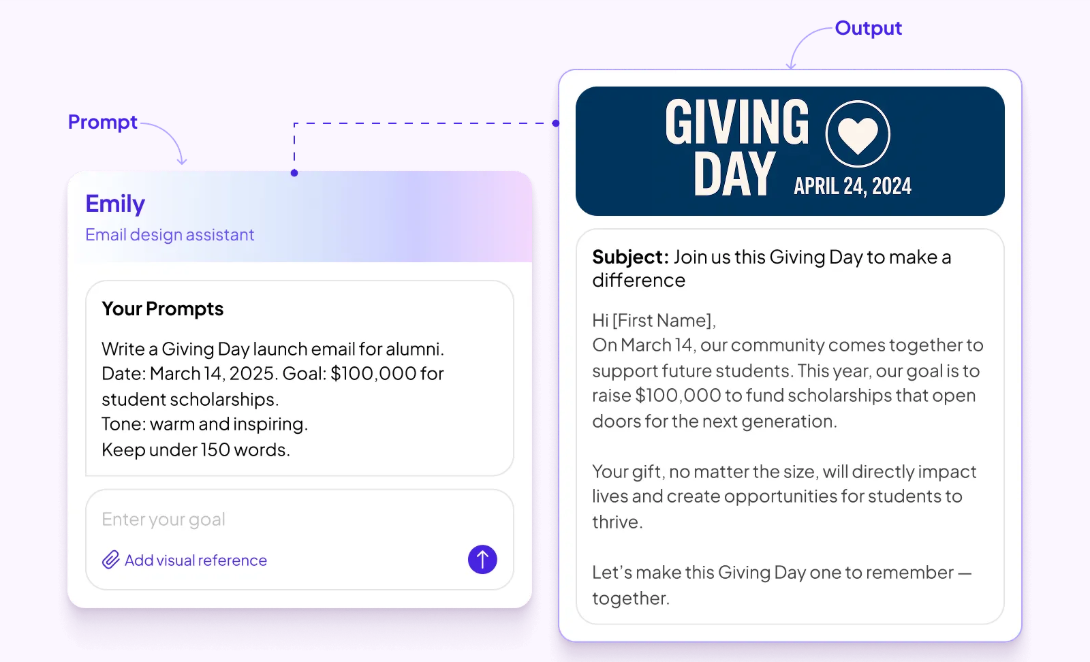
With Emily AI, you can use segmented email and SMS campaigns for invitations, reminders, and follow-ups. It also helps you draft event emails and subject lines based on the context of your event.
On the day, your team can manage QR check-in, payments, seating, guest tracking, and real-time event data from the same platform. After the gala, registrations, attendance, gifts, and engagement can flow into constituent records through Almabase’s CRM integrations, including bi-directional TrueSync with Raiser’s Edge NXT.
That gives your team one connected view of the gala, from the first invitation to the final follow-up, without rebuilding the same data in multiple places.
Organising a fundraising gala is a big undertaking, but when the event is well thought through, and nothing is left to chance, magical things can happen. It is an opportunity to connect with your support base, generate excitement, and offer multiple ways for supporters to donate money.
While the upfront cost can be higher than other fundraising events, the many payoffs make it well worth the extra effort. From registration and sponsorships to auctions, event-day management, and donor follow-up, the right technology can help your team manage the gala from start to finish.
Want to see how Almabase can support your next gala? Book a personalized demo and explore how the platform can help you plan, manage, and make the most of your event.
1. What are some fun fundraising gala ideas?
Try ideas that give guests something to take part in, such as a themed experience, live auction, interactive entertainment, or a mission-focused giving moment. For healthcare organizations, patient stories and hands-on experiences can also make the cause feel more personal.
2. What are the best things to auction at a fundraising gala?
Experiences, travel packages, dining, and items that have a strong connection to your audience tend to work well. Look for prizes people actually want rather than simply collecting a long list of donations.
4. Can a fundraising gala be held without a live auction?
Yes. You can build the evening around direct giving, sponsorships, a silent auction, or a Fund-a-need instead. The right mix depends on your audience and fundraising target.
5. What should guests wear to a fundraising gala?
The dress code usually depends on the venue and tone of the event. Black tie, formal, cocktail, and themed attire are all common options, so make the expectation clear on the invitation.
6. How long should a fundraising gala last?
Most galas work best when the evening has a clear rhythm and doesn’t let the program drag. Keep speeches and transitions tight, and leave enough time for guests to eat, socialize, and participate in fundraising.
7. What entertainment works well at a fundraising gala?
Live music, performances, comedy, interactive experiences, and guest speakers can all work. Choose entertainment that fits the audience and leaves enough room for the fundraising program.
8. Should you invite patients to a healthcare fundraising gala?
Patients and families can bring a personal connection to the mission, but their participation should always be voluntary and handled with appropriate care and consent.
Subscribe
See how modern advancement teams bring alumni engagement and fundraising together.
Plan faster. Execute better
Explore free templates designed for alumni and fundraising teams.
.png)

.avif)
Sharada Koti
For decades now, fundraising galas have been at the forefront of philanthropic events, and with good reason. It’s a format that combines formality, cause and accessible fun very effortlessly.
The best part about a fundraising gala is that it doesn’t have to follow specific guidelines; you can customise it however you want according to your needs and your donors. It can include just about anything ranging from live entertainment, food, presentations to auctions and awards.
And that’s also why the distinctness of your particular gala is all the more important. We’ll take a look into how these events are planned, and some unique ideas that you can adopt to engage your donors.

Galas have been a philanthropy event mainstay for a long time now, but it begs the question of whether they still provide ROI or just function as a general networking event.
The data on this leans towards the former. Overall, in 2025, about 77% of organizations met or exceeded their fundraising goals. The ones that organized purely in-person events or mixed it up with virtual/hybrid events were the standout performers.
But there’s more. Here are a couple of interesting takeaways from the same study:
This gives us two important takeaways: one being that events in general continue to be a crucial part of philanthropy. Secondly, galas meet both the criteria of being an in-person event as well as an event that can incorporate virtual or hybrid events (or purely any of the three).
All that is to say that galas continue to meet the preferences of donors as well as the innovations of fundraising teams, giving us an easy answer to our question above: Yes, galas are definitely worth it in 2026 and will in all likelihood, continue to be in the foreseeable future.
Fundraising galas are extremely customizable, making it easy for you to incorporate themes and programs catered to your organization and its donors. Here are a few gala ideas that can create fun, memorable experiences that inspire your donors to contribute.
There’s a reason black-tie galas are a mainstay on the fundraising calendar. The dress code, the venue, the etiquette all add to the formal tone that tells guests that this is one to show up for. The sense of occasion created also goes a long way if major donors are in attendance.
Nearly 800 guests turned out for Children’s National Hospital Foundation's 2025 Children’s Ball at The Anthem in Washington, D.C., raising more than $3.2 million for the Fund for Every Child. Held every spring with a black-tie dress code, the Ball has become one of those D.C. events people plan around, having built an enduring legacy since its first edition in 2007. Since then, the foundation has raised more than $54 million towards its cause.
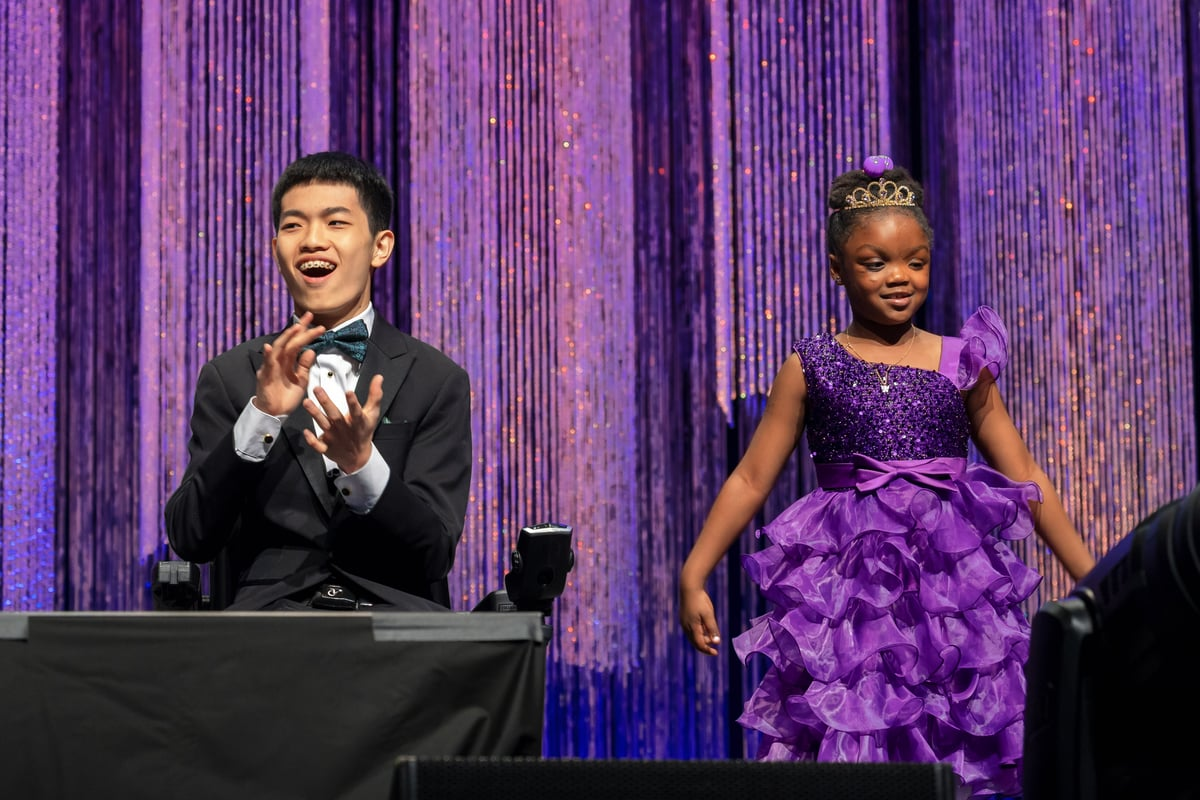
The evening had all the trappings of a major gala, but the mission was never lost within the glam.
Max, 16, opened the night with a special performance after receiving music therapy at Children’s National for cerebral palsy. The co-chairs, who have personal connections to the hospital and its families, shared their own stories of finding answers and expert care when they needed it most. Then came Raci, 7, celebrating her recovery from a life-threatening car accident. Those moments gave the evening a personal touch and the guests a reason to care. Without something like this, a black-tie event involving children would run the risk of appearing almost distant, given the formal nature.
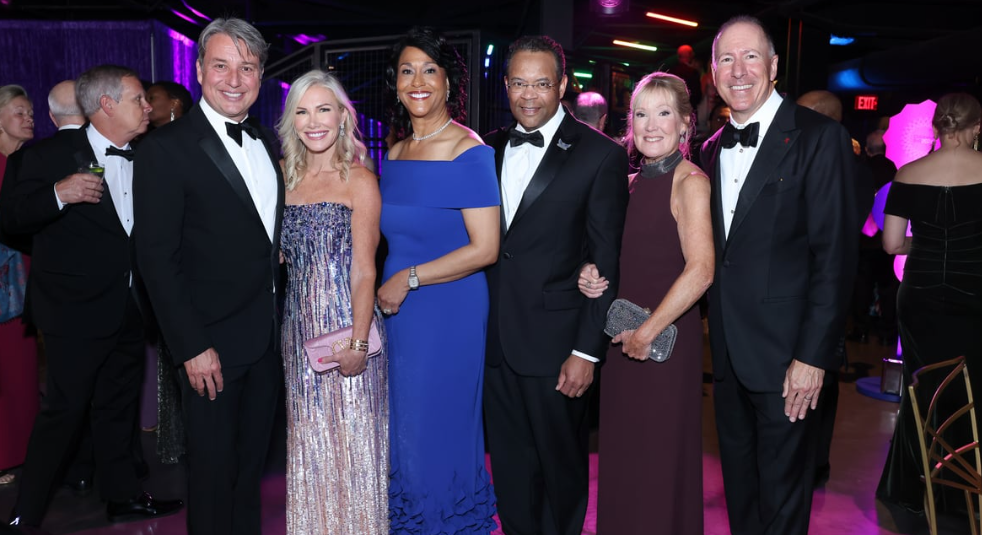
Give your guests a reason to feel connected to the mission through a patient or beneficiary story or a moment that puts the impact of their support right in front of them. Peer voices from those who donated can also be very impactful here.
St. Jude’s second biennial Evening of Hope Gala at the Fairmont Century Plaza brought in more than $5.5 million in 2025. Its theme, “Infinite Light,” centered on the idea that each of us has the power to create a lasting legacy: a fitting nod to St. Jude founder Danny Thomas and the vision that started it all.
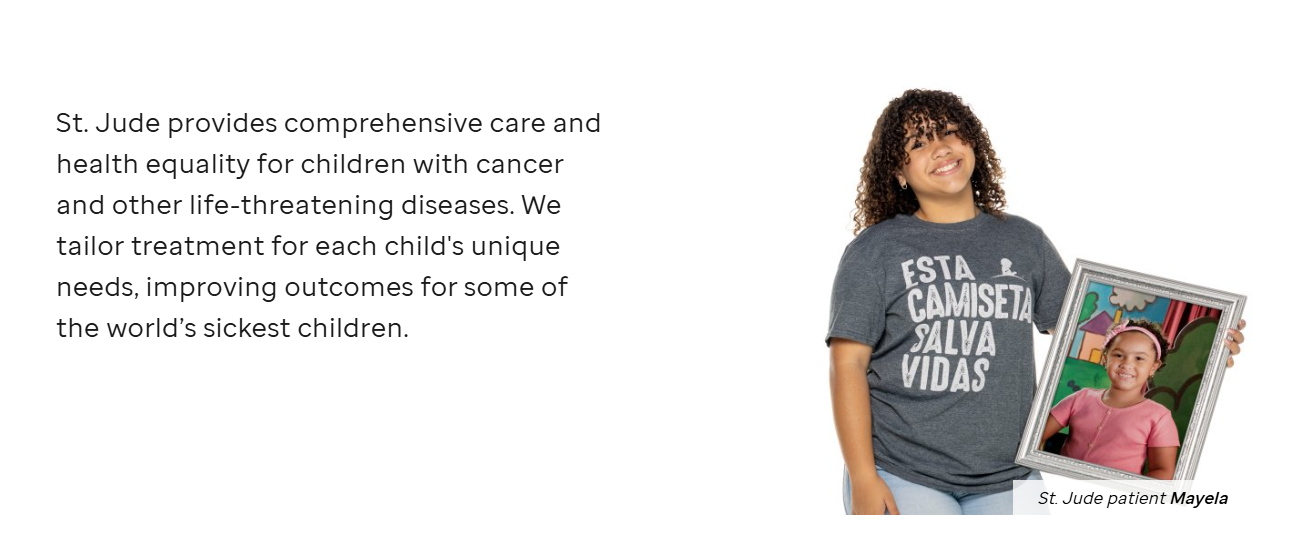
There’s something different about an event that doesn’t happen every year. By giving the Evening of Hope some breathing room, St. Jude builds anticipation around it and makes the night feel like a genuine occasion.
Vancouver's Capital Direct VGH+ Gala brought in $3.2 million in 2025, including a $1.2 million gift from the Ko Family and Viva Pharmaceutical Inc. and a $100,000 matching gift from Windset Farms. While the size of the gifts is impressive, what’s noteworthy is that the organizations backing the gala stepped up as donors, too.
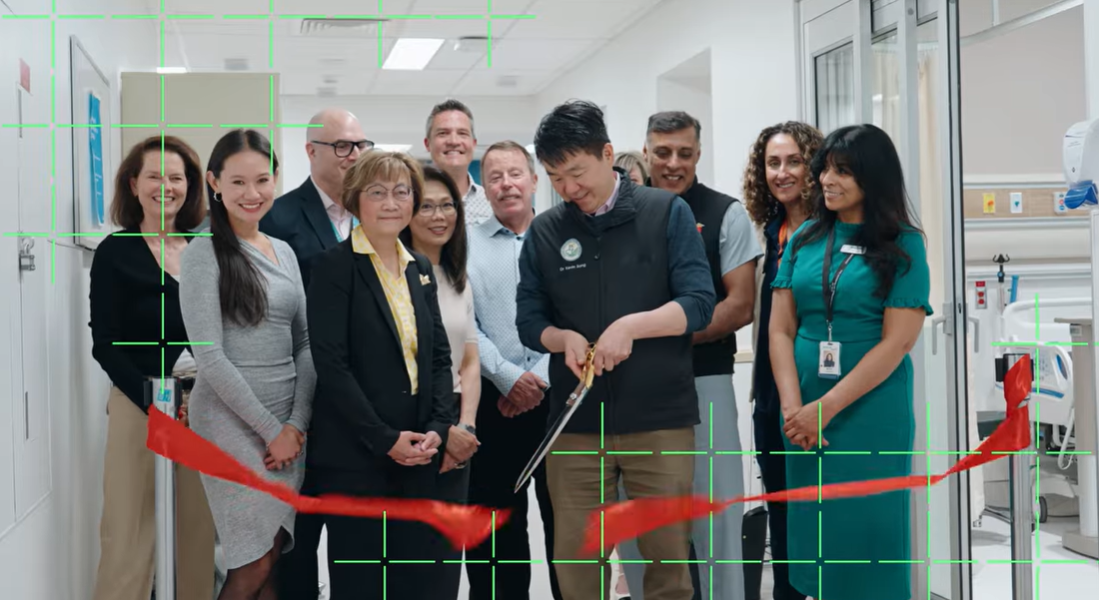
What really worked here is the guest list. The gala brought together health care leaders, community members, and people who were already invested in the work of VGH and UBC Hospital Foundation. When that kind of crowd is in one room, raising money is just the most basic part of the story. What’s far more impactful is that it puts the story and the cause front and center . The Ko Family’s $1.2 million gift was announced during the evening, putting a major show of support right in front of an audience that understood what it meant.
A matching gift, a surprise announcement, or a major commitment can give the evening an almost tangible boost in spirits. At the end of the day, treat your biggest supporters like partners in the event and show them that their presence matters more than the sponsorship amount they contribute to the event.
Some galas succeed because they give guests a reason to go all out. A well thought out theme is a great way to incorporate some of this into your gala.
The 9th Annual Gala & Auction at Twin Arrows Navajo Casino Resort went all in on the masquerade theme, with festive décor, dinner, dancing, and a silent auction featuring unique works of art. Proceeds went directly to Tuba City Regional Health Care Corporation to support Native American communities.
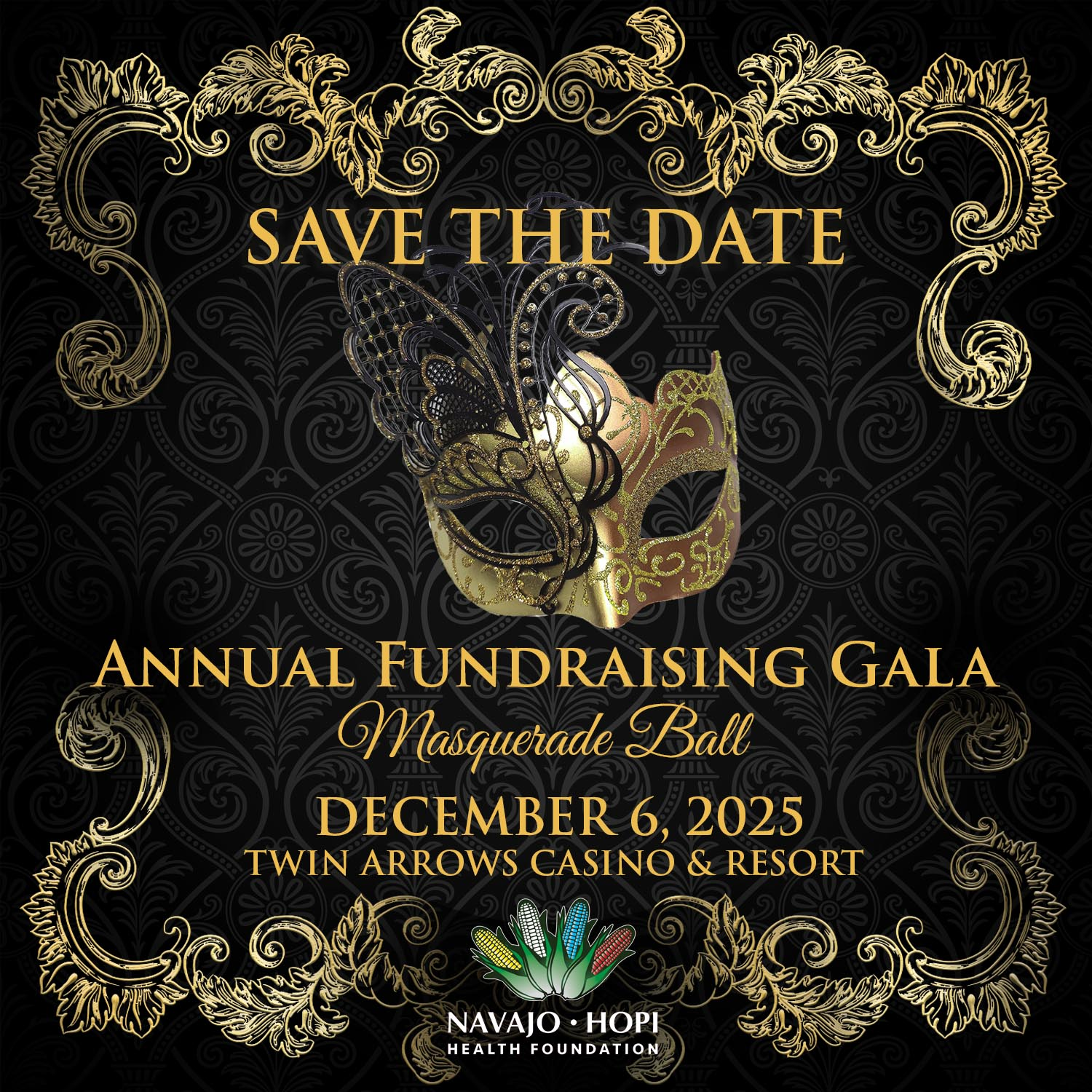
The masquerade theme is always an easy hit with attendees, and it was no different with this event. Choosing a casino resort instead of the usual hotel ballroom added a touch of novelty to a fairly common theme as well. While the set up was commendable, the true success was, of course, what the event supports.
The organizers were very upfront about where the funds raised went. They helped purchase bilirubin monitors for newborns, infant warmers for critically ill babies, and physical rehabilitation equipment to help patients regain strength and mobility. This made the impact much easier to picture.
The 19th Annual St. Jude Pittsburgh Gala took an Old Hollywood turn at Acrisure Stadium’s East Club. Between the setting, the elegant decor, and the storytelling around Danny Thomas’s legacy, the evening had the feel of a movie premiere, except it was the mission that was at the center of it.
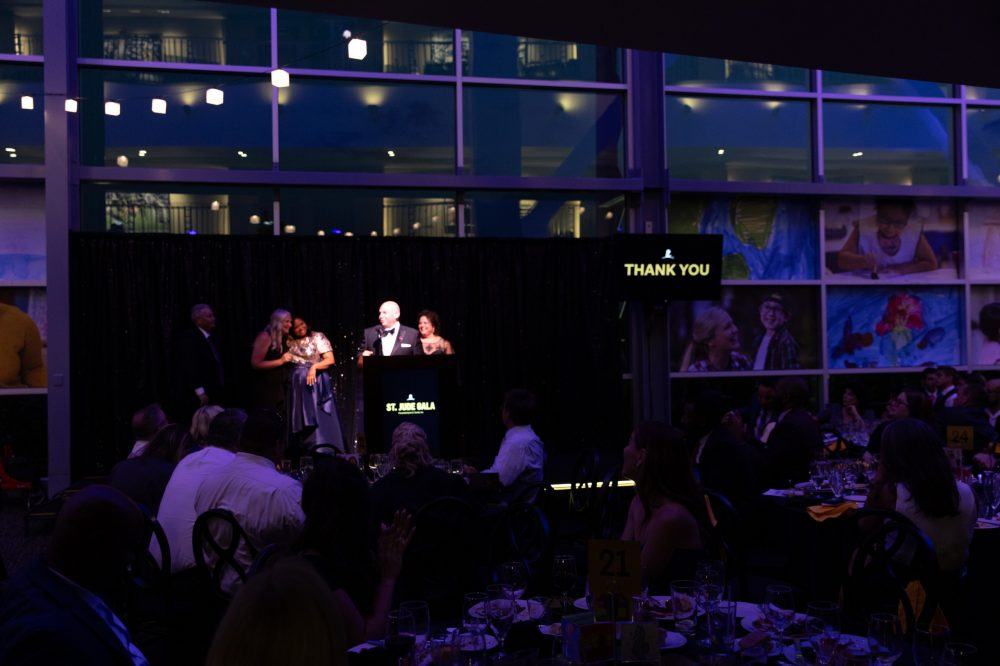
A stadium’s premium club isn’t where you’d normally expect a gala, which made the setting part of the experience. The Old Hollywood theme then gave the night its own visual identity and a natural excuse for guests to dress up. Most importantly, it wasn’t a theme picked just because it looked good. It tied back to St. Jude’s history and founder and entertainer Danny Thomas, placing the evening in a story that everyone attending was already familiar with.
To replicate this idea, start with the story you want guests to walk away with, then build the theme around it. A memorable venue can help too because you may not need to transform a space if the space already has a personality of its own.
Held at Pier 27 on San Francisco’s Embarcadero, Miracles on the Bay had a pretty spectacular programme. Cocktails, dinner, live music, dancing, and a few masquerade masks rounded out an evening with the Golden Gate Bridge and the bay as the backdrop.
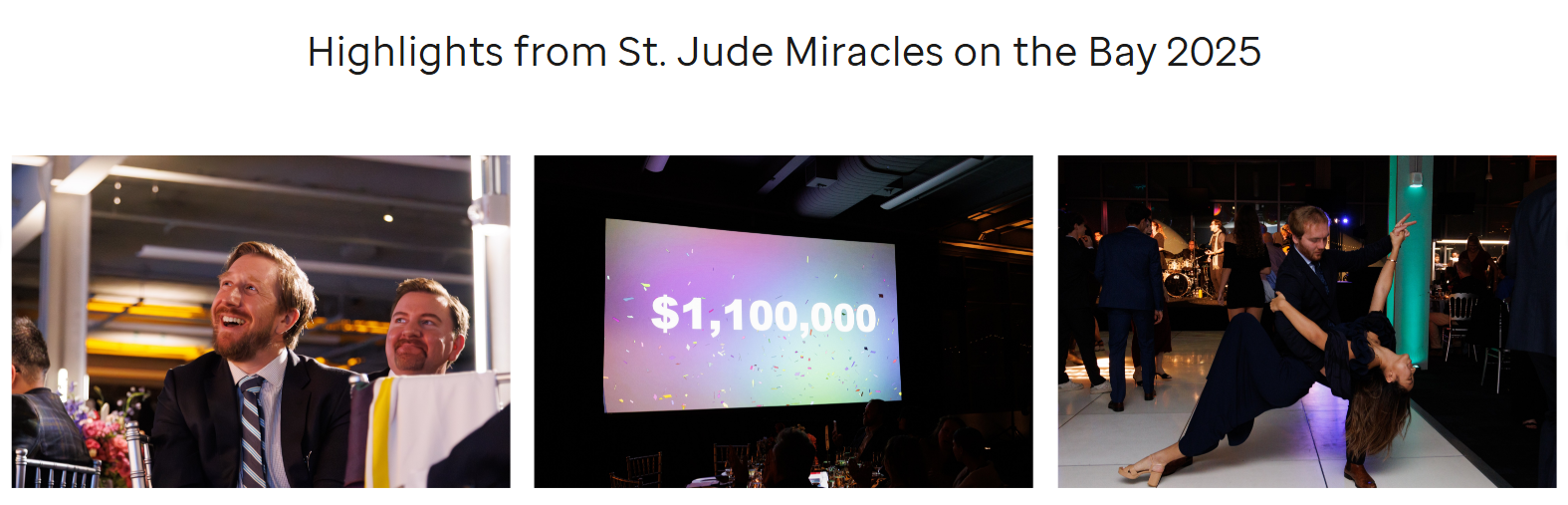
Sometimes the smartest decor decision you can make is to leave well enough alone. The gala let the waterfront do the heavy lifting, with most of the decor built around it, minimal and polished. All proceeds from the event benefitted St. Jude, where families never receive a bill from St. Jude for treatment, travel, housing or food so they can focus on helping their child live.
If your venue already has a great view, beautiful architecture, or some other built-in wow factor, let it carry the room. Add a few details, like minimal lights, drapes and maybe some flowers that complement it rather than trying to transform the space completely. Your budget will thank you and your guests will end up having an amazing time, regardless.
The 15th annual Grand Cru, Canada’s premier wine and culinary fundraiser for medical research and innovation, raised a record-breaking $33 million-plus for Toronto General and Western Hospital Foundation programs. Over two days, the event puts food and wine front and center, with an experience that felt much more like a festival for food and wine lovers

Grand Cru zeroed in on something their audience cared about and built the fundraiser around it. At the same time, wine and food is a broad enough theme for just about everybody to look forward to it. Wine tastings, great food, and access to culinary experiences gave people plenty of reasons to want to be there, while the mission sat naturally alongside the experience. The two-day format also made the event feel like more than one big dinner, more like a festival; a whole weekend of food, wine, and philanthropy.
Think about what your supporters genuinely enjoy outside of your organization, and build your theme around that. It could be food and wine, golf, art, fashion, music, or something completely different.
Not every gala can appeal to everybody, and that’s not really a bad thing. Sometimes it helps to be extremely specific about who a gala is for, and build the entire evening around that community.
The White Hat Gala brings together leaders from cybersecurity, technology, AI, finance, law, and government to support pediatric healthcare. Since 2013, it has raised more than $7 million, while becoming a regular gathering point for people working across Washington’s technology community.
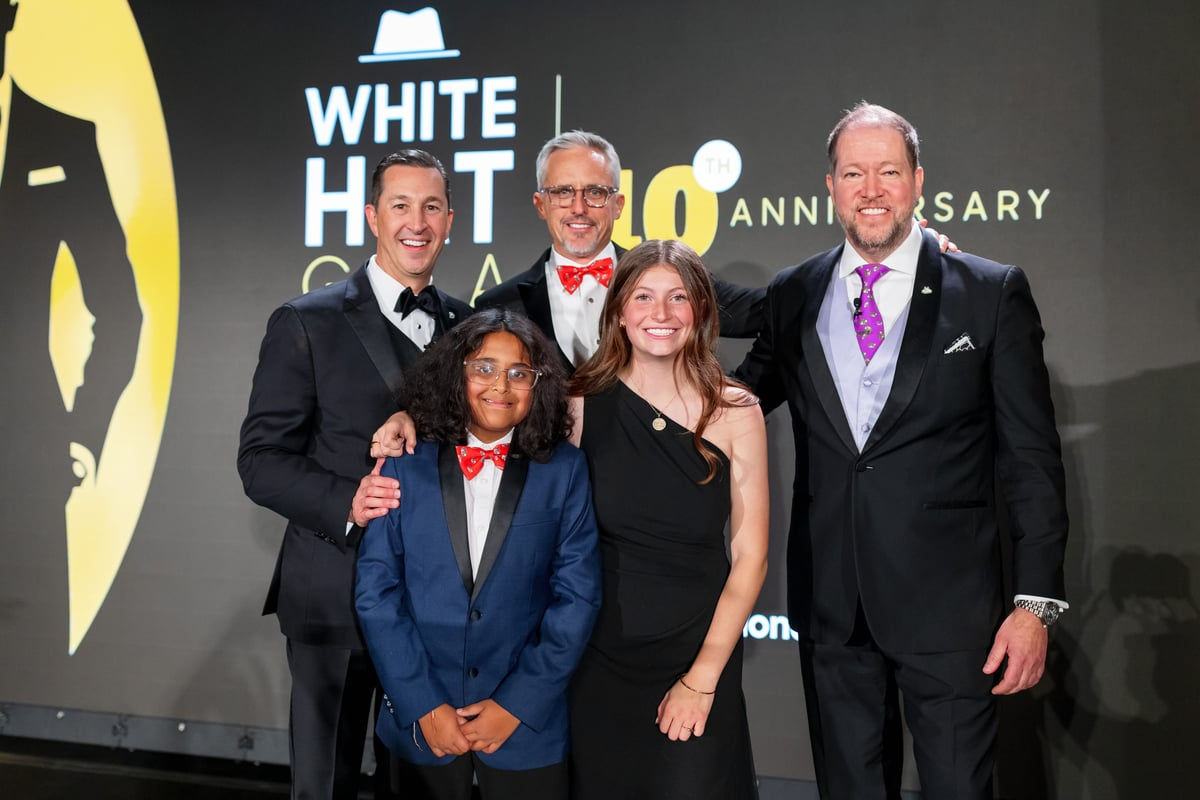
The White Hat Gala has a clear audience and gives them a reason to come together. Tech leaders can catch up with peers, meet people outside their usual circles, and spend an evening supporting a cause that intersects with their world. This makes the event feel like part of the community’s calendar.
Look for a community that already exists around your mission. It could be an industry, profession, alumni group, or local business community. Then give them a reason to want to be in the same room. The cause is still the reason you’re gathering, but the conversations, connections, and shared interests are what will make the invitation especially appealing!
Every year, Spirit of Hope brings together leaders from New York’s commercial and residential real estate and construction communities. The evening mixes food and drink from some of the city’s best spots with music, a silent auction, and St. Jude stories and experiences.
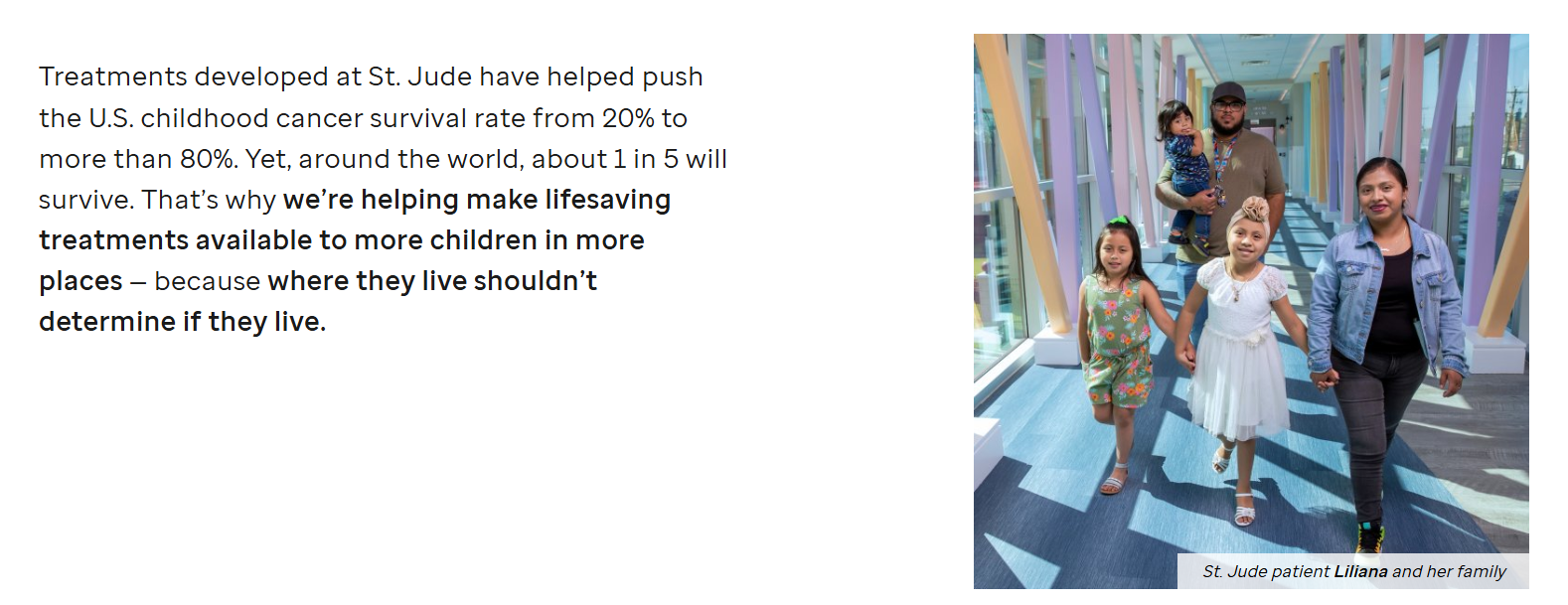
Nothing short of stalwarts in their field, St. Jude knows its audience and builds the evening accordingly. The food, drinks, entertainment, and setting give real estate and construction leaders the kind of polished, social experience they’re used to and the St. Jude side of it gives the evening a clear purpose. The different parts of the night have a reason to be there. This kind of cohesion and clarity of purpose goes a long way in a room full of leaders in their community.
Once you’ve decided your specific audience, research what kind of events they already enjoy. You don’t have to outspend every other event on their calendar but these events serve as a good reference point. A well-chosen venue, good food, thoughtful programming, and a room full of the right people can go a long way in capturing their attention. Once you have their attention, give them a few meaningful ways to connect with your mission, and make it easy for them to give.
A great story has a way of sticking in your memory, and a gala with a good story attached to it is no different. Find a story for your evening and let the program, the dress code, the speakers, even the auction build up around it.
The fourth annual Moments of Courage gala celebrated the milestones that mark a child’s journey at St. Jude, from birthdays and graduations to finishing treatment. Guests were encouraged to wear pink, orange, or red, giving the evening a bright, celebratory feel from the moment they arrived.

Held every year, the gala is centered around celebrating the milestones in the St. Jude’s children's lives. “Milestones” gives the evening a story and theme everyone understands. Birthdays, graduations, finishing treatment, are all moments families look forward to, and putting them at the center changes the tone of the gala.
Even the dress code supports the idea: the bright colors feel festive and joyful, and no one needs to show up in costume. The result is an amazing evening that celebrates what patients and families are experiencing, rather than simply talking about the challenges they face. This kind of upliftment to the spirits cannot be overstated.
Look for the part of your mission that your community celebrates with you. Maybe it’s a graduation, a recovery, a new beginning, a scholarship recipient’s next step, or a community that has come together after a difficult year. That gives you a much richer starting point than simply “our organization does important work”, especially since your community is already familiar with the work anyway.
The 2026 Spring Gala organized by the Hospital Foundation of Decatur County brought more than 400 community members, local leaders, businesses, donors, and healthcare advocates together in support of local healthcare, raising more than $143,000. Alongside the fundraising, the evening created a chance for the community to come together around something that affects everyone: the healthcare available close to home.
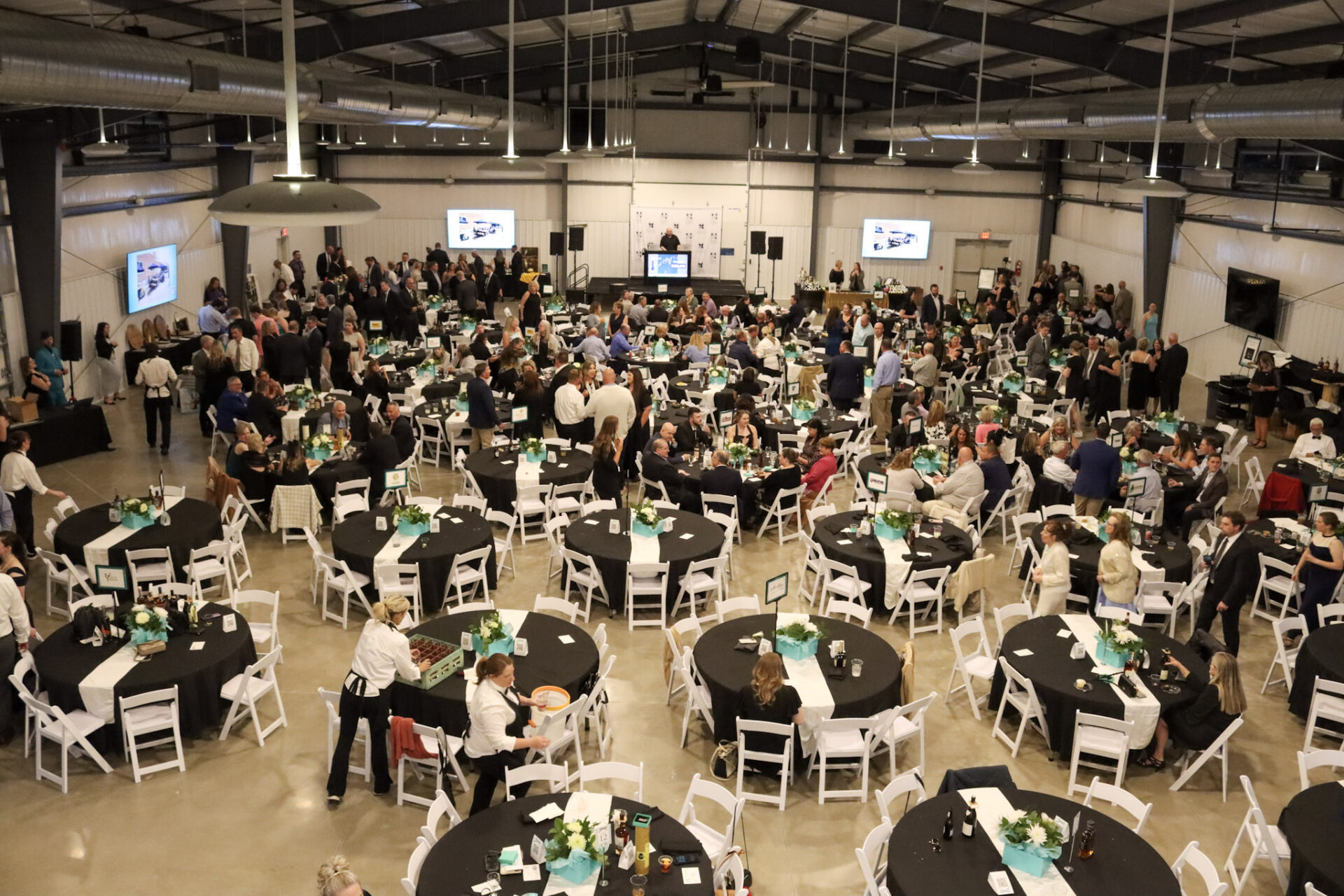
This is a very different kind of gala from a large, high-production event in a major city. In a community of this size, the people in the room are likely to already know one another, the hospital, or someone who has relied on it. The event can tap into that sense of shared responsibility in a way a much larger gala might not, and that becomes the story for the evening. The auctions give people another way to participate, while the gathering itself reinforces the idea that local healthcare belongs to the whole community.
There’s no single formula here. Some of these galas are built around major donors, some around a particular professional community, and others around simply bringing a town together.
What they do share is a clear sense of why this particular event exists and why people would want to be there. The venue, theme, food, stories, entertainment, and giving moments all have a role to play and they don’t feel like separate pieces stitched together at the last minute. They’re all very intentional with what they’re doing.
That’s a worthy lesson for when you’re planning your own gala. More than a big budget or an elaborate production, you need an evening that feels intentional from start to finish, gives people something to enjoy, and leaves them with a reason to remember why they came.
As you might know, a successful fundraising gala sometimes takes months and months of preparation. Coming up with plans and goals is easy enough, but with the amount of moving parts, keeping track of progress across all fronts can be confusing.
Here are the steps you can broadly follow to ensure a smooth planning phase for your event:
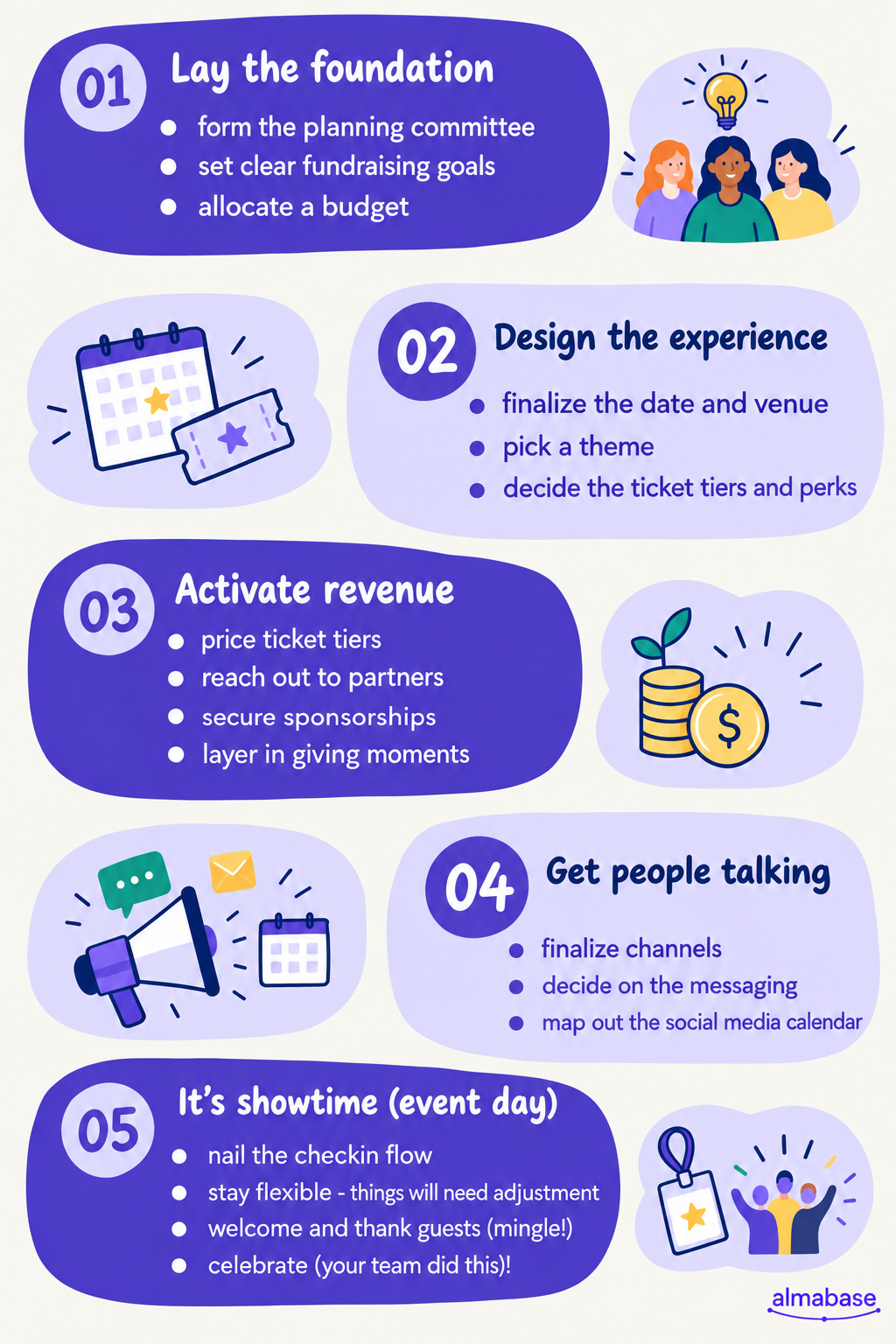
This is where you get the big stuff out of the way: who’s running the gala, what you need to raise, how much you can spend, and where and when it’s happening.
A few things you should sort out early:
Get these decisions right and you’ve got yourself a solid base to begin with.
Once the basics are locked in, you can start figuring out what kind of evening you want to create. Pick the theme, settle on your ticket options, and start lining up speakers and entertainment. This is where research you’ve done about your community, their preferences, the story, all come in handy.
Your theme need not be complicated. But your theme will give your plans a direction and shape a lot of the smaller, more specific choices you’ll have to make. If you’ve chosen an Old Hollywood gala, for example, that decision itself answers questions about the music, dress code, décor, and even the food.
At this stage, you work out how the event will make money. Sponsorships, tickets, auctions, and giving moments can all contribute, but the numbers need to make sense together.
A couple of things to keep in mind:
Now that the event is planned, it’s time to create buzz around it! 🐝
You need people to know about your event, and, more importantly, for them to care about your cause.
Start early with the save-the-date, then give people new reasons to pay attention as the event gets closer. Some ways to do it are:
Make sure to do these or a combination of these in a staggered manner; you don’t want to give too much away at once. And of course, it’s equally important that the right message reaches the right segment of your audience. Each segment will have a different reason to care and show up, make sure they feel considered.
By the time guests arrive, your team should know where they need to be and what they’re responsible for. Walk through check-in, make sure volunteers know the basics, and have someone in charge who can make a call when something inevitably changes.
It’s important to be flexible and accommodate minor adjustments and changes on the fly. And once everything is in place and the event is well on the way, take a step back and appreciate everything you and your team have just achieved. 😊
Keeping track of outreach sequences, responses, and registrations while simultaneously planning for event logistics can end up being messy and stressful. Almabase gets some weight off your shoulders by bringing together engagement, giving, and event planning under one roof.
Especially with a gala involving auctions and sponsorships, you’ll need varying registration forms and workflows. With the built-in event builder module you don’t have to worry about losing track of different groups of attendees and the relevant forms. Almabase can also accommodate complex tiered ticketing structures, which you will need to tackle for a large fundraising gala with multiple sub-events.
With Emily AI, you don’t have to take painstaking effort to manually personalize outreach for every segment of attendees. The context-aware AI drafts subject lines and event emails which you can further tweak to your liking.
During the gala itself, ground operations can be hard to manage even with enough volunteers. QR check-ins, payments, and on-site registrations are all automatically synced to your CRM when using Almabase. Additionally, seating assignments and name tags are easy to arrange.
As for tracking and collecting event data, you can do away with spreadsheets (well, most of them). Almabase lets you see registrations, revenue, attendance, and engagement data all at the same place. If you’re selling merch, tracking order count ensures that you’re prepared with just the right amount of stock next time around.
Fundraising galas inject some much needed spectacle and celebration when it comes to giving. They’ve been a mainstay in philanthropy for many decades, and will continue being so long into the future. Hopefully, you’ve gained some helpful pointers in planning one of your own and drawing people to your cause.
If you’re on the lookout for tools that could help your team and wish to learn more about Almabase, we’d suggest booking a personalized demo. Happy planning!


10+ Fundraising Gala Ideas for Nonprofits
Lorem ipsum dolor sit amet, consectetur adipiscing elit. Suspendisse varius enim in eros elementum tristique. Duis cursus, mi quis viverra ornare, eros dolor interdum nulla, ut commodo diam libero vitae erat. Aenean faucibus nibh et justo cursus id rutrum lorem imperdiet. Nunc ut sem vitae risus tristique posuere.
Hari Govind
July 7, 2026
12 minutes
Hospital foundations raised an average of $7.7 million in net fundraising revenue in 2024. Galas and other fundraising events played a pivotal role, with some hospital foundations raising millions at just one gala alone.
Sponsorships are the key to any event’s success, providing up to half of a gala’s operational expenses. But securing these partnerships requires more than sending mass emails and generic proposals to businesses in your region. You need an intentional strategy, thoughtful outreach, and a clear understanding of why businesses sponsor events in the first place.
This post breaks down the most effective ways to attract high-value gala sponsorships, and how Almabase’s event and data automation tools streamline sponsor management and eliminate manual work.
Start with companies whose business goals align with your audience. Prioritize those that sponsor other community events, such as parades, golf tournaments, galas, health fairs, summer concerts, and walks or races.
Tap board members, physicians, executives, and volunteers for warm leads. Warm intros convert much better than cold asks.
Companies more likely to say yes include:
Also, reach out to businesses that have supported your foundation in the past, and ask them to increase their support.
Identify the right leaders in marketing, brand, or business development and ask board members or executives for warm introductions whenever possible.
Reference their recent community involvement or past sponsorships to show how their values align with your mission, and provide a brief overview of your foundation and event audience.
Close with a simple next step: a short conversation to review sponsorship levels for gala participation and the options that best match their goals. Have a hospital executive co-sign the email to elevate your outreach.
Hi {{First Name}},
I am writing on behalf of [Foundation Name], which raises money to support the life-saving mission of [Hospital Name]. We have so much respect for [Name of Company]’s longtime support of local community initiatives, including your recent sponsorship of [INSERT INFO HERE].
Your values align perfectly with our mission to provide compassionate healthcare to families throughout our region. That’s why I’m reaching out to ask if you’d join us as a corporate sponsor for our [NAME & DATE OF EVENT].
This popular fundraising event attracts [NUMBER] residents and business leaders to support innovative healthcare in our community. Our goal is to raise [DOLLAR AMOUNT] to fund [PROJECT].
Your sponsorship would provide high-visibility and recognition before and during the event, including potential mention in local media advertisements during [NUMBER] weeks/months of promotion.
Can we schedule a brief 15-minute call to discuss the possibilities?
Thank you for considering this opportunity to make a difference in our community.
Sincerely,
NAME
ORGANIZATION
Share concrete business benefits, such as logo placement, signage, digital exposure, program ads, and opportunities to engage directly with attendees. Provide brief details that help companies justify the spend and understand your sponsorship levels for gala packages:
This elevates your CTA beyond ‘support our mission’ toward the tangible marketing value they’ll receive as gala sponsors, which is essential in any corporate event sponsorship decision.
Thank each sponsor during the event, in follow-up donor communications, on your website, and across your social media channels.
Send a personalized thank-you note within a few days after the event. Reference their specific contribution and show their impact with a short story, quote, or examples of the specific programs or people they supported.
Send a report within a week that includes total attendance, audience demographics, and every place their logo appeared, along with photos of signage and digital placements.
Add key performance numbers, such as social reach, email impressions, website traffic, on-site engagement highlights, and any notable feedback. If recognition moments or fundraising results were part of the event, summarize them.
Almabase brings all your healthcare fundraising events into one connected platform that syncs directly with Raiser’s Edge NXT, reducing manual work and keeping every team aligned.
Centralize event metrics, attendee engagement, and sponsor activity so fundraising, marketing, and gift officers can collaborate more efficiently and act on complete data.
Use branded event pages, automated reminders, and targeted email workflows to promote events without juggling multiple tools or teams.
Sync attendance, engagement, giving data, and activity into Raiser’s Edge NXT. Provide complete, accurate ROI without manual entry.
Set reminders, deliverable deadlines, staff updates, thank-you messages, and post-event recaps automatically. Consistent communication creates a polished sponsor experience.

5 Ways Hospital Foundations Can Attract More Gala Sponsorships
Lorem ipsum dolor sit amet, consectetur adipiscing elit. Suspendisse varius enim in eros elementum tristique. Duis cursus, mi quis viverra ornare, eros dolor interdum nulla, ut commodo diam libero vitae erat. Aenean faucibus nibh et justo cursus id rutrum lorem imperdiet. Nunc ut sem vitae risus tristique posuere.

Wendy Johnson
December 23, 2025
12 minutes
A sponsorship can be a good deal for everyone involved and remain a one-time arrangement. The organization gets the support it needs, the sponsor gets the benefits it signed up for, and the relationship ends when the event or campaign is over. The real challenge is taking that first successful sponsorship and giving the relationship a reason to continue.
But turning this potential into a lasting relationship takes a fair bit of deliberate work.
In this article, we will look at what attracts and dissuades sponsors, the common mistakes that can quietly turn a promising relationship into a one-off, and practical ways to build on a successful sponsorship and create more opportunities together. The aim is to help you look at sponsorships with a longer view and make better choices about which relationships are worth taking further.
A sponsorship may start with a simple exchange, but whether that relationship goes any further often depends on what the sponsor sees in it beyond that first commitment. For Momentum's 2025 research found that 91% of companies considered brand and mission alignment important when choosing a nonprofit partner, while 85% looked for community or social impact and tangible program outcomes.
Those factors can bring in a sponsor, but they are not enough on their own to keep the relationship going. The experience of working with the organization matters too. 70% of companies said they had ended a nonprofit partnership because the organization failed to deliver on its promises, while 52% pointed to insufficient support or stewardship. So there are two sides to the equation. Understanding both is a useful starting point when you're trying to turn a one-time sponsorship into something longer term.
Getting a sponsor to say yes once is one thing. Giving them a reason to keep saying yes is where the real work begins. That means thinking beyond the original event and being deliberate about what happens next. A few ways to approach that are:
Not every company that is willing to sponsor your event is necessarily a good long-term partner. Before you start pitching, spend some time understanding what a company already cares about. Look at its CSR priorities, community programs, employee engagement efforts, giving history, and the causes it has supported in the past. Then look at where those interests overlap with your own work. You can ask questions like:
That research can save you from chasing one-off sponsorships that go nowhere. Five companies with a genuine reason to keep working with you are worth more than fifteen that only see your event as a one-time opportunity. And when you approach a potential sponsor, you have something much more useful to talk about than a sponsorship package. You can show why the partnership makes sense for both sides and where it could go over time.
Once you have a sponsor that looks like a good fit, the next step is to be clear about what the partnership should achieve. This is also where it helps to stop thinking of sponsorship as a fixed package that gets renewed every year. Set clear goals for the sponsorship and agree on how you will measure them. At the same time, give the company a clear path forward rather than making every year a new negotiation.
You could:
A sponsor doesn't have to remain a silent partner once the cheque is signed. Look for ways to involve them in the work itself. Their employees may be able to volunteer, mentor students, share professional expertise, support a community initiative, or take part in a program connected to the cause they are funding.
This also gives you a chance to build a relationship around what the sponsor cares about, rather than around what you can put their logo on. The more involved they become, the easier it is for both sides to see the partnership as something they are building together.
Say your university’s annual homecoming is being sponsored by a software company. Instead of stopping at the traditional give and take, you invite them to run a coding workshop for students during the semester. This opens the door to something the sponsor can actively contribute to, rather than ending with event branding, and now their support has real, measurable alignment with their business.
The relationship should not go quiet as soon as the event is over. There are plenty of ways to stay connected without turning every interaction into another sponsorship ask.
Thank sponsors and recognize their contribution after an event. Share stories about what their support made possible. Invite them to a sponsored program day, introduce them through a sponsor spotlight series, or involve their employees in something that fits their interests. Use email, calls, events, social media, and other channels where they make sense. The idea is to give sponsors reasons to hear from you throughout the year, not just when the next sponsorship package is ready.
Managing year-round relationships with multiple corporate sponsors requires organization and consistency that’s impossible to maintain with spreadsheets and good intentions alone. A sophisticated nonprofit CRM can become your best friend with sponsor relationship management. When choosing a system, look for features that help you:
Even when a sponsorship has gone well, there are a few things that can keep the relationship from moving forward. Some are easy to overlook because they don't affect the event itself. They show up later, when you're trying to pick the relationship back up or work out what comes next.
Once you have several sponsors, there is a lot to keep track of. Sponsorship levels, benefits, payments, invoices, guest names, logos, and other materials can quickly end up across different spreadsheets and email threads. It becomes harder to know what is still pending, and easy for something to slip through.
This is where Almabase's Sponsorship Management can take some of that work off your plate. Sponsors can choose their tier, accept the terms, pay, and submit guest details and other collateral through a self-service portal. Once a sponsor signs up, you have their sponsorship details, payment status, and pending information in one place. Invoices can also be generated automatically based on the sponsorship they selected. The system also syncs sponsorship and guest information with Raiser’s Edge NXT.
Essentia Health Foundation saw this difference firsthand. Before Almabase, sponsor commitments, invoices, logos, and guest information were handled manually, with weeks spent on follow-ups. After moving to Almabase, the foundation managed 25+ sponsors across $1,000–$40,000 tiers through one system. At the same time guest information flowed into Raiser’s Edge NXT as named constituent records and sponsorship and event operations themselves were handled through a much more structured process. That also meant 90% of event revenue came from sponsorships, with $200,000 raised at the Essentially Yours gala.
That is the kind of operational foundation you need when sponsorships become long-term commitments. You can keep the process organized, protect the revenue you've committed to, and have reliable sponsor and guest data to work with post-event.
Looking ahead
There is no formula for turning every sponsor into a long-term partner. Not every sponsor is going to be the right partner, and that is worth figuring out before you invest too much time in the relationship. The best partnerships are usually built by staying curious about what the other side needs and being willing to suggest something that wasn't part of the original plan. You don't have to wait for renewal season or for a sponsor to come to you with the next idea.
We hope this article gave you a few useful ideas for approaching sponsorships with a longer view, whether you're building your first partnerships or deciding which existing ones are worth developing further. Want to see how Almabase can help you manage those sponsorships as they grow? Book a personalized demo of Almabase’s Sponsorship Management and see the platform in action.

How to extend sponsorships into long-term partnerships
Lorem ipsum dolor sit amet, consectetur adipiscing elit. Suspendisse varius enim in eros elementum tristique. Duis cursus, mi quis viverra ornare, eros dolor interdum nulla, ut commodo diam libero vitae erat. Aenean faucibus nibh et justo cursus id rutrum lorem imperdiet. Nunc ut sem vitae risus tristique posuere.
Sharada Koti
August 28, 2026
12 minutes
%201.svg)
%201.svg)
%204.svg)




.svg)