A look into the strategies and trends shaping university fundraising in 2026 and the best practices that will allow your institution to stand out.

Sharada Koti
Published:
June 29, 2026

A decade ago, a university fundraising campaign was judged mainly by how much it raised. Today, donors care just as much about what that money actually does. According to the FY2025 CASE Insights on Voluntary Support of Education survey, 81% of all donations to higher education went toward specific purposes like student success, financial aid, and research.
The same CASE study found that while total alumni giving rose 10.9% in fiscal 2025, the number of alumni donors actually shrank, pushing the median gift per alumni donor up to $1,895. Institutions are now leaning on a narrower, higher-capacity donor base to keep their fundraising afloat.
That tension between deepening loyalty and widening the circle of who gives, is the real story of university fundraising in 2026. In this article, we'll explore how university fundraising programs are structured, the trends influencing higher education fundraising, and the strategies institutions are using right now to grow sustainably instead of just riding a good year.
There are many trends and even more moving parts shaping university fundraising at any given time. For the purpose of this blog, we’ll boil it down to four key trends that might prove vital for the next few years to come.
For years, the health of an alumni program was reduced to one number: what percentage of alumni gave back, and that number was built into university rankings for decades. Then, in 2023, U.S. News & World Report updated its methodology and removed alumni giving as a ranking indicator.
What does this mean for university fundraising?
Without a vanity number forcing every program toward "more donors, any donors," institutions can now build toward something sturdier: fewer transactional asks, more genuine relationship-building, and metrics that actually track whether someone feels connected to the place, not just whether they wrote a check this fiscal year. Building these holistic programs will also give institutions insights into retention tracking, lifetime value, and how many touchpoints, volunteering, mentoring, and events happen before anyone gets asked for money.
The One Big Beautiful Bill Act, effective for the 2026 tax year, shook up things this summer. Starting this year, non-itemizers can claim a new above-the-line deduction for cash gifts, up to $1,000 for single filers and $2,000 for joint filers. That's a real, if modest, incentive for exactly the broad-based donor pool that giving days and annual appeals are built to reach.
Itemizers got the opposite treatment with a new floor that disallows deductions on the first 0.5% of AGI given (that applies to every itemizer, regardless of income) plus a cap on the value of the deduction once a donor is in the top bracket. None of that kills major giving, but it does change the math around timing; bunching multiple years of giving into a single tax year now makes more sense for a donor who used to spread gifts evenly.
Recent CASE findings reported increases in bequest intentions, realized bequests, and unexpected estate gifts, an encouraging sign for institutions investing in long-term donor relationships.
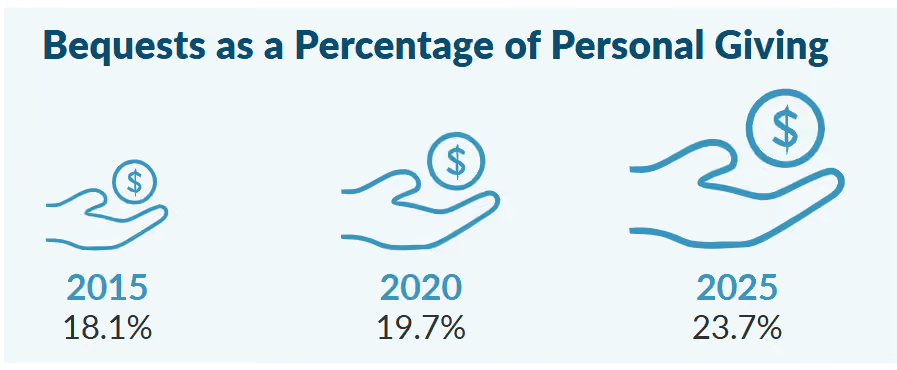
This could be a significant and possibly unanticipated outcome of the ongoing Great Wealth Transfer. These findings point to a more comprehensive understanding of potential beneficiaries for these transfers, which goes beyond simply passing money from one generation to the next within a family to include possibly greater advantages to younger generations through gifts to institutions.
For advancement teams, it’s a powerful reminder that stewardship isn't all just retaining donors for the next campaign but about building relationships strong enough to become part of an institution’s legacy.
University fundraising is bringing in record levels of support, but the donor base behind that giving is becoming increasingly concentrated. According to the FY2025 CASE Insights on Voluntary Support of Education survey, 89% of funds raised came from just 2% of donors.
Major gifts will always play a critical role in university fundraising. But long-term fundraising health depends on more than a handful of generous supporters. To shift this donors-to-dollars imbalance trend, institutions need to think beyond the next campaign and focus on building a broader pipeline of engaged donors.
That work starts early. Today's student volunteer, reunion attendee, mentor, or first-time donor could become tomorrow's major donor, planned giver, or campaign champion. The challenge is creating meaningful opportunities for people to stay connected long before they're ready to make a significant gift.
By investing in engagement, stewardship, and community-building, universities can strengthen both donor participation and long-term philanthropic support.
With the trends established, let’s walk you through some best practices to adapt to what is shaping modern university fundraising:
Before launching a new campaign, planning a Giving Day, or investing in new technology, ask yourself a simple question: how confident are you in your donor data?
Outdated records, duplicate profiles, and incomplete engagement histories can quietly undermine fundraising efforts. When advancement teams don't have a clear picture of who their supporters are, personalization becomes difficult, and opportunities slip through the cracks.
A periodic data audit and clean-up may not be the most exciting fundraising project on your list, but it often delivers some of the highest returns. Clean data makes it easier to segment audiences, identify engaged supporters, and build stronger donor relationships over time. In fact, it forms the foundation of any successful fundraising strategy.
Let's be honest. Alumni don't attend events because they're fundraising events. They attend because they see value in them.
The value could be to connect with classmates, mentor students, celebrate milestones, engage with campus life in meaningful ways, or simply for the opportunity to feel connected to a community they care about. The fundraising often follows naturally because the relationship comes first.
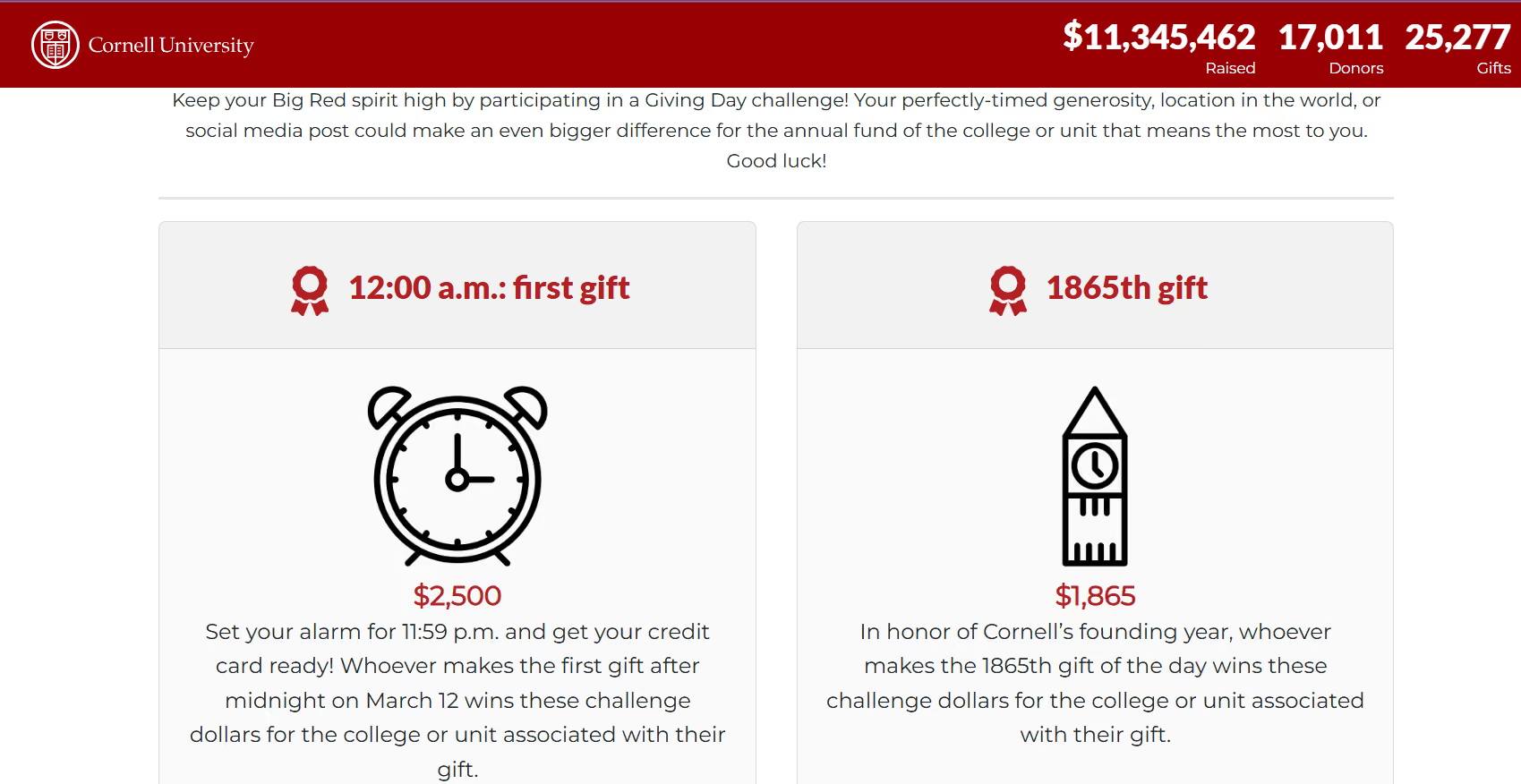
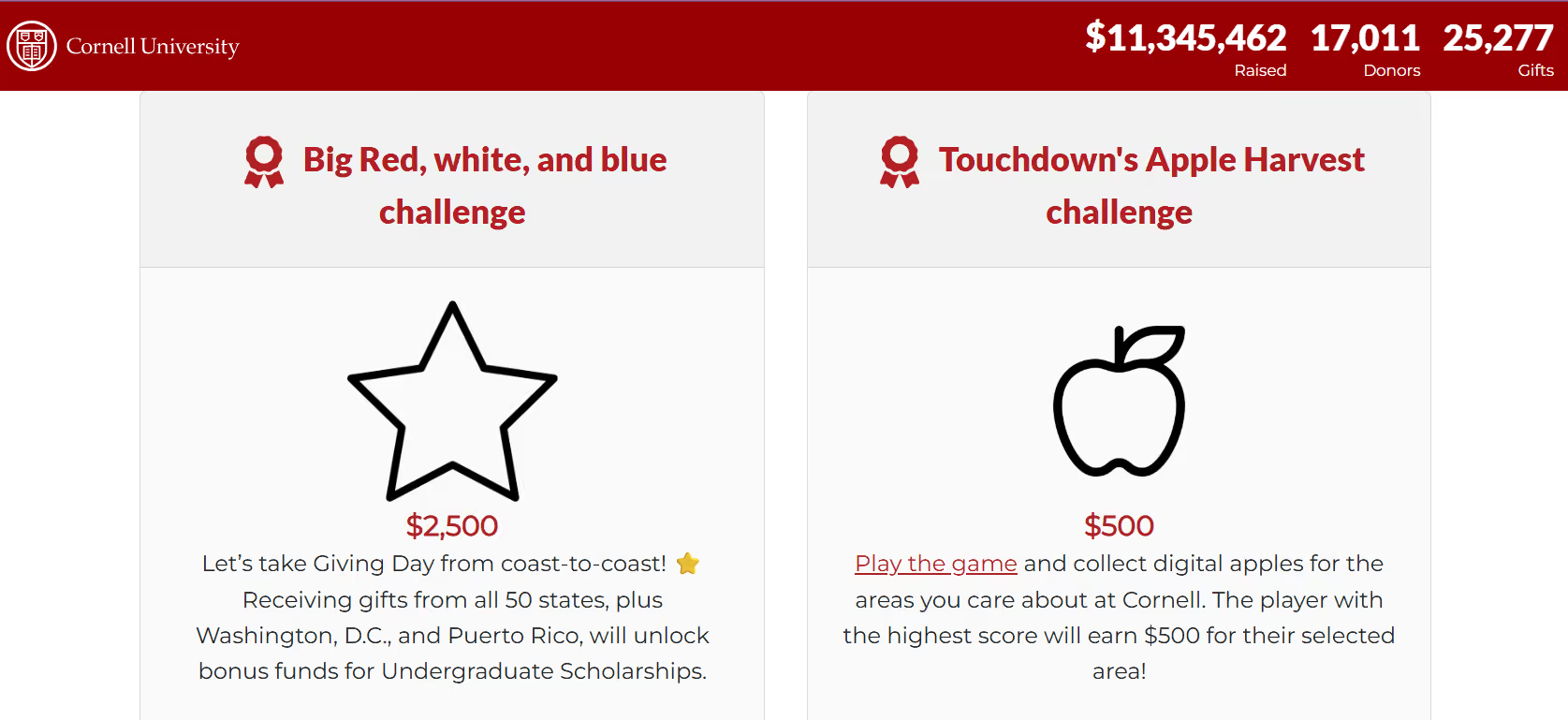
The goal is to create experiences that alumni want to talk about long after they're over. When you build momentum through social media campaigns, alumni ambassadors, peer-to-peer outreach, challenges, and gamification elements that encourage participation and friendly competition, it encourages your alumni to take part. Institutions that follow this approach to plan their Giving Day turn their fundraising events into a community-wide effort rather than a one-day transaction.
Donors today don't just want to know that their contribution was received. They want to know what happened because of it. Did a student receive a scholarship? Did a research project move forward? Did a new program launch?
The challenge, of course, is making that impact visible at scale.
A thank-you email is a good start, but the strongest institutions go beyond acknowledgments and find ways to bring their impact to life:
Not every donor interacts the same with content. Some will watch a short video. Others will open an email, browse social media, attend a webinar, or listen to a podcast featuring alumni and faculty.
The institutions breaking records lately aren't relying on a single channel and hoping it scales. They're stacking peer-to-peer storytelling, short-form video, text alerts, and live updates throughout a campaign, so a donor encounters the ask in more than one place, in more than one format. Text messages alone still see open rates above 98%, genuinely underused for the urgent, time-bound moment a Giving Day creates, while a platform like TikTok carries video storytelling in a way a static email never will.
The goal is to meet a donor in whichever channel they're paying attention to, rather than asking them to come find you in yours. It works best since it allows institutions to meet supporters where they already are while reinforcing the same message across different channels.
Imagine a donor is ready to give.
How many clicks does it take? Can they donate from their phone? Support multiple funds in a single transaction? Set up a recurring gift without jumping through hoops? Complete the process in under two minutes?
As fundraising programs become more sophisticated, even small inefficiencies can create challenges for both donors and advancement teams. That's exactly what Elon University experienced. For years, the institution relied on an in-house Giving Day platform and faced setbacks. After moving to a purpose-built platform, the result wasn't just a smoother Giving Day. It was a record-breaking one.
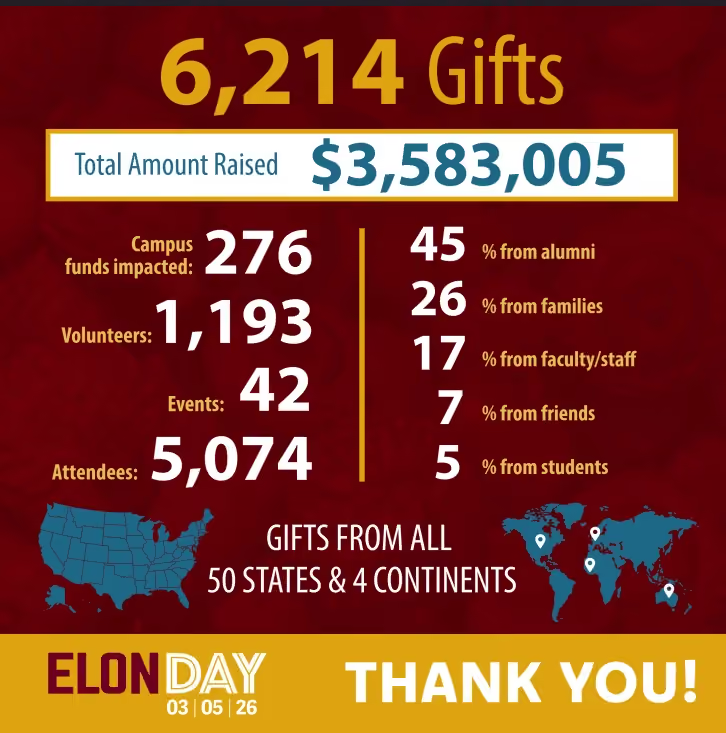
For the first time in its Giving Day’s history, it removed a kind of friction that had nothing to do with money and everything to do with decision fatigue. Mobile-first, frictionless, and flexible aren't three separate features. They help you get out of the way of a donor who's already decided to give. When donors can give easily, and advancement teams can spend less time troubleshooting systems, everyone can focus on what matters most: building relationships and inspiring support.
We’d like to also briefly go through some of the common challenges currently faced in university fundraising before we move on.
University fundraising continues to benefit from generous major donors. But relying too heavily on a small group of supporters can create long-term risk.
According to the FY2025 CASE Insights on Voluntary Support of Education survey, 89% of funds raised came from just 2% of donors. That's an impressive testament to the impact of major gifts, but it also raises an important question: How to set right this imbalance?
The instinct is usually to ignore and lean harder into the major donors already giving. The better move, and the one a lot of programs skip, is paying real attention to the low- and mid-value donors who are the ones actually holding up your giving rate when you zoom out. Building a healthy donor pipeline takes time. Alumni don't become major donors overnight. They are built through years of engagement, participation, volunteering, mentoring, and smaller acts of support.
Fundraising has become much more sophisticated over the past decade. Advancement teams are expected to manage Giving Days, alumni engagement programs, donor stewardship, digital communications, events, major gifts, planned giving, and increasingly complex reporting requirements. At many institutions, however, team sizes haven't grown at the same pace.
As a result, many advancement professionals find themselves balancing competing priorities while trying to deliver personalized experiences at scale.
The institutions navigating this challenge most effectively aren't necessarily doing more. They're finding ways to focus their time where it matters most and using technology to eliminate unnecessary administrative work.
Your alumni nowadays are receiving fundraising appeals, event invitations, newsletters, volunteer requests, and Giving Day campaigns not just from your institution, but from every cause and organization that has information about them.
Even highly engaged supporters can begin to tune out when every message competes for their attention. The resulting problem (or situation) is that more communication doesn't always create more engagement.
If every interaction feels like an ask, supporters may begin to disengage. That's why many advancement teams are shifting their focus from communication frequency to communication value. Are you giving alumni enough reasons to stay connected when you're not asking for a donation?
Sometimes the most meaningful message isn't a fundraising appeal at all. It could be a student success story, an invitation to mentor, an exclusive alumni event, or an update on a project they helped support.
Most institutions report a positive view of AI in fundraising, and plenty have already deployed it somewhere in donor communications. According to CCS's 2026 data, staff rating their knowledge of AI as mostly or fully knowledgeable doubled to 20%, yet 65% of organizations report no AI training. It flags the gap underneath that enthusiasm: limited training, unclear governance, and weak coordination across teams are slowing how much value institutions actually get from it. The risk isn't that advancement teams adopt AI too slowly. It's that they adopt it without anyone deciding who owns it, what it's allowed to say to a donor, or how two officers are supposed to use the same tool without stepping on each other.
Reading through this blog, you might have noticed something. None of the strategies we've discussed are particularly controversial. Most advancement professionals already know they should steward donors better, engage young alumni earlier, personalize communications, and make giving easier. The challenge is execution, and this is where the right technology earns its place.
With Almabase, universities can:
Almabase was built for advancement teams that want to spend less time stitching together spreadsheets, exporting reports, and managing disconnected systems, and more time focusing on strategy, engagement, and fundraising.
Whether you're running a Giving Day, building alumni communities, managing events, or tracking engagement, now may be a good time to evaluate whether your current fundraising approach and the tools supporting it are helping you get there.
Book a personalized demo to learn how Almabase helps advancement teams engage alumni, streamline fundraising, and build stronger donor relationships.
Table of Contents
Subscribe
See how modern advancement teams bring alumni engagement and fundraising together.

.svg)

.avif)
.webp)