Giving days can be surprisingly complex. Our 10-step guide walks you through the essentials that will form the pillar for your next giving day.
Prajnya Yelamali
Published:
June 12, 2026
Updated:

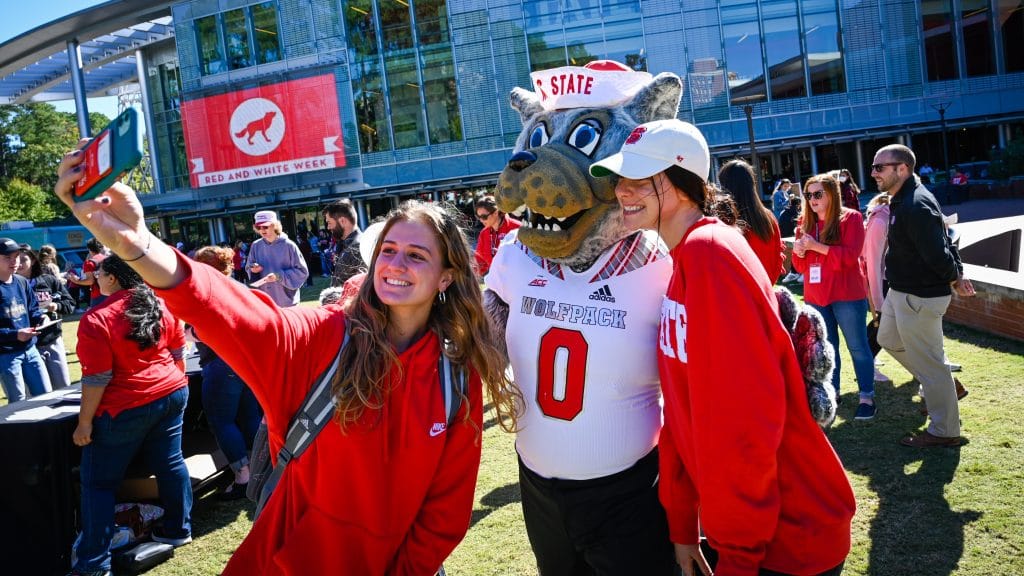
In 2025, NC State pulled in $50 million from 18,500 gifts in a single day. Boston University's 11th giving day broke records with $4.5 million from 12,000+ donors. Numbers like these come from a plan started six to nine months out that shows up as a single orchestrated moment.
In this blog, we’ll walk through how to organize a giving day from the first planning meeting to the final thank-you email.
A giving day is a 24-hour, digitally driven fundraising campaign that rallies a community around a shared cause. Donors give online, ambassadors share the link, matching gifts unlock at set thresholds, and a real-time progress thermometer keeps the energy up until the clock runs out.
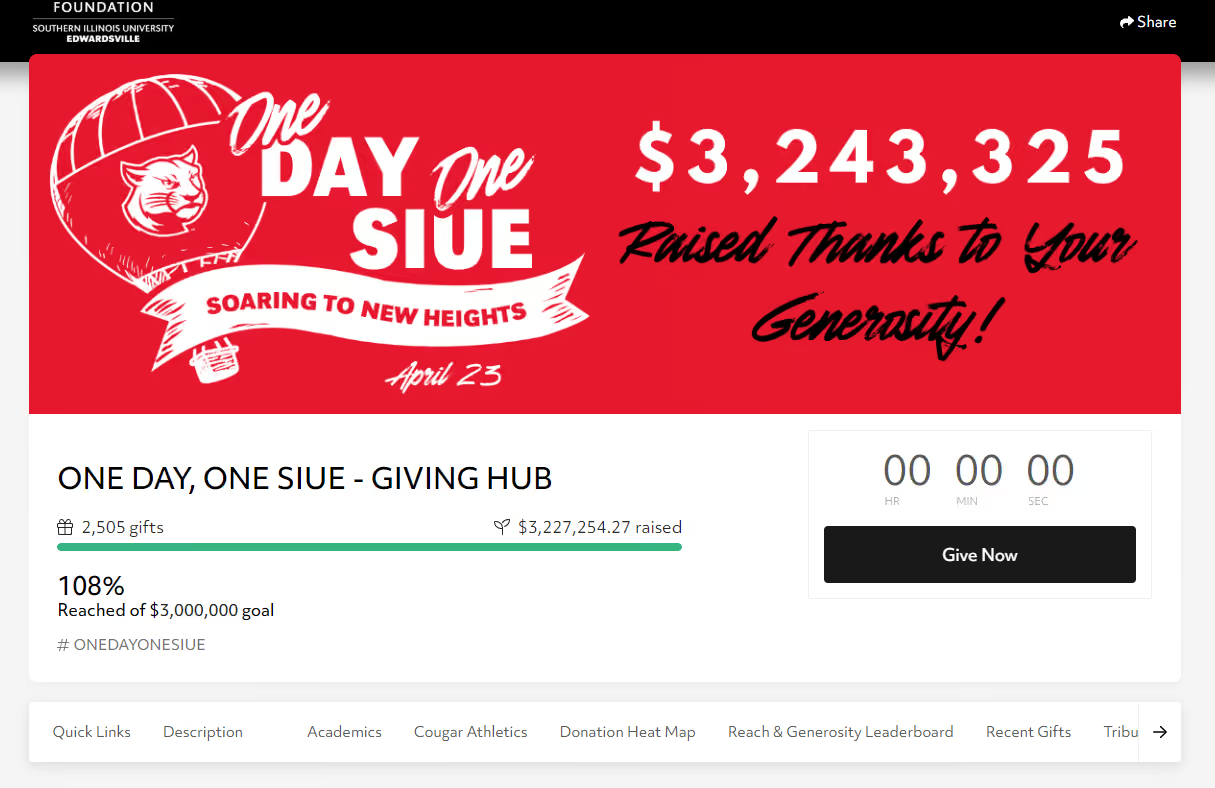
It is an industry mainstay event to acquire new donors, kick off year-end giving, and motivate an existing donor base.
Before you pick a platform or write a single email, be able to say in one sentence why this campaign exists. If three people on your team would answer that question differently, you are not ready to start planning.
Work through these with your team:
Common purposes include supporting scholarship funds, athletics funds, student emergency aid, patient care; growing annual fund participation; lapsed donor re-engagement, first-time donor acquisition, or supporting a specific program/community initiative. A clear purpose statement helps you test every decision you make later.
Most teams set one goal. The strongest teams set two: a fundraising goal and an engagement goal. A dollars-raised goal tells a story about impact ("We need $100,000 to fund 40 scholarships"). A donor-participation goal tells a story about community, and every gift carries the same weight, which works well for students, young alumni, and grateful patients.
Apart from the headline numbers like total dollars raised and number of donors, a few secondary metrics tell you whether the day moved you forward:
A Hubbub guide recommends combining two approaches when setting your number.

The right goal usually sits where these two numbers meet. If your top-down number is much bigger than your bottom-up estimate, the gap tells you where you need a matching gift, a major donor challenge, or a new donor base.
A giving day is cross-functional. If it sits entirely with one annual giving manager, you are setting up for a tough week. The recommendation here is to have a dedicated campaign manager for at least six months before and one to three months after, with weekly check-ins.
Think of the roles in your team in three layers:
Pull in annual giving, alumni relations, advancement services, major gifts, communications, deans, athletics, and student affairs. If your campaign has school or department-specific giving lines, a representative from each unit makes the difference between a campaign that feels campus-wide and one that lives only in the alumni office. When deans ask their faculty and alumni to give, response rates jump.
Schools tend to run leaner. You will want the development office, alumni office, board members, parent association, head of school, a few class agents, and student ambassadors. Parents are often the highest-converting segment, so do not leave them out of planning.
Involve the executive director, development director, program team, communications team, board members, volunteer leaders, and the person who owns the donor database.
Pick a date that connects to your story. A school might pick its founding date. A hospital foundation might tie the day to a patient awareness month. A scholarship campaign might launch the same week financial aid letters go out.
Most giving days run for 24 hours. Universities with global alumni bases sometimes stretch to 36 or 48 hours to cover time zones. Stanford's Athletics Giving Day ran 36 hours in 2024 in honor of its 36 varsity sports and raised $521,173 from 1,128 donors, showing how the length itself can be part of the story.
Your platform should complement your campaign plan, not force you to redesign your campaign around what the platform can and cannot do. If the tool is making your strategy smaller, you have the wrong tool.
A few features earn their place on the day:
The right platform should complement how your audience engages with you before, during, and after the day. Almabase's giving day platform sits on top of the same alumni and donor database your team already uses year-round. Which means the audiences you segment in the lead-up, the signals you capture during the day, and the records you steward afterward all live in the same place. Before, during, and after end up as one continuous workflow instead of three disconnected ones.

Messaging is the reason donors participate and treating it as a copywriting task produces something forgettable. If your message can be swapped onto another institution's giving day without changing anything, it is too generic to have any real effect.
Run a short messaging workshop. Start with your mission and what this giving day is funding. Finalise a single line plus supporting sentences ambassadors can use without rewriting. Fundraise Up puts it well: giving day "doesn't reward the loudest voice, it rewards the most interesting one". Souls Harbour Rescue Mission set a 2025 Giving Tuesday goal of $7,000 to fund Christmas dinners. After building a story-led campaign that launched a week early, they raised $138,978, nearly 20 times their goal. The story did the work.
The pattern is the same across all. The line is short; it makes the stakes clear, and it tells the donor who is involved and why now.
One message does not work for every group. A first-year alum and a board member share an institution, not a relationship to it. Research states that personalized emails see a much higher open rate than generic ones, and a giving day is when that gap shows up in dollars.
Ambassadors are how your campaign reaches past your email list and official social accounts. Hubbub has seen campaigns where up to 28% of gifts came from ambassador referrals. And peer-to-peer data shows that 71% of all donors learn about new causes through friends and family, making ambassadors a reliable acquisition channel.
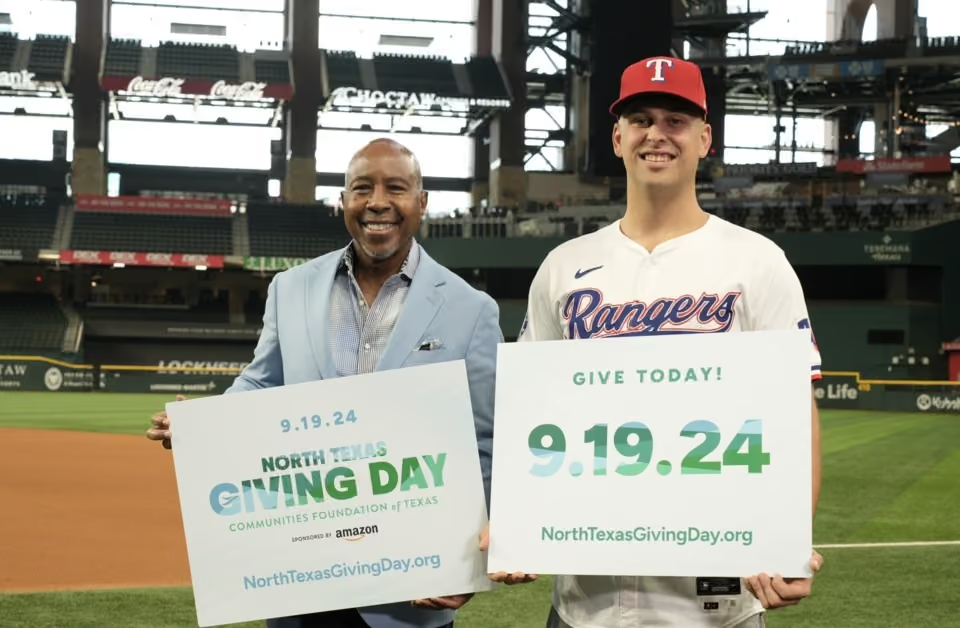
Good reach comes from two different kinds of advocates - Influencers and Ambassadors. Influencers have large audiences and move attention quickly – North Texas Giving Day, for example, recruited pro athletes like Texas Rangers star Nathaniel Lowe and players from the Cowboys, Stars, Mavericks, and Dallas Wings as campaign "Champions of Giving." Ambassadors may have a smaller network but are genuinely passionate about your mission and will advocate one conversation at a time. You want both, and you treat them differently.
The best ambassadors already love your institution and are willing to ask their friends to give. That usually includes student leaders, faculty, recent graduates, current parents, board members, longtime volunteers, and grateful patients or families. A small group of committed ambassadors will outperform a long list of people who said yes but never shared the link.
Keep the ask simple:
Give ambassadors everything they need in one place so they are not building from scratch:
Matching gifts and challenges are the most reliable way to create momentum on giving day. According to Double the Donation, mentioning matching gifts in a fundraising appeal increases response rate by 71% and average donation amount by 51%. 360MatchPro reports that 84% of survey respondents said they are more likely to donate when a match is offered.
Match types and challenges to consider:
Layering at least two of these is recommended because each motivates a different audience at different moments.
Major donors love being on the other side of a match. Instead of writing one check, they get to feel like they multiplied the impact of hundreds of other donors. Approach them with a specific challenge to fund, specific gifts to unlock, or to match smaller gifts. The Hubbub network has seen almost $750,000 in low-level major donor matching gifts across its campaigns in a single year.
This step decides whether everything else shows up to donors. A great campaign with a quiet email plan will lose to a modest campaign with a strong communications cadence.
The two to four weeks before the day are where you condition your audience to show up:
The volume can feel high, but giving day is a one-day moment, and donors expect a higher tempo than usual:
33% of donors say email is the tool that most inspires them to give – and giving day amplifies that effect because of the urgency and matching incentives stacked into the day.
Your social plan should mirror the email cadence with more variety in format:
SMS is underused in fundraising. Nonprofit texts average a 98% open rate, which is way higher compared to email open rates. The trade-off is that texts feel intrusive when overused. Reserve SMS for ambassadors, students, young alumni, board members, and opted-in donors. A "we are live" text in the morning, a midday push, and a final-hour reminder will outperform a steady drip.
Save calls for board members, major donors, challenge donors, high-capacity donors, and lapsed donors. A call from a dean, executive director, or trustee on giving day morning often closes gifts that emails never would.
The day itself is mostly execution. If the planning was thorough, your team will be energetic rather than scrambling.
Keep a live dashboard up in the campaign room. Watch total dollars, total donors, first-time donors, average gift size, gift designations, ambassador-driven gifts, matching gift progress, failed or incomplete donations, and finally Email opens and clicks and Social media engagement. Failed donations are quietly expensive – a handful can cost real dollars if nobody catches them until the next morning.
Updates create momentum. The best ones tell donors that something is happening right now:
Ambassadors will not stay engaged for 24 hours on their own. Message them four or five times: morning launch, midday update, challenge-specific push, final-hour rally, thank-you at close.
Staff your inbox and phones. Day-of questions are predictable:
A two-hour response time on giving day is too slow. Aim for under 30 minutes.
The first 72 hours of follow-up set the tone for everything that comes next. New donors are deciding whether you were worth their gift.
Send a personal thank-you within 24 hours. Bloomerang cites research from Penelope Burk that a thank-you call from a board member within 24 hours of a gift increases the donor's next gift by 39%, and first-time donors who get a personal thank-you within 48 hours are 4x more likely to give a second gift. A handwritten note from a student or short video from your executive director will be remembered longer than the gift.
Publish the final numbers. Tell the story of who participated, what got funded, and what comes next. Donors gave to be part of something, and the recap tells them that they were.
Not every donor needs the same next email. First-time donors need a welcome series. Recurring donors need a thank-you and a quiet ask to keep their recurring gift active. Major donors need a personal follow-up from a gift officer. Lapsed donors who came back need a reason to stay.
This is where the platform choice from Step 5 pays off. Get every gift, designation, soft credit, and ambassador attribution into your CRM, and tag the cohort so you can measure retention against it a year from now. Clean data is what gives you a real shot at retaining your donors
Build a 90-day journey for new donors. Mix impact updates, an event invitation, a soft ask to convert to monthly giving, and one personal touchpoint. The second gift matters, but what you are really after is the relationship that produces a third, fourth, and fifth.

A giving day produces an enormous amount of donor data in a short window. Gifts, designations, soft credits, ambassador attribution, lapsed donors who came back, and first-time donors needing a welcome journey, all in 24 hours. If that data has to be exported, cleaned, and re-imported by hand, your team spends the week after giving day in spreadsheets instead of stewardship.
Almabase's giving day platform sits on top of the same alumni and donor database your team already uses, so day-of data flows straight back into the records you steward year-round. Class-year participation rates update automatically, ambassador referrals tie to real records, and new donors are segmented for the welcome journey by Monday morning. The campaign ends at midnight, but the relationships you built during it with the right platform will pay off for years to come.
Subscribe
See how modern advancement teams bring alumni engagement and fundraising together.
Plan faster. Execute better
Explore free templates designed for alumni and fundraising teams.
.png)

.avif)
Prajnya Yelamali
Not long ago, Giving Days were simple.
They were calendar events.
They were email-heavy.
But in 2026, Giving Days have become something else entirely.
Today, Giving Days connect fundraising, engagement, and community-building in a giving world that is more complex, focused on fewer donors, and driven by relationships than ever before.
In partnership with CASE, we surveyed 150+ colleges, universities, and independent schools to understand how Giving Days are evolving and what advancement teams are doing differently in response to today’s realities.
What we found was not just a set of tactical changes but a deeper strategic shift. Giving Days are no longer treated as standalone fundraising events. They are becoming central to how institutions engage communities, rebuild donor pipelines, and sustain philanthropy over time.

Across education and the nonprofit sector, giving is holding steady. Institutions are raising meaningful support, major gifts are increasing, and global giving remains strong.
In the UK and Ireland, institutions secured £1.52 billion in new commitments, an increase over the previous year. Australia and New Zealand have also seen steady growth over the past five years. In the U.S., independent schools raised $2.82 billion in 2024, with parents and guardians contributing a quarter or more of total funds.
At the same time, a quieter challenge remains: fewer people are taking part.
Data from the Fundraising Effectiveness Project shows that the sharpest drop is happening among the small-dollar donors.
This tension of more dollars and fewer donors is the context in which Giving Days are being reimagined.
Giving Days used to focus mainly on alumni. Messages relied on shared memories, school pride, and the idea of “giving back”.
Today, donors are more diverse. Parents, families, foundations, donor-advised funds, faculty, staff, students, and community members all play a bigger role.
As a result, institutions are turning Giving Days from alumni-only campaigns into events for the whole community.
The question has shifted from “How do we get alumni to give today?” to:
By including more people, Giving Days are becoming open entry points, not exclusive events.
One clear takeaway from the CASE data is that institutions are changing how they define success.
When asked what drives their Giving Day:
Giving Days now account for a meaningful share of annual fundraising:
In short: Giving Days can do what traditional campaigns often can’t. They make it easy for lots of people to participate.


As Giving Days grow, institutions are using smarter strategies.
Digital tools are key:
But Giving Days aren’t just online.
The goal is to make Giving Day feel personal, celebratory, and human, so donors can see themselves as part of the story.

One of the biggest changes is how institutions measure success.
Instead of just looking at total dollars, most now track:
Looking ahead, many plan to track even more: retention, donor upgrades, gifts from ambassadors, leadership giving, and which email subject lines work best.
The takeaway: Giving Days are no longer just experiments. They are data-driven opportunities to learn and grow the donor base year after year.

Looking at the bigger picture, Giving Days in 2025 tell an important story about philanthropy.
They show how institutions are responding to fewer donors, but not by inviting everyone to take part. They show a focus on engagement as a long-term goal, rather than chasing quick spikes in donations.
Most importantly, they reveal a change in mindset:
Colleges and universities doing Giving Days differently understand this. They aren’t just raising money; they are building a culture of giving, one person and one Giving Day at a time.

Giving Days in 2026: What 150+ Institutions Are Doing Differently Now
Lorem ipsum dolor sit amet, consectetur adipiscing elit. Suspendisse varius enim in eros elementum tristique. Duis cursus, mi quis viverra ornare, eros dolor interdum nulla, ut commodo diam libero vitae erat. Aenean faucibus nibh et justo cursus id rutrum lorem imperdiet. Nunc ut sem vitae risus tristique posuere.

Sanna Bara
March 31, 2026
12 minutes
Giving days are a concentrated burst of community energy that, when done right, move alumni, parents, students, and staff to act together. They’re also some of the most reliable vehicles to mobilize engagement from the community, year-on-year. But what "done right" looks like isn’t a fixed answer; it keeps evolving and looks different for different institutions.
We’ve put together a few examples of successful giving days that have stood out in 2026 so far. A few shattered institution records. Some took creative risks that paid off. All of them offer a glimpse into what higher education fundraising looks like right now, and what institutions are doing differently for 2026.
The general theme of giving can be described as cautiously optimistic. According to CASE's Insights on Voluntary Support of Education report released in April 2026, giving to U.S. higher education institutions exceeded $78 billion in FY 2025: a 4% year-over-year increase. This continued growth reflects donors' sustained confidence in colleges and universities.
These numbers also paint a more complex picture of the alumni donation landscape. The number of alumni donors shrank in number even as total giving went up, which means fewer donors are giving more. This places institutions in a position where engagement, and an effort to sustain and increase it year-on-year, becomes imperative.
Giving days are one of your best tools to address this directly: they widen the donor pool, cultivate first-time givers, and create visible momentum to signal institutional health.
Findings in CASE and Almabase’s State of Giving Days white paper also support this: nearly 40% of institutions said their giving day helped them engage more alumni and boost donor participation. More than one in four reported that these single-day campaigns contributed between 11% and 25% of their total annual fundraising.
The shift we’re seeing in 2026 is in how these institutions ensure that Giving Days work, through the strategies they’re adopting. Student generated content, more sophisticated and widely present gamification features, matching pools deployed with greater precision: these are some of the trends we’re seeing in 2026. And a handful of schools are even abandoning the standard 24-hour flash format entirely in favor of models better suited to their communities. The giving days below reflect all of that.
Theme: Boilermaker Heroes: Making Victories Possible
Purdue's Day of Giving (April 29) carved out a league of its own with a staggering $95.5 million from more than 34,000 individual gifts, making it one of the largest single-institution giving day results in higher education history, the second-highest gift count in Purdue's 13-year run with this event, trailing behind only last year's national-record-setting campaign.
They had different units (campus, college, school, program, club, or student organization) participate, with Purdue Engineering tracking roughly $12 million, while the School of Aeronautics and Astronautics pulled nearly $5.2 million, at least a little bit fueled by a patriotic thread tied to America's upcoming 250th anniversary. Purdue Athletics brought in a record $16.1 million through 2,569 gifts, surpassing its own prior record of $13 million set in 2024.
What worked: Purdue has refined its gamification model over more than a decade since its launch in 2014, and it shows. They used real-time leaderboards to put colleges, alumni clubs, and student organizations in direct competition for shares of matching pools. This worked very well for the event because it essentially turned passive donors into active participants who track outcomes and are fully involved in the process.
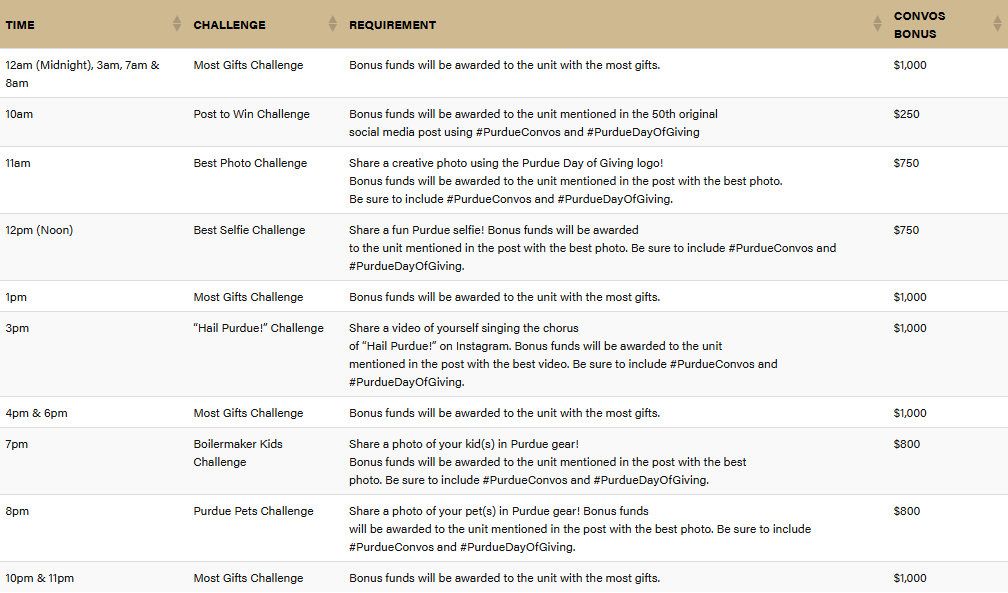
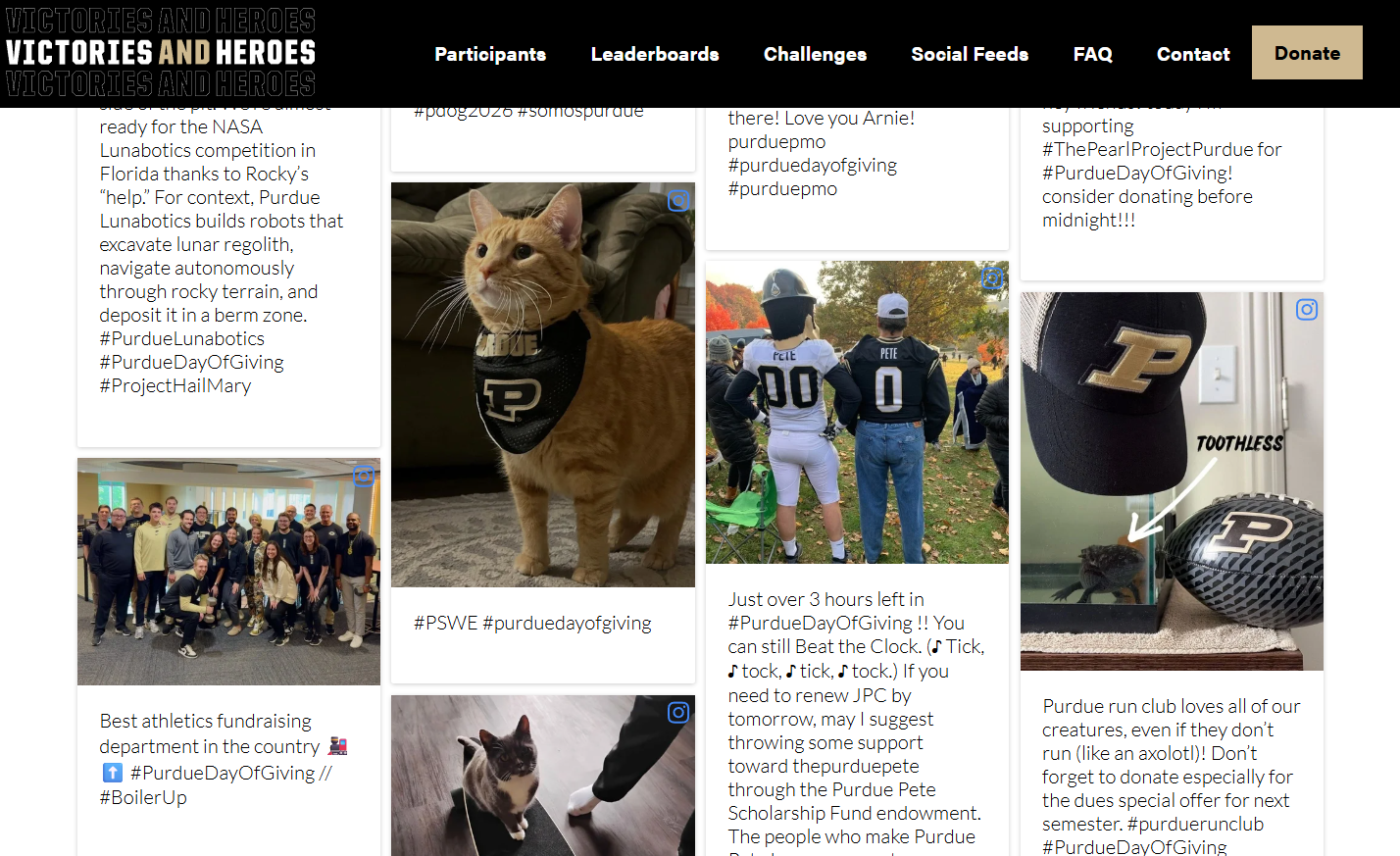
The hourly match challenges, such as Best Photo Challenge, Best Selfie Challenge, Boilermaker Kids challenge, and the much-loved Purdue Pets Challenge, all of which included posting pictures with their hashtags ‘#PurdueConvos’ and ‘#PurdueDayofGiving’ spread word on social media to a degree that would cost far more to replicate through paid channels.
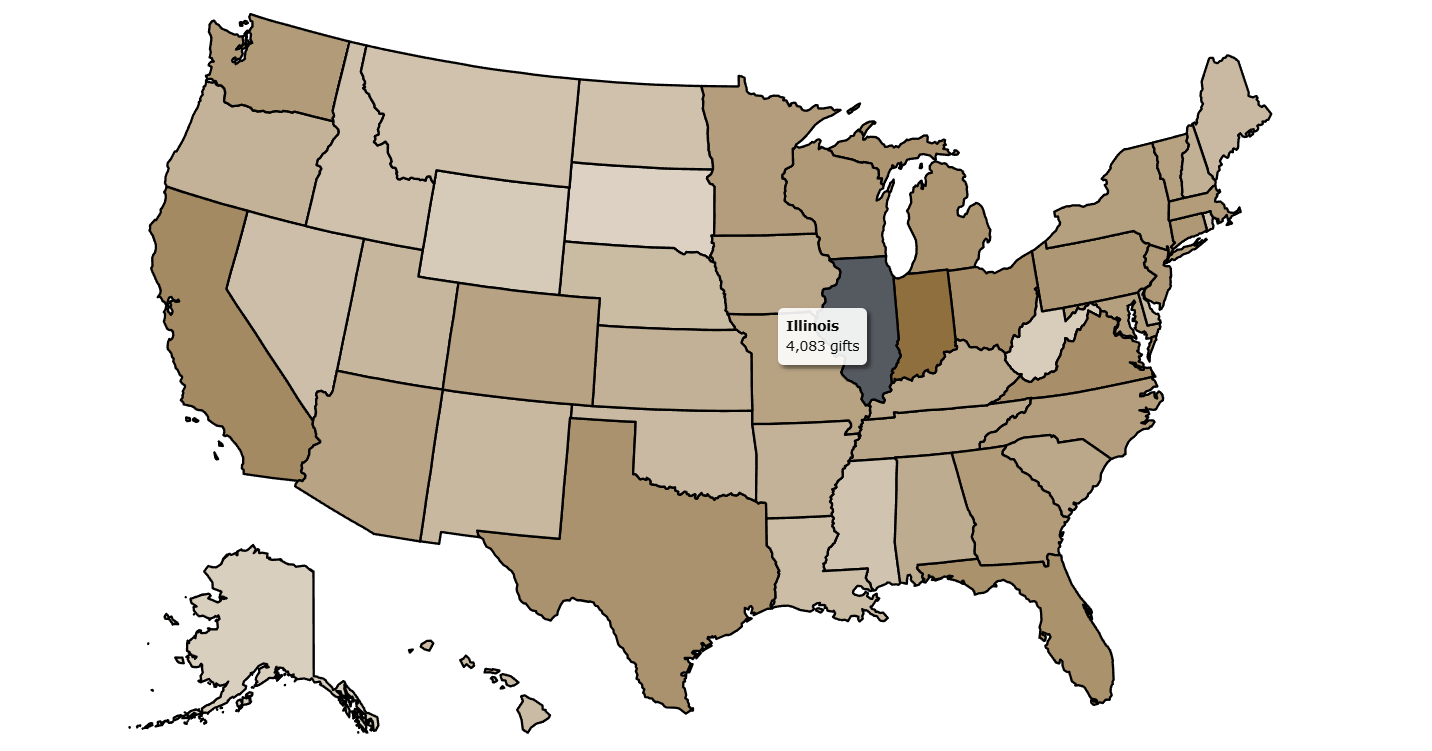
The campaign also tracked geographic state participation, giving the team a nationwide Boilermaker Pride narrative that resonated beyond campus.
The ‘social feeds’ tab on their Giving Page also documented the student and community generated content along with their campaign hashtags. They also provided a social media toolkit, complete with ready-to-use posts and images, making it much easier for supporters to show up meaningfully.
The deeper lesson here is that consistency is the gift that keeps on giving. The institution consistently repeats strategies that work for their giving days while also taking new initiatives, keeping the experience modern and fresh for attendees. Purdue's cumulative giving day total since 2014 has now crossed $697 million. That kind of institutional momentum is itself a fundraising asset.
Theme: Nature-Themed Basecamp Exploration
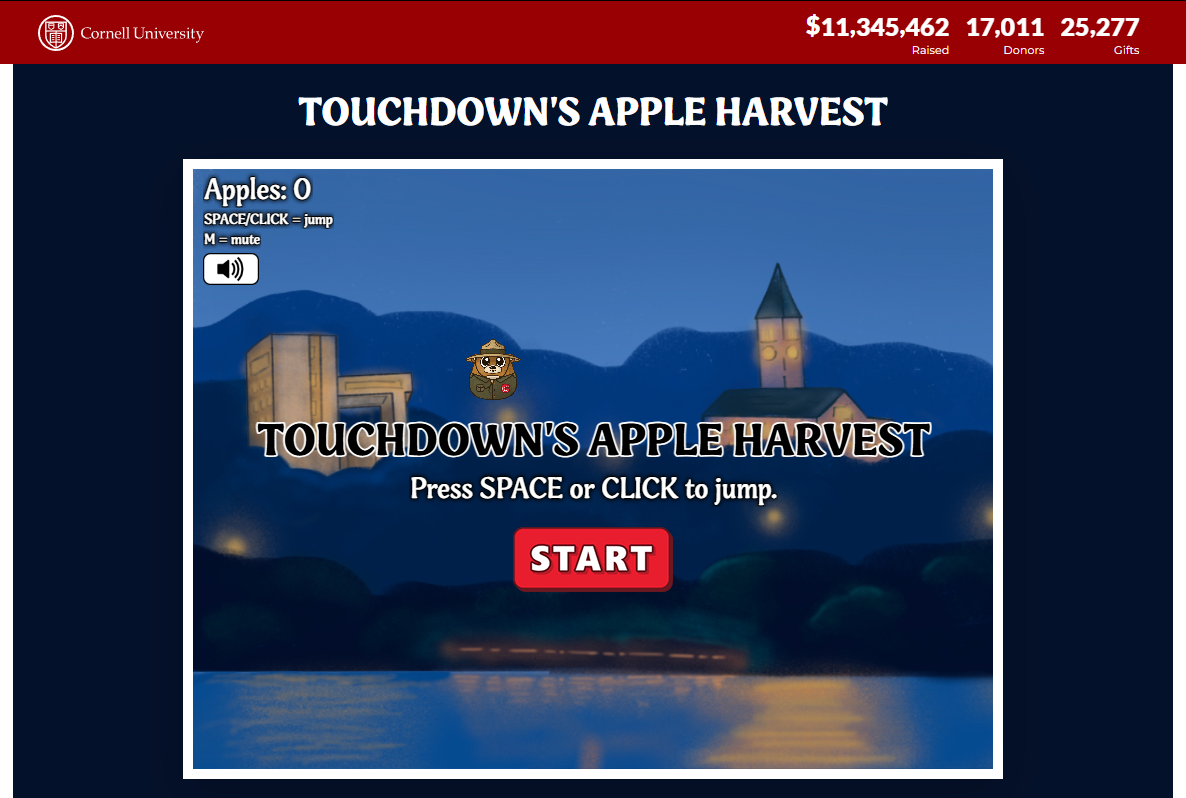
Cornell's giving day 2026 campaign used a custom arcade mini-game in which users avoided obstacles and collected “digital apples” on a virtual campus map. Collecting apples within the campus map gave donors an experience that felt native to the institution and introduced a layer of delight, nostalgia and interactivity that most donors hadn't seen before.
More importantly, that mechanic was tied directly to dollars: top-performing departments unlocked portions of a $2.4 million matching fund pool based on participation. The result was over 17,000 individual donors and more than 25,000 total gifts.
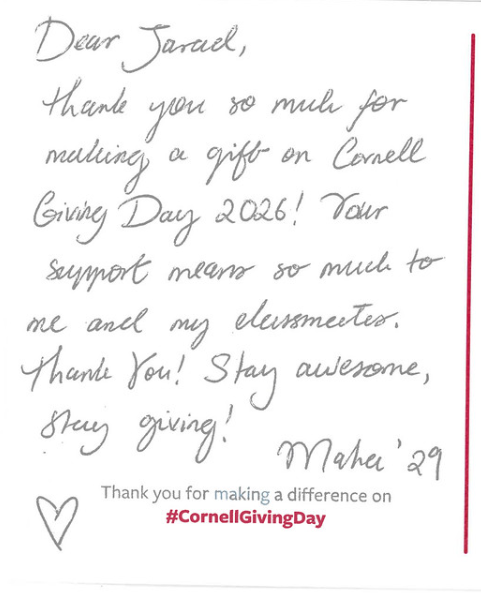
The institution had organised as many as 13 different events to make the Giving Day an immersive, rewarding experience for students. They could write thank-you postcards to donors, enjoy snacks, participate in giveaways and so much more.
They also leveraged peer-to-peer giving, with 704 Giving Day champions securing more than 4,037 gifts, which was record-shattering.
What worked: Cornell mixed and matched a few strategies that worked out best for them. The mini arcade game gave donors a reason to stay engaged beyond the moment of their gift. To this they tied in matching fund unlocks, essentially doubling the impact made. Finally, they also had students write thank you notes to donors, showing moments of gratitude in real time. The nature-themed "basecamp" framing also gave the campaign a cohesive visual identity that made it memorable for attendees and shareable across social channels.
Theme: Ole Miss Giving Day
Ole Miss has had a unique approach of baking institutional history into their annual giving day, which takes place every spring. This year too, the campaign window was set at exactly 1 day, 8 hours, and 48 minutes, as a callback to the university's 1848 founding year. It's a small detail, but one that declares intentionality to donors and attendees.
A leaderboard was adopted to track the number of donors from each department in real time, to increase competition among donors. They also live streamed the event for the duration it was active.
Along with this, they also added a physical element. A "Squirrel Scavenger Hunt" was designed to send participants across campus searching for hidden stuffed squirrels, with each discovery unlocking $250 in matching funds directed to the finder's chosen fund.
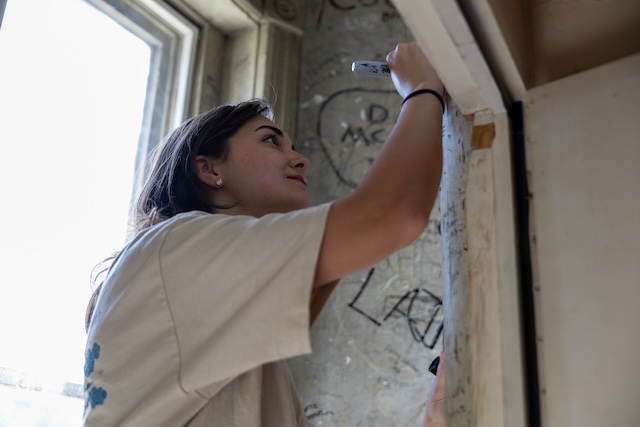
Donors could also "name a squirrel" for a $26 gift or sign the historic Ventress Hall turret, turning philanthropy into something tactile and campus-rooted.
Department leaderboards and live-streamed updates from university leaders kept the digital momentum going in parallel.
What worked: The Ole Miss team understood that a giving day is fundamentally a community event. The squirrel activation gave students and staff something to do and share, creating word-of-mouth momentum that is hard to replicate through any other channel. Tying the campaign window to the university's founding year added an element of storytelling that is distinctive to the institution’s identity.
Theme: Mason Now: Power the Possible
George Mason's 2026 giving day stood out for a metric that rarely makes the headline: approximately 25% of its donors were giving for the first time! That's a significant new-donor conversion rate for any institution, and it signals that the campaign successfully reached beyond its existing base.
The strategy here was to closely tie this giving day to a larger multi-year campaign. By positioning the giving day as a visible milestone within that broader arc of their Mason Now campaign, GMU gave both existing donors and first-timers a clear sense of the mission and their place in the outcome.
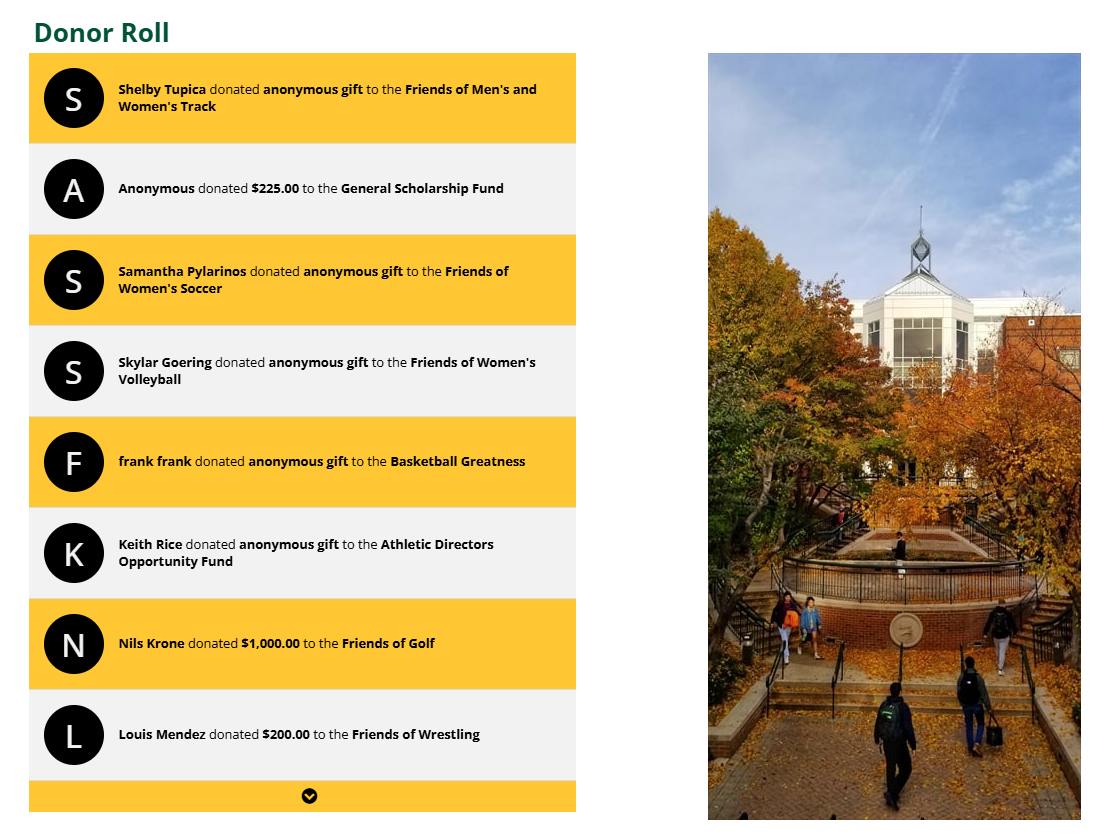
What worked: GMU approached their giving day as a donor acquisition vehicle rather than purely a revenue event. This influenced messaging, targeting, and put the event in perspective for everyone involved. The 25% first-time donor rate suggests the team invested in prospecting and outreach instead of a single-day fundraiser, which makes a lot of sense in context.
Theme: Make It Count for Meredith
Meredith College's giving day ran in parallel with the institution's 135th birthday; a decision that unlocked a layer of storytelling the campaign used well. The Greatest Needs Fund, which allows the college to allocate funds to areas that need it the most, secured $454,672 on its own, reflecting strong donor trust in institutional decision-making.
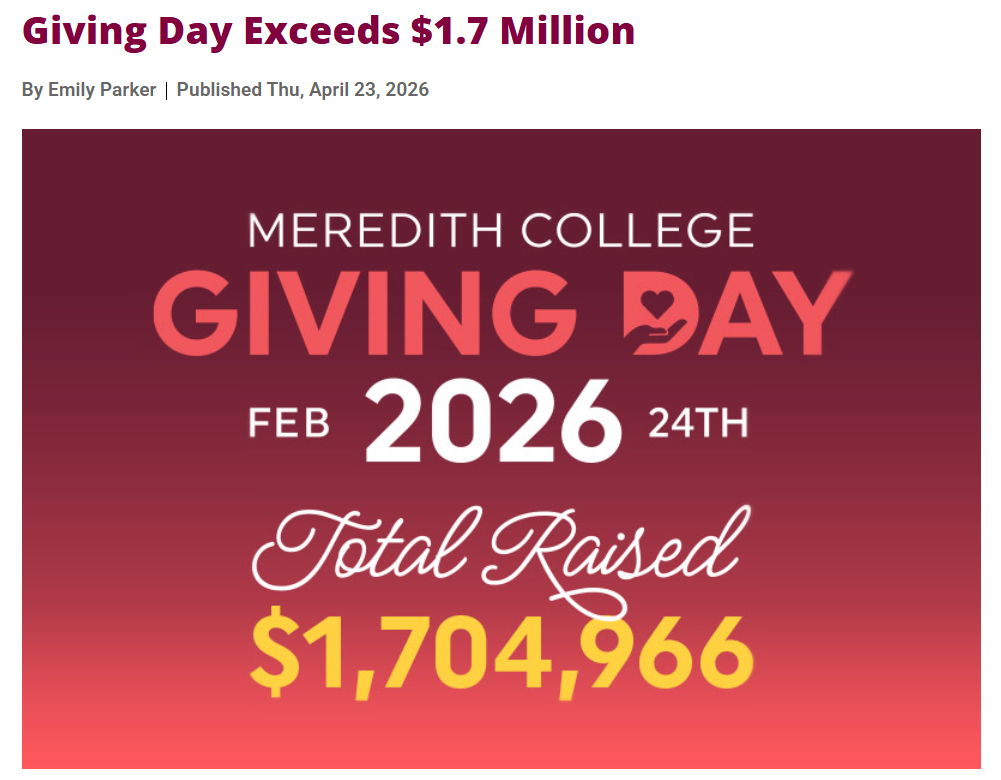
The most distinctive element, however, was the spread in geographic activation: 11 regional watch parties ran simultaneously across North Carolina and Washington, D.C., bringing the giving day to those who couldn't be on campus. The board of trustees, parents, and alumni groups funded 15 matching gift challenges totaling $460,000, and an "Odds vs. Evens" class-year competition ran throughout the day.
What worked: For a women's college with a deeply relational alumnae community, distributed in-person events turned a digital campaign into a series of local moments. The giving day became a reason to gather : which made giving feel like an act of belonging, not just philanthropy. The birthday framing gave first-time donors a natural reason to act: celebrating a milestone feels different from responding to a need.
Theme: UCA Ready to Grow
UCA's March 13 sprint deliberately moved away from broad-message capital campaign marketing toward hyperspecific, fund-level storytelling. Rather than deploying universal matching pools, the team created tailored mini-milestones for individual initiatives: a new Aviation Academy pilot training module, an Athletics Championship Resource sub-pool, and specific tracks for Arts, Humanities and Social Sciences.
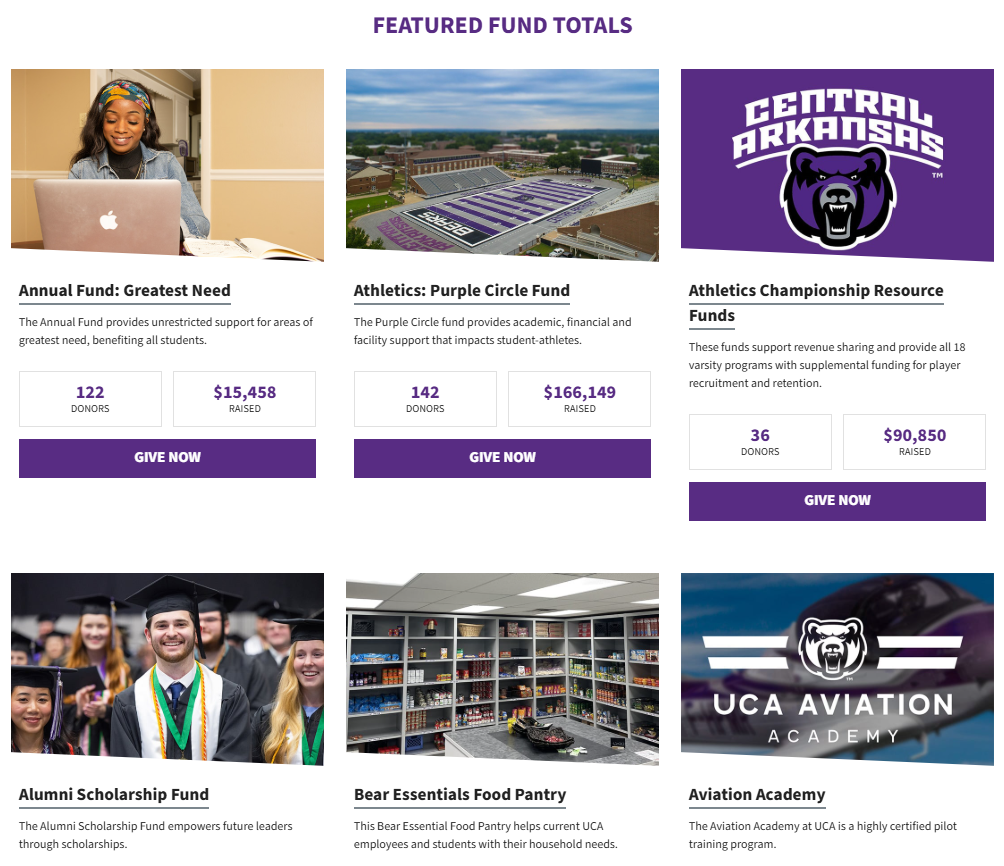
This meant donors weren't giving to the larger "UCA", they were funding a specific program they could see and name.
What worked: Segmented, cause-specific fundraising isn't new, but it was used as the one specific strategy by UCA. By making each fund feel like a distinct campaign within the larger day, they reduced donor fatigue and increased the sense of direct impact. Donors who care about education gave to education. Donors who care about aviation gave to aviation. The $1.2M result across more than 3,100 donors reflects both breadth across different causes and genuine engagement.
Theme: Going Above and Beyond for Students
Creighton's giving day took a grassroots-first approach, centering community voting as the mechanism through which challenge dollars were awarded. Student-led coalitions : including the Street Medicine program, which provides direct healthcare to underserved populations in Omaha : competed for popular vote tallies, with winning coalitions receiving earmarked challenge grants. The top voted club earned a $2000 gift.
Additionally, there were stickers and socks given out to donors, and the campus therapy dog, Ella, was present in the event for a short duration, adding to the delight factor.

What worked: Incorporating voting into the event gives non-donors a reason to participate in the campaign, creating a layer of supporters who become familiar with individual programs before they give. It also adds a layer of credibility from the voters’ perspective. With the freebies, the socks, coffee, snacks and the free hugs, it is clear that Creighton's $1.11M result from nearly 3,000 donors reflects how participatory design expands reach and impact by considering the experience offered to the attendees.
Theme: The Power of Opportunity
St. John's ran one of the more creative low-barrier engagement strategies on this list: small-dollar gift thresholds unlocked on-campus experiential perks. A $10 gift gave donors access to an on-campus food truck dessert ticket; $20 unlocked a full lunch voucher. The campaign was centered on low-income financial aid and the university's Vincentian community mission.
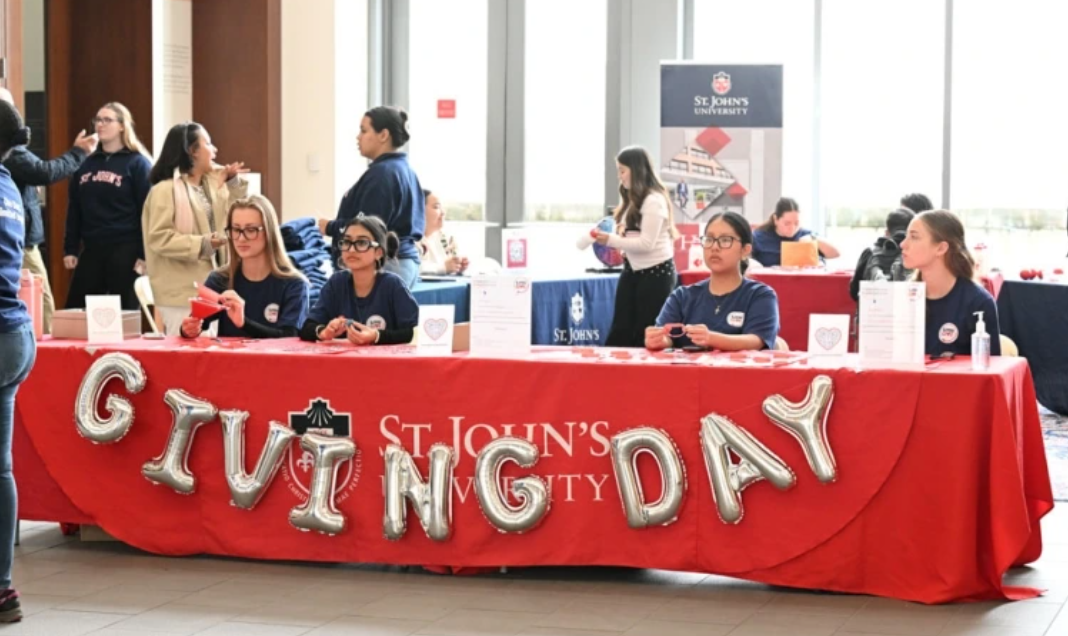
What worked: By pairing small gifts with immediate, physical rewards, St. John's reduced the psychological friction of giving, especially younger alumni who may not have deep giving habits yet. The approach is replicable, and the results suggest it worked.
Theme: Bridge to the Future
Queens' Giving Day runs as a 36-hour online fundraising drive which is already a departure from the standard 24-hour format most institutions use. The 2026 campaign closed with 588 donations and £650,778 raised.
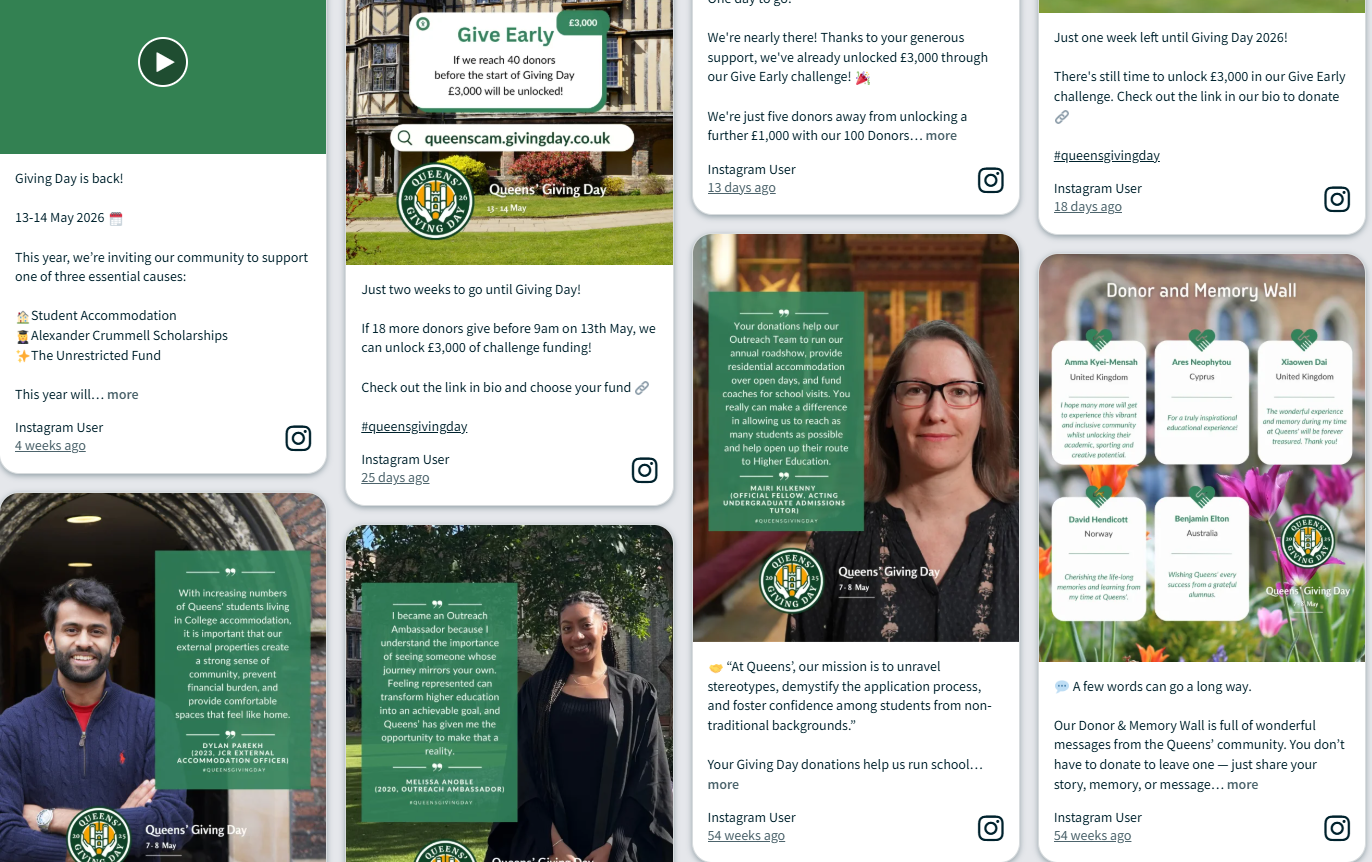
Donor-count challenges were front and center in the campaign: hitting 400 donors unlocked £4,000, and reaching 500 unlocked a further £5,000. Because these were participation thresholds a donor who gives £10 counts the same as one who gives £1,000 toward unlocking those challenges. This framing lowered the barrier to entry and gave smaller donors a reason to act. A final-hour challenge sweetened the close: raise £25,000 in the last 60 minutes, unlock another £25,000. Both mechanics were fully unlocked by the end of the day.
A matriculation decade leaderboard ran throughout, ranking donor participation by the era alumni graduated; the 1970s cohort led with 106 donors, followed by the 1980s at 94. It's a simple touch, but it works: class-year competition creates identity-driven motivation.
What worked: The 36-hour window gives the campaign breathing room for alumni across time zones to participate without the pressure of a midnight cutoff. Paired with a "give early" feature that let donors contribute before the official window opened, Queens' essentially extended the campaign in both directions without diluting the urgency of the final-hour challenge.
This strategy paired with proven ones like a matriculation leaderboard, the choice of funds given to donors and the donor-count challenges, added to lowering the barrier for participation even further. This campaign was engineered to give itself the best shot.
The result is a campaign that felt inclusive globally but still had a hard close that drove action.
Theme: OneGW
GW's 2026 Giving Day ran for just over 24 hours on April 7 and 8 and raising more than $2 million from over 3,800 donors: the largest in the university's history, surpassing a 2025 campaign that had itself set a then-record. Back-to-back records in consecutive years is a sign that they’re doing several things right!
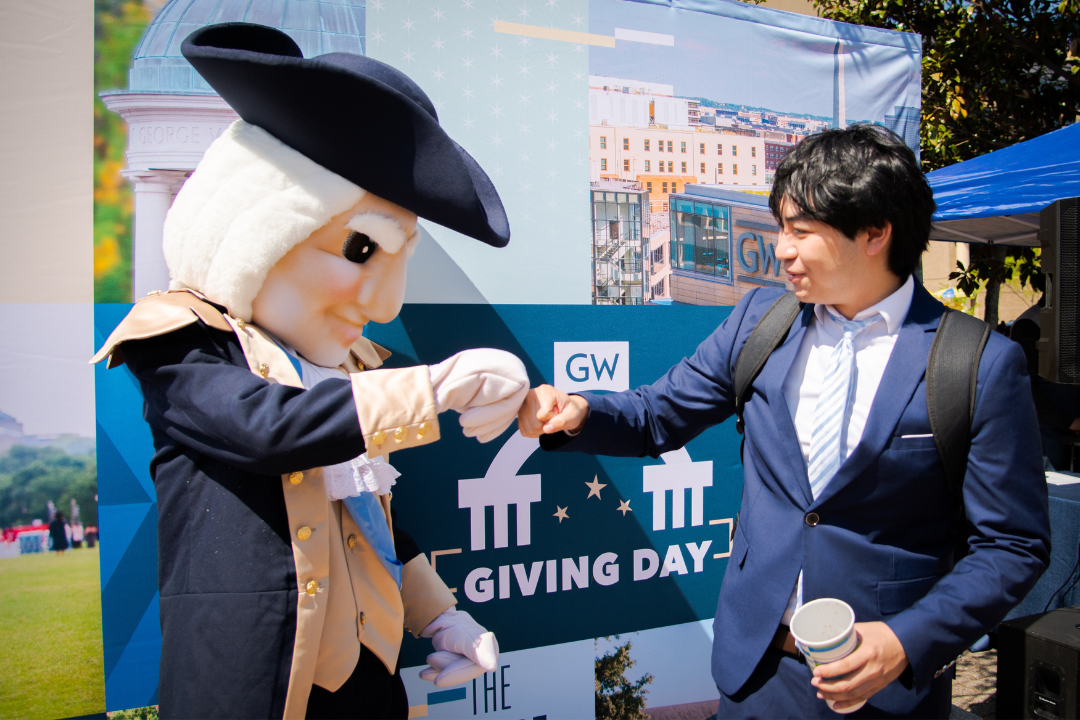
The campaign covered every corner of the university: scholarships, student organizations, athletics, academic programs, and research, and drew support from all 50 states and even overseas, with the farthest gift coming from Singapore. That geographic spread tells you the campaign is tapping into an alumni network that's genuinely engaged, not just locally loyal.
The "OneGW" framing ran throughout the day, with challenge mechanics and peer storytelling as the primary engagement levers. GW has positioned Giving Day as a signature university tradition since its 2021 launch which means donors now come into the campaign with some familiarity and expectation, and the institution matches those expectations through consistency.
What worked: With five years in the game, each year's record becomes the baseline expectation for the next, and GW has proved that this pressure leads to sharpened execution. The geographic reach suggests the team has gotten better at outreach beyond the DC metro area. And the "OneGW" identity, spanning Foggy Bottom and the health system campus, gives the campaign breadth without losing cohesion. The consecutive record years are the clearest signal that GW has figured out the basics and is now building on top of a solid foundation.
Several threads run across this year's standout campaigns.
UCA and Creighton are the clearest examples, but it's visible across the institutions on this list, one way or the other: donors respond to named programs instead of simple department name drops. "Fund the Aviation Academy" seems to generally perform better than "Support UCA's Growth."
Ole Miss's squirrel hunt, Meredith's regional watch parties, and St. John's food truck perks demonstrate that the most engaging giving days create something to do offline that can be shared online. These are the trade-offs being made in place of the more traditional donation link. It may be more effort intensive but the effort pays off.
George Mason's 25% first-time donor rate won't be the last we hear of this kind of tracking. As CASE's latest data shows, institutions are navigating a narrowing high-capacity donor base, which makes these entry points more valuable.
Meredith's regional watch parties, Ole Miss's campus squirrel hunt, St. John's food truck perks: all of these activities would feel forced at a different institution or a different community. The schools that did the most interesting work in 2026 designed for their own communities, which goes to show how well they know who shows up for them. When the experience itself is worth showing up for, the giving follows.
If you're looking at these results and thinking about what your institution's next giving day could look like, we’ve got some great free resources to help you get started!
The 2026 giving day season isn't over, so we will be seeing more great examples of giving days in the coming months. But even this early snapshot tells us something about the direction of higher education fundraising.
Giving days are getting more intentional and community oriented. The institutions that understand their communities deeply enough to design a day that feels specific, meaningful, and worth showing up for will be the ones driving the best results.
If you are looking for the perfect partner to help you bring success to your next giving day, feel free to book a personalized demo and we’d love to talk!

Top Giving Days That Stand Out in 2026 (So Far)
Lorem ipsum dolor sit amet, consectetur adipiscing elit. Suspendisse varius enim in eros elementum tristique. Duis cursus, mi quis viverra ornare, eros dolor interdum nulla, ut commodo diam libero vitae erat. Aenean faucibus nibh et justo cursus id rutrum lorem imperdiet. Nunc ut sem vitae risus tristique posuere.

Anwesha Kiran
May 26, 2026
12 minutes
If you’ve run fundraising campaigns, you know that email is crucial for sending reminders, continuing donor conversations, and broadcasting updates. And yet, writing those emails over and over again isn’t always easy. Keeping them clear, relevant, and worth opening without slipping into repetition can be annoying and time consuming. That’s where having fundraising email templates starts to help by giving you an easy to follow starting point.
We’re bringing you 10 practical templates you can use across different scenarios with alumni fundraising examples. Along the way, we’ll also look at best practices that can improve open rates and responses without adding more complexity to your workflow, and get results.
Even with the rise of social media, texting, and peer-to-peer apps, email continues to be one of the most reliable ways to reach and inspire donors. Alumni may scroll past a post or miss a text, but emails land in their inbox and give them space to read, reflect, and act. Its strength lies in:
To help you get started, here are 10 fundraising email templates you can adapt across different campaign scenarios, depending on who you’re writing to and when you’re reaching out.
This usually goes out at the start of your annual fund campaign or early in the cycle when you’re setting the tone. A good donation request email at this stage keeps it simple and gets the campaign moving. A clear ask, a quick line on where the money goes, and a direct link to give.
What makes this email work is its simplicity. There’s no competing message, no urgency to explain everything. It gives the reader just enough context to understand where their contribution goes and lets them decide without friction. That clarity is what drives early participation.
Hi [First Name]
Each year, alumni support plays a crucial role in sustaining student experiences across [Institution Name]
This year, the Annual Fund is focused on supporting [scholarships / student initiatives / a specific area] where consistent funding makes a difference
If this is something you’d like to be part of, you can make your gift here
[CTA: Make your gift]
Every contribution helps keep this moving forward
Warm regards
[Name]
This goes out on D-Day itself or in the final lead-up, when momentum matters. What works here is showing that something is already happening; people are giving, progress is moving, and there’s a shared push.
What makes this effective is the timing and the momentum. People are more likely to act when they see others already participating and when the window to join is short. The email works because it feels current rather than planned.
Hi [First Name]
Giving Day is underway at [Institution Name], and we’re already seeing strong participation from alumni across batches
Today’s support is going toward [specific area scholarships student programs a named initiative], and the early response has helped us reach [progress update if available]
There’s still time to be part of this
You can make your gift here
[CTA: Give now]
We’re working toward [goal] before the day ends, and every contribution helps carry this forward
Thanks for being part of the community
[Name]
This goes out in the lead-up to a reunion, often alongside event communication or just after registrations open. At this point, alumni are already thinking about their time on campus, their batch, and whether they’ll show up.
What makes this work is the shift from an individual ask to a collective moment. Reunion emails that perform well usually do three things: remind alumni of a shared experience, show that others are already participating, and position the gift as part of marking the milestone.
Hi [First Name]
With our [X] year reunion coming up, this has been a good moment to look back at what [Institution Name] has meant to all of us
A lot has changed since then, but the one thing that stays consistent is how each batch shows up during reunion year
Many in the Class of [year] have already contributed toward this year’s class gift supporting [specific area scholarships, programs, etc.]
You can take a look at where things stand and add your name here.
[CTA: Give to your class gift]
It’s a simple way to be part of this year as a batch
Hope to see you at the reunion
[Name]
This goes out to alumni who haven’t given before. It works well after an event, a recent touchpoint, or as part of an early-stage campaign when you’re reaching out to first-time prospects. You’re not asking for a big commitment here, just opening the door.
What makes this effective is how it lowers the barrier. Instead of positioning it as a donation decision, it frames it as a first step. Clear, simple, and easy to act on.
Hi [First Name]
Many alumni choose to stay connected in different ways, and for some, that starts with a first contribution. For [years/months], we’ve been dedicated to [briefly describe your mission], and with your help, we can continue to make a real impact.
If you’ve been considering it, this is a simple way to get involved. As a first-time donor, your contribution of just [amount] can help us [specific impact, such as provide meals, fund a project, etc.]. Your support is critical to our work, and we would be honored to have you join us in our mission. We look forward to having you as part of our team and making a difference together.
Making your first donation is easy- simply click here: [Link to donation page]
Thank you for your consideration
[Name]
This goes out when someone hasn’t given in a while. The tone needs to feel like a continuation, not a fresh ask. Start with what they’ve already done, bring in what’s changed since, and then open the door again. That’s usually enough to restart the conversation.
It works because it reminds them of a decision they’ve already made. You’re not introducing the institution or the cause again. You’re reconnecting them to something they were part of and showing where it has moved since.
Hi [First Name]
It’s been some time since your last contribution, but your past support has made a real difference.
It helped [specific impact scholarships program students], and that continues to carry forward.
Since then, we’ve seen [one update or change tied to the same area]
Sharing this in case you’d like to be part of what comes next.
You can take a look here
[CTA: Give again]
Thank you for the role you’ve already played
[Name]
This works well when you want to bring the focus back to students. It can go out mid-campaign or alongside broader fundraising emails when you want to make the impact more visible and immediate.
What helps here is staying close to one story or one outcome. Instead of listing everything scholarships support, narrowing it down to a single student experience or moment makes the ask easier to connect with.
Hi [First Name]
This year, students at [Institution Name] are continuing their education with support that comes directly from alumni
For many, scholarships are what make it possible to stay on track and take part fully in campus life. One student recently shared how this support helped them [brief specific moment or outcome]
If you’d like to be part of this, you can contribute here
[CTA: Support scholarships]
Your support goes directly toward students who need it most
Warm regards
[Name]
This goes out within 24-48 hours after the event. At this point, people still remember specific moments. It could be something a speaker said, a student interaction, a conversation that turned into an actionable item. That’s what you build from.
What tends to work is picking one concrete moment or takeaway and extending it. When the email reconnects them to something they experienced, you can open multiple next steps: staying involved, attending future events, mentoring, or giving.
Hi [First Name]
Thank you for being part of [event name]
One moment that stayed with many of us was when [specific reference to a student story, a line from a speaker, a moment in the event]
That piece of the conversation is already shaping how we’re taking this work forward, especially around [specific scholarships/ programs/ initiatives discussed at the event]
If that resonated with you, there are a few ways to take it forward-
[CTA 1: Stay involved / Join the community]
[CTA 2: Attend upcoming events / Volunteer / Mentor]
[CTA 3: Support this work]
It was good to have you in the room and part of that conversation.
[Name]
This works when you have a confirmed match in place and a clear window to communicate it. It can go out as a standalone email or as part of a broader campaign.
What makes this effective is the multiplier. People respond differently when they know their contribution will be doubled or matched against a goal. The email works when that’s made clear early, along with how much of the match is already claimed and what’s left.
Hi [First Name]
A matching contribution has been set up for [specific area scholarships programs initiative], which means every gift made right now will be matched
So far, [progress update if available eg X% of the match has been claimed], and support is already moving toward [specific outcome or area]
If you’ve been considering a contribution, this is a good moment to make it count twice. The match is available until [deadline or condition].
You can take part here
[CTA: Double your impact]
Thank you for continuing to support [MISSION] and for being part of our journey!
[Name]
This goes out in the final stretch of the year when people are already closing things out. A quick recap of the year, notes on what’s being carried forward, and a simple next step is enough.
It works because it aligns with timing. There’s a natural pause at year-end where people take stock and act on things they’ve been putting off. When your emails reflect that moment and give the alumni a nudge, it yields better results.
Hi [First Name]
As the year comes to a close, this is a quick note to share where things stand
This year, alumni support has helped move [scholarship results, student initiatives, campaign outcomes/results] forward in a steady way
(Include stats of year-end goals - Our goal is to raise [$ AMOUNT] by Dec 31. Your donation will help ensure we can [OUTCOME]. We’re so grateful that you continue to stand up for [MISSION]. )
You can take a moment to contribute here.
[CTA: Give before year-end]
We are thankful for your support throughout the year.
[Name]
This works best a few weeks or a month after a campaign, when you have something real to point to. It’s not a thank-you, not a soft ask, but rather just an update that closes the loop.
What tends to hold attention here is detail. By providing the impact, you give concrete evidence that a donor can picture: where the support showed up, who it reached, and what changed because of it.
Hi [First Name]
Over the past few months, a lot of what was set in motion earlier this year has started to take shape on campus.
Support from alumni has been going directly into [specific area scholarships, lab upgrades, student programs, etc.], and that’s already visible in a few ways.
[Example 1: one clear outcome, e.g., X students received support this term or a specific facility upgrade]
[Example 2: one more grounded detail, e.g., a program launched or expanded]
[Example 3: One moment that stood out recently was when [short student or campus moment- be specific and visual]
All of these wonderful changes are taking shape because of your contribution. Your generosity brings support to those who need it most and fuels hope in the lives of those we work to serve.
Thank you for being part of this. Want to continue making a difference?
[CTA: Click here to know more]
[Name]
Fundraising emails work best when they guide the reader smoothly from opening the message to taking action. Beyond personalization and segmentation, here are practices that add extra weight and help drive conversions:
For most advancement teams, sending one or two fundraising emails isn’t the problem; it’s keeping up when you need to reach thousands of alumni across different segments, events, and campaigns. Emails quickly become generic, and alumni tune out. To avoid this, it’s necessary to scale, as it lets you maintain that personal touch while expanding your reach without overwhelming your staff. Let’s take a look at some practical ways to make that happen for your team:
Platforms like Almabase bring these steps together, helping advancement teams send personalized emails, track engagement, and sync with CRM data. Ready to see how scaling can feel simple? Request a demo and explore smarter email fundraising today.
What makes a good fundraising email?
It’s short, personal, and focused. A clear subject line, a quick impact story, and one strong call-to-action that makes it easy for alumni to read and give without distraction.
How often should I send fundraising emails?
Send 3-4 fundraising emails per semester. Space them out: too frequent, and alumni feel overwhelmed; too rare, and they forget your cause. Balance consistency with respect for their inbox.
How long should the email be?
Stick to 100-150 words, 200 at maximum. Anything longer risks losing attention.
What if someone unsubscribes?
Respect it. But make sure your system doesn’t cut them off from non-fundraising updates like events or volunteer opportunities. Alumni may want a connection without solicitation.
How do I measure success?
Track open rates, click-throughs, and actual donations. Opens tell you if your subject line worked, clicks show interest, and donations prove impact
If you’re trying to start afresh or scale this across campaigns, batches, and donor segments, Almabase is built to take that operational load off, so your team can spend more time on the outreach that actually moves people.
Explore how Almabase supports fundraising outreach across your institution across email and beyond.

10 Fundraising Email Templates to Increase Donations
Lorem ipsum dolor sit amet, consectetur adipiscing elit. Suspendisse varius enim in eros elementum tristique. Duis cursus, mi quis viverra ornare, eros dolor interdum nulla, ut commodo diam libero vitae erat. Aenean faucibus nibh et justo cursus id rutrum lorem imperdiet. Nunc ut sem vitae risus tristique posuere.

Sharada Koti
March 25, 2026
12 minutes
%201.svg)
%201.svg)
%204.svg)


.svg)