Humans of Advancement - Chase McNamee
Last year, the AB50C Awards honored 50 exceptional leaders. But who are they beyond their roles? We spoke with these leaders to uncover the stories, passions, and perspectives that shape them and what truly sets them apart.
Why He’s an AB50C Champion
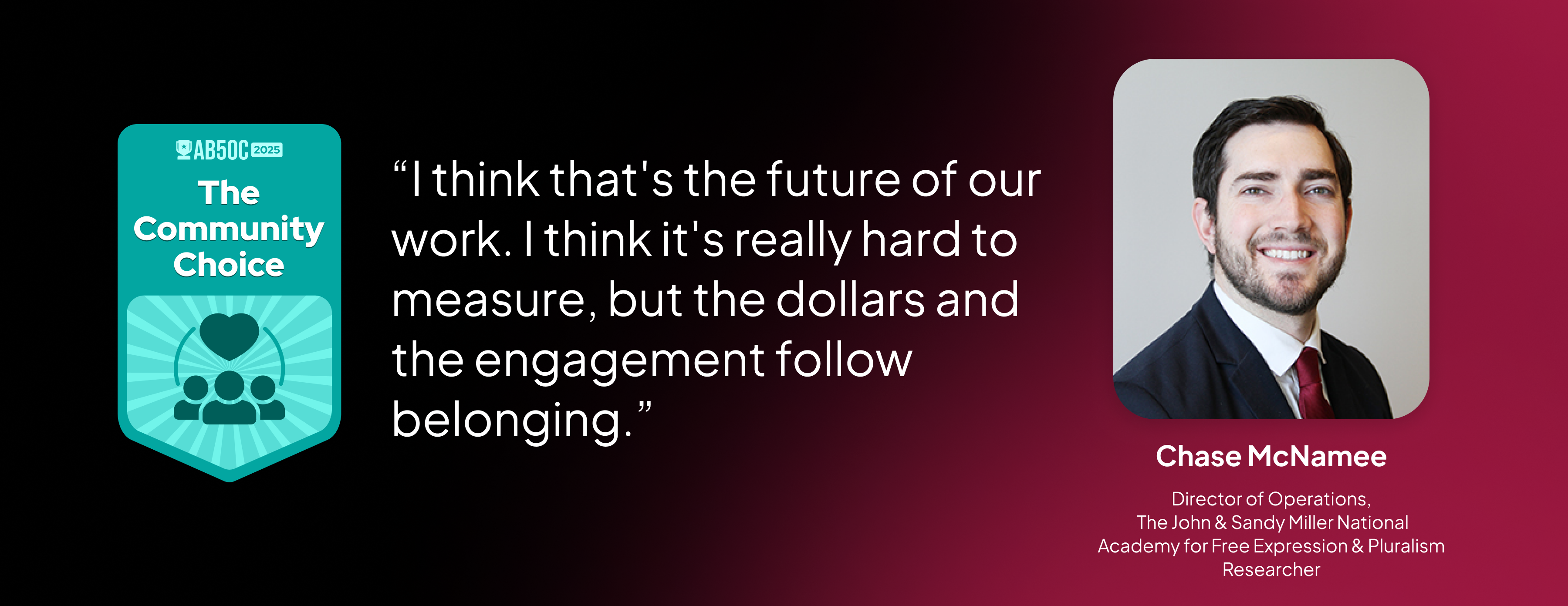
From helping to launch the University of Denver’s billion-dollar campaign to helping launch one of higher education's leading centers dedicated to free expression and pluralism, Chase McNamee believes that better outcomes begin with better questions, stronger relationships, and a deeper sense of belonging.
As the winner of the AB50C Community Choice Award, Chase combines a research-driven approach with a passion for building communities where people feel heard, respected, and connected, especially across differences.
Beyond the Title
Ask Chase McNamee about his work, and you'll quickly discover that he's someone who enjoys looking beyond the obvious. He loves a good spreadsheet, gets excited about turning research into practical solutions, and believes that curiosity can take you a long way.
But his philosophy on life is much simpler. If he were featured on the cover of Forbes tomorrow, it wouldn't be for a fundraising milestone or professional achievement.
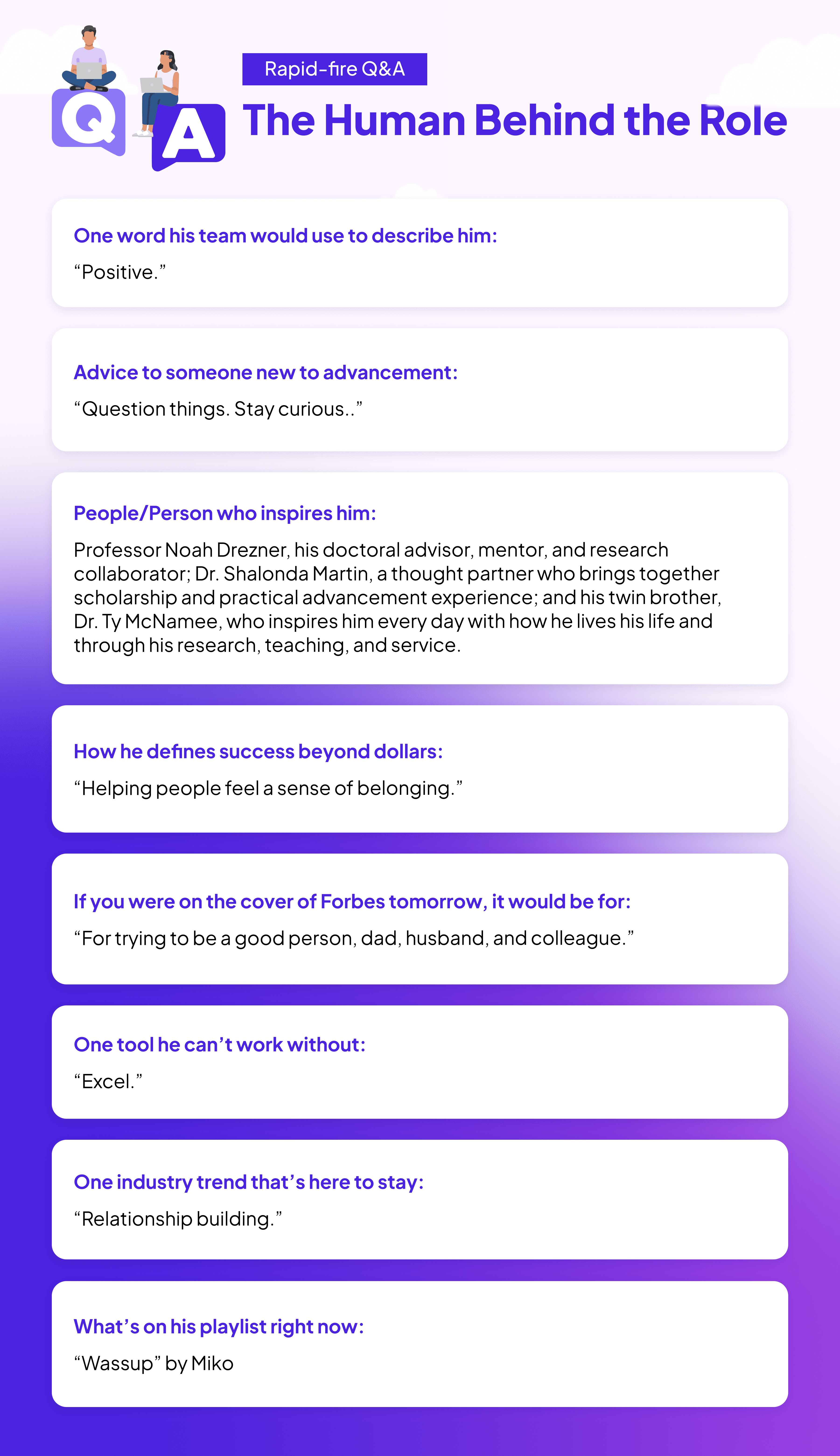
“This sounds cheesy, but it would be for being a good person.”
For Chase, being a good dad, husband, and colleague matters just as much as professional success. He believes many problems could be solved if people were simply kinder to one another and took the time to listen.
That belief carries into his work, too.
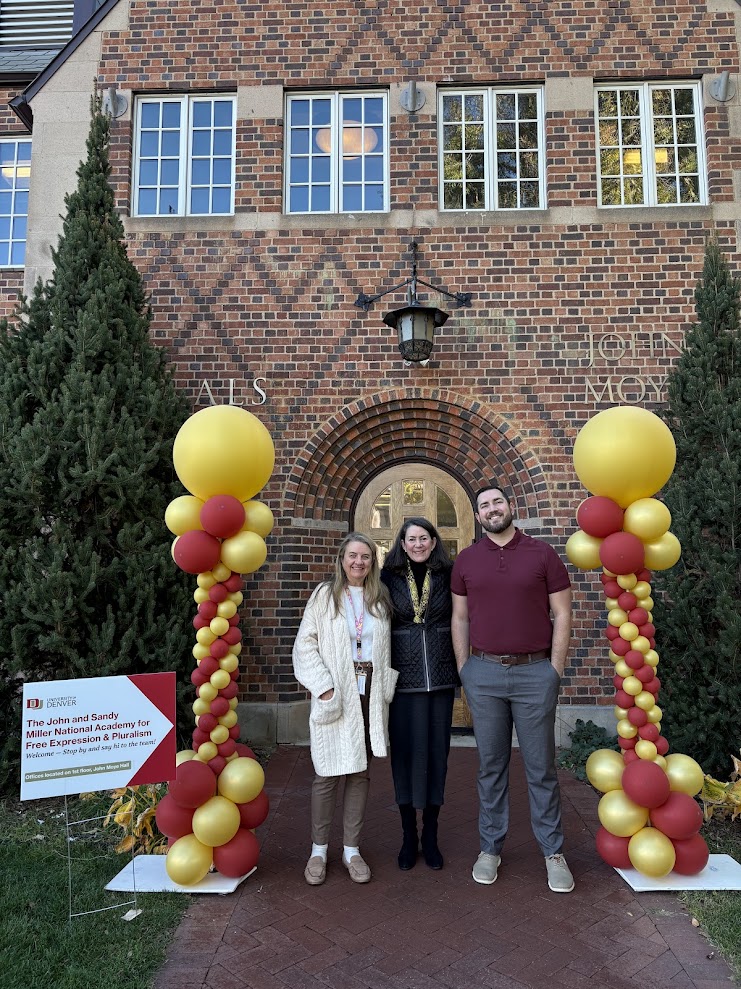
Through his roles in higher education and at the University of Denver, Chase works at the intersection of strategy, data, operations, and relationships. His role involves helping teams build the processes and infrastructure that support goals around fundraising, operations, and more, while ensuring that the people behind those efforts have what they need to succeed.
And underneath all that work is a simple idea: people want to feel heard, understood, and connected to something that matters.
What Winning AB50C Meant to Him
When Chase learned that he had won the AB50C Community Choice Award, he was thrilled.
Almabase had already been a valuable resource for him, particularly through its webinars and other learning opportunities. So being recognized through the same community felt especially meaningful.
“It's really neat. And really cool and such an honor to get acknowledged for the work we're doing.”
The recognition also reflected something he had been trying to build throughout his career: a strong community.
For him, community isn't simply a network of professional contacts. It's what makes collaboration possible. It's where new ideas emerge, different perspectives challenge existing assumptions, and people find support to do their best work.
Winning the Community Choice Award felt like a natural fit because these values have remained central to his approach.
It was also a reminder that the work of building community deserves recognition in its own right.
For someone who believes that the best outcomes come from listening, learning, and working together, being celebrated by the advancement community was a meaningful moment.
Finding His Way into Advancement
Like most advancement professionals, Chase didn't set out to build a career in advancement.
He was pursuing a master's degree in mental health counselling, with plans to work with students in higher education, potentially in a dean of students office as a therapist.
Then came an unexpected opportunity.
Through a connection between his twin brother and Keener Fry, the executive director of the University of Wyoming Alumni Association at the time, Chase found himself taking on a graduate assistantship in alumni relations.
What began as an unexpected detour soon became something much bigger.
Chase discovered that the skills he was developing in counseling were surprisingly relevant to advancement. Listening, empathy, and understanding people weren't just useful in a therapeutic setting. They were essential when working with alumni and donors, too.
As he puts it:
“You bring so much listening and empathy and understanding to the work with alumni and donors.”
He began to realize that many alumni and donors simply wanted someone to hear their stories, understand what matters to them, and recognize their connection to the institution.
Those early experiences changed how he thought about his career.
The Friday before his graduation, Chase interviewed for a full-time position at the University of Wyoming Alumni Association. He got the job, working across memberships, alumni networks and chapters, and student programs.
It was an opportunity to understand the alumni journey from multiple angles, from prospective students to graduates finding their place in the institution long after leaving campus.
He also learned from a close-knit team that worked across the Alumni Association, University of Wyoming Foundation, admissions, and student affairs.
Looking back, the connection between his original career plans and his work in advancement seems less accidental than it once did.
The ability to listen, understand different perspectives, and help people feel connected had simply found a new home.
Since then, Chase has worked at Bank Street College and the University of Denver, building on those early experiences and continuing to explore what makes organizations work more effectively and meaningfully.
The Work That Matters
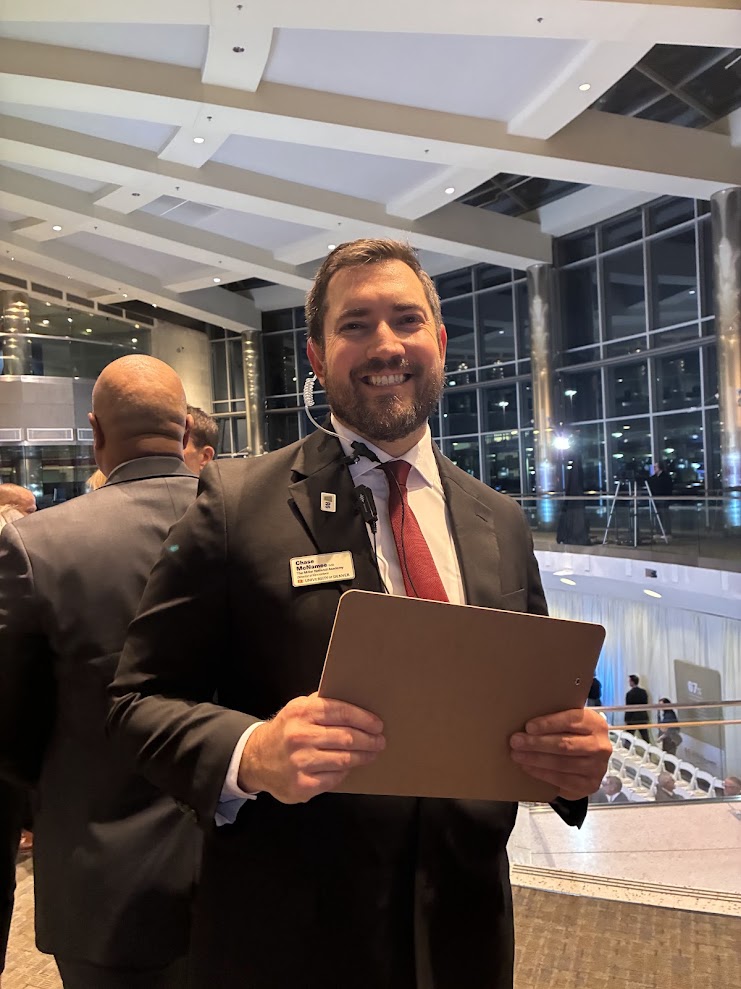
In April 2024, the University of Denver launched the public phase of its billion-dollar campaign. Chase joined the team four months before launch, helping prepare for a major milestone that kicked off with an event on the ice at the university’s famed hockey arena, followed by gatherings across the country, including in New York City, Chicago, and the Bay Area.
Now, the opportunity to help launch a new national academy focused on free expression and pluralism has been one of the most meaningful chapters of Chase's career.
For Chase, the work goes beyond the big moments. Behind every campaign, launch, and initiative are the data, communications, events, and operational processes that help teams turn strategy into action.
“All of the work behind the scenes and the amazing work of the development officers and engagement officers are all tied together with this lens of operations and how we all work together.”
His approach is shaped by another part of his work: research. Chase describes himself as a scholar-practitioner, balancing his role at the University of Denver with writing and collaborating on research about higher education, philanthropy, belonging, and inclusion.
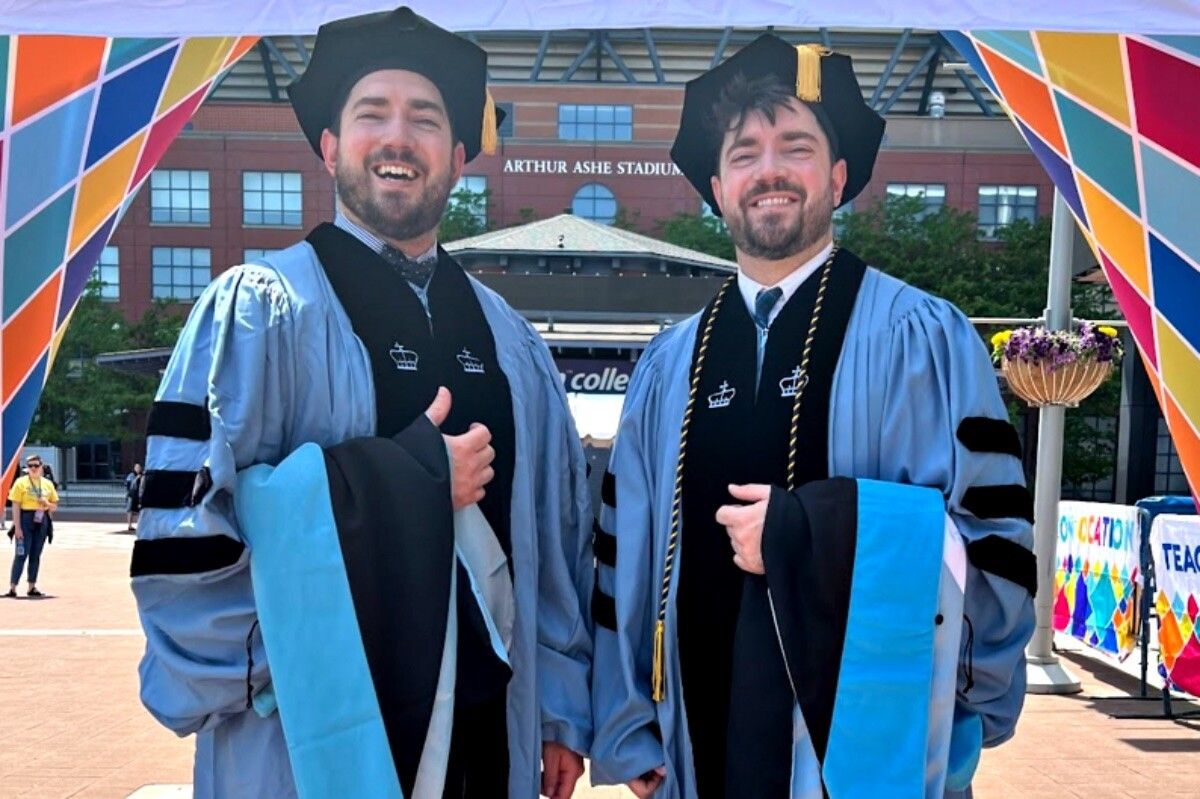
His doctoral dissertation at Teachers College, Columbia University, included nearly 3,000 practitioners across the United States. He explored how research and practitioners’ real-world knowledge could work together to help institutions raise more money and engage more people.
For Chase, the gap between research and practice is an opportunity. Practitioners bring firsthand experience and an understanding of their communities, while researchers offer evidence and new ways of looking at the field. Bringing these perspectives together can help advancement teams ask better questions and make more informed decisions.
That might mean using data to understand whether a strategy is working, building research-practice partnerships, or finding better ways to measure belonging and engagement.
Chase wants research to be more than something that sits on a shelf. He hopes to keep collaborating with practitioners, publishing scholarship, and turning evidence into ideas teams can actually use.
Ultimately, whether he's supporting a billion-dollar campaign, helping launch a new Academy, or exploring a research question, his focus remains the same: connecting strategy, evidence, and the everyday work of building stronger relationships.
AI, Data, and Belonging: Keeping the Human at the Center
Chase sees AI as a useful starting point for advancement teams. Whether it's building a presentation, drafting a framework, or organizing ideas, it can save time and make room for more meaningful conversations.
Chase believes AI has real potential, but its output still needs to be checked, and it shouldn't replace human judgment or meaningful engagement with research.
For him, technology and data are tools, not the end goal. What matters is understanding whether people truly feel connected to an institution.
“My indicators for that are if people feel a sense of belonging at the institution.”
Donations and event attendance tell part of the story, but Chase believes belonging is just as important, even if it's harder to measure.
As he puts it:
“I think it's really hard to measure, but the dollars and the engagement follow belonging.”
For Chase, the future of higher education and beyond lies in using technology responsibly while keeping relationships at the center of the work.
Rapid Fire
Where It All Comes Together
Chase's journey into advancement began with an unexpected opportunity. What kept him in the field was the realization that the skills he had hoped to use in counseling—listening, empathy, and understanding people—were just as valuable in building relationships with alumni and donors.
Today, those same values shape how he approaches operations strategy, research, data, and the future of higher education and advancement.
His story is a reminder that the field needs both strong systems and strong relationships. Data can help us understand what is happening. Research can help us ask better questions. Technology can give us more time to think. But it is the people behind the work who turn those insights into meaningful connections.
And perhaps the most important lesson is that belonging is something that is built together, through curiosity, collaboration, and a willingness to listen.
That's what makes stories like Chase's worth sharing. They remind us that it is not just about what institutions achieve but how they bring people together along the way.