Still managing BBNC workarounds? Discover how Almabase simplifies events, giving campaigns, and alumni engagement in a unified flow.

Anwesha Kiran
Published:
June 17, 2026

Blackbaud NetCommunity (BBNC) has been the go-to online engagement and event management tool for institutions already using Raiser's Edge. It handles basic donation forms, email sends, and simple event registration.
However, BBNC was built for a different era of advancement work. It lacks the modern features that teams today need for complex events, constituent-level engagement intelligence, sophisticated giving campaigns, and integrated alumni outreach. If you’re considering switching to Almabase, here’s how it stacks up against BBNC.
If you’re considering alternatives to BBNC, check out our blog on Top 5 Blackbaud NetCommunity Alternatives.
Blackbaud NetCommunity is a legacy online engagement tool that has been around for nearly two decades. It was designed to integrate withBlackbaud products, primarily Raiser's Edge, and it provides basic functionality for donation forms, email sends, and event registration. It's deeply embedded in many institutions' tech stacks, mostly for long-time Raiser's Edge users who likely adopted it years ago and haven't revisited their choice of platform.
This is especially true considering there are alternatives that can streamline this and bring it all seamlessly together into one platform.
Almabase is a modern digital engagement platform built specifically for advancement teams at colleges, universities, and independent schools. It combines event management, online giving, email campaigns, and alumni engagement tools in a single platform, all natively integrated with Raiser's Edge NXT through TrueSync.
The platform is designed around how advancement teams work: managing complex alumni events, running giving campaigns, sending segmented email outreach, and tracking constituent engagement across all those touchpoints, simultaneously.
Before we move into the deep-dive section, here’s a feature-wise comparison at a glance:
Both platforms integrate natively with Blackbaud Raiser's Edge NXT, which is a major reason BBNC has historically retained its foothold at RE NXT institutions.
But there's a critical difference in how they sync. BBNC acts as a transactional gateway. When a constituent interacts with your site, BBNC processes and pushes transactional elements, such as gifts, basic profile updates, or event registrations back into the Raiser's Edge database view via its plugin interface. While BBNC can track basic email metrics like opens and link-level clicks, extracting that data requires manual report building. It acts only as a repository of historical actions.
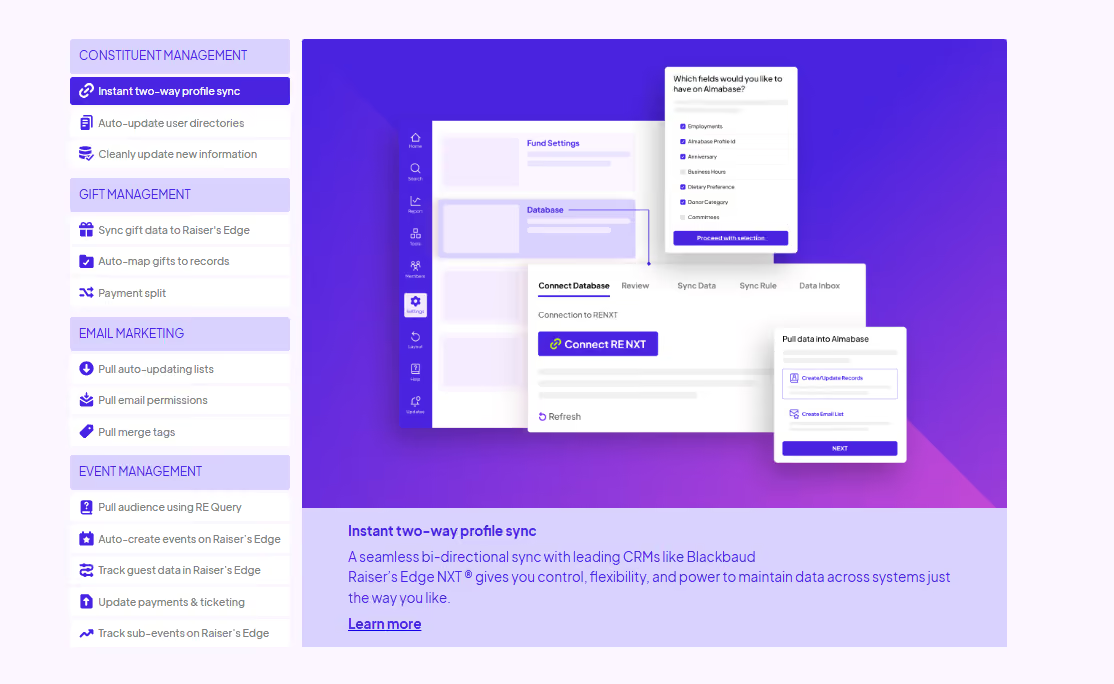
Almabase, through its native TrueSync integration, shifts the focus from simple data logging to behavioral intelligence. Almabase feeds this digital engagement such as email clicks, web visits, and campaign interactions directly into your CRM. With TrueSync's bi-directional architecture, an advancement professional looking at a constituent's profile in RE NXT can instantly see what’s bringing in the most active engagement, such as exactly which campaign emails they opened most or which specific giving pages they visited before abandoning a form.
Almabase advantage: Seamless, native bi-directional sync through TrueSync that transforms raw data into actionable behavioral intelligence, allowing advancement teams to prioritize prospects based on active digital engagement.
Blackbaud NetCommunity can handle basic, single-tier RSVPs just fine. However, when it comes to complex, multi-event milestone weekends like Homecoming or a multi-day Alumni Reunion, the system imposes massive friction on both your alumni and your advancement staff.
A common roadblock for BBNC users is the platform's rigid form-to-part architecture. Because BBNC relies on isolated website "parts" to build forms, registering an alumnus for a multi-day weekend with multiple sub-events looks like building dozens of separate registration pages, or attempting a complex "Payment 2.0" workaround to link forms to a single checkout page. This requires extensive labor from your digital team, forces alumni through clunky multi-step navigation, and leaves your staff to manually reconcile disjointed registration data inside the Raiser’s Edge plugin view.
Almabase excels at handling high-stakes advancement events. It natively supports sub-event hierarchical structures, meaning you can manage a 15-event Homecoming weekend under a single, unified registration umbrella.

On the attendees’ end, this looks like a clean, mobile-first flow where they can register themselves and manage +1 (or more) guests, select sub-events, choose preferences and respond to conditional form questions designed for their class year/cohort within a single checkout experience.
On the backend, your team gains real-time visibility with tools like automated QR-code check-ins, while attendance data syncs back to RE NXT flawlessly via TrueSync.
Almabase advantage: sub-event management with guest allocation, mobile-optimized flows and automated QR check-ins within a single branded experience that completely eliminates manual data reconciliation.
A feature BBNC users ask for constantly is the ability to build forms that adapt based on who's filling them out.
If you want alumni to see alumni-only events, parents to see only family-weekend events, or the Class of 2016 to see cohort-specific reunion activities, BBNC forces a complex workaround. You either have to design separate registration pages for each audience or use BBNC’s Targeted Content part to display entirely different form elements. This results in fragmented user paths, heavy backend maintenance, and a disjointed experience for all involved.
With Almabase, you can create one registration flow that feels personalized. Almabase supports affinity-based targeting directly inside a single form, thanks to conditional questions. You can configure individual form fields such as dropdowns, radio buttons, or checkbox options to act as triggers that instantly reveal or hide follow-up nested questions based on real-time user input.
Almabase advantage: single-form conditional logic and affinity-group visibility constraints that consolidate multiple target segments into a single user journey.
For basic "give now" pages linked to a single fund, BBNC works fine. However, when an institution scales up to more ambitious, high-energy fundraising events like a 24-hour Giving Day, BBNC's structural limitations quickly become apparent.
Modern giving days have evolved to weave in gamification, immediate visual confirmation, and real time updates that build urgency. These require centralized campaign hubs, dynamic real-time progress thermometers, live leaderboards, and time-sensitive matching challenges. BBNC does not provide these interactive capabilities natively. As a result, institutions are forced to layer on third-party crowdfunding tools. This means the week after the campaign is spent reconciling gift data across platforms, manually.
Within Almabase, you can launch fully branded pages and campaign hubs equipped with automated fund-level goals, peer-to-peer (P2P) fundraising tools, live matching challenge banners, and automated leaderboards, challenge milestones and thermometers.

Every transaction captured during the rush of a giving day flows directly into Raiser’s Edge NXT via TrueSync.
Almabase advantage: Competitive fundraising pages with leaderboards, challenges, and campaign hubs for giving days.All support mobile-responsive checkout, multiple funds, gift splitting, with instant RENXT syncing: zero post-campaign reconciliation for your team!
A well-documented ‘hidden cost’ of BBNC is the manual data reconciliation that follows an event. If you rely on BBNC for emails, but turn to third-party solutions during campaigns, you’ll find data fragments across multiple platforms. Post-event and post-campaign, your team is exporting CSVs, importing them back into Raiser's Edge, manually reconciling attendance and gift data.
Almabase completely automates this process. Because your event registration flows, email communications, digital alumni directories, and giving day pages run within the RE NXT database, data silos are instantly eliminated.
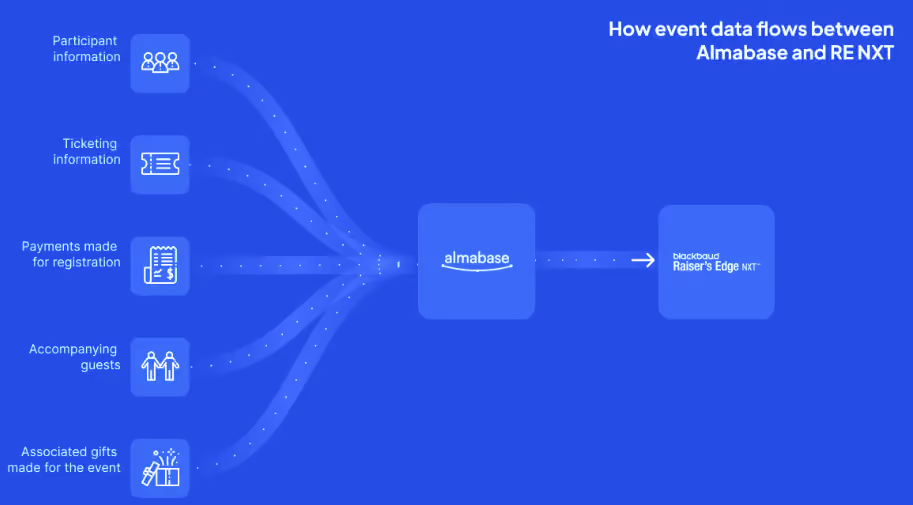
Instead of routing data to a staging plugin that requires click-by-click review, Almabase's TrueSync maps data fields and automatically streams clean information directly into Raiser's Edge NXT records.
Almabase advantage: True automation via TrueSync that drastically reduces CSV importing cycles.
While BBNC can broadcast blast emails to lists built from internal Raiser’s Edge queries, its editing ecosystem and flat reporting struggle to support modern, segmented communication strategies.
All email lists must originate as RE queries and you cannot feed in a list of email addresses. The email editor offers limited design flexibility and emails don't render well on mobile. It’s analytics too, offer a limited view of what’s going on: they tell you how many people opened an email, but not which alumni are most engaged or what made them click. BBNC also doesn't support preference-level opt-outs, so if an alumnus wants to unsubscribe from event emails but keep getting annual fund appeals, well, you’ll have to figure that out on your own.
Almabase has a modern drag-and-drop builder, mobile-responsive templates, and analytics that tell you more than campaign metrics. You can see which constituents opened, clicked, visited your giving page, and registered for an event. For list creation, teams can build segments directly or quickly upload spreadsheets. More importantly, Almabase accounts for the users’ communication preferences. When a recipient clicks unsubscribe, they aren't globally blocked from hearing from your institution; instead, they see a list of email groups and categories, allowing them to manage their preferences at a granular level.

Emily AI is built right into Almabase and can draft professional, context-aware emails in seconds with just a simple prompt, helping teams move from blank page to polished first draft in moments.
Almabase advantage: Modern drag-and-drop template editors with granular, category-level subscriber preference centers, combined with timeline-mapped behavioral engagement analytics that automatically update donor profiles.
BBNC is designed to report on the macro level. It tells you how a campaign performed and shows you that a Giving Day email blast achieved a 22% open rate and that your registration page received 500 clicks. However, BBNC leaves your team in the dark regarding individual behavior.
Almabase, on the other hand, shifts the focus to how each individual engaged, with real-time data on how each individual person interacts across your entire ecosystem.
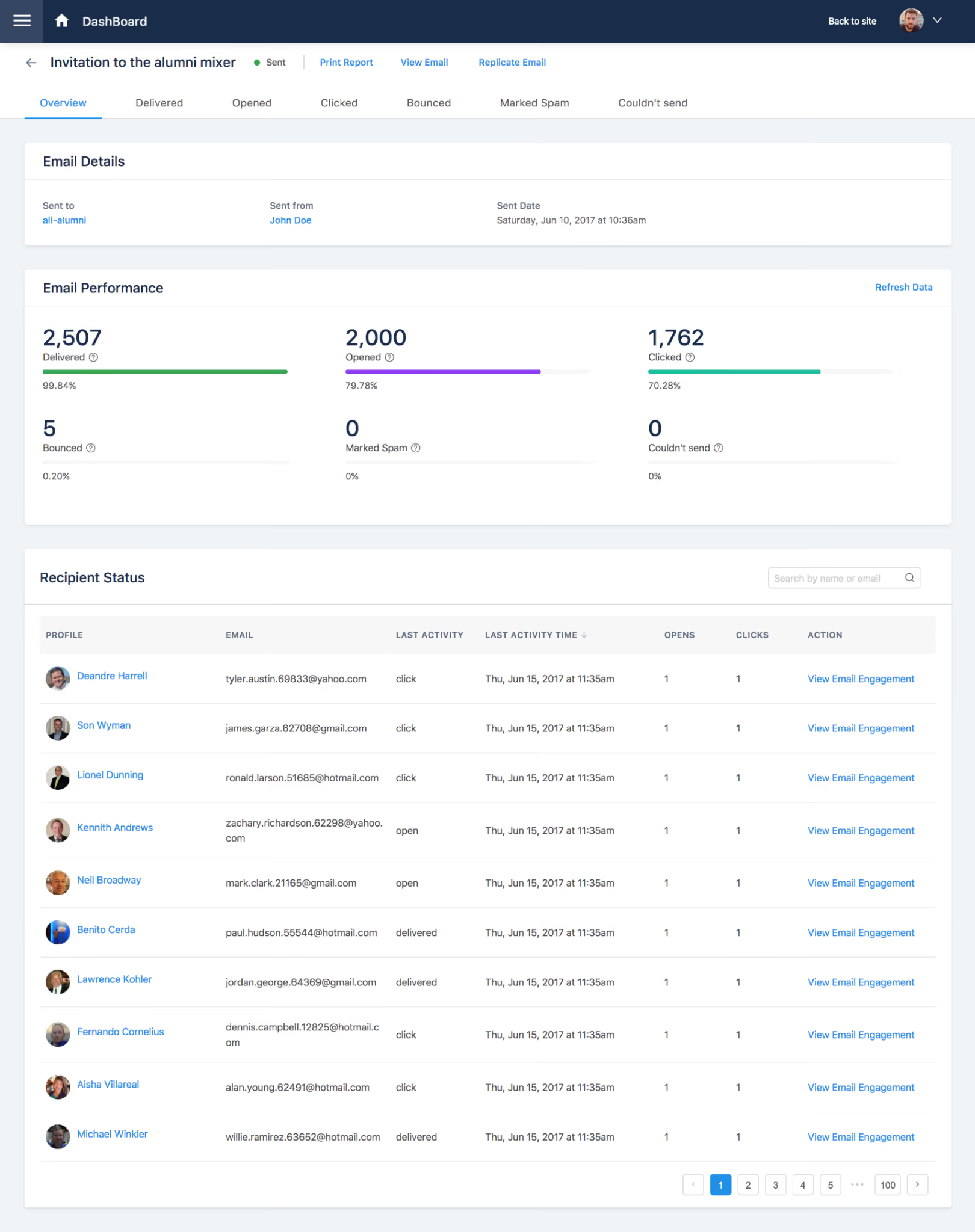
This allows your team to easily track physical event participation , trigger targeted follow-up communications based on email engagement, and empower alumni to connect through an online directory. Because the system captures engagement activity across events, communications, giving, and community experiences, it helps build a more complete picture of alumni engagement over time.
Almabase advantage: Individual engagement history, email opens/clicks, giving page visits, event registrations.
BBNC doesn't have native sponsorship workflows. So if you're running a fundraising gala or reunion with sponsorship tiers, it’s very possible you're creating separate sponsorship forms, listing sponsorship packages as ticket line items, and manually tracking sponsor benefits.
With Almabase, teams can create and manage sponsorship tiers with custom pricing, benefits, and included attendee passes from a single admin dashboard. Sponsors enjoy a dedicated registration experience where they can reserve a tier, submit company details and logos, and choose to pay online or later via a branded PDF invoice.

To make coordination easier, sponsors receive a unique link that lets them return at any time to add guest information and other event details. Behind the scenes, administrators can track registrations, manage payments, and keep sponsorship data organized, with support for syncing event data to Raiser's Edge NXT.
Almabase advantage: Sponsor-specific registration pages, automated logo collection, PDF invoicing, flexible guest management, and centralized sponsor administration, all built into a single workflow.
Because Blackbaud NetCommunity does not have a native mobile check-in app or QR code scanning capabilities, schools are forced onto outdated manual workarounds.
Almabase simplifies event check-in with QR code–based attendance tracking and mobile-friendly guest management. Registered attendees automatically receive a confirmation email containing a unique QR code, which volunteers can scan using the Almabase check-in app on a smartphone or tablet. Staff can also look up guests, register walk-ins, and collect payments on-site when needed.

Attendance and check-in data are captured centrally and can sync to Raiser's Edge NXT through TrueSync, helping institutions keep constituent records up to date without manual reconciliation.
Almabase advantage: QR check-in, instant walk-in registration, live guest list updates, and attendance data synced to RENXT.
BBNC offers limited style controls, which means adding elements like a promotional video banner, changing a button color, or styling a modern grid layout requires changes at the code level.

Almabase gives advancement and marketing teams a no-code way to create branded digital experiences without relying on developers. Staff can build event pages, giving forms, and community microsites that align with their institution's branding, while the platform automatically handles mobile responsiveness across devices. With streamlined registration and donation flows, teams can launch polished experiences quickly and make it easier for alumni to engage, register, and give online.
Almabase advantage: Branded event and giving pages, mobile-responsive design, alumni-facing microsites, and no-code customization.
BBNC is designed to process individual transactions as they happen. It records an email sent, takes a gift, or logs an event sign-up. However, these actions are treated as isolated events. Modern alumni engagement requires connecting dots across emails, events, giving, page visits, and directory activity.
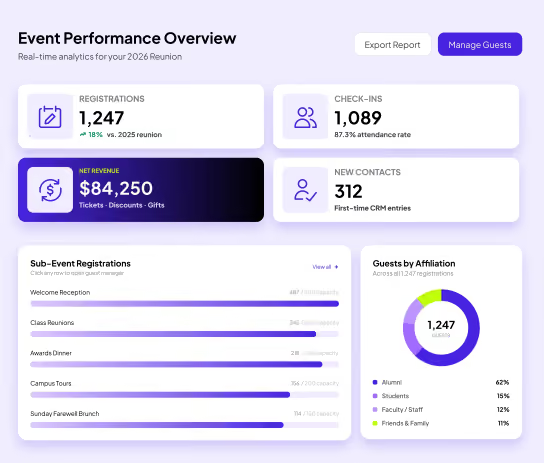
Almabase gives advancement teams a more connected view of alumni engagement by bringing together activity from across the platform into a single constituent profile. Teams can track event participation, giving history, email engagement, website activity, and community interactions in one place, making it easier to understand how individuals are engaging over time.
Because these engagement signals are connected, staff can build targeted segments based on real behavior rather than static demographic lists. These insights can then power more relevant follow-up campaigns and outreach workflows, helping advancement teams engage alumni with messages that reflect their interests and activity.
Almabase advantage: A unified engagement view that combines event participation, giving behavior, email engagement, website activity, and community interactions, enabling smarter segmentation and more personalized follow-up.
You can look at moving from BBNC to Almabase as setting up a new platform rather than a straight migration. Because Almabase uses its own page-building and data architecture, functional pages such as giving forms and event registration pages will have to be recreated during implementation. Most institutions find this is actually a great excuse to move on from outdated layouts and upgrade their forms to a cleaner, more modern look.
Almabase’s guided transition is built to get your team up and running comfortably in a matter of weeks. From establishing your secure Raiser's Edge NXT connection and payment gateway to validating your data before going live, you will have 24x7 live support from the support and implementation team. The onboarding process also includes configuring your institution's branding and domain settings, ensuring the platform feels like a natural extension of your existing digital presence. Teams receive guidance on setting up data synchronization rules so data updates are handled accurately before they reach Raiser's Edge NXT. Self-paced learning resources through Alma Academy help staff get comfortable with the platform on their own schedule.
Almabase advantage: Guided onboarding with support for Raiser's Edge NXT integration, sync rule configuration, data validation, Alma Academy training, and live implementation assistance.
For an institution with a simple "give now" page, occasional email sends, and a relatively light event calendar, Blackbaud NetCommunity may still do the job. If your needs are straightforward and your team isn't asking much of the platform, there may not be an urgent reason to change.
But as your programs grow, so do your requirements from the technology behind them. Homecoming registrations, reunion management, fundraising events, annual giving campaigns, alumni communities, and engagement tracking all introduce new layers of complexity. Over time, many teams find themselves relying on workarounds, manual processes, and additional tools to fill the gaps. Those solutions might work, but they also create more administrative overhead year after year. This is the point where you might consider an alternative.
Ultimately, the decision comes down to whether you want to continue managing those workarounds or move to a platform designed around the way modern advancement teams operate today.
When institutions move from Blackbaud NetCommunity to Almabase, the motivations are quite consistently similar. They want to reduce manual data cleanup, manage events and fundraising from a single platform, deliver a more polished, modern experience for alumni and donors, and give advancement staff better visibility into engagement across channels.
Switching from BBNC doesn't have to feel risky or disruptive. With Almabase's white glove switch experience, you'll run both platforms simultaneously until you validate with a live event, so your team can test Almabase in a live event. Your entire NXT history comes with you, and before you even sign, you get a free 30-minute integration audit with a solutions engineer to walk through your data setup and address any concerns. Most institutions are able to go live within weeks.

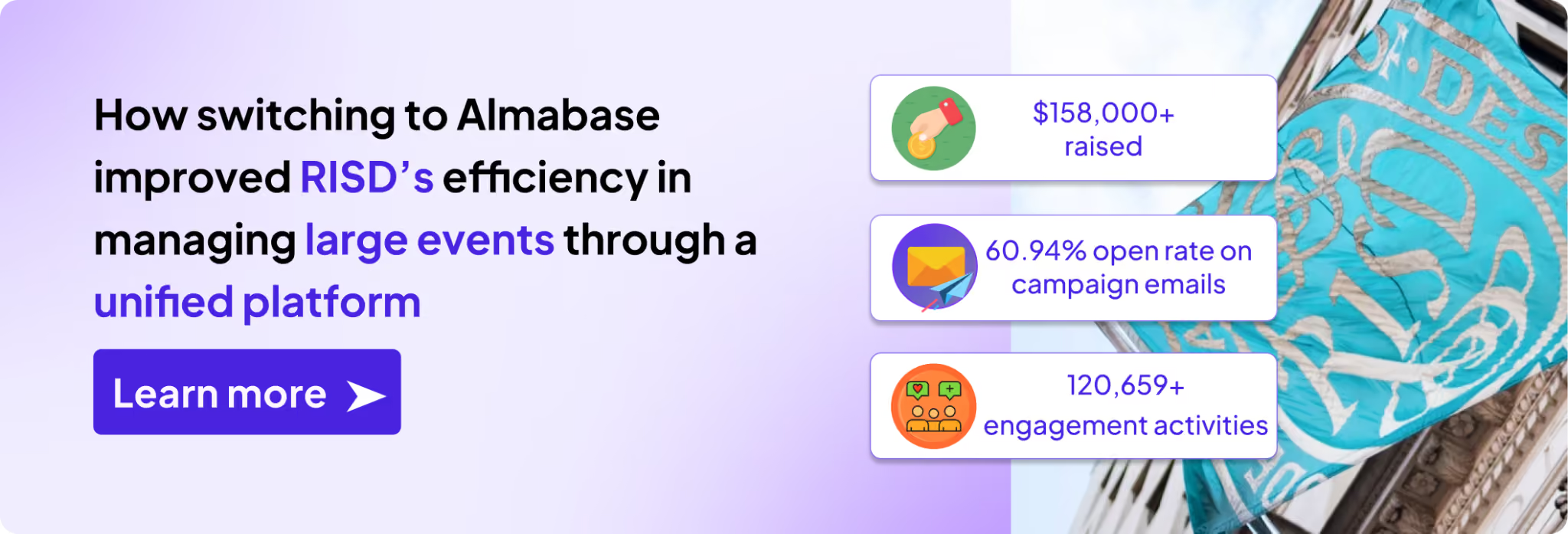
Rob Odoardi, Director of Advancement Data at Rhode Island School of Design details his team’s experience switching to Almabase from BBNC and GiveCampus; read more here.
Book a personalized demo with Almabase to see how your team can manage alumni engagement, giving, events, and RENXT-connected workflows in one modern platform.
Table of Contents
Subscribe
See how modern advancement teams bring alumni engagement and fundraising together.
It’s never an easy decision to switch to a new platform and if you’ve been a frequent user of Blackbaud NetCommunity (BBNC) for a while, you might have a fair amount of questions about moving elsewhere.
In case you’re on the lookout for BBNC alternatives, we’ve rounded up 5 potential replacements for you and your team to consider. Our choices are based on a variety of factors which we’ll be getting into first.
While evaluating alternatives, you might feel like most platforms have similar feature lists with a few differences here and there. But the way those features are organized and how they work together can reveal the best fit for your team.
Here's what to evaluate:
For most BBNC users, Raiser's Edge NXT is already at the center of donor management. The rest of your advancement tools must work seamlessly alongside it and help your team stay coordinated.
That means having giving, events, email, and community engagement data flow into your CRM automatically and in real time. When a donor makes a gift, your team should be able to see it right away in RE NXT.
Most advancement teams likely do not have a dedicated tech person. The people using these tools should find it easy to navigate (and this shouldn’t only be the most tech-savvy member in your team!).
This means your team should be able to create event pages, build audience segments, send emails, and manage campaigns with confidence, because doing all this on the platform feels intuitive to them. Some platforms pay close attention to the user experience and take special care to make it easier for them to work on.
Just as important is the experience for alumni. The more alumni can do for themselves, the easier it is for your team to keep data current and engagement high. Features like profile updates, event registration, class note submissions, and communication preferences give alumni greater control while helping you maintain accurate records.
The platform you choose today should still work for you down the line as your alumni community grows and fundraising efforts expand in scale and complexity. Whether you're managing 5,000 alumni or 50,000, the experience should remain consistent.
This is particularly important for colleges and universities planning for long-term growth. The best platforms scale alongside your institution, making it easy to increase capacity and expand programs without disrupting day-to-day operations. As your needs evolve, your team can stay focused on engaging alumni and advancing institutional goals rather than managing technology transitions.
If you've spent years juggling multiple systems, you've probably accepted a certain amount of friction as part of the job. This could look like pulling different places or reports that take longer than they should. As a result, your team spends more time making sense of information between platforms instead of building relationships with alumni and donors.
So moving platforms becomes an opportunity to look for a platform that does the work your old platform was doing, but does it better, and preferably, in one place.
On paper, many advancement teams have everything they need: tools for fundraising, events, email, and alumni engagement. But if those systems don’t work together smoothly, your team could find itself in a bit of a fix, managing tools when they could be managing experiences for attendees and donors. It's rarely a major problem on any given day, but the time and effort add up over the course of recurring issues across events.
In fact, we saw something similar firsthand at Almabase: Cornell College moved from managing alumni engagement across BBNC and multiple tools to one integrated platform, and the shift eliminated the constant back-and-forth that was taking up their team's time.
Before we get into the deep-dive, here is a quick look at the platforms we’ve listed for you:
Almabase was built with advancement teams in mind. Instead of juggling separate tools for giving, events, email, and alumni engagement, teams can manage everything in one place. It also integrates closely with Raiser's Edge NXT, helping data flow naturally between systems and giving staff a more complete view of alumni activity.
Best for: Institutions on BBNC struggling with complexity, looking to simplify their tech stack by bringing key advancement activities together on a single platform. It is a great fit for colleges and universities of all sizes.
Key Strengths:
Almabase in action:
Cornell College manages a community of 15,000-17,000 alumni with a remarkably lean advancement team. Before Almabase, staff were piecing together BBNC and other tools, spending valuable time managing disconnected systems and manual processes.
After moving giving, events, email, forms, and community engagement into Almabase, event registrations flowed in smoothly and alumni could update their own information. With an alumni community that cares about staying connected, the college was able to elevate their Giving Day experience with leaderboards, campaign pages, and real-time participation tracking.
After the switch, Cornell exceeded its Giving Day goal, reaching 1,008 donors and earning a 4.7/5 participant rating. Homecoming attracted more than 430 attendees, and their "All In for the Hilltop" campaign raised over $226,000 from 992 donors.
Watch the team from Cornell College share their experience here.
.avif)
What it's not great at: Almabase does not include prospect research or wealth screening tools. If major gifts research is a priority, you'd need to layer in a separate platform.
Pricing: Custom pricing based on institution size and needs.
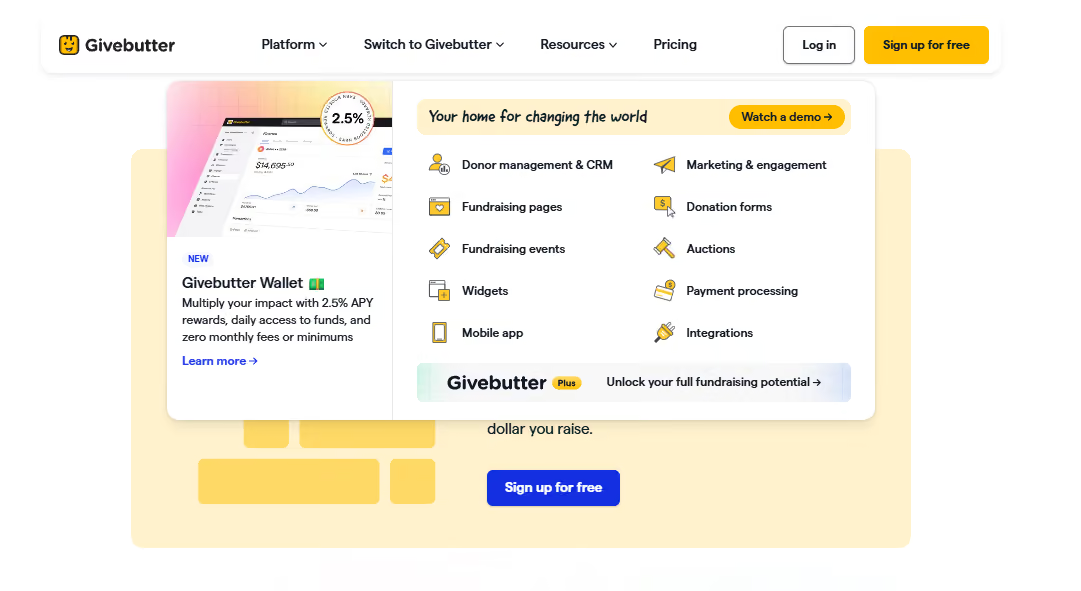
GiveButter is an all-in-one fundraising platform designed to help nonprofits raise funds, engage donors, and manage donor relationships through customizable donation forms, embedded donation widgets, and various payment options. The platform is known for its transparent pricing model, operating on a "tip-or-optional-fee" basis, meaning nonprofits receive 100% of their donations with no hidden fees.
Best for: Organizations looking to launch peer-to-peer campaigns without a subscription commitment, schools running crowdfunding initiatives on a low budget, and nonprofits seeking easy-to-navigate platforms for both staff and donors.
Best for: Organizations looking to launch peer-to-peer campaigns without a subscription commitment, schools running crowdfunding initiatives on a low budget, and nonprofits seeking easy-to-navigate platforms for both staff and donors.
Key Strengths:
What it's not great at: GiveButter primarily caters to nonprofits and may not be as experienced with educational institution's needs, especially volunteer management and alumni engagement like platforms built specifically for higher education. If you’re looking for advanced alumni networking, community engagement, or multi-day event management at institutional scale, you'll likely need to supplement GiveButter with other tools.
Pricing: The platform’s core features are available at zero platform fee when optional donor tips are enabled. If you turn off tips, a flat 3% platform fee applies.
Givebutter Plus, which is their paid tier, starts at $29/month and provides advanced automation and analytics.
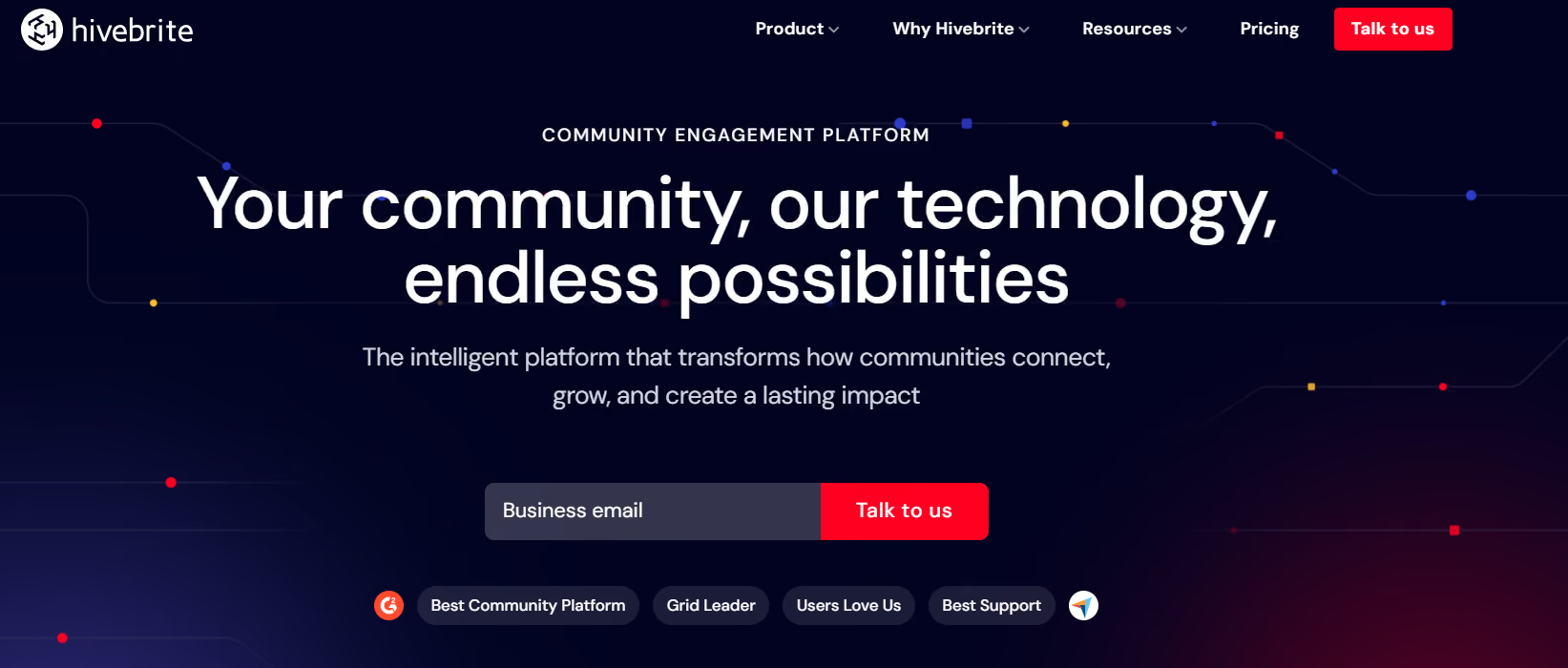
Hivebrite started as a community platform and has evolved into a comprehensive alumni engagement hub. If your priority is building a place where alumni actively engage with each other (not just receive messages from the institution), Hivebrite delivers that experience.
Best for: It's a great pick when your goal is fostering actual peer-to-peer connections: discussion spaces, networking, job boards, and mentoring. It works well for schools with large, geographically dispersed alumni networks that want to position the platform as a living community.
Key Strengths:
What it's not great at: While Hivebrite features direct, bidirectional integrations with major CRMs like Blackbaud Raiser's Edge NXT and Salesforce to prevent manual data syncing, its transactional giving modules are still not at the center of operations. If your team requires advanced fundraising toolsets like gamified giving day leaderboards or major gift prospect tracking, you will likely need separate, dedicated tools alongside it.
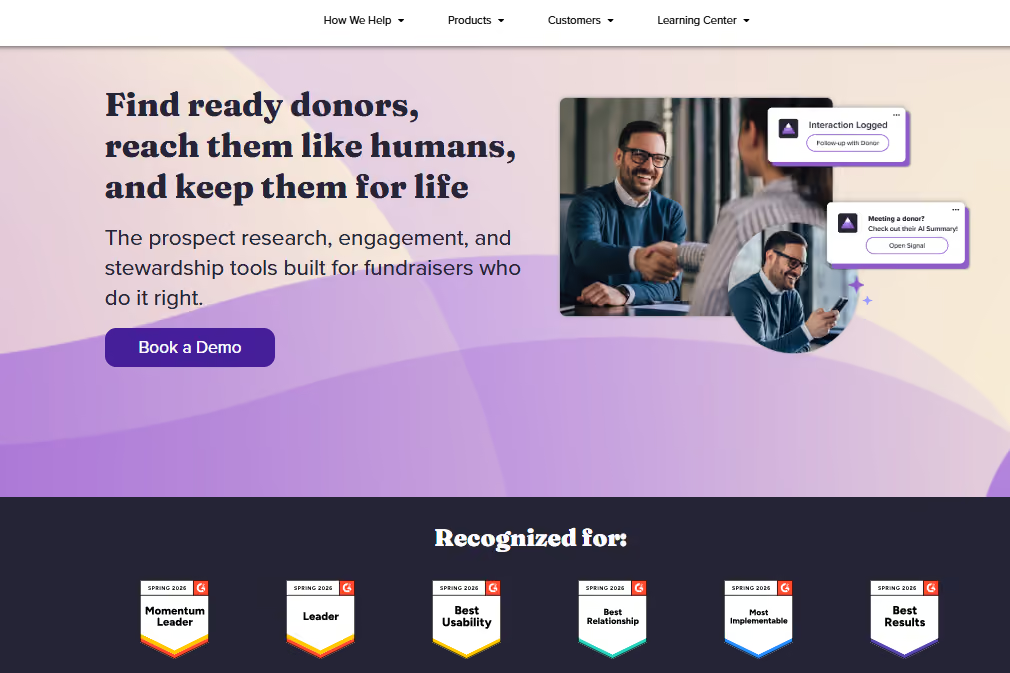
EverTrue brings prospect research and wealth screening directly into the platform. It's built for institutions focused on major gifts and looking to connect engagement data with donor intelligence. It really stands out with helping teams identify which alumni are most likely to give and when. This is fundamentally different from the other platforms in that it's more specialized than all-in-one.
Best for: Institutions with a dedicated major gifts program and the capacity to leverage wealth screening and engagement data together. Works best for universities managing alumni records where prospect identification directly feeds major gifts strategy.
Key Strengths:
What it's not great at: It’s not a full platform replacement. You still manage separate systems for events, email marketing, and community. Best used alongside other tools, not instead of them.
Pricing: EverTrue offers custom pricing based on institutional requirements.

360Alumni is an all-in-one platform similar to Almabase, but leans more into networking and community as the centerpiece. It's built for schools that want to give alumni a branded, customizable space to connect and engage while also managing fundraising and events. The platform launched in 2013 with a specific mission: help institutions deliver value through their alumni network, not just extract giving.
Best for: Institutions wanting a modern, integrated alternative with strong community and engagement features. It works well for colleges prioritizing alumni network building alongside fundraising, particularly schools at earlier stages of alumni relations sophistication.
Key Strengths:
What it's not great at: CRM integration maturity is less established than some other platforms on this list. The community-first approach can mean fundraising and advancement workflows feel secondary. Smaller user base means fewer case studies and peer reference institutions compared to more established platforms.
Pricing: EverTrue offers custom pricing for institutions based on alumni count and feature requirements.
Setting expectations around things like how data migration will work, what resources your team will need, and what “success” looks like in the first few months will help you and your team down the line.
Before you commit, it helps to get clear on a few key areas:
Get answers to these before you sign anything:
1. Data migration: Think about all the logistical parts:
2. Timeline: What's a realistic implementation schedule? If a vendor suggests a short implementation window, like a week, for a full migration, it might be time to invoke some healthy skepticism. Most implementations take 3 weeks to two months when you factor in data cleanup, staff training, and testing.
3. Training and onboarding: What does the platform’s ongoing support look like after go-live? Will you get a dedicated implementation manager, or are you on your own, and does that work for you?
4. CRM integration: Work out the specifics: will it be real-time or batch sync? How often do you sync? What happens if something breaks, who takes the responsibility to troubleshoot?
5. Costs: Consider implementation, ongoing licensing, and any integration fees you might not have anticipated. Ask for a three-year cost projection, not just the first-year number.
6. Contingency: What happens if you need to run both systems in parallel? Can the vendor accommodate that, or are there any additional costs there?
Your current platform isn't disappearing tomorrow. You have time to approach this strategically.
Running parallel systems briefly costs less than rushing the transition and spending months fixing mistakes. Early vendor conversations will tell you a lot about their implementation approach and about gaps in your own readiness. Budget time for staff training alongside platform setup. Even the best platform in the world won't work out if your team doesn't know their way around it.
Choosing the best alternative to BBNC is a chance to make day-to-day work easier for your team and create a smoother experience for alumni and donors. We've seen institutions get the most value when they reduce the number of disconnected tools staff have to manage. Cornell College achieved this by bringing critical functions together in one connected ecosystem.
That same pattern shows up in other institutions that have modernized their BBNC setup: cleaner workflows, less manual work, and a better experience for the people interacting with the institution.
If you'd like to explore more, these stories are a good place to start:
Whatever platform you choose, the goal is the same: give your team fewer systems to wrestle with and more time to focus on alumni, donors, and the work that matters most.
If you're exploring alternatives to BBNC and want to see what a more connected advancement experience could look like, request a demo and we'd be happy to walk you through it.
.avif)
Top 5 Blackbaud NetCommunity Alternatives
Considering a move from BBNC? Compare the top alternatives and what to look for before making the switch.
Lorem ipsum dolor sit amet, consectetur adipiscing elit. Suspendisse varius enim in eros elementum tristique. Duis cursus, mi quis viverra ornare, eros dolor interdum nulla, ut commodo diam libero vitae erat. Aenean faucibus nibh et justo cursus id rutrum lorem imperdiet. Nunc ut sem vitae risus tristique posuere.
June 11, 2026
12 minutes
Planning an alumni event is a tall order. Be it a reunion, a donor gala, or a campus program, the journey is complex, and your team is expected to deliver experiences that feel seamless for attendees and meaningful for your institution.
The challenge here is that most advancement teams are stuck juggling disconnected systems that aren’t built particularly for schools and universities. While there are plenty of event management software options available on the market that might reduce your burden, the right platform will ensure that every detail runs like clockwork and delivers measurable impact.
In this guide, we’ll show you how modern event management software can help your advancement teams gain the clarity and confidence to choose the right platform that makes planning easier and outcomes clearer.
Higher education leaders are making technology a top priority. In the 2025 CCS Philanthropy Pulse survey, more than 70% of institutions identified technology adoption as a key focus for the year ahead, reflecting the push to strengthen fundraising operations and engagement systems. This shift is driven by the growth of alumni and fundraising events, the rise of hybrid formats that bring global audiences together, and increasing pressure from leadership to demonstrate ROI with clear, data‑driven reporting.
At the same time, common pain points remain stubbornly familiar. Manual list exports, disconnected CRM data, and separate systems for email, ticketing, and giving leave staff juggling fragmented workflows. On-site check‑ins often feel chaotic, post‑event reporting is delayed or missing, and leadership lacks visibility into how events contribute to long‑term donor engagement. In 2026, event management software matters more than ever because it addresses these challenges head‑on, integrating CRM workflows, simplifying check‑ins, and delivering the reporting advancement leaders now demand.
When you look closely, not every event management software is built with institutional needs in mind. Some tools focus on running events; others support everything that happens around and after them. Before getting into comparisons or questions, it helps to understand the core features that tend to matter most for institutions managing alumni, advancement, and engagement at scale:
Your attendees’ first impression is shaped by how easy it is to register. A platform that offers automated registration, flexible ticketing, and QR code check‑in saves staff time and reduces bottlenecks at the door.
Look for mobile‑friendly sign‑ups, customizable forms, and real‑time attendance tracking so you know exactly who’s in the room without chasing spreadsheets.
Clean data is non‑negotiable for advancement teams. Native integrations with systems like Raiser’s Edge NXT or BBCRM ensure every registration, gift, and interaction flows directly into your database without duplicate records.
Prioritize platforms that sync automatically, prevent errors, and give you confidence that your event data strengthens long‑term alumni and donor strategy.
One of the biggest frustrations for alumni and donor teams is juggling multiple tools just to send event updates. The right platform should let you manage confirmations, reminders, and segmented outreach in one place, so you’re not copying lists back and forth between systems. Personalization is where communication really pays off; alumni should get invites to reunions they care about, donors should see recognition that feels genuine, and students should receive messaging tailored to their involvement.
Look for software that integrates directly with your CRM, makes it easy to segment audiences, and tracks engagement so you know which messages resonate and which need adjustin
Events are often where giving happens, and the right software makes it effortless. Built‑in donation options during registration or live events encourage spontaneous contributions, while sponsorship and auction features help you manage commitments and maximize revenue.
Look for platforms that make giving frictionless and follow‑up automatic, so you capture every opportunity without extra manual work.
Large events come with moving parts: seating charts, table assignments, and multi‑day schedules. Software that supports seating and table management helps you place donors thoughtfully, while sub‑event support keeps conferences or reunions organized under one umbrella. These tools reduce manual coordination and give your team more control over the attendee experience.
Data tells the story of your event’s success. Real‑time attendance reporting gives you visibility into who showed up, while post‑event summaries help you demonstrate impact to leadership. Compliance features like SOC 2 certification and ADA accessibility considerations ensure your institution meets standards and delivers inclusive experiences without extra stress.
Events are about connection, and interactive features make attendees feel part of the experience. Tools like live polls, Q&A, gamification, or hybrid event support extend your reach and keep participants engaged.
Look for platforms that make these features easy to set up and integrate, so your team can focus on building relationships instead of troubleshooting tech.
Advancement teams are expected to do more with less, and AI is becoming the tool that makes it possible. A platform with built‑in AI can automate repetitive tasks like reminders and follow‑ups, clean up attendee lists, and even predict which events are most likely to drive donor conversions.
Look for systems that use AI to personalize alumni communication, surface engagement patterns you might otherwise miss, and deliver smarter reporting that connects attendance directly to fundraising outcomes. Instead of adding more manual work, AI frees staff to focus on relationships while giving leadership the clarity they need.
Events aren’t just about logistics; they’re also about managing dollars and cents. Having built‑in tools to track expenses against sponsorships and ticket sales gives you a clear view of ROI without juggling spreadsheets. This makes it easier to justify budgets to leadership and plan smarter for the next event.
Events don’t happen in a vacuum. Integrations with student portals, finance systems, or learning management tools reduce silos and keep everything connected. For advancement teams, this means smoother coordination across departments and fewer headaches when pulling reports or reconciling data.
When you’re sitting down with a vendor or demoing a platform, asking the right questions will help you cut through the sales pitch and see if the software truly fits your institution’s needs. Here are the ones worth asking:
Once you’ve asked the right questions, the next step is weighing the answers. Choosing the right software is about finding a tool that fits your institution’s goals, budget, and the way your team actually works. Here’s how to approach the decision:
The right event management software should feel like an extension of your team, reducing manual work, strengthening alumni and donor records, and scaling with your institution’s ambitions. If it feels like “just another system to manage,” keep looking.
Choosing the right software is only half the story; the other half is how quickly and smoothly it becomes part of your institution’s day‑to‑day. Here’s what a typical rollout looks like, and what you should expect along the way:
You’ve asked the right questions, weighed practical tips, and seen what a rollout might look like. The final step is exploring which platforms can actually deliver on those expectations. We’ve put together a detailed roundup of the best event management software for K‑12 and higher ed.
To give you a quick snapshot, here are five options schools and universities often consider:
After exploring the broader software options, it’s clear that advancement teams need something different. They need a platform that aids in strengthening alumni relationships, stewarding donors, and connecting participation to long‑term outcomes. This is where Almabase comes in. Designed with educational institutions in mind, it helps you move beyond one‑off event management and into a connected approach where every gathering contributes to engagement and fundraising goals.
Here’s how Almabase supports schools and universities in practice:
While the decisions often look straightforward, hidden costs, weak integrations, and poor rollout planning can derail even the best‑intentioned purchase. Here are some quick pointers to keep in mind before you make the final choice-
Best practices
Pricing realities
Common pitfalls to avoid
Making the right choice will and should depend on knowing what matters most to your team, understanding how events fit into your larger advancement strategy, and choosing a tool that makes those connections easier to handle.
If you’re ready to see what that looks like in practice, we’d love to continue the conversation. Schedule a demo and let’s talk about how your next reunion, gala, or giving day can become part of a connected engagement journey.

Event Management Software for schools and universities. A Complete Buyer's Guide (2026)
A complete 2026 guide to event management software for institutions. Everything advancement teams need to evaluate platforms and decide with confidence.
Lorem ipsum dolor sit amet, consectetur adipiscing elit. Suspendisse varius enim in eros elementum tristique. Duis cursus, mi quis viverra ornare, eros dolor interdum nulla, ut commodo diam libero vitae erat. Aenean faucibus nibh et justo cursus id rutrum lorem imperdiet. Nunc ut sem vitae risus tristique posuere.

February 25, 2026
12 minutes
A well run reunion event offers a seamless experience to your attendees. They register once, select a few events for the weekend, receive timely reminders, check in and move smoothly from one gathering to the next. From their perspective, the whole thing only takes a few seconds and minimal effort.
Behind the scenes, however, is an enormous amount of coordination happening across teams and timelines.
For smaller gatherings, lightweight event tools may still work perfectly well. But once reunions become larger, multi-event set ups, or tied to broader advancement goals, managing registrations or ticketing is just one cog in the wheel. That’s when many alumni and advancement teams eventually move toward platforms designed specifically for reunion and alumni engagement workflows. In this blog, we’ll break down the platforms best suited for different types of reunion events, team structures, and engagement goals.
Many teams begin with the tools already available internally, like spreadsheets for guest tracking, email platforms for outreach, online forms for RSVPs, and a ticketing platform layered on top to handle payments. And that set up works well for a while too.
Most event platforms are designed to handle transactions: collect registrations, process payments, send confirmation emails. While this works just fine for one-off events, reunions call for something more.
Most advancement and alumni teams are already familiar with the friction points:
Individually, none of these problems are unusual. But together, a combination of any of these issues creates significant overhead. This holds especially true for leaner teams, when the issue becomes even more visible after the event ends. They might find themselves having to spend days cleaning spreadsheets, confirming attendance records, updating CRM systems, and piecing together engagement data that should have been captured automatically.
Reunions are complex and involve long-term alumni relationships, donor engagement, segmented outreach, multi-day programming, and post-event reporting that extends well beyond the weekend itself. They require platforms that will understand the context behind why all this needs to be connected.
For example, knowing that 400 people registered for a reunion is useful. But knowing which classes had the strongest turnout, which former volunteers re-engaged, or which lapsed donors attended for the first time in years is significantly more valuable.
The same applies operationally. Generic platforms often require teams to manage communications, reporting, and CRM updates separately, creating duplicate work across systems that don’t naturally connect to one another.
That’s why many institutions eventually move toward platforms designed specifically for alumni engagement and reunion management. It makes a huge difference to reduce manual coordination, improve data continuity, and make reunions easier to manage as part of a larger alumni strategy.
Milestone reunions sit at the intersection of emotional significance and operational intensity. These are your 10th, 25th, 50th year reunions.
You need class-year segmentation for targeted invitations, multi-day session management, integrated giving pages and CRM sync so reunion attendance feeds your donor records. Here are our recommendations:
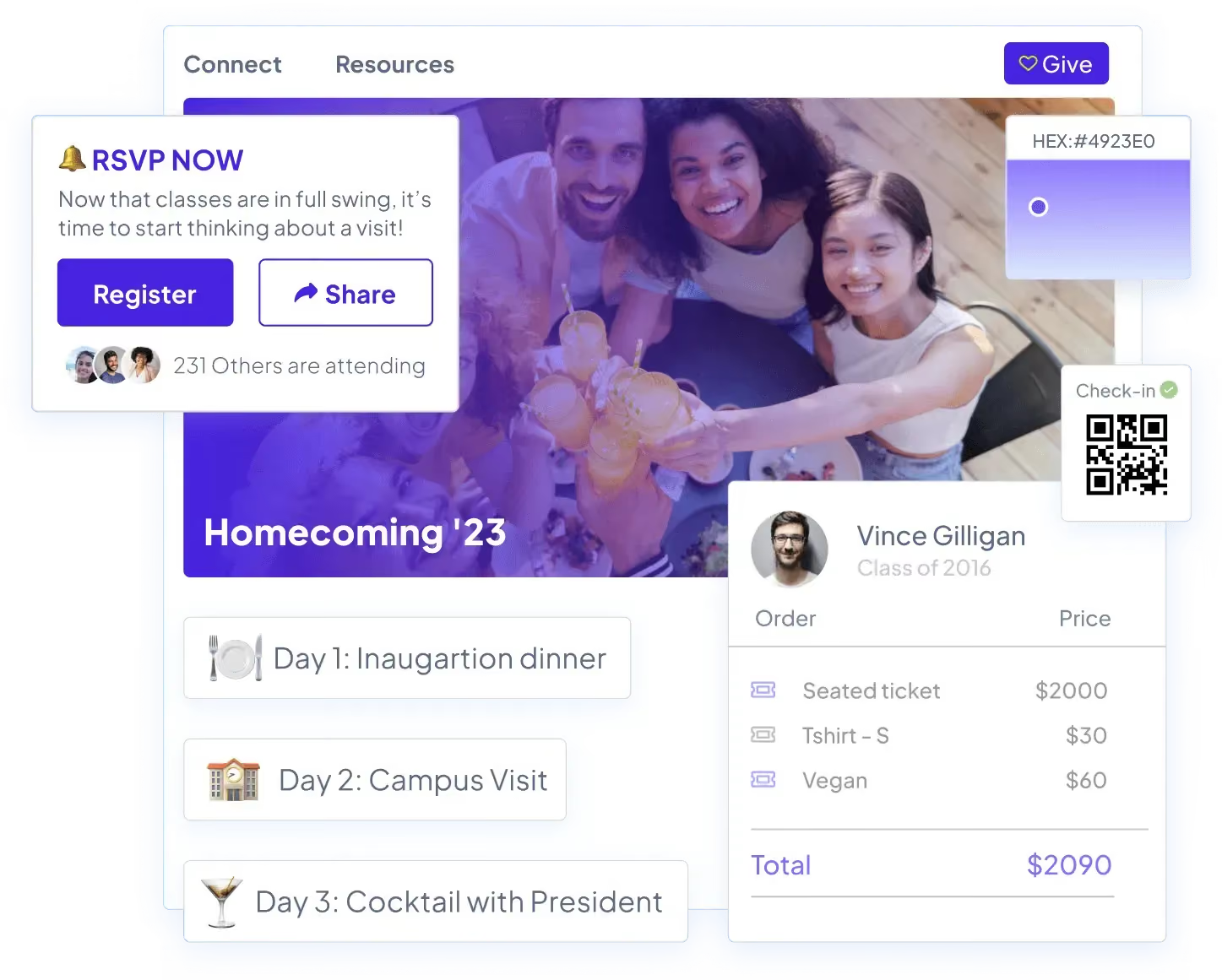
Almabase is particularly well suited for milestone reunions because it brings event management and alumni fundraising into one place. Alumni can sign up for multiple reunion activities, contribute to a class gift campaign, and receive communication tailored to their class year, all within the same experience. On the admin side, QR code check-ins and automatic CRM syncing make it easier to track both attendance and giving, which is especially useful when reunion engagement feeds into long-term donor stewardship efforts. Custom pricing offered.
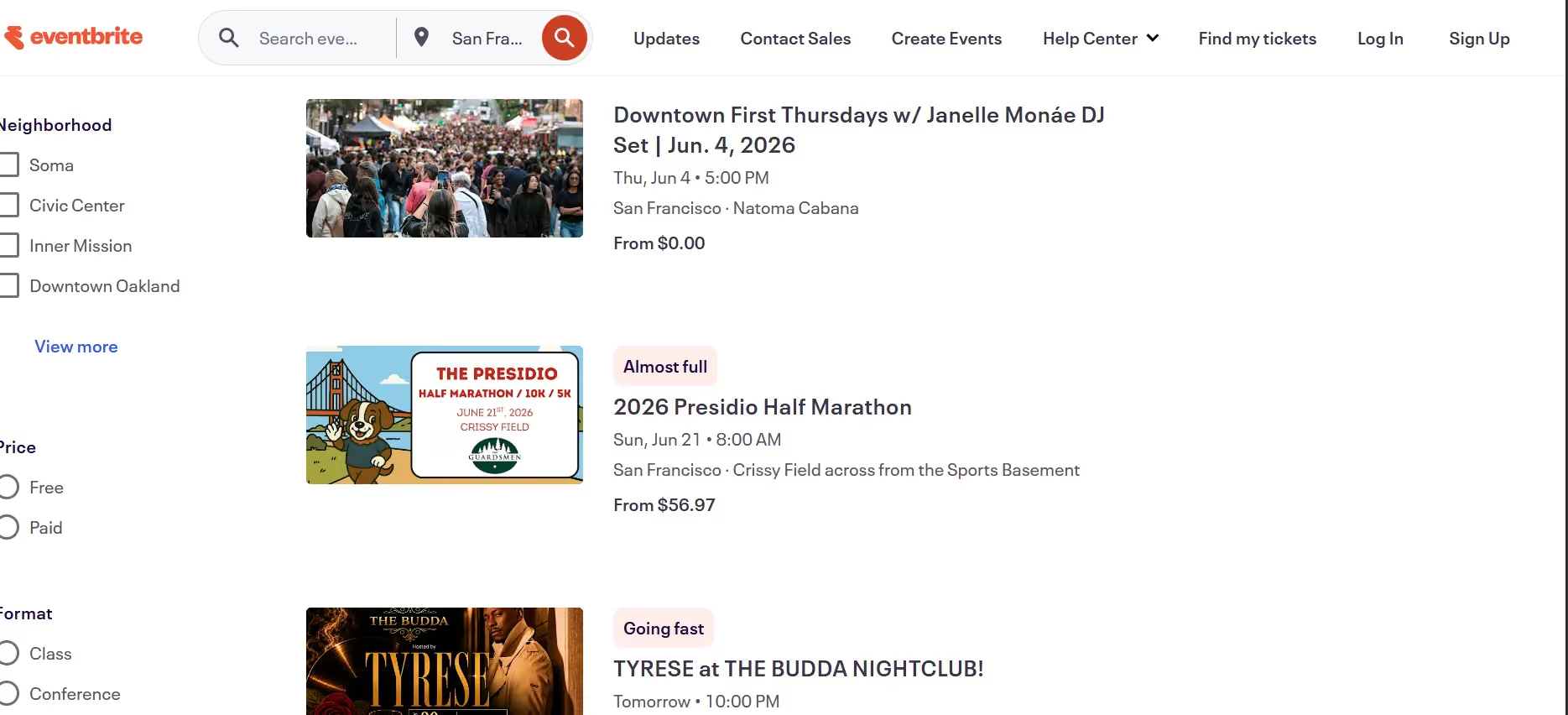
Eventbrite is a practical option for smaller institutions or volunteer-led reunion committees where the goal is mainly registration and payment collection rather than advancement integration. The platform is for free events; and fees apply for paid ticketing, which can be borne by the organizers or passed on to attendees.
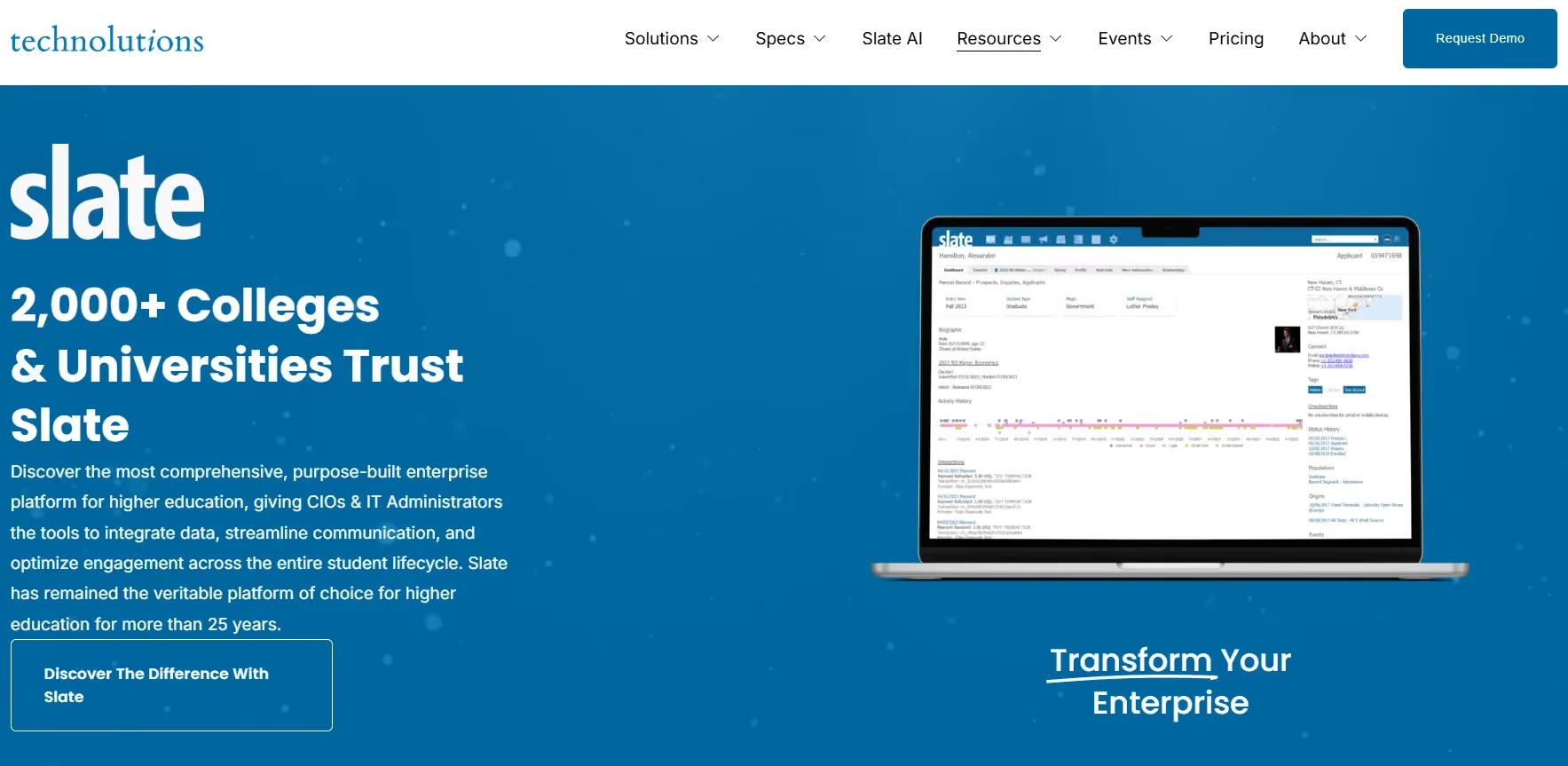
Slate is a unified, enterprise-grade CRM tool built exclusively for educational institutions that manages the entire student-to-alumnus lifecycle within a single database. For institutions already using Slate, reunion data flows natively into existing student-to-alumni records with absolutely no external CRM sync needed. The platform offers heavy-duty fundraising support with dedicated giving portals, customized gift processing, and major gift pipeline management. It’s a great fit for institutions that want a complete ecosystem to bridge admissions, student engagement, and advanced donor stewardship. Base licensing starts at $30,000/year.
Multi-day reunions are a little tricky to coordinate, because they demand seamless coordination across fragmented schedules, multiple venues, and diverse participant needs. Your platform should be able to handle sub-events, inventory management for ticketed activities, provide attendees with scheduling tools so they can build their own agenda, and give organizers visibility into logistics in real time.
Almabase brings event management and multi-day scheduling into one place. This means attendees can sign-up for personalized itineraries across sessions, receive real-time updates about capacity and changes, and organizers track attendance by session and segment. Capacity management, dietary tracking, and tiered pricing (full weekend vs. individual days) are straightforward to configure. Another great feature is the CRM sync which captures which alumni attended which sessions, giving organisers a comprehensive picture of attendance.
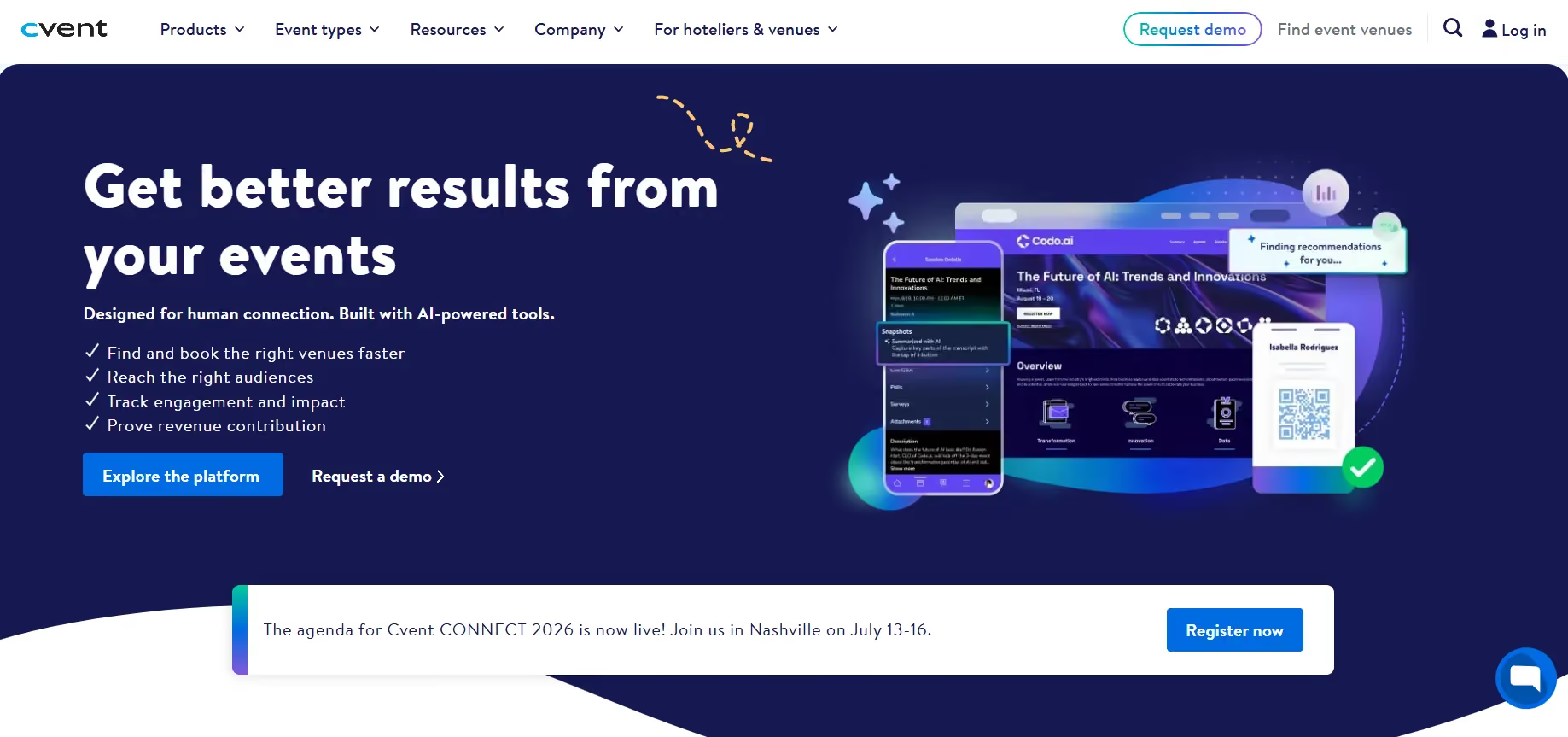
Cvent is purpose-built for multi-venue, multi-day events with precision logistics. Its session management capabilities include capacity limits, waitlists, and real-time room changes. Attendees can even use a mobile app to build schedules; while organizers see live dashboards by session and venue. It also offers venue integration, dietary management, badge printing, and check-in workflows, which are all native to the platform. The pricing for Cvent is based on event size and features.
These are the more happening, lively events: Homecoming weekends, sports alumni reunions, performing arts gatherings, and these are usually built around movement and participation rather than a single formal gathering.
Almabase is a strong fit for institutions running reunion weekends with multiple parallel events and alumni segments. You can create separate registration flows, send targeted communication to different affinity groups, track attendance across activities, and connect participation back to alumni engagement records. It works especially well when the reunion weekend also includes fundraising or volunteer engagement initiatives. Almabase offers custom pricing.
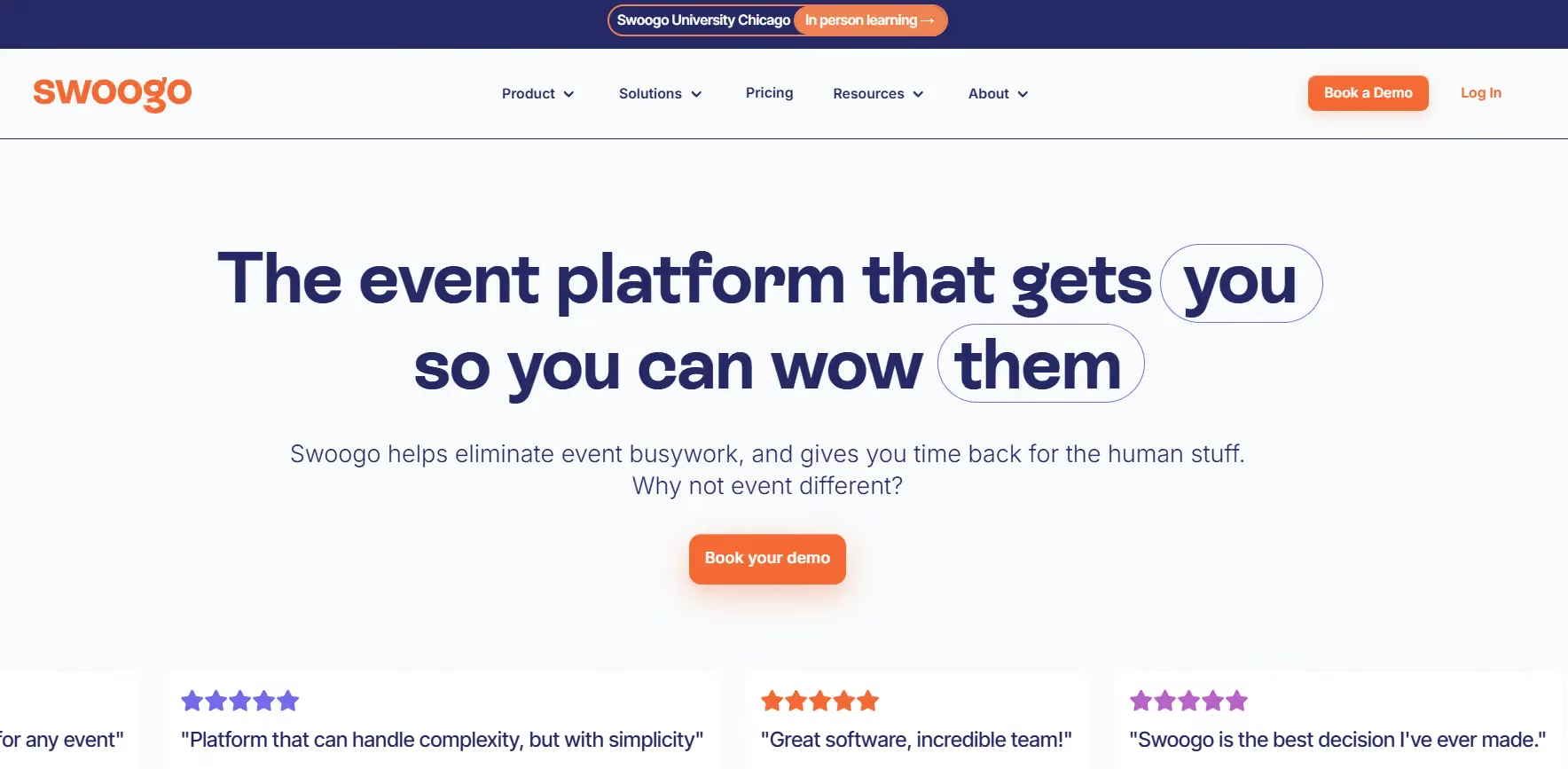
Swoogo is best suited for highly programmed reunion weekends with complex schedules and session tracks. Teams can use the platform to build personalized agendas, move between activities, and manage multi-day itineraries through one system. Their pricing starts around $11,800 a year for a single-user license.
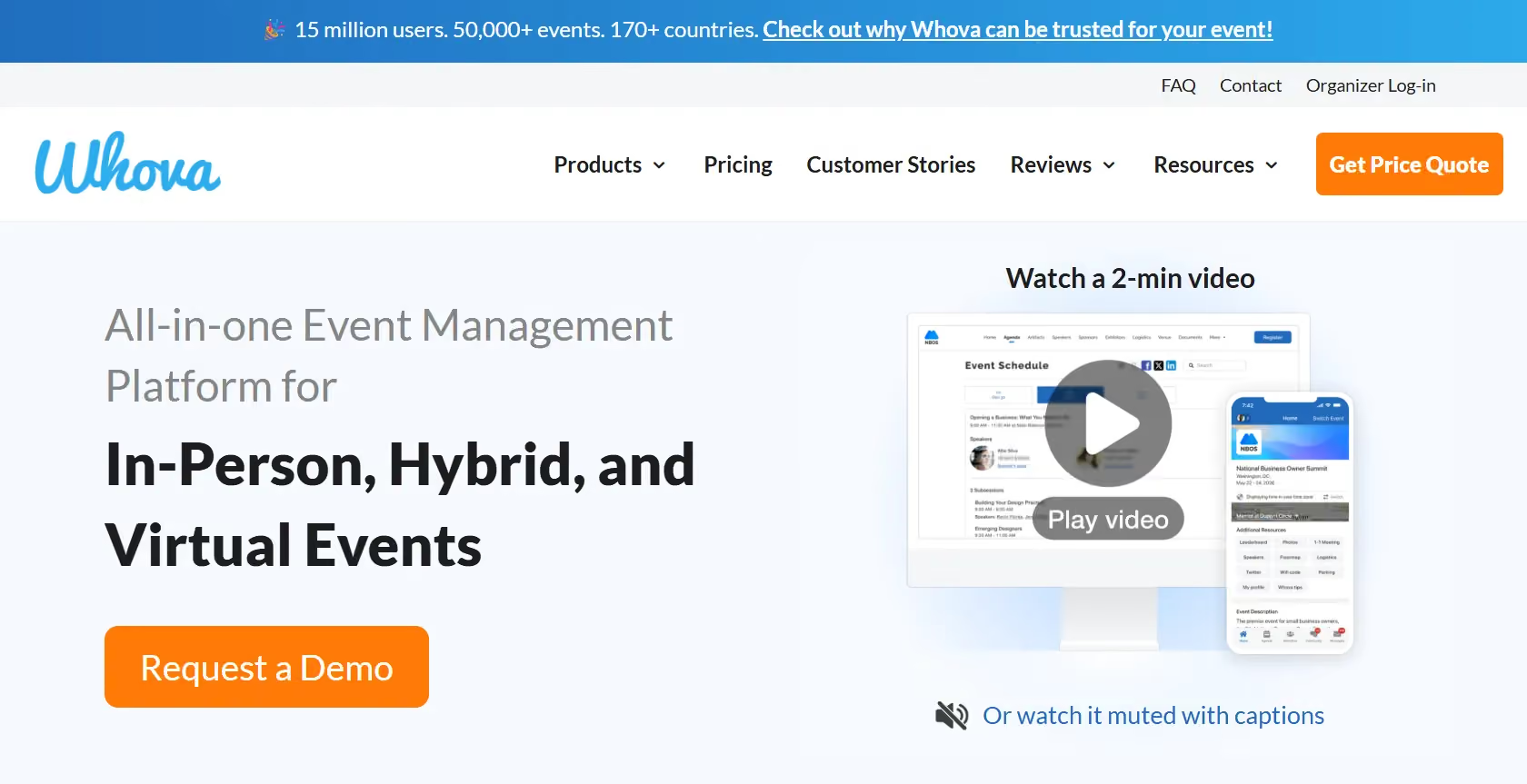
Whova is a useful option for highly social reunions where interaction between attendees is part of the experience itself. Features like attendee networking, live messaging, digital photo galleries, and mobile directories make it well suited for homecoming-style events. Custom pricing is offered based on requirements.
Many reunions are designed to bring entire alumni communities together, including spouses, children, volunteers, and local alumni chapters. These events usually require flexible registrations, family-friendly ticketing, and simple communication workflows.
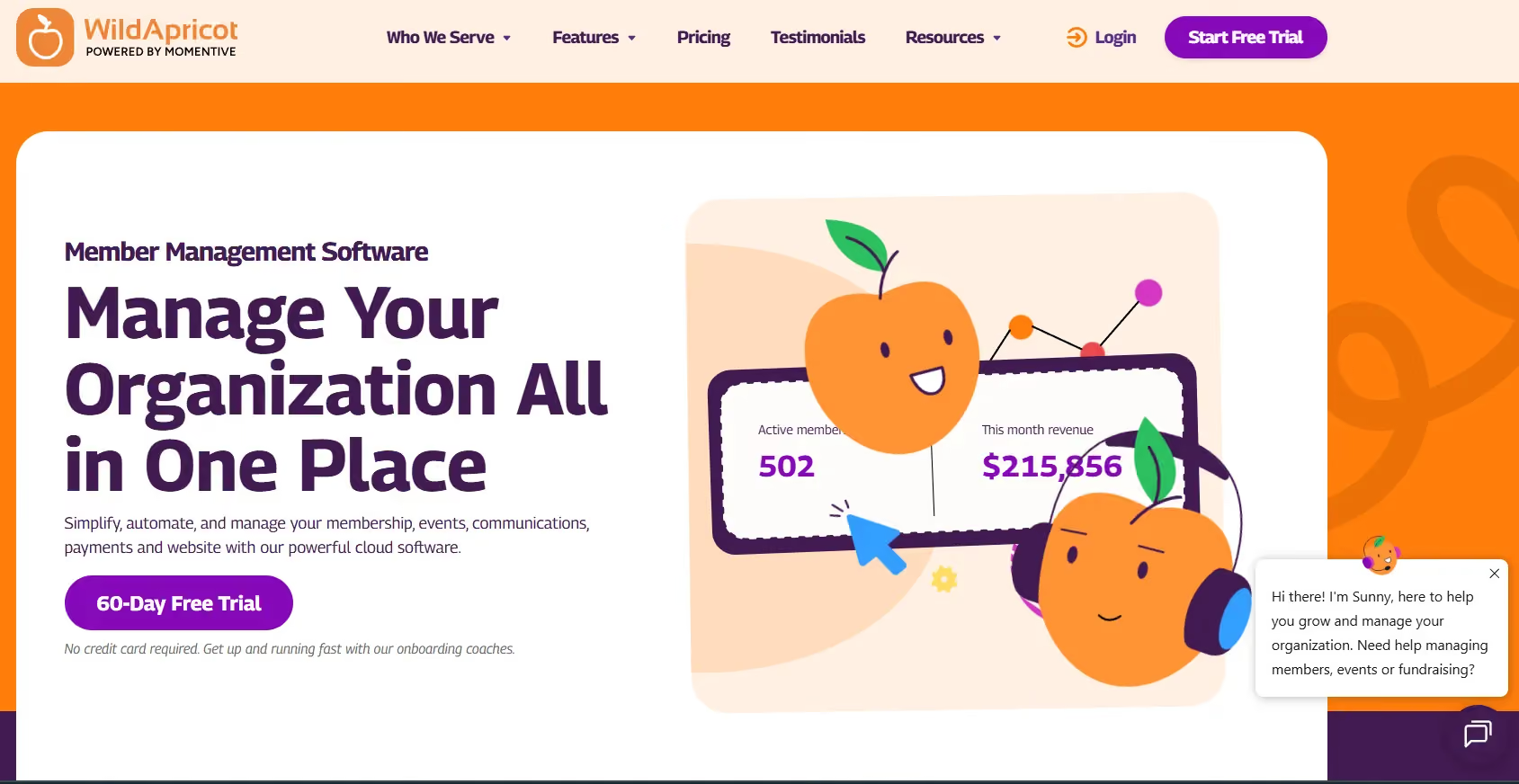
WildApricot is a natural fit for community-oriented reunions because it combines event management with membership and volunteer coordination. Family registrations, recurring events, and simple payment collection make it particularly useful for alumni associations and smaller institutions trying to manage ongoing community engagement beyond a single reunion weekend. Pricing starts around $60/month.
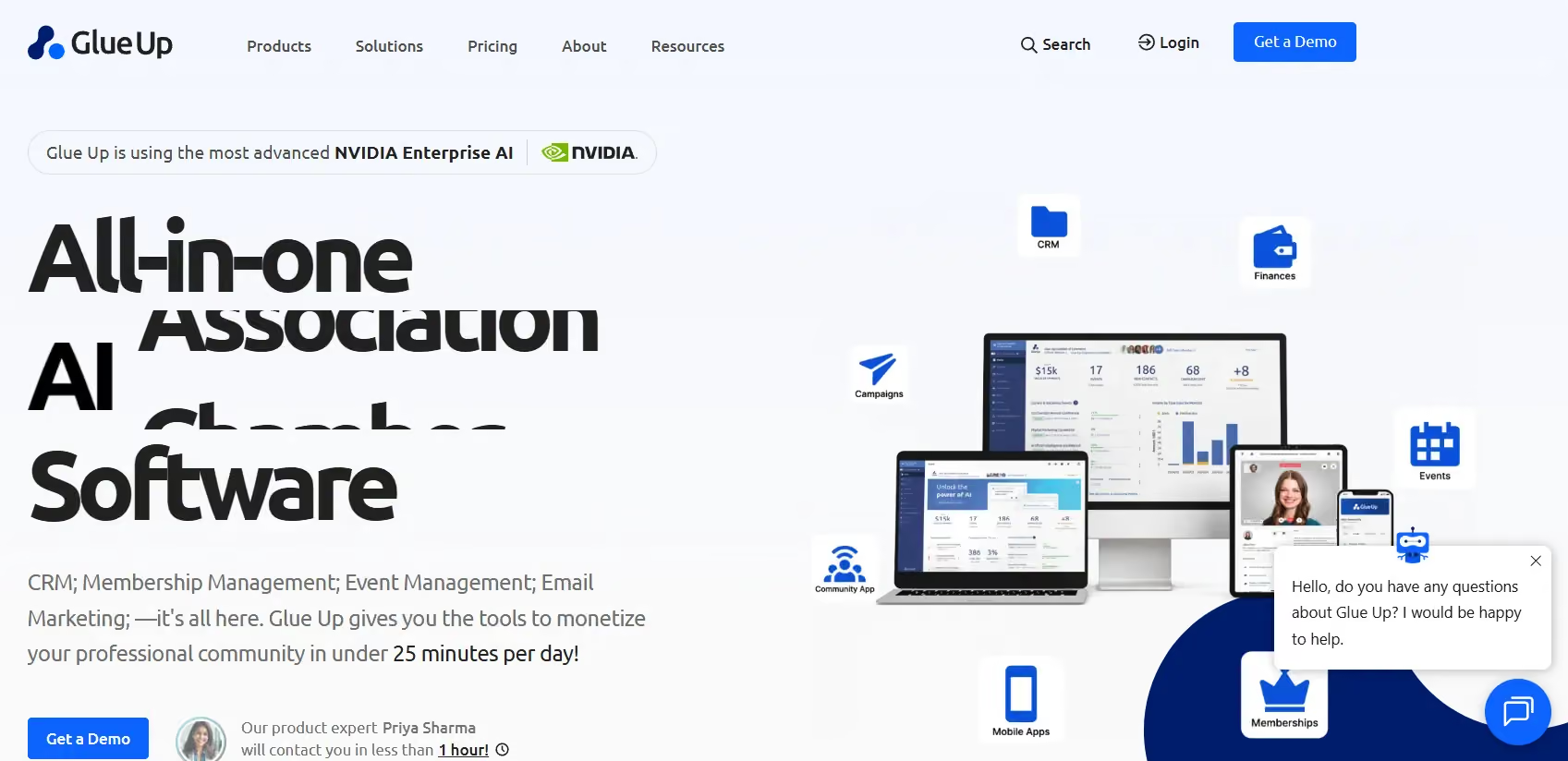
Glue Up works well for alumni associations with active local chapters and recurring community events. The platform focuses heavily on member engagement and ongoing relationship management over one-off events. Custom pricing is offered for enterprise level subscriptions, while the ‘Plus’ tier is priced at $4500 a year.
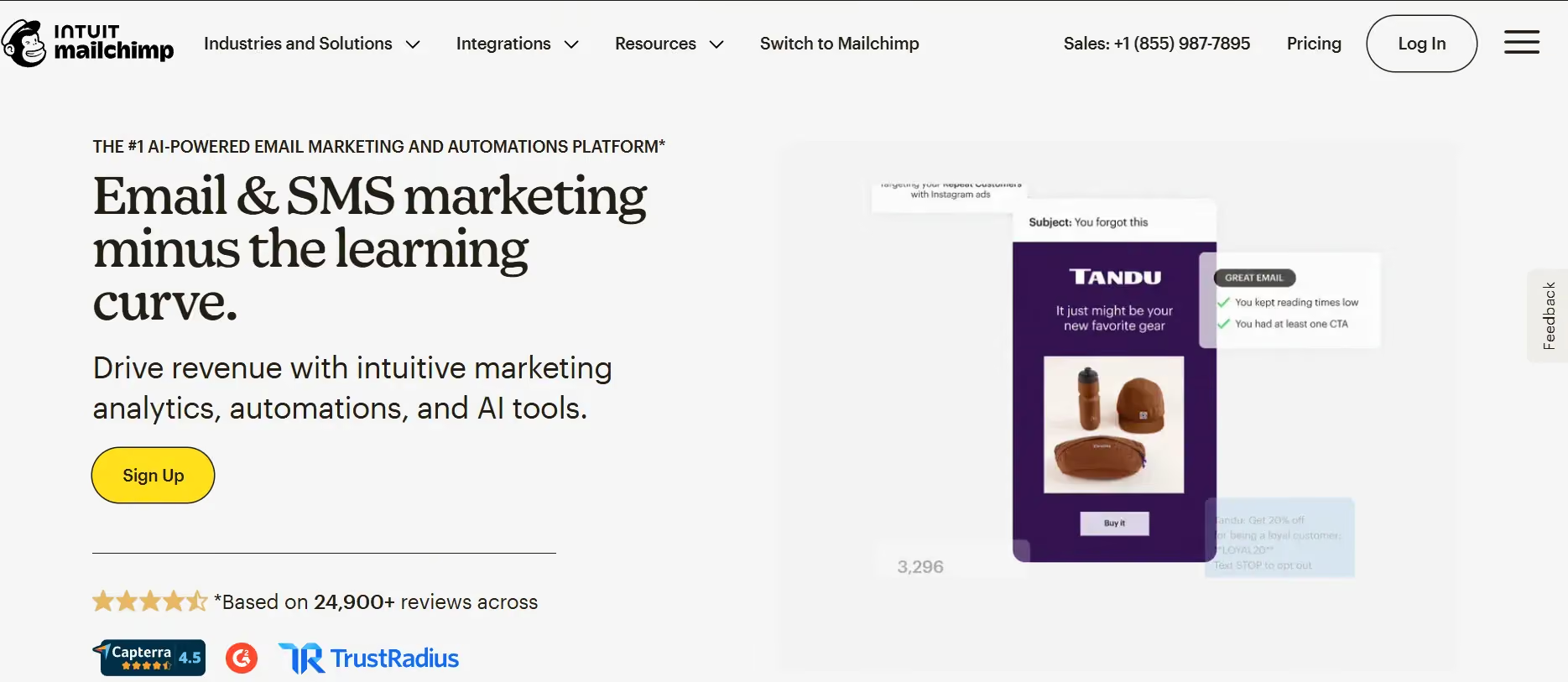
Using Mailchimp and Google Forms together is a practical setup for smaller reunion teams with limited budgets. This combination makes for a nifty set up when the reunion is simple enough that teams mainly need RSVP collection, reminder emails, and attendee exports. Mailchimp is free for up to 250 contacts; paid plans start at $13/month and scale based on your chosen features.
Reunions under the five-year milestone and professional networking events for recent graduates have a different priority: career connection and networking over nostalgia. Attendees want a professional directory, session selection (panels, workshops, speaker talks), and a way to connect with people in their industry after the event.
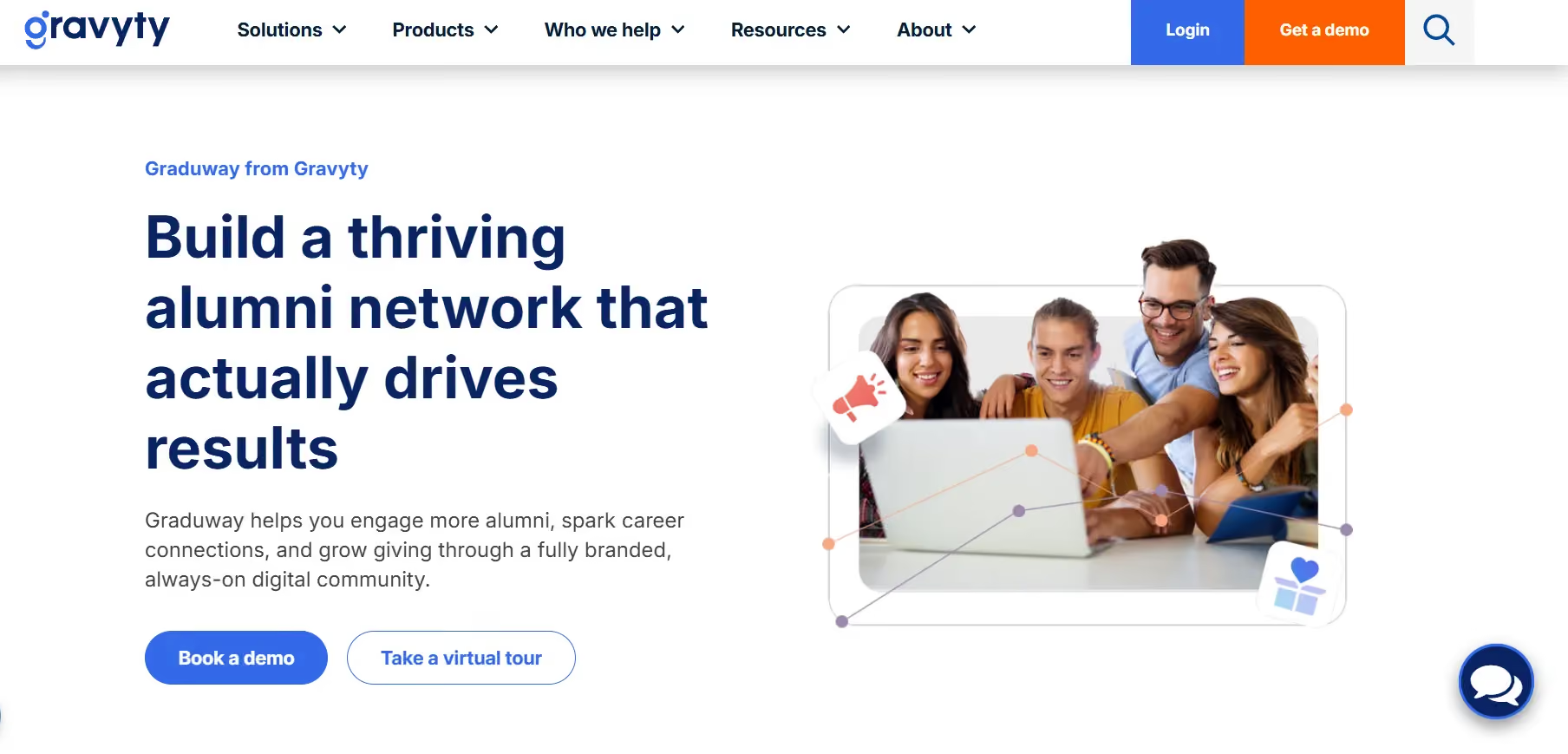
Graduway is designed specifically for career-focused alumni engagement. Its tools are geared toward helping alumni build meaningful professional connections through mentorship programs, networking communities, alumni directories, and ongoing career engagement initiatives. The platform offers custom enterprise pricing.
Almabase is particularly useful when institutions want professional reunions to feed into broader alumni engagement and advancement efforts. Teams can segment alumni by industry or graduation year, manage multiple networking sessions, track attendee engagement, and continue communication after the event through the same platform. Custom pricing.
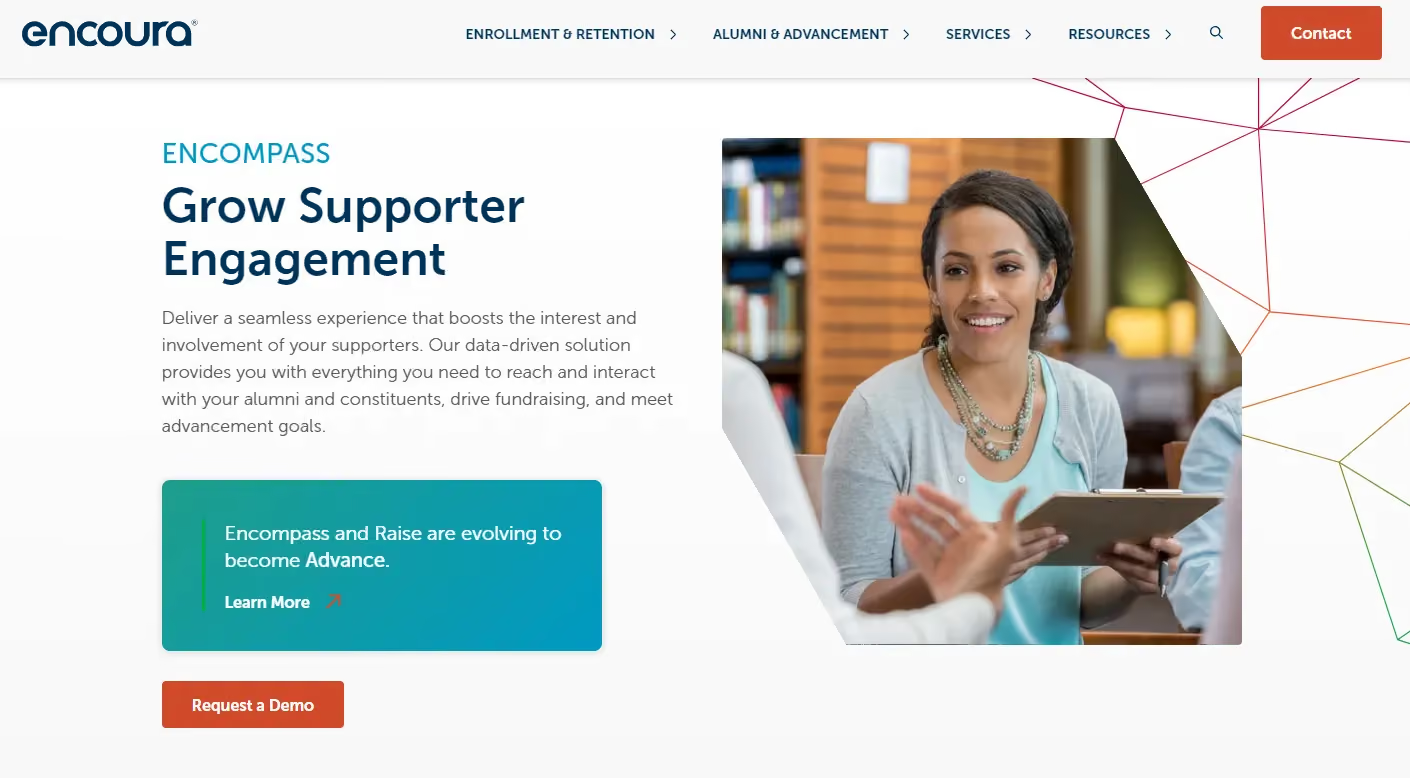
Built for institutional database workflows, Encompass (formerly iModules) is a great fit for professional reunions with multiple panels, workshops, or speaker tracks. Attendees can register for individual sessions, while its built-in capacity controls help manage high-demand events more smoothly. It also automatically logs attendance and engagement data back into advancement records. Pricing for the platform depends on the broader institutional enterprise license.
Not every alumnus can fly back to campus. You need virtual and/or hybrid attendance registration separate from in-person, live streaming or integration with a streaming tool, the ability to capture virtual check-ins for your CRM, and post-event recordings so remote alumni can watch sessions they missed.
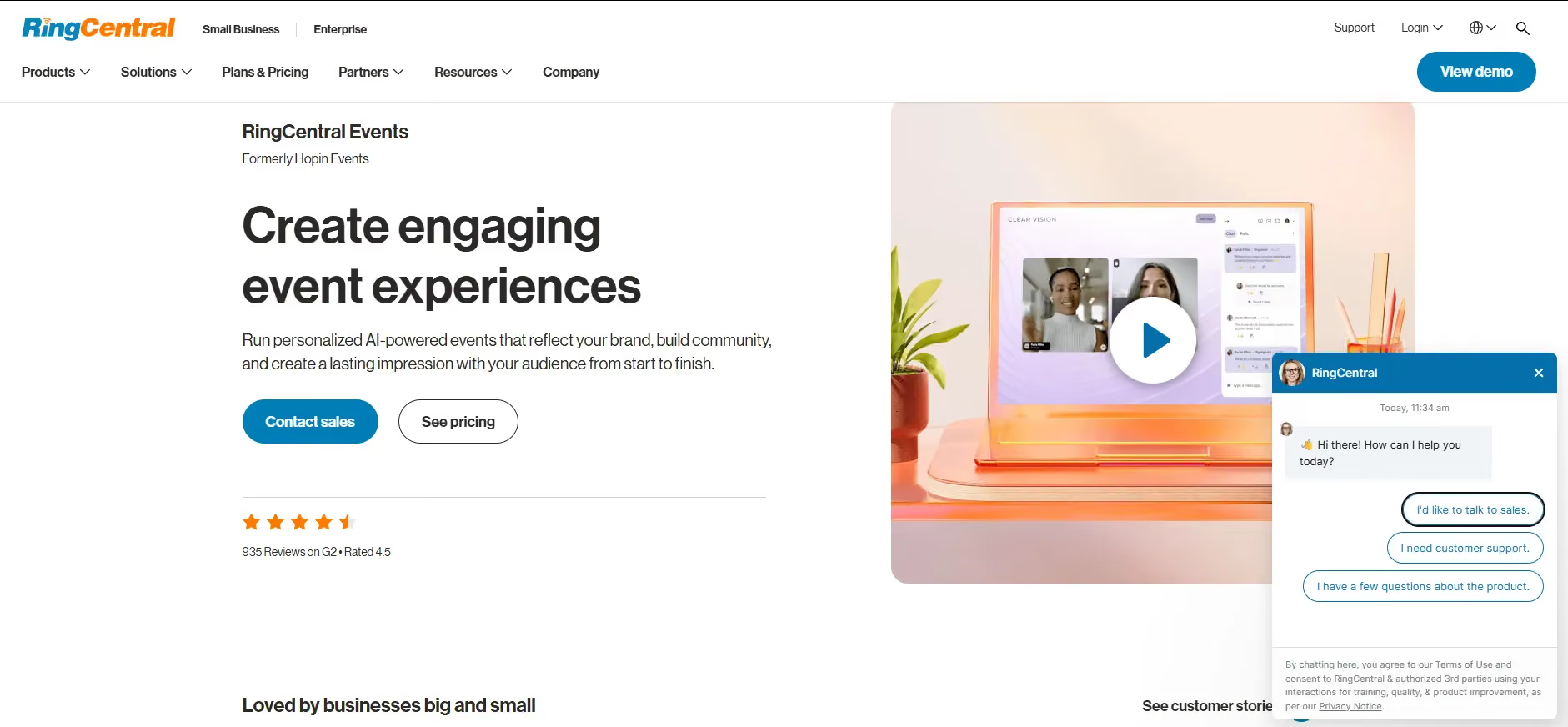
Hopin is best suited for large hybrid reunion experiences with multiple simultaneous sessions and networking layers. Features like virtual expo halls, breakout spaces, and structured networking make it work more like a digital conference than a webinar being held with minimal interaction. Pricing starts at $99/month per organizer.
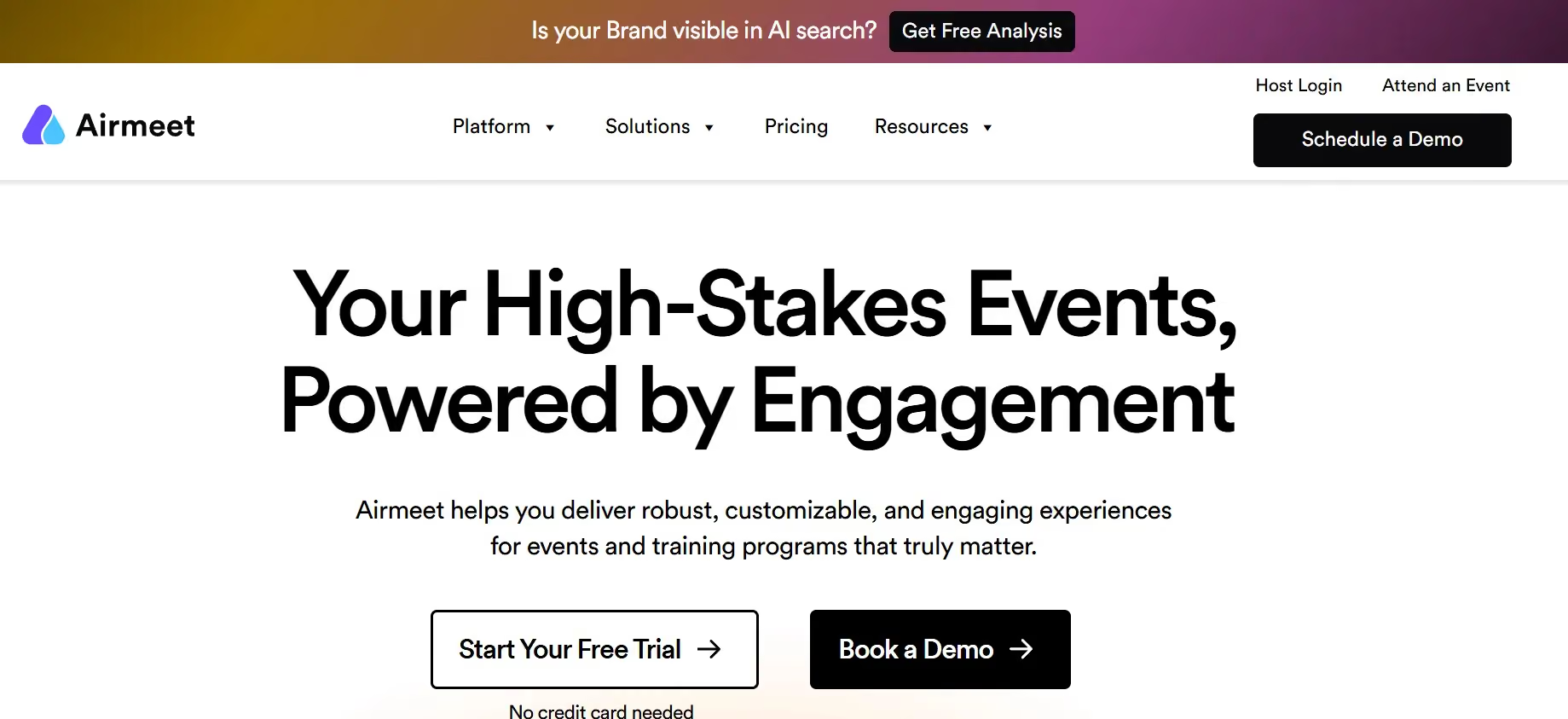
Airmeet is a good option if you have an interaction-heavy virtual reunion in mind. Social lounges and networking tables create smaller conversational spaces, which helps remote attendees participate more actively instead of simply watching a stream. Entry tiers start around $167/month.
As reunions have evolved over the years, so too have the platforms that they are hosted on. However, there are always new as well as persistent issues for which you will want the right features to fit your needs. Here are a few features worth looking into:
Especially when the reunion is a large one, registrations, check-ins, and RSVP management is often a big headache both for staff and attendees if not done well. When platforms aren’t built for that complexity, your staff end up having to compensate with manual work: tracking waitlists in spreadsheets, reconciling duplicate records before CRM uploads, or maintaining separate documents just to manage attendee data accurately.
A strong reunion platform keeps all of your ticketing, payments, and gifts connected in a single system, handling pricing, refunds, add-ons, as well as reporting together so staff aren’t left reconciling records after the event ends.
Reunion communication begins long before the event itself. A reunion platform should be able to keep communication connected to registration data, allowing updates and messaging to adjust automatically based on schedules, roles, and attendee preferences.
Mobile check-in reduces friction by allowing volunteers to scan QR codes, process attendees quickly, and log attendance automatically in real time.
A reunion platform becomes even more relevant for large, multi-day reunions because it keeps attendance connected directly to attendee records from the start, making it easier to understand who attended, which sessions saw engagement, and where follow-up should happen next.
Reunions offer institutions a rare opportunity to understand alumni behavior in real time. A strong reunion platform integrates cleanly with systems like Raiser's Edge NXT, Salesforce, or HubSpot so reunion engagement becomes part of the institution’s larger alumni record instead of remaining isolated event data.
Don’t start by comparing feature lists side by side. The decision usually becomes clearer once the event objectives and operational constraints are visible. Think about what the reunion is trying to achieve, who is running it, and how much of the work needs to connect back into long-term alumni data.
In practice, the “right” platform is the one that reduces the most friction in your specific setup, rather than the one with the most capabilities on paper.
Reunions that are focused on increasing attendance depend heavily on segmentation and communication. Getting the right message to the right cohort at the right time has more impact than any individual feature in the registration flow.
For teams focused on reducing administrative load, the issue is not necessarily the event itself, but the amount of manual reconciliation required afterward. If reunion data doesn’t flow back into the CRM, the operational work doesn’t disappear but moves to a later stage in the process.
Allow your team size and structure to shape platform choice! Smaller alumni teams need systems that can be set up quickly and managed without dedicated technical support. In those environments, simplicity and speed matter more than deep configuration options, because the same person managing the reunion is often also handling communications, donor outreach, and reporting.
Larger advancement teams operate under a different set of constraints. They have larger targets tied to advancement goals which require deeper CRM integration, more structured data flows, and systems that can support multiple stakeholders working in parallel.
Data requirements are one of the main deciding factors. Some institutions need full CRM synchronization, where registrations, attendance, and gift activity flow automatically into systems like Raiser's Edge NXT.
Other teams operate with simpler needs: clean registration exports, basic attendance tracking, and manual uploads into existing systems. In those cases, lighter platforms can be perfectly sufficient without introducing unnecessary complexity.
Confusing registration flows, unclear session structures, or poorly timed communication show up quickly in abandonment rates. In case alumni have not interacted with institutional systems in years, clarity and simplicity in the registration process will go a long way.
The same applies at check-in: a smooth entry experience sets a very different tone compared to visible queues or manual lookups at the door.
What happens afterward is just as likely to determine whether the event contributes to long-term engagement or remains an isolated activity in the calendar. Attendance data, donor participation, volunteer sign-ups, and communication history all become more valuable when they can be carried forward into future outreach.
In practice, the most useful systems make post-event work feel like a continuation of the same workflow. When reunion data feeds cleanly into CRM records and follow-up communications, each event builds on the last.
Yes, particularly for institutions on Raiser's Edge NXT. Almabase covers registration, ticketing, segmented email, mobile check-in, peer-to-peer fundraising, and CRM sync in one system. The bi-directional RE NXT integration means reunion attendance flows into constituent records automatically. Request a demo to see how the event and CRM workflows connect.
They can handle basic ticketing. They can't segment alumni by class year, sync attendance to an advancement CRM, or connect the event to a giving campaign. For a small, informal reunion without advancement goals, a generic platform works. Once class-year data, giving campaigns, or donor stewardship are involved, purpose-built tools are worth it.
Mostly in how success gets measured. Institutional reunions typically include a fundraising component tracked against engagement and giving metrics in a CRM. Nonprofit reunions center on volunteer engagement and cause-based giving. The platform features that matter shift accordingly.
Not for simple events. A Google Form and Venmo can get 40 people to a dinner. The complexity scales when you're managing class-year segmentation, multi-day scheduling, tiered pricing, CRM data requirements, and post-event reporting. At that scale, doing it manually costs more in staff hours than the platform does.
Choosing the right reunion platform comes down to the goals of the event and the challenges your team is trying to solve.
For smaller reunions with simple registration and communication needs, lightweight tools like WildApricot or Eventbrite are quite enough. They work well for straightforward ticketing, RSVPs, community events, and recurring alumni gatherings without adding unnecessary complexity.
As reunions become more activity-driven or networking-focused, platforms like Almabase, Whova, and Graduway offer stronger support for multi-day programming, attendee engagement, and professional networking experiences.
For advancement teams running milestone reunions with a fundraising component, Almabase is one of the strongest options because registration, communication, check-ins, reunion giving, segmentation, and CRM sync all work together in one system. Instead of becoming isolated event data, reunion participation becomes part of the long-term alumni engagement record.
If you want to see how Almabase can power your next reunion, feel free to request a personalized demo, or if you want a self-guided look, head over to our product tour!

Top Platforms for A Successful Reunion Event
Find the right platform to host your reunion events whether it's a multi-day, professional, activity-based, or milestone reunion. Find your best fit.
Lorem ipsum dolor sit amet, consectetur adipiscing elit. Suspendisse varius enim in eros elementum tristique. Duis cursus, mi quis viverra ornare, eros dolor interdum nulla, ut commodo diam libero vitae erat. Aenean faucibus nibh et justo cursus id rutrum lorem imperdiet. Nunc ut sem vitae risus tristique posuere.
May 29, 2026
12 minutes

.svg)

.avif)
.webp)