Find the right platform to host your reunion events whether it's a multi-day, professional, activity-based, or milestone reunion. Find your best fit.

Anwesha Kiran
Updated:
May 29, 2026

A well run reunion event offers a seamless experience to your attendees. They register once, select a few events for the weekend, receive timely reminders, check in and move smoothly from one gathering to the next. From their perspective, the whole thing only takes a few seconds and minimal effort.
Behind the scenes, however, is an enormous amount of coordination happening across teams and timelines.
For smaller gatherings, lightweight event tools may still work perfectly well. But once reunions become larger, multi-event set ups, or tied to broader advancement goals, managing registrations or ticketing is just one cog in the wheel. That’s when many alumni and advancement teams eventually move toward platforms designed specifically for reunion and alumni engagement workflows. In this blog, we’ll break down the platforms best suited for different types of reunion events, team structures, and engagement goals.
Many teams begin with the tools already available internally, like spreadsheets for guest tracking, email platforms for outreach, online forms for RSVPs, and a ticketing platform layered on top to handle payments. And that set up works well for a while too.
Most event platforms are designed to handle transactions: collect registrations, process payments, send confirmation emails. While this works just fine for one-off events, reunions call for something more.
Most advancement and alumni teams are already familiar with the friction points:
Individually, none of these problems are unusual. But together, a combination of any of these issues creates significant overhead. This holds especially true for leaner teams, when the issue becomes even more visible after the event ends. They might find themselves having to spend days cleaning spreadsheets, confirming attendance records, updating CRM systems, and piecing together engagement data that should have been captured automatically.
Reunions are complex and involve long-term alumni relationships, donor engagement, segmented outreach, multi-day programming, and post-event reporting that extends well beyond the weekend itself. They require platforms that will understand the context behind why all this needs to be connected.
For example, knowing that 400 people registered for a reunion is useful. But knowing which classes had the strongest turnout, which former volunteers re-engaged, or which lapsed donors attended for the first time in years is significantly more valuable.
The same applies operationally. Generic platforms often require teams to manage communications, reporting, and CRM updates separately, creating duplicate work across systems that don’t naturally connect to one another.
That’s why many institutions eventually move toward platforms designed specifically for alumni engagement and reunion management. It makes a huge difference to reduce manual coordination, improve data continuity, and make reunions easier to manage as part of a larger alumni strategy.
Milestone reunions sit at the intersection of emotional significance and operational intensity. These are your 10th, 25th, 50th year reunions.
You need class-year segmentation for targeted invitations, multi-day session management, integrated giving pages and CRM sync so reunion attendance feeds your donor records. Here are our recommendations:
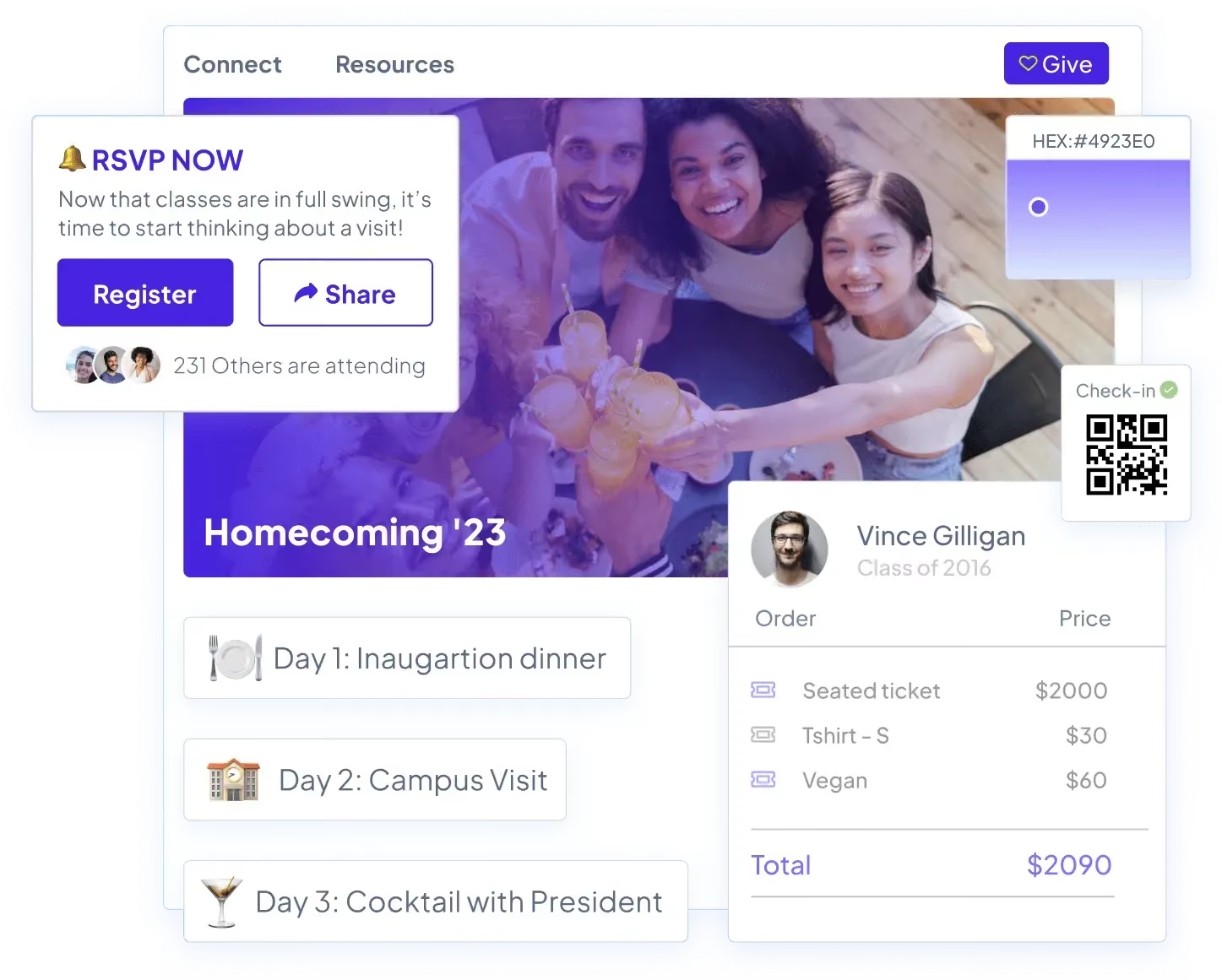
Almabase is particularly well suited for milestone reunions because it brings event management and alumni fundraising into one place. Alumni can sign up for multiple reunion activities, contribute to a class gift campaign, and receive communication tailored to their class year, all within the same experience. On the admin side, QR code check-ins and automatic CRM syncing make it easier to track both attendance and giving, which is especially useful when reunion engagement feeds into long-term donor stewardship efforts. Custom pricing offered.
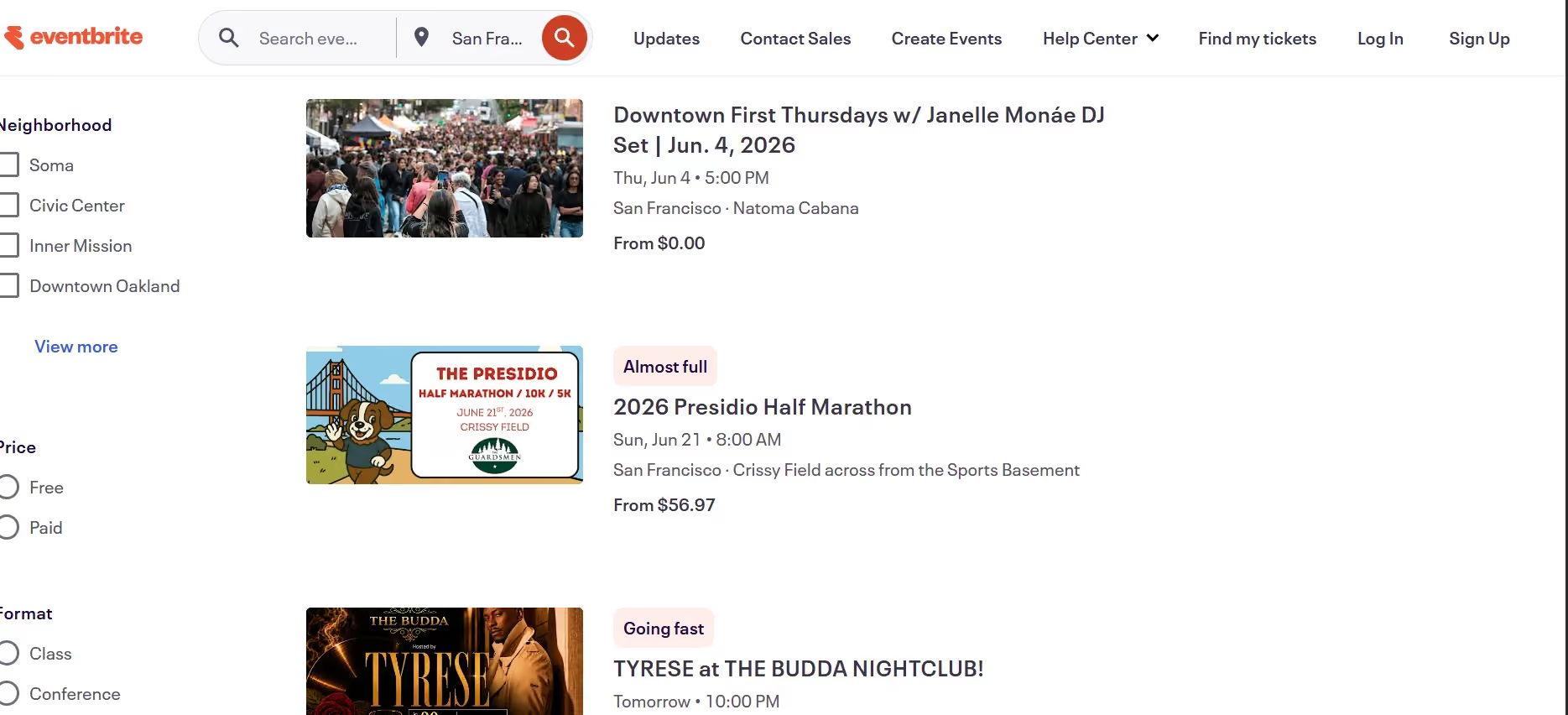
Eventbrite is a practical option for smaller institutions or volunteer-led reunion committees where the goal is mainly registration and payment collection rather than advancement integration. The platform is for free events; and fees apply for paid ticketing, which can be borne by the organizers or passed on to attendees.
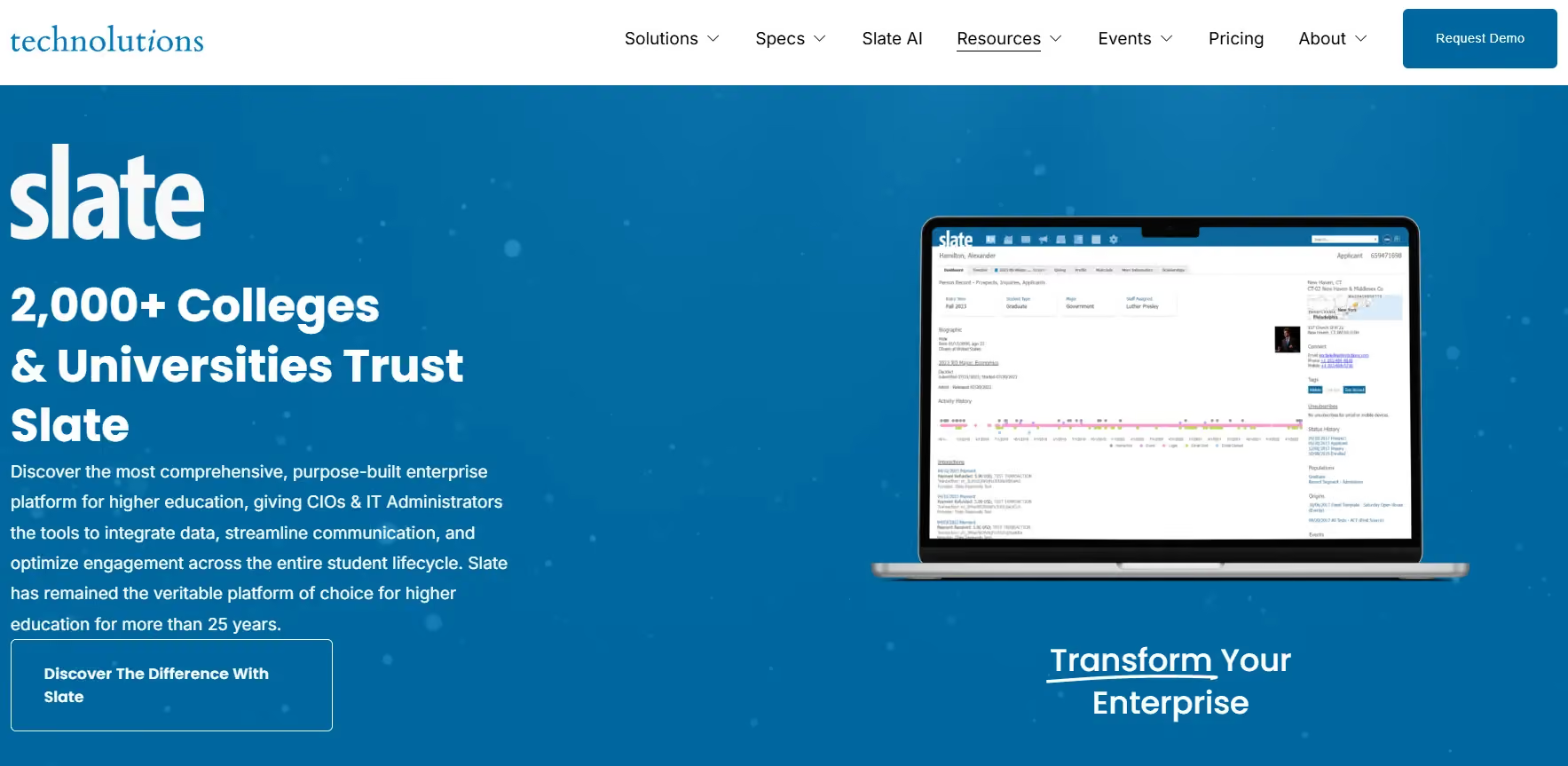
Slate is a unified, enterprise-grade CRM tool built exclusively for educational institutions that manages the entire student-to-alumnus lifecycle within a single database. For institutions already using Slate, reunion data flows natively into existing student-to-alumni records with absolutely no external CRM sync needed. The platform offers heavy-duty fundraising support with dedicated giving portals, customized gift processing, and major gift pipeline management. It’s a great fit for institutions that want a complete ecosystem to bridge admissions, student engagement, and advanced donor stewardship. Base licensing starts at $30,000/year.
Multi-day reunions are a little tricky to coordinate, because they demand seamless coordination across fragmented schedules, multiple venues, and diverse participant needs. Your platform should be able to handle sub-events, inventory management for ticketed activities, provide attendees with scheduling tools so they can build their own agenda, and give organizers visibility into logistics in real time.
Almabase brings event management and multi-day scheduling into one place. This means attendees can sign-up for personalized itineraries across sessions, receive real-time updates about capacity and changes, and organizers track attendance by session and segment. Capacity management, dietary tracking, and tiered pricing (full weekend vs. individual days) are straightforward to configure. Another great feature is the CRM sync which captures which alumni attended which sessions, giving organisers a comprehensive picture of attendance.
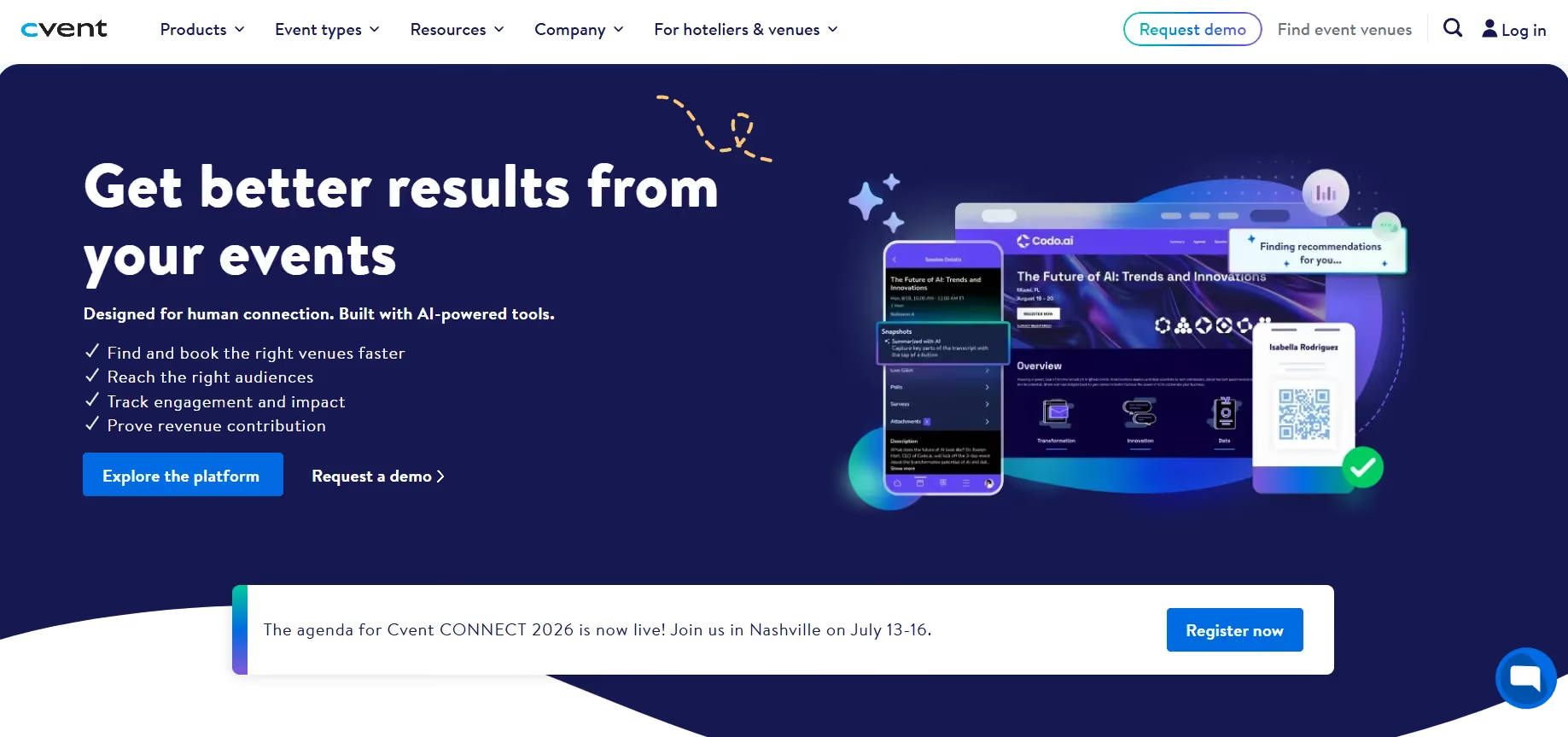
Cvent is purpose-built for multi-venue, multi-day events with precision logistics. Its session management capabilities include capacity limits, waitlists, and real-time room changes. Attendees can even use a mobile app to build schedules; while organizers see live dashboards by session and venue. It also offers venue integration, dietary management, badge printing, and check-in workflows, which are all native to the platform. The pricing for Cvent is based on event size and features.
These are the more happening, lively events: Homecoming weekends, sports alumni reunions, performing arts gatherings, and these are usually built around movement and participation rather than a single formal gathering.
Almabase is a strong fit for institutions running reunion weekends with multiple parallel events and alumni segments. You can create separate registration flows, send targeted communication to different affinity groups, track attendance across activities, and connect participation back to alumni engagement records. It works especially well when the reunion weekend also includes fundraising or volunteer engagement initiatives. Almabase offers custom pricing.
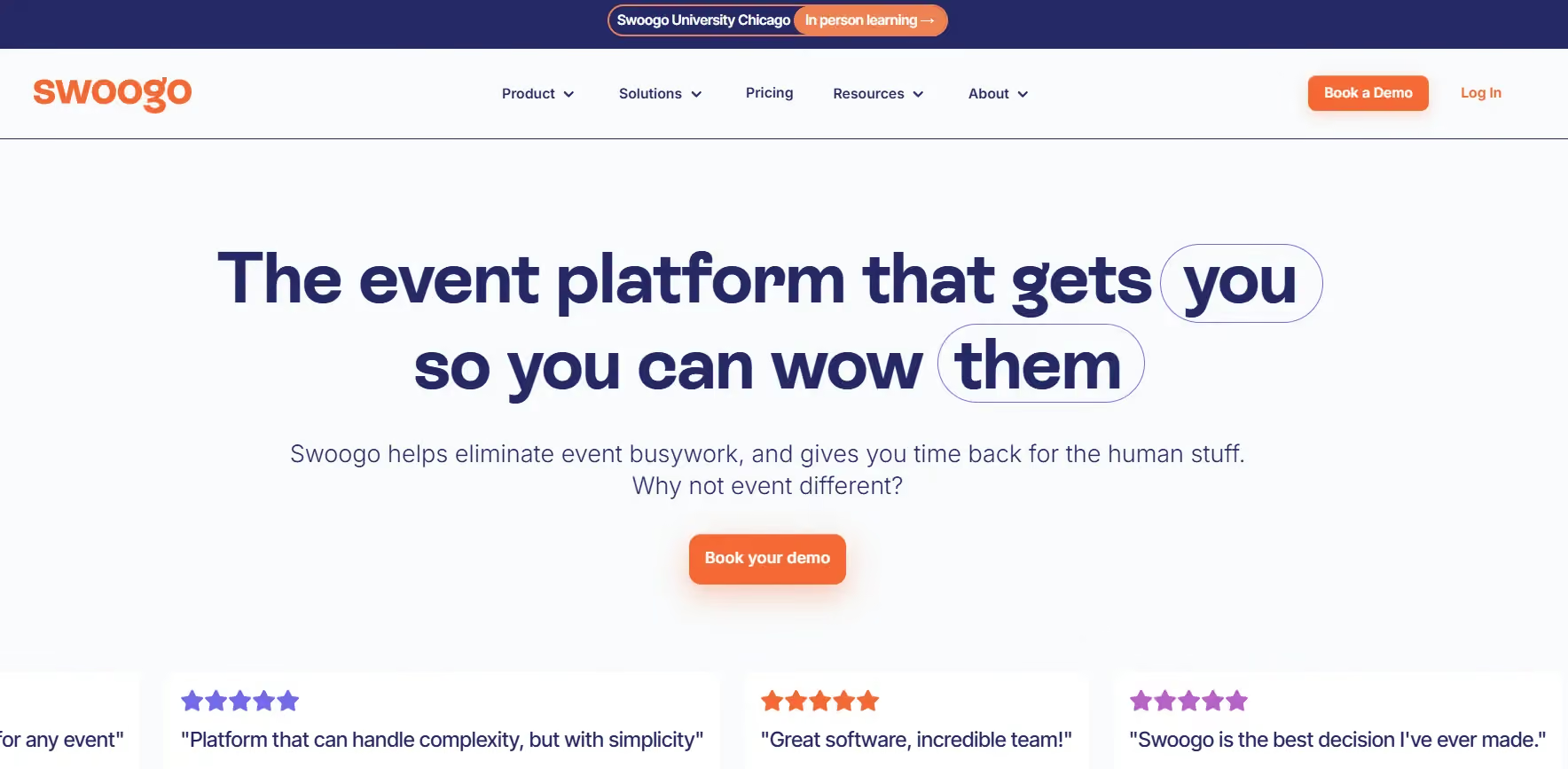
Swoogo is best suited for highly programmed reunion weekends with complex schedules and session tracks. Teams can use the platform to build personalized agendas, move between activities, and manage multi-day itineraries through one system. Their pricing starts around $11,800 a year for a single-user license.
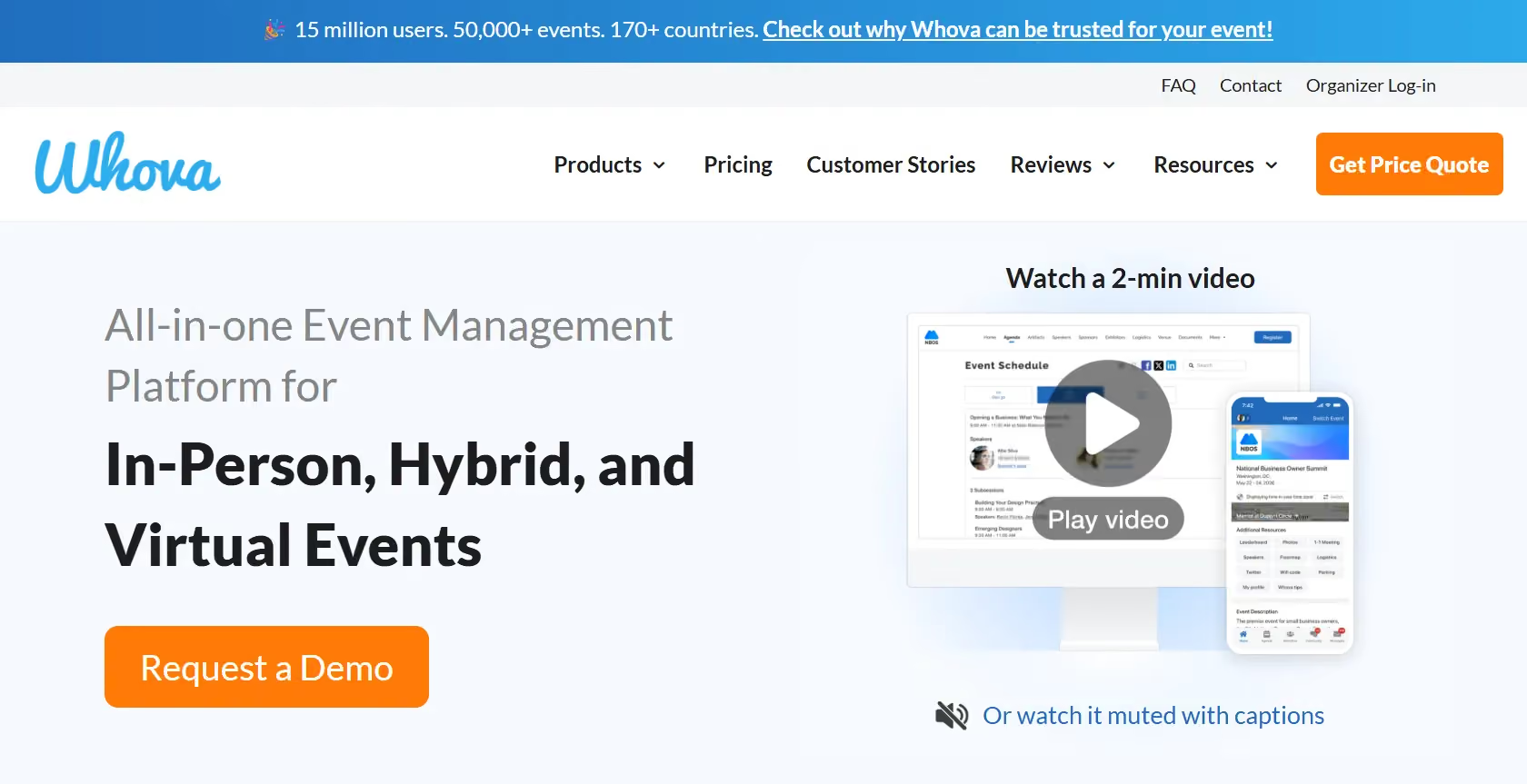
Whova is a useful option for highly social reunions where interaction between attendees is part of the experience itself. Features like attendee networking, live messaging, digital photo galleries, and mobile directories make it well suited for homecoming-style events. Custom pricing is offered based on requirements.
Many reunions are designed to bring entire alumni communities together, including spouses, children, volunteers, and local alumni chapters. These events usually require flexible registrations, family-friendly ticketing, and simple communication workflows.
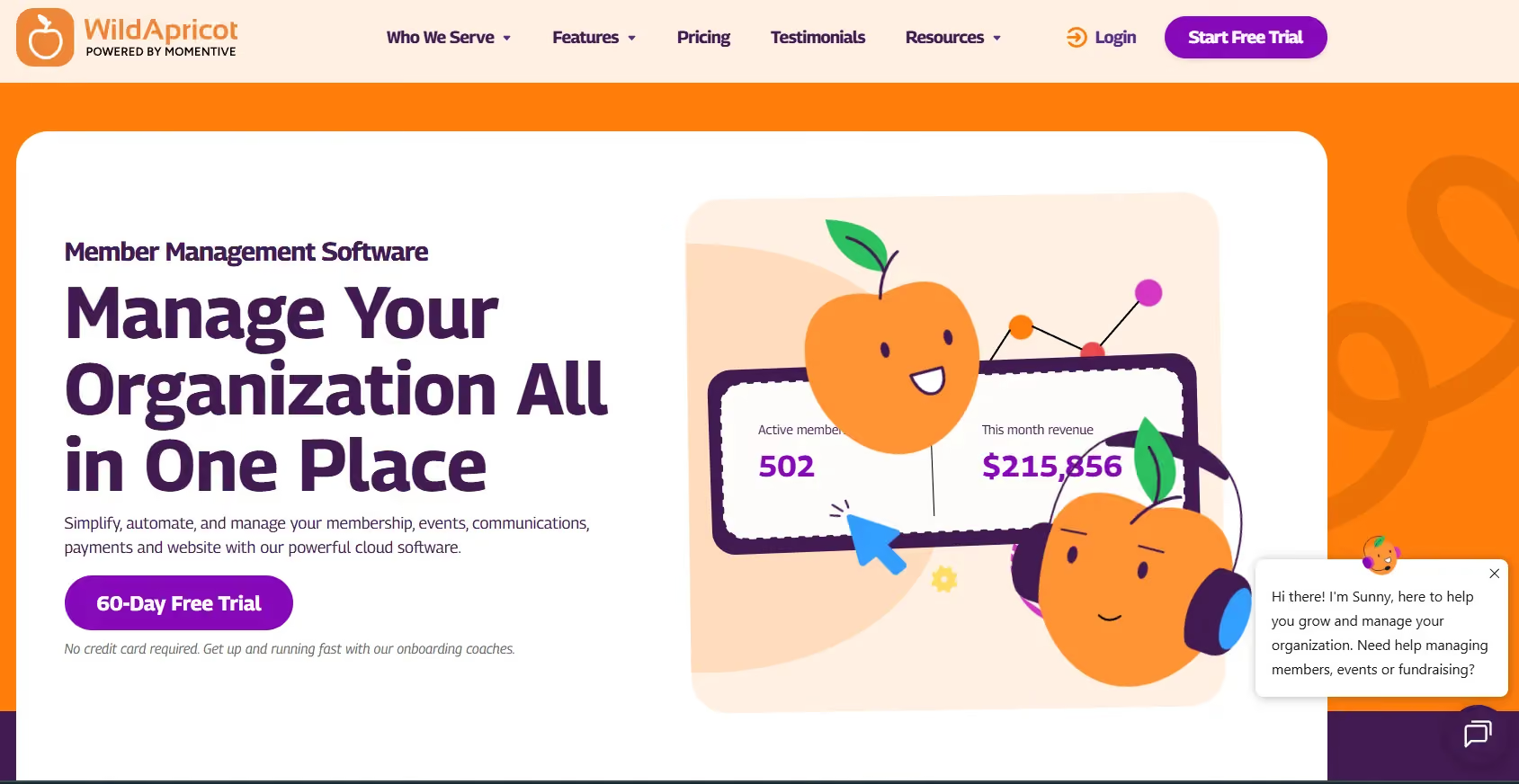
WildApricot is a natural fit for community-oriented reunions because it combines event management with membership and volunteer coordination. Family registrations, recurring events, and simple payment collection make it particularly useful for alumni associations and smaller institutions trying to manage ongoing community engagement beyond a single reunion weekend. Pricing starts around $60/month.

Glue Up works well for alumni associations with active local chapters and recurring community events. The platform focuses heavily on member engagement and ongoing relationship management over one-off events. Custom pricing is offered for enterprise level subscriptions, while the ‘Plus’ tier is priced at $4500 a year.
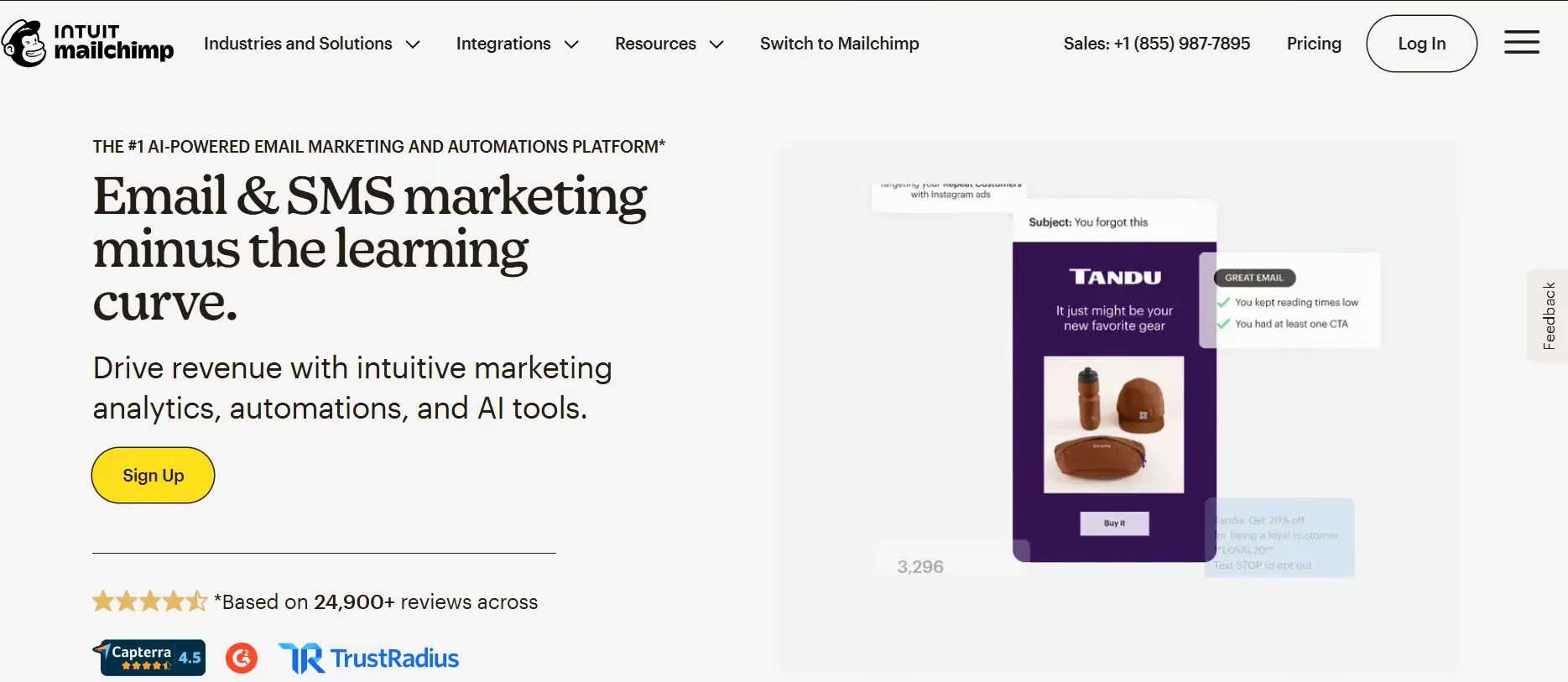
Using Mailchimp and Google Forms together is a practical setup for smaller reunion teams with limited budgets. This combination makes for a nifty set up when the reunion is simple enough that teams mainly need RSVP collection, reminder emails, and attendee exports. Mailchimp is free for up to 250 contacts; paid plans start at $13/month and scale based on your chosen features.
Reunions under the five-year milestone and professional networking events for recent graduates have a different priority: career connection and networking over nostalgia. Attendees want a professional directory, session selection (panels, workshops, speaker talks), and a way to connect with people in their industry after the event.
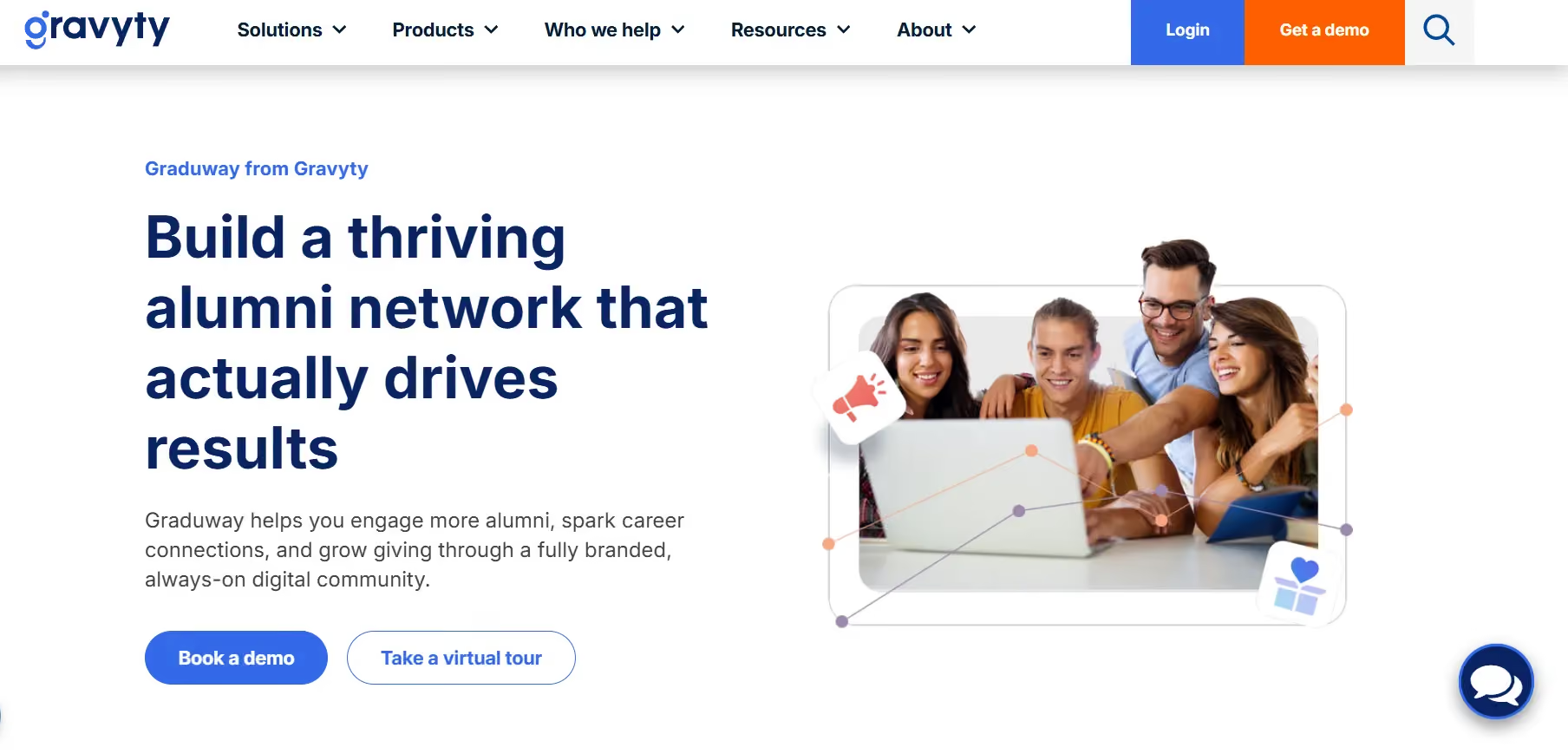
Graduway is designed specifically for career-focused alumni engagement. Its tools are geared toward helping alumni build meaningful professional connections through mentorship programs, networking communities, alumni directories, and ongoing career engagement initiatives. The platform offers custom enterprise pricing.
Almabase is particularly useful when institutions want professional reunions to feed into broader alumni engagement and advancement efforts. Teams can segment alumni by industry or graduation year, manage multiple networking sessions, track attendee engagement, and continue communication after the event through the same platform. Custom pricing.
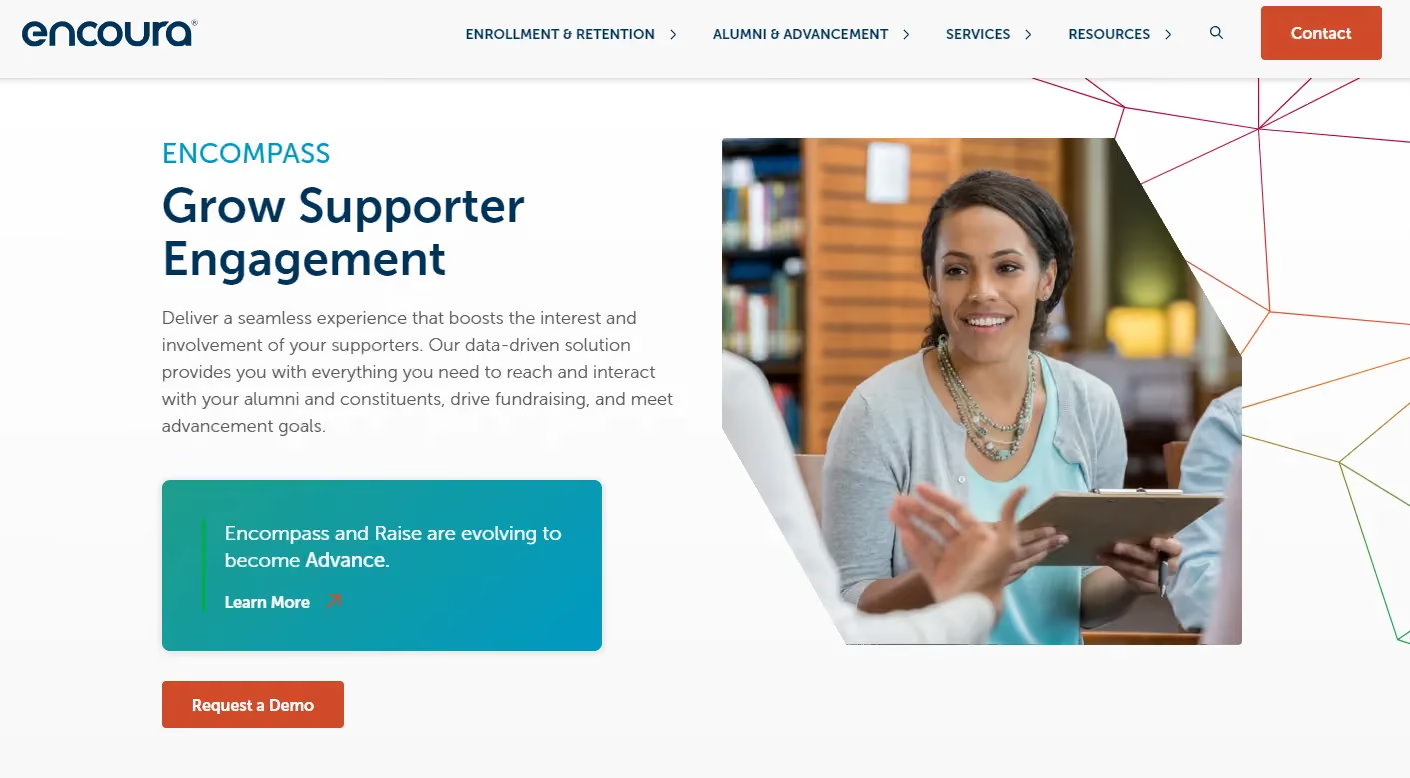
Built for institutional database workflows, Encompass (formerly iModules) is a great fit for professional reunions with multiple panels, workshops, or speaker tracks. Attendees can register for individual sessions, while its built-in capacity controls help manage high-demand events more smoothly. It also automatically logs attendance and engagement data back into advancement records. Pricing for the platform depends on the broader institutional enterprise license.
Not every alumnus can fly back to campus. You need virtual and/or hybrid attendance registration separate from in-person, live streaming or integration with a streaming tool, the ability to capture virtual check-ins for your CRM, and post-event recordings so remote alumni can watch sessions they missed.
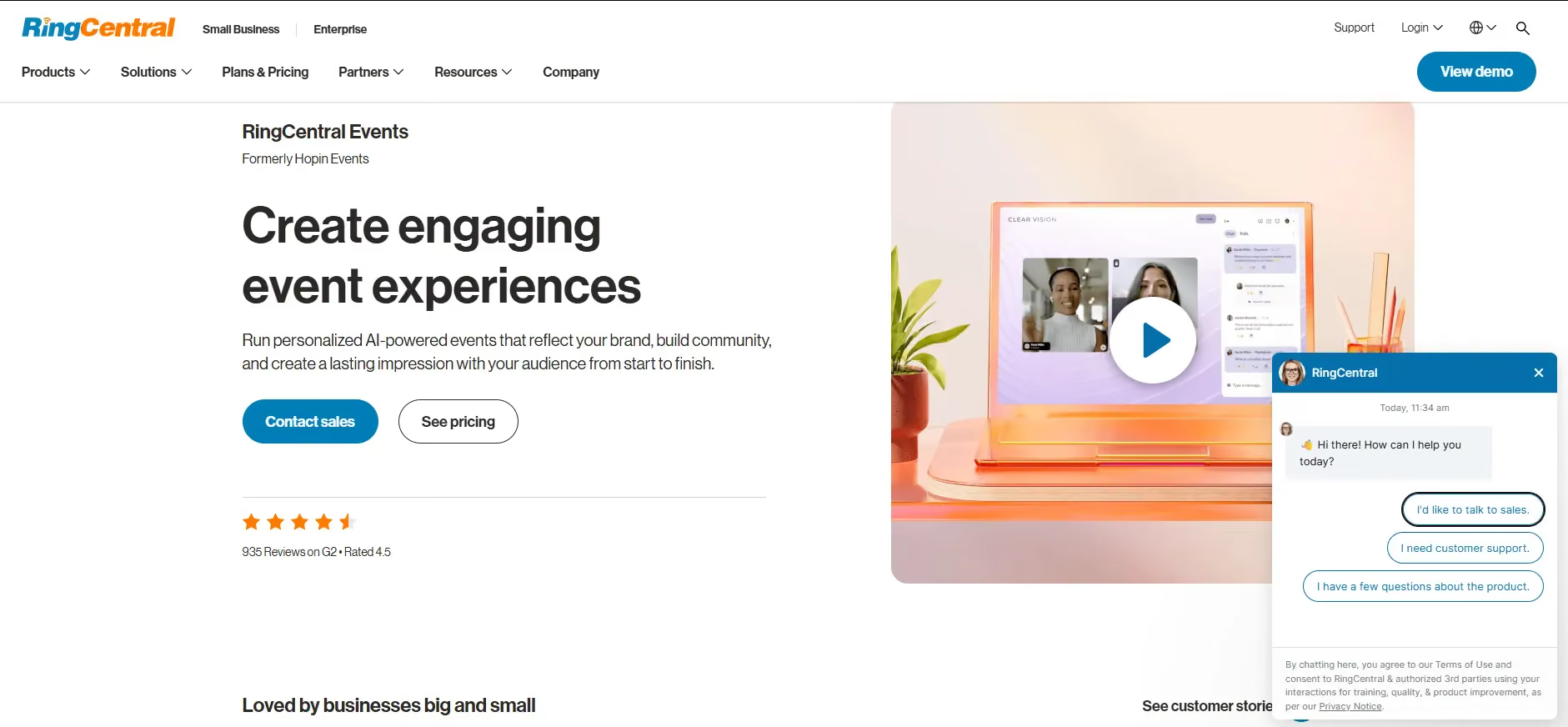
Hopin is best suited for large hybrid reunion experiences with multiple simultaneous sessions and networking layers. Features like virtual expo halls, breakout spaces, and structured networking make it work more like a digital conference than a webinar being held with minimal interaction. Pricing starts at $99/month per organizer.
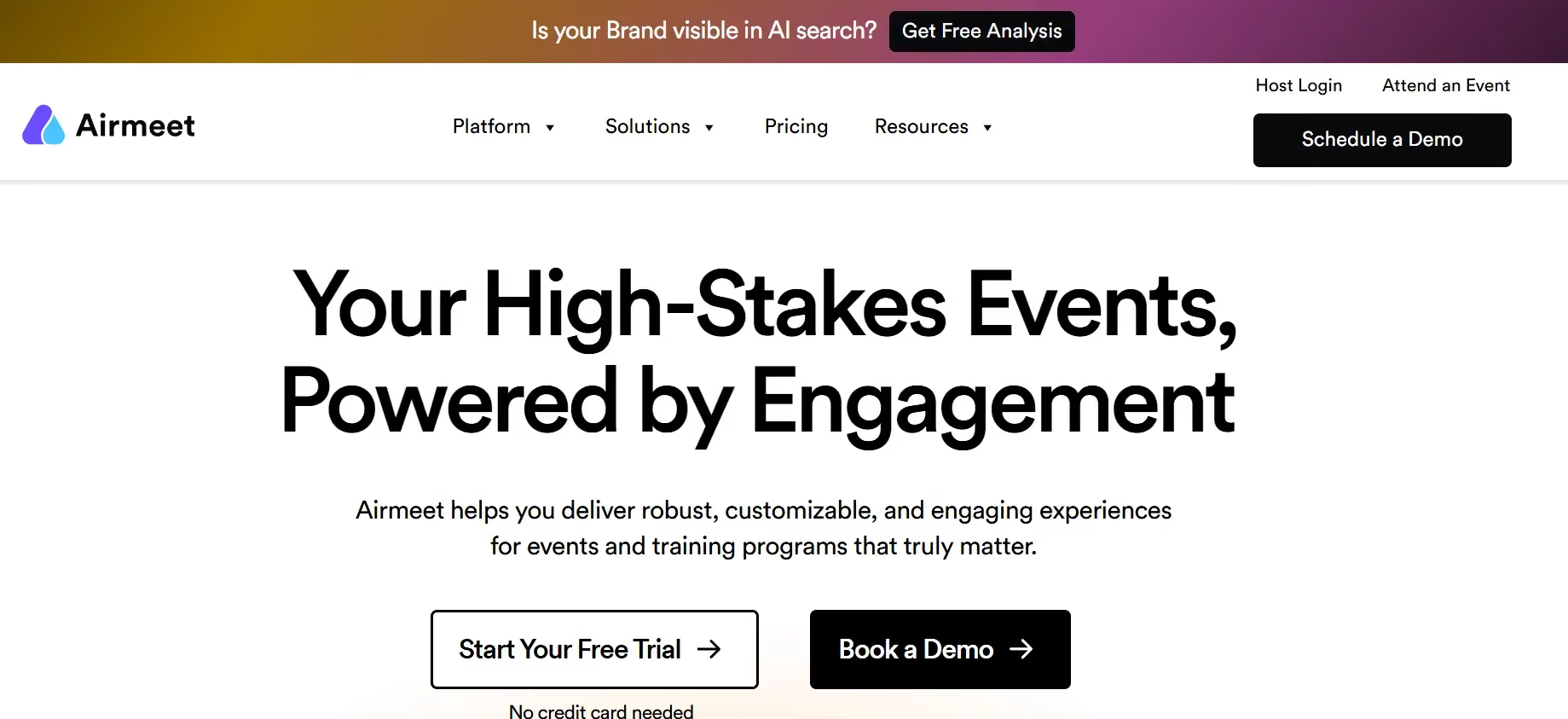
Airmeet is a good option if you have an interaction-heavy virtual reunion in mind. Social lounges and networking tables create smaller conversational spaces, which helps remote attendees participate more actively instead of simply watching a stream. Entry tiers start around $167/month.
As reunions have evolved over the years, so too have the platforms that they are hosted on. However, there are always new as well as persistent issues for which you will want the right features to fit your needs. Here are a few features worth looking into:
Especially when the reunion is a large one, registrations, check-ins, and RSVP management is often a big headache both for staff and attendees if not done well. When platforms aren’t built for that complexity, your staff end up having to compensate with manual work: tracking waitlists in spreadsheets, reconciling duplicate records before CRM uploads, or maintaining separate documents just to manage attendee data accurately.
A strong reunion platform keeps all of your ticketing, payments, and gifts connected in a single system, handling pricing, refunds, add-ons, as well as reporting together so staff aren’t left reconciling records after the event ends.
Reunion communication begins long before the event itself. A reunion platform should be able to keep communication connected to registration data, allowing updates and messaging to adjust automatically based on schedules, roles, and attendee preferences.
Mobile check-in reduces friction by allowing volunteers to scan QR codes, process attendees quickly, and log attendance automatically in real time.
A reunion platform becomes even more relevant for large, multi-day reunions because it keeps attendance connected directly to attendee records from the start, making it easier to understand who attended, which sessions saw engagement, and where follow-up should happen next.
Reunions offer institutions a rare opportunity to understand alumni behavior in real time. A strong reunion platform integrates cleanly with systems like Raiser's Edge NXT, Salesforce, or HubSpot so reunion engagement becomes part of the institution’s larger alumni record instead of remaining isolated event data.
Don’t start by comparing feature lists side by side. The decision usually becomes clearer once the event objectives and operational constraints are visible. Think about what the reunion is trying to achieve, who is running it, and how much of the work needs to connect back into long-term alumni data.
In practice, the “right” platform is the one that reduces the most friction in your specific setup, rather than the one with the most capabilities on paper.
Reunions that are focused on increasing attendance depend heavily on segmentation and communication. Getting the right message to the right cohort at the right time has more impact than any individual feature in the registration flow.
For teams focused on reducing administrative load, the issue is not necessarily the event itself, but the amount of manual reconciliation required afterward. If reunion data doesn’t flow back into the CRM, the operational work doesn’t disappear but moves to a later stage in the process.
Allow your team size and structure to shape platform choice! Smaller alumni teams need systems that can be set up quickly and managed without dedicated technical support. In those environments, simplicity and speed matter more than deep configuration options, because the same person managing the reunion is often also handling communications, donor outreach, and reporting.
Larger advancement teams operate under a different set of constraints. They have larger targets tied to advancement goals which require deeper CRM integration, more structured data flows, and systems that can support multiple stakeholders working in parallel.
Data requirements are one of the main deciding factors. Some institutions need full CRM synchronization, where registrations, attendance, and gift activity flow automatically into systems like Raiser's Edge NXT.
Other teams operate with simpler needs: clean registration exports, basic attendance tracking, and manual uploads into existing systems. In those cases, lighter platforms can be perfectly sufficient without introducing unnecessary complexity.
Confusing registration flows, unclear session structures, or poorly timed communication show up quickly in abandonment rates. In case alumni have not interacted with institutional systems in years, clarity and simplicity in the registration process will go a long way.
The same applies at check-in: a smooth entry experience sets a very different tone compared to visible queues or manual lookups at the door.
What happens afterward is just as likely to determine whether the event contributes to long-term engagement or remains an isolated activity in the calendar. Attendance data, donor participation, volunteer sign-ups, and communication history all become more valuable when they can be carried forward into future outreach.
In practice, the most useful systems make post-event work feel like a continuation of the same workflow. When reunion data feeds cleanly into CRM records and follow-up communications, each event builds on the last.
Yes, particularly for institutions on Raiser's Edge NXT. Almabase covers registration, ticketing, segmented email, mobile check-in, peer-to-peer fundraising, and CRM sync in one system. The bi-directional RE NXT integration means reunion attendance flows into constituent records automatically. Request a demo to see how the event and CRM workflows connect.
They can handle basic ticketing. They can't segment alumni by class year, sync attendance to an advancement CRM, or connect the event to a giving campaign. For a small, informal reunion without advancement goals, a generic platform works. Once class-year data, giving campaigns, or donor stewardship are involved, purpose-built tools are worth it.
Mostly in how success gets measured. Institutional reunions typically include a fundraising component tracked against engagement and giving metrics in a CRM. Nonprofit reunions center on volunteer engagement and cause-based giving. The platform features that matter shift accordingly.
Not for simple events. A Google Form and Venmo can get 40 people to a dinner. The complexity scales when you're managing class-year segmentation, multi-day scheduling, tiered pricing, CRM data requirements, and post-event reporting. At that scale, doing it manually costs more in staff hours than the platform does.
Choosing the right reunion platform comes down to the goals of the event and the challenges your team is trying to solve.
For smaller reunions with simple registration and communication needs, lightweight tools like WildApricot or Eventbrite are quite enough. They work well for straightforward ticketing, RSVPs, community events, and recurring alumni gatherings without adding unnecessary complexity.
As reunions become more activity-driven or networking-focused, platforms like Almabase, Whova, and Graduway offer stronger support for multi-day programming, attendee engagement, and professional networking experiences.
For advancement teams running milestone reunions with a fundraising component, Almabase is one of the strongest options because registration, communication, check-ins, reunion giving, segmentation, and CRM sync all work together in one system. Instead of becoming isolated event data, reunion participation becomes part of the long-term alumni engagement record.
If you want to see how Almabase can power your next reunion, feel free to request a personalized demo, or if you want a self-guided look, head over to our product tour!
Subscribe
See how modern advancement teams bring alumni engagement and fundraising together.
Plan faster. Execute better
Explore free templates designed for alumni and fundraising teams.
.png)

.avif)
Anwesha Kiran
Reunions today look very different from what they did a decade ago. Alumni want gatherings that feel personal, easy to attend, and worth the trip. In this blog, you’ll find a collection of high school reunion ideas built around connection, nostalgia, and community, along with examples that show how different classes brought their reunions to life.
A class reunion is a gathering of alumni who graduated in or about the same year, coming together to reconnect and celebrate the journey since high school. These events typically happen at major milestone years: 10, 20, 25, or 50 years after graduation, and offer a chance to catch up with old friends, meet families, revisit campus, and reflect on how much life has changed.
But strip away the formal definition, and a reunion is supposed to answer one question: "What happened to everyone?". Schools and alumni groups often use reunions to strengthen community ties, foster long-term engagement, and bring different generations of alumni back into the school’s story. Whether casual or formal, planned by volunteers or supported by the school, a class reunion creates space for shared memories and new connections.
A 10-year reunion usually has a very different energy from the later milestones. Everyone is still early in their careers, trying new cities, building friendships and families, and figuring out who they want to be as adults. The 10-year reunion, therefore, tends to be more informal than the later milestone years. Because of that, the most successful 10-year reunions tend to keep things easy, flexible, and social rather than overly formal.
A relaxed, low-pressure format works extremely well at the 10-year mark. Most classmates are busy with early careers, moves, and young families, so an easygoing gathering removes the anxiety of “performing” adulthood. A simple venue, approachable food, and a few nostalgic touchpoints are often enough to make people feel comfortable walking through the door.

A great example of this comes from Lawrence County High School, where the Classes of 2010 and 2011 teamed up for a joint reunion. They chose a local restaurant, set up a memory table with old photos, and kept the night centered on conversation rather than programming. Light activities like cornhole and karaoke added just enough structure without taking over the evening, bringing just the perfect balance for a milestone that’s more about catching up than ceremony.
This kind of warm, low-pressure planning is perfect for a 10-year reunion, making it easy for people to show up, relax, and reconnect.
A split-format reunion works really well for 10-year classes that want both familiarity and a night out. The daytime portion gives people a chance to revisit old hallways, see former teachers, and ease into the event. The evening portion creates a more relaxed, social space where classmates can unwind without the formality of being on campus.

Stuyvesant’s Class of 2013 used this structure to great effect. Their alumni association handled ticketing, reminders, and communication, which kept things organized from the start. The daytime event included check-in at the school, short welcome remarks and student-led tours. Later, classmates moved to a private downtown venue for a laid-back evening with hors d’oeuvres, a cash bar, and space to catch up at their own pace. Small additions like a photobooth and a “class cube” tour made the experience feel personal without being overwhelming.
Many 10-year groups prefer something low-key and social. A local brewery or taproom sets the right tone: no dress code, no long program, just conversations. Add a simple “Memory Wall” with photocopied yearbook pictures, candid shots from senior year, or even old school newsletters. It immediately sparks fun conversations (and a lot of “please don’t post this anywhere” laughter).
This format is inexpensive, easy to organize, and extremely popular with smaller classes.
Tips:
Instead of printing anything, many classes now build a simple digital yearbook before the reunion. Each person submits a quick update, could be a new city, job, pets, partners, fun facts. Display it as a looping slideshow at the venue (and don’t forget to share a link with those who can’t attend).
This setup breaks the ice instantly, so people walk in already knowing a bit about each other, skipping the repetitive “So, what have you been up to?” conversations.
Why it works for 10-year reunions: Everyone’s still figuring life out, so short, light-hearted updates feel natural.
Tips:
Optional: create a “Most surprising update!” or “Coolest pet names” section for fun
A guided campus tour works surprisingly well at this milestone. Buildings have changed, teachers have retired, and the nostalgia hits quickly. If your school has a strong alumni network, pair the tour with a short, informal panel featuring 2-3 classmates speaking honestly about their lives after graduation: career changes, unexpected turns, or even things that didn’t go as planned.
It keeps the reunion grounded and real, and it gives everyone something to talk about afterward.
Tips:
Optional: record a few “message to future classes” clips for a digital archive that other cohorts can access.
Two decades after graduation is a powerful milestone: many alumni are settled in careers, maybe raising families, or simply living lives far from their hometowns. A 20-year reunion has the potential to be a meaningful chance to reconnect socially and reflect on how far everyone’s come.
A 20-year reunion doesn’t need a packed schedule to feel meaningful. At this stage, most classmates value time to sit, talk, and reconnect without feeling rushed. A casual evening built around conversation often creates the warmest, most memorable atmosphere.

The Class of 1995 from New Smyrna Beach High School used this approach beautifully. They chose a relaxed local venue, skipped the formal agenda, and let the night unfold naturally. A beloved former teacher joined the gathering, which instantly sparked stories and brought back shared memories. Even classmates who didn’t drink felt comfortable staying the whole evening because the focus was on small-group conversations, gentle reconnection, and catching up after two decades apart. You can read the alum’s full recap here.
Tips:
A single dinner works for weddings, not reunions. For a 20-year milestone, people are juggling toddlers, teens, time zones, and travel schedules, so a mini-weekend works better than a one-night sprint. Give your classmates room to ease in, reconnect at their own pace, and choose the vibe that fits their life now.
It acknowledges that 20 years after graduating high school, some people want nostalgia, some want a party, some need to put their kid down for a nap before they can do anything at all.
Tips:
Instead of centering the night around drinks or a DJ, build it around the one thing everyone truly came for: shared memories. A simple memory wall: yearbook photos, team shots, prom pictures (those cursed early-2000s hairstyles), becomes the gravity point of the evening. The second someone says, “Oh my god, look at us!”, the storytelling starts on its own.
Scatter a few small tables with gentle conversation prompts, such as, “most unexpected path since graduation,” “an inside joke you still remember,” “a teacher you’ll never forget.”, and let the magic unfold. People will drift organically: from the photos into real conversation.
Tips:
If your class needs a nudge to break out of small talk mode, add something lively: a school-history trivia round (“Which teacher had the catchphrase __________?”), a quick softball or volleyball match, or a throwback theme like “2005 Night” where people come dressed in peak-era fashion.
A little structure boosts the energy without turning the night into a boot camp. Trivia helps mix friend groups, while sports let the athletic alumni relive their glory days. A themed micro-party gives everyone something to laugh about (“Why did we all own neon belts?”).
Tips:
The 25-year milestone is a moment when many alumni are reflecting on where life has taken them. Careers have settled, families may have grown, and priorities may have shifted. A strong 25-year reunion honors this stage by creating experiences that mix nostalgia with celebration.
At 25 years out, everyone’s life looks wildly different: some are switching fields, some are launching businesses, and others are wondering what comes next. A short, friendly speed-networking round turns those big life shifts into points of connection rather than awkward small talk. It feels more like “adult show-and-tell” than corporate networking, which is exactly why it works.
Tips:
It doesn’t need to feel formal. Think of it as adult show-and-tell with a purpose. Alumni often reconnect more deeply when they hear what life looks like for people in similar phases.
Instead of hoping meaningful conversations “just happen,” create a dedicated, cozy corner built for depth. Soft lighting, comfy chairs, and simple prompt cards (“One thing teenage me wouldn’t believe…” / “A moment that shaped me…”) gently nudge people into sharing the real stuff.
At 25 years, these stories come easily. People have lived entire lives since high school, and giving them a safe, inviting space unlocks moments they’ll remember long after the reunion ends.
Tips:
Instead of a basic campus tour, elevate the experience by adding “memory stations” in key locations. For example:
A 25-year reunion is the perfect time for a lighthearted award ceremony. Keep categories warm and inclusive:
Tips:
Invite classmates to write a short letter to their future selves (or to the whole class as a group activity), to be opened at the 50-year reunion. This becomes surprisingly emotional: people write their hopes, predictions, gratitude, and sometimes things they wish they’d said back then.
A 25-year reunion is the perfect moment for it - far enough from high school to reflect deeply, close enough to still imagine the next 25 years.
Tips:
A memory-driven setup works incredibly well at a 50-year reunion. Classmates often arrive hoping to reconnect with their younger selves just as much as with one another, and a thoughtful display of old photos, yearbooks, and school keepsakes makes that connection instant. These items do the heavy lifting by sparking stories, jogging long-forgotten details, and creating natural conversation starters without any formal programming.

The Class of 1975 at Sioux Valley High School leaned into this beautifully. Their reunion featured worn yearbooks, event photos, sports snapshots, and even a small mascot pin created as a commemorative keepsake. People lingered around the tables, laughing at hairstyles, pointing out familiar faces, and retelling moments they hadn’t thought about in decades. It turned the room into a shared time capsule - exactly the kind of setup that brings people together effortlessly.
Tips:
For a 50-year class, stories are the real entertainment. Create a small stage corner: soft lights, two chairs on the stage where classmates can share short, true stories: the prank that nearly got the whole class suspended, the teacher who changed someone’s life, the moment after graduation that sent everything in a new direction.
A gentle moderator keeps things warm and encouraging so even the quieter voices feel comfortable stepping up.
Tips:
Instead of stiff reunion photos, set up a portrait corner where each classmate gets a simple, well-lit photo taken while holding a small whiteboard with a personal message. Prompts can be reflective or funny:
“One lesson I learned in 50 years…”
“My proudest moment…”
“One thing I’d tell my 17-year-old self…”
The result is a collection that’s part photo album, part time capsule.
Tips:
Fifty years out, people are proud to introduce their grown children and even grandchildren to the people who knew them as teenagers. Instead of inviting families to the entire event, open just one hour before the main dinner as a “family open house.”
Kids and grandkids can wander through a photo display, watch a short class slideshow, or flip through yearbooks while alumni tell the stories that usually only come out at reunions.
Tips:
Manage all your reunion communications in one place: from personalized email invites to RSVP tracking. Almabase integrates with systems like Raiser’s Edge NXT, ensuring updates sync automatically so nothing falls through the cracks.
Create tiered ticket options (early bird, VIP, dinner-only) and track payments securely without juggling spreadsheets. Almabase handles everything end-to-end, making registration easy for both your team and your alumni.
Segment alumni by class year, location, or past attendance to send reminders that feel personal rather than generic. With targeted messaging, you can reach the right people at the right time.
Build momentum with pre-event conversations, photo sharing, and event updates — all through your branded alumni community powered by Almabase. Keep the connection alive even after the reunion is over.
Use Almabase’s reporting dashboard to measure attendance, engagement, and post-event giving. Understand what resonated most with alumni and use those insights to plan even better reunions in the future.
Turn these reunion ideas into a real, seamlessly run event. Almabase gives you the tools to bring it all together with ease. Request a personalized demo now and see how you can level up your next reunion!

High School Reunion Ideas for 2026
Lorem ipsum dolor sit amet, consectetur adipiscing elit. Suspendisse varius enim in eros elementum tristique. Duis cursus, mi quis viverra ornare, eros dolor interdum nulla, ut commodo diam libero vitae erat. Aenean faucibus nibh et justo cursus id rutrum lorem imperdiet. Nunc ut sem vitae risus tristique posuere.
Anwesha Kiran
December 9, 2025
12 minutes
Alumni reunions are still a core part of how institutions stay connected with their communities. They’re familiar and often well-intentioned. But over time, the format can start to feel repetitive. Especially when the programme doesn’t really change: a cocktail hour, a speech from the Dean, or some time to catch up with people you’ve mostly lost touch with, alumni interest starts to taper off.
This could be because, at some point, alumni begin to weigh the effort of booking flights and stays, or taking time off of work or family against the payoff. Reunions are being compared against everything else people could be doing with their time. And in that comparison, a lot of programming starts to feel dated, even to a very seemingly engaged alumni community.
To help you keep up with the evolving expectations of your alumni, we’ve put together a range of alumni reunion activity ideas across formats. The idea is to give you options you can actually use, backed with real life examples and tips to help you make them work.
Alumni look forward to reunions because they miss each other, and the institution gives them a chance to relive a part of their student life with friends. That’s worth keeping in mind when you’re designing the programme.
This consideration also influences what the activities need to do. They should create space for those old friends to connect with each other in meaningful ways. The better ones bring together alumni who wouldn’t otherwise meet, and over time, build something that’s harder to measure: a willingness to give back. This may not always be financially or right away. It could look like year-on-year re-engagement, or just giving time, mentorship, introductions. Financial giving tends to follow when that relationship is in place.
It’s also worth recognizing that different activities serve different goals, and treating them as interchangeable could backfire. One thing that’ll help is clarity on the outcomes expected from these activities. Once you’re clear on what you want the reunion to do, the choice of activities becomes a lot more straightforward.
In-person events are usually what people picture when they think of reunions. They’re also where the strongest connections happen. To embrace the potential for these connections, think of how interactive you can make the experience for attendees.
A campus scavenger hunt gets alumni moving around. Routing participants past old lecture halls, favorite spots, and campus landmarks brings back memories and experiences from years ago. It gives organizers a chance to nudge people beyond their old cohort by combining folks across different graduating years within teams.
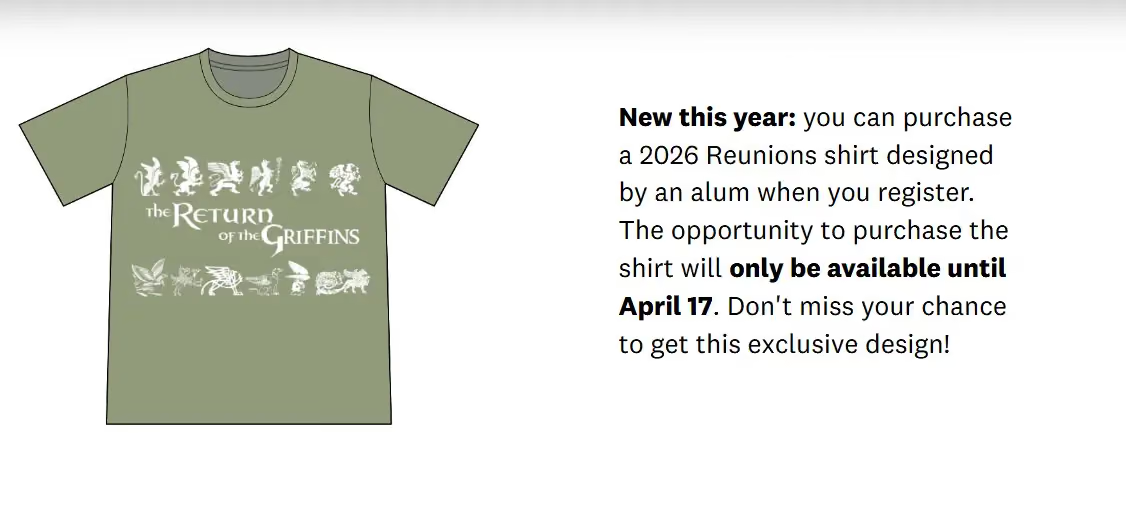
Reed College runs ‘Foster's Quest’, a narrative-driven hunt where alumni follow 11 clues to 11 locations across campus, collecting letters that unscramble into a four-word phrase. The first 250 to finish get a special keepsake. It's built around the college's own history and folklore, which is what makes it stick.
Tips:
Trivia nights are a classic because they’re low-barrier and customizable, but only worthwhile when the content is right. Generic questions miss the point of an alumni reunion. Instead, build rounds around the institution's history, notable alumni, campus lore, and the specific years of whoever's in the room. Done well, it can feel like a shared trip down memory lane.
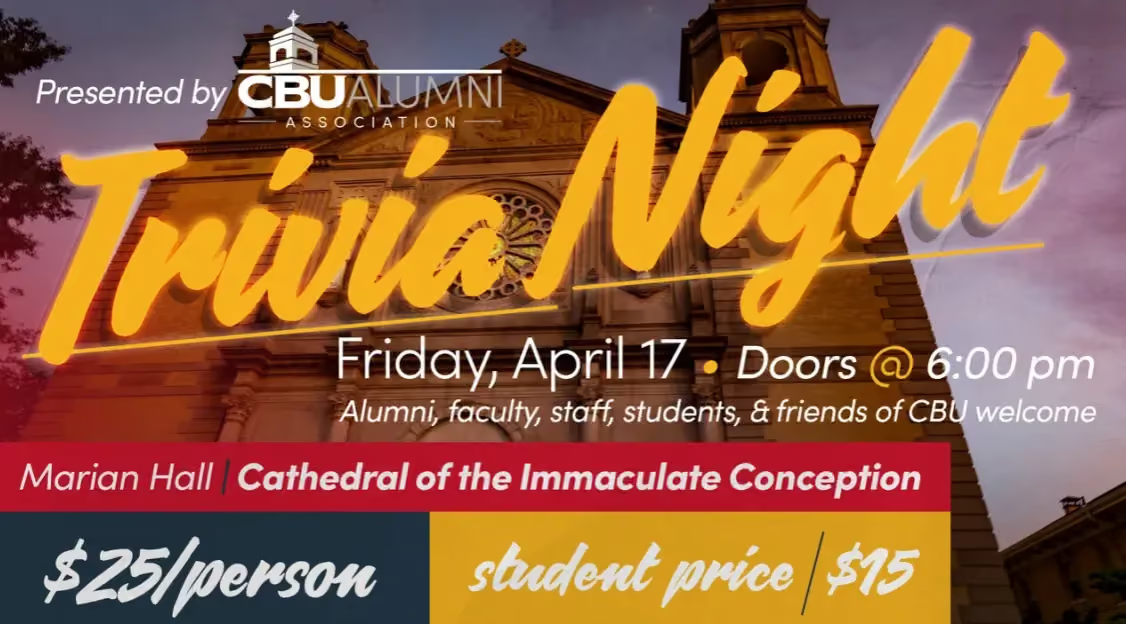
Christian Brothers University runs an annual Trivia Night organised by its National Alumni Board where graduates form "legacy teams" of up to eight people, bring their own food and drinks, and are hosted by alumni rather than staff. The effect is closer to a house party than a formal event and that's what makes people show up with eagerness.
Tips:
Give your alumni a reason to come back beyond just seeing their old classmates with a well-run panel. Pair it with structured networking opportunities like faculty-led roundtables, speed-mentoring rotations, or breakout groups, and it can function as a career development event too. That makes it particularly valuable for younger alumni still building their networks.

Stanford's Reunion Homecoming has four days of "Classes Without Quizzes", which are faculty-led sessions on current research, running alongside class panels and networking opportunities. The programming is also flexible with Open Houses that do not have a set agenda. This allows alumni to socialise without the added pressure of adhering to a formal schedule.
Tips:
Some of the most memorable reunion moments happen when people have something to do together. Building a hands-on activity into your programme gives alumni a chance to collaborate and create, together.
Built into Saint Louis University's Billiken Days (the university’s official alumni reunion) is a table decoration contest where alumni and families build themed displays for a cash prize. Past themes have ranged from "Candyland" to "SLU History." Teams end up debating which campus legend to include or which era deserves the spotlight, and those conversations often turn into some of the most fun parts of the event.
The same idea can be adapted in different ways: a collaborative mural, a trivia build-up round, a class scrapbook station, or even a cook-off by graduating cohorts.
Tips:
Older alumni often come with children or grandchildren, so planning a family-friendly campus day removes a real barrier to attendance. Alumni gladly welcome the opportunity to bring their loved ones along. It gives them a chance to share stories, show off their old hangout spots, and relive their campus days through a more personal, “storied” tour of the place they once called home.
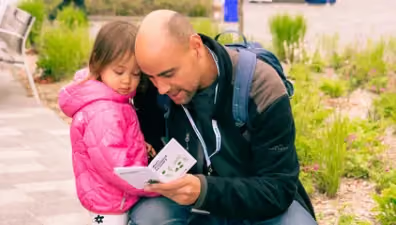
The University of Toronto's Alumni Reunion runs a Kids' Passport programme alongside Stress-Free Degree lectures and an outdoor Alumni Fest. The Passport sends children around campus collecting stamps at activity stations run by university departments. This means alumni parents get to say "We're going to university!" rather than "You’re coming to my thing."
Tips:
Not everyone is going to make it back to campus, no matter how strong the programme is. Hybrid formats help you include those alumni without having to run a separate event altogether. Give yourself the best shot at engaging them too by extending your reunion online while still keeping the in-person experience intact.
Hybrid panels let you run a full in-person event while including alumni who can't be there physically. A good hybrid panel integrates the remote experience almost seamlessly into the event. If virtual attendees are just watching a stream with no way to participate, they’ll likely switch off quickly.

Cornell Law School's Reunion Weekend runs a mix of in-person and virtual programming, with sessions explicitly flagged for virtual access on the published schedule so remote alumni can plan ahead. Cornell also offers a free virtual registration package open to all alumni, with featured events livestreamed. The result is that remote participation feels intentional, not like an afterthought.
Tips:
For alumni who follow their institution's teams, a live-streamed event with accompanying virtual watch parties is one of the more straightforward hybrid formats to run. The content already exists. The alumni relations job is packaging it: organizing viewing groups, adding commentary, and building in social moments around the broadcast.

UCLA's Beat 'SC Rally, one of the largest annual on-campus spirit events held ahead of the UCLA-USC football game, was livestreamed (via YouTube) for alumni who couldn’t attend in person. The live chat quickly turned into its own space, with alumni cheering, reacting, and arguing over which dance team was better. It’s not the same as being there, but it comes pretty close. It works because it builds on something that already has meaning within the institution and makes it accessible to a wider audience.
Tips:
A hybrid version of a campus tour lets you run a physical walk through campus while bringing in remote alumni through a livestream.
What makes this work is how it’s structured. Instead of a passive walkthrough, think of it as a shared experience. A host can lead the tour on campus while a second person moderates questions and comments coming in from virtual attendees. Remote alumni can ask to revisit specific spots, share their own memories, or react in real time as the tour moves through familiar spaces.
It’s also worth thinking about pacing. Pausing at key locations, building in short interaction moments, and keeping the group small enough to manage helps both audiences stay engaged.
Tips:
Virtual reunions need more deliberate design than in-person ones. There's no ambient socialising, no hallway conversations, no accidental run-ins, so every connection point has to be built in. That means structured breakout rooms by cohort or industry, actual icebreaker activities, and transitions that keep energy up.
A good virtual reunion treats the format on its own terms, like designing events around how people show up and interact virtually.
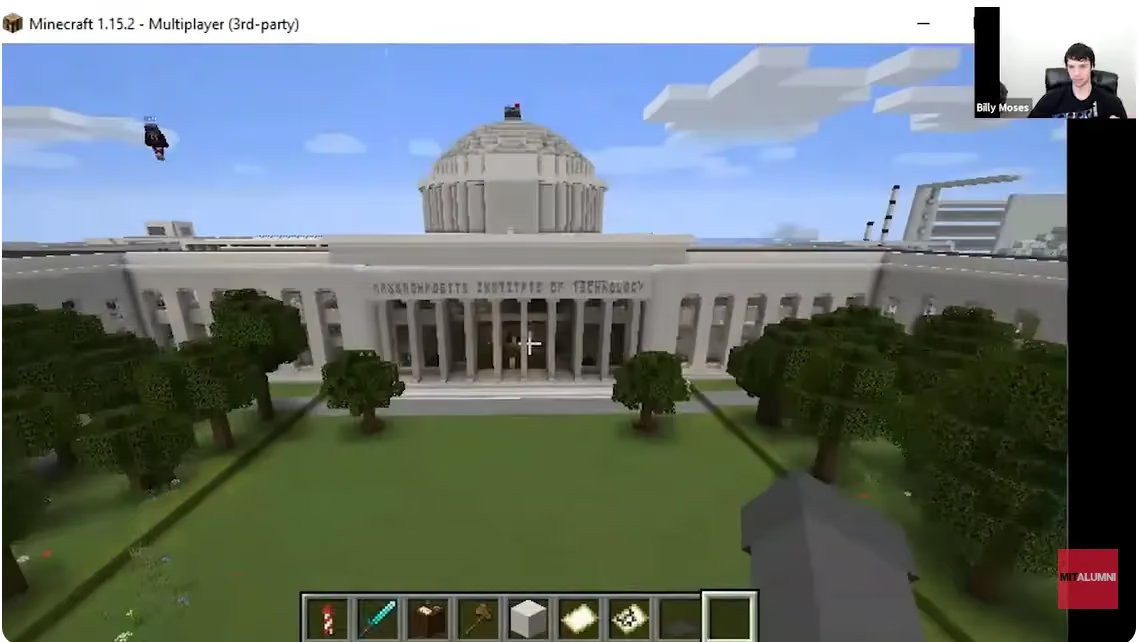
During MIT's 2020 Virtual Tech Reunions, the Alumni Association the Alumni Association built a network of breakout rooms for affinity and interest group meetups, ran a student-built Minecraft campus tour, and hosted a live Alumni Quiz Bowl. The experience felt intentionally designed for a virtual setting, rather than a scaled-down version of an in-person event.
Tips:
A 45-60 minute interview-style conversation with a well-known alumnus can draw strong attendance even from people who rarely engage with reunion programming. The star of the event is obviously the person here.

Penn Alumni's regional clubs run virtual happy hours and board meetings via Zoom that consistently pull in alumni who can’t attend in-person events (including people in the same city who simply hadn't engaged before). A virtual fireside chat with a compelling speaker operates on the same logic: the barrier to attend is low enough that people who would never book a flight will show up.
This format really took off during COVID, when institutions had to find new ways to stay connected. What carries over is the effectiveness.
Tips:
Escape rooms translate well to virtual because they're social, collaborative, time-bound, and require enough active participation that people can't quietly disengage. They work best with groups who already know each other reasonably well.
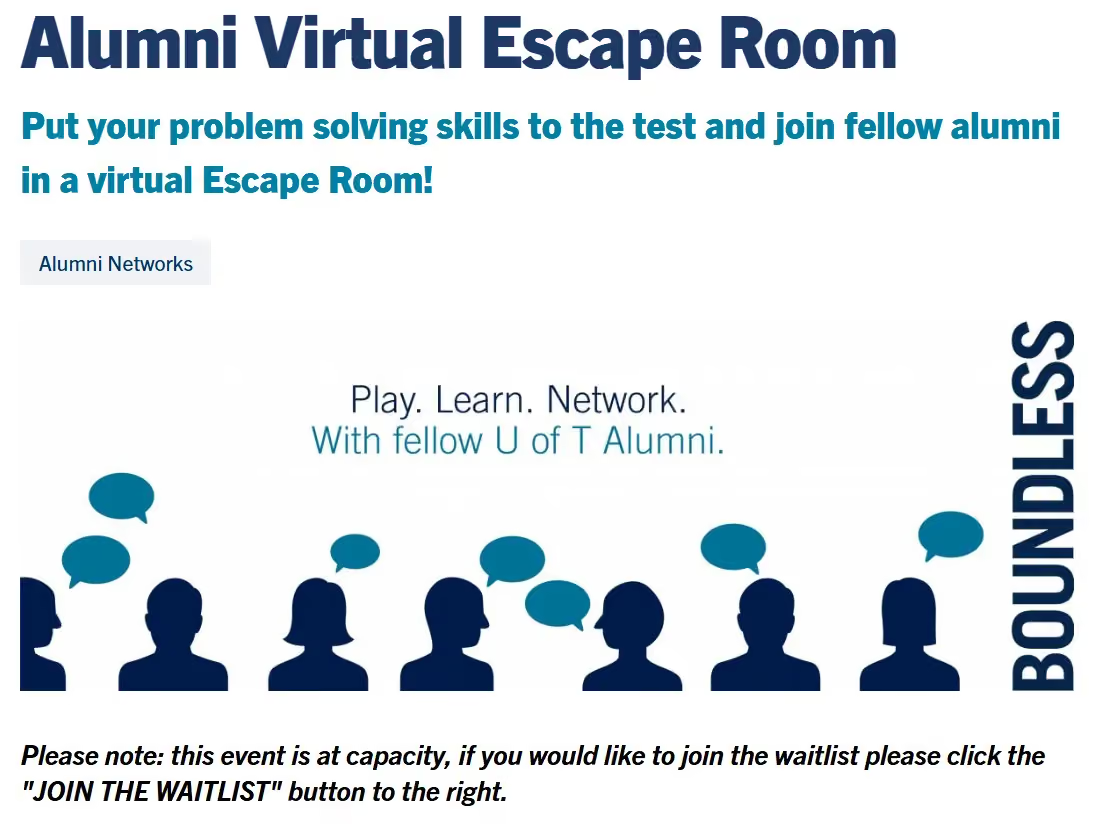
The University of Toronto runs an Alumni Virtual Escape Room where alumni are teamed up with fellow graduates to work through riddles and puzzles via a third-party app over Zoom, with the fastest team to escape winning. The puzzle gives people a reason to talk, collaborate, and interact with others they might not otherwise meet. It’s a win-win for everyone involved.
Tips:
A crowdsourced digital photo wall is a simple way to get alumni involved. Alumni submit a current photo along with a short update, which can then be showcased during the reunion.
What makes this work is its versatility. It can run as a live stream during the event, (virtual, in-person or hybrid), be displayed between sessions, and even act as a starting point for conversations. People look forward to familiar faces and compare where life has taken everyone. Reconnection is the next step from there. It's a low-lift activity to organize.
You can also pair it with a guided campus tour, with a host or student walking through familiar spaces while alumni engage in the chat. Together, it creates a low-effort but effective way to bring in both nostalgia and interaction.
Tips:
Milestone reunions carry a different weight. Alumni coming to these events are often marking something significant in their own lives aside from the relationship with their alma mater. The programming should reflect that with more curated experiences and a genuine sense that the institution takes the milestone seriously.
A time capsule ceremony can turn a milestone reunion into a ‘must-attend’ milestone reunion. Because it’s tied to a specific moment, whether it’s being sealed or opened, it creates a sense of occasion that typical social events don’t always have.
It also works well as a paired tradition. A class can seal a capsule at one milestone with the understanding that it will be opened at a future reunion. That shared timeline gives alumni a reason to stay connected and come back.
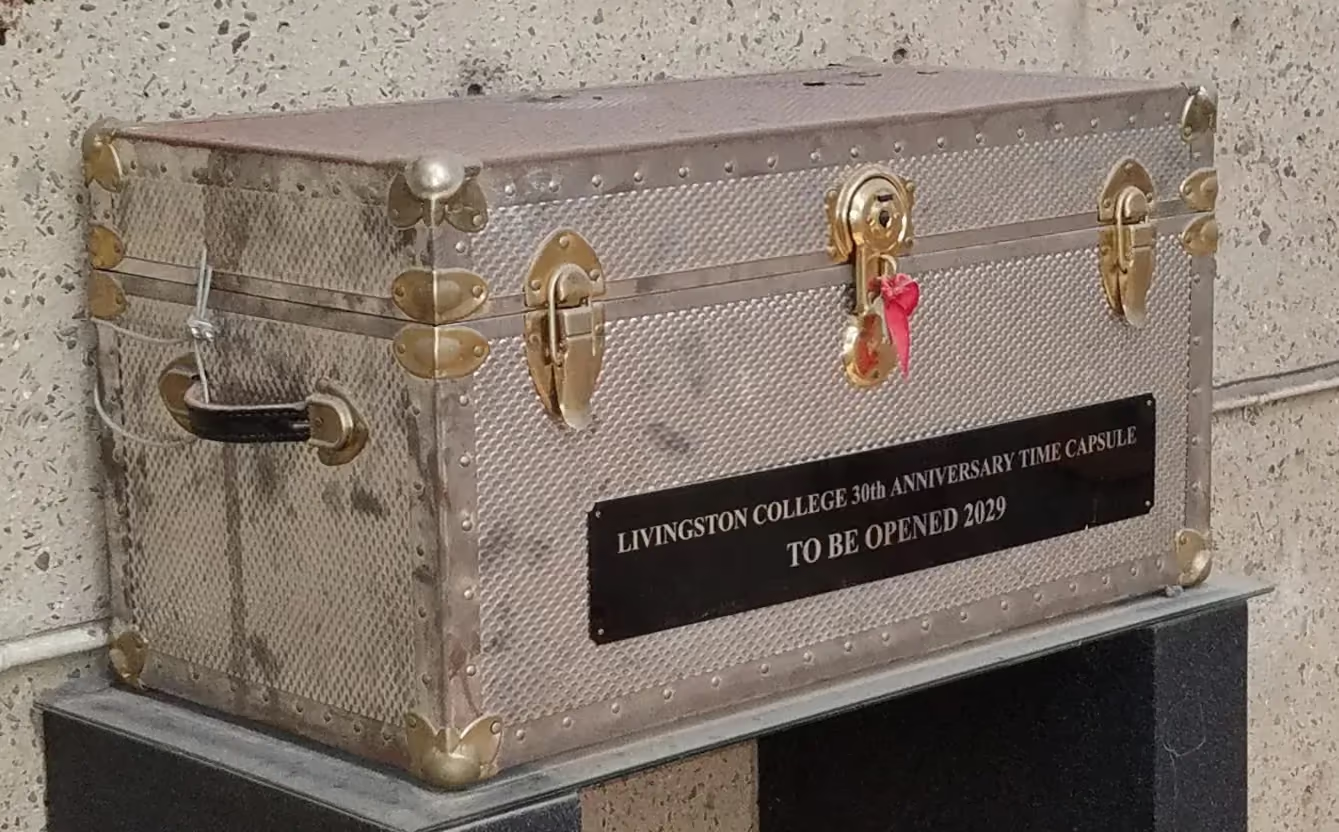
Rutgers University’s Livingston College offers a good example of this. The Class of 1999-2000 sealed a time capsule for the college’s 30th anniversary, with plans to open it in 2029 for the 60th. In the meantime, the capsule remains on campus in Tillett Hall, becoming something alumni can return to and talk about over the years.
Tips:
A “back to the classroom” session isn’t really about sitting through a lecture again. It’s more about seeing what’s changed since alumni were last on campus, and how the academic side of the institution has evolved.
There’s a lot of room to work with, depending on the cohort. For younger groups, it might be an industry-focused session that connects what they studied to where the field is now. For older cohorts, it could be a more informal conversation with a beloved faculty member or even time spent in a new lab or studio. The point is to give alumni something they wouldn’t get otherwise, so the trip feels worthwhile.
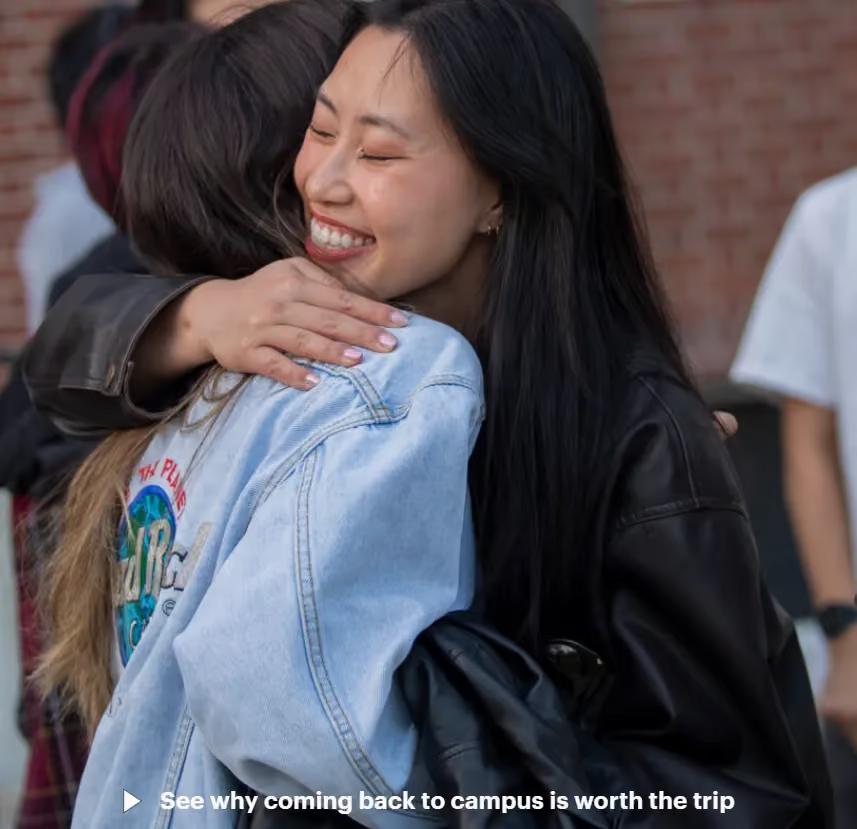
Phillips Exeter Academy builds this into its milestone reunions with “Back to the Classroom” sessions where alumni sit in on faculty-led discussions alongside current students. It’s a simple idea, but it works because it brings people back into a familiar setting while also showing how things have moved on.
Tips:
A milestone ceremony makes the relationship feel intentionally recognised, which is exactly what it should aim for. This would work especially well for older cohorts, where there’s gathered interest in legacy and formal recognition, and more people are expected to show up.

Brock University does this during its Homecoming weekend with commemorative pinning ceremonies. Different milestone classes receive distinct pins, like a silver cameo for the 25-year cohort and a golden badger for the 50-year group. These are usually built into formal receptions, which adds a bit of weight to the moment without overcomplicating it.
The format is easy to adapt. A 10-year reunion could have a “young alumni” marker, while a 40-year group might receive something more archival, like a limited-edition print. What matters more is consistency. Once alumni see this happening for other cohorts, it builds a sense of anticipation for their own milestone.
Tips:
Giving-focused activities work best when they’re part of an event alumni already want to attend. When they feel like a separate track, or the main agenda, engagement drops off. The goal is to make giving feel like a natural extension of the experience, not a transaction.
Peer-to-peer fundraising changes who’s doing the asking. When class groups rally around a shared participation goal, it becomes less about the institution asking for money and more about showing up alongside and for your peers. That shift makes a real difference.

Yale University’s Reunion Giving programme centers campaigns around class volunteers. Participation rate, not total dollars, is the primary metric. This positioning makes the campaign feel more inclusive and gives alumni something to rally around beyond just a number.
Tips:
A class gift gives alumni something to build together. When a cohort contributes toward a shared outcome, whether it’s a scholarship, a space, or a piece of equipment, the giving becomes part of the reunion story and a moment of pride.
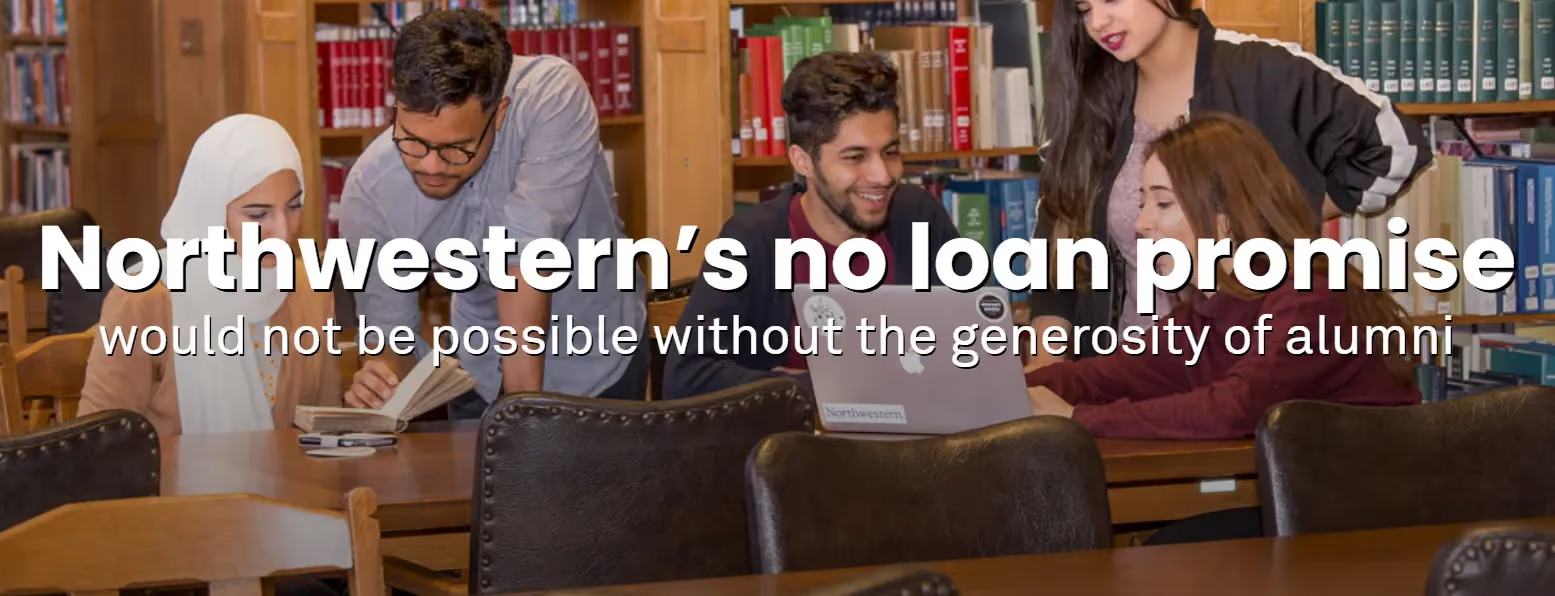
Northwestern University's Reunion Class Scholarship Fund allows each class to build an endowed scholarship in its name. It’s something that continues well beyond the reunion and gives alumni a lasting point of connection.
Tips:
A silent auction can raise funds while also giving people something to engage with during the event. It works best when it runs in the background across the reunion, rather than as a standalone session.
Items tied to the institution do better than generic ones. Experiences like a dinner with leadership, behind-the-scenes campus access, or alumni-donated items with a story behind them usually get more attention.
Tips:
The list above covers a lot of ground and not all of it will fit your institution, your alumni base, or your specific reunion cycle. A few simple filters can help narrow it down.
Start with your goal. If you’re trying to re-engage lapsed alumni, in-person, experiential formats usually work better than virtual ones. If you’re running a giving campaign, build that into the main event itself, intentionally. Activities that feel like an afterthought could get ignored.
Milestone years need a different level of thought. A 25-year reunion, for example, carries more weight than a regular annual gathering, and the programming should reflect that.
And finally, leave some breathing room for organic connections. The best parts of a reunion are rarely scheduled. Conversations happen in the gaps before a panel starts, between sessions, over meals. If everything is tightly packed, you lose that.
Choosing the right activities is the visible part of reunion planning. What’s less visible (and sometimes more challenging) is everything that supports it: registrations, pre-event communication, attendance tracking, post-event follow-up, and any giving tied to the programme.
In most teams, this ends up spread across multiple tools. Registrations in one place, emails in another, attendance tracked manually, and follow-ups going out later than they should, or not at all.
It works, but it’s messy. Data gets fragmented, manual work piles up, and by the time everything is pulled together, the moment has already passed.
Purpose-built alumni platform like Almabase can make a huge difference for both staff and attendees. Instead of managing separate tools and trying to piece things together, everything sits in one place and works as a single system, which changes how the reunion is hosted, how alumni find and interact with the event, and how event data is captured and analyzed.
You have a clear view of who’s registering, who’s attending, and how alumni are engaging, without pulling data from multiple sources. Communication becomes more targeted because it’s based on real-time information. Follow-ups go out on time, while the event is still top of mind. And if giving is part of your reunion, it fits naturally into the same flow.
In practice, that looks like:
For teams running multiple reunions or managing large alumni bases, this kind of setup removes a lot of manual work and makes it easier to act on what’s happening in real time. If your team is spending more time coordinating tools than running the reunion, it might be worth taking a closer look at how Almabase brings it all together.


Alumni Reunion Activity Ideas to Boost Engagement
Lorem ipsum dolor sit amet, consectetur adipiscing elit. Suspendisse varius enim in eros elementum tristique. Duis cursus, mi quis viverra ornare, eros dolor interdum nulla, ut commodo diam libero vitae erat. Aenean faucibus nibh et justo cursus id rutrum lorem imperdiet. Nunc ut sem vitae risus tristique posuere.
Anwesha Kiran
April 15, 2026
12 minutes
A high school reunion allows alumni to relive memories, celebrate growth, and forge or rekindle connections. Yet orchestrating them has required better and better planning over the years. Alumni are more scattered than they used to be, their calendars fuller than ever, and their expectations higher. You can improvise your way through a high school reunion but planning a memorable reunion is no easy task today.
Luckily, there are decades of past experiences and learnings to guide you and in this blog, we’re going to condense all that expertise into actionable strategies that make your event truly worthwhile. Let’s get started:
Your alumni are at the heart of every reunion so it makes sense that your first priority will be who the reunion is for. Every other bit of planning branches out from this core decision. For example,
- a reunion based on a school milestone (say a 20th anniversary) will draw in a larger crowd
- a reunion for a specific batch (2004 batch for example) or a geographic location (like the school’s district) will be smaller and better for deeper connections
- interest groups (say, 2005 state champions team) are great for reuniting like-minded people for a specific cause
Even the relatively smaller reunions today require more than one person to organize successfully. This is where you should look for students, alumni, or staff who might be willing to volunteer. Depending on the scale of your reunion, you may need anywhere from a couple of planners to a whole committee to help in each stage of your planning. Keep in mind that each helping hand can also be an
Themes serve as the emotional backbone of a reunion. We can’t choose your theme for you as this depends entirely on your audience, budget, and the goals you have in mind. However, we can provide you with some types and examples of reunion themes to help generate some ideas:
- based on alumni batch (for example, an 80s dance for multiple batches with a nostalgic theme)
- based on school traditions (say, a sports-themed event with decorations based on team colors and past achievements, accompanied by a friendly game between alumni)
- based on seasonal timing (like a summer bash or a winter formal event)
Financial planning can make the difference between a memorable reunion and a fiscal disaster. Start by itemizing non-negotiable expenses such as venue deposits can catering. These two will take up a large chunk of your budget.
You’ll also want to think about how you want to monetize your event (apart from the typical ticket sales). You can consider Implementing tiered pricing through early bird discounts or premium tickets that include accommodation or commemorative yearbooks. Crowdfunding platforms can be great to help you subsidize costs for financially constrained attendees or farther alumni as well. Finally, always allocate 10–15% for unexpected expenses like overtime fees or weather-related adjustments.
Venue choice profoundly impacts attendance and atmosphere. Hotels offer convenience with built-in accommodations, while outdoor spaces allow for more activities and picnics. When evaluating locations, scrutinize any possible hidden costs. Some venues may charge extra for cleanup, equipment, or security.
As for the time, consider the schedule of your alumni to maximize attendance. Holiday weekends might boost availability but could conflict with their family obligations. You can also consider hybrid options, such as a Friday evening cocktail hour for local professionals and a Saturday brunch to travelers.
Once you have your audience, theme, budget, and other basic details ready, it’s time to set up the main online hub for people to learn about your reunion—your reunion website. This is a crucial step as you will probably be reaching out through online communication and you’ll want all your CTAs to lead back to it.
Depending on your team and the resources available, you might already have a solution like Almabase that can easily set up an event page for you, or you may need to manually create a webpage from scratch. Whatever it is you go with, make sure that all the vital details and registration links are up and working. You’ll also want to keep updating the page with updates, maps, walk routes, and teasers as the reunion gets closer.
Now it’s time to spread the word and attract eyes towards your upcoming reunion! Promote your reunion on relevant school pages, social media platforms, and directly to alumni inboxes. While physical invitations can be seen as accommodation for less tech-savvy people, they are also a great means to create a heartfelt invitation. Here are some other things to keep in mind while promoting your reunion:
- Your promotions should have all the necessary details (who it’s for, theme, time, place, route, etc.) or direct them to where they can find all of it.
- Some alumni may respond with questions. Keep an eye on your inboxes.
- Promote volunteers or supporters to humanize your event further.
- Share any important updates as soon as possible to avoid frustrated travel bookings and reschedules from interested alumni.
While your initial budgeting would have accounted for a lot of your expenses, some other potential expenses are best dealt with a month or a few weeks before the date of your reunion. These include:
- dietary preference surveys and corresponding orders to caterers
- shots list and other requirements from photographers/videographers
- attendee gifts
It goes without saying but make sure your potential attendees stay interested and informed. Keep mentioning any ticketing changes, crowdfunding opportunities, or fundraising goals associated with the reunion in your regular communication. As the reunion gets closer, you can switch to more frequent communication to build up hype and inform them of any important updates.
Depending on the audience you gathered, you can try a variety of alumni engagement methods after your reunion. If you had a reunion of similarly minded or hobby-specific alumni, you can create online interest groups to keep the conversation going. For the most part, digital engagement will be your friend. Annual virtual meetups via Zoom can maintain momentum between in-person gatherings, ensuring your class’s story continues to unfold.
For philanthropically inclined classes, establish scholarship funds or community service initiatives that extend the reunion’s impact. Alumni located nearby can be engaged through volunteering opportunities to turn them into active supporters as well.
Finally, make sure to include your attendees in your marketing and social media strategies as a segment so you can measure and compare your engagement strategies with other events over time as well as target specific initiatives to interest them.
We recognize that it takes a lot of planning and logistical execution behind the scenes. That’s why we’ve come up with a neat little editable checklist to help you plan your next high school reunion. No strings attached, check it out here!
Your school’s alumni database should be the first place you look. Social media platforms, yearbooks, and connections to staff or contactable alumni should help you fill out the gaps to build a comprehensive list. For a larger reunion, you may want to form a committee specifically for this task.
A memorable reunion isn’t just about reliving old memories but also making new ones. It is about reconnecting or even making new connections through a common alma mater. Keeping this in mind, you can plan activities and venues that your alumni will remember fondly. Your post-event engagement will also play a major part in their impression of the event.
It is ideal to start planning 6-12 months ahead to secure venues, track down alumni, and gather feedback. You should ideally look to finalize RSVPs and payments 1-2 months before the event.
Your event management platform of choice should be the place for all RSVPs and ticket sales. If you don’t have one, you can use specialized tools for each task such as a combination of Google Forms, Facebook events, and Mailchimp to track responses.
You can try to increase attendees by including virtual events for alumni who won’t be able to attend. If you want to keep if offline, you can use the lower attendance as an opportunity to have an intricately personalized event that will make the attendees glad they made it.

Guide to Planning a Memorable High School Reunion
Lorem ipsum dolor sit amet, consectetur adipiscing elit. Suspendisse varius enim in eros elementum tristique. Duis cursus, mi quis viverra ornare, eros dolor interdum nulla, ut commodo diam libero vitae erat. Aenean faucibus nibh et justo cursus id rutrum lorem imperdiet. Nunc ut sem vitae risus tristique posuere.
%201.svg)
%201.svg)
%204.svg)




.svg)