In partnership with CASE, we surveyed 150+ institutions to understand how Giving Days are changing in 2026.

Sanna Bara
Published:
March 31, 2026

Discover AI Summary
• Expand your Giving Day audience beyond just alumni: Institutions are successfully broadening their focus to include parents, staff, students, and the wider community, which helps address the challenge of declining donor participation by creating more entry points.
• Shift your definition of Giving Day success beyond total dollars raised: Focus instead on metrics like boosting overall engagement and attracting first-time donors to truly build a long-term culture of giving rather than just hitting a fundraising goal.
• Offer non-monetary ways for people to participate in your Giving Day: Some institutions are seeing great results by including options like mentorship or volunteer roles, allowing everyone to contribute and strengthen alumni engagement even without a financial gift.
• Combine digital tools with personal, celebratory touches for a dynamic event: Leverage microsites, live social updates, and leaderboards alongside on-campus activities and personalized videos to make your Giving Day feel truly special and human.
• Use your Giving Day as a strategic "learning moment" to gather valuable insights: Track metrics like first-time donors and which campaigns resonate most to understand your community better, helping you grow your donor base and refine future fundraising efforts.
Not long ago, Giving Days were simple.
They were calendar events.
They were email-heavy.
But in 2026, Giving Days have become something else entirely.
Today, Giving Days connect fundraising, engagement, and community-building in a giving world that is more complex, focused on fewer donors, and driven by relationships than ever before.
In partnership with CASE, we surveyed 150+ colleges, universities, and independent schools to understand how Giving Days are evolving and what advancement teams are doing differently in response to today’s realities.
What we found was not just a set of tactical changes but a deeper strategic shift. Giving Days are no longer treated as standalone fundraising events. They are becoming central to how institutions engage communities, rebuild donor pipelines, and sustain philanthropy over time.

Across education and the nonprofit sector, giving is holding steady. Institutions are raising meaningful support, major gifts are increasing, and global giving remains strong.
In the UK and Ireland, institutions secured £1.52 billion in new commitments, an increase over the previous year. Australia and New Zealand have also seen steady growth over the past five years. In the U.S., independent schools raised $2.82 billion in 2024, with parents and guardians contributing a quarter or more of total funds.
At the same time, a quieter challenge remains: fewer people are taking part.
Data from the Fundraising Effectiveness Project shows that the sharpest drop is happening among the small-dollar donors.
This tension of more dollars and fewer donors is the context in which Giving Days are being reimagined.
Giving Days used to focus mainly on alumni. Messages relied on shared memories, school pride, and the idea of “giving back”.
Today, donors are more diverse. Parents, families, foundations, donor-advised funds, faculty, staff, students, and community members all play a bigger role.
As a result, institutions are turning Giving Days from alumni-only campaigns into events for the whole community.
The question has shifted from “How do we get alumni to give today?” to:
By including more people, Giving Days are becoming open entry points, not exclusive events.
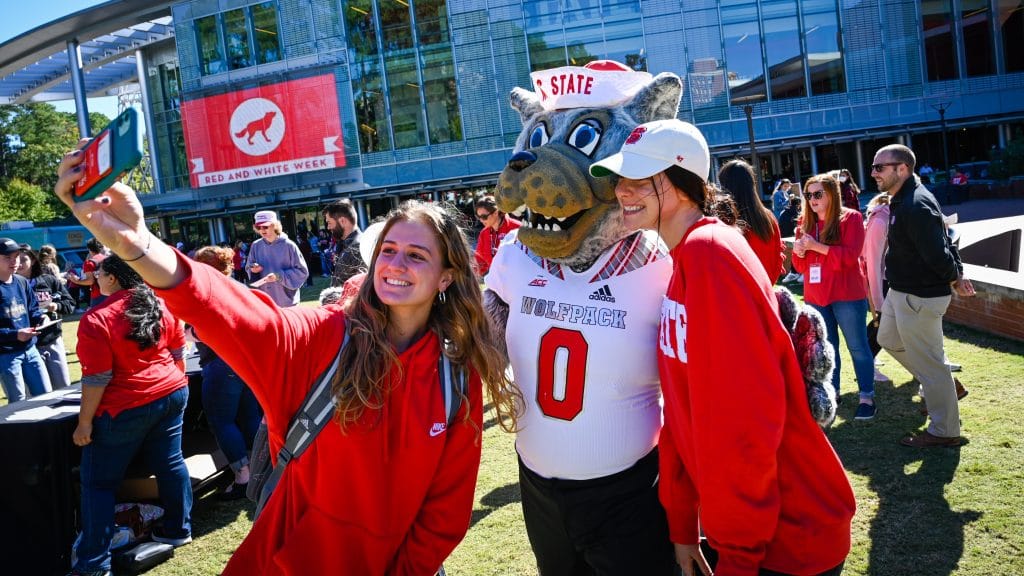
One clear takeaway from the CASE data is that institutions are changing how they define success.
When asked what drives their Giving Day:
Giving Days now account for a meaningful share of annual fundraising:
In short: Giving Days can do what traditional campaigns often can’t. They make it easy for lots of people to participate.


As Giving Days grow, institutions are using smarter strategies.
Digital tools are key:
But Giving Days aren’t just online.
The goal is to make Giving Day feel personal, celebratory, and human, so donors can see themselves as part of the story.

One of the biggest changes is how institutions measure success.
Instead of just looking at total dollars, most now track:
Looking ahead, many plan to track even more: retention, donor upgrades, gifts from ambassadors, leadership giving, and which email subject lines work best.
The takeaway: Giving Days are no longer just experiments. They are data-driven opportunities to learn and grow the donor base year after year.

Looking at the bigger picture, Giving Days in 2025 tell an important story about philanthropy.
They show how institutions are responding to fewer donors, but not by inviting everyone to take part. They show a focus on engagement as a long-term goal, rather than chasing quick spikes in donations.
Most importantly, they reveal a change in mindset:
Colleges and universities doing Giving Days differently understand this. They aren’t just raising money; they are building a culture of giving, one person and one Giving Day at a time.

Table of Contents
Subscribe
See how modern advancement teams bring alumni engagement and fundraising together.
Giving Days weren’t always complicated.
What began as a single day to rally alumni and boost annual fundraising has evolved into something much bigger. Today, Giving Days are the core of fundraising, engagement, and community-building efforts across higher education. They’re no longer combined with dollars alone, but by who shows up, how they participate, and what happens after the day ends.
In partnership with CASE, we surveyed 150+ institutions to understand how Giving Days are changing in 2025. Colleges and universities are moving beyond one-day-only tactics and generic outreach. They’re setting new goals, tracking new signals of success, and designing Giving Days that feel more personal and sustainable.
This blog explores the top 7 colleges that incorporate how institutions are rethinking strategy, redefining metrics, and building momentum that lasts well beyond 24 hours.
CASE Insights spoke directly with professionals from 14 institutions across the United States, the United Kingdom, Chile, and Australia. These conversations helped bring the survey findings to life and offered deeper insight into how Giving Days are changing. Below are the top seven insights and emerging trends.
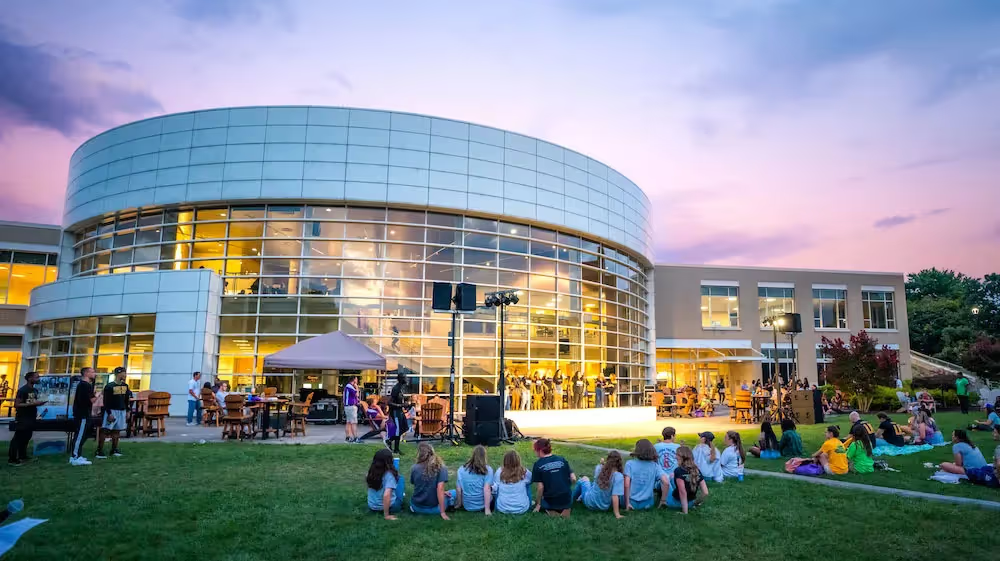
1. James Madison University: Start Early, Build Together
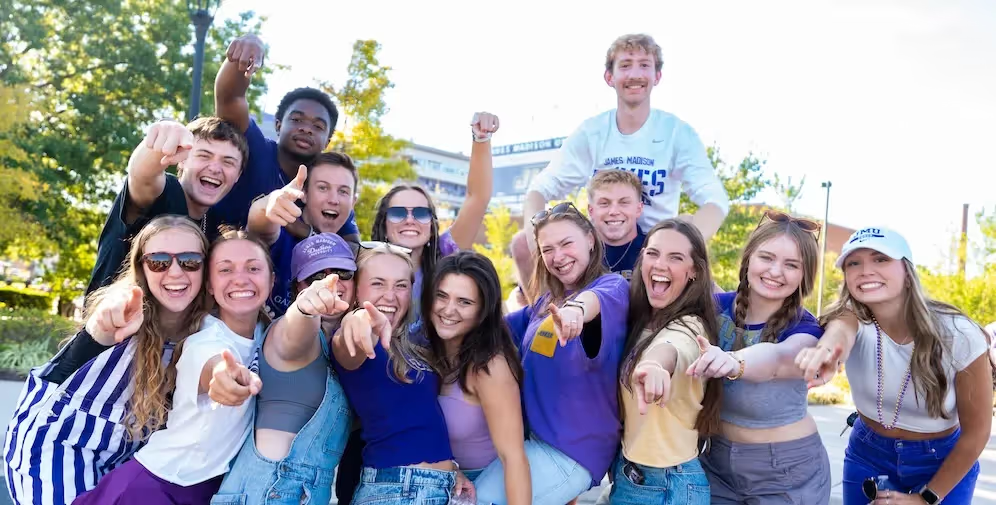
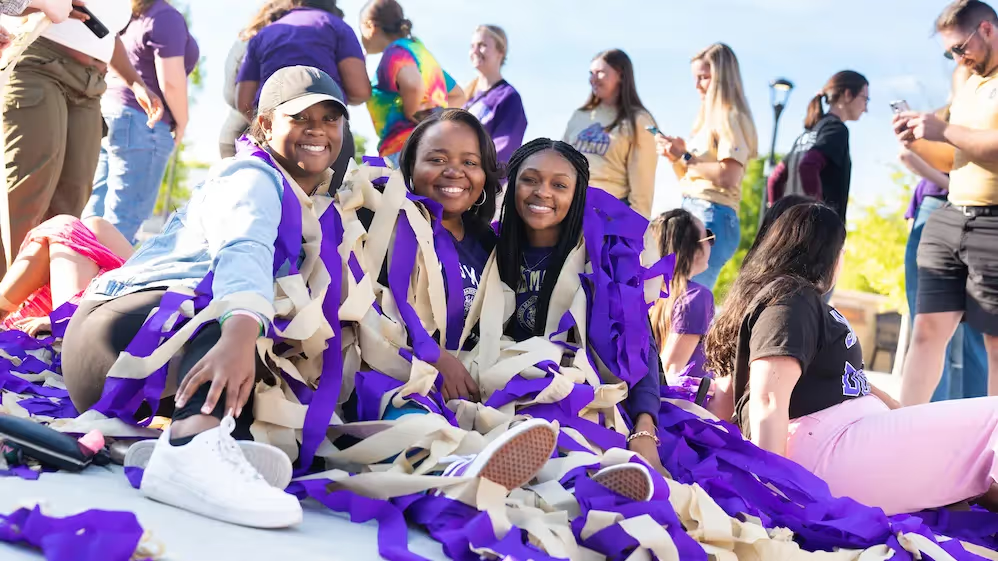
At James Madison University (JMU), Giving Day planning begins in advance. Early on, the team hosts a campus-wide kickoff called Coffee and Comms, bringing together people from across the university, from academic departments to student groups. The session covers key dates, shared resources, and a preview of upcoming content, helping everyone feel prepared from the beginning. It also gives partners a chance to ask questions, share ideas, and learn from each other. Regular check-ins after the kickoff keep the conversation going and make sure partners feel included. By treating Giving Day as an ongoing campus effort instead of a last-minute push, JMU strengthens participation, encourages new ideas, and builds momentum year after year.
.avif)
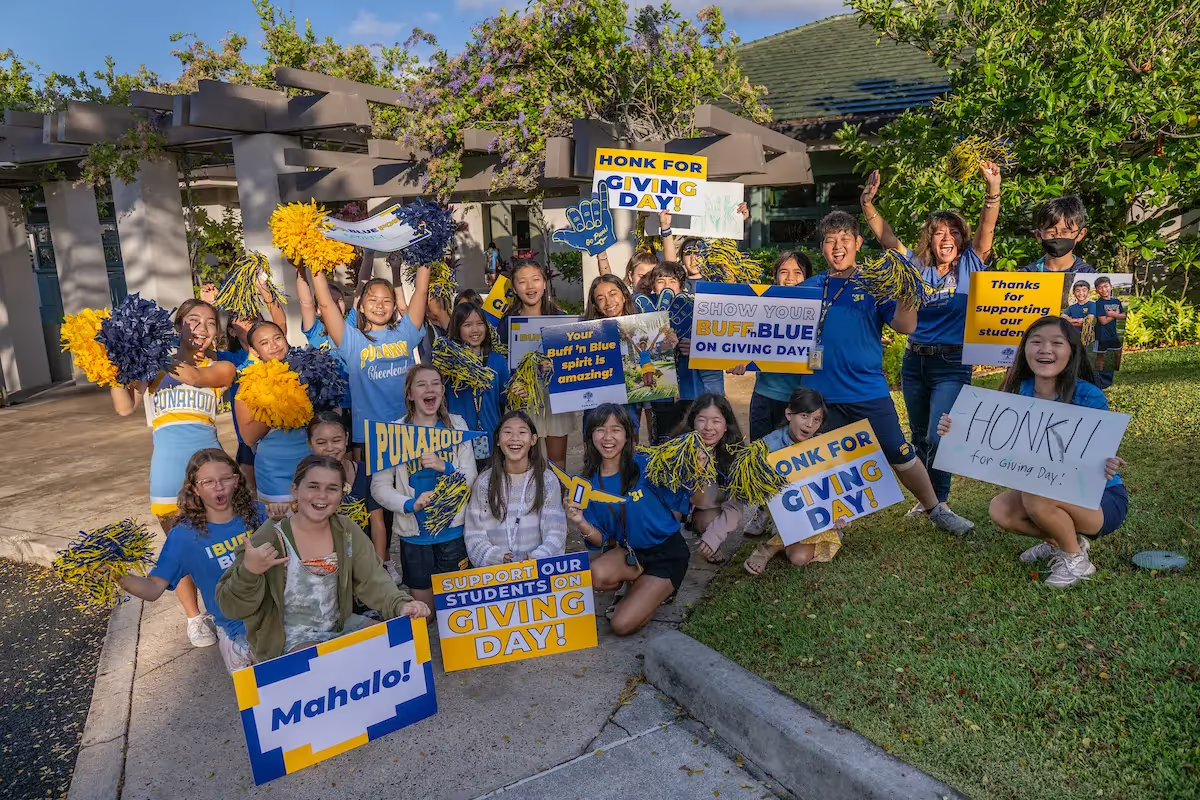
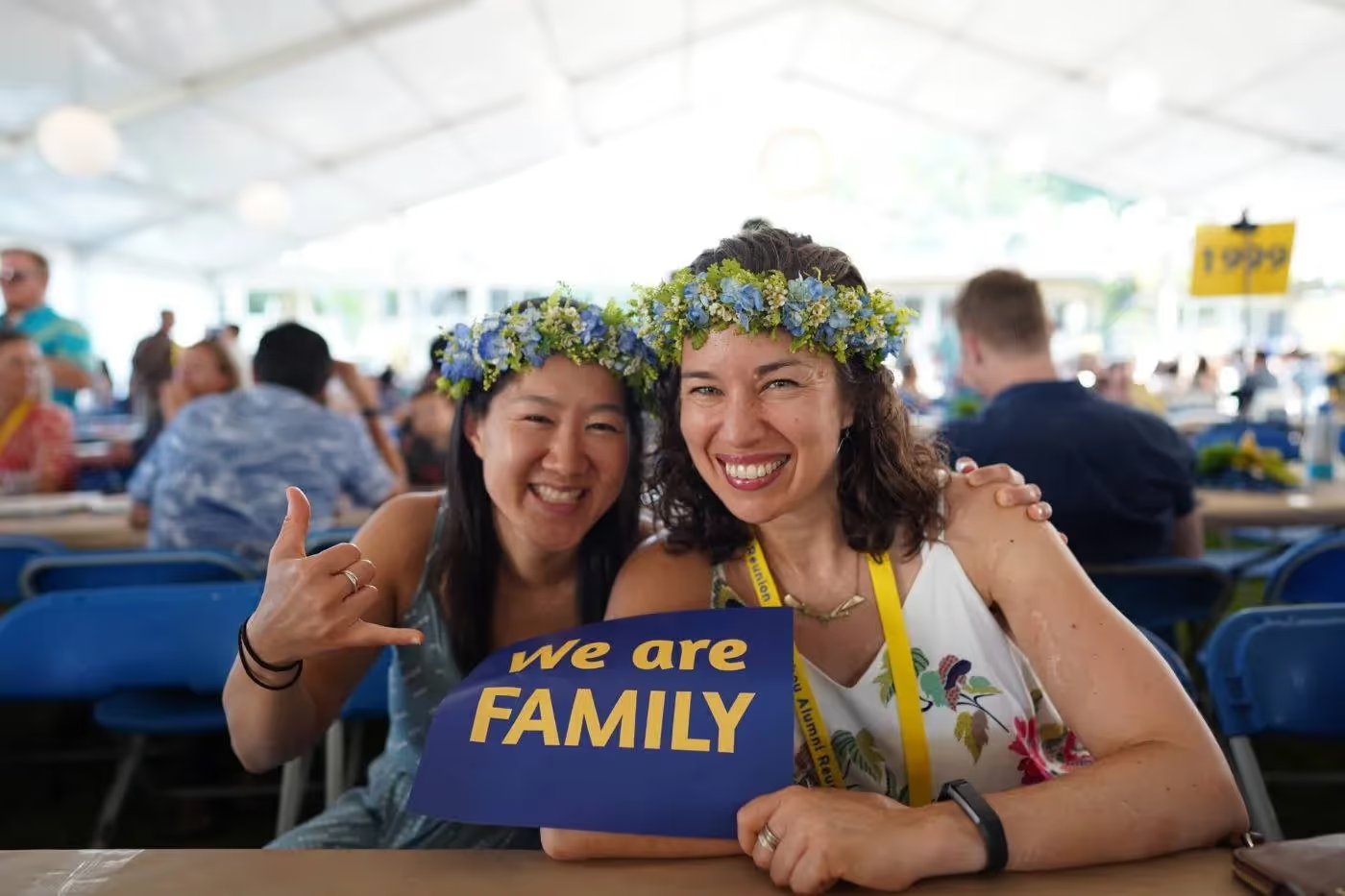
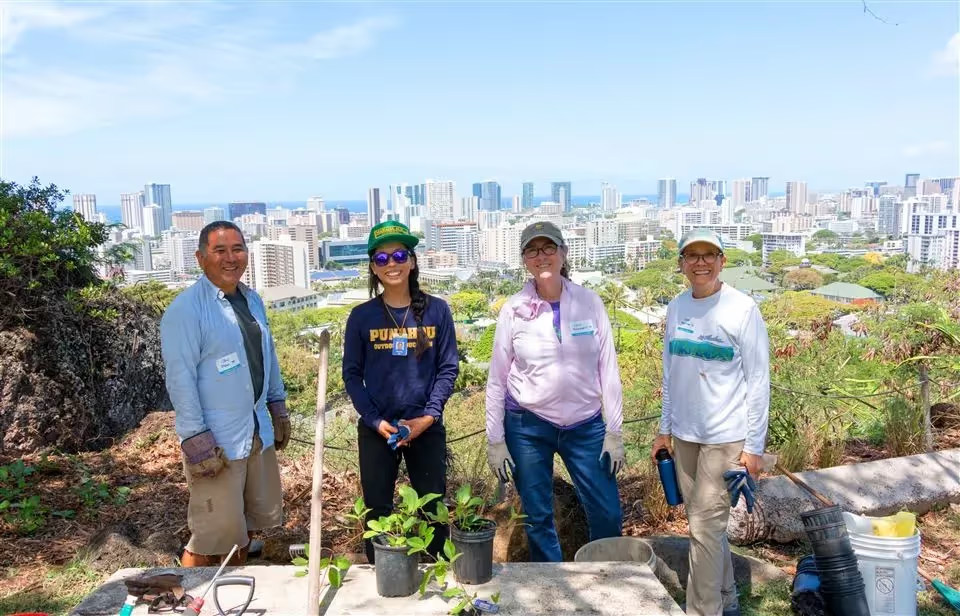
2. Punahou School: Reaching Alumni Between Reunions
At Punahou School, Giving Day helped reconnect alumni who are usually less active between reunions. While reunion classes already had strong participation, the school saw a drop in giving in the years that followed. To close this gap, the team focused their Giving Day ambassadors on alumni from non-reunion classes. They reached out personally, kept the time commitment small, and clearly explained what was expected. Ambassadors were given simple tools such as classmate lists, ready-to-use messages, and live updates, so it was easy to ask friends to give. Seeing their class move up the leaderboard made it fun and motivating. By engaging the right group of volunteers, Punahou increased participation and continued to exceed its Giving Day goals.
.avif)
3. Universidad de los Andes: One Cause, Shared Purpose
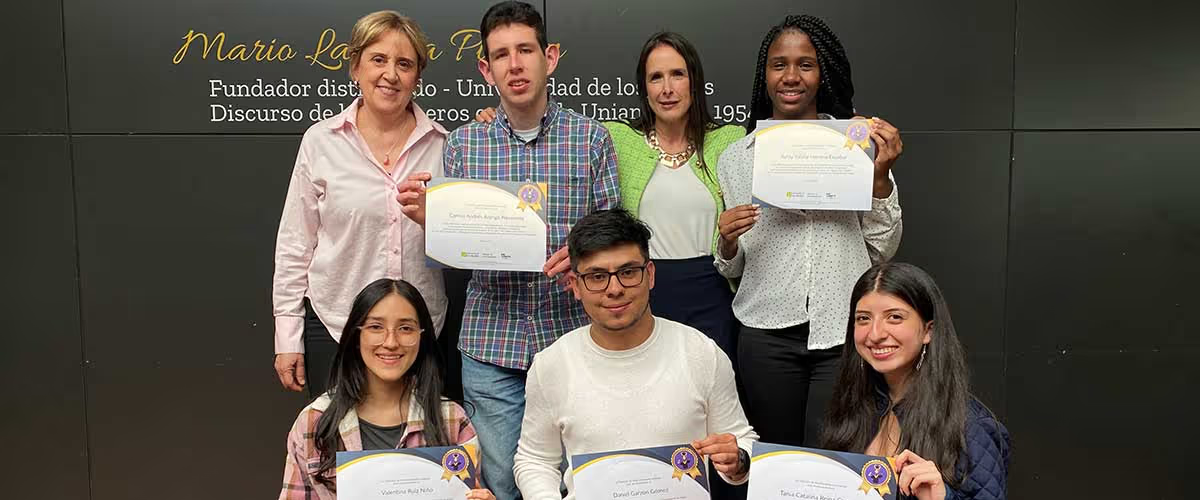
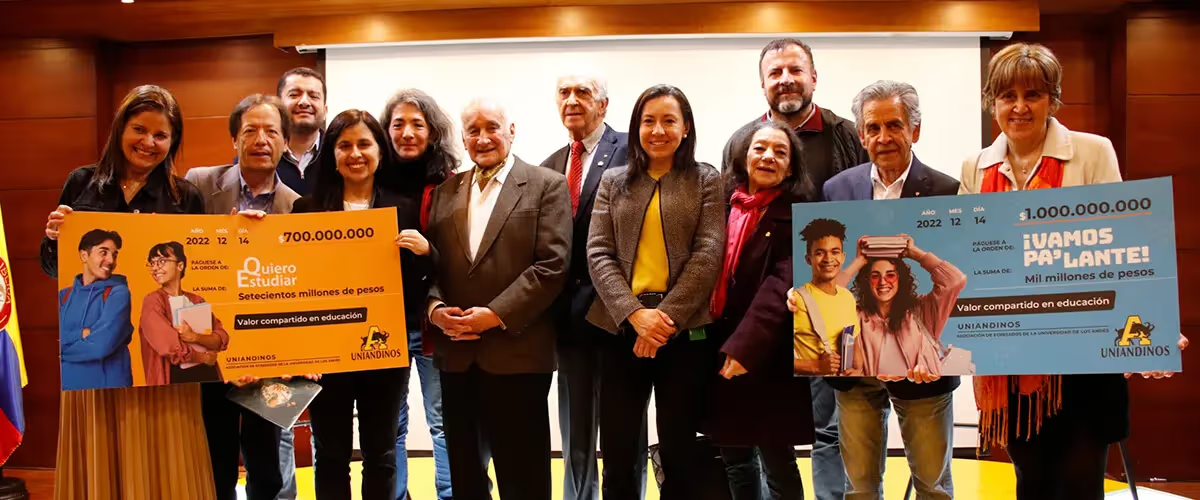
In 2019, Universidad de los Andes (UAndes) launched Chile’s first Giving Day to help build a culture of giving, where alumni were not used to donating to universities. The team focused on one clear cause, student scholarships, so donors could easily see the impact of their gifts. They shared student stories through videos and social media and spent time explaining why giving matters and how it helps students.Despite early doubts, the first Giving Day exceeded its goals and has continued to grow. Today, it’s seen as a joyful campus-wide event, with students, alumni, faculty, and staff all taking part. What began as a fundraising effort has become a celebration of generosity, and it has inspired other universities across Latin America to launch Giving Days of their own.

.avif)
4. George Washington University: Let Students Lead the Story
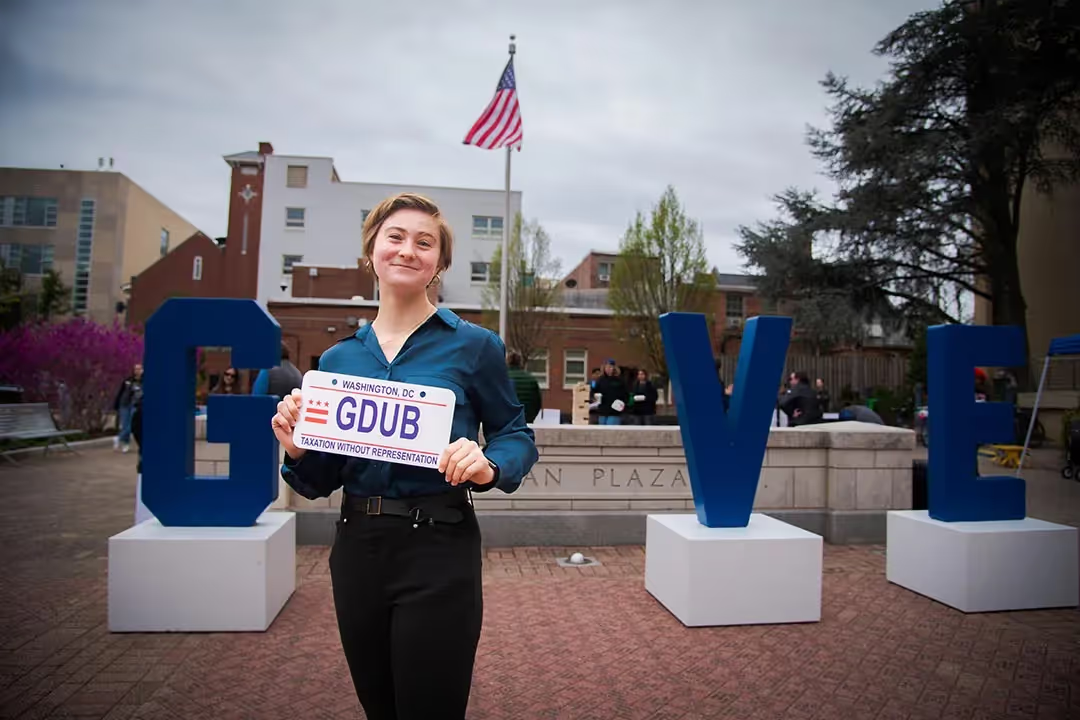
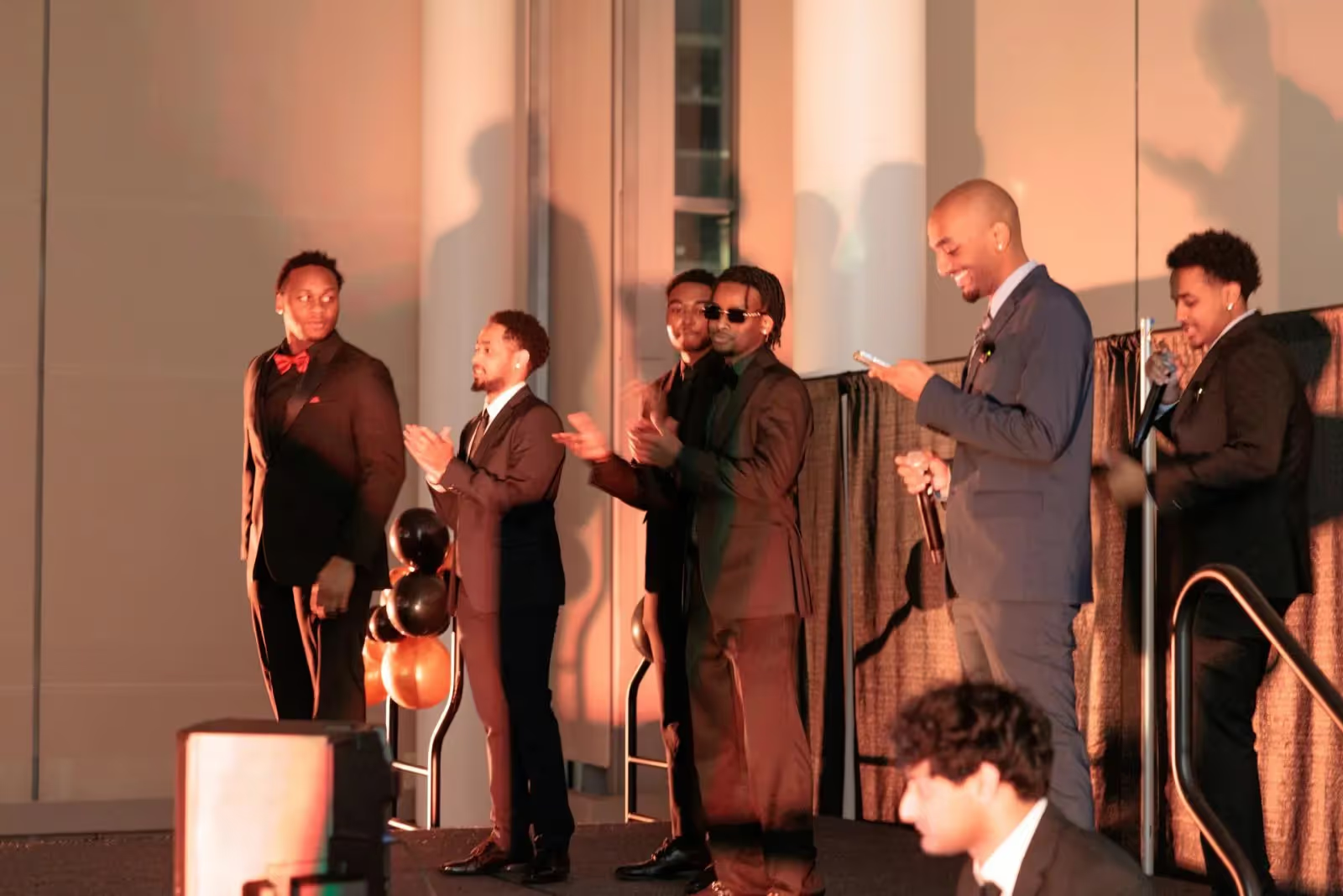
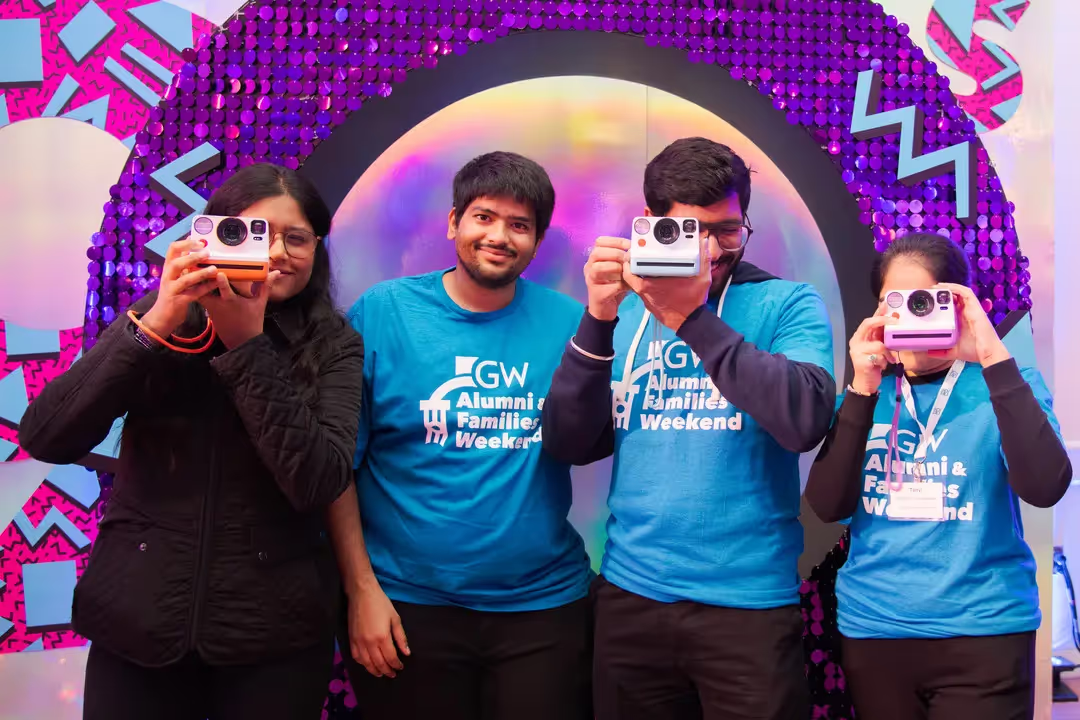
Over the past few years, George Washington University (GW) has used Giving Day to try a more relaxed and creative social media approach. Instead of polished marketing, they rely on a team of student digital ambassadors to create short, fun videos about campus life, student opportunities, and how donations make a difference. These quick videos are easy to watch and connect better than long emails. On Giving Day, students go live from campus events, share leaderboard updates, post thank-you videos, and keep energy high online. This student-led, authentic content has made Giving Day feel more lively and has helped GW reach and engage new donors in a way that feels natural and human.
.avif)
5. Southern Illinois University Edwardsville: Make Sharing Easy
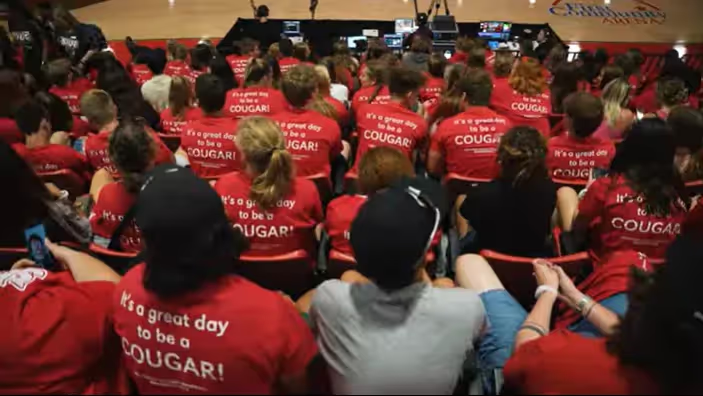
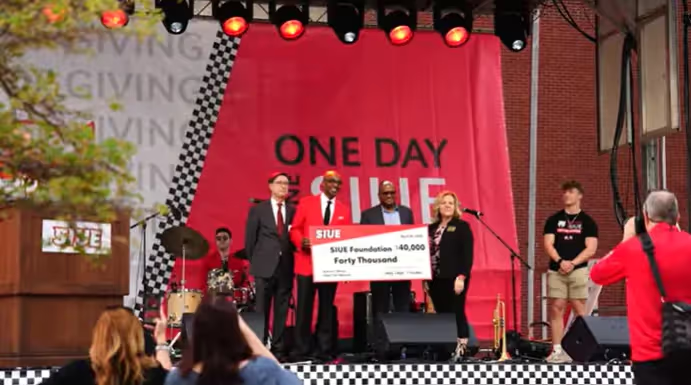
Southern Illinois University Edwardsville (SIUE) launched its first Giving Day in 2022 with ambassadors at the center of the effort. To help people across campus take part, the team created a simple digital toolkit with ready-to-use content for social media. Posts were pre-made and sized for each platform, making them easy to share without extra work.By putting everything in one easy-to-find place, SIUE removed friction and made it simple for students, staff, and ambassadors to spread the word. The toolkit quickly became a go-to resource and helped expand the reach of Giving Day across campus.

.avif)
6. Fresno State: Taking Giving Day Into the Community
In 2025, California State University, Fresno (Fresno State) took Giving Day beyond campus with its first Bulldog Roadshow. In one day, the team visited local businesses with pop-up events featuring treats, giveaways, the mascot, and QR codes for Giving Day. The roadshow helped promote Giving Day while celebrating alumni working in the local community. Businesses helped spread the word, and the response was so positive that many were already asking to take part again. Encouraged by the success, Fresno State is now exploring ways to expand the roadshow and better track its impact in future Giving Days.



.avif)
7. Oregon State University: Celebrating the Team Behind Giving Day
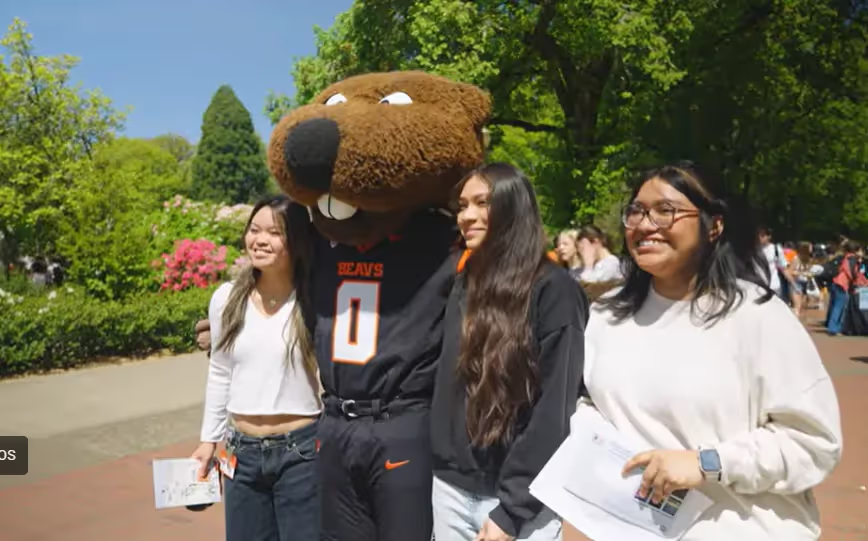
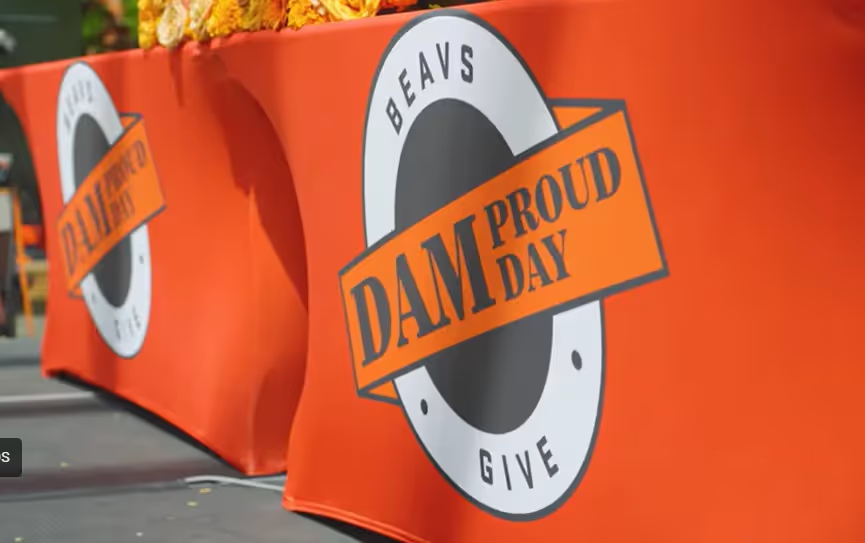
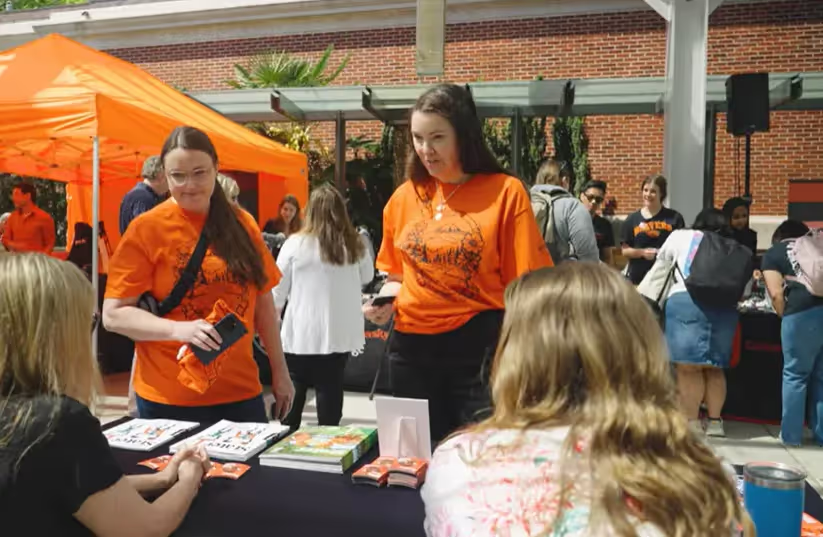
At Oregon State University (OSU), Dam Proud Day is built through strong teamwork across campus. In its first year, the team created a small event called The Dammys to thank staff who worked behind the scenes on Giving Day. Over time, The Dammys has grown into a campus-wide celebration. Leaders, staff, faculty, students, and partners come together to recognize great ideas, strong collaboration, and creative fundraising. The awards build excitement, share what works, and help teams learn from each other as they plan for future Giving Days.
.avif)
Giving Days are now an important part of annual giving in education. They have grown beyond one-day fundraisers into moments that bring the whole community together. By involving volunteers, highlighting student voices, and reaching local supporters, institutions are encouraging more people to take part and feel proud of their campus.
Most importantly, Giving Days make giving feel simple and welcoming. Every action and every gift, no matter how small, helps people feel connected to a shared purpose. At a time when fewer people are giving, Giving Days help grow participation, support future donors, and build a stronger culture of giving over time.

The New Age Giving Day Blueprint: Strategies from 7 Leading Colleges
In partnership with CASE, we surveyed 150+ institutions to understand how Giving Days are changing in 2025. Colleges and universities are moving beyond one-day-only tactics and generic outreach. They’re setting new goals, tracking new signals of success, and designing Giving Days that feel more personal and sustainable.
Lorem ipsum dolor sit amet, consectetur adipiscing elit. Suspendisse varius enim in eros elementum tristique. Duis cursus, mi quis viverra ornare, eros dolor interdum nulla, ut commodo diam libero vitae erat. Aenean faucibus nibh et justo cursus id rutrum lorem imperdiet. Nunc ut sem vitae risus tristique posuere.

.svg)

.avif)
.webp)