The new Donor Pipeline Report is specifically designed to take the guesswork out of engagement by providing a clear, actionable breakdown of your community. With this report, visualizing your donor funnel becomes straightforward, enabling you to take smarter, more targeted actions- without the need for complex marketing techniques
Published:
September 5, 2024
Updated:
.avif)
Do you ever feel like you’re missing out on key opportunities because you’re unsure where your constituents stand in their engagement journey?
We understand—tracking the different levels of interaction across your entire constituent base can be overwhelming, especially when relying on siloed data from disconnected systems. This process can be incredibly time-consuming.
That's why we're thrilled to introduce the new Donor Pipeline Report. It’s specifically designed to take the guesswork out of engagement by providing a clear, actionable breakdown of your community. With this report, visualizing your donor funnel becomes straightforward, enabling you to take smarter, more targeted actions- without the need for complex marketing techniques.

The Donor Pipeline Report segments your constituents by automatically measuring and analyzing all engagement activities across your programs. By capturing and categorizing these interactions, the system builds a comprehensive view of where each constituent stands in their journey, enabling you to take precise, data-driven actions. Here’s what you can measure now:
Unresponsive Constituents
This segment identifies members who have not been active in recent communications due to outdated contact information or opt-out. By isolating this group, your team can prioritize outreach efforts to re-establish connections and bring these constituents back into active engagement.
Engaged Constituents
These individuals are responsive to your communications and programming yet have not taken more substantial actions. By identifying these members, you can tailor your initiatives to deepen their involvement, effectively guiding them toward higher engagement and potential support.
Potential Donors
This segment includes members who display behaviors indicative of future giving, such as recent participation in events or prior donations within the last three years. By focusing on this group, your team can strategically cultivate these relationships, expanding your donor base and safeguarding against potential attrition.
Donors
This group consists of constituents who contributed during the current financial year. The Donor Pipeline Report offers customizable views, enabling you to track and analyze donor participation precisely. This feature ensures that your team clearly and accurately understands current donor activity, facilitating timely and informed decision-making.
The best part? The report automatically updates daily, synthesizing hundreds of thousands of engagement activities across all your programs. This means you get the latest insights, allowing you to make data-driven decisions quickly and confidently.
The Donor Pipeline Report is accessible to all Almabase users on their home page under the Reports section. Simply navigate to the Donor Pipeline Report to view, analyze, and take action on the segmented data.
Subscribe
See how modern advancement teams bring alumni engagement and fundraising together.
Plan faster. Execute better
Explore free templates designed for alumni and fundraising teams.
.png)

.avif)
Pulling lists and updating constituent data, and updating information in Raiser's Edge is now even more efficient! While admins can pull data from Raiser's Edge independently with minimal effort, they still need to pull lists every time they want to pull constituent data, which requires them to keep moving between Almabase and RE. As we continuously make the database processes more efficient, we want to simplify how you create new records, pull lists, and fix errors seamlessly.
And that’s precisely what we’ve done with our latest auto-pull feature!
Dive in to find out more.
.avif)
The auto-pull feature lets you set up and update RE lists and queries through multiple one-time and auto-recurring pulls, simultaneously. If a new profile or record is added to RENXT, the recurring pull will automatically add new information from RENXT to the directory, improving data accuracy. Admins can save time by setting up daily, weekly, or monthly auto-pulls.
Note: Recurring pulls allow admins to add only new constituent information without updating existing records, as the sync system handles updates. For bulk updates, administrators should create a separate one-time pull session with the recurring pull option disabled.
.avif)
The new auto-pull feature streamlines email list management on Almabase. With the auto-pull update, admins can pull constituent data for email lists. For example, if you establish a daily pull for a list with 100 records on RENXT, any changes—such as adding or removing records—will be automatically reflected in your Almabase list. This means new records will be created for constituents not already on Almabase, and existing records will be updated accordingly.
Note: Almabase will periodically pull data from the RE list or RE query, and depending upon the type of configuration, it will add/remove constituents from the email group or list of records on Almabase.
.avif)
The new sync data dashboard lets you set up and manage: set upone-time or recurring and view historical pulls, all in a single dashboard. If there are any errors in constituent records or email lists, you can fix them directly within the same dashboard by clicking on the "Fix errors" button, eliminating the need to switch different tabs on Almabase or RENXT.
If you’re an Almabase customer, simply log into the platform's database settings to create your first auto-pull session.
If you’re not an Almabase customer, click here to learn more about our industry-leading integration with Raiser’s Edge NXT.
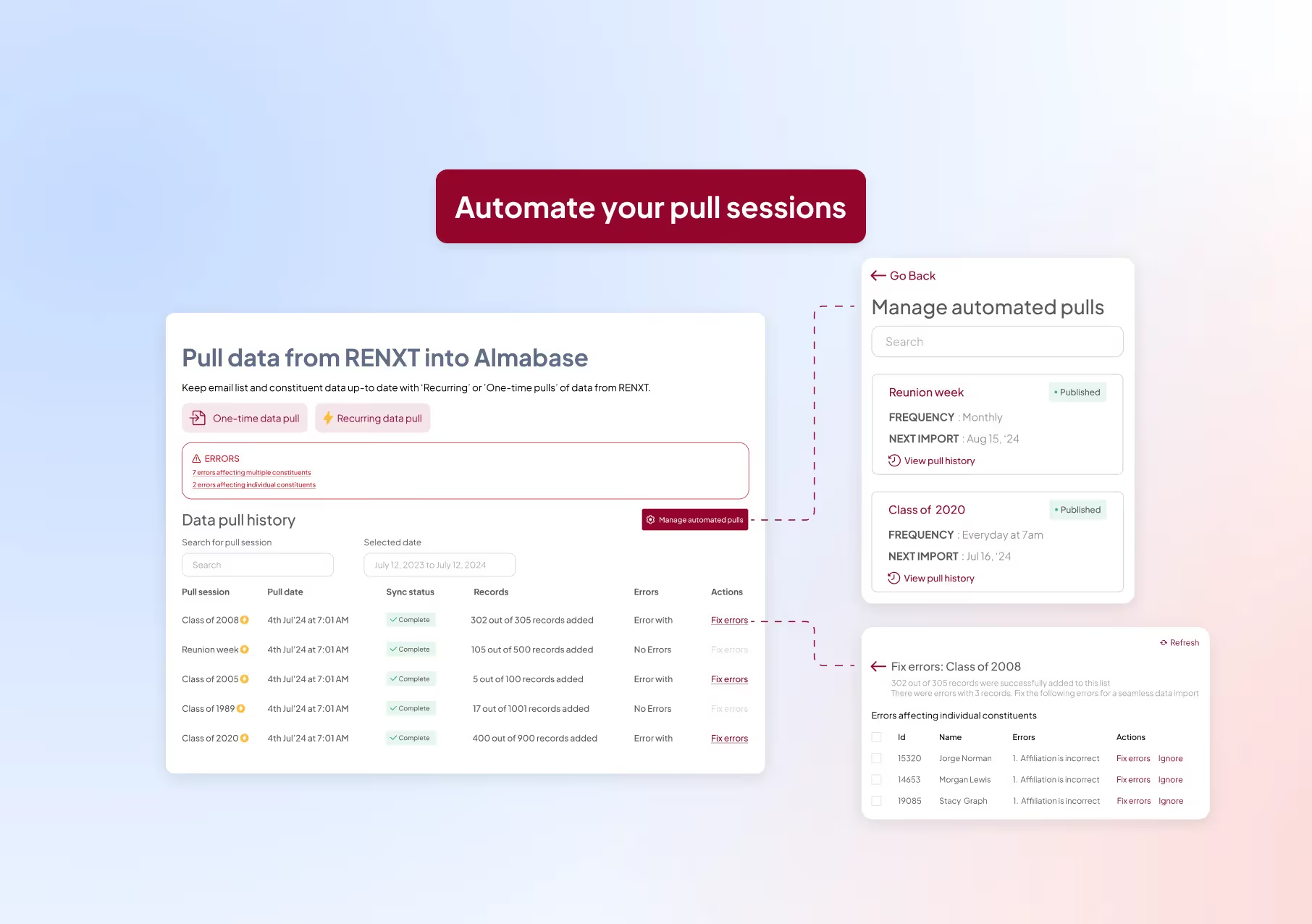
Keep email lists and user-directory updated on their own with auto-pull sessions
Lorem ipsum dolor sit amet, consectetur adipiscing elit. Suspendisse varius enim in eros elementum tristique. Duis cursus, mi quis viverra ornare, eros dolor interdum nulla, ut commodo diam libero vitae erat. Aenean faucibus nibh et justo cursus id rutrum lorem imperdiet. Nunc ut sem vitae risus tristique posuere.
Picture this — A giving day is on the horizon. You have hundreds of funds that you want to drive donations to. You’re expecting thousands of alumni from multiple classes and campuses to participate. Directing this complex mix of audience to causes they care about while ensuring a smooth giving experience seems daunting and almost impossible.
With our newest addition to our P2P Crowdfunding page, donors are going to find it suprisingly easy to navigate to causes they want to engage and contribute to.
It's called Campaign Hub, and it’s here to transform how you create and organize giving campaigns.
Dive in to find out more.
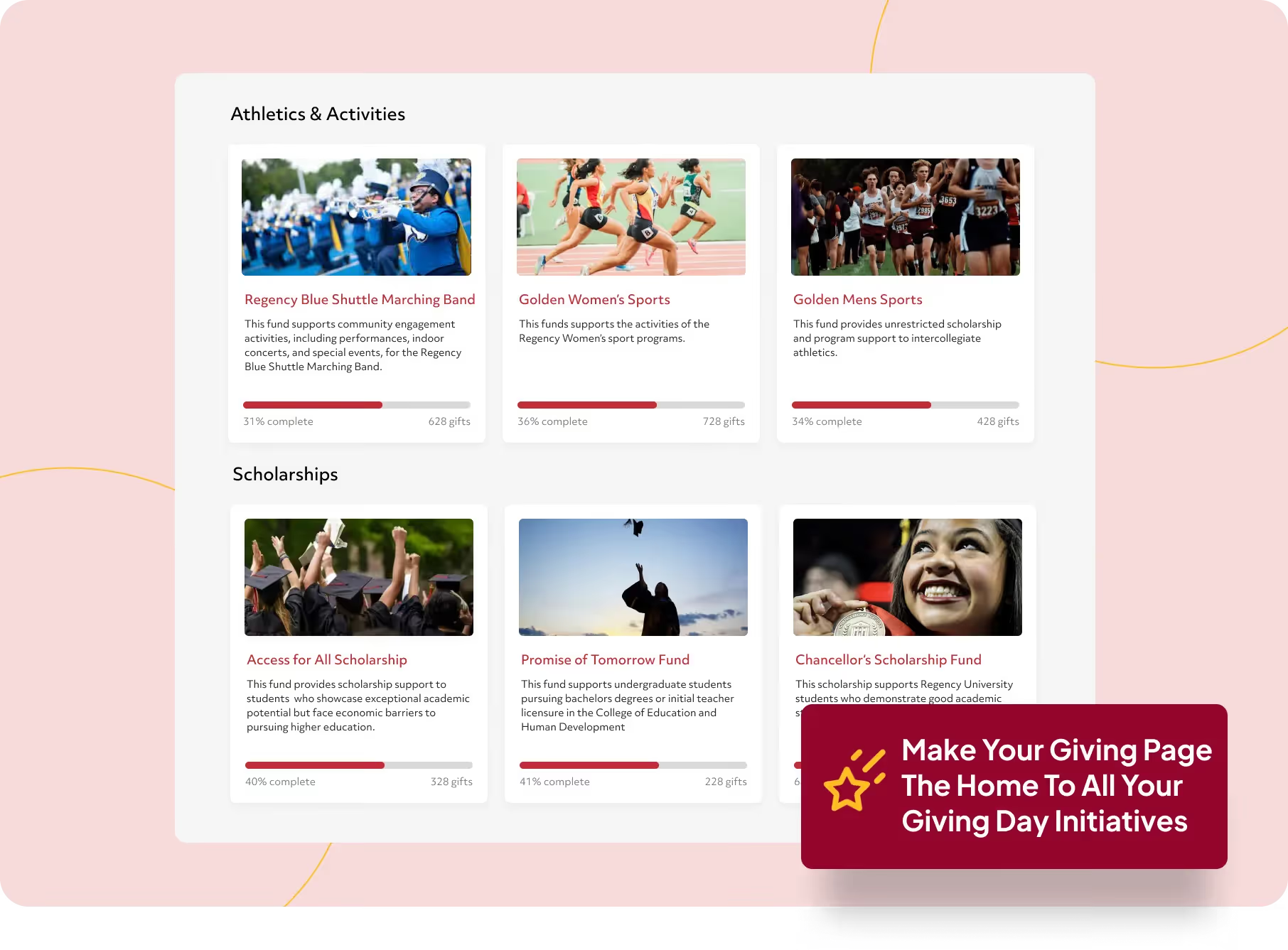
Visualize the home screen of a desktop that has multiple folders. Just a double-click on any them reveals the contents of the folder. Easy way to organize things right?
That’s why we took the same logic and applied it to Campaign Hubs. Now you can organize all your giving day initiatives on your giving page which in turn helps your donors quickly navigate to their preferred cause.
Think of Hubs as parent folders. You can name a hub to reflect a major cause. For instance, Athletics & Activities is an example of a major cause.
Now within a hub, you can create and organize multiple giving campaigns.
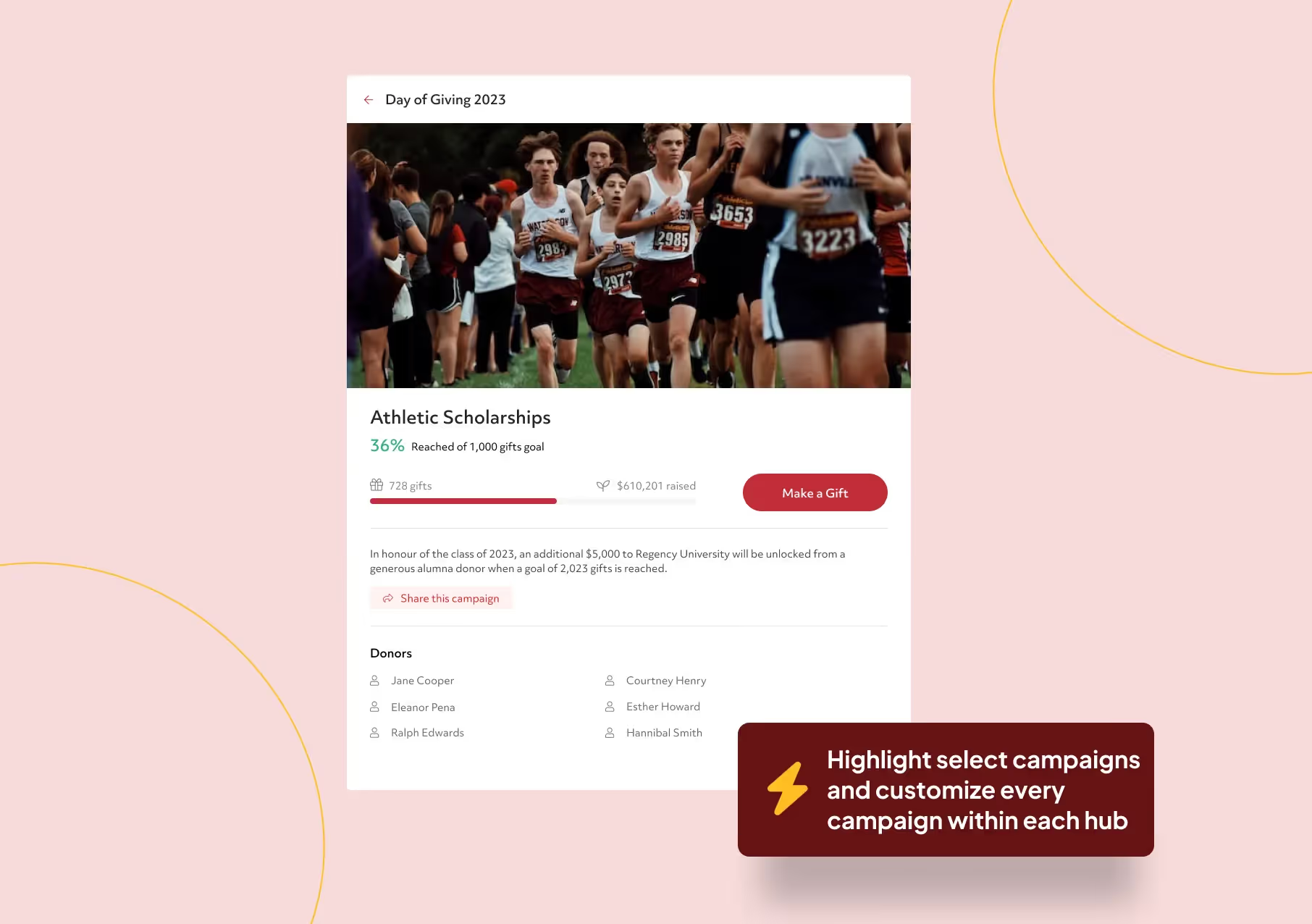
Each campaign that is part of a giving day has to tell a story, pique interest, and showcase healthy competition— in one quick glance. Not easy. Only you know what’ll strike a chord with your alumni.
That’s why we wanted you to have complete control over how you craft this story.
Feature an image of your choice: Draw alumni into your campaign with a catchy image that captures their attention or take the text-only route.
Add a description, short or long: Tell the story behind the campaign in two lines or two paragraphs.
Display hand-picked funds for each campaign: Your constituents won’t have the time to search through hundreds of funds. That’s why we built fund drive, a feature that let’s highlight select group of funds on a campaign. By eliminating choice overload, you are making giving straightforward for your constituents.
Set and showcase campaign goals to inspire healthy competition: You can set gift and participation goals for each campaign you create within a hub. A real-time goal progress thermometer appears on the campaign page whenever a goal is set. The best part — although all thermometers across campaign pages are independent of each other, they can be configured to add up to the primary thermometer of your pillar giving page.
Showcase donor names: Seeing a buddy's name on a campaign is likely to grab a potential donor's attention. You can choose to display or hide donor names for each campaign.
Create personalized campaigns with participation challenge: A participation challenge lets you create campaigns for a specific group of constituents based on conditions like affiliation, funds chosen, and more. So now it’s possible to create a campaign just for the class of 98’ or just for parents. Only the names and contributions of people that satisfy the conditions will be displayed on the campaign page that has participation drive enabled.
Unique shareable links for each campaign: Spreading the word for each campaign can’t get easier. Donors can share any campaign they are on with their peers. A unique link ensures potential donors see only campaigns that are relevant to them. More focused information. More focused giving.
Play around with the position of campaigns within a hub until you find the perfect order. This feature will help you spotlight campaigns that you want constituent’s to see first.
If you’re an Almabase customer, simply log into the platform to create your first Campaign Hub.
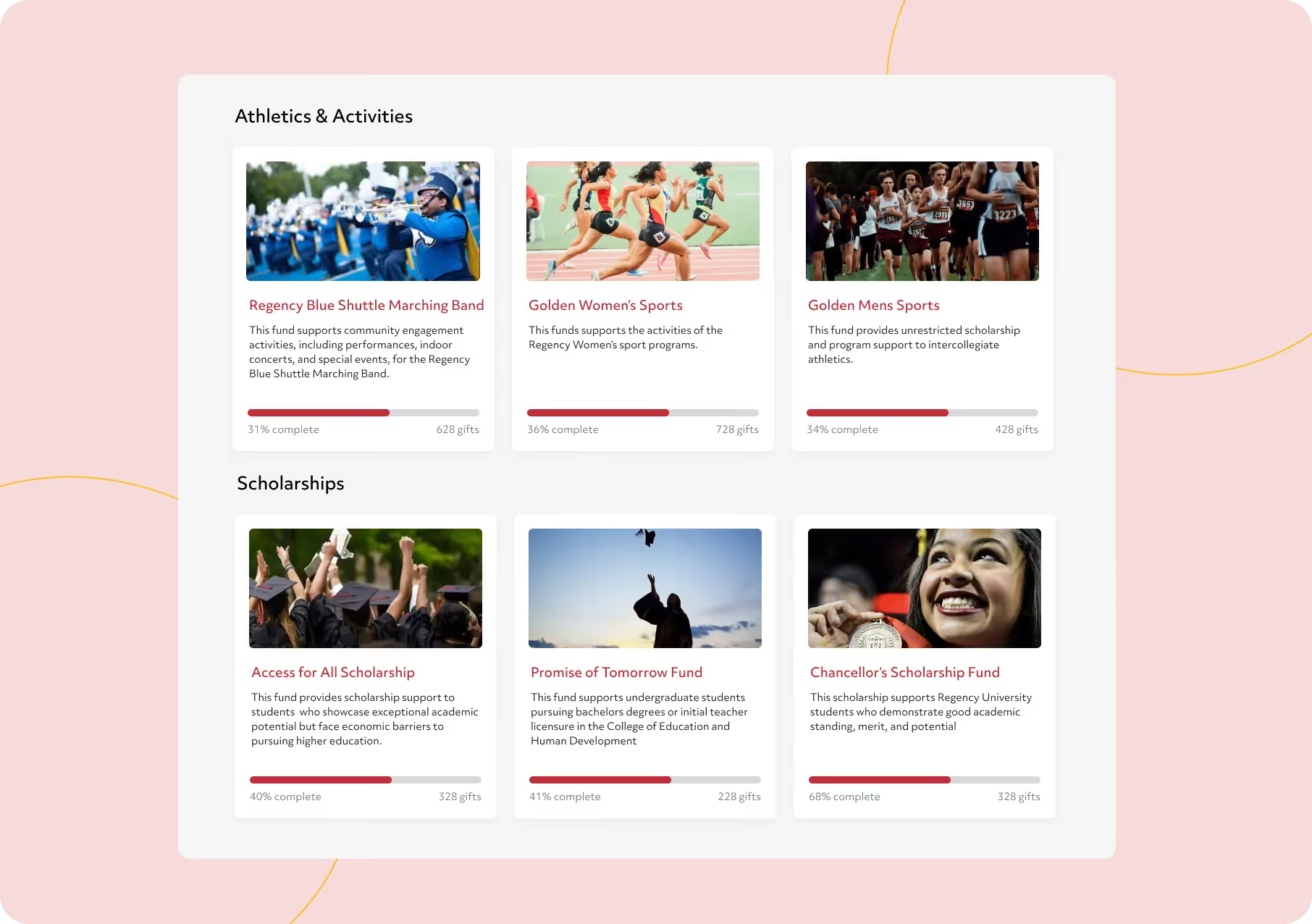
[New] Easily Drive Participation Across Hundreds of Campaigns with Campaign Hub
Lorem ipsum dolor sit amet, consectetur adipiscing elit. Suspendisse varius enim in eros elementum tristique. Duis cursus, mi quis viverra ornare, eros dolor interdum nulla, ut commodo diam libero vitae erat. Aenean faucibus nibh et justo cursus id rutrum lorem imperdiet. Nunc ut sem vitae risus tristique posuere.
From one-person teams to well-staffed offices, advancement, and alumni relations teams today take a variety of sizes and forms. The advancement space has never really had a frame of reference for what an ideal team should look like, as institutions can vary wildly in size and resources.
By looking back at the past several years, we would like to provide some characteristics that every forward-thinking advancement team today should look to incorporate in their approach to have a successful alumni program.
Ideally, an advancement team today should consist of people who are agile, data-driven, and technologically adept. They also need to have a good understanding of the evolving needs of a wide range of alumni. The pandemic and post-pandemic scenarios highlighted the need for teams that can innovate and ditch tradition when needed. Modern teams are ideally driven by digital tools and data analytics to make informed decisions, personalize interaction engagement, and be able to collaborate with other teams effortlessly.
If that all seems a bit too ideal, that is because, for many teams, it often is. The ideal modern advancement team takes years to develop to the level that they can reach, and it takes even more consistency to stay at that level. Below, we’ll break down some of the key components and pitfalls on the road to reaching your advancement team’s true potential.
Here are some things that you can look to incorporate. Remember that there is no one-size-fits-all all for advancement and that these are just the basics that you need to watch out for as you map your team’s journey:
• The right tool(s): Whether you are just starting to consider your long-term tools, or have some you have been using for a while, you need to choose the right tools. Take into account the resources, staff size, and staff expertise available to you
• Data-driven approach: Data is at the heart of most if not all alumni-centric communication, engagement, fundraisers, and so much more today. Having a reliable database and a CRM to make the most of your data is crucial for any modern advancement team. If you see your alumni base increasing exponentially in the future, you need to have the right infrastructure to scale alongside it as well.
• A Strong Global Alumni Network: A silver lining for advancement teams that emerged during the COVID-19 pandemic was the shift towards virtual and hybrid alumni engagement. The trends from that period have been carried over today to engage local, national, as well as international alumni to form strong global networks filled with regional enclaves of well-engaged alumni.
• Scalable Personalized Engagement: While personalization has become a core part of any alumni program, communicating with alumni while having personalization efforts that can scale with an increasing number of alumni is another issue that institutions are currently tackling. From segmentation and automation to collecting feedback, ensure that your institution’s alumni engagement is not just personalized but also able to personalize a growing alumni base meaningfully.
• Omnichannel Capabilities: Alumni nowadays expect some level of value even if they are located halfway around the world. Routine webinars alone will no longer do to engage these alumni segments. Modern advancement teams need to be able to take advantage of physical, online, and hybrid channels simultaneously and importantly, make each channel feed an overall goal. For example, how can you engage remote alumni in a way they feel equally as valued as your local alumni? Are you just relying on social media to reach them, or are you making communities, providing opportunities, and constantly making them feel just as appreciated?
• Providing Diverse Engagement Opportunities: Providing value lies at the heart of any modern advancement strategy. Your team needs to be aware of upcoming trends to freshen up and diversify your offerings. If an alumni is excited about publishing their first research paper, an email will help. But if you also invited them for a guest lecture or in a workshop panel, they might feel even more appreciated.

• Adaptability: Over the past few years, the pandemic and the constant fears of economic recessions have made clear the need for advancement teams to adapt to both expected and unexpected changes. With AI usage on the rise, it also raises the question of adapting to new technology and whether it is worth it. These are questions any competent advancement teams today will need to be on top of and make the right call on.

While aiming to be data-centric, your advancement team must have a thought-out data strategy that can handle alumni data for years to come. When it comes to having a data strategy, it is usually the sooner the better as data is always being added or modified as time goes.
We also cannot stress enough the importance of having tools that communicate well with each other. Having multiple tools or features is well and good until they all present a piece of the puzzle that you have to put together manually each time. Any new additions to your online toolset must be integrated into a well-connected software environment. This also gives your staff a good overview of where they are as a team and as an institution.
A common and perhaps under evaluated problem is how strategies and long-term planning are always talked about when the reality is often that advancement staff often get caught up in an endless loop of daily tasks and don’t get enough time to strategize creative initiatives. In a space where creativity can really engage alumni, it is important that your staff have time for both their daily tasks as well as to innovate.
Finally, it is important to know when to be stubborn and when to take a new path. Take periodic checks on the products you use and if they still fit your needs. Do the update cycles of the provider fit your needs? What do your staff think about their experiences within the past quarter? Will your current set of tools fit your needs in the next 5 years? These are just a few examples of questions that you need to keep asking yourself to stay on top of your game.
Ultimately, the goal is to create a dynamic, responsive advancement team that can effectively support your institution's mission while providing genuine value to your alumni community. Remember that alumni want an authentic human connection to their alma mater. A modern advancement team simply uses the best strategies and tools to build and maintain that connection.

What Makes a Modern Advancement Team?
Lorem ipsum dolor sit amet, consectetur adipiscing elit. Suspendisse varius enim in eros elementum tristique. Duis cursus, mi quis viverra ornare, eros dolor interdum nulla, ut commodo diam libero vitae erat. Aenean faucibus nibh et justo cursus id rutrum lorem imperdiet. Nunc ut sem vitae risus tristique posuere.
%201.svg)
%201.svg)
%204.svg)



.svg)