We’ve rounded up 15 charity auction ideas, including classics, fresh picks, and some experiential ones to get the bidding going at your next event!

Sharada Koti
Published:
August 7, 2026
One of the first things fundraising teams discuss while planning an auction is the auction catalog. Which items should make the list? What will people actually bid on? And what will help raise the most money for the cause?
It's not an easy decision. According to the 2025 State of Nonprofit Auctions Report, 31% of nonprofits say finding high-quality auction items is one of their biggest auction planning challenges. There isn't one perfect answer because every audience is different. An item that works well at one event may fall flat at another. The goal is to build a catalog with enough variety that more people find something worth bidding on.
In this article, we've rounded up 15 charity auction item ideas that can help attract more bidders, spark competition, and maximize fundraising, along with practical tips for choosing, pricing, and planning an auction that runs smoothly from the first bid to the last.
In simple terms, a charity auction is a fundraiser where supporters bid on donated items or experiences. Depending on your event and audience, you might host a live auction, a silent auction, an online auction, or a combination of these formats. Each offers a different bidding experience, but the goal is the same.
Charity auctions continue to be a reliable fundraising strategy for three reasons. They can generate significant revenue, the right mix of auction items keeps bidding competitive, and modern auction platforms make it easier to engage supporters before, during, and after the event. Together, these factors help organizations create a more successful fundraising experience. That's why choosing the right auction items matters just as much as choosing the right format.
The best auction lineup usually includes a mix of practical items, unique experiences, and premium packages. It works best when there's something for every type of bidder. Whether you're planning a school gala, university fundraiser, or nonprofit event, these ideas can help you create an auction with broad appeal.
A private chef dinner turns a meal into an event. Instead of offering dinner for two, work with the chef to create an experience for six or eight guests. People are more likely to bid confidently when they can turn it into a celebration with friends or family.
You could also ask if the chef is willing to share the inspiration behind the menu, host a live cooking demonstration, or include a signed recipe card. These additions cost very little but make the package more attractive to bidders.
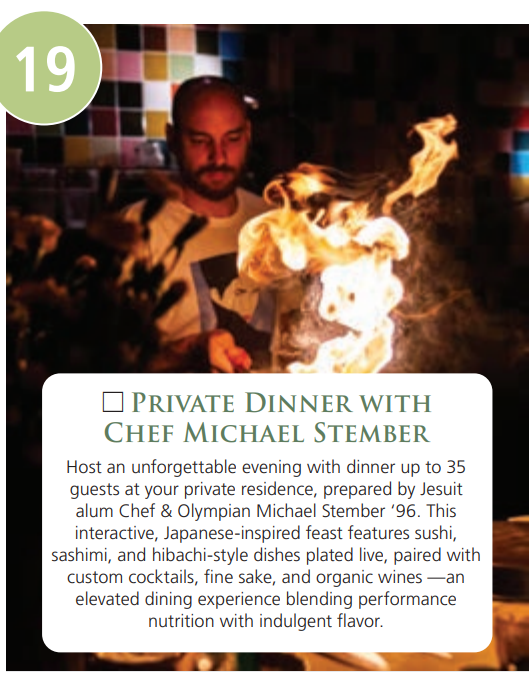
Jesuit High School's Modern Garden Gala, 2025 auction included a Private Dinner with Chef Michael Stember, giving the winning bidder an in-home chef-prepared dinner for up to 35 guests.
Tickets to exclusive events, like sold-out matches, opening nights, or farewell tours create far more excitement than events people can buy anytime. For example, the University of La Verne's 2026 Scholarship Gala auction featured premium Los Angeles Dodgers tickets with seats just behind first base for a Dodgers–Padres game. Adding extras like a pre-show dinner, a hotel stay, or parking and transportation can turn game or concert tickets into a complete night out, making the package feel more exclusive and harder to compare with retail prices.
A spa day appeals to a wide range of bidders, making it a dependable auction item. Experiences that go beyond a standard spa voucher often stand out more. For example, Catherine Cook School's 2026 Gala featured an Escape to Kohler Spa package that combined $600 in Kohler Waters Spa gift cards with a $100 restaurant gift card, creating a complete wellness getaway. Similarly, a wellness retreat, guided forest walk, sound healing session, or half-day mindfulness programme offers something people are less likely to book for themselves, making the experience feel more memorable and worth bidding on.
Instead of sourcing a single food or drink experience, build a collection around a shared theme. Invite local businesses such as wineries, coffee roasters, restaurants, or specialty food shops to contribute to experiences. These could be private tastings, chef-led dinners, cocktail masterclasses: the list goes on. Grouping similar experiences gives bidders more choice and creates a stronger auction category.
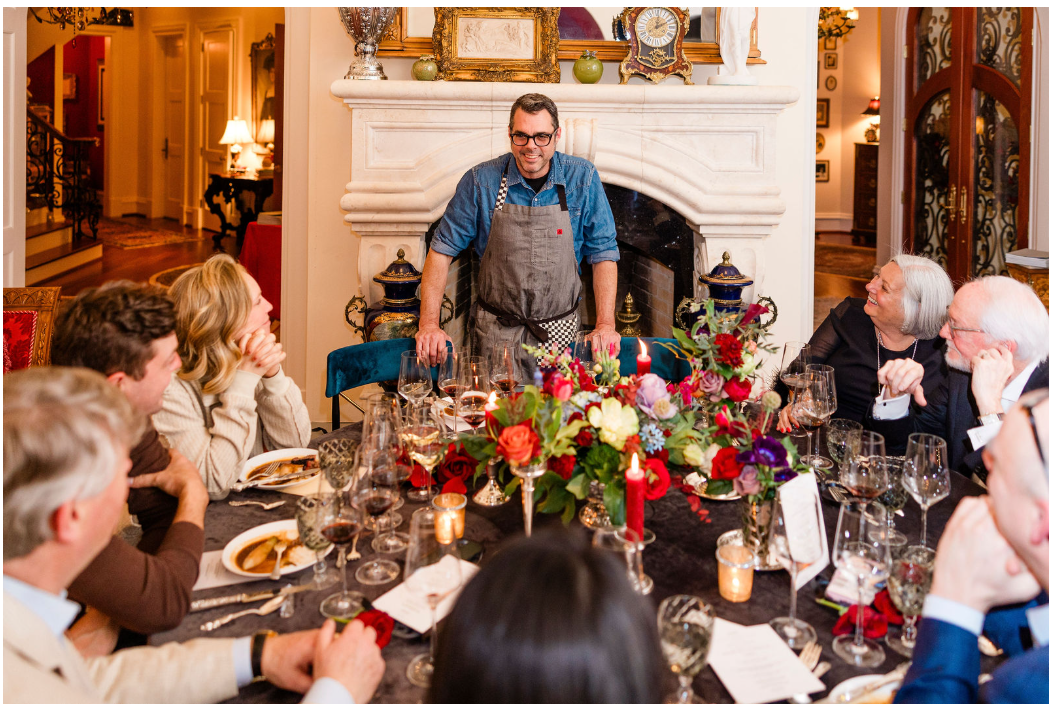
The Triangle Wine & Food Experience, which raises funds for the Frankie Lemmon Foundation, follows this approach by centering its fundraiser around wine, spirits, and culinary experiences. Alongside chef dinners and tastings, its live auction features rare wines, bourbons, and exclusive food experiences, creating a cohesive theme.
Behind-the-scenes experiences give bidders access to places that most visitors never get to see. Whether it's a film set, a working studio, or an animal care facility, the exclusivity is what makes these appealing.
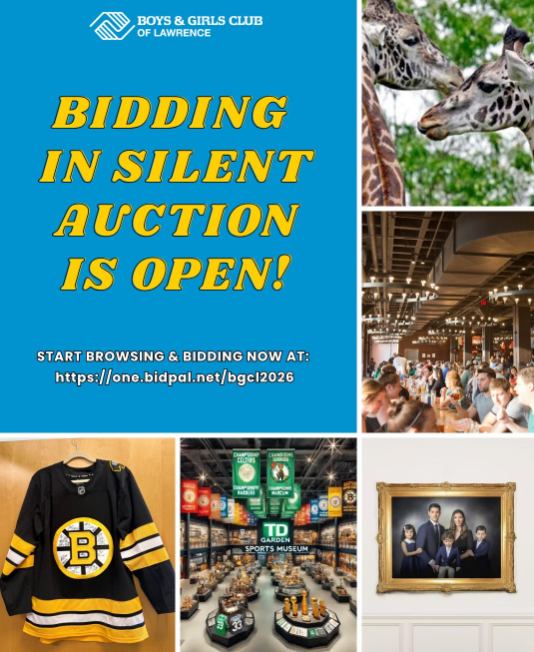
For example, BGL Lawrence's charity auction featured a behind-the-scenes tour at Franklin Park Zoo or Stone Zoo for up to six people, giving the winning bidder exclusive access beyond the public exhibits. Experiences like these offer something money can't easily buy, making them memorable additions to any charity auction.
Instead of asking supporters to donate products, ask whether they'd be willing to host a small-group experience around a skill they already have. A photographer could host a beginner's workshop, a gardener could teach seasonal planting, a chef could run a cooking class, or an artist could lead a painting session.
These experiences cost little to organize but can become sought-after auction items because they're personal, limited, and sometimes entirely unavailable elsewhere.
Classes and workshops are easy to find online, so avoid auctioning a standard voucher. The draw is the person leading it.
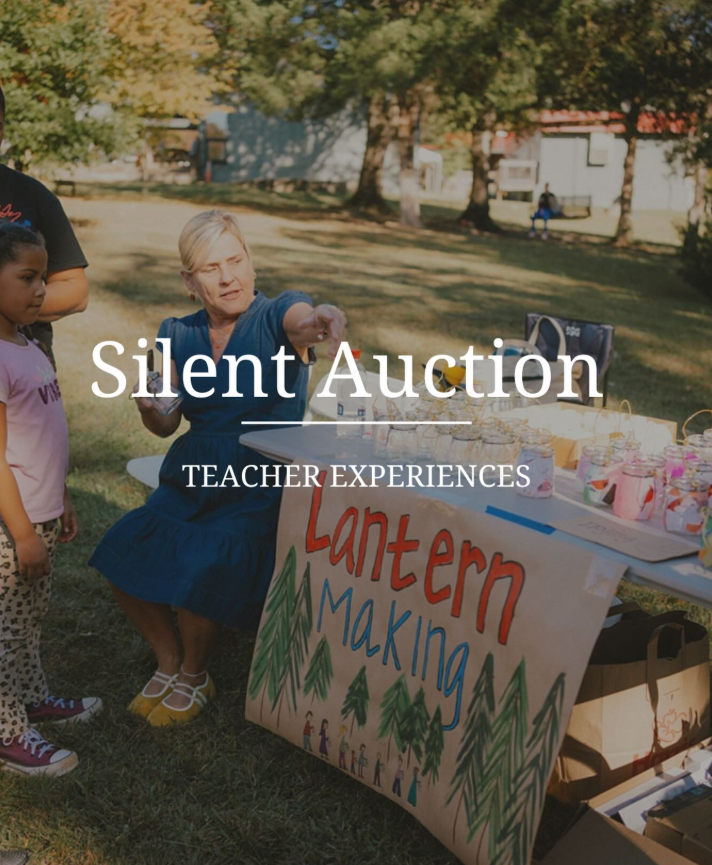
Teacher experiences have become a staple of school auctions because they're rooted in relationship-building. A pizza lunch with a favourite teacher or an afternoon spent doing science experiments in the lab are experiences families can't buy elsewhere, which is exactly why parents are happy to bid on them.
The Parkside School regularly includes teacher-hosted experiences in its fundraising auction. Recent offerings have included cooking sessions, art experiences, and other small-group events led by teachers, promoted alongside the school's annual benefit auction.
Most local businesses can't always donate a holiday or a high-value prize, but many are happy to contribute one product they're known for. Instead of treating those as separate auction items, combine them into a picnic basket that celebrates your community: a bakery's signature loaf, locally made jam, handmade chocolates, soaps, fresh fruit, and flowers.
There's another advantage to this approach. Every business featured in the basket has a reason to talk about the auction, whether that's through social media, email, or in-store displays. One auction item can end up bringing in far more visibility than a single donor ever could.
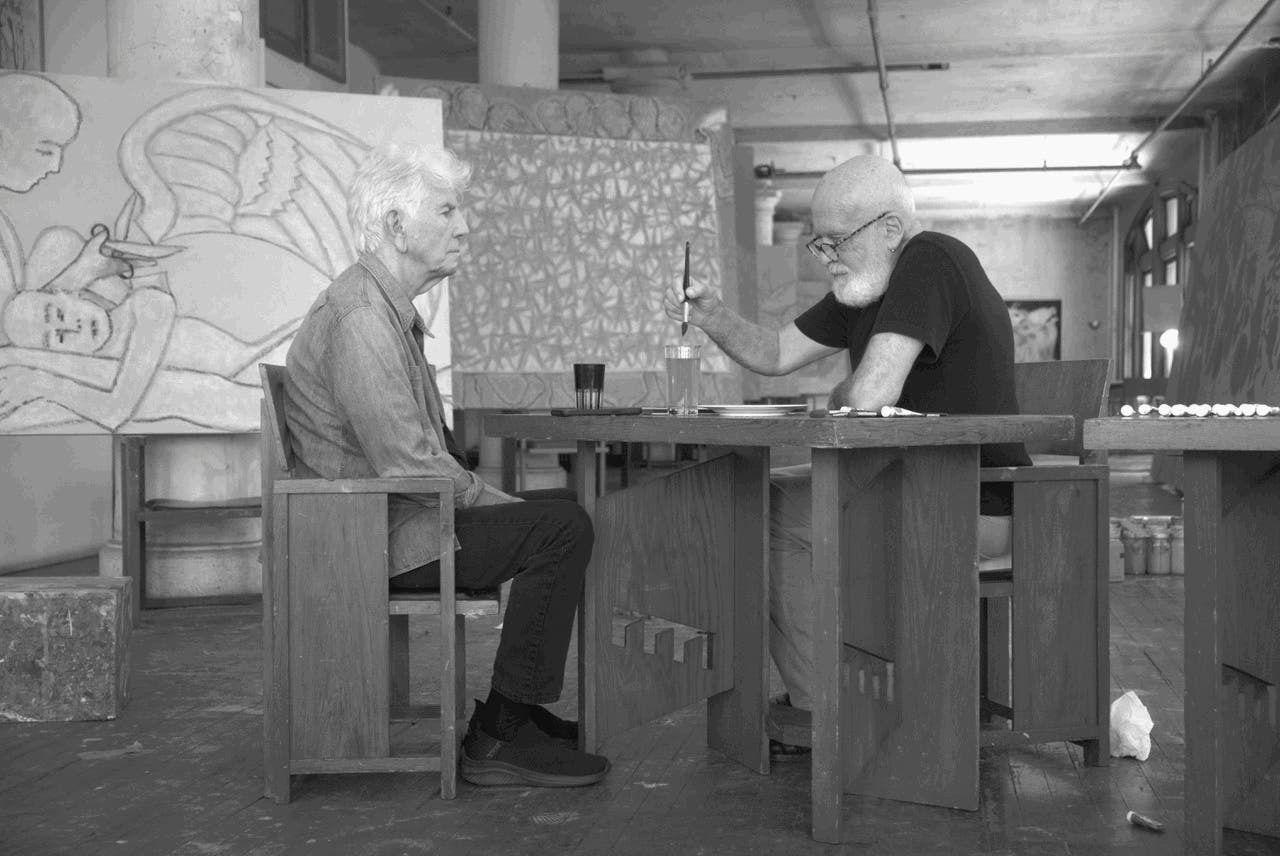
Art is a staple at charity auctions, but a commissioned piece takes this idea one step further. Instead of bidding on what's already been created, the winning bidder gets to decide what the artist creates. It lets the winning bidder work with the artist to create something personal to them, making it an easy way to give them something no one else owns.
Whitechapel Gallery's 125th Anniversary Auction featured a Watercolour Portrait Commission by Francesco Clemente. The winning bidder received a private portrait sitting with the artist, and the commission sold for £25,800.
Instead of asking someone to donate a restaurant voucher, invite them to host an evening. It could be a barbecue, a themed dinner, a wine-and-cheese night, or a regional cuisine experience at their home. These events work because people are buying into a shared experience.
School communities have used this idea for years through parent-hosted parties that guests buy tickets to as part of the auction. At Ventana School, families host community parties ranging from dinners to hobby classes, with proceeds supporting the school.
Signed jerseys and game tickets are always popular, but don't overlook the value of access. A private lesson with a coach or athlete gives bidders a chance to learn a new skill while spending time with someone they admire. Local sports academies, clubs, and athletes are often just as willing to donate their time as memorabilia.
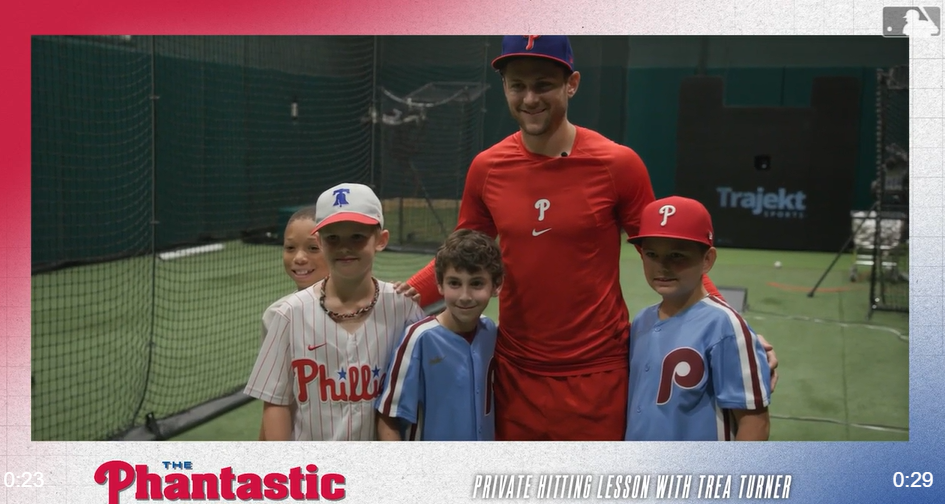
The Philadelphia Phillies' 2025 Phantastic Auction featured private hitting, pitching, and catching lessons with All-Stars Trea Turner, Zack Wheeler, and J.T. Realmuto alongside signed memorabilia and VIP experiences.
A vacation package is a non tangible purchase that bidders can enjoy, adding an element of novelty to the bidding. Try and work experiences into the regular hotel stay or a tour package to make the getaway memorable, whether that's a food tour, spa treatment or even local excursions.
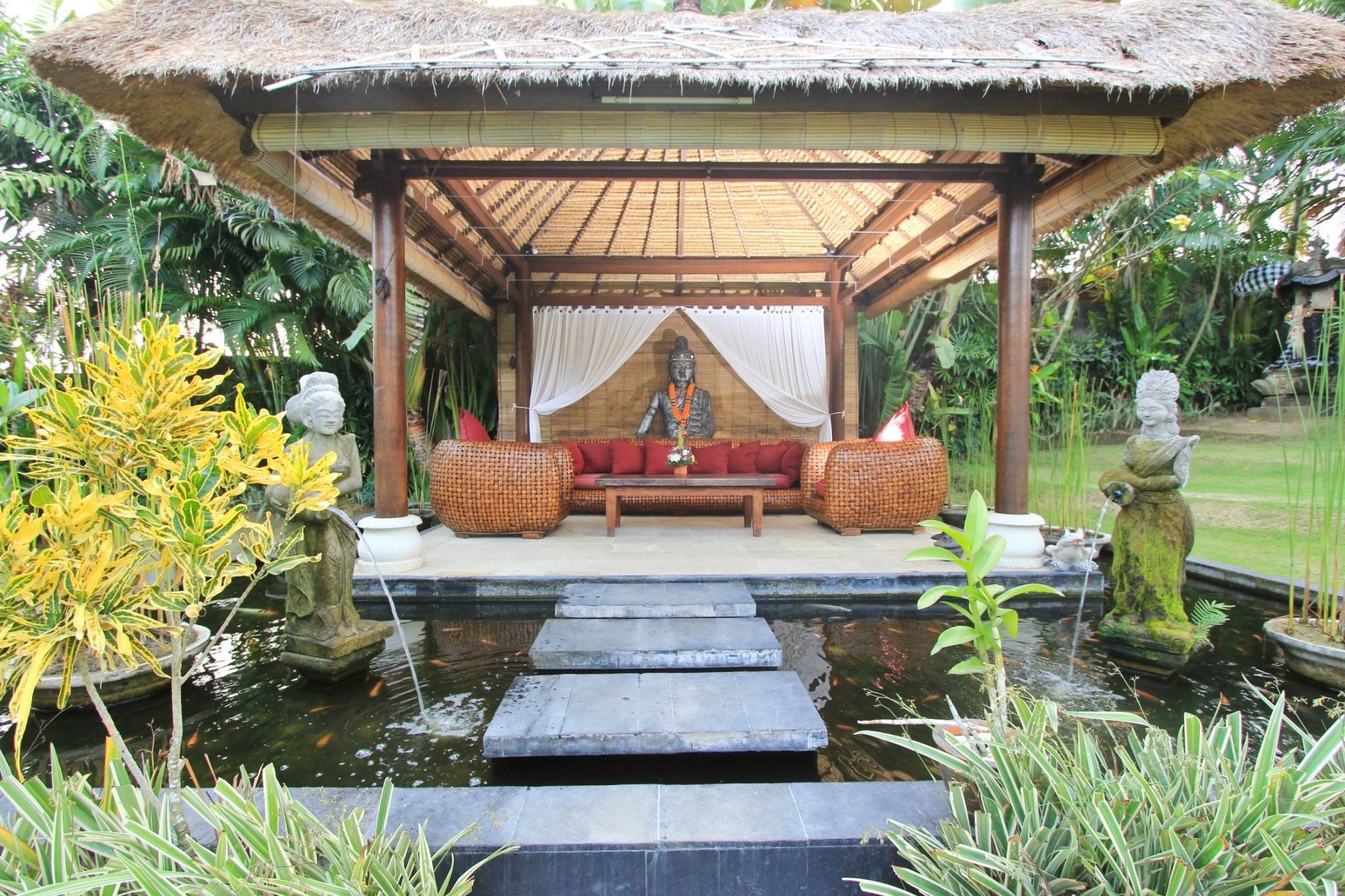
A Charitybuzz auction benefiting the Our Change Foundation features seven nights in a private Bali villa for up to 10 guests. The package includes a private chef, a traditional Balinese culinary experience, cultural performances, airport transfers, and an on-call driver.
Professional services can be an unexpected hit with the right audience. House cleaning for three to six months, seasonal lawn care, home organization, pet grooming or boarding are all services people already pay for. The key is choosing services that actually adds value to the bidder’s daily life.
Collectors and fans will bid for items they can't easily find elsewhere. But it does take knowing your audience really well to pull this off. Signed jerseys, books, sports equipment, musical instruments, limited-edition merchandise, and other collectibles can all make strong auction items, especially when they have a connection to your institution or community.
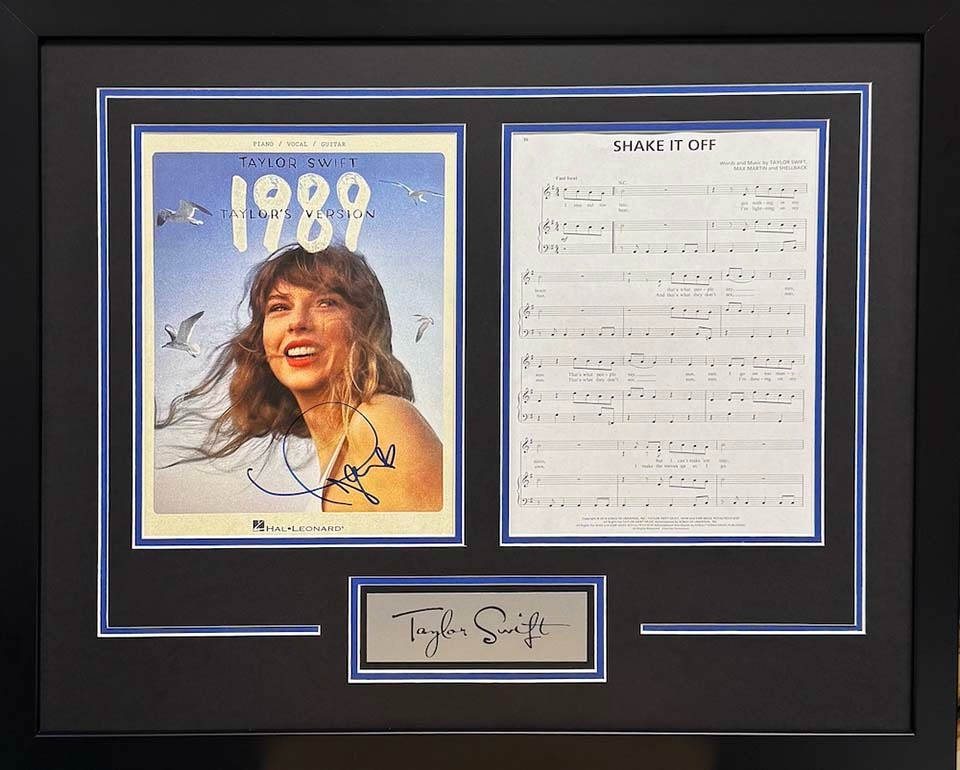
At Trine University's 2025 Scholarship Gala, bidders competed for memorabilia such as Taylor Swift–autographed sheet music and a football helmet signed by Peyton Manning, Adam Vinatieri, and others.
Adventure experiences give people a chance to try something they've always wanted to do but might not book on their own. Hot air balloon rides, white-water rafting, scuba diving, guided hiking trips, rock climbing, and wildlife safaris can all attract competitive bidding.
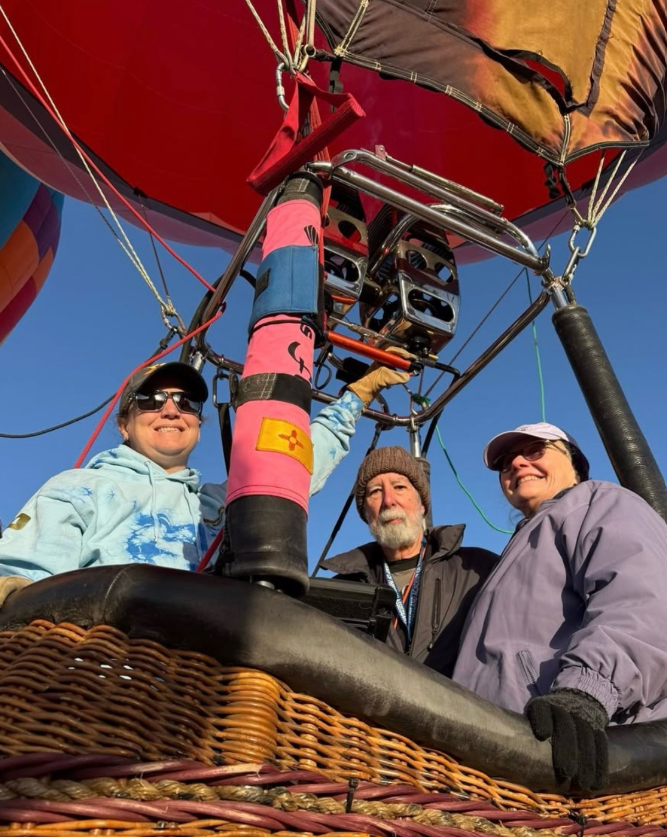
The Girls Inc. of Santa Fe 2025 Auction featured a hot air balloon ride as one of its auction items, showing how adventure experiences can attract interest from bidders looking for something memorable
The ideas above are some of the most popular auction items, but they're far from the only options. Here are additional charity auction ideas across different price points to help you build a well-rounded auction catalog:
Here are a few quick tips you can keep in mind while sourcing your items:
A successful auction depends on dozens of these moving parts. Managing each of those with separate tools could add work for your team and create a disconnected experience for guests.
With Almabase, you can run live and silent auctions alongside your fundraising event, create a branded auction page, manage registrations and ticketing, accept auction payments and donations, and send automated bid notifications from a single platform.
That means your attendees get one cohesive experience from registration to checkout, and your team doesn't have to reconcile data across multiple systems.
Truthfully, there’s no secret formula for a great auction. The items that spark a bidding war at yours might barely get a second look at another. But what will never let you down is paying attention to what your audience wants and responds to, and giving yourself something new to build on each time.
So whether you’re planning your first auction or are seasoned at it, you could take a few of these ideas, put your own spin on it and see what happens.
When it’s time to turn those ideas into an actual event, Almabase can take some of the operational weight off your plate.
Curious to see what that looks like? Book a personalized demo to see how you can manage your auctions in one platform.
Table of Contents
Subscribe
See how modern advancement teams bring alumni engagement and fundraising together.
Picture the basket nobody glances at twice - shrink-wrapped, full of gift cards to popular stores and individually wrapped chocolates. It’s sitting next to a hand-packed wooden crate with a local chef's sauce, a pottery mug from a neighborhood studio, and a card that reads "Saturday Morning Trek in Our City." Both probably cost the same to assemble, but only one of them starts a bidding war.
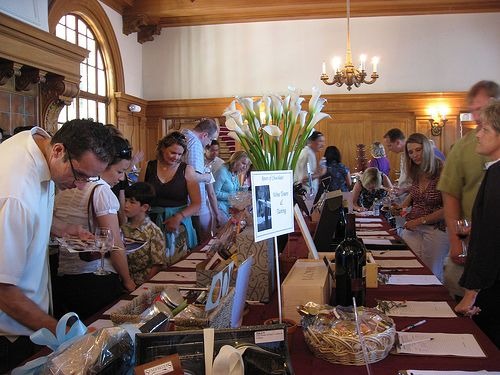
Research shows that experience-based and thoughtfully curated auction items raise 20 to 30 percent more than generic physical goods. This guide is for fundraisers putting those baskets together, whether for a school event, nonprofit gala, alumni weekend, or a community fundraiser. Below, you'll find 18 silent auction basket ideas, each with sourcing suggestions and best-fit audiences.
Baskets are easy to assemble: local businesses say yes, item prices are flexible, and a good theme easily travels from a school event to a nonprofit gala. Community-sourced items consistently out-earn generic catalog items, because a "Spa Day at [local wellness center]" carries weight a generic "$50 massage voucher" won’t. Local sourcing also gives you the flexibility to tailor baskets to different audiences, such as parents, alumni, donors, teachers, and local supporters.
There are maybe ten seconds before someone at the bidding table moves on. In that window, three things do the most work.
A bidder scans the table looking for something that catches their eye. The faster your basket answers "who is this for and what does it feel like to receive it," the better. BidBeacon recommends including a few items that clearly fit your theme, plus one standout piece that's valuable enough to drive competitive bidding.
Experience-based items raise 20 to 30 percent more than physical goods because winning one feels like getting access to an experience rather than collecting another mug for your crowded kitchen shelf. A cooking class, a fitness studio pass, a photographer session: these become the centerpieces that give the whole basket its pazazz.
The opening bid sets expectations in both directions - too low, and the basket reads as low-value; too high, and it doesn't get an early bid to anchor against. LuxGive recommends starting at 30 to 50 percent of fair market value, which tends to invite that first bid and let competitive psychology take over from there.
The audience here usually falls into a few predictable groups: parents who want a special memory from the year for their kids, community members drawn to anything that helps the school, and grandparents who will outbid everyone for something their grandchild's class made together.
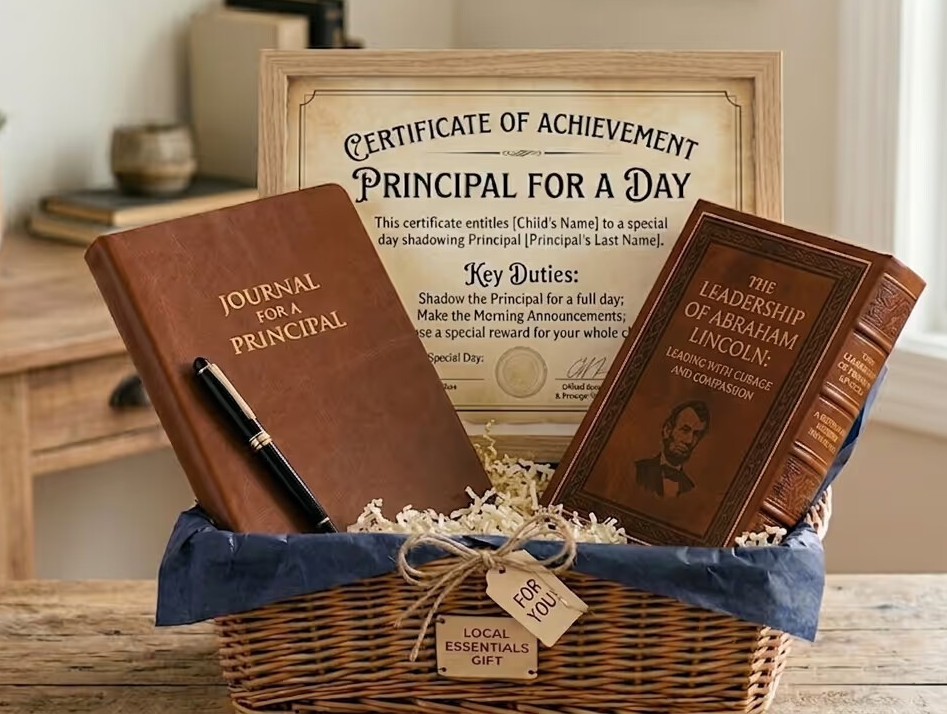
Principle for a day - the experience basket. This basket offers something that doesn't exist outside your school: a certificate for the winning child to shadow the principal for a day, make morning announcements, and choose a reward for their class. That specificity is what drives the bid; you can’t buy this at Staples.
What to include:
Best for: Elementary school fundraisers. For parent bidders who want to give their child a story to tell from the school year.
Pro tip: The experience basket can be adapted for any staff role - librarian, PE coach, cafeteria supervisor, and you've got a whole new basket
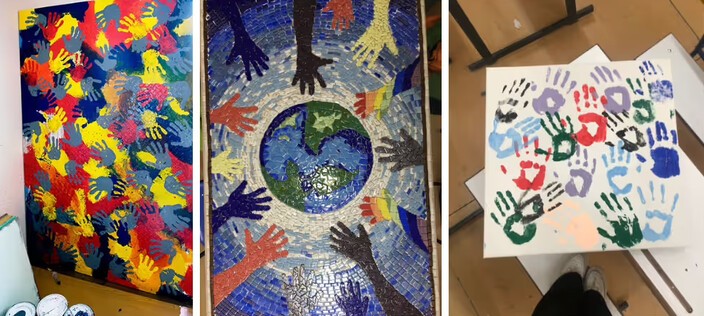
Every student in a class contributes to a collaborative piece of art: a painted canvas, a mosaic tile, a hand-stamped painting. The winning bidder takes home something that exists nowhere else on earth. The backstory of this project is the whole pitch.
What to include:
Best for: K-8 schools; parent and community bidders; particularly impactful at schools with arts programs.
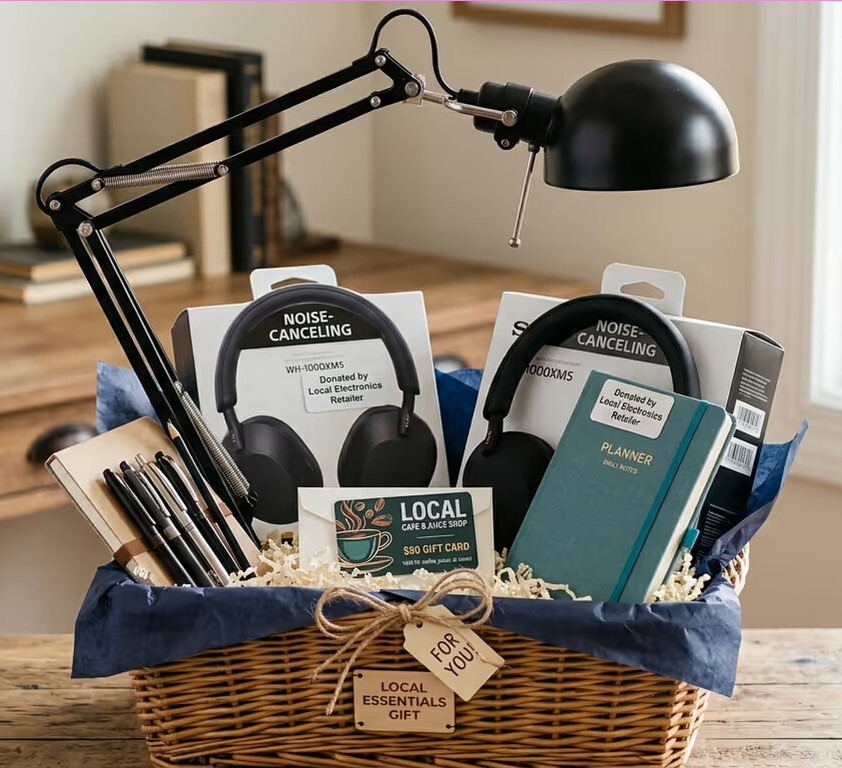
For middle and high school fundraisers, the baskets that do well usually connect to the specific stage of school life the kids are in. This one speaks to the parent who is already quietly thinking about what the next few years will look like.
What to include:
Best for: Middle and high school audiences, particularly strong with parents of juniors and seniors.
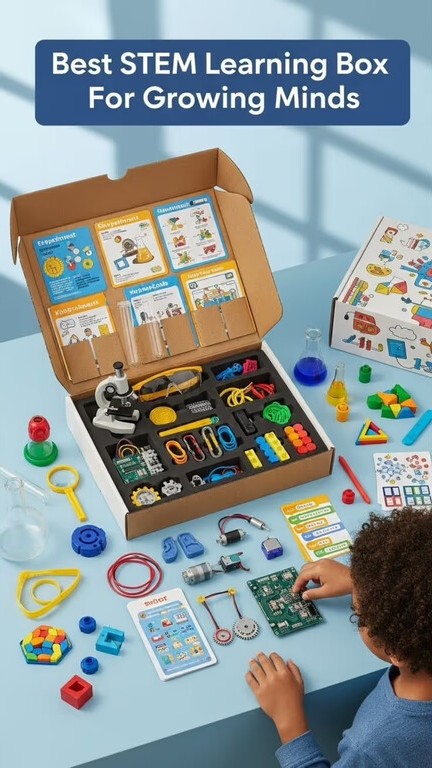
A great option for K-8 audiences where the bidding energy comes from parents who want to buy something that’s genuinely interesting for their kids and also directly useful for their school curriculum. The subscription box shows ongoing value, which makes the basket feel worth more than the individual items inside.
What to include:
Best for: K-8 fundraisers and STEM-oriented parent communities.
Pro tip: Reach out to STEM subscription companies directly and share your school’s 501(c)(3) information. Many do have donation or education-support programs that respond faster than general customer-service enquiries.

Before the event, survey your faculty. Ask what they'd actually want, not what a planning committee assumes teachers want. Build the basket from the real answers, and mention the source in the basket description at the event with a bit of humor. That extra effort and the funny detail give the basket an edge that a generic “teacher appreciation” basket doesn’t have.
What to include:
Best for: The Whole school community; families who want to give something meaningful back to their child's teachers; best at beginning-of-year and end-of-year events.
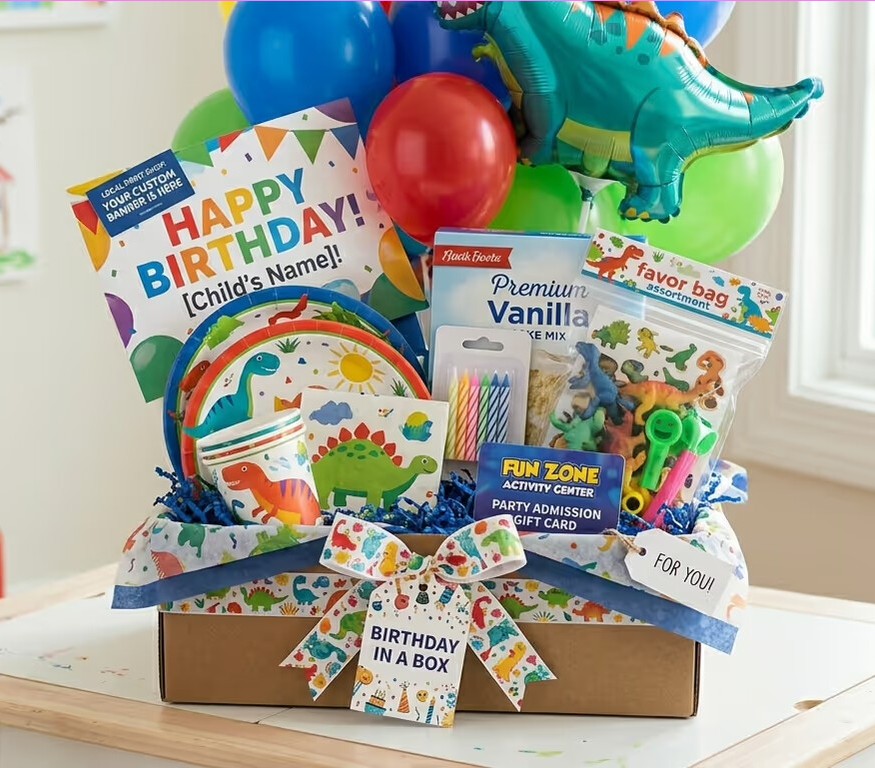
For parents of young kids, planning a birthday party is a yearly stress test. This basket takes away at least some of that stress, if not all. Any parent who’s been through it will recognize exactly what it offers.
What to include:
Best for: Elementary school audiences with young families; best at back-to-school and spring semester fundraisers.
Pro tip: If your parent community includes someone who does event planning or parties, ask them to donate a coupon. It adds real value and puts their name in front of an audience that will likely need their services soon.
These audiences have typically attended many of these events. They’ve seen all the standard basket types, and they’re not likely to get excited about anything that feels like a placeholder. The ideas below are specific - in theme or in how they’re put together. They will feel fresh in a room full of experienced donors.
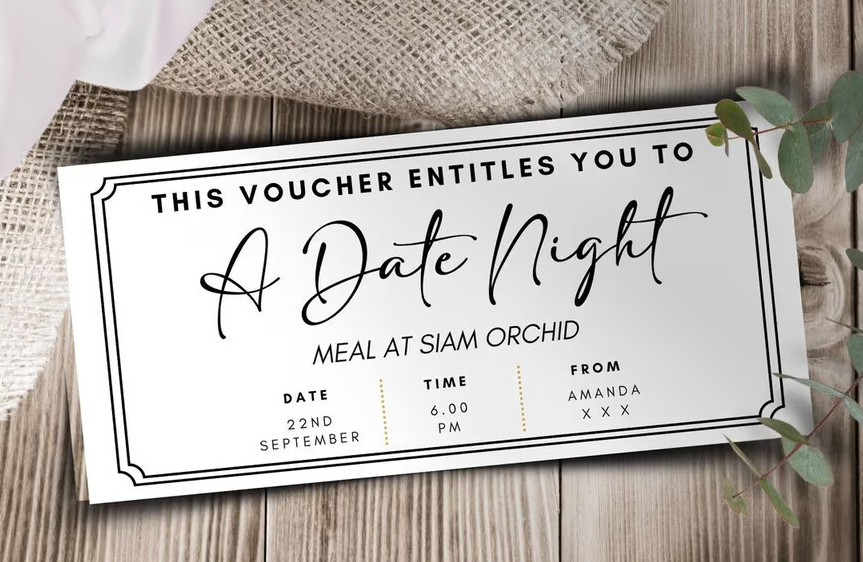
A single dinner gift card is appreciated. Twelve of them - one per month, to a rotating set of well-regarded local restaurants is something people will actively try to win.
What to include:
Best for: Couples, young professionals, busy parents who'd genuinely use a monthly reason to get out; strong at galas and alumni events.
Pro tip: Approach the restaurants together, framing the "Year of Date Nights" as a package. Restaurants are more generous when they know they're featured alongside other well-regarded local spots. They're part of a curated package and not just donating free dinners.
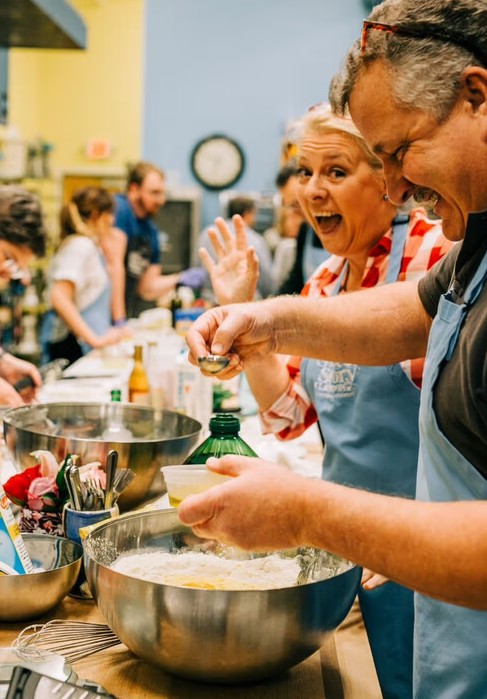
Cooking classes with a local chef consistently land among the higher-bidding items at nonprofit events. Mainly because they're hard to arrange on your own. Winning this will feel more like an invitation than a purchase.
What to include:
Best for: Foodie donors, couples, professional communities; strong at spring and fall galas.

The version of this basket that wins bids goes well beyond a standard spa basket. The difference comes down to specificity and quality. For example, a membership to a local studio instead of a generic coupon, high-end skincare instead of a department store brand. Basically, items that come together around an idea of what it really means to relax and restore yourself.
What to include:
Best for: Professional donor communities; women's organizations; health-focused nonprofits; best at spring galas.
Pro tip: Approach the fitness studio as an event wellness partner and not just as a basket donor. Studios are often actively looking for community partnerships.
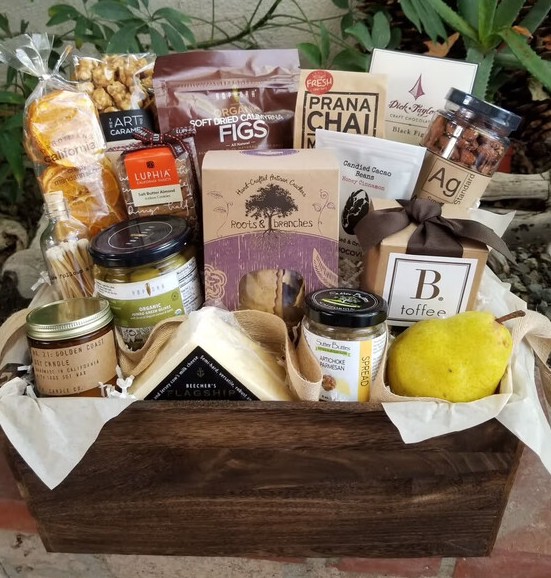
Every item in this basket comes from a local artisan or small producer, which means every item comes with a story. At a gala full of experienced donors who have bid on baskets after baskets of mass-produced items, something handmade and artisanal will hit the spot.
What to include:
Best for: Community-centered nonprofits; arts organizations; for any event/community with a "buy local" ethos.
Pro tip: Source the whole basket at a single local artisan/farmers market. You build multiple donor relationships in one trip, and "every item in this basket was made in our community" becomes its own selling point at the table.
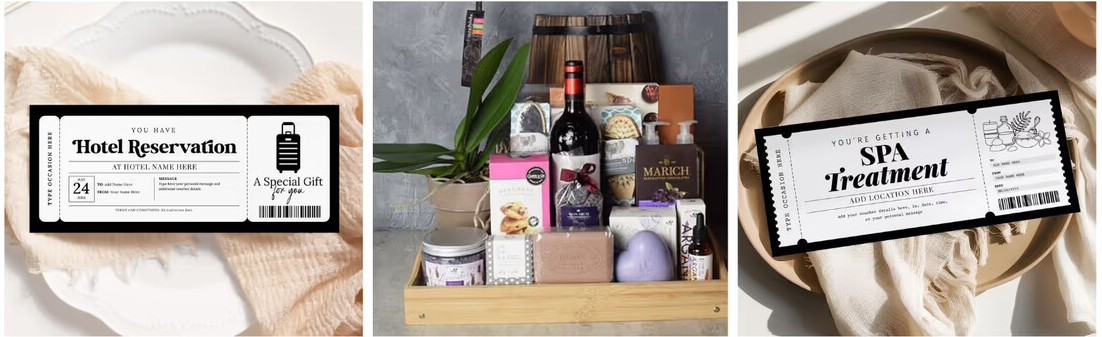
The version of this that actually draws bids makes the weekend feel fully formed and ready to go. Clear, specific details give bidders an immediate sense of the experience, so they can picture themselves already there and relaxing.
What to include:
Best for: Professional donors; couples and singles alike; best at galas and alumni events where attendees are busy professionals who need a break but won't take one unless it's handed to them.
Pro tip: Boutique hotels are significantly more open to donation partnerships than chains. Community visibility is a genuine advantage for them in a way that it isn't for national brands. You can make that part of your pitch.
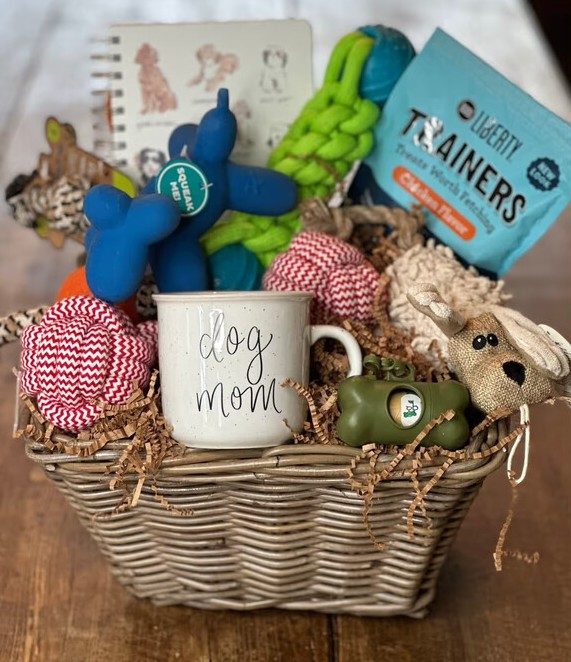
Pet owners are a loyal and enthusiastic group at auctions, but they’re often underrepresented at the bid table. A well-made pet basket can quickly become one of the most talked-about items in the room and spark the kind of competitive bidding that draws a crowd.
What to include:
Best for: Community nonprofits; animal rescue organizations; any event where a meaningful portion of the room might own pets.
These ideas don't belong to one event type. With light adjustments, they move from elementary school auctions to nonprofit galas to alumni events.
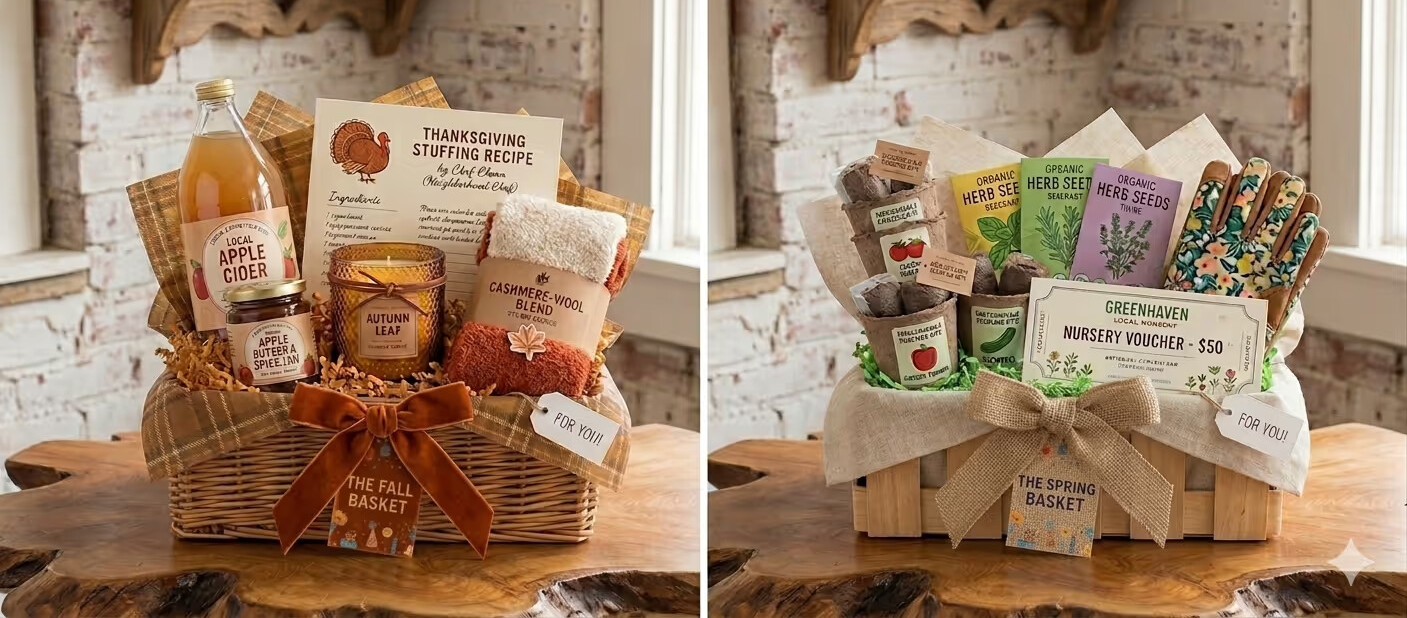
Seasonal relevance creates a different kind of urgency at the bid table, the sense that this basket is specifically for right now.
What to include:
A fall version can have:
A spring version can have:
Best for: Any event timed to a season; works for family audiences and professional donors alike.

This basket appeals to professionals who travel often - a group that shows up in strong numbers at galas, alumni events, and tends to bid on things they’ll actually use. The right mix of items makes frequent travel feel easier while still feeling a bit indulgent.
What to include:
Best for: Big galas, alumni events; Events with a strong base of frequent travelers.
Pro tip: An airport lounge day pass is a relatively low-cost addition that feels genuinely valuable to anyone who spends a lot of time in airports.
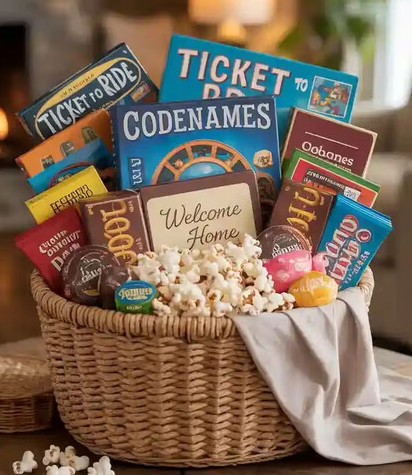
This basket works across age groups. It brings together everything needed for a relaxed, social evening, and the specific game choices help the basket feel thoughtful rather than generic.
What to include:
Best for: Family audiences at school events; younger professional donors at nonprofit galas; mixed-age events.
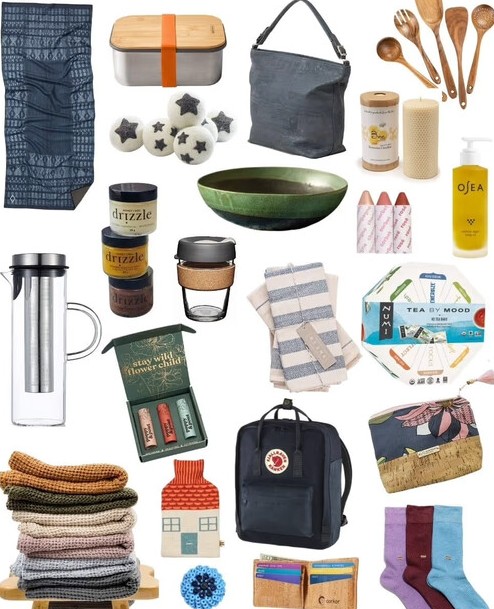
This buzz about this basket starts before the event. Poll your community through a parent newsletter, email list, or social media and ask what they’d most like to see in a silent auction basket. Then build it using the top responses and name it something like “The One You Asked For.” The process creates a sense of involvement early on, and the people who voted feel a stronger pull to bid on it.
What to include:
Best for: Schools with active parent associations; nonprofits with strong email lists; any community with high pre-event engagement.
Pro tip: Share the poll results in your event communications before the auction. It keeps the basket part of an ongoing conversation and builds anticipation.
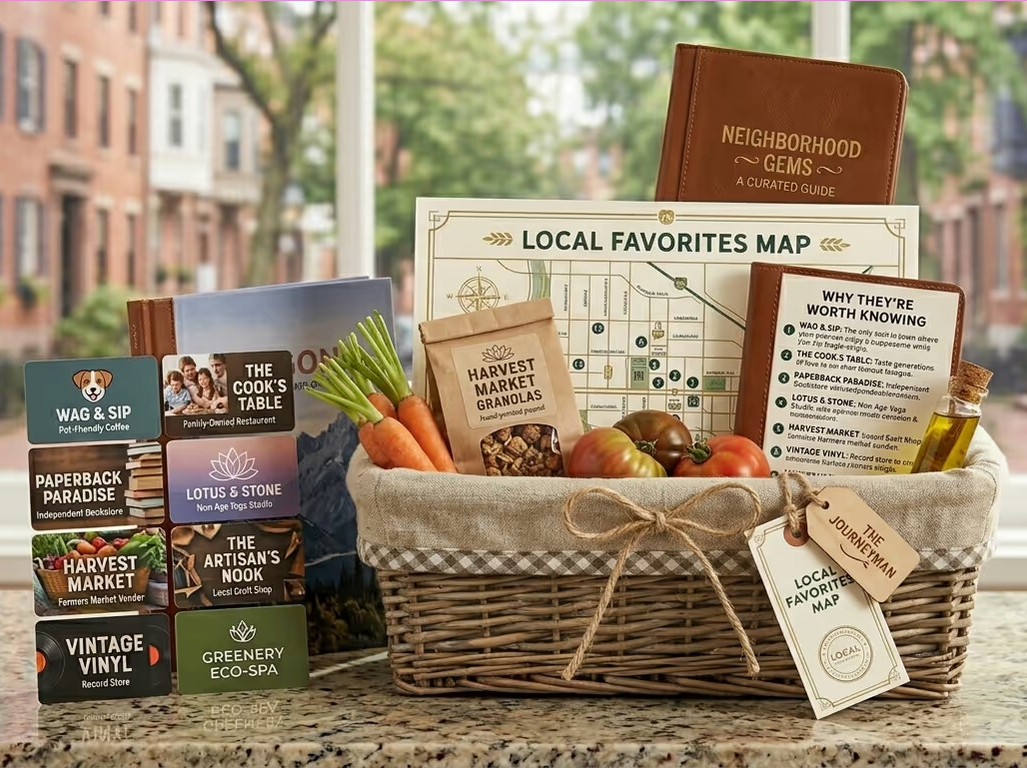
This basket highlights the best of the neighborhood. Include gift cards to six or eight local spots - a pet-friendly coffee shop, a family-owned restaurant, an independent bookstore, a new age yoga studio, a farmers market vendor - along with a simple map showing where each one is and a short note about why it’s worth knowing.
This basket tends to hold people’s attention at the table longer; more time at the table often means more competitive bidding.
What to include:
Best for: Community organizations; place-based nonprofits; any event with a strong geographic anchor.
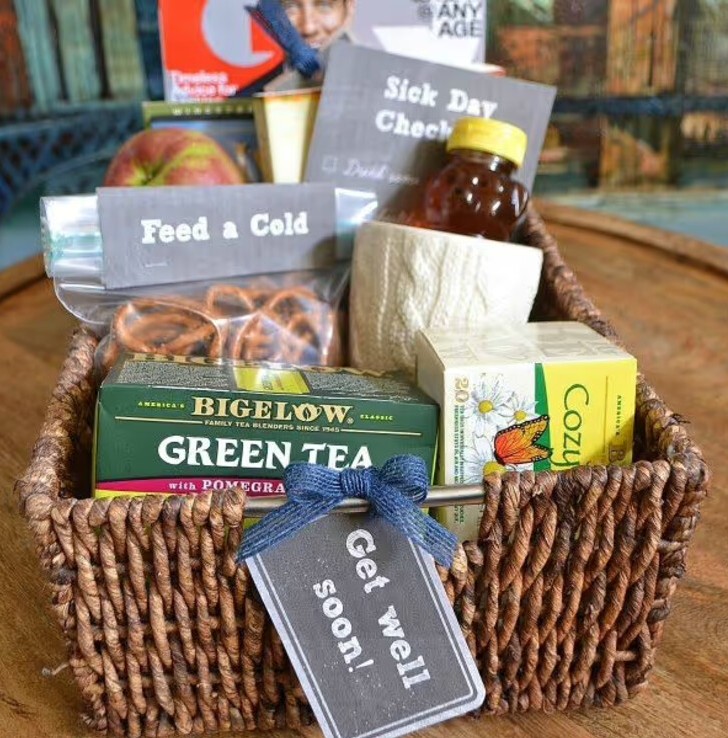
This basket is built for a very specific moment: when someone is sick, worn out, and just wants to feel taken care of. The more thoughtful and well-chosen the items, the more it feels like real relief rather than a generic comfort bundle. The basket name and item list together should answer one question: after what kind of week would someone really be thankful for having this basket around?
What to include:
Best for: Broad audiences - works well with families, professionals, and mixed-age donor groups; best at any event at the start of a new season/the flu season.
Pro tip: Add a simple “doctor’s note” style card with light humor. It makes the basket feel more personal and will make the winner chuckle through their blocked nose when they finally use it.
A silent auction does not start when the doors open. It starts when the first invitation hits someone's inbox, and it does not end when the winning bid is logged. What happens in the weeks before and the days after determines whether that night builds into something or stays a one-time event. Almabase is built for that full journey.
Almabase centralizes registration and ticketing in one place, so your team doesn’t have to juggle multiple systems in the days leading up to the event. Make it easy for your attendees, donors, parents, alumni, and supporters to register for your fundraising event by using a platform that integrates everything.
Send targeted reminders, invitations, and updates to the right audience segments before and after the event. Almabase helps you tailor communication for returning attendees, first-time supporters, and everyone in between.
The supporters who show up for a silent auction are exactly the people worth staying in touch with. Almabase gives teams the tools to keep that conversation going after the event closes - through community features, engagement tools, and communications.
Create a smoother path from participation to giving. Almabase connects event attendance, donation pages, and gift tracking, so supporters can move naturally from showing up to making a gift without switching platforms. Learn more here.
Capture the engagement data your team needs to strengthen future campaigns, donor outreach, and event planning. Almabase syncs this information to your CRM in real time, helping you build on each event rather than starting over.
If your school or nonprofit wants to run smoother, more effective fundraising events, especially if you're managing multiple events a year across disconnected tools, it’s worth exploring a more integrated approach. Almabase can help create a more organized, engaging experience for your community. Book a personalized demo to learn more!
.avif)
18 Silent Auction basket Ideas for Schools and Nonprofits
Discover 18 silent auction basket ideas that raise 20-30% more for schools and nonprofits. Themes, sourcing tips, and pricing advice to spark bidding wars.
Lorem ipsum dolor sit amet, consectetur adipiscing elit. Suspendisse varius enim in eros elementum tristique. Duis cursus, mi quis viverra ornare, eros dolor interdum nulla, ut commodo diam libero vitae erat. Aenean faucibus nibh et justo cursus id rutrum lorem imperdiet. Nunc ut sem vitae risus tristique posuere.
April 23, 2026
12 minutes
Alumni events have evolved throughout the decades and have taken many forms to become the powerful touchpoints that strengthen engagement, loyalty, and fundraising that we know them for today.
Their importance has only grown for advancement teams looking to fundraise and engage alumni. For example, the University of Delaware partnered with Blackbaud to refine its event-driven outreach and reported a 43% increase in fundraising dollars. It’s a reminder of how events stay at the heart of alumni experiences and drive both engagement and fundraising simultaneously.
Today, we’re going back to the basics and looking at why events continue to be at the heart of advancement teams and what they bring to the table today.
Advancement professionals generally consider events as the most effective activity to engage alumni. In-person gatherings in particular offer the irreplaceable value of face-to-face connections, while hybrid formats make it possible for alumni across the globe to join in. Together, these formats keep communities active and connected in ways that emails or newsletters alone can’t achieve.
A well-planned alumni event often becomes the spark that triggers mentorship drives, giving, and the gradual growth of your constituent community. They serve as anchors in the alumni journey, offering memorable moments that fuel long-term engagement and creating touchpoints that keep alumni coming back.
Here are 10 key benefits of alumni events in 2026, each showing how the right strategy can turn a simple gathering into a lasting impact for your institution and community.
The true mark of an alumni program is when events evolve from being occasional highlights to becoming part of the institution’s culture. Alumni who attend one event and have a positive experience are more likely to show up for the next, to mentor a student, to make a gift, and to stay connected in between. Over time, these small touchpoints compound into lifelong support, and mutual support is crucial for building communities.
Events have become cultural community touchstones that are both natural and enduring, creating a culture that grows stronger with every gathering. This is why alumni events today are both a great opportunity as well as an important responsibility.
When alumni attend a reunion, regional mixer, or even a casual alumni picnic, they’re showing they still feel connected to the institution. That act of participation often becomes the first step toward giving back. Engaged alumni are naturally more likely to become donors.
By creating an inspiring and positive atmosphere, you can motivate alumni to give back. Whether it’s through a direct fundraising appeal during the event or as a follow-up, a well-executed gathering often leads to a significant increase in contributions.
Events are a natural setting for pairing seasoned professionals with recent graduates or current students. The conversations between professionals and current students or recent graduates can often lead to internships, referrals, or ongoing mentorships that wouldn’t happen through online platforms alone.
For students and young alumni, meeting someone who once sat in their classroom but is now established in their field is motivating. For senior alumni, offering advice strengthens their pride in the institution and renews their connection to the community. Both sides walk away with value.
Enthusiastic and successful alumni are your best ambassadors. When prospective students and their families see a thriving alumni network, it serves as powerful social proof of the institution's value. Alumni can share their positive experiences and career successes, making a compelling case for why your institution is an excellent choice.
Every successful alumni event is a public relations opportunity. Positive social media mentions, photos, and testimonials from attendees amplify your institution's brand and showcase a vibrant, active community. This positive exposure can attract prospective students, impress stakeholders, and solidify your institution's reputation as a place that cares for its community long after graduation.
For many alumni, professional networking is a primary reason to attend events. By connecting individuals from various industries and career stages, you provide a valuable resource for career development and mentorship. Facilitating these connections not only benefits your alumni but also positions your institution as a hub for professional growth, enhancing its reputation.
Activities and features such as flash mentoring, corporate matching gifts, and networking-specific events and online communities are great ideas to make both prospects and professionals feel appreciated.
Every institution has a segment of alumni who have lost touch. Your institution can attempt to re-engage these segments. A compelling milestone, tailored reunion, or a unique themed gathering, can be the perfect excuse to re-establish contact. By offering an experience they don't want to miss, you can bring lapsed members back into the fold and remind them of their connection to the institution.
An alumni event is the perfect stage to unveil new campus developments, academic programs, or research breakthroughs. Bringing alumni back to campus allows them to see the tangible results of their past and future support. This transparency builds trust and excitement, making them more likely to stay involved and contribute to future projects.
Events offer a direct line to your alumni. Informal conversations and structured feedback sessions can provide honest insights into what your alumni want and need from your institution. This information is gold for refining your engagement strategies, academic programs, and communication efforts, ensuring they remain relevant and impactful..
While alumni increasingly prefer smaller affinity-based events and reunions, there is great value in fostering engagement between different generations through your events. While this mostly comes through major events such as family weekends and homecomings apart from the obvious mentorship-related events, you can tailor events to mingle specific segments to promote a sense of community among different generations.
These multi-generational connections ensure that alumni don’t just stay tied to their classmates, but to the broader community itself.
The alumni events that stand out today are the ones that feel intentional. It’s not about how big the guest list is, but how well the event reflects the needs of your community. A small, personalized dinner can often create more impact than a large formal gala. Adding hybrid access for those who live abroad, collecting fresh alumni data at check-in, and following up with clear impact reports are simple shifts that transform events from “one-off memories” into long-term engagement drivers.
We’ve prepared a simple checklist that covers the basics you should look out for when planning your next event. Have a look:
Set the Purpose
Pick the Right Time & Place
Budget with intention
Design the Experience
Spread the Word
Welcome with Warmth
Keep Energy Flowing
Support Behind the Scenes
Capture the Magic
Share, Listen & Learn
Reflect & Refine
Hopefully, this blog helped you revisit and re-appreciate the wonderful cornerstone of advancement and alumni relations which is the alumni events. Even the most experienced teams sometimes need to take a step back and look at the rudimentary reasons why these events happen in the first place to help them approach their next event with fresh ideas, which is what this blog was meant to do.
That being said, if you’re looking for a partner to help you and your institution/organization set up your next alumni event and make it a big success, feel free to start a conversation or request a personalized demo with us and we’d love to get in touch!
A successful alumni event has clear goals, provides tangible value to attendees (like networking or learning opportunities), is well-organized, and is effectively promoted to the right audience. Post-event follow-up is also crucial for maintaining momentum.
Measure ROI by tracking metrics tied to your event goals. These can include attendance numbers, a survey of attendee satisfaction, the number of new volunteers or mentors, and the amount of donations raised. Tracking website traffic to alumni pages or social media engagement around the event can also provide valuable data.
Popular ideas include traditional homecomings and reunions, professional networking nights, industry-specific panels, family-friendly picnics, virtual workshops or webinars, and exclusive gatherings for major donors. The best idea will depend on your specific alumni base and institutional goals.
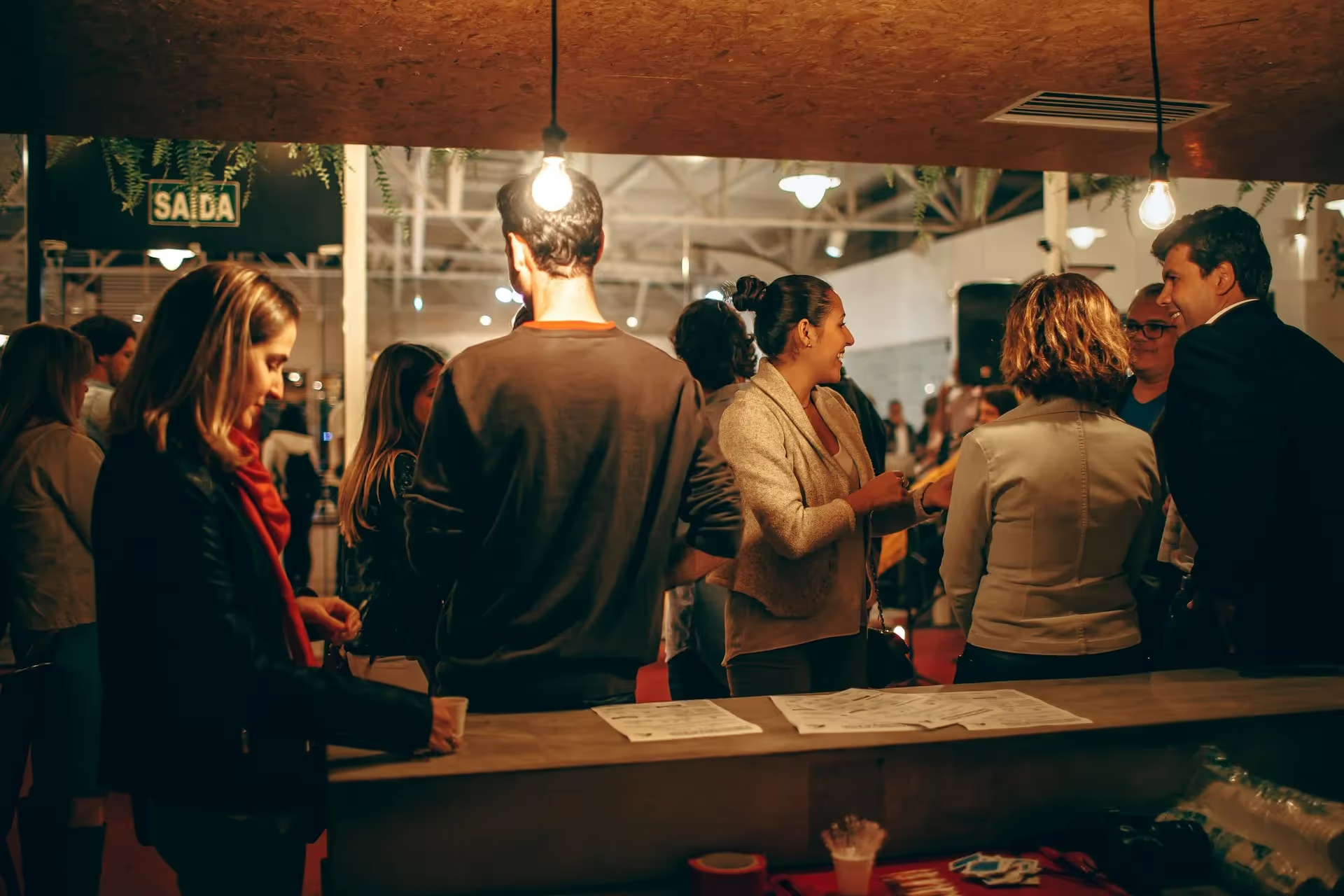
10 Key Benefits of Alumni Events in 2026
Discover the top 10 benefits of hosting an alumni event. Strengthen your community, boost donations, and enhance networking with our expert insights.
Lorem ipsum dolor sit amet, consectetur adipiscing elit. Suspendisse varius enim in eros elementum tristique. Duis cursus, mi quis viverra ornare, eros dolor interdum nulla, ut commodo diam libero vitae erat. Aenean faucibus nibh et justo cursus id rutrum lorem imperdiet. Nunc ut sem vitae risus tristique posuere.
September 18, 2025
12 minutes
We’ve talked in length about some good events and the event management or fundraising tools that can make them succeed consistently. This time, we’re taking a step back and at the basics of fundraising event planning.
In this blog, we’re going through the essentials to turn your fundraising ideas into successful events that don’t just reach your targets but create powerful memories to strengthen your cause. Let’s get started.
As with every advancement initiative, the goals are where everything starts and leads back to. We’ve talked about the importance of Smart, Measurable, Attainable, Relevant, and Time-based (SMART) goals in a past blog. While creating the goals that will define your fundraising event, keep the following questions your attendees would have in mind:
Apart from these questions, your available staff time, target audience, budget, and other upcoming institution events will play a big part in shaping your scope for your event. Take your time with this step as the right goals are the foundation of a successful event.
Depending on your audience, budget, and goals, you may choose from a variety of fundraiser ideas, such as:
No two events are truly alike, and depending on the success of your fundraiser, a bold new approach might just be your next hallmark annual event.
As you’re not just planning any event, how you want to introduce fundraising to your event is going to be very important. Remember, a fundraising event can have multiple revenue streams. For example:
Nowadays, institutions usually look to include diverse fundraising methods in their fundraisers. This is also where pairing the right event with the right fundraising method can greatly impact your raised amount.
Now that you know what type of event you want as well as how you’re going to raise funds during it, it’s time to put the right tools to work. Pretty much every modern institution uses a fundraising platform to streamline their events and fundraisers. These tools help you:
and much more.
Platforms like Almabase help streamline these logistical elements, allowing you more time and energy to focus on fostering genuine connections with your donors.
Now that the building blocks are coming into place, it’s time to decide on arguably the most important part of an event, the people. You’ll want to form a committee of people to take on and help with specific parts of the event including but not limited to:
Apart from the above, you’ll want to think about corporations, non-profits, and associations that may want to play a pivotal role in helping you bring your event to life.
Now that all the bits and bobs are there, it’s time to lock in a specific place and time. It seems fairly basic but keep in mind that:
You’ve got all the info ready to go. But it doesn’t mean anything if it doesn’t reach the right audience. And even if it does, what type of messaging should they receive and when should they receive it so that they truly feel like attending or giving? That’s where your event marketing comes into play. You’ll want to make use of channels such as:
and much much more to get your event and your cause heard. Make sure that your marketing emphasizes how your fundraiser can help your cause of choice.
Even the most tight-knit plans have a chance of going wrong. A 10-minute delay caused by faulty audio equipment might just be that small little factor that disinterests a potential first time donor.
These are good things to keep in mind but ultimately, your contingencies may have to be just as unique as your event.
Nowadays, the event doesn’t truly end when the last guest leaves. Following up with attendees is crucial to maintaining their engagement and potentially turning them into loyal supporters. Post-event action items include:
Gratitude and proactive follow-ups go a long way in building long-term relationships with your supporters.
The ultimate measure of a successful fundraising event isn’t just the dollar amount raised but also the connections made and how deep those connections go over time. To turn your attendees into loyal supporters, you’ll want to consider some steps such as:
By nurturing these relationships, you're creating a network of passionate supporters who are more likely to advocate for your cause and contribute to future initiatives.
Fundraising events have certainly not gotten any easier to plan and host in the past few years. Donors and alumni in general simply expect more, and you can’t just rely on your long-time donors alone. However, we hope that this guide, despite just scratching the surface, was able to give you some ideas for your next fundraising event.
If you’re looking for a partner to help you manage events, engage alumni, and raise funds, do give us a shout and we’ll happily walk you through how we can help with your own personalized demo! ⤵️

How to Plan a Fundraising Event to Maximize Donations
Learn how to craft successful fundraising events step by step. Maximize donations with actionable strategies and engage donors meaningfully.
Lorem ipsum dolor sit amet, consectetur adipiscing elit. Suspendisse varius enim in eros elementum tristique. Duis cursus, mi quis viverra ornare, eros dolor interdum nulla, ut commodo diam libero vitae erat. Aenean faucibus nibh et justo cursus id rutrum lorem imperdiet. Nunc ut sem vitae risus tristique posuere.

.svg)

.avif)
.webp)