Struggling to maintain momentum in your alumni community? Explore proven strategies and tech solutions to keep your network actively engaged and thriving over time. Discover how to turn initial excitement into long-term success.

Almost every advancement team has probably tried to build some kind of alumni community by now. The idea of having a well-connected alumni community with thriving conversations sounds great, right? But in reality, it's quite different.
Starting an online community is the easy part. Everything that comes after? Not so much. The initial buzz, most of the time, fizzles out.
Initially, the community members participate actively, engage in events, share content with each other, and some relationships form. Engagement is high, and there’s good energy.
Some members even take charge, helping to organize events and engage others in the community.
Then, over time, the decay sets in. Some people stop talking as much as they used to. Fewer people post. People stop checking the feed, forum, or board.
Eventually, the community dies, an empty shell of a once-bustling virtual town
Think about it—how many communities have you joined and eventually forgotten? How many WhatsApp or Facebook groups are buried somewhere in your archives?
Keeping an alumni community active isn’t just about setting it up; it’s about maintaining consistent and meaningful engagement. Over time, people get busy and lose interest, and the community becomes just another forgotten group.
The key question is: Is there value being added regularly? Are you sharing content and initiating programs that genuinely benefit your alumni? Without consistent, relevant communication, your community risks fading into the background.
Equally important is providing self-serve engagement options. Whether it's accessing job boards, updating class notes, or participating in networking and mentorship opportunities, giving alumni the ability to engage at their own pace ensures they feel more connected and empowered within the community.
In today's world of hyper-personalization, a one-size-fits-all approach rarely works. Think about why you started your community. What was the goal? Who exactly are you trying to reach? Are you offering value that resonates with your audience? And most importantly, what’s in it for them to stay engaged?
Content plays a central role in keeping your alumni community active. Alumni need to see relevant, engaging content consistently—otherwise, they quickly lose interest. Sporadic updates or generic posts won’t cut it. Tailored communication and programs that align with the diverse needs and interests of your members are key. If your community doesn’t offer consistent value through personalized content, it risks becoming irrelevant.
Imagine sending the same newsletter to all alumni, regardless of their class year, profession, or interests. One month, the newsletter highlights a reunion for the Class of 1995, the next, it promotes a networking event for tech professionals. While the intention is good, the content might not resonate with everyone. A recent graduate in tech might not be interested in a reunion event for a class they weren't part of, just as much as a mid-career professional might not find a networking event for young alumni relevant.
A common reason alumni communities falter is the lack of a solid infrastructure. Deciding where to host the community—be it a dedicated platform, email, or social media—can be tricky. As the community scales, tracking all the data and interactions in one place becomes challenging, making it hard to deliver tailored content.
To make matters worse, a short-staffed team can struggle to manage the growing demands, leading to a loss of momentum and declining engagement.
No one wants to deal with yet another app or website where they constantly need to sign up to access any information. Sure, having a sign-up wall creates exclusivity and keeps things secure when needed, but it’s crucial to strike a balance.
The key is to ensure alumni don’t feel like they’re jumping through hoops to participate. Tailor the content and provide self-serve engagement options, like job boards or class notes, so they can access valuable resources easily. More importantly, alumni need to feel motivated to contribute their own content. Whether it’s sharing job openings, posting updates, or joining conversations, they should be encouraged and nudged to engage regularly.
Equally important is how this content is shared. A well-designed distribution system ensures the right content gets to the right people in relevant formats, keeping the community active without feeling like a chore.
Managing multiple communities is a daunting task for a small team. That's where a modern tool comes in. Consistent communication and engagement are crucial, but doing this manually is time-consuming and prone to human error. This is where automation becomes a game-changer.
Here’s how Almabase helps you keep your community actively engaged through automatic event notifications, auto-digests, program alerts and more!
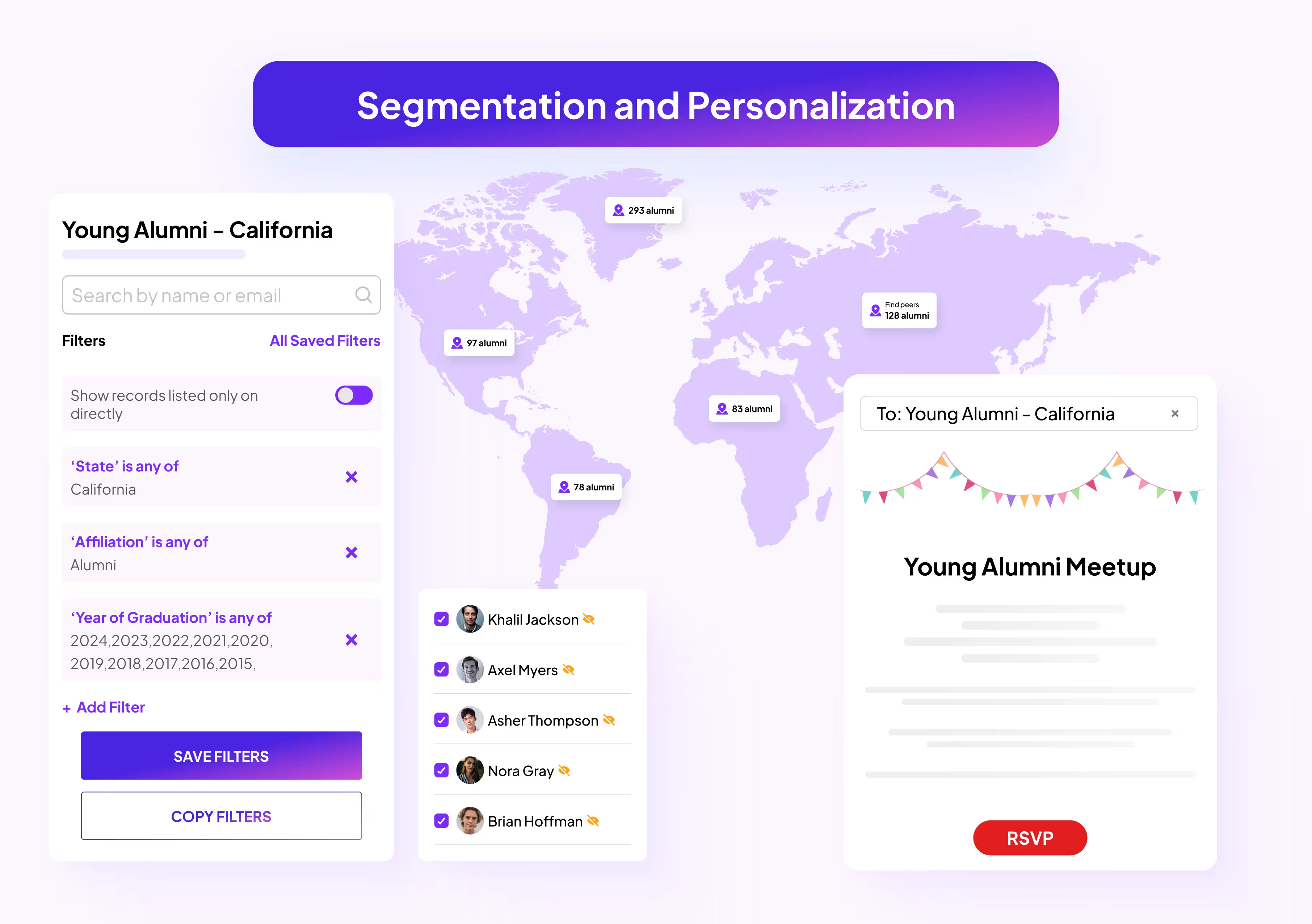
To create granular segments and personalize engagement, you need the ability to filter your alumni community data into various categories, such as interests, affinities, demographics, location, engagement levels, class years, and more.
For example, if a significant number of alumni are clustered in the Santa Monica area, you could host a regional chapter event. Or, you might create a special athletics newsletter for those who were part of sports teams in college. The key is to categorize your alumni into smaller, more focused groups to enhance your engagement efforts.
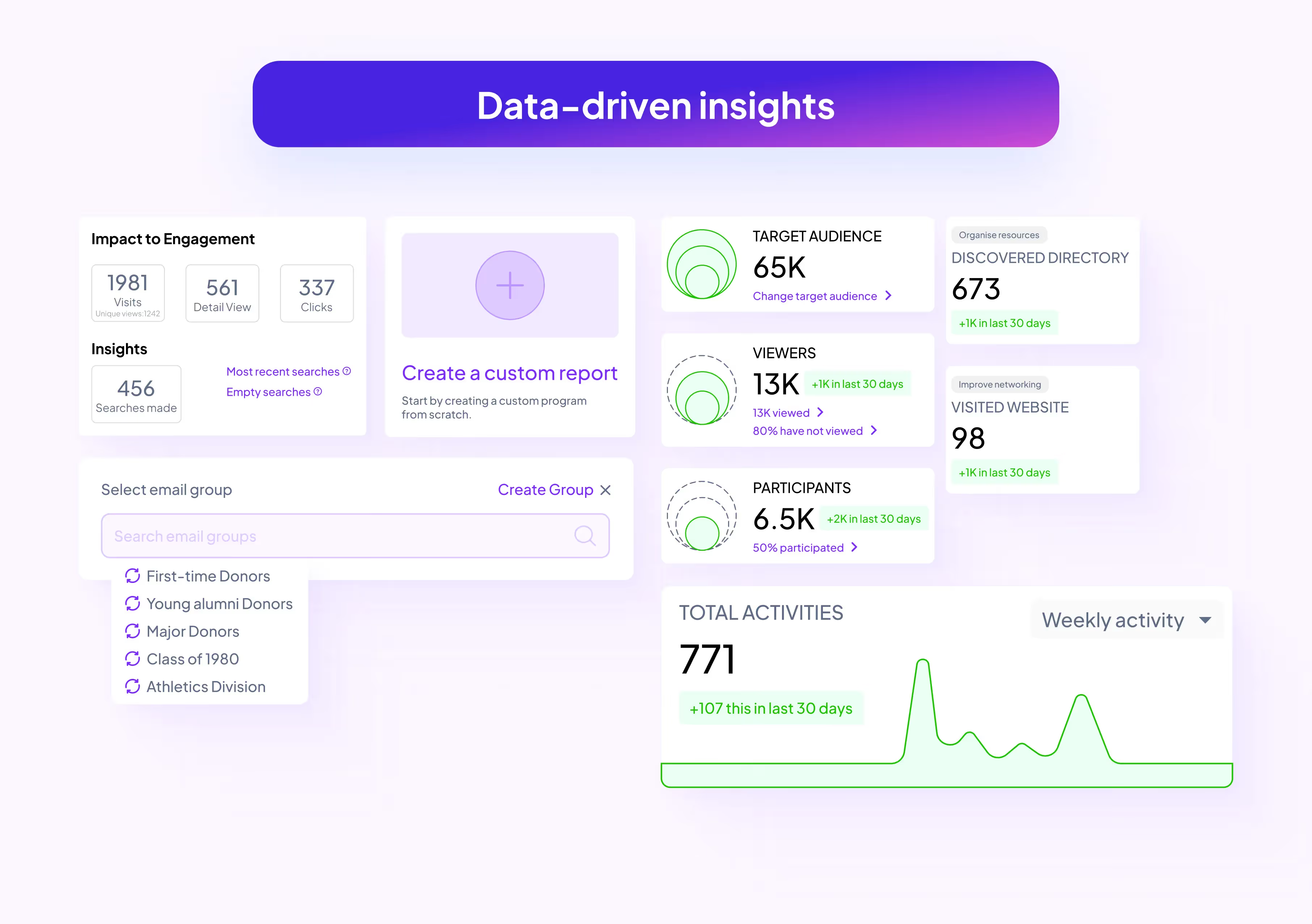
Leverage analytics to identify trends and pinpoint areas needing attention. Use these insights to guide content creation and community initiatives. With the right tools, you can create custom dashboards and reports to see what's working and where improvements are needed. In addition to these metrics, conducting surveys or polls is helpful to understand the community’s preferences and needs.
With real-time data providing a bird’s eye view of your constituents' engagement journey, you can swiftly identify potential donors, those most likely to engage or become mentors, and those highly active on your alumni site or in emails. This immediate insight into their intentions empowers you to act strategically and enhance their involvement.
Keeping an alumni community active isn’t just about getting people to join—it’s about making sure they stay engaged. With the right mix of personalized content and smart tech, you can build a community that keeps alumni coming back for more.
Table of Contents
Subscribe
See how modern advancement teams bring alumni engagement and fundraising together.
When it comes to personalization, we all know that a simple “Hi, {{${first_name}}}” is no longer enough. It involves understanding their interests, history with the institution, and current needs to deliver relevant and timely communication
While the topic of personalizing alumni engagement is no longer new to any of us, scaling personalization efforts is an increasingly important follow-up problem that needs solving. With thousands of alumni across different backgrounds, locations, and careers, how can institutions create a truly tailored experience for each individual?
In this blog, we’ll explore some strategies and tools that can help institutions scale their alumni engagement personalization efforts.
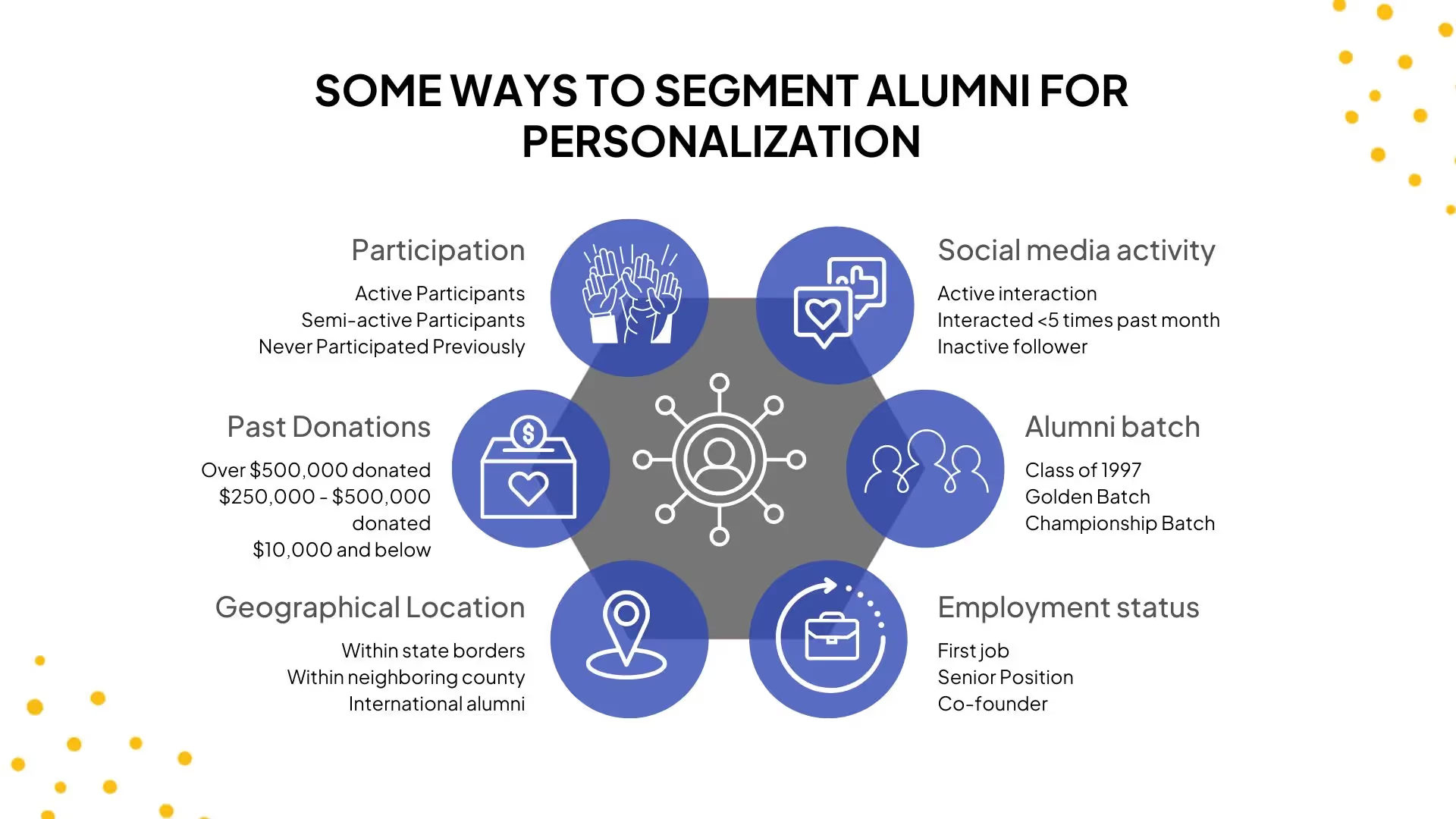
Start by segmenting your alumni based on various criteria such as graduation year, degree program, geographic location, and past engagement levels. Advanced segmentation can also include career fields, personal interests, and giving history. By creating detailed alumni profiles, you can tailor your messages to resonate with specific groups. If you already have all the required information you need, make sure that it is organized effectively for analytics tools to read from.
Utilize data analytics to gain insights into alumni behavior and preferences. This includes tracking event attendance, email open rates, social media interactions, and donation patterns. Let’s say you noticed that 30% of your alumni have browsed the mentorship program but haven't enrolled. With this insight, you can send targeted emails highlighting the benefits of joining, featuring success stories, and offering a simple sign-up process to boost participation. Analytics can help identify trends and identify gaps or pain points in your engagement strategy, allowing for more targeted and effective communication.
Invest in a robust CRM system that supports automation. Automated workflows today can trigger very well-personalized messages based on alumni actions or milestones. For example, an automated email congratulating an alum on their promotion could have details on their employer, how long they’ve been there, what roles they’ve worked there, and also mention any institution events or resources that they might be interested in.
.avif)
.avif)
Customize the content of your communications to align with alumni interests and engagement history. This could involve sharing news about specific academic departments, highlighting alumni success stories in relevant industries, or inviting them to events in their area based on their availability. Personalization should extend to all touchpoints, including emails, social media, and direct mail.
Dynamic content allows you to tailor the information presented to each alum based on their profile. For example, an email newsletter can have different sections that change according to the recipient’s interests or past interactions. This ensures that each alum receives content that is most relevant to them.
Provide alumni with engagement opportunities that match their interests and availability. This could include virtual events, mentorship programs, volunteer opportunities, or exclusive alumni groups depending on their professions, years of experience, past participation, etc. By offering a variety of options, you cater to diverse preferences and increase overall participation.
Different alumni prefer different communication channels. While some may prefer emails, others might be more active on social media or prefer text messages. Use a multi-channel approach to ensure you reach alumni where they are most comfortable and likely to engage. Be sure to maintain an active presence and make your institution as approachable as possible.
Surprisingly, 52% of alumni organizations have never conducted a survey of their alumni. Regularly seek feedback from your alumni to understand what’s working and what’s not. Surveys, focus groups, and direct conversations can provide valuable insights. Use this feedback to continuously refine and improve your personalization strategies.
Most modern alumni engagement tools today support personalization to a good extent. However, you need to think of a long-term strategy when you consider scalability. [Whether you prefer to work with an integrated tool or multiple best-in-class tools], you need to make sure that it fits in with your existing systems and staff. Products/software such as Almabase also give you the choice of choosing a few features to complement your setup such as [automated emails], as well as a modular approach if you want something more extensive. If you plan to build a platform that your alumni will love engaging with, you need tools that centralize data, create effective segments, and enable personalized communication at scale, streamlining your engagement efforts.
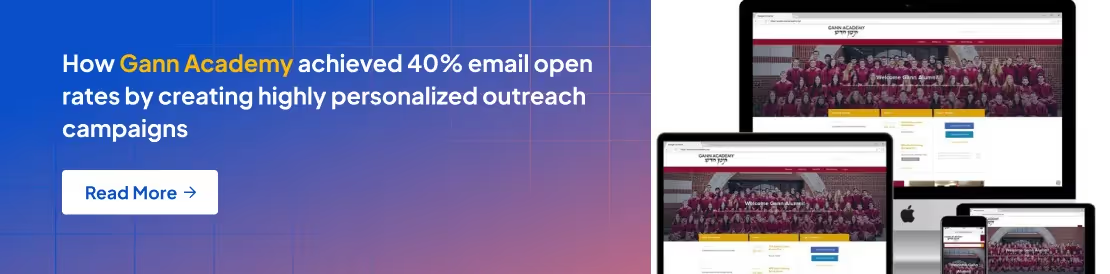
Today, making your efforts at personalizing alumni engagement scalable is not only possible but also essential for building lasting relationships and fostering a loyal alumni community. By taking advantage of data, automation, and strategic segmentation, institutions can deliver tailored experiences that enhance engagement, drive participation, and strengthen the bond between alumni and their alma mater.
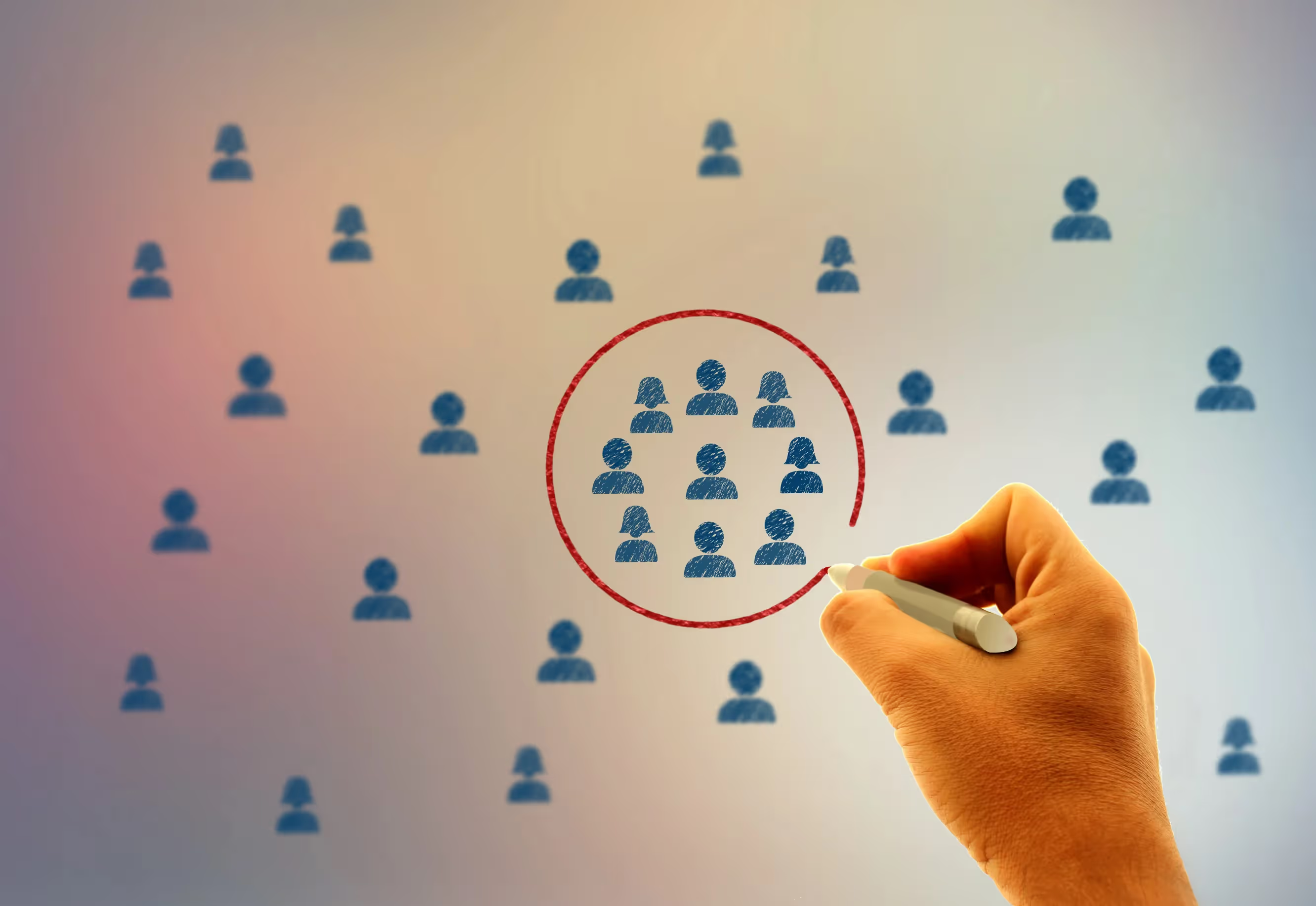
How can you personalize alumni engagement at scale?
Every institution knows the value of personalizing alumni engagement. But how can you scale your personalization efforts as your alumni base grows?
Lorem ipsum dolor sit amet, consectetur adipiscing elit. Suspendisse varius enim in eros elementum tristique. Duis cursus, mi quis viverra ornare, eros dolor interdum nulla, ut commodo diam libero vitae erat. Aenean faucibus nibh et justo cursus id rutrum lorem imperdiet. Nunc ut sem vitae risus tristique posuere.
From one-person teams to well-staffed offices, advancement, and alumni relations teams today take a variety of sizes and forms. The advancement space has never really had a frame of reference for what an ideal team should look like, as institutions can vary wildly in size and resources.
By looking back at the past several years, we would like to provide some characteristics that every forward-thinking advancement team today should look to incorporate in their approach to have a successful alumni program.
Ideally, an advancement team today should consist of people who are agile, data-driven, and technologically adept. They also need to have a good understanding of the evolving needs of a wide range of alumni. The pandemic and post-pandemic scenarios highlighted the need for teams that can innovate and ditch tradition when needed. Modern teams are ideally driven by digital tools and data analytics to make informed decisions, personalize interaction engagement, and be able to collaborate with other teams effortlessly.
If that all seems a bit too ideal, that is because, for many teams, it often is. The ideal modern advancement team takes years to develop to the level that they can reach, and it takes even more consistency to stay at that level. Below, we’ll break down some of the key components and pitfalls on the road to reaching your advancement team’s true potential.
Here are some things that you can look to incorporate. Remember that there is no one-size-fits-all all for advancement and that these are just the basics that you need to watch out for as you map your team’s journey:
• The right tool(s): Whether you are just starting to consider your long-term tools, or have some you have been using for a while, you need to choose the right tools. Take into account the resources, staff size, and staff expertise available to you
• Data-driven approach: Data is at the heart of most if not all alumni-centric communication, engagement, fundraisers, and so much more today. Having a reliable database and a CRM to make the most of your data is crucial for any modern advancement team. If you see your alumni base increasing exponentially in the future, you need to have the right infrastructure to scale alongside it as well.
• A Strong Global Alumni Network: A silver lining for advancement teams that emerged during the COVID-19 pandemic was the shift towards virtual and hybrid alumni engagement. The trends from that period have been carried over today to engage local, national, as well as international alumni to form strong global networks filled with regional enclaves of well-engaged alumni.
• Scalable Personalized Engagement: While personalization has become a core part of any alumni program, communicating with alumni while having personalization efforts that can scale with an increasing number of alumni is another issue that institutions are currently tackling. From segmentation and automation to collecting feedback, ensure that your institution’s alumni engagement is not just personalized but also able to personalize a growing alumni base meaningfully.
• Omnichannel Capabilities: Alumni nowadays expect some level of value even if they are located halfway around the world. Routine webinars alone will no longer do to engage these alumni segments. Modern advancement teams need to be able to take advantage of physical, online, and hybrid channels simultaneously and importantly, make each channel feed an overall goal. For example, how can you engage remote alumni in a way they feel equally as valued as your local alumni? Are you just relying on social media to reach them, or are you making communities, providing opportunities, and constantly making them feel just as appreciated?
• Providing Diverse Engagement Opportunities: Providing value lies at the heart of any modern advancement strategy. Your team needs to be aware of upcoming trends to freshen up and diversify your offerings. If an alumni is excited about publishing their first research paper, an email will help. But if you also invited them for a guest lecture or in a workshop panel, they might feel even more appreciated.

• Adaptability: Over the past few years, the pandemic and the constant fears of economic recessions have made clear the need for advancement teams to adapt to both expected and unexpected changes. With AI usage on the rise, it also raises the question of adapting to new technology and whether it is worth it. These are questions any competent advancement teams today will need to be on top of and make the right call on.
While aiming to be data-centric, your advancement team must have a thought-out data strategy that can handle alumni data for years to come. When it comes to having a data strategy, it is usually the sooner the better as data is always being added or modified as time goes.
We also cannot stress enough the importance of having tools that communicate well with each other. Having multiple tools or features is well and good until they all present a piece of the puzzle that you have to put together manually each time. Any new additions to your online toolset must be integrated into a well-connected software environment. This also gives your staff a good overview of where they are as a team and as an institution.
A common and perhaps under evaluated problem is how strategies and long-term planning are always talked about when the reality is often that advancement staff often get caught up in an endless loop of daily tasks and don’t get enough time to strategize creative initiatives. In a space where creativity can really engage alumni, it is important that your staff have time for both their daily tasks as well as to innovate.
Finally, it is important to know when to be stubborn and when to take a new path. Take periodic checks on the products you use and if they still fit your needs. Do the update cycles of the provider fit your needs? What do your staff think about their experiences within the past quarter? Will your current set of tools fit your needs in the next 5 years? These are just a few examples of questions that you need to keep asking yourself to stay on top of your game.
Ultimately, the goal is to create a dynamic, responsive advancement team that can effectively support your institution's mission while providing genuine value to your alumni community. Remember that alumni want an authentic human connection to their alma mater. A modern advancement team simply uses the best strategies and tools to build and maintain that connection.

What Makes a Modern Advancement Team?
We compiled our learning from the past several years to give you a quick look at what a modern advancement team should look and function like in this blog.
Lorem ipsum dolor sit amet, consectetur adipiscing elit. Suspendisse varius enim in eros elementum tristique. Duis cursus, mi quis viverra ornare, eros dolor interdum nulla, ut commodo diam libero vitae erat. Aenean faucibus nibh et justo cursus id rutrum lorem imperdiet. Nunc ut sem vitae risus tristique posuere.
Homecoming or Alumni Weekend days are one of the most significant events in an institution's calendar. These are opportunities to create memories and meaningfully engage with alumni across age groups, gather up-to-date data, as well as build lasting relations, hoping they’ll come back later for another milestone event.
As an advancement professional, we understand that you’re constantly looking for ways to improve engagement, retention, and fundraising drive.
Here's how some colleges leverage their creativity to make the most out of their homecomings and alumni weekends/reunions.
The Robert Wesleyan College Homecoming is a weeklong extravaganza of all things fun.
They have an exciting array of events planned for alumni and students alike, from live music performances and soccer games to reunions and awards ceremonies.
They also have panel discussions on navigating your next career change for middle-aged alumni, brunch and campus tours for older alumni celebrating their 50th reunion, and giant lawn games and an inflatable obstacle course for the younger ones. Truly alumni-centric!
But don't take our word for it—just look at all these events.
Everyone knows a party is all the more fun when you’re around someone you know. Similarly, the most effective way to get more alumni to attend your event is to ensure you know who else is attending.
Greenwich Academy leveraged this and displayed who else is attending the event by class years. This created FOMO for those who couldn’t attend and encouraged more alumni to show up!
.avif)
.gif)
Yes, that was our reaction to seeing the Homecoming schedule of the College of Idaho.
When all of us were on a break from the real world, cooped up at home in 2020, the College of Idaho hosted a friends-themed Homecoming - “The one where everyone stays home.” They were on point, from the color schemes to the events and messaging!
.avif)
Institutions often struggle to build and maintain a consistent relationship with their alumni. In an interesting response to this problem, NCSSM encourages alumni to volunteer as class representatives. These reps serve as ambassadors, help bridge the communication gap between the alumni office and alumni, and encourage their peers to participate.
You can see how they did it, here.
Homecoming is an exciting event for students, alumni, and parents alike. Homecoming 2020 at the University of The Ozarks struck the perfect balance of events for all its constituents through an amalgamation of three major events that are celebrated at the University - Alumni Weekend, Family Weekend, and Homecoming.

Trinity University’s Alumni Weekend is a three-day spectacle full of activities that host anywhere between 1000-1500 alumni across all age groups. They host their signature event -Block Party Reunions by allocating dedicated space for various class years.
Another cherished occasion when alumni and faculty members can meet is the ‘Fiesta with Faculty’. Alumni can meet former and current faculty members over a drink and enjoy a wonderful afternoon together. They also invite notable alumni writers and artists to participate.
Also popular is Alumni College. Without the grades and tests, it's exactly like going back to school. Who says learning needs to stop at college?
Here’s where you can find their schedule.
We’ve all heard of experts. But have you heard of Axe-perts? The folks at Misericordia University certainly have!
They have been throwing the best tailgates for years, and it has only gotten better this time. Their Homecoming is a mix of fun activities like Axe-throwing, caricature drawing, balloon art, and DJ music that'll keep everyone entertained for hours. They also honor alumni who've done extremely well academically and athletically.

The Alumni Relations team at Murray State, in collaboration with the Campus Activities Board and Racer Athletics, crafted a week-long hybrid homecoming - Healthy at Home(coming).
It included virtual 5k runs, reunions, campus visits, and more. The week's activities had the Racer spirit screaming from every corner. Healthy competition between the students and alumni made their e-sports tournament a huge hit!
.avif)
Despite being stuck at home during the pandemic, Evergreen State College ensured its alumni and students had meaningful experiences, through their virtual alumni weekend -Return to Evergreen 2020.
It featured four carefully curated programs (breakout sessions) that bring together alumni and faculty leaders to tackle social challenges through the lens of racial justice and equity. Issues such as wealth inequality, immigration, racism, climate change, and gun violence were integral parts of the talks.
Want more such ideas for your homecoming? You can watch our latest LinkedIn Live with Ryan Finnelly (Trinity University) and Mike Gombita (Misericordia University) where we spoke about the factors behind a successful Homecoming event.
.avif)
9 Homecoming Ideas You Can Steal
Here are some tried and tested homecoming ideas to engage alumni of all ages and increase participation in your next homecoming and beyond.
Lorem ipsum dolor sit amet, consectetur adipiscing elit. Suspendisse varius enim in eros elementum tristique. Duis cursus, mi quis viverra ornare, eros dolor interdum nulla, ut commodo diam libero vitae erat. Aenean faucibus nibh et justo cursus id rutrum lorem imperdiet. Nunc ut sem vitae risus tristique posuere.

.svg)

.avif)
.webp)